The Cure for High Lakes Trout by Gary Lewis
How to turn eggs from hatchery trout into more hatchery trout.
We had a mild, dry winter with little snowpack. Now in the heat of summer, wildfire smoke shrouds the lowland valleys, and a lot of people who would rather be fishing are staying home.
Up in the mountains, the air is clear and beautiful. If there is smoke in the air, it filters the light and provides an otherworldly feel on the high lakes.
Here in central Oregon, the trout fishing has been fantastic. Fly-rodders, lure fishermen, and bait anglers have been having the best trout season of their lives.
I have started tying egg loop knots and curing eggs on a smaller scale. Our hatchery programs turn out legals, "trophy" trout (14 to 18 inches), and brood stock fish that can go six pounds or more. Some of those hatchery fish have eggs in them, which look like bait to me.
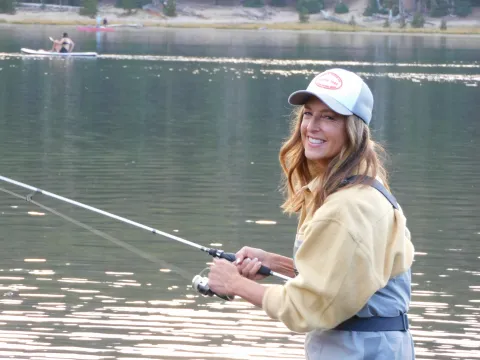
WHY SPAWN SACS?
Trout eggs are few and fragile, and the skein is weak, but they are a dynamite way to turn hatchery trout into more hatchery trout.
Use spawn netting to conserve the eggs for a longer time in front of the fish. While an egg-looped bait might stay on the hook for three or four casts, the spawn sac bait can go for 40 or 50 casts and multiple fish.
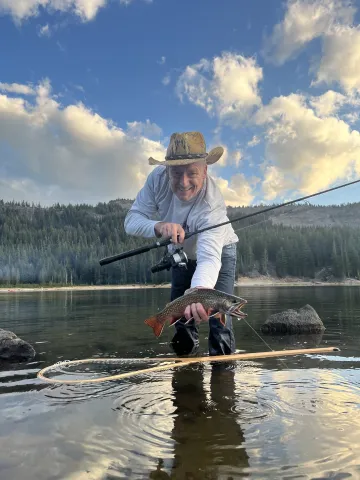
I kept the eggs from a 30-inch lake trout and put them in a paper towel in the refrigerator, and forgot about them till I was in Alaska. My wife was home and cured the eggs for me (her first time curing eggs), and we put them to use on a fall trip to one of my favorite lakes. I wound up catching a pair of beautiful brook trout. Opening our mixed bag of rainbows and brookies that evening, I harvested bait for the next trip.
Try to get eggs from four or five trout before starting the cure. First step in preparing the eggs is to allow them to air dry on a paper towel for a day or so.
The cure itself can be any one of dozens of commercial powder or liquid offerings or a person can prepare their own with Borax, brown sugar, and salt. Lately, we have been using Pro-Cure's Last Supper blend, augmenting it with sea salt and krill powder.
Donning latex gloves, I roll the eggs in the cure, making sure the cure adheres to both sides of the skein. Next, I sprinkle on extra salt and krill powder. Then I let that combination drain/air dry for about a day. After that, the eggs are ready for the spawn netting.
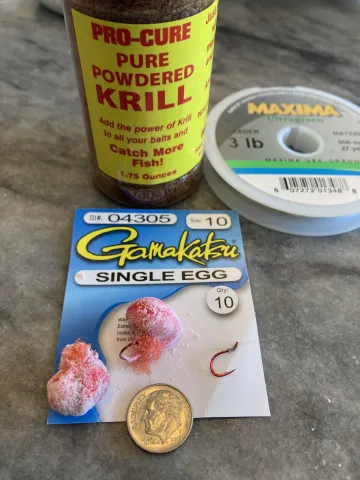
For these smaller baits, I will use a No. 8 or No. 10 egg hook with an egg-loop knot. The bait should be the size of a dime. I get two to four baits out of a skein and four to eight baits per fish.
Cut a small rectangle of netting (I use Atlas Mike's) and lay the bait on it. Then gather the edges and tie it with stretchy string (like Kwikfish Stretchy Thread. Trim off the extra string and netting, and you have a dime-sized bait ready to fish.
Baits can be stored in Ziploc bags, plastic boxes, or glass jars. Use the baits as-is or add a little more Borax to toughen them up.
Curing eggs for a spawn sac presentation allows the angler flexibility in doctoring the baits to specific conditions or to provoke a reaction bite. Eggs sink, which makes spawn sacs a great choice for a float (bobber) presentation. But because eggs sink, they are prone to hang up on rocks in a drift-fishing presentation. The "cure" for that is to add a foam egg (like a Mad River Fish Pill) to the spawn sac.
Jason Hambly, of Pro-Cure Bait Scents, in Salem, Ore., recommends adding krill powder to any trout bait. Garlic, too, is a proven trout favorite. I like to add a touch more garlic to a bait intended for cold water presentations. When the temperature drops in December in these parts, it can be harder to get fish to move. But they seem to move for garlic. Salt, brown sugar, and anise are other scents that could be added to spawn sacs. It makes a lot of sense to bring several flavors and experiment with what works in varying conditions.
STILL WATER RIGS
For our fisheries, I like a finesse presentation using a smaller No. 10 egg hook and a light three-pound test leader. When targeting bigger trout, consider sizing up to a No. 8 egg hook, nickel-size baits, and a five- or six-pound-test 20-inch leader.
Attaching bait is as simple as running the point of the hook beneath the netting knot, then securing it with the egg loop.
In a lake, the bait can be presented under a float when targeting a specific feeding zone. I like to use a sliding sinker fished over a ledge on a travel zone, such as along a drop-off.
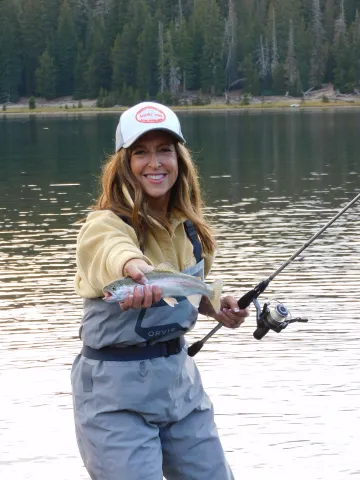
WHERE TO FISH
In August and September, plan trips to hit one or more fisheries. Think early morning and late evenings. Eat an early dinner and fish the last two hours of the day. Get up at dawn, fish for the first hour of the day, and then go get breakfast.
In the Cascades, top destinations include Diamond Lake, Detroit Lake (even as it draws down), Cultus, Elk Lake, Olallie Lake, and Timothy. But there are a hundred more. Open a map or get a copy of the Fishing Central Oregon book or Fishing Mt. Hood Country. The Department of Fish and Wildlife stocks all the drive-to and hike-in Cascade lakes.
Sometimes it's fun to experiment with something new, to do something different.
Reinvent your fishing and target trophy fish and brood stock with scaled-down baits.
# # #
Gary Lewis makes his home in Central Oregon.
/articles/cure-high-lakes-trout-gary-lewis
Kayak Fishing for Trout by Josh DeBruler
As we roll into summer, it can be a little overwhelming managing the excitement of all the fisheries that are opening around us and becoming more accessible due to the passing of the winter doldrums. It’s a good problem to have! We are inundated with fishing opportunities. For me, it’s comforting knowing that I always have the simple staple of rainbow trout fishing. Its simplicity brings accessibility for our families and children. It means we can throw a couple of kayaks in the back of the truck, a cooler, some rods, and we can take the ones we love out to relish in the joys of fishing. Now, I enjoy my motorized boat as much as the next guy, but with small trout lakes being so abundant, there’s a good chance we can bring the kids out to a lake that offers the added comfort and safety of boat speed restrictions, or in some cases, motorized boat restrictions.
Rainbow trout are intensely prolific throughout the Pacific Northwest. Native rainbows can be found throughout the Columbia River and its tributaries, like the Yakima and the Snake, and they thrive in the reservoirs built amongst these waters. They also flourish in alpine lakes high in the Cascades and Olympic Mountains. Though they are native to many waters of the northwest, the native stock is, for the most part, highly regulated by the Department of Fish and Wildlife for conservation purposes. Aside from this, wild rainbow trout tend to be found in rivers and high lakes that are not as easily accessed by kayak, which is why I personally like to target the stocked rainbows, which, despite what you might here from a handful of naysayers, are actually quite good eating when thrown on the smoker or baked with butter and garlic and whatever other aromatics you might throw at it. If you’d like to target Columbia basin Redband rainbow trout (Wild trout) for catch and release, Lake Roosevelt in Ferry, Stevens, Lincoln, Okanogan, and Grant counties is an excellent place to get started.
Hundreds of thousands of catchable-sized rainbow trout are stocked in lakes throughout Washington each year. There are too many lakes to mention here; however, you can hop onto the WDFW website and navigate to “catchable trout plants,” and chances are you will find a lake within a short drive of wherever you are that has planted trout.
As an avid kayak angler, I’m not afraid to admit that some kayak fishing can be cumbersome, complicated, and often leaves me wondering why I’m not instead using a larger boat to catch my fish. Thankfully, rainbow trout fishing from a kayak does not bring up any of those thoughts or trepidations. It can be as easy as casting a lure out behind you, setting your pole in a rod holder, and enjoying a nice paddle until you hear your rod bouncing around and causing a ruckus behind you.
Just about any type of kayak will do for rainbow trout fishing. The one caveat being that if you’re trolling, you should have a rod holder. If your kayak does not come equipped with one, then you can find a mountable one at most outdoor sporting equipment stores that carry fishing gear.
Trolling is my favorite method as it allows me to cover a lot of ground, and if done during the morning or evening, it can result in a limit of trout within a short period of time.
Trout are predatory fish, and once stocked, trout become accustomed to the natural diet of the lake they are planted in. They tend to be aggressive towards moving targets during the warmer months.
Inline spinners like Panther Martin, Rooster tails, Mepps Aglia, and Blue Fox Vibrax are all classic lures that work by allowing a constant spinning motion of the small attached spoon while presenting a colorful tube-shaped body. These all come with a treble hook or single hook that typically has the choice of being dressed with or without hackle. Generally, larger lures will catch larger fish and vice versa. The dressed lures present themselves as larger due to their increased profile. Chartreuse, black, white, yellow, and rainbow trout colors are all very effective. I typically start with a rainbow trout colored lure and switch out once they stop biting at that. The Blue Fox Vibrax has the added benefit of emitting a sonic vibration that can agitate fish and produce a strike. These inline spinners can be cast or trolled and are often the only lure type I need to bring with me. Other options outside of spinners would be small spoons or mini tube jigs.
A rubber trout net is another essential tool to bring along on your kayak. The cheap poly nets are less preferred as they often get stuck under the fish’s gills and can result in a dead fish that you otherwise may have been throwing back.
Divers
Since we are talking about kayak fishing, and with kayak fishing, I like to keep things simple, I hesitate to add more complexity to our fishing setups. However, if the mid-day warming of the water is causing the fish to hold deeper below the surface than what your standard trolling setup can achieve, then it might be worth deploying a diver. Divers are planers generally made of plastic and use hydrodynamics to pull your gear deep into the water. Most divers have a tripping mechanism that releases and stops the diving motion once a fish strikes. This allows you to reel the fish in without fighting the diver’s natural tendency to go deeper into the water. Though they take away from some of the simplicity, they are a heck of a lot easier to deal with than a downrigger, and they can absolutely produce good results.
Summer is here, and the fish are biting! I hope this information helps you with your next kayak fishing adventure! Stay safe and tight lines!
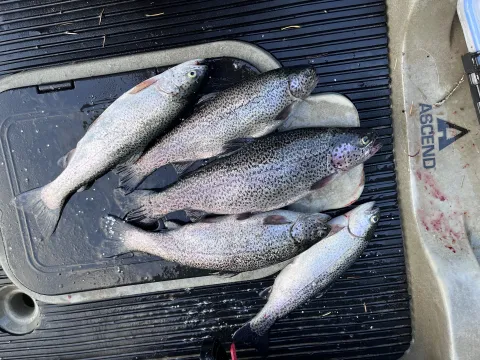
/articles/kayak-fishing-trout-josh-debruler
Trout fishing with a dry fly in the Cascades by Gary Lewis
My first encounter with trout and a dry fly was like prayer. It was a Sunday afternoon. I was 12, the fish was as old as time, and the insect was a white miller moth that touched down on the water. I whispered a prayer. “Lord, if you want me to be a fly-fisherman, send a trout to eat that moth.”
With the sun on its wings, the moth bounced over the water, touched down, lifted, touched again. A trout broke the stillness of the pool, nosed through the surface, and ate the moth. Church was over.
In those days, to become a fly-fisherman meant becoming a different person. Fly-fishermen wore tweed, and they wore funny hats. They smoked pipes. This was what I must become. It was big stuff for a 12-year-old. I wasn’t even sure my mom would let me smoke a pipe.
On Monday, my grandpa drove me to the hardware store. I bought a 7-weight fly rod with the money saved from mowing lawns. I knew to start by fishing nymphs and wet flies, but as soon as I could, I would try to catch a trout on a dry fly.
In those days, I lived in southwest Washington and rode a ten-speed with a fly rod across the handle and crept through the alder to watch the trout and the bugs on the water.
WHERE AND WHEN
Today, the Cascade mountains and the streams that come down off the glaciers and out of those snowmelt reservoirs can offer the same kind of dry fly fishing.
The estimation of a trophy trout is on a sliding scale. Since it does not take a lot of water to keep trout alive, trophy rainbows and cutthroat can be found in a lot of east-slope and west-slope creeks and rivers, and even a few north-slope trickles.
Highway 35 parallels and crosses the East Fork Hood River, which is home to beautiful cutthroats, vulnerable to any high-floating bushy dry fly.
Anyone good with a map can locate a dozen other small streams that can be accessed for spot-and-stalk dapping or casting in the same area.
In the Clackamas drainage, the Oak Grove Fork offers a bushwhacking opportunity where the light plays on the riffled water and mayflies dry their wings and form small clouds over the log jam pools.
Another stream winding down out of the national forest is the Breitenbush. Any trout from the Breitenbush is a trophy and may be too small to eat, but in time it will grow larger in memory. But don’t be deceived, there are some big trout in the little river too.
Another steep little river is the North Fork Santiam, with both wild and hatchery trout. In the fast riffled water, the trout are watching the surface for the mayflies, stoneflies, and caddis caught in the current.
Miles and miles of the McKenzie River are driftboat floatable and wet wadeable. In these years after the big fire, the river’s overstory (canopy) has opened, and there is no doubt the bug life has responded to the sunlight. Resident rainbows can grow big, coming out from under the cutbanks to feed.
Of the rivers and creeks tributary to the Willamette, the Middle Fork is a great option for the wading angler. In fact, there are a dozen streams. Pore over a map with a highlighter and note where the rivers cross under the roads. There will be a pullout and a trail down through the alders. An angler can base camp at Lowell, Westfir, or Oakridge and fish for days without going over the same water twice.
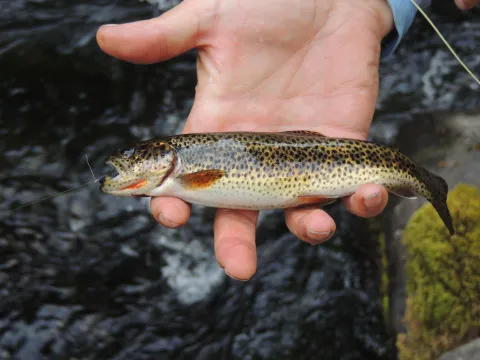
FLIES FOR SUMMER WADING
A well-stocked fly box should have foam body ants. It helps to tie or buy the fly with a high-viz wing to keep track of it in the riffles. Attractor dry flies like the Stimulator and its variants are great for those rare moments when the fish are feeding on stoneflies. Mayflies and caddis can be tied with a little foam or hollow-bodied deer hair. Another good attractor is anything from the Chubby series. Sometimes, when fishing a chubby, it’s a good idea to tie on a dry fly dropper. Cut off at least 20 inches of 5X. Put an ant on the light tippet tied off to the bend of the hook of the bigger fly. Then set the hook at a splash.
There are still a lot of places where rainbows and cutthroats flash to caddis from out of downed timber, the sun filtered through alders. The braided currents open windows to heaven in the clear water. Trout fishing is still like prayer.
To cast a dry fly and present it in a natural drift; to see trout come up out of the dark water to take it, that is the pinnacle of fly fishing.
# # #
For a copy of the Fishing Central Oregon book, send $30 to Gary Lewis Outdoors, PO Box 1364, Bend, OR 97709 To contact Gary Lewis, visit www.GaryLewisOutdoors.com
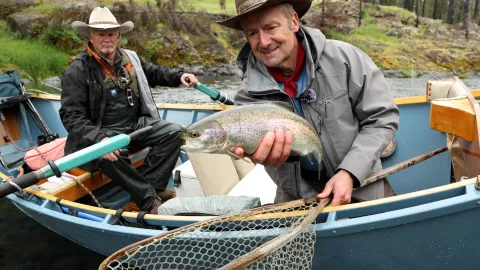
/articles/trout-fishing-dry-fly-cascades-gary-lewis
Black Friday Trout
Sure, the weather outside is frightful at this time of the year, but that won’t stop thousands of anglers from skipping out on the shopping malls and opting to go trout fishing instead!
“The holidays are great to spend quality time outdoors with family and friends, avoid the mall shopping madness and maybe even catch a fish,” said Steve Caromile, the Washington Department of Fish and Wildlife (WDFW) Inland Fish Program manager.
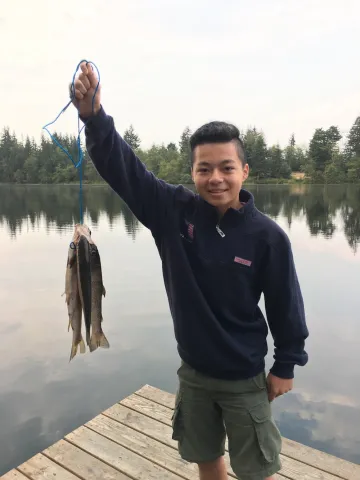
The fishing wish list just grew twofold as WDFW hatchery crews have been busy leading up to Black Friday by shuttling 64,350 jumbo-sized rainbow trout, averaging 1 to 2 pounds apiece, into 25 lakes around the Puget Sound region and southwest Washington, as well as several Eastern Washington lakes and ponds.
The Black Friday program, created more than a decade ago by WDFW, came up with a creative way to stock thousands of rainbow trout for a late-season fishery in year-round lakes. The post-Thanksgiving holiday fishing option has been a hit for anglers looking to wet a line at a time when the choices are sparse.
In October, a good number of other year-round lakes around Washington were also planted with trout for anglers who want to head before Thanksgiving. You can find trout stocking information that is usually updated weekly by going to the WDFW webpage at https://wdfw.wa.gov/fishing/reports/stocking.
Black Friday trout plants include:
- Chelan County: Roses, 20,000
- Clark County: Battleground, 2,000; and Klineline, 2,000.
- Cowlitz County: Kress, 2,000.
- Island County: x-Cranberry, 4,000.
- King County: x-Alice, 1,000; x-Beaver, 2,500; and x-Green, 5,000.
- Klickitat County: Rowland, 2,000.
- Lewis County: Fort Borst Park Pond, 2,000; and South Lewis County Park Pond, 2,000.
- Pacific County: Cases Pond, 300.
- Pierce County: American, 2,000; and Tanwax, 1,350.
- Snohomish County: x-Ballinger, 3,000; x-Blackmans, 1,500; x-Gissburg Ponds, 1,500; x-Silver, 3,000; and x-Tye, 2,000.
- Thurston County: Black, 3,000; Long, 1,000; and Offutt, 1,000.
- Yakima County: I-82 Pond #4, 2,000.
(x-Around 50% of the planned trout stocking occurred in October in the noted lakes, and the remainder will be stocked in time for Black Friday)
There are four Eastern Washington lakes opening on Black Friday that were stocked with trout fry this past spring that should be averaging 8 to 10 inches, plus some other larger fish were stocked of late.
Eastern Washington lakes trout plants include:
- Stevens County: Hatch Lake, 15,000 fry stocked in May, and 600 trout averaging 1 pound apiece stocked in October; and Williams Lake, 12,000 fry stocked in May, and 1,500 trout averaging a quarter pound apiece stocked in mid-April.
- Adams/Lincoln County: Fourth of July Lake, 60,000 fry stocked in May, and 18,000 trout averaging a quarter pound apiece stocked in mid-April.
Spokane County: Hog Canyon Lake, 20,000 fry stocked in May, 10,000 trout averaging a quarter pound apiece stocked in mid-April, and 1,600 trout averaging 1 pound apiece stocked in October.
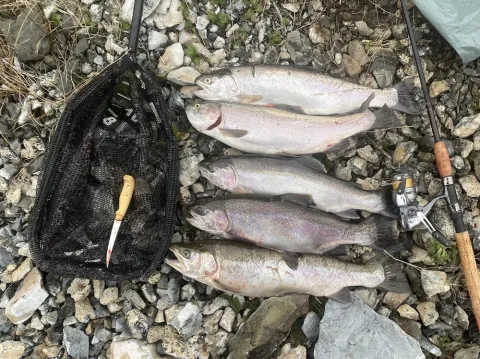
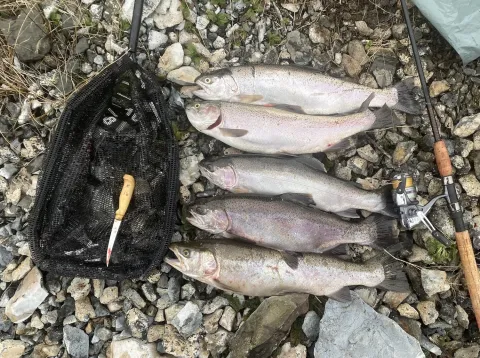
Before you go
When fishing for trout, don’t overthink the necessary fishing gear.
A basic trout rod and reel averages $50 to $90, and a higher-end set is about $100 to $200. The rod should be light and limber in the 6 to 7 foot range with a 4- to 10-pound line weight range. A medium-sized spinning reel with a capacity to hold more than 100 yards of 6- to 8-pound test fishing line will do the job right.
From the mainline, attach one or two number 8 or 9 egg sinkers with a rubber bumper just above a small barrel swivel. Avoid the cheap store-bought pre-tied 12-inch leaders that are way too short in length. Either tie your own leaders or spend a few extra dollars on pre-tied versions in 3- to 8-pound test that measure 18 to 30 inches long. A smaller size 12 or 14 egg hook is the best choice when using a moldable dough bait or nugget, salmon eggs, worm pieces, or maggots. For live bait such as a whole worm, nightcrawler, or marshmallow, the optimal hook size is a size 8 or 10 worm hook. If you use an artificial fly, the stick with a size #14 hook or smaller. A hook that is too big or exposed may scare away the fish, and one that is too small may result in fewer hook-ups. Lastly, make sure your hooks are sharp and sticky.
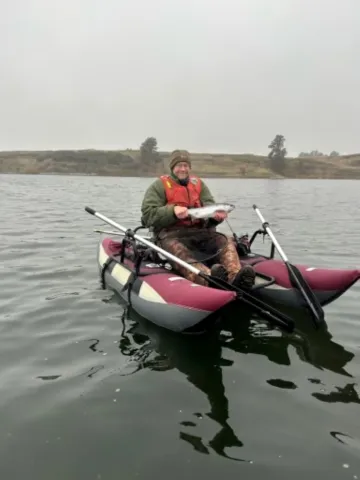
Most anglers casting from the banks or in a boat will stick with the popular moldable dough baits, which come in a variety of colors, and some are shaped like a salmon egg, marshmallow, maggot, or worm. The old school baits include salmon eggs, worms/nightcrawlers, maggots, and marshmallows.
From a boat troll a gang-flasher with a hook tipped with a piece of worm, maggot, or salmon egg, along with a tiny piece of scented dough bait or a liquid scent. A small spoon or spinner also gets its fair share of bites.
From the shoreline, cast out a small-sized bobber with your bait sitting just below the surface in 3 to 8 feet of water. Others like to go deeper, where it hangs just a few feet off the bottom, where the larger-size carryover trout lurk. Recently planted trout tend to hang around near or just under the surface of the water at depths of 3 to 10 feet. Once the stocked trout acclimate, they’ll eventually spread out and move into deeper areas of the lake. Anglers often look for schools of trout right where the hatchery truck placed them, usually near the shore, boat ramp, or dock areas.
Trout like to rise to the top of the water column to gobble up insects on the water’s surface. This is where artificial flies come into play, like a Woolly Bugger in black, dark green, or black-olive in a size 8 or 10 with a 5- or 6-foot leader. They can be cast from shore or trolled weightless close to the surface behind a boat or floating device.
A fishing license – https://fishhunt.dfw.wa.gov/login – is required for anyone age 16 or older. A Discover Pass – https://wdfw.wa.gov/licenses/parking – is required to park a vehicle at many state lands, including the state park system, WDFW lands, and the Department of Natural Resources lands.
The Washington State Parks and Recreation Commission Boating Program –
https://parks.wa.gov/find-activity/activity-search/boating – would also like to remind anglers to take a boater safety education course, if you haven’t already, to be prepared for spring and summer. In Washington, boaters who operate a vessel with a 15-horsepower engine or greater must carry a Boater Education Card to prove they passed an accredited boating safety education course.
/articles/black-friday-trout
Catch More Rainbows At Potholes Reservoir
Potholes Reservoir is best known for its spectacular bass, walleye, and panfish fisheries but do not overlook the quality trout you can catch out of this 27,800-acre reservoir. Two-to-three-pound rainbow trout are common in this lake, and they can get even bigger. Every year, multiple anglers catch seven-pound rainbows here.
So where do you find them? A reservoir this large can be intimidating to someone who has never fished here before. Fortunately, there are a few key places you can count on to find trout.
If you are a shore-bound angler there are a few good choices for you. In the spring, you can catch trout at Blythe Point, a WDFW access area with a boat launch on the southwest end of the reservoir. Simply go towards the end of the point and fish from there. Many anglers will plunk nightcrawlers or worms here because there are other species in the area that will take this bait as well.
A short distance away from Blythe Point is Potholes State Park. Don’t bother fishing the main lake from shore because it’s a long shallow flat that isn’t conducive to holding trout. Instead, go to the north end of the park and fish Frenchman’s Wasteway. The trout congregate in the moving water of this stream that flows into Potholes Reservoir at the northeast end of the park. Lures like Worden Rooster Tails or curly-tailed grubs with a 1/8-ounce jig head are proven winners here, as are worms fished under slip bobbers.
Another place to try from shore is MarDon Resort. In the early spring, right after ice-out, anglers can catch rainbows either still fishing or casting spinners and spoons from the shore behind the head office or at the swim beach. You do need to be staying at the resort to fish here.
Are you the kind of angler who likes to soak Powerbait? If so, head to Medicare Beach on the east end of the Reservoir. There are plenty of Powerbait plunkers here and if that’s not working, try fishing a marshmallow and worm off the bottom.
Boat anglers have more options and trolling in front of Medicare Beach or near the mouth of Frenchman’s Wasteway are two places worth fishing. Nathan LaFrance at MarDon Resort said trolling over the sunken habitat boxes between the resort and Blythe Point is also a good springtime strategy.
As for how to catch them, trolling a Berkley Flicker Shad in sizes #5 or #7 is a proven method to get trout to strike. Trolling a Needlefish spoon is also popular, and a frog pattern is a good color to start with unless the water is stained, in which case chartreuse would be a better bet. Finally, you can’t go wrong trolling the tried-and-true Mack’s Wedding Ring spinner tipped with a worm or a half of a night crawler.
As far as rods and reels go, a basic spinning reel with a 6 to 8-pound test works fine. While I used to fish ultralight rods for trout, I don’t do so here because the odds of landing a three or five-pound rainbow can be tough to do with a very light pole. That is why I favor a 6 ½ to 7-foot, medium-action spinning rod.
If you want a change of scenery from Potholes Reservoir, head to the seep lakes just south of the reservoir. Located on state land and within the Columbia National Wildlife Refuge, there are dozens of small lakes to explore fishing either from shore or in small boats, kayaks, or portable pontoon boats.
Some of these lakes are open year-round to include Corral Lake, which is a two-minute drive from MarDon Resort. Corral Lake is stocked with tagged rainbow trout that can be caught during the Washington Department of Fish and Wildlife’s annual trout derby that runs from the last Saturday in April through October 31st. If you catch a tagged fish, you report it to WDFW and you win a prize that could be a gift card or certificate or something more!
Checking with Nathan LaFrance at MarDon Resort some other year-round lakes worth fishing are Blythe Lake as well as Upper and Lower Goose Lake. LaFrance says the inlet into Soda Lake can also be a good bet and when he fishes there, he casts or trolls #4 or #5 Rapala Shad Raps. All the year-round lakes just mentioned have launches for small boats.
Other Seep Lakes open the last Saturday in April (April 26th, 2025). The most popular lake to fish during the lowland lakes opener in this area is Warden Lake and there is a resort at the north end of the lake along with a boat launch. Upper and Lower Hampton Lakes are good choices as are Hutchison and Shiner Lakes at the south end of the Columbia National Wildlife Refuge. If you want to get away from the crowds, hike into North and South Teal lakes. LaFrance says both waters fish well for rainbow trout.
Spring and Fall are both great times to chase after Rainbow Trout at Potholes Reservoir and the nearby Seep Lakes. Drop by the store at MarDon Resort for the latest conditions and if you are looking for a place to stay, the resort offers basic to luxury cabins, RV sites, tent sites, and a restaurant. Potholes State Park has basic cabins and a large number of RV and tent sites. Both locations also have boat launches.
John Kruse
www.northwesternoutdoors.com and www.americaoutdoorsradio.com
/articles/catch-more-rainbows-potholes-reservoir
Spring Ahead To Roses Lake
Looking back across the lake to the floating dock and small boat launch, it appeared much farther away than it was. Roses Lake, near the small orchard community of Manson, WA, is 130 acres and surrounded by foothills leading to the Cascade mountains. Roses Lake is not small, but also not nearly as large as the nearby 55-mile-long Lake Chelan which is the main reason why most visit the farming valley.
But on this springtime day, the afternoon winds had come up, blowing down the rolling hills and across Roses Lake. Between me and the newly redesigned boat ramp stretched a choppy expanse of wind-driven waves and whitecaps. In my small 12-foot rowboat, the real challenge wasn’t just the distance, it was the fact that I’d be rowing straight into the wind and crashing waves.
It had been a good day of fishing with several trout on the stringer and even more released as I rowed across the lake. Towing a green Mack’s Smile Blade fly in olive green with two small split shot a couple of feet before the fly meant catch and release was an option. If you choose to use bait then all fish caught must be counted towards the daily limit, even if released. Once I got to the far shore which is lined with cattails, I opted to switch over to a lightweight rod and a small jig with a curly tail grub under a float. This provided non-stop action with bluegills and small largemouth bass. Roses Lake offers anglers a lot of options all year long.
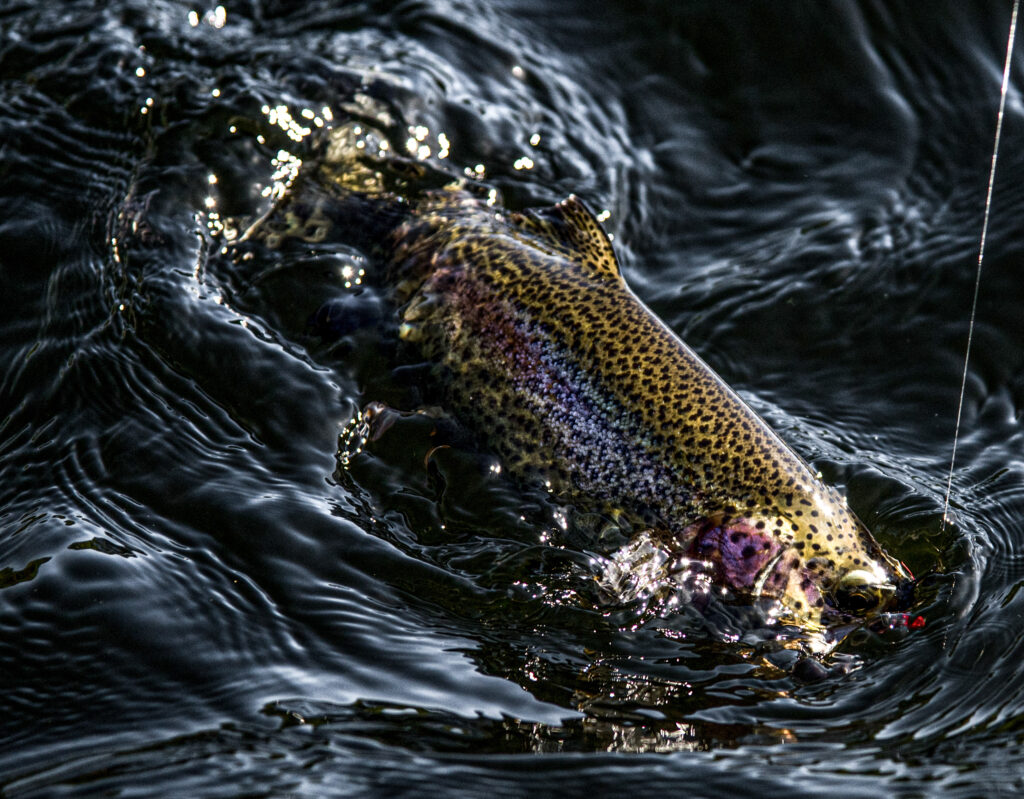
I grew up fishing this lake and back when it was a winter-only fishery, opening on December 1st and closing on March 31st; it was very popular with the locals. Every weekend there would be dozens of people sitting on buckets huddled around holes in the ice. But by the time the ice was gone, so were the locals. It seems they had their fill by March. Then several years ago the lake became a year-round season, now there is no rush of fishermen on December 1st.
When the ice is on this lake it is still very popular with the locals, but just like the days of years ago during the winter-only fishery, once the ice is off, the lake is all but forgotten. My dad fished it every day for a week straight this past January when the ice was thick and solid. He also limited on 10 to 12 inch rainbows in less than 2 hours each day he went out and the fishing continued to be good until the summer heat warmed up the water and brought out the water skiers.
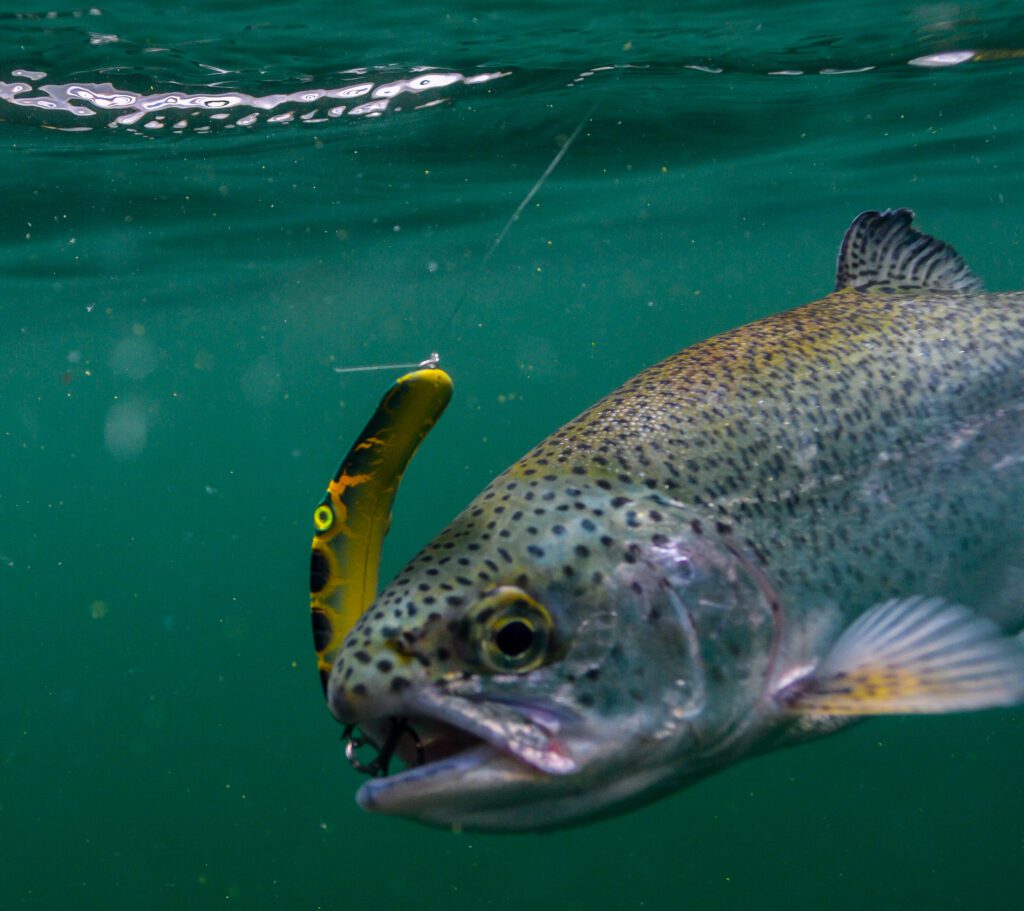
In March, the lake becomes very active, especially towards the end of the month when the water temps start rising and bugs start hatching. April and May are great months to fish the lake, especially trolling Mack’s Smile Blade flies or Carey Special flies either on a sinking fly line or on a lightweight spinning outfit with a few split shot above the flies. Since the lake receives trout plants throughout the year there always seems to be enough fish to make it worth the time to wet a line.
On average this lake sees a yearly planting of 31,000 rainbow trout, with 25,000 of those being triploids which are sterile and grow quickly. Washington Department of Fish and Wildlife also stocks around 2,000 brown trout and another 2,000 tiger trout, which are planted in hopes of keeping the warmwater spiny ray species in check. There are also catfish in this lake, though rarely targeted, and a good population of bass as well.
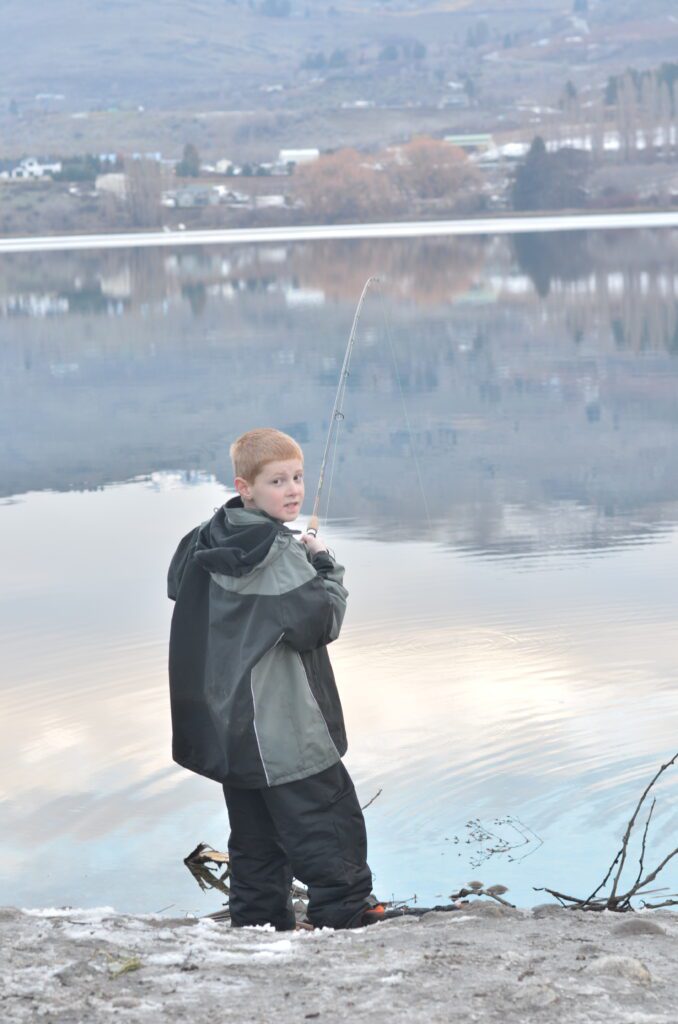
Access:
Roses Lake is 7 miles from the town of Chelan, along the north shore. Take Highway 151 towards Manson. Turn right on Wapato Lake Road, which is the same road that leads to the Colville Tribes casino and is across from Mill Bay County Park. Continue for approximately 2 miles until you come to Roses Ave. Turn left for about a ½ mile and the road veers right onto Green Avenue. Then head to the marked WDFW launch and access site about a ½ mile further.
There is ample parking which was recently re-paved and has bathroom outhouse facilities. Roses Lake access site also had the boat launch improved a few years ago with a dock added to assist in launching small watercraft. For those bound to the shoreline, WDFW just added a new fishing dock and a handicapped access bulkhead to fish from. It should be noted that this is the only public access to the lake as the rest of the shoreline is private property.
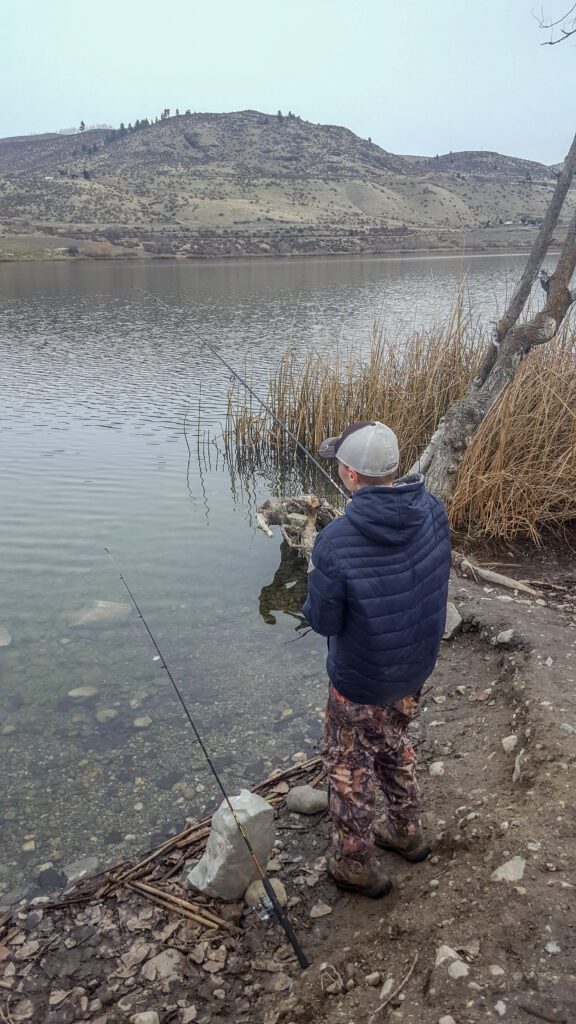
Where to fish:
Right out in front of the boat launch and off of the two fingers at the public access site has always produced fish. But if you have a boat there are two other areas that I highly recommend. First is a cove to the Northwest end of the lake. This cove area is shallow compared to the center of the lake and the water temps can warm up a little bit here which makes for better bug activity and hungry fish.
The second area is the East shoreline. This area is also shallow and has a sandy bottom which heats up the water in the early spring. There is a spring to the north side of the eastern shore where fresh water enters the lake from the aquifer. As the ice comes off of the lake with the oxygen-deprived water this area always does well in early spring. Of course, my favorite area is actually trolling between the east shore and the cove to the northwest along the northern shoreline just outside of the cattails.
What to use:
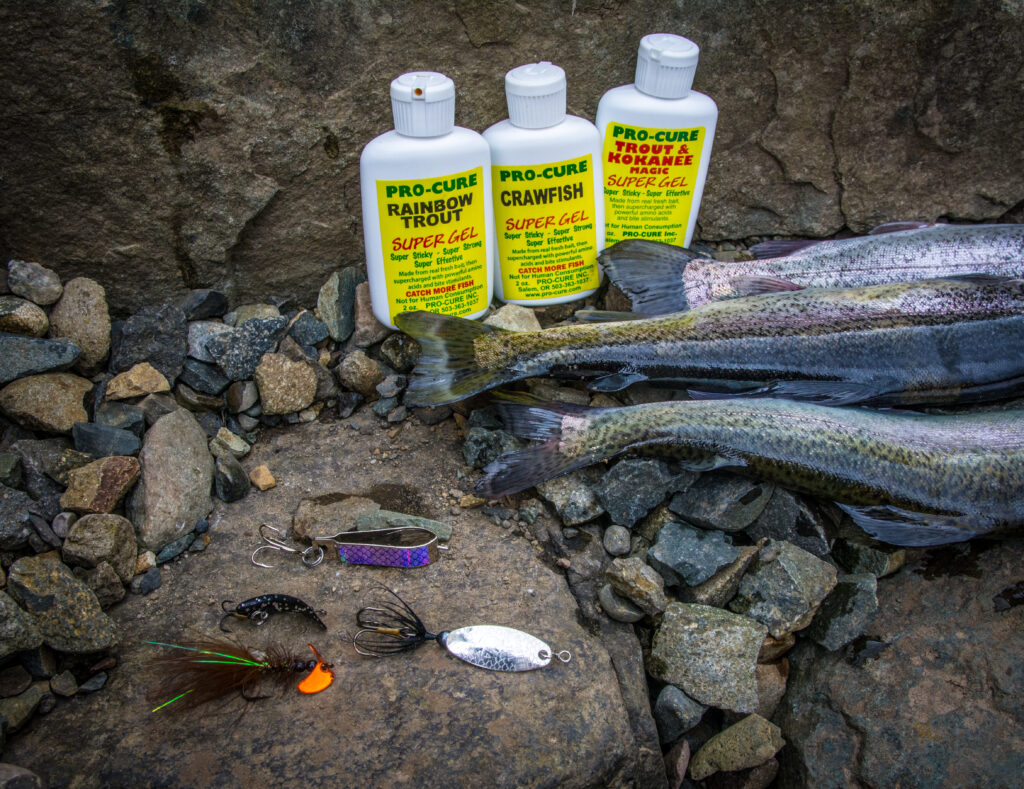
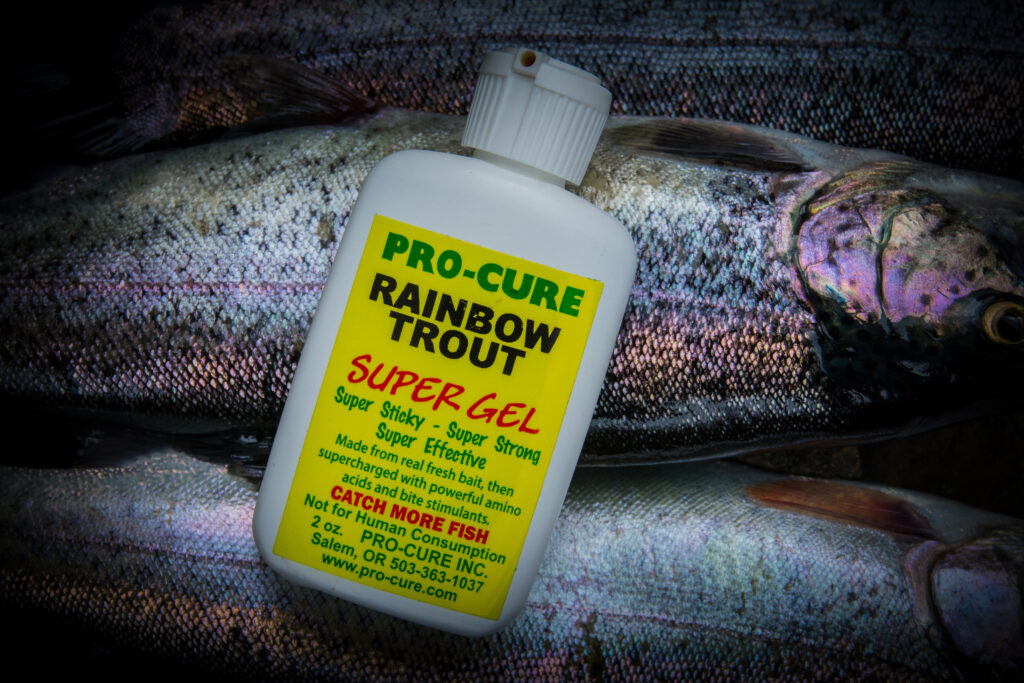
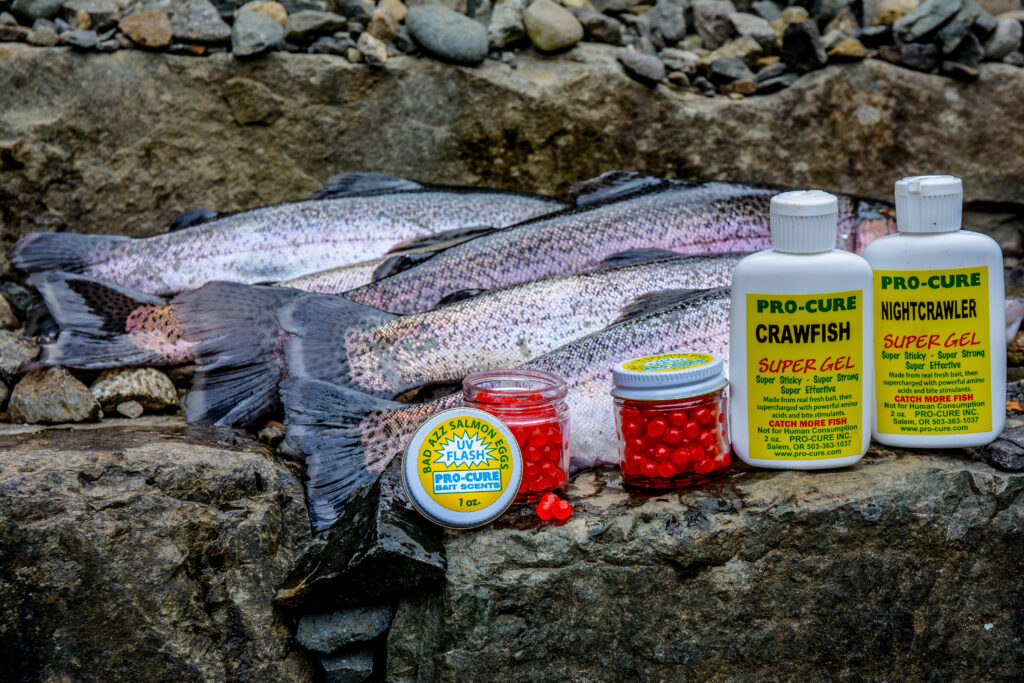
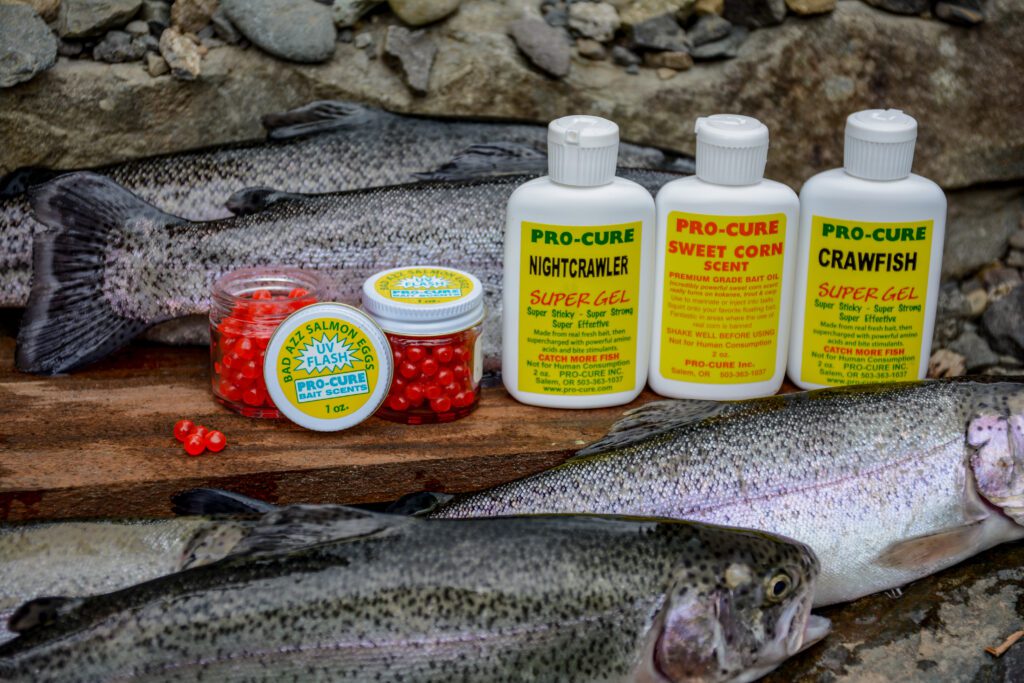
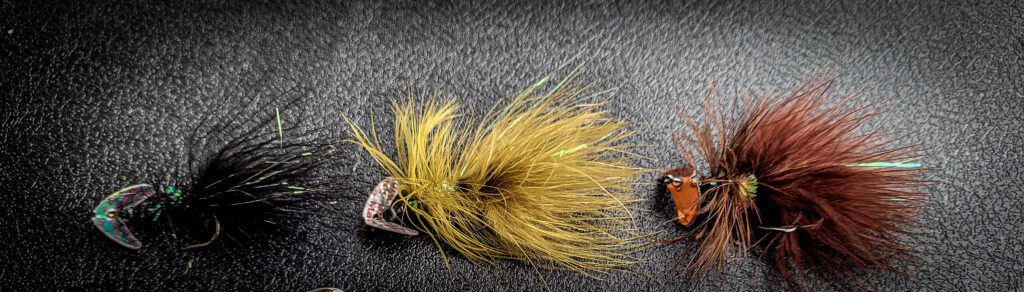
This is your standard trout lake and you can’t go wrong soaking powerbait or single salmon eggs doused with Pro-Cure SuperGel in nightcrawler or trophy trout. Be ready if you’re a bait plunker as there are also some big channel catfish in the lake that might gobble up your offering and give you a heck of a surprise when you’re expecting a planter rainbow! When the ice is on a favorite bait is cooked cocktail shrimp tipped with some corn soaked overnight in Pro-Cure bloody tuna SuperGel. But either before the ice or after it comes off my number one way to fish Roses is to troll a Carey Special or olive green Mack’s Lure Smile Blade fly, which is essentially a Whooly Bugger with a small Mylar blade in front.
Black leaches and a gold bead head black or green whooly bugger also works really well and you can use them to catch panfish and bass as well. You can use a 5 to 7 weight fly rod with a slow sinking line, or just a few small split shot two feet in front of the fly with a spinning outfit. Of course, if there was anyone joining me for the day I always made sure we had at least one Yakima Bait Company 2-inch Maglip in a green frog pattern being trolled behind the boat. You can use motors on the lake, but rowing can increase bites as it seems that the slower you go the more fish you catch.
Fly fishing too:
Just to the west of the boat launch is a little stream that outflows from Roses Lake to Dry Lake. Dry Lake is full of warm water fish, such as bass, crappie, bluegills and sunfish. These species always seem to sneak their way into Roses and this part of the lake is ideal for float tubing with a fly rod. There are also tiger trout in Roses and even a few browns, as WDFW tries curtailing the sunfish and invasive panfish that can spawn in lakes by using these predators. If the trout fishing is slow then you can try poppers or leach patterns for the pan fish.
Other options:
If you are planning a trip to the Chelan Valley to give this fishery a try, don’t forget a few other options as well. Dry Lake right next to Roses is a bass fisherman’s dream. This lake is very shallow and by summer the weeds have overtaken the lake, but in fall and spring the weeds aren’t as bad and it’s very fishable. I don’t recommend ice fishing this lake because it is so shallow that the ice seems to be thin or “rotten” in places as the water can remain a bit warmer than the deeper Roses Lake. There is no improved launch at Dry Lake, but a small car topper boat or a float tube works great here. There are some big bass in there as well as good-eating crappie and other pan fish.
Of course, Lake Chelan is also an option that you cannot overlook. Springtime is prime time for the Lakers as they are in their spawning cycle. It seems the bigger fish come up from the depths or from the up lake to the down lake area (little is known where the big fish hang out since the lake is so big and deep). By late spring you can target the kokanee which are heading to the east end of the lake. The standard pop gear and wedding ring tipped with a worm and shoepeg corn soaked in Pro-Cure’s anise or bloody tuna is the top producer for the Kokes.
It seems this migration of landlocked sockeye fatten the Mackinaw for a chance to break the state record for Lake Trout. Try off of the end of Wapato Point where the lake goes from 150 feet to over 250 feet, either jigging 1 oz white grub jigs tipped with pike minnow or herring strips or troll a U20 flatfish along the bottom off of downriggers. If you’re not equipped for the deep water, the smallmouth bass are found along the docks in the town of Chelan. The water is clear enough that you can often see fish for the bass.
Back on Roses Lake, keep an eye on the afternoon winds and be ready to head for the boat launch. If the trout fishing slows then work the cattails for some incredible bass fishing. You might not find big bass here but they are plentiful and easy to catch. Keep in mind that there is often a water ski slalom course on the west end of the lake and that others will be using this lake as well. The 130-acre body of water is surrounded by orchards and a few houses and respect the shoreline.
The WDFW access site gets busy but there is plenty of parking and good bank access. This lake has it all, for everyone, from kayakers and float tube anglers to bass boats and tow boats, trout and bass, and some bluegill too. This makes it a perfect lake to take the kids as well as just spend some time catching fish while in the Lake Chelan Valley.
/articles/spring-ahead-roses-lake
How To Catch Trout On A Rainy Day
They say an angler is a man who spends rainy days sitting around on the muddy bank of a river doing nothing. Because his wife won't let him do it at home.
Once I made a rainy day road trip through Central Oregon early in the spring. I didn't fish much, but I talked to anglers, most of whom were doing nothing. Here's a sample of the folks I met and how they were fishing.
One guy had the door of his Mercedes propped open while he fished the Deschutes at Warm Springs. He had tied a hook direct to the end of the main line and had a worm on it. No swivel. No leader. No split shot. Just a hook and worm.
He couldn't figure out why he couldn't cast farther than the end of his rod. I couldn't figure out how he had generated enough brain activity to afford a Mercedes.
At Taylor Lake in The Dalles, a father and son were sitting in a Chevy watching their poles. I walked up about the time they reeled in. They had split shot crimped on main lines, big snap swivels, and short, heavy snells on big No. 4 worm hooks. Okay for catfish, maybe, but not for trout. They told me the trout weren't biting today. When they went home they probably said, "The fishing was good; it was the catching that was bad." News Flash: It ain't ever gonna be good.
At a kids-only trout pond in Bend, I saw a man and wife in their 90's fishing with fly rods. They were seated on lawn chairs right next to the sign that said Fishing For Children Aged 17 and Under.
Tied to very short leaders, they had huge Spin-N-Glos with nightcrawlers on 2/0 trebles. Too big for anything smaller than a 30-pound Chinook. Their baits lay on the bottom about two feet out from the bank.
Call me old fashioned, but I think people when they go fishing for trout, should know how to rig for trout.
Here are three easy ways to catch 'em.
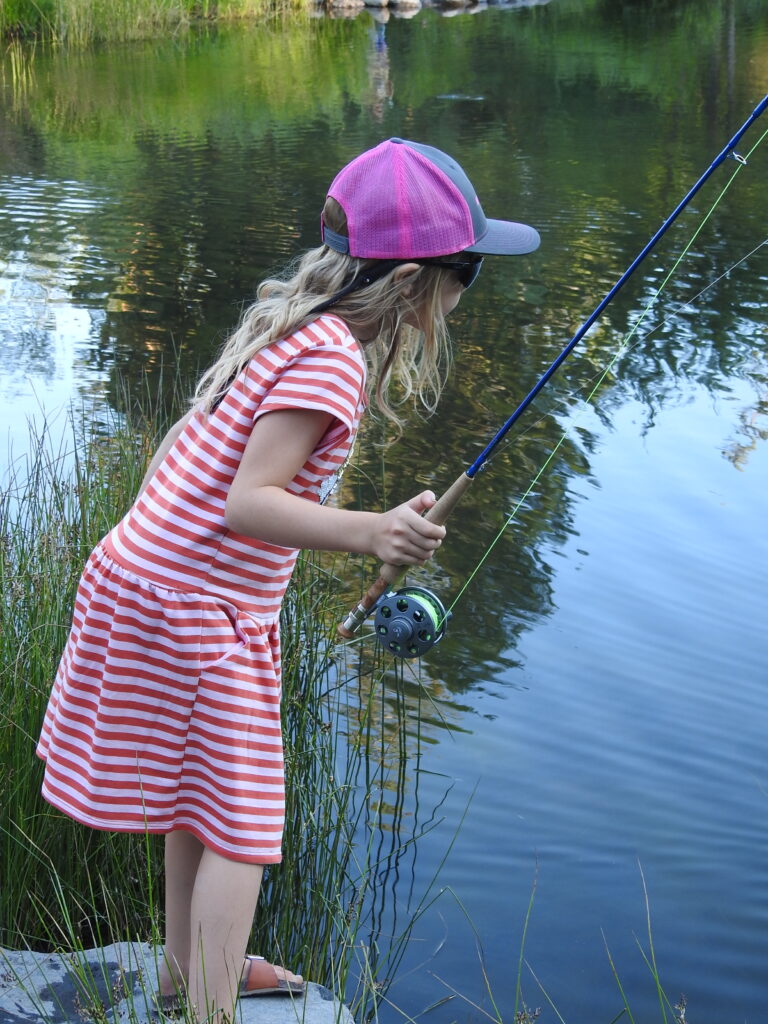
PASTE BAITS/JAR BAITS
Use a paste bait, particularly when the water is cold in the early season. Slide a bullet sinker onto the main line and then tie on a barrel swivel. Then tie on a 30-inch four- to six-pound test leader terminated at a No. 12-16 treble hook. Pinch a bit of the paste bait (Power Bait, Gulp! or similar), roll it in a ball and cover the hook with the dough.
Cast out, let the bait sink to the bottom, then leave it. Set the rod down and watch it. When the line starts to move, pick up the rod and reel in.
This rig catches fish and it kills them. So don't plan on fishing for sport, for catch-and-release. Use this method when fishing for a fish dinner.
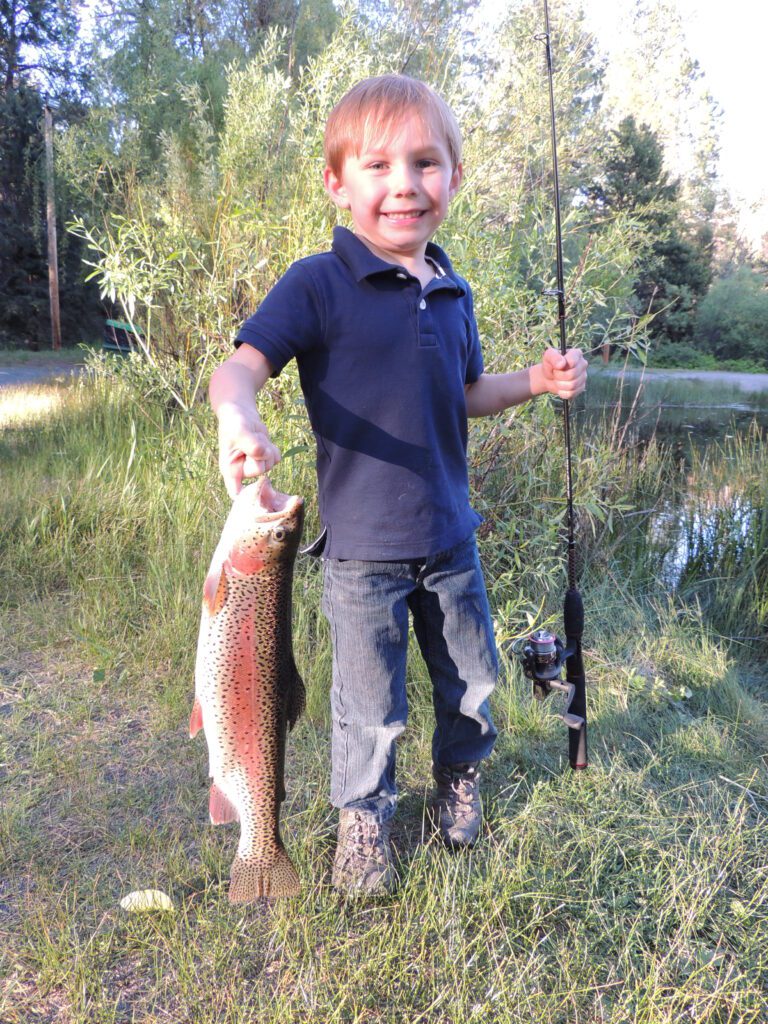
BOBBER AND WORM/BOBBER AND EGG
The bobber and worm rig is just as effective as it ever was. Rig this way when fish are active and higher in the water column.
Tie a swivel to the main line. Tie on a leader about 24 inches long. Tie on a No. 8-12 bait holder hook if fishing with a worm. Use a No. 12 hook if fishing with salmon eggs. When using nightcrawlers, cut the worm into pieces instead of using the whole worm. Pinch on a bobber above the swivel. Pinch a couple of small split shot on the leader.
Cast out, set the rod down and watch the bobber. When the bobber starts to move, let it bounce a couple of times then set the hook.
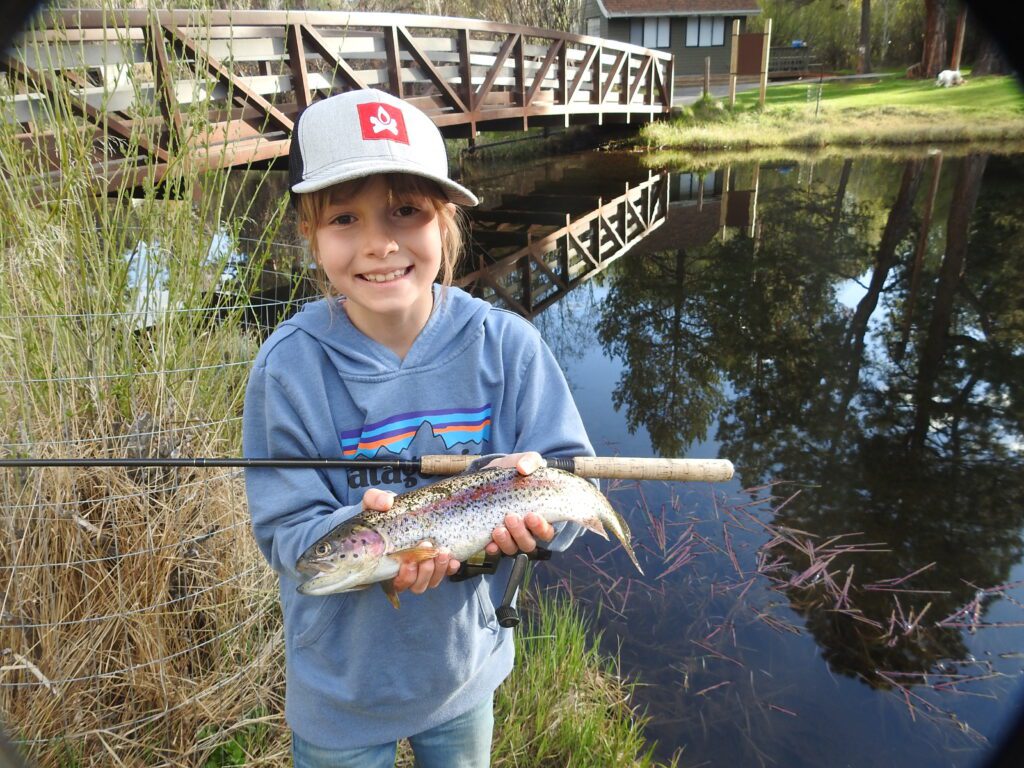
FLY AND BUBBLE
Use a fly and bubble when the water is clear. One of the most effective rigs for catching hatchery trout in clear water is a spinning rod rigged with six-pound test mainline and a float and fly combo. Slide a clear plastic bubble over the main line. Tie on a swivel. Tie on a 48-inch 4-pound test leader and finish with a No. 10 Red Tag Woolly Worm. At the lake, fill the plastic bubble with water which provides the weight necessary for long casts. If the fly doesn't sink fast enough, put on a small split shot.
Cast and reel it back S-L-O-W. Keep moving around the pond until fish are located. This is a good method for catch and release.
Fishing is not hard, but using the wrong baits and fishing in the wrong spots will lower an angler's success rate. Make it easy for the fish to find your bait or fly. Fish where fish are.
Still need help? Stop at a sporting goods store. Take your rod and tackle box inside. They're going to sell you something, and that's okay. But get a tackle expert to rig the rod the right way. They'll do it if you ask nice. Pay attention so you can do it next time. Then go fishing. Your loved ones want you to get out of the house.
As has been said before, "Give a man a fish and he has food for a day; teach him how to fish and you can get rid of him for the entire weekend."
# # #
For a copy of the Fishing Central Oregon book, send $29.99 to Gary Lewis Outdoors, PO Box 1364, Bend, OR 97709 To contact Gary Lewis, visit www.GaryLewisOutdoors.com
/articles/how-catch-trout-rainy-day
Five Ice Fishing Destinations in Montana
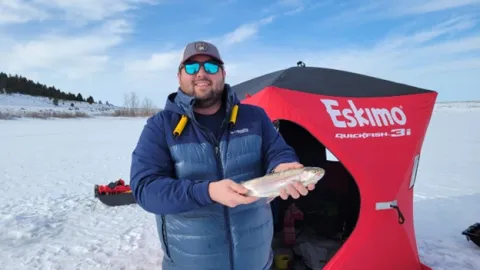
Why stop fishing just because it’s not flip-flops and t-shirt weather? The seasons may change, and the boat may be winterized and put away for storage, but that doesn’t mean we have to stop our fishing adventures. On the contrary, there is something to say about the hard water fishing experience when the temperatures drop. Here in Montana, ice fishing is just another part of the ebb and flow of the outdoor lifestyle many residents share and love. Candidly, I have not ice-fished on these bodies of water, yet. I have, however, fished most of them and we even have several episodes at a few of the mentioned locations with future plans to highlight the other fisheries! Without further ado, here's a detailed exploration of five fantastic ice-fishing spots in Montana. Let's dive into each location to understand why they're great choices for ice fishing enthusiasts.
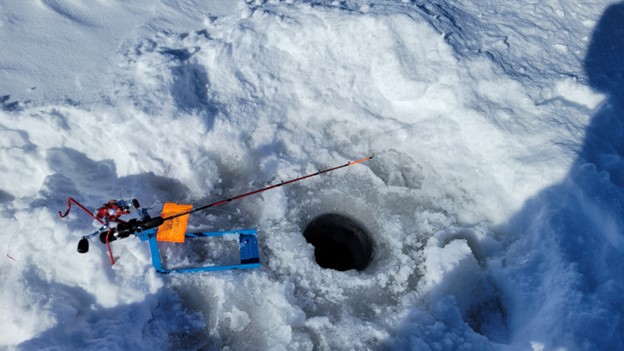
1. Fort Peck Reservoir
Fort Peck Reservoir is a premier destination for ice fishing in Montana. This massive reservoir stretches across more than 245,000 acres, making it one of the largest bodies of water in the state. The reservoir's vast size provides a diverse habitat that supports a variety of fish species, including northern pike, walleye, lake trout, and smallmouth bass. You may recall a chinook salmon episode filmed in the late summer with the NWF crew and Shelby Ross of Ross Outdoor Adventures. While the chinook are certainly appealing, the ice fishing appears to be in its own class as well!
The reservoir's northern pike population is particularly noteworthy, with anglers regularly catching specimens of over 20 pounds. During the winter months, these fish are more accessible as they move into shallower waters under the ice. Ice fishing at Fort Peck requires careful planning due to its size and the potential for rapidly changing weather conditions. However, for those willing to brave the elements and the drive, the rewards can be substantial.
Local guides and outfitters offer ice fishing tours and equipment rentals, which can be particularly helpful for those unfamiliar with the area. The reservoir's remote location also means that anglers can enjoy a relatively undisturbed experience, surrounded by the stark beauty of Montana's winter landscape. The isolation is perhaps one of the major draws to the area - Circle, MT, just southeast of Fort Peck, is the farthest location away from a Starbucks in the contiguous United States.
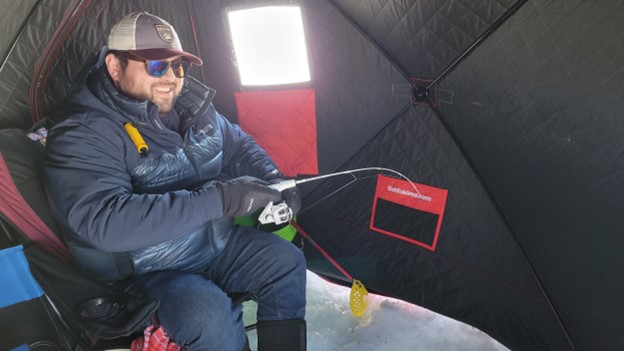
2. Georgetown Lake
Georgetown Lake, located in the picturesque Anaconda-Pintler Range, is a popular ice fishing destination known for its abundant kokanee, rainbow, and brook trout populations. The lake sits at an elevation of over 6,000 feet, and its high altitude ensures solid ice cover during the winter months. Georgetown has been on my radar as a location to fish since picking up ice fishing - and for great reason.
One of the appealing aspects of Georgetown Lake is its accessibility. The lake is located near major highways, and there are several public access points with ample parking. This ease of access makes it a convenient option for both day trips and longer stays.
Rainbow trout are the primary target for ice anglers at Georgetown Lake. These fish can be found throughout the lake, but they often concentrate around the mouths of tributary streams where they feed on insects and other small organisms. Anglers typically use a combination of jigging and tip-ups to entice the trout, with small jigs tipped with worms or maggots being particularly effective.
In addition to rainbow trout, Georgetown Lake also hosts a healthy population of brook trout. These fish are often found in shallower waters and can be caught using similar techniques to those used for rainbow trout.
Outside of trout, the kokanee salmon bite makes Georgetown an attractive ice fishing location. There is no limit on kokanee and seeing some of the photos others have taken, they do not appear to be in short supply. The lake's consistent ice conditions and reliable fish populations make it a favorite among local anglers.
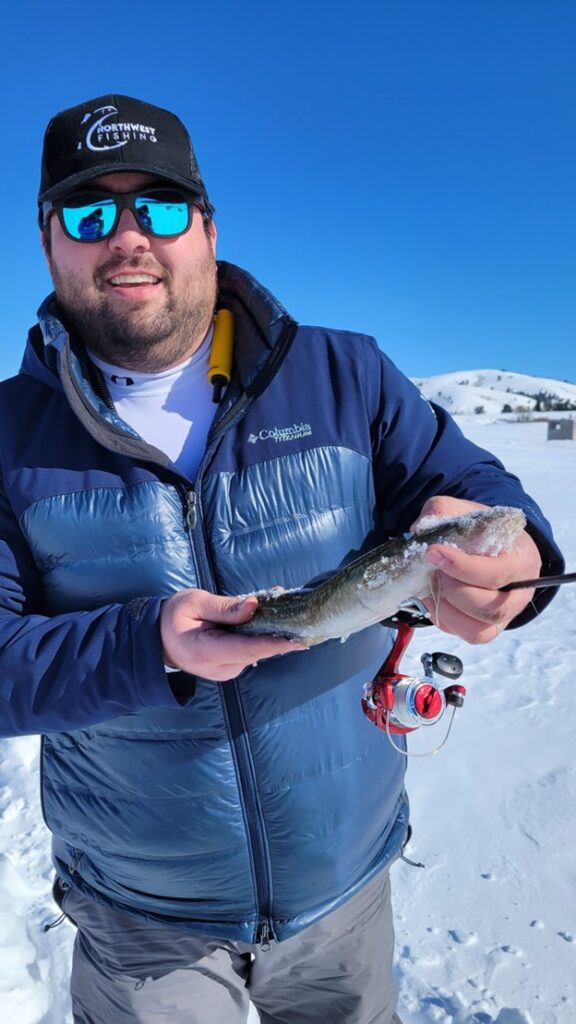
3. Canyon Ferry Lake
Canyon Ferry Lake, located just outside of Helena, is another top-notch ice fishing destination in Montana. This large reservoir spans over 33,000 acres and is known for its healthy populations of walleye, yellow perch, and rainbow trout.
One of the unique features of Canyon Ferry Lake is its relatively shallow depth, which helps maintain stable ice conditions throughout the winter. The lake's shallow waters also make it an ideal habitat for walleye and yellow perch, which are the primary targets for ice anglers.
Walleye can be found throughout the lake, but they often concentrate around submerged structures such as rock piles and drop-offs. Anglers typically use jigging techniques with lures that mimic small fish or insects to attract walleye. Tip-ups baited with live minnows are also effective for targeting these predatory fish. A recent walleye fishing trip with Mackenzie River Pizza Co. saw us bottom-bouncing for several nice eater-sized fish. It’s reasonable to assume that ice fishing would produce a similar yield.
Yellow perch are another popular target at Canyon Ferry Lake. These fish are known for their schooling behavior, and once a school is located, anglers can often catch multiple fish in quick succession. Small jigs tipped with worms or maggots are the preferred method for catching yellow perch, and the use of electronic fish finders can help locate schools of fish under the ice.
Canyon Ferry Lake's proximity to Helena makes it a convenient destination for both local anglers and visitors. The lake's abundant fish populations and reliable ice conditions ensure a productive and enjoyable ice fishing experience.
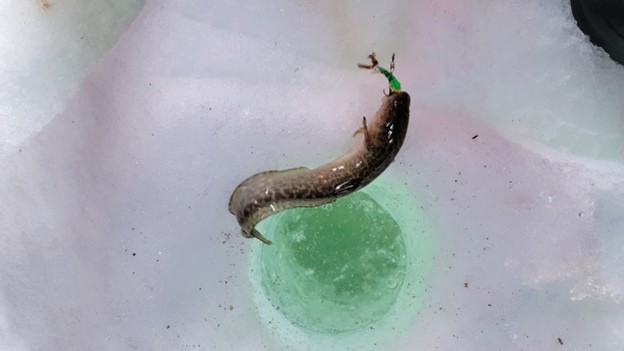
4. Lake Mary Ronan
For those seeking a quieter and more secluded ice fishing experience, Lake Mary Ronan is an excellent choice. Located west of Flathead Lake, just outside of Glacier National Park, this smaller body of water offers a peaceful setting. The lake is known for its healthy populations of kokanee salmon and yellow perch.
Kokanee salmon are the primary target for ice anglers at Lake Mary Ronan. These landlocked sockeye salmon are prized for their fighting ability and, of course, delicious flavor. Kokanee can be found throughout the lake, but they often concentrate in deeper waters during the winter months. Anglers typically use small jigs or spoons tipped with maggots or corn to attract kokanee. Electronics such as fish finders can be particularly useful for locating schools of these fish under the ice.
Yellow perch are another popular target. These fish can be found in shallower waters and are often caught using small jigs tipped with worms or maggots. The lake's clear waters and abundant vegetation provide an ideal habitat for yellow perch, and anglers can expect consistent action throughout the winter.
Lake Mary Ronan's scenic surroundings and peaceful atmosphere make it a great destination for those looking to escape the hustle and bustle of more popular ice fishing spots. The lake's relatively small size also makes it easy to navigate, ensuring a productive and enjoyable experience. An opportunity to combine ice fishing, a scenic view and a historic area make Lake Mary Ronan an ice fishing paradise.
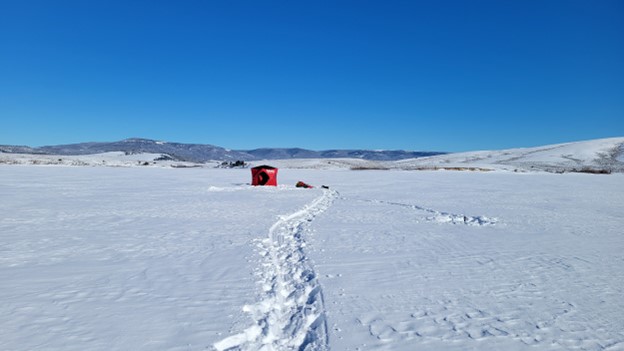
5. Hebgen Lake
Sticking with the “lakes close to national parks” theme, Hebgen Lake, located near West Yellowstone, is a renowned ice fishing destination known for its populations of rainbow and brown trout. The lake's proximity to Yellowstone National Park adds to its appeal, offering stunning views and a unique winter fishing experience.
Hebgen Lake is one of the first bodies of water in the region to freeze over each winter, providing early ice fishing opportunities. The lake's large size and diverse habitat support healthy populations of both rainbow and brown trout, making it a favorite among local anglers.
Rainbow trout are the primary target for ice anglers at Hebgen Lake. These fish can be found throughout the lake, but they often concentrate around the mouths of tributary streams and areas with submerged vegetation. Anglers typically use jigging techniques with lures that mimic small fish or insects to attract rainbow trout. Tip-ups baited with live minnows or worms are also effective.
Brown trout are another popular target at Hebgen Lake. These fish are often found in deeper waters and can be caught using similar techniques to those used for rainbow trout. The use of electronics such as fish finders can help locate schools of brown trout under the ice.
Hebgen Lake's stunning winter scenery and reliable ice conditions make it a must-visit destination for ice fishing enthusiasts. The lake's proximity to Yellowstone National Park also provides opportunities for wildlife viewing and other winter recreational activities. The Madison River Fly Fishing episode with The Rainbow Valley Lodge from this past season was filmed just a few miles north of Hebgen Lake. Imagining those picturesque mountains in the winter season with fresh snow would instill a sense of the rugged west in anyone.
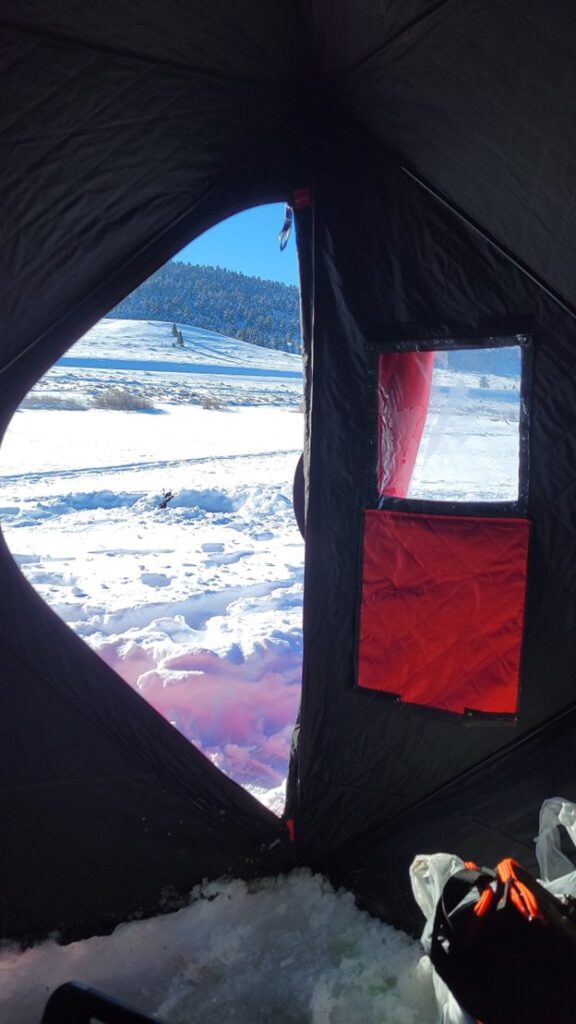
/articles/five-ice-fishing-destinations-montana
Fall Trout Techniques
Conventional wisdom dictates that trout fishing usually slows down in the heat of the summer. Trout prefer cold water temperatures and go off the bite when the water gets too warm for comfort. Around October, water temperatures cool down and the bite starts to come back on. The fish have been feeding and growing since spring, so they're usually feistier and bigger. They're a ton of fun for kids and adults alike. Fall in the Pacific Northwest can be the best time of year to catch trout! Read on to learn how you can reach your limit on these tasty fall treats.
Trolling
Don't winterize the boat just yet! Now is the time to troll big spoons and spinners. The fish are looking to pack on some pounds before winter and are more likely to strike large presentations. Try trolling size 7 jointed Rapalas. Bold colors such as fire tiger and chartreuse are great in the fall. Now is the time to experiment with something different. This is my favorite time of year to use large trolling flies. That said, the usual techniques such as Mac's Wedding Rings paired with small dodgers and lake trolls will work very well.
I'd recommend trolling faster than you would in the spring or summer. The fish are more energetic and willing to chase down a lure. How deep you should set your lures is where things get less certain. Sometimes they're on the surface, and other days they’re in the mid-water column. This is where having a decent fish finder will be important. Be adaptable and always have a plan B!
Shore Fishing
No boat? Have no fear, fall trout cruise the shoreline and you have a good chance of bringing home your limit. Dough baits are always a reliable option, though not the most exciting way to fish. On 2 pole endorsement lakes, I like to soak dough bait with 1 rod and throw spinner or spoons with another. Fall trout are eager to bite on hardware!
Not all lakes have good shore access. Some have pay-to-fish docks, such as Lake Tanwax, Mineral Lake, and Clear Lake. It's a good idea to have a backup plan if the fish aren't biting at your lake of choice. Check the stocking reports and take a look to see if any of your local lakes have tagged fish in them. You can win cool prizes from WDFW for catching a tagged fish, and there are plenty still left.
Catch N Cook!
Once you've got your catch home, the fun part begins: cooking it! I learned how to smoke fish by smoking trout. You can smoke them fileted or butterflied. I prefer to smoke filets so I can fit more fish in the smoker but butterflying them is easy and less time consuming. You can make a dry or wet brine- I have recipes for both, depending on how I'm feeling.
Dry brines don't take nearly as long to work their magic, especially on small trout. Wet brines are more forgiving and allow for more flavor options. Smoked trout works well in dips, pastas, and on bagels. Add maple syrup or honey about 30 minutes before taking it off the smoke for trout candy. I like to munch on my smoked trout candy as a high-protein snack while hiking and fishing in the fall.
Fall trout are also good baked, fried, and grilled. I like to use the seasoned fish fry from Winco's bulk section. Dip the fillets in a beaten egg, coat in the fish fry, then gently place in hot oil until golden brown. They're great dipped in sriracha mayo! For a healthier snack, try lightly oiling the fillets, then shaking some lemon pepper seasoning on. Bake at 350 degrees until fully cooked. You can also wrap whole trout in foil with some butter and garlic, then throw it in the oven or grill for an easy and delicious meal.
As you can see, fall trout are not only fun to catch, but delicious to grill and smoke. This is a great time to introduce kids to fishing! The weather isn't too hot and there's no need to be on the water at the crack of dawn. Shore fishermen and boat anglers alike have an excellent chance of coming home with limits of these aggressive, tough fish. We hope to see you out on the water this fall!
/articles/fall-trout-techniques
Fall Fishing At Potholes Reservoir
September and October are my favorite times of year and one of my favorite places to recreate is at Potholes Reservoir, located between Moses Lake and Othello in Eastern Washington. This is a large irrigation reservoir fed by Crab Creek, Lind Coulee as well as Winchester and Frenchman’s Wasteway. At full pool, the lake has 28,000 surface acres of water but after a long summer of dropping water the lake definitely “fishes smaller”.
While there is not as much water to fish, particularly back in the sand dunes area and Crab Creek, there is still plenty of lake to fish and at this time of year, the fish are biting as they beef up for the long winter ahead. Let’s run through some of the species you can fish for here and some effective ways to catch them:
BASS:
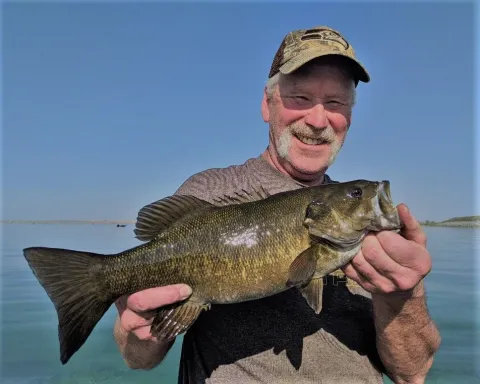
Bassmaster Magazine ranked Potholes Reservoir as the ninth-best bass fishing destination in the Western United States this year and for good reason. There is a healthy population of both largemouth and smallmouth bass in several age classes. The largemouth tend to be bigger, averaging two pounds and getting up to 7-plus pounds. At a typical bass tournament, you’ll need to have a five-fish bag weighing over twenty pounds for a chance to win. The smallmouth run a bit smaller, with one-pound fish being abundant. But I caught a 5.4-pound smallmouth here during September so big smallmouth are around.
At this time of year, the baitfish have moved out into the main lake, and so have the gamefish that are after them. Pete Fisher at the MarDon Resort Tackle Shop and the owner of Fisher Brothers Baits says fishing in front of the dunes on the main lake is the best place to go. The fish will be suspended around sandy humps and Pete says fishing a football head jig with a hula grub trailer is an effective way to catch these fish, which are primarily largemouth bass.
If you want to go after smallmouth bass head towards the face of O’Sullivan Dam or into Lind Coulee at the south end of the lake. Personally, I enjoy using deep diving crankbaits here this time of year which are effective for both bass and walleye. One of my favorite lures is a Berkley Digger crankbait, which dives to depths of 14 feet. When it comes to fishing near the dam, Pete Fisher likes to use perch colored ¾ ounce swimbaits or topwater plugs with white being a preferred color.
WALLEYE:
The walleye bite can be spectacular in the autumn months. These tasty fish tend to be found off the face of the sand dunes or the mouth of Crab Creek. As Nathan Lafrance says, “If you aren’t sure where to go, just look for the line of boats out there, easy to find.” As for how to catch them, Nathan recommends trolling diving crankbaits at a depth of 10 to 12 feet. Nathan says other lures to try are a jointed Berkley Flicker Shad #7 or a Bill Lewis Walleye Precise Walleye Lite crankbait.
PANFISH:
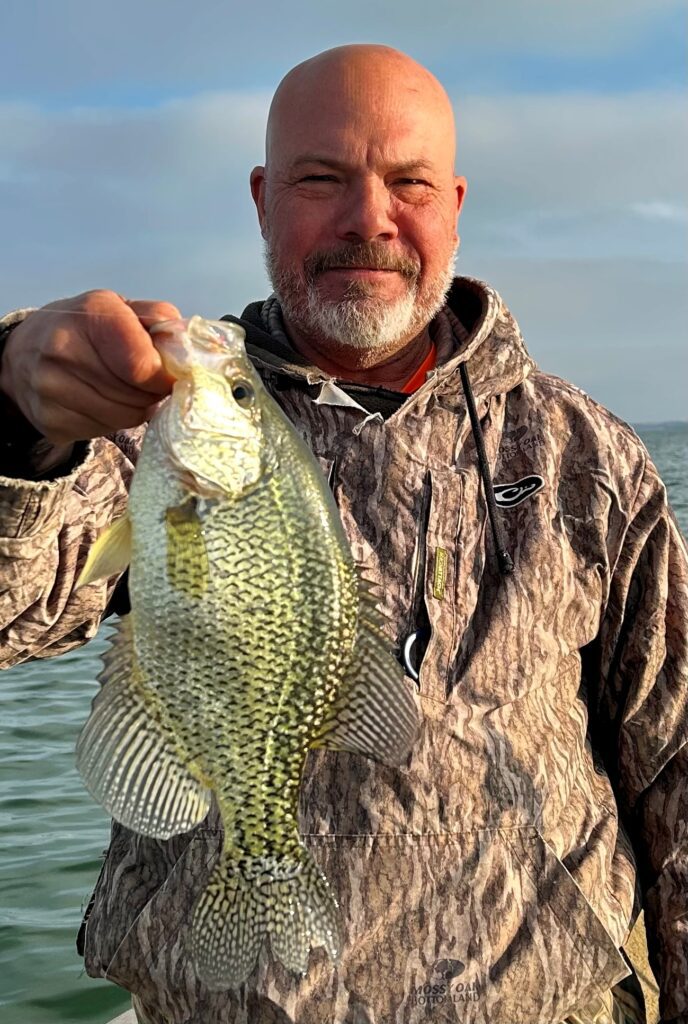
The autumn bite for panfish is excellent and sometimes overlooked by anglers targeting trout, bass and walleye. There is a combined limit for bluegill and crappie of 25 fish, and the crappie have to be at least nine inches long to keep. This regulation has helped turn the reservoir into a quality fishery and 15-inch crappie are relatively common. Last year, an angler reeled in a bluegill that weighed over 2.2 pounds, nearly beating the state record. The perch can also be sizeable here, reaching north of 14-inches in length.
One person who really enjoys fishing for crappie is Pete Fisher. He has a couple of suggestions about where to find them and catch them. Pete says the crappie, like the bass, migrate out of the sand dunes in the late summer. During the autumn months they will be found at the face (or in front of) the sand dunes on the main lake. Fisher says you can cast or troll Berkley #5 Flicker Shads, especially in a Chrome Clown color pattern. Another way to catch crappie is to fish a small jig under a slip bobber after you find a school of these fish. Fisher prefers a white Bobby Garland shad or DS Fry soft plastic lure paired with a small 1/32 or 1/64th ounce jig head. If you do catch a bunch of panfish, you’ll be happy to know there is a fish cleaning station at both MarDon Resort and at Potholes State Park near the boat ramp.
TROUT:
The rainbow bite really turns on in the fall and the size of these fish are impressive. One to three-pound rainbows are commonplace and sometimes you’ll get them bigger than that. Nathan LaFrance suggests trolling Berkley Flicker Shads or longer minnow shaped crankbaits. As to where to find the trout, a couple of good places are off the mouth of Frenchman’s Wasteway or in the northeast corner of the lake near the mouth of Crab Creek.
RESOURCES:
If you are looking for a place to stay you can camp at Potholes State Park or MarDon Resort, which also has cabins and cottages for rent. The resort also has a tackle shop and The Beach House bar and restaurant. The Potholes Bar and Grill is another nearby restaurant that is close to the entrance of the state park.
If you have never fished or hunted Potholes Reservoir before, consider booking a “Cast & Blast” trip with Ross Outdoor Adventures. These trips are only offered in October. Shelby Ross and his guides know how to navigate the tricky channels leading into the sand dunes like the back of their hands. They will take you in before dawn, treat you to a fun duck hunt, and finish the hunt with duck poppers cooked up in the blind. After that you put away the shotguns and go trolling for walleye, usually picking up several other fish species along the way. It makes for a fun day and a great introduction to the fall hunting and fishing scene at this spectacular destination.
WEBSITES:
By John Kruse, host of Northwestern Outdoors and America Outdoors Radio
/articles/fall-fishing-potholes-reservoir