The Cure for High Lakes Trout by Gary Lewis
How to turn eggs from hatchery trout into more hatchery trout.
We had a mild, dry winter with little snowpack. Now in the heat of summer, wildfire smoke shrouds the lowland valleys, and a lot of people who would rather be fishing are staying home.
Up in the mountains, the air is clear and beautiful. If there is smoke in the air, it filters the light and provides an otherworldly feel on the high lakes.
Here in central Oregon, the trout fishing has been fantastic. Fly-rodders, lure fishermen, and bait anglers have been having the best trout season of their lives.
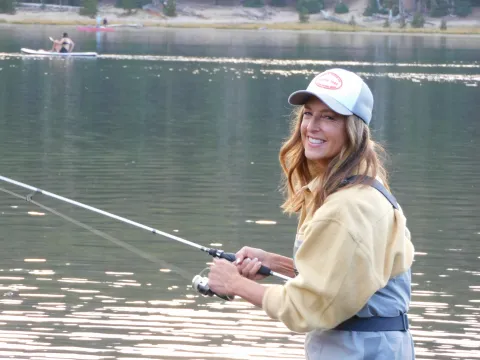
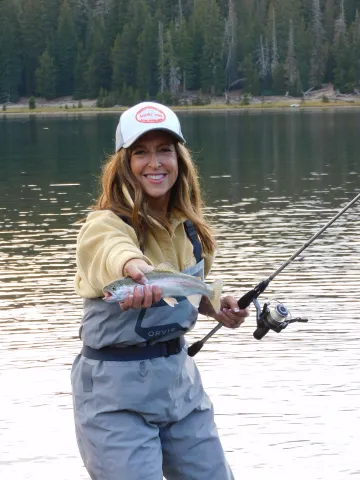
I have started tying egg loop knots and curing eggs on a smaller scale. Our hatchery programs turn out legals, "trophy" trout (14 to 18 inches), and brood stock fish that can go six pounds or more. Some of those hatchery fish have eggs in them, which look like bait to me.
WHY SPAWN SACS?
Trout eggs are few and fragile, and the skein is weak, but they are a dynamite way to turn hatchery trout into more hatchery trout.
Use spawn netting to conserve the eggs for a longer time in front of the fish. While an egg-looped bait might stay on the hook for three or four casts, the spawn sac bait can go for 40 or 50 casts and multiple fish.
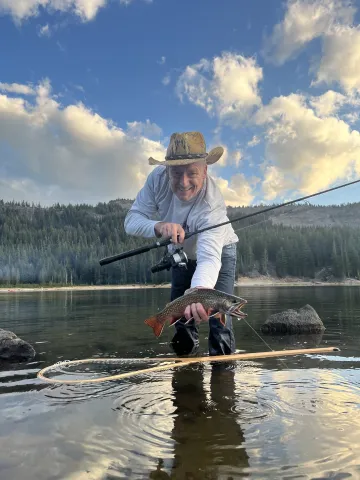
I kept the eggs from a 30-inch lake trout and put them in a paper towel in the refrigerator, and forgot about them till I was in Alaska. My wife was home and cured the eggs for me (her first time curing eggs), and we put them to use on a fall trip to one of my favorite lakes. I wound up catching a pair of beautiful brook trout. Opening our mixed bag of rainbows and brookies that evening, I harvested bait for the next trip.
Try to get eggs from four or five trout before starting the cure. First step in preparing the eggs is to allow them to air dry on a paper towel for a day or so.
The cure itself can be any one of dozens of commercial powder or liquid offerings or a person can prepare their own with Borax, brown sugar, and salt. Lately, we have been using Pro-Cure's Last Supper blend, augmenting it with sea salt and krill powder.
Donning latex gloves, I roll the eggs in the cure, making sure the cure adheres to both sides of the skein. Next, I sprinkle on extra salt and krill powder. Then I let that combination drain/air dry for about a day. After that, the eggs are ready for the spawn netting.
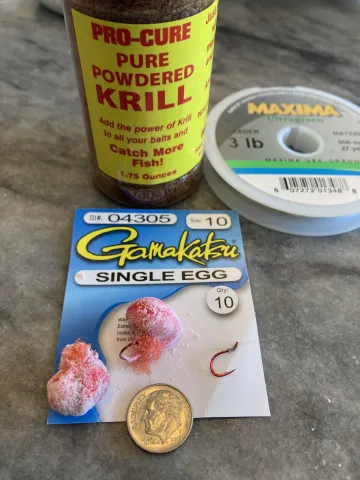
For these smaller baits, I will use a No. 8 or No. 10 egg hook with an egg-loop knot. The bait should be the size of a dime. I get two to four baits out of a skein and four to eight baits per fish.
Cut a small rectangle of netting (I use Atlas Mike's) and lay the bait on it. Then gather the edges and tie it with stretchy string (like Kwikfish Stretchy Thread. Trim off the extra string and netting, and you have a dime-sized bait ready to fish.
Baits can be stored in Ziploc bags, plastic boxes, or glass jars. Use the baits as-is or add a little more Borax to toughen them up.
Curing eggs for a spawn sac presentation allows the angler flexibility in doctoring the baits to specific conditions or to provoke a reaction bite. Eggs sink, which makes spawn sacs a great choice for a float (bobber) presentation. But because eggs sink, they are prone to hang up on rocks in a drift-fishing presentation. The "cure" for that is to add a foam egg (like a Mad River Fish Pill) to the spawn sac.
Jason Hambly, of Pro-Cure Bait Scents, in Salem, Ore., recommends adding krill powder to any trout bait. Garlic, too, is a proven trout favorite. I like to add a touch more garlic to a bait intended for cold water presentations. When the temperature drops in December in these parts, it can be harder to get fish to move. But they seem to move for garlic. Salt, brown sugar, and anise are other scents that could be added to spawn sacs. It makes a lot of sense to bring several flavors and experiment with what works in varying conditions.
STILL WATER RIGS
For our fisheries, I like a finesse presentation using a smaller No. 10 egg hook and a light three-pound test leader. When targeting bigger trout, consider sizing up to a No. 8 egg hook, nickel-size baits, and a five- or six-pound-test 20-inch leader.
Attaching bait is as simple as running the point of the hook beneath the netting knot, then securing it with the egg loop.
In a lake, the bait can be presented under a float when targeting a specific feeding zone. I like to use a sliding sinker fished over a ledge on a travel zone, such as along a drop-off.
WHERE TO FISH
In August and September, plan trips to hit one or more fisheries. Think early morning and late evenings. Eat an early dinner and fish the last two hours of the day. Get up at dawn, fish for the first hour of the day, and then go get breakfast.
In the Cascades, top destinations include Diamond Lake, Detroit Lake (even as it draws down), Cultus, Elk Lake, Olallie Lake, and Timothy. But there are a hundred more. Open a map or get a copy of the Fishing Central Oregon book or Fishing Mt. Hood Country. The Department of Fish and Wildlife stocks all the drive-to and hike-in Cascade lakes.
Sometimes it's fun to experiment with something new, to do something different.
Reinvent your fishing and target trophy fish and brood stock with scaled-down baits.
# # #
Gary Lewis makes his home in Central Oregon.
/articles/cure-high-lakes-trout-gary-lewis
Kayak Fishing for Trout by Josh DeBruler
As we roll into summer, it can be a little overwhelming managing the excitement of all the fisheries that are opening around us and becoming more accessible due to the passing of the winter doldrums. It’s a good problem to have! We are inundated with fishing opportunities. For me, it’s comforting knowing that I always have the simple staple of rainbow trout fishing. Its simplicity brings accessibility for our families and children. It means we can throw a couple of kayaks in the back of the truck, a cooler, some rods, and we can take the ones we love out to relish in the joys of fishing. Now, I enjoy my motorized boat as much as the next guy, but with small trout lakes being so abundant, there’s a good chance we can bring the kids out to a lake that offers the added comfort and safety of boat speed restrictions, or in some cases, motorized boat restrictions.
Rainbow trout are intensely prolific throughout the Pacific Northwest. Native rainbows can be found throughout the Columbia River and its tributaries, like the Yakima and the Snake, and they thrive in the reservoirs built amongst these waters. They also flourish in alpine lakes high in the Cascades and Olympic Mountains. Though they are native to many waters of the northwest, the native stock is, for the most part, highly regulated by the Department of Fish and Wildlife for conservation purposes. Aside from this, wild rainbow trout tend to be found in rivers and high lakes that are not as easily accessed by kayak, which is why I personally like to target the stocked rainbows, which, despite what you might here from a handful of naysayers, are actually quite good eating when thrown on the smoker or baked with butter and garlic and whatever other aromatics you might throw at it. If you’d like to target Columbia basin Redband rainbow trout (Wild trout) for catch and release, Lake Roosevelt in Ferry, Stevens, Lincoln, Okanogan, and Grant counties is an excellent place to get started.
Hundreds of thousands of catchable-sized rainbow trout are stocked in lakes throughout Washington each year. There are too many lakes to mention here; however, you can hop onto the WDFW website and navigate to “catchable trout plants,” and chances are you will find a lake within a short drive of wherever you are that has planted trout.
As an avid kayak angler, I’m not afraid to admit that some kayak fishing can be cumbersome, complicated, and often leaves me wondering why I’m not instead using a larger boat to catch my fish. Thankfully, rainbow trout fishing from a kayak does not bring up any of those thoughts or trepidations. It can be as easy as casting a lure out behind you, setting your pole in a rod holder, and enjoying a nice paddle until you hear your rod bouncing around and causing a ruckus behind you.
Just about any type of kayak will do for rainbow trout fishing. The one caveat being that if you’re trolling, you should have a rod holder. If your kayak does not come equipped with one, then you can find a mountable one at most outdoor sporting equipment stores that carry fishing gear.
Trolling is my favorite method as it allows me to cover a lot of ground, and if done during the morning or evening, it can result in a limit of trout within a short period of time.
Trout are predatory fish, and once stocked, trout become accustomed to the natural diet of the lake they are planted in. They tend to be aggressive towards moving targets during the warmer months.
Inline spinners like Panther Martin, Rooster tails, Mepps Aglia, and Blue Fox Vibrax are all classic lures that work by allowing a constant spinning motion of the small attached spoon while presenting a colorful tube-shaped body. These all come with a treble hook or single hook that typically has the choice of being dressed with or without hackle. Generally, larger lures will catch larger fish and vice versa. The dressed lures present themselves as larger due to their increased profile. Chartreuse, black, white, yellow, and rainbow trout colors are all very effective. I typically start with a rainbow trout colored lure and switch out once they stop biting at that. The Blue Fox Vibrax has the added benefit of emitting a sonic vibration that can agitate fish and produce a strike. These inline spinners can be cast or trolled and are often the only lure type I need to bring with me. Other options outside of spinners would be small spoons or mini tube jigs.
A rubber trout net is another essential tool to bring along on your kayak. The cheap poly nets are less preferred as they often get stuck under the fish’s gills and can result in a dead fish that you otherwise may have been throwing back.
Divers
Since we are talking about kayak fishing, and with kayak fishing, I like to keep things simple, I hesitate to add more complexity to our fishing setups. However, if the mid-day warming of the water is causing the fish to hold deeper below the surface than what your standard trolling setup can achieve, then it might be worth deploying a diver. Divers are planers generally made of plastic and use hydrodynamics to pull your gear deep into the water. Most divers have a tripping mechanism that releases and stops the diving motion once a fish strikes. This allows you to reel the fish in without fighting the diver’s natural tendency to go deeper into the water. Though they take away from some of the simplicity, they are a heck of a lot easier to deal with than a downrigger, and they can absolutely produce good results.
Summer is here, and the fish are biting! I hope this information helps you with your next kayak fishing adventure! Stay safe and tight lines!
/articles/kayak-fishing-trout-josh-debruler
Three High Desert Hotspots for Rainbows by Gary Lewis
Pull those spinning rods and fly rods out of the closet, tie up leaders, and wind new line on the reels. Here are three great spring fisheries that you need to know before you hit the water.
The warming water raises trout metabolisms and quickens an angler’s pulse as rise rings appear within an easy reach of shore.
CHICKAHOMINY
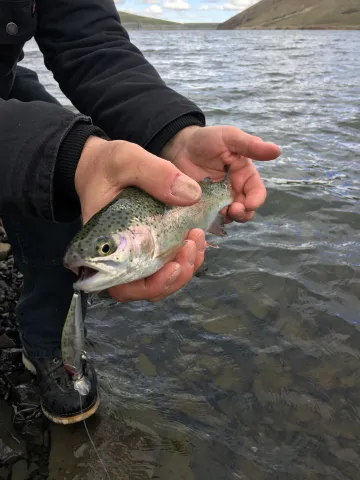
Chickahominy Reservoir is a trout fishing oasis on a windswept plain 100 miles east of Bend. Driving by on Highway 20, you see two blue fingers, a few campers, and picnic tables. Nothing more. What could draw campers to this windy place?
Rainbows are stocked in Chickahominy as fingerlings and reach ten to eleven inches in length by the following year. Two-year-old fish reach eighteen inches. Three years later, they will weigh between three and four pounds.
A narrow reservoir with many coves and fingers, much of the best fishing can be had from shore. Watch for depressions adjacent to shallow bays. Trout use these spots as staging areas prior to feeding in the shallows. A careful presentation yields a strike.
Early in the season, dragonfly nymph patterns are productive, as are scuds and red and black leech patterns. Concentrate on weed beds, edges, and drop-offs. The reservoir reaches a maximum depth of 28 feet. A slow-sinking fly line provides the best control for fishing below the surface.
Bait fishermen do well in the bays and inlets with nightcrawlers, salmon eggs, or jar bait. Use a sliding sinker to take your bait to the bottom. Leave a little slack in the line so a trout won’t feel resistance.
There is a paved boat launch near the dam. Troll trout spoons, or 1/6-ounce Rooster Tail spinners, in the narrows or explore the shoreline, casting to the shallows and letting the lure flutter over the drop-offs.
KRUMBO
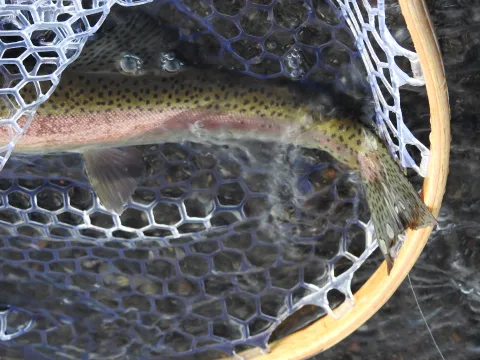
A shallow lake on the west side of the Steens, Krumbo Reservoir, is a great rainbow destination in the desert.
Best bet is to bring a float tube, a canoe, or a car-topper. But there is bank access. Anglers can fish at the dam or walk from the ramp to one of two rocky points that look out over some of the lake’s deeper water. Fish a sliding sinker and 48 inches of leader terminating at a No. 8 single hook with Power Bait or Gulp!
With a boat, launch at the ramp and fish out from the cove to 15 yards from the rocky point on the south. A long weedbed stretches north across the lake. The lake averages ten feet deep. Rainbows stack along the weeds and grow fat on callibaetis and chironomids.
Use a clear intermediate sinking line and troll along the weedbed. Fish a No. 12-14 callibaetis nymph, or better yet, a pair of them. To tempt with chironomids, employ No. 16-18 zebra, black, or red midge larva imitations under an indicator.
Leech patterns are effective. Use black, red, or olive buggers, weighted at the head. Twitch the fly with one-inch pulls.
Krumbo is stocked in late March or early April. Trout that winter over grow to 16 inches in their second year. Every season, the lake produces a number of 20-inch and bigger fish.
Covered tables are provided. A restroom can be found near the dam and at the boat ramp. A handicap-accessible fishing platform is near the boat ramp. The launch is paved with a nice dock. Electric motors are permitted.
Krumbo is open for day-use-only from the opening of trout season through October 31. Access is controlled by an automatic gate that opens a half hour before sunrise and closes a half hour after sunset.
Page Springs campground is a few miles down the road. There is RV camping available in private campgrounds on both sides of the Malheur National Wildlife Refuge.
WILLOW CREEK RESERVOIR
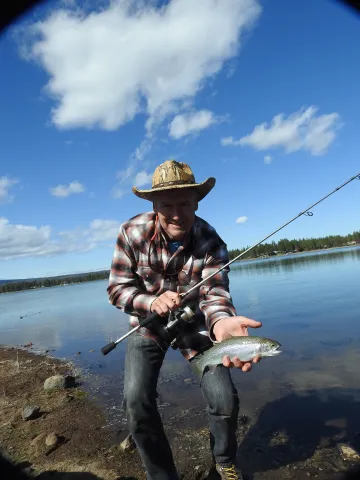
Willow Creek gathers her water from the Blue Mountains and runs it down to the Columbia. An impoundment, built to control periodic flooding of the town of Heppner, Willow Creek Reservoir, is located less than a mile upstream from the town.
The 110-acre lake draws anglers from nearby Hermiston and other towns to do battle with its piscine inhabitants. April and May are the best months for rainbows.
Trout put on weight fast in this food-rich water. Most anglers opt for a bobber and worm or a jar bait to put fish on the stringer, but spinners, trolling, and fly-fishing techniques are productive.
The best trout water is along the rip-rapped south bank and across the lake along the north shore. The water drops off quickly to a maximum depth of 85 feet at the dam.
Good bank fishing access makes this reservoir a safe bet for anglers without a boat. Drive past the boat launch along the south shore and take a gravel road down to a parking lot above a riprap bank. Walk down to the water or fish from the car. A trail along an old roadbed provides plenty of room for fishermen to spread out.
Fly fishermen should troll small spinners or flies such as the No. 8 Woolly Bugger or Spruce. Use minnow imitations like the Zonker to spark the predatory instinct in the bigger rainbows. Change direction, speed, and depth to simulate the escape tactics of a worried minnow.
Willow Creek Campground is located high on the western shore, overlooking the dam and the lake. It has 24 hook-up sites, offering water, electric, and sewer. Maximum length is 40 feet. Covered tables, barbecues, flush toilets, drinking water, showers, and telephones are available.
From I-84, turn right at Exit 147 and follow State Route 74 south to Heppner. Proceed through town and follow the signs uphill to the reservoir.
There won’t be crowds of people, and there probably won't be a line at the boat ramp, but there are trout to fight.
# # #
For a copy of the Fishing Central Oregon book, send $30 to Gary Lewis Outdoors, PO Box 1364, Bend, OR 97709 To contact Gary Lewis, visit www.GaryLewisOutdoors.com
CAPTIONS
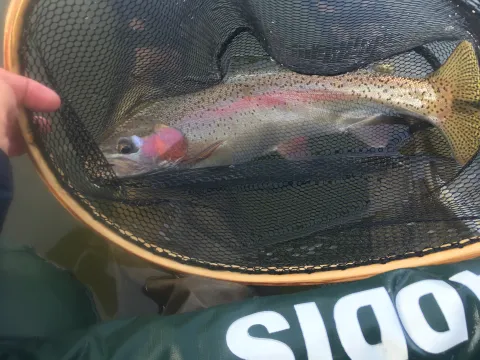
Gary Lewis 5 - An ODFW legal teased up out of Willow Creek Lake near the town of Heppner on a spring morning. Photo by Gary Lewis.
Gary Lewis 8 - In early May, trout can still be found feeding opportunistically and may be caught on a variety of techniques. Photo by Gary Lewis.
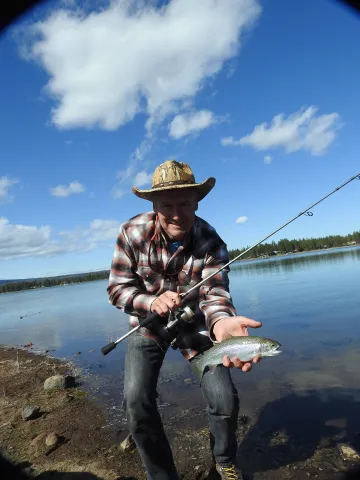
Gary Lewis 18 - Gary Lewis with a hatchery rainbow caught on jar bait. Photo by Gary Lewis.
Gary Lewis_Isom 23 - A high desert rainbow caught on a fly. Photo courtesy Dave Isom.
/articles/three-high-desert-hotspots-rainbows-gary-lewis
Fishing Small Streams with Traditional Tackle for Salmon, Trout and Steelhead by Brent Knight
I recently had the chance to fish for hatchery winter steelhead in a small tributary stream leading up to and past a state hatchery. This is not a secret spot, but I will not mention the name of this specific location. What I found was that the techniques and practices that I use on larger rivers were no good at this place, and I needed to refine my approach. This took me back at least 30 years to a time when I fished for trout in small mountain streams with spinners and bait rigs.
To start, let's discuss the differences between creeks, streams, and rivers. Rivers, streams, and creeks are all natural, flowing, ribbon-like bodies of water constrained by banks and a bed, with the primary differences being size, flow volume, and their role in the watershed hierarchy. Rivers are generally the largest, acting as main channels, while creeks are smaller, often shallower, and frequently serve as tributaries to larger streams and rivers.
Some key differences include:
Size and Volume: Rivers are larger, deeper, and wide enough for some navigation, whereas creeks are small, narrow, and shallow (sometimes 5-15 feet wide). Streams fit in between, typically 15-30 feet wide.
Hierarchy/Tributaries: Creeks are usually small watercourses that feed into streams, which then feed into larger rivers.
Permanence: Rivers are typically perennial (flow year-round), while smaller creeks might be intermittent or seasonal, sometimes drying up.
Flow Velocity: Creeks are often faster, shallower, and may have more turbulent, steep paths, while rivers have higher volume and move more slowly in wider, flatter channels.
Naming Conventions: Often, the distinction is based on local, regional, or historical terminology rather than strict, universal scientific definitions.
When we think of a stream, we often picture fast-moving water that flows downhill on a typically steeper descent than a river. They are generally full of rocks and gravel, have steep banks and cutouts, and sometimes flow through gulleys or canyons. The water is generally shallow throughout, containing pockets of water behind large rocks, against cutout banks, and in the slower, flatter sections of the stream.
For those of us accustomed to drift fishing, bobber dogging, and floating jigs, worms, and bait - we are a bit out of our element in this environment. Everything must be downsized and simplified as we have very limited water to work with, and the stream topography is very grabby, resulting in lots of snags and lost gear.
For my winter steelhead trip, I came prepared with small stick weights, Dave’s Tangle Free weights, and two shot slinkies to get my gear down. For the terminal end of my gear, I used a single #2 hook with an egg loop and a small piece of yarn. Despite this downsized presentation, my weights were still getting caught in the rocks and I was forced to wade to retrieve my gear or just break it off and start fresh.
I noticed that other anglers who have been fishing this location for years were employing a different technique, one that I had not seen before. To avoid getting caught in the rocks, they slid a piece of ¼” ID surgical tubing over their mainline and inserted a piece of solid core pencil lead in varying lengths, based on the depth of the water they were fishing and the flow rate. They also employed a single hook with either a cheater/corky or a piece of yarn above the hook. To adjust the leader length, all you have to do is slide the tube up or down the mainline, moving your presentation closer or further from the lead. What I found is that this method of applying weight to the rig was not only simple, but practically eliminated the snags as the gear flowed over the rocks and other snaggy stuff in the stream. When they did get snagged, the lead would pull out, and the fishermen would get their gear back. I know that we want to avoid depositing lead in our streams and rivers as much as possible - and I can attest that during the day that I fished, I only saw one angler lose his piece of lead. This is quite incidental, and the method is very effective in reducing the amount of gear deposited into the stream.
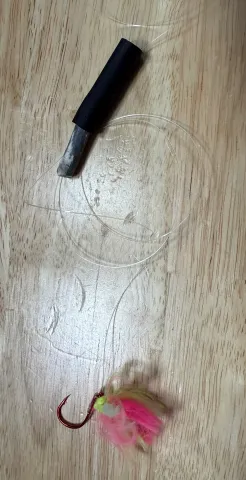
In the deeper pools, more traditional methods may be used, but the weighting system can remain the same. Since the pieces of water are small, the gear must get down quickly to have a chance at holding fish. In the deeper water - beads, bait where allowed, small worms, and other presentations can work. Small spinners can also produce fish when there is enough water.
Keep a couple of things in mind: First, there is very limited space to cast, so you’re really tossing, flipping, or lobbing your gear to the top of a drift. Casting will generally put you in the wood on the other side of the stream. Second, since the water is generally shallow and often very clear, you can sight fish, but keep in mind that if you can see them, the fish can probably see you. It is best to be very stealthy and, when possible, try to get above the fish and let them settle down for a few minutes before you target them. Once they see you, they will be unlikely to strike your presentation until the threat is gone and they feel comfortable again.
One more thing to consider: If you are fishing the lower section of a stream, near the mouth, plan for several techniques. You can often walk the stretch of stream that you are considering fishing to see if there are any fish holding. If you don’t see any conditions, suggest that the fish would move back downstream for cover. The mouth of the stream, where it joins with the river, can be a great place to find fish. Fish will always seek cover, whether it be shade, wood, behind rocks, or in deep pools. At times, they will seek cover in faster-moving water that is broken or riffled on top, offering a layer of protection. When they cannot find these things, they will turn around and head back downstream. Generally, at the confluence, there will be some deeper water, and the fish may stage and hold there until they feel inclined to head upstream again. I love to fish these areas with beads and worms, either under a float or along the bottom. Jigs and worms can be options as well, jigs being one of my favorite techniques to employ in lower, clearer water conditions. Bring out the bigger worms, even in brighter colors, when the water is high or has good color.
As anglers, I think that we all like to be challenged. Streams will challenge you and force you into a different approach. I found it very satisfying and a reminder of my childhood years chasing trout in streams. Give it a shot and have fun.
/articles/fishing-small-streams-traditional-tackle-salmon-trout-and-steelhead-brent-knight
Opening Day Means Trout Derby Time! By Mark Yuasa, WDFW
Warmer weather, coupled with longer days, is a sure sign that spring has finally arrived, and the kickoff to the statewide lowland lakes trout fishing opener is just a stone’s throw away.
To prepare for this special fishing occasion on April 26-25, the Washington Department of Fish and Wildlife (WDFW) hatchery staff have been busy stocking about 525 seasonal lowland lakes and ponds with nearly 15.5 million trout and kokanee.
“Opening day is one of our biggest and most important days for anglers to get out on the water,” said Steve Caromile, WDFW Inland Fish Program manager. “Spring weather can be hard to predict, but we’ve had a mild winter, and hopefully that’ll lead to plenty of success for weeks to come.”
The 2026 stocking plan reveals more than 2.1 million catchable-size trout (averaging 11 to 13 inches) and another 157,000 “jumbo size” trout measuring 14 inches or longer will be swimming in lakes and ponds in time for anglers to catch on the opener. Most of the jumbos are expected to be planted in March and April, while others will be stocked to boost fall fisheries. Adding to the stocking list is another 1.6 million-plus trout categorized as “put, grow and take” – reared in hatcheries and 2.6 to 10 fish per pound in size – stocked in 2025. The fish that survived through the winter should now average 8 to 12 inches.
To further boost fishing prospects, an estimated 11.5 million fingerling and fry trout and kokanee planted one or two years ago should be in the catchable size range when the 2026 season gets underway. Most fry were stocked in Eastern Washington opening day lakes, which are managed to create decent fry survival. To spice it up, the WDFW Trout Derby is April 25 through Oct. 31 with more than 100 stocked statewide lakes. Around 70 statewide businesses are offering an estimated 915 prizes valued at $44,000 and worth about $48 per prize. The number of tags turned in during the 2025 season was 59%. The success of the trout derby would only be possible through WDFW’s ongoing partnerships with business dealers/vendors throughout the state.
Prizes include: gift cards, fishing gear and tackle, annual magazine subscriptions, Seattle Mariners game tickets, hooded jackets, books, rounds of golf at multiple golf courses, local aquarium admission, car detailing bucket, and kayak rentals. Higher valued prizes include: a kayak, guided lake fishing trip for two, handheld GPS units, lifetime memberships for a streaming app to locate trout streams in Washington, stays at local resorts and campgrounds, a backpack, and a beverage refrigerator. This season, each of the prize-winning trout can be identified by a green tag inserted near the dorsal fin.
Anglers can participate in the WDFW photo contest during the first week of the trout derby on Instagram by using the hashtag #watroutderby.
Join WDFW staff for the WDFW/Filson Trout Derby Kickoff Party hosted by Filson on April 18 from 11 a.m. to 3 p.m. at the Filson Seattle Flagship store, 1741 1st Avenue South in Seattle’s SoDo neighborhood. Get trout derby information, watch a fly-tying demo, learn from local fishing experts, and enjoy cuisine served by a local chef. For details, refer to https://www.filson.com/pages/seattle-store.
The derby is open to anyone with a valid 2026-2027 fishing license, and a temporary license may be used. There is no entry fee or registration required. Children under age 15 fish for free.
The WDFW Trout Derby website at https://wdfw.wa.gov/fishing/contests/trout-derby will be updated soon to see which statewide lakes contain tagged trout and learn more about how the derby works.
Why wait? Go now!
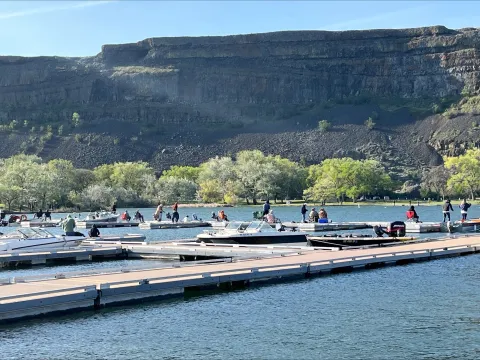
While most are gearing up for the later April opener, anglers can get a jump start right now by trekking to year-round westside lakes stocked with trout between March and May. Other lakes also receive bonus plants in the autumn/winter, and thousands of trout averaging 1- to 1.5-pounds apiece are going into some Puget Sound region lakes for the “Black Friday” fishing event in late-November. For the statewide stocking schedule, go to the WDFW fishing and stocking reports webpage at https://wdfw.wa.gov/fishing/reports.
More than 24 Eastern Washington lakes opened on March 1 for fishing and were or are being stocked with catchable-size rainbow trout. “As the days become longer, these early spring fisheries are a good way to start the season,” Caromile said. In Grant County, Martha and Upper Caliche lakes were recently stocked with catchable-size rainbow trout. Each also received rainbow trout fingerlings in March 2025 and an additional plant of catchable-sized trout in October 2025. These fish are expected to average 13 to 14 inches by opening day, with some reaching 20 inches.
WDFW stocked Quincy and Burke lakes with more than 21,000 trout fingerlings in spring 2025 and received an additional 1,500 catchable-size rainbow trout in February. Last year's fingerling plants are expected to be 10 to 12 inches, with some larger carryover fish in the 13- to 15-inch range.
Additional Grant County lakes open now for fishing are Cliff, Crystal, Cup, Lower Spring, and Upper Spring lakes. Lenice, Nunnally, Dry Falls, and Dusty lakes are also worth a try for trout. In Columbia County, try Blue, Deer, Rainbow, Spring, and Watson.
In Spokane County, head to Liberty Lake, which was stocked with catchable-size and jumbo rainbow trout. Amber and Medical lakes are open under selective gear rules and should fish well this spring.
In South Central Washington, many lakes in Benton, Franklin, Kittitas, and Yakima counties are open year-round and have been stocked with trout.
Weekly catchable trout stocking reports are posted on the fish stocking webpage at https://wdfw.wa.gov/fishing/reports/stocking/trout-plants.
Fishing gear to use
What anglers use for trout isn’t overly complicated, and a trout rod should be light and limber, in the four to 10-pound range, and lengthwise in the six- to seven-foot range. Many prefer a medium-sized spinning reel spooled with more than 100 yards of six- to eight-pound test fishing line.
From the main line, attach one or two number nine egg sinkers with a rubber bumper to a small barrel swivel. Leader length is vital; stay away from the store-bought pre-tied 12-inch leaders, which are way too short. Leaders should be three- to eight-pound test and 18 to 30 inches long. For hooks, think small and use an egg or worm hook in a size eight or 10, or try a No. 14 or 16 treble hook.
Traditional baits to use are worms, maggots, salmon eggs, or scented marshmallows, but dough bait like the wide variety of Berkley Power Baits is now the preferred option.
Fly patterns like a black or black-olive colored Woolly Bugger in a size eight or 10 attached to a five- or six-foot leader and trolled weightless close to the surface is a fun way to catch trout.
From a boat, troll a gang-flasher with a worm, maggot, or salmon egg laced with a tiny piece of scented dough bait or small spoon like a Dick Nite, Yakima Bait Triple Teazer, or Luhr Jensen Super Duper.
Bank anglers will usually cast out a bobber with their presentation sitting just below the surface in three to six feet of water. Others hang their presentation a few feet off the bottom, where the bigger fish tend to lurk. Once the stocked trout acclimate to their new surroundings, they’ll eventually spread out and move to deeper areas of the lake.
Keep in mind that most recently stocked trout tend to school near the surface, and many will swim around where the hatchery trucked them in the lake, usually within a short distance of the shoreline, boat ramps, and docks.
Lastly, remember to purchase a 2026-2027 fishing license before you head out, which is required for anyone age 16 or older. WDFW now offers two mobile apps to support outdoor recreation, available for free download in the Google Play and Apple App Stores. MyWDFW is a comprehensive licensing tool providing access to active fishing license privileges and can be found at https://wdfw.wa.gov/about/apps/mywdfw. The Fish Washington® mobile app at https://wdfw.wa.gov/fishing/regulations/app is tailored for anglers, offering fishing regulations and a feature that lets anglers manage their active license privileges, purchase license products, and enter catches or harvests.
Licenses may be purchased online at https://fishhunt.dfw.wa.gov/login or from hundreds of license dealers across the state at https://wdfw.wa.gov/licenses/dealers. The 2025–2026 fishing licenses expired on March 31.
(Mark Yuasa is a Washington Department of Fish and Wildlife Communications Manager and a longtime local fishing and outdoor writer.)
/articles/opening-day-means-trout-derby-time-mark-yuasa-wdfw
Trout fishing with a dry fly in the Cascades by Gary Lewis
My first encounter with trout and a dry fly was like prayer. It was a Sunday afternoon. I was 12, the fish was as old as time, and the insect was a white miller moth that touched down on the water. I whispered a prayer. “Lord, if you want me to be a fly-fisherman, send a trout to eat that moth.”
With the sun on its wings, the moth bounced over the water, touched down, lifted, touched again. A trout broke the stillness of the pool, nosed through the surface, and ate the moth. Church was over.
In those days, to become a fly-fisherman meant becoming a different person. Fly-fishermen wore tweed, and they wore funny hats. They smoked pipes. This was what I must become. It was big stuff for a 12-year-old. I wasn’t even sure my mom would let me smoke a pipe.
On Monday, my grandpa drove me to the hardware store. I bought a 7-weight fly rod with the money saved from mowing lawns. I knew to start by fishing nymphs and wet flies, but as soon as I could, I would try to catch a trout on a dry fly.
In those days, I lived in southwest Washington and rode a ten-speed with a fly rod across the handle and crept through the alder to watch the trout and the bugs on the water.
WHERE AND WHEN
Today, the Cascade mountains and the streams that come down off the glaciers and out of those snowmelt reservoirs can offer the same kind of dry fly fishing.
The estimation of a trophy trout is on a sliding scale. Since it does not take a lot of water to keep trout alive, trophy rainbows and cutthroat can be found in a lot of east-slope and west-slope creeks and rivers, and even a few north-slope trickles.
Highway 35 parallels and crosses the East Fork Hood River, which is home to beautiful cutthroats, vulnerable to any high-floating bushy dry fly.
Anyone good with a map can locate a dozen other small streams that can be accessed for spot-and-stalk dapping or casting in the same area.
In the Clackamas drainage, the Oak Grove Fork offers a bushwhacking opportunity where the light plays on the riffled water and mayflies dry their wings and form small clouds over the log jam pools.
Another stream winding down out of the national forest is the Breitenbush. Any trout from the Breitenbush is a trophy and may be too small to eat, but in time it will grow larger in memory. But don’t be deceived, there are some big trout in the little river too.
Another steep little river is the North Fork Santiam, with both wild and hatchery trout. In the fast riffled water, the trout are watching the surface for the mayflies, stoneflies, and caddis caught in the current.
Miles and miles of the McKenzie River are driftboat floatable and wet wadeable. In these years after the big fire, the river’s overstory (canopy) has opened, and there is no doubt the bug life has responded to the sunlight. Resident rainbows can grow big, coming out from under the cutbanks to feed.
Of the rivers and creeks tributary to the Willamette, the Middle Fork is a great option for the wading angler. In fact, there are a dozen streams. Pore over a map with a highlighter and note where the rivers cross under the roads. There will be a pullout and a trail down through the alders. An angler can base camp at Lowell, Westfir, or Oakridge and fish for days without going over the same water twice.
FLIES FOR SUMMER WADING
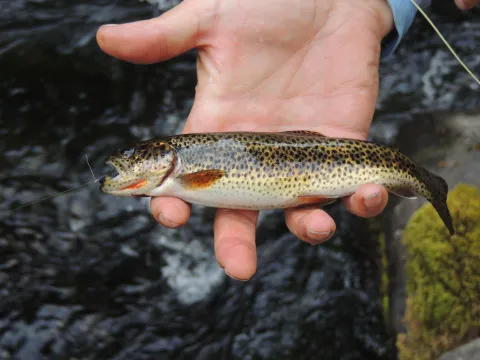
A well-stocked fly box should have foam body ants. It helps to tie or buy the fly with a high-viz wing to keep track of it in the riffles. Attractor dry flies like the Stimulator and its variants are great for those rare moments when the fish are feeding on stoneflies. Mayflies and caddis can be tied with a little foam or hollow-bodied deer hair. Another good attractor is anything from the Chubby series. Sometimes, when fishing a chubby, it’s a good idea to tie on a dry fly dropper. Cut off at least 20 inches of 5X. Put an ant on the light tippet tied off to the bend of the hook of the bigger fly. Then set the hook at a splash.
There are still a lot of places where rainbows and cutthroats flash to caddis from out of downed timber, the sun filtered through alders. The braided currents open windows to heaven in the clear water. Trout fishing is still like prayer.
To cast a dry fly and present it in a natural drift; to see trout come up out of the dark water to take it, that is the pinnacle of fly fishing.
# # #
For a copy of the Fishing Central Oregon book, send $30 to Gary Lewis Outdoors, PO Box 1364, Bend, OR 97709 To contact Gary Lewis, visit www.GaryLewisOutdoors.com
/articles/trout-fishing-dry-fly-cascades-gary-lewis
Three Winter Ice Fishing Events in Washington
Are you into ice fishing? Do you have a competitive edge? Then consider fishing one of three ice fishing events happening in North Central Washington this winter.
MOLSON ICE FISHING DERBY – SIDLEY LAKE – January 17 – 8 am to 1 PM
This is an annual event strongly supported by members of this small community just south of the border of Canada. Last year, 200 anglers participated, including 25 youth anglers.
Things kick off at the Molson Grange with a pancake breakfast for $12 from 7 to 10 AM. Sitzmark provides lunch in the grange in the early afternoon. Raffles take place for ice fishing gear and 25 different baskets with donated items and gift certificates.
Prizes for the biggest fish, smallest fish, and for the participant who traveled the furthest are awarded here. The biggest fish is worth $500 cash and a $500 gift card to Country Store. Registration costs $15 for youth up to 12 years of age and $30 for adults. You can also add an extra $20 and win at least $300 for the heaviest weight of up to five rainbow trout. Register online at the Oroville Chamber of Commerce website. www.orovillewachamber.com/events
BONAPARTE ICE FISHING DERBY – BONAPARTE LAKE RESORT – January 24
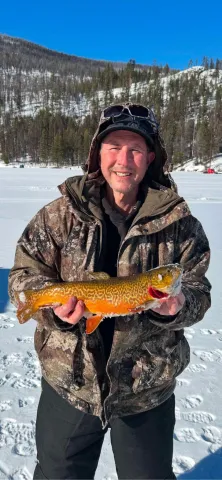
This is another popular annual derby, and this will be the fourth year the event is being held. Last year, 280 participants and another 120 lookers-on were there. There are three divisions of fish. They include the Adult Biggest Fish and an Adult Multi-species. There is also a category for the biggest fish caught by youth anglers.
There are six species of fish in the lake (tiger trout, rainbows, brook trout, kokanee, lake trout, and smallmouth bass). The angler who weighs the biggest weight of 3 to 6 fish wins. There is a combination of ice fishing gear and cash given to winners. Last year, an ice auger was given to the biggest fish winner, and a one-man ice fishing shelter to the adult multiple species winner. Register through the Bonaparte Lake Resort Facebook page.
In addition to the resort restaurant that will be open, there will also be a number of other vendors on site. Last year, there was one vendor who was grilling up reindeer sausage for customers. There are no cabins available (they sell out a year in advance), but there are potentially some RV spots available.
CATCHING FREEDOM - OPERATION HARDWATER – BONAPARTE LAKE RESORT – January 31
Operation Catching Freedom is a non-profit that gets veterans, active-duty soldiers, and their families out for no-cost fishing trips. This will be an inaugural event and different in that there are no registration fees and no cash prizes awarded for the biggest fish, smallest fish, or any other category.
Tony Warren, the President of Operation Catching Freedom, said that he just wants veterans and the community at large to come out and go fishing.
There is an in-person registration from 8 to 10 AM. Fishing takes place from 8 AM to 2 PM, and raffle prizes will be given away throughout the day. The event is taking place at Bonaparte Lake Resort, and there will be a BBQ for all attending between 11 AM and 1 PM. You can find further details at the Operation Catch Freedom Facebook Page.
HOW TO CATCH THEM
Want some advice on how to catch these fish? Eric Magnuson, a well-known ice fishing angler and pro-staffer for Mack’s Lure, says, “Just like open water fishing, it’s all about forage and matching the hatch.” Magnuson continued saying, “If I notice the fish are after gorging more on bugs, I’ll tie on a 3mm or 4mm tungsten jig and tip it with plastic or a couple of maggots. If I notice they are in more of a minnow feeding pattern, I might up my profile to a Swedish Pimple or Mack’s Sonic Baitfish spoon.”
And if that does not work, you can always tip a jig with a worm or nightcrawler, which will catch about anything. The bottom line is this: whether you just want to fish and have fun, or win cash or prizes, three great opportunities are waiting for you at North Central Washington’s Sidley Lake and Lake Bonaparte this winter.
Editor’s Note: Check out Eric Magnuson’s article on ice fishing for burbot at night on page xxx
John Kruse – www.northwesternoutdoors.com and www.americaoutdoorsradio.com
/articles/three-winter-ice-fishing-events-washington
Spoon Theory
If there is one best time of year for trout fishing, it's fall when the insect life is fading away and trout that have been fattening all summer are starting to feel the pinch of empty bellies. Trout that are going to make it through the winter have to switch from eating insects to eating minnows. This is the time of the year to put baitfish imitations to use. Trout are full of energy and will go a long way to hit a shiny bit of metal.
On those days when we launch the boat in the early morning. When the water is glass, we know the fish are elevated. It can be fun to put a small spoon in play.
PLANNING THE TRIP
Before you back up to the boat trailer, take a look at a map and click up www.myodfw.com to get an idea of some Oregon waters that will definitely get fresh stocks of fish in the early fall. This is the time of year when hatchery trout stocking ramps up again. Water levels are beginning to fall, and ambient temperatures are good for trout. Most fish & wildlife agencies post their stocking schedules on public websites. Weather changes, the price of fuel, and emergencies can change the timing of fish releases, but it's a good idea to comb the stocking schedules.
Top bets in the Willamette region (an easy drive for anglers from Portland, Salem, or Eugene) include North Fork Reservoir (on the Clackamas River), Foster Reservoir, Trillium Lake, Dexter Reservoir, Hills Creek Reservoir, and Dorena Reservoir. Most lakes get the "legals", which average 8 to 12 inches, but a person can put more poundage in a trout limit by targeting the "trophy size" trout that are older, better fed, and better fighters. If a lake gets 5,000 legals in the season, it might also get 250 trophies and a few brood stock trout that can tip the scales at five pounds or more. Premier fisheries that get a lot of angling attention, like any larger reservoir with campgrounds and mountain views within a two-hour drive of a metropolitan area, are likely to get a couple of stockings of brood fish or trophies every season.
It's all there in the stocking schedule. Except it's not.
BEHIND THE SCENES
A lot of what happens behind the scenes does not show up in the hatchery schedule. Sometimes there is an abundance of brood stock or surplus steelhead in the system that need to go somewhere. Another thing to watch for is when a lake is drained for maintenance or to kill trash fish. When the lake fills up again, the fisheries department scrambles to fill it with trout. Then there are the lakes that are never on the stocking schedule, but they magically have hatchery trout every season, and plenty of them. What's up with that?
Some reservoirs are not on the published stocking schedule because they are managed by agencies or municipalities, or utility companies with their own hatcheries. These can be some of the best destinations. Think about it. A power company built the dam, and part of the negotiation with the tribe or the community that permitted the dam was to provide a fishery. So every year, they are contractually obligated to populate the lake with some 30,000 trout. They're going to do it, but chances are they aren't taking the time to put it on a list somewhere. That's a lot of silvery slabs vying for a chance at a slow-trolled trout spoon.
SPOONAGE
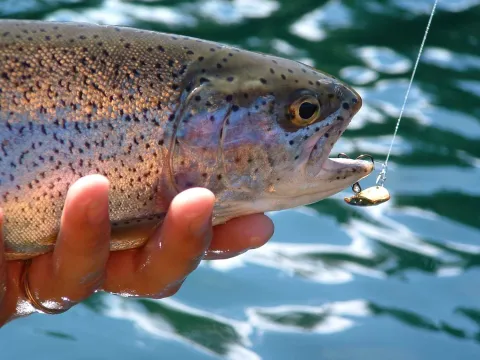
There are a lot of spoons on the market, and they all have their place, but when we are talking about catching a limit of hatchery "legals" and "trophies", the best choice is one and a half to two inches long, like the Mepps Syclops, Triple Teaser, Thomas, Jerry Leo, Z-Ray, and Acme Little Cleo.
In most cases, a spoon should be trolled slowly so that it wobbles side to side. The slower the better. I like the speed at less than 1 mile per hour, up to 1.5 miles per hour, and if I can, I try to keep it at zero-point-nine. This can be accomplished some days on a wind drift, but a bow-mount trolling motor is pretty consistent. There are exceptions. In some lakes, the fish are used to chasing baitfish. This is the case on Upper Klamath and Agency Lakes, where sometimes you can't reel fast enough.
The spoon itself could be an Acme Kastmaster, Little Cleo, or Thomas Buoyant, maybe in the 1/6-ounce class. Every lake fishes a little differently, so it helps to have local knowledge. Frog patterns can be important, as are brown trout, chub, rainbow, and perch colors, depending on the local bait. Sometimes we put a flasher in front of the spoon with a 15-inch leader. Another trick we like is to add a touch of Pro-Cure's trophy trout scent to the spoon. And it never hurts to tip the hook with a bit of worm, corn, or a salmon egg. Trout that are going to carry over through the cold months have to start eating baitfish. Put baitfish imitations like trolling spoons to work. Trout are supercharged in the cold water and will chase up and down in the water column to hit a shiny bit of metal.
/articles/spoon-theory
Razor Clam Forecast & Fall Trout Outlook
Coastal razor clam enthusiasts should be able to find a treasure trove of bivalves this fall and winter.
The Washington Department of Fish and Wildlife (WDFW) shellfish managers announced 47 days of tentative razor clam digs from Oct. 6 through Jan 6 for Long Beach, Twin Harbors, Copalis, and Mocrocks beaches.
“This recreational razor clam season will see similar digging opportunities to the past two years, with a full digging schedule again for this fall,” said Bryce Blumenthal, a WDFW coastal shellfish biologist. “The tides this year will allow for clam gathering opportunity in the lead up to the Thanksgiving and Christmas holidays, along with harvestable daylight digs for the late afternoons of New Year’s Eve and New Year’s Day.”
Summer assessment surveys conducted by WDFW and tribal co-managers showed a relatively stable population of razor clams on all four beaches. Kalaloch Beach along the northern Olympic Peninsula coast won’t be open due to continuing issues with depressed populations of harvestable clams.
All beach openings are dependent on final approval of marine toxin testing, which usually occurs about a week or less prior to the start of each digging series. The Washington Department of Health requires two test samples taken seven to 10 days apart, and domoic acid levels must fall under the guideline level before a beach opens for digging.
Domoic acid, a natural toxin produced by certain types of marine algae, can be harmful or fatal if consumed in sufficient quantities.
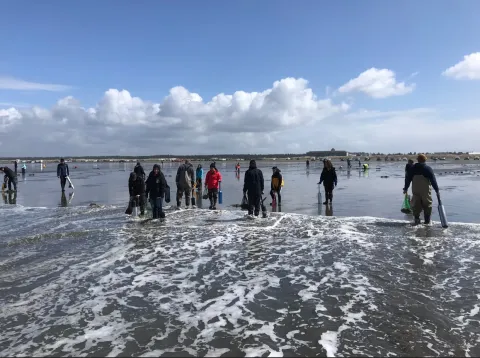
Most successful digging occurs between one and two hours before the listed time of low tide. No digging is allowed before noon during digs when low tide occurs in the afternoon or evening.
Here are the tentative series of dates:
Oct. 6, 7, 10, and 11 at Long Beach, Twin Harbors, and Mocrocks;
and Oct. 8, 9, and 12 at Long Beach, Twin Harbors, and Copalis.
Oct. 22, 23, and 26 at Long Beach, Twin Harbors, and Mocrocks; and
Oct. 20, 21, 24 and 25 at Long Beach, Twin Harbors, and Copalis.
Nov. 3, 4, 7, and 8 at Long Beach, Twin Harbors, and Mocrocks;
and Nov. 5, 6, and 9 at Long Beach, Twin Harbors, and Copalis.
Nov. 19, 20, and 23 at Long Beach, Twin Harbors, and Mocrocks; and
Nov. 18, 21, and 22 at Long Beach, Twin Harbors, and Copalis.
Dec. 3, 4, 7, and 8 at Long Beach, Twin Harbors, and Mocrocks; and
Dec. 2, 5, and 6 at Long Beach, Twin Harbors, and Copalis.
Dec. 19, 20, and 23 at Long Beach, Twin Harbors, and Mocrocks; and
Dec. 18, 21, and 22 at Long Beach, Twin Harbors, and Copalis.
Jan. 2, 3, and 6 at Long Beach, Twin Harbors, and Mocrocks; and
Dec. 31, and Jan. 1, 4, and 5 at Long Beach, Twin Harbors, and Copalis.
During the 2024-25 season, a total of 109 digging days at the four beaches were offered from Oct. 3 through May 15. During that time, 312,716 digger trips were made with a total harvest of 3,957,859 razor clams harvested. At Long Beach, 96,152 digger trips saw 1,253,207 razor clams harvested for an average of 12.7 clams per person; at Twin Harbors, it was 98,096 with 1,369,969 for 12.7; at Copalis, it was 66,628 with 804,903 for 11.9; and at Mocrocks, it was 51,840 with 629,781 for 12.0.
On all open beaches – Long Beach, Twin Harbors, Mocrocks, and Copalis – the daily limit is 15 clams per person. Each digger’s clams must be kept in a separate container, and all diggers must keep the first 15 clams they dig, regardless of size or condition.
“It's important that diggers keep the clams they dig to prevent wastage (includes discarding small clams, clams with broken shells, or reburying unwanted clams),” Blumenthal said. “It's not unusual to encounter some small clams, especially this early in the season.”
All diggers age 16 or older must have an applicable fishing license to harvest razor clams on any beach. Licenses can be purchased from WDFW’s licensing website and from hundreds of license vendors around the state. WDFW recommends buying your license before visiting coastal beach communities.
WDFW reminds beachgoers to avoid disturbing nesting snowy plovers – a small sand-colored shorebird – by staying out of the dunes and posted areas along the sandy beach coastline. Snowy plover nests are nearly invisible, and it is vital to give birds the space to live and thrive during the nesting period, especially along the southern end of Twin Harbors, known as Midway Beach, and north of Second Avenue in Ocean City to the north end of Copalis Beach and the north end of Long Beach. Avoid leaving leftover food or trash on the beach and picnic areas, keep pets on a leash, stay out of dunes, and avoid areas marked with posted signs.
When driving on the beach, please respect the 25-mph speed limit and enter only at designated access points. Stay on the hard-packed sand near the high tide line to avoid crushing clam beds, buried female Dungeness crab, and snowy plover nests. The 2025-26 Razor Clam Management Plan will be available soon on the WDFW’s website. WDFW welcomes public input on proposed razor clam schedules and considers this feedback when finalizing each season’s digs. Public comments may be emailed to razorclams@dfw.wa.gov. For more information, refer to the WDFW's razor clam webpage at https://wdfw.wa.gov/fishing/shellfishing-regulations/razor-clams.
Look for decent October trout fishing
It’s beginning to feel a lot like autumn as temperatures drop, the sun fades away much sooner, leaves are falling, and trout have become active in many statewide lakes.
While the bulk of trout plants occurred back in spring, many of those fish are still waiting to be caught, and some have grown larger in size, plus WDFW hatcheries continue to add more fish into lakes. The seasonal lakes remain open for trout fishing through Oct. 31, while others are open for year-round.
Some fair to good seasonal westside lakes include Pine, Wilderness, Langlois, Toad, Margaret, Whatcom, Steel, Summit, Bosworth, Ki, Storm, McMurray, Sixteen, Erie, Silver (Whatcom County), and Padden.
The top lakes east of the Cascades are Jameson in Douglas; Ellen in Ferry; Starvation in Stevens; Wapato in Chelan; Pearrygin; and Conconully Lake and Reservoir in Okanogan. You can track trout plants on the WDFW website at https://wdfw.wa.gov/fishing/reports/stocking/trout-plants.
To sweeten the deal, WDFW’s Trout Derby continues to offer anglers a chance to catch a tagged fish and win a prize through Oct. 31.
The derby – which began in late-April – features more than 100 lakes planted with fish that have an orange tag attached near their dorsal fin. If you catch one, be sure to keep the tag to claim your prize. For derby details, go to https://wdfw.wa.gov/fishing/contests/trout-derby.
Heading into November, WDFW hatchery staff will be busy leading up to Black Friday by stocking thousands of jumbo rainbow trout, weighing up to three pounds apiece and measuring longer than 14 inches, in lakes covering an area from the Puget Sound region to southwest Washington, as well as a few eastern Washington lakes and ponds.
The Black Friday program, created more than a decade ago by WDFW, looked at ways to raise thousands of rainbow trout for a late-season fishery in select year-round lakes. This post-Thanksgiving fishery has been a hit among anglers looking for options to go fishing at a time when choices are skinny.
Before heading out the door, be sure to check for lakes that are open or closed, and regulations at https://wdfw.wa.gov/.
/articles/razor-clam-forecast-fall-trout-outlook
Mountain Trout As Art
We are captivated by trout. And we wonder why. Trout don't love us, they don't love each other, and they don't do anything for their fellow trout, except by accident or by instinct.
But the same could be said of art. We appreciate art for maybe the same reason we love trout. Let's see if the words — art and trout — are interchangeable.
Wynetka Ann Reynolds might have said,
“Anyone who says you can't see a thought simply doesn't know trout.”
For two summers, I spent afternoons and weekends exploring back roads, backcountry, and backwaters in streams and lakes down the flanks of Wy'East for a book we called Fishing Mount Hood Country. My co-author, Robert Campbell, covered most of the western water, and I fished more of the east side.
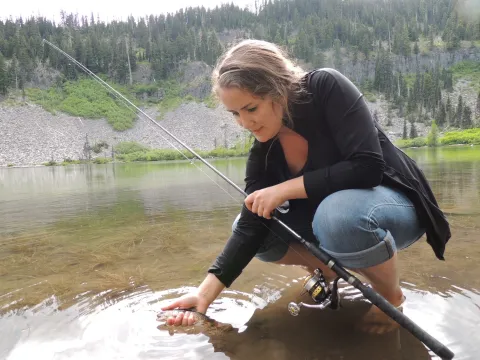
Early in the project, Campbell began to send close-ups of trout — Veda Lake cutthroats, Timothy Lake brookies, Salmon River rainbows — in hand, going back into the water. The imagery seeped into my consciousness, and when I brought East Fork Hood River cutts, or Boulder Lake brooks, or Badger Creek rainbows to the bank, I began to look at each one as a piece of art, at each scale as a stroke of a brush.
We seldom fished the same water twice during the two summers on and off the mountain. We caught bass, sturgeon, steelhead, and salmon, but the fish that defined the effort was the coastal cutthroat. There are many variations. The Clackamas watershed fish were different in coloration from Zigzag River fish, and in bigger lakes, trout coloration varied due to the micro-environments they frequented.
We might put the distinct differences down to genetics, habitat, food sources, and light penetration.
Hood River wild fish, where there are fewer trees above the water and the bottom is light, are bright and shiny. Fish in west-sloping rivers with darker streambeds are often tinted, an adaptation that helps them survive.
While there are a few resident rainbows near the mouth, Campbell's exploration of the upper Clackamas turned up big rainbows, part of a remnant strain that can grow to several pounds in that mountain water. I plan to research that water again soon.
If Goethe had been born to a fly-fishing family rather than to German drama, he might have written:
“There is no surer method of evading the world than by following trout, and no surer method of linking oneself to it than by trout.”
We caught hatchery planters, of course, and the further they were removed from the raceways, the better they looked. Holdovers — fish that had made it through a winter and gained inches and pounds — were the prettiest. We might call them modern trout and appreciate them in that regard.
John Anthony Ciardi could have said:
“Modern trout is what happens when fishermen stop looking at girls and persuade themselves they have a better idea.”
For me, one stream and one fish defined the project. A Still Creek cutthroat, about nine inches long, took a dry fly and threw the hook. The next fish was a bit smaller, but it shone in hand like treasure. I sent a picture to my friend Tye Krueger, and he drew it in every detail — a wild cutt with white tips on its fins and parr marks still visible on its sides.
Kojiro Tomita might have written it thus:
“It has been said that trout is a tryst, for in the joy of it, maker and beholder meet.”
Conditions seem to force beauty to the surface. Up toward the timberline, an angler finds the most striking examples — wild trout that in other environs would grow to be measured in pounds, not inches. Here, an eight-inch rainbow is mature, with white tips on the edges of his fins and a tint of rose in his gill plates, dark spots all the way to the tail.
G.K. Chesterton might have put it this way:
“Trout consists of limitation. The most beautiful part of every picture is the frame.”
Here in the Northwest, we have the run of an ancient gallery. The price of admission is a fishing license and the will to seek it.
“All trout requires courage,”
with apologies to Anne Tucker.
In the passage of time, we become collectors of art, the images stored in digital files and memories. And sometimes we make that beauty part of ourselves with brook trout grilled over a campfire.
If Scott Adams had been consulted, he might have offered:
“Creativity is allowing yourself to make mistakes. Trout is knowing which ones to keep.”
/articles/mountain-trout-art