It's "Shrimp-tacular" Season! by Mark Yuasa
When it comes to spot shrimp fishing, May and June are a “shrimp-tacular” time to be on the water in Puget Sound, Hood Canal, San Juan Islands, and Strait of Juan de Fuca.
The recreational spot shrimp fishery will open on May 24 in many Puget Sound marine areas, with additional dates scheduled in several areas into early July. The one area to have an opening prior to May 24 will be Marine Area 12 (Hood Canal), which will have an early opportunity on May 10.
“Test fishery data in Marine Areas 9 (Admiralty Inlet), 10 (Seattle-Bremerton Area), and 13 (South Puget Sound) continue to indicate low abundance of spot shrimp,” said Don Velasquez, a Washington Department of Fish and Wildlife (WDFW) Puget Sound shellfish biologist. “As a result, these areas are not scheduled to open for recreational spot shrimp harvests in 2026 (similar to the closures in 2025).”
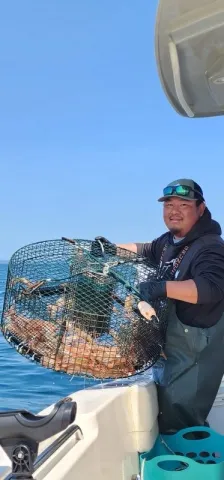
WDFW fishery managers selected the shrimp fishing dates to offer opportunities to harvest spot shrimp while distributing participants and reducing the chance of exceeding recreational harvest quotas. Due to high expected turnout, some areas cannot support weekend openings while remaining within their current quota.
To ensure a safe and enjoyable experience, shrimpers are encouraged to monitor weather conditions and avoid launching or leaving the dock if their vessel can’t safely participate. Check with local access ramps and marinas ahead of time to stay informed on potential closures or fee changes. Allow extra time for launching boats, show courtesy to others at the boat ramps, and respect others’ gear while on the water.
Spot shrimping is one of Washington’s signature recreational fisheries that occurs during the spring for these tasty prawn-sized denizens of the deep.
In all open areas of Puget Sound, the daily limit per shrimper is 80 spot shrimp with a total daily weight limit of 10 pounds (whole shrimp) for all species of shrimp combined. Shrimpers who retain only spot shrimp may remove and discard the heads while in the field and before returning to shore. Shrimpers retaining any shrimp species other than spot shrimp must continue to retain the heads until finished and on shore to verify compliance with the 10-pound daily limit.
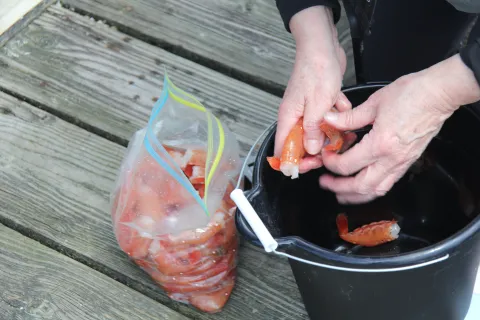
To avoid going over the daily limit, count your catch not once but twice or three times and put each limit into separate containers. Nothing is worse than being checked and finding out you’re one spot shrimp over the daily limit. Also, keep in mind that each angler can have only two traps and a maximum of four traps per boat, meaning when you are near the point where you only have one last limit to catch, you cannot have four traps sitting in the water.
More information on recreational shrimp fishing rules, seasons, and marine areas is available on WDFW’s webpage, including a webpage on shellfishing gear rules at https://wdfw.wa.gov/fishing/shellfishing-regulations/gear-rules.
Shrimpers are reminded that traps can be set one hour before official sunrise during any open period in the marine areas without specified harvest hours. These include Marine Areas 4, 5, 6 (except for the Discovery Bay Shrimp District), Marine Area 7 East, Marine Area 7 South, and Marine Area 7 West. The pots must be removed from the water in these same areas by one hour after sunset at the end of an open period. The start and end times for all other areas are listed above.
Seasons for non-spot shrimping (dock, coonstripe, sidestripe, and pink shrimp only) will begin later this year and will be announced separately. During non-spot shrimp seasons, 1/2-inch mesh pots are allowed, depth restrictions are in place, and all spot shrimp are required to be released immediately.
A rule adopted in 2025 prohibits setting shrimp gear from a vessel near 19 designated Washington State Department of Transportation-managed ferry terminals in Puget Sound and the San Juan Islands (Marine Areas 7, 8-1, 8-2, 9, 10, and 11).
Shrimpers and other boaters are reminded to follow Washington rules to help protect endangered Southern Resident killer whales (SRKWs). Under state law, recreational vessels in Washington waters must stay 1,000 yards away from Southern Resident killer whales (SRKW). For details about steps boaters and fishers can take to keep the whales – and themselves – safe, refer to the Be Whale Wise website at https://www.bewhalewise.org/.
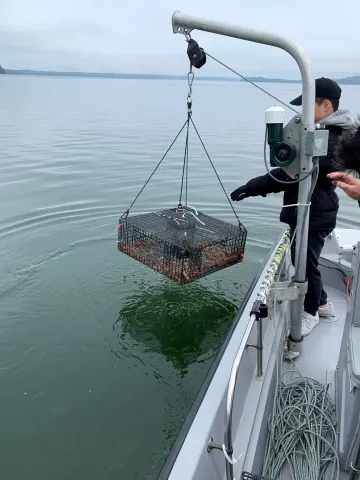
Tips to catch spot shrimp
Top of the list when planning a spot shrimp fishing outing is to make sure all your gear – pots rigged correctly, yellow buoys, line, cooler and ice, electric pot puller, and boat motor – is ready to go, and the bait is properly prepped before you leave home.
Another key point to keep in mind is that this highly popular fishery draws hundreds of anglers, so allow yourself plenty of time to get to the boat launch and secure a parking space, which can be limited depending on the area.
One of the tips that can make or break success is knowing where the schools of spot shrimp are congregating. The majority of spot shrimp can be found in deeper depths along steep ledges, drop-offs, and sharp inclined bottoms, and usually lurking in 200 to 350 feet of water.
Once you’ve located them on the fish-finder, make sure to scatter your pots across a broad area and set them at various depths because schools of spot shrimp tend to move around quickly depending on the tides and currents.
The amount of weight to keep your pots on the bottom depends on the tide, current, waves, and wind. A safe bet is anywhere from 20 to 30 pounds, and be sure they’re evenly placed and secured around the corners of the pot. Allow a one to two-hour soak before the first pull. This provides you with at least two more chances during a brief four-hour fishing period.
The bait mixture is another important factor in catching spot shrimp, and prep a good slurry of bait ingredients and thickness similar to yogurt. Make sure the scent cloud is leeching out of the trap consistently.
For the bait itself, use a good amount of shrimp bait pellets mixed in with oily tuna, whitefish, or salmon in a five-gallon bucket. Bring a large ladle or scooper and latex gloves, as it can get rather messy, and nothing is worse than a bunch of stinky slime on the boat deck. Be sure to add several cans of cat food with small holes punched into them just before you drop the traps. Don’t forget to take around 25 to 35 extra cans of cat food; more is better than running out while out on the water with a grocery store nearby.
A medium-sized square pot with a bait barrel (bring extra bait barrels) connected to a four-way rope harness attached to each corner of the pot. Keep your bait barrel securely fastened to the trap with a wide strip of elastic cord. Using a biodegradable escape cord made of cotton (or other natural fiber) will degrade and reduce the amount of shrimp wasted if the pot is lost and required on all shellfish traps.
Having an electric pot puller is a wise investment, especially when pulling up a 35-plus-pound trap from 300 feet of water. The Scotty Electric Pot Puller and the Ace Line Hauler Pro are two ideal choices that can be placed onto a Scotty downrigger mount and plug.
For buoys, go with a large round (soccer ball size) yellow buoy (your full name and address is required on the buoy and must be legible) attached to a secondary buoy stick with a flag or staff. A phone number is highly recommended. Use a colorful flag or staff to help easily locate your own buoy among the thousands of other buoys set nearby. Always attach buoys with the rounded end towards the trap and not the flat end, which creates more drag and can snag floating debris. Never use empty containers (like a one-gallon milk container) as a buoy, and it is illegal since they create drag and fill up with water and sink.
For each pot, use at least 400 feet of sinking lead line. The line length is dependent on how deep you drop the pots. Tide changes will alter your water depth, so a good tip is to use a line that is 1/3 longer than the maximum water depth to prevent losing a trap. Avoid using lines with a large diameter, particularly those greater than 5/16 inch, which create more drag in a current and can pull lighter traps away from where they’re set. You can also add a weight to the line. Propellers can sever floating lines on the surface and will increase the chance of entanglement with floating debris. Before heading out, make sure the drop lines are coiled neatly and ready to deploy.
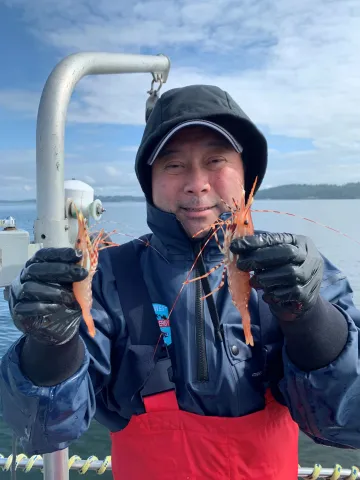
Spot shrimp are high in Omega-3 fatty acids with a nice, sweet flavor to the firm meat texture. They can be eaten raw, and if cooked, boil them for one to two minutes at most or until they turn pink. If possible, live spot prawns should be prepared the same day they’re caught to avoid them becoming mushy.
To keep spot shrimp in the best condition, ice immediately after you catch them. Shrimp can be kept in the refrigerator for a couple of days to be eaten fresh. Freeze immediately if you plan on saving them. Never store them with tap water, as chlorine kills them. If kept overnight, remove the heads as the digestive enzyme makes the flesh turn mushy.
Lastly, now that spring has arrived, you’ll need a 2026-2027 recreational fishing license valid from April 1, 2026, through March 31, 2027. WDFW offers two mobile apps https://wdfw.wa.gov/about/apps, and both apps are designed to make your outdoor experience easier and more efficient. MyWDFW serves both hunters and anglers, offering electronic tagging, harvest reporting, and access to licenses and permits, and go to https://wdfw.wa.gov/about/apps/mywdfw for details. The Fish Washington® at https://wdfw.wa.gov/fishing/regulations/app is tailored for anglers, providing fishing regulations, digital catch cards, and license management. Licenses may be purchased online at https://fishhunt.dfw.wa.gov/login or from hundreds of license dealers across the state.
(Mark Yuasa is a Washington Department of Fish and Wildlife Communications Manager and longtime local fishing and outdoor writer.)
Before making plans to go spot shrimp fishing, anglers should check the WDFW emergency rules webpage for possible in-season closures. at https://wdfw.wa.gov/fishing/regulations/emergency-rules.
Here are the 2026 spot shrimp fishing dates:
● Marine Area 4 east of the Bonilla-Tatoosh Line: Open daily beginning May 24. Shrimping is allowed during daylight hours only. The recreational spot shrimp season closes when the quota is met or Sept. 15, whichever comes first.
● Marine Area 5 (western Strait of Juan de Fuca): Open daily beginning May 24. Shrimping is allowed during daylight hours only. The recreational spot shrimp season closes when the quota is met or Sept. 15, whichever comes first.
● Marine Area 6 (Port Angeles Harbor, eastern Strait of Juan de Fuca, excluding the Discovery Bay Shrimp District): Open on May 24, May 26, June 7-8, and June 21-22. Shrimping is allowed during daylight hours only. An announcement regarding additional dates may be made later in the season.
● Marine Area 6 (Discovery Bay Shrimp District): Open on May 24 from 9 a.m. to 3 p.m. only. An announcement regarding additional dates may be made later in the season.
● Marine Area 7 East (northern Rosario Strait, Bellingham Bay, Sucia, and Matia islands, Strait of Georgia): Open on May 24, May 26, and June 7-8. Shrimping is allowed during daylight hours only. An announcement regarding additional dates may be made later in the season.
● Marine Area 7 South (Iceberg Point, Point Colville, Biz Point, Salmon Bank): Open on May 24, May 26, and June 7-8. Shrimping is allowed during daylight hours only. An announcement regarding additional dates may be made later in the season.
● Marine Area 7 West (San Juan Channel, Speiden Channel, Stuart, and Waldron islands): Open on May 24, May 26, June 7-8, June 21-22, and July 18-20. Shrimping is allowed during daylight hours only. An announcement regarding additional dates may be made later in the season.
● Marine Area 8-1 (Saratoga Passage, Deception Pass) and Marine Area 8-2 (Port Susan, Port Gardner, Everett): Open on June 8 and June 22 only with shrimp fishing allowed from 9 a.m. to 1 p.m. each day. An announcement regarding additional dates may be made later in the season.
● Marine Area 9 (Edmonds, Port Townsend Bay, Admiralty Inlet): Closed for spot shrimp harvest in 2026 due to low abundance.
● Marine Area 10 (inside of Elliott Bay east of a line from West Point to Alki Point): Closed for spot shrimp harvest in 2026 due to low abundance.
● Marine Area 10 (outside of Elliott Bay west of a line from West Point to Alki Point, which includes the Bainbridge Island shrimp fishing grounds): Closed for spot shrimp harvest in 2026 due to low abundance.
● Marine Area 11 (Tacoma-Vashon Island): Closed for spot shrimp harvest until further notice. An announcement regarding an opening may be made later in the season if sufficient quota is available.
● Marine Area 12 (Hood Canal Shrimp District): Open on May 10, May 24, May 26, June 7, and June 21 from 9 a.m. to 1 p.m. only. An announcement regarding additional dates may be made later in the season.
● Marine Area 13 (South Puget Sound, Carr Inlet): Closed for spot shrimp harvest in 2026 due to low abundance.
/articles/its-shrimp-tacular-season-mark-yuasa
Slow and Deep - Spinner Fishing for Steelhead
Not every fish in a pod of steelhead will bite. What we count on is that one or more in any school is the aggressive one. The spinner, like the swung fly, targets the aggressive fish, the biter, and the chaser.
Spinner water in the winter is different than what we look for in the summer. Classic steelhead water that moves at the speed of a fast walk is still a good bet, but I like to target deeper holes and slower-moving current.
In the colder flows of winter, when the metabolism slows down, steelhead are not as likely to chase a lure as far. For this reason, we want to put the lure at the level of the fish and keep it there longer. Casting and retrieving might work, but a swinging presentation is preferred, where the inline weight or the weight of the lure takes it to the bottom.
What contributes to a fast sink rate? The weight of the lure and its mass (or lack of mass) are factors. Also, a braided line with less resistance will sink faster than mono.
If the fish are six to 18 inches off the bottom, the spinner should run in the same place in the water column.
And the lure should thump.
Test drive the spinner before the first cast. Get a feel for the thump of the blade as it rotates.
On the cast, let the lure hit the water, then keep the bail open long enough for more line to peel off the spool as the lure sinks. Now close the bail and let the current grab the blade. Hold the rod tip low.
THE PRESENTATION
Use a retrieve that makes the blade flash like a strobe; if the blade blurs around the shaft, it is going too fast. Steelhead strike out of aggression, curiosity, defense, and feeding impulses, and flash moves the fish longer distances to the lure. Carry spinners in the whole range of blade finishes, with most emphasis on the flashier finishes: silver and brass.
There was a time when I made my own spinners, both to save a little money and to make the lures I needed for each situation. These days, there are more choices available in good fishing departments and on the internet.
For the waters I fish, I start with Wicked Lures with a 30-inch-plus leader and an inline weight, and Blue Fox (Nos. 3, 4, and 5) and heavy-bladed No. 4 custom-tied spinners.
The most common finishes on spinner blades are, in order of most flash to least flash: Silver-plate, brass, tarnished brass, nickel (mirror-finish), and black.
On medium-sized western rivers, use medium-sized spinners like Nos. 3-4 with brass, nickel, and black finish. Smaller rivers call for smaller lures. Black, nickel, and tarnished brass are good producers in these rivers. Use larger spinners in bigger pools and size down in lower, clearer water.
Almost as important as the proper size and flash is using the right color. An angler can add color with prismatic tape. In the cold months of winter, I like to use pinks, oranges, and reds to dress up my spinners.
The decorative tape goes on the inside of the blade. Think about the spinner moving through the water. The fish sees a shiny, flashing thing approaching. As it swings in front of the fish and moves on by, suddenly, there is a bit of color showing. That element of surprise might incite a follow-up and a strike.
More important than flash or color is the presentation, and the confidence it will catch fish. Fish it slowly so that the lure is presented in the same plane as the fish. Let it tumble, but keep the blade turning, tantalizingly slow. A fast-moving spinner is more apt to spook fish. Slow it down, almost to the point where it stops spinning.
Because fish are apt to be slower to move in cold water, and because the lure is presented at the same depth as holding fish, expect the strike to be softer than in the summer. The bite often just stops the lure. If the angler adds weight on the line, the shock-absorbing nature of the rig is accentuated, and the bite can feel like a wet sock. Set the hook and set it hard. A fish may also swim with the lure, snap its jaws around it, and swim with it. Set the hook hard!
# # #
For a copy of the Fishing Central Oregon book, send $29.99 to Gary Lewis Outdoors, PO Box 1364, Bend, OR 97709 To contact Gary Lewis, visit www.GaryLewisOutdoors.com
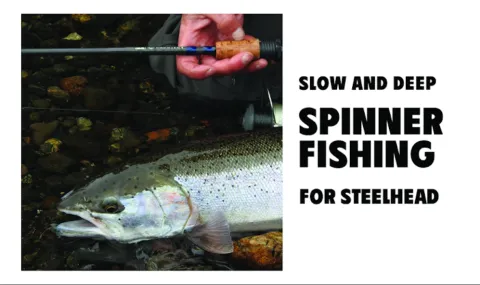
/articles/slow-and-deep-spinner-fishing-steelhead
Interview of the Well-Schooled Kokanee Continues
KOKANEE: Hmm. So what wisdom do you now possess after tempering theory with experience?
DUDE: I would say the most important thing is that I have a lot more to learn.
KOKANEE: Then you really have spent a lot of time on the water. My buds and I get a kick out of all the experts out there who spend fortunes on all of the most expensive boats, the highest-priced electronics, sometimes all for naught. Well, at least they get a nice boat ride.
DUDE: I admit I don’t have the fanciest of boats, but it is adequate. My sonar is color, and it is dialed in. I do have reliable downriggers, proper releases, and a trolling motor. I did spend the dollars on getting quality reels to match the ultralight rods. I can measure water temperature at depth. Got the rubber net, so the trailing hooks don’t break off anymore.
KOKANEE: And what did having the proper equipment do for your success?
DUDE: Well, I sure eat a lot more kokanee than before. Using a very short leader behind the dodger really helped, as did using only minimum drag – letting my rod and reel work together.
KOKANEE: So, did you figure out why many kokanee fishermen lose their fish during the fight?
DUDE: I learned early. There is no “try” – only “do.”
KOKANEE: OK, Yoda – explain yourself.
DUDE: What seemed apparent to me is that the average fisherman, once a kokanee is hooked, makes several mistakes trying to get the fish to the boat. First, they do not take the slack out of the line as soon as possible. They don’t reel fast enough to get the tension back to the rod. And some don’t stop reeling fast once that point is reached and jerk the hooks out of the fish’s mouth. So, lack of tension and too much tension will result in that dreaded long-distance release.
KOKANEE: What is the second thing?
DUDE: Many of these long-distance release failures seem to be caused by the fisherman trying to pull the fish out of the water. They have their rods pointed to the sky at about 11 o’clock, and then put the tension on the rod. I figured out that the very last thing you want to do is get that attracting dodger to the surface.
KOKANEE: Why is that?
DUDE: The surface of the dodger interacts with the surface of the water, and that can become a significant point of resistance, allowing the fish to escape the hooks – something like too much tension when you are reeling in.
KOKANEE: So what is it you do?
DUDE: Once I get hooked up and eliminate the line slack, I turn sideways to the fish, forming a 90-degree angle between the fish and my rod. I then lower my rod tip to the water and work the fish by applying and keeping sideways pressure on the fish at all times. When I bend the rod away from the fish, I know what the fish is doing as I can feel it. As the fish gives way, I continue taking in line but keeping that rod bent a bit, keeping that line pressure on.
KOKANEE: Do you adjust the drag during the fight?
DUDE: Not ever.
KOKANEE: How much drag is correct?
DUDE: Just enough drag to keep the rod properly loaded in the downrigger without the line going out of the reel.
KOKANEE: What about if the koke is really taking line?
DUDE: Excellent. Big fish. That’s why I have the ultralight rod. It allows me to exert proper pressure on the fish with my sideways approach, regardless of the size of the fish. The trick with the big fish is to know when the fish is heading back to you. Make sure you take in that line to keep that tension in the line. Keep bending the rod away from the fish, then reel in the slack. Learning just how much pressure to exert is the trick. Only experience can perfect the technique. However, once you get it, it becomes second nature.
KOKANEE: Sounds like you have really learned a lot.
DUDE: Learning how to properly fight the fish made fishing way more enjoyable. And it resulted in way more fish in the boat. Making the rod and reel work together works on all species of fish — not just kokanee. So if I’m out on the ocean after big salmon, I use the same methods. If I am combat fishing along the river, the same technique.
KOKANEE: Sounds like you have really come a long way. But are you ready to take your learning to the next level?
DUDE: Let’s get ‘er done.
KOKANEE: As I take you through all this new stuff, the best way to orient yourself is to reflect on each concept as it applies to what you have already learned.
DUDE: I have been reading all I can. But there is a lot of bad information out there that is passed off as expert. The one person who really seems to give reliable information is that Fish With Gary guy.
KOKANEE: I would agree with you on that. He gives it to you straight. But consider this: he is really smart, but he is no kokanee.
DUDE: So for trolling, the standard setup is using a dodger as an attractor with a lure attached a short distance behind it – really short. Of course, the exception is the apex type lure, which needs room to move – so more like 18-20 inches. Some kind of scent is applied to the lure. This setup is unknown in nature, so why does it work to catch kokanee?
KOKANEE: For that, I need to take you back in history to the time of King Nerca. He was the originator of “not in my neighborhood.” Essentially, anything that invaded Nerka’s space was run out of Dodge. His aggression became both a rallying cry and a lifestyle for the entire species ever since.
DUDE: Really?
KOKANEE: To us, lo these many generations later, it is not fake news. And getting run out of Dodge is how the “dodger” was named.
DUDE: I don’t have to believe that, do I? No need to answer. Coming to the attracting dodger for a look see is a far cry from actually biting the lure.
KOKANEE: Glad you are staying focused. Technically, the dodger’s disturbance action provokes that attraction response. Getting the fish to react to bite stimulants is the trick. Notice I said stimulants – plural. You want the fish to have a biting response to the bite stimulants.
DUDE: So break it down for me, please.
KOKANEE: For kokanee, the first real bite stimulant is scent. And not just any scent. It has to be the kind of scent that is both compatible with the kokanee’s natural biting response and sufficient on the other hand to overcome that initial attraction response. While you may be 100% successful in attracting the fish, you still don’t eat dinner if the fish does not bite. And you need that biting response to be so powerful that it becomes to main focus for the fish.
DUDE: So what is the second bite stimulant?
KOKANEE: The second is visible, contrasting color.
DUDE: So why is scent first?
KOKANEE: Scent is dispersed into the water. We salmon species are known for our exceptional scent detection – measured in parts per million. Visible, contrasting color is visual for the fish at only about 20 inches or so. Scent is detectible over a far greater distance than 20 inches.
DUDE: Since the scent has a source, and if that source coincides with the visible, contrasting color, that is why they work together.
KOKANEE: Exactly.
DUDE: Remind me again about the 20 inches.
KOKANEE: It is often a challenge to get humans to accept that the human eye is vastly different than the kokanee eye. We simply cannot focus. We see near and far at the same time. We kokanee have relatively good contrast vision for dark and light, but very limited vision for color. We have to be about 20 inches from a target to discern its colors other than light and dark.
And that color has to be right in front of our snoot. So, as we approach a target, there reaches a finite point where the vision for light and dark suddenly flashes to color – and we could be talking about a distance of a quarter inch. Within that 20 inches – color; outside that 20 inches – shades of dark and light. Just barely inside those 20 inches is suddenly an explosion of color that a quarter inch before was only light and dark. That color flash, working with scent, creates its own biting response.
DUDE: You said visible, contrasting color more than once.
KOKANEE: Indeed, I did. On purpose. If the color is not visible, there is no color flash, no matter how close the fish gets to the target. We know that ordinary colors turn black at some point down the water column. However, as you recall from our last session, fluorescent colors do not fade provided there is some light to act on them
DUDE: Right. So even if there is only green, blue, indigo, and violet light left at that particular depth, a fluorescent orange with still be bright orange, even though there is no orange light to act on it.
KOKANEE: Don’t get me wrong. Black is a good fishing color if it contrasts with a fluorescent white or natural glow. Remember too that black will contrast with the color of the water except at deeper depths.
DUDE: And I do recall from our last discussion that the term “UV” is marketing speak for fluorescent. I also recall that UV light technically does not penetrate the water column more than just a few inches. So it is not UV light reacting with the lure colors. Visible light penetrates the water column, but is absorbed in stages as you go deeper in the water column. It is visible light that reacts with the lure colors.
KOKANEE: Exactly. Contrast is necessary because it makes the color easier to see. Not for humans, but for us fish.
DUDE: So, in tackle presentation, it is more important to understand how kokanee will actually see the presentation, rather than to evaluate it from a human perspective.
KOKANEE: But the one thing I can’t tell you is why a color or color combination works so well one day and not the next. It can even change hour to hour. I just know that it does. And most kokanee get the color change memo all at once.
DUDE: Sorta like getting a text?
KOKANEE: It is against the law to swim and use our cell phones at the same time.
DUDE: So to sum up this bite stimulant concept, we need our presentation to have abundant scent and bright, contrasting visible colors to be the most effective. For scent, most people use corn, or corn soaked in some kind of scent. From my view, adding corn to my lure makes the lure droop and interferes with its action. From your view, is this what is happening?
KOKANEE: You are correct. Weighing down an ultralight lure with corn does indeed interfere with the lure’s action, and it also acts as a drag. This is particularly true with the slow speeds that kokanee fishermen are fond of using. White shoepeg corn does work because it contains a particular enzyme that acts as a bite stimulant. So is it the corn or the enzyme in the corn that works? It’s the enzyme. So if you can deliver the bite stimulant enzyme without having the weight of the corn, you keep the action of the lure intact.
DUDE: How is that accomplished?
KOKANEE: In the past few years, there have been some significant industry efforts put into the science of scents. The results have been amazing. Scents now come in liquids and gels. You may want to try the gels on beaded spinners, simply putting the gel on the beads only – leaving the hooks bare. For the squids – hoochies. Try using only the liquid stuff. Simply dip the whole rigged up squid into the liquid, shake off a little of the excess, and you are ready to go. Again, leave the hooks bare. On spinner bugs, use a bit of gel on the body segments. Leave the hooks bare.
DUDE: Let me guess. Leaving the hooks bare eliminates the short bite. The fish is concentrating on the color and scent, and when the fish strikes the lure, the hooks have already done the deed.
KOKANEE: A year ago, you would not have gotten that.
DUDE: I guess there might be another good reason to use the gels and liquids. If there is a short bite, you don’t have to bring everything up to check and see if you still have corn, because you are not using corn.
KOKANEE: And using the scents instead of corn puts way more attractive scent on your lure.
DUDE: I don’t suppose you would mind telling me which scents are the most effective?
KOKANEE: That’s right. Don’t suppose.
DUDE: C’mon. I have been working so hard at getting better. Cut me some slack.
KOKANEE: Does your tackle box contain just one dodger and one lure?
DUDE: No. I have a lot of stuff to throw at them. I call it my arsenal.
KOKANEE: And the reason why you have an arsenal?
DUDE: Because I can’t tell from one day to the next which is going to be the most effective.
KOKANEE: Same with the scents.
DUDE: Oh.
KOKANEE: Here is a sampling of what my rivals have fallen on: Bloody Tuna, Tuna Garlic, Garlic, Kokanee Special, Mike’s Glo-Scent, and anything with anise. I’m not saying these are exclusive. Make sure you have an arsenal of scents. And the favorite scent for one body of water may not work very well in another body of water. Be sure and record your notes so you have a good record.
DUDE: I am faithful to my collection of 3×5 note cards. I record everything I can data-wise. Here is an example. I found out that pink, as a color, has a lighter, more natural version as well as the hot pink “in your face” kind of color. One day, the hot pink is tops, and on another day, the lighter pink rules. The pink stuff works pretty well earlier in the season, and then tapers off a bit. Then, toward the later part of the season, it seems to pick up again. Do you know why that is?
KOKANEE: I subscribe to several audio journals, and that concept has been explored. While there appear to be opposing camps, the best explanation for me is that, later in the season, maturing kokanee are undergoing hormonal changes, which makes the cones in their eyes more sensitive to pink. See my kype? Since I got this kype thing going on, pink seems a bit more intense.
DUDE: So, no help on the early season?
KOKANEE: Sounds like you don’t need any help.
DUDE: I guess that is a compliment. One thing I have found is pretty consistent. If I’m out later in the afternoon, using chartreuse works pretty well down to about 35 feet.
KOKANEE: Well enough about color, let’s move on.
To Be Continued…
/articles/interview-well-schooled-kokanee-continues
The River Less Travelled
I’d never given it much thought until recently, a thought drifted up from my subconscious. This epiphany revealed to my satisfaction a reason for my deep peace and joy I experienced floating rivers on my pontoon. “Huckleberry Finn”. The childhood memory engulfed me, and I realized, all these years later, what a profound influence Mark Twain had on my life, all from a book I read many years ago in my childhood.
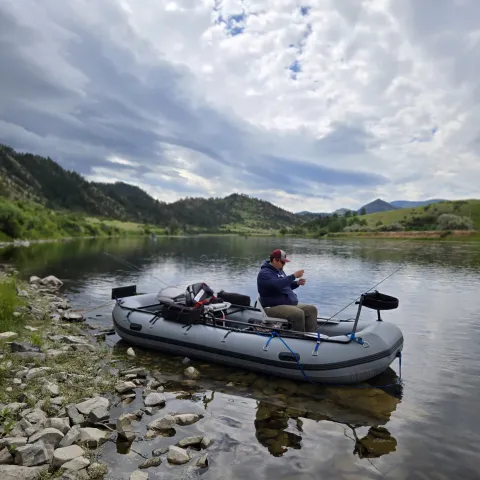
I would be lying if I told you I remembered any specific details that I read, rather, it was a realization that the journey of Huck Fin and Tom Sawyer, floating down the Mississippi, had etched into my spirit a longing for adventures, pondering what lies around the next bend, floating effortlessly on a liquid highway, seeing new sights and connecting with nature, and my essence, in a way that gave me a level of serenity essential to my very being. Now, so many years later, I see that it was natural for me to combine fishing with adventures. Indeed, from childhood on, I’ve found my true moments of peace outdoors. Adding fishing to the equation gave me a purpose, an excuse, and as I travelled through the decades of my life, I instinctively gravitated to the combination of fishing with outdoor adventures.
Canoes and overnight trips were the stuff of my early travels, whether a five-day float down Wisconsin’s Kickapoo River, or paddling and portaging the Boundary Waters of Minnesota, I saw the beauty of the outdoors, catching fish along the way. Casting a small Mepps up against a sandstone wall and feeling a beautiful brown trout bend my budget friendly spinning rod, pulling line off the reel, or tossing a topwater spinner into a weedy shoreline, the bubbling chatter of the blade drawing the attention of a green-stripped pike knifing toward it with a V-shaped wake, the anticipation and final smash of the grab – I was literally hooked for life!
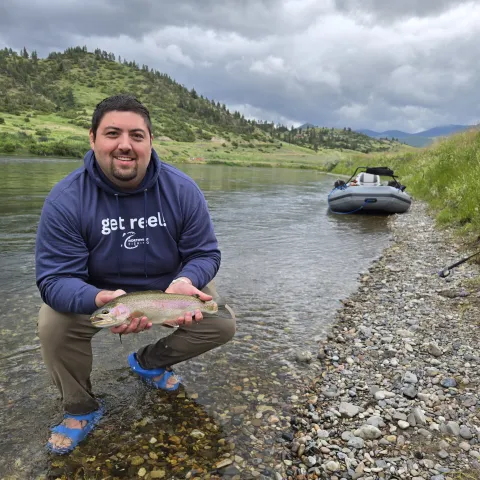
I was fortunate to have moved to Washington during a time when hatcheries put out large numbers of smolts, and returns of hatchery fish made for many memorable days of steelhead limits. My go-to rivers were the Cowlitz, Skykomish, and Satsop. I ran up and down these rivers in an eight-foot sport raft with an eight-horsepower prop (with my own modified, raised transom to avoid rocks). It was a fun time, but there was something missing. I can only thank the subconscious imprint Mark Twain had on me. At a winter Sportsman’s Show, I happened upon a booth where Dave Scadden rafts and pontoons were displayed. I stopped in mid-step and took a closer look at what would soon become my new passion. Dave had a variety of pontoon boats on display, but what really caught my eye was a cherry red two-person twelve-foot pontoon boat. My mind immediately began contemplating the adventures I could have with friends, and two boys who would soon be old enough to join in on trips with me. I remember the boat had features that caught my attention, such as being able to easily convert it from a two-person to a one-person pontoon, and a nifty storage system for coolers or overnight trips. Fighting the impulse to buy on the spot, I went home that night and did my research. Satisfied that it was a good quality product at a fair price, I came back the next day and made my purchase.
The rest, as they say, is history. My cherry red pontoon took me on multiple adventures, including floating the Wilson River with each of my sons for fall chinook. Many a water was explored and many fish netted in my fire-red pontoon. The years added on, and the boat served me well. Twenty or so years later, my retirement years are coming ever closer. Last year, my wife and I moved to Great Falls, Montana, to be closer to our grandchildren, and farther away from the ever-growing Puget Sound region with its claustrophobia-inducing congestion. My backyard river is now the Missouri. My son Matt and I have floated the river several times, and the pontoon performed fine, but I found myself gazing enviously as drift boats and larger rafts floated by. I observed they offered a more stable platform for tossing flies and anchoring up on this big river. The seed had been planted, and it took full root when my wife JoAnn casually mentioned there was some spare cash in a savings account, which I knew nothing of. Husbands know that spare cash and a wife’s “OK” are the final straw. My research kicked into high gear!
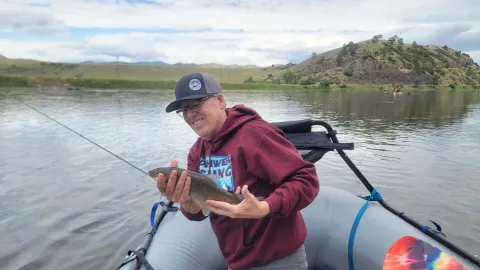
I looked at the variety of drift boats and rafts out there and narrowed my choice down to a raft. I prefer the flexibility and lighter weight of a raft. After looking at several companies and designs, I found myself on the Dave Scadden website. I was instantly impressed by the selection of framed rafts, with sizes and features aimed at whatever budget and needs a boater was looking for. I had determined that in addition to a stable platform, I also wanted a big enough raft to handle three anglers, and space to store overnight camping gear for those Huck Finn adventures. Each year, Montana opens the Smith River to a lottery, allowing a limited number of anglers to float this secluded and scenic 57-mile canyon-lined river. I’ve decided this four-day float is going to be on my Bucket List.
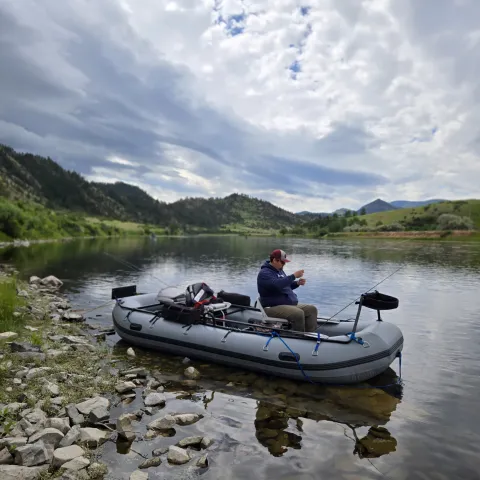
After a call to Dave to discuss my goals, I selected his new 14-foot Dragonfly. With a 6-foot beam, three seats, a casting brace, an inline anchor system, and the rigid dry floor insert feature, the raft was just what I was looking for. Throw in an excellent warranty and my positive experience with my pontoon boat, and I feel confident I’d found a winner.
Pairing my new raft with a flat bed 5x8 trailer (to which I added a couple of rollers made with PVC piping), my sons Matt and James, and I headed to the Missouri River for a maiden voyage. Launching below the Holter Lake dam, we floated 5 miles down to the takeout at Craig. Around us were every style of floating vessels – drift boats, pontoons, rafts – we felt right at home. The Dragonfly had plenty of room for the rower and two anglers. While the front angler had a casting brace, the rear angler did not. This would be a feature I will try to add as a DIY project. The anchoring system is also not as robust as a higher-end (and twice as expensive) raft. I can live with it. Again, if you go on YouTube, there are some DIY setups to improve the anchor system.
Anchored up and casting nymphs with indicators, James let out a “fish on”, his first ever fish caught on a fly, and his first ever Montana fish. A nice native whitefish came to the net after a bulldog fight. The smile on James’ face was my big catch for the day. Introducing Matt and James to my inner Huck Finn was more satisfying than catching a 20” trout – well, maybe.

/articles/river-less-travelled
Of Damsels, Dragons, and Snails for Stillwater Trout
Be the best big stick by slowing down the presentation and lightening the tippet.
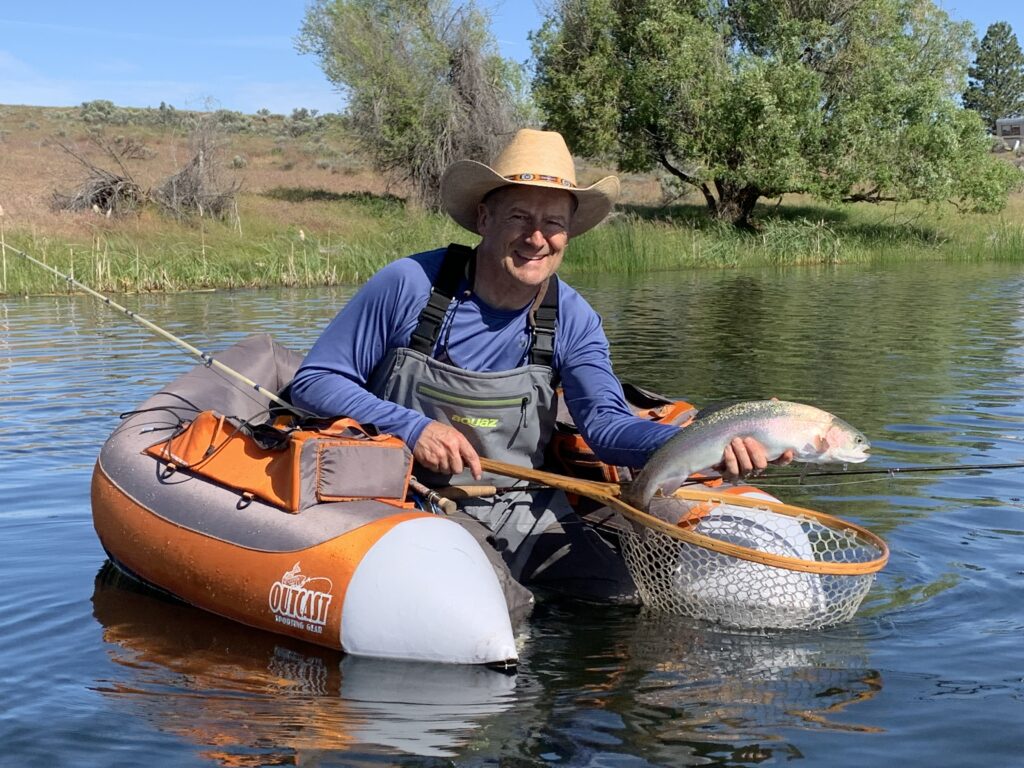
Last year, in early June, we fished a small reservoir in the high desert. Like a lot of private waters in Central Oregon, the lake had tules along one side and willows on the other.
We started in float tubes, backing into the water, then settling in.
My dad called out that he was seeing lots of damselflies. For which I thanked him and immediately tied on a damselfly imitation.
Kicking away from the launch into deeper water, I observed midges, PMDs, snails, dragonflies, and damsels.
My first fish to the net was a 21-inch rainbow. Dad was on the other side of the lake and could not get a picture for me. While I was using a damsel, I was thinking about how I usually like to start with a Renegade or a Brown Hackle or some other snail imitation.
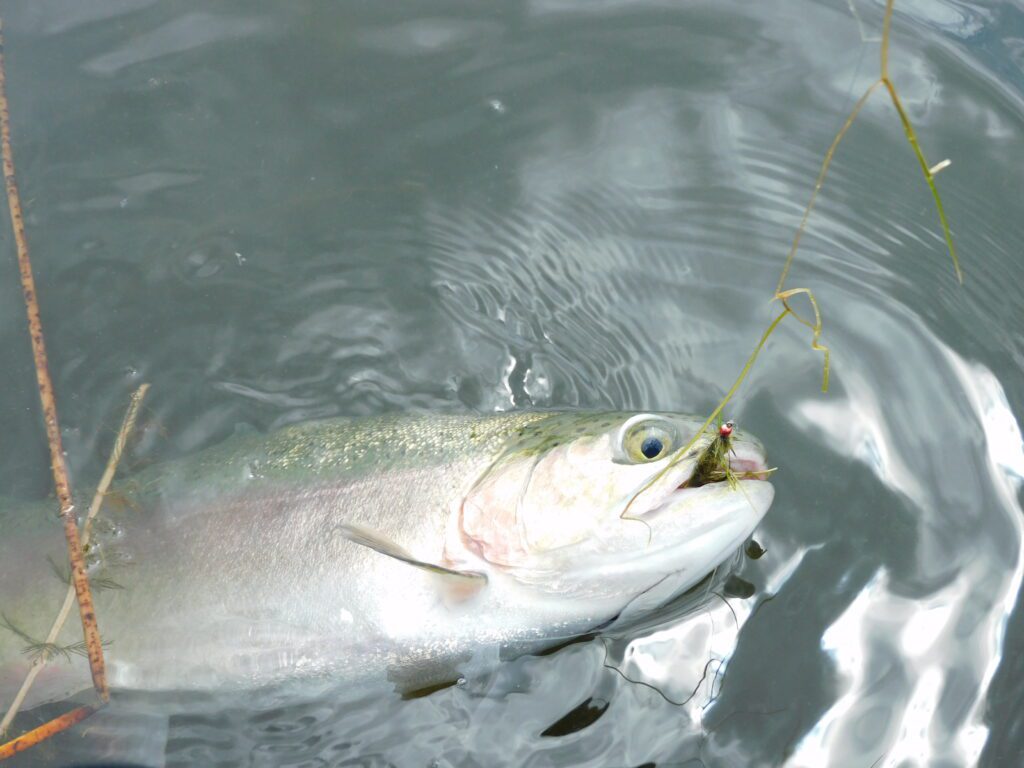
A person has a chance in the first hour of daylight to catch trout close-in to the tules on snail patterns before the fish sense the vehicle traffic or start to feel pressured by people in float tubes. But a lot of my friends don't want to fish using snails. It is not something they think about. Why would fish eat snails? And what do snails even look like? I think the real reason a lot of us don't fish using snails is because we are too restless. The snail just sits there on the surface or just under it. Until a trout eats it. It is so simple to fish snails.
The best thing to do is walk along the reed beds and scout the weed lines with polarized glasses. Look for swirls. Look for shaking tules. Watch for fins and tails or the white gum line as a trout opens its mouth and flares its gills.
Pattern choice is as simple as it gets. A No. 10 Woolly Worm. A Brown Hackle. A Renegade. These are all suggestive of snails when fished at snail speed. Cast or dap, and let it sit. Wait for the butt of the fly line or the leader to move. The fish will often have to change course to take the fly, so as the trout turns, it will feel the fly and spit it. Don't wait to feel the take, set the hook when the leader starts to move. After the sun comes up, the fish tend to retreat to deeper water, and now is the time to switch to a leech, damsel nymph, or dragonfly nymph.
While it is tempting to use old standbys like the Woolly Bugger or even the Thin Mint, don't forget, the fish have seen all these flies before. We can catch more fish if we use lifelike patterns that are faithful to the profile, contrast, and color of the food source, but also incorporate rubber legs, gill movement, and eyes.
It's okay to experiment with retrieve, but in general, these critters don't move fast and can spend a lot of time at rest. One-inch increments are my rule for retrieves. Unless I am fishing a minnow imitation.
We need to be more patient and precise with our presentations. Once I watched a guy in a float tube. He was using the right fly, but his tube was underinflated, so when he kicked, he leaned way back, transmitting all of that back-and-forth motion to his fly rod and his fly. His fly was probably making two-foot moves. No bug does that. Some guys don't like to be told what they are doing wrong, so I just kept my mouth shut. While the guy's buddy caught half a dozen trout that morning, this guy didn't land one. The difference between a poor day of fishing and a good day might just be the way the fly swims.
A good presentation is one where the bug swims and rests naturally. Since real bugs don't get towed around on lines, we have to minimize the way the line affects the movement of the fly. The smaller the tippet, the more that the fly will work in the water like the tyer intended. If you have been using 3X, go down to 4X tippet or even 5X on smaller flies. Don’t forget, fluorocarbon was made so that you can catch more fish. And the guy with fluoro will probably out-fish the guy with mono five-to-one if everything else is equal.
Like it or not, you might have to learn a new knot. Try a non-slip or a perfection loop and see how the fly behaves differently at rest. My biggest fish of the morning was a 25-incher with a thick wrist, one of my best trout of the year. But it was in the late afternoon with a low-pressure system coming in when I earned a 20-inch rainbow.
"What are you using?" Dad wanted to know.
"A damselfly."
"Oh, good idea," Dad said. "Why didn't you tell me earlier?"
"Because you told me, I figured you already knew."
"Oh yeah, I'm pretty smart," Dad said.
# # #
For a copy of the Fishing Central Oregon book, send $29.99 to Gary Lewis Outdoors, PO Box 1364, Bend, OR 97709 To contact Gary Lewis, visit www.GaryLewisOutdoors.com
/articles/damsels-dragons-and-snails-stillwater-trout
Omak Lake Cutthroat Action
Omak Lake, nestled within the picturesque landscape of Washington State, is a hidden gem for anglers seeking the thrill of catching Lahontan cutthroat trout. This expansive body of water is renowned for its crystal-clear waters and the bountiful presence of this unique trout species.
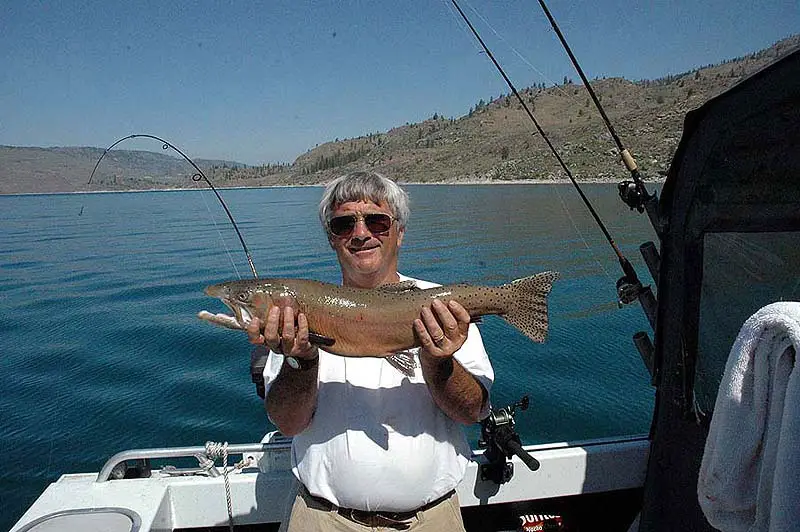
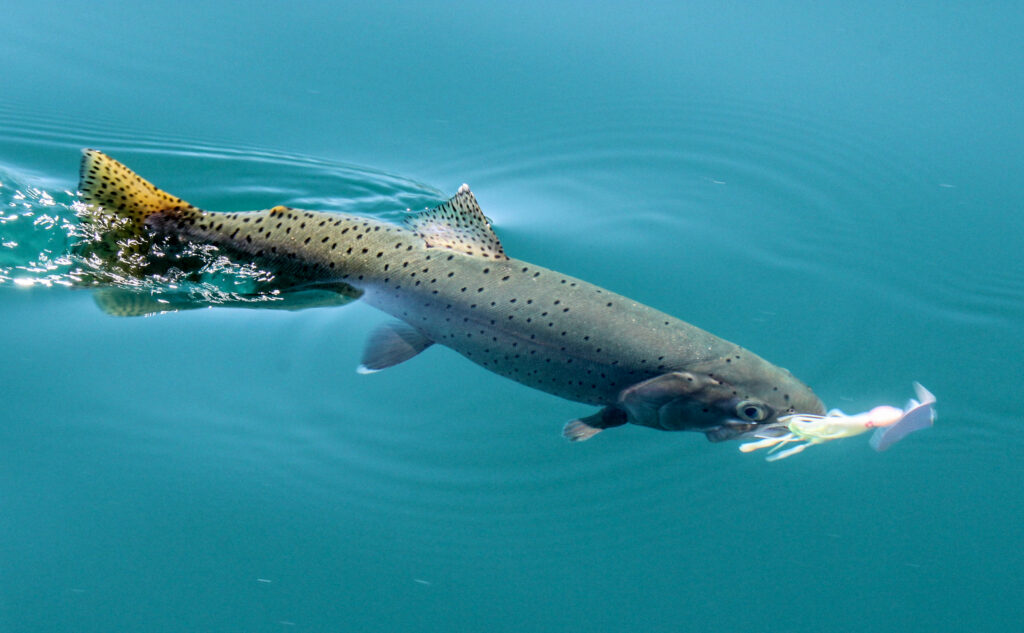
The Lahontan cutthroat trout (Oncorhynchus clarkii henshawi) is native to the Lahontan Basin of Nevada, Eastern California, and Southern Oregon. These trout are well-adapted to the alkaline and saline conditions of the region, making Omak Lake an ideal habitat. Lahontan cutthroat trout are known for their striking appearance, characterized by vivid red and orange hues along their sides and beneath their jaws. They can grow to impressive sizes, with the Washington State record at 18.04 pounds and was caught out of Omak Lake.
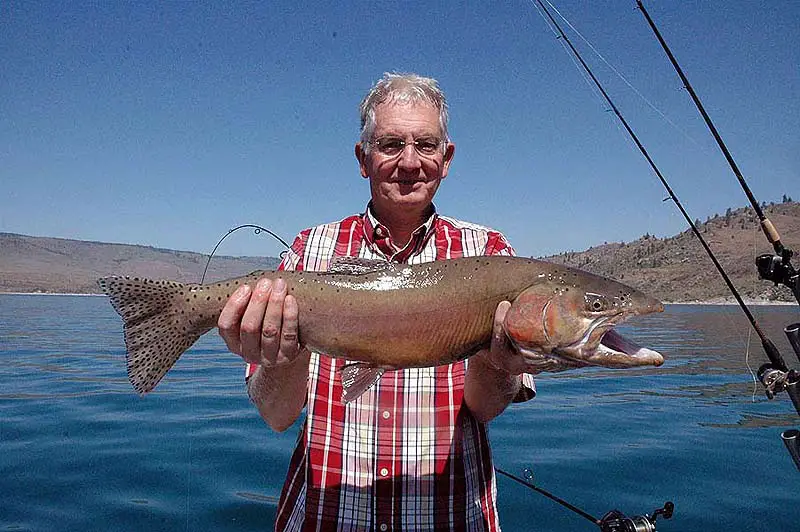
Omak Lake is located on the Colville Confederated Tribes Reservation, and is 3,244 acres, nestled in a high desert of rolling sagebrush hills. The prime fishing season at Omak Lake runs from early spring to late autumn. During these months, the water temperatures are optimal for trout activity, and the fish are more likely to be found near the surface. The early mornings and late afternoons are particularly productive times for fishing, as the trout are more active in these cooler hours
Due to its large size and regulations by the tribe that protects the shallow shorelines in the northern part of the lake during the May spawning period, this is primarily a boat fishery. As the lake begins to thaw in March and warms up through May, the regulations change from a catch and keep to a catch and release fishery, which means using fly gear or single barbless hooks on lures and no bait. Just like the other popular Lahontan waters in Washington, the fish start cruising the shallows and shorelines looking for creeks and sources of cold water for spawning.
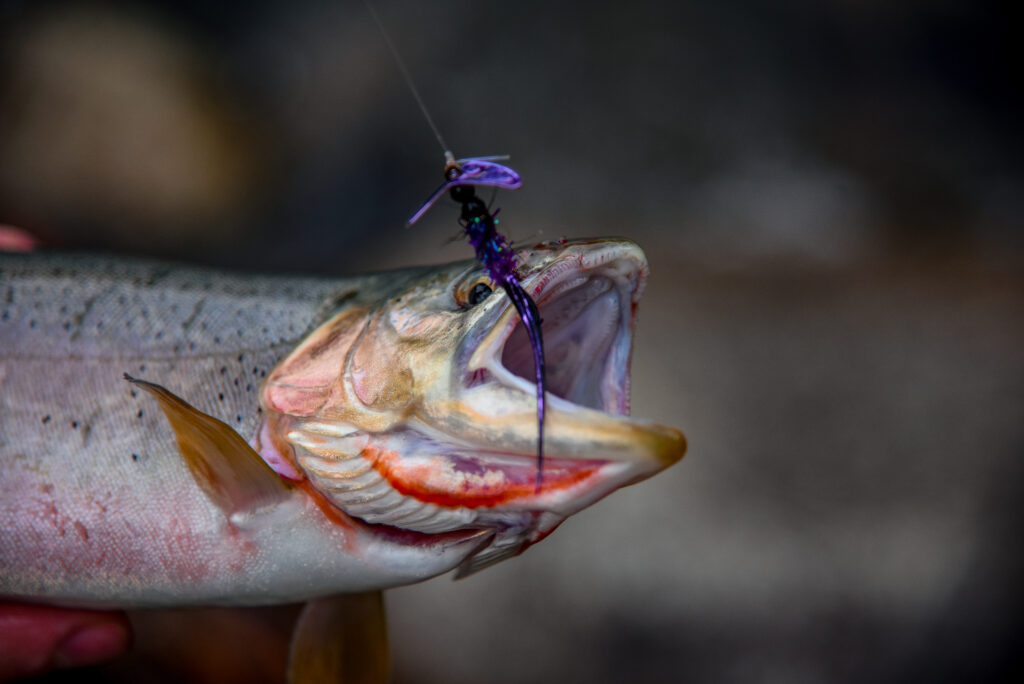
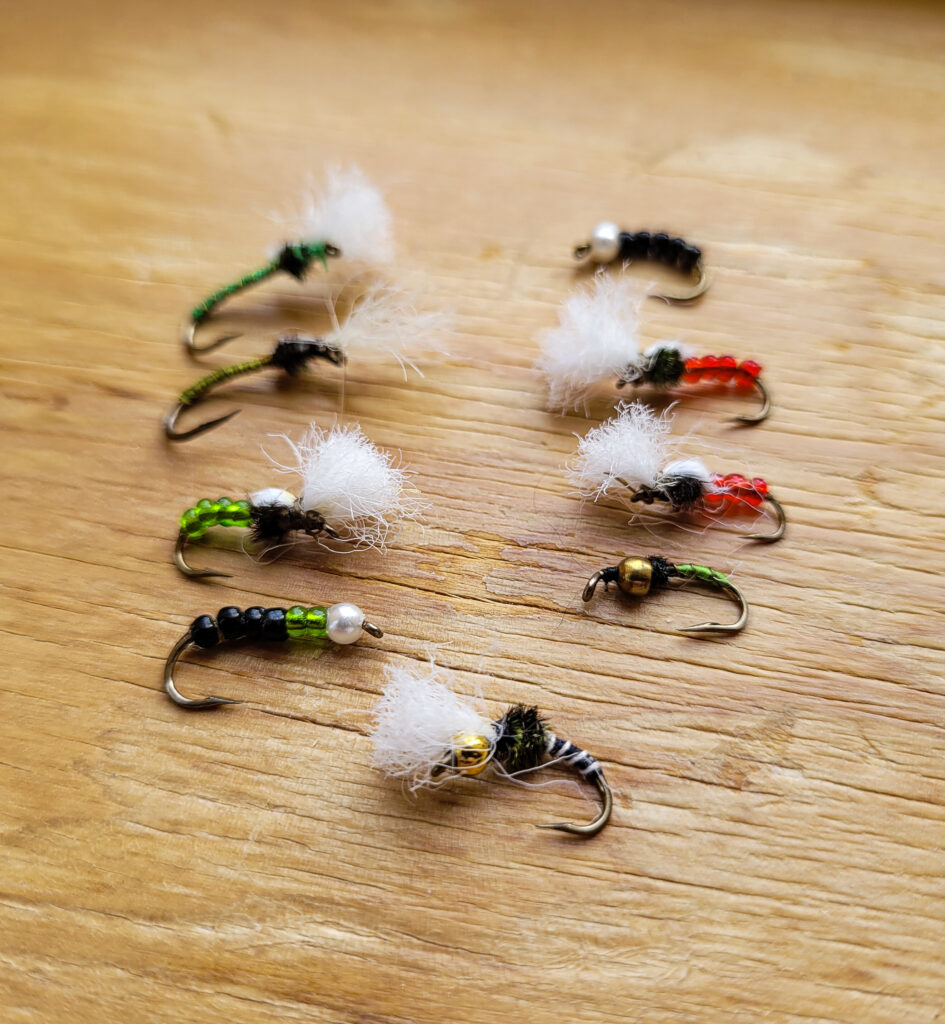
Fly rod toting anglers usually target these areas with the same standard flies for Lake Lenore, another Lahontan Cutthroat producing lake in Washington. A black or green whooly bugger in size 8 to 4, or very small bead head chironomids in sizes 14 to 18. A heavy 6-weight rod is best since fish can be measured in pounds over inches, but some anglers will use a 5-weight or even a 4-weight. Sinking lines and the ability to cast in an afternoon thermal breeze are a must.
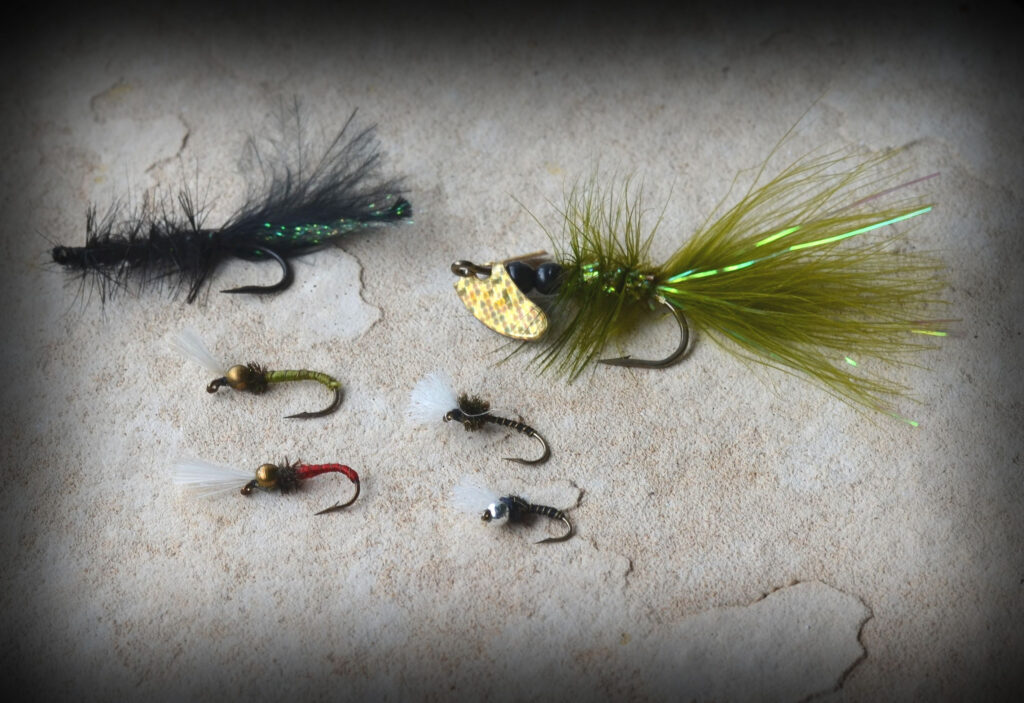
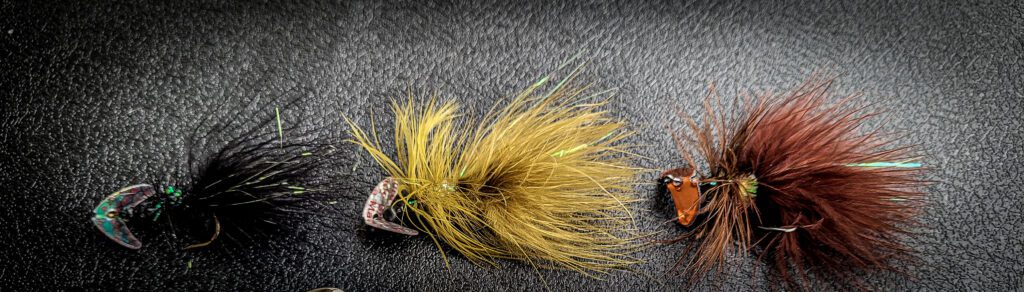
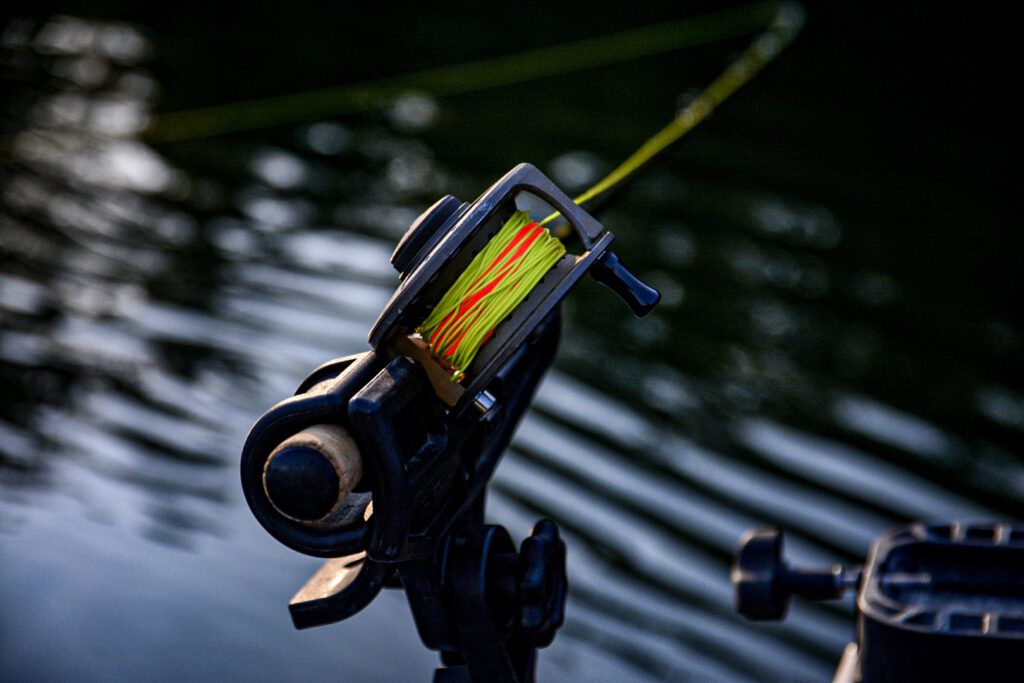
For those who prefer to use a spinning or casting rod, using lures such as spoons, spinners, and soft plastics can be highly effective. These lures mimic the movements of baitfish and can provoke aggressive strikes from predatory trout. Top producing lures to try are the Luhr-Jensen Krocodile spoon in the frog pattern and Dick Nites in silver and chartreuse. Another option is to troll the F4 Kwik Fish in a frog pattern. For both fly fishermen and gear trollers can do very well using a Smile Blade Fly by Macks Lure, which is a whooly bugger with a smile blade in front as a “go to” fly. For the gear guys, simply put a few split shots a foot or two above the fly and troll at slow speed. The fly anglers should use a slow-sinking tippet line and strip it in slowly.
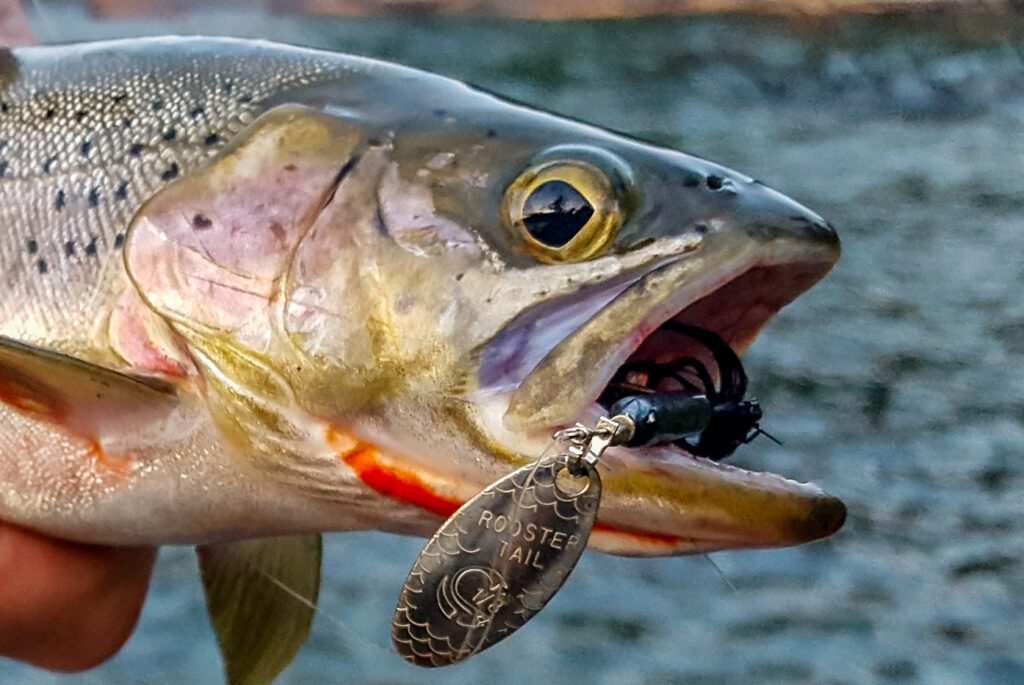
Fishing for Lahontan cutthroat trout at Omak Lake is more than just a sport; it's an experience that connects anglers with nature. The serene beauty of the lake, surrounded by rolling hills and open skies, creates a tranquil setting for a day on the water. What makes this trip to Omak Lake unique is that you are fishing a part of history.
First, the region itself should be explored. It is rich in Native American culture. In fact, Chief Joseph of the Nez Perce, who gave the famous surrendering speech “I will fight no more forever” died on the Colville Reservation in 1904 and is buried at Nespelem. The Grand Coulee Dam is bringing back its laser night show during the summer months, and just seeing this dam is worth the nearby side trip. There are also several trails to hike and, of course, the Columbia River to fish if you want to add other places to cast a line.
Omak Lake received its first plantings of Lahontan Cutthroats in 1968, which is noted in a report “Colville Lakes Compendium, Limiting Factors, and Management Plan” published by John Arterburn in 2003. These fish were a cross of rainbow hybrids from Lake Heenan in California and Lahontan’s from Pyramid Lake in Nevada. The reason why these fish were put in the lake was due to its alkalinity. Back in 1953 a netting of the lake revealed only chum suckers lived there.
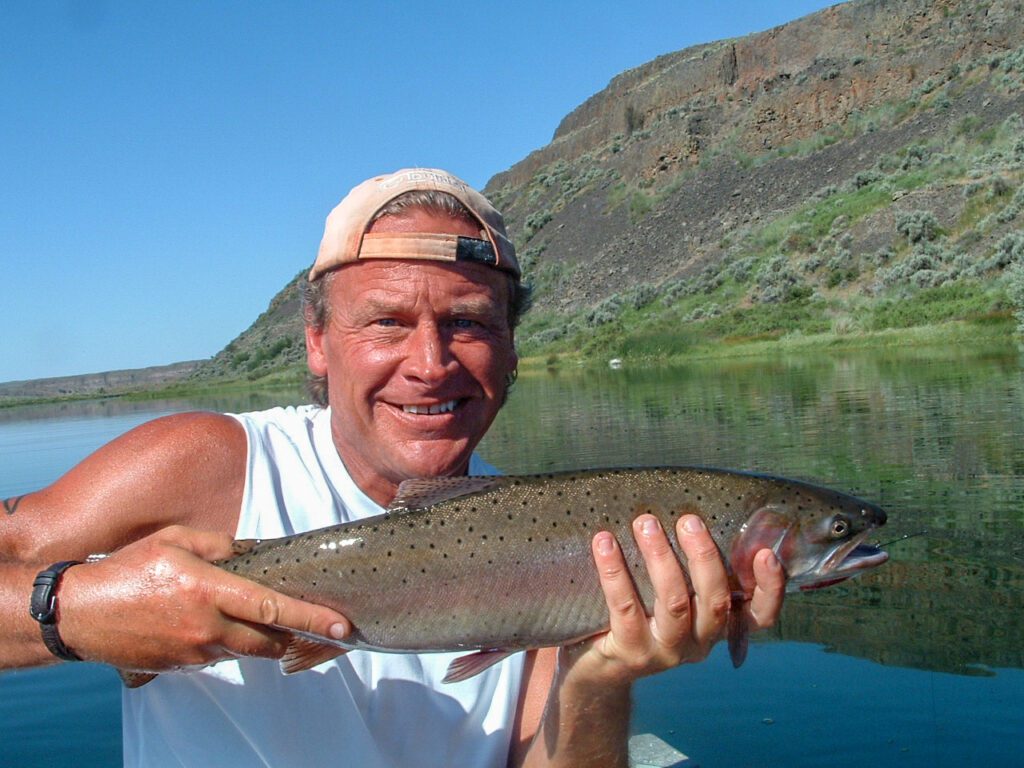
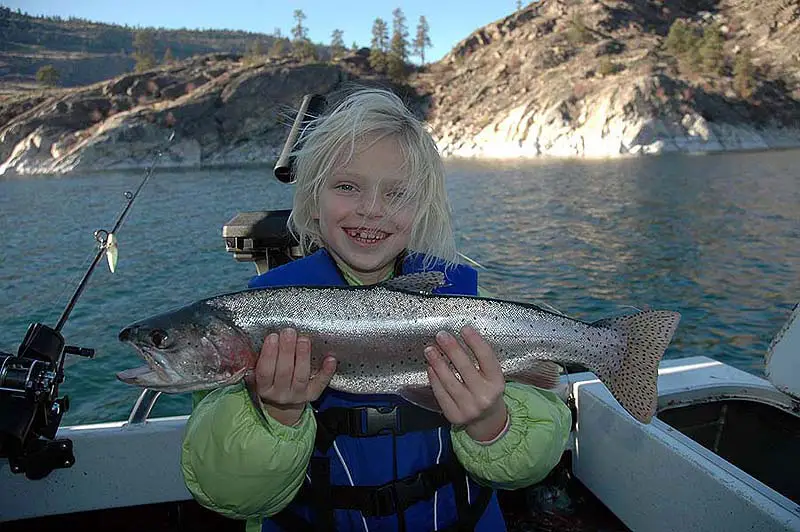
The lake was stocked with rainbows from 1950 to 1960, and in 1956, brook trout were planted. None of these fish survived, so in 1968, they tried the Lahontan’s which did well in the alkaline waters with successful fishing since 1975. A creel census that the tribes conducted from 1975 to 2001, over 26 years of data showed that the average fish caught weighed just under 2 ½ pounds, with most of the fish in the 19 to 20 inch range, but some fish were recorded over 30 inches, including that state record of 18 pounds.
You will need a fishing permit from the tribe. For non-tribal members, the cost is $10 for a single-day use permit, a three-day permit is $20, a seven-day is $30, and the yearly permit is $40. Also, get a copy of the current regulations as it will describe the closed waters, closed shorelines to all access, and also give launch sites that can be used by non-tribal members. There is some camping available, but again, contact the tribe for more information.
Before going to Omak, you should contact the Colville Confederated Tribes Fish and Wildlife Department for current regulations and also where to launch. The Mission Bay launch was recently closed, and other launches are mostly for small watercraft. A launch permit is also needed in addition to a fishing license. The south end of the lake’s shoreline is closed to non-tribal members, and the north end is closed to fishing.
Colville Tribes Fish & Wildlife Department can be contacted at:
Front Desk (509) 634-2110
Main website: https://www.cct-fnw.com/
/articles/omak-lake-cutthroat-action
Westside Trout Roundup
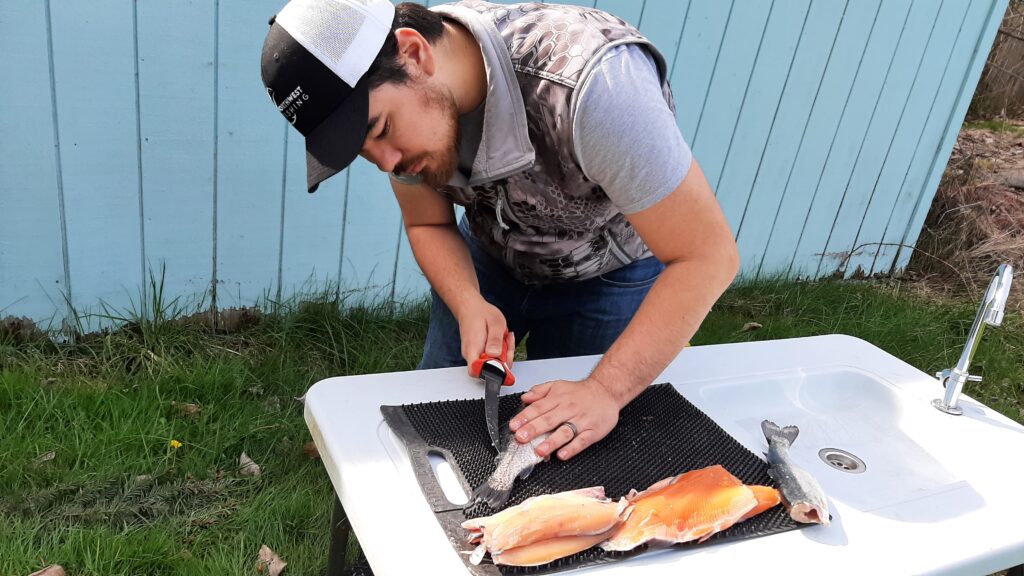
It's that time of year again, trout fishing has finally kicked off! May is a great time to take your family out to your local lake. WDFW stocks many lakes with thousands of catchable size rainbow trout every spring. These fish are hungry and active, and taste great on the grill. There's nothing like a relaxing day of fishing followed by a good trout dinner. Let's talk about my favorite Western Washington trout lakes. I will include lakes with both boat ramps and good shore access on this list.
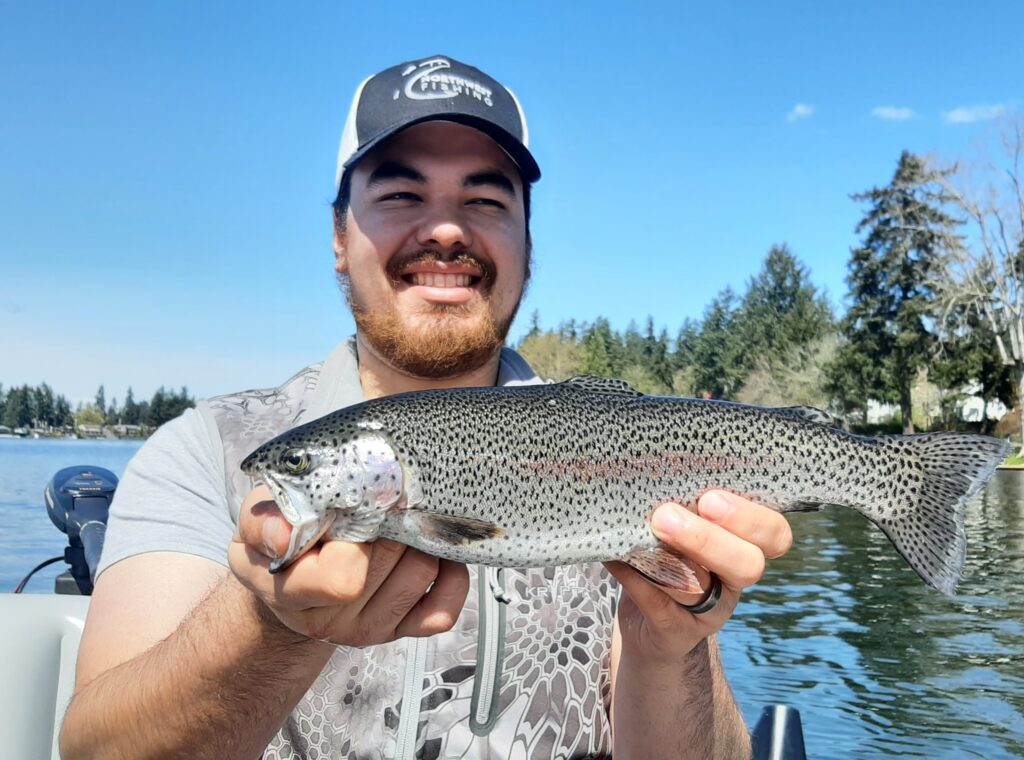
American Lake
Let's kick off this list with a beloved Pierce County lake. There are multiple boat ramps and shore access spots on this large lake. This is a popular spot for jet skis and pleasure boaters, so exercise caution if you're on a small boat. This lake is deeper and larger than most lakes in the area. The fish can be a bit more difficult to find since they have room to spread out. However, WDFW usually plants twenty thousand or more fish, so your odds are pretty good! Try fishing the shore or dock at Harry Todd Park, or pay a small fee to fish at Bill's Boathouse. They also offer boat rentals. If the trout aren't biting, you can also try your luck for yellow perch.
Lake Ballinger
This northern lake has good shore access and a large fishing pier. It's a great spot for fishermen with small boats, rafts, or kayaks. Gasoline motors are not permitted, so you won't have to worry about getting blown off the water by jet skis or large boats. The south end of the lake is a bit deeper, and that's where the fish tend to hang out.
Mineral Lake
This lake is a bit off the beaten path, but you have the best chance of scoring a trophy trout here. There is a fishing dock and decent shore access. You'll have company on weekends, however. There are also brown trout in this lake! A word of caution for boaters- there are many stumps on the lake, and some are difficult to see. Keep an eye out!
Black Lake
Located close to Olympia, this popular lake boasts a variety of different kinds of fish. If the trout aren't biting, try for panfish! There is good shore access at the park and boat launch. WDFW has planted over twenty thousand trout here this spring.
Lake Padden
No list of West side trout lakes is complete without this one. It has some of the best shore access around! The shoreline is dotted with families enjoying a tranquil day on the water. There is a boat launch, but gasoline motors are not allowed. This lake is small and shallow, I'd definitely recommend soaking dough baits or using a bobber and worm.
Harts Lake
This secluded, serene lake has amazing scenery and even better fishing. There is a small campground, pay to fish dock, and tackle shop right next to the boat ramp. Troll around the edges of the lake until you figure out where the fish are holding, it seems to change frequently. You can also drop anchor and toss dough bait. This lake is also great for catfish, the shore fills up with fishermen on hot summer nights.
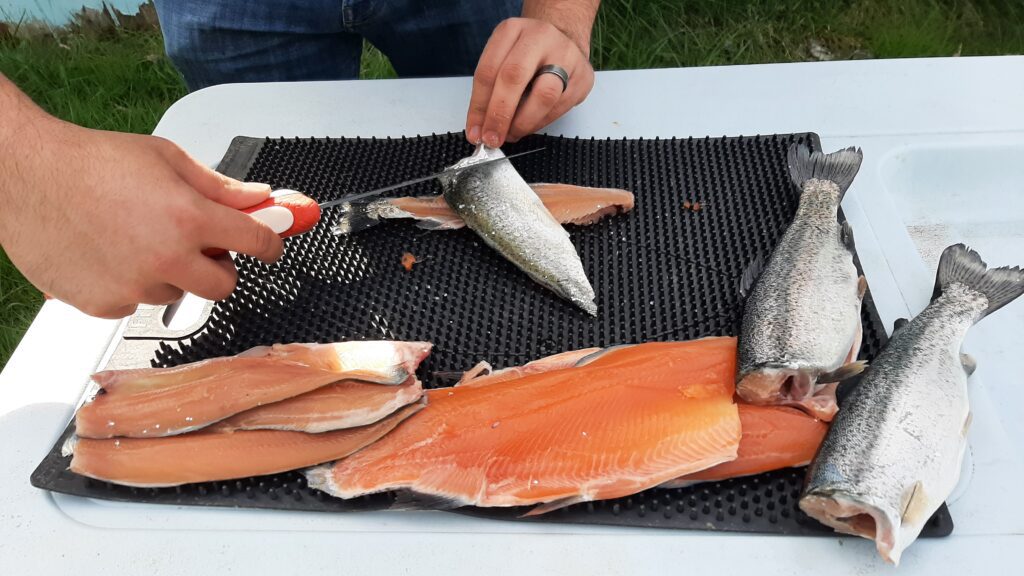
Remember to check the weather forecast before heading out, bring life jackets, and put on plenty of sunscreen! For the best meat quality, bleed, gut, and ice your fish right away. Most importantly, have a great time! Rainbow trout put up a good fight for their size and are eager biters. They are easy for kids to handle because they don't have spines on their body like many other fish. May is the perfect time to go out and explore your local lake!
/articles/westside-trout-roundup
Spring Means Rockfish
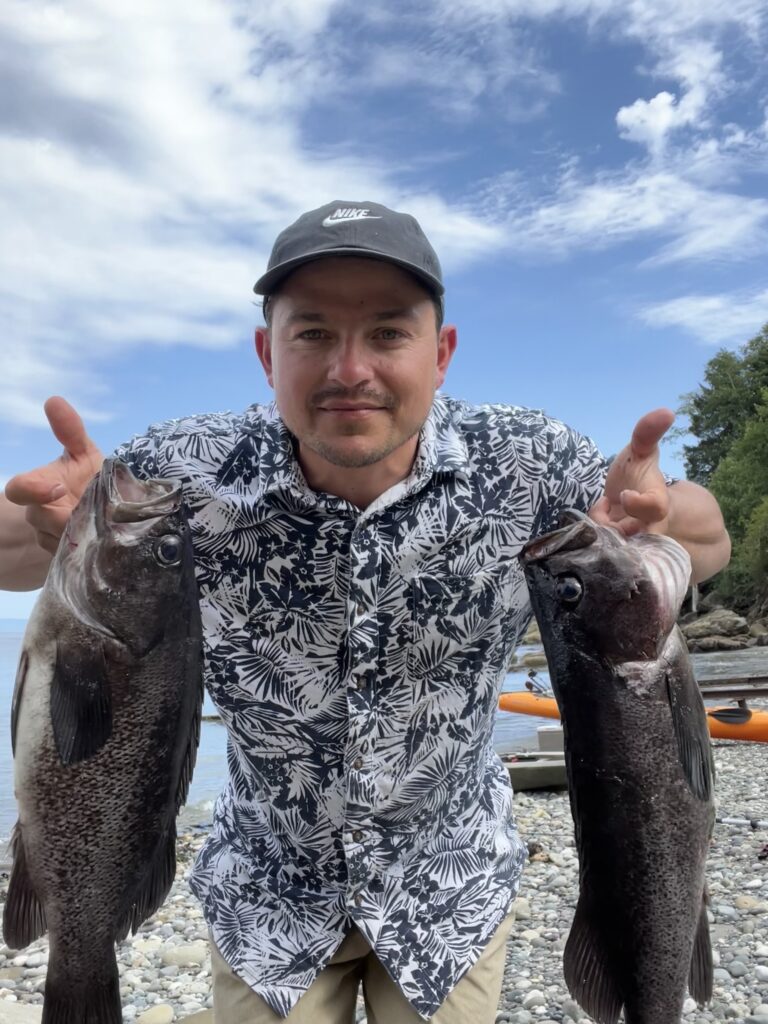
If you’ve fished anywhere off the coast of Washington state, chances are at some point you’ve landed a rockfish, or depending on who you talk to, a black seabass. While rockfish are often seen as only a bonus catch during the pursuit of something larger, like lingcod, they are, in my opinion, some of the best-eating fish that swim along our coastline. The name “Rockfish” is an umbrella term that encompasses over 100 different species of fish, but the ones we most commonly fish for here in the northwest are the canary rockfish, black rockfish, blue rockfish, and deacon rockfish.
Where to fish
Though Rockfish do inhabit the waters of the Puget Sound, it is illegal to retain or target them here due to conservation concerns. As you move northwest into the straights of Juan De Fuca, you’ll find that the populations of rockfish become healthier and fishing opportunity increases the closer you get to the Pacific Ocean. Marine Area 5 (Sekiu) is where allowable rockfish retention begins, though as of 2025, in MA 5, you can only retain 1 rockfish per day. Moving further west to MA 4 (Neah Bay) the possession limit increases to 7 and the season is year-round.
Aside from Neah Bay and Sekiu in Clallam Bay, you can also target rockfish southward along the Washington coast around Westport, Ocean Shores, and Pacific County near the mouth of the Columbia River. Boat fishing Rockfish tend to prefer deeper waters near rocky structures, reefs, kelp beds, or even shipwrecks, which in general makes fishing from shore not a viable option (though there are some exceptions). Fishing from boats, kayaks, or canoes, are generally the most effective method. And because rockfish are such aggressive feeders, it makes them a great species to target when bringing the family along on a boating trip, as these fish aren’t terribly difficult to catch.
Most soft plastic grubs on a 1-3 oz lead jig-head can entice a bite. Use lighter-weight jigs-heads when the current is mild, and heavier jig-heads during strong currents. The amount of sunlight should influence your choice of jig colors. I try to stick with darker color soft plastics during overcast days and brighter colors on sunny days. Flashy metal jigs anywhere from 2-4 oz can prove phenomenal for catching rockfish as well.
My favorite jig as of lately has been a 2.5 oz blue and silver laser minnow, and I seem to catch rockfish on this regardless of weather conditions and current strength. Most of the rockfish you catch will likely be around 2-3 lbs (though they can get much larger), considering this, they are a blast to catch on lightweight gear. However, larger fish like lingcod and cabezon will bite at the same jigs and lures as rockfish, so anglers should be prepared for this potential. I almost always run 25 lb braided mainline with a 20 lb monofilament leader off of a 6-7 ft medium light rod and find this to be a good middle of the road setup.
Jetty fishing
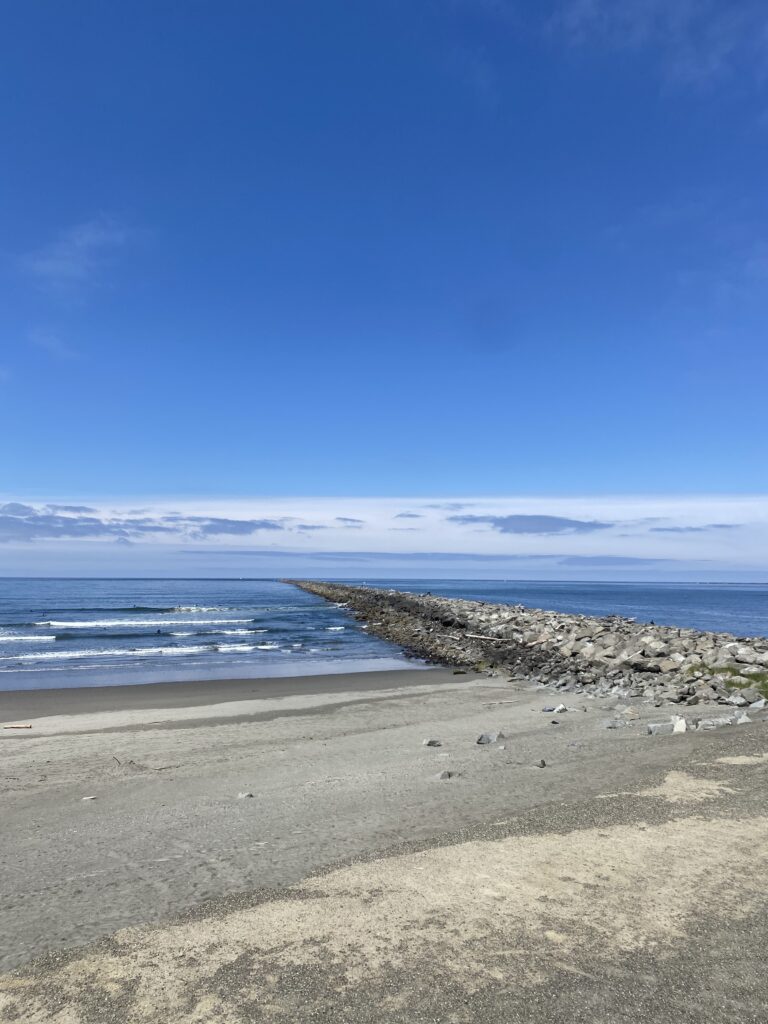
Though boat fishing may be the most effective method for catching rockfish, land dwellers should not fret because there are options for folks who prefer to stay off the water! Jetties or rocky outcroppings that extend into deep water offer ample opportunity for a limit of rockfish. The Westport jetty, the north jetty in Ocean Shores, and the Columbia River north jetty all allow somewhat easy access to this fishery. Furthermore, if you normally fish out of a boat for rockfish, and have had plenty of success over the years, you might find that the process, though fun, can eventually become a bit repetitive.
Jetty fishing offers a welcome change of pace as it provides an altogether different experience and requires different techniques and tackle to land the fish. When fishing from a jetty, netting the fish off the rocks isn’t always an option. This means you will have to lift the fish out of the water with your rod and line. That process can put an excessive amount of strain on your line, thus, jetty anglers should stick with a 25-40 lb mainline and 20-25 lb leader.
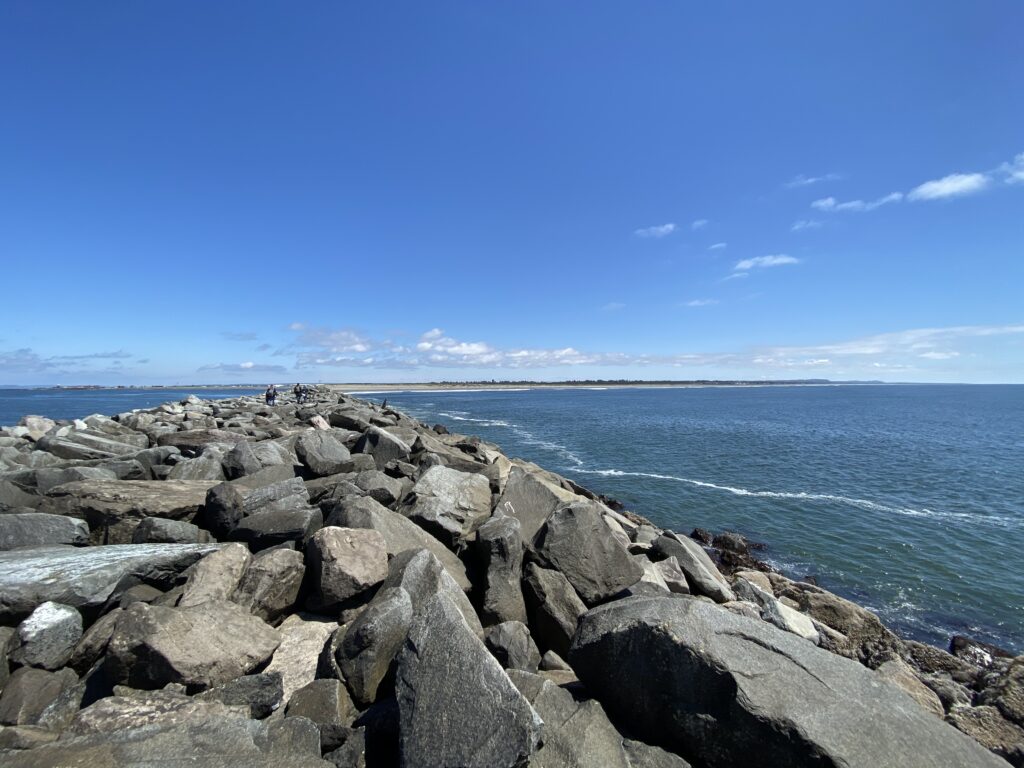
A soft plastic swim bait lure with a weight of 1/2 - 1 oz weight between your mainline and leader will allow your gear to fall deep enough into the water column while also remaining high enough to avoid snagging on the rocks. If you run a soft plastic jig, you can retrieve, jig and repeat. For a swim bait, anglers can find success by either doing a steady retrieve or by doing a steady retrieve with an occasional jig or twitch. Safety is a major concern while fishing on jetties. With this in mind, anglers should monitor weather, tides, and swell activity. During extreme conditions, waves can crash onto the jetties and pose a risk for anyone who’s on the rocks. Refer to NOAA for weather conditions and surf reports for swell and wave activity. Hiking boots, felt-soled boots, or even toe-shoes are favored by jetty anglers for walking around on wet rocks.
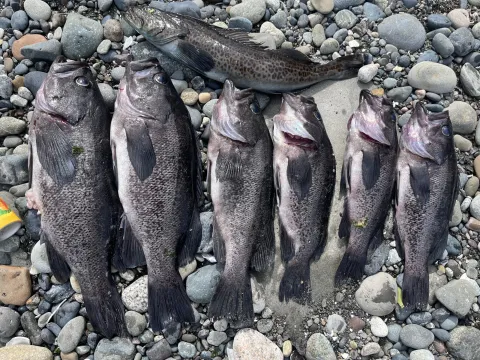
The rockfish fishery is a great way to get back out onto the water and get the sun back on your face as we crawl out of our long Pacific Northwest winter. Whether you're launching a kayak at Hobuck beach in Neah Bay, motoring out onto the straights, or climbing around on some rocks at the Westport jetty, there’s nothing better than introducing the upcoming summer season with a cooler full of rockfish and a fish taco dinner at home with the family.
/articles/spring-means-rockfish
Kokan-Eye Eyesight Colors and Presentations
Make no mistake, kokanee can see up, down, and all around. They see close up and farther out (depending on water clarity) at the same time, but not as clearly as we can. They can see effectively behind them as they swim, because their undulating swimming motion turns the head just far enough to see very near the plane of the tail.
Color Shift At Depth
Since sight is part of the effective formula, you must make sight important in your presentation. The very last thing you want is for your lure to be camouflaged. You want it to be noticed. You work against yourself if your target winds up being camouflaged because you have not accounted for the three things that change your lure's appearance at depth:
- Lack of light at target depth;
- Color shift (attenuation), making your lure dull gray; and
- Lack of contrast (conveys information about shape and form)
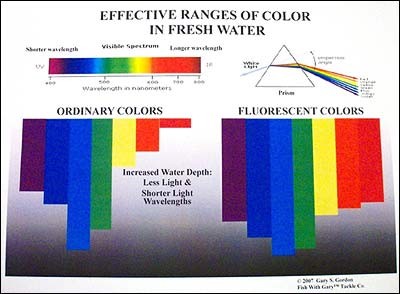
Consider what it is that you are trying to do. You want your setup color-wise to be different than the water surrounding it. If your setup contrasts with the water it is in, it has a far greater chance to be noticed and targeted. Remember, we are seeking a striking response. Your setup must appear different than the predominant color of the surrounding water at that depth.
As we descend the water column, certain light wave frequencies are absorbed (because water absorbs light). Here is the other prong of that absorption concept. As we go deeper in the water column, some of the colors we see at the surface will no longer be the same color at depth. At this point in the discussion, I am speaking of ordinary colors - the color spectrum we can see. Fluorescent colors will be discussed in a moment.
The longest visible color wavelengths are the reds. Shorter in descending order are orange, yellow, green, blue, indigo, and violet. As you descend the water column, the longer wavelengths are absorbed, leaving the shorter wavelengths to continue down the water column. Those shorter wavelengths will ultimately be absorbed, even in the clearest of water, provided you go deep enough. The kokanee fisherman is dealing with depths generally down to 100 feet, give or take. The typical kokanee body of water will have no light in the later season beyond 75 feet. In the very early season, there may be no light at 30 feet.
As you recall from last month’s article, the proper target depth for kokanee fishing is 54 degrees. And since that temperature descends the water column as the season wears on, the resulting less light at your target depth also means that certain ordinary colors are no longer what they appeared to be on the surface because their wavelengths have been absorbed. If you use such a color at depth, your presentation will be gray and not have much contrast to the water it is in.
A lure of ordinary red will virtually disappear in but a few feet of water. Soon to follow would be the ordinary orange, ordinary yellow, and then ordinary green. Also, about that time would be ordinary indigo and ordinary violet due to the structure of water and the use by phytoplankton of these frequencies. If you take an ordinary red object into a dark closet and shine orange light on it, the red object will appear gray. If you take an ordinary green object, and test it the same way with blue light, the green object will appear gray.
For the object to be seen in its correct color, it has to be struck by a light frequency of equal or higher wavelength. In these examples, if you take a green object and strike it with red light, it will appear green. If you take the green object and strike it with orange light, it will still be green. For ordinary colors, the deeper you go, the very light necessary for that color to be that color, has likely been absorbed in the water before you reach your target depth. Without the right light wavelength hitting it, it will be dull gray and not at all distinctive to the water that surrounds it. The little remaining visible light at depth makes the dullness even duller
Our lures are rarely of a pure color wavelength. But even the mixing of colors (hues) will still be subject to the same color deterioration at depth. Pink is a good example. Pink is not a color of the visible spectrum, but is a mixing of red and white. White is not a color of the spectrum, but is all colors of the visible spectrum. Thus in pink, a little of the color will respond to green and blue wavelength at depth. But the color intensity will be mostly dull. From what you now know, ordinary pink is not the ideal choice for getting noticed at depth.
While this might seem confusing to us above water, it is still the reality of the color situation in the water and at depth. Perhaps some encouragement is in order. To be "expert" of color at depth you need not memorize anything. Because most of our kokanee fishing occurs in green or blue light wave frequencies, we want all of our presentations to show up in green and blue light.
Fluorescent Colors
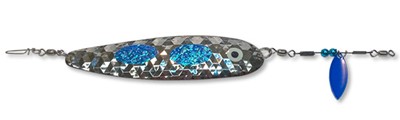
Enter the amazing world of fluorescent colors. No intense scientific discussion is needed here. What you need to know is this. A true fluorescent color will remain its color when struck by a lower light wave frequency. If a true fluorescent orange is struck by a green light (lower frequency than orange light), it will remain orange. The same is true for all of the fluorescent colors. And that means that if you use true fluorescent colors in your setup, your setup will be seen at depth. True fluorescent colors tend to be brighter as well, making for higher visibility.
Not all materials on the tackle market are of true fluorescent colors. You can easily test whether a color is a true fluorescent by taking your lures and dodgers into a dark closet and then shining a black or UV light on them. If the color seen is the color you saw in full light, you have a fluorescent color. Again, there is a difference in intensity of the color. Just because a material is fluorescent does not automatically mean it is intense.
U.V. light is below the visible spectrum (of lower wave frequency), which means it cannot be seen directly. All U.V. light is dissipated in very shallow fresh water holding kokanee, because the water, plankton and other particulates in the water absorb all of it. It is well documented that there will be no U.V. light in the freshwater column below just a few feet.
I have tested lures labeled "U.V." Most work very well in waters holding kokanee, and in particular, the UV squids should be a part of your tackle box. However, lures labeled "U.V." would be more accurately labeled as "fluorescent." These "U.V." lures come in visible colors. Since UV is not visible, the color you see is fluorescent. As with all fluorescent colors, stimulation by a black light will make the color jump out at you. But these lures are in fact, only fluorescent. But that is why they are good. They still need some visible light at depth to be most effective. They do not glow. Match one of these "UV" (fluorescent) squids with a Fish With Gary™ POWER Dodger, and you have a great setup.
Using true fluorescent materials in your setup will resolve issues of color shift in your favor. While some fluorescent colors will fade somewhat the deeper you are in the water column, they still are not gray if there is some light available to act on them. When using true fluorescent materials, the colors you are delivering at depth are those NOT ordinarily seen at depth. And that is exactly the effect you want. Your setup will be out of the ordinary, and kokanee will focus on it in the near field.
Vital Contrast
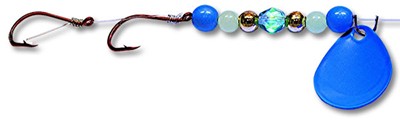
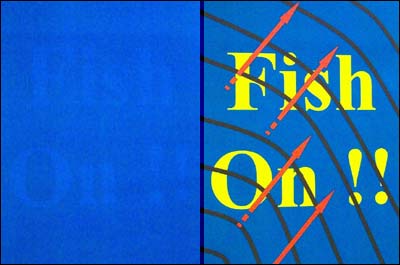
Using fluorescent materials is not the only way to get your setup noticed. Remember that you are after contrast, or what I call vital contrast. Vital contrast can be obtained by using different fluorescent colors next to each other or spaced in such a way as to create the illusion of not being connected. Components that contrast with themselves will stand out even more in dull watery depth.
Contrast is the enemy of camouflage. Contrast is the better-developed part of kokanee vision and encompasses about 10 times larger visual window area than does color. The color window is directly in front of the kokanee, but contrast is not only seen in front, it is seen up, down, sideways, and backwards. Contrast vision overlaps color vision. Effectively presented, color is a great contrast. When color and contrast are effectively presented, color and contrast are in front of the kokanee to see and react to them. This allows the kokanee to put its mouth where the color is, which is pretty much what you want!!
Glows
There is another fantastic way to achieve this vital contrast at depth, and that is the use of glows. Glows are termed phosphorescent (or luminescent) as they carry their own light to depth. No intense scientific discussion is needed here either. Glows emit light when the light source that charges them is removed. On the other hand, fluorescent materials appear brighter in light, but do not glow when that light is removed.
Most glows on the market and peddled to fisherman are of very poor quality. Their glow simply does not last even long enough to make it to depth, let alone work for you at depth.
All Fish With Gary™ glows are of the highest quality and are termed extended glows for good reason. The natural glow beads in particular will glow for hours on a simple charge of sunlight for a few minutes. Stimulation of glows by using a black light is not very efficient, and the resulting glow does not last as long as sunlight stimulation.
Glows clearly take on more importance when the level of light is less in the water column. As you descend below light in the water column in later season, glows make visible what would otherwise be invisible. And if the surrounding water is pitch black, the glow of light most certainly is the kind of dramatic contrast that will get your setup noticed.
The Ideal Presentation
The ideal presentation in achieving vital contrast is one that makes generous use of fluorescent materials and glows, arranged in such a way to be in contrast with each other and in contrast with the surrounding water. And this is exactly what is incorporated into the entire Fish With Gary™ Tackle line.
While the dodger blade attracts far field (long distance), the beads, and the spinner(s) on the leading wire are near field (short distance) attractors.
Here is what is going on with the beads and spinner in front of the dodger. Because the beads and spinner(s) are being moved about by the dodger, they are creating short field sound. The spinner(s) do not consistently spin as you would expect. Instead, their movement in the water makes the spinner(s) come in contact with the glass beads. Metal versus glass produces a sound. In this case the two produce an irregular sound that alternates with some spinning, and some "tap-tap" of the metal on the glass.
There is nothing in nature that this imitates, and this sequence of short field sound is itself a contrast to the natural water environment. Add to this is the natural movement of the glass beads working against themselves as this setup is whipped through the water. And all of this is going on while your dodger is still producing far field sound, attracting other kokanee to your setup. A gathering of kokanee is more likely to result in a strike than a single kokanee.
While your sound generating machine is working, your kokanee has been drawn close enough so that the colors and contrasts are within its sight window. A curious thing happens at this point. Having been drawn to the sound, the kokanee will see a particular color and contrast sequence. Once seen, this color and contrast sequence effectively imprints the kokanee with that combination, even if briefly. If your dodger and the upfront beads and spinner are of the same color and contrast, you increase that imprinting. And if your lure is of the same color and contrast, then you give the kokanee a target that it does not fear. That is why it is absolutely critical that your dodger setup and the lure be matched.
The lure is making short field vibrations and adding color and contrast, and adding scent.
So now you have the complete picture. Far field vibrations attract, short field vibrations and colors in consistent vital contrast imprint the kokanee and provoke the strike.
/articles/kokan-eye-eyesight-colors-and-presentations
Seven Oregon Kokanee Lakes to Fish This Year
Kokanee, which are a landlocked sockeye salmon, can be found in a couple of dozen or so lakes in Oregon and are some of the best eating at any fish fry. This year, we did the scouting for you. Here are seven lakes and reservoirs you must fish in 2025.
LAKE BILLY CHINOOK
At Lake Billy Chinook, it’s not hard to imagine the old river channels – the Deschutes, the Crooked, and the Metolius and their confluence, now obscured by 4,000 surface acres and up to 415 feet of water.
Round Butte Dam was finished in 1965, and the power of the water was harnessed by three 1000-kilowatt generators. Today, the Pelton Round Butte complex generates enough energy to power a city the size of Salem.
Kokanee angling is popular here, and anglers show up as early as February, teasing them with jigs early in the season. Trolling pays off later in the year.
ODELL LAKE
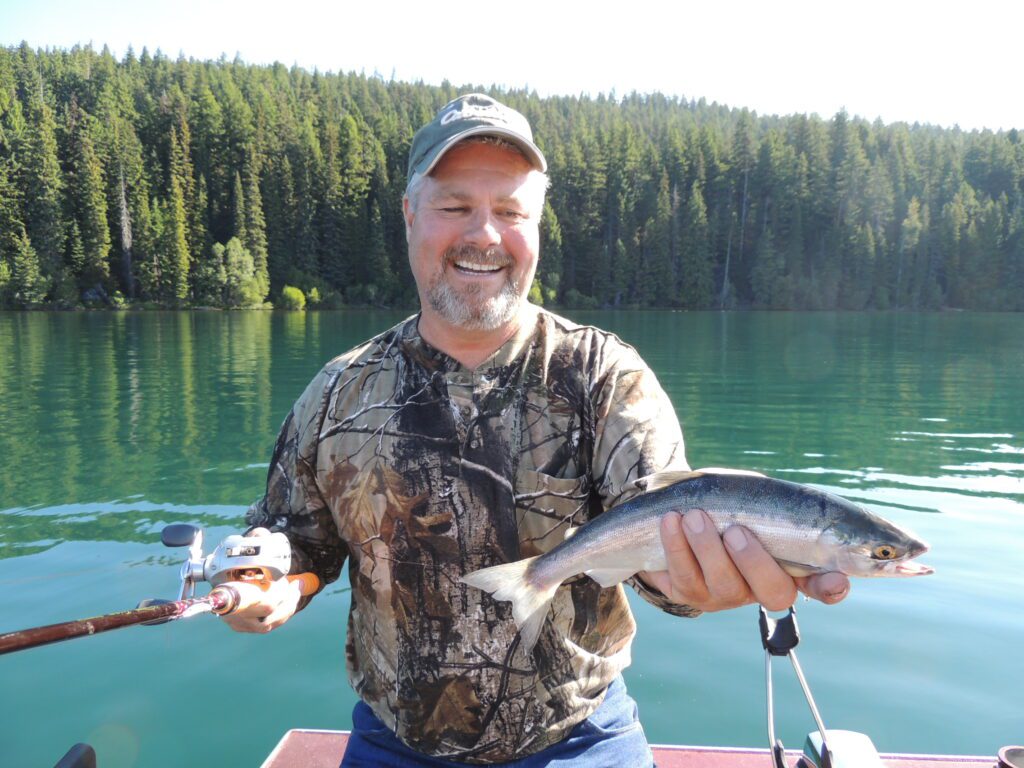
Odell Lake (and nearby Crescent) are some of the coldest, deepest lakes in the state, which makes them good habitat for a big char we call lake trout or mackinaw. Odell and Crescent also have good populations of kokanee (a landlocked sockeye salmon), the lake trout’s favorite food.
Kokanee can be easy to catch when conditions are right. Full-grown, they average 12 to 18 inches. Kokanee are most easily enticed in the early morning. As soon as the sun hits the water, the plankton go deeper, and the kokanee follow.
Jigging is a favorite technique early, but trollers seem to do better in the summer. An easy rig, whether using a downrigger or not, consists of an eight-inch flasher on the main line terminated at an Apex or Wedding Ring spinner. Most anglers add white corn and season it with a scent like Pro-Cure's Kokanee Special Super Gel. To rent a cabin or a room, click on odelllakeresort.com
WALLOWA LAKE
Sockeye are native to Wallowa Lake. Historic runs of sockeye were strong in Wallowa Lake until 1916, when the lake’s dam was enhanced. The fish still in the lake were landlocked.
Wallowa, with 1,500 surface acres and an average depth of 160 feet, can be daunting. Favorite kokanee areas are the western shore off Eagle Point and along the eastern bank up and down from the large pine tree. Try jigging after ice-off and then switch to trolling in the summer. Great trolling lures include Pro-Troll Kokanee Killer, Worden's Spin-N-Glo Kokanee, and Mack's Double Whammy.
For a great place to stay, check out wallowalakelodge.com
WICKIUP
Wickiup as a storage reservoir is one of the largest in the state, and its waters harbor rainbows and brown trout. And the kokanee grow big, too.
Fed by the Upper Deschutes via Crane Prairie, the Davis Lake sump, Davis Creek, Browns Creek and several springs, some of the best fishing is in the old channels. At its deepest, the lake is 70 feet deep, but the average depth is 20 feet.
Kokanee are spread throughout the lake early in the season, but tend to school up and head toward deeper water (the channels) as temperatures warm. Both jigging and trolling are productive throughout the season.
EAST LAKE
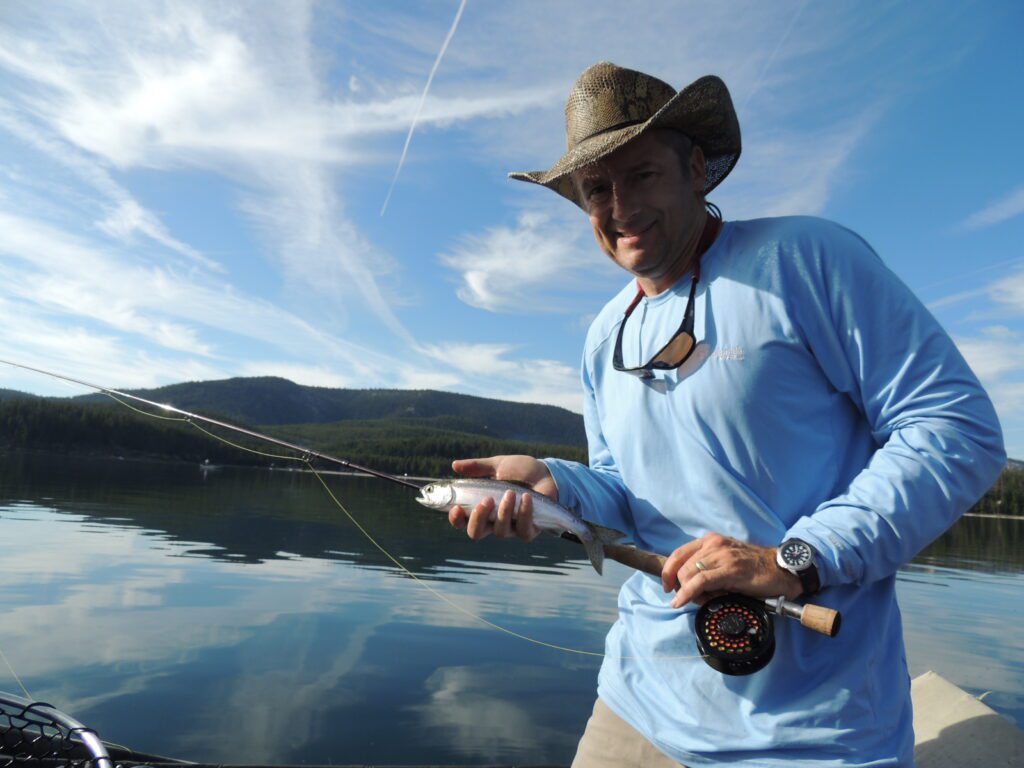
East Lake kokes average 12 to 17 inches. While kokanee are known to feed on plankton in most waters, the most reliable food sources at East Lake are the chironomids and midge larvae (chironomids). This is the reason a lot of people who are good kokanee anglers sometimes struggle at East.
Jigging works best early in the season and trolling takes more trout later in the season. Fly-anglers can take kokanee all season long on wind-drifted Callibaetis nymphs or on chironomids fished below an indicator.
PAULINA LAKE
Paulina Lake shares the caldera of Newberry National Volcanic Monument with its twin East Lake. This 1,300-acre lake is 250 feet in some places. Kokanee fishing is the main attraction and trolling flashers is the most popular method. Trolling a Wedding Ring with a kernel of corn or a chunk of worm on the end is very effective. Other great kokanee lures include the Cha Cha 1.5 Kokanee and the Kokanee Killer.
Jigging is the other way to catch them at Paulina, especially till about mid-June. Mack's Cripplure and Sonic Baitfish are productive, as are Nordic lures. First locate schools with a fish-finder and, depending on the depth, troll with a downrigger, flashers, a kokanee spinner and a kernel of corn on the hook. Or drop down a jig and try to put it in the school.
DETROIT RESERVOIR
The Detroit Dam was built in 1953, creating a large water storage and electric power generation reservoir that has become an important recreation resource. This nine-mile lake, with 32 miles of shoreline is surrounded by forest of Douglas fir and hemlock and is fed by the Breitenbush River, North Fork Santiam and Blowout and Kinney and several smaller creeks.
ODFW stocks Detroit with rainbows throughout the season. This 3,580-acre reservoir is also home to kokanee. Angling success picks up in May when the water warms.
Try the Kokanee Kid Mysis Bug or Promise Ring made in Salem, Oregon. Other good bets include the Silver Skalez Koko Leaf or Kokanee Creek Tackle 1.5 Micro Bite Squid. Popular trolling areas include Piety Island, west of Mongold State Park, the north shore near the dam and at the mouths of inlets.
AND FURTHERMORE
Some of our favorite fisheries were destroyed in 2023 and another one may be destroyed this fall.
One of the best kokanee days of my life was on Green Peter Reservoir. GPR had a seemingly inexhaustible supply of kokanee and if you figured them out on any given day, you could not go wrong. What did the Feds do? The US Army Corps of Engineers decided to drain Green Peter and Foster and wiped out some of the state's favorite kokanee fisheries while simultaneously silting over and smothering salmon and steelhead and trout spawning beds in the South Santiam for miles downstream. Brilliant.
Think they are done? The National Marine Fisheries Service and the Corps of Engineers have their fish-killing sights set on Detroit Reservoir and the North Fork Santiam now. So go fish Detroit this year and I hope you catch a bunch of limits and have a good time, but don't forget the very agencies that purport to be working for the people are often working against us and the fisheries we love.
# # #
For a copy of the Fishing Central Oregon book, send $29.99 to Gary Lewis Outdoors, PO Box 1364, Bend, OR 97709 To contact Gary Lewis, visit www.GaryLewisOutdoors.com
/articles/seven-oregon-kokanee-lakes-fish-year