Kayak Fishing for Trout by Josh DeBruler
As we roll into summer, it can be a little overwhelming managing the excitement of all the fisheries that are opening around us and becoming more accessible due to the passing of the winter doldrums. It’s a good problem to have! We are inundated with fishing opportunities. For me, it’s comforting knowing that I always have the simple staple of rainbow trout fishing. Its simplicity brings accessibility for our families and children. It means we can throw a couple of kayaks in the back of the truck, a cooler, some rods, and we can take the ones we love out to relish in the joys of fishing. Now, I enjoy my motorized boat as much as the next guy, but with small trout lakes being so abundant, there’s a good chance we can bring the kids out to a lake that offers the added comfort and safety of boat speed restrictions, or in some cases, motorized boat restrictions.
Rainbow trout are intensely prolific throughout the Pacific Northwest. Native rainbows can be found throughout the Columbia River and its tributaries, like the Yakima and the Snake, and they thrive in the reservoirs built amongst these waters. They also flourish in alpine lakes high in the Cascades and Olympic Mountains. Though they are native to many waters of the northwest, the native stock is, for the most part, highly regulated by the Department of Fish and Wildlife for conservation purposes. Aside from this, wild rainbow trout tend to be found in rivers and high lakes that are not as easily accessed by kayak, which is why I personally like to target the stocked rainbows, which, despite what you might here from a handful of naysayers, are actually quite good eating when thrown on the smoker or baked with butter and garlic and whatever other aromatics you might throw at it. If you’d like to target Columbia basin Redband rainbow trout (Wild trout) for catch and release, Lake Roosevelt in Ferry, Stevens, Lincoln, Okanogan, and Grant counties is an excellent place to get started.
Hundreds of thousands of catchable-sized rainbow trout are stocked in lakes throughout Washington each year. There are too many lakes to mention here; however, you can hop onto the WDFW website and navigate to “catchable trout plants,” and chances are you will find a lake within a short drive of wherever you are that has planted trout.
As an avid kayak angler, I’m not afraid to admit that some kayak fishing can be cumbersome, complicated, and often leaves me wondering why I’m not instead using a larger boat to catch my fish. Thankfully, rainbow trout fishing from a kayak does not bring up any of those thoughts or trepidations. It can be as easy as casting a lure out behind you, setting your pole in a rod holder, and enjoying a nice paddle until you hear your rod bouncing around and causing a ruckus behind you.
Just about any type of kayak will do for rainbow trout fishing. The one caveat being that if you’re trolling, you should have a rod holder. If your kayak does not come equipped with one, then you can find a mountable one at most outdoor sporting equipment stores that carry fishing gear.
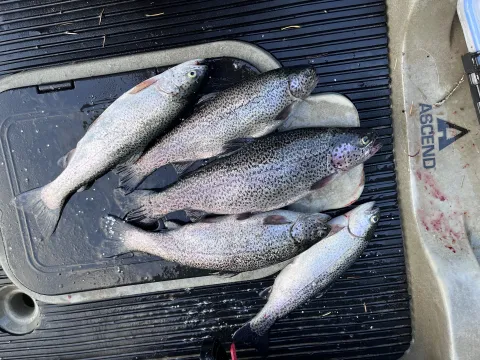
Trolling is my favorite method as it allows me to cover a lot of ground, and if done during the morning or evening, it can result in a limit of trout within a short period of time.
Trout are predatory fish, and once stocked, trout become accustomed to the natural diet of the lake they are planted in. They tend to be aggressive towards moving targets during the warmer months.
Inline spinners like Panther Martin, Rooster tails, Mepps Aglia, and Blue Fox Vibrax are all classic lures that work by allowing a constant spinning motion of the small attached spoon while presenting a colorful tube-shaped body. These all come with a treble hook or single hook that typically has the choice of being dressed with or without hackle. Generally, larger lures will catch larger fish and vice versa. The dressed lures present themselves as larger due to their increased profile. Chartreuse, black, white, yellow, and rainbow trout colors are all very effective. I typically start with a rainbow trout colored lure and switch out once they stop biting at that. The Blue Fox Vibrax has the added benefit of emitting a sonic vibration that can agitate fish and produce a strike. These inline spinners can be cast or trolled and are often the only lure type I need to bring with me. Other options outside of spinners would be small spoons or mini tube jigs.
A rubber trout net is another essential tool to bring along on your kayak. The cheap poly nets are less preferred as they often get stuck under the fish’s gills and can result in a dead fish that you otherwise may have been throwing back.
Divers
Since we are talking about kayak fishing, and with kayak fishing, I like to keep things simple, I hesitate to add more complexity to our fishing setups. However, if the mid-day warming of the water is causing the fish to hold deeper below the surface than what your standard trolling setup can achieve, then it might be worth deploying a diver. Divers are planers generally made of plastic and use hydrodynamics to pull your gear deep into the water. Most divers have a tripping mechanism that releases and stops the diving motion once a fish strikes. This allows you to reel the fish in without fighting the diver’s natural tendency to go deeper into the water. Though they take away from some of the simplicity, they are a heck of a lot easier to deal with than a downrigger, and they can absolutely produce good results.
Summer is here, and the fish are biting! I hope this information helps you with your next kayak fishing adventure! Stay safe and tight lines!
/articles/kayak-fishing-trout-josh-debruler
Three High Desert Hotspots for Rainbows by Gary Lewis
Pull those spinning rods and fly rods out of the closet, tie up leaders, and wind new line on the reels. Here are three great spring fisheries that you need to know before you hit the water.
The warming water raises trout metabolisms and quickens an angler’s pulse as rise rings appear within an easy reach of shore.
CHICKAHOMINY
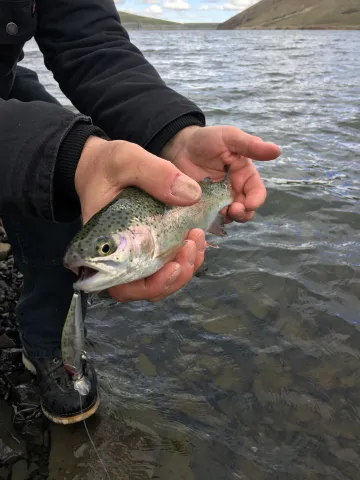
Chickahominy Reservoir is a trout fishing oasis on a windswept plain 100 miles east of Bend. Driving by on Highway 20, you see two blue fingers, a few campers, and picnic tables. Nothing more. What could draw campers to this windy place?
Rainbows are stocked in Chickahominy as fingerlings and reach ten to eleven inches in length by the following year. Two-year-old fish reach eighteen inches. Three years later, they will weigh between three and four pounds.
A narrow reservoir with many coves and fingers, much of the best fishing can be had from shore. Watch for depressions adjacent to shallow bays. Trout use these spots as staging areas prior to feeding in the shallows. A careful presentation yields a strike.
Early in the season, dragonfly nymph patterns are productive, as are scuds and red and black leech patterns. Concentrate on weed beds, edges, and drop-offs. The reservoir reaches a maximum depth of 28 feet. A slow-sinking fly line provides the best control for fishing below the surface.
Bait fishermen do well in the bays and inlets with nightcrawlers, salmon eggs, or jar bait. Use a sliding sinker to take your bait to the bottom. Leave a little slack in the line so a trout won’t feel resistance.
There is a paved boat launch near the dam. Troll trout spoons, or 1/6-ounce Rooster Tail spinners, in the narrows or explore the shoreline, casting to the shallows and letting the lure flutter over the drop-offs.
KRUMBO
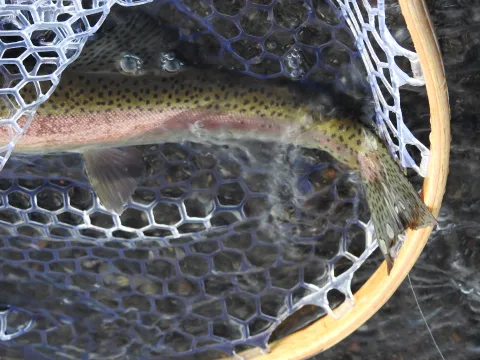
A shallow lake on the west side of the Steens, Krumbo Reservoir, is a great rainbow destination in the desert.
Best bet is to bring a float tube, a canoe, or a car-topper. But there is bank access. Anglers can fish at the dam or walk from the ramp to one of two rocky points that look out over some of the lake’s deeper water. Fish a sliding sinker and 48 inches of leader terminating at a No. 8 single hook with Power Bait or Gulp!
With a boat, launch at the ramp and fish out from the cove to 15 yards from the rocky point on the south. A long weedbed stretches north across the lake. The lake averages ten feet deep. Rainbows stack along the weeds and grow fat on callibaetis and chironomids.
Use a clear intermediate sinking line and troll along the weedbed. Fish a No. 12-14 callibaetis nymph, or better yet, a pair of them. To tempt with chironomids, employ No. 16-18 zebra, black, or red midge larva imitations under an indicator.
Leech patterns are effective. Use black, red, or olive buggers, weighted at the head. Twitch the fly with one-inch pulls.
Krumbo is stocked in late March or early April. Trout that winter over grow to 16 inches in their second year. Every season, the lake produces a number of 20-inch and bigger fish.
Covered tables are provided. A restroom can be found near the dam and at the boat ramp. A handicap-accessible fishing platform is near the boat ramp. The launch is paved with a nice dock. Electric motors are permitted.
Krumbo is open for day-use-only from the opening of trout season through October 31. Access is controlled by an automatic gate that opens a half hour before sunrise and closes a half hour after sunset.
Page Springs campground is a few miles down the road. There is RV camping available in private campgrounds on both sides of the Malheur National Wildlife Refuge.
WILLOW CREEK RESERVOIR
Willow Creek gathers her water from the Blue Mountains and runs it down to the Columbia. An impoundment, built to control periodic flooding of the town of Heppner, Willow Creek Reservoir, is located less than a mile upstream from the town.
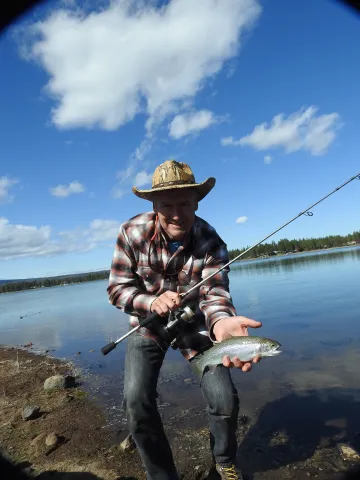
The 110-acre lake draws anglers from nearby Hermiston and other towns to do battle with its piscine inhabitants. April and May are the best months for rainbows.
Trout put on weight fast in this food-rich water. Most anglers opt for a bobber and worm or a jar bait to put fish on the stringer, but spinners, trolling, and fly-fishing techniques are productive.
The best trout water is along the rip-rapped south bank and across the lake along the north shore. The water drops off quickly to a maximum depth of 85 feet at the dam.
Good bank fishing access makes this reservoir a safe bet for anglers without a boat. Drive past the boat launch along the south shore and take a gravel road down to a parking lot above a riprap bank. Walk down to the water or fish from the car. A trail along an old roadbed provides plenty of room for fishermen to spread out.
Fly fishermen should troll small spinners or flies such as the No. 8 Woolly Bugger or Spruce. Use minnow imitations like the Zonker to spark the predatory instinct in the bigger rainbows. Change direction, speed, and depth to simulate the escape tactics of a worried minnow.
Willow Creek Campground is located high on the western shore, overlooking the dam and the lake. It has 24 hook-up sites, offering water, electric, and sewer. Maximum length is 40 feet. Covered tables, barbecues, flush toilets, drinking water, showers, and telephones are available.
From I-84, turn right at Exit 147 and follow State Route 74 south to Heppner. Proceed through town and follow the signs uphill to the reservoir.
There won’t be crowds of people, and there probably won't be a line at the boat ramp, but there are trout to fight.
# # #
For a copy of the Fishing Central Oregon book, send $30 to Gary Lewis Outdoors, PO Box 1364, Bend, OR 97709 To contact Gary Lewis, visit www.GaryLewisOutdoors.com
CAPTIONS
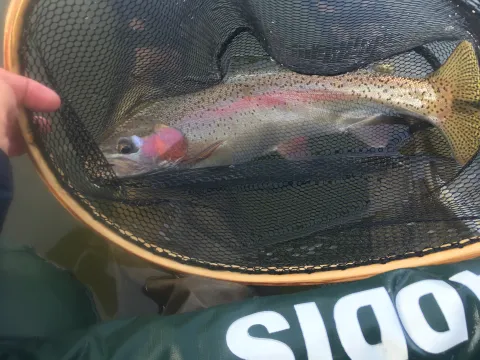
Gary Lewis 5 - An ODFW legal teased up out of Willow Creek Lake near the town of Heppner on a spring morning. Photo by Gary Lewis.
Gary Lewis 8 - In early May, trout can still be found feeding opportunistically and may be caught on a variety of techniques. Photo by Gary Lewis.
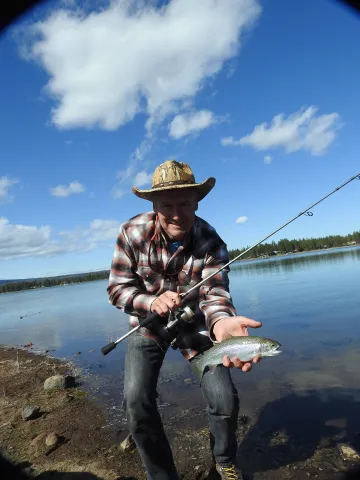
Gary Lewis 18 - Gary Lewis with a hatchery rainbow caught on jar bait. Photo by Gary Lewis.
Gary Lewis_Isom 23 - A high desert rainbow caught on a fly. Photo courtesy Dave Isom.
/articles/three-high-desert-hotspots-rainbows-gary-lewis
Early Opener Trout
More than two dozen lakes across Eastern Washington are set to open March 1, although unpredictable winter-like conditions could limit trout fishing options and success.
“We’ve had a mild winter, and early March can be a great time for early lake fishing opportunities,” said Steve Caromile, a Washington Department of Fish and Wildlife (WDFW) statewide inland fish program manager. “As the days become longer, these early spring fisheries are a good way to start the year. Some eastside lakes may have some remaining thin ice, especially in the northeastern region of the state. WDFW doesn’t monitor ice conditions, so use extra caution before venturing out this year.”
Depending upon the severity of late winter weather, some lakes, especially those in the northeastern region, may still be iced over. WDFW doesn’t monitor ice conditions, so anglers should check ice conditions before heading out.
The initial best bets will likely be Martha and Upper Caliche lakes near George in Grant County. Each can be an excellent choice, and anglers should expect good fishing in 2026.
Martha and Upper Caliche lakes received 500 catchable 10- to 12-inch rainbow trout in the fall off 2025 and should be in the 13- to 14-inch range by opening day. WDFW planted another 325 catchable trout in time for the March 1 opener, and 3,900 fingerling trout (one- to three-inches long) were planted in April of 2025, and those that survived should contribute to spring-time catches.
It is not uncommon for Upper Caliche to still be frozen on March 1. However, there’s almost always plenty of open water on Martha Lake on the opener. The north section of Martha Lake is usually ice-free with plenty of shoreline space, and that’s likely where most of the trout will be concentrated.
In Grant County, Quincy and Burke lakes should both fish well this spring, and improved boat launch sites. Shore anglers should have plenty of room to fish with ample access to the lakes. Both lakes received 1,500 catchable-sized trout in February, and each was stocked with more than 21,000 fingerling in April of 2025. Most fish will be in the 10- to 12-inch range, with some carryover trout in the 13-to 15-inch range. Try casting spinners and small spoons from the shoreline.
The Quincy Valley Chamber of Commerce Trout Derby is March 27-28 at Quincy and Burke lakes. Cost is $40 per person over age 18 and free for youth ages 17 and under. For details, go to: https://quincyvalleywa.chambermaster.com/events/details/trout-fishing-derby-2026-1300.
Lake Lenore in Grant County is also open on March 1 with a one-fish daily limit and an 18-inch minimum size limit. This is one of only six lakes in Washington with Lahontan Cutthroat.
Other lakes and ponds in Grant County included in the March 1 opener are Cascade, Dry Falls, Lenice, Merry, North Potholes Reserve, Nunnally, Stratford/Brook, and Winchester Wasteway.
Also note that within the Quincy Lakes Unit of the Columbia Basin Wildlife Area, there are many walk-in lakes that open March 1. These lakes can provide not only good fishing, but also solitude.
With their boat launches, parking, and shore access, Quincy and Burke lakes tend to attract the most attention when these Grant County, Washington, waters open March 1, but WDFW biologist Michael Schmuck notes that he stocks several nearby smaller and less well-known lakes that grow footlong-plus rainbows.
“There is a good chance for anglers to have them all to themselves, and many are down in small canyons that afford good protection from the spring winds,” said Schmuck.
Hike-in Dusty Lake is a selective gear lake that has excellent rainbow trout fishing as well as brown and tiger trout. Just southeast of Dusty is a collection of small lakes that hold rainbow trout. Cliff, Crystal, Cup, and Lower and Upper Spring lakes are small enough that they can all be fished in a morning. All these lakes receive spring fingerling rainbow trout and produce good catches of fish in the 12- to 14-inch range, with some up to 20 inches.
The greater Spokane region has several March 1 openers, including Liberty Lake that can be good around the opener for brown and rainbow trout averaging 12 to 16 inches. Statewide rules apply at Liberty Lake.
There are other March 1 opener lakes managed under “selective gear rules”, but the action doesn’t generally pick up until the weather warms up. However, fishing can be pretty good, but not great, until warmer weather arrives. Those lakes include Amber and Medical in Spokane County; and Coffeepot in Lincoln County. Amber and Coffeepot are managed with an 18-inch minimum size limit and a daily limit one-fish regulation. Medical has a 14-inch minimum size limit and a daily limit two-fish regulation.
Downs Lake, located in south Spokane County, typically opens for early-season fishing on March 1, but it is not accessible to the public this season. Access to the lake is limited to a privately owned resort that is currently closed. No fish were stocked in 2026, and stocking will not resume until public access is available. WDFW is working to restore public access.
And finally, all seven human-made lakes off the Tucannon River in Columbia County –
Blue, Deer, Rainbow, Spring, and Watson — have open water and are stocked with rainbows weighing up to 1.5 pounds each. Pampa Pond in Whitman County is also open March 1 for rainbow trout fishing.
Trout plants by lakes
Grant County (general fishing regulations with season open March 1 through Sept. 30) –
Burke, 1,500 catchable-size rainbow trout stocked in February, and 21,226 fingerling rainbow trout stocked in April of 2025;
Upper Caliche, 325 rainbow trout stocked in March, 500 catchable-size rainbow trout stocked in October of 2025, and 3,900 fingerling rainbow trout stocked in April of 2025;
Cliff, 400 fingerling rainbow trout stocked in March of 2025;
Crystal, 400 fingerling rainbow trout stocked in March of 2025; Cup, 200 fingerling rainbow trout stocked in March of 2025;
Martha, 500 catchable-size rainbow trout stocked in March, 750 catchable-size rainbow trout stocked in October of 2025, and 8,400 fingerling rainbow trout stocked in March of 2025;
Quincy, 1,500 catchable-size rainbow trout stocked in February, and 21,177 fingerling rainbow trout stocked in April of 2025;
Lower Spring, 200 fingerling rainbow trout stocked in March of 2025;
Upper Spring, 200 fingerling rainbow trout stocked in March of 2025.
Grant County (selective fishing regulations with season open March 1 through Nov. 30)
Dry Falls, 4,670 fingerling rainbow trout and 1,500 fingerling brook trout stocked in March of 2025;
Dusty, 3,000 fingerling rainbow trout, 2,500 fingerling brook trout, and 2,200 tiger trout stocked in May of 2025;
Lenice, 2,250 catchable-size rainbow trout to be stocked in April of 2026, and 3,000 catchable-size rainbow trout stocked in October of 2025;
Lenore, 72,125 fingerling rainbow trout stocked in October of 2025;
Nunnally, 2,750 catchable-size rainbow trout to be stocked in April, and 3,000 catchable-size rainbow trout stocked in October of 2025.
Spokane County – Liberty, 4,000 catchable-size rainbow and 350 jumbo rainbow trout stocked in spring of 2026, 15,000 fry rainbow trout, 35,000 fry brook trout and 1,200 broodstock eastern brook trout stocked in fall of 2025;
Amber, 7,500 fry rainbow trout and 1,000 fry cutthroat trout stocked in spring of 2025;
Medical, 2,500 put-grow-take brook trout to be stocked in April 2026 (these trout are 2.6 to 10 fish per pound in size and should be in the catchable size by mid-summer), and 5,000 fry rainbow trout stocked in spring of 2025;
Coffeepot, 5,000 put-grow-take rainbow trout to be stocked in spring of 2026 (these trout are 2.6 to 10 fish per pound in size and should be in the catchable size by mid-summer).
Other useful information and resources
- Many westside year-round lakes are also being stocked with trout in early spring. Visit the WDFW website at https://wdfw.wa.gov/fishing/reports/stocking/trout-plants for specific weekly fish stocking numbers.
- Mark your calendar for the highly anticipated 2026 statewide general lowland lakes trout opener on April 25.
- The WDFW Trout Derby will be held from April 25 through Oct. 31 at more than 100 stocked lakes and ponds across Washington. In 2025, more than 100 statewide businesses offered an estimated 1,091 prizes valued at around $54,858 and worth about $50.28 per prize, which was up considerably from previous years, dating back to 2016. WDFW is currently preparing for the 2026 trout derby and will have updated information soon. The success of the trout derby would only be possible through WDFW’s ongoing partnerships with business dealers/vendors throughout the state. The derby, held for the past 10 years, has generated close to 55 to 60 percent of the tags turned in for prizes. To help boost catching a tagged trout, WDFW will have a list of all the lakes in real-time where prizes are left to be claimed. Be sure to share your derby success on social media using the hashtag #watroutderby. The WDFW Trout Derby webpage https://wdfw.wa.gov/fishing/contests/trout-derby should be updated soon with 2026 information.
- You can find information on statewide lowland lake locations by going to the WDFW webpage at https://wdfw.wa.gov/fishing/locations/lowland-lakes. Basic trout fishing techniques on the WDFW YouTube webpage at https://www.youtube.com/watch?v=f9A5UiJJMks&list=PLo22nBM4mjeStU58nRnZFYCys3hAtT2Yg. More trout fishing tips can also be found on the WDFW webpage at https://wdfw.wa.gov/fishing/locations/lowland-lakes.
/articles/early-opener-trout
Spoon Theory
If there is one best time of year for trout fishing, it's fall when the insect life is fading away and trout that have been fattening all summer are starting to feel the pinch of empty bellies. Trout that are going to make it through the winter have to switch from eating insects to eating minnows. This is the time of the year to put baitfish imitations to use. Trout are full of energy and will go a long way to hit a shiny bit of metal.
On those days when we launch the boat in the early morning. When the water is glass, we know the fish are elevated. It can be fun to put a small spoon in play.
PLANNING THE TRIP
Before you back up to the boat trailer, take a look at a map and click up www.myodfw.com to get an idea of some Oregon waters that will definitely get fresh stocks of fish in the early fall. This is the time of year when hatchery trout stocking ramps up again. Water levels are beginning to fall, and ambient temperatures are good for trout. Most fish & wildlife agencies post their stocking schedules on public websites. Weather changes, the price of fuel, and emergencies can change the timing of fish releases, but it's a good idea to comb the stocking schedules.
Top bets in the Willamette region (an easy drive for anglers from Portland, Salem, or Eugene) include North Fork Reservoir (on the Clackamas River), Foster Reservoir, Trillium Lake, Dexter Reservoir, Hills Creek Reservoir, and Dorena Reservoir. Most lakes get the "legals", which average 8 to 12 inches, but a person can put more poundage in a trout limit by targeting the "trophy size" trout that are older, better fed, and better fighters. If a lake gets 5,000 legals in the season, it might also get 250 trophies and a few brood stock trout that can tip the scales at five pounds or more. Premier fisheries that get a lot of angling attention, like any larger reservoir with campgrounds and mountain views within a two-hour drive of a metropolitan area, are likely to get a couple of stockings of brood fish or trophies every season.
It's all there in the stocking schedule. Except it's not.
BEHIND THE SCENES
A lot of what happens behind the scenes does not show up in the hatchery schedule. Sometimes there is an abundance of brood stock or surplus steelhead in the system that need to go somewhere. Another thing to watch for is when a lake is drained for maintenance or to kill trash fish. When the lake fills up again, the fisheries department scrambles to fill it with trout. Then there are the lakes that are never on the stocking schedule, but they magically have hatchery trout every season, and plenty of them. What's up with that?
Some reservoirs are not on the published stocking schedule because they are managed by agencies or municipalities, or utility companies with their own hatcheries. These can be some of the best destinations. Think about it. A power company built the dam, and part of the negotiation with the tribe or the community that permitted the dam was to provide a fishery. So every year, they are contractually obligated to populate the lake with some 30,000 trout. They're going to do it, but chances are they aren't taking the time to put it on a list somewhere. That's a lot of silvery slabs vying for a chance at a slow-trolled trout spoon.
SPOONAGE
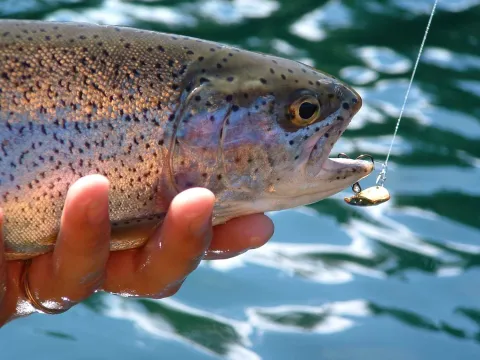
There are a lot of spoons on the market, and they all have their place, but when we are talking about catching a limit of hatchery "legals" and "trophies", the best choice is one and a half to two inches long, like the Mepps Syclops, Triple Teaser, Thomas, Jerry Leo, Z-Ray, and Acme Little Cleo.
In most cases, a spoon should be trolled slowly so that it wobbles side to side. The slower the better. I like the speed at less than 1 mile per hour, up to 1.5 miles per hour, and if I can, I try to keep it at zero-point-nine. This can be accomplished some days on a wind drift, but a bow-mount trolling motor is pretty consistent. There are exceptions. In some lakes, the fish are used to chasing baitfish. This is the case on Upper Klamath and Agency Lakes, where sometimes you can't reel fast enough.
The spoon itself could be an Acme Kastmaster, Little Cleo, or Thomas Buoyant, maybe in the 1/6-ounce class. Every lake fishes a little differently, so it helps to have local knowledge. Frog patterns can be important, as are brown trout, chub, rainbow, and perch colors, depending on the local bait. Sometimes we put a flasher in front of the spoon with a 15-inch leader. Another trick we like is to add a touch of Pro-Cure's trophy trout scent to the spoon. And it never hurts to tip the hook with a bit of worm, corn, or a salmon egg. Trout that are going to carry over through the cold months have to start eating baitfish. Put baitfish imitations like trolling spoons to work. Trout are supercharged in the cold water and will chase up and down in the water column to hit a shiny bit of metal.
/articles/spoon-theory
Black Friday Trout
Sure, the weather outside is frightful at this time of the year, but that won’t stop thousands of anglers from skipping out on the shopping malls and opting to go trout fishing instead!
“The holidays are great to spend quality time outdoors with family and friends, avoid the mall shopping madness and maybe even catch a fish,” said Steve Caromile, the Washington Department of Fish and Wildlife (WDFW) Inland Fish Program manager.
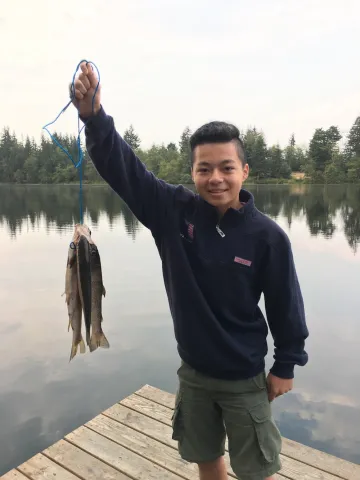
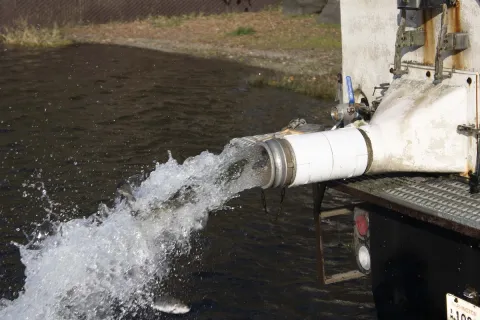
The fishing wish list just grew twofold as WDFW hatchery crews have been busy leading up to Black Friday by shuttling 64,350 jumbo-sized rainbow trout, averaging 1 to 2 pounds apiece, into 25 lakes around the Puget Sound region and southwest Washington, as well as several Eastern Washington lakes and ponds.
The Black Friday program, created more than a decade ago by WDFW, came up with a creative way to stock thousands of rainbow trout for a late-season fishery in year-round lakes. The post-Thanksgiving holiday fishing option has been a hit for anglers looking to wet a line at a time when the choices are sparse.
In October, a good number of other year-round lakes around Washington were also planted with trout for anglers who want to head before Thanksgiving. You can find trout stocking information that is usually updated weekly by going to the WDFW webpage at https://wdfw.wa.gov/fishing/reports/stocking.
Black Friday trout plants include:
- Chelan County: Roses, 20,000
- Clark County: Battleground, 2,000; and Klineline, 2,000.
- Cowlitz County: Kress, 2,000.
- Island County: x-Cranberry, 4,000.
- King County: x-Alice, 1,000; x-Beaver, 2,500; and x-Green, 5,000.
- Klickitat County: Rowland, 2,000.
- Lewis County: Fort Borst Park Pond, 2,000; and South Lewis County Park Pond, 2,000.
- Pacific County: Cases Pond, 300.
- Pierce County: American, 2,000; and Tanwax, 1,350.
- Snohomish County: x-Ballinger, 3,000; x-Blackmans, 1,500; x-Gissburg Ponds, 1,500; x-Silver, 3,000; and x-Tye, 2,000.
- Thurston County: Black, 3,000; Long, 1,000; and Offutt, 1,000.
- Yakima County: I-82 Pond #4, 2,000.
(x-Around 50% of the planned trout stocking occurred in October in the noted lakes, and the remainder will be stocked in time for Black Friday)
There are four Eastern Washington lakes opening on Black Friday that were stocked with trout fry this past spring that should be averaging 8 to 10 inches, plus some other larger fish were stocked of late.
Eastern Washington lakes trout plants include:
- Stevens County: Hatch Lake, 15,000 fry stocked in May, and 600 trout averaging 1 pound apiece stocked in October; and Williams Lake, 12,000 fry stocked in May, and 1,500 trout averaging a quarter pound apiece stocked in mid-April.
- Adams/Lincoln County: Fourth of July Lake, 60,000 fry stocked in May, and 18,000 trout averaging a quarter pound apiece stocked in mid-April.
Spokane County: Hog Canyon Lake, 20,000 fry stocked in May, 10,000 trout averaging a quarter pound apiece stocked in mid-April, and 1,600 trout averaging 1 pound apiece stocked in October.
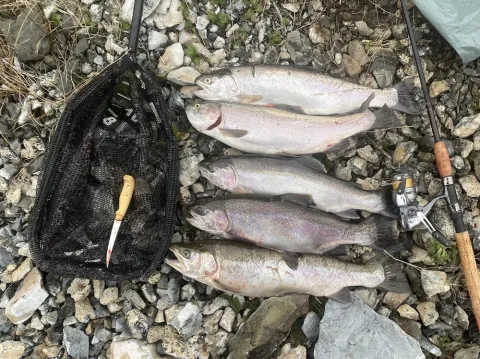
Before you go
When fishing for trout, don’t overthink the necessary fishing gear.
A basic trout rod and reel averages $50 to $90, and a higher-end set is about $100 to $200. The rod should be light and limber in the 6 to 7 foot range with a 4- to 10-pound line weight range. A medium-sized spinning reel with a capacity to hold more than 100 yards of 6- to 8-pound test fishing line will do the job right.
From the mainline, attach one or two number 8 or 9 egg sinkers with a rubber bumper just above a small barrel swivel. Avoid the cheap store-bought pre-tied 12-inch leaders that are way too short in length. Either tie your own leaders or spend a few extra dollars on pre-tied versions in 3- to 8-pound test that measure 18 to 30 inches long. A smaller size 12 or 14 egg hook is the best choice when using a moldable dough bait or nugget, salmon eggs, worm pieces, or maggots. For live bait such as a whole worm, nightcrawler, or marshmallow, the optimal hook size is a size 8 or 10 worm hook. If you use an artificial fly, the stick with a size #14 hook or smaller. A hook that is too big or exposed may scare away the fish, and one that is too small may result in fewer hook-ups. Lastly, make sure your hooks are sharp and sticky.
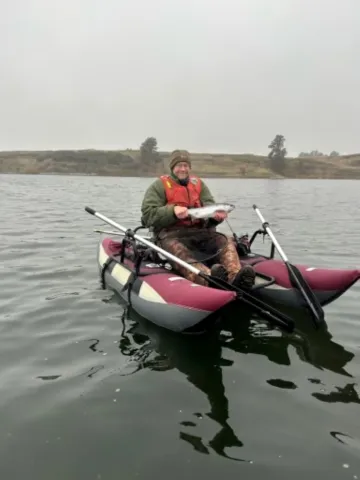
Most anglers casting from the banks or in a boat will stick with the popular moldable dough baits, which come in a variety of colors, and some are shaped like a salmon egg, marshmallow, maggot, or worm. The old school baits include salmon eggs, worms/nightcrawlers, maggots, and marshmallows.
From a boat troll a gang-flasher with a hook tipped with a piece of worm, maggot, or salmon egg, along with a tiny piece of scented dough bait or a liquid scent. A small spoon or spinner also gets its fair share of bites.
From the shoreline, cast out a small-sized bobber with your bait sitting just below the surface in 3 to 8 feet of water. Others like to go deeper, where it hangs just a few feet off the bottom, where the larger-size carryover trout lurk. Recently planted trout tend to hang around near or just under the surface of the water at depths of 3 to 10 feet. Once the stocked trout acclimate, they’ll eventually spread out and move into deeper areas of the lake. Anglers often look for schools of trout right where the hatchery truck placed them, usually near the shore, boat ramp, or dock areas.
Trout like to rise to the top of the water column to gobble up insects on the water’s surface. This is where artificial flies come into play, like a Woolly Bugger in black, dark green, or black-olive in a size 8 or 10 with a 5- or 6-foot leader. They can be cast from shore or trolled weightless close to the surface behind a boat or floating device.
A fishing license – https://fishhunt.dfw.wa.gov/login – is required for anyone age 16 or older. A Discover Pass – https://wdfw.wa.gov/licenses/parking – is required to park a vehicle at many state lands, including the state park system, WDFW lands, and the Department of Natural Resources lands.
The Washington State Parks and Recreation Commission Boating Program –
https://parks.wa.gov/find-activity/activity-search/boating – would also like to remind anglers to take a boater safety education course, if you haven’t already, to be prepared for spring and summer. In Washington, boaters who operate a vessel with a 15-horsepower engine or greater must carry a Boater Education Card to prove they passed an accredited boating safety education course.
/articles/black-friday-trout
Westside Trout Roundup
It's that time of year again, trout fishing has finally kicked off! May is a great time to take your family out to your local lake. WDFW stocks many lakes with thousands of catchable size rainbow trout every spring. These fish are hungry and active, and taste great on the grill. There's nothing like a relaxing day of fishing followed by a good trout dinner. Let's talk about my favorite Western Washington trout lakes. I will include lakes with both boat ramps and good shore access on this list.
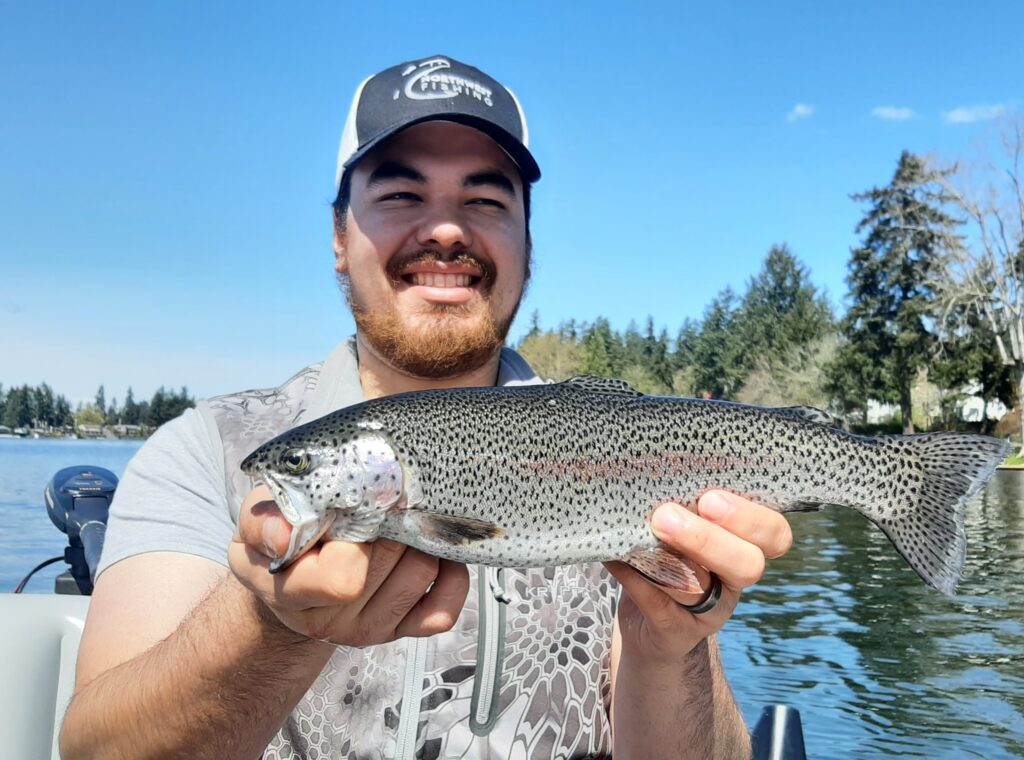
American Lake
Let's kick off this list with a beloved Pierce County lake. There are multiple boat ramps and shore access spots on this large lake. This is a popular spot for jet skis and pleasure boaters, so exercise caution if you're on a small boat. This lake is deeper and larger than most lakes in the area. The fish can be a bit more difficult to find since they have room to spread out. However, WDFW usually plants twenty thousand or more fish, so your odds are pretty good! Try fishing the shore or dock at Harry Todd Park, or pay a small fee to fish at Bill's Boathouse. They also offer boat rentals. If the trout aren't biting, you can also try your luck for yellow perch.
Lake Ballinger
This northern lake has good shore access and a large fishing pier. It's a great spot for fishermen with small boats, rafts, or kayaks. Gasoline motors are not permitted, so you won't have to worry about getting blown off the water by jet skis or large boats. The south end of the lake is a bit deeper, and that's where the fish tend to hang out.
Mineral Lake
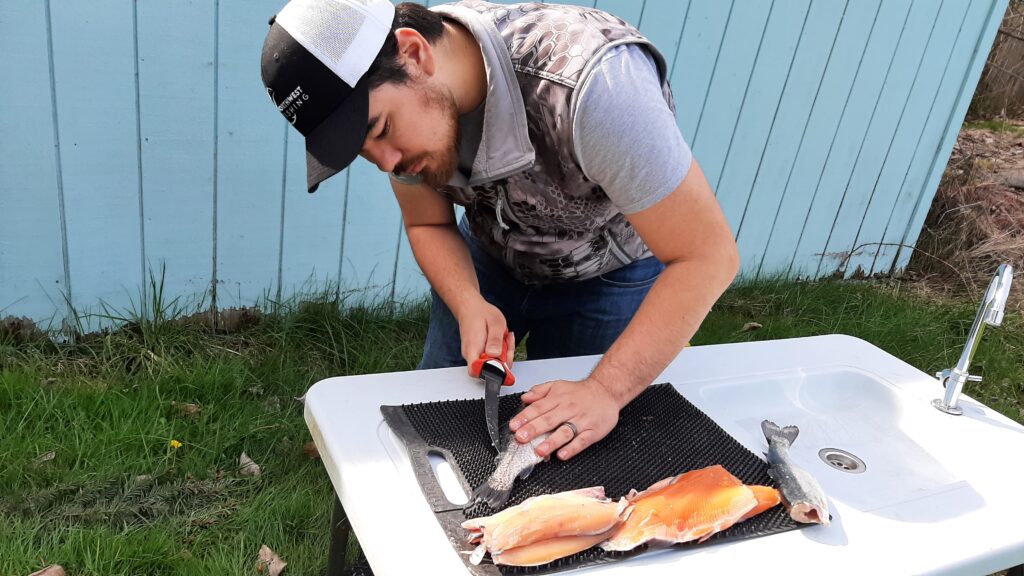
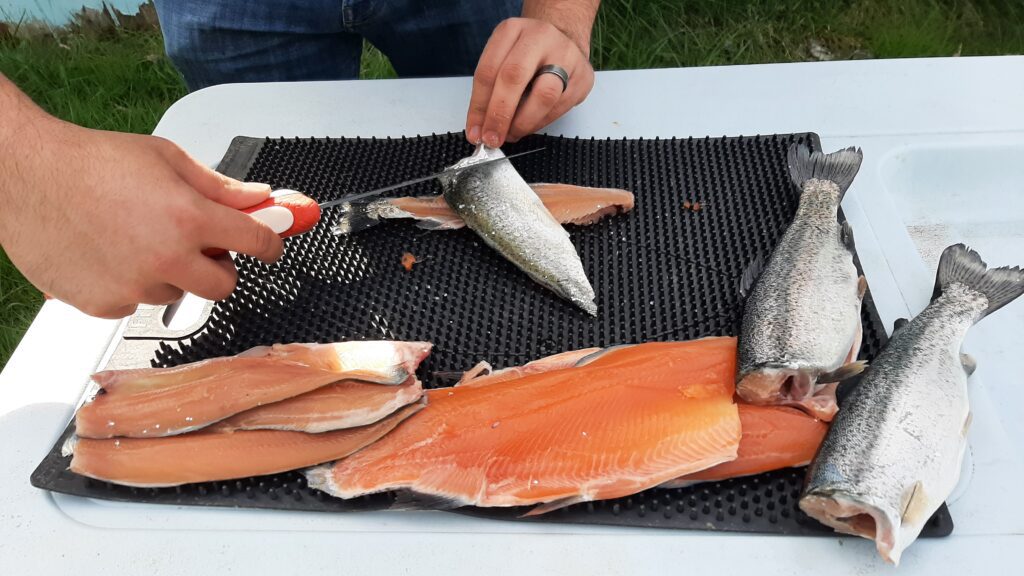
This lake is a bit off the beaten path, but you have the best chance of scoring a trophy trout here. There is a fishing dock and decent shore access. You'll have company on weekends, however. There are also brown trout in this lake! A word of caution for boaters- there are many stumps on the lake, and some are difficult to see. Keep an eye out!
Black Lake
Located close to Olympia, this popular lake boasts a variety of different kinds of fish. If the trout aren't biting, try for panfish! There is good shore access at the park and boat launch. WDFW has planted over twenty thousand trout here this spring.
Lake Padden
No list of West side trout lakes is complete without this one. It has some of the best shore access around! The shoreline is dotted with families enjoying a tranquil day on the water. There is a boat launch, but gasoline motors are not allowed. This lake is small and shallow, I'd definitely recommend soaking dough baits or using a bobber and worm.
Harts Lake
This secluded, serene lake has amazing scenery and even better fishing. There is a small campground, pay to fish dock, and tackle shop right next to the boat ramp. Troll around the edges of the lake until you figure out where the fish are holding, it seems to change frequently. You can also drop anchor and toss dough bait. This lake is also great for catfish, the shore fills up with fishermen on hot summer nights.
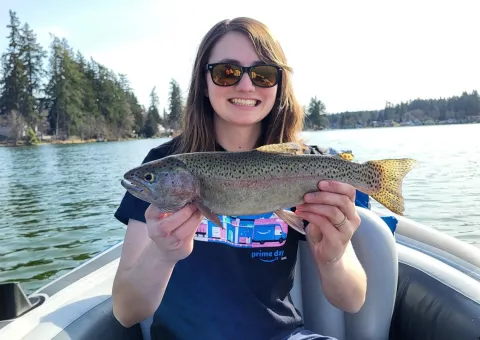
Remember to check the weather forecast before heading out, bring life jackets, and put on plenty of sunscreen! For the best meat quality, bleed, gut, and ice your fish right away. Most importantly, have a great time! Rainbow trout put up a good fight for their size and are eager biters. They are easy for kids to handle because they don't have spines on their body like many other fish. May is the perfect time to go out and explore your local lake!
/articles/westside-trout-roundup
Catch More Rainbows At Potholes Reservoir
Potholes Reservoir is best known for its spectacular bass, walleye, and panfish fisheries but do not overlook the quality trout you can catch out of this 27,800-acre reservoir. Two-to-three-pound rainbow trout are common in this lake, and they can get even bigger. Every year, multiple anglers catch seven-pound rainbows here.
So where do you find them? A reservoir this large can be intimidating to someone who has never fished here before. Fortunately, there are a few key places you can count on to find trout.
If you are a shore-bound angler there are a few good choices for you. In the spring, you can catch trout at Blythe Point, a WDFW access area with a boat launch on the southwest end of the reservoir. Simply go towards the end of the point and fish from there. Many anglers will plunk nightcrawlers or worms here because there are other species in the area that will take this bait as well.
A short distance away from Blythe Point is Potholes State Park. Don’t bother fishing the main lake from shore because it’s a long shallow flat that isn’t conducive to holding trout. Instead, go to the north end of the park and fish Frenchman’s Wasteway. The trout congregate in the moving water of this stream that flows into Potholes Reservoir at the northeast end of the park. Lures like Worden Rooster Tails or curly-tailed grubs with a 1/8-ounce jig head are proven winners here, as are worms fished under slip bobbers.
Another place to try from shore is MarDon Resort. In the early spring, right after ice-out, anglers can catch rainbows either still fishing or casting spinners and spoons from the shore behind the head office or at the swim beach. You do need to be staying at the resort to fish here.
Are you the kind of angler who likes to soak Powerbait? If so, head to Medicare Beach on the east end of the Reservoir. There are plenty of Powerbait plunkers here and if that’s not working, try fishing a marshmallow and worm off the bottom.
Boat anglers have more options and trolling in front of Medicare Beach or near the mouth of Frenchman’s Wasteway are two places worth fishing. Nathan LaFrance at MarDon Resort said trolling over the sunken habitat boxes between the resort and Blythe Point is also a good springtime strategy.
As for how to catch them, trolling a Berkley Flicker Shad in sizes #5 or #7 is a proven method to get trout to strike. Trolling a Needlefish spoon is also popular, and a frog pattern is a good color to start with unless the water is stained, in which case chartreuse would be a better bet. Finally, you can’t go wrong trolling the tried-and-true Mack’s Wedding Ring spinner tipped with a worm or a half of a night crawler.
As far as rods and reels go, a basic spinning reel with a 6 to 8-pound test works fine. While I used to fish ultralight rods for trout, I don’t do so here because the odds of landing a three or five-pound rainbow can be tough to do with a very light pole. That is why I favor a 6 ½ to 7-foot, medium-action spinning rod.
If you want a change of scenery from Potholes Reservoir, head to the seep lakes just south of the reservoir. Located on state land and within the Columbia National Wildlife Refuge, there are dozens of small lakes to explore fishing either from shore or in small boats, kayaks, or portable pontoon boats.
Some of these lakes are open year-round to include Corral Lake, which is a two-minute drive from MarDon Resort. Corral Lake is stocked with tagged rainbow trout that can be caught during the Washington Department of Fish and Wildlife’s annual trout derby that runs from the last Saturday in April through October 31st. If you catch a tagged fish, you report it to WDFW and you win a prize that could be a gift card or certificate or something more!
Checking with Nathan LaFrance at MarDon Resort some other year-round lakes worth fishing are Blythe Lake as well as Upper and Lower Goose Lake. LaFrance says the inlet into Soda Lake can also be a good bet and when he fishes there, he casts or trolls #4 or #5 Rapala Shad Raps. All the year-round lakes just mentioned have launches for small boats.
Other Seep Lakes open the last Saturday in April (April 26th, 2025). The most popular lake to fish during the lowland lakes opener in this area is Warden Lake and there is a resort at the north end of the lake along with a boat launch. Upper and Lower Hampton Lakes are good choices as are Hutchison and Shiner Lakes at the south end of the Columbia National Wildlife Refuge. If you want to get away from the crowds, hike into North and South Teal lakes. LaFrance says both waters fish well for rainbow trout.
Spring and Fall are both great times to chase after Rainbow Trout at Potholes Reservoir and the nearby Seep Lakes. Drop by the store at MarDon Resort for the latest conditions and if you are looking for a place to stay, the resort offers basic to luxury cabins, RV sites, tent sites, and a restaurant. Potholes State Park has basic cabins and a large number of RV and tent sites. Both locations also have boat launches.
John Kruse
www.northwesternoutdoors.com and www.americaoutdoorsradio.com
/articles/catch-more-rainbows-potholes-reservoir
Madison River Shoulders
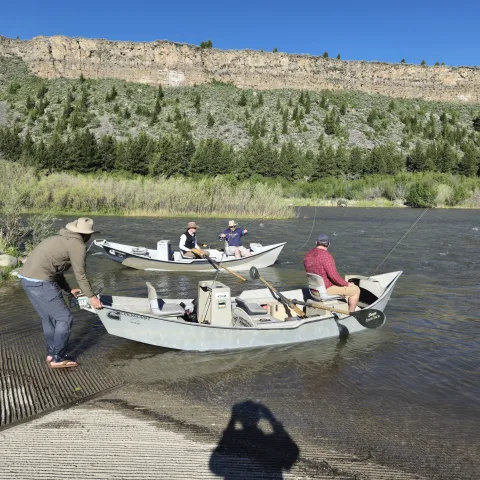
Mountains come out of the sky and they stand there. Snow-covered peaks create a breathtaking backdrop as we work our way down the fast-flowing, slightly off-color river. I could say a whiter shade of pale, but I’d be pushing the 70s music lyrics references a bit too much.
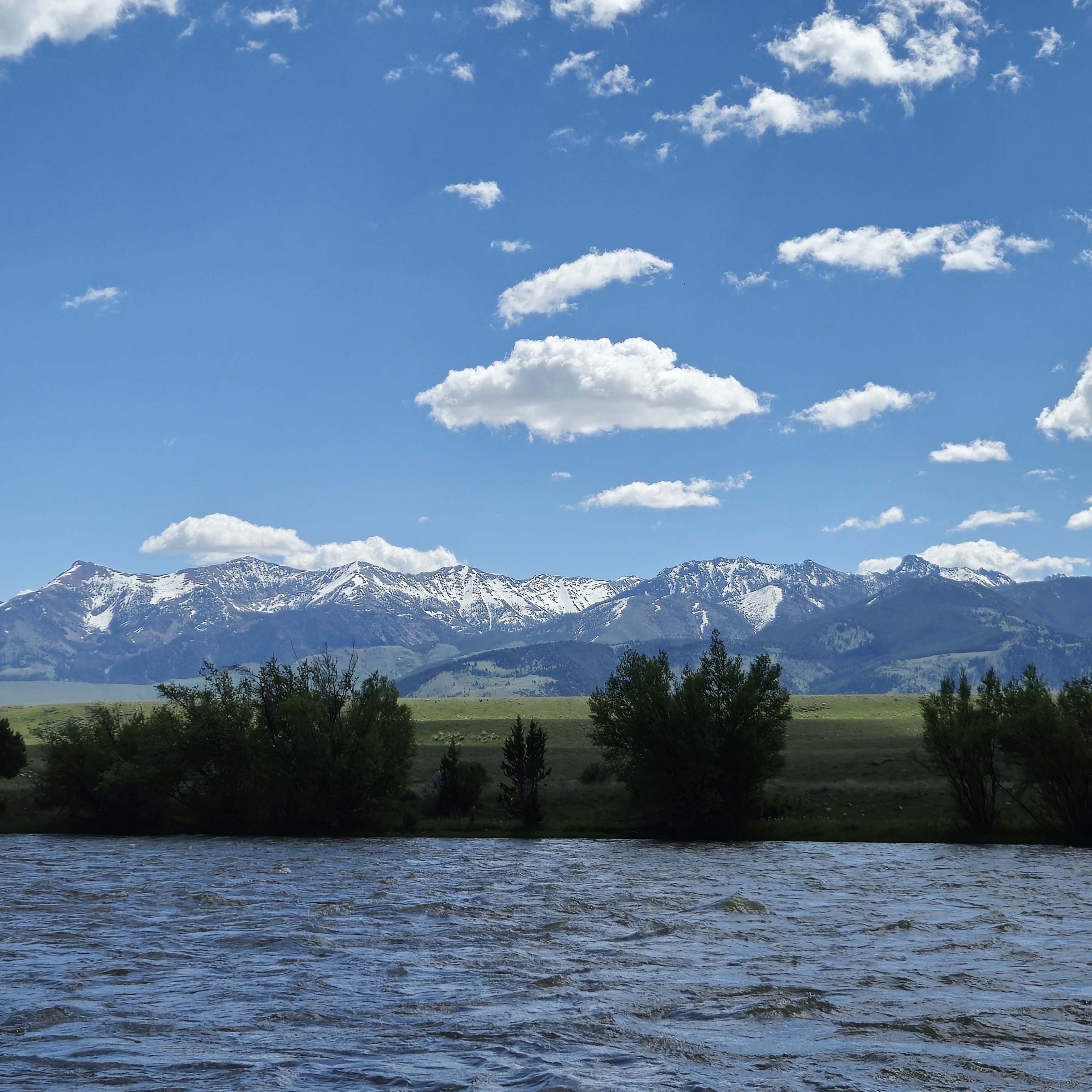
Matt and I are floating the Madison River, Epic, Historic, Blue-ribbon… pick your adjectives. At first glance, I wondered “Where do you even fish this?” To the untrained eye, the river looked uniform from side to side, a fast-moving, rocky, never-ending flow of energy.
Hunter and Sam, our guides from River Borne Outfitters, had briefed us on the strategy to fish for this untamed wild river. “Today you’re going to be fishing buckets” Hunter elaborated, “When the water is running this fast, you want to target the small back eddies, slicks, and close to the shore. You’ll see the holding water better as the day progresses. It requires some accurate casting but it’s not that hard. The fishing can be really good, but I’m a bit worried about the color of the water.”
For my part, I was glad to be fishing and not rowing. We rapidly drifted past large boulders that would easily have flipped a less skilled rower. “That’s why you fish with a guide”, I thought.
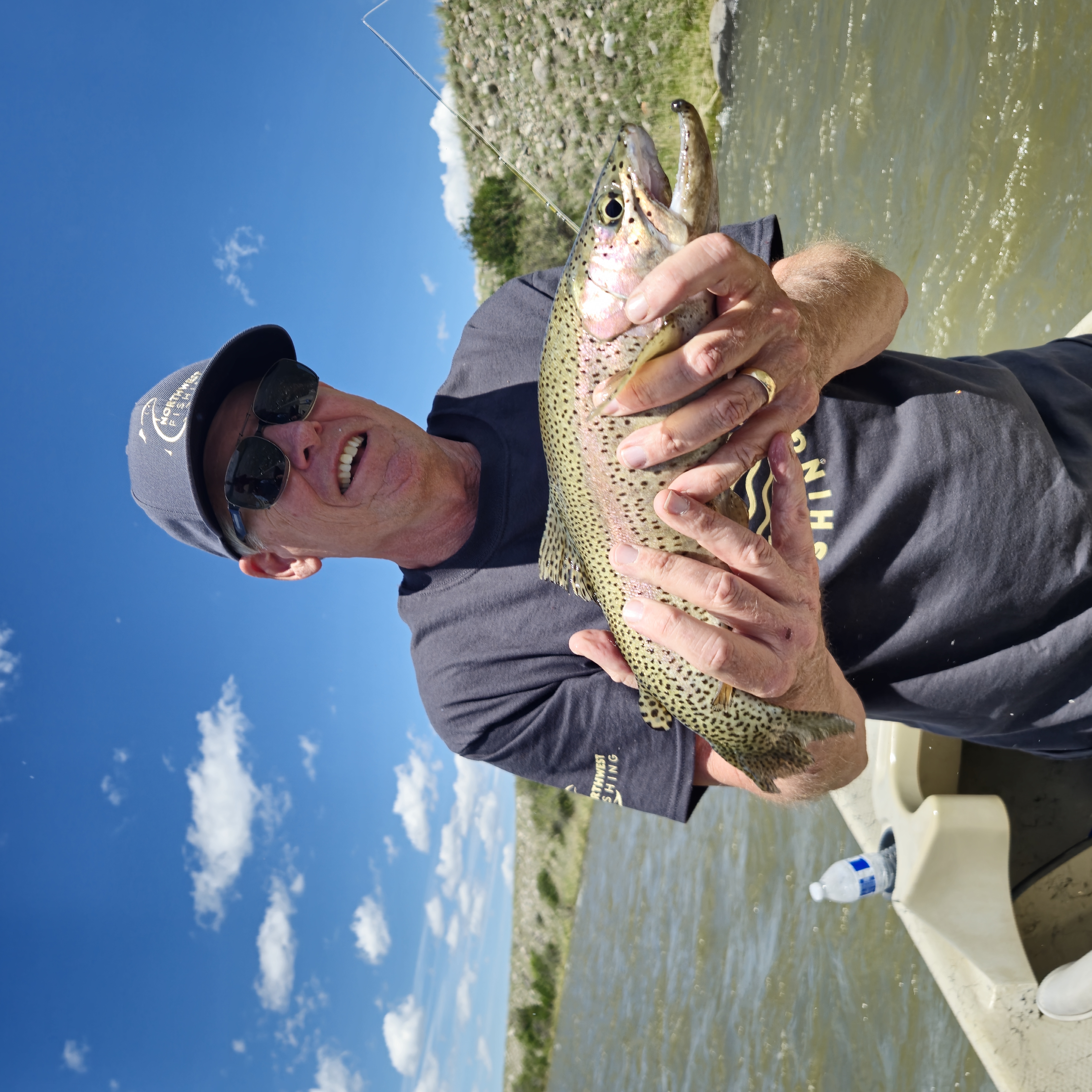
Suddenly Matt called out “Fish on!”. I looked back and his rod was doubled over with the weight of a solid fish, which revealed itself with a series of impressive jumps, clearing the surface a good three feet. A chrome bright, wild (that’s the only kind of trout in the Madison) rainbow was giving Matt a good battle. He skillfully took his time and brought the glistening 18-inch fish to the net. Scooping him up, Hunter let out an excited “skunks out of the boat” and it was the start of a memorable day on one of Montana’s most amazing and wild rivers.
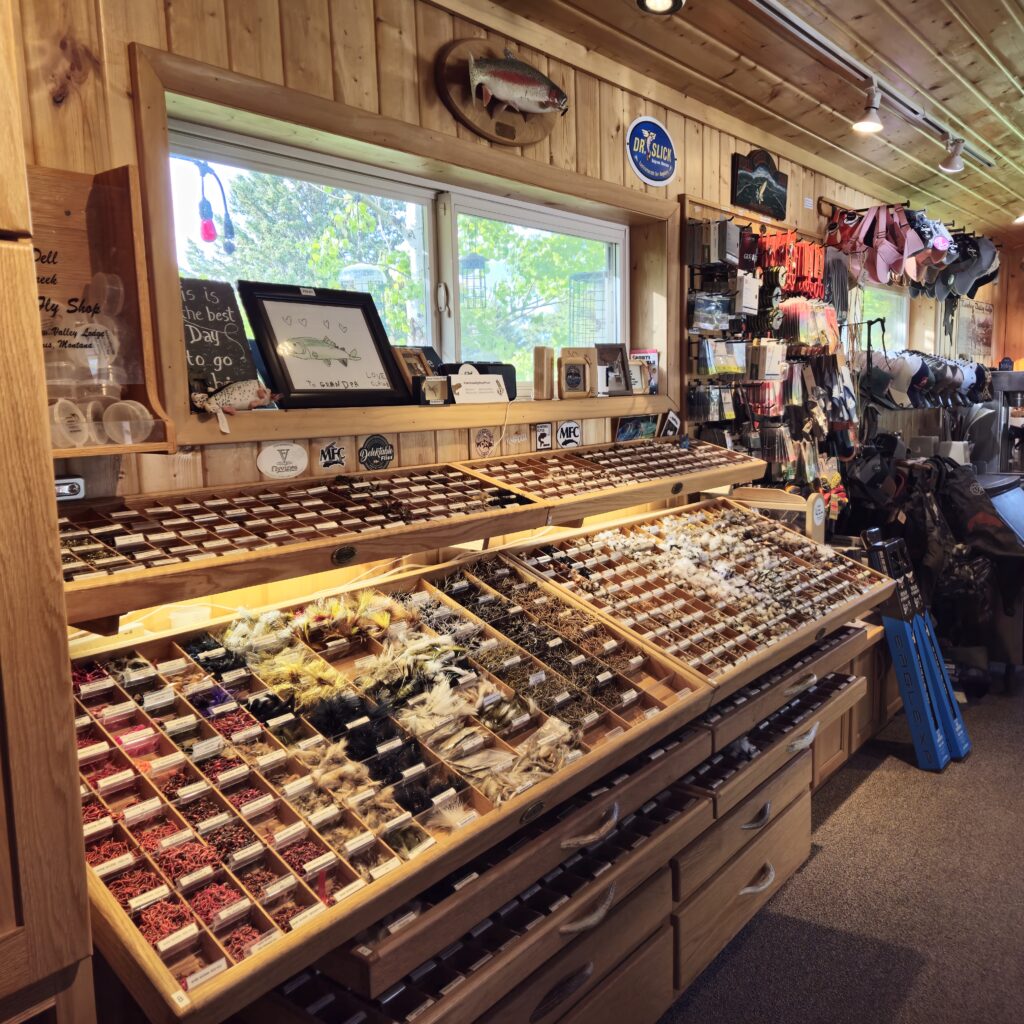
We had arrived the previous day at the invitation of Ed and Jeanne Williams, owners of Rainbow Valley Lodge. Ed and Jeanne had moved from California to Ennis, Montana over 35 years ago and taken over the lodge, growing it over the years into a destination for the rich and famous, and the average person. The two of them radiated an aura of enthusiasm and hometown friendliness that I have come to treasure over the past two years of living in Montana. We felt as if we had new friends we could return to year after year, and indeed, many of their guests expressed the same feelings to us. Not the largest lodge in Ennis, but certainly the most homey and one you’d want to return to year after year. Heated pool, rustic pine wood interiors, and beautiful flowers everywhere give you that “western feel” you are looking for when traveling to Montana’s fishing destinations. The impressive collection of fishing memorabilia in the lobby could keep an angler’s attention alone, not to mention their well-stocked O’Dell Spring Creek Fly Shop. The evenings are a gathering of guides and guests, chatting about the day’s fishing adventures and making new friends and acquaintances.


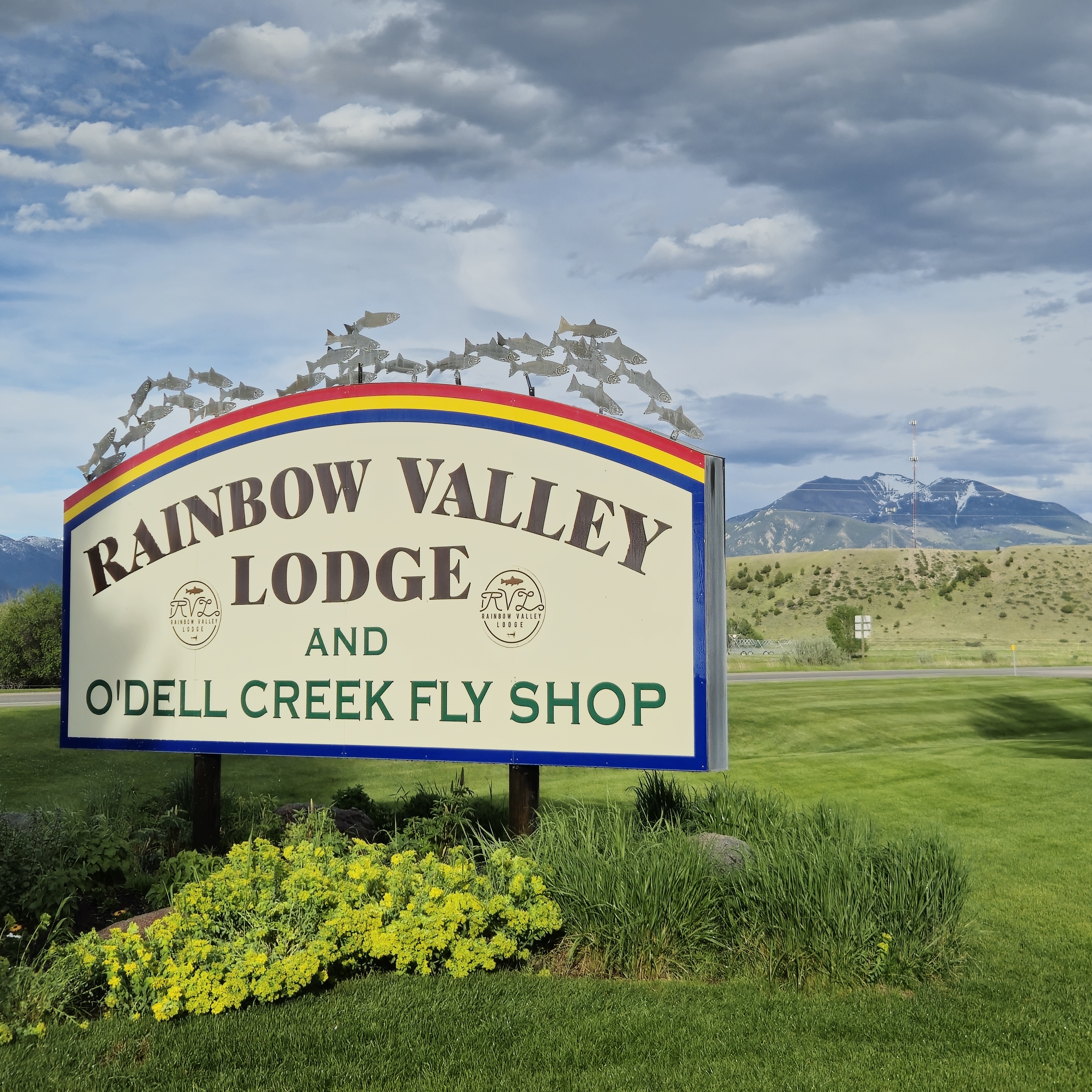

“Shoulder Season” is the term Ed had shared with me about the lodge’s seasons. Spring and fall anchored a full and busy summer of guests coming through Ennis to fish the famous Madison and use Ennis as a base camp for the 70-mile drive to Yellowstone National Park. Ennis is the last major town on the road to the north Yellowstone entrance. As such, come the end of the school year it rapidly fills up with tourists and summertime adventurers streaming to visit America’s most iconic national park. Anglers stream in as well, as the Madison River shares its impressive fishing with fishermen from near and far.
While the summer is a busy time for the lodge, spring and fall are another matter, and visitors can experience a slower and more relaxed pace if they’re willing to take a few chances. For us, the weather was outstanding with a day in the upper seventies and sunny. The recent warm-up had increased river flows to over 2,500 cfs (cubic feet per second), which had us drifting at a solid pace, but not too fast to catch fish. And as we found out as the day progressed, the visibility at about 18 inches was just fine for fish catching.
Soon after Matt’s nice start to the day, I watched as my strike indicator ducked under the water. I gave a quick tug and felt the heavy pressure of a nice fish. Unlike Matt’s fish which had treated us to a fun aerial display, my fish was a bulldog, the sign of a nice brown trout. Headshakes and hard runs kept me focused and I worked the fish back to Hunter’s waiting net. He skillfully scooped up the brown-speckled fish and after a quick measurement, we released a nice 16-inch thick brown trout.
Our setup for the day was a quality 5-weight Orvis rod and reel, floating line, and 8-foot leader. A pair of size 8 girdle (stonefly) bugs tied 18 inches apart were the fish enticement, and bites were monitored by orange strike indicators (all the better to see in the early morning sunny glare). Our instructions – when in doubt, set the hook!
While “bucket fishing” requires a degree of accuracy, it is a technique that lends itself well to intermediate and even beginner fly anglers. The casts are not terribly long, and if you miss the sweet spot of the “bucket” there is enough underwater structure that you still have a good chance of getting a hookup. While the Madison does not have the fish numbers of the Missouri, there are still plenty of fish to be had, and Sam explained that guides only promote catch and release on the river, so numbers have remained very consistent over the years.

As I noted earlier, this river, at springtime flows, in my opinion, would be a degree of difficulty I would not recommend to beginners behind the sticks. There were more than a few large boulders that could easily pin or flip a driftboat. So, if your rowing skills are marginal, leave the boat at home and hire a guide. Or wait for the slower flows of summer, but plan on having to share the river with a whole lot more anglers.
We continued the float catching fish at a regular pace, beautiful rainbows and brown trout, and an occasional whitefish. We didn’t catch any of the great white buffalo, AKA arctic grayling, but Hunter assured us they were in there. Brent, our film crew for the weekend, even caught his first trout on the fly with the help of his guide, Sam. The big fish of the day was Matt’s 20-inch brown he caught at the end of the day (what a way to finish!).

If you’re looking for the true western trout fishing river experience, keep the Madison River in mind, and don’t be afraid of fishing those shoulder seasons. You’ll find more than a few big-shouldered trout willing to share their day with you.
Rainbow Valley Lodge, Ed and Jeanne Williams, 800-452-8254
River Borne Guide Service, 406-581-2953, guides Hunter Schumacher and Sam Hall.

/articles/madison-river-shoulders
Fishing for Washington’s Stocked Rainbow Trout
Spanning through the past 130 years or so, Washington’s lakes have been stocked with a variety of fish species. The types of fish typically fall under two categories, the first being game fish like rainbow trout, Kokanee, steelhead, and cutthroat. These are all planted for the specific purpose of increasing public angling opportunities. The second category would be an aquatic vegetation control fish like the common carp, that was planted primarily by private landowners intending to mitigate overgrowth of vegetation in lakes and ponds. Regardless of the purpose of fish stocking, the practice has generated various stages of controversy throughout the years, and rightfully so as the early versions of fish stocking had been practiced without much consideration of ecological impacts on native fauna. Thankfully, the days of reckless and illegal stocking of ecologically sensitive lakes by private citizens are, for the most part, a thing of the past in Washington state. Nowadays, The Washington State Department of Fish and Wildlife and local tribes operate stocking programs that involve strict management guidelines and make use of both surveying and long-term field studies to effectively provide anglers with fishing opportunities while not disturbing vulnerable ecosystems.
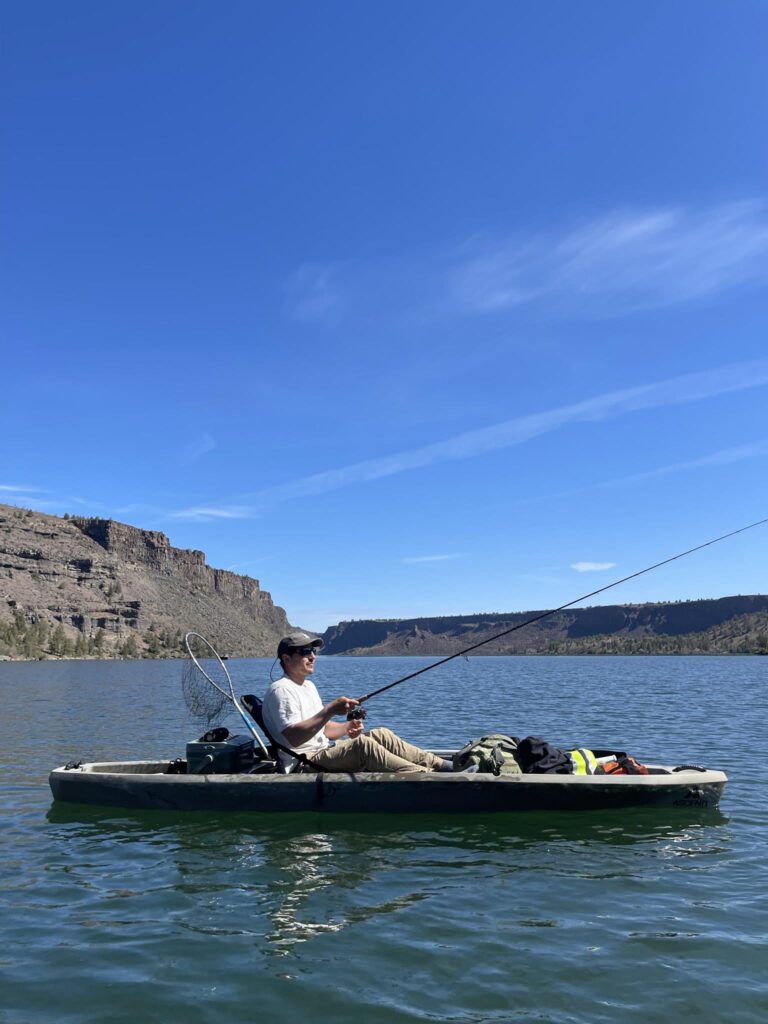
Rainbow trout are by in large the most widely stocked fish in Washington lakes, thus, they are the most common trout targeted by Washington State anglers. And though a stocked rainbow trout from a local lake might not be quite as alluring as say, a wild rainbow trout from some remote stream in the high-country wilderness, comparing these two is a bit like comparing apples and oranges. One can consider these stocked fisheries to be the staple of a lifestyle that places high value on family-friendly outdoor recreation, whereas the wild fish pursuit is an activity that often takes a bit more work and travel, and isn’t always quite as easy to get the family involved in
So, each has its place, and lucky for us, springtime marks the beginning of the trout stocking programs around the state. There’s a good chance that if you live on either side of the cascades, you won’t be far from a lake that’s getting a dump of catchable-sized hatchery-reared rainbow trout right about now. A visit to the Washington Department of Fish and Wildlife website will show you all of the recent catchable trout plants in Washington lakes. Here’s just a sample of some recent western and eastern Washington trout plant reports.
- Lake Thomas, Stevens County: 9,000 catchable trout
- Devereaux lake, Mason County: 7000 catchable trout
- Klineline pond Clark County: 10,000 catchable trout
- Black lake, Thurston County: 10,800 catchable trout
- Rotary lake, Yakima County: 3150 catchable trout
- Columbia Park pond, Benton county: 2012 catchable trout
There’s a myriad of techniques you can deploy to catch rainbow trout. Methods range from dropping jigging spoons down through a hole in the ice during the winter to casting flies out of a float tube in the summer. Stocked rainbow trout are not terribly picky and are known to strike at many different types of lures and bates. A surefire way to get some hookups would be to bring an arsenal of tackle so you can use the process of elimination in figuring out what the fish are biting on for that given day (it shouldn’t take you long). Below is a list of common techniques to catch stocked rainbow trout during the spring and early summer seasons.
Casting lures
This is by far my favorite method for rainbow trout. It’s simple in that you hardly need any gear other than rod, reel, and lure, but it also keeps you busy and engaged as you are constantly casting and retrieving while feeling for a strike. Casting lures like Rooster tails, spinners, spoons, wedding rings, and plugs have all proven effective at catching rainbow trout. Fishing during the morning and evenings when the fish are up near the surface will only increase the effectiveness of casting lures.
Trolling
Casting lures like the ones mentioned above can all be trolled behind a kayak or motorboat. If the fish are holding lower in the water column due to midday heat, try using a lightweight downrigger with a dodger. Or, if in a kayak, you can use a diver like a Deep 6 or Dipsy diver. Rainbow trout generally like faster trolling speeds around 1.5 to 2.0 mph
Sliding egg sinker rig.
This rig is very easy to set up and will get you onto the fish if they are holding deep towards the bottom of the water column. Slide a 1/2 oz egg sinker onto the mainline. Beneath that egg sinker attach a snap swivel. From there, attach your leader. Depending on how high off the bottom you want your bait to float will determine the length of your leader. 2-3 ft is generally a good bet. Tie your size 8-14 hook and bait it with a worm or dough bait. You will need to make sure your hook and bait are both floating. So, if you’re rigging an earthworm (or anything else that doesn’t float) you will need to add something with buoyancy. That can be either a small marshmallow (like the ones you’d buy from a grocery store) or a piece of buoyant dough bait.
Fixed Bobber
This is a fun and easy method for kids or new anglers to try out. Plus, it can also be extremely effective. Attach a fixed bobber to the mainline, and then anywhere from 18-24 inches beneath that a number 5 lead split shot (add more if there’s current). About 6 inches beneath that you can attach a size 8-14 octopus hook with a night crawler. Nightcrawlers can be replaced with a red plastic worm or dough bait.
Slip bobber rig
A slip bobber has a few more parts than a fixed bobber setup, though, unlike the fixed bobber, this setup will allow you to adjust your rig to virtually any depth. This is very handy for when the fish are suspended midway in the water column.
Add a pre-tied bobber stopper knot to your mainline. From there, add your bobber stop bead so that the bobber won’t slip past that knot. Add the slip bobber to the mainline, then add 1/2 oz egg sinker, and then a snap swivel. From here add 2-3 ft of leader and then your size 8-14 octopus hook. Now you can put your gear into the water and start sliding your knot up the mainline to adjust the depth of your hook and bait.
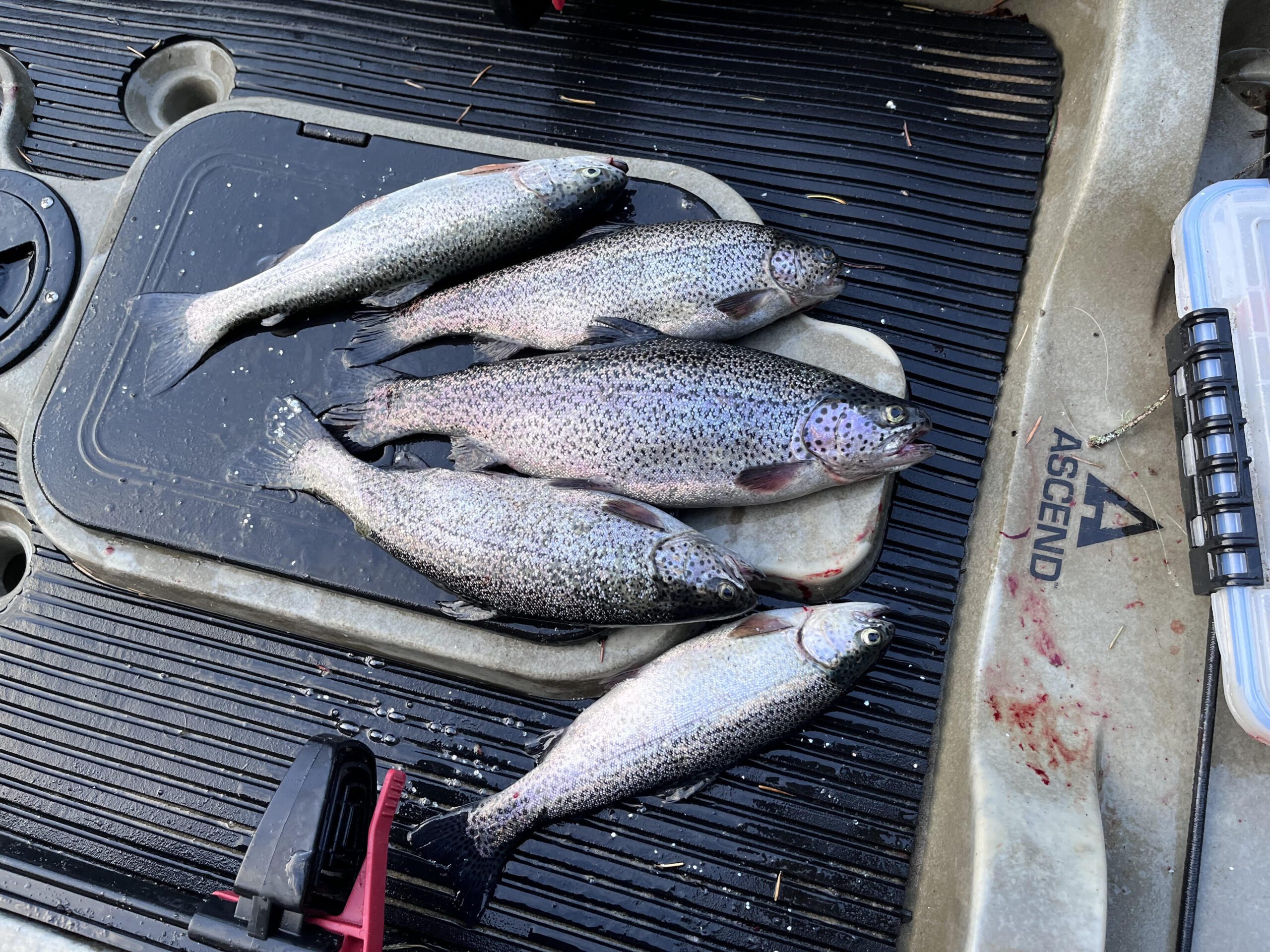
I’d wager that if you polled some friends and family and asked them what their first memories of fishing are, a good portion of them would likely start to share stories of fishing for rainbow trout off a dock during a hot summer day, or out of a john boat cruising around the lake hoping to land a big silver and pink beauty. I know this is true for me, and I encourage anyone who has kids (or adults for that matter) who are new to fishing, to take them out to your local lake and try out some of these tactics to bring home some fish. Despite what anyone might say about stocked trout, I assure you, they make great table fair, and they also do very well in the smoker. Fish on!
/articles/fishing-washingtons-stocked-rainbow-trout
Forecast the Fishing for Late Winter Rainbows
Several factors come into play in March when anglers can take advantage of spring-like weather to catch the biggest trout of the year.
The old saying the worst day fishing is better than the best day at the office is simply not true. It's almost true, but there are some really bad times to go fishing like whenever your brother-in-law wants to go.
We're enjoying a cold snap right now, but a lot of our trout lakes don't ice over. And the water is begging to be fished as soon as daytime temps get back to the low 50s.
This is the time of year when an angler has a chance to catch bigger trout for the table. The fish hatcheries want to find forever homes for surplus brood stock, putting those big old rainbows that can weigh 4 to 8 pounds out to pasture while last year's holdover legals can go 12 to 18 inches.
While food sources are scarce, bigger trout can be easier to catch than they will be in May. Flashers and hoochies and wedding ring spinners tipped with bait can catch fish, but fly fishing methods are a better bet.
A lot of our favorite lakes are too low to put boats in; Haystack, Hyatt, Chickahominy, Duncan, Prineville and Ochoco reservoirs are in build back better mode.
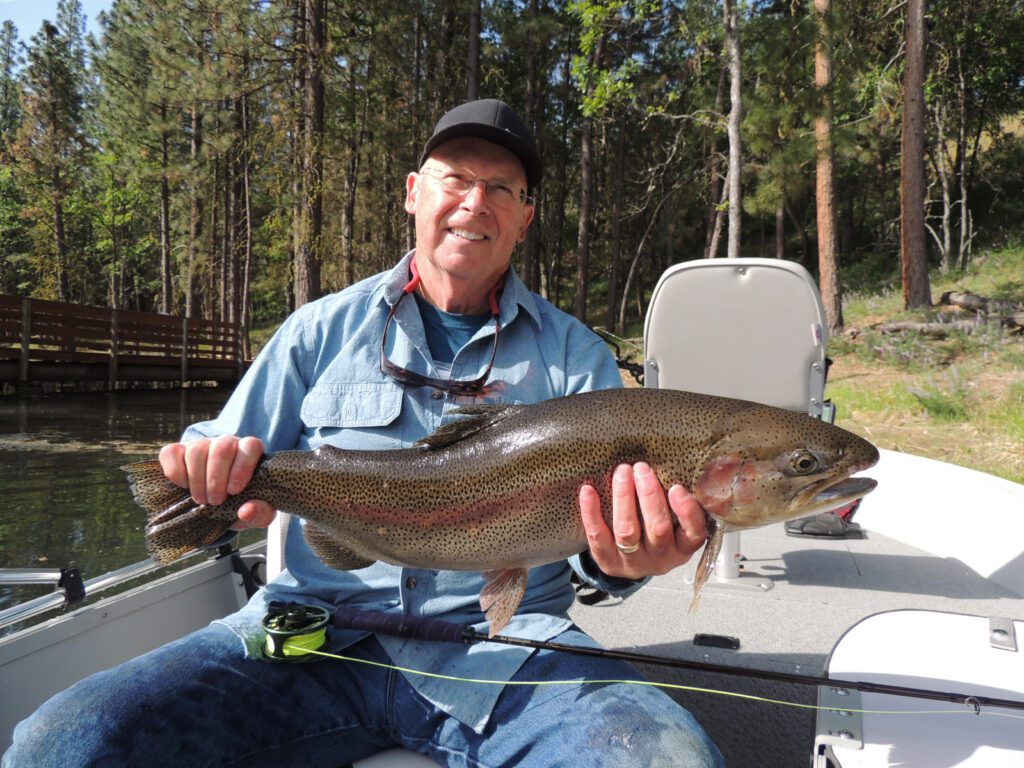
Instead, when planning a road trip for rainbows, tow the boat to places like Pine Hollow Reservoir (call the resort to check the ice), Lake Simtustus, Willow Creek Reservoir (Heppner), Lost Creek Reservoir (east of Shady Cove) and Dexter Reservoir along Highway 58.
In the winter, trout seek shallow water because the shallows warm first, which promotes weed growth which in turn promotes the insect activity that draws in little fish. Larger trout feed on the minnows, crustaceans and insects.
While shallow water offers better feed options, they are also a danger zone where larger trout may be taken by ospreys. Trout tend to rest and rove along the ledges where the light green shallows give way to deep blue depths. Rocky points, submerged rim rocks and even - in bigger reservoirs - flooded road and railroad beds also offer the kind of habitats where big trout like to hunt.
For the fly angler, a slow-sinking line is the best option because trout may be closer to the surface. Optimal trolling speed in most cases will be between .8 and 1.2 miles per hour, about the speed of a slow walk. Establish a trolling circuit to follow a contour line or to hit the rocky points. Feed out 30 to 50 feet of line behind the boat.
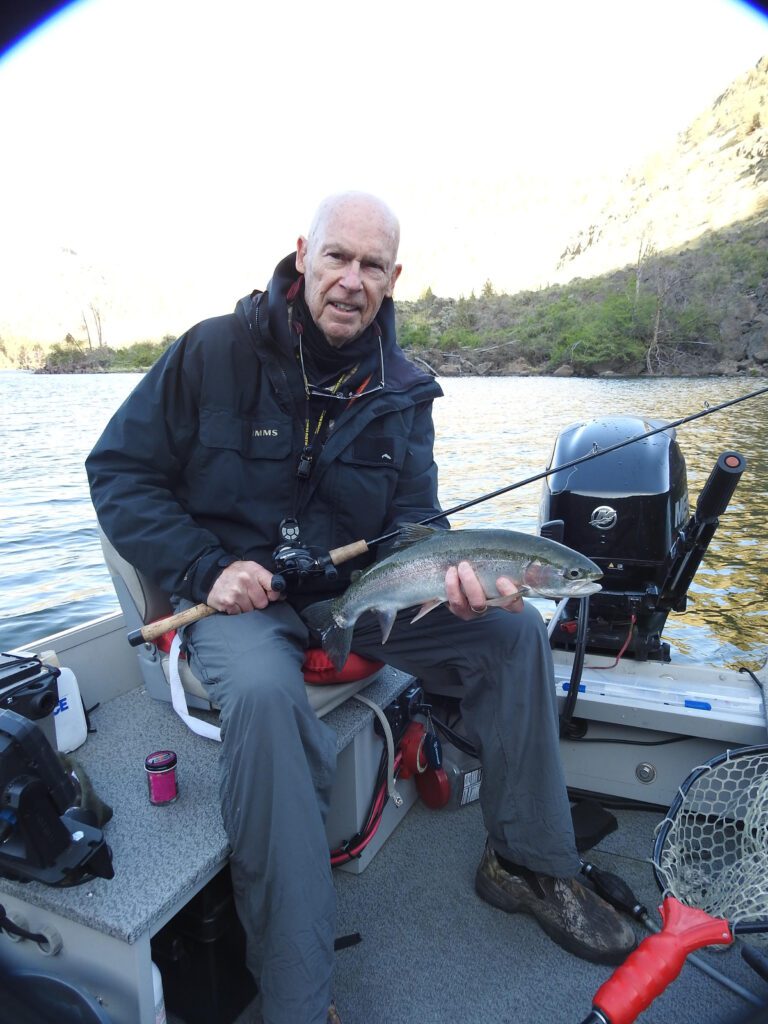
Vary the trolling speed and change direction by zigzags over the trolling circuit which changes the action of the flies. A lot of strikes come on the deceleration or on the outside of a turn.
Rods can be kept in rod holders, but strikes are often missed on fly gear because of the shock-absorbent nature of the line. Hold the rod in hand, the tip near horizontal. If a fish bites, lift the rod and set the hook with a quick strip of line.
A slower initial speed allows lines and flies to sink. Watch the amount of drop, the angle of the line and length. The boat operator can control depth by adjusting speed and lengthening or shortening the lines.
Watch the weather for the days between storm fronts when temps come up and the wind is light. Like grandpa told me, trout and salmon bite ahead of a storm front, and again after a low pressure system.
Late last winter we fished Lake Simtustus. Dad caught a fish on the first pass and then Randy and I doubled up when two trout grabbed on a turn - nice fat rainbows that had fed well over the winter. Then we could not get another bite. Looking at the solunar tables now, I see we fished two hours too late, but still it was better than a day at the office.
The Old Farmer's Almanac says the best days to fish are when the moon is between New and Full. That means we want to fish March 10 to March 24 and then starting again April 8.
My grandpa used to watch the barometer and tell me when the fishing was going to be fair. He would say something like, "When the barometer is below twenty-nine-point-seven, the fishing won't bite as good. What you want to see is when the barometer is low and rising." Then grandpa would say, "But it's always a good day to go fishing."
People have been studying this subject for millennia. We don't need a new brother-in-law, but we ought to remember the factors our grandfathers employed to forecast the fishing.
# # #
For a copy of the Fishing Central Oregon book, send $29.99 to Gary Lewis Outdoors, PO Box 1364, Bend, OR 97709 To contact Gary Lewis, visit www.GaryLewisOutdoors.com
/articles/forecast-fishing-late-winter-rainbows