Early Opener Trout
More than two dozen lakes across Eastern Washington are set to open March 1, although unpredictable winter-like conditions could limit trout fishing options and success.
“We’ve had a mild winter, and early March can be a great time for early lake fishing opportunities,” said Steve Caromile, a Washington Department of Fish and Wildlife (WDFW) statewide inland fish program manager. “As the days become longer, these early spring fisheries are a good way to start the year. Some eastside lakes may have some remaining thin ice, especially in the northeastern region of the state. WDFW doesn’t monitor ice conditions, so use extra caution before venturing out this year.”
Depending upon the severity of late winter weather, some lakes, especially those in the northeastern region, may still be iced over. WDFW doesn’t monitor ice conditions, so anglers should check ice conditions before heading out.
The initial best bets will likely be Martha and Upper Caliche lakes near George in Grant County. Each can be an excellent choice, and anglers should expect good fishing in 2026.
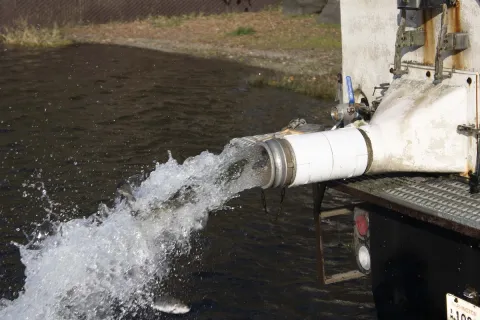
Martha and Upper Caliche lakes received 500 catchable 10- to 12-inch rainbow trout in the fall off 2025 and should be in the 13- to 14-inch range by opening day. WDFW planted another 325 catchable trout in time for the March 1 opener, and 3,900 fingerling trout (one- to three-inches long) were planted in April of 2025, and those that survived should contribute to spring-time catches.
It is not uncommon for Upper Caliche to still be frozen on March 1. However, there’s almost always plenty of open water on Martha Lake on the opener. The north section of Martha Lake is usually ice-free with plenty of shoreline space, and that’s likely where most of the trout will be concentrated.
In Grant County, Quincy and Burke lakes should both fish well this spring, and improved boat launch sites. Shore anglers should have plenty of room to fish with ample access to the lakes. Both lakes received 1,500 catchable-sized trout in February, and each was stocked with more than 21,000 fingerling in April of 2025. Most fish will be in the 10- to 12-inch range, with some carryover trout in the 13-to 15-inch range. Try casting spinners and small spoons from the shoreline.
The Quincy Valley Chamber of Commerce Trout Derby is March 27-28 at Quincy and Burke lakes. Cost is $40 per person over age 18 and free for youth ages 17 and under. For details, go to: https://quincyvalleywa.chambermaster.com/events/details/trout-fishing-derby-2026-1300.
Lake Lenore in Grant County is also open on March 1 with a one-fish daily limit and an 18-inch minimum size limit. This is one of only six lakes in Washington with Lahontan Cutthroat.
Other lakes and ponds in Grant County included in the March 1 opener are Cascade, Dry Falls, Lenice, Merry, North Potholes Reserve, Nunnally, Stratford/Brook, and Winchester Wasteway.
Also note that within the Quincy Lakes Unit of the Columbia Basin Wildlife Area, there are many walk-in lakes that open March 1. These lakes can provide not only good fishing, but also solitude.
With their boat launches, parking, and shore access, Quincy and Burke lakes tend to attract the most attention when these Grant County, Washington, waters open March 1, but WDFW biologist Michael Schmuck notes that he stocks several nearby smaller and less well-known lakes that grow footlong-plus rainbows.
“There is a good chance for anglers to have them all to themselves, and many are down in small canyons that afford good protection from the spring winds,” said Schmuck.
Hike-in Dusty Lake is a selective gear lake that has excellent rainbow trout fishing as well as brown and tiger trout. Just southeast of Dusty is a collection of small lakes that hold rainbow trout. Cliff, Crystal, Cup, and Lower and Upper Spring lakes are small enough that they can all be fished in a morning. All these lakes receive spring fingerling rainbow trout and produce good catches of fish in the 12- to 14-inch range, with some up to 20 inches.
The greater Spokane region has several March 1 openers, including Liberty Lake that can be good around the opener for brown and rainbow trout averaging 12 to 16 inches. Statewide rules apply at Liberty Lake.
There are other March 1 opener lakes managed under “selective gear rules”, but the action doesn’t generally pick up until the weather warms up. However, fishing can be pretty good, but not great, until warmer weather arrives. Those lakes include Amber and Medical in Spokane County; and Coffeepot in Lincoln County. Amber and Coffeepot are managed with an 18-inch minimum size limit and a daily limit one-fish regulation. Medical has a 14-inch minimum size limit and a daily limit two-fish regulation.
Downs Lake, located in south Spokane County, typically opens for early-season fishing on March 1, but it is not accessible to the public this season. Access to the lake is limited to a privately owned resort that is currently closed. No fish were stocked in 2026, and stocking will not resume until public access is available. WDFW is working to restore public access.
And finally, all seven human-made lakes off the Tucannon River in Columbia County –
Blue, Deer, Rainbow, Spring, and Watson — have open water and are stocked with rainbows weighing up to 1.5 pounds each. Pampa Pond in Whitman County is also open March 1 for rainbow trout fishing.
Trout plants by lakes
Grant County (general fishing regulations with season open March 1 through Sept. 30) –
Burke, 1,500 catchable-size rainbow trout stocked in February, and 21,226 fingerling rainbow trout stocked in April of 2025;
Upper Caliche, 325 rainbow trout stocked in March, 500 catchable-size rainbow trout stocked in October of 2025, and 3,900 fingerling rainbow trout stocked in April of 2025;
Cliff, 400 fingerling rainbow trout stocked in March of 2025;
Crystal, 400 fingerling rainbow trout stocked in March of 2025; Cup, 200 fingerling rainbow trout stocked in March of 2025;
Martha, 500 catchable-size rainbow trout stocked in March, 750 catchable-size rainbow trout stocked in October of 2025, and 8,400 fingerling rainbow trout stocked in March of 2025;
Quincy, 1,500 catchable-size rainbow trout stocked in February, and 21,177 fingerling rainbow trout stocked in April of 2025;
Lower Spring, 200 fingerling rainbow trout stocked in March of 2025;
Upper Spring, 200 fingerling rainbow trout stocked in March of 2025.
Grant County (selective fishing regulations with season open March 1 through Nov. 30)
Dry Falls, 4,670 fingerling rainbow trout and 1,500 fingerling brook trout stocked in March of 2025;
Dusty, 3,000 fingerling rainbow trout, 2,500 fingerling brook trout, and 2,200 tiger trout stocked in May of 2025;
Lenice, 2,250 catchable-size rainbow trout to be stocked in April of 2026, and 3,000 catchable-size rainbow trout stocked in October of 2025;
Lenore, 72,125 fingerling rainbow trout stocked in October of 2025;
Nunnally, 2,750 catchable-size rainbow trout to be stocked in April, and 3,000 catchable-size rainbow trout stocked in October of 2025.
Spokane County – Liberty, 4,000 catchable-size rainbow and 350 jumbo rainbow trout stocked in spring of 2026, 15,000 fry rainbow trout, 35,000 fry brook trout and 1,200 broodstock eastern brook trout stocked in fall of 2025;
Amber, 7,500 fry rainbow trout and 1,000 fry cutthroat trout stocked in spring of 2025;
Medical, 2,500 put-grow-take brook trout to be stocked in April 2026 (these trout are 2.6 to 10 fish per pound in size and should be in the catchable size by mid-summer), and 5,000 fry rainbow trout stocked in spring of 2025;
Coffeepot, 5,000 put-grow-take rainbow trout to be stocked in spring of 2026 (these trout are 2.6 to 10 fish per pound in size and should be in the catchable size by mid-summer).
Other useful information and resources
- Many westside year-round lakes are also being stocked with trout in early spring. Visit the WDFW website at https://wdfw.wa.gov/fishing/reports/stocking/trout-plants for specific weekly fish stocking numbers.
- Mark your calendar for the highly anticipated 2026 statewide general lowland lakes trout opener on April 25.
- The WDFW Trout Derby will be held from April 25 through Oct. 31 at more than 100 stocked lakes and ponds across Washington. In 2025, more than 100 statewide businesses offered an estimated 1,091 prizes valued at around $54,858 and worth about $50.28 per prize, which was up considerably from previous years, dating back to 2016. WDFW is currently preparing for the 2026 trout derby and will have updated information soon. The success of the trout derby would only be possible through WDFW’s ongoing partnerships with business dealers/vendors throughout the state. The derby, held for the past 10 years, has generated close to 55 to 60 percent of the tags turned in for prizes. To help boost catching a tagged trout, WDFW will have a list of all the lakes in real-time where prizes are left to be claimed. Be sure to share your derby success on social media using the hashtag #watroutderby. The WDFW Trout Derby webpage https://wdfw.wa.gov/fishing/contests/trout-derby should be updated soon with 2026 information.
- You can find information on statewide lowland lake locations by going to the WDFW webpage at https://wdfw.wa.gov/fishing/locations/lowland-lakes. Basic trout fishing techniques on the WDFW YouTube webpage at https://www.youtube.com/watch?v=f9A5UiJJMks&list=PLo22nBM4mjeStU58nRnZFYCys3hAtT2Yg. More trout fishing tips can also be found on the WDFW webpage at https://wdfw.wa.gov/fishing/locations/lowland-lakes.
/articles/early-opener-trout
Black Friday Trout
Sure, the weather outside is frightful at this time of the year, but that won’t stop thousands of anglers from skipping out on the shopping malls and opting to go trout fishing instead!
“The holidays are great to spend quality time outdoors with family and friends, avoid the mall shopping madness and maybe even catch a fish,” said Steve Caromile, the Washington Department of Fish and Wildlife (WDFW) Inland Fish Program manager.
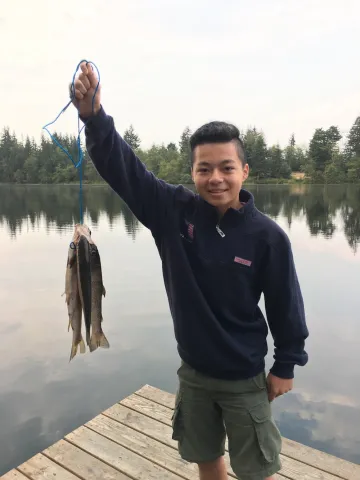
The fishing wish list just grew twofold as WDFW hatchery crews have been busy leading up to Black Friday by shuttling 64,350 jumbo-sized rainbow trout, averaging 1 to 2 pounds apiece, into 25 lakes around the Puget Sound region and southwest Washington, as well as several Eastern Washington lakes and ponds.
The Black Friday program, created more than a decade ago by WDFW, came up with a creative way to stock thousands of rainbow trout for a late-season fishery in year-round lakes. The post-Thanksgiving holiday fishing option has been a hit for anglers looking to wet a line at a time when the choices are sparse.
In October, a good number of other year-round lakes around Washington were also planted with trout for anglers who want to head before Thanksgiving. You can find trout stocking information that is usually updated weekly by going to the WDFW webpage at https://wdfw.wa.gov/fishing/reports/stocking.
Black Friday trout plants include:
- Chelan County: Roses, 20,000
- Clark County: Battleground, 2,000; and Klineline, 2,000.
- Cowlitz County: Kress, 2,000.
- Island County: x-Cranberry, 4,000.
- King County: x-Alice, 1,000; x-Beaver, 2,500; and x-Green, 5,000.
- Klickitat County: Rowland, 2,000.
- Lewis County: Fort Borst Park Pond, 2,000; and South Lewis County Park Pond, 2,000.
- Pacific County: Cases Pond, 300.
- Pierce County: American, 2,000; and Tanwax, 1,350.
- Snohomish County: x-Ballinger, 3,000; x-Blackmans, 1,500; x-Gissburg Ponds, 1,500; x-Silver, 3,000; and x-Tye, 2,000.
- Thurston County: Black, 3,000; Long, 1,000; and Offutt, 1,000.
- Yakima County: I-82 Pond #4, 2,000.
(x-Around 50% of the planned trout stocking occurred in October in the noted lakes, and the remainder will be stocked in time for Black Friday)
There are four Eastern Washington lakes opening on Black Friday that were stocked with trout fry this past spring that should be averaging 8 to 10 inches, plus some other larger fish were stocked of late.
Eastern Washington lakes trout plants include:
- Stevens County: Hatch Lake, 15,000 fry stocked in May, and 600 trout averaging 1 pound apiece stocked in October; and Williams Lake, 12,000 fry stocked in May, and 1,500 trout averaging a quarter pound apiece stocked in mid-April.
- Adams/Lincoln County: Fourth of July Lake, 60,000 fry stocked in May, and 18,000 trout averaging a quarter pound apiece stocked in mid-April.
Spokane County: Hog Canyon Lake, 20,000 fry stocked in May, 10,000 trout averaging a quarter pound apiece stocked in mid-April, and 1,600 trout averaging 1 pound apiece stocked in October.
Before you go
When fishing for trout, don’t overthink the necessary fishing gear.
A basic trout rod and reel averages $50 to $90, and a higher-end set is about $100 to $200. The rod should be light and limber in the 6 to 7 foot range with a 4- to 10-pound line weight range. A medium-sized spinning reel with a capacity to hold more than 100 yards of 6- to 8-pound test fishing line will do the job right.
From the mainline, attach one or two number 8 or 9 egg sinkers with a rubber bumper just above a small barrel swivel. Avoid the cheap store-bought pre-tied 12-inch leaders that are way too short in length. Either tie your own leaders or spend a few extra dollars on pre-tied versions in 3- to 8-pound test that measure 18 to 30 inches long. A smaller size 12 or 14 egg hook is the best choice when using a moldable dough bait or nugget, salmon eggs, worm pieces, or maggots. For live bait such as a whole worm, nightcrawler, or marshmallow, the optimal hook size is a size 8 or 10 worm hook. If you use an artificial fly, the stick with a size #14 hook or smaller. A hook that is too big or exposed may scare away the fish, and one that is too small may result in fewer hook-ups. Lastly, make sure your hooks are sharp and sticky.
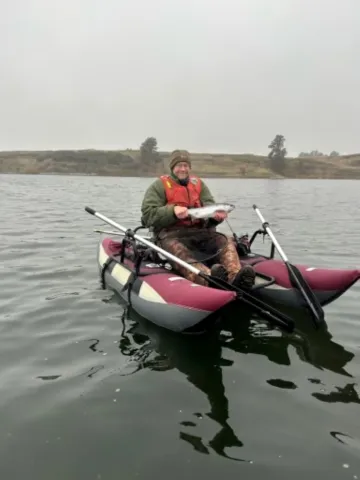
Most anglers casting from the banks or in a boat will stick with the popular moldable dough baits, which come in a variety of colors, and some are shaped like a salmon egg, marshmallow, maggot, or worm. The old school baits include salmon eggs, worms/nightcrawlers, maggots, and marshmallows.
From a boat troll a gang-flasher with a hook tipped with a piece of worm, maggot, or salmon egg, along with a tiny piece of scented dough bait or a liquid scent. A small spoon or spinner also gets its fair share of bites.
From the shoreline, cast out a small-sized bobber with your bait sitting just below the surface in 3 to 8 feet of water. Others like to go deeper, where it hangs just a few feet off the bottom, where the larger-size carryover trout lurk. Recently planted trout tend to hang around near or just under the surface of the water at depths of 3 to 10 feet. Once the stocked trout acclimate, they’ll eventually spread out and move into deeper areas of the lake. Anglers often look for schools of trout right where the hatchery truck placed them, usually near the shore, boat ramp, or dock areas.
Trout like to rise to the top of the water column to gobble up insects on the water’s surface. This is where artificial flies come into play, like a Woolly Bugger in black, dark green, or black-olive in a size 8 or 10 with a 5- or 6-foot leader. They can be cast from shore or trolled weightless close to the surface behind a boat or floating device.
A fishing license – https://fishhunt.dfw.wa.gov/login – is required for anyone age 16 or older. A Discover Pass – https://wdfw.wa.gov/licenses/parking – is required to park a vehicle at many state lands, including the state park system, WDFW lands, and the Department of Natural Resources lands.
The Washington State Parks and Recreation Commission Boating Program –
https://parks.wa.gov/find-activity/activity-search/boating – would also like to remind anglers to take a boater safety education course, if you haven’t already, to be prepared for spring and summer. In Washington, boaters who operate a vessel with a 15-horsepower engine or greater must carry a Boater Education Card to prove they passed an accredited boating safety education course.
/articles/black-friday-trout
Five Coastal Salmon Rivers to Check Out
Summer is upon us and for many of us, that means that our home rivers are closed to fishing to protect ESA-listed wild Chinook. As a result, we are looking forward to fall when we begin to see runs of Coho and Chum salmon flooding into our rivers with increasing opportunities to catch them. Fingers crossed!
It is anyone’s guess what WDFW will do and many of us are eagerly awaiting news concerning our seasons, emergency closures, and changes in general. Keeping this in mind, let’s look at five coastal river systems to check out that could present great opportunities.
Let’s start on the Northern Coast and work our way South. For the sake of this article, the focus will be from Forks in the North to Grays Harbor in the South. There are other coastal river systems South of Grays Harbor, but we are going to focus on the most popular systems.
Quillayute River System
The Quillayute empties into the Pacific Ocean at La Push, Washington. The Quillayute River is formed by the confluence of the Bogachiel River, Calawah River , and the Sol Duc River near the town of Forks, WA. The Dickey River joins the Quillayute from the north, just above the river's mouth at the Pacific Ocean. Though it is world-renowned as a winter Steelhead mecca, this system also receives returns of all five species of salmon. With spring and summer Chinook salmon returning in lower numbers than expected, the Quillayute river system, including the Bogachiel, Calawah, Dickey, Sitkum, and Sol Duc rivers, as well as Thunder Creek closed to all fishing on July 15. Historically this system produced great returns of spring and summer chinook, but like so many of our rivers, the runs are now endangered. The Coho and Chum will return in September and hopefully, there will be opportunities to catch and retain hatchery fish.
Hoh River
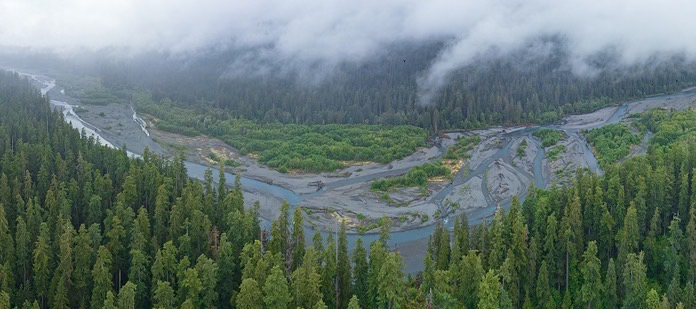
At 56 miles long, the Hoh River originates at the snout of Hoh Glacier on Mount Olympus and flows westward through the Olympic Mountains of Olympic National Park and Olympic National Forest, then through foothills in a broad valley, emptying into the Pacific Ocean at the Hoh Indian Reservation. The final portion of the Hoh River's course marks the boundary between the south coastal segment of Olympic National Park and the Hoh Indian Reservation.
Returns of Steelhead and Salmon make the Hoh River a fishing destination worth exploring. While there are fish in the Hoh River year-round, Steelhead are mostly targeted in the Winter, Chinook, and Coho are mostly targeted in August through November, and Dolly Varden and Cutthroat Trout are targeted anytime the water is in shape.
According to the 2024-2025 regulations, parts of the Hoh will open for Salmon fishing on September 16th, presenting some great opportunities to target Coho.
Queets and Quinault Rivers
The Queets and Quinault Rivers and their tributaries flow from the Olympic National Park into tribal lands. While opportunities exist in the upper reaches of these systems and within the park, they are most noted for their tribally guided lower sections. Note that the rivers are governed by WDFW, the Federal Government, and the Tribes, depending on where you are, so pay close attention to the rules.
The Quinault and Queets Nations have built some very robust hatchery programs, and they control the lower stretches of the rivers. Anglers can fish for all five species of Salmon as well as Steelhead and Trout. Fall Coho on the lower Quinault is a very fun fishery and can result in a freezer full of fish to last the winter. Note that you must book a trip with a tribal guide to fish the waters that lay within the reservations.
Humptulips River
The Humptulips River is located in Grays Harbor County, just North of Aberdeen and Hoquiam. Its main tributaries are the East Fork Humptulips River, about 20 miles long, and West Fork Humptulips River, about 30 miles long. After the forks join, the main river is approximately 20 miles long and provides some of the best salmon habitat in Washington. This river is not a secret and is often very congested, when open.
I will say that the “Hump” as it is called is one of my favorite rivers for fall Salmon fishing. It is renowned for its runs of Chinook, Coho, Chum, and Steelhead. As with other coastal rivers and due to low returns of wild Chinook, opportunities are limited. According to the current regulations, parts of the river should open in early September for hatchery Chinook and Coho. As this river can get very congested, it is best to know what you are doing and even better, book a trip with a guide.
Chehalis River System
The Chehalis River originates in several forks in southwestern Washington, flows east, then north, then west, in a large curve, before emptying into Grays Harbor, an estuary of the Pacific Ocean. The river is the largest solely contained drainage basin in the state. Both the Wynoochee and Satsop Rivers flow into the Chehalis between the towns of Elma and Montesano. While the Chehalis has many other tributaries, the Satsop and Wynoochee are likely the most popular and offer fantastic fall Coho fisheries. The mainstem Chehalis, near the mouth of these rivers, can be epic when conditions are favorable and some of the largest Coho in the state can be caught here. This system is also known for large limits of Coho allowed but check the most up-to-date regulations for specific details and don’t forget to look for emergency closures.
With all these rivers, please remember to check the regulations before you make plans or head out to fish. Things change often and it is very important to make sure that a river is open to avoid disappointment. Also, do yourself a favor and book a trip with a guide. I just cannot emphasize this enough. Your opportunities for success will greatly improve if you learn from a local guide and you are more likely to take fish home to eat later.
In closing, you are welcome to message me if you need to be connected to a guide. I am easy to find on Facebook (https://www.facebook.com/brent.knight.148) and am happy to help. Good fishing!!!
/articles/five-coastal-salmon-rivers-check-out
Pink Salmon Everywhere!
Introducing the unique Pink salmon: distinguished by their distinct life cycle, these fish follow a two-year journey, returning to their spawning rivers as two-year-olds. Adding to their allure is the intriguing fact that they exclusively run during odd years within Washington State. This year, an estimated 4 million Pink salmon are projected to traverse the Sound. Despite their classification as the smallest Pacific salmon, their tenacity in battle and delightful flavor remain unyielding. Their culinary versatility shines as they excel on the grill, particularly atop a cedar plank, and find their way into many anglers' smokers. For numerous enthusiasts, Pink salmon mark their initiation into the world of Washington State salmon fishing, thanks to their abundant presence and approachable nature compared to their larger counterparts.
Around this time of year, pinks flood the Sound and begin to stage near their home rivers. One of the best things about pink salmon is that you don’t need a boat to catch them from the shore or pier. They tend to swim within casting distance most of the time, and at this point in their life cycle they are still actively feeding, so they aggressively attack most offerings they see. With millions of pink salmon cruising by the shoreline looking for a meal, this is the perfect time to head to your local saltwater pier or beach and bring home some pinks for the grill.
Presenting A Jig
By and large, most shore anglers fish for pink salmon with jigs. There’s no need to use bait because pink salmon will aggressively bite a well-presented jig. Buzz Bombs and Rotators are the most commonly used jigs. They are easy to use and thousands of pink salmon readily gobble them up every year. They are designed to resemble a wounded baitfish, and they flutter erratically as they fall. Rigging them up is pretty simple: put on your buzz bomb, then thread on a bead and a bumper. Then tie directly to your hook (don’t forget to pinch the barb if it’s required). I usually use a 1/0 or 2/0 hook for pinks. To use jigs, cast out to where you think the fish are at, let your jig sink for a few seconds, then reel in and lift your rod tip up. Next, quickly lower your rod tip and let the jig fall. Repeat this until you reach the shore or catch a fish. Make sure to jig all the way until shore- sometimes the fish will follow your lure and strike at the last second.
Most of your strikes will be as the jig is falling. If you get a bite, quickly set the hook and keep up the pressure, especially if you’re using barbless hooks. As their name suggests, pink salmon love the color pink! It’s a good idea to start with that color, then switch it up if you aren’t getting fish. Buzz Bombs come in a variety of different weights. For pinks, I’d suggest using the lightest weight that you can cast well. If the bite is slow, try rubbing on some shrimp, anise, or herring scent. Gel based scent will cling to the jig longer. You can also thread on a small pink hoochie for extra action. If switching lures doesn’t work, you can switch locations as well. Sometimes just walking down for a few minutes on the beach can make all the difference.
Spinners
Another viable option if fish don’t seem to be hitting your jig is to use spinners. Vibrax spinners tend to be light, so it’s a good idea to thread on some bullet weights above a swivel to help get them down to where the fish are at. Several other brands such as Mepps make heavier spinners that will get to the proper depth without additional weight. Bring several options, and don’t be afraid to add scent or thread a hoochie on.
For your rod and reel, I’d recommend using a rod that can handle ½ to 1 ½ oz. weights, probably around 8 to 10 feet in length. I highly recommend using braided line because you can feel those sensitive bites easier, but mono will definitely do the job. A size 3000 to 4000 reel will have plenty of backbone to handle the fish. Remember to rinse your reel after fishing, saltwater is very corrosive and can cause damage if not washed off.
Where To Start?
Wondering where to start? Les Davis Pier, Edmonds Pier, Des Moines Pier, Browns Point, and Point No Point are all popular locations that reliably produce pinks every year. Any beach with a point and a good drop-off will most likely hold fish. Expect to have some company, though. Just be patient and try to avoid tangling your line with other anglers, especially if the current is strong. If you go to a pier, have a plan for netting your catch. Most piers are too far from the water to be able to use traditional nets. Pier anglers have taken to using crab rings. Just lower them down to the water and scoop up your fish. It takes some practice though! Beach anglers need not use a net, simply back up and swing your fish onto the beach.
As always, be sure to check the rules and regulations before going fishing. Don’t forget to swap those treble hooks for barbless single-point hooks, if required. You can buy barbless hooks or simply pinch the barb yourself with pliers. If you’re new to salmon fishing, WDFW offers salmon identification guides. It’s important to be able to tell the difference between salmon species, because they are regulated differently. You may be able to keep pinks but not chinook, for example.
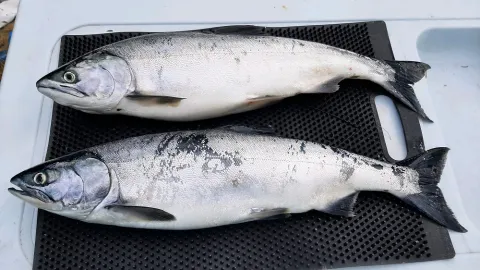
In general, hatcheries do not clip pink salmon fins, so don’t worry about checking if they’re hatchery or wild. The way to identify pink salmon is by checking the gums and the spots on the tail. Pink salmon have large spots on the tail and a white mouth with black gum line and tongue. For optimum meat quality, don’t forget to bleed and gut your catch before going home. Despite what some anglers say, pink salmon tastes great on the smoker or grill. Since they don’t have as much fat as their cousins, they have a milder taste than other salmon, which some people actually enjoy more. My favorite way to eat them is to season them with some of my favorite rub and then grill them on cedar or alder planks. They’re a great summertime treat that the entire family will love!
/articles/pink-salmon-everywhere
Washington Ocean Salmon Prospects
With salmon seasons being ever-changing, from season to season, month to month, and even minute to minute depending on where you fish, the recent announcement of summer salmon seasons was met with some excitement and hesitation. Fisheries managers met over several weeks during the North of Falcon process where everyone with an interest in salmon planned out the quotas and seasons. Washington’s governor added a new apprehension at the table with concern over making sure there is enough food for south Sound Orcas well as fish sport anglers, commercial harvesters, and tribal fisheries, while still allowing for escapement.
The escapement is the main focus, with ESA-listed stocks and wild fish returns dictating how and when anglers can pursue salmon. Once the run estimates are established then the managers need to figure out how many fish can be caught in the ocean and still allows for fishing, and escapement in each of the predicted runs. This is where the marine area gets its seasons and regulations. This year the allotment for ocean salmon off of the coast of Washington was set at 39,000 chinook and 159,600 coho. Each marine area will get its own seasons and a share of the fish.
Starting with Marine Area 4, Neah Bay, the northernmost ocean section which borders Canadian waters, will get first dibs on the salmon, along with Marine Area, 3 La Push, which will have the same start date of June 17th. This is just like last year, when the areas opened up on Father’s Day weekend, but this year anglers can still keep two salmon per day. However, only one can be a chinook and all coho must be clipped. It is open 7 days per week, but later this summer, chinook will be closed east of the Bonilla-Tatoosh line starting on August 1st.

Marine Area 3 will have similar regulations as Area 4 but will also have a late “bubble” fishery from October 3rd to the 7th with a one chinook per day limit. La Push is not nearly as popular as Neah Bay, mostly because it is an open water fishery where the area to the north in Neah Bay has some protected fishing. Since the Covid restrictions have lifted, both reservations are now open. Neah Bay offers a bit more in amenities, but nearby Forks is a great town to stay in when fishing out of either port and has accommodations, restaurants, and gas stations, along with a sporting goods store in case you forgot anything.
Westport in Marine Area 2 is probably the most popular of all offshore ocean fishing locations. The famed Grays Harbor bar is not fun to cross, but on good days the fishing makes it all worth it. This tiny fishing town has everything you need, and if the bar is not cooperating or you are looking for some bottom fish to take home, then fishing along the jetty or the many rock piles off the coast makes for a fun fishery. The season here opens June 24th and will be open 7 days per week with a two salmon daily limit. Only one can be a chinook, and all coho must be clipped.
The coast of Ocean Shores is a popular area to fish in Marine Area 2. You can use the hotels as a marker on where to fish. The casino is a well-known landmark where anglers will fish in 60 feet of water and make their way out deeper from there. Another good spot is south of the jetty, where you can intercept fish making their way to Willapa Bay and the Columbia River. One of the reasons why Marine Area 2 is such a good fishery is because anglers are targeting fish heading to Grays Harbor, and as they near the entrance they tend to hang out in the saltwater just offshore. Add in the fish migrating further south to Willapa Bay, the Columbia River, and even Oregon rivers, and it makes for a highway of salmon to intercept.
Marine Area 1 out of Ilwaco is for the serious salmon angler. The season is set to open June 24th with a two salmon per day limit, but only one can be a chinook and all coho must be clipped. Ilwaco is a protected port with a long jetty that protrudes out into the Columbia, and it can mislead the novice angler into thinking everything is good to go. Be sure to know how and when to cross the Columbia River bar safely. This is the deadliest bar in the world and there is a reason why the U.S. Coast Guard trains their rescue swimmers here. But if you can make it out to the ocean then you will get your first chance at the 554,000 fall chinook or the 595,300 coho making their way back to the Columbia River.
When it comes to salmon fishing in the ocean, nothing beats fishing fresh bait. I use brined herring that has sat overnight in Pro-Cure’s Brine-n-Brite and been toughened with some Bait Spice, an infused rock salt with bluing agents and scents. Learning to plug cut herring can be tricky but once you get the perfect cut down, it is one of the most productive ways to fish. But if you find yourself in a school of crazed coho where most will not be clipped and before you know it bait is running low, then there are a few things you can do to increase your catch rate when the bait runs out. There are many spinning plugs on the market now, including the SpinFish by Yakima Bait Company, the Cut Plug by Brad’s, and now the Simon Spin Dawg and Simon Cut Plug.
The first two have a hollow cavity to place scents, herring strips or canned tuna, but the products by Simon are solid and have a scent cavity. One benefit of the solid bait is that it won’t come apart when a chinook grabs hold. The other lures, though, offer more scent-holding capabilities. All of them work on the same wounded baitfish principle and work great when the real bait runs low or you don’t want to mess with brining and plug cutting. Old Goat Lures also makes a hollow one-piece wounded baitfish lure and they make it out of plastics that glow for those low-light days or early morning fisheries. With each of these lures, it is best to use a super sticky scent such as those by Pro-Cure in their Bait Sauce line.

To rig up the spinning plug lures, there are two primary ways to fish them when trolling in the ocean. The first is behind a 360-flasher such as a Mack’s Lure UV Paddle ScentFlash, which can be filled with even more scent. Use a long leader from 42 to 56 inches to the lure, and then use the downrigger to get it to the depth of choice. The other way to rig it is just like how one would mooch using a mooching weight from 2 to 5 ounces, depending on how deep you want to run it, and then a long leader, again 42 to 56 inches. Simply let this rod out of the back of the boat about 50 feet, and put it in the rod holders. This makes for a great top water rod when targeting coho. Once you find a school of chinook you can then use this same set-up to mooch for them, and even drop it down over a rock pile and catch rockfish and lingcod. It is a simple and very versatile set-up and one I always have rigged and ready in the boat when heading to fish the ocean.
It is time to do a little homework and figure out where you want to catch some salmon. With the marine areas now open, it is a matter of checking the tides and winds and making sure all of the safety equipment is up to date. This is also a good time to update any software for the sonar unit and make sure the life jackets are serviceable. Motor maintenance should have been done months ago, but if you haven’t done so then be sure to get them running right before heading out to the open ocean. The saltwater is one of the best places to catch salmon as long as you are prepared and know how to navigate the bar crossings safely. Head out to the open sea and catch some salmon.
/articles/washington-ocean-salmon-prospects
Five 5-Star Fishing Destinations
Calling a fishing destination “5-star” can mean a lot of things to different people.
Some people are all about the fishing and only the fishing. Five stars to them means spectacular fishing opportunities for that prized species on their list. For them, it could be good numbers, rare fishes, or even “trophy” size. If this means sleeping in a car on the side of the road it makes no difference to them. It’s all about the fish.
Other people are looking for a trip the whole family can enjoy, a vacation with a side of good fishing. They want some amenities, some nightlife, maybe some local culture and sightseeing. Then a couple days on a blue water charter.
Throw in all the factors like; do you want a guided/charter experience or are you more into self-guided adventures? What time of year? What species? What’s on the bucket list? Boat or shore? Fly fishing? Budget? Well, you get a lot of answers for what a 5 Star Fishing Destination entails. And guess what? Everybody’s right. Your dream fishing destination is a personal thing. Whether you’re a trophy hunter or dream of ten inch trout on a quiet Alpine Lake, who can say its not “5 star”? Fishing is many things for everyone, but here are some of our favorites from over the years and why we think of them as “5 star”. (Hint: the reasons aren’t all the same.)
Starting from East to West:
Fort Peck, Montana
DIY Road Trip Adventure
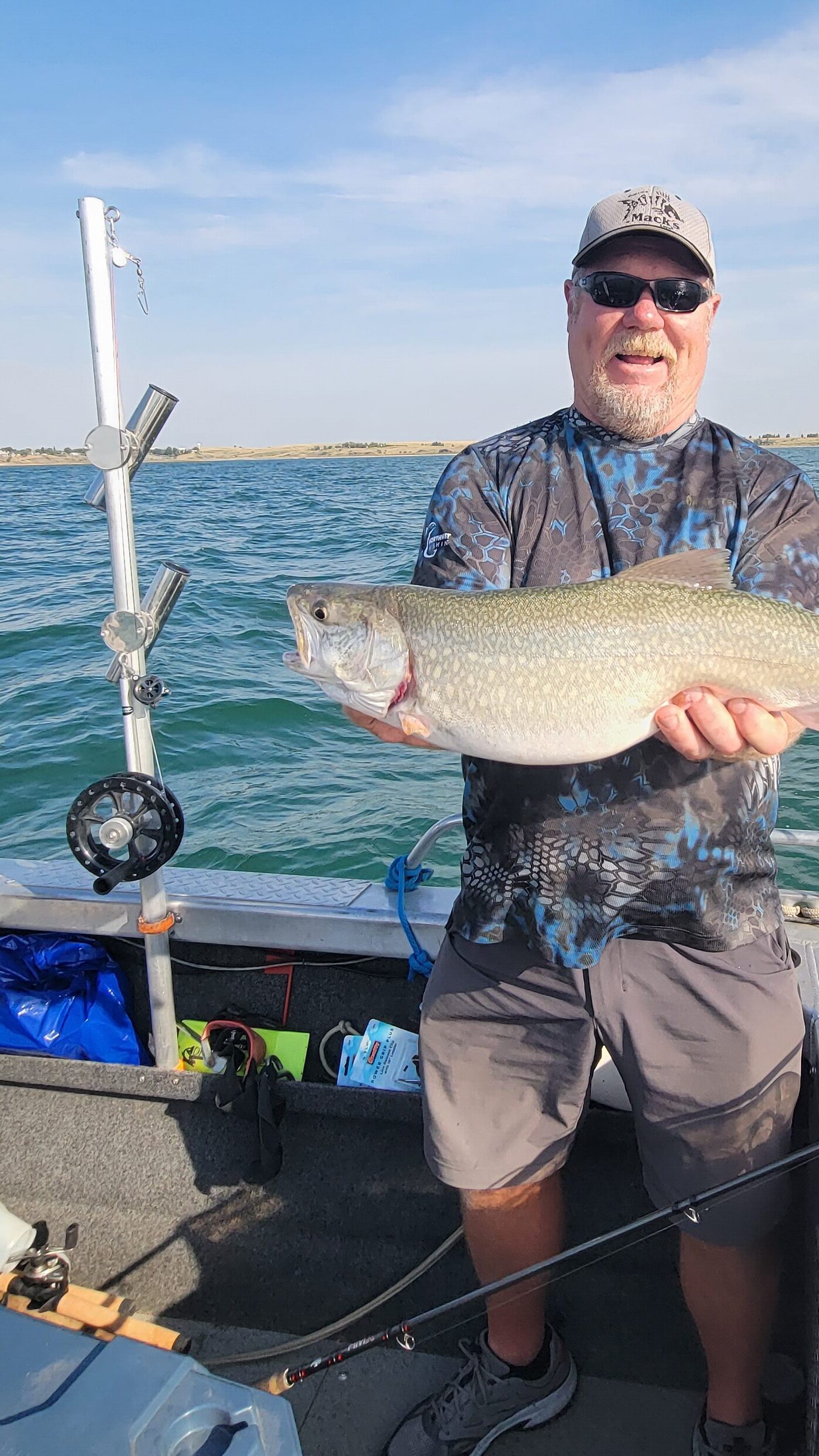
For some people seeking out fishing destinations, the adventure of getting there is more than half the fun. Fort Peck Montana is nearly 1000 miles from Seattle and a 15-hour drive straight through. It is so far East it’s not really PNW anymore. The road to Fort Peck has its share of roadside attractions, beautiful scenery, and fun stops if you plan your time accordingly. If your 5-star fishing destination means a nice long road trip, you should put Fort Peck on your list.
Why Fort Peck? Last year a new state record came out of Fort Peck that caught the attention of anglers across the U.S.. You might be surprised that the record was for Chinook Salmon, a 32.62 Chinook to be exact. That’s a nice fish anywhere! And travelling across the northwest to this unlikely spot for a chance at 30 pound plus Kings is what makes this one of our 5-star destinations. The fishing opportunity doesn’t stop with salmon at Fort Peck, Walleye, Sauger, Northern Pike, Lake Trout, and Small Mouth Bass all abound in one of the most beautiful, uncrowded fishing destinations in the United States. And from experience, they grow them large in Big Sky country!
Fort Peck Reservoir is a big lake (about 134 miles in length, 1520 miles of shoreline, and roughly 220’ deep when full) created by the Fort Peck Dam on the Missouri River, and boats are recommended but there are a lot of marinas and campgrounds to plan your trip around with many having shore fishing opportunities. Glasgow, Montana serves as a good base camp with various lodging, restaurants, and re-supply options and is just 17 miles from the Fort Peck Marina. The Cottonwood Inn & Suites has a variety of options for lodging; from RV Parking to hotel rooms, and amenities include boat parking, a casino, and restaurant.
You can learn more about Fort Peck, and how to fish it at https://fwp.mt.gov/fish
Lake Pend Oreille, Idaho
North Idaho Trophy Hunting
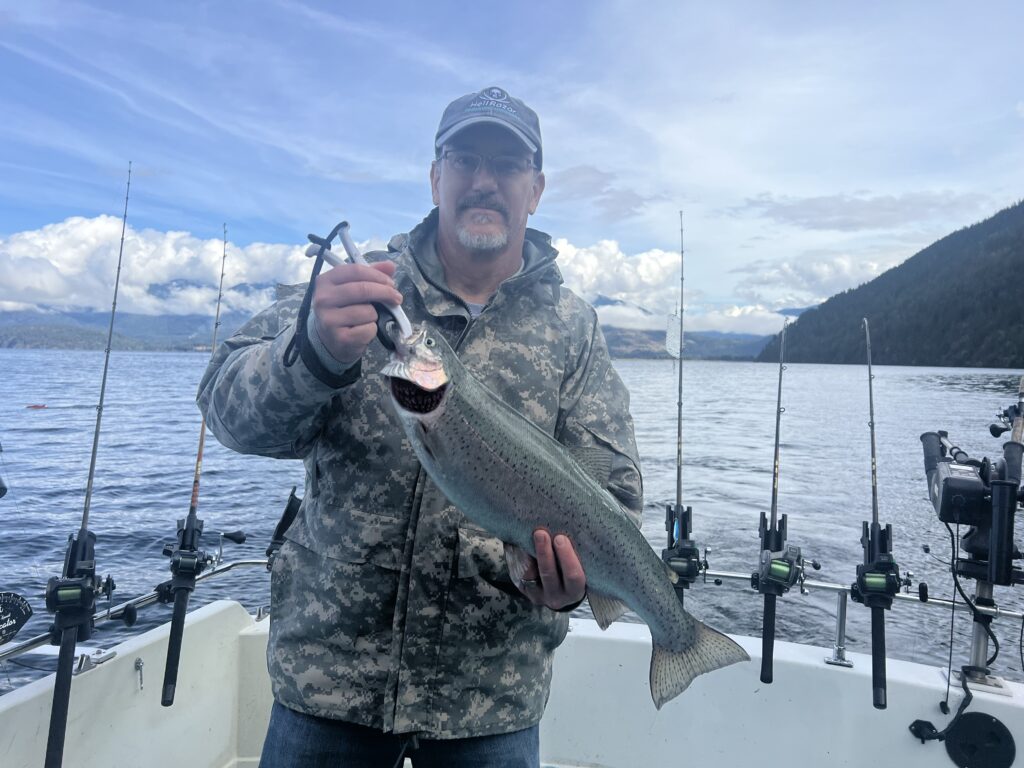
Lake Pend Oreille is the largest lake in Idaho and in the top 50 for the U.S.. It is really deep (over 1000 feet in some areas) and is known for naval submarine testing. This is beautiful country, with a host of fishing options, but what many come for are the Kamloops. Kamloops are a Gerrard strain of rainbow trout and that are known as some of the biggest trout around, and are highly sought after to round out an avid trout anglers trophy checklist. Your chance for “Big fish” is what makes Lake Pend Oreille a 5-star fishing destination.
The Idaho state record Kamloops rainbow trout was caught out of Pend Oreille in 1947 by Wes Hamlet in 1947. That’s a long time for a record to hold up, but that doesn’t stop anglers from pursuing glory every year in tournaments, by boat, and from shore. Pend Oreille is also home to massive schools of kokanee (a favorite food of the Kamloops), and populations of pike, bass, perch, walleye, crappie and mackinaw. The lake has a history of big fish taken from it in addition to the trout record, these include a 43-pound 6-ounce mackinaw in 1995, and a world record 32-pound bull trout in 1949.
The idyllic town of Sandpoint sits on the shores of Lake Pend Oreille, nestled in forests between the mountains and the lake. A destination town for skiers in the winter and boaters in the summer, Sandpoint is a great home base for the family fishing destination vacation with some boujee amenities not too far from some small town, rustic escapes. The theme park, Silverwood, is less than 30 minutes away. If you’re looking to plan a trip with something for everyone, shopping, hiking, dining, and trophy fishing, Sandpoint and the neighboring town of Ponderay are great options.
The word is out, and the popularity of the area has grown immensely for so plan ahead! Jeff and Mona Laybourne of Superfly Tackle not only operate the local tackle store and carry everything you need, but they make specialized gear to target the lake’s prized trophies. They are a wealth of information and can be reached online at https://superflyflies.com/.
Clearwater River, Idaho
Steelhead Mecca
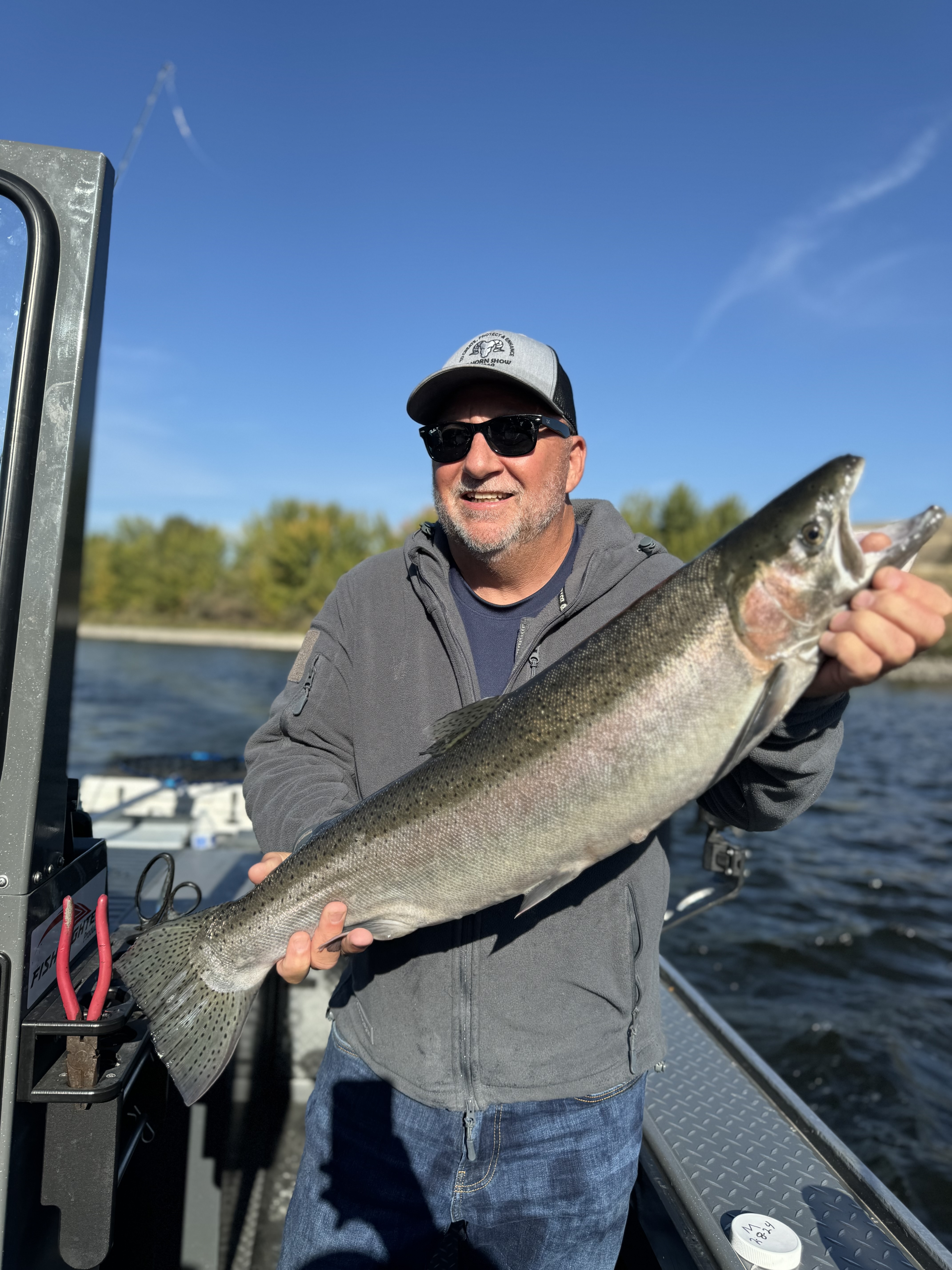
Arguably the most consistent steelhead fishing in the region and your best shot at steelhead retention (catch and keep), the Clearwater River’s retention steelhead season runs from early October to mid-April, with prime time being October through January. You can be at this steelhead promise land in just under 6 hours from Seattle.
The river draws steelhead enthusiasts from around the northwest, offering outstanding opportunities for catch-and-release fishing, fly fishing, shore fishing, and of course drift boats and power boats. The Clearwater’s “B-run” may be the best bet in the region for a trophy 20 pounder, and B-run fish typically average 12-14 pounds. Many of the fish originate at the Dworshak National Fish Hatchery managed by the Nez Perce tribe of Idaho, located at the confluence of the North Fork and mainstem Clearwater, about 3 miles west of Orofino, Idaho.
While the epic steelhead fishing and amazing stretches of highly fishable water make this a 5-star fishing destination, the Clearwater is not a one trick pony. The Dworshak hatchery bolsters catch and keep chances for King and Coho salmon with sustainable fish production goals. Coho were declared extinct in the river in 1986, but this year there was an overlapping sport season for Coho, Kings, and Steelhead! These October days are prime time and can be some of the most amazing, quality, days of an angler’s life. With returning Coho averaging 8-12 pounds, 10 to 20 pounds plus Chinook, and those amazing B-run in the river at the same time, pandemonium has been the theme more than once! Recent years have seen spring run Chinook seasons as well.
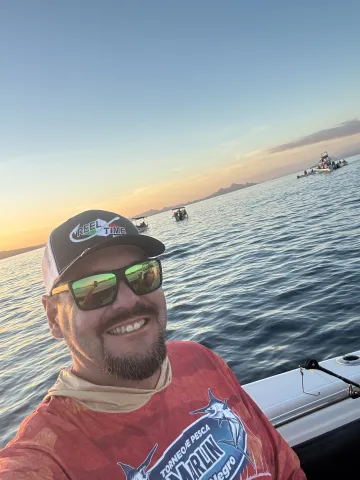
This adventure is really about the fishing and those special days on the water. There are a variety of options in the area for shore fishing, multiple boat launches, and some great area outfitters. Many folks skip the hassle of pulling the boat and learning the river, instead walking onto a guides boat and getting right into the hot spots. Many of these area professionals provide a “hot lunch” as well, and around noon you can smell burgers and brats all around the river. Guides we recommend in the area include Toby Wyatt of Reel Time Fishing https://reeltimefishing.com, Kyle Jones of Jones Sport Fishing https://jonessportfishing.com, and Adam Hocking of Steel Dreams Guide Service https://steeldreamsfishing.com. For lodging Lewiston, Idaho has all the amenities with the Hell’s Canyon Grand being our usual choice. Orofino, Idaho, has several good options as well.
Potholes Reservoir, Washington
Walleye Wonderland
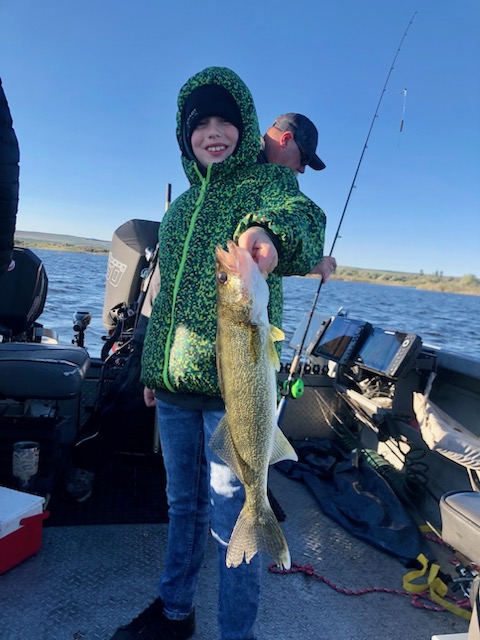
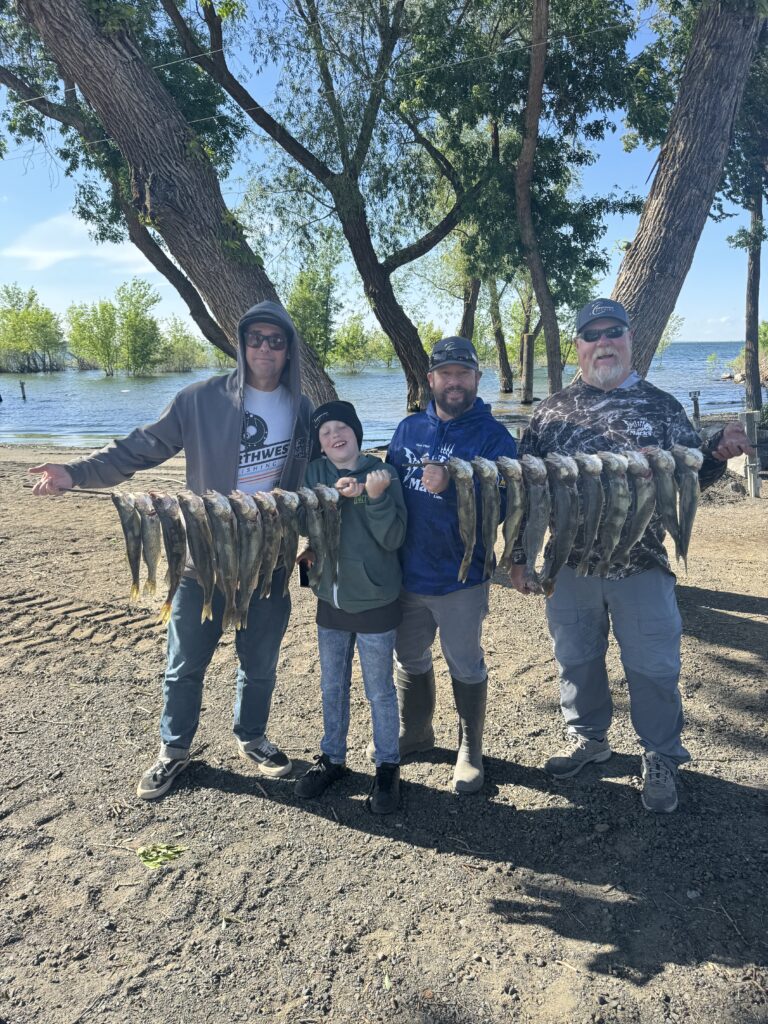
Not everyone’s into walleye, but if you are, Potholes Reservoir should be on your list. Located about seven miles south of Moses Lake in Central Washington, Potholes Reservoir offers year-round fishing opportunities for walleye, smallmouth bass, largemouth bass, and panfish. Dinner plate bluegill are not unknown and last year there was some great rainbow fishing.
The lake is large and shallow, with most of the lake less than 30 feet deep. What used to be, and still is to some extent, a large collection of sand dunes, is now a one-of-a-kind regional destination for bass and walleye anglers and recreation of all sorts. Part of the Columbia Basin Irrigation Project, multiple tournaments are held on the Lake annually, most held at the MarDon Resort Marina.
With over 300 days of sunshine, MarDon is popular as a destination for families, and vacationers nearly year-round (boating, camping, resort events, wildlife & birdwatching), with the Fall and Winter offering excellent waterfowl hunting opportunities. The resort has a variety of lodging opportunities from big RV spots and campsites to beach houses and cabins, you can customize your Potholes Lodging experience to your needs. The marina offers quick access to the Lake, and the restaurant and resort store means you don’t really need to go anywhere.
The consistent walleye fishing, and the flexibility to tailor the trip to whatever you’re looking for is what makes this a 5-star fishing destination. Walleye are delicious table fare, and the big boys can offer a surprising fight. Nothing beats a mess of walleye grilled up after a day of fishing with one of those epic Potholes sunsets on the horizon.
You can fish from the shore or the marina dock, launch your boat, rent a boat, or hire a local guide to experience Potholes Reservoir Fishing. Shelby Ross of Ross Outdoor Adventures is the resident expert on lake conditions and where the fish are.
To learn more about MarDon Reservoir visit https://mardonresort.com/ to contact Shelby Ross of Ross Outdoor Adventure visit: https://rossoutdooradventures.com
Zeballos, BC
Trip of a Lifetime
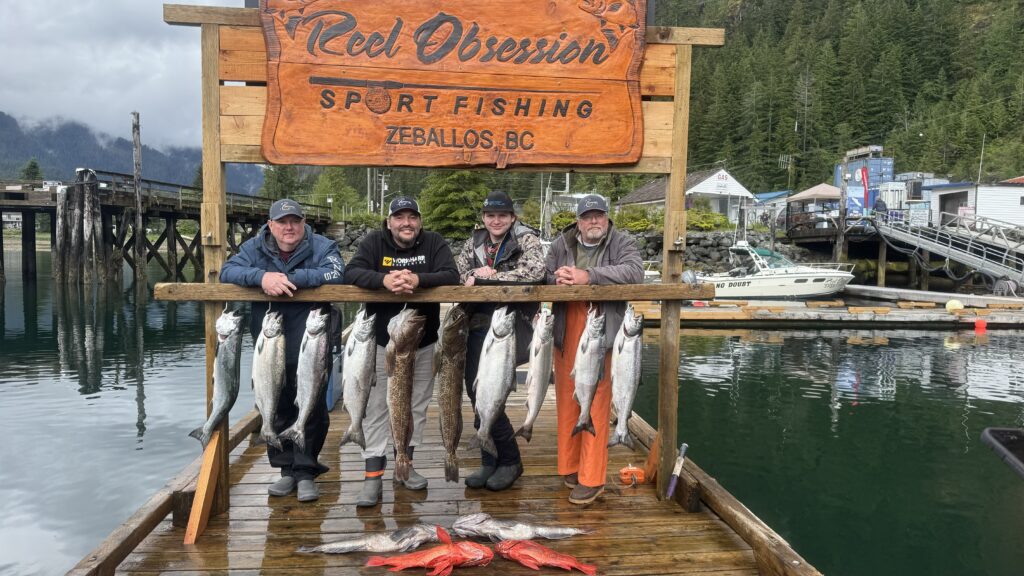
This one is for those people who want the ultimate PNW fishing experience. You want salmon, you want halibut, you want the smell of saltwater and rugged untouched shorelines. This destination is not for people that one shopping, nightlife, and dance clubs. When you pull into Zeballos, BC you drive into the past. There’s one thing to do: Fish, Eat, Sleep, Repeat.
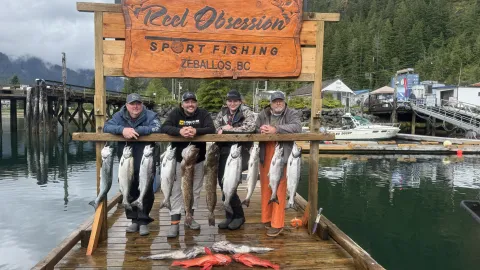
There’s one primary business in this town: Reel Obsession Sportfishing. Zeballos is about halfway up the west coast of Vancouver Island in British Columbia. It looks just like the coastal parts of the PNW. On the drive up (about 4 1/2 hours from the ferry in Nanaimo) there are towering Cedars and Firs, jagged mountains and pristine streams. There aren’t any mini-marts though. This trip is all about decompressing and enjoying some of the consistently best all-around salmon & halibut fishing in the region, and the team at Reel Obsession is obsessive in providing an unforgettable experience for their guests.
From the time you arrive until you depart, they have thought of everything. Wonderful accommodations, amazing chef prepared meals, top quality boats, gear, and equipment, and off the hook fishing is what makes this a 5-star fishing destination. Owners Adrian and Angie O’Connor have grown their operation to include up to 30 guests daily with groups of two, three, and larger visiting for three- or four-day inclusive trips. Guests start their day with breakfast in the common room then head for the boats, lunches already onboard, after eight hours of fishing your captain returns you to the dock. Fish are filleted, vacuum packed, and flash froze – all while you enjoy the latest chef’s creation. Then you wake up and do it again.
Located at the end of Esperanza Inlet which leads to Nootka Sound and then the Pacific Salmon Highway, fishing from Zeballos allows multiple options to intercept salmon, access to reliable halibut grounds, and the chance at ling cod and bottom fish nearly every trip. Later in the season Albacore Tuna trips are possible as are the chances for the prized Tyee Salmon (30 pounds or larger).
U.S. guests are limited to specific travel limits which usually fill a good cooler. Reel Obsession books up fast each season, we recommend you reach out to them early to plan your destination fishing adventure. For more information about Reel Obsession visit https://reelobsession.ca
/articles/five-5-star-fishing-destinations