Black Friday Trout
Sure, the weather outside is frightful at this time of the year, but that won’t stop thousands of anglers from skipping out on the shopping malls and opting to go trout fishing instead!
“The holidays are great to spend quality time outdoors with family and friends, avoid the mall shopping madness and maybe even catch a fish,” said Steve Caromile, the Washington Department of Fish and Wildlife (WDFW) Inland Fish Program manager.
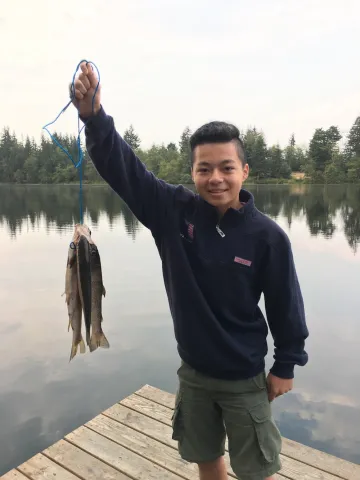
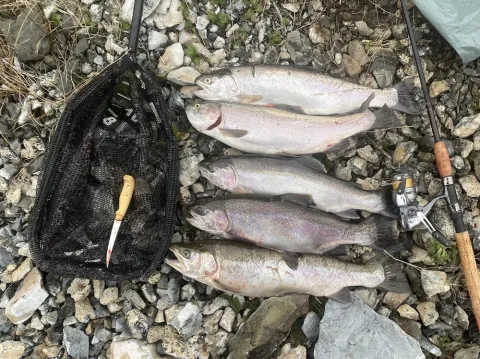
The fishing wish list just grew twofold as WDFW hatchery crews have been busy leading up to Black Friday by shuttling 64,350 jumbo-sized rainbow trout, averaging 1 to 2 pounds apiece, into 25 lakes around the Puget Sound region and southwest Washington, as well as several Eastern Washington lakes and ponds.
The Black Friday program, created more than a decade ago by WDFW, came up with a creative way to stock thousands of rainbow trout for a late-season fishery in year-round lakes. The post-Thanksgiving holiday fishing option has been a hit for anglers looking to wet a line at a time when the choices are sparse.
In October, a good number of other year-round lakes around Washington were also planted with trout for anglers who want to head before Thanksgiving. You can find trout stocking information that is usually updated weekly by going to the WDFW webpage at https://wdfw.wa.gov/fishing/reports/stocking.
Black Friday trout plants include:
- Chelan County: Roses, 20,000
- Clark County: Battleground, 2,000; and Klineline, 2,000.
- Cowlitz County: Kress, 2,000.
- Island County: x-Cranberry, 4,000.
- King County: x-Alice, 1,000; x-Beaver, 2,500; and x-Green, 5,000.
- Klickitat County: Rowland, 2,000.
- Lewis County: Fort Borst Park Pond, 2,000; and South Lewis County Park Pond, 2,000.
- Pacific County: Cases Pond, 300.
- Pierce County: American, 2,000; and Tanwax, 1,350.
- Snohomish County: x-Ballinger, 3,000; x-Blackmans, 1,500; x-Gissburg Ponds, 1,500; x-Silver, 3,000; and x-Tye, 2,000.
- Thurston County: Black, 3,000; Long, 1,000; and Offutt, 1,000.
- Yakima County: I-82 Pond #4, 2,000.
(x-Around 50% of the planned trout stocking occurred in October in the noted lakes, and the remainder will be stocked in time for Black Friday)
There are four Eastern Washington lakes opening on Black Friday that were stocked with trout fry this past spring that should be averaging 8 to 10 inches, plus some other larger fish were stocked of late.
Eastern Washington lakes trout plants include:
- Stevens County: Hatch Lake, 15,000 fry stocked in May, and 600 trout averaging 1 pound apiece stocked in October; and Williams Lake, 12,000 fry stocked in May, and 1,500 trout averaging a quarter pound apiece stocked in mid-April.
- Adams/Lincoln County: Fourth of July Lake, 60,000 fry stocked in May, and 18,000 trout averaging a quarter pound apiece stocked in mid-April.
Spokane County: Hog Canyon Lake, 20,000 fry stocked in May, 10,000 trout averaging a quarter pound apiece stocked in mid-April, and 1,600 trout averaging 1 pound apiece stocked in October.
Before you go
When fishing for trout, don’t overthink the necessary fishing gear.
A basic trout rod and reel averages $50 to $90, and a higher-end set is about $100 to $200. The rod should be light and limber in the 6 to 7 foot range with a 4- to 10-pound line weight range. A medium-sized spinning reel with a capacity to hold more than 100 yards of 6- to 8-pound test fishing line will do the job right.
From the mainline, attach one or two number 8 or 9 egg sinkers with a rubber bumper just above a small barrel swivel. Avoid the cheap store-bought pre-tied 12-inch leaders that are way too short in length. Either tie your own leaders or spend a few extra dollars on pre-tied versions in 3- to 8-pound test that measure 18 to 30 inches long. A smaller size 12 or 14 egg hook is the best choice when using a moldable dough bait or nugget, salmon eggs, worm pieces, or maggots. For live bait such as a whole worm, nightcrawler, or marshmallow, the optimal hook size is a size 8 or 10 worm hook. If you use an artificial fly, the stick with a size #14 hook or smaller. A hook that is too big or exposed may scare away the fish, and one that is too small may result in fewer hook-ups. Lastly, make sure your hooks are sharp and sticky.
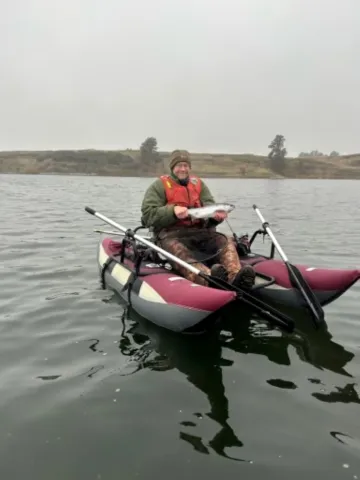
Most anglers casting from the banks or in a boat will stick with the popular moldable dough baits, which come in a variety of colors, and some are shaped like a salmon egg, marshmallow, maggot, or worm. The old school baits include salmon eggs, worms/nightcrawlers, maggots, and marshmallows.
From a boat troll a gang-flasher with a hook tipped with a piece of worm, maggot, or salmon egg, along with a tiny piece of scented dough bait or a liquid scent. A small spoon or spinner also gets its fair share of bites.
From the shoreline, cast out a small-sized bobber with your bait sitting just below the surface in 3 to 8 feet of water. Others like to go deeper, where it hangs just a few feet off the bottom, where the larger-size carryover trout lurk. Recently planted trout tend to hang around near or just under the surface of the water at depths of 3 to 10 feet. Once the stocked trout acclimate, they’ll eventually spread out and move into deeper areas of the lake. Anglers often look for schools of trout right where the hatchery truck placed them, usually near the shore, boat ramp, or dock areas.
Trout like to rise to the top of the water column to gobble up insects on the water’s surface. This is where artificial flies come into play, like a Woolly Bugger in black, dark green, or black-olive in a size 8 or 10 with a 5- or 6-foot leader. They can be cast from shore or trolled weightless close to the surface behind a boat or floating device.
A fishing license – https://fishhunt.dfw.wa.gov/login – is required for anyone age 16 or older. A Discover Pass – https://wdfw.wa.gov/licenses/parking – is required to park a vehicle at many state lands, including the state park system, WDFW lands, and the Department of Natural Resources lands.
The Washington State Parks and Recreation Commission Boating Program –
https://parks.wa.gov/find-activity/activity-search/boating – would also like to remind anglers to take a boater safety education course, if you haven’t already, to be prepared for spring and summer. In Washington, boaters who operate a vessel with a 15-horsepower engine or greater must carry a Boater Education Card to prove they passed an accredited boating safety education course.
/articles/black-friday-trout
10 Western Washington Opening Day Favorites
By Hannah Pennebaker
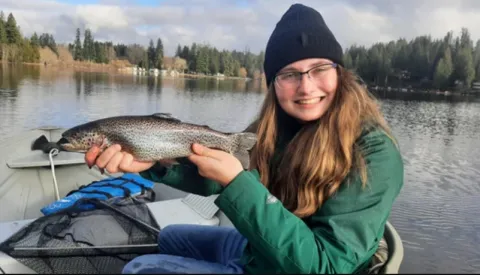
Is it that time of year already? That’s right, go dust off the trout rods and dig out those jars of dough bait! The 4th Saturday in April traditionally marks the opening day of many lowland lakes in Washington State. Many anglers anxiously look forward to it and count the days down on their calendar. WDFW stocks hundreds of lakes with thousands of catchable size rainbow trout in preparation for this event. Freshly stocked trout are often willing biters and scrappy fighters, perfect for kids or those new to fishing. Here’s a list of my favorite lakes to hit on opening day in Western Washington. See if your favorite is on the list, or maybe plan to try a new one this year!
Clear lake
Clear Lake will always have a special place in my heart; it’s where I learned how to troll for rainbow trout. I have many fond memories of warm spring days spent cruising around the lake, kicking back and watching the rods go off. Only about 15 minutes away from the city of Puyallup, this lake has an outstanding view of Mt. Rainier on a nice day, and it truly is a crystal-clear lake. 99% of it is private property, so bank anglers will probably do better at Tanwax Lake, just down the road. There is a pay to fish dock there and plenty of shore access at the boat launch on the south end of the lake. A word of warning, it’s best to fish Clear Lake early in the morning. By about noon, especially on a nice day, the lake can become a washing machine for pleasure boaters and jet-skiers. You can either troll or still fish on this lake. Green dough bait is always killer! The key is to troll slowly and keep an eye on your fish finder. This lake is surprisingly deep, but shallows up quickly, so be prepared to pull up your gear if needed.
Harts Lake
Harts Lake is unique simply for its wide variety of fish species. Come here for the rainbow trout, and stay for the channel catfish, brown bullhead, pumpkinseed, crappie, and bluegill. It is small and shallow: perfect for small boaters and kayakers. The rainbows seem to hug the boat launch during the early season, but spread out as time goes on. Try targeting the edges of the lily pads that surround the lake. There is a little tackle shop on the lake where you can buy worms or a cold drink. The owner is very nice and loves showing off the photos of customers with 15 pound channel catfish caught off his dock! You can pay to fish off his dock or try your luck off to the side of the boat launch for free.
American Lake
Located next to JBLM, this lake is renowned around the state for its plentiful jumbo size rainbow trout. There’s also a chance you may hook into a kokanee; the lake is planted with thousands of them every year. There is a good amount of shore access around the lake in the form of boat launches and parks, but check to see if they are military only first. You don’t want to be turned away at a military checkpoint like we were the first time we tried to fish there! The lake is large, so there is plenty of room to spread out and get away from other boaters. Finding the fish can be a little tricky, so don’t be afraid to pull up your gear and motor over to try new spots.
Rapjohn Lake
Don’t be fooled by the tiny size of this lake, it’s a great producer of rainbow trout throughout the season! The boat launch is pretty barebones, so don’t expect to launch more than a small boat or kayak here. This is one of our favorite lakes to take our inflatable boat out on when we don’t feel like gassing up the Smokercraft. Dough bait and eggs work very well on this lake, as do worms under a bobber. This is a very kid-friendly place to fish since the vast majority of fishermen use small aluminum boats powered by electric trolling motors or oars. There is a decent amount of shore access at the boat launch and kids can do very well casting out a chunk of green or orange dough bait.
Mineral Lake
Any list of the best trout lakes in Washington State would be incomplete without Mineral Lake. This lake boasts not only trophy rainbow trout, but brown trout as well. It is unique among Western Washington lakes in that it is stocked with thousands of fry every year, which grow to impressive sizes thanks to the rich forage available. WDFW also supplements the fry with catchable size rainbows and browns before opening day. There is a boat launch, tackle shop, resort, and a pay to fish dock off the side of the lake. The dock can get crowded with swimmers during peak season, so it’s best to get there early. It’s no secret how good the fishing at this lake can be, so expect to have company at the boat launch on opening day.
Riffe Lake
Riffe Lake might be more well-known for its land-locked coho salmon, but a few years ago thousands of triploid rainbow trout were planted there. These trout are reaching the 14 to 20-inch range, and they put up plenty of fight! The coho salmon are perfectly willing to bite rainbow trout gear, so expect to come home with some of those too. Trolling is the name of the game here. Try trolling faster in the morning, when the fish are more active, and slower in the afternoon. Small spinners such as Mack’s Wedding Rings take a lot of fish here. You can pull them behind lake trolls or small dodgers. There is some shore access near Mossyrock Dam and at Taidnapam Park. Most shore anglers fish pieces of shrimp or worms under a bobber. Be cautious when fishing Riffe, the lake is deep and wide, and afternoon winds can kick up to dangerous levels.
Black Lake
Black Lake is located near Olympia, and, like Harts Lake, boasts a wide variety of fish species. There is public shore access at the boat launch and park. The lake is long but shallow, so trolling can be difficult. Long lining in the early season can be very productive. This is one of my favorite lakes to cast out small spinners and spoons. The fish will gladly gobble up worms, corn, or dough baits as well. If you don’t have any luck with rainbow trout, you can always try targeting the vast amounts of crappie and bluegill in this lake.
Swift Reservoir
Though it’s more off the beaten path than the other lakes, Swift Reservoir shouldn’t be overlooked. If you do make the drive, you’ll be rewarded with unbeatable views of the surrounding mountains and forests. This is a peaceful, beautiful lake, and the fishing can be just as amazing. I highly recommend trolling on this large, deep reservoir. Wedding Rings pulled behind lake trolls are deadly effective. Don’t be afraid to tip your spinner with a piece of corn, worm, or shrimp. Try trolling near the dams to start out with. Launching can be difficult/impossible if the water level is drawn down too low, so make sure to call and check the water level before heading out (the phone number is listed on WDFW’s Swift Reservoir webpage).
Lake Meridian
Unlike Swift Reservoir, Lake Meridian is an urban lake, surrounded by houses. It can get crowded on a nice day! But this lake has good populations of rainbow trout and kokanee, and shouldn’t be overlooked. Most fishermen will anchor up and throw out their offering on a bottom rig with a sliding weight. There is a fishing pier and shore access at the boat launch. Every year, fishermen get some nice holdovers from the year before. Try fishing a bit deeper and increase the size of your offerings to target these larger fish.
Lake Sammamish
Though this lake is open year-round, April is a great month to fish it. This is Western Washington’s premier cutthroat trout lake! Small plugs stuffed with tuna, spinners, and spoons all work well here. Troll faster than you would for rainbow trout, and remember to target structure, such as points or coves. Switch up your techniques and tackle until you find out what the fish want that day. Cutthroat trout are highly predatory, but can be surprisingly fickle. Have fun catching these fish, they are incredibly athletic and often jump when you’re reeling them in!
No matter where you decide to fish, make sure to follow all the proper safety rules, and don’t forget to renew your fishing license. Check out our YouTube channel, Northwest Fishing, for videos on many of these and other opening day rainbow trout lakes. We hope to see you out there!
/articles/10-western-washington-opening-day-favorites
5 Family Friendly Trout Lakes in Western Washington
With opening day of the Western Washington Lowland Lake opener in the rearview mirror, many of us are looking for future lake fishing opportunities. Let’s take the family fishing! Following are a list of 5 family oriented Northern Washington trout/kokanee fishing adventure lakes. One of them, Lake Samish, would be a day adventure. The other four could be a multiday family camping and fishing expedition. All offer at least one boat ramp and shore fishing, a fishing pier, or both. This article will focus on opportunity, and not necessarily technique. All the lakes offer opportunities for trollers, bait soakers, and even fly fishers. That said, pack up the family, a frypan, maybe the sleeping bags, your favorite gear, then hit the road!
Cranberry Lake (Island County)
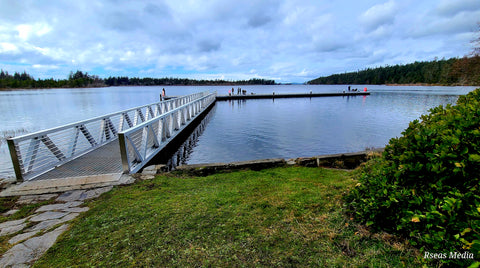
Cranberry Lake is located within the boundaries of Deception Pass State Park. There are multiple shore fishing access points and a very nice fishing pier. There is also a small boat ramp with very limited parking. If you are boating, internal combustion engines are not allowed on Cranberry Lake. You can use an electric motor but oars, paddles, or peddle power are perfect.
At 133.9 acres, Cranberry Lake hosts rainbow trout, coastal cutthroat trout, and an occasional brown trout. I’ve heard that that there are also smallmouth bass and perch in the lake but I’ve never seen anybody fishing for them. No picture, but when I was a teenager (Boy Scout camping trip) I caught a huge brown trout from one of the large boulders by the campground. The brute hit a worm/corn/marshmallow combo.
Not really sure why, but I love fishing Cranberry Lake. Although it is not, to me it feels like you’re fishing some remote lake in the Canadian wilderness. Be aware though, NAS Whidbey is right next door. There may be military aircraft doing maneuvers right overhead. I am in awe anytime one of the Navy aircraft are overhead but not everybody feels that way. It’s the sound of freedom!
If you’re not familiar with Deception Pass State Park, it is an absolute recreational gem. There are multiple well separated campsites, miles of hiking trails, and 77,000 feet of saltwater beaches to enjoy. Across Highway 20 from the lake, there is even a large saltwater boat launch with moorage. It’s not really mentioned anywhere, but in season you can fish for dungeness crab and smelt from the moorage floats. On the west side of the park, the sunsets from West Beach can be spectacular.
https://wdfw.wa.gov/fishing/locations/lowland-lakes/cranberry-lake
https://www.parks.wa.gov/497/Deception-Pass
Lake Samish
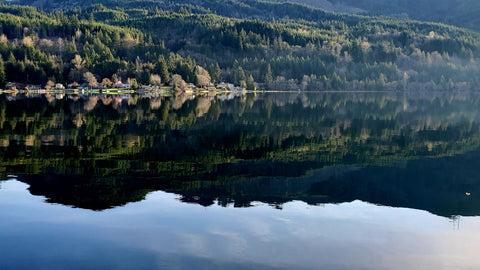
At 809.9 acres, Lake Samish is open to fishing year-round. It is managed as a multi-species lake, offering coastal cutthroat, large and smallmouth bass, crappie, brown bullhead/catfish, yellow perch, and excellent kokanee populations. I can personally attest that there are also largemouth bass and brown bullheads in the lake. The lake consists of a smaller lake connected to a larger main lake by a narrow channel. The larger main lake has significant weedy shallows at the south end and a max depth of 60 feet or so. The smaller lake located at the west end of the two-lake chain is up to 150 feet deep and maintains a large pocket of cool water throughout the late summer and fall. The cool water effectively extends the Lake Samish kokanee fishery when other west side lakes are too warm to support a fall kokanee fishery.
In late April-June, Lake Samish can be red hot kokanee fishing, easily giving up limits of fat 12”-16” kokanee. One of our biggest local kokanee came out of the smaller lake during a mid-October trip a few years back. It hit our old school gear running 2 colors on the lead line, 40’ of 8-pound leader, a rainbow color kokanee gang troll, and an orange wedding ring spinner tipped with a maggot. The fish was nearly 3 pounds and was in full spawning colors.
While the kokanee fishery is a trolling show, there is a fishing pier at Lake Samish Park. The fishing pier catch is primarily coastal cutthroat and peamouth chub. Lake Samish Park offers a couple of well-groomed picnic areas, a swim beach, hiking trails, and seasonal boat rentals. The park is the perfect place for a family outing and picnic with a little fishing thrown in.
An AIS Permit is required for every boat operating on Lake Samish. Here’s a few words about the AIS program at Lake Samish. Aquatic invasive species are non-native plants, animals, and pathogens that live primarily in water. They thrive in a new environment and cause economic loss, environmental damage, and harm to human health and property. An Annual AIS Permit and a per use boat inspection is required to operate your boat on Lake Samish. Whatcom County maintains an AIS inspection station at Lake Samish.
Boat inspections are important because they can help to prevent the transport of aquatic invasive species to Whatcom County lakes. AIS are transported on boats travelling from infested waters and can result in significant impacts to lake ecosystems, water quality, and water supply infrastructure. AIS can also make shoreline areas hazardous and uninviting for recreational users and property owners. To prevent the introduction, AIS inspectors are on the lookout for any animal or plant material on the watercraft that might pose a risk to Lake Samish. They will also be checking to see if your boat has been cleaned, drained, and dried, as some aquatic invasive species larvae can be transported in any areas on the boat that remain damp or have standing water in them. Inspectors will also conduct a physical inspection of the outside of your boat to feel for any signs of mussel larvae, algae, or other organic material on the hull that could pose a risk to the lakes.
As currently planned for 2023, Whatcom County will be staffing the inspection station at the Lake Samish WDFW Boat Launch. The AIS program is sensitive to the needs of anglers participating in the kokanee fishery at Lake Samish. They are planning/budgeting to staff the inspection station 5:30am-8:30pm 7 days a week. Although the AIS inspection program will be a bit of an inconvenience, having AIS inspectors on-site at Lake Samish will help to reduce the unfortunate vandalism problem at the Lake Samish WDFW launch.
On a similar note: Boat motor labels must have at least one star to operate on Lake Samish. Generally, any motor that is certified and labeled as meeting the 2006 or later model year United States EPA emissions standard will be compliant.
https://wdfw.wa.gov/fishing/locations/lowland-lakes/lake-samish
https://www.whatcomcounty.us/3542/Samish-Park
Silver Lake – Whatcom County
157.3 acre Silver Lake in Whatcom County is another unique recreational opportunity. It is a family friendly destination with camping, good trout fishing, and a WDFW boat ramp. The WDFW boat ramp is located at the north end of the lake and has ample trailer parking. The fishery is primarily for planted rainbow and coastal cutthroat trout. Even though the average depth is only 24 feet, holdovers are not uncommon. The fishery is friendly to whatever trout fishing style suits your style, but don’t be afraid to soak some dough bait.
Silver Lake Park is a large Whatcom County Parks and Recreation facility on Silver Lake. The park has 3 campgrounds and a RV accessible group campground. There are also cabin rentals, a handful of hiking trails, a playground, multiple picnic areas, an equestrian center, seasonal boat rentals, and a small boat launch that is probably best suited for hand carry boats.
https://wdfw.wa.gov/fishing/locations/lowland-lakes/silver-lake-whatcom
https://www.whatcomcounty.us/3517/Silver-Lake-Park
Fish Lake – Chelan County
Another family friendly trout destination is Cove Resort on 492-acre Fish Lake in Chelan County. For whatever reason it is probably better known for its winter, hardwater perch fishery but it hosts a solid spring and fall rainbow trout fishery. The lake also has a few respectable brown trout available. The brown trout fishery is kind of a specialty, but if you stick with it there are some true trophies cruising around, just waiting to be caught. In an interesting twist, the WDFW has been experimenting with kokanee fry plants in Fish Lake and it seems that there is blossoming kokanee fishery at hand. The lake also hosts a spring fishery for largemouth bass along with a year-round perch fishery. Access to the lake is primarily through Cove Resort.
Cove Resort is operated under a Forest Service private concession. You can bring your own boat: Cove Resort has a boat launch and moorage. They also have a store, boat rentals, a fishing dock, cabins, and a large campground.
https://wdfw.wa.gov/fishing/locations/lowland-lakes/fish-lake-chelan
https://www.coveresortatfishlake.com/
Lake Pearrygin
183-acre Lake Pearrygin is another first-rate choice for a family outing. There are 4 boat ramps, including a WDFW access point/boat ramp, 2 state park ramps, and a ramp at Silverline Lakeside Resort. For the shore fisherman there are many options. The state park alone has 11,000 feet of shoreline and there is a handicap accessible dock.
The trout fishing at Lake Pearrygin can be either fast and furious or just plain good. The seasoned trout angler can pull out the stops and get technical in their approach to the fishery, or, fortunately, anybody can catch fish using dough bait or casting their favorite spinner. A single salmon egg or a small piece of nightcrawler under a float can be deadly. As a bonus, Lake Pearrygin gives up more than its share of fat holdovers each season. Whether your family are trout fishing newbies or experienced trout hunters, Lake Pearrygin is an excellent choice for a family fishing getaway.
Lake Pearrygin State Park has a swimming beach, 169 various use campsites, 2 group sites, and cabin rentals. There are also 6.5 miles of hiking trails and picnic areas. As staffing permits, they offer campfire programs; they are conducted every Tuesday and Thursday night from June 15 - Labor Day. The park also offers a Junior Ranger program for kidlets.
It just keeps getting better; Silverline Lakeside Resort on Lake Pearrygin is a clean, well-maintained resort. They offer RV and tent sites and a group campground. The resort has RVs available for rent, boat rentals, aquatic equipment rentals, propane fire pit rentals, a store, and a small restaurant. If that’s not enough to spark your interest, Silverline Lakeside Resort also has 3 fishing docks, horseshoe pits, a playground, swimming beach, and mini golf.
https://wdfw.wa.gov/fishing/locations/lowland-lakes/pearrygin-lake
https://www.parks.wa.gov/563/Pearrygin-Lake
https://www.silverlineresort.com/
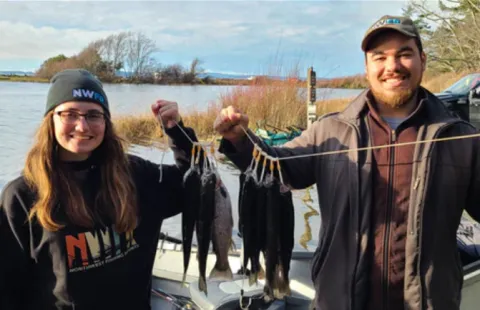
Have a hankering for a family outing and the sizzle of fresh trout in the ole cast iron? If so, add a trip to one or all of these lakes. Cranberry Lake, Lake Samish, Silver Lake, Fish Lake, and Lake Pearrygin each offer a unique family trout fishing experience. With the exception of Lake Samish, there is a campground adjacent to each lake with many of the campsites right on the lake. You better go pick up the phone, or bring up their websites, reservations are going fast!
/articles/5-family-friendly-trout-lakes-western-washington
Carp Bow-Fishing
A slight westerly wind nudged the port-side of my 14’ Smokercraft, sending me into a silent and gentle drift through an endless sea of lily pads. It was a quiet approach, ideal for sneaking up on unsuspecting prey, yet the piercing glare of the setting sun reflecting off the water rendered my eyes almost completely useless. Through a squinting gaze, I struggled to make out what looked like a slight ripple in the water, followed by a dorsal fin breaching the surface. Drawing back on my bow I prepared for what would not only be my last shot of the evening, but possibly the biggest common carp I’ve ever taken with a bow. A twang from the string pierced the silence, and at a 50 lb. draw weight the arrow pounded through the water, gliding right over the top of the fish. A near miss, and only one of many that I will experience when attempting to land carp through arguably one of the most difficult methods of fishing.
Beauty of Bow-Fishing
Bowfishing for carp is the crème de la crème of outdoor activities for those who have an affinity for both fishing and hunting. It combines two beloved pastimes in a way that is both unique and challenging, plus, it fulfills that nagging itch that plagues most hunters this time of year as they eagerly await fall hunting season. Just like fishing with a rod and reel, bowfishing is a game of patience. The beauty of bowfishing however, is that instead of sitting and waiting while you troll your rig under the water or wait for a bit of movement at the tip of your rod, you instead get to spend your time deeply focused as your ears are tuned into the sounds of thrashing water, or carp feeding at the surface. You’re in constant engagement as you scan the water looking for slight movements in the vegetation, or for fish jumping or flapping at the surface, or better yet, for a fish swimming within shooting range.
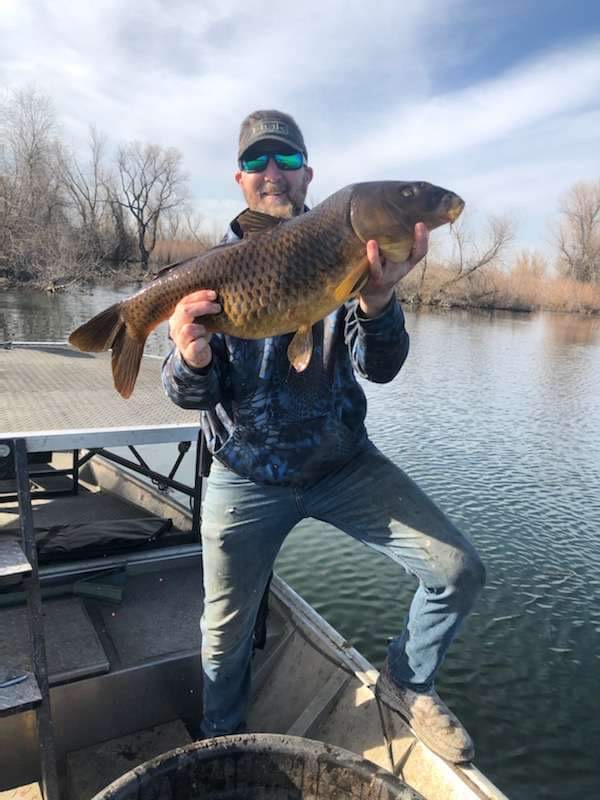
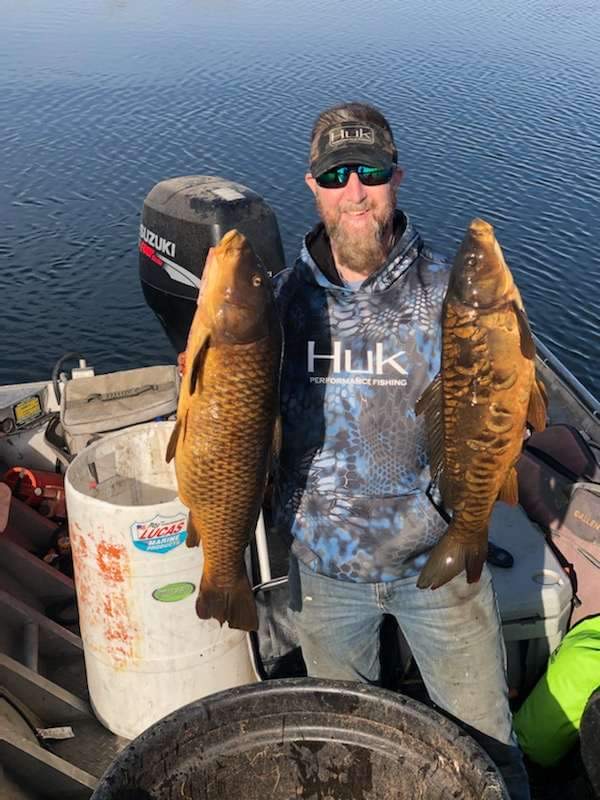
Aside from the large doses of adrenaline that are part and parcel to bowfishing, those who choose this method of taking on common carp also get the added benefit of taking part in lake and river ecosystem restoration. Though carp were introduced by well-intended folks, they are classified by the Washington State Department of Fish and Wildlife as an aquatic invasive species. These fish are highly fecund; with females laying up to 300,000 eggs per spring. Their ferocious appetites result in the removal of beneficial vegetation that would otherwise provide viable spawning habitat for native fish, they increase the amount of suspended solids in the water; causing increased turbidity, and they have been known to have a negative impact on phytoplankton production. Not only is the removal of common carp encouraged in Washington state, its supported to the extent that the WDFW does not require anglers to have a fishing license to catch or shoot them.
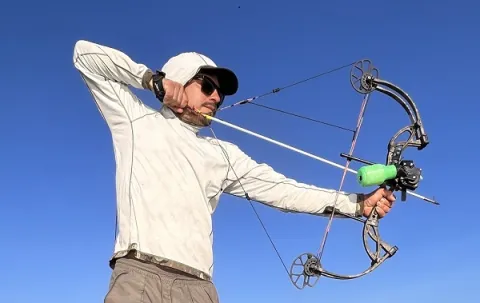
Looking to get into bowfishing for carp? If you’re already an archery hunter, then you’re over halfway there. For under 200 dollars, (at the time I write this) compound bows can be converted for bowfishing with the addition of a bottle reel, an arrow holder, pronged arrows, and some safety slides to prevent fishing line mishaps. Bottle reels are often preferred over spinning reels as they can hold heavier line for larger fish. The downside is that they require you to hand-line in your catch as opposed to reeling. If you own a high dollar bow, there’s a good chance you don’t want it getting banged and bloodied up in the boat, if that’s the case then there are plenty of options out there for bows built specifically for bowfishing.
Technique
Bowfishing is essentially a spot and stalk hunt through the shallows. You can drift slowly in a boat, covering the ground as you move though the water, or you can anchor in a spot where the fish are present and actively feeding on vegetation. Another method is to simply wade in the water and get on your fish that way. Whether in a boat or on foot, the key difference between bowfishing and land hunting is that you won’t be using sights when you aim at your target. Bowfishing, for the most part, is done with instinctive aiming. This means that you look at the target, aim, and shoot. This method takes a bit of practice to become proficient at, but most bow fishermen will find that instinctive shooting comes quite naturally and is a quick and effective way to get off shots.
Light refraction might be one of the biggest challenges you face when first getting started with bowfishing. When light traveling through air hits denser water, it slows down and bends. This causes the perceived image of the fish we see in the water to be above where the fish is actually located. Because of this, you have to aim low to get your shot on target. Like instinctive shooting, adjusting to light refraction takes practice, but as you miss time and time again, you’ll eventually find that sweet spot and gain an intuitive understanding of where the arrow needs to go.
Where To Fish
Common carp can be spotted throughout the expanse of Washington state, although, akin to many of the region's fisheries, the eastern part of the state, east of the Cascades, is where the majority of prime locations for these fish can be found. Here's a compilation of lakes and ponds across Washington State where common carp can be encountered:
Eastern Washington
- Lake Spokane
- Whitestone Lake
- Palmer Lake
- Horse Thief
- Elton Pond
- North Myron Lake
- Zillah Winery Pond
- Soda Lake
- Banks Lake
- Billy Clapp Lake
- Moses Lake
- Evergreen Lake
- Potholes Reservoir
- Hideaway Lake
- Big Bow Lake
- Lake Wallula
- Columbia Park Pond
Western Washington
- Silver Lake
- Horseshoe Lake
- Lake Sacajawea
- Kress Lake
- Vancouver Lake
- Kineline Pond
- Lacamas Lake
- Lake Washington
- Green Lake
- Long’s Pond
- Black Lake
- Blackmans Lake
So, whether you’re an archery hunter who’s spent a little too much time day dreaming about the fall hunt and is just itching to go fling off some arrows, or if you’re an angler who wants to both diversify and add excitement to their outdoor lifestyle, bowfishing for Washington common carp might be exactly what you’re looking for.
/articles/carp-bow-fishing