Trout Fishing Treasures
Eastern Washington State
Eastern Washington State is a paradise for trout anglers during the Fall, with its picturesque lakes and rivers offering some of the finest trout fishing experiences in the Pacific Northwest. In this article, we invite you to embark on a journey through some of my favorite bountiful trout waters of Lake Roosevelt, Waitts Lake, Bonaparte Lake, Rock Lake, and that little urban oasis, Liberty Lake. These 5 distinct fishing destinations in Eastern Washington promise anglers of all skill levels unforgettable moments, breathtaking scenery, and a chance to reel in some of the most sought-after trout species. So, grab your fishing gear, pack your camping supplies, and let's explore these trout fishing wonders of Eastern Washington.
Our adventure begins at Lake Roosevelt, a sprawling reservoir created by the Grand Coulee Dam on the mighty Columbia River. Stretching over 130 miles, this massive body of water provides abundant opportunities for trout fishing. Lake Roosevelt is renowned for its healthy population of Rainbow trout, which can grow to impressive sizes. Anglers flock here in search of trophy Rainbows, and Kokanee.
Springtime and Fall are the golden seasons at Lake Roosevelt. During spring, as temperatures rise, trout move closer to the surface, making them more accessible to both trolling fly’s and even bait rigs. As fall brings in cooler temperatures, rejuvenating the bite and luring trout closer to the shallows, welcoming the excellent opportunities for bank fishing. Camping facilities, beach camping, and boat launches are readily available along the lake’s shores, ensuring a convenient and memorable fishing experience.
Moving over to the Northeast side of the state, we discover Waitts Lake. Just tucked into the hills of the small-town Valley, just off of HWY 395, this lake beckons trout fisherman from all over. This lake has been known for its healthy population of Brown Trout, where they are abundant and can be caught many ways. This pristine, spring-fed lake is also stocked with Rainbow trout, making it an ideal spot for anglers seeking a peaceful escape.
Spring and early summer
Spring and early summer are prime time to fish Waitts Lake as waters warm. But in the Fall, Rainbow and Brown Trout become increasingly active, providing ample opportunities for a successful day on the water. Drifting fly’s, such as a Wooly Bugger, on a casting bubble has always been lights out, as for trolling the familiar setups from spinners to dodgers can also fill the cooler. Don't be afraid to bang the bottom with a simple quarter ounce jig tipped with a worm, very effective for the Brown Trout cruising the bottom for food. Shore anglers have access to 3 different resorts, and docks available to fish from, and can be just as productive as fishing from a boat. Some productive spots to pay attention to are the Southern portion of the lake near the launch, and the Western shoreline.
Onward to almost central of the state, we take a ride to one of my favorite winter lakes to fish. Nestled high in the Okanogan Highlands, Bonaparte Lake offers an alpine fishing experience that's nothing short of magical. Surrounded by lush coniferous forests, this tranquil lake is a sanctuary for both trout and those anglers who seek them. This lake has a campground and a very nice resort that caters to anglers year-round. My favorite time to visit is the winter with the snow and ice, it's just a beautiful place to chase trout.
Bonaparte Lake really comes to life in late spring and late summer into Fall. As the snow recedes and temperatures rise, the lake's trout species become more active, creating a feeding frenzy. Rainbow cutthroat can be the target for many, but there's those who are in search of a big Tiger Trout, or the beautiful Brook Trout, prized for its vibrant colors and feisty nature. The Southern portion of the lake near the creek mouth has always been a go to spot, especially in the winter months. Targeting deep holes adjacent to shelves and breaks can produce large fish year-round. But targeting the southern end near the creek mouth, where submerged rocks and logs create perfect ambush points for trout. A must visit for any avid angler who's seeking an adventure.
Head South to the largest natural lake in Eastern Washington, with an open fishing season all year, we launch into Rock Lake in Whitman County. This lake has a reputation for providing an excellent fishery for Rainbows, and large Brown Trout. The boat ramp is a rough one, and takes some experience to navigate, as shore fishing is limited to the launch area. With the launch being unimproved, you may only see a handful of boats out there, but be aware of underwater hazards, as submerged rocks can sneak up on you quickly. Scenery is like a slice of the wild west, with basalt cliffs and sagebrush hills, offering a unique angling experience.
Brown Trout
Since Brown Trout are the primary target, fishing from a boat is the most popular choice. Trolling plugs and large spoons are effective, and Jointed Rapalas work amazingly trolled at slow speeds. Casting larger lures near the rock walls with slow retrieves can produce limits quickly if you're not a troller. I tend to notice from October, when the Browns spawn to spring, is the hottest bites from shore or boat. Enjoy this lake with caution, as the wind can play a big part in how you fish at this lake.
Now time to head back to town, where our trout journey concludes at Liberty Lake. An urban oasis located just minutes from the city of Spokane Valley, this lake offers convenience and a diverse range of angling experiences. Liberty is home to Rainbow, and Brown Trout, making it accessible for a variety of fishing methods. From trolling dodgers and spinners, to drifting flies, and my personal favorite, casting large jerk baits in the early spring when ice is melting off. Jerk baits really get those large Browns fired up. With a dock for shore fishing and a boat launch, it makes fishing for all anglers accessible. With the amenities of Spokane Valley within reach, anglers can combine their fishing adventures with a bit of urban exploration.
Eastern Washington State is a haven for trout fishing enthusiasts, and the lakes of Lake Roosevelt, Waitts Lake, Bonaparte Lake, Rock Lake, and Liberty Lake offer a diverse range of experiences. Whether you're seeking trophy trout, serene solitude, a hidden fishing haven, a journey back in time, or an urban oasis, Eastern Washington's trout-filled waters have something for everyone. So, grab your gear, explore these scenic destinations, and immerse yourself in the natural beauty and bountiful trout fisheries of this remarkable region.
/articles/trout-fishing-treasures
5 Family Friendly Trout Lakes in Western Washington
With opening day of the Western Washington Lowland Lake opener in the rearview mirror, many of us are looking for future lake fishing opportunities. Let’s take the family fishing! Following are a list of 5 family oriented Northern Washington trout/kokanee fishing adventure lakes. One of them, Lake Samish, would be a day adventure. The other four could be a multiday family camping and fishing expedition. All offer at least one boat ramp and shore fishing, a fishing pier, or both. This article will focus on opportunity, and not necessarily technique. All the lakes offer opportunities for trollers, bait soakers, and even fly fishers. That said, pack up the family, a frypan, maybe the sleeping bags, your favorite gear, then hit the road!
Cranberry Lake (Island County)
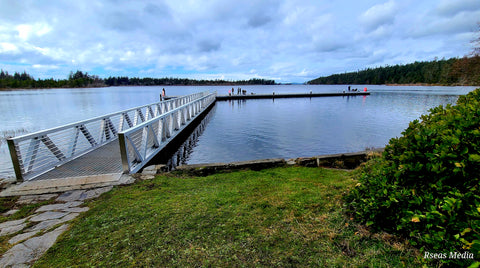
Cranberry Lake is located within the boundaries of Deception Pass State Park. There are multiple shore fishing access points and a very nice fishing pier. There is also a small boat ramp with very limited parking. If you are boating, internal combustion engines are not allowed on Cranberry Lake. You can use an electric motor but oars, paddles, or peddle power are perfect.
At 133.9 acres, Cranberry Lake hosts rainbow trout, coastal cutthroat trout, and an occasional brown trout. I’ve heard that that there are also smallmouth bass and perch in the lake but I’ve never seen anybody fishing for them. No picture, but when I was a teenager (Boy Scout camping trip) I caught a huge brown trout from one of the large boulders by the campground. The brute hit a worm/corn/marshmallow combo.
Not really sure why, but I love fishing Cranberry Lake. Although it is not, to me it feels like you’re fishing some remote lake in the Canadian wilderness. Be aware though, NAS Whidbey is right next door. There may be military aircraft doing maneuvers right overhead. I am in awe anytime one of the Navy aircraft are overhead but not everybody feels that way. It’s the sound of freedom!
If you’re not familiar with Deception Pass State Park, it is an absolute recreational gem. There are multiple well separated campsites, miles of hiking trails, and 77,000 feet of saltwater beaches to enjoy. Across Highway 20 from the lake, there is even a large saltwater boat launch with moorage. It’s not really mentioned anywhere, but in season you can fish for dungeness crab and smelt from the moorage floats. On the west side of the park, the sunsets from West Beach can be spectacular.
https://wdfw.wa.gov/fishing/locations/lowland-lakes/cranberry-lake
https://www.parks.wa.gov/497/Deception-Pass
Lake Samish
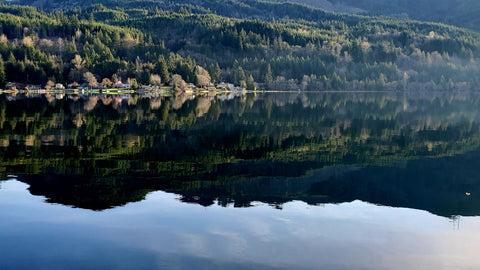
At 809.9 acres, Lake Samish is open to fishing year-round. It is managed as a multi-species lake, offering coastal cutthroat, large and smallmouth bass, crappie, brown bullhead/catfish, yellow perch, and excellent kokanee populations. I can personally attest that there are also largemouth bass and brown bullheads in the lake. The lake consists of a smaller lake connected to a larger main lake by a narrow channel. The larger main lake has significant weedy shallows at the south end and a max depth of 60 feet or so. The smaller lake located at the west end of the two-lake chain is up to 150 feet deep and maintains a large pocket of cool water throughout the late summer and fall. The cool water effectively extends the Lake Samish kokanee fishery when other west side lakes are too warm to support a fall kokanee fishery.
In late April-June, Lake Samish can be red hot kokanee fishing, easily giving up limits of fat 12”-16” kokanee. One of our biggest local kokanee came out of the smaller lake during a mid-October trip a few years back. It hit our old school gear running 2 colors on the lead line, 40’ of 8-pound leader, a rainbow color kokanee gang troll, and an orange wedding ring spinner tipped with a maggot. The fish was nearly 3 pounds and was in full spawning colors.
While the kokanee fishery is a trolling show, there is a fishing pier at Lake Samish Park. The fishing pier catch is primarily coastal cutthroat and peamouth chub. Lake Samish Park offers a couple of well-groomed picnic areas, a swim beach, hiking trails, and seasonal boat rentals. The park is the perfect place for a family outing and picnic with a little fishing thrown in.
An AIS Permit is required for every boat operating on Lake Samish. Here’s a few words about the AIS program at Lake Samish. Aquatic invasive species are non-native plants, animals, and pathogens that live primarily in water. They thrive in a new environment and cause economic loss, environmental damage, and harm to human health and property. An Annual AIS Permit and a per use boat inspection is required to operate your boat on Lake Samish. Whatcom County maintains an AIS inspection station at Lake Samish.
Boat inspections are important because they can help to prevent the transport of aquatic invasive species to Whatcom County lakes. AIS are transported on boats travelling from infested waters and can result in significant impacts to lake ecosystems, water quality, and water supply infrastructure. AIS can also make shoreline areas hazardous and uninviting for recreational users and property owners. To prevent the introduction, AIS inspectors are on the lookout for any animal or plant material on the watercraft that might pose a risk to Lake Samish. They will also be checking to see if your boat has been cleaned, drained, and dried, as some aquatic invasive species larvae can be transported in any areas on the boat that remain damp or have standing water in them. Inspectors will also conduct a physical inspection of the outside of your boat to feel for any signs of mussel larvae, algae, or other organic material on the hull that could pose a risk to the lakes.
As currently planned for 2023, Whatcom County will be staffing the inspection station at the Lake Samish WDFW Boat Launch. The AIS program is sensitive to the needs of anglers participating in the kokanee fishery at Lake Samish. They are planning/budgeting to staff the inspection station 5:30am-8:30pm 7 days a week. Although the AIS inspection program will be a bit of an inconvenience, having AIS inspectors on-site at Lake Samish will help to reduce the unfortunate vandalism problem at the Lake Samish WDFW launch.
On a similar note: Boat motor labels must have at least one star to operate on Lake Samish. Generally, any motor that is certified and labeled as meeting the 2006 or later model year United States EPA emissions standard will be compliant.
https://wdfw.wa.gov/fishing/locations/lowland-lakes/lake-samish
https://www.whatcomcounty.us/3542/Samish-Park
Silver Lake – Whatcom County
157.3 acre Silver Lake in Whatcom County is another unique recreational opportunity. It is a family friendly destination with camping, good trout fishing, and a WDFW boat ramp. The WDFW boat ramp is located at the north end of the lake and has ample trailer parking. The fishery is primarily for planted rainbow and coastal cutthroat trout. Even though the average depth is only 24 feet, holdovers are not uncommon. The fishery is friendly to whatever trout fishing style suits your style, but don’t be afraid to soak some dough bait.
Silver Lake Park is a large Whatcom County Parks and Recreation facility on Silver Lake. The park has 3 campgrounds and a RV accessible group campground. There are also cabin rentals, a handful of hiking trails, a playground, multiple picnic areas, an equestrian center, seasonal boat rentals, and a small boat launch that is probably best suited for hand carry boats.
https://wdfw.wa.gov/fishing/locations/lowland-lakes/silver-lake-whatcom
https://www.whatcomcounty.us/3517/Silver-Lake-Park
Fish Lake – Chelan County
Another family friendly trout destination is Cove Resort on 492-acre Fish Lake in Chelan County. For whatever reason it is probably better known for its winter, hardwater perch fishery but it hosts a solid spring and fall rainbow trout fishery. The lake also has a few respectable brown trout available. The brown trout fishery is kind of a specialty, but if you stick with it there are some true trophies cruising around, just waiting to be caught. In an interesting twist, the WDFW has been experimenting with kokanee fry plants in Fish Lake and it seems that there is blossoming kokanee fishery at hand. The lake also hosts a spring fishery for largemouth bass along with a year-round perch fishery. Access to the lake is primarily through Cove Resort.
Cove Resort is operated under a Forest Service private concession. You can bring your own boat: Cove Resort has a boat launch and moorage. They also have a store, boat rentals, a fishing dock, cabins, and a large campground.
https://wdfw.wa.gov/fishing/locations/lowland-lakes/fish-lake-chelan
https://www.coveresortatfishlake.com/
Lake Pearrygin
183-acre Lake Pearrygin is another first-rate choice for a family outing. There are 4 boat ramps, including a WDFW access point/boat ramp, 2 state park ramps, and a ramp at Silverline Lakeside Resort. For the shore fisherman there are many options. The state park alone has 11,000 feet of shoreline and there is a handicap accessible dock.
The trout fishing at Lake Pearrygin can be either fast and furious or just plain good. The seasoned trout angler can pull out the stops and get technical in their approach to the fishery, or, fortunately, anybody can catch fish using dough bait or casting their favorite spinner. A single salmon egg or a small piece of nightcrawler under a float can be deadly. As a bonus, Lake Pearrygin gives up more than its share of fat holdovers each season. Whether your family are trout fishing newbies or experienced trout hunters, Lake Pearrygin is an excellent choice for a family fishing getaway.
Lake Pearrygin State Park has a swimming beach, 169 various use campsites, 2 group sites, and cabin rentals. There are also 6.5 miles of hiking trails and picnic areas. As staffing permits, they offer campfire programs; they are conducted every Tuesday and Thursday night from June 15 - Labor Day. The park also offers a Junior Ranger program for kidlets.
It just keeps getting better; Silverline Lakeside Resort on Lake Pearrygin is a clean, well-maintained resort. They offer RV and tent sites and a group campground. The resort has RVs available for rent, boat rentals, aquatic equipment rentals, propane fire pit rentals, a store, and a small restaurant. If that’s not enough to spark your interest, Silverline Lakeside Resort also has 3 fishing docks, horseshoe pits, a playground, swimming beach, and mini golf.
https://wdfw.wa.gov/fishing/locations/lowland-lakes/pearrygin-lake
https://www.parks.wa.gov/563/Pearrygin-Lake
https://www.silverlineresort.com/
Have a hankering for a family outing and the sizzle of fresh trout in the ole cast iron? If so, add a trip to one or all of these lakes. Cranberry Lake, Lake Samish, Silver Lake, Fish Lake, and Lake Pearrygin each offer a unique family trout fishing experience. With the exception of Lake Samish, there is a campground adjacent to each lake with many of the campsites right on the lake. You better go pick up the phone, or bring up their websites, reservations are going fast!
/articles/5-family-friendly-trout-lakes-western-washington
Generational Fishing
I’m a new father. My daughter turns 2 at the end of July. It amazes me how fast time goes. My phone is fancy enough that it will create a collage of pictures and ask me “do you remember this day?” It’ll compile similar photos and quotes together with a caption along the lines of “outdoor adventures” or whatever else is sure to draw me in. I have to say, I like the features of the phone and sometimes I don’t remember the day or taking the photo.
Other times, the memory is clear and will get my brain churning to the before and after events of that photo. It’ll also lead to a great talking point with my family, or remind me to reach out to a friend who I was with during that time. It’s basically my generation’s photo album: a compilation of memories that elicit the sights and sounds of the past.
Seeing these photos and videos pop up on my phone makes me reflect on the journey I’ve been on. It makes me reflect and think about the life that was and the life I have now. The timestamped dates and pinpointed locations on the photos give me a clear reminder of when and where I was as I snapped those photos. Some photos I’ve kept in the camera roll for 10 or more years, other photos happening just yesterday or the day before. Each with a level of happiness and appreciation from the time. There clearly had to have been a reason I felt like the photo needed to be taken.
Even those photos of some random arrangement of letters and numbers for a code or a stall number in the parking garage so I wouldn’t get lost after a trip shopping. Although, that example probably has more to do with my wife than my own shopping adventures. Other photos are those milestones we will always remember but may not quite recall the details. Holidays with family, vacations around the world, a collage of our hobbies, or additions to the family. It’s those last two areas that inspire me to think about how thankful I am to be at this stage in my life.
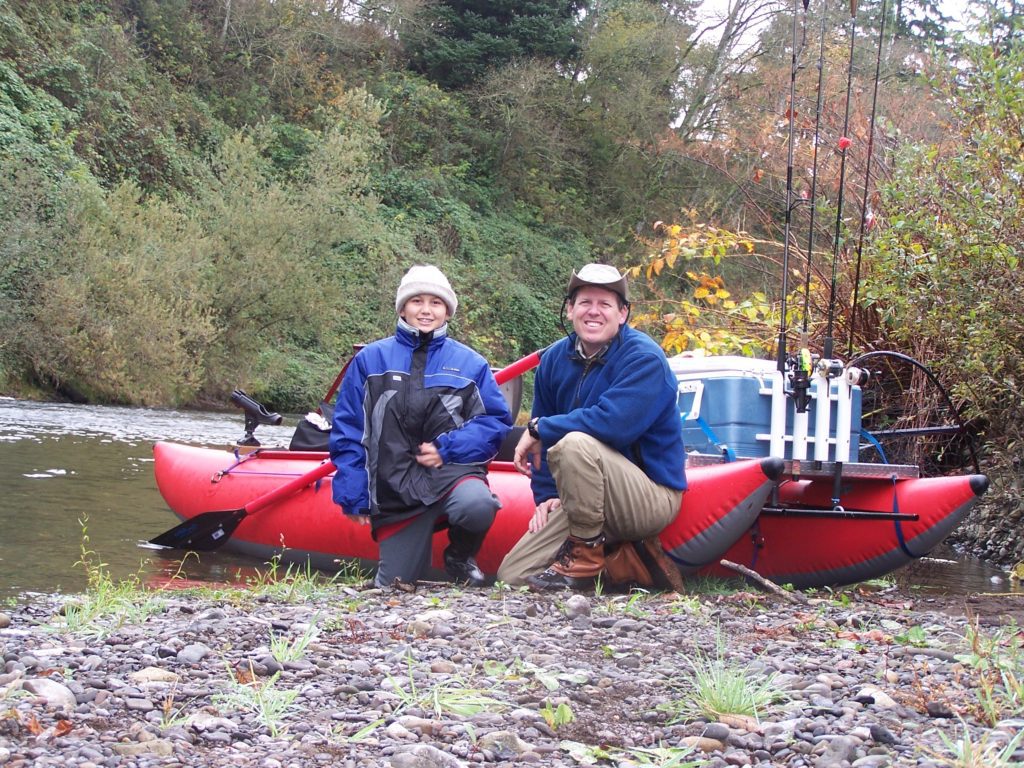
Adulthood
Something about life before kids and life after kids is a pivotal point. The stage of “adulthood” that has a clear separation between life that was and now life that is. Those late nights I could go out and do whatever I wanted are no longer. There is now a little human who depends on me and my ability to have some foothold on my life. To use a baseball analogy, I wouldn’t say I need to be hitting home runs in all areas of life as a dad, although I’d certainly take them as they come, but there’s nothing wrong with taking the day-to-day with solid doubles to right center field.
I might even strike out a time or two, or if I’m having a particularly hard time navigating whatever the challenge of the moment is ground into a few double plays. The goal I think as a parent is to limit those outcomes as much as possible. To be a constant source of support, happiness, and guidance for your kid as best as you know how. It’s cliche to say, but my wife and I didn’t get an instruction manual when we left the hospital with our child.
It’s my hope that I can inspire my daughter to enjoy many of the same hobbies I have while also encouraging her to find her own. I’m into fishing, sports, and good TV shows. She might enjoy music, writing, or computers. Whatever the case may be, there are areas in our lives that will overlap and find common interests. I surely hope that enjoying the outdoors, and fishing specifically, are among the shared hobbies.
The patience and independence we learn with fishing is invaluable. Soft skills such as being able to hold a conversation during down time or to celebrate someone else’s success are also an important area we learn as fishermen. I hope to share the many hours on the road traveling to different bodies of water with her as I did with my dad. I know my growth as a man is in large part to his teachings when I was younger. I am also excited to see how he can impart his wisdom to her and influence her in a positive way. That kind of generational guidance goes far beyond fishing. Tying a knot, being able to read the water. Those are great, but the time spent together, and memories built are what is truly important. The three of us out on the water fishing? That sounds like a memory with lots of photos.
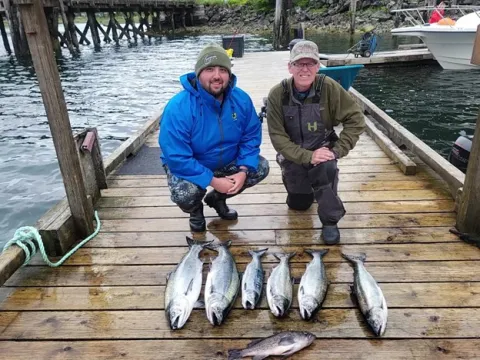
/articles/generational-fishing
The Dance Of Fly Fishermen
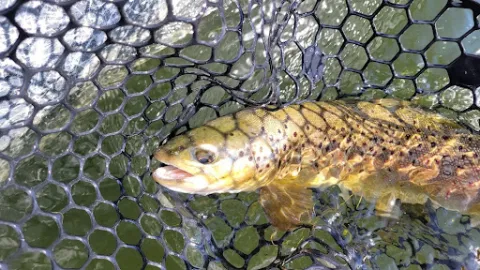
There are so many moving parts in fishing. Fly fishing is no exception to this interwoven connection between man, reel, and fish. On a trip with CrossCurrents Fly Shop,Chris Stainer even commented on my happy feet when hooked up on a fish. My rocking back and forth on the boat didn’t make it any easier for him to row, no doubt. But, what would you expect? I had a blue ribbon trout on the other side of my line! This was clearly an added moving part to the entire fishing experience. Line screaming out of the reel, a trout head fighting, and me doing my best to shift weight in the drift boat. All this made for a memorable trip on the Missouri River outside of Craig, MT.
Another graceful display to take in during the whole process of fly fishing. This beautiful river are the ongoing developing and vacating columns of tricos along the river bank. These mayflys make up a large portion of the diet for the fish in the section of the Missouri River. Their 24 hour life cycle made for an ever present food source during our late July fishing trip.
There were columns of bugs 10-15 feet high swirling and moving about. Some columns were next to one another, other columns were isolated as if they were exclusive to the most worthy tricos. These swarms of bugs were never annoying - no biting or buzzing around your head. They were part of the ecosystem a simple way that don't notice it unless an expert pointed out their significance.
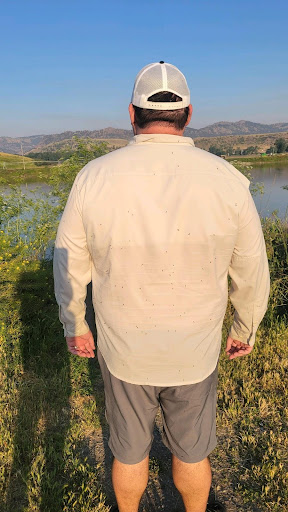
Battling the Fish
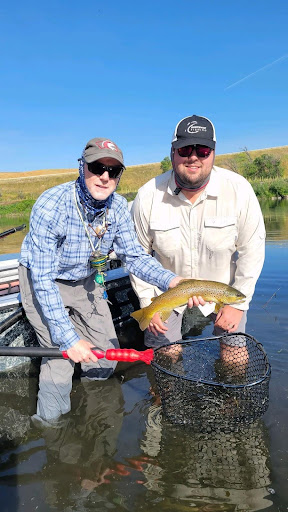
The battle between you and fish is another dance to experience. Once the fish has been hooked, steering it as best you can through the water is a balance of both strength and finesse. Objects like weeds can be a challenge and weigh down the fish. This can give him “brass knuckles” as you fight him into the boat. Manipulating the fish is crucial. During a fight with an18 or 19 inch rainbow, it felt likea 10lb fish with all the weeds.
The same thrill can be had when you’ve hooked into an unwilling partner: the fish who wants nothing to do with your boat or net. The fish who turns and runs and pulls line out for what seems like a football field. These fish, you respectfully allow the opportunity to take as much line as they want. Perhaps the most enjoyable part of this rhythmic contest is when the fish takes flight. Seeing those trout leap out of the water with violent intentions and come splashing down is enough to hook anyone to the art of the fly rod. It is everything you expect and look forward to with a fishing experience like this.
The Technique
Of course, this all assumes you can get yourself on the dance floor. The level of technique required to fly fish isn’t much that a novice couldn’t figure it out. I certainly was able to with some pointers. But it requires a fine enough skill that one can’t have a “set it and forget it” kind of mindset. There is consideration of how much line to strip outthe required distance. Looking at your fly relative to the fish relative to the line and mending it to make for an attractive lure. All this even assumes that you’ve gotten the cast down. Too much power or not enough time to let the line get behind you on your cast and you look more like Indiana Jones with a whip than anything else. Rod tip out of position on the cast? Your fly isn’t going anywhere.
Chris’ dedication fly fishing stood out in two comments; one practical and one funny. An analogy regarding golfers. Say you’ve got an opportunity to golf at Augusta. Would you fly down there without having practiced and hope to do well on the course? Or would you expect to work on your short game and try to cut down on slicing your drive before the trip? The same practice goes into the technique when casting a fly rod. To the funny story - when talking about other techniques or ways to target fish - think bottom bouncing for walleye or using a downrigger for salmon, he said something to the effect of “Well if I wanted to do any of those things, I’d have to buy a spinning rod” with a grin and a chuckle. If you want to hone your fly fishing skills, see beautiful scenery and catch some awesome fish, there is no better place to do so than Craig, MT. And CrossCurrents Fly Shop in Craig, Montana can help make it happen. A word to the wise, leave dancing shoes at home when you go.
/articles/dance-fly-fishermen
My Memory of the "Bait Boy"
The first time I met Paul Hamilton was a brisk October morning on the Snake River at Heller Bar; he showed up with Rob Holman from Northwest Fishing for a combo Chinook salmon and Steelhead trip. This was first of many shows we filmed together over the years.
One skill I have developed over my 32-year guiding career is reading people. I can watch a person as they approach the boat and it's amazing what you can decipher in 1 minute. On this morning, Rob approaches with his crew and immediately I notice this larger man with a smile, cowboy hat and a mouth full of chew. By his appearance alone I knew this was my type of dude. Paul hopped on the boat with a spring, he was fairly agile, I could tell for a bigger man he was athletic. Sure enough, within an hour I knew his life story. Paul was a college wrestler and we shared good friends, many who had wrestled with him.
A Few Things About Paul
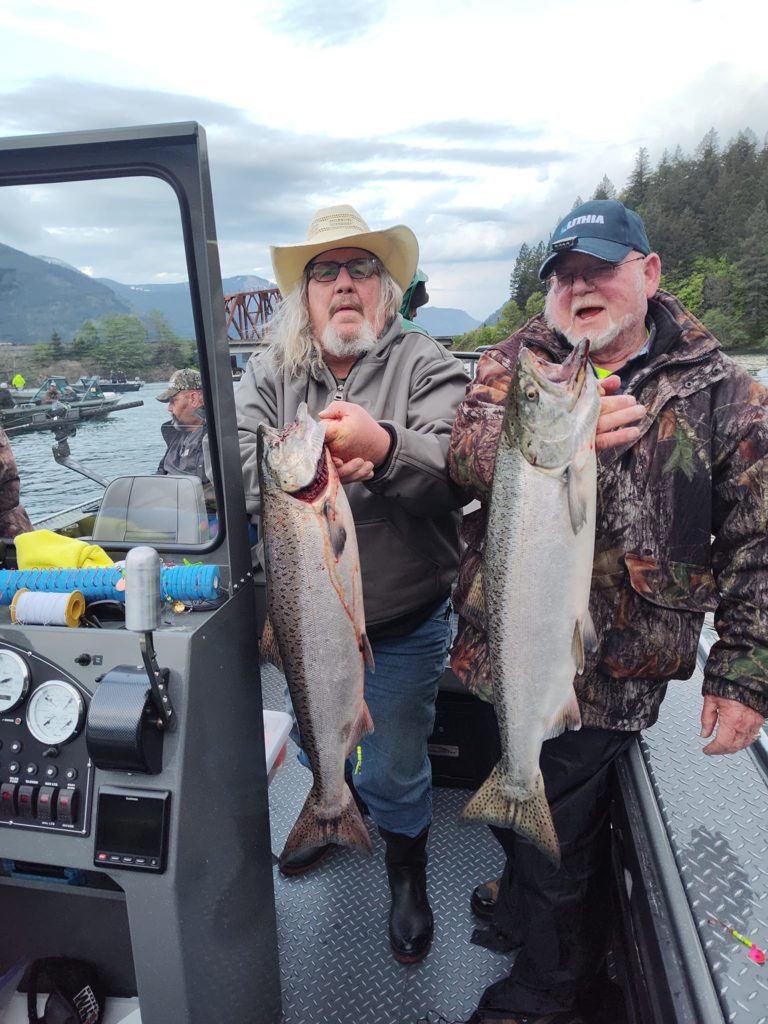
He lived in Hillyard which is a suburb of Spokane and sold insurance for Allstate. My pal loved Hillyard and loved selling insurance and he was very good at it. I feel fortunate that he was the type of guy you liked and trusted. After a few hours into the trip it was evidently clear Paul liked fishing and he was a excellent angler. He caught multiple Salmon and Steelhead.
He was very good on the camera. It's hard to find someone good on camera. Most people see the camera and immediately clam up, so when we are filming a show it's nice to have a personality like Paul. Paul was a go-to person for some entertainment and good camera conversation.
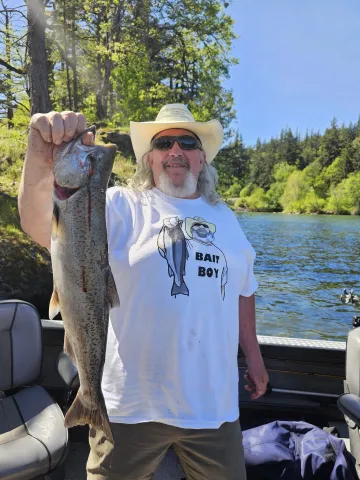
Over the years we spent a lot of time fishing and filming together. I joked with Paul and called Paul the CEO of Northwest Fishing. Paul and I got a kick out of this as everyone knows Rob holds that title (haha). Paul dubbed himself the "Baitboy" and really loved the title.
Our Last Trip
On my last trip with Paul was to Drano Lake and the Wind River. Paul showed up with T-shirts with his image holding a salmon titled "Baitboy". I laughed and gladly wore it! Paul had brought some personal friends on this trip; they were longtime buddies. Those last two days were filled with amazing stories and fish catching. I'm glad to have known Paul, he was a character and enhanced any environment he attended. I will wear his shirt loud and proud just like Paul.Editors Note: Baitboy T-shirts are available at www.northwestfishing.net with all proceeds going to a newly established Paul Hamilton Memorial Fund to benefit youth in his community.
/articles/my-memory-bait-boy
Of Drinking Towns and Fishing Problems
I picked up a pair of hitchhikers on 3rd Street in Bend (I'm not talking about ticks this time), and neither of them seemed to know the other. The guy asked what I knew about panning for gold and the girl wanted to tell me she had read The River Why. And isn't that like all the people that come to Central Oregon?
One of the funny things I've noticed is on places like East Lake or Paulina or on Crane Prairie or Lava Lake, the fishermen stream back to the launch for happy hour. It's not because they caught so many fish, it's because they have dinner reservations at a brewpub in Bend. They leave the lake at the exact moment the fishing is getting good. Nothing wrong with not catching fish, except not catching fish.
I made a list of fishing towns in our part of the world, and it seems I could make the same list and call them drinking towns. Perhaps this is the core of the problem. Tourists come to a drinking town for vacation, but they have a fishing problem.
Places to Fish
They fish in the toughest part of the day and then want a beer because the fishing was bad. Here's a thought: drink a beer in the middle of the day and go fishing when the fishing is good!
I spoke to a fly-fishing club from Bellingham, Wash., and they wanted to hear about Central Oregon rivers. They knew about the big four - the Deschutes, Crooked, Fall, and Metolius. To fish them well, an angler is probably going to base out of Bend, Sunriver, Prineville, or Sisters, all towns with great restaurants and more than a few brewpubs. And also cone-lickers.
What about the White River? There are sections of the White that never get fished and the trout can get big. Or the John Day where an angler can catch 100 bass on the fly on any day in July or August. Or fish the McKenzie where the trout chase caddis above the surface! The North Fork Santiam above Detroit Lake can deliver great dry fly action. The Ana River fishes almost all year long with reliable hatches and a lake nearby (Ana Reservoir) with trophy trout. The Williamson can turn out wild trout that tip the scales in the teens and they take dry flies! The Upper Klamath Keno Reach can turn out crawdad-eating six-pound rainbows any day in October. How about the Wood? The Upper Willamette? The East Fork of the Hood? The Chewaucan? There are more.
Remember your Map
Get out a map. Accordingly, you still have a map, don't you? Trace those little ribbons of blue and find the nearest towns. You'll find places like Service Creek, Spray, Sumpter, Maupin, Tygh Valley, Summer Lake, Parkdale, Paisley (yes, Paisley), Westfir, Chiloquin, Blue River, and Wamic.
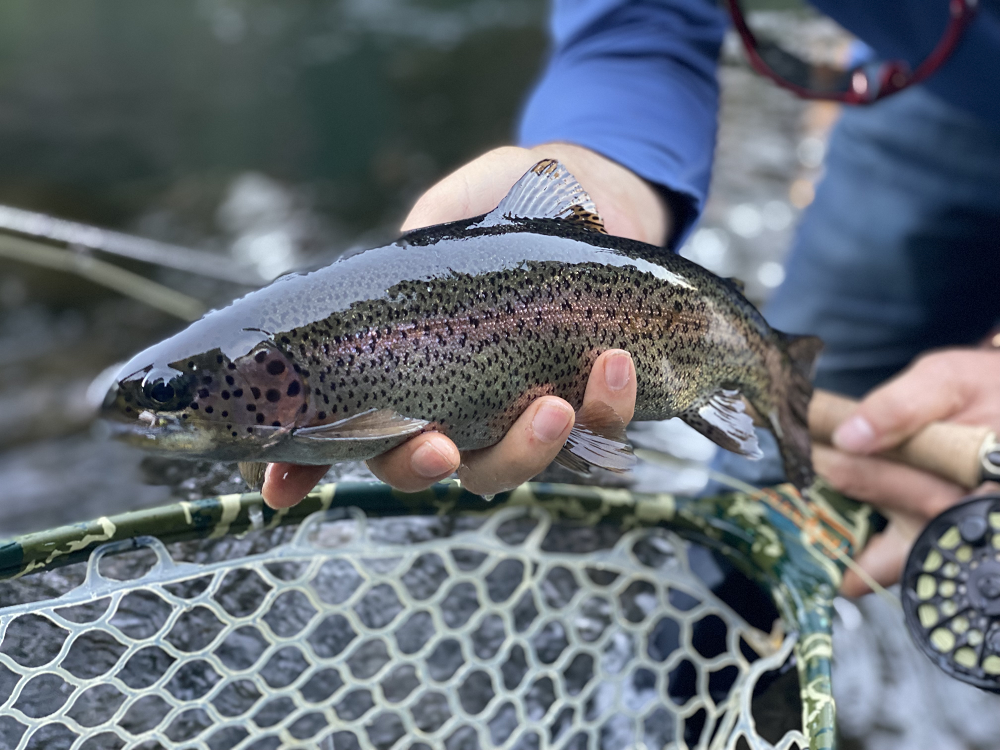
Fish the small rivers. Stay in the small towns. Stay at a bed and breakfast or in a tent, and get your breakfast at the tavern, and dinner too. Drop off a six-pack at the nearest fly shop and see what kind of good stuff they have been holding back. Drink coffee with the locals.
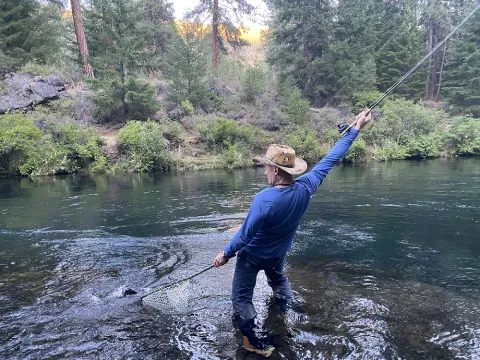
Therefore, Use a map and maybe a GPS to find hidden treasures - the places where you can't see the stream from the road, but you find a place to park and go down through the timber to the sound of the water. Wet wade and cast dry flies till sunset.
Wherever you fish this coming year, look at the landscape like a hitchhiker. Let's say you get dropped off in a small town in Utah, Wyoming or Washington instead of a Salt Lake, Seattle, or Cheyenne. Don't fish the big name waters. Fish the places you've never heard of.
I like to think that pair of hitchhikers is going to get married. On the honeymoon they would decide to compromise and devote their lives to protecting golden trout. And hopefully they can afford their own car. And deodorant.
# # #
For a copy of the Fishing Central Oregon book, send $34.99 to Gary Lewis Outdoors, PO Box 1364, Bend, OR 97709 To contact Gary Lewis, visit www.GaryLewisOutdoors.com
/articles/drinking-towns-and-fishing-problems
Fly Lines - The Method to the Madness
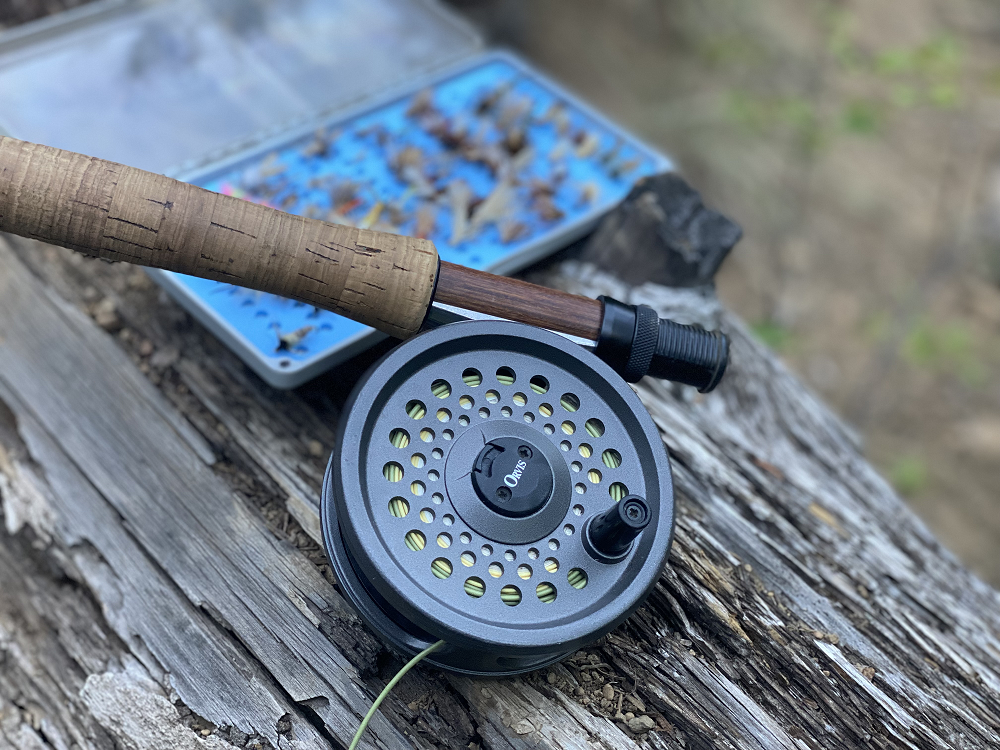
Once upon a time, fly fishing was a simple task. If an angler wanted a fly rod outfit, it was obtained by going to a fly/tackle shop, selecting a rod that had a number written on it, and then selecting a fly line that had the that same number written on it. Said fly line was then spooled up on a fly reel. The angler bought some monofilament tapers leaders that had a weird number with an X and that was it. (We will cover what that X means later.) Off we went into the great beyond in search of stupid fish that willingly ate our artificial offerings. Simple. Those were the days of blissful ignorance, both the anglers and the fish.
In these modern times of technically specific fly rods and fly lines, there are so many choices. What used to be a simple task now resembles an act of faith to get the right set up. No matter if you shop online or in a local fly shop, the fly line choices are are plentiful. Fortunately, all the major manufacturers of fly lines have done a very good job at trying to make a complicated task as simple as possible. Rio, Scientific Anglers, Cortland, and Airflo have application specific fly lines that are easy to navigate on their websites as well as in a fly shop. Plus, it never hurts to have personal input from a bona fide fly shop employee that has actually used the fly line. Hands on experience will never be replaced by the typing of letters on the interweb by someone who has never even touched a fly rod. Keep that in mind when you decide where your money will be spent.
Methods
I am going to try to explain the method behind the madness of what makes a fly/line a certain weight. Also, I am going to attempt to do this without upsetting any manufacturers of fly tackle products. It’s not my intention to ruffle feathers, only to convey the truth as I know it. So, let’s just say your fly rod is labeled as a “7wt or 7 weight”. In theory, this means that the rod blank needs 7 ounces of weight to make the rod load and unload. In theory, that means your rod needs a “7wt or 7 weight” fly line to make the rod do work. What makes a 7 weight fly line a 7 weight? It should be a simple question with a simple answer. Originally, fly lines were manufactured so that the weight of the “head” determined the fly line weight. Meaning that a 7 weight fly line had a head that weighed 7 ounces. At that time, the head was the first 35 feet of the fly line. Life was simple then.
Real Questions
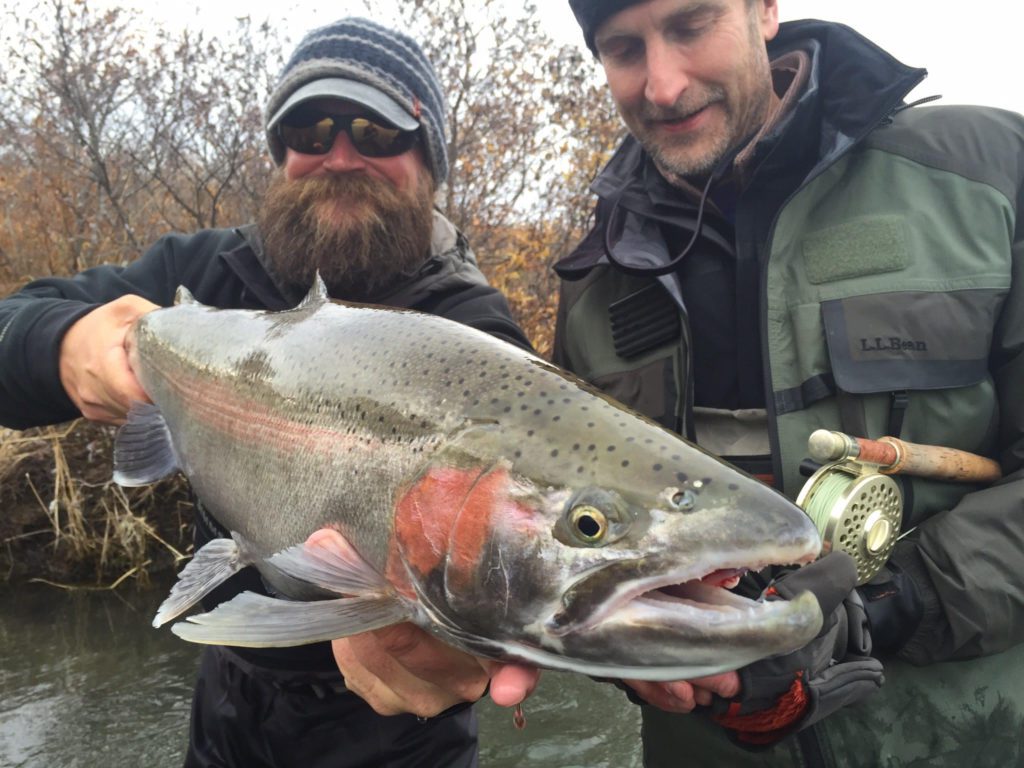
Now that we understand the theory behind the rod/line weights, let’s discuss how to decide the right fly line to select. First - What species am I using this line to fish for? Second - How much money am I willing to spend? Let’s use my favorite single hand steelhead rod, Sage Z Axis 10’ 7wt. Yeah, I know it’s old, but it’s still an awesome rod. I only use this rod for steelheading in smaller rivers, or larger creeks casting heavy flies. Either way, I need a 7wt line. Remember when I said that the fly line head was 35 feet and weighed 7 ounces for a 7 wt line? Now is the tricky part but, not really. My rod needs a fly line head weight of 7 ounces to make it work. If I am trying to cast heavy flies or nymph rigs, it’s easier to do that with a shorter piece of line beyond the rod tip. At least that is our brain’s message to us. Anyone that has ever tried to fly fish knows that our brain says “use less line, it will be easier.” However, this works totally against everything that makes the fly rod/line work as a team. The rod needs 7 ounces to load and unload. However, picking up 35 feet of fly line with a heavy indicator rig on the fishing end is near impossible. OK, maybe not impossible, but it’s hard. Fishing is hard enough, why make it harder? It would be easier to use a fly line that had head weight of 7 ounces that was 20’ instead of 35. The rod gets the line weight it needs and the angler gets the casting performance needed to deliver the cast without having to pick up 35’ of fly line in a small space. On my last trip to the Anchor River in Alaska, I chose the Scientific Anglers Anadro fly line. It has a shorter tapered, more aggressive head that checks the box on what I need to deliver for steelhead flies and rigs. This also works well for skating mice to Bristol Bay rainbows. It is not a good choice for dry fly fishing. Yet, therein lies the conundrum.
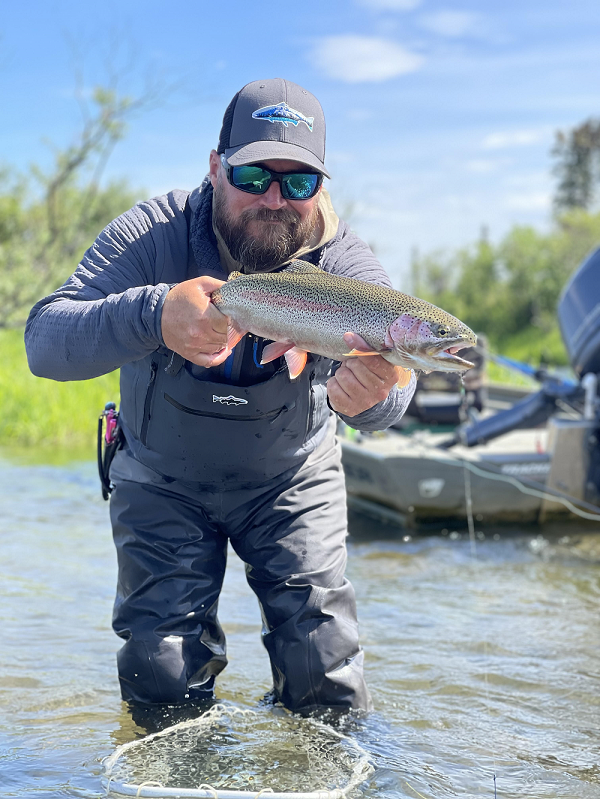
Some of you reading this have already thought “I just need one fly line that will do everything I want it to do.” In my three decades of guiding fly fishing, hanging out in fly shops, hosting trips and just generally being in the business, I have never once seen one fly line that will do everything you need it to do. It doesn't exist unless all you are going to do is fish one way, using one technique for the rest of your life. Even though that sounds completely and ridiculously boring, I guess it does happen. Point being, I don’t use my steelhead line when I go bass fishing. Even though the head taper would be great for turning over big poppers, the fly line core in the steelhead line is designed for cooler or cold temps. Bass fishing is typically warm water which requires a stiffer fly line core so that your fly line doesn't feel like you are trying to cast a spaghetti noodle with half a deer on the end of it. There is not a one size fits all when it comes to fly lines, not even one size fits most. There are some crossovers, but not many, and not enough for me to write about. Plus, the controversial arguments that would ensue would only be a recompense of opinion.
Finale
Last and certainly not least is the second part of the selection. How much money am I willing to spend on a fly line? Fly lines are expensive. Crazy expensive. I remember the first time I saw a fly line for $25. I thought the shop manager had gone mad. No way was anyone going to pay $25 when we had all been paying $18. Then I cast a rod with the $25 line on it and immediately purchased one for myself. That was more than 30 years ago. Today’s fly lines are light years ahead of what they were then. By today’s standards it isn’t even fair to call those old lines fly lines. They were more of just a suggestion of what fly lines should and could be. My advice is to spend as much on a fly line as you can possibly afford to do. The fly line represents the tires on an automobile. If you take an old Cadillac El Dorado that rides like a dream and put cheap tires on it, it rides like a Cadillac with cheap tires. Consequently, you can put the finest Pirelli racing tires on a Saturn and It will handle like a plastic race car. The tires change every aspect of how the car rides and handles. The fly line does the same thing to a fly rod. Spend the money, you will be happy you did.
In closing, when selecting fly tackle, or any tackle for that matter, I can't emphasize enough how important it is to collect your information from reliable sources. I find that privately owned fly shops are the utmost in providing genuine hands-on knowledge. Go to a shop that specializes in what you want to do. I have a good friend and colleague that owns a shop in the Rockies. He and his staff are some of the most skilled and knowledgeable people when it comes to their water. Yet when those guys go saltwater fishing, they call another friend and colleague that owns a saltwater fly shop for input on what to buy and use. Don’t be afraid to make a financial commitment. It could be the difference in catching the fish that you want to catch and standing around watching everyone else catch fish. Don’t be that person....
/articles/fly-lines-method-madness