The Dance Of Fly Fishermen
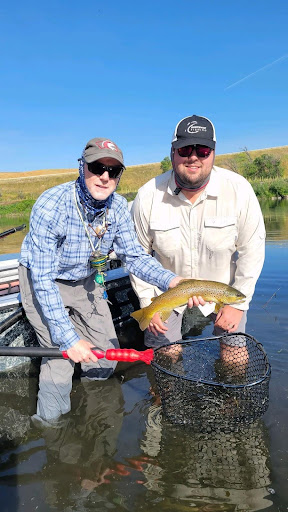
There are so many moving parts in fishing. Fly fishing is no exception to this interwoven connection between man, reel, and fish. On a trip with CrossCurrents Fly Shop,Chris Stainer even commented on my happy feet when hooked up on a fish. My rocking back and forth on the boat didn’t make it any easier for him to row, no doubt. But, what would you expect? I had a blue ribbon trout on the other side of my line! This was clearly an added moving part to the entire fishing experience. Line screaming out of the reel, a trout head fighting, and me doing my best to shift weight in the drift boat. All this made for a memorable trip on the Missouri River outside of Craig, MT.
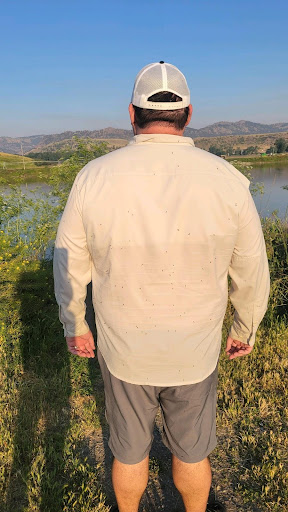
Another graceful display to take in during the whole process of fly fishing. This beautiful river are the ongoing developing and vacating columns of tricos along the river bank. These mayflys make up a large portion of the diet for the fish in the section of the Missouri River. Their 24 hour life cycle made for an ever present food source during our late July fishing trip.
There were columns of bugs 10-15 feet high swirling and moving about. Some columns were next to one another, other columns were isolated as if they were exclusive to the most worthy tricos. These swarms of bugs were never annoying - no biting or buzzing around your head. They were part of the ecosystem a simple way that don't notice it unless an expert pointed out their significance.
Battling the Fish
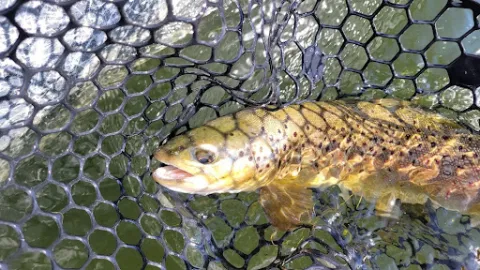
The battle between you and fish is another dance to experience. Once the fish has been hooked, steering it as best you can through the water is a balance of both strength and finesse. Objects like weeds can be a challenge and weigh down the fish. This can give him “brass knuckles” as you fight him into the boat. Manipulating the fish is crucial. During a fight with an18 or 19 inch rainbow, it felt likea 10lb fish with all the weeds.
The same thrill can be had when you’ve hooked into an unwilling partner: the fish who wants nothing to do with your boat or net. The fish who turns and runs and pulls line out for what seems like a football field. These fish, you respectfully allow the opportunity to take as much line as they want. Perhaps the most enjoyable part of this rhythmic contest is when the fish takes flight. Seeing those trout leap out of the water with violent intentions and come splashing down is enough to hook anyone to the art of the fly rod. It is everything you expect and look forward to with a fishing experience like this.
The Technique
Of course, this all assumes you can get yourself on the dance floor. The level of technique required to fly fish isn’t much that a novice couldn’t figure it out. I certainly was able to with some pointers. But it requires a fine enough skill that one can’t have a “set it and forget it” kind of mindset. There is consideration of how much line to strip outthe required distance. Looking at your fly relative to the fish relative to the line and mending it to make for an attractive lure. All this even assumes that you’ve gotten the cast down. Too much power or not enough time to let the line get behind you on your cast and you look more like Indiana Jones with a whip than anything else. Rod tip out of position on the cast? Your fly isn’t going anywhere.
Chris’ dedication fly fishing stood out in two comments; one practical and one funny. An analogy regarding golfers. Say you’ve got an opportunity to golf at Augusta. Would you fly down there without having practiced and hope to do well on the course? Or would you expect to work on your short game and try to cut down on slicing your drive before the trip? The same practice goes into the technique when casting a fly rod. To the funny story - when talking about other techniques or ways to target fish - think bottom bouncing for walleye or using a downrigger for salmon, he said something to the effect of “Well if I wanted to do any of those things, I’d have to buy a spinning rod” with a grin and a chuckle. If you want to hone your fly fishing skills, see beautiful scenery and catch some awesome fish, there is no better place to do so than Craig, MT. And CrossCurrents Fly Shop in Craig, Montana can help make it happen. A word to the wise, leave dancing shoes at home when you go.
/articles/dance-fly-fishermen
Late Season Baker Lake Sockeye
Whoo-hoo! The long-coveted Baker Lake sockeye season is in progress! The 2023 Baker Lake sockeye season is proving to be an interesting one. Through the North of Falcon process, the planned opener was scheduled to be Saturday July 15th. Because record numbers of sockeye have signed up for a ride in the fish taxi, the WDFW decided to open the fishery 1 week earlier. The opener was July 8th and the action has been on fire. It was reported that boat limits were the norm and many ice chests were full just a few hours or so after splashing the boat. In fact, on opening day one of the fishing specialists at Holiday Sports in Burlington, Philip Chuprinov, his wife Alexus and gang got their 12 fish boat limits in in less time than it took to drive to the lake and back.
OK, the fishing is good, but what is a “fish taxi” and why the early opener? Sockeye in Baker Lake are native to the system. After the Upper Baker Dam was constructed in 1959, sockeye were cut off from access to the natural Baker Lake. With limited success, various methods were used to trap and transport returning adult sockeye to the newly formed Baker Lake, while smolts were left to out migrate via controlled spillway releases. By 1985 the population crashed, and the trap count was only 99 fish. As a component of PSE’s permit to generate power, PSE developed a mitigation plan for sockeye recovery.
Long story short; both Baker Lake and now Lake Shannon have a surface to lake bed “gulper” net that funnels out-migrating sockeye smolts into a collection facility where they are processed, counted, and then transported for release at a trap facility on the Baker River in Concrete. The returning adult fish are trapped analyzed and then loaded into live transport trucks, AKA “fish taxis”, and transported up the hill. Some sockeye are placed in artificial spawning bed runs while others are held as hatchery broodstock. The rest are released into Baker Lake.

Historically, the Baker Lake sockeye run slowly ramps up, then spikes during the second week in July. This year, after a very short ramp up of 200-400 fish a day, on June 27th the fish counts absolutely exploded. For the next 10 days, the daily trap count was running from 1,200-3,000 fish. With agreement of the North of Falcon team, the WDFW made the decision to maximize the fishing opportunity and open the fishery 1 week early.
The 2023 Baker Lake sockeye season is July 8th – August 31st but may close early to assure that 1,500 fish are able to spawn naturally in the lake. There is a 3 fish daily limit for adult sockeye. With the two-pole endorsement, two poles are allowed and all anglers onboard a boat may deploy gear until each angler onboard has caught their daily limit. Because Baker Lake is actively monitored for regulation compliance, make sure to record your catch before you redeploy the gear. The Baker Lake catch code is 825. Are you jonesing for a grilled sockeye fillet or a bowl of fresh sockeye poke yet? If so, read on, if not there’s always a Safeway seafood counter nearby (it’s probably cheaper).
There are 5 launch ramps on Baker Lake. They are as follows.
PSE Baker Lake (Kulshan) Launch
The boat ramp has a moderate grade. Concrete blocks have been placed along the side of the ramp for protection from erosion. No designated disabled parking. The parking lot slopes slightly. Nearby, Kulshan Campground offers campsites, a RV dump station, and both restrooms and porta potties. Overnight parking is discouraged within the boat ramp parking area but is available just down the hill from the ramp. Kulshan is typically my go to launch ramp.
Horseshoe Cove
The boat ramp has a gentle grade. Launching and load occur on both sides of the gravel and sand bar. The surface is uneven from wave erosion and vehicle use. No designated disabled parking. Horseshoe Cove Campground also offers campsites, drinking water, picnic area, group camp area, and vault toilets. Overnight parking is available. 4-wheel drive is advisable.
Panorama Point
The boat ramp has a gentle to moderate grade, lots of parking and a vault toilet. The Panorama Point Campground is separate from the launch. Depending on lake level, the asphalt ramp approach stops short of the shoreline. Additionally, a drop off has been created by wave action and the gravel is becoming rutted from parking lot run-off. With the uncertain ramp conditions, 4-wheel drive is advisable.
Swift Creek
The Swift Creek launch is paved or concrete and is usable at all lake levels. There is a tall bulkhead wall on one side with a short log boom on the other side of the ramp. There is also a small marina adjacent to the ramp. The marina has limited non-reservable short term tie up but no services or fuel. Swift Creek Campground offers campsites, drinking water, picnic shelters, a group camp area, and vault toilets. Overnight parking is available. I advise that you have a capable mate at this ramp. If solo, there are no provision to tie up your boat right at the ramp. Solo, you’ll have to deal with your boat after launching and you’ll be holding up traffic. Unless you’re offering free coffee and doughnuts, generally not a good thing at 2:30 in the morning when there is a long line of headlights glaring at you... Having somebody run the boat while you go park is a solid community-based plan.
Shannon Creek Campground
The boat ramp has a gentle to moderate grade. Ruts are developing around the ramp due to the runoff from the parking lot drainage. Waves have been creating some erosion along the shoreline. No designated disabled parking. Shannon Creek Campground also offers campsites, drinking water, picnic sites and a vault toilet. This varies year to year, but they may be limiting launch access to campers registered at Shannon Creek Campground. 4-wheel drive is advisable, and this is the best launch for hand launch boats and inflatables. With just a short run you’re in Grand Central Sock-station.
Maybe a few words regarding the logistics and fishing Baker Lake. Once you turn onto Baker Lake Road there will be no services, fuel, food, or camping supplies available. Make sure your pre-trip planning includes extra fuel, ice, propane or whatever you’ll need for your trip. Early morning, evening and anytime you’re in the shade there will be mosquitos. Not a few pesky mosquitos but a large squadron of blood thirsty flying vampires, I think they even have radar, night vision, and little stick figures drawn on their blood engorged bodies. As a bonus, I even stepped on a yellow jacket nest last year, be aware. Above all, this is a true combat fishery. Patience and ramp courtesy will assure everyone enjoys the experience.
After some deep thought I think that the biggest thing I can say about late season Baker Lake sockeye fishing is patience. The fishing can be very hot or very cold. Whereas the day before, limits may have been the rule, it is not always, and fishing may be dead. Slow fishing or otherwise, there are a few things you can do to improve your odds and put a few late season fish in the box.
As mentioned, patience (theme) will be the name of the game, and trust your electronics. Especially during your pursuit of late season sockeye, you will see the fish on the meter before they chase down your offering. When chasing late season sockeye, the more flash the better. Some people run 2 attractors and/or run a dummy off their downrigger ball. Other people bend their flashers to give them more wiggle and flash. Make sure you keep your gear clean; I don’t think that the late season sockeye like the scent of yesterday’s bait or scent oils. That said, make sure to use fresh bait. The 2013 sockeye bait you found in the back of the bait/beer fridge is not going to cut it.
Location is important in your pursuit of late season Baker Lake sockeye, although there are stock areas of the lake that consistently fish well. Areas like the Kulshan Loop, Maple Grove, Silver Creek, Noisy Creek and the Race Track along Baker Lake Road all reliably produce fish. The problem is each of those areas will also have a healthy aluminum hatch. With all the gear dangling in front of their noses, the fish may just ignore it. In my experience it pays to go look for fish. Many times, I find schools of willing biters in shallow water. Often, after a slow morning I have just flatlined gear in shallower areas of the lake and picked off limits in one or two passes.

FISH ON THE METER! Now what? Typically, a “0” size 50/50, chrome or pearl dodger is the backbone of the setup. While you can catch fish on tandem red, black or blue hooks the fishiest gear includes small spinner blades, Smiley Blades or Wiggle Hoochie inserts. Thinking outside of the box also has advantages. Sometimes the fish just don’t want the standard gear. We have had success using the kokanee size Brad’s Cut Plug lures, Coho Killers with an extra bend in them, kokanee/sockeye flies, and Brad’s Wee Warts. Start with the basics, a “0” dodger and a bare 3/0 red hook, and then be prepared to make changes until you are consistently catching fish.
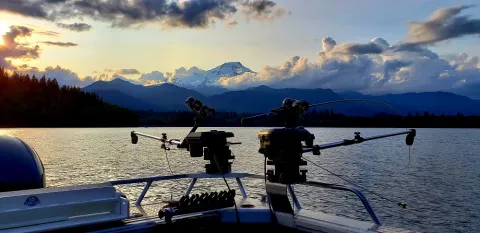
Downriggers are the way to go with this fishery, but dropper rigs rack up many of the fish caught at Baker Lake. When running downriggers, beware, the lake is uncharted and there are many stumps, old structures and who knows what else to snag you downrigger ball on. If using downriggers, be alert and be prepared to part company with your downrigger ball (does your pre-trip planning include an extra downrigger ball?). Safety first, especially if fishing out of a shallow freeboard skiff, kayak, or inflatable. A 10-pound hunk of lead is not worth losing your boat or giving your boat mate unexpected swim lessons. Try to maintain your trolling speed at .8-1.2 MPH, and we have found that 5-10’ setbacks from your downrigger clip are all that are required.
Another thought and in my mind a gem of an opportunity. Late in the season these fish form tight schools and cruise around on the flats where the Baker River flows into Baker Lake. There are several underwater springs in the area and the fish seem to be staging for the spawn. With caution you can slowly motor (or row) into the area, find a pocket of fish and drop a dead weight anchor. There will be a ton of logs and woody debris so don’t use any kind of pronged or claw anchor. An old pile of chain or bucket of cement is perfect. Caution: do not come into this area of the lake on plane or even any faster than at idle. Depending on lake level there are numerous stumps and trees just waiting to meet your prop. Why go to all this effort? Glad that you asked…
With a little luck and an adventurous spirit, you can set yourself up to sight fish sockeye with a fly rod. Let me tell you it is an absolute hoot, and once you have it dialed in, you’ll be a serf to the great sockeye gods. You’ll go to sleep dreaming about watching your line snap tight as the water seems to boil around it and wake up in a sweat still dreaming about your airborne quarry.
I’ve said this before; Baker Lake sockeye are the best eating fish in the state. To preserve their quality, bleed and ice your catch immediately. If you’re camping, gut the fish and pack the body cavity with ice, layer the fish in ice with a handful of rock salt evenly scattered around on top of the ice. It is best to use an ice chest that is dedicated to your prize catch. Leave the ice chest drain plugs out. This will prevent your catch from sitting in an ice chest ½ full of cold, very slimy sockeye sludge.
So, those are the late season basics; I wish you luck and an enjoyable trip to Baker Lake. Please be respectful of the opportunity to fish Baker System sockeye. This fishery is closely monitored and there will be multiple game wardens, WDFW, and Sheriff Department personnel conducting on the water checks. If there is widespread abuse, they will close the fishery. Be courteous, know the regulations, limits, and gently release any Dolly Varden trout caught.
/articles/late-season-baker-lake-sockeye
First water on the Rogue
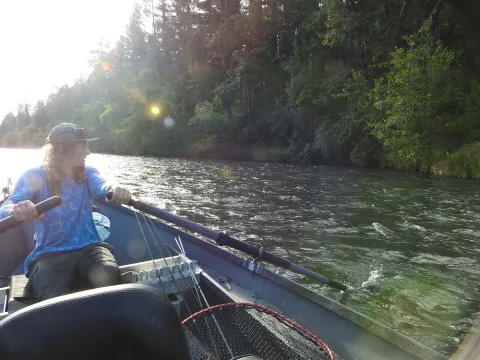
We slid down out of a tail-out and into the next riffle. I was in the bow, tilted into the front brace, rod up. "Cast left, this side has the fast water." Twenty-three-year-old Cole McAuliffe, of Chrome Tales Guide Service, was on the sticks, his curly hair around his shoulders. McAuliffe flicked the right oar and lifted the left. Water ran down off the blade and the boat caught in the current. I flopped an inelegant short cast, looped an upstream mend, and watched the two-fly rig catch the foam line past a jagged submerged rock. Sloppy but perfect. The float plunged and I lifted the rod into a summer steelhead that rocketed out of the shallow slot and into the air, twisting three feet above the water.
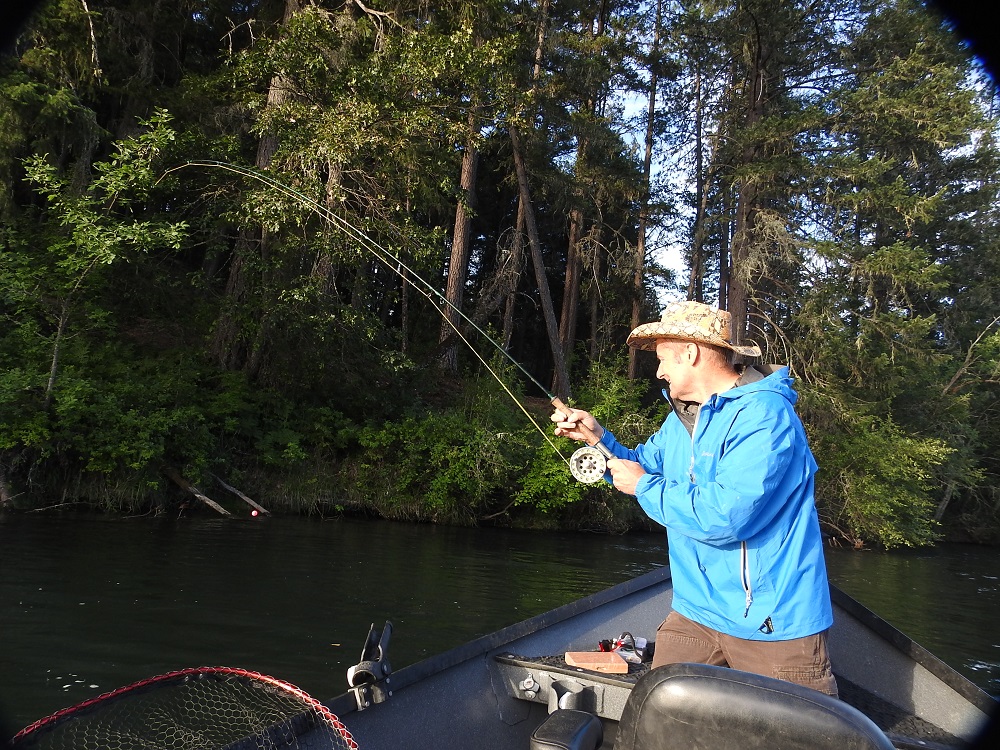
Oh, there is something about hooking a summer steelhead on a fly when you know the leader is 10-pound test and you have a lot of river!
We were only 20 minutes off the launch and no one on the water ahead of us or behind us. Is this not the great Rogue River? Where is everybody? But then I remembered, it was the hottest week of the summer and the rafts and tubes would hit the river about 11 in the morning. And I would be with them, except I'm older and smarter. We met each other earlier this summer when I helped McAuliffe find a highly efficient German shorthair chukar dog, and after the deal was done we both saw a drift-boat shaped hole in our August calendars.
Out of the launch with the sun just breaking over the Cascades, McAuliffe charged the boat straight across the river to a favorite run where a fat sea-run cutthroat waited for us. Now, barely ten minutes later, we had a steelhead on the line, on 10-pound Maxima, charging downstream.
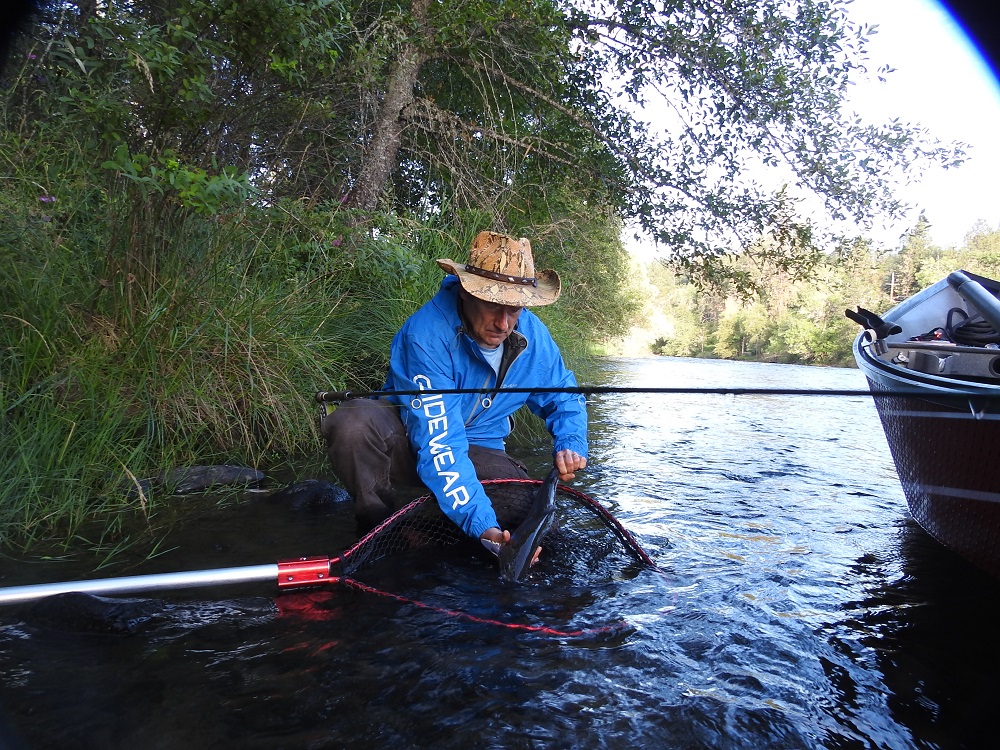
Down through the tailout of the next riffle we followed it, and before I could get the fish's head up, it tail-walked again. Moments later, McAuliffe grabbed the net and made one stab for it when the fish was close, as if we had been fishing together for years instead of just the last 20 minutes. I jumped over the side into the shallows and lifted the wild fish out of the net and showed it to the young guide with the Wild Bill Hickock haircut, shooting my camera. But the fish was done with handshakes and flipped out of my grasp. Five pounds of shiny summer steel, back into the water from whence she came.
There are not as many good summer run rivers in Oregon as there used to be, as hatchery managers have ratcheted back on the good times we enjoyed in the '80s and '90s. Did we have too much fun then and now we have to work harder for our fish? Guess so. McAuliffe, by my calculations, was born at the end of that era and, as fishing guide is his chosen profession in the 2020’s, he is probably going to hear from a lot of middle-aged clients about how it used to be. Today a fishing guide has to work harder. And get up earlier in the morning.
Now I had steelhead lenses on, reading water left and right, with Cole sliding the boat from one good slot to the other. Depending on the water, I used my fiberglass 5-weight to swing a fly or his 6-weight TFO with the float and two-fly rig. McAuliffe said the summer run steelhead season has started stronger than last year and while a lot of guides are using spinning gear, he prefers to stick with the fly rod.
At the business end is a No. 10 beadhead with a heavily weighted stonefly nymph to get to the bottom fast. We adjusted the float to run about 2X the depth of each run. We looked back upstream. Still no one behind us. Still no one ahead. We had first water all the way to the takeout. And trout in every drift. A few were hatchery rainbows and a few were smolts, and they beat the steelhead to the fly.
Trout chased the float, they chased the stonefly out of the water on the retrieves and swiped at the point fly, and I expected a fish on every drift. Get up early in the morning to beat the floaters and the cone-lickers. Go for the trout fishing and let the steelhead surprise you.
/articles/first-water-rogue