/articles/categories/destination
Fishing the Palouse by Josh DeBruler
Far down in the southeastern corner of Washington State, there’s a river that is surrounded by millions of years of geological wonders. The journey begins at its headwaters in the Bitterroot Mountain Range of Northern Idaho. It meanders southwest and cuts through a landscape of grassy hills, formed by millions of years of wind-driven sediment that lay atop Pleistocene-era lava flows. For miles, it flows through a steep canyon carved out by the great Missoula flood that occurred during the rupture of an ice dam during our last glacial maximum. Finally, in Southeast Washington, it ends its solo journey at its confluence with the Snake River.
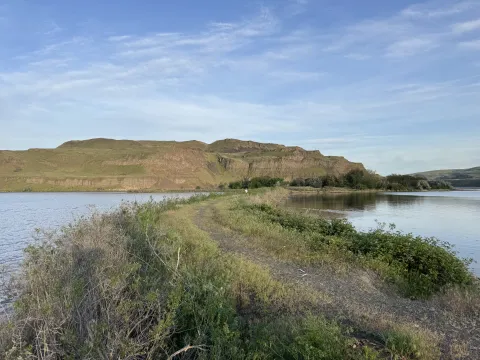
Historically, the waters at the confluence of the Snake and the Palouse were turbulent, characterized by rapids and fast-moving water. When Lewis and Clark reached the confluence of these two rivers during their expedition, they wrote about the ferocity of the water and how members of the group who didn’t know how to swim opted to go ashore and lug supplies on foot. Today, the waters here run much slower due to the construction of the Monumental Dam about 14 miles downstream on the Snake.
The slow-moving water near the confluence makes great habitat for a variety of fish like walleye, channel catfish, yellow perch, bluegill, smallmouth bass, and northern pikeminnow. What’s more, the fertile wheat land surrounding the Palouse offers a specific advantage for anglers targeting catfish. Peppered up and down the river are shoreline grain elevators where grain is transferred from barge to land, and during harvest season, these spots attract large numbers of Channel Catfish. Anglers can boat to these grain elevators and target fish that feed on grain spillover.
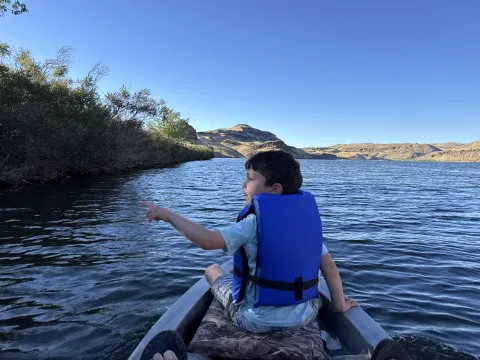
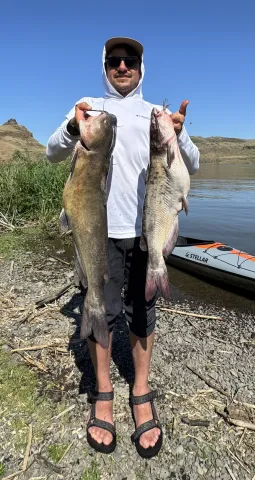
Catfish can also be targeted near shore in shallow, calm flats and deep holes with rocky bottoms. Channel catfish can be caught with night crawlers, bread dough balls, chicken livers, crawfish, shrimp, and stink baits, but the most consistent bait for me remains cut fish. Typically, a 1-2 inch chunk of yellow perch will do the trick.
Another method to deploy during the channel catfish spawning season (late spring-early summer) is running a small jig past a male catfish who sits guard over a nest. This often triggers a defensive strike from the male. This is a sight-fishing type of method, so to be successful, you’ll want a decent pair of polarized sunglasses and will need to be accurate with your casting.
Fishing the Palouse after June 16th in Washington State means 2 pole fishing is permitted. Since fishing for Channel catfish can often be a long waiting game, the two-pole endorsement offers up a great opportunity for rigging one rod up for the more passive catfishing while then using a second rod for something more active, like casting swim baits for walleye or smallmouth. It's good to equip your catfish rod with a bell at the tip to indicate a strike that you may not have noticed otherwise.
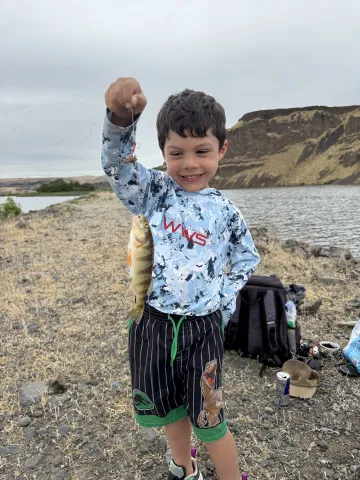
If you’re interested in catching a variety of fish and don’t want to deal with the hassle of switching from one setup to another, no need to worry; there is a simple solution. A nightcrawler, a hook, and a worm tied together on a simple drop rig is a setup that I use for shore fishing on the Palouse, and I have caught walleye, panfish, pike minnow, and large catfish on it. It's a one-size-fits-all set-up and works wonders in the calm waters of the Palouse. It’s also a great setup for kids, so long as they have the patience to sit and wait for a bite.
I’ve seen some pretty nasty winds at the Palouse, and each time I’ve been pleasantly surprised by the lack of effect the wind had on the water. This could be because of a sheltering effect from the canyon walls surrounding the water, the lack of depth in the river itself, or a combination of both. Either way, the lower Palouse is a safe and excellent spot to launch a kayak or any other type of boat for a day of fishing.
There are multiple boat launches on or near the lower Palouse. Lyons Ferry State Park offers a boat ramp and shore fishing opportunities. Riparia boat ramp on the Snake River is just east of the confluence of the Snake and the Palouse. Ayer Boat Basin is on the Snake River and about 7 miles west of the confluence. It has two boat ramps, a large parking lot to accommodate vehicles and trailers, and a campground for visitors,
So, if you’re looking to get out and explore some of the most beautiful and geologically rich lands that our state has to offer, and you wouldn’t mind coming home with a cooler full of a variety of fish, then the Palouse is where you should be heading on your next trip!
/articles/fishing-palouse-josh-debruler
Taking the Path Less Traveled by Brent Knight
Rediscovering Washington’s Overlooked Fisheries in Changing Times.
For many Washington anglers, recent seasons have felt like a slow unraveling of something we once took for granted. Winter steelhead? Few opportunities and often crowded. Blackmouth in Puget Sound? Gone almost as soon as it opened. Entire river systems in North Puget Sound were closed, not necessarily because fish weren’t there, but because WDFW monitoring dollars weren’t. And as each North of Falcon season unfolds, rumors swirl: fewer Chinook days, shrinking coho opportunities, more uncertainty where consistency once lived.
For lifelong anglers in the Evergreen State, especially those who remember the abundance of the 1970s and early ’80s, it’s hard not to feel discouraged.
But here’s the reality: while some of our most iconic fisheries are constrained by policy, funding, and complex ecological pressures, Washington still offers an incredible diversity of fishing opportunities, many of them thriving, and many of them overlooked.
So instead of stepping away, more anglers are doing something different, adapting.
A Shift in Mindset
Fishing in Washington today requires flexibility. The “go-to” fisheries may not always be there, but that doesn’t mean the experience has disappeared; it has just changed shape. The anglers finding success in 2026 aren’t necessarily fishing more; they are fishing differently. They’re exploring.
Lakes: The Quiet Comeback
As spring gives way to summer, Washington’s lakes quietly come alive.
Warming water triggers aggressive feeding behavior, opening the door to some of the most accessible and rewarding fishing in the state. Kokanee (landlocked sockeye) offer fast action in lakes like Lake Chelan, Lake Roosevelt, and American Lake. Meanwhile, trout fisheries across the state, from Pass Lake on Whidbey Island to Lenice and Nunnally Lakes near Vantage, provide consistent action for both fly and gear anglers.
And then there’s warmwater fishing.
Eastern Washington, in particular, is a goldmine:
• Walleye in Lake Roosevelt, Banks Lake, and the Columbia River system
• Smallmouth bass in the Snake River and Columbia River
• Largemouth bass, crappie, and bluegill in countless farm ponds and reservoirs
Walleye, especially, remain one of the most underrated table fish in the region, in my opinion, rivaling halibut or lingcod in quality.
Rivers Beyond Salmon
For anglers who define themselves by moving water, the loss of salmon and steelhead seasons hits hardest. But Washington’s rivers still offer exceptional opportunities, just with different targets.
The Yakima River stands out as one of the state’s premier trout fisheries. Stretching from Cle Elum through the Yakima Canyon to Roza Dam, it’s a blue-ribbon, catch-and-release system known for healthy populations of rainbow and cutthroat trout.
Other standout river options include:
• Methow River (selective trout fishing when open)
• Upper Columbia tributaries for seasonal trout
• Skagit and Sauk Rivers (when open for trout or limited steelhead opportunities)
• Olympic Peninsula streams for cutthroat trout
Guided trips through outfits like Red’s Fly Shop or Ellensburg Angler for the Yakima River can dramatically shorten the learning curve for those new to these systems.
Saltwater: Looking Beyond Salmon
While salmon seasons may be compressed, Puget Sound still offers underappreciated saltwater options.
Flatfish like flounder and sand dabs provide surprisingly fun and productive fishing. Target sandy bottoms in 30–80 feet of water using small bait rigs, Sabiki rigs, or setups tipped with shrimp, squid, piling worms, or other baits are especially effective. It’s not uncommon to hook multiple fish at once, and larger specimens make excellent table fare.
Other overlooked Puget Sound fisheries include:
• Squid jigging in winter months (Seattle waterfront, Edmonds, Tacoma)
• Surf perch along coastal beaches
• Pile perch and striped perch around docks and pilings
• Cabezon and greenling in rocky areas (when open)
These fisheries are accessible, often family-friendly, and largely underutilized. The Washington Coast: Opportunity Still Abounds
If you’re willing to travel, Washington’s outer coast remains one of the most productive fisheries in the Pacific Northwest.
Ports like Neah Bay, La Push, Westport, and Ilwaco offer a wide range of options:
• Rockfish (especially pelagic black rockfish)
• Lingcod
• Halibut (during tightly managed seasons)
• Seasonal Chinook and coho
Ocean fisheries are often more stable than inland salmon seasons and can provide both action and harvest opportunities.
High Country and Hidden Gems
For those willing to hike, Washington’s alpine lakes offer solitude and surprisingly good fishing.
Thousands of lakes scattered throughout the Cascades and Olympics are stocked with trout or sustain wild populations. Late summer is prime time, with fish eager to feed before winter.
Closer to home, don’t overlook:
• Urban lakes stocked with trout by WDFW
• Small neighborhood ponds holding bass and panfish
• Local docks and shorelines that consistently produce
Sometimes the best fishing isn’t far; it’s just forgotten.
Back to the Roots
For many anglers, the solution to today’s changing landscape isn’t to fish harder; it’s to fish simpler.
Cast a spinner from shore. Float a worm under a bobber. Take a kid to a stocked lake. Revisit the kind of fishing that made you fall in love with the sport in the first place.
Because at its core, fishing in Washington has never just been about limits or seasons; it’s about time on the water.
The Path Forward
Yes, we’ve lost opportunities. Yes, the future of some fisheries remains uncertain. But Washington still holds an incredible variety of waters, species, and experiences.
The anglers who continue to thrive are the ones willing to adapt, to take the path less traveled. So, check the regulations, explore something new, and keep going.
The fish and the experience are still out there.
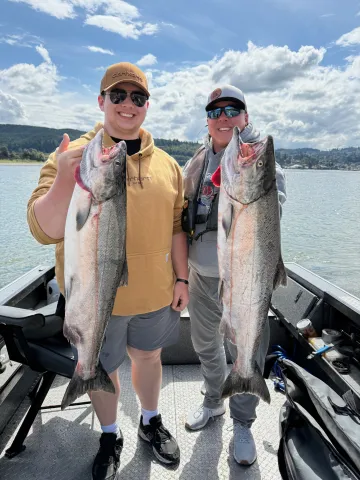
/articles/taking-path-less-traveled-brent-knight
Ten Great Kokanee Destinations in the Pacific Northwest by Hannah Pennebaker
Spring has sprung, and kokanee fishing is in full swing here in the Pacific Northwest! These landlocked salmon are absolutely delicious on the smoker or grill. These silver bullets put up a good fight, too! Some lakes have naturally reproducing populations in adjoining creeks or rivers, and others have wild populations that are supplemented by state game department stocking.
Kokanee are typically caught by trolling or jigging from a boat. Whichever method you choose, you'll need a good fish finder to locate the schools. Jig fishermen will anchor on top of schools and vertically jig lures tipped with corn. If fish are scattered, trolling can bring you more success. Toss out a small dodger and a lure tipped with corn or maggots, and troll between .9 and 1.3 mph. Kokanee like a slow troll!
Wherever you live, chances are there's a kokanee lake near you. Whether you like jigging or trolling, get out there and give it a shot! Limits vary greatly by location, so make sure to check before going out. Let's go over the top ten kokanee lakes in Washington, Oregon, Idaho, and Montana!
American Lake
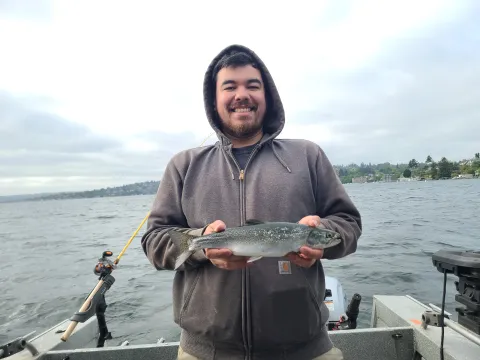
Public access abounds at this south Puget Sound lake! It receives ample plants of kokanee every spring. They grow to a healthy size, around 14-15 inches. You can't beat the accessibility and wealth of knowledge on how to target them in this lake. This is a hugely popular fishery and is great for beginner kokanee fishermen. April through September are the prime months to target kokanee here. It also receives a healthy rainbow trout planting, so you might need to weed through them to get to the kokanee. This lake is on the shallow side, so you can count on the fish hanging out near the thermocline most days.
Lake Chelan
While you're trolling for kokanee here, you might just end up with a chinook salmon on the end of your line! This is the largest natural lake in Washington, over 50 miles long. The sheer size and depth of this lake can certainly be intimidating, but there are several reputable guides who fish these waters. They can help you figure out the best locations and tackle to use. The fish can be finicky here. Your best bet will be to troll the top 20 feet of water in the morning, then go deeper in the afternoon. Most people troll for kokanee in the lower basin of the lake. Target points and coves until you find willing biters!
Loon Lake
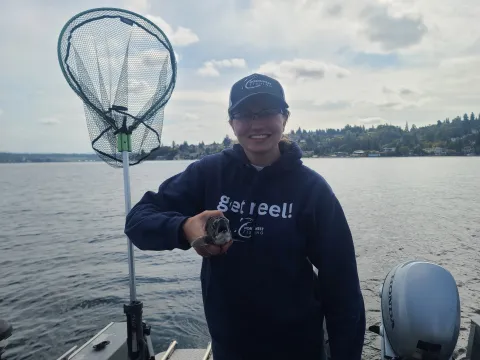
Over on the eastern side of Washington, this lake boasts large kokanee and mackinaw as well. You can troll for them, but many anglers jig for kokanee at nighttime here. Use glow hooks, corn, and plenty of scent. The fish are usually near the bottom during the night, but keep a close eye on your sonar. The bite is very light, so you'll need to pay close attention to your rod. Mack's Wedding Rings work great if you're trolling. Try tipping them with a piece of worm or a Gulp maggot. There is only 1 boat ramp at this lake, so plan on getting there early to beat the lines, especially during the summer.
Spirit Lake
Just across the Washington/Idaho state border, this picturesque lake is a known kokanee producer. In fact, there are a few boat ramps and resorts with boat rentals along this smaller lake. This is a great lake to hit if you're worried about the afternoon winds at nearby Lake Pend Oreille. These fish are on the smaller side, but they're numerous and tend to be very snappy. Fish early in the mornings; this lake is very popular with power boaters. As a bonus, this lake was stocked with chinook salmon in 2016!
Lake Pend Oreille
Another Idaho lake, this one is significantly larger than neighboring Spirit Lake. Mackinaw, walleye, and Kamloops rainbow trout also reside in this 134-square-mile lake. Just like Lake Chelan, there are a few guides that you can hire to help get a feel for the lake. Idaho Fish and Game supplements the wild population with yearly releases of millions of kokanee fry. There was a kokanee population crash in the 80's and 90's. Idaho Fish and Game found that kokanee populations were crashing due to increased lake trout predation. They netted 177k lake trout and put a bounty out for the fish to encourage anglers to remove them. Now, thanks to their combined efforts, there is a thriving kokanee fishery at this lake.
Odell Lake
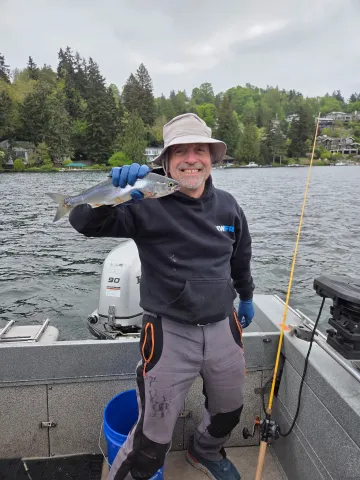
There is a very popular kokanee jigging fishery at this Oregon lake. Motor around slowly until you find a school and then drop your jigs! Don't forget to tip them with corn. Most tackle manufacturers make kokanee jigs. They're about 3/8 to 1 oz in weight, and typically pink or orange. Try jigging slowly at first, then switch up your speed until you find what works. It's important not to allow slack in your line because you'll miss bites. If you catch a fish, remember what depth it was at. Jigging for kokanee can help keep the day interesting.
Detroit Lake
Another Oregon lake, this is a popular, tried-and-true fishery for both kokanee and rainbows. Interestingly, you don't need a boat to catch them here. Many anglers report success from the dock and shore. Try fishing near creek mouths! If you're trolling, use the usual kokanee gear. The later in the season, the deeper you'll need to fish. Troll slowly, about 1mph, and don't forget the corn! Many anglers report success jigging for the fish in the early season. Detroit Lake has been stocked with kokanee since the 1950's as a response to declining sea-run salmon populations and has thrived ever since. Give it a shot!
Holter Lake
This is your destination if you want a shot at 5-pound kokanee. Populations are rebounding, which is great news for anglers near this Montana lake. Old Goat lures are proven fish catchers here. This is a large, deep reservoir where downriggers truly shine. You might need to put in some work to find the fish, but the payoff could be a trophy kokanee! Check out Northwest Fishing's episode of Holter Lake for an in-depth tutorial on this fishery- Mike Carey had a great day filling his boat with 5-pound kokanee!
Pishkun Reservoir
Located near Glacier National Park in Montana, this lake is worth the drive for the views alone. The kokanee can be few and far between, but they are big! You'll likely have the lake to yourself, and you'll have a shot at big rainbow trout and pike as well. For the best chance of getting a big kokanee, try to put as many lines in the water as you can. Use planer boards and stack your downriggers. Watch your fish finder carefully. This lake is sixty feet deep, and the kokanee will likely be near the thermocline. Oh, and bring bug spray!
/articles/ten-great-kokanee-destinations-pacific-northwest-hannah-pennebaker
I-90: The Road to Fishing Paradise by Matt Carey
Buckle up, Northwest Fishing readers. You’re about to get a blend of the best of both worlds - a history lesson on this great country and one of its key transformative features that allowed for expansion, as well as a little bit of fishing knowledge for consideration when planning future trips. I’m a history buff, enjoy a little bit of windshield time, and of course, an avid fisherman. I’m sure there are quite a few of you out there that share a similar enjoyment as I do, and if you don’t, that’s fine too. I am almost certain you are here for the fishing information anyway! To those in the latter camp, continue to indulge me a little bit as we talk about one of the key interstate systems that connects the West Coast to the East Coast, spanning from Seattle, Washington, to Boston, Massachusetts. Being a Montanan, I’m going to give you a few stops along the way in this great state for you to think about as you make the nearly 3,100-mile trip along Interstate 90.
As noted, Interstate 90 (I-90) is just under 3,100 miles and is the longest highway in the U.S. Interstate System. Established under the Federal-Aid Highway Act of 1956, it was officially numbered in 1957 as the northernmost transcontinental route. My personal favorite president, Eisenhower, felt it was a necessary transportation need for the country that would strengthen the US defense and economic output after his experience with the autobahn during World War II. Its creation replaced earlier U.S. Highways and auto trails, unifying them into a modern, high-speed corridor designed for safer, more efficient long-distance travel. The project spanned over decades, with most of the remaining western segments between Seattle and South Dakota opened by 1987, completing the continuous coast-to-coast route.
As much as we may wish fishing access was the intent of the creation of the interstate, it was not. We, as anglers, however, gained convenient access to many tremendous waterways along the route. Let’s dig into those easily accessible bodies of water here in Big Sky Country, just a short jaunt off I-90, in no particular order.
1) Yellowstone River - Many of you are familiar with a little place called Yellowstone National Park, I’m sure. The Yellowstone River, as you’d expect, flows through the park while heading northeast throughout the state. It weaves along I-90 in several areas starting in Livingston and through the northeast corner of the state, but unless you're an angler looking for a remote fishing experience (and maybe you are!), its I-90 journey ends in Billings. To those wanting to make the drive along I-90, these cities offer anglers amenities you’d expect when planning a fishing trip, while also being able to quickly get into big fish. Anglers can expect to find rainbows and brown trout, as well as cutthroat and mountain whitefish.
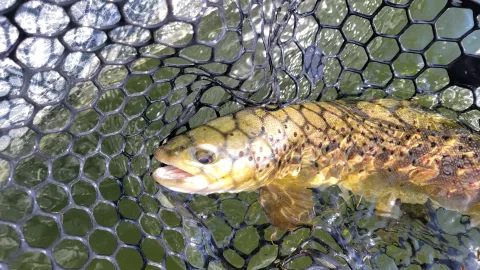
2) Clark Fork River - Sticking with accessible river fishing, Clark Fork is more than worthy of consideration if you plan to make a drive along the interstate. Many folks will talk about fishing in Montana on the Yellowstone River, and of course, the Missouri, but this river is as worthy of a day or two of fishing as any in the state, and certainly along the interstate. Perhaps because of the infamy of the other rivers, the Clark Fork can often be less crowded than other fly-fishing rivers in the state. Anglers can expect to catch similar species of trout, but may also find westslope cutthroat along with the native Mountain Whitefish that lurk in the river. Speaking of lurking, depending on how adventurous you want to be, you may even get into some pike if you’re looking to target something else while on the water.
3) Canyon Ferry Lake - Northwest Fishing fans may remember a combination pizza/walleye episode filmed on the lake, and while the lake doesn’t have the size of fish that some anglers may crave, it does offer plentiful limits and a variety of species to be caught. Its location, just a short drive off the interstate, gives it both convenience and aesthetics as it is tucked in the Rocky Mountains with the Big Belt Mountain Range looming over it. If for nothing else, the views surrounding the lake are worth it on their own, and the fishing is just an added bonus! It is a must-stop location with its scenic views, close but slightly out-of-the-way access, and an abundance of different fish to catch make it a worthwhile stop on your travels.
4) Georgetown Lake - Georgetown Lake is an ice fisherman’s paradise nestled in the western part of the state, sitting at nearly 6,500 feet. Kokanee are the prize here, and many consider Georgetown to be the destination for those looking to limit out. Like many kokanee, anglers can expect to catch fish in the 8-10 inch range, with some getting up to 15 inches. The limit on these kokanee? Not 10 daily, 15 or even 20. There is no daily or possession limit for the fish on the lake. To those looking to create a little kokanee candy, fire up the smoker and plan to spend some time at Georgetown and catch fish until eternity - or at least whenever the state decides to change the regulations.
5) Missouri Headwaters - We’ll end with a trifecta, actually, rather than one fishing spot. The Missouri Headwaters near Three Forks provides anglers with an opportunity to fish three distinct Montana rivers in one central location. The Jefferson, Madison, and Gallatin Rivers all meet along the south-central side of the state, just minutes off the interstate. While some of the better fishing would be had elsewhere along any of those three rivers, the significance of the Missouri Headwaters cannot be overstated, as it was a pivotal point in the Lewis and Clark Expedition, is the starting point for the Missouri River, and also provides anglers with access to premium trout fishing anywhere in the country. The benefit of being situated just off of I-90 and close to a major city like Bozeman only adds to the allure of this historic and fishy spot.
/articles/i-90-road-fishing-paradise-matt-carey
Washington's Bottomfish Bounty
Places like Florida, Texas, and Baja California are all celebrated for their tasty white fish like grouper, red snapper, and white seabass. While here in the Northwest, the fatty red or pink meat from a chinook or coho salmon is often what comes to mind when we think of seafood associated with our coastal and inland waters. The truth is, we also have all the necessary resources to make a mean fish taco. That is, the Pacific Northwest bottomfish.
Don’t let the name “bottom fish” give you the wrong idea about where they might fall on the Hierarchy of seafood delicacies. The bottom fish mentioned in this article make for excellent table fare and can be utilized for a simple fish fry, tacos, or can be combined with some of our abundant shellfish for a seafood stew like a Cioppino.
Our bottom fish range from large, dragon-like predatory fish like the Lingcod, to the massive halibut, which can get well over 200 lbs. In some cases, you can catch these fish from shore, but most often a boat of some sort will be necessary for success in these fisheries.
Lingcod
Straights of Juan de Fuca
Marine areas 6, 5, and 4 along the Straits of Juan de Fuca all provide great opportunities for lingcod. In MA 5, you can launch a boat at Clallam Bay from the town of Sekiu at Mason’s Resort boat launch. From there, you can head west towards Kydaka Point, where ample amounts of rocky underwater structures and reefs hold healthy numbers of lingcod. Soft plastics work well here, but if you're aiming to land a giant, try hooking up a small greenling as bait and sending it down to the bottom.
Puget sound
Conservation efforts make the Puget Sound a much more restrictive area to target lingcod. The 2026 season runs from May 1st through June 15th and allows the retention of 1 fish per day. Size restrictions are in place as well, and you can only keep lingcod that are between 26 to 36 inches. Possession Bar, Tavola Shore, and Alkai Reef all hold lingcod.
Cabezon
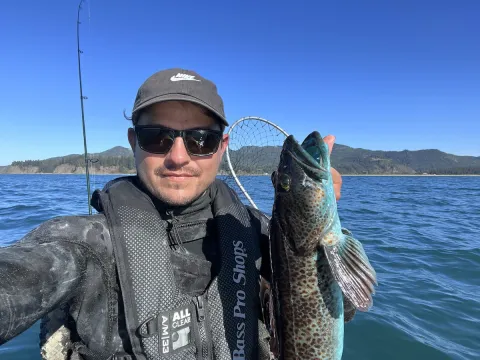
The cabezón. Loosely translated to “large head”, is aptly named for this exact reason. Cabezons, when larger, have giant heads and are built like a tank. When hooked, they will take off with your line and head-shake like a large lingcod. They’re a blast to catch and can be found all over the Straits of Juan de Fuca and the Washington coast. My favorite spot to fish for these is near Hobuck Beach in Neah Bay. This spot can be accessed via shore if you are using a kayak, otherwise you will have to launch your boat from the Big Salmon resort in Neah Bay.
Rockfish
Westport
Rockfish are abundant all throughout the Straits of Juan De Fuca and the Washington coast. With that said, if you’re looking for easy access, Westport provides a unique opportunity to catch these fish off of their one-mile-long jetty at Westhaven State Park. If climbing the rocks isn’t your thing, you can also hop on board one of the many charter boats that take off from the Westport marina to target salmon and bottom fish.
Halibut
Pillar Point
Pillar Point is about 15 miles east of Sekiu and has a small boat launch that is favored more by kayakers than those with larger vessels. For those looking for a larger boat launch, this area can be accessed by launching out of Sekiu and motoring east. A long sloping underwater ridge provides prime habitat for halibut, and it’s not uncommon to see 80+ lb halibut pulled out of this area.
Greenling
Neah Bay
The old Snow Creek resort on the northern part of the Straits of Juan de Fuca, just outside of Neah Bay, holds healthy populations of Kelp Greenling. Though these fish are often thrown back by anglers targeting lingcod or rockfish, they are incredibly tasty and can be found in the kelp beds only a few hundred yards offshore. This area is open year-round for kelp greenling so long as you stay east of the Bonilla-Tatoosh line.
Flounder
North Hood Canal
The flounder fishery is often overshadowed by some of the larger game fish species in the Puget Sound, yet these fish offer a fun year-round fishery that can be a great way for kids to get excited about fishing while at the same time making for excellent table fare. Flounder are found all throughout the Puget Sound and Hood Canal on sandy or muddy bottoms and are quite easy to catch using artificial sandworms, clams, or chunks of flounder meat. Dabob Bay, just south of Quilcene, is the only part of the Hood Canal that is open to flounder fishing. The bay can be accessed via the Quilcene Bay boat launch to the north or Tritan Cove boat ramp to the south.
South Puget Sound
If fishing the Puget Sound, you can find flounder in large numbers in MA 9 at Jeff head or fishing from the shore at Point no Point in Hansville. Further south in the South Puget Sound, good flounder fishing can be had at Dash Point in King County, where a fishing pier and easy kayak is launching from the beach. Going further down towards Olympia, you can find flounder from Dana Passage to Boston Harbor. Always check the Department of Health’s website for current information on flounder consumption safety guidelines.
With many bottom fish seasons opening this spring, and the year-round opportunities that these fish provide us with, there’s never a wrong time to get out there, get your cooler filled, and enjoy another one of our great fisheries here in the Northwest.
/articles/washingtons-bottomfish-bounty
Trade Show Roundup
The new year is here, and it's trade show season again! Trade shows offer a rich experience to both beginners and experienced anglers alike. Brush up on your knowledge and take in a free seminar from an expert guide! Get your hands on some discounted gear from hundreds of different vendors! Set up a guided fishing or hunting trip with a legendary outfitter! There's something for everyone. Who knows, you may get to meet your favorite fishing celebrity!
Take a look at this list of trade shows in Washington, Oregon, Idaho, and Montana, and jot down the dates. I highly recommend planning out your day in advance. Leave plenty of time for exploring all the vendors and activities. Trade shows tend to be very family-friendly and offer a variety of free fishing and non-fishing related activities for all ages, so don't hesitate to bring your kids. Hope to see you all there!
Steelhead Expo
January 9th-11th at the Hells Canyon Hotel in Lewiston, ID
Sitting at the confluence of the Snake and Clearwater rivers, Lewiston is renowned for its steelhead fishing. This show is unique because it also features a steelhead fishing derby! You can buy a combined derby/show ticket. The show also offers seminars, hundreds of fishing gear vendors, and family-friendly activities.

Tri-Cities Sportsmen Show
January 23-25 at the HAPO Center in Pasco, WA
This show is very family-friendly and offers a huge list of activities to keep your loved ones entertained, even if they aren't interested in fishing. There are climbing walls, an air rifle range, and even a mechanical bull. Door prizes are announced every hour. There are fishing and hunting seminars, boats and motors for sale, and more.
Washington Sportsmen's Show
January 28th- February 1st at the Washington State Fair Events Center in Puyallup, WA
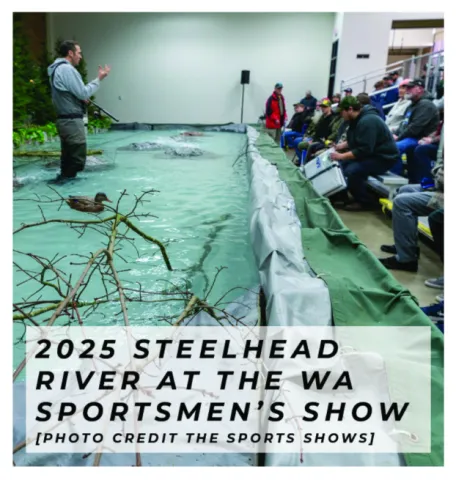
Don't miss out on this one if you're in the area- it's Washington's largest trade show. There's a Heads and Horns competition if you've got a special trophy to bring in. Bring the kids to the trout pond while you're there! There are over 70 seminars with experts in the industry as well.
Seattle Boat Show
January 31st- February 8th at Lumen Field Event Center in Seattle, WA
This boat show promises over 800 boats on display, 150 free seminars, and almost 300 vendors. This is the place to go if you're looking for a deal on anything from a kayak to a yacht. Each day of the show, there are different events, so be sure to check out the calendar before going.
Pacific Northwest Sportsmen's Show
February 12th-16th at the Portland Expo Center in Portland, OR
This is the Pacific Northwest's biggest trade show. You can find deals on camping supplies, boats, tackle, RV's, and apparel. Many vendors and guides offer special trade show deals. Get here early and leave yourself plenty of time to explore!
Fly Fishing Show
February 14th and 15th at the Meydenbauer Center in Bellevue, WA
In contrast with most of the other shows on this list, this one is more focused on fly fishing. Don't let that scare you off though, beginners are welcomed, and there is even free fly fishing instruction on both days. Try out a new rod at the casting pond and sit in on a seminar from an expert. Celebrities and authors as well as exhibitors from the industry will be there.
Big Horn Outdoor Adventure Show
March 19th-22nd at the Spokane Fair and Expo Center in Spokane, WA
This show truly has something for everyone. There are seminars on fishing, hunting, survival skills, outdoor cooking, and conservation. There is a different event every day, from Veterans' Day to Family Day. The show has live music, good food, and a 21+ beer garden. It's a great way to spend a day!

Montana Outdoor Expo
March 27th-29th at the Lewis and Clark County Fairgrounds in Helena, MT
This Montana-based show offers RVs, hunting/fishing gear, boats, and more. Get your hands on the latest gear and talk to experts about your next adventure. There are special raffles throughout the show with the chance of winning some big prizes.

/articles/trade-show-roundup
A Dock Full of Fun
I grew up fishing off docks at Lake Sammamish in Western Washington for everything from bass to bluegills to perch to trout, pumpkinseed sunfish, and more. Little did I know that much later in life, I would be fishing off a dock again for multiple species of fish, but this time, for a potential monetary payout!
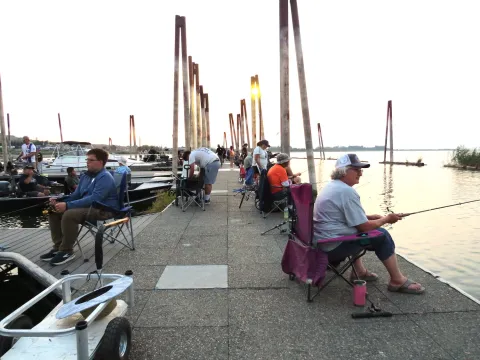
MarDon Resort is a multi-generational family-owned resort located on the south shore of Potholes Reservoir in Eastern Washington. For years, they have been putting on an annual dock tournament the second weekend of September. This is a popular event, with anywhere from 125 to 160 participants, many of them coming back every year.
The tournament is very affordable ($60 per entrant in 2025), and there is an 80-percent payout to the winning anglers. It is a vastly different tournament than most. Instead of catching a limit of five or six fish and weighing in the bass or walleye, you are fishing for the two biggest fish of eleven distinct species of fish.
The species you can catch off the dock are numerous. There are categories for largemouth bass, smallmouth bass, walleye, rainbow trout, perch, crappie, bluegill, pumpkinseed, carp, channel catfish, and yellow bullhead. This year, the first-place fish in each category netted the winner $375, and the second-place fish was worth $125.
The groups participating in this event are very diverse. There are families and extended families, couples, fishing buddies, senior citizens, women, and children all fishing off the dock day and night, and all trying to get a big fish.
The tournament kicks off with a potluck on Friday at 5 PM. MarDon Resort provides fried chicken tenders, water, and cookies while participants bring side dishes and more for a nice dinner. At 6 PM, anglers hit the docks and you fish as much or as little as you want from Friday night until 10 AM on Sunday.
There is a weigh-in station at the marina staffed 24 hours a day, this year by Russ and Kim Anderson, who took turns sleeping during the night. Some of the winning fish were caught right off the bat! Georgia Goss was using a crappie jig when she hooked into a monster walleye at sunset on Friday. The 5.56-pound fish netted her first place by a long shot. The only other walleye caught was by her niece, Madison Shopbaugh, and that was only six inches long but still worth $125. It was nice to see kids reel in winning fish!
On Saturday morning, 12-year-old Levi Garza caught a gigantic channel catfish that weighed 25.4 pounds, easily beating out a 16-pound catfish that took second place. And then there was Jaxon Pech. I met him last year when he reeled in two huge carp, earning him a $500+ paycheck. Jaxon, who is 13 years old, takes this tournament seriously. He lives in nearby Moses Lake, and he told me he fished twenty-nine times off the dock this summer, preparing for the tournament. Jaxon was fishing a sizeable pile of bait off the bottom, hoping to catch carp again. However, when his rod bent with a fish, he found out after a frantic 10-minute fight that he had caught not a carp, but instead, a 4.8-pound rainbow trout. Since Jaxon caught the only trout of the tournament, he got $500 for that fish!
Over the course of the event, the lead would change multiple times for different kinds of fish. For example, I was briefly in second place with a ½-pound bluegill on Saturday morning but was bumped within an hour by a bigger fish. At the end, both of the winning bluegill weighed in at over a pound. The final second-place winner was caught on Sunday morning.
At 10 AM, the event ends, and the whiteboard with the final results is brought up to a grassy area above the boat ramp and docks. Co-owners Levi and Annie Meseberg prepare checks for the winners as well as raffle prizes. Raffle tickets are sold for a dollar each, and at 11 AM, all sorts of raffle prizes are given away. The event wraps up with awards and checks being given out to the winners.
Talking to anglers during the event, I learned that everyone hoped to come back again next year. The mood on the docks is light, anglers are willing to share space, and everybody catches a whole bunch of fish over the weekend. Put it all together, and this unique dock tournament is chock full of fun!
/articles/dock-full-fun
Madison River Monsters
I’m sure a few of you reading this are football fans like me. Seattle seems to have had a generally successful run since about the 2010s, with obvious jubilation in 2013, followed by tear-jerking (or, in my case glasses glasses-throwing across the room and breaking them) despair in 2014. To those Millennials and older, or perhaps some Gen Z and below anglers who are dialed into their football history, the Monsters of the Midway elicit memories of imposing dominance. The 1985 Bears. Coach Ditka. Mike Singletary. Richard Dent. Refrigerator Perry. Icons in the football world. I couldn’t help but call back to that imposing connection on our latest fishing adventure on the Madison River in the Madison River Valley of Montana.
We connected again with our good friends Ed and Jeanne Williams of the Rainbow Valley Lodge in Ennis. Of course, we talked about fishing, but also some updates on life: their trip to Disneyland with their grandkids, the most recent trip to Argentina, among other things. Down-to-earth hosts who enjoy seeing their guests enjoy themselves.
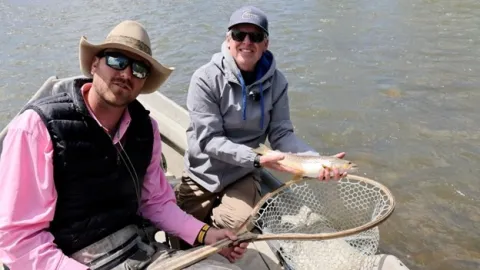
The plan had been to fish the Jefferson River, to the north of Ennis, and explore the Jefferson River Canyon. Unfortunately, the weather didn’t cooperate, and the river wouldn’t make for a productive fishing day. Having had as much success as we did on our last episode on the Madison, a quick audible was in order. Fishing again with Hunter and Sam, outfitting out of the lodge, we knew we’d get into some beautiful country and big fish.
The first day was wet. Very wet. Like, I’m glad we have our rain gear, and no wonder there wasn’t anybody else on the water kind of wet. It made me appreciate the professionalism and love for guiding the river I saw from both of our guides for the trip. Both Hunter and Sam are what I would describe as “good dudes”. Easy to talk with, personable, and genuine. That, paired with their knowledge, patience, and excitement for the water, made them the guides I’d absolutely recommend if you head to Ennis to fish in a beautiful part of the country.
The fishing produced some great memories and tons of fish. My buddies Ty and Alex were in the second boat helping with filming, and between both boats, nearly 40 fish were caught that first day. Nonstop action with each angler trying to outcatch the other. Our guides instigated the goading as we came together - “Add three more to the scoreboard”, “Well, we got a 19’er, how small were your fish?” The solid number of fish was one thing. Getting bit non-stop is always fun.
Again, nearly double-digit fish were caught by every angler. But the size of these fish is what was most impressive. Routinely, we were pulling in fish in the high teens. Browns, rainbows, and whitefish all with shoulders on them the size of linebackers. While the one legendary fish didn’t come, I was never disappointed when I hooked up. Every fish was seemingly in the respectable 13-15-inch range, with some bigger chunkier fish encroaching on the 20-inch size. And the fight? World-class. It was like being in a phone booth with a big offensive lineman. At times, the fish would seemingly be pulling the boat with it as it swam, dove, and jumped during our battles.
Ironically, one of the more memorable fish was a small one that I didn’t even land. Like a quarterback scanning the defense, I did my best to set myself up for a positive play. 15 feet out from the bank, approaching some tree roots, I had an excellent line on the fish.
The hook set was decisive. But this fish was tenacious. Immediately jumping out of the water like you’d hope from a classic rainbow trout battle. It must’ve jumped at least half a dozen times. It ran at me, seemingly knowing the weak spot in my offensive attack. On its final jump, it spat out the hook and swam back to safety, having bested me. All I could do was smile and chalk it up to a well-executed play by my opponent.
The second day was a completely different experience. Like going from a dome in Dallas to the frozen tundra in Green Bay, it was sunny, comfortable, and a day where you’d be just as happy doing yard work outside as you’d be fishing. Well, maybe not quite as happy as fishing, but you get the idea. My coach, Hunter, wanted to change strategies and get into some technical fly fishing. He tied on some streamers for us, and away we went. Varying my retrieval, we hoped to get into the larger fish you’d expect from using streamers compared to nymphs. Within my first three or four casts, I hooked into a solid fish. Unfortunately, the battle was short-lived, and I never saw it surface. But I think it had the potential to be that 20+ inch fish that had eluded us.
Not to be outdone, we kept floating down the river. A multi-play, methodical drive marching down the field, catching the same solid-sized fish as the day before. Towards the end of our float, we reached a slower pool of water that Hunter said had historically held some big fish. A guide’s knowledge and experience came to my benefit.
Like my first missed fish, within only a few casts in this new water, I hooked the fish and was locked into a one-on-one battle. Some pulling, some steering, and some muscle later, we landed what was close to a 20-inch fish. Impressive enough in size and more than formidable as an opponent, it led me to reflect on the past few days of fishing and the fables that come with it. Monsters of the Madison indeed!
/articles/madison-river-monsters
Billy Clapp Kokanee Saga
"Look at all those fish marks - kokanee for sure - darn things aren't biting though!"
It was a tough weekend of fishing for my wife JoAnn and I - lots of fish marks, but just a couple bites. Such is kokanee fishing. Kokanee anglers know this and accept our lot in life - some days can be lights out, other days you're scratching your head in frustration.
Kokanee anglers are always looking for the next great kokanee fishery and are eagerly searching the internet for fisheries that are exploding or unknown. To that list we humbly add Billy Clapp Reservoir. This reservoir and kokanee have an interesting history and offer a tantalizing possibility of another kokanee destination to add to Washington's list of quality kokanee fisheries.
I first became aware of Billy Clapp kokanee reading old reports from Dave Graybill, The Fishing Magician, a Central Washington expert on all things fishing. He talked about (and filmed) big, 18" kokanee coming out of Billy Clapp Lake. I scoured the internet and found tantalizing glimpses and reports of big kokanee caught over the years. Intrigued, I dig deeper, trying to puzzle out the mystery that is Billy Clapp kokanee.
My research revealed a few interesting factoids. First, up until recently (more on that in a bit) Billy Clapp Lake has never been stocked with kokanee. So how is it that it holds kokanee? For the answer to that, we have to talk about Banks Lake, just north of Billy Clapp.
Banks Lake has a long history of Washington Department of Fish and Wildlife efforts to create a thriving kokanee fishery, but due to white fish and walleye predication the kokanee fishery has never been able to get firmly established. Oh, there's been some scattered reports of 14-18" kokanee being caught, but overall reports indicate small fish and little angler effort, save some locals that "may" have the fishery dialed in. Certainly, Banks is not considered a destination kokanee fishery. Add to that my recent conversation with WDFW biologist Mike Schmuk who informed me that the long term plan was to end the Banks Lake kokanee planting program. Mind you, WDFW has been planting 400-500,000 kokanee fry per year into Banks, so it's a big deal that WDFW has decided to close the chapter on kokanee in Banks Lake.
At this point you're probably asking what in the heck Banks lake kokanee have to do with Billy Clapp kokanee? Well, Banks Lake and Billy Clapp are connected by a long, large irrigation pipe which fills Billy Clapp Lake. This is all part of an amazing vision by one Billy Clapp, lawyer, who in the early 1930s with fellow community members of the town of Ephrata came up with the proposal of damming the Columbia River to supply irrigation water. Namely, their vision led to the creation of the Grand Coulee Dam. We can thank Billy Clapp for an irrigation and electricity producing system that has fed millions of people since its construction. Say what you will about the loss of free-flowing water for salmon reproduction, you have to concede that the Columbia Basin has been an amazing engineering accomplishment that has benefited and fed generations of people since its construction.
The underwater pipe that flows water from Banks reservoir into Billy Clapp reservoir also delivered thousands of kokanee into Billy Clapp. Those kokanee thrived in a nutrient rich environment and produced (for those in the know) some amazing kokanee fishing. But for most anglers Billy Clapp was an enigma, a tale, a destination less traveled and a place of legendary but seldom fished kokanee lore.
Fast forward to 2021. I spoke with WDFW biologist Mike Smuck regarding my interest in Banks Lake kokanee. During our conversation he mentioned several interesting things to me. First, after an involved study WDFD had concluded that further planting of kokanee in Banks Lake was futile. The plan is to stop kokanee plants after 2020, and to focus on planting Banks Lake for rainbow trout. Then Mike dropped a bombshell on me. He reported that rather than me fishing Banks Lake for kokanee I should consider Billy Clapp Reservoir. The reason being, as fish biologist for that region, Mike had the discretion to plant excess kokanee wherever he thought appropriate, and he chose Billy Clapp Reservoir. He revealed that in 2018 285,000 kokanee fry were planted in Billy Clapp, and in the next two years over 100,000 additional fry were planted. That’s a lot of kokanee fry planted in Billy Clapp Lake!
With that information in mind, my wife JoAnn and I decided to give Billy Clapp a try in mid-April of this year. We fished hard for two days and came up with no kokanee. Despite the poor fishing, I was heartened by a couple things. First, the water temp was cold - 46 to 48 degrees. What this told me was we were a tad early in our quest. Second and just as important, we marked a lot of kokanee, especially at the north end of the lake by the power lines. This told me the fish were there, and we were early.
For kokanee anglers willing to take a chance and spend a few days exploring Billy Clapp Reservoir, I think the potential payoff could be substantial. The lake has a history of producing large kokanee, that is well documented. And with a recent heavy stocking program there may well be a couple years of outstanding kokanee production for anglers willing to give it a try. The wild card is what does the future hold for Billy Clapp Reservoir? Will WDFW continue to plant excess kokanee fry in Billy Clapp? Will they support this fishery? Or will they let it die, to become another Kokanee Destination Legend? Only time will tell. In the meanwhile, Billy Clapp could be a sleeper kokanee destination that may yield you your next 18-20" kokanee.
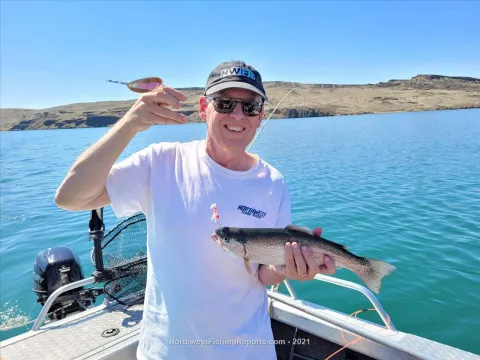
*Pictured - a beautiful rainbow trout caught on our trip. These beautiful trout are in there and make an amazing bonus catch to those elusive kokanee!
/articles/billy-clapp-kokanee-saga
Ten Pink Salmon Shore Locations
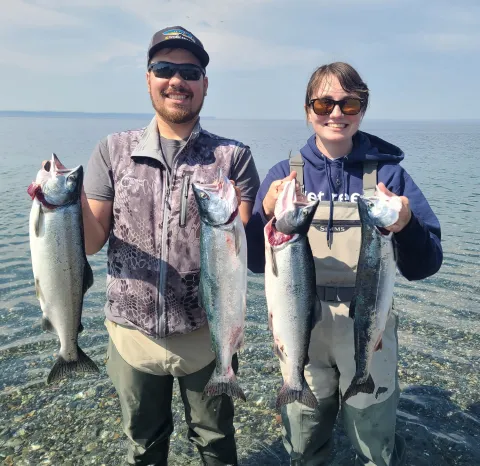
Of all the Pacific salmon species, pink salmon are the most common. 7.76 million pink salmon are expected to return to the Puget Sound this year; the third largest run on record! This is going to be a great year to teach newbies how to fish or learn a new fishery yourself. Pink salmon are snappy, eager biters, perfect for kids or new fishermen. They are named for the pink color of their meat. Speaking of their meat, they taste great grilled or smoked, especially when bled and iced right away.
August is a great time of year to target pink salmon in both the ocean and rivers. They run close to the shore, enabling many bank fishermen the chance at getting a limit. Let's go over 5 Puget Sound saltwater locations and 5 freshwater locations to get you started.
Lincoln Park
A favorite beach for Seattle locals! There is plenty of room to spread out on this large beach. It is a bit of a walk from the parking lot, but don't let that deter you. The fishing here is quite good! The fish run close to shore all the way up and down the beach. Bring your pink Buzz Bombs!
Point No Point
Probably the steepest beach on the list, Point No Point is a beautiful spot to fish. It has an old lighthouse with an adjoining park. The main parking lot is closed down, but you can park at the nearby overflow parking lot and walk to the beach. Make sure to look at a tide chart before you go. The current tends to rip here, which can lead to tangled lines.
Picnic Point
This is another beach that has good concentrations of pink salmon. Bring your waders and watch for schools swimming by. This beach is popular with fly fishermen; make sure to leave them plenty of room to cast. If the fish aren't biting, Edmonds Pier and Mukilteo Beach are both nearby.
Edmonds Pier
Though you'll definitely have company, especially on weekends, this is a fantastic pier for catching all types of salmon. You'll want to have a plan for bringing your fish up on the dock, however. Most people bring a crab ring and haul their catch up that way. Since you're in an elevated spot, it's easier to see fins and tails that signal when the schools of salmon are coming.
Les Davis Pier
This is another saltwater pier that has gained popularity since Dash Point and Redondo Piers were both closed. There are lots of nearby amenities, including a small cafe near the entrance of the pier. Schools of fish swim by frequently during the peak of the season. You'll want to bring a crab ring here to bring your fish up to the dock.
Puyallup River
Like many other fishermen, I learned how to catch pinks on this river! There is a ton of shore access, but it can be crowded, especially on weekends. Tread carefully when wading- it can be almost impossible to spot submerged boulders and trees in the murky water. Most people here drift pink corkies and yarn. Levee Road and River Road near the lower part of the river offer good bank access. Look for gravel bars and bends in the river. The Puyallup runs into the Carbon River, which also has great shore access, but typically opens later in the year. Look for parks and access points near Orting.
Green River
This river has a surprising amount of bank access. Numerous parks and trails dot the river. You can find spots to drift fish, toss spinners, and twitch jigs. The river is called the Duwamish as it gets closer to the mouth. Start in the Duwamish early in the season and follow the fish as they move into the upper river. Most of the river is clear and shallow, so you'll be able to see the schools coming. If they aren't biting at one spot, move to another.
Snohomish River
One of the most popular rivers for fishing pink salmon, there is plenty of shore access here. Thomas Eddy Park and Lord Hill Park have many trails you can walk to find your spot. Many anglers here drift Dick Nite spoons with good success. There are several other parks with good shore access on the lower river.
Nisqually River
This beautiful South Sound river doesn't have much bank access, but it is projected to get an especially strong run of pinks this year. The Nisqually River Public Access has a trail and some rocks that you can fish off of. Bring a lot of extra gear; there are some nasty snags in the river.
Skagit River
Most of the shore access here is at boat ramps and gravel bars. The folks at Holiday Sports in Burlington are always willing to share hot spots with anglers. Just about any gear will work on this river. There are shallow, fast runs that are perfect for drifting as well as slow, deep pockets for twitching jigs or throwing out a bobber. Versatile anglers will do well on this river.
Tackle
For Puget Sound beaches, I'd recommend bringing at least an 8-foot rod; casting distance is important. Make sure it can sling about an ounce of lead. Pink Buzz Bombs are the standard lure. Toss it out to schools of fish and try different jigging speeds and patterns to see what works. Make sure not to dunk your reel in sand or saltwater, and always rinse it thoroughly when you come home.
For rivers, you can use the same rod and reel you used for the beaches. Tie on a corky and yarn if you want to drift fish. About 4 to 6 feet of leader should do the trick. It takes some time to be able to feel the difference between the bottom and a fish bite. Bring a few different weights so you can adjust according to the speed of the current- you want to tick bottom every few seconds, not drag on it. Pink spinners and twitching jigs will also catch fish.
Before heading out, always make sure to check the latest rules and regulations. Emergency closure can and does happen. Pinch your barbs in the Sound and rivers with barbless requirements. Make sure to bring a cooler with ice: pink salmon don't taste as good when they're left flopping on the bank.
/articles/ten-pink-salmon-shore-locations