Getting Ready for Salmon Season! by Hannah Pennebaker
If you're anything like me, then you have dreams about bobber downs and chrome fish. The long wait is over, and the time is finally here! Whether this is your first or fiftieth salmon season, preparation is the key to success. Let's go over some tips on how to ensure your boat, trailer, and gear are in tip-top shape for this salmon season.
If you have a boat, you'll want to make sure it's running smoothly and has all the gear you need. Fill up your gas tank, check your batteries, test your downriggers, and fire up your motors. Take a look at your engine hours and take care of any recommended services. Repair shops are busy this time of year, so it's not a bad idea to watch some tutorials and figure out how to do some basic repairs and services yourself. Our boat has both a 2-stroke main motor and a 4-stroke kicker, so my husband and I have had to become adept at both 2-stroke and 4-stroke motor maintenance!
Don't forget to ensure you have all the Coast Guard-required safety equipment aboard your boat. This equipment is required for good reason, and the Coast Guard conducts inspections.
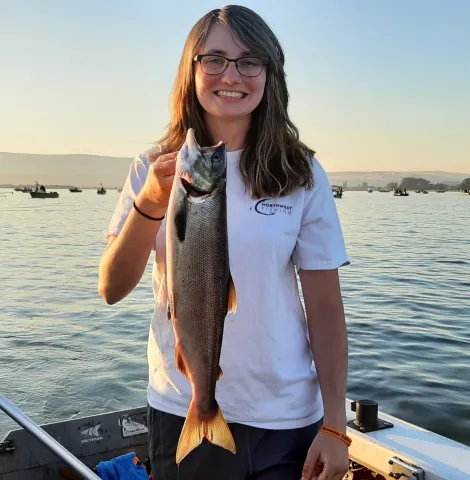
Here's a good checklist to use:
Flares (3 daytime and 3 nighttime, or 3 daytime/nighttime combos)
Life jackets for everyone on board
Throwable flotation device (if boat is 16ft or longer)
Navigation lights (if traveling between sunset and sunrise or during low visibility periods)
Horn/whistle/other sound signal
Fire extinguisher
Carbon monoxide warning sticker/placard
Not Coast Guard required, but good to have:
Manual bilge pump
Marine toolkit
Marine radio
Extra gas cans
Spare motor parts (spark plugs, hose clamps, etc.)
First aid kit
Let's not forget your boat trailer! Make sure to do a thorough visual inspection of the brakes, chains, couplers, straps, wheels, bearings, and tires for damage and wear. It's a good idea to re-grease your wheel bearings every year. Top up the air in your tires if needed. Hook up your trailer lights and verify that your signals are all working. While you're at it, make sure your registration is up to date for both your boat and trailer.
Once you've verified that both your boat and trailer are in good, safe condition, it's time to look at your other gear. Look over your rods and fix any broken guides or tips. Open up your reels and grease any and all moving parts to prepare them for the fights ahead. I like to polish up any spoons or spinners that have corroded during the off-season. This is also a good time to organize tackle boxes and stock up on any swivels, line, etc. Do it now before the season is in full swing and tackle store shelves are empty!
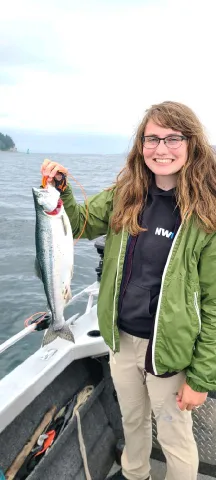
Here are a few other miscellaneous things to check before going out. Make sure you have an up-to-date fishing license and catch record card. You can either use a paper card or use the MyWDFW app. Catch record cards are not added automatically in the app. You need to add them to your cart in the MyWDFW or Fish Washington app for $0. If you're going to an area without cell phone service, the data in your card will be added locally and updated when you come back to an area with service. Be sure to familiarize yourself with the rules of the area where you'll be fishing. Don't forget to pinch your barbs and keep all fish in the water until you are 100% certain it's legal to retain. WDFW has great resources on how to identify each salmon species in both saltwater and freshwater. Please follow the rules and help protect the resource so that future generations can enjoy fresh, local salmon on the dinner table too!
/articles/getting-ready-salmon-season-hannah-pennebaker
Ten Pink Salmon Shore Locations
Of all the Pacific salmon species, pink salmon are the most common. 7.76 million pink salmon are expected to return to the Puget Sound this year; the third largest run on record! This is going to be a great year to teach newbies how to fish or learn a new fishery yourself. Pink salmon are snappy, eager biters, perfect for kids or new fishermen. They are named for the pink color of their meat. Speaking of their meat, they taste great grilled or smoked, especially when bled and iced right away.
August is a great time of year to target pink salmon in both the ocean and rivers. They run close to the shore, enabling many bank fishermen the chance at getting a limit. Let's go over 5 Puget Sound saltwater locations and 5 freshwater locations to get you started.
Lincoln Park
A favorite beach for Seattle locals! There is plenty of room to spread out on this large beach. It is a bit of a walk from the parking lot, but don't let that deter you. The fishing here is quite good! The fish run close to shore all the way up and down the beach. Bring your pink Buzz Bombs!
Point No Point
Probably the steepest beach on the list, Point No Point is a beautiful spot to fish. It has an old lighthouse with an adjoining park. The main parking lot is closed down, but you can park at the nearby overflow parking lot and walk to the beach. Make sure to look at a tide chart before you go. The current tends to rip here, which can lead to tangled lines.
Picnic Point
This is another beach that has good concentrations of pink salmon. Bring your waders and watch for schools swimming by. This beach is popular with fly fishermen; make sure to leave them plenty of room to cast. If the fish aren't biting, Edmonds Pier and Mukilteo Beach are both nearby.
Edmonds Pier
Though you'll definitely have company, especially on weekends, this is a fantastic pier for catching all types of salmon. You'll want to have a plan for bringing your fish up on the dock, however. Most people bring a crab ring and haul their catch up that way. Since you're in an elevated spot, it's easier to see fins and tails that signal when the schools of salmon are coming.
Les Davis Pier
This is another saltwater pier that has gained popularity since Dash Point and Redondo Piers were both closed. There are lots of nearby amenities, including a small cafe near the entrance of the pier. Schools of fish swim by frequently during the peak of the season. You'll want to bring a crab ring here to bring your fish up to the dock.
Puyallup River
Like many other fishermen, I learned how to catch pinks on this river! There is a ton of shore access, but it can be crowded, especially on weekends. Tread carefully when wading- it can be almost impossible to spot submerged boulders and trees in the murky water. Most people here drift pink corkies and yarn. Levee Road and River Road near the lower part of the river offer good bank access. Look for gravel bars and bends in the river. The Puyallup runs into the Carbon River, which also has great shore access, but typically opens later in the year. Look for parks and access points near Orting.
Green River
This river has a surprising amount of bank access. Numerous parks and trails dot the river. You can find spots to drift fish, toss spinners, and twitch jigs. The river is called the Duwamish as it gets closer to the mouth. Start in the Duwamish early in the season and follow the fish as they move into the upper river. Most of the river is clear and shallow, so you'll be able to see the schools coming. If they aren't biting at one spot, move to another.
Snohomish River
One of the most popular rivers for fishing pink salmon, there is plenty of shore access here. Thomas Eddy Park and Lord Hill Park have many trails you can walk to find your spot. Many anglers here drift Dick Nite spoons with good success. There are several other parks with good shore access on the lower river.
Nisqually River
This beautiful South Sound river doesn't have much bank access, but it is projected to get an especially strong run of pinks this year. The Nisqually River Public Access has a trail and some rocks that you can fish off of. Bring a lot of extra gear; there are some nasty snags in the river.
Skagit River
Most of the shore access here is at boat ramps and gravel bars. The folks at Holiday Sports in Burlington are always willing to share hot spots with anglers. Just about any gear will work on this river. There are shallow, fast runs that are perfect for drifting as well as slow, deep pockets for twitching jigs or throwing out a bobber. Versatile anglers will do well on this river.
Tackle
For Puget Sound beaches, I'd recommend bringing at least an 8-foot rod; casting distance is important. Make sure it can sling about an ounce of lead. Pink Buzz Bombs are the standard lure. Toss it out to schools of fish and try different jigging speeds and patterns to see what works. Make sure not to dunk your reel in sand or saltwater, and always rinse it thoroughly when you come home.
For rivers, you can use the same rod and reel you used for the beaches. Tie on a corky and yarn if you want to drift fish. About 4 to 6 feet of leader should do the trick. It takes some time to be able to feel the difference between the bottom and a fish bite. Bring a few different weights so you can adjust according to the speed of the current- you want to tick bottom every few seconds, not drag on it. Pink spinners and twitching jigs will also catch fish.
Before heading out, always make sure to check the latest rules and regulations. Emergency closure can and does happen. Pinch your barbs in the Sound and rivers with barbless requirements. Make sure to bring a cooler with ice: pink salmon don't taste as good when they're left flopping on the bank.
/articles/ten-pink-salmon-shore-locations
The Washington Outdoors Report
HUMPIES, LAWSUITS AND TROUT
PINK SALMON NUMBERS ARE LOOKING GOOD
Odd numbered years are pink salmon years here in Washington State and 2023 is lining up to be a good one for anglers fishing for them in Puget Sound and its tributary streams. The Washington Department of Fish and Wildlife is forecasting a return of nearly four million of these smaller salmon, nicknamed “humpies”, for the hump the males develop on their back after entering fresh water to spawn.
The pinks show up in the Strait of Juan De Fuca as early as June and can be caught by both boat and shore anglers in Puget Sound throughout the month of August. By September, most of the pink salmon are entering tributary streams like the Skagit, Snohomish, Skykomish, Green and Puyallup Rivers, providing additional opportunities for anglers who target them with Buzz Bomb lures, jigs with squid bodies and spoons, the key to all of them is that they must be pink in color if you want to catch pinks with them!
Humpies are a fun fish to cut your teeth on as a first-time salmon angler and it’s not uncommon to catch a good number of them in a day of fishing. While many anglers save them for the smoker, they do taste very good when fresh, especially when grilled over a BBQ or pellet smoker.
LAWSUIT FILED AGAINST WDFW COMMISSIONER
On March 6th the Sportsmen’s Alliance Foundation, which is a pro-hunting and fishing organization, filed a lawsuit in Thurston County to prohibit WDFW Commissioner Lorna Smith from participating as a member of the Commission.
The basis for the lawsuit is that state law prohibits anyone from holding an additional elected or appointed office while serving on the commission. Smith currently serves on the Jefferson County Planning Commission which the Sportsman’s Alliance says is in direct violation of Washington Law.
Todd Adkins with the Sportsman’s Alliance says, "We view this lawsuit as the initial step of a long but important process to bring sanity and decency back to wildlife decision-making in Washington. It all starts here, but trust me, it won’t end here. The animal extremists are going to see a lot of the same in the coming weeks and months."
Lorna Smith is a controversial appointee to the Fish and Wildlife Commission. Since being appointed in 2021 by Governor Jay Inslee she was an instrumental voice in shutting down Washington’s long running spring bear hunt, despite the recommendation of WDFW staff members that it be allowed to take place.
When the Blue Mountain elk heard declined (primarily due to cougar predation), Smith suggested managing the herd as a smaller one instead of addressing the predation issues. She has also introduced the framework of a plan that would limit hunting as a management tool by the agency.
It is worth noting that Smith is not the only commissioner serving in another appointed or elected position. Commissioner Molly Linville (who generally sides with hunters in her decision making), serves on her local school board in Douglas County.
Eli Francovich, writing for the Spokesman Review, contacted both commissioners. Linville told Francovich that she was advised by legal counsel that serving on the school board was not a conflict of interest. Commissioner Smith told Francovich she was serving on the Jefferson County Planning Commission on a volunteer basis and in an advisory role when appointed to the Fish and Wildlife Commission. Smith continued stating she does not believe the statute does not preclude individuals serving in a volunteer position like she has been in Jefferson County.
LAKE LENORE FISHING TRIP
Last but not least, I made it up to Lake Lenore this past week after WDFW fisheries biologist Mike Schmuck told me the fishing there was very good last year and he expected similar results this season. I picked a cold, cloudy day to visit the north end of the lake which is where many of the Lahontan cutthroat trout tend to mill around in the spring prior to spawning.
Unfortunately, the trout were not yet in this part of the lake in good numbers. Two anglers who were leaving as I arrived said they each only caught one fish that day. While fishing, I did see one angler catch one trout and while I did get one good strike, I was unable to hook up and didn’t have any more bites that afternoon.
Lake Lenore is a selective regulation fishery and is primarily a catch and release destination where the trout average two to three pounds and can get up to six pound in size. Fly anglers in pontoon boats favor fishing chironomids under strike indicators while spin anglers can do well fishing spoons with single, barbless hooks.
The fishing at this scenic, desert lake north of Soap Lake should get better towards the end of March and peak in April. I plan to return to try again and will let you know how I do.
John Kruse – www.northwesternoutdoors.com and www.americaoutdoorsradio.com
PHOTO CREDITS:
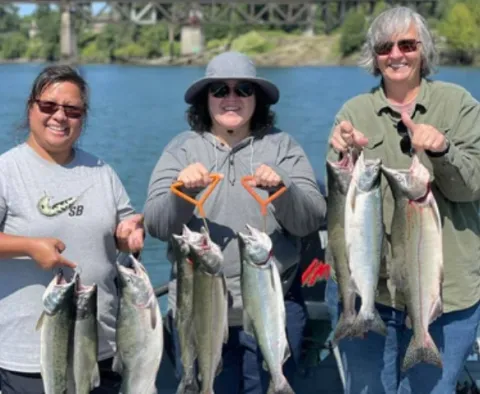
Pink salmon caught on the Snohomish River – Courtesy Brianna Bruce, Livin’ Life Adventures
/articles/washington-outdoors-report
Pink Salmon Everywhere!
Introducing the unique Pink salmon: distinguished by their distinct life cycle, these fish follow a two-year journey, returning to their spawning rivers as two-year-olds. Adding to their allure is the intriguing fact that they exclusively run during odd years within Washington State. This year, an estimated 4 million Pink salmon are projected to traverse the Sound. Despite their classification as the smallest Pacific salmon, their tenacity in battle and delightful flavor remain unyielding. Their culinary versatility shines as they excel on the grill, particularly atop a cedar plank, and find their way into many anglers' smokers. For numerous enthusiasts, Pink salmon mark their initiation into the world of Washington State salmon fishing, thanks to their abundant presence and approachable nature compared to their larger counterparts.
Around this time of year, pinks flood the Sound and begin to stage near their home rivers. One of the best things about pink salmon is that you don’t need a boat to catch them from the shore or pier. They tend to swim within casting distance most of the time, and at this point in their life cycle they are still actively feeding, so they aggressively attack most offerings they see. With millions of pink salmon cruising by the shoreline looking for a meal, this is the perfect time to head to your local saltwater pier or beach and bring home some pinks for the grill.
Presenting A Jig
By and large, most shore anglers fish for pink salmon with jigs. There’s no need to use bait because pink salmon will aggressively bite a well-presented jig. Buzz Bombs and Rotators are the most commonly used jigs. They are easy to use and thousands of pink salmon readily gobble them up every year. They are designed to resemble a wounded baitfish, and they flutter erratically as they fall. Rigging them up is pretty simple: put on your buzz bomb, then thread on a bead and a bumper. Then tie directly to your hook (don’t forget to pinch the barb if it’s required). I usually use a 1/0 or 2/0 hook for pinks. To use jigs, cast out to where you think the fish are at, let your jig sink for a few seconds, then reel in and lift your rod tip up. Next, quickly lower your rod tip and let the jig fall. Repeat this until you reach the shore or catch a fish. Make sure to jig all the way until shore- sometimes the fish will follow your lure and strike at the last second.
Most of your strikes will be as the jig is falling. If you get a bite, quickly set the hook and keep up the pressure, especially if you’re using barbless hooks. As their name suggests, pink salmon love the color pink! It’s a good idea to start with that color, then switch it up if you aren’t getting fish. Buzz Bombs come in a variety of different weights. For pinks, I’d suggest using the lightest weight that you can cast well. If the bite is slow, try rubbing on some shrimp, anise, or herring scent. Gel based scent will cling to the jig longer. You can also thread on a small pink hoochie for extra action. If switching lures doesn’t work, you can switch locations as well. Sometimes just walking down for a few minutes on the beach can make all the difference.
Spinners
Another viable option if fish don’t seem to be hitting your jig is to use spinners. Vibrax spinners tend to be light, so it’s a good idea to thread on some bullet weights above a swivel to help get them down to where the fish are at. Several other brands such as Mepps make heavier spinners that will get to the proper depth without additional weight. Bring several options, and don’t be afraid to add scent or thread a hoochie on.
For your rod and reel, I’d recommend using a rod that can handle ½ to 1 ½ oz. weights, probably around 8 to 10 feet in length. I highly recommend using braided line because you can feel those sensitive bites easier, but mono will definitely do the job. A size 3000 to 4000 reel will have plenty of backbone to handle the fish. Remember to rinse your reel after fishing, saltwater is very corrosive and can cause damage if not washed off.
Where To Start?
Wondering where to start? Les Davis Pier, Edmonds Pier, Des Moines Pier, Browns Point, and Point No Point are all popular locations that reliably produce pinks every year. Any beach with a point and a good drop-off will most likely hold fish. Expect to have some company, though. Just be patient and try to avoid tangling your line with other anglers, especially if the current is strong. If you go to a pier, have a plan for netting your catch. Most piers are too far from the water to be able to use traditional nets. Pier anglers have taken to using crab rings. Just lower them down to the water and scoop up your fish. It takes some practice though! Beach anglers need not use a net, simply back up and swing your fish onto the beach.
As always, be sure to check the rules and regulations before going fishing. Don’t forget to swap those treble hooks for barbless single-point hooks, if required. You can buy barbless hooks or simply pinch the barb yourself with pliers. If you’re new to salmon fishing, WDFW offers salmon identification guides. It’s important to be able to tell the difference between salmon species, because they are regulated differently. You may be able to keep pinks but not chinook, for example.
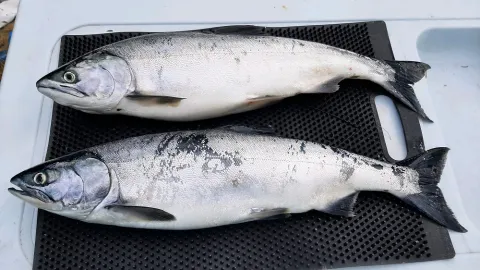
In general, hatcheries do not clip pink salmon fins, so don’t worry about checking if they’re hatchery or wild. The way to identify pink salmon is by checking the gums and the spots on the tail. Pink salmon have large spots on the tail and a white mouth with black gum line and tongue. For optimum meat quality, don’t forget to bleed and gut your catch before going home. Despite what some anglers say, pink salmon tastes great on the smoker or grill. Since they don’t have as much fat as their cousins, they have a milder taste than other salmon, which some people actually enjoy more. My favorite way to eat them is to season them with some of my favorite rub and then grill them on cedar or alder planks. They’re a great summertime treat that the entire family will love!
/articles/pink-salmon-everywhere