Shellfish Harvesting on the Puget Sound
During the mid-1800s, the Duwamish people, a coast Salish tribe that’s indigenous to the south Puget Sound, provided aid to the newly arrived European and Euro-American settlers by showing them how to utilize clam juice as a substitute for cow’s milk, a staple that the settlers no longer had substantial access to. The salty clam broth is rich in potassium, protein, and sodium, and served as a well-needed supplement to the often-malnourished settlers.
The Duwamish, along with many other Coast Salish tribes, had mastered the art of procuring nutrients from the Puget Sound through the harvesting of clams, mussels, oysters, and geoducks. Their mastery was so advanced that they even cultivated their own clams by creating clam gardens by stacking rocks in a line along the zero-tide zone. This practice greatly increased the number of clams that could be harvested in a given area and is often considered the oldest form of aquaculture known to Washington state.
Shellfish harvesting has continued to be a mainstay in both industry and culture alike throughout the years of Washington State's development. It’s estimated that the shellfish industry rakes in over 200 million dollars per year, making Washington the United States foremost producer of shellfish. However, it’s not just the commercial outfits that get to soak in the glory of our bivalve oasis, which is the Salish Sea, there is also ample opportunity throughout the year for the recreational harvester, and for the 2024 year—monthly tide predictions show that March is the kickoff for noteworthy daytime low tides. On these upcoming lows, harvesters will have good access to oysters, cockles, manilla, butter, and horse clams. If you're looking to harvest geoducks, you’ll have to wait till April when the daytime low tides drop to -2 ft and lower.
From the islands to the mainland shores, there are miles upon miles of beach where you can dig for clams and collect oysters in Washington. The main things to consider are whether the beach is open to the public and if shellfish are safe to eat in that area. Head to the WDFW website on the day of your dig to assure you that shellfish have been deemed safe for consumption in your given dig area and that the beach is open to the public for recreational shellfish harvesting.
Oysters
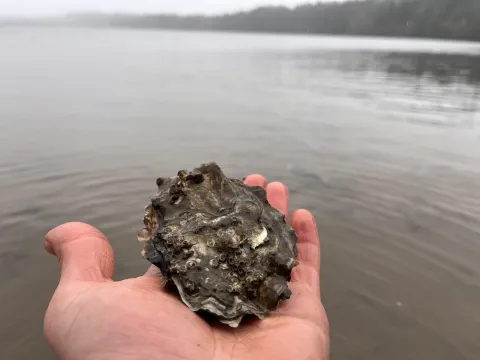
Oysters can be found on most rocky beaches of the Puget Sound and no two beaches are the same regarding how low the tide needs to be for oyster beds to be exposed. A good rule of thumb is to stick to +2 ft tides and lower for your best chance at reaching your daily limit. As a complementary insider tip, I will add that Oakland Bay in Shelton, Washington exposes oyster beds at tides much higher than this.
Oysters would likely be the easiest shellfish to harvest on the Puget Sound if it wasn’t for one important aspect of the process, and that is the shucking of the oyster itself. Legally oysters must be shucked on the beach and the shells should be left where they were found. This allows oyster larvae to use these shells during the colonization process. For more information on best shucking practices please refer to my 2022 April article where this process is explained in great detail. Oysters require little to no cleaning and can be eaten whole in a variety of preparations. Steaming, barbecuing, and deep frying are all popular choices. Minimum size 2 1/2 inches.
Manila
Manila clams are one of the most popular clams to harvest on the Puget Sound and their populations remain healthy throughout the region. They grow up to 2.5 inches long and can be found in sand, gravel, or mud during +2 ft tides or lower. A variety of common garden tools can be used to collect Manila clams. The most popular tools are a hand shovel, hand rake, or a hand pick. Raking along the surface, or simply scooping a few inches of the substrate with a shovel, should easily expose these bivalves at low tide.
After collecting your clams, you’ll want to store them in a cooler with a few ice packs to keep them chilled during transportation. Do not submerge them in water during transport. Once you are home, you can then submerge them in saltwater that you collected from the area where they were harvested. You’ll want to keep the saltwater cool with ice packs. This submerging process is intended to purge the clams of any sand or grit they have stored inside them. Discard any dead clams (clams that stay open and will not close no matter how much you poke at them, should be considered dead). Manilla clams can be eaten whole and are great for chowder, pasta, or soups. Minimum size is 1 1/2 inches.
Butter clams
Butter clams are significantly larger than manilas, often growling up to about 5 inches. At a +2 ft tide or lower, search along the beach for small holes in the sand or mud. Once a hole is located, you can dig with a spade shovel down to around 18 inches or until you reach the clam. Use the same technique as with Manila clams to purge. Though butter clams are delicious when served with melted butter, this is not where they get their name. Instead, butter clams get their name because of the natural buttery flavor of their flesh. They can be used for chowder, barbecued on the half shell, or even fried. Minimum size is 1 1/2 inches.
Horse clams
Ah, the mighty horse clam. Different from the oyster, manilla, or butter clam, the horse clam presents a set of challenges that place it in a category not far from the Pacific Coast razor clam. These clams grow quite large and can reach up to 5 lbs. They can be found in the sand or gravel and are easiest to harvest when located in sand substrate. Walk the beach and scan the surface for a siphon protruding out of the sand.
Horse clams’ siphons are rough to the touch. Once you find the siphon, you can either start digging with your shovel immediately, or you can take a stick and push it down into the siphon. The stick will stay in place and will keep you keyed in on the exact location of the clam. These guys will usually be around 1 ft to 1 1/2 ft deep. Shovel the sand around the clam until you can get your hand on the shell and then give it a good wiggle to free from its hole. If the clam is deep enough, you will need to place a 5-gallon bucket with the bottom cut out into the hole that you are digging. This will act as a retaining wall for the surrounding sand, and it will keep the hole from collapsing in on itself. After the clam is removed, you can place it in a cooler with some ice packs and transport it home.
The horse clam doesn’t require siphoning, instead, these clams need to be processed like a razor clam, and the stomach needs to be removed. The abductors, the foot (or digger), and the neck can all be eaten. Be sure to cut off the siphon (the tip of the neck). Horse clams fry up well with a nice coating of flour and or cornmeal. There is no minimum size for horse clams.
Cockles
Cockles grow up to 5 inches but are more commonly found in the 2 inch - 2 1/2 inch range. Their shells have several ribs that run down each side, making them popular for those who like to repurpose shells for art and other decorative purposes. They can be found in 1-2 inches of sand or cobble at a +2 ft tide or lower and are harvested the same way as manila and butter clams. Cockles can be eaten whole and are often steamed or boiled. Be sure to purge these clams to free up any sand or grit. Minimum size 1 1/2 inches.
As noted before, geoduck opportunities don’t pick up till April, so we will save that behemoth of a clam for a later article. For now, march is the preamble to spring clamming and it’s a great opportunity to get out with friends and family and take advantage of the numerous culinary wonders that grace the waters of our beloved Puget Sound.
/articles/shellfish-harvesting-puget-sound
Montana's Missouri River
By Mike Carey
My son Matt moved to Montana for college several years ago, and now lives in Great Falls with his wife. On our numerous trips to Montana my wife and I have driven past streams and rivers that just cried out “Fish Me”, but I have never had an opportunity.
Until this year, that is. Our schedules finally lined up, gas got cheap, and with a green light from my Better Half I threw my two person pontoon on top of the truck and we headed over to Great Falls. My target fishery was the Missouri River and its famed trout. To say I was excited was an understatement!
Let’s start with little background on the Missouri River. First off, the Missouri is the longest river in the United States and was the main route for expansion into the west. Besides fishing, what the Missouri river is most well-known for is the exploration by Lewis and Clark in 1804-6.
The expedition was commissioned by President Thomas Jefferson to find a water route across the newly purchased Louisiana territory to the Pacific Coast. Lewis and Clark were (besides a few trappers) the first white men to cross this land, map, and scientifically document the area.
Of course, the area had long been home to various Native American tribes, including the Missouri, the Osage, and the Sioux.
Once running wild and free, this river is now dammed in several locations, impacting the flow and original character of the river. The Holter Dam and Canyon Ferry Dam are two dams that regulate the flow of the Missouri from Wolf Creek all the way to Great Falls.
Because of the dams, river flows can be very predictable. In the spring, the river flows at around 5-7,000 cfs, around two miles per hour. The river running from Wolf Creek to Cascade is a drift boaters dream, with well-spaced put-ins and take-outs, developed and rough access points, and easy flowing water.
For the shore angler, there are numerous locations one can get out and fish prime stretches of water. For those new to the area, the fly shops at the towns of Craig and Cascade can offer all the advice and gear you could ask for, including rentals of drift boats and pontoons.

For our two days of fishing, Matt and I focused on a couple different drifts, which allowed us to see a good stretch of the river. On Saturday we drifted from Stickney Creek to Prewett Creek (11.5 miles), and on Sunday a mile north of Wolf Creek to Stickney Creek (7.6 miles).
The two drifts each had their pros and cons. Stickney Creek to Prewett offers by far the most scenic waters, with towering rocky cliffs and formations at every turn. Imagining this land as Lewis and Clark travelled through was truly inspirational for me. The sense of history was over-whelming.
The Wolf Creek to Stickney drift, on the other hand, is the entrance to the canyon area, and as such had more open fields lining the shoreline, slowly building to rock formations hinting at the canyons to come. It also offered more areas where the drift slowed down, and required a bit of work on the oars to move through.
The weather for our trip truly dictated our approach to fishing on our floats. I have normally found Montana weather to be inviting and pleasant in the spring, but on this trip we had cold, rain, and gusting winds that made for challenging fishing conditions.
My son has never fly fished and it became obvious early on that he would have a difficult time casting a fly line. As for myself, I was able to cast flies some of the time. I tried a variety of sinking nymphs, wooley buggers, scuds, and blood worms. It was tough rowing, casting into the wind, and helping Matt all at the same time.
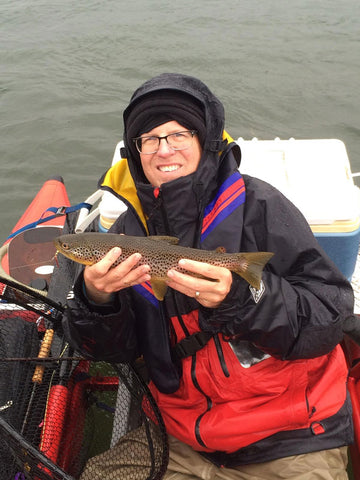
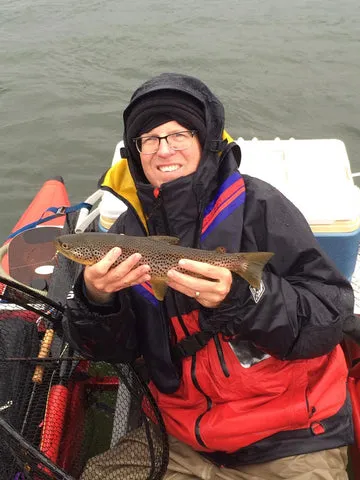
We decided to put aside the fly rods and cast spinners. So much good water and runs to fish! Matt scored the first fish of our weekend, a beautiful brown trout with bright spots and feisty as can be. His excitement at catching his first Montana trout warmed us up despite the cold, rain, and hard blowing wind.

Mile after mile flowed by, as we cast our spinners, catching a fish here, and a fish there. These Missouri river trout may be targeted primarily by fly guys, but they act just like trout anywhere else – they can’t resist a shiny number 2 quarter ounce spinner going by their face. Heck, with so many guys fly fishing the hardware anglers may have an advantage.
By the way, the stretch of the river between Helena and Great Falls is estimated to hold around 4,000 trout per mile. Cold, clean water, rich in nutrients for the rainbow and brown trout, the river has a healthy population of fish to target. And many of these fish are over 16”, and range into the low 20s.
From the Montana Department of fish and wildlife:
“Fish surveys this year indicate rainbow and brown trout numbers remain above the long-term average in the Missouri River between Holter Dam and the town of Cascade, says a state fisheries biologist.
State fisheries crews this fall estimated 5,194 rainbow trout greater than 10 inches long per mile near the town of Craig on the Missouri. Not only is that above the long-term average of 3,174 rainbows per mile, but continues a trend of above average numbers over the past three years: 6,034 per mile in 2011 and 7,312 in 2012.
This year’s population was bigger in size and slightly lower in abundance than the past two years, says Fish, Wildlife and Parks fisheries biologist Grant Grisak, which is typical as the current population reaches its maximum size.
“This year,” Grisak says, “87 percent of the rainbow trout in the Craig section were 15 inches long or greater, and 35 percent of the population was 18 inches long or longer.”
With such numbers come large crowds of anglers, both local and out of state. On our weekend we had the river to ourselves, which I decided was a fair trade-off considering the conditions. I think being a winter steelheader in the Pacific Northwest gave me an edge, at least for tolerating miserable conditions!
We didn’t catch huge numbers of fish, but did catch some real quality, 16-18 inch rainbows and brown trout. But more importantly, my son and I enjoyed a true bonding experience in a uniquely beautiful part of Montana.
/articles/montanas-missouri-river
Too Big To Ignore
By Gary Lewis
With this giant of western river caddis, what the angler sees on the surface is just a hint of what goes on beneath.
Across the West, the October caddis hatch begins in September and hits its stride in the first weeks of October. Even into November, the big bugs can still be found above the river.
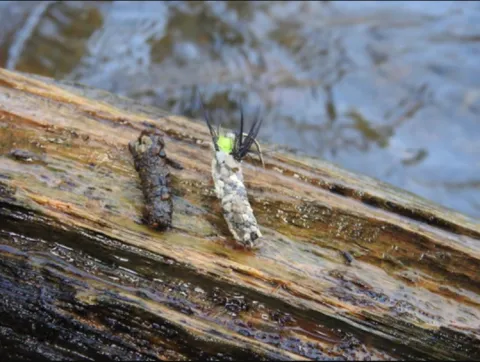
Separate a caddis larva from its shell and what you have is a pale yellow rock worm with jet black head and legs. Trout eat them shell and all, but the larva itself can be compared to trout candy.
Sometime in August, the caddis begin their final transitional stage, similar to the process of a caterpillar enclosing itself in a cocoon. The caddis attaches itself to a rock and seals itself inside its case, where it transitions from the larval stage into a pupa. When the time is right, the pupa breaks out of the case and begins to migrate to the edge of the stream, where it crawls out upon a branch or a rock and dries its wings.
Trout feed on caddis throughout the year, but they are suddenly more available in August, September, and October.
Hatch timing is not as easy to mark as a stonefly hatch. Much of the hatch can come off during night hours. In fact, it is safe to say that if a single orange-bodied, tent-winged bug can be seen above the river, the hatch is on. To the trout's way of looking at the world, the party has started, and it's mostly below the surface.
LARVAL
The larval stage is imitated in both cased and uncased versions. Artificials can be tied on scud-style on English bait hooks, or on straight hooks sized No. 10 to 6 and 2X to 4X long. The fly should be heavy. Beads, lead wire, and copper ripping can all be used to make sure it sinks fast. To tie a passable cased caddis imitation, peacock herl works as a good body base and may be overlaid with a rooster hackle to add depth to the body. The body of the worm can be tied to represent it partially out of the case, or not.
To be ready in the event of an October caddis feeding frenzy, tie or buy John Hazel's Deschutes Cased Caddis, Oswald's BH Rock Roller, Peeking Caddis.
Now picture the worm free from its case. This is a really good fly to fish by itself anytime between the middle of July and end of September. My favorite representations are tied in off-white, yellow, and orange overlaid with clear latex. Heads and legs are completed with dark rabbit or muskrat with the guard hairs picked out. Some other good caseless larva patterns include Tan Caddis Larva, Rip Caddis (Hafele and Morris).
For all intents and purposes, these flies should be fished dead-drift. I learned to fish them with the rod in the high-stick position, but they can also be fished with a strike indicator. Trout tend to suck them in and spit them out just as fast, so it pays to set the hook at the slightest suggestion of a grab.
EMERGENT
Peak caddis hatch activity will probably take place on cloudy days from late afternoon until dark. Anticipating this can precipitate what I think is the most important and exciting stage of the hatch.
Exploit the "pre-hatch" phase with a tandem rig that includes a pupal imitation up top and a larva imitation down deep.
Fish the two-fly rig on a dead-drift, then let the flies swing at the end of the drift.
If a few naturals begin to hatch, it might pay off to tie on a dry with a pupa imitation on a 24-inch trailing dropper. Cast, dead-drift, swing, lift the rod, twitch.
Some of the better pupa imitations include the Tungsten Dirty Bird, Mercer's Tungsten October Caddis, Morrish October BH Caddis Pupa.
ON THE SURFACE - HATCHING
Fishing the dry is a lot like fishing in hopper season. October caddis are not typically all across the surface with trout attacking them. But the flies are big and some trout are looking for them. The fly is trying to break free from the surface, get its wings dry, and fly off. Some accomplish this with ease, while others struggle.
After the natural has left the surface, it will not be available to trout again unless a strong wind drives it back to the river. At such times, the fly may be wind-smacked and a dead-drift is the preferable presentation.
Some of the great October Caddis dry imitations include Morrish October Caddis Dry Fly, Improved Orange Sofa Pillow, and Orange Stimulator.
This is a good time to stay with the time-honored dry and dropper routine with a small Rubber Leg Pheasant Tail, Emergent Sparkle Pupa (brown and yellow) or a yellow X Caddis in tow. Run the dropper about 24 inches back.
ON THE SURFACE - MATING
The next opportunity for the trout to eat the big bug is when the female returns for the egg laying dance.
When the adult female drops eggs atop the water, she touches down, lifts off, and touches down again. Sometimes the current pulls her under and she beats her wings to get back to the air, only to touch down again. This most often takes place from late afternoon until after dark, and the process will assuredly bring trout up off the bottom. Some trout get so engrossed in the ritual they will chase caddis out of the water and try to take them in the air.
Add skitter to the end of a dead-drift dry fly presentation with a quick mend to get the line up, and then turn a small circle with the rod tip. If the fly lifts off the water and touches back down, creating a bit of drag, it is okay. It is one of those moments in a dry fly fisherman's career when drag is a good thing.
Trout seem to materialize in the clear water and chase the bug for two, three, four, five feet across the surface.
Look at the "hatch" of the October caddis not as a single event, but as a process. It's October, what are we waiting for?
# # #
To contact Gary Lewis, visit www.GaryLewisOutdoors.com
The End
/articles/too-big-ignore
Did WA State Parks Cancel Thanksgiving?
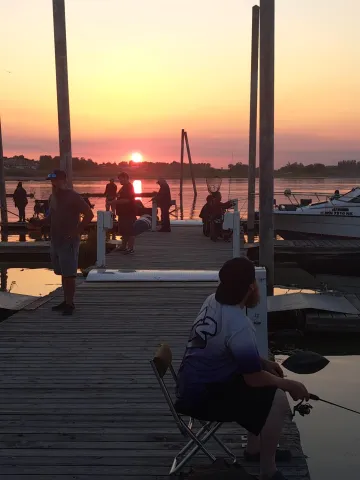
I was reading the September Washington State Parks e-newsletter, which covered the remaining free days available for day visitors to enter and park in Washington’s State Parks without a Discover Pass. One of those dates is the day after Thanksgiving: Friday, November 24th. I was curious why the State Parks and Recreation Commission chose to not call it a Thanksgiving or Day after Thanksgiving free day and emailed the media department to ask them why.
Having not received a response right away, I began researching this and found the day after Thanksgiving was first made a free day to enter state parks in 2017 which was called Autumn Free Day. It remained as Autumn Day through 2021, but in 2022 the free day after Thanksgiving got a new name, Native American Heritage Day. However, in 2023, the late November free entry day was once again designated, Autumn Day. Is this all about wokeness and cancel culture towards Thanksgiving? Did someone object to it being called Native American Heritage Day?
I did receive a reply from State Parks media staff shortly before this column went to press stating, “Washington State Parks and the departments of Fish and Wildlife (WDFW) and Natural Resources (DNR) have offered a Discover Pass “free day” the day after Thanksgiving for several years. The free day is not associated with Thanksgiving. It is the last free day of the year and coincides with autumn and school vacation for many families.”
So perhaps I’m mistaken about cancel culture, though the reply doesn’t answer the question as to why they changed the name from Native American Heritage Day back to Autumn Day for 2023.
Maybe it’s just the way things are done by our state agencies in Washington these days. A great example is the Hungarian partridge, nicknamed the “Hun” for short, which saw its name changed to the completely non-offending and uninspiring name, gray partridge, a few years ago by WDFW. Autumn Day falls into the same category. Afraid to offend any one person or group of people, you just change the name to something that won’t offend (or inspire) anyone.
Of course, that’s just my opinion. However, no matter what it’s called, November 24th would be a good day to get outside into one of our state parks instead of spending the day inside big box retail stores or in front of a computer all day shopping online.
*This article does not necessarily represent the opinion of Northwest Fishing or NW Reel Life magazine.
/articles/did-wa-state-parks-cancel-thanksgiving
Pink Salmon Everywhere!
Introducing the unique Pink salmon: distinguished by their distinct life cycle, these fish follow a two-year journey, returning to their spawning rivers as two-year-olds. Adding to their allure is the intriguing fact that they exclusively run during odd years within Washington State. This year, an estimated 4 million Pink salmon are projected to traverse the Sound. Despite their classification as the smallest Pacific salmon, their tenacity in battle and delightful flavor remain unyielding. Their culinary versatility shines as they excel on the grill, particularly atop a cedar plank, and find their way into many anglers' smokers. For numerous enthusiasts, Pink salmon mark their initiation into the world of Washington State salmon fishing, thanks to their abundant presence and approachable nature compared to their larger counterparts.
Around this time of year, pinks flood the Sound and begin to stage near their home rivers. One of the best things about pink salmon is that you don’t need a boat to catch them from the shore or pier. They tend to swim within casting distance most of the time, and at this point in their life cycle they are still actively feeding, so they aggressively attack most offerings they see. With millions of pink salmon cruising by the shoreline looking for a meal, this is the perfect time to head to your local saltwater pier or beach and bring home some pinks for the grill.
Presenting A Jig
By and large, most shore anglers fish for pink salmon with jigs. There’s no need to use bait because pink salmon will aggressively bite a well-presented jig. Buzz Bombs and Rotators are the most commonly used jigs. They are easy to use and thousands of pink salmon readily gobble them up every year. They are designed to resemble a wounded baitfish, and they flutter erratically as they fall. Rigging them up is pretty simple: put on your buzz bomb, then thread on a bead and a bumper. Then tie directly to your hook (don’t forget to pinch the barb if it’s required). I usually use a 1/0 or 2/0 hook for pinks. To use jigs, cast out to where you think the fish are at, let your jig sink for a few seconds, then reel in and lift your rod tip up. Next, quickly lower your rod tip and let the jig fall. Repeat this until you reach the shore or catch a fish. Make sure to jig all the way until shore- sometimes the fish will follow your lure and strike at the last second.
Most of your strikes will be as the jig is falling. If you get a bite, quickly set the hook and keep up the pressure, especially if you’re using barbless hooks. As their name suggests, pink salmon love the color pink! It’s a good idea to start with that color, then switch it up if you aren’t getting fish. Buzz Bombs come in a variety of different weights. For pinks, I’d suggest using the lightest weight that you can cast well. If the bite is slow, try rubbing on some shrimp, anise, or herring scent. Gel based scent will cling to the jig longer. You can also thread on a small pink hoochie for extra action. If switching lures doesn’t work, you can switch locations as well. Sometimes just walking down for a few minutes on the beach can make all the difference.
Spinners
Another viable option if fish don’t seem to be hitting your jig is to use spinners. Vibrax spinners tend to be light, so it’s a good idea to thread on some bullet weights above a swivel to help get them down to where the fish are at. Several other brands such as Mepps make heavier spinners that will get to the proper depth without additional weight. Bring several options, and don’t be afraid to add scent or thread a hoochie on.
For your rod and reel, I’d recommend using a rod that can handle ½ to 1 ½ oz. weights, probably around 8 to 10 feet in length. I highly recommend using braided line because you can feel those sensitive bites easier, but mono will definitely do the job. A size 3000 to 4000 reel will have plenty of backbone to handle the fish. Remember to rinse your reel after fishing, saltwater is very corrosive and can cause damage if not washed off.
Where To Start?
Wondering where to start? Les Davis Pier, Edmonds Pier, Des Moines Pier, Browns Point, and Point No Point are all popular locations that reliably produce pinks every year. Any beach with a point and a good drop-off will most likely hold fish. Expect to have some company, though. Just be patient and try to avoid tangling your line with other anglers, especially if the current is strong. If you go to a pier, have a plan for netting your catch. Most piers are too far from the water to be able to use traditional nets. Pier anglers have taken to using crab rings. Just lower them down to the water and scoop up your fish. It takes some practice though! Beach anglers need not use a net, simply back up and swing your fish onto the beach.
As always, be sure to check the rules and regulations before going fishing. Don’t forget to swap those treble hooks for barbless single-point hooks, if required. You can buy barbless hooks or simply pinch the barb yourself with pliers. If you’re new to salmon fishing, WDFW offers salmon identification guides. It’s important to be able to tell the difference between salmon species, because they are regulated differently. You may be able to keep pinks but not chinook, for example.
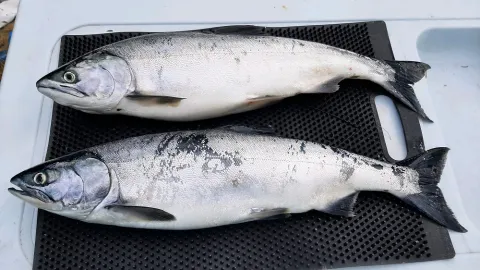
In general, hatcheries do not clip pink salmon fins, so don’t worry about checking if they’re hatchery or wild. The way to identify pink salmon is by checking the gums and the spots on the tail. Pink salmon have large spots on the tail and a white mouth with black gum line and tongue. For optimum meat quality, don’t forget to bleed and gut your catch before going home. Despite what some anglers say, pink salmon tastes great on the smoker or grill. Since they don’t have as much fat as their cousins, they have a milder taste than other salmon, which some people actually enjoy more. My favorite way to eat them is to season them with some of my favorite rub and then grill them on cedar or alder planks. They’re a great summertime treat that the entire family will love!
/articles/pink-salmon-everywhere
March Steelhead Madness
March madness is more than just college basketball, especially if you live and fish in the Pacific Northwest. Steelhead are filling the rivers with late returning hatchery fish along with native sea run rainbows. Unfortunately, watersheds are being shut down; fisheries closed, while hatcheries are overflowing with fin-clipped fish as wild fish returns struggle. It is enough to drive an angler mad, and it should. For those that still wish to catch a steelhead before the spring chinook season kicks off there are a few places to go, especially in Oregon and Idaho but for those in Washington, it is primarily a Southwest river endeavor.
The mighty Cowlitz is where most steelhead anglers will be come March as it is one of the few rivers still open in Washington and has good hatchery returns. For other rivers look at the hatchery smolt plants and projected returns. Once you find a river that has a good plant and return rate be sure to check the regulations including any emergency rules changes and announcements.
Maybe we will get lucky with some openers but likely this will not happen. One catch and release fishery just announced is the Skagit, slated to be open through the month with a restricted days per week schedule. This is a catch and release fishery which means be sure to use the right gear and help keep the encounters low. Do not go there expecting to catch a lot of fish but embrace the ones you do catch, and release with kindness back into the river. By following all the rules, we will get this fishery to stay open until April. The coastal rivers of Oregon are your best bet but also look to the tributaries of the Columbia, on both sides, for some opportunities.
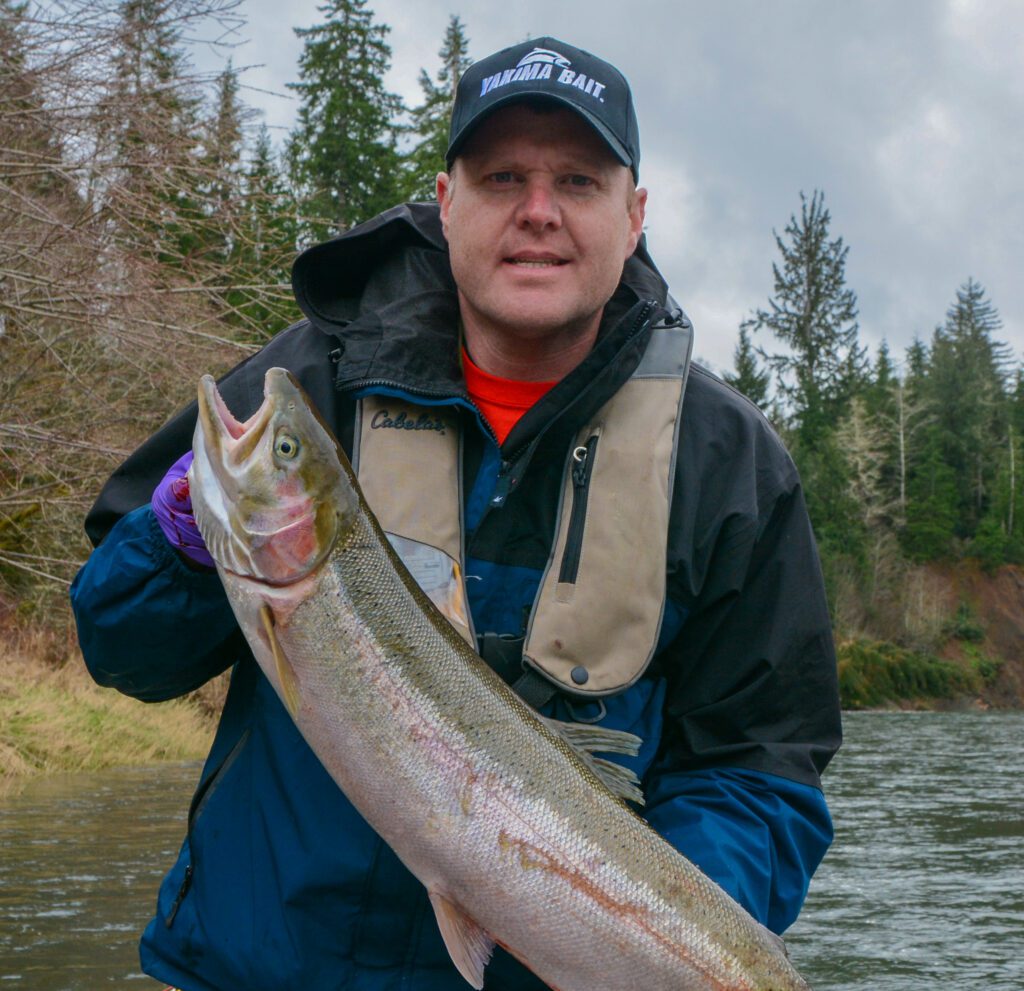
When it comes to fishing for March steelhead you will likely be on a river where hatchery fish are prevalent but with the chance of catching wild fish. This means March is the time to put away the bait and pick up hardware. Even leave the scents at home and use techniques that do not allow steelhead to swallow the hook. One way to keep this from happening is to change hooks to a size or two larger than you are used to using.
Also, re-spool the reels with heavier line and upsize the leaders and use rods of medium-to-medium heavy action. The idea is to hook a fish, get it to the soft rubber net quickly and if wild then release it unharmed. One of the surest ways to kill a fish is to over play it to exhaustion. Steelhead are trout and that means they need clean, cold water and are sensitive to stress.
Swinging spoons or tossing spinners is a great way to catch March steelhead as they hit the hardware hard but will not likely swallow the hook. It is also an active way to fish and learn about rivers. Look at tailouts for holding fish or a riffle where fish will hide from eagles while making their way upriver. A long run can be worked for hours and anglers who know fish are in the system also know that the fish will be on the move. No need to leave a good stretch of river and let the fish come to you. Brass, nickel, and copper are good colors but if the sun is bright then look through the tackle box for a few that are tarnished so not to scare the fish away.
Floating jigs is one of the easiest ways to catch steelhead and a lot of fun. Not only can you fish a jig under a float in about every type of water, any stretch on the river, or most flows but you also will not lose much gear. It is effective and if you only have one rod or technique to use for a day of fishing you cannot go wrong with floating jigs.
Steelhead like to hide behind boulders, both to create a current break to rest and to flush aquatic insects by them to feed on. But drift fishing or swinging a spoon through a boulder garden often means losing gear and you cannot get the lure in the right spot for the steelhead to grab it. This is where floating jigs really shine. Set the depth and cast the line. If you notice you are hitting a boulder then a soft pull on the rod will help it over and the jig falls right into place.
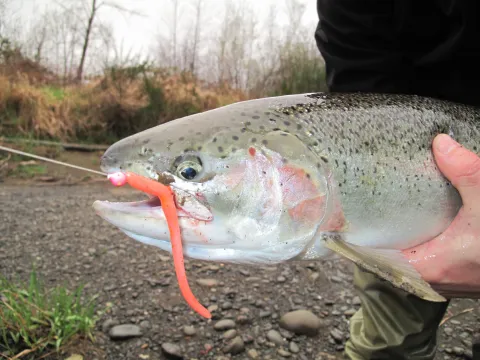
When fishing jigs be sure to not tip them with bait or use scent. Again, the idea is to catch steelhead and if necessary to release them unharmed. Since the hook point is upwards it is likely the jig will be pinned in the upper jaw of the fish. After a hard rain you can use a pink rubber worm threaded onto a bare jig head and fish it just like a jig. Steelhead crave washed out nightcrawlers that are being flushed into the river and will grab the rubber worm, again likely to have it pinned to the top of their mouth.
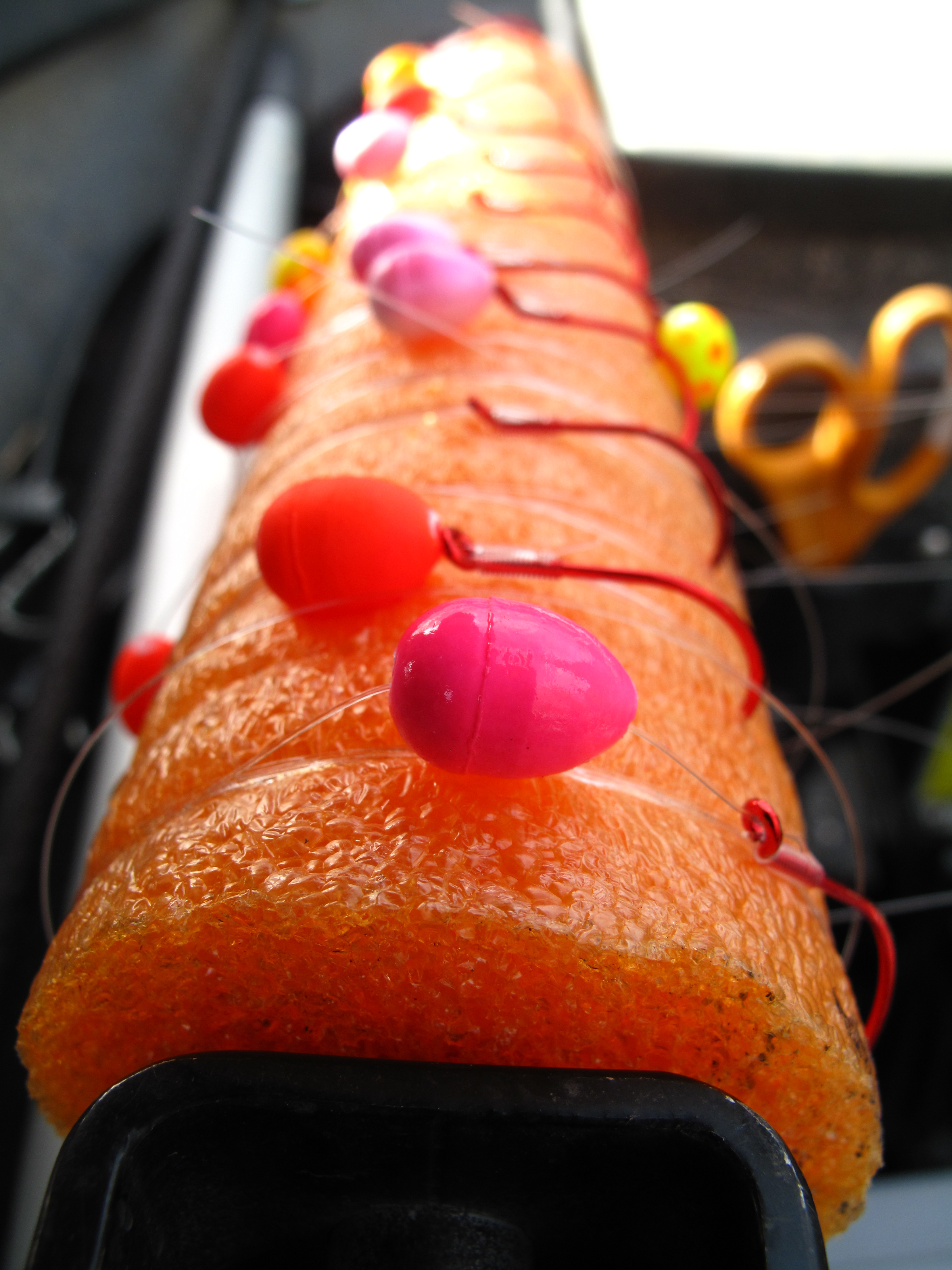
Drift fishing often means gobs of cured roe but for March leave the bait in the fridge and head to the river with some pre-tied pink worms threaded onto the leaders or use beads. Bead fishing has become extremely popular in the past few years and one discovery is that larger soft beads tend to catch more fish than small beads that mimic a single egg. The large bead might look like an egg cluster or a piece of egg skein. Rig the bead with a stop two to three inches in front of the hook so when the steelhead grabs the bead the hook sets in the outside of the jaw. Not only is this a non-killing hookset but it is also strong and helps keep the fish on the hook until landed.
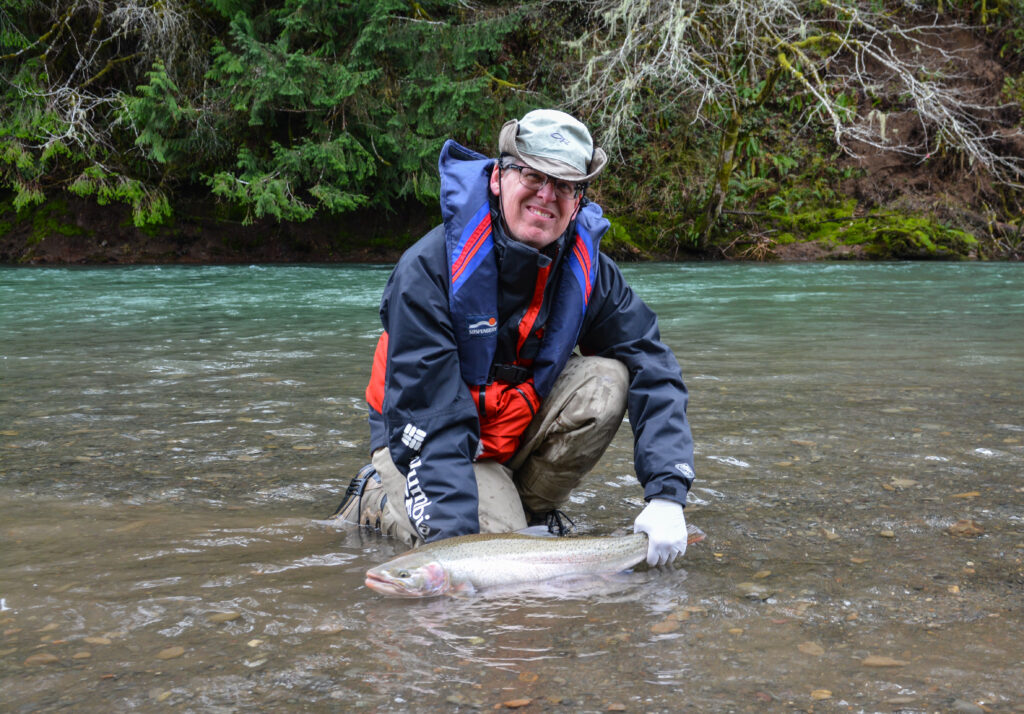
Some anglers will use a tandem or double bead set up where you use one bead with a hook and then a trailing bead with another hook 24 to 30-inches behind. This is a great set up for bobber dogging which is where you use a sliding weight, a long length of mainline and bobber stop to the swivel with a weight and then the leader. The idea is that the weight is dragging on the bottom and with the bobber stop set so far ahead that the weight can keep in contact with the contour of the river bottom. The beads are dragging behind as if drifting down the river. If a fish misses the first bead the second one is trailing right behind and gives the angler a second chance at catching the fish.
Do not think you have to have a boat or raft to fish for steelhead in March. With smaller rivers that get runs of fish, or even larger ones with good access, anglers can target steelhead from the shore. Being a migrating fish and March often means high water the steelhead will be using the bank to break up the strong flows. One technique often overlooked is using a side planer designed for fishing plugs from shore. There are a few on the market and the idea is that it clips onto the mainline and uses the current to pull the plug away from the bank.
Once you get the planer to the area you want to work the plug just close the bail and let the plug do its job. You can also use the bobber dogging technique if you have a long run and can walk the bank easily. Cast out and start walking down the river as the float drags the lures. Floating jigs can be fished this way but it is much harder as you want a natural drift and a lot of times you might pull on the rod and that moves the jig. The reason it works with bobber dogging is because you are dragging the weight on the bottom of the river and less likely to affect the beads movement. If you float jigs from shore be sure to have a lot of mainline and just open the bail to extend the drift.
There are plenty of ways to fish for winter steelhead, just not a lot of places to fish. Do some research and pick a river. As the month wanes towards April the rivers often calm down and the weather can give a few nice springlike days. Be sure to use techniques that will not harm wild fish and be ready to get the fish to hand quickly. Having a conservation mindset will ensure fisheries in the future and keep you from going mad.
/articles/march-steelhead-madness
Late Winter Steelhead Fishing
Winter Steelhead fishing… where do we start? First off, winter Steelhead fishing in Washington is unique and different from many of our other fisheries based on one simple fact, the weather. The winter generally brings cold, dark, and wet days which makes this type of fishing a bit more extreme. So then, why do we do it? Great question, but the bigger question is, why would we not?
There is an allure to Steelhead fishing that is hard to describe. I know that there is nothing that I would rather do. On top of inclement weather, Steelhead are more elusive than our migrating salmon and less predictable, making them more difficult to catch. Changes in river conditions during the wet, winter months are constant, forcing us to drop what we are doing and go when the conditions are best.
We also need to change up our techniques based on river conditions. One more thing worthy of mention is that there are limited hatchery program opportunities left, so much of our Steelhead fishing is the catch and release of wild fish. I find that wild fish tend to fight better and to me, there is nothing quite like battling an amazing fish and holding onto its tail as it builds up the energy to swim off to where it came from.
For those of you interested in winter Steelhead, I would like to share some information that might help in getting started. I am only sharing what I have learned but I hope that the information is useful. Also, if you have followed my articles in other outdoor magazines, then you probably know that I spend a lot of time fishing with professional guides all over the Pacific Northwest. This helps as I can share a perspective that has been obtained across many experiences and years of fishing.
Most of my Steelhead fishing has been done in the rivers in NW Washington, SW Washington, and the Washington Coast, specifically Forks and the Quinault and Queets Rivers within the reservation. There are so many options available, so I recommend that you start with a river that is near you and learn a little about it…the rules, the opportunities, and most importantly, some good guides who know the river well. I encourage you to spend the money to fish with a guide to learn what works and understand how to target fish in different conditions. Know that every guide has a different opinion and approach, so try a few to gain a broader perspective.
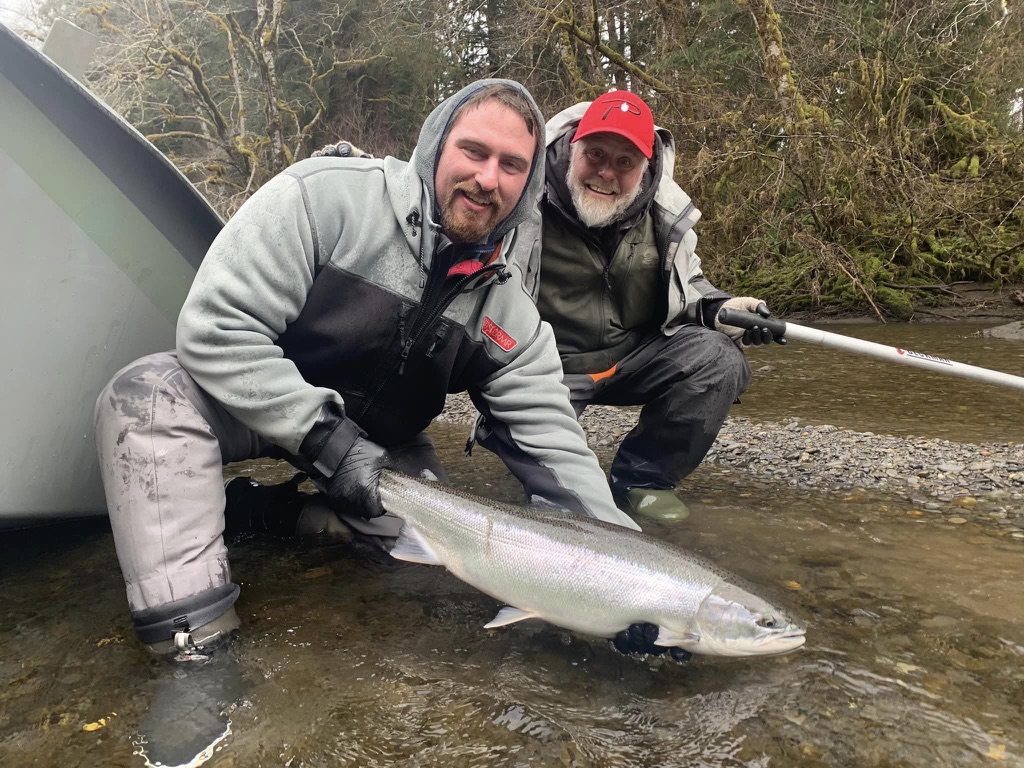
Once you have spent time on the river with a guide or two, you can focus on the gear that you need. Believe me, you can spend a lot of money quickly so make sure that you get it right. To start, you should have a nice pair of waders and wading boots and a waterproof jacket. Getting cold and wet will ruin your day in a hurry. Next, and just my opinion, focus on 2-3 techniques that you would like to try and focus on the gear needed for those specific approaches. I find that it is best to master a few techniques before expanding your toolkit.
There are many popular techniques for catching Steelhead such as casting or trolling plugs from the bank or shore, throwing spoons and spinners, float fishing beads, bait, jigs and other offerings, drift fishing or bobber dogging beads, yarnies, bait and other offerings, and much more. So many different options to choose from and they all work.
If had to pick 2-3 techniques, here is what I would do. It’s hard to choose because they all work and some work better at certain times and under certain conditions. I like to float fish maribou jigs and soft plastic worms on jig heads, and I really like to float fish beads. My float fishing approach for beads combines a float, inline weight, a long leader with some split shot in the middle, and a soft bead that bounces along the bottom. Aside from these techniques, I love to throw spoons and spinners. If I am fishing from a drift boat as opposed to bank fishing, I like to troll plugs in long stretches of slower-moving, deep water.
If I was to start fresh right now, I would have a lot less gear in my garage. Now there are many different types of rods and some work better for certain techniques. If I had to pick one rod to use for multiple techniques, I would go with a 9’6”, 6-10# to 8-17# rated spinning rod with a 30/3000 or 35/3500 size spinning reel. I prefer a bit lighter rod to maximize sensitivity and have found that 30# braid works best for my mainline along with a 10-15’ bumper of fluorocarbon. This is a great all-around rod and reel setup that will allow you to employ most of the methods that I listed above.
If you want to focus on float fishing, I recommend a 10’6” rod that is designed for this purpose. The added length really helps you mend your line easily. For “old school” drift fishing, I prefer a one-piece 7’6” rod but most of the time I am bobber dogging, which is simply drift fishing with the addition of a float/bobber to pull your gear naturally along the bottom and downstream. A 9’6” rod works great for bobber dogging, and you can easily break it down to fit inside your car.
Once you have your clothing, rod, and reel, you can focus on terminal tackle. For this, I recommend going to your local tackle shop as opposed to a “big box” store. You will get valuable advice that will help you to purchase the best gear. Also, lean on what you learned from the guides you fished with, and make sure to take pictures of their gear setups and rigging when you fish with them. At this point, you’re going to need a collection of swivels, bobber stops, small beads for your bobber stop, and leader material, generally fluorocarbon. Note that if you don’t want to tie your leaders immediately, you can purchase them pretied.
It’s also a good idea to have a selection of hooks in sizes from #4 to 1/0 or even 2/0 in some cases. Purchase a box of soft beads in a variety of sizes and colors, some maribou jigs in pink/cerise/orange combinations and the red/white/black nightmare patterns, as well as 1/8 or 1/4oz jig heads (I prefer white) and some 3.5” plastic/rubber worms. Don’t forget a selection of weights. I am a big fan of the stainless-steel weights from Dave’s Tangle Free. You have enough gear to get you through a winter of learning and chasing Steelhead. Between maribou and worm jigs and beads, you can fish in just about any condition. It would not be a terrible idea to have a few spinners and/or spoons as well. They are fun to toss when nothing else seems to be working.
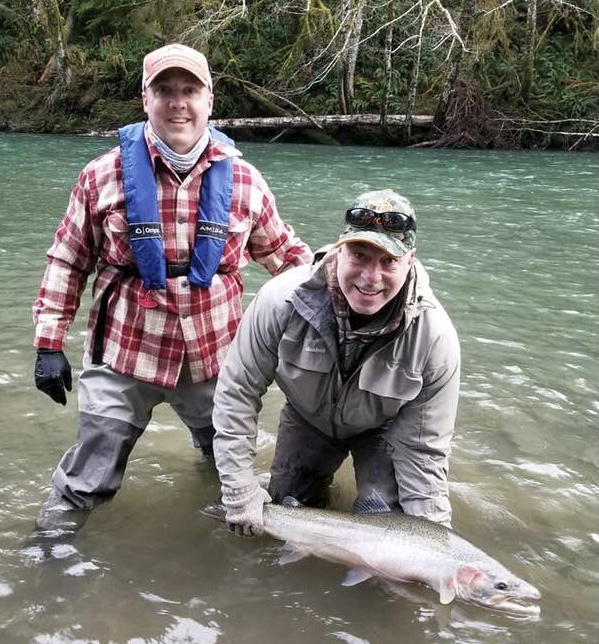
Now, you have learned the basics from one or more guides, you have learned how to fish a specific river system, you have purchased a handful of the gear that you need and the time has come to go out and give it a shot. Believe me, you don’t have to go buy a drift boat to fish. There are plenty of opportunities to wade and bank fish. Also, I encourage you to continue to fish with guides if you want to boat fish or make a friend who has one. Believe it or not, many fishermen who own boats are looking for fishing buddies, so join a Facebook group to make some friends.
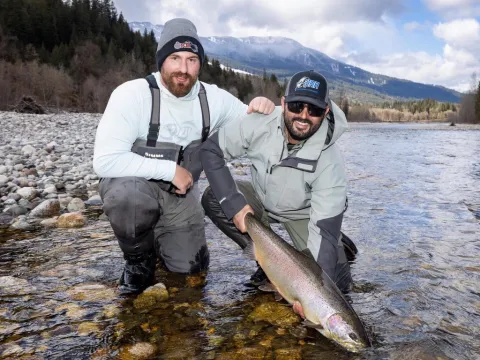
Winter Steelhead fishing is an amazing pastime and until you have spent some time doing it, you really don’t realize how special it is. One warning, don’t expect to go out and catch a Steelhead on your first trip. They are called a fish of 10,000 casts for a reason. I can say that they are very special fish, and you will never forget your first, or for that matter, any Steelhead that you catch. Now, get out there and good luck.
/articles/late-winter-steelhead-fishing
Trout Fishing: When Life Gives You Lemons.
Farmed. Hatchery. Wild.
I fed a rusty orange streamer into the current, threw an upstream mend, and let it swing. We call it First Water. It's what you get early in the morning when you get to the river before the next guy. First Water makes you smile after a hard week at work. Like making lemonade out of lemons.
A trout hammered the fly and the tippet snapped. Heart pounding, I cut the leader back to 8-pound, tied on another fly and cast quartering-down. This time when the fish hit, it turned and charged, coming straight out of the water. Five minutes later we slid the net under a four-pound gnarly, hook-jawed brood stock rainbow. We have learned from experience it's hard to revive the big hatchery rainbows, so it was an easy decision to keep it for the table.
FARMED, HATCHERY, WILD OR NATIVE?
Here's a thing that doesn't make sense. We go to the grocery store and complain about the price of groceries and then we drive to the lake and catch and release a limit of rainbow trout at $10 a pound. I've done it.
Hey, those fish were put there to catch and keep. It's healthy food, high in omega-3 fatty acids and B vitamins. Easy to catch (sometimes). Easy to clean. Tastes good. Good for you.
Think of it like this: we have rainbows, cutthroats, brook trout, brown trout, bull trout, and lake trout in our lakes, rivers, and hatchery raceways. Some of them end up behind the butcher's glass at the grocery store. How do we tell where they came from? The ones in the cellophane and Styrofoam, that's easy. Those are farmed fish, which are generally shoveled a high-quality pelletized food and then fed a carotenoid called Astaxanthin which gives the meat an orange color and improves the taste.
According to Luke Allen, from the Wizard Falls Hatchery and Tim Foulk from the Fall River Hatchery, astaxanthin is produced by microalgae which is ingested by small fish and invertebrates like krill, which are then ingested by fish.
In Oregon, hatchery-raised rainbow trout (and cutthroats) are classified as legals (usually 8 to 12 inches), trophies (usually 14 to 18 inches), and brood stock, which are the surplus breeding trout that tip the scales somewhere between four to ten pounds. In Central Oregon, these fish end up in places like Pine Hollow Reservoir, Walton Lake, South Twin, and Fall River. Hatchery trout may also be released as fingerlings in waters like Lava Lake, East Lake and Diamond Lake where the natural feed is so good the fish grow fast. Fingerlings are also released in the high lakes every other year. Fingerlings, although raised in hatcheries in geometric order, tend to behave and look more like wild trout as they reach a harvestable age.
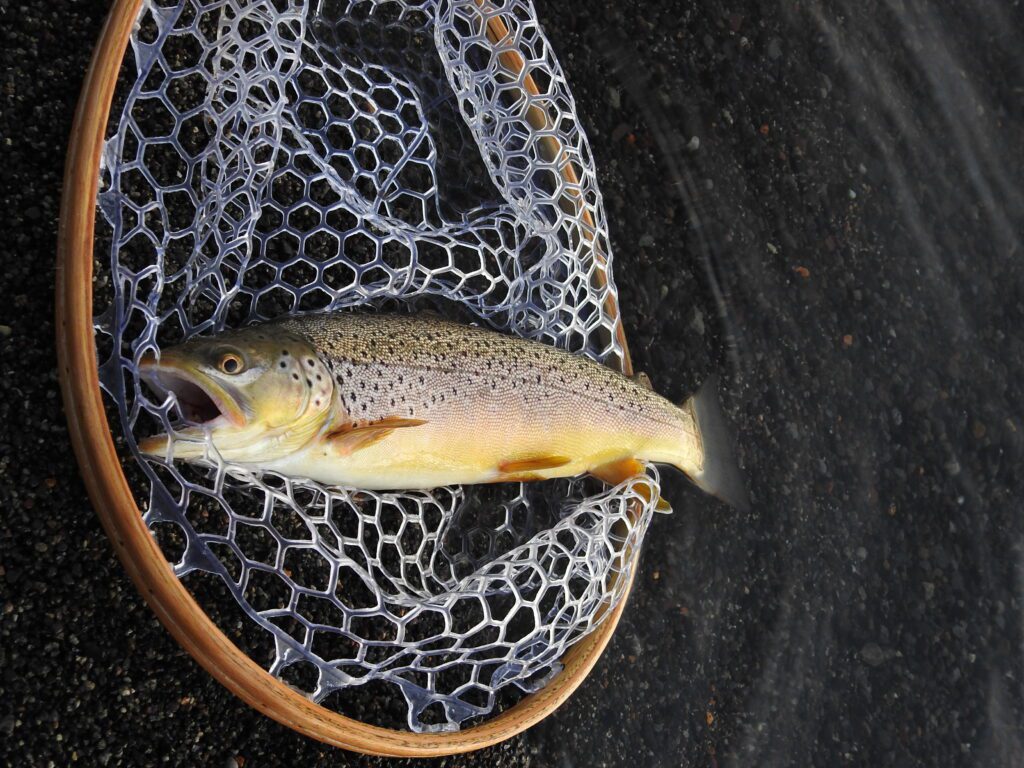
The terms wild and native can refer to the same fish or mean two different things. Brown trout, brook trout, and lake trout are not indigenous to Oregon but were introduced. Browns come from Germany and brooks come from the East Coast. That's why we refer to them as German browns and Eastern brooks. But if they were hatched in gravel we call them wild trout.
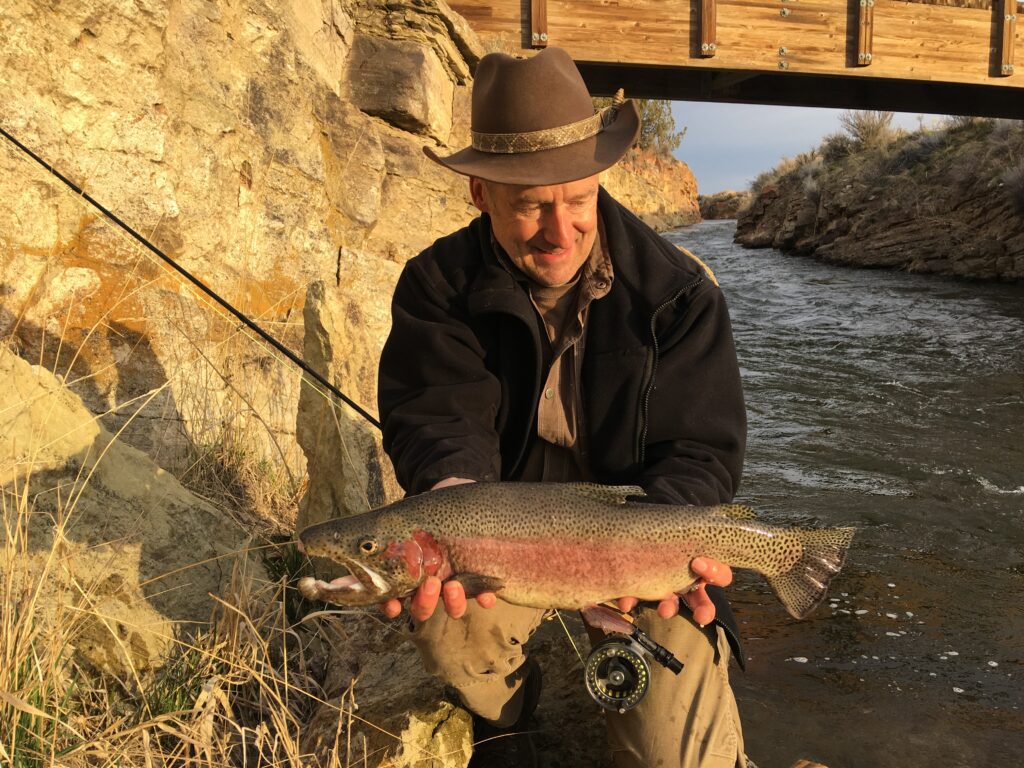
Photo courtesy Don Lewis
The term native is inclusive of rainbows, cutthroat and bull trout. In some cases these fish may be caught, kept and eaten, but it’s a good idea to release them to spawn and prosper. If you catch a brookie in the high lakes, hey, that's some of the best wild food you can get. And you are not eating a native fish.
A steelhead is a rainbow trout that migrated from freshwater to the ocean and returned. If a person eats farmed steelhead, it is probably not steelhead at all, but rainbow trout packaged as steelhead. An angler that catches and eats a fin-marked steelhead has consumed a hatchery steelhead. Surplus steelhead that returned to their hatcheries in places like Nehalem or Three Rivers are often trucked to coastal lakes and set free to give anglers another chance at them. Because they will probably not thrive in the lake, the highest use of these fish is to turn them into a good meal.
Fisheries managers sometimes struggle with the divide between the consumptive and the catch-and-release ethic.
Diamond Lake was devoid of fish before it was stocked by mule trains in the early 1900s. The food-rich lake still grows fish to trophy proportions and not enough gets taken home by sportsmen. It's a resource we could be making better use of, and the same principle applies all over the state from Lake Selmac to Wallowa Lake to Bikini Pond to Rock Creek Reservoir to Lava Lake. Those fish are there to eat. And there are some really good things like dill, parsley and lemon that go great with a pan full of eastern brookies or hatchery 'bows.
That's why I say when life gives you lemons, go catch a trout.
For a copy of the Fishing Central Oregon book, send $29.99 to Gary Lewis Outdoors, PO Box 1364, Bend, OR 97709 To contact Gary Lewis, visit www.GaryLewisOutdoors.com
/articles/trout-fishing-when-life-gives-you-lemons
Boat Trailer Safety and Care
Trailer maintenance and safety checks should be an ongoing activity, but the end of the season is always a good time point to pay special attention to your trailer.
Summertime! The boats are in full use, there are a plethora of fish to chase all over the Pacific Northwest, and that means many of us are trailering our boats all over the place to watch the rods bend and the nets fly! In the last couple of months, I have put thousands of miles on my trailer chasing fish (mostly salmon) and I know many of you reading this have done the same.
With the dream of big fish, it is easy to put off trailer maintenance or not realize how important it is. There is no faster way to ruin a fishing trip than a damaged trailer on the side of the highway. Many anglers have been there, we have all seen it, and there is no worse feeling.
Heck, we all feel bad for the person on the side of the road when we see them. This month’s article focuses on three helpful tips on maintaining your trailer for peak performance and safety, and doing what is possible to ensure you get to the fish!
Inspect the Hitch Area
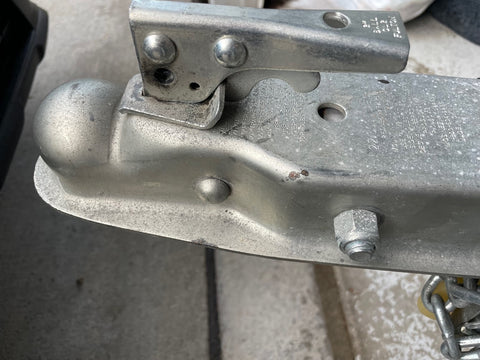
Although this seems simple, checking the hitch itself as well as the ball couplers, wiring, and safety chains is crucial, because this can be a major issue area. Especially for anglers who are in saltwater often, these areas can rust, create wear, and eventually weaken to the point of snapping.
When I was checking the wire safety chains on my trailer, I was able to easily snap one off due to rust from water underneath the “watertight” wrapping. Luckily, this was during a check and not on the road!
Additionally, the coupling and ball can wear down, making the coupling grip loose, causing slack on the attachment, and, even if it holds, putting wear in other areas of the trailer by bouncing with a slack connection.
Keeping the whole area well-greased and oiled helps mitigate rust and wear as well as make for easy use. Before every trip, a 2- minute check can help stave off all these issues. Oiling the couplers often with just a little WD-40 will make the coupler easy to use and will help to protect from wear and damage.
Tires!
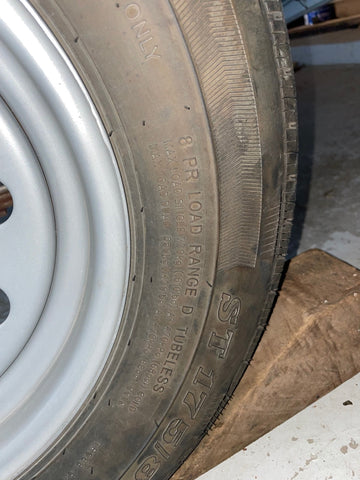
Whether you’re a single axle, double axle, or bigger, the tires are probably the most important part of your everyday trailer use. Nothing sees more wear and use than the tires. Running 4-6 ply tires can help with trailer blowout, and more plies add more protection when trailering and are rated for heavier loads, making them stronger.
Making sure the tires are properly inflated to the manufacturer’s rating is also crucial, as low or high pressure can lead to punctures, blowouts due to heat expansion, and, most commonly, uneven wear. Low and high pressure can lead to wear on the inside and outside of the tire, shortening the life as well.
There are many things that can be done to save the life of the tires. Heat and sun are the enemy of tires. Parking the boat in a cool spot that’s not in direct sunlight, covering the tires when the trailer is sitting in the sun for a long time, and make sure the tires avoid direct heat as much as possible are great steps.
In addition, make sure there is always good tread by checking with a penny to ensure the depth is safe for travel. When checking tires, make sure you look at the spare as well! The spare sees the most sun, as it is not covered by a fender at all. Putting a cover on the spare is excellent idea to keep the tire useable as long as possible.
Wheel Bearings
The wheel bearings are often the most feared parts of a trailer, since they cause a ton of problems, and usually expensive ones! Bad bearings will cause the trailer to vibrate, cause the wheel to fail, and, at high speeds, can cause the wheel to fly off entirely. Bad bearings can also damage everything around them as well.
The usual way bearings fail is because of poor lubrication, since it causes heat and damage. Other reasons also include loose axles or too tight/ loose nuts. Excessive load on the trailer can hurt bearings as well. To check your bearings, ensure there is no grease/oil leaking.
Bearings should be re-packed/ done yearly or semi-yearly depending on use to ensure peak performance. The entire goal of the grease is to reduce friction, cut heat, and make sure there is no explosion! After re-greasing, the grease will make a vacuum seal, preventing moisture/debris from entering the bearing.
Packing bearings is not hard with the right tools and grease, but the local boat shop has professionals who can do it for you, ensuring it’s done correctly. Only attempt the bearing if you are confident in doing so, as improperly performing a bearing packing will lead to major issues.
Oil-wash/ fluid bearings are great for boat trailers as well, as they keep lubrication surrounding the bearing, with more viscous fluid that penetrates the bearing better and keeps it cool.

There are many steps in a trailer-checklist, including lights, bolts, bunks, tie downs, etc., but these 3 tips will help keep you chasing fish. Going through a fast check before every trip will keep you and your boat as safe as possible while headed to the fishing grounds.
If you need a checklist, there are plenty to choose from online which will perfectly fit your trailer. Your trailer needs will also vary depending on use and where you fish. If fishing saltwater, make sure to wash the trailer thoroughly with fresh water or water and a salt-cutter, and do constant checks on the axles and areas water can trap, even if you have a galvanized trailer.
More use will require more routine maintenance, but it’s better to check at home than on the side of the interstate! With a safe trailer, you are ready to chase fish around the nation!
/articles/boat-trailer-safety-and-care
Roosters Northwest Good Eats
by Hillary Holman
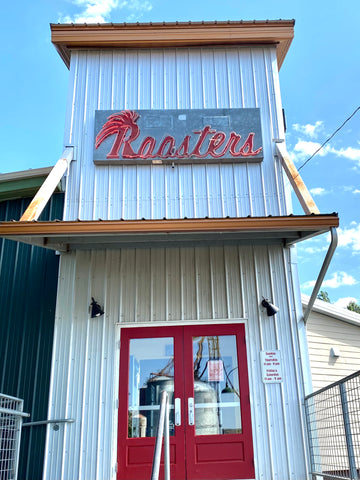
Located on the Washington side of the Snake River, a stones throw away from Granite Park sits funky Roosters Waterfront Restaurant.
How I found It
Rob, Paul and I had been fishing the confluence of the Snake and Clearwater with Kyle Jones of Jones Sportfishing in mid-September. Fishing was good and it was a beautiful day. Kyle suggested we head in for a lackadaisical lunch at Roosters, being it was Pauls’ Birthday.
Paul had got his fish Selfie of the morning and was in good spirits, as always. Now I thought we were going for a ride, up or down the river I wasn’t sure. I was surprised at the mere 5-minute ride it took us to get from prime fishing waters to the boat landing at Roosters Waterfront Restaurant.
A Typical lunch on the Snake for me consists of beef jerky, smoked salmon or whatever “Gas Station Food” I bought a long the way in. Not Today! Today was Pauls’ Birthday, and his luck would have it we were fishing right next to Clarkston’s best little Funky Eatery.
We pulled the boat up to the landing and Kyle tied us off. I could see the restaurant from the river. The history of the building tickled my curiosity. I imagined all of what use to be and how the building may have been used.
It was great to see an old industrial building repurposed and still in use today along the riverbank. A 1940’s flatbed adorned the covered patio along with patio heaters and lights.
Entering the building through the front Silo was the way to go. History and nostalgia decorate these walls and hang from the vaulted ceiling above. I grabbed as much of the eye candy I could while making our way out to the patio that overlooked the infamous Snake.
We sat there on the deck on a beautiful day of blue skies, good fishing, and good company enjoying a day that would resonate in my memory for years to come. A few of us ordered a couple beers to celebrate Paul on his Birthday.
Others stuck to hydrating to make sure the day was seen through till the end.
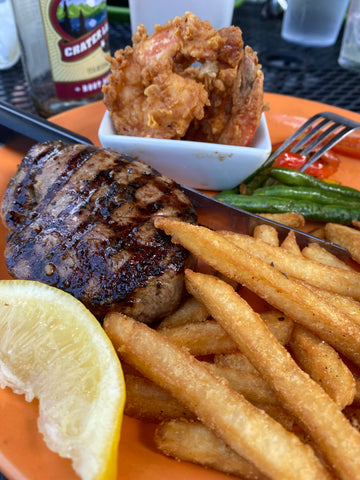
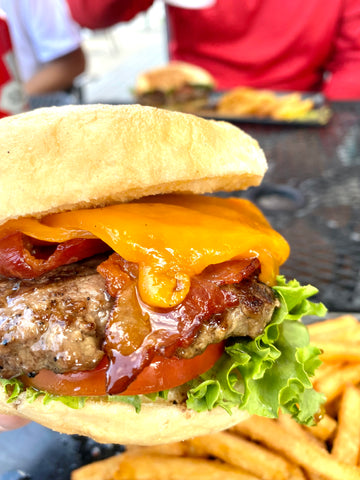
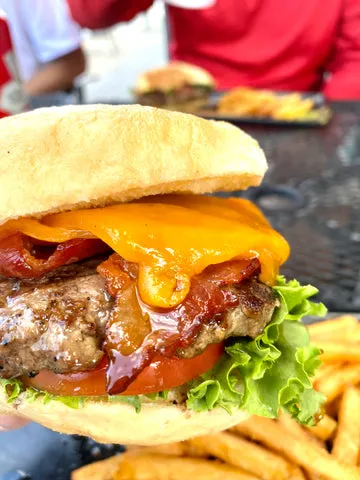
The battered asparagus was great to share as an appetizer. Rob ordered a burger and I ordered a steak, both worth raving about. The beers on tap were plentiful and the scenery superb.
When fishing in Clarkston or Lewiston, I encourage you to give Roosters a shot. Pull up to the landing, let your hair down and take it in. Whether it be the fishing, the food, the beer, the view or the company, memories are made at Roosters.
/articles/roosters-northwest-good-eats