Springtime means Big Natives
Steelhead (Oncorhynchus mykiss), Washington’s iconic anadromous rainbow trout, return from the ocean to freshwater rivers to spawn. Across the state, they exhibit two general seasonal runs, winter and summer, though exact timing varies by river and region.
Run timing is critical when pursuing these coveted fish, so it is important to understand when the fish will begin to return, and for those of us looking for the largest, natives, it means timing it perfectly.
In general, winter steelhead runs tend to follow the following schedule.
- Begin: Typically, in late fall (around November), as ocean-migrating fish start moving upstream.
- Peak: Most winter steelhead arrive in December through February, with some systems seeing strong numbers returning into March and April.
- Best for big wild fish: Many of Washington’s large native (wild) steelhead, especially in coastal rivers of the Olympic Peninsula, are most abundant mid-winter through early spring. Local guides note that hatchery fish often peak earlier (e.g., December), with wild steelhead showing up in good numbers soon after and extending into early spring.
While both hatchery and wild steelhead can contribute to runs, depending, of course, on the river system, native (wild) fish, which are often bigger and more prized, tend to peak slightly later than hatchery fish in most systems. For example:
- On the Olympic Peninsula and coastal rivers: Hatchery fish are known to start trailing in around Thanksgiving and trail off in January, whereas large wild steelhead often show up in their prime numbers from late December through February, into March, and even April.
- In Puget Sound watersheds, winter runs that include wild fish also peak in December–January, but local timing can vary by watershed, and even by year, depending on weather, ocean, and river conditions.
Note that after entering their natal waters, steelhead often remain in the river for many months prior to spawning and returning to the salt. The length of time that they stay in the river really depends on the river system, the run timing, and their genetics and instincts.
Unlike salmon, steelhead can return to the salt water for another cycle, and some steelhead have been recorded returning to spawn for 3 or 4 spawning cycles. Of course, a 3 or 4-salt fish will often tend to be larger than a 1 or 2-salt fish; thus, these fish are highly sought after and chased by serious anglers.
When reviewing the WDFW or ODFW regulations, you will often see rivers closing at the end of January, mid-February, or in March. There is a reason for this. The recreational seasons are generally set to provide anglers with opportunities to fish for steelhead, whether that be for catch and release of native fish or a retention fishery for hatchery fish. The seasons are timed to close about the time that the main runs of native fish are expected to return based on historical run timing. For this reason, the fisheries are closed to protect the native fish in an attempt to restore runs back to acceptable numbers.
A great example of this is the Sauk River. The Sauk has long been a coveted fishery since it is an all-native river, and the fish tend to be large, genetically mean, and extremely aggressive. These fish are wired differently, and catching one is unlike any other fishery that I have experienced. The Sauk River winter/spring wild steelhead fishery has experienced multiple closures due to low wild returns, with significant closures occurring around
2008, 2010–2017, and 2020–2022. The fishery often closes or faces restrictions when wild steelhead forecasts fall below the 6,000-fish escapement threshold, as noted by the Washington Department of Fish and Wildlife. A few years ago, WDFW and NOAA agreed to a ten-year plan based on return data, in an effort to offer a recreational catch-and-release fishery on the Sauk. We finally received some long-awaited good news. Unfortunately, our current governor and his cabinet slashed budgets for 2026, and this fishery was taken from us, as there was not enough budget to staff and monitor the fishery. This is devastating for the local communities and the anglers who enjoyed spending time on this epic river system. The Sauk is not the only system experiencing this fate. Good for the fish, bad for us anglers!
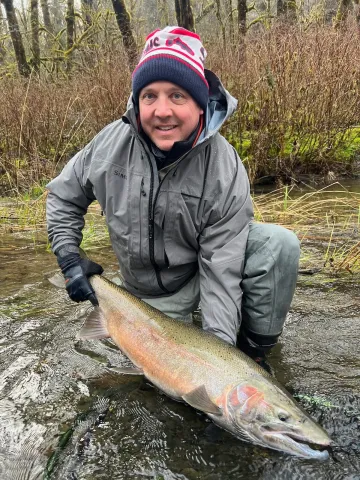
Speaking of big, mean, native winter steelhead, in early April 2025, I fished with guide Cary Hofmann on the Sauk. We were bobber dogging 20mm beads that day, and I hooked the largest steelhead of my life. My float was just above the drift boat as we entered the bottom of a run, and my float disappeared. I jumped on my reel, and as I did, my float popped back to the surface. I opened my bail to let out some line, and after a moment, my float dropped again and started racing upstream through fast water. My bail was open, and as I tried to close the bail and slow the fish, my hand got hung up for a moment, and the fish broke a 15lb fluorocarbon leader like it was nothing. I have hooked into some 20lb class steelhead and landed a few, but this was another level of mean and powerful. Even though I did not see this fish, just the experience of feeling it on the end of my line was a moment that I will never forget. For die-hard steelheaders chasing big, native fish, this is what we live for.
Some of the best opportunities in Washington to encounter large native steelhead (especially in late winter through spring), focusing on places known for quality wild fish rather than solely hatchery-enhanced fisheries include:
Olympic Peninsula Rivers
These are widely regarded as some of the best wild steelhead runs in Washington, often producing larger native fish and extended late-season opportunity.
- Hoh River – Classic wild steelhead water with deep pools and strong late winter/early spring runs.
- Bogachiel River – Known for productive winter steelhead fishing and scenic access.
- Sol Duc River – Holds big wild fish; excellent spring timing as flows moderate.
- Quillayute / Calawah / Clearwater tributaries – Smaller but good opportunities for spring natives.
Run Timing: On the Peninsula, steelhead enter these rivers from late fall through spring, with some of the largest natives arriving in January through April. I have found that Mid-March through early April can be prime for large wild fish entering holding water behind hatchery runs. I try to time my trip for mid to late March, and I am never disappointed unless we get rained out. This is not uncommon due to the immense rainfall that hits the coast, as much as 16 feet per year in places.
Coastal & Southwest Washington Rivers
Smaller coastal systems (outside the Peninsula proper) can also be excellent in late winter when conditions calm after storms.
- North River, Naselle River, Willapa River system – Offers wild runs with spring opportunity.
- Grays Harbor rivers (e.g., Satsop, Wynoochie, and Humptulips) — though smaller, they can produce quality fish from late fall into the spring.
These fisheries are more dependent on rain and water clarity, but when conditions stabilize in late winter/early spring, fish concentrate in holding water.
Puget Sound Area – Wild Runs
Puget Sound tributaries see winter and early spring returns of wild steelhead, though overall numbers are lower than on the coast. It is also important to note that most North Puget Sound rivers are closed for 2026 by January 31st, so no recreational fisheries to enjoy this year. As mentioned, this is primarily due to budget cuts, so please remember this the next time that you vote.
- Skykomish River – Historically decent winter/wild runs; larger fish possible early season. Small, hatchery broodstock program still in effect from the Reiter hatchery near Goldbar. Like the Cowlitz, this is not a secret spot, but if you have not fished it, it is epically beautiful and a fun bank fishery.
- Stillaguamish & Snoqualmie Rivers – Smaller, technical fisheries that can hold native winter steelhead. Tokul Creek also has a hatchery program that is winding down, but returns that continue to produce.
It is important to mention that many Puget Sound wild runs are sensitive and subject to stricter release regulations, so as always, check WDFW's current rules before going.
Lower Columbia Tributaries (Late Winter–Early Spring)
While many lower Columbia systems are enhanced by hatchery programs, wild components, especially winter runs, still migrate in:
- Cowlitz River – Huge late winter steelhead opportunity; big fish show up in February–March. The Cowlitz is renowned for its hatchery program and generally strong A and B run returns. Note that this is not a secret spot, so when the steelhead arrive, it is very congested.
- Kalama & Lewis Rivers – Good late winter spring runs; mixed hatchery/wild.
- Washougal & Elochoman – Smaller systems with winter fish in March–April.
Note: While these fisheries include hatchery fish, big overwintering wild fish also pass through in late winter/early spring, especially on bigger tributaries like the Cowlitz.
When targeting large native fish, we are generally seeking quality, not quantity. For this reason, our approach tends to change a bit. Upsizing gear and presentations are common. Sure, you can catch a 20lb native steelhead on light tackle, but we try to match the gear to the fish. Keep in mind that big fish are big for a reason; they are not stupid. Their instinct is strong, and they don’t bite at everything that passes by them. I cannot think of a bigger example of survival of the fittest. My mantra is that big fish are not stupid, so I do my best to fool them, or more likely, piss them off. An aggressive fish will protect its territory and extinguish any threat that appears, so I try my best to threaten them with bold presentations that best match the water conditions.
Some tips for targeting the big fish:
- Focus on deep holding water — tails of runs, deep holes, and structure.
- Watch river conditions — post-storm clarity often improves by late winter, improving bite windows.
- Check seasonal regulations — wild steelhead protection varies by river and year; WDFW updates are important.
- Upsize your gear – Examples include swung spoons, large beads, worms of different colors to match the water clarity, plugs and spinners. Don’t be afraid to go old school either. Throw your Oki drifters, spin n glo’s and tackle of yesteryear. Yes, Herzog is correct, it all still works.
Many wild steelhead populations in Washington, especially coastal and Puget Sound runs, are protected and often catch-and-release only with seasonal closures. Always consult current WDFW regs for the specific river you plan to fish. In addition, we are not allowed to remove wild fish from the water in Washington, even for a picture, so please practice safe handling and return the fish as quickly as you can. Think head in the water for that quick picture to commemorate your catch.
Good luck and happy fishing to you all.
/articles/springtime-means-big-natives
Onward Hoh... River That Is
If ever there was a river world renowned for its beauty, versatility, and Gollum-like trophy steelhead, this is it.
The Hoh River, from deep within the Olympic National Park, sourced from Mt. Olympus himself.
Floating north and west with a full mountain embrace, collecting headwater tributaries like badges of honor. A collection of blue and white glacial waters swirling under a canopy of fierce and protected old growth, this braided channel river looks to be strategically created. An art unto itself. Its milky slate blue waters, glisten like the eyes of a newborn.
The Hoh River flows 56 miles from its headwaters to the Pacific Ocean. The South Fork Hoh River is 17 river miles in length and enters the main stem at the Olympic National Park boundary at RM 30. The upper section of the Hoh watershed lies entirely within the Olympic National Park. The middle section of the river flows through state and industrial forest and valley homesteads. The Lower Hoh River encompasses the lower third of the watershed, 16 river miles from Highway 101 to the Pacific Ocean. 750 miles of tributaries flow into the river below ONP. Of these, 250 miles provide fish habitat. Numerous spring-fed terrace tributaries feed the Hoh River.
The Hoh River watershed is home to four species of wild salmon, steelhead, and many other fish and wildlife species. Located at the mouth of the Hoh River, the tiny Hoh Indian Tribe or “Chalá·at” ("Those-Who-Live-on-the-Hoh River") are dependent on the fish and wildlife of the Hoh River for their subsistence and commercial economy. Protecting the watershed’s function is key to preserving these important resources, not only for the tribe, but also for fishing and recreational communities in nearby cities and towns, and up and down the coast.
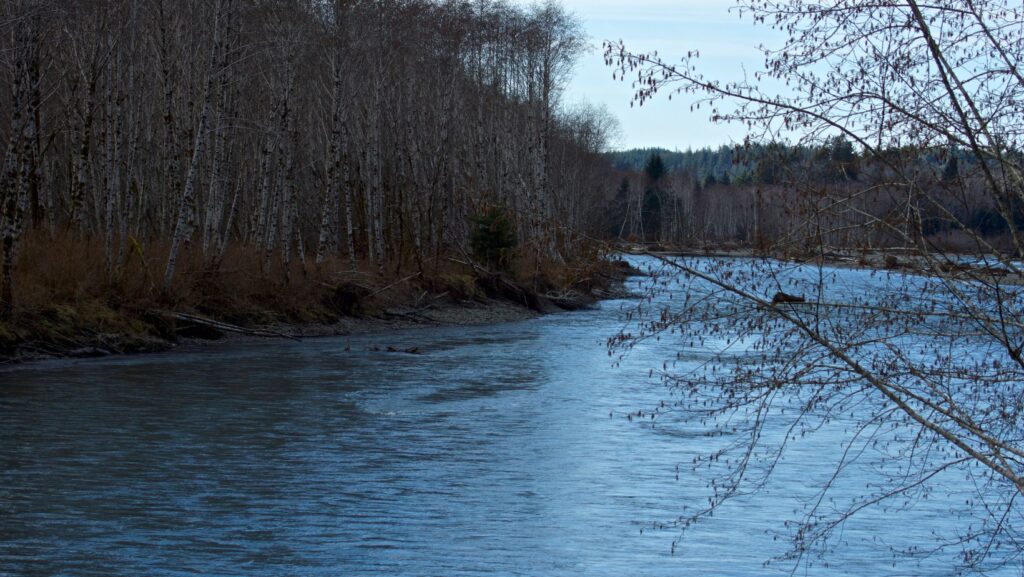
Despite this river's status as one of the healthiest in the country, the Department of Fish and Wildlife has enacted severe restrictions on coastal steelhead fishing due to “low returns.” It was specifically focused on the long-term decline of coastal steelhead in the Queets and Quinault watersheds, Quillayute River system, Hoh River, and Willapa Bay River system.
Between December 1st, 2023, and March 31st, 2024 there are opportunities to fish from floating devices on the Hoh Sunday through Tuesday only from the Morgan’s Crossing boat launch downstream to the Washington Department of Natural Resources Hoh Oxbow Campground boat launch, and Wednesday through Saturday only from the Hoh Oxbow boat launch downstream to the Olympic National Park boundary near the mouth.
Barbless single hook, catch and release only. This is a continuation of the WDFW implementation of the Statewide Steelhead Management Plan which requires the Department to prioritize the sustainability of wild coastal steelhead runs by focusing on healthy levels of abundance, productivity, diversity, and distribution.
While these regulations are creeping onto every river in the state, if you are like me, it isn't necessarily a deterrent. There is more than just catching to all of this. It is the gorgeous scenery, the fresh air, the sun on my face and wind in my hair. Even the rain, which you should expect.
Annual precipitation is 140 to 170 inches. The Hoh Rain Forest is one of the finest remaining examples of temperate rainforest in the United States. Giant Western Hemlock, Douglas-fir, Western Red Cedar, and Sitka Spruce dominate the landscape, while ferns and mosses cloak the trees and forest floor. This is a great reminder of why I am here, alive and a part of it all.
The Hoh River is what legends are born from, whether you are a conventional or a fly angler. From a bank or a boat, you are bound to have a great time. Prime fishing for winter Steelhead happens in February and March, though any time of the year the river is producing, depending on what you are fishing for.
If steelhead aren’t your thing, don’t worry – the Hoh boasts impressive salmon runs each year from late spring through fall and manages to sustain returning populations of both Chinook and coho salmon.
The early summer run of Chinook begins in May and is productive through about August.
The Coho run on the Hoh, like on all other Pacific Northwest rivers, occurs in the fall.
If you’re a salmon fan, fishing in the Hoh can be good from May through November, if the river stays open.
Resident trout are available in the river in addition to sea-run cutthroat that make their way up the river later in the summer and through the fall.
Where do you go from here? Do you prefer floating down the river with a seasoned guide? There are plenty of options. Hopefully, I'll have many more opportunities to meet some more awesome river guides but today I am going to throw a nod out to Pat Neal. (Hoh River Rafters)
With 35 years of experience, Pat has the Hoh River in his back pocket. He is a writer for the Peninsula Daily News and a published author. He is warm and funny, and made me feel completely at ease in conversation. One of my biggest hangups with float fishing is space and comfort, but I look forward to some solid adventures with this local gem.
If walking the banks is your thing, there are three DNR-managed campgrounds with river access and a lovely property called Hoh Valley Cabins ( Hoh Valley Cabins). The Peterson family are descendants of some old-timey pioneers; their family property covers about 500 acres and over a mile of riverfront with access to the river.
In this age of river closures and limited opportunities, we are lucky to have one of the last strongholds of Winter Steelhead right in our backyard. Observe where you can fish, do not encroach on tribal land, and always check the rules and regulations prior to embarking.
/articles/onward-hoh-river
Late Winter Steelhead Fishing
Winter Steelhead fishing… where do we start? First off, winter Steelhead fishing in Washington is unique and different from many of our other fisheries based on one simple fact, the weather. The winter generally brings cold, dark, and wet days which makes this type of fishing a bit more extreme. So then, why do we do it? Great question, but the bigger question is, why would we not?
There is an allure to Steelhead fishing that is hard to describe. I know that there is nothing that I would rather do. On top of inclement weather, Steelhead are more elusive than our migrating salmon and less predictable, making them more difficult to catch. Changes in river conditions during the wet, winter months are constant, forcing us to drop what we are doing and go when the conditions are best.
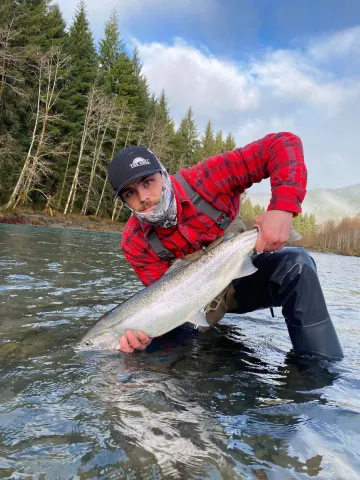
We also need to change up our techniques based on river conditions. One more thing worthy of mention is that there are limited hatchery program opportunities left, so much of our Steelhead fishing is the catch and release of wild fish. I find that wild fish tend to fight better and to me, there is nothing quite like battling an amazing fish and holding onto its tail as it builds up the energy to swim off to where it came from.
For those of you interested in winter Steelhead, I would like to share some information that might help in getting started. I am only sharing what I have learned but I hope that the information is useful. Also, if you have followed my articles in other outdoor magazines, then you probably know that I spend a lot of time fishing with professional guides all over the Pacific Northwest. This helps as I can share a perspective that has been obtained across many experiences and years of fishing.
Most of my Steelhead fishing has been done in the rivers in NW Washington, SW Washington, and the Washington Coast, specifically Forks and the Quinault and Queets Rivers within the reservation. There are so many options available, so I recommend that you start with a river that is near you and learn a little about it…the rules, the opportunities, and most importantly, some good guides who know the river well. I encourage you to spend the money to fish with a guide to learn what works and understand how to target fish in different conditions. Know that every guide has a different opinion and approach, so try a few to gain a broader perspective.
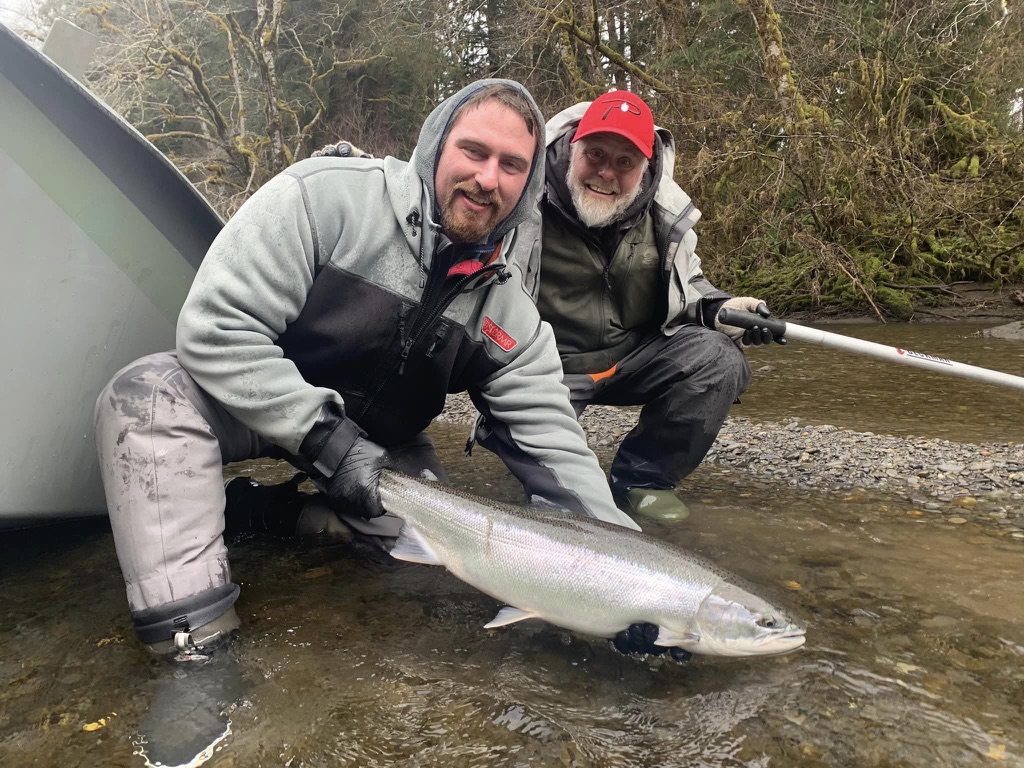
Once you have spent time on the river with a guide or two, you can focus on the gear that you need. Believe me, you can spend a lot of money quickly so make sure that you get it right. To start, you should have a nice pair of waders and wading boots and a waterproof jacket. Getting cold and wet will ruin your day in a hurry. Next, and just my opinion, focus on 2-3 techniques that you would like to try and focus on the gear needed for those specific approaches. I find that it is best to master a few techniques before expanding your toolkit.
There are many popular techniques for catching Steelhead such as casting or trolling plugs from the bank or shore, throwing spoons and spinners, float fishing beads, bait, jigs and other offerings, drift fishing or bobber dogging beads, yarnies, bait and other offerings, and much more. So many different options to choose from and they all work.
If had to pick 2-3 techniques, here is what I would do. It’s hard to choose because they all work and some work better at certain times and under certain conditions. I like to float fish maribou jigs and soft plastic worms on jig heads, and I really like to float fish beads. My float fishing approach for beads combines a float, inline weight, a long leader with some split shot in the middle, and a soft bead that bounces along the bottom. Aside from these techniques, I love to throw spoons and spinners. If I am fishing from a drift boat as opposed to bank fishing, I like to troll plugs in long stretches of slower-moving, deep water.
If I was to start fresh right now, I would have a lot less gear in my garage. Now there are many different types of rods and some work better for certain techniques. If I had to pick one rod to use for multiple techniques, I would go with a 9’6”, 6-10# to 8-17# rated spinning rod with a 30/3000 or 35/3500 size spinning reel. I prefer a bit lighter rod to maximize sensitivity and have found that 30# braid works best for my mainline along with a 10-15’ bumper of fluorocarbon. This is a great all-around rod and reel setup that will allow you to employ most of the methods that I listed above.
If you want to focus on float fishing, I recommend a 10’6” rod that is designed for this purpose. The added length really helps you mend your line easily. For “old school” drift fishing, I prefer a one-piece 7’6” rod but most of the time I am bobber dogging, which is simply drift fishing with the addition of a float/bobber to pull your gear naturally along the bottom and downstream. A 9’6” rod works great for bobber dogging, and you can easily break it down to fit inside your car.
Once you have your clothing, rod, and reel, you can focus on terminal tackle. For this, I recommend going to your local tackle shop as opposed to a “big box” store. You will get valuable advice that will help you to purchase the best gear. Also, lean on what you learned from the guides you fished with, and make sure to take pictures of their gear setups and rigging when you fish with them. At this point, you’re going to need a collection of swivels, bobber stops, small beads for your bobber stop, and leader material, generally fluorocarbon. Note that if you don’t want to tie your leaders immediately, you can purchase them pretied.
It’s also a good idea to have a selection of hooks in sizes from #4 to 1/0 or even 2/0 in some cases. Purchase a box of soft beads in a variety of sizes and colors, some maribou jigs in pink/cerise/orange combinations and the red/white/black nightmare patterns, as well as 1/8 or 1/4oz jig heads (I prefer white) and some 3.5” plastic/rubber worms. Don’t forget a selection of weights. I am a big fan of the stainless-steel weights from Dave’s Tangle Free. You have enough gear to get you through a winter of learning and chasing Steelhead. Between maribou and worm jigs and beads, you can fish in just about any condition. It would not be a terrible idea to have a few spinners and/or spoons as well. They are fun to toss when nothing else seems to be working.
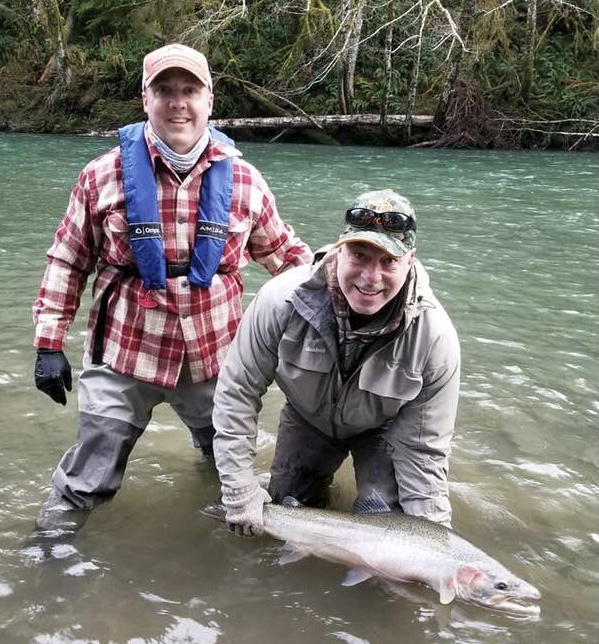
Now, you have learned the basics from one or more guides, you have learned how to fish a specific river system, you have purchased a handful of the gear that you need and the time has come to go out and give it a shot. Believe me, you don’t have to go buy a drift boat to fish. There are plenty of opportunities to wade and bank fish. Also, I encourage you to continue to fish with guides if you want to boat fish or make a friend who has one. Believe it or not, many fishermen who own boats are looking for fishing buddies, so join a Facebook group to make some friends.
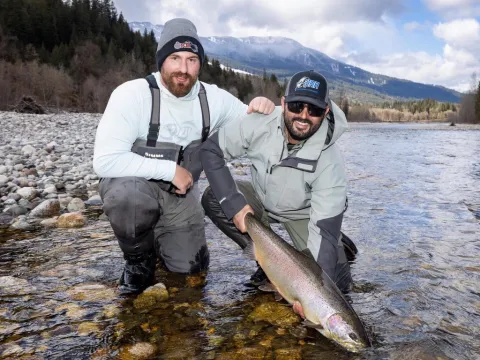
Winter Steelhead fishing is an amazing pastime and until you have spent some time doing it, you really don’t realize how special it is. One warning, don’t expect to go out and catch a Steelhead on your first trip. They are called a fish of 10,000 casts for a reason. I can say that they are very special fish, and you will never forget your first, or for that matter, any Steelhead that you catch. Now, get out there and good luck.
/articles/late-winter-steelhead-fishing
A Beginner’s Guide to Winter Steelheading
Slap on your earmuffs and grab that tacklebox, it’s winter steelhead season here in the Pacific Northwest! Steelhead, which are sea-run rainbow trout, call out to devoted anglers like a siren’s call. There’s just something special about these fish. They are elusive and wary. Some fishermen go their entire lives without landing one. These silver bullets are well worth pursuing, however. They make delicious table fare and put up terrific fights. Winter weather can create extra challenges, but it just makes netting these beautiful fish even more rewarding. Many anglers are tight lipped about their steelhead tips, which can make steelhead fishing intimidating to beginners. Let’s go over some tackle ideas, clothing tips, and hot spots to help make your first winter steelheading trip as productive and safe as it can be.
Tackle
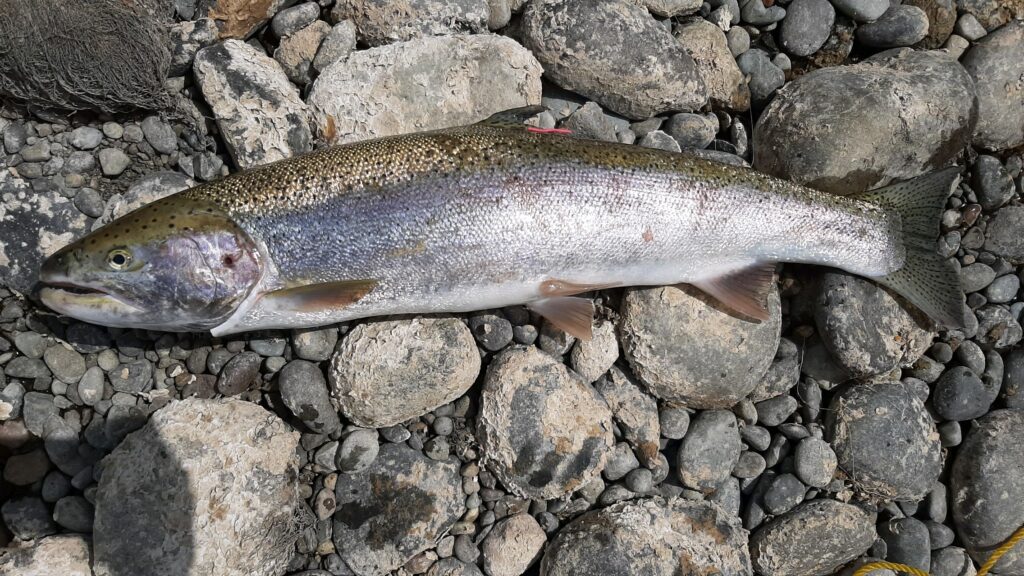
In order to understand how to catch winter steelhead, you must know that there are some differences between summer and winter steelhead. Summer run fish head into the rivers early, and mature in the river over several weeks or months. Winter runs go into the river mature and ready to spawn. In general, winter steelhead are less aggressive. The cold water slows down their metabolism and makes them less willing to grab your offering. If you’re able to entice one into striking, hang on! Steelhead are famous for their long, athletic runs. Winter steelhead are often a bit bigger and fatter than their summer-run cousins as well.
One of the most convenient things about winter steelheading is that they are perfectly willing to bite cured salmon eggs! Around this time, I always have a fresh supply of eggs leftover from the previous salmon season. They are one of the best baits for winter steelhead! However, you’ll generally want to use a different strategy for curing them. Steelhead generally like a sweeter cure than salmon do. Most egg brines meant for steelhead create a harder, more durable egg, while salmon cures will make a softer, “milkier” egg. You can either drift your eggs or float them with a bobber. If you’re all out of salmon eggs, don’t fret. Winter steelhead absolutely love sand shrimp and coon shrimp! Make sure to tie a good egg loop knot and tuck your bait inside the loop. You can use stretchy thread for extra security. You can use a combination of eggs and shrimp to make your bait even more enticing.
If you’re fishing on a river where bait isn’t allowed, or you don’t feel like covering your winter gloves with shrimp and dye, spinners, spoons, and jigs are deadly effective on steelhead. Just remember that the fish will be holding near the bottom, and let your lure sink before reeling it in. Bring a variety of different colors and weights: river flows and depths change constantly, and you may need a heavier lure than you were using the other day just to reach the bottom. Steelhead can be surprisingly light biters despite their size, so make sure you are attentive and ready for the strike. One of the most popular ways to catch steelhead is to float a 1/4 oz jig under a bobber. Make sure to adjust your bobber stopper so that your jig is floating just above the bottom, however. You can tip your jig with a bit of prawn if bait is legal where you’re fishing. There are a wide variety of jigs out there, and many anglers even tie their own! Experiment with a variety of colors and jig materials until you find what the fish are keying into.

Clothing
Nothing can ruin a fishing trip like the cold. Layers are the winter steelheader’s secret weapon! The fish don’t wait for good weather before moving in, and you may not be willing to wait weeks or days for a clear day. Check the forecast, but we prepared for sudden inclement weather too. Neoprene waders offer good insulation from cold water, but a good base layer and loose, warm pants can also work. Wool socks are a must! Gloves can make a huge difference. Even on relatively mild days, my hands can get cold, making it difficult to switch lures or apply scent. Hand warmers have come a long way these days. In addition to disposable, shake to activate handwarmers, there are also reusable ones. Many sporting goods stores in the area offer lighter fluid powered and battery powered hand warmers. Test out your options and figure out what you like best. Propane space heaters are also great options. My friend recently put a diesel heater in his Thunderjet, and it makes a world of difference. I’d recommend pre-tying your leaders, to minimize the amount of tying you have to do while fishing. It’s a good idea to bring a change of socks too, just in case. Nothing will make you feel more cold and miserable than wet socks. Earmuffs, hats, or head bands will help, but partnering them with a warm scarf will make all the difference on those frigid winter days. Be prepared! I would recommend gearing up the day before and spending some time outside. If you’re already cold, pack on a few more layers and try again until you’re comfortable.

Locations
More so than any others, steelhead fishermen tend to be the most tight-lipped about their secret spots. While it’s not my intention to “blow up” anyone’s honey hole, I do want to at least steer beginner anglers in the right direction. I’ll always remember the euphoric rush from landing my first steelhead, and I wouldn’t have known where to go without guidance. As previously mentioned, summer steelhead enter the rivers sooner in their life cycle, and spend months maturing and moving upriver. By contrast, winter steelhead don’t travel nearly as far upriver, and some spawn within a few days of going in the river. Check the WDFW hatchery escapement report daily for updated numbers. The Skykomish River, Cowlitz River, Humptulips River, and Wynoochie River all boast good returns of winter steelhead every year. The Cowlitz River is usually open every year, but the Humptulips and Wynoochie River may be closed if they do not reach their escapement goals. You can try coastal rivers such as the Hoh, Sol Duc, and Calawah if you are willing to make the drive. Make sure to check the regulations though, several of these rivers do not allow fishing from a boat. Be respectful of private property and tribal land. Drift boating is always hazardous, but the frigid waters during winter create extra danger. It’s never a bad idea to go out with a guide on your first winter steelhead trip. They can show you the right way to drift the river safely. Remember that rivers change every year, and always be on the lookout for submerged rocks and trees.
While looking up popular locations for steelheading can be a good way to get started on your journey, you should also be able to recognize water that fish are likely to be holding in. In case your desired location is already full of anglers, or you just want to try a new spot, familiarize yourself with “steelhead water”. These fish are looking to spend the least amount of energy to get upriver and will take the path of least resistance. Sometimes the path of least resistance is right next to the shore, so make sure you fish your lures all the way to the bank. Look for calm waters near tailouts where fish are likely to be resting. Also check behind boulders and logs, but be careful of snags. I’d recommend thoroughly fishing one hole before moving on. Try both bait and lures, you never know what the fish will want that day. Winter steelheading can be a bit of a grind, but you’ll forget all about the cold and your numb hands and ears when you’re fighting a 15 pound silver bullet!
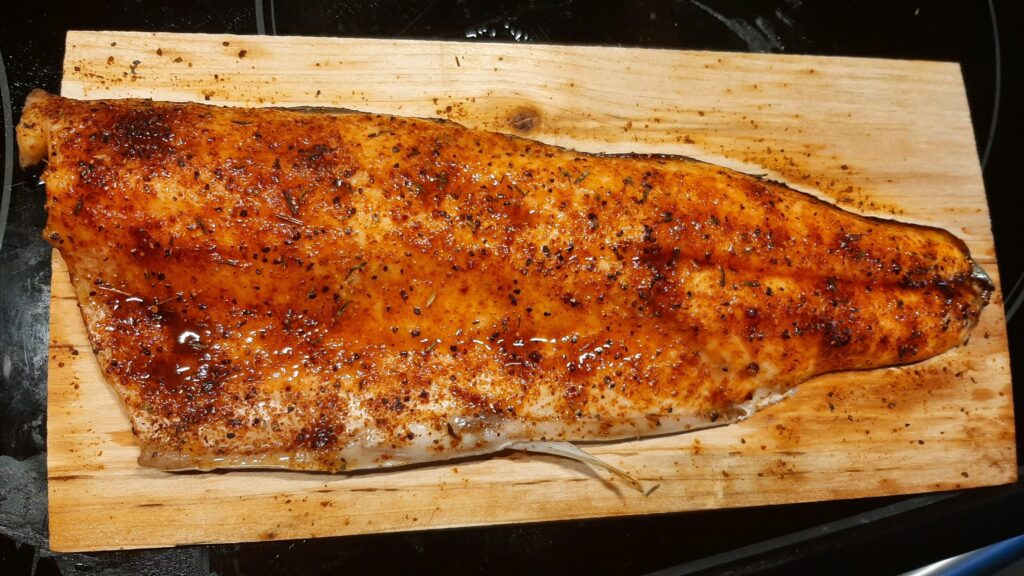
Wherever you decide to fish for winter steelhead, make sure you check your rules and regulations. Familiarize yourself with catch and release best practices. All wild steelhead in Washington State must be released. Make sure to check for an adipose fin before removing your fish from the net or pulling it into the boat- it’s illegal to remove wild steelhead from the water. Never grab a fish you intend to release by its jaw or gill plate. Wet your hands before touching the fish, to avoid damaging its protective slimy layer. Rather than just throwing the fish back, it’s a good idea to gently put the fish back in the water, facing it into the current so that water can flow over their gills. Let it swim off when it’s ready. If you must take pictures, take them quickly, and prioritize getting the fish released as soon as possible. Wild steelhead are beautiful, rare creatures that should be treated with the utmost respect and care.
Good luck on your winter steelheading adventure! Bundle up and stay warm out there!
/articles/beginners-guide-winter-steelheading