Catching Spring Chinook
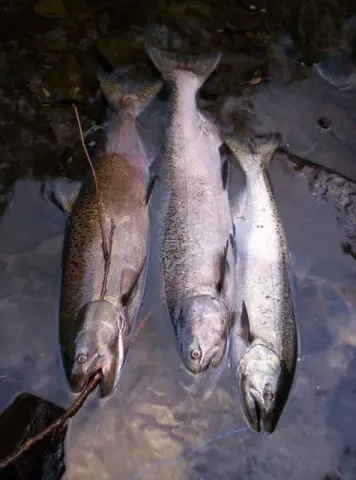
From Northern California to Canada, and the Pacific to Idaho, few secrets are as carefully guarded as uncrowded areas for spring bank-caught salmon. Each time one of my fishing buds gives the slightest hint of a clue of a lean in that direction, my phone goes dead, his email is lost, or I have to remind him, “I don’t text.” I turned the ringer off on my phone nine years ago. Even my wife, Suz, and I had a big fight over it. We were raised fishing the same rivers like the Molalla and Clackamas, and ocean reefs, so I guess it was only natural that sooner or later she demanded to know my springer spots. "Look," I said, "I bought you a diamond ring. Isn't that enough? I'm not giving you my secret fishing holes that took a lifetime to find. That kind of intimacy and trust takes years. If it's okay with you, I'd like to keep them between me and God." She said it wasn't okay.
"Let me get this straight," she said. "You trust me enough to marry me, but not enough to show me your secret fishing spots?"
"How it is," I said.
She responded by deliberately knocking off one of my big spring chinooks with the net (she swears it was an accident. Yeah, right.). Of course, we broke up over it. It was a nice fish that by all rights should have been in the box.
Now we are back together, and using her mermaid magic, she has my secret spots. Or thinks she does. I didn't tell her I learned from a Joseph Campbell video how Navajo US Army scout and storyteller Jeff King left out an essential piece of the story until the initiate was ready.
Why, you may wonder, are you so extreme as to not even tell your wife? The answer is these fish are my favorite to eat. At $18 to $27 a pound during prime season, I can’t afford to show up somewhere that previously had zero to three anglers and see 30 to 40. If that happened, I couldn’t get my regular 16 fish a season from rivers to get me through the year. In plain terms, a 20-pound cleaned springer is worth about $400. Add another, and that is an $800 morning. All of which is saying, springer fishing is serious business. Plutarch's Moralia notes that ancient Spartan mothers told their sons, “Return with your shield, or on it.” At least one Oregon mother told her son going after springers, “Return with your fishing rod, or on it”.
So what’s the point of this article? is the obvious question. The point is, if you want to catch a coveted bank-caught springer away from the crowds, put your time in hacking blackberry vines, searching maps, and getting permission from landowners; or get a boat, or hire a guide. However, if you want to go it alone bank-fishing after hearing all this, here is my advice.
Local Knowledge
Go where people regularly catch springers, and watch everything they use and do, right down to the gnat’s eyelash’s mite’s eyelash. I mean study gear, hook, bait, length and size, and kind of leader, exact placement and depth of lure, time of day, and if you are really serious, where they go to church and the color of their socks.
Study a Watershed
I found springers to be more picky than steelhead about where they pause in upriver migrations. In general, springers like it slow, dark, and deep, which makes sense if you consider these 10 to 30 pound brutes a short while ago had an entire Pacific ocean to forage. Chinook in our area travel as far as the Aleutian Islands past Dutch Harbor, into the Bering Sea. That is how they get so big and delicious.
Good Bait Makes All the Difference
After over 40 years of doing this, I see the same guys in the same spots at the same times of year on my springer travels from coastal rivers to Idaho. They are all expert anglers, but on some days one of them is slaying fish after fish while the rest of us look on in mouth-watering amazement. Why? It’s the bait cure the fish want that day, and to show how serious these fish are, they ignore everyone else’s bait, moving within inches of the same water. I asked one successful angler his secret, and he said it took over 20 years for an old-timer to share it, and there was no way in hell he was telling me. I said I understood. If you read my last article, “How to Outfit a Fish Car,” you know these fish “can smell parts per billion.” GrrlScientist, formerly of The University of Washington in Seattle and science writer for The Guardian, permitted me to include a SciLogs article “Salmon, scent and going home again” January 17, 2011, in which she noted:
"In the November 1978 issue of Pacific Search, author C. Herb Williams described a Canadian study where a nearly homeopathic solution containing one part of human skin dissolved in 80 billion parts of water was dumped into a river. Astonishingly, the scent from this solution was sufficient to stop migrating salmon for as long as half an hour. Additional experiments by Canadian scientists show that salmon will either slow or stop their migrations when certain human smells are present in the water, and trout — another salmonid — show distinct flight responses when a fisherman washes his hands upstream. [par break] This offensive scent was identified as the amino acid, serine, which — because human skin contains serine — has led to some fishermen to refer to this as 'the serine problem'."
This means when I catch a hen, I cure her eggs that night so I can fish them at daylight without being frozen. I keep my hands clean, and on sweaty days wear white latex gloves. One angler said I was Michael Jacksoning it, but I had a salmon, and he didn’t. Many years of experimenting led to my current egg cure recipe. Reel blazing runs, $800 fish mornings, and beet-red spring salmon steaks make it all worth it.
A Friends of William Stafford Scholar at the “Speak Truth to Power” Fellowship of Reconciliation Seabeck Conference, Scott T. Starbuck’s two books of fishing poems are River Walker, which sold out in less than a year, and Lost Salmon forthcoming from MoonPath Press. Starbuck’s writing focuses on the clash between ancient sustaining forces like wild salmon rivers with modern industrial lives. His most recent book is Industrial Oz: Ecopoems. His blog Trees, Fish, and Dreams is at riverseek.blogspot.com
/articles/catching-spring-chinook
Springtime means Big Natives
Steelhead (Oncorhynchus mykiss), Washington’s iconic anadromous rainbow trout, return from the ocean to freshwater rivers to spawn. Across the state, they exhibit two general seasonal runs, winter and summer, though exact timing varies by river and region.
Run timing is critical when pursuing these coveted fish, so it is important to understand when the fish will begin to return, and for those of us looking for the largest, natives, it means timing it perfectly.
In general, winter steelhead runs tend to follow the following schedule.
- Begin: Typically, in late fall (around November), as ocean-migrating fish start moving upstream.
- Peak: Most winter steelhead arrive in December through February, with some systems seeing strong numbers returning into March and April.
- Best for big wild fish: Many of Washington’s large native (wild) steelhead, especially in coastal rivers of the Olympic Peninsula, are most abundant mid-winter through early spring. Local guides note that hatchery fish often peak earlier (e.g., December), with wild steelhead showing up in good numbers soon after and extending into early spring.
While both hatchery and wild steelhead can contribute to runs, depending, of course, on the river system, native (wild) fish, which are often bigger and more prized, tend to peak slightly later than hatchery fish in most systems. For example:
- On the Olympic Peninsula and coastal rivers: Hatchery fish are known to start trailing in around Thanksgiving and trail off in January, whereas large wild steelhead often show up in their prime numbers from late December through February, into March, and even April.
- In Puget Sound watersheds, winter runs that include wild fish also peak in December–January, but local timing can vary by watershed, and even by year, depending on weather, ocean, and river conditions.
Note that after entering their natal waters, steelhead often remain in the river for many months prior to spawning and returning to the salt. The length of time that they stay in the river really depends on the river system, the run timing, and their genetics and instincts.
Unlike salmon, steelhead can return to the salt water for another cycle, and some steelhead have been recorded returning to spawn for 3 or 4 spawning cycles. Of course, a 3 or 4-salt fish will often tend to be larger than a 1 or 2-salt fish; thus, these fish are highly sought after and chased by serious anglers.
When reviewing the WDFW or ODFW regulations, you will often see rivers closing at the end of January, mid-February, or in March. There is a reason for this. The recreational seasons are generally set to provide anglers with opportunities to fish for steelhead, whether that be for catch and release of native fish or a retention fishery for hatchery fish. The seasons are timed to close about the time that the main runs of native fish are expected to return based on historical run timing. For this reason, the fisheries are closed to protect the native fish in an attempt to restore runs back to acceptable numbers.
A great example of this is the Sauk River. The Sauk has long been a coveted fishery since it is an all-native river, and the fish tend to be large, genetically mean, and extremely aggressive. These fish are wired differently, and catching one is unlike any other fishery that I have experienced. The Sauk River winter/spring wild steelhead fishery has experienced multiple closures due to low wild returns, with significant closures occurring around
2008, 2010–2017, and 2020–2022. The fishery often closes or faces restrictions when wild steelhead forecasts fall below the 6,000-fish escapement threshold, as noted by the Washington Department of Fish and Wildlife. A few years ago, WDFW and NOAA agreed to a ten-year plan based on return data, in an effort to offer a recreational catch-and-release fishery on the Sauk. We finally received some long-awaited good news. Unfortunately, our current governor and his cabinet slashed budgets for 2026, and this fishery was taken from us, as there was not enough budget to staff and monitor the fishery. This is devastating for the local communities and the anglers who enjoyed spending time on this epic river system. The Sauk is not the only system experiencing this fate. Good for the fish, bad for us anglers!
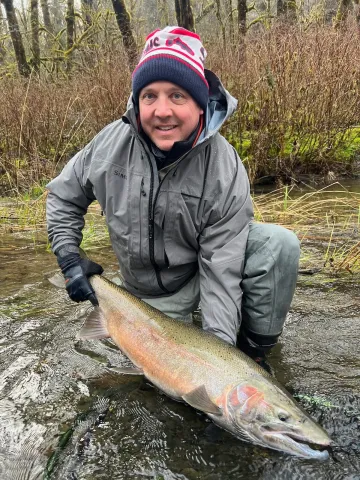
Speaking of big, mean, native winter steelhead, in early April 2025, I fished with guide Cary Hofmann on the Sauk. We were bobber dogging 20mm beads that day, and I hooked the largest steelhead of my life. My float was just above the drift boat as we entered the bottom of a run, and my float disappeared. I jumped on my reel, and as I did, my float popped back to the surface. I opened my bail to let out some line, and after a moment, my float dropped again and started racing upstream through fast water. My bail was open, and as I tried to close the bail and slow the fish, my hand got hung up for a moment, and the fish broke a 15lb fluorocarbon leader like it was nothing. I have hooked into some 20lb class steelhead and landed a few, but this was another level of mean and powerful. Even though I did not see this fish, just the experience of feeling it on the end of my line was a moment that I will never forget. For die-hard steelheaders chasing big, native fish, this is what we live for.
Some of the best opportunities in Washington to encounter large native steelhead (especially in late winter through spring), focusing on places known for quality wild fish rather than solely hatchery-enhanced fisheries include:
Olympic Peninsula Rivers
These are widely regarded as some of the best wild steelhead runs in Washington, often producing larger native fish and extended late-season opportunity.
- Hoh River – Classic wild steelhead water with deep pools and strong late winter/early spring runs.
- Bogachiel River – Known for productive winter steelhead fishing and scenic access.
- Sol Duc River – Holds big wild fish; excellent spring timing as flows moderate.
- Quillayute / Calawah / Clearwater tributaries – Smaller but good opportunities for spring natives.
Run Timing: On the Peninsula, steelhead enter these rivers from late fall through spring, with some of the largest natives arriving in January through April. I have found that Mid-March through early April can be prime for large wild fish entering holding water behind hatchery runs. I try to time my trip for mid to late March, and I am never disappointed unless we get rained out. This is not uncommon due to the immense rainfall that hits the coast, as much as 16 feet per year in places.
Coastal & Southwest Washington Rivers
Smaller coastal systems (outside the Peninsula proper) can also be excellent in late winter when conditions calm after storms.
- North River, Naselle River, Willapa River system – Offers wild runs with spring opportunity.
- Grays Harbor rivers (e.g., Satsop, Wynoochie, and Humptulips) — though smaller, they can produce quality fish from late fall into the spring.
These fisheries are more dependent on rain and water clarity, but when conditions stabilize in late winter/early spring, fish concentrate in holding water.
Puget Sound Area – Wild Runs
Puget Sound tributaries see winter and early spring returns of wild steelhead, though overall numbers are lower than on the coast. It is also important to note that most North Puget Sound rivers are closed for 2026 by January 31st, so no recreational fisheries to enjoy this year. As mentioned, this is primarily due to budget cuts, so please remember this the next time that you vote.
- Skykomish River – Historically decent winter/wild runs; larger fish possible early season. Small, hatchery broodstock program still in effect from the Reiter hatchery near Goldbar. Like the Cowlitz, this is not a secret spot, but if you have not fished it, it is epically beautiful and a fun bank fishery.
- Stillaguamish & Snoqualmie Rivers – Smaller, technical fisheries that can hold native winter steelhead. Tokul Creek also has a hatchery program that is winding down, but returns that continue to produce.
It is important to mention that many Puget Sound wild runs are sensitive and subject to stricter release regulations, so as always, check WDFW's current rules before going.
Lower Columbia Tributaries (Late Winter–Early Spring)
While many lower Columbia systems are enhanced by hatchery programs, wild components, especially winter runs, still migrate in:
- Cowlitz River – Huge late winter steelhead opportunity; big fish show up in February–March. The Cowlitz is renowned for its hatchery program and generally strong A and B run returns. Note that this is not a secret spot, so when the steelhead arrive, it is very congested.
- Kalama & Lewis Rivers – Good late winter spring runs; mixed hatchery/wild.
- Washougal & Elochoman – Smaller systems with winter fish in March–April.
Note: While these fisheries include hatchery fish, big overwintering wild fish also pass through in late winter/early spring, especially on bigger tributaries like the Cowlitz.
When targeting large native fish, we are generally seeking quality, not quantity. For this reason, our approach tends to change a bit. Upsizing gear and presentations are common. Sure, you can catch a 20lb native steelhead on light tackle, but we try to match the gear to the fish. Keep in mind that big fish are big for a reason; they are not stupid. Their instinct is strong, and they don’t bite at everything that passes by them. I cannot think of a bigger example of survival of the fittest. My mantra is that big fish are not stupid, so I do my best to fool them, or more likely, piss them off. An aggressive fish will protect its territory and extinguish any threat that appears, so I try my best to threaten them with bold presentations that best match the water conditions.
Some tips for targeting the big fish:
- Focus on deep holding water — tails of runs, deep holes, and structure.
- Watch river conditions — post-storm clarity often improves by late winter, improving bite windows.
- Check seasonal regulations — wild steelhead protection varies by river and year; WDFW updates are important.
- Upsize your gear – Examples include swung spoons, large beads, worms of different colors to match the water clarity, plugs and spinners. Don’t be afraid to go old school either. Throw your Oki drifters, spin n glo’s and tackle of yesteryear. Yes, Herzog is correct, it all still works.
Many wild steelhead populations in Washington, especially coastal and Puget Sound runs, are protected and often catch-and-release only with seasonal closures. Always consult current WDFW regs for the specific river you plan to fish. In addition, we are not allowed to remove wild fish from the water in Washington, even for a picture, so please practice safe handling and return the fish as quickly as you can. Think head in the water for that quick picture to commemorate your catch.
Good luck and happy fishing to you all.
/articles/springtime-means-big-natives
Springers Are Here
When May rolls around, the spring Chinook fishery kicks into high gear as more and more fish begin filtering into the “Big-C.”
While most of the effort will shift to tributaries in May, the Columbia River mainstem spring Chinook fishery opportunities both above and below Bonneville Dam still remained up in the air as of this magazine’s publication deadline.
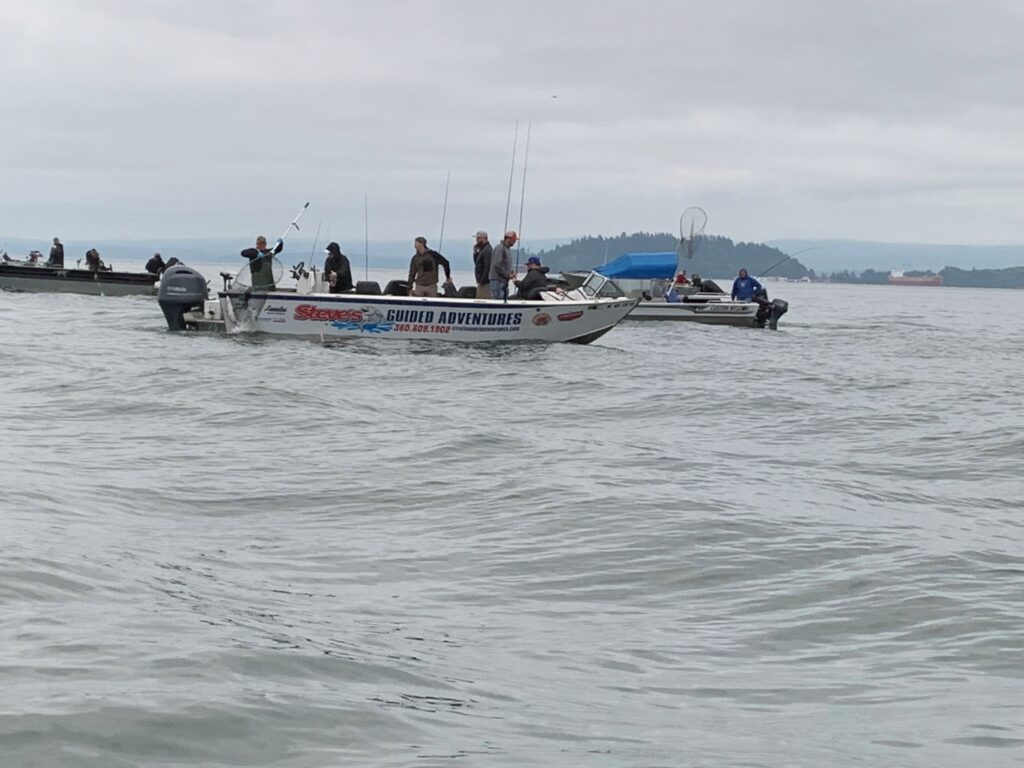
All decisions on whether the Columbia River mainstem reopens later in May and possibly into early summer are left up to joint Washington and Oregon in-season management decisions. To keep track of updates, the public is encouraged to sign up for WDFW Columbia River Compact mailing list notices at https://wdfw.wa.gov/about/lists.
The 2025 forecast for Columbia upriver spring Chinook is 122,250 fish, more than the 116,332 that returned in 2024, but lower than the 10-year average of 139,676 fish.
Several factors influence the arrival of spring Chinook, including flow patterns, which can change on a daily basis. These fish are known to work their way up the maze of channels and will follow bottom structure in the river. They will avoid turbulent water and are known to stall below dams when abrupt changes occur at the tailrace and fish ladder channels.
The initial spring Chinook fishing seasons for the Columbia River mainstem were set in late February, with end dates in mid/early April for below Bonneville Dam and late April upstream. It is usually soon after that when the run begins to ramp up. In recent years, the timing of the run has been later and later.
As of mid-April, the spring Chinook fishing success was just starting to build in the lower river. The number of fish seen at the Bonneville Dam fish ladder was also sporadic. Anglers can track daily fish counts by going to Columbia River adult salmon counts at https://www.fpc.org/currentdaily/HistFishTwo_7day-ytd_Adults.htm, which is key to knowing when to go fishing.
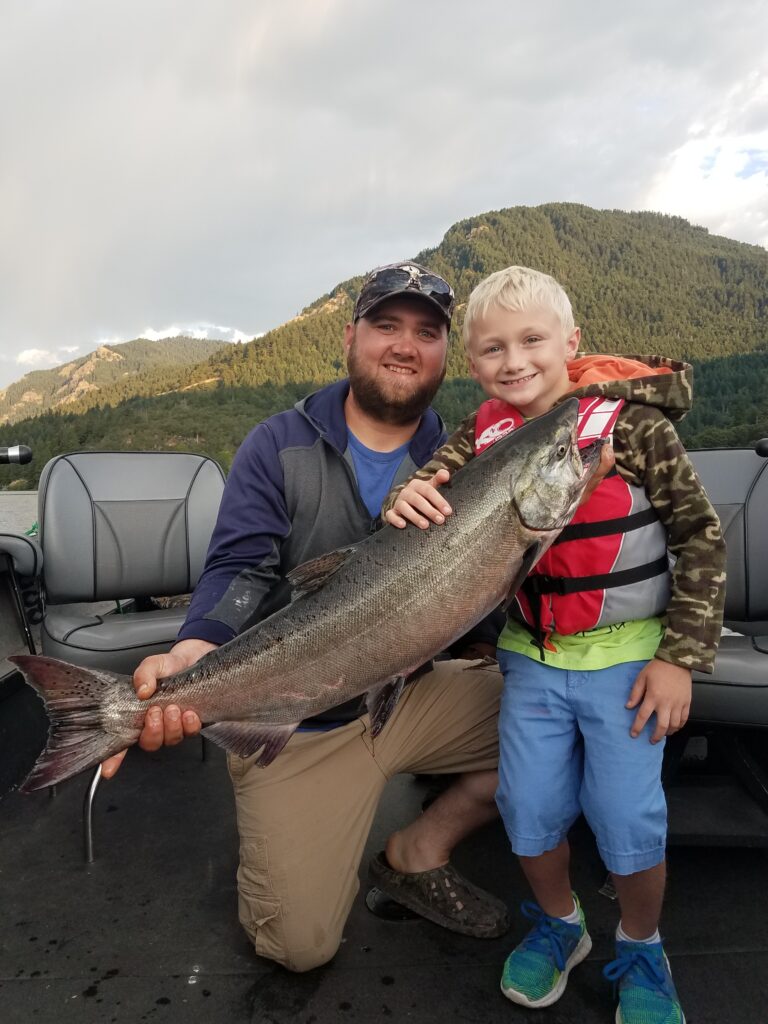
It’s also wise to not wait to go fishing once the run begins to peak, as you’ll likely miss out on the best time period. “For 2025, the corresponding harvest rate tiers are determined by the Snake River wild abundance estimate. Following that, we apply a 30% buffer applied to the forecast until we get a run size update, this is then used to determine the harvest rate,” said Ryan Lothrop, Columbia River fisheries manager with the Washington Department of Fish and Wildlife (WDFW), which he referred to as step one.
Next, fishery managers calculate the allowable catch. Lastly, fishery managers apply the commission guidance of proportion of the Endangered Species Act splits by sector and area.In 2025, recreational anglers are projected to harvest approximately 5,200 adult spring Chinook below Bonneville Dam in the Columbia mainstem, and 550 spring Chinook from Bonneville Dam upstream to the Washington/Oregon border.
“Fortunately, we were able to provide additional quality April days of opportunity downstream of Bonneville Dam this year, given there was a substantial balance remaining,” Lothrop said. “Upstream of Bonneville Dam, increasing catch rates in recent years have led to early closures, resulting in fewer open fishing days before this year’s in-season run size update."
However, if the run size update is large enough or if there’s remaining catch allocation, additional fishing time is likely. ”Fishery managers will monitor the fisheries, dam counts, and hatchery returns as the season progresses and adjust as necessary. The U.S. v. Oregon Technical Advisory Committee typically provides a run size update in mid-May. Based on the 2025 preseason forecasts, anglers can expect to find a decent number of spring Chinook in the Cowlitz, Kalama, and Lewis rivers. Tributary fisheries are managed based on hatchery spring Chinook surplus.
Places like the Cowlitz experienced closures a few years ago, but with a forecast of 13,310 (4,580 and 8,822), a closure isn’t necessary in 2025. The Cowlitz spring Chinook forecast to the tributary mouth is greater than the recent five-year and 10-year average return of 5,300 and 9,800, respectively. In the Kalama River, the spring Chinook forecast to the tributary mouth is 2,900 (1,840 was forecast with an actual return of 2,310 in 2024).
The Kalama spring Chinook forecast to the tributary mouth is similar to the recent five-year and 10-year average return of 2,200 and 2,500, respectively.In the Lewis River, the spring Chinook forecast is 3,060 (3,270 and 2,553). The Lewis spring Chinook forecast to the tributary mouth is similar to the recent five-year average return of 3,700 and greater than the 10-year average return of 2,600. During May a lot of the spring Chinook fishing attention also shifts to tributaries above Bonneville Dam such as Drano Lake, and the Wind and Klickitat rivers. The best way to gauge when it’s time to go is by watching the fish counts at Bonneville Dam.
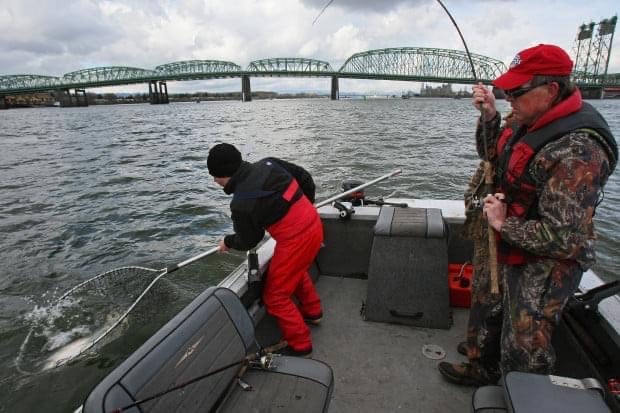
The Wind forecast is 4,900 (4,200 forecast and actual return of 4,604 in 2024) and is greater than the recent five-year and 10-year average return of 4,100 and 4,000, respectively. In Drano Lake (aka Little White Salmon) the forecast is 7,600 (5,300 and 7,863) and forecast is similar to the recent five-year average return of 7,400 and less than the recent 10-year average return of 8,100. The Klickitat forecast is 1,200 (1,300 and 491) and is similar to the recent five-year average return of 1,300 and less than the recent 10-year average return of 1,500.
In Drano Lake, the best action happens in the area referred to as “Toilet Bowl,” a popular spot where anglers troll in a tight circle near the entrance of the lake. While most are Drano Lake stock fish some of these fish are known as “dip-ins” as they first enter the lake before migrating further up the Columbia River. There isn’t much space to troll so make sure you’re following the same path as others and are good at handling your boat and keep your lines right underneath to avoid getting tangled up with others. If someone nearby hooks a fish stay clear of them.
If you plan to fish Drano Lake, be aware the Columbia River outside the mouth of Drano Lake is closed. There is a marked boat fishing boundary area in Drano to allow for some bank angling to occur near the mouth. From the shore cast spinners or Wiggle Warts. Anglers also fishing for springers in the Wind River must stay within the fishing boundary of the river itself and not stray into Columbia River mainstem area. Spring Chinook tips and tactics I could list a hundred different ways to successfully catch spring Chinook and what to use varies depending on river location, flow patterns and water clarity but the most important factor to keep in mind is patience.
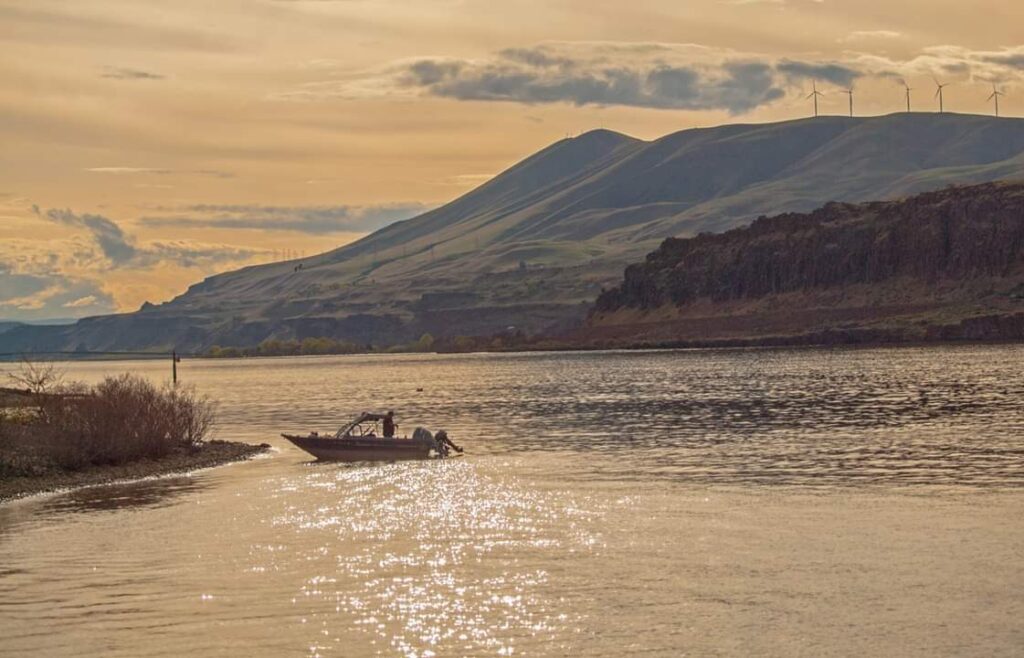
Earlier last month, I had a friend who spent six days and nearly 50 hours on the water of the Lower Columbia River and managed to bring home one hatchery-marked fish.
As for fishing gear, don’t skimp on the rod and reel and spending money wisely will be an investment toward catching more fish. The rods of choice are usually a 9 ½ to 10 ½ foot of 15 to 25 pounds with a lot flex and soft tip. Oftentimes these fish will grab the bait and turn away so flexibility in the rod will allow for a proper hook-up. Let the salmon pull your rod tip down a few times before gently setting the hook and don’t jerk hard since usually the depth of water you’re fishing isn’t very deep to begin with.
Line counter reels are the norm nowadays and enable you to find the sweet spot by aligning the depth on your fish finder to the area where the fish are lurking. Many like to use braided line, but I’m old school and will stick with monofilament line for a bit of stretch and give when the fish bites. The standard setup for trolling is a three-way swivel with 10 to 18 inches of 15-pound monofilament to an eight- to 15-ounce dropper weight, depending on current and flow.
On the other end of the swivel is 24 inches of 30-pound monofilament line to your fish flash and then another 40 to 50 inches of 30-pound monofilament line with a swivel halfway down the leader to allow the bait or lure to spin freely and eliminate the line from twisting and tangling. Often I’ll go “naked” and not use a fish flash which creates less drag too.
The traditional bait is a green-label herring, whole or cut-plug, with the proper tight spin. Many will soak their bait in a brine mixture to toughen them up. After bouncing off the bottom a few times or running into debris they’ll tend to get blown out or will lose their quality spin. To get the right spin on a whole herring, I like to insert a toothpick in the anal vent of the herring and bend the herring to a 45 degree angle. Then take the top hook and insert it under the lower jaw and out through the hard spot between the eyes. About halfway down the side of the body insert and pull out the trailing hook so it dangles freely.
Others like to pin a plastic bait helmet – Krippled Herring or Rhys Davis – to avoid wear and tear on the herring. Before dropping it down, add some scent and make sure it has the right spin. Other top choices are a 3.5 spinner and prawn, flat fish wrapped with a sardine or a Brad’s Super Bait. Downsizing to smaller Kokanee Cut Plugs, or a 2.5 or 3.0 Spinfish filled with tuna to tandem trailing hooks are effective in warmer water conditions and when it gets crowded during a slow troll like at Drano Lake.
Colors are also key to catching fish. Be sure to carry a wide variety but usually chartreuse, silver, orange and red work well. The scent of bare hands can be a deterrent so keeping some environmentally safe liquid soap, clean hand towels and elastic nitrile gloves will enable you to stay in the game of catching fish. Have a small bucket to wash down your lures and be sure to keep your rod handles and cranks on the reel clean.
Be sure to check the WDFW website at https://wdfw.wa.gov/ for current daily limits, other area-specific rules, any emergency rule changes, and closures or openings that tend to occur during the spring Chinook fisheries.
Tight lines, and I’ll see you on the water very soon!
(Mark Yuasa is a Washington Department of Fish and Wildlife Communications Manager. He was also the outdoor reporter at The Seattle Times for 28 years.)
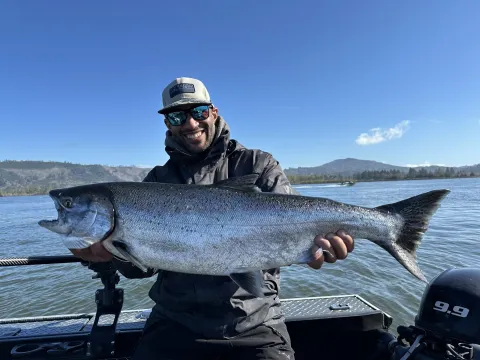
/articles/springers-are-here
Catch More Rainbows At Potholes Reservoir
Potholes Reservoir is best known for its spectacular bass, walleye, and panfish fisheries but do not overlook the quality trout you can catch out of this 27,800-acre reservoir. Two-to-three-pound rainbow trout are common in this lake, and they can get even bigger. Every year, multiple anglers catch seven-pound rainbows here.
So where do you find them? A reservoir this large can be intimidating to someone who has never fished here before. Fortunately, there are a few key places you can count on to find trout.
If you are a shore-bound angler there are a few good choices for you. In the spring, you can catch trout at Blythe Point, a WDFW access area with a boat launch on the southwest end of the reservoir. Simply go towards the end of the point and fish from there. Many anglers will plunk nightcrawlers or worms here because there are other species in the area that will take this bait as well.
A short distance away from Blythe Point is Potholes State Park. Don’t bother fishing the main lake from shore because it’s a long shallow flat that isn’t conducive to holding trout. Instead, go to the north end of the park and fish Frenchman’s Wasteway. The trout congregate in the moving water of this stream that flows into Potholes Reservoir at the northeast end of the park. Lures like Worden Rooster Tails or curly-tailed grubs with a 1/8-ounce jig head are proven winners here, as are worms fished under slip bobbers.
Another place to try from shore is MarDon Resort. In the early spring, right after ice-out, anglers can catch rainbows either still fishing or casting spinners and spoons from the shore behind the head office or at the swim beach. You do need to be staying at the resort to fish here.
Are you the kind of angler who likes to soak Powerbait? If so, head to Medicare Beach on the east end of the Reservoir. There are plenty of Powerbait plunkers here and if that’s not working, try fishing a marshmallow and worm off the bottom.
Boat anglers have more options and trolling in front of Medicare Beach or near the mouth of Frenchman’s Wasteway are two places worth fishing. Nathan LaFrance at MarDon Resort said trolling over the sunken habitat boxes between the resort and Blythe Point is also a good springtime strategy.
As for how to catch them, trolling a Berkley Flicker Shad in sizes #5 or #7 is a proven method to get trout to strike. Trolling a Needlefish spoon is also popular, and a frog pattern is a good color to start with unless the water is stained, in which case chartreuse would be a better bet. Finally, you can’t go wrong trolling the tried-and-true Mack’s Wedding Ring spinner tipped with a worm or a half of a night crawler.
As far as rods and reels go, a basic spinning reel with a 6 to 8-pound test works fine. While I used to fish ultralight rods for trout, I don’t do so here because the odds of landing a three or five-pound rainbow can be tough to do with a very light pole. That is why I favor a 6 ½ to 7-foot, medium-action spinning rod.
If you want a change of scenery from Potholes Reservoir, head to the seep lakes just south of the reservoir. Located on state land and within the Columbia National Wildlife Refuge, there are dozens of small lakes to explore fishing either from shore or in small boats, kayaks, or portable pontoon boats.
Some of these lakes are open year-round to include Corral Lake, which is a two-minute drive from MarDon Resort. Corral Lake is stocked with tagged rainbow trout that can be caught during the Washington Department of Fish and Wildlife’s annual trout derby that runs from the last Saturday in April through October 31st. If you catch a tagged fish, you report it to WDFW and you win a prize that could be a gift card or certificate or something more!
Checking with Nathan LaFrance at MarDon Resort some other year-round lakes worth fishing are Blythe Lake as well as Upper and Lower Goose Lake. LaFrance says the inlet into Soda Lake can also be a good bet and when he fishes there, he casts or trolls #4 or #5 Rapala Shad Raps. All the year-round lakes just mentioned have launches for small boats.
Other Seep Lakes open the last Saturday in April (April 26th, 2025). The most popular lake to fish during the lowland lakes opener in this area is Warden Lake and there is a resort at the north end of the lake along with a boat launch. Upper and Lower Hampton Lakes are good choices as are Hutchison and Shiner Lakes at the south end of the Columbia National Wildlife Refuge. If you want to get away from the crowds, hike into North and South Teal lakes. LaFrance says both waters fish well for rainbow trout.
Spring and Fall are both great times to chase after Rainbow Trout at Potholes Reservoir and the nearby Seep Lakes. Drop by the store at MarDon Resort for the latest conditions and if you are looking for a place to stay, the resort offers basic to luxury cabins, RV sites, tent sites, and a restaurant. Potholes State Park has basic cabins and a large number of RV and tent sites. Both locations also have boat launches.
John Kruse
www.northwesternoutdoors.com and www.americaoutdoorsradio.com
/articles/catch-more-rainbows-potholes-reservoir
Spring Ahead To Roses Lake
Looking back across the lake to the floating dock and small boat launch, it appeared much farther away than it was. Roses Lake, near the small orchard community of Manson, WA, is 130 acres and surrounded by foothills leading to the Cascade mountains. Roses Lake is not small, but also not nearly as large as the nearby 55-mile-long Lake Chelan which is the main reason why most visit the farming valley.
But on this springtime day, the afternoon winds had come up, blowing down the rolling hills and across Roses Lake. Between me and the newly redesigned boat ramp stretched a choppy expanse of wind-driven waves and whitecaps. In my small 12-foot rowboat, the real challenge wasn’t just the distance, it was the fact that I’d be rowing straight into the wind and crashing waves.
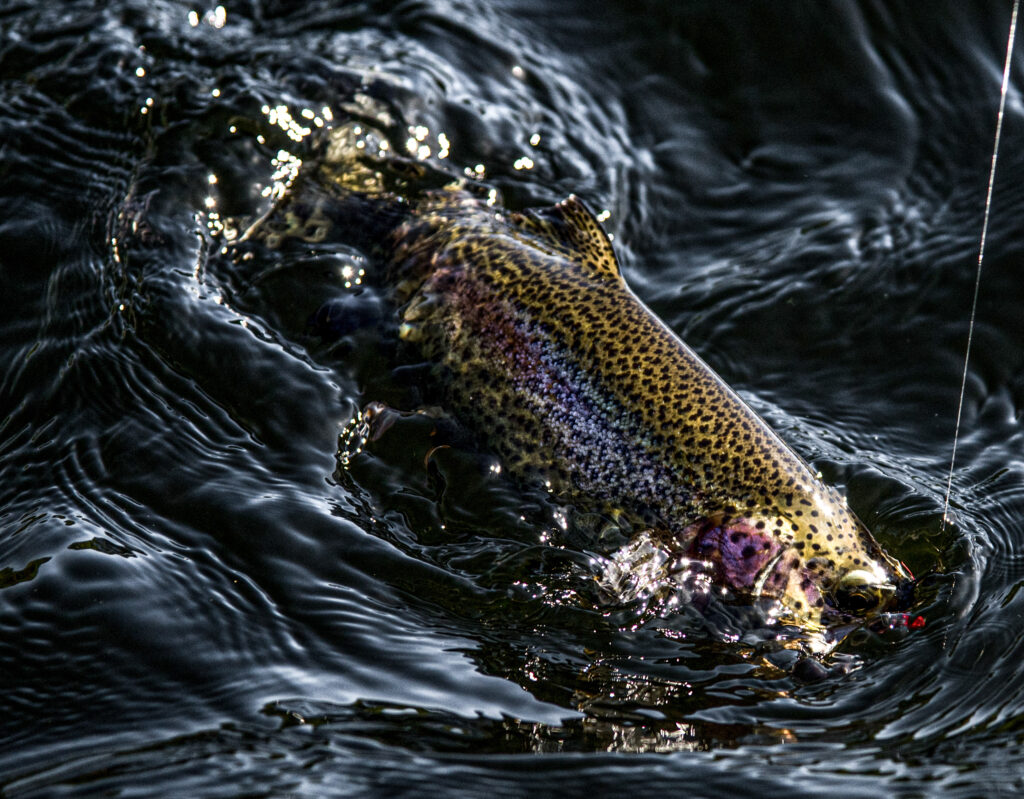
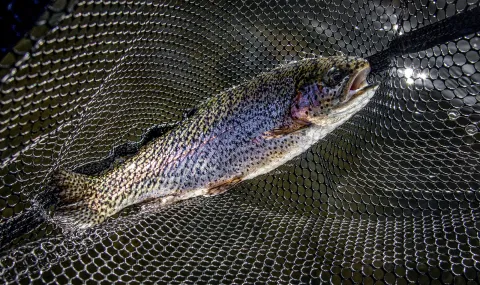
It had been a good day of fishing with several trout on the stringer and even more released as I rowed across the lake. Towing a green Mack’s Smile Blade fly in olive green with two small split shot a couple of feet before the fly meant catch and release was an option. If you choose to use bait then all fish caught must be counted towards the daily limit, even if released. Once I got to the far shore which is lined with cattails, I opted to switch over to a lightweight rod and a small jig with a curly tail grub under a float. This provided non-stop action with bluegills and small largemouth bass. Roses Lake offers anglers a lot of options all year long.
I grew up fishing this lake and back when it was a winter-only fishery, opening on December 1st and closing on March 31st; it was very popular with the locals. Every weekend there would be dozens of people sitting on buckets huddled around holes in the ice. But by the time the ice was gone, so were the locals. It seems they had their fill by March. Then several years ago the lake became a year-round season, now there is no rush of fishermen on December 1st.
When the ice is on this lake it is still very popular with the locals, but just like the days of years ago during the winter-only fishery, once the ice is off, the lake is all but forgotten. My dad fished it every day for a week straight this past January when the ice was thick and solid. He also limited on 10 to 12 inch rainbows in less than 2 hours each day he went out and the fishing continued to be good until the summer heat warmed up the water and brought out the water skiers.
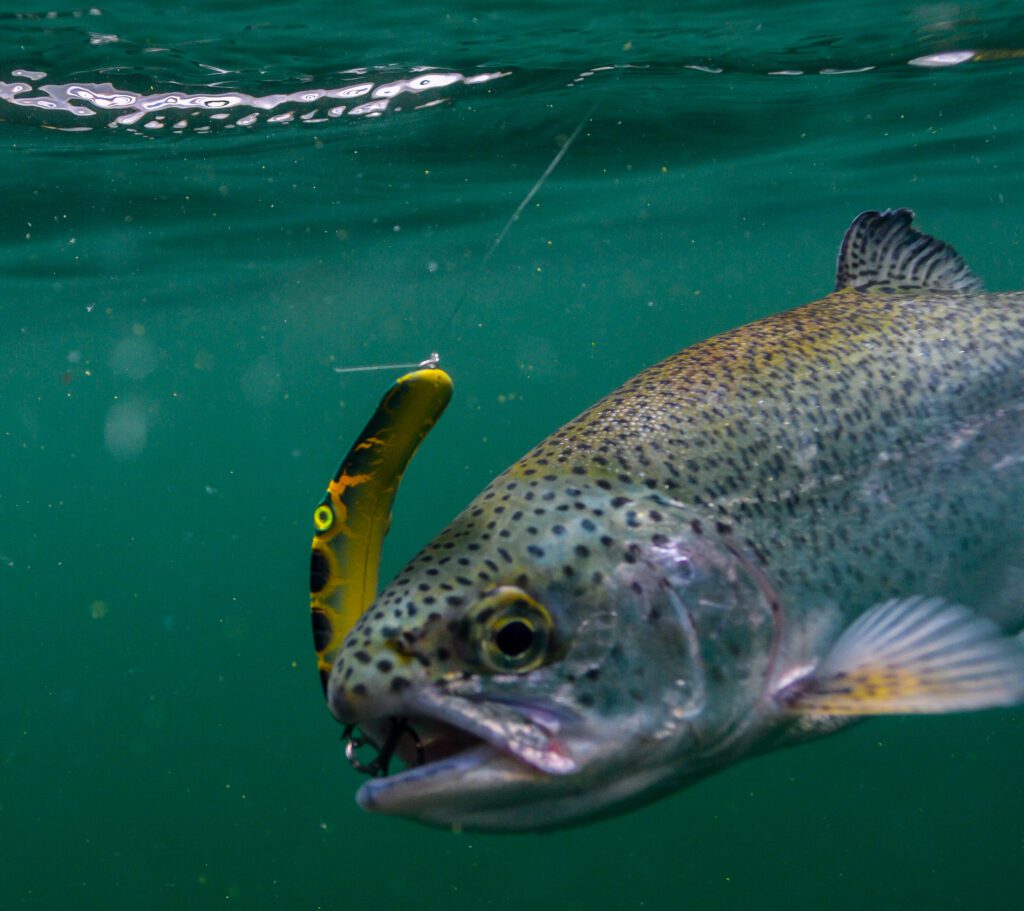
In March, the lake becomes very active, especially towards the end of the month when the water temps start rising and bugs start hatching. April and May are great months to fish the lake, especially trolling Mack’s Smile Blade flies or Carey Special flies either on a sinking fly line or on a lightweight spinning outfit with a few split shot above the flies. Since the lake receives trout plants throughout the year there always seems to be enough fish to make it worth the time to wet a line.
On average this lake sees a yearly planting of 31,000 rainbow trout, with 25,000 of those being triploids which are sterile and grow quickly. Washington Department of Fish and Wildlife also stocks around 2,000 brown trout and another 2,000 tiger trout, which are planted in hopes of keeping the warmwater spiny ray species in check. There are also catfish in this lake, though rarely targeted, and a good population of bass as well.
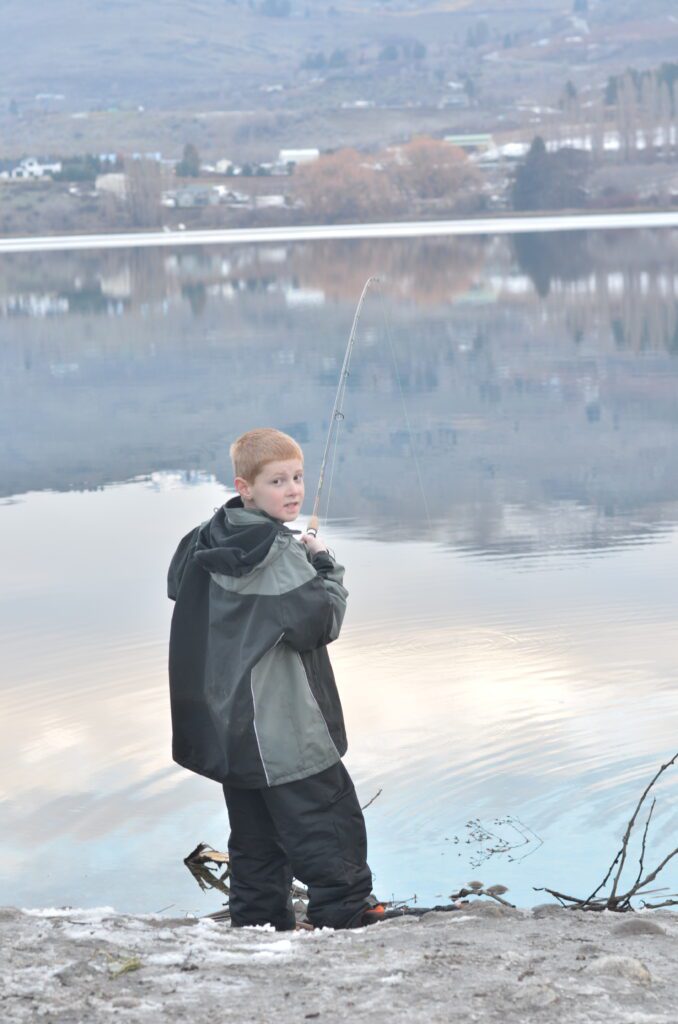
Access:
Roses Lake is 7 miles from the town of Chelan, along the north shore. Take Highway 151 towards Manson. Turn right on Wapato Lake Road, which is the same road that leads to the Colville Tribes casino and is across from Mill Bay County Park. Continue for approximately 2 miles until you come to Roses Ave. Turn left for about a ½ mile and the road veers right onto Green Avenue. Then head to the marked WDFW launch and access site about a ½ mile further.
There is ample parking which was recently re-paved and has bathroom outhouse facilities. Roses Lake access site also had the boat launch improved a few years ago with a dock added to assist in launching small watercraft. For those bound to the shoreline, WDFW just added a new fishing dock and a handicapped access bulkhead to fish from. It should be noted that this is the only public access to the lake as the rest of the shoreline is private property.
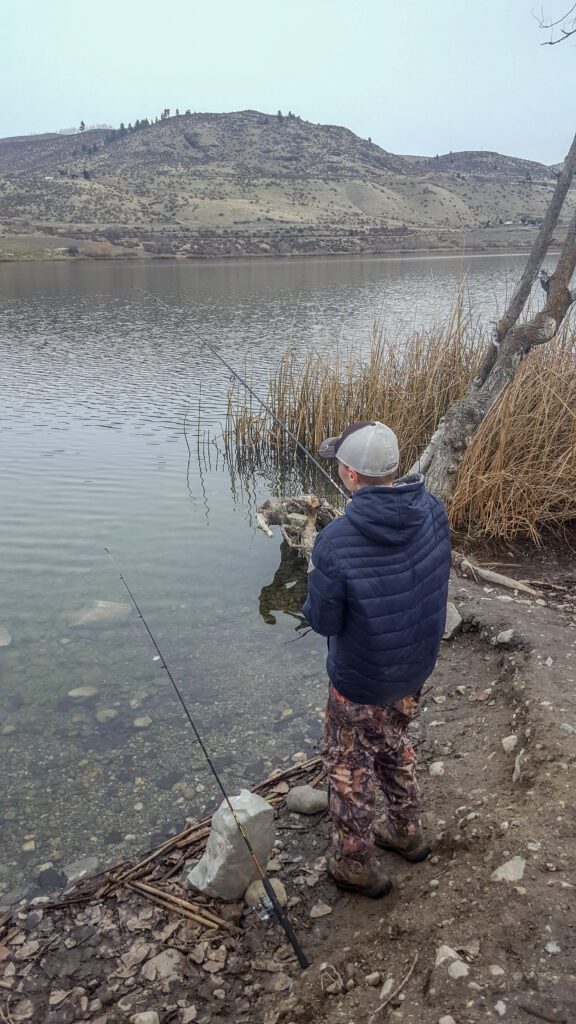
Where to fish:
Right out in front of the boat launch and off of the two fingers at the public access site has always produced fish. But if you have a boat there are two other areas that I highly recommend. First is a cove to the Northwest end of the lake. This cove area is shallow compared to the center of the lake and the water temps can warm up a little bit here which makes for better bug activity and hungry fish.
The second area is the East shoreline. This area is also shallow and has a sandy bottom which heats up the water in the early spring. There is a spring to the north side of the eastern shore where fresh water enters the lake from the aquifer. As the ice comes off of the lake with the oxygen-deprived water this area always does well in early spring. Of course, my favorite area is actually trolling between the east shore and the cove to the northwest along the northern shoreline just outside of the cattails.
What to use:
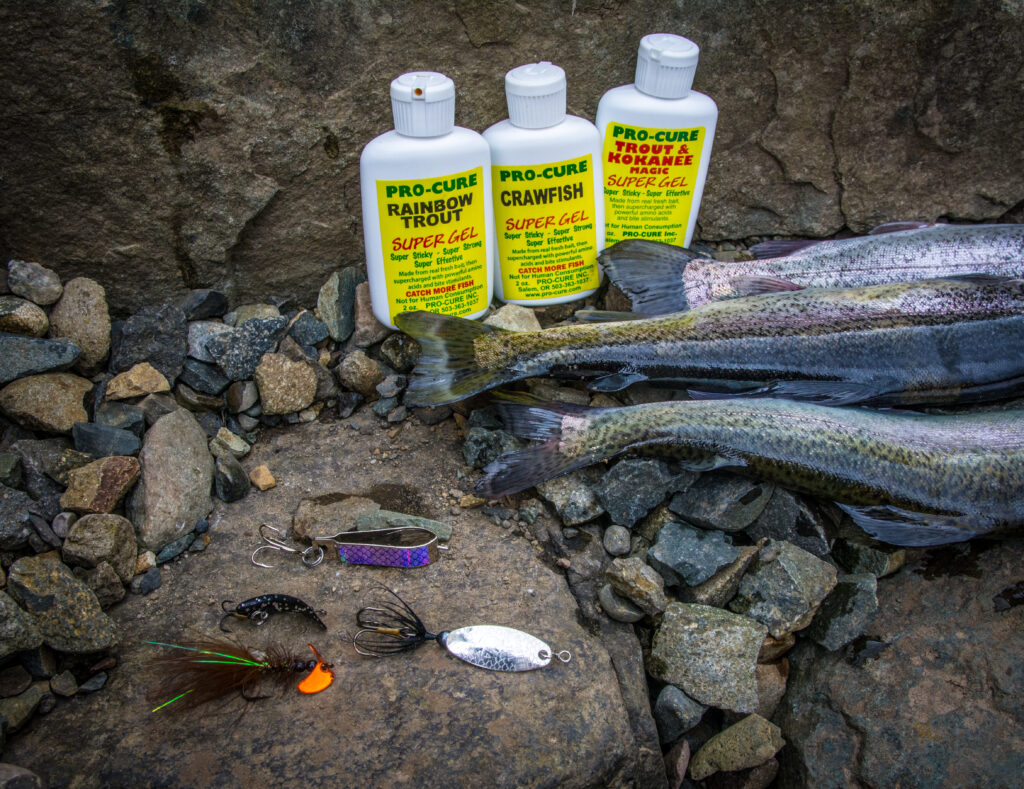
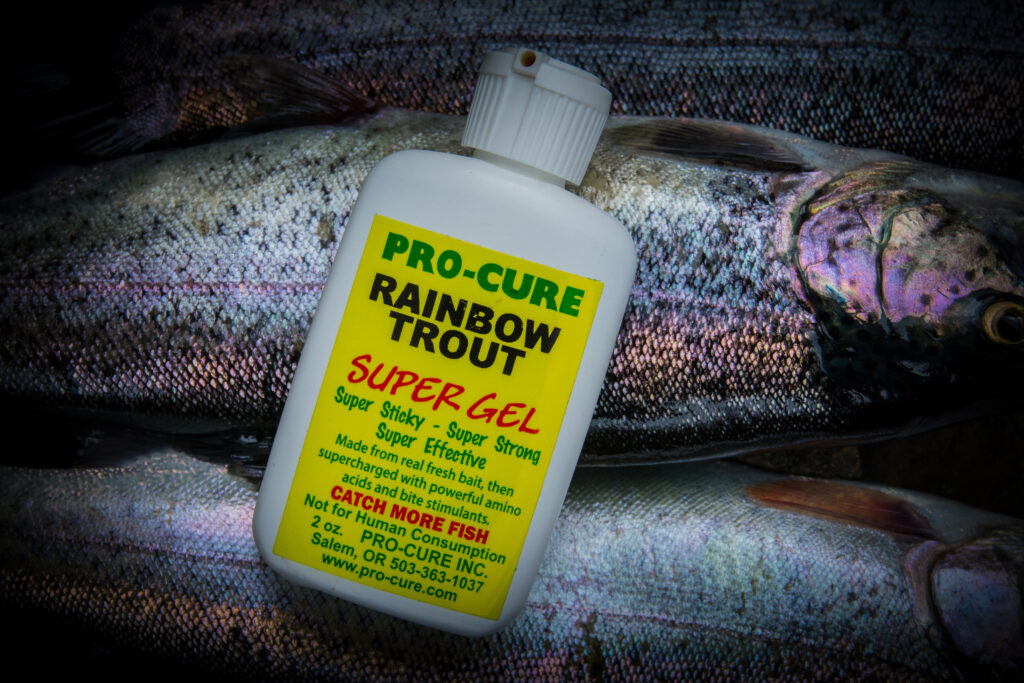
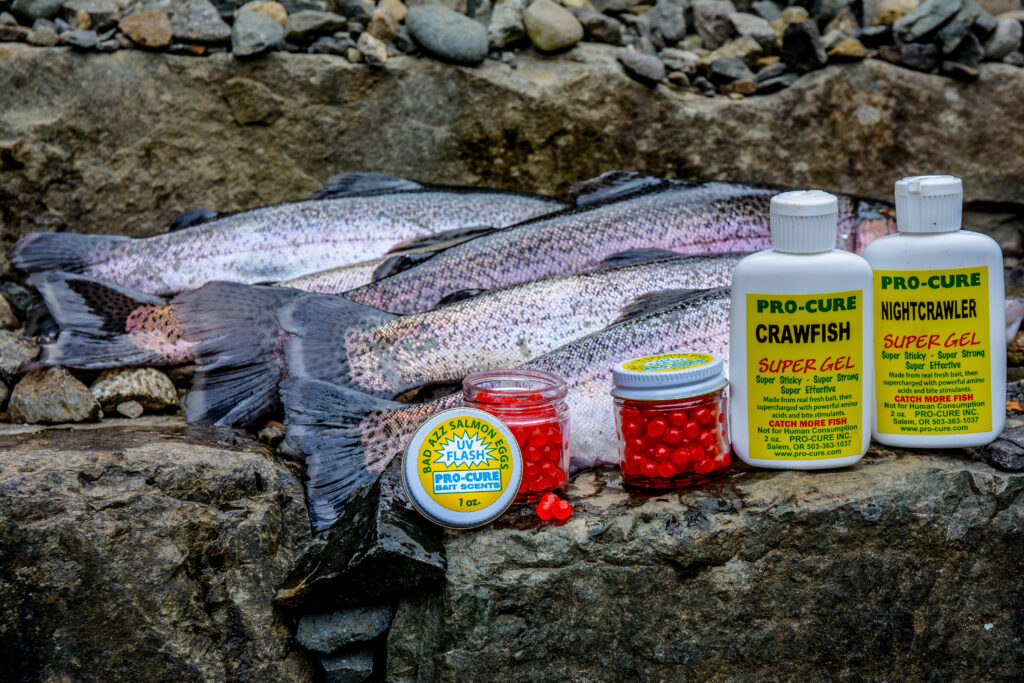
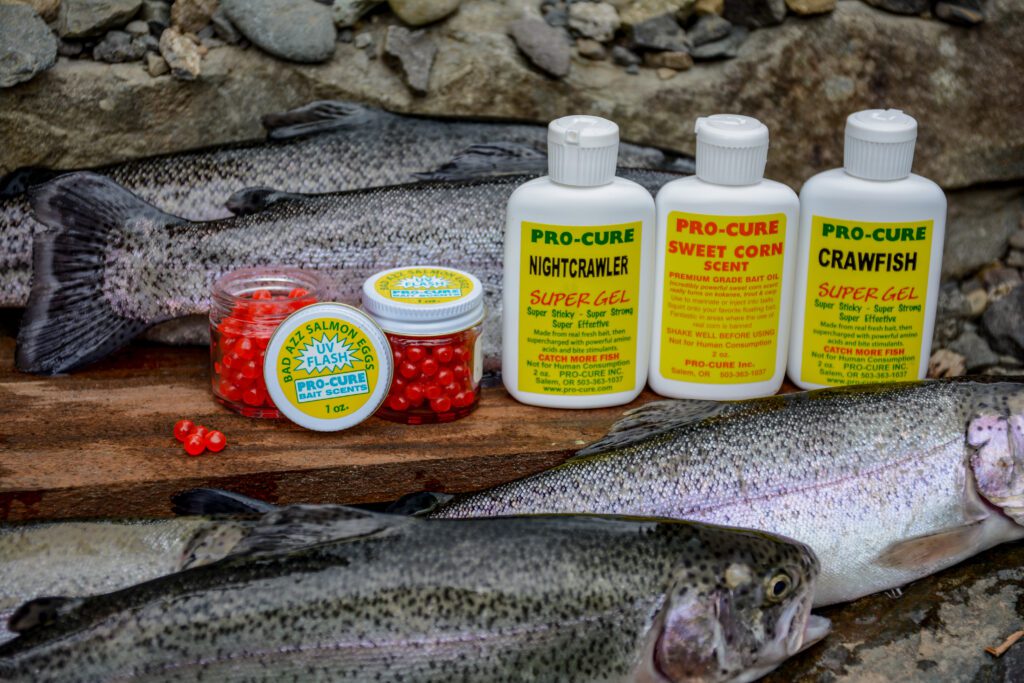
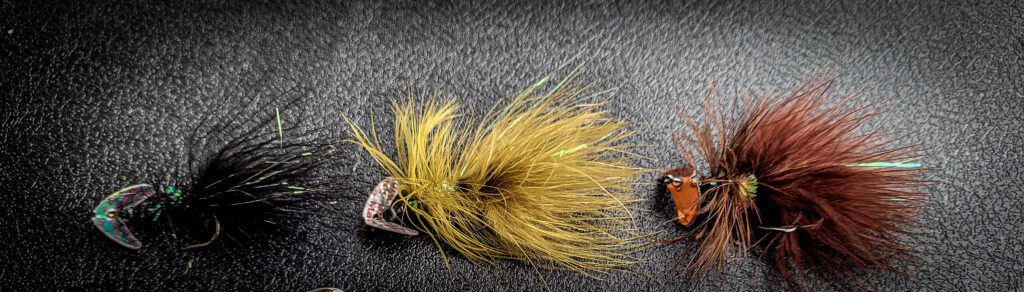
This is your standard trout lake and you can’t go wrong soaking powerbait or single salmon eggs doused with Pro-Cure SuperGel in nightcrawler or trophy trout. Be ready if you’re a bait plunker as there are also some big channel catfish in the lake that might gobble up your offering and give you a heck of a surprise when you’re expecting a planter rainbow! When the ice is on a favorite bait is cooked cocktail shrimp tipped with some corn soaked overnight in Pro-Cure bloody tuna SuperGel. But either before the ice or after it comes off my number one way to fish Roses is to troll a Carey Special or olive green Mack’s Lure Smile Blade fly, which is essentially a Whooly Bugger with a small Mylar blade in front.
Black leaches and a gold bead head black or green whooly bugger also works really well and you can use them to catch panfish and bass as well. You can use a 5 to 7 weight fly rod with a slow sinking line, or just a few small split shot two feet in front of the fly with a spinning outfit. Of course, if there was anyone joining me for the day I always made sure we had at least one Yakima Bait Company 2-inch Maglip in a green frog pattern being trolled behind the boat. You can use motors on the lake, but rowing can increase bites as it seems that the slower you go the more fish you catch.
Fly fishing too:
Just to the west of the boat launch is a little stream that outflows from Roses Lake to Dry Lake. Dry Lake is full of warm water fish, such as bass, crappie, bluegills and sunfish. These species always seem to sneak their way into Roses and this part of the lake is ideal for float tubing with a fly rod. There are also tiger trout in Roses and even a few browns, as WDFW tries curtailing the sunfish and invasive panfish that can spawn in lakes by using these predators. If the trout fishing is slow then you can try poppers or leach patterns for the pan fish.
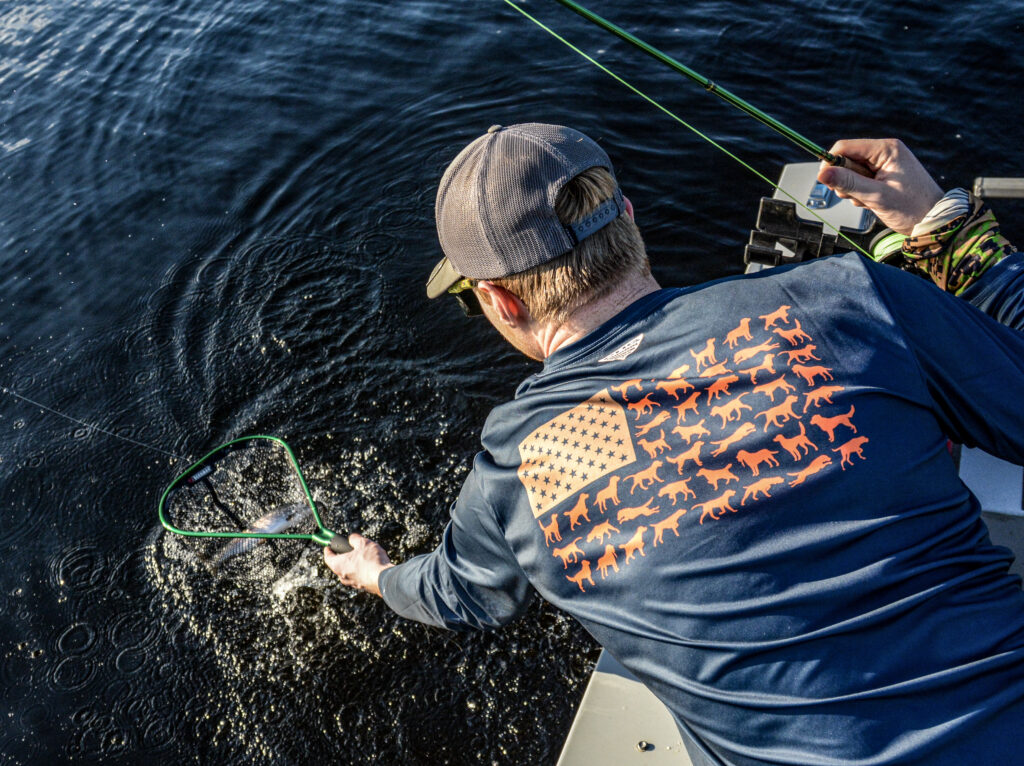
Other options:
If you are planning a trip to the Chelan Valley to give this fishery a try, don’t forget a few other options as well. Dry Lake right next to Roses is a bass fisherman’s dream. This lake is very shallow and by summer the weeds have overtaken the lake, but in fall and spring the weeds aren’t as bad and it’s very fishable. I don’t recommend ice fishing this lake because it is so shallow that the ice seems to be thin or “rotten” in places as the water can remain a bit warmer than the deeper Roses Lake. There is no improved launch at Dry Lake, but a small car topper boat or a float tube works great here. There are some big bass in there as well as good-eating crappie and other pan fish.
Of course, Lake Chelan is also an option that you cannot overlook. Springtime is prime time for the Lakers as they are in their spawning cycle. It seems the bigger fish come up from the depths or from the up lake to the down lake area (little is known where the big fish hang out since the lake is so big and deep). By late spring you can target the kokanee which are heading to the east end of the lake. The standard pop gear and wedding ring tipped with a worm and shoepeg corn soaked in Pro-Cure’s anise or bloody tuna is the top producer for the Kokes.
It seems this migration of landlocked sockeye fatten the Mackinaw for a chance to break the state record for Lake Trout. Try off of the end of Wapato Point where the lake goes from 150 feet to over 250 feet, either jigging 1 oz white grub jigs tipped with pike minnow or herring strips or troll a U20 flatfish along the bottom off of downriggers. If you’re not equipped for the deep water, the smallmouth bass are found along the docks in the town of Chelan. The water is clear enough that you can often see fish for the bass.
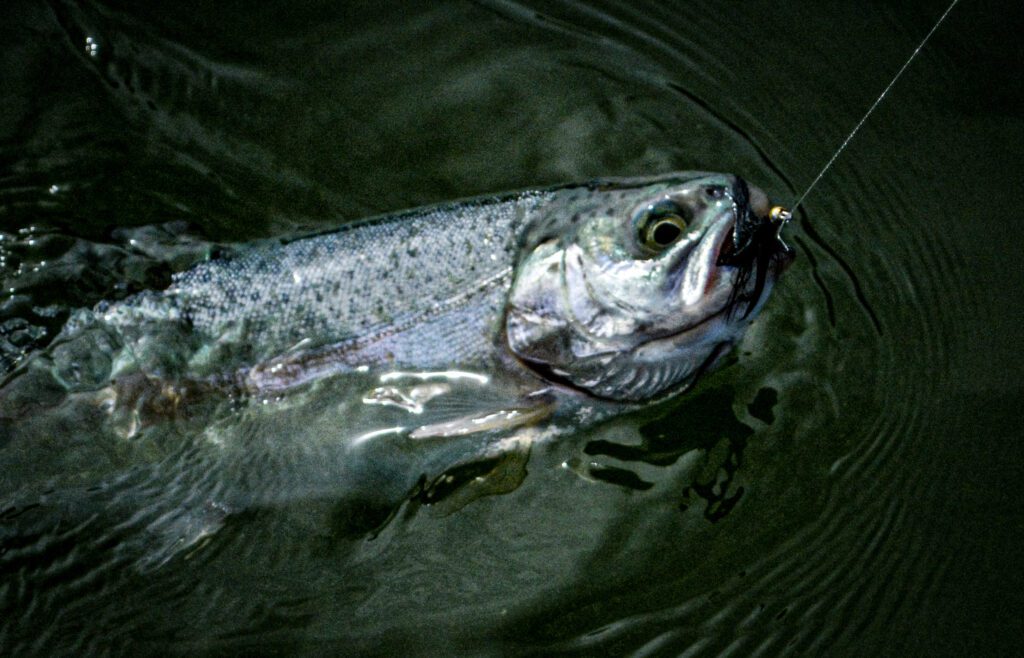
Back on Roses Lake, keep an eye on the afternoon winds and be ready to head for the boat launch. If the trout fishing slows then work the cattails for some incredible bass fishing. You might not find big bass here but they are plentiful and easy to catch. Keep in mind that there is often a water ski slalom course on the west end of the lake and that others will be using this lake as well. The 130-acre body of water is surrounded by orchards and a few houses and respect the shoreline.
The WDFW access site gets busy but there is plenty of parking and good bank access. This lake has it all, for everyone, from kayakers and float tube anglers to bass boats and tow boats, trout and bass, and some bluegill too. This makes it a perfect lake to take the kids as well as just spend some time catching fish while in the Lake Chelan Valley.
/articles/spring-ahead-roses-lake
Walleye Fishing At Long Lake
A few inside tips that can make you more successful your next time out.
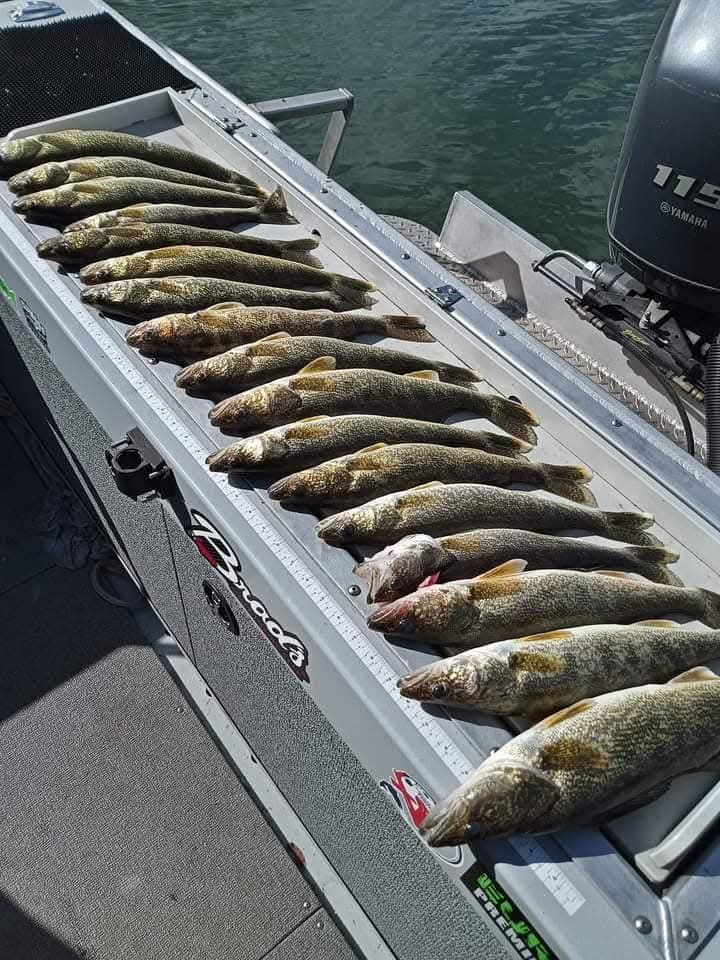
Nestled in the Spokane River in Washington state, Long Lake is a favorite destination for anglers seeking productive fishing and multiple species. While the lake is well known for bass fishing, and recreating, it has earned a reputation as an excellent spot for walleye fishing. Whether you're a seasoned Angler or a novice hoping to reel in a trophy catch, Long Lake offers opportunities to hook a variety of quality fish, with now the walleye becoming the star of the show. Throughout this article, we will explore a few techniques you may want to know to catch walleye on Long Lake and some of my favorite spots to cast a line.
The Allure Of Long Lake
Long Lake, also known as Lake Spokane, spans roughly 24 miles and allows a ton of fishing opportunities. The lake is a man-made reservoir created by the Nine Mile Dam, and Long Lake Dam. With the lake being so close to Spokane, it attracts a lot of recreation boaters, swimmers, jet skiers, and kayakers. Lots of bass tournaments are held there, and plenty of trout are planted for family-catching fun. Don't be surprised if you come across a pike, as at one point in time they were quite plentiful in the system. Now with the good population of walleye showing up the past several years, and so much room to fish, it makes Long Lake a prime fishing destination in the region.
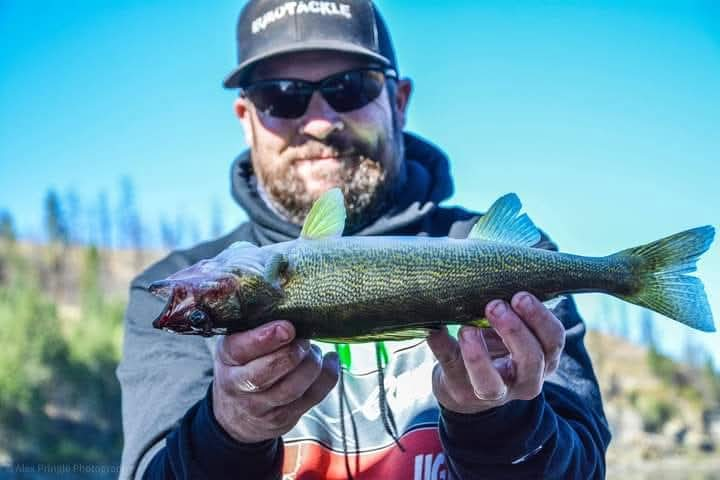
Walleye: A Coveted Catch
Walleye or a highly prized fish for anglers due to their elusive nature, sporting challenge, and their great taste. Their reputation as one of the best-eating freshwater fish definitely adds to their appeal. Known for their sharp teeth and distinctive pale greenish silver color with dark vertical bars on their body. Walleye are not as aggressive as Bass, making them a bit harder to catch, which increases the excitement for anglers.
Long Lake walleye have flourished due to the abundant amount of forage fish like perch and so many other minnows, great water, and structure; including drop-offs, rocky shorelines, and vegetation. The walleye population in Long Lake is healthy, with many Anglers regularly reporting good catches, making for a perfect habitat for these predatory fish.
Walleye fishing at Long Lake typically peaks in the warmer months, from Spring to late fall. However, most anglers are drawn to the lake in the spring and summer when walleye are actively feeding and more of the lake is accessible as the water is low in the winter.
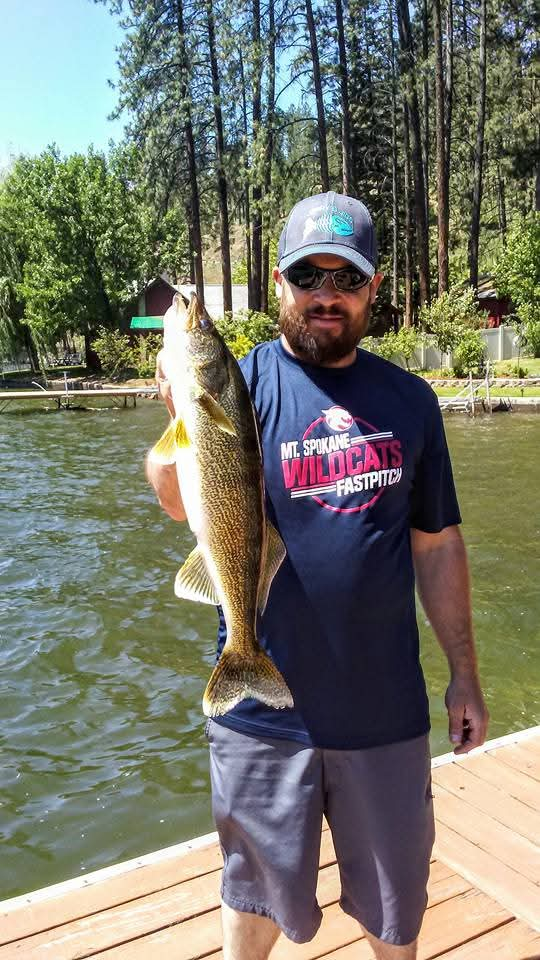
Best Time To Catch Walleye
The best time to fish for walleye on Long Lake largely depends on their feeding habits and the season. Walleye are known to be nocturnal, meaning they are most active during dawn and dusk, when the water cools and the light levels are lower. This makes the early morning and evening hours prime times to catch walleye. These fish of course will bite during the heat of the mid-day during warmer months, but I tend to find my best fish during the cooler months at night. In terms of seasons, spring and fall are often regarded to be the best times for Long Lake walleye. During the spring, walleye are typically spawning, which makes them more concentrated upriver near the Spokane House launch and further up in the shallows. That's where we find our most large and aggressive fish. In the fall, walleye put on the feed bag and bulk up for the colder months, fishing can be productive as they aggressively feed on smaller baitfish flourishing just outside weedlines.
Summer fishing walleye can still be productive, and very good, but may require deeper fishing targeting the river channel. Walleye tend to retreat to deeper, cooler water during the summer. Using your electronics can be particularly helpful in locating them in deeper regions of the lake.
Techniques And Tips For Catching Walleye:
- Trolling
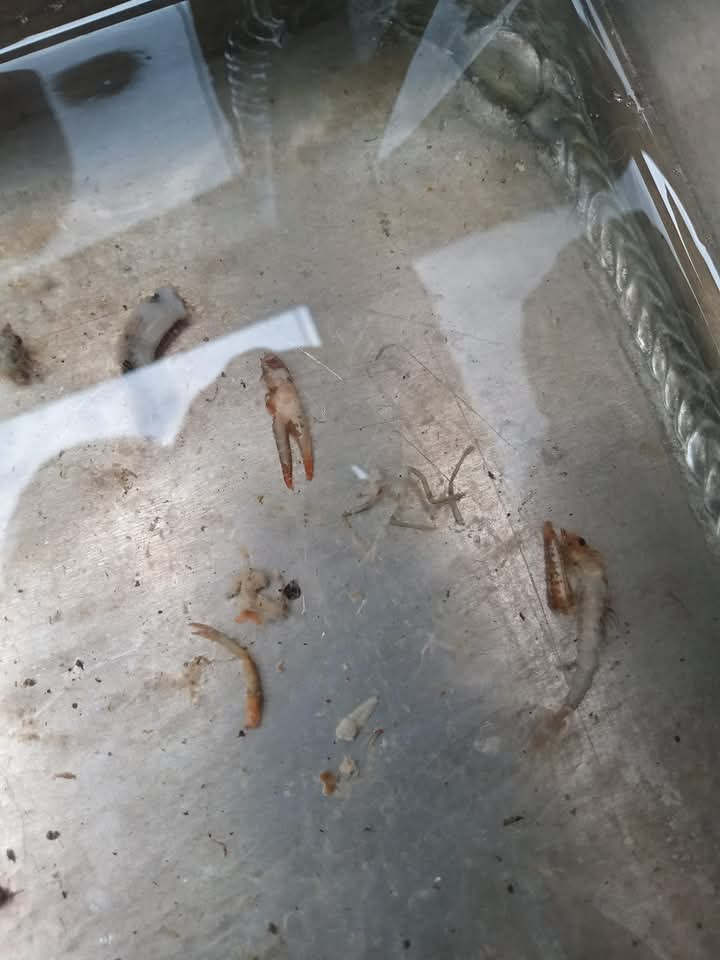
Trolling is one of the best and most effective ways to catch walleye, by covering more ground and increasing the chance of encountering a hungry walleye. When im trolling Long Lake, the most effective depths for me have been in the target range of 10-30ft, depending on season and temps. Early season trolling large crank baits like Bandits in 10-12ft of water is lights out up near the Spokane House launch. Make sure those crankbaits are making contact with the bottom a little, and you'll be in the zone, trolling upriver. When the fish start to move out to the main lake, and a little deeper is when I will switch to a slow death rig with a worm harness from Mack’s Lure - usually on a 3oz. bottom bouncer trolling at slow speeds maintaining contact with the bottom. Walleye love crawdads and bouncing the bottom mimics crawdads fleeing, drowning in the walleye.
- Jigging
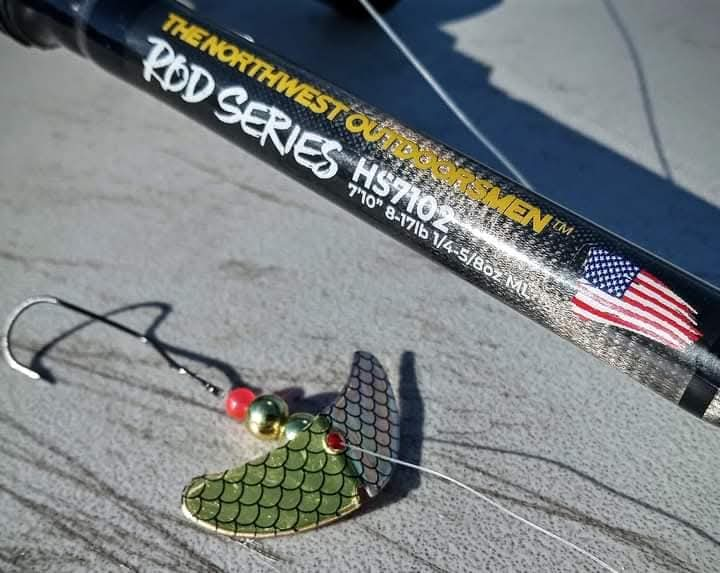
Jigging is another effective method for walleye, especially as they migrate deeper along the river channel. By using a jig tipped with a worm, or cut bait Anglers can lure walleye into biting by mimicking the movement of a distressed bait fish. The key to success with jigging is to work the base slowly and deliberately, ensuring it mimics the walleyes' natural prey. Many anglers, including myself, prefer using soft plastics and various profiles and colors.
- Drift Fishing
Drift fishing I find effective when fish are spread out or flats I find just off the river channel. Drift fishing involves allowing your boat to slowly drift with the current while casting jigs, or bouncing jigs close to the bottom. This technique can be productive when targeting drop-offs near the flats, weed lines, or rocky shorelines.
- Night Fishing
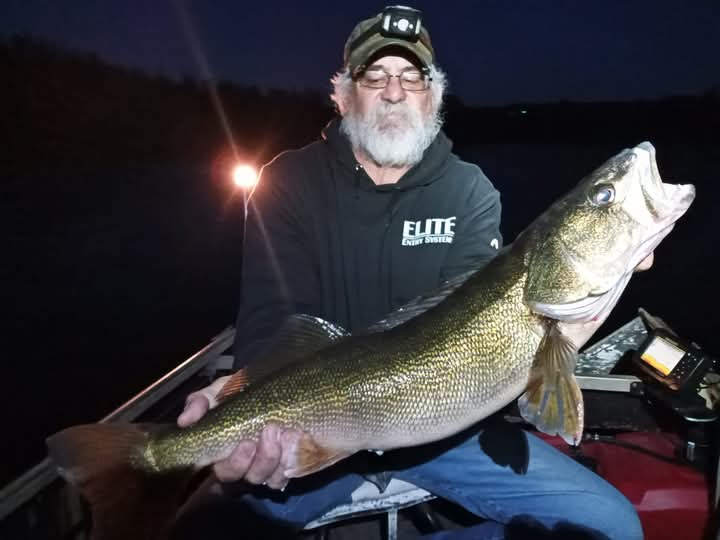
Walleye are known to be more active at night, targeting the shallow river areas early season, or shallow weedlines closer to shore around that 7-15ft of water. I like glow color lures, silver lures, or dark black lures.
Where To Fish On Long Lake
Long Lake has several spots that can consistently produce good walleye catches. Many anglers focus on the flats adjacent to the deeper river channel, but can also be found shoreline weedlines and structures such as drop-offs and submerged gravel beds.
Some of my favorite spots include:
- The upper end of the lake: This upper portion of the lake near Long Lake Dam has many rock formations and drop-offs where these predators can hunt bait fish. Look for shorelines on the upper end that have gravel or rip rap. Walleye love to chase crawdads in these areas.
- The lower end of the lake: This area provides plenty of spots to fish from between 9-mile recreational area to Willow Bay. Trolling and jigging is very effective in this large stretch.
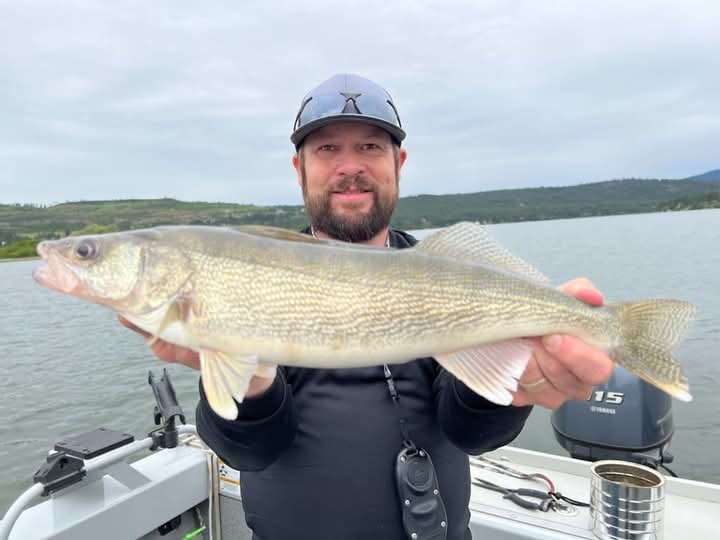
Walleye fishing on Long Lake in Spokane Washington, offers an experience for anglers looking to test their skills. Whether you're fishing from a boat or the shoreline, the lake offers a diverse habitat that provides the perfect environment for walleye to thrive. With the right techniques and a little patience, you can have a successful fishing trip reeling in a trophy walleye. So grab your gear, head to Long Lake, and discover why it remains as one of the best-kept secrets for walleye fishing in Washington.
/articles/walleye-fishing-long-lake
How To Catch Trout On A Rainy Day
They say an angler is a man who spends rainy days sitting around on the muddy bank of a river doing nothing. Because his wife won't let him do it at home.
Once I made a rainy day road trip through Central Oregon early in the spring. I didn't fish much, but I talked to anglers, most of whom were doing nothing. Here's a sample of the folks I met and how they were fishing.
One guy had the door of his Mercedes propped open while he fished the Deschutes at Warm Springs. He had tied a hook direct to the end of the main line and had a worm on it. No swivel. No leader. No split shot. Just a hook and worm.
He couldn't figure out why he couldn't cast farther than the end of his rod. I couldn't figure out how he had generated enough brain activity to afford a Mercedes.
At Taylor Lake in The Dalles, a father and son were sitting in a Chevy watching their poles. I walked up about the time they reeled in. They had split shot crimped on main lines, big snap swivels, and short, heavy snells on big No. 4 worm hooks. Okay for catfish, maybe, but not for trout. They told me the trout weren't biting today. When they went home they probably said, "The fishing was good; it was the catching that was bad." News Flash: It ain't ever gonna be good.
At a kids-only trout pond in Bend, I saw a man and wife in their 90's fishing with fly rods. They were seated on lawn chairs right next to the sign that said Fishing For Children Aged 17 and Under.
Tied to very short leaders, they had huge Spin-N-Glos with nightcrawlers on 2/0 trebles. Too big for anything smaller than a 30-pound Chinook. Their baits lay on the bottom about two feet out from the bank.
Call me old fashioned, but I think people when they go fishing for trout, should know how to rig for trout.
Here are three easy ways to catch 'em.
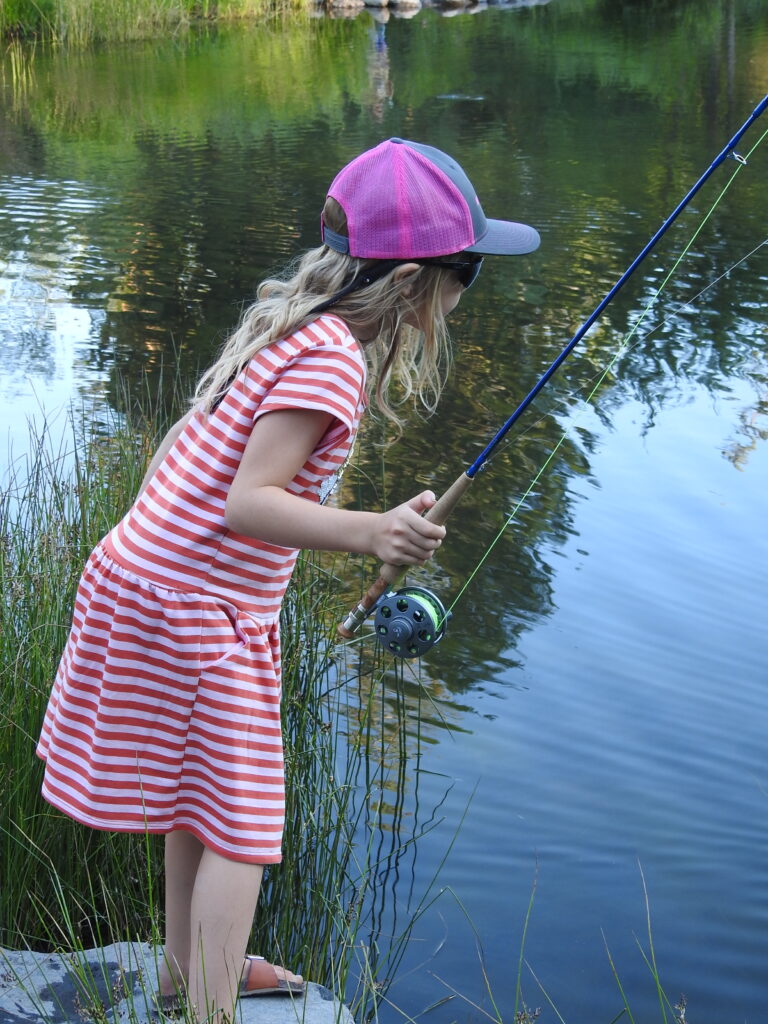
PASTE BAITS/JAR BAITS
Use a paste bait, particularly when the water is cold in the early season. Slide a bullet sinker onto the main line and then tie on a barrel swivel. Then tie on a 30-inch four- to six-pound test leader terminated at a No. 12-16 treble hook. Pinch a bit of the paste bait (Power Bait, Gulp! or similar), roll it in a ball and cover the hook with the dough.
Cast out, let the bait sink to the bottom, then leave it. Set the rod down and watch it. When the line starts to move, pick up the rod and reel in.
This rig catches fish and it kills them. So don't plan on fishing for sport, for catch-and-release. Use this method when fishing for a fish dinner.
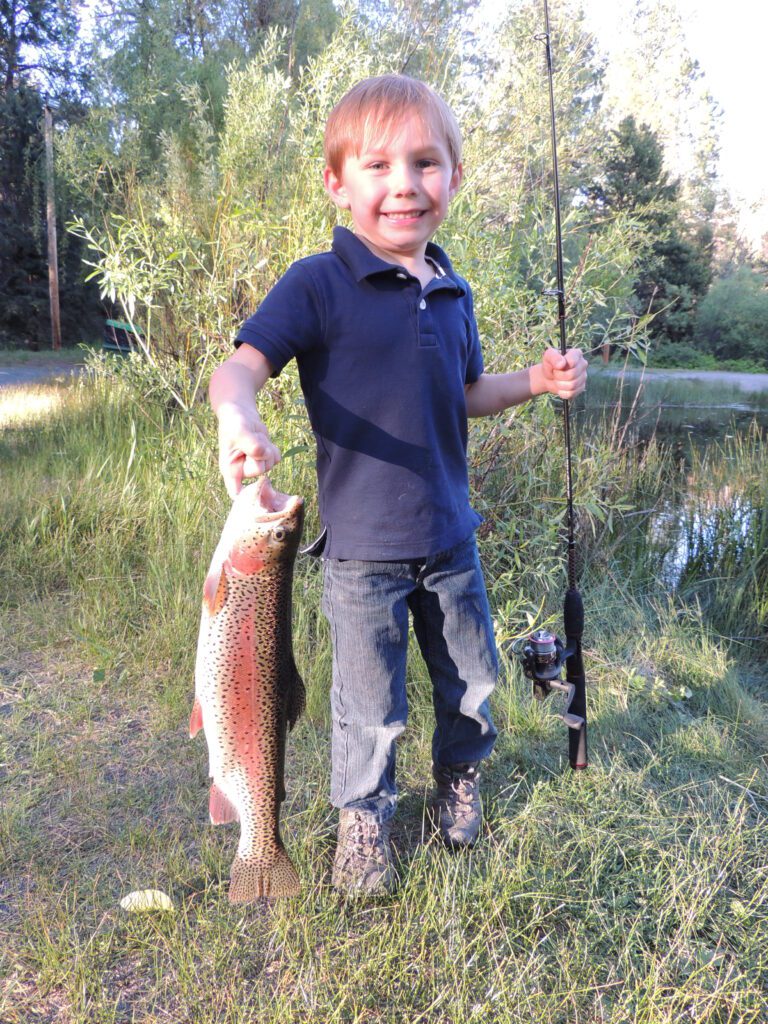
BOBBER AND WORM/BOBBER AND EGG
The bobber and worm rig is just as effective as it ever was. Rig this way when fish are active and higher in the water column.
Tie a swivel to the main line. Tie on a leader about 24 inches long. Tie on a No. 8-12 bait holder hook if fishing with a worm. Use a No. 12 hook if fishing with salmon eggs. When using nightcrawlers, cut the worm into pieces instead of using the whole worm. Pinch on a bobber above the swivel. Pinch a couple of small split shot on the leader.
Cast out, set the rod down and watch the bobber. When the bobber starts to move, let it bounce a couple of times then set the hook.
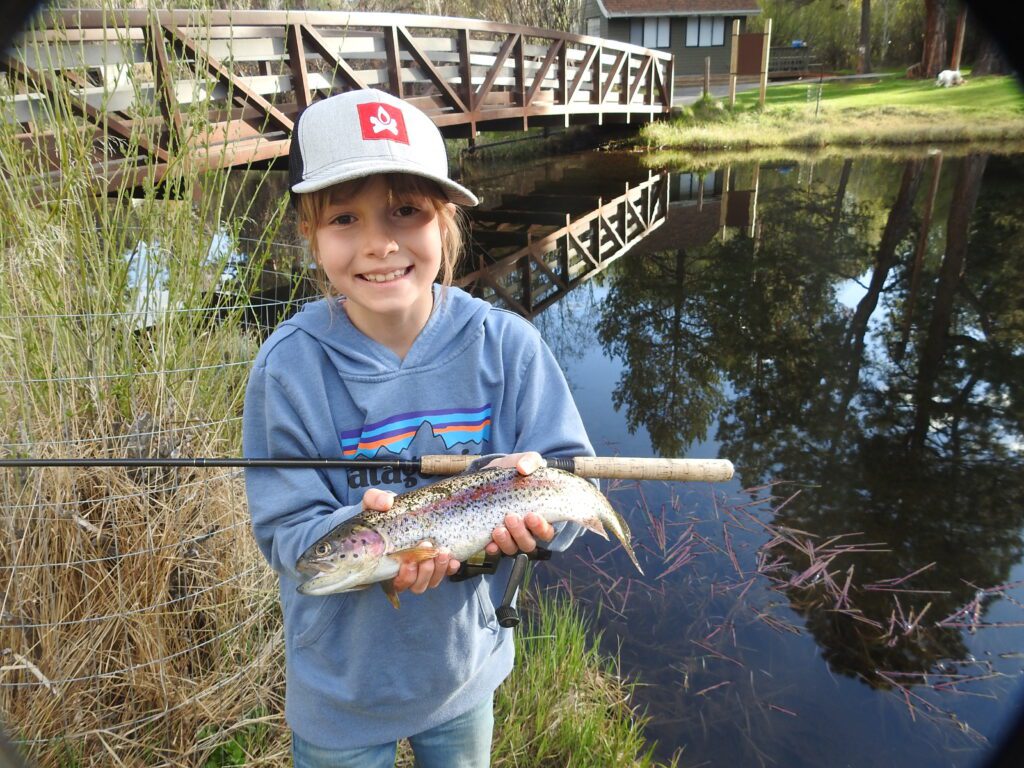
FLY AND BUBBLE
Use a fly and bubble when the water is clear. One of the most effective rigs for catching hatchery trout in clear water is a spinning rod rigged with six-pound test mainline and a float and fly combo. Slide a clear plastic bubble over the main line. Tie on a swivel. Tie on a 48-inch 4-pound test leader and finish with a No. 10 Red Tag Woolly Worm. At the lake, fill the plastic bubble with water which provides the weight necessary for long casts. If the fly doesn't sink fast enough, put on a small split shot.
Cast and reel it back S-L-O-W. Keep moving around the pond until fish are located. This is a good method for catch and release.
Fishing is not hard, but using the wrong baits and fishing in the wrong spots will lower an angler's success rate. Make it easy for the fish to find your bait or fly. Fish where fish are.
Still need help? Stop at a sporting goods store. Take your rod and tackle box inside. They're going to sell you something, and that's okay. But get a tackle expert to rig the rod the right way. They'll do it if you ask nice. Pay attention so you can do it next time. Then go fishing. Your loved ones want you to get out of the house.
As has been said before, "Give a man a fish and he has food for a day; teach him how to fish and you can get rid of him for the entire weekend."
# # #
For a copy of the Fishing Central Oregon book, send $29.99 to Gary Lewis Outdoors, PO Box 1364, Bend, OR 97709 To contact Gary Lewis, visit www.GaryLewisOutdoors.com
/articles/how-catch-trout-rainy-day
Digging Into Razor Clams
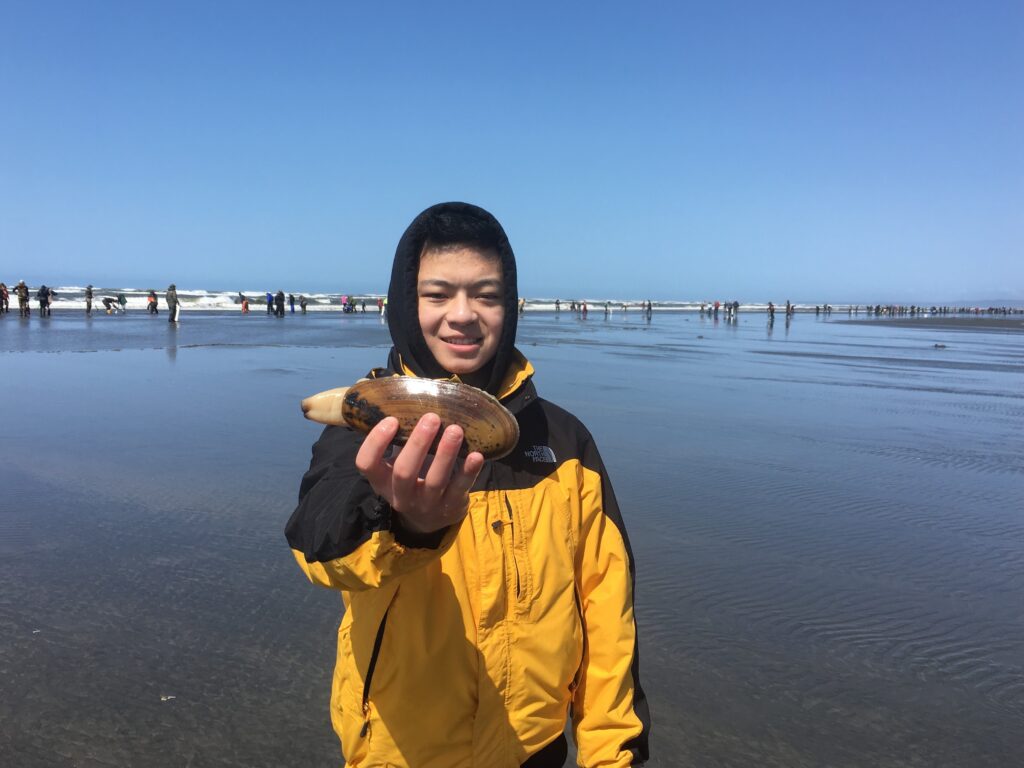
Coastal razor clam enthusiasts are really digging the winter razor clam season, and later in March come much longer days and a switch to morning low tide harvest opportunities.
“Digging has been relatively good this winter when conditions allow, and hopefully we’ll see more spring-like weather as we bid farewell to February and welcome March,” said Bryce Blumenthal, WDFW’s recreational razor clam manager. “Once we receive final marine toxin test results for each series of digs then we’ll proceed with evening low tides during most of March and shift to morning low tides at the end of the month.”
The Department of Health (DOH) requires test samples for marine toxins, and domoic acid levels that must fall under the guideline level before a beach can open for digging. Domoic acid, a natural toxin produced by certain types of marine algae, can be harmful or fatal if consumed in sufficient quantities. Levels this winter have stayed well below the cutoff threshold and continue to remain that way.
Final approval usually occurs about a week before the start of each digging series. Details about domoic acid, as well as current levels at ocean beaches, can be found on the WDFW’s domoic acid webpage at https://wdfw.wa.gov/fishing/basics/domoic-acid.
Not all coastal beaches are open for every dig, so diggers are encouraged to make sure their intended destination is open before heading out. Optimal digging occurs between one and two hours before the listed time of low tide.
Confirmed date during late afternoon/evening (noon to midnight only) low tides:
- Saturday, March 1: Low tide minus-0.1 feet, 7:15 p.m., at Long Beach, Twin Harbors, and Copalis.
Tentative dates during late afternoon/evening (noon to midnight only) low tides:
- Saturday, March 8: 0.6 feet, 2:13 p.m., at Long Beach, Twin Harbors, and Mocrocks.
- Sunday, March 9: 0.4 feet, 4:18 p.m., at Long Beach, Twin Harbors, and Copalis.
- Monday, March 10: 0.2 feet, 5:10 p.m., at Long Beach, Twin Harbors, and Copalis.
- Tuesday, March 11: 0.1 feet, 5:52 p.m., at Long Beach, Twin Harbors, and Mocrocks.
- Wednesday, March 12: 0.2 feet, 6:28 p.m., at Long Beach, Twin Harbors, and Mocrocks.
- Thursday, March 13: Low tide 0.4 feet, 7 p.m., at Long Beach, Twin Harbors, and Copalis.
- Friday, March 14: 0.7 feet, 7:30 p.m., at Long Beach, Twin Harbors, and Copalis.
Tentative dates during late afternoon/evening (noon to midnight only) low tides:
- Wednesday, March 26: 0.0 feet, 5:08 p.m., at Long Beach, Twin Harbors, and Mocrocks.
- Thursday, March 27: -0.1 feet, 5:50 p.m., at Long Beach, Twin Harbors, and Mocrocks.
- Friday, March 28: 0.0 feet, 6:29 p.m., at Long Beach, Twin Harbors, and Copalis.
Tentative dates during morning (midnight to noon only) low tides:
- Saturday, March 29: -0.1 feet, 6:58 a.m., at Long Beach, Twin Harbors, and Copalis.
- Sunday, March 30: 0.8 feet, 7:43 a.m., at Long Beach, Twin Harbors, and Mocrocks.
- Monday, March 31: -1.2 feet, 8:28 a.m., at Long Beach, Twin Harbors, and Mocrocks.
- Tuesday, April 1: -1.3 feet, 9:17 a.m., at Long Beach, Twin Harbors, and Copalis.
- Wednesday, April 2: -1.0 feet, 10:09 a.m., at Long Beach, Twin Harbors, and Copalis.
- Thursday, April 3: -0.5 feet, 11:07 a.m., at Long Beach, Twin Harbors, and Mocrocks.
DOH requires test samples for marine toxins, and domoic acid levels must fall under the guideline level before a beach can open for digging. Domoic acid, a natural toxin produced by certain types of marine algae, can be harmful or fatal if consumed in sufficient quantities. Refer to DOH’s website for more information at https://doh.wa.gov/community-and-environment/shellfish/recreational-shellfish/illnesses/biotoxins/amnesic-shellfish-poisoning. Details about domoic acid, as well as current levels at ocean beaches, can be found on WDFW’s domoic acid webpage at https://wdfw.wa.gov/fishing/basics/domoic-acid.
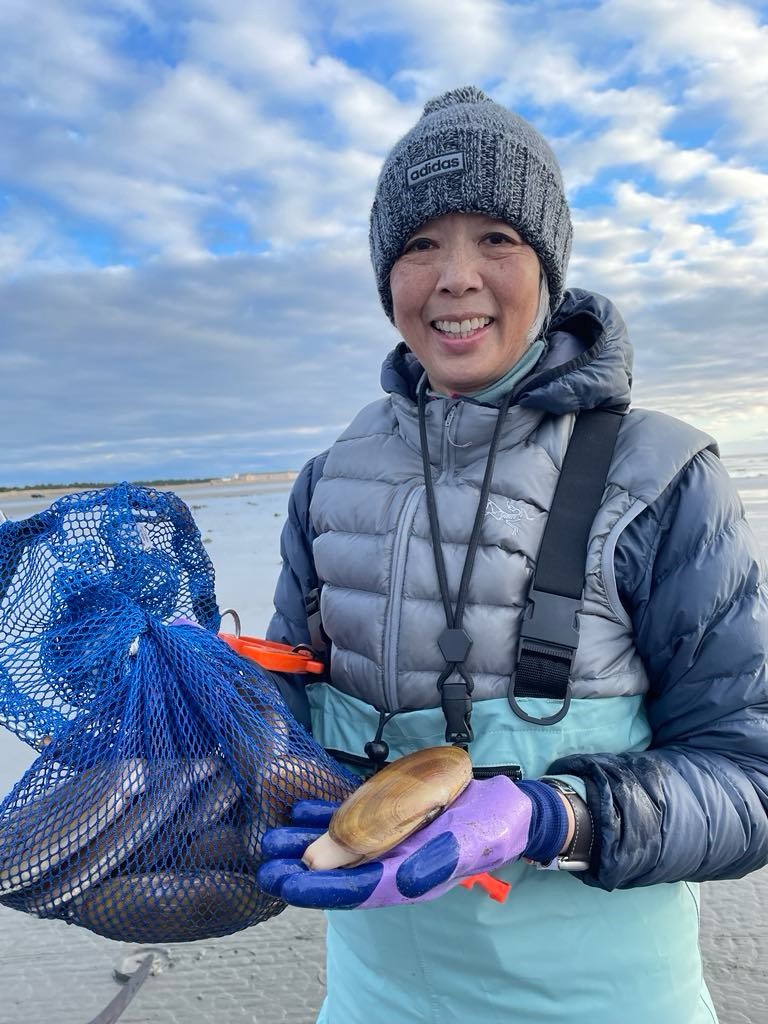
On all open beaches, the daily limit is 15 clams per person. Each digger’s clams must be kept in a separate container, and all diggers must keep the first 15 clams they dig, regardless of size or condition, to prevent waste.
With spring looming on the horizon, Washingtonians should consider buying 2025-2026 recreational licenses now especially if they plan to dig for razor clams in April. Licenses can be purchased from WDFW’s website at https://wdfw.wa.gov/licenses/fishing, or from hundreds of license vendors around the state. Be sure to buy your license before current licenses expire after March 31. All diggers age 15 or older must have an applicable fishing license to harvest razor clams on any beach. WDFW recommends buying your license before visiting coastal beach communities.
As in past years, WDFW is asking beachgoers to avoid disturbing nesting snowy plovers – a small bird with gray wings and a white breast – by staying out of the dunes and posted areas along the southwest coast. Snowy plover nests are nearly invisible, and it is vital to give birds the space to live and thrive during nesting period, especially along the southern end on Twin Harbors – known as Midway Beach – and the north end of Long Beach.
Also avoid leaving leftover food or trash – which attracts predators – on the beach and picnic areas, keep pets on a leash, stay out of dunes, and avoid areas which are clearly marked with posted signs.
Through March 1, WDFW has provided 72 digging days since the season began on Oct. 3, and if marine toxins aren’t an issue it is likely that total will climb to more than 100 days once the season ends.
As of Feb. 1, at estimated 154,759 diggers have harvested 1,806,071 razor clams. The daily average per digger of clams harvested from Oct. 3 through Feb. 1 is 12.1 razor clams at Long Beach (12.6 in 2023-2024), 11.9 at Twin Harbors (12.4 in 2023-2024), 11.0 at Copalis (12.6 in 2023-2024) and 11.1 at Mocrocks (12.7 in 2023-2024).
More coastal razor clam digs are possible in April and early- to mid-May depending on the harvest levels achieved at Long Beach, Twin Harbors, Copalis, and Mocrocks beaches. Look for details on the WDFW website.
The 2024-2025 Razor Clam Management Plan is available on WDFW’s website at https://wdfw.wa.gov/fishing/shellfishing-regulations/razor-clams#management. For more razor clam information, go to https://wdfw.wa.gov/fishing/shellfishing-regulations/razor-clams.
Digs are beneficial for coastal towns
The most recent surveys taken during the 2023-2024 season generated an estimated revenue of $51.9 million by diggers (351,062 digger trips for 100 days of digging) who visited the small coastal communities.
The highest since occurred during the 2021-2022 season, which generated a robust revenue of $71.7 million by diggers (474,427 digger trips). According to the WDFW Razor Clam Management Plan nothing has come close to that figure since economic data was tallied during the 1997-1998 season.
Stores, tackle shops, restaurants and gas stations rely on these opportunities during the lean tourist times in autumn, winter, and spring to help boost their economy.
The 10-year average is $35.9 million for 70 digging dates with 307,041 digger trips. The 20-year average is $30.6 million for 57 digging dates with 297,174 digger trips.
Coastal razor clam-related activities
- The free Ocean Shores Razor Clam Festival, organized by the Convention Center and City of Ocean Shores, is happening on March 21-23. There will be food vendors; exhibitors; live music; Dungeness crab meal (advanced ticket purchase recommended); a Sunday seafood brunch (advanced ticket purchase required); chowder cookoff and tasting passport available to sample and vote on Friday and Saturday; and a razor clam gun decorating contest. No razor clam digging will be allowed during those days because low tides aren’t conducive to digging. For details, go to https://tourismoceanshores.com/razor-clam-and-seafood-festival/.
- The Long Beach Peninsula Razor Clam & Shellfish Festival, hosted by the Long Beach Merchants Association, is April 26-27 at the Veterans Field in Long Beach. There will be food vendors; exhibitors; live music; clam digging lessons; restaurant chowder taste-off; amateur chowder cook-off; oyster shucking; crab plates; smallest and biggest clam contest. For details, go to https://www.longbeachmerchants.com/razor-clam-festival.
(Mark Yuasa is a Washington Department of Fish and Wildlife Communications Manager. He also was the outdoor reporter at The Seattle Times for 28 years.)
/articles/digging-razor-clams
Five Great Lure for Spring Bass Fishing
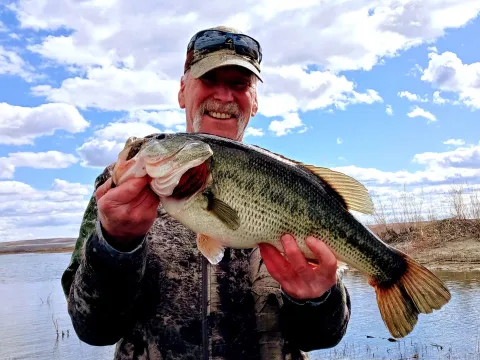
I love fishing for bass in the Spring! Bass are as big as they are going to get all year and as water temperatures warm and bass prepare to spawn, the bite can be amazing! By early May in the Pacific Northwest, with water temperatures around 60 degrees in many lakes, you can easily catch and release twenty-five bass a day. Here are five lures I love to use in the spring to help me get that done.
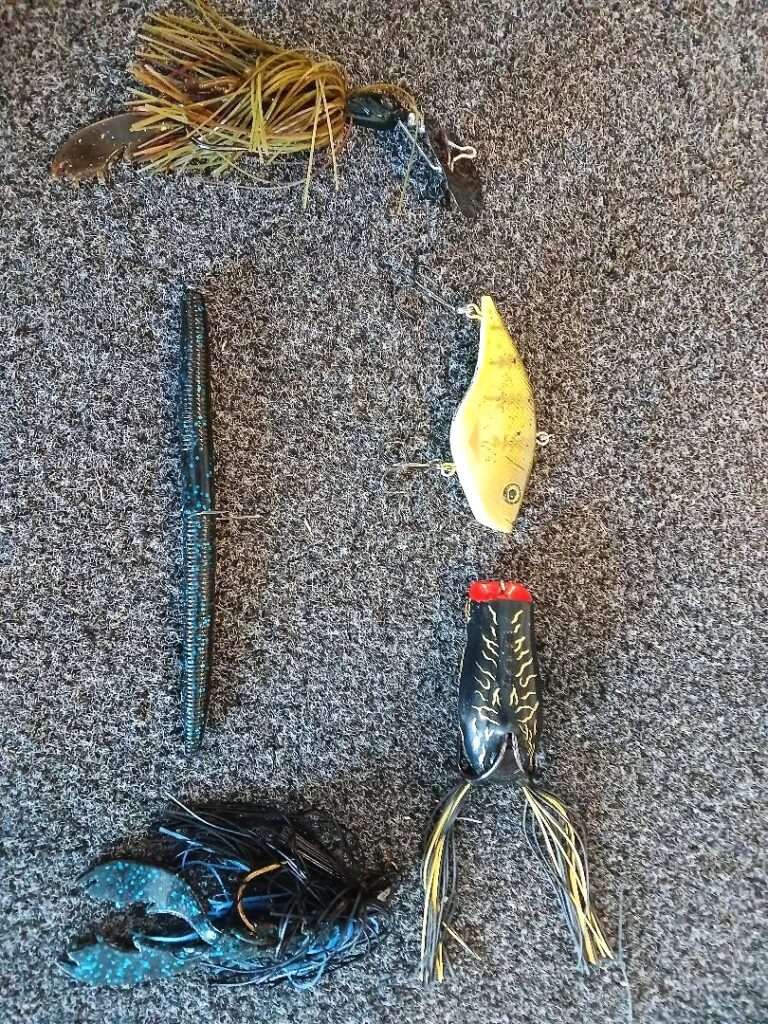
FOOTBALL HEAD JIG
A weedless jig is a lure that works all year long. The football head jig can be pitched or flipped into a variety of places bass like to hang out to include under docks, into brushy cover, rocky or gravel areas, beaver huts, flooded timber and the list goes on. I like to use a quarter, 3/8th ounce or half-ounce jig depending on how deep I am fishing.
One way to fish a football jig is to let it hit bottom and then slowly jig it back towards you. Most bites occur as the jig falls back towards the bottom. Another way is to us a sweeping motion with your rod, allowing the jig to drag across the bottom.
I always put a soft plastic trailer on any jig I am fishing with for bass. Good colors to use are black and blue or a green pumpkin.
CHATTERBAIT
A lot of bass anglers swear by the chatterbait for springtime fishing. This bait features a metal blade on top of the jig head that flashes and vibrates through the water. The chatterbait was popularized by Z-Man, and their original Z-Man ChatterBait still catches fish, especially in the spring. Many anglers, me included, let the chatterbait fall to the bottom and then retrieve it at a moderate pace next to brush or weed lines or near woody structure. If that does not work, try a very fast retrieve, even in colder water. That is a tactic Kyle Clark, an avid tournament bass angler and the owner of PNW Fishing Adventures, swears by.
A three-eighth to half-ounce chatterbait is a popular size to fish at depths of 10 feet or less. Popular colors are white, brown/black, black & blue and in stained water, chartreuse.
SENKO
When the bass are on their spawning beds a soft plastic worm called a Senko is hard to beat. This is a shallow water offering and precise casting while sight fishing for bass is a key to success. The number one color to fish is green pumpkin but at times, a purple worm with blue fleck can outshine the green pumpkin. I personally like to fish with a five-inch Berkley Powerbait Senko called The General, because the bass seem to hold onto it longer. However, many other serious bass anglers prefer Senko baits made by Yamamoto.
The Senko should be fished without weight. You can fish it Texas rigged through the nose and watch it slowly fall towards where the bass are. Others will fish it wacky rigged, with a hook right through the middle of the worm. The way a wacky rigged worm falls triggers vicious strikes from bass as it slowly undulates down through the water. Use a #2 or #1 Wacky hook and if you can find ones with wire weed guards that will help prevent some of the snags, you’ll encounter fishing around flooded timber and shrubs.
LIPLESS CRANKBAIT
The lipless crankbait can be fished in cool waters but really starts to prove itself when the water temperature hits 55 degrees. Bill Lewis came out with the original Rat-L-Trap decades ago. This is a hard lure with a slim profile designed to produce a very tight wiggle. BBs inside the lure provide a rattle as the lure is retrieved.
A lipless crankbait is a great search bait because it can be cast a long distance, and you can cover a lot of water looking for schools of largemouth or smallmouth bass. In the latter half of spring (and all the way into autumn) you can fish the lure with either a moderate or rapid retrieve. Very short pauses as you retrieve often trigger strikes. I like to fish this lure along rocky riprap or just outside the edges of cover like flooded willows or weed lines.
A number of companies manufacture lipless crankbaits. In recent years, I have gravitated to the Berkley War Pig. I have a couple of plastic tackle boxes filled with half ounce, three-inch War Pigs in a variety of colors and they have become a true high-confidence lure for me. In the spring red can be a good color or you can match the hatch and try fishing lures that imitate trout, perch, bluegill, or bass.
FROG
Never overlook a soft plastic, weedless frog for springtime bass. They are generally made with a hollow body and have hooks on the back of the body. The “legs” of the frog provide action that attracts bass, and if you have a concave face on your lure, a popping retrieve will often attract even more bass.
This is a lure designed to cast into the weeds or lily pads where you would not dare throw a traditional lure. Jerking the lure on top of the water and weeds can generate strikes from bass that erupt out of the water to smash the lure. The number one mistake most anglers make while fishing frogs is to set the hook too soon. As tempting as it is to set that hook when that bass comes out of the water, you need to wait until you feel the weight of the fish at the end of your line. That is when you set the hook with a hard jerk and begin fighting that bass.
Conventional wisdom says frogs (and other top water lures) fish best in the early morning and in the evening. However, a weedless from is a lure you can really fish all day, especially on a cloudy day.
So, there you go, five great lures to help you catch more bass from March through June (and beyond). Fill your tackle box with these staples and make the most of your day on the water with more hook-ups. You’ll be glad you did.
John Kruse
/articles/five-great-lure-spring-bass-fishing