Long Lake Walleye by Eric Magnuson
There are lakes you fish because they're close to home, and then there are lakes that become part of who you are. For me, that's Long Lake, known to some as Lake Spokane. Growing up on that lake, from the shores of my grandparents' place at Willow Bay, or at my favorite Aunt and Uncle's place just before Tum Tum. I have so many fond memories of this lake and how it's changed over time. Stretching nearly 24 miles, located northwest of Spokane, this reservoir has a personality that changes with every season. Some days it's calm and forgiving. Other days, it demands patience and humility. But one thing remains constant: the opportunity to catch incredible walleye if you're willing to learn the lake. Walleye aren't flashy fish. They don't explode on a topwater lure or leap skyward like a trout or bass. Instead, they reward anglers who pay attention to subtle details. That's exactly what keeps me coming back year after year.
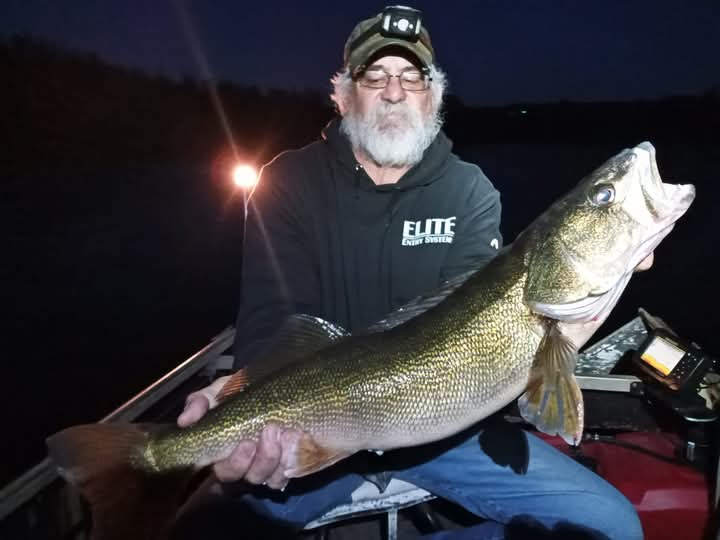
Spring is when my anticipation begins to build. As water temperatures climb into the mid 40s and low 50s, walleye transition from spawning areas and begin feeding aggressively. I focus on rocky shorelines, gravel flats, and the mouths of smaller bays. Areas around Nine Mile Falls and just below, I focus on stretches with gradual drop-offs adjacent to gravel beds; this will often produce consistent action. Fish are usually holding in 8 to 20 feet of water, especially during low-light periods. This is a great time to take advantage of the night fishing near the Spokane House launch. Pulling crankbaits such as large Bandits really gets the big fish's attention. Typically, fish anywhere from 12'-17' feet directly in the rocks, making sure them Bandits are tickling them as you troll. You will lose lures, but the rewards are worth it. Just please be cautious of that stretch of river as there are plenty of boulders and good current. I have found 3' of water quickly in my Hewescraft, and it can get hairy.
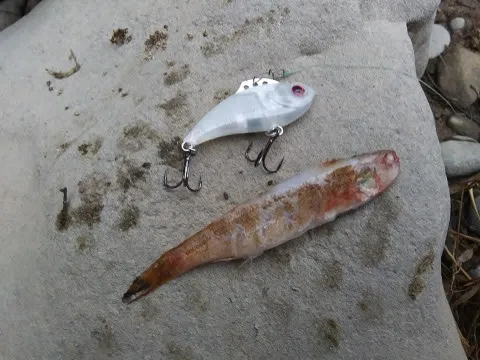
During spring, a jig tipped with a soft plastic paddle tail or curly-tail grub is also hard to beat. Natural colors like pearl, chartreuse, white, and motor oil consistently produce fish. Slowly hopping the jig along the bottom often triggers strikes. A live nightcrawler on a jig can make an already productive presentation even better when fish are less aggressive.
As spring gives way to summer, walleye begin following schools of baitfish toward deeper structure. Long tapering points, submerged humps, rock piles, and channel edges become prime real estate. Most fish settle into depths between 18 and 35 feet, although early mornings and evenings often pull them shallower to feed.
Summer is trolling season, and it's difficult to beat a well-presented bottom bouncer paired with a crawler harness. Smile blades in silver, gold, chartreuse, orange, and red finishes all have their moments depending on water clarity and sunlight. Keep your speed between .8 and 1.0 mph, making gentle turns to vary lure speed and trigger following fish. I really like to bottom bounce long sandy flats or gravel areas, finding a lot of these fish not too far from the main river channel.
Crankbaits also shine throughout the summer. Deep-diving models that imitate perch or juvenile trout can cover water efficiently. Productive colors often include firetiger during stained conditions and natural perch or silver patterns when the water is clear. If electronics reveal fish suspended over deeper water, trolling crankbaits slightly above them is often more productive than dragging lures directly through the school.
Fall is my favorite time on Long Lake. Boat traffic fades, temperatures cool, and the walleye feed heavily before winter. Fish move back toward shallower structure, often holding around rocky points, submerged rock piles, and weed edges in 10 to 25 feet of water.
This is when jigging becomes incredibly effective again. Sonic Baitfish, blade baits, jigging minnows, and traditional lead-head jigs all produce. Slow, deliberate movements often outperform aggressive retrieves as cooling water slows a walleye's metabolism. Every tap feels meaningful, and every fish seems a little heavier.
Many anglers put their boats away once winter arrives, but a few of us dedicated walleye fishermen know some of the year's best fishing is still ahead. Long Lake remains open year-round, and walleye continue feeding despite the cold water. They simply become more predictable.
Winter fish often concentrate along steep breaks and along the river channel around edges, and rocky structure in 20 to 40 feet of water I have found most success. Vertical jigging with SonicBaitfish, jigging soft plastics, or blade baits worked painfully slow can be incredibly productive. Patience becomes your greatest lure. Sometimes, a bait barely moving is exactly what a cold-water walleye wants. A presentation of a plastic that mimics a leech is deadly.
Throughout the year, electronics become one of your greatest tools. Modern sonar and forward-facing technology help identify baitfish, underwater structure, and subtle depth changes that often hold active fish. Still, technology only tells part of the story. Learning how wind pushes bait, how changing weather affects feeding windows, and how seasonal movements repeat themselves every year is what truly builds confidence on this lake.
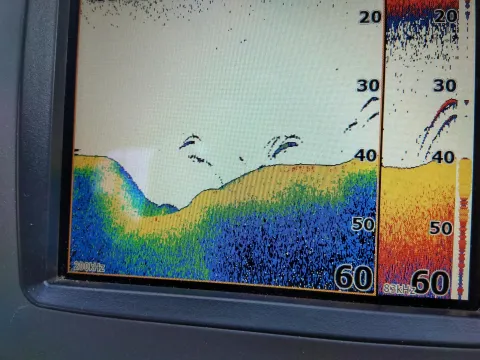
Long Lake is full of hidden rock piles, long underwater points, flooded timber, and contour changes that don't always appear obvious on the surface. Every trip reveals something new. Every missed fish teaches another lesson. That's part of its charm.
Walleye fishing isn't always about filling a livewell. It's about watching the sunrise paint the water gold, feeling that unmistakable thump on the end of your line, and knowing you earned it through patience and persistence. Long Lake has taught me that success isn't measured only by numbers but by time spent learning a place that never stops surprising you.
Every season tells a different story on Long Lake. Spring brings hope, summer rewards consistency, fall offers excitement, and winter reminds us that the best anglers are often the ones willing to fish when everyone else has gone home. That's why this lake keeps calling me back—and why I know it always will.
And for my last cast, always be aware of the winter water levels. Not every winter is necessarily fishable, depending on the levels. And check regulations before heading out, as Long has separate rules from Roosevelt.
Reel In the Memories!
/articles/long-lake-walleye-eric-magnuson
Walleye Here and There by Mike Carey
After moving to Great Falls, Montana, I’ve been spending much of my time exploring the various fisheries in my new State. The past year, my focus shifted to one of my favorite fish to eat, good old “marble eyes”, AKA walleye. It turns out that Montana isn’t just a trout state. The more I learned about Montana walleye, the more excited I became. While a walleye is a walleye and state borders don’t change that, I have noticed a few differences between fishing for walleye in Montana as compared to Washington.
I have many fond memories of fishing the Potholes, Banks Lake, and the Columbia River. All are beautiful destinations and hold healthy walleye populations. Over the years, I learned a lot about walleyes from Shelby Ross of Ross Outdoor Adventures. So, when I began exploring walleye fishing in Montana, I felt I had a pretty good idea of what I was doing. How pride goes before the fall!
Walleye in Montana are… different. Underwater structure is different as well. While the Potholes in Washington features long stretches of submerged dunes that are made for trolling, reservoirs in Montana tend to be more vertical, with structures rapidly dropping off from shallow to deep water, and fewer long flats are present. And when you do find a flat area, it’s easier to find yourself dropping off from shallow to deep in a matter of seconds. Likewise, the Columbia River is significantly different from the Missouri River. Big, deep water vs. shallow water with distinct holes distinguishes the two rivers entirely different to approach and fish.
I’d read that the Missouri River was a challenge to unlock, and I found out just how true that was. One section below the Hauser Dam is prime trout water, with riffles, pockets, and runs that would make a line-flinger light up. And yet, walleye can be found in this very stretch of water, just waiting for someone to toss a plug their way. Go downriver farther to my neck of the woods, Cascade to Great Falls, and you’ll find deep holes of 15-20 feet and then stretches of sand bars waiting to trap an unsuspecting prop boater (best to have a jet boat in these waters). Farther down, as you reach Fort Benton and Loma and the river, free of dams until Fort Peck, reminds me of the Cowlitz River with fast runs, distinct tail-outs, and gorgeous pockets that just dry out “fish me!”
In other words, a walleye angler fishing the Missouri will need to be flexible with a number of different techniques. Bottom bouncing, jigs under floats, jigs with no floats, plugs, spinners, bait, no bait – whew! I’m going to need a bigger tackle box.
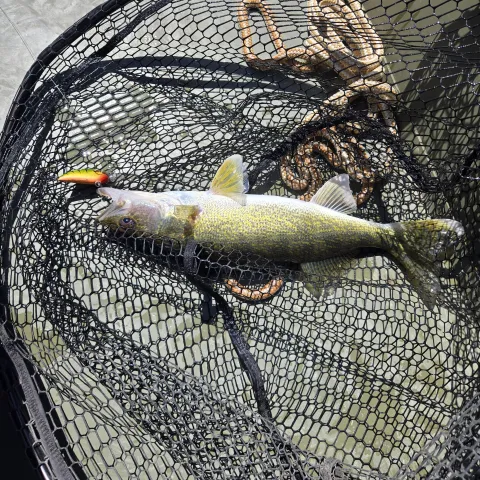
Meanwhile, in Montana, when we talk about lake fishing, we are often really talking reservoirs. A whole new set of challenges to learn. Yes, you can find nice flats to troll your bottom bouncers and diving plugs, but be ready for sudden and dramatic depth changes. These bodies of water have covered up river valleys and can reach depths of 120-200 feet in short order. In addition, you’ll find some very juicy bottom structure, underwater rocky humps that you’ll want to mark and come back to in your walleye search. Jig fishing these drops and humps is your best option here. Put away the trolling and use that spot lock anchor button and work these promising underwater drop-offs with a jig. Try tipping your jig with a minnow or a leech to entice even the stubbornest of walleyes.
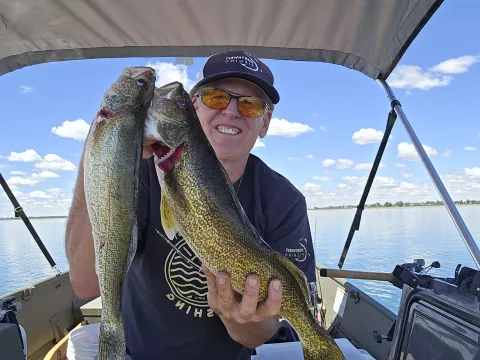
Something else I have noticed that is quite different between Washington and Montana walleye is growth characteristics. While Potholes and the Columbia are generally a numbers game, in Montana, my experience has been that quality and not quantity has been the norm. I can confidently say that every location I’ve fished for walleye has yielded not a limit of eaters, but rather, I tend to catch a couple of eaters and then a pig, 22-26”, fat, quality fish. Why this is so, I can’t say. Maybe less pressure and more feed allow for greater growth and more quality fish? Maybe pike keep the small fish in check? A recent trip I took to Nelson Reservoir yielded a dozen pike in the 28-33” range, and only four walleyes, one of which was a beautiful 23” specimen. Those pike must be feeding on something to produce so many big fish…
Montana has a healthy walleye fisheries program, and the hatchery at Fort Peck took 62 million eggs last year, enough to stock the needs of the entire state’s walleye fisheries. In addition, Montana Fish, Wildlife, and Parks (FWP) has introduced cisco, a herring-like forage fish for walleyes, into Fort Peck and Tiber reservoirs, resulting in an eye-popping winning weight of 143 pounds in the 2025 fishing derby at Tiber Reservoir.
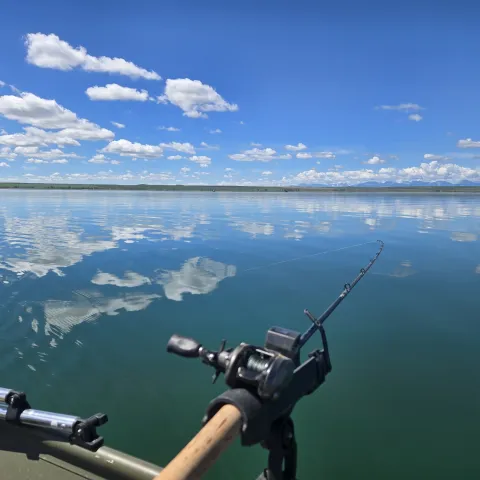
What isn't different between Washington and Montana walleye is the taste. Anglers can enjoy delicious fresh walleye year-round, either in open water or in the winter through the ice. Unfortunately, both states also share a common problem: contaminated waters. I strongly urge you to follow guidelines on fish consumption and limit the fish you keep to under 22". Doing so will reduce your risk of contamination from mercury and Per- and Polyfluoroalkyl Substances.
Stay safe and enjoy the incredible walleye fisheries each state has to offer!
/articles/walleye-here-and-there-mike-carey
Worms, Worms, and More Worms by Mike Carey
Worms – it’s what’s for dinner. If you’re a walleye, that is. Ever since the invention of cane poles, worms have been considered one of the go-to baits for a shore angler. They are portable, easy to obtain, and fish love them. Most of us likely have early childhood memories of going fishing with our Zebco reel, the one that always seemed to get tangled up. A hook, a worm, a couple of split shots, and a round red and white bobber were all that were needed for a day’s adventure at the local pond.
Back in my youth (and that’s a long way back), the nightcrawler was the king of bait. We didn’t buy them, though; we caught them. After planning a fishing trip for the next day, we would wait for darkness to descend. As the streetlights came on, my brothers and I knew it was time to go worm catching! Into the backyard we would go, flashlights in hand. Because, like vampires, nightcrawlers only came out at night. For some reason, I never asked my dad why that was so; I just figured that’s what they did.
Our backyard had a nice-sized garden and several pine trees, and lots of nightcrawlers. There was a trick to catching crawlers that only boys could appreciate. Walking slowly along, guided by our flashlights, we would come upon a big, plump crawler, poking out of its hole, stretched out in the dirt and grass. The next steps at this point were critical. Nightcrawlers don’t like light, so it was vital to move the flashlight beam away from the crawler but still shining enough to be able to see him/her (worms are asexual, a fact we did learn with keen interest). The trick was to hold the flashlight with one hand and slowly reach down with the other to grab said crawler.
Most importantly, you had to grab the crawler at the point where he was coming out of his hole because the instant your fingers touched that crawler, he was crawling back down. As we got good at catching crawlers, it was a matter of gently pulling the frantic worm away from Mother Earth and into our waiting bucket. Now, sometimes the worm would win, and sometimes we would come away with half a crawler, which I guess was a draw, but I never did catch any half-broken worms. We did, however, come across two crawlers in a romantic embrace. If you got both, that was bragging rights for best crawler catcher.
At the ripe age of 67, I have no interest in staying up after dark to catch nightcrawlers that I can easily buy. My sleep time is well worth the $3.50 for a dozen crawlers at the local bait shop. That said, I hate wasting bait. If I come home with nightcrawlers left, I put them in the fridge for another day. Sometimes they last, sometimes they don’t.
Last fall, I started a new hobby, which solved the dying crawler dilemma. Worm composting! Yes, you can have your bait and save it too.
Now I want to say here and now that I did not stumble on this new adventure for any “green” purposes. That said, I am happy to see that a byproduct of worm composting is some highly nutritious soil/fluids for my garden.
More importantly, I can bring home my unused nightcrawlers and add them to my bin of little friends. Now I always have “worms to go” if I want to go after some walleyes (or catfish). No more wasted nightcrawlers, and bait is always available.
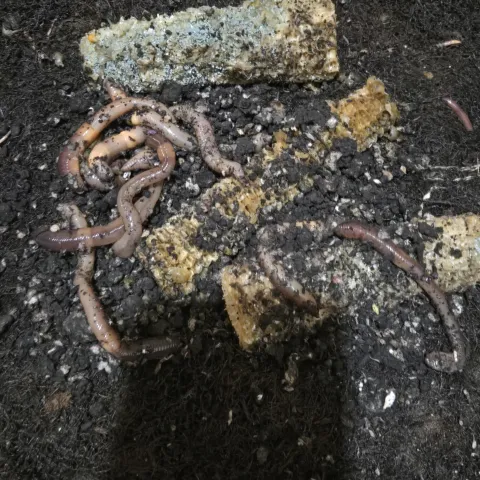
Worm composting is quite easy, and there is a wealth of information on the web and YouTube. You can use very simple setups or spend a lot of money on them. I decided to start with a four-tray system and 100 European Red Wigglers, “starter worms”. These worms are not the larger nightcrawlers anglers are familiar with. They are smaller, perfect for panfish. They are also eating machines, turning fruit and vegetable scraps into nutrient-rich compost and “worm juice,” which will go into my garden this spring. As a bonus, these worms will rapidly reproduce to the capacity of your system, but no more. So, in addition to worm compost for the garden, I will also have excess worms that I can add to my garden to further increase my vegetable yields.
“What about those nightcrawlers?” you ask. To be specific, what you are buying for bait are Canadian Nightcrawlers. With the rich environment the Red Wiggler worms produce, the nightcrawlers I come back with after a fishing trip have a new home to live in until the next time they join me for a trip on the water. The two types of worms do fine together, and my nightcrawlers stay healthy and get even bigger and plumper than when I bought them. Unfortunately, Canadian nightcrawlers are not fast reproducers, and I do end up buying more crawlers, but I no longer toss my remaining bait in the water at the end of a fishing day. Instead, they return home with me to fish another day.
If this sounds like something you’d like to try, there is a wealth of information online and on YouTube that will tell you everything you need to get started. Depending on how fancy you want to proceed, you can go from very inexpensive DIY projects to spending a couple of hundred dollars for everything. Amazon has all types of composting/worm bins for sale. An excellent resource I found to purchase worms and learn more about this fun hobby is Uncle Jim’s Worm Farm.
Raising worms is fun! It’s educational! And it might just get you “hooked” as it did me.
/articles/worms-worms-and-more-worms-mike-carey
Walleye Fishing At Long Lake
A few inside tips that can make you more successful your next time out.
Nestled in the Spokane River in Washington state, Long Lake is a favorite destination for anglers seeking productive fishing and multiple species. While the lake is well known for bass fishing, and recreating, it has earned a reputation as an excellent spot for walleye fishing. Whether you're a seasoned Angler or a novice hoping to reel in a trophy catch, Long Lake offers opportunities to hook a variety of quality fish, with now the walleye becoming the star of the show. Throughout this article, we will explore a few techniques you may want to know to catch walleye on Long Lake and some of my favorite spots to cast a line.
The Allure Of Long Lake
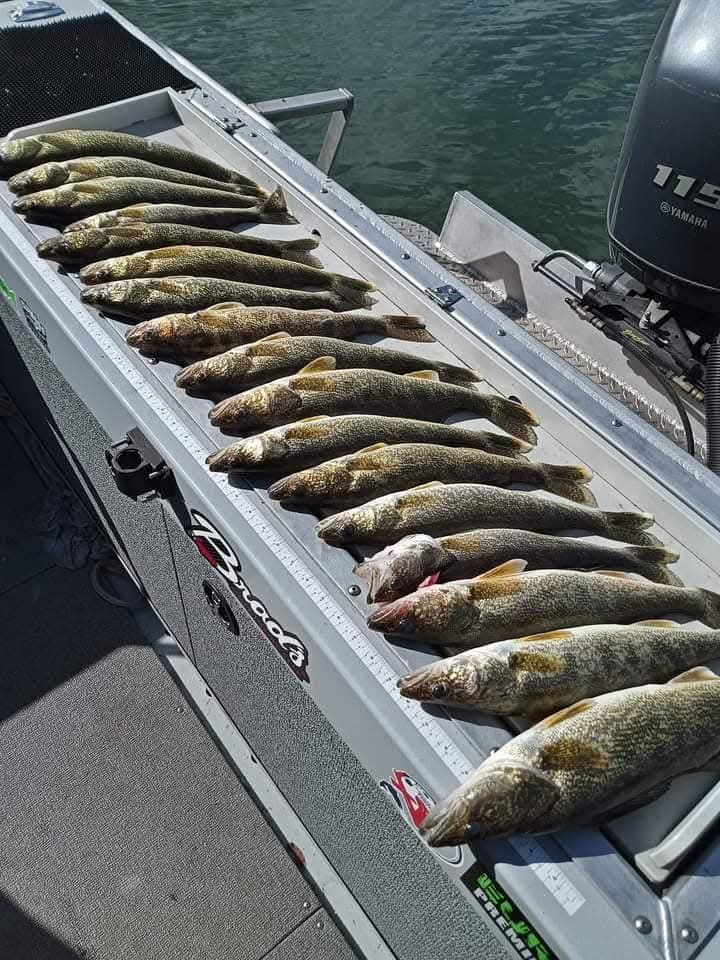
Long Lake, also known as Lake Spokane, spans roughly 24 miles and allows a ton of fishing opportunities. The lake is a man-made reservoir created by the Nine Mile Dam, and Long Lake Dam. With the lake being so close to Spokane, it attracts a lot of recreation boaters, swimmers, jet skiers, and kayakers. Lots of bass tournaments are held there, and plenty of trout are planted for family-catching fun. Don't be surprised if you come across a pike, as at one point in time they were quite plentiful in the system. Now with the good population of walleye showing up the past several years, and so much room to fish, it makes Long Lake a prime fishing destination in the region.
Walleye: A Coveted Catch
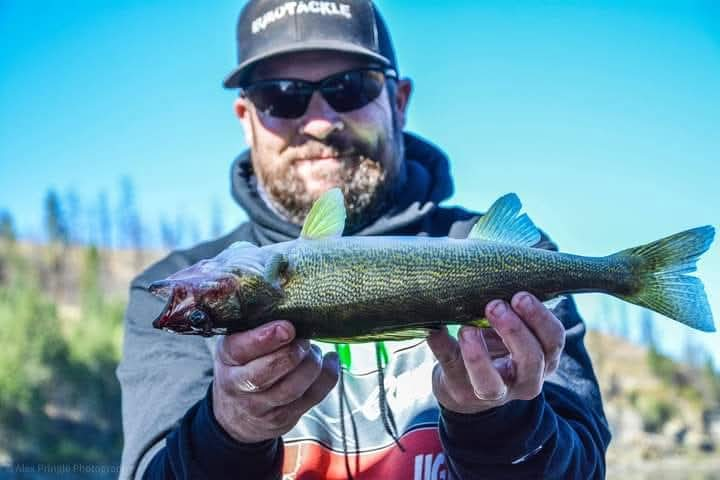
Walleye or a highly prized fish for anglers due to their elusive nature, sporting challenge, and their great taste. Their reputation as one of the best-eating freshwater fish definitely adds to their appeal. Known for their sharp teeth and distinctive pale greenish silver color with dark vertical bars on their body. Walleye are not as aggressive as Bass, making them a bit harder to catch, which increases the excitement for anglers.
Long Lake walleye have flourished due to the abundant amount of forage fish like perch and so many other minnows, great water, and structure; including drop-offs, rocky shorelines, and vegetation. The walleye population in Long Lake is healthy, with many Anglers regularly reporting good catches, making for a perfect habitat for these predatory fish.
Walleye fishing at Long Lake typically peaks in the warmer months, from Spring to late fall. However, most anglers are drawn to the lake in the spring and summer when walleye are actively feeding and more of the lake is accessible as the water is low in the winter.
Best Time To Catch Walleye
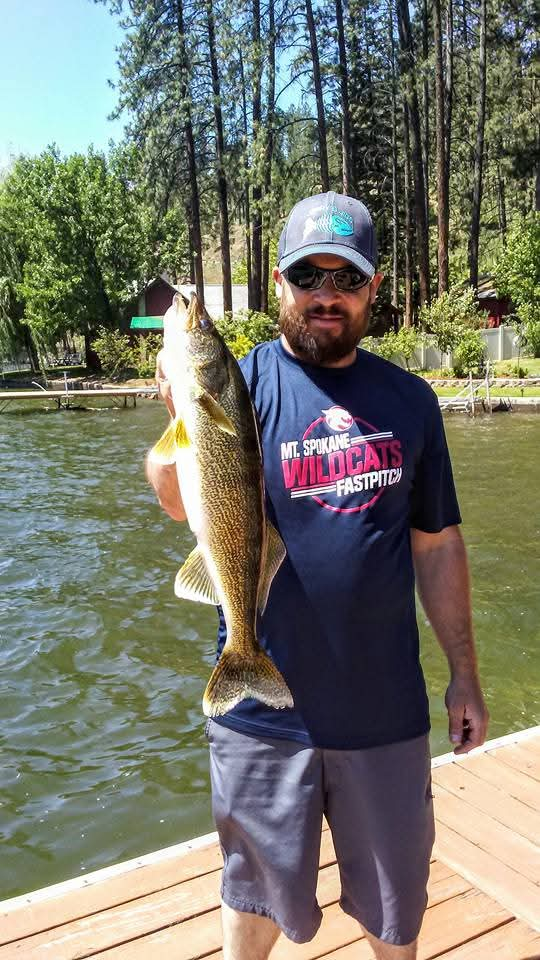
The best time to fish for walleye on Long Lake largely depends on their feeding habits and the season. Walleye are known to be nocturnal, meaning they are most active during dawn and dusk, when the water cools and the light levels are lower. This makes the early morning and evening hours prime times to catch walleye. These fish of course will bite during the heat of the mid-day during warmer months, but I tend to find my best fish during the cooler months at night. In terms of seasons, spring and fall are often regarded to be the best times for Long Lake walleye. During the spring, walleye are typically spawning, which makes them more concentrated upriver near the Spokane House launch and further up in the shallows. That's where we find our most large and aggressive fish. In the fall, walleye put on the feed bag and bulk up for the colder months, fishing can be productive as they aggressively feed on smaller baitfish flourishing just outside weedlines.
Summer fishing walleye can still be productive, and very good, but may require deeper fishing targeting the river channel. Walleye tend to retreat to deeper, cooler water during the summer. Using your electronics can be particularly helpful in locating them in deeper regions of the lake.
Techniques And Tips For Catching Walleye:
- Trolling
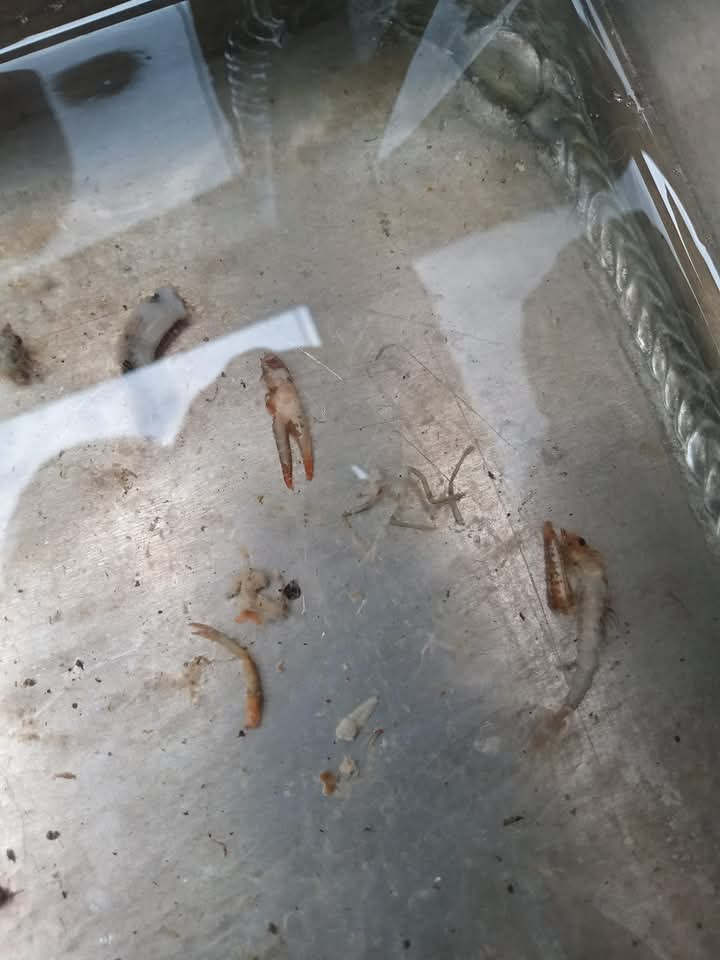
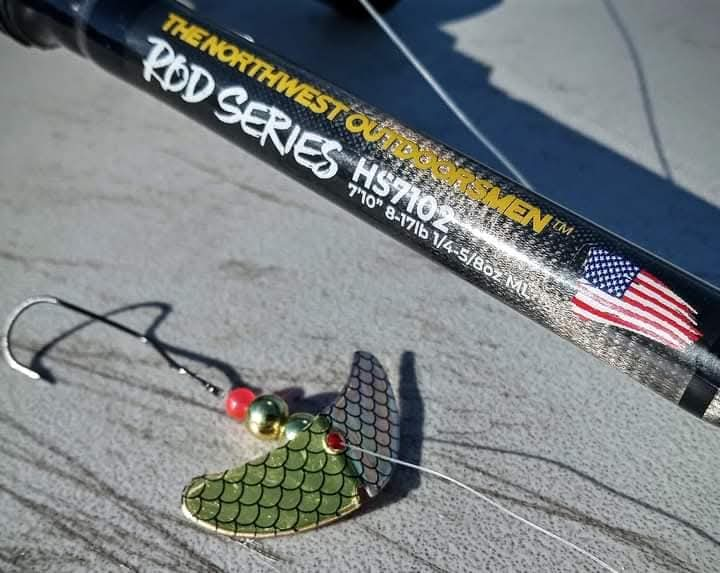
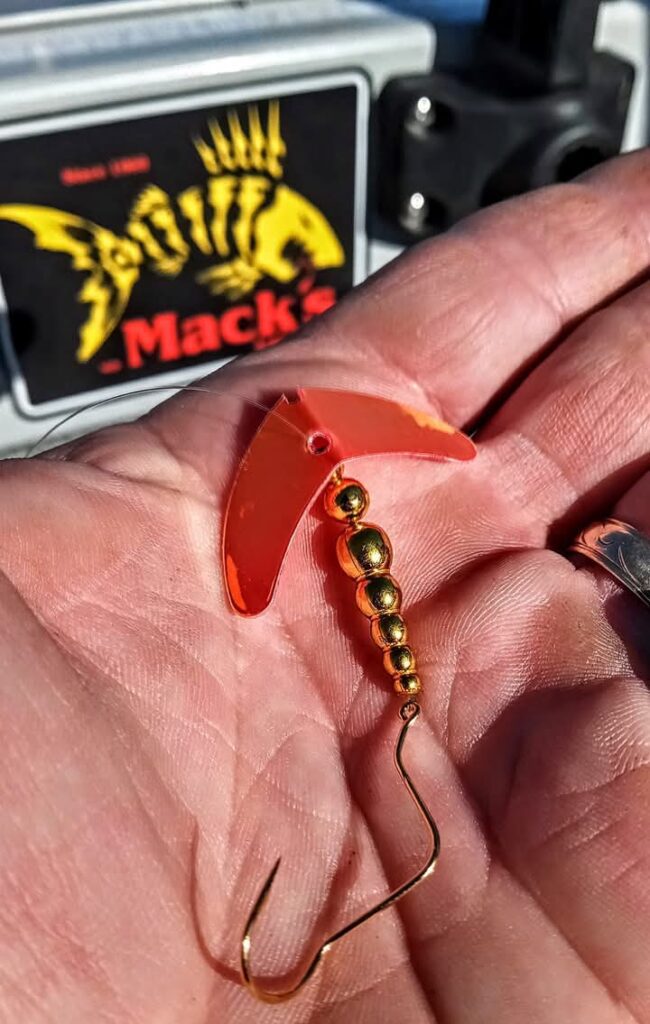
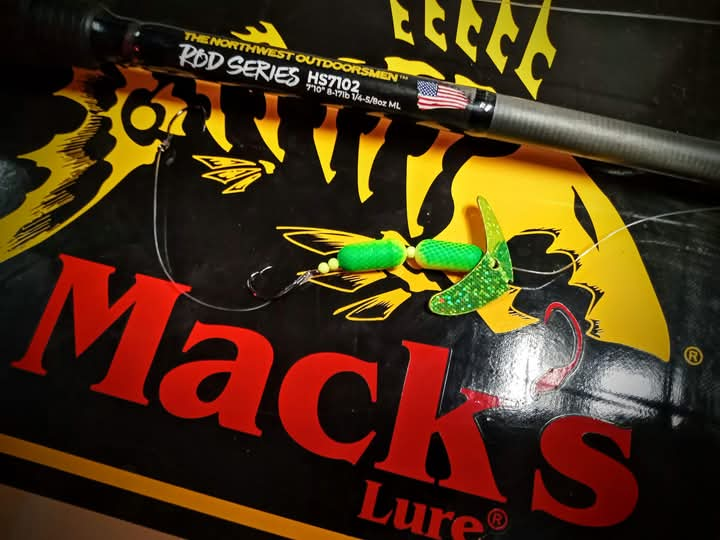
Trolling is one of the best and most effective ways to catch walleye, by covering more ground and increasing the chance of encountering a hungry walleye. When im trolling Long Lake, the most effective depths for me have been in the target range of 10-30ft, depending on season and temps. Early season trolling large crank baits like Bandits in 10-12ft of water is lights out up near the Spokane House launch. Make sure those crankbaits are making contact with the bottom a little, and you'll be in the zone, trolling upriver. When the fish start to move out to the main lake, and a little deeper is when I will switch to a slow death rig with a worm harness from Mack’s Lure - usually on a 3oz. bottom bouncer trolling at slow speeds maintaining contact with the bottom. Walleye love crawdads and bouncing the bottom mimics crawdads fleeing, drowning in the walleye.
- Jigging
Jigging is another effective method for walleye, especially as they migrate deeper along the river channel. By using a jig tipped with a worm, or cut bait Anglers can lure walleye into biting by mimicking the movement of a distressed bait fish. The key to success with jigging is to work the base slowly and deliberately, ensuring it mimics the walleyes' natural prey. Many anglers, including myself, prefer using soft plastics and various profiles and colors.
- Drift Fishing
Drift fishing I find effective when fish are spread out or flats I find just off the river channel. Drift fishing involves allowing your boat to slowly drift with the current while casting jigs, or bouncing jigs close to the bottom. This technique can be productive when targeting drop-offs near the flats, weed lines, or rocky shorelines.
- Night Fishing
Walleye are known to be more active at night, targeting the shallow river areas early season, or shallow weedlines closer to shore around that 7-15ft of water. I like glow color lures, silver lures, or dark black lures.
Where To Fish On Long Lake
Long Lake has several spots that can consistently produce good walleye catches. Many anglers focus on the flats adjacent to the deeper river channel, but can also be found shoreline weedlines and structures such as drop-offs and submerged gravel beds.
Some of my favorite spots include:
- The upper end of the lake: This upper portion of the lake near Long Lake Dam has many rock formations and drop-offs where these predators can hunt bait fish. Look for shorelines on the upper end that have gravel or rip rap. Walleye love to chase crawdads in these areas.
- The lower end of the lake: This area provides plenty of spots to fish from between 9-mile recreational area to Willow Bay. Trolling and jigging is very effective in this large stretch.
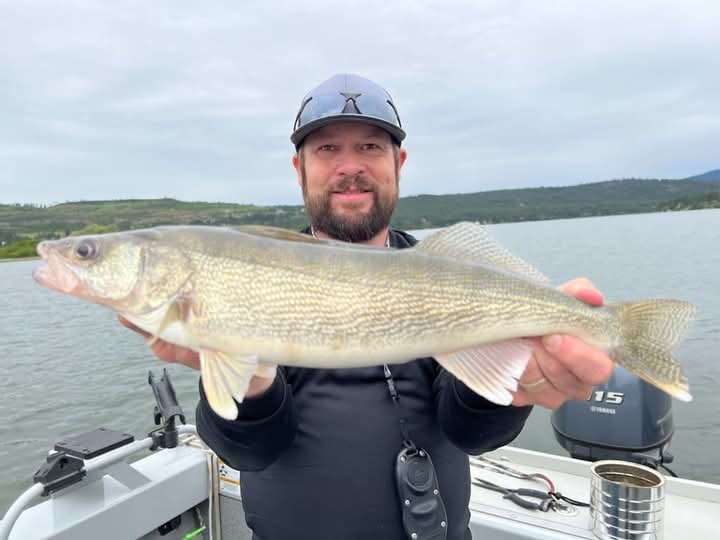
Walleye fishing on Long Lake in Spokane Washington, offers an experience for anglers looking to test their skills. Whether you're fishing from a boat or the shoreline, the lake offers a diverse habitat that provides the perfect environment for walleye to thrive. With the right techniques and a little patience, you can have a successful fishing trip reeling in a trophy walleye. So grab your gear, head to Long Lake, and discover why it remains as one of the best-kept secrets for walleye fishing in Washington.
/articles/walleye-fishing-long-lake
Fall Fishing At Potholes Reservoir
September and October are my favorite times of year and one of my favorite places to recreate is at Potholes Reservoir, located between Moses Lake and Othello in Eastern Washington. This is a large irrigation reservoir fed by Crab Creek, Lind Coulee as well as Winchester and Frenchman’s Wasteway. At full pool, the lake has 28,000 surface acres of water but after a long summer of dropping water the lake definitely “fishes smaller”.
While there is not as much water to fish, particularly back in the sand dunes area and Crab Creek, there is still plenty of lake to fish and at this time of year, the fish are biting as they beef up for the long winter ahead. Let’s run through some of the species you can fish for here and some effective ways to catch them:
BASS:
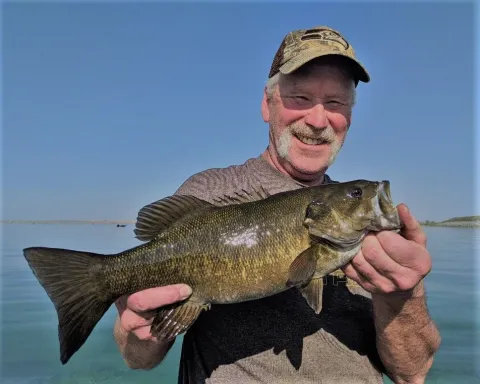
Bassmaster Magazine ranked Potholes Reservoir as the ninth-best bass fishing destination in the Western United States this year and for good reason. There is a healthy population of both largemouth and smallmouth bass in several age classes. The largemouth tend to be bigger, averaging two pounds and getting up to 7-plus pounds. At a typical bass tournament, you’ll need to have a five-fish bag weighing over twenty pounds for a chance to win. The smallmouth run a bit smaller, with one-pound fish being abundant. But I caught a 5.4-pound smallmouth here during September so big smallmouth are around.
At this time of year, the baitfish have moved out into the main lake, and so have the gamefish that are after them. Pete Fisher at the MarDon Resort Tackle Shop and the owner of Fisher Brothers Baits says fishing in front of the dunes on the main lake is the best place to go. The fish will be suspended around sandy humps and Pete says fishing a football head jig with a hula grub trailer is an effective way to catch these fish, which are primarily largemouth bass.
If you want to go after smallmouth bass head towards the face of O’Sullivan Dam or into Lind Coulee at the south end of the lake. Personally, I enjoy using deep diving crankbaits here this time of year which are effective for both bass and walleye. One of my favorite lures is a Berkley Digger crankbait, which dives to depths of 14 feet. When it comes to fishing near the dam, Pete Fisher likes to use perch colored ¾ ounce swimbaits or topwater plugs with white being a preferred color.
WALLEYE:
The walleye bite can be spectacular in the autumn months. These tasty fish tend to be found off the face of the sand dunes or the mouth of Crab Creek. As Nathan Lafrance says, “If you aren’t sure where to go, just look for the line of boats out there, easy to find.” As for how to catch them, Nathan recommends trolling diving crankbaits at a depth of 10 to 12 feet. Nathan says other lures to try are a jointed Berkley Flicker Shad #7 or a Bill Lewis Walleye Precise Walleye Lite crankbait.
PANFISH:
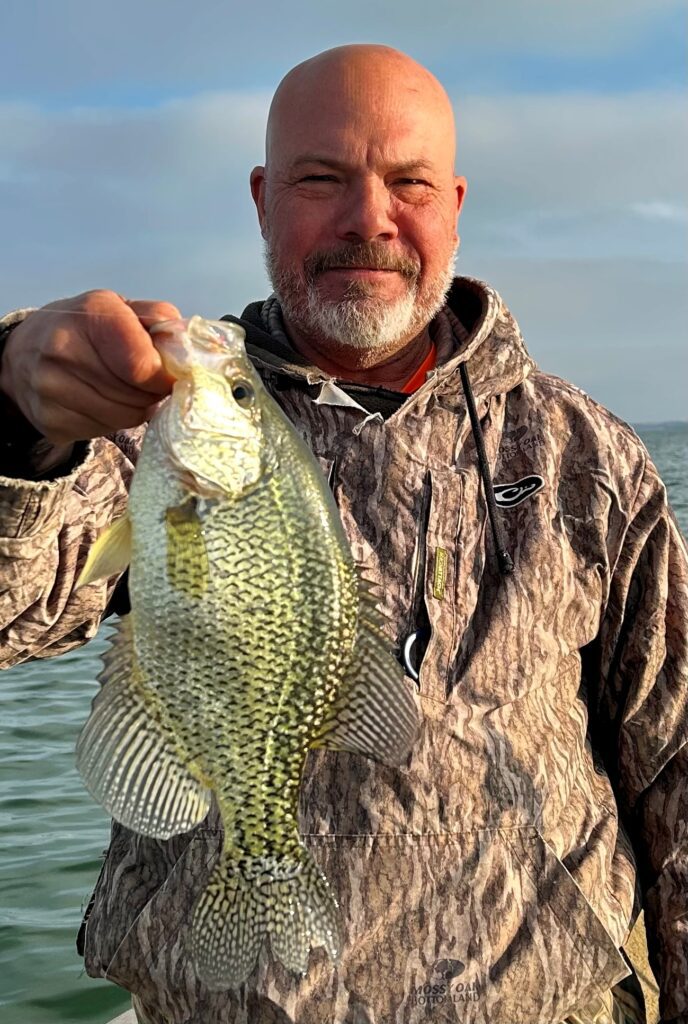
The autumn bite for panfish is excellent and sometimes overlooked by anglers targeting trout, bass and walleye. There is a combined limit for bluegill and crappie of 25 fish, and the crappie have to be at least nine inches long to keep. This regulation has helped turn the reservoir into a quality fishery and 15-inch crappie are relatively common. Last year, an angler reeled in a bluegill that weighed over 2.2 pounds, nearly beating the state record. The perch can also be sizeable here, reaching north of 14-inches in length.
One person who really enjoys fishing for crappie is Pete Fisher. He has a couple of suggestions about where to find them and catch them. Pete says the crappie, like the bass, migrate out of the sand dunes in the late summer. During the autumn months they will be found at the face (or in front of) the sand dunes on the main lake. Fisher says you can cast or troll Berkley #5 Flicker Shads, especially in a Chrome Clown color pattern. Another way to catch crappie is to fish a small jig under a slip bobber after you find a school of these fish. Fisher prefers a white Bobby Garland shad or DS Fry soft plastic lure paired with a small 1/32 or 1/64th ounce jig head. If you do catch a bunch of panfish, you’ll be happy to know there is a fish cleaning station at both MarDon Resort and at Potholes State Park near the boat ramp.
TROUT:
The rainbow bite really turns on in the fall and the size of these fish are impressive. One to three-pound rainbows are commonplace and sometimes you’ll get them bigger than that. Nathan LaFrance suggests trolling Berkley Flicker Shads or longer minnow shaped crankbaits. As to where to find the trout, a couple of good places are off the mouth of Frenchman’s Wasteway or in the northeast corner of the lake near the mouth of Crab Creek.
RESOURCES:
If you are looking for a place to stay you can camp at Potholes State Park or MarDon Resort, which also has cabins and cottages for rent. The resort also has a tackle shop and The Beach House bar and restaurant. The Potholes Bar and Grill is another nearby restaurant that is close to the entrance of the state park.
If you have never fished or hunted Potholes Reservoir before, consider booking a “Cast & Blast” trip with Ross Outdoor Adventures. These trips are only offered in October. Shelby Ross and his guides know how to navigate the tricky channels leading into the sand dunes like the back of their hands. They will take you in before dawn, treat you to a fun duck hunt, and finish the hunt with duck poppers cooked up in the blind. After that you put away the shotguns and go trolling for walleye, usually picking up several other fish species along the way. It makes for a fun day and a great introduction to the fall hunting and fishing scene at this spectacular destination.
WEBSITES:
By John Kruse, host of Northwestern Outdoors and America Outdoors Radio
/articles/fall-fishing-potholes-reservoir
How to fish for Columbia River Walleye
How to fish for Columbia River Walleye: The Easy Way!
By Kyle Jones
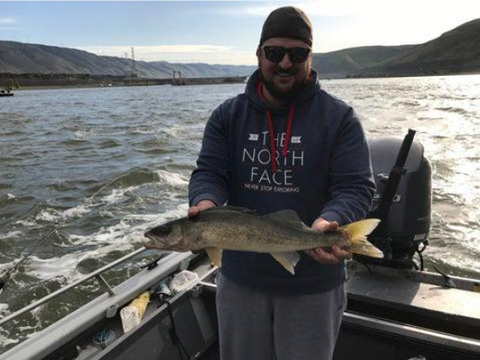
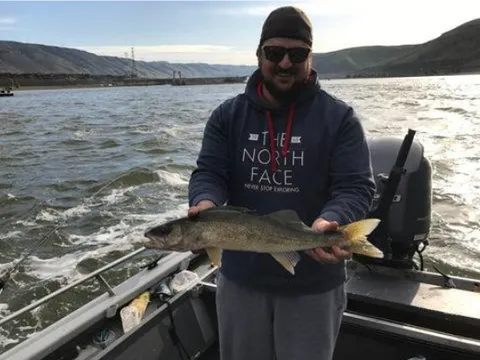
The Columbia River in Washington State and Oregon is one of the premier destination walleye fisheries in the United States. Anglers come from all around to target Walleye in the mighty Columbia River. The Columbia River is known, not only as a possible location for the next World Record Walleye, but also as a great place to catch unbelievable numbers of great eating size fish.
The point of this article is to be a starting point for people looking to take advantage of this great fishery. This is not an end all be all on Columbia River Walleye, just a simple article to get people catching fish fast. Catching good numbers of 14 – 20 inch Walleye on the Columbia River is easy, and with a little knowledge under your belt, you too will be putting lots of these tasty buggers in the boat.
How to Find Columbia River Walleye
It goes without saying that you need to “find fish to catch fish,” and when it comes to a beginner staring at the mighty Columbia River it’s easy to get overwhelmed. Walleye are an ultra-predator and they will always position themselves in the best possible locations to find food. The Columbia River is a literal conveyor belt of food for foraging walleye and positioning yourself in the correct locations can make or break your trip.
During the spring and summer there are millions of out migrating juvenile salmon, steelhead, and shad making the downstream migration to the ocean. Walleye take every advantage of this and position themselves to make the most of these easy meals. During this out migration period there is often a lot of current in the Columbia. Walleye are not particularly strong swimmers and so they gravitate to the slower moving parts of the river. What we do is locate the areas of the river that are moving slower than the main flow and concentrate our efforts there. Large points, islands, inside bends, rip rap, and other natural structures can create these current breaks. Walleye will use these areas to ambush whatever can fit in their mouth.
As a general rule of thumb for most of the areas below dams that we fish in the spring and early summer we are looking for water 20-50 feet deep in areas with very little current, or just out of the main flow, adjacent to shallow water. The adjacent to shallow water is key, as walleye will move up into the shallows to feed on bait fish at night, and like to position themselves close to their nightly food source. By targeting the deep slow moving water near shallow feeding flats we put ourselves on large numbers of feeding walleye during daylight hours.
How to Catch Columbia River Walleye: Easy rigging for immediate success
By far the quickest and easiest way to get into Columbia River walleye is to use bottom bouncers and worm harnesses. This method makes it easy for beginners to not only make and maintain contact with the bottom, but also insure that their gear is in the walleye zone all the time. Columbia River walleye in current are tight to the bottom. These fish live and feed within the bottom foot of the water column so maintaining constant bottom contact is a must

Bottom bouncers (also called Bottom Walkers) come in all sorts of different sizes ranging from as small as a quarter ounce to as large as four ounces. Even larger bottom bouncers are available, but they often need to be ordered from custom manufactures. Generally speaking for almost all the situations we fish during spring and early summer we find that the three and four ounce bottom bouncers to be our go to size. Typically when fishing four anglers the rods near the bow are rigged with four ounces and the rods out the stern are rigged with three ounces.

When it comes to the worm harness the options are unlimited. If you go to a tackle shop that sells walleye gear you will notice the many pre tied rigs from companies such as Mack’s Lure and other in house pre tied gear. All of this stuff works, but for our purpose we like to keep things simple and tie our own. We basically use three different styles of rigs and below we have listed and pictured some of our favorites. We fish all these rigs on leaders lengths of three to four feet.
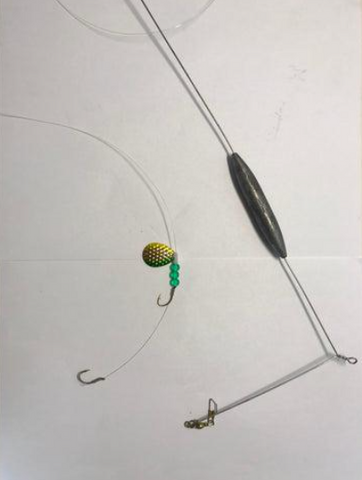
Spinner Blade rigs: These rigs are very simple and consist of a quick change clevis, size 1-4 colorado spinner blade, a few beads, and two #4 octopus style hooks tied four inches apart.
Smile Blade Rigs: This is again a very simple rig and consists of a size .8, 1.1, or 1.5 smile blade, a few beads, and the same two #4 octopus hooks tied four inches apart.
Corky Rig: This is by far the most simple rig we fish and seems to produce the best as the water starts to warm in late spring through early summer. It is simply one size #10 corky slid down the line on top of the two #4 octopus hooks.
How to catch Columbia River Walleye: Presentation
In general my favorite way to present a bottom bouncer and worm harness is to “troll” them down stream with the current. I put the quotations on the word troll because this is trolling in a very loose sense of the term. What we are actually doing is moving just fast enough to maintain the ability to steer the boat downstream. Enough emphasis cannot be placed on the need to go slow! When using bottom bouncers in this scenario I am often in and out of forward and neutral on my kicker motor and will often times spend a lot of the drift in neutral. Remember that you are already fishing in current that is pushing you downstream, so think of this more as a controlled drift.
The key to this presentation is to keep your gear on the bottom. The best way to do this is to fish with the rod in your hand. We see a lot of guys act like they are fishing for salmon and let their bottom bouncer and worm harness out, then let the rod rot in a rod holder. Don’t be that guy! This is active fishing and when you hold the rod in your hand you can make sure that you are always very near the bottom. When starting your troll slowly let out your gear so that it doesn’t get tangled, by slowly dropping your tackle you will ensure that you are actually fishing. Feel for the arm of the bottom bouncer to touch bottom, once you feel it bump bottom put your thumb on the spool and quit letting out line. Now you are fishing. To make sure you stay in the strike zone you need to actively fish your rod. At this point I start to lift the rod tip a few inches, I am intentionally trying to lift the arm of the bouncer off the bottom, and then drop my rod toward the water. If you do not feel it touch bottom you need to feed more line. You should be able to maintain contact with the bottom with every small lift and drop. I almost always fish the run with my thumb on the spool and prepared to feed more line. If you begin to feel the bouncer dredging bottom you need to reel in a few feet, remember that you just want the arm of the bouncer hitting bottom, as this will make sure your gear is at the correct level and minimize the inevitable hang ups on the bottom.
The second thing that the short lift and drop of the rod will help with is detecting bites. The bite from even a very large walleye is very subtle with this method. If at any time, while doing your lift and drop for the bottom you feel any extra weight or pressure on the rig you are getting a bite. When I feel the added pressure on my lift I continue a nice steady lift through the weight. There is no need for a hard hook set. You will miss fish if you try to give a big rip. Simply just lift through the weight and start reeling in your fish. Often times these fish are just barely hooked so bring them in nice and slow and have the net ready!
How to Catch Columbia river Walleye: Rods and Reel For Bottom Bouncing
The ideal rod and reel for this method of fishing can be debated for decades, but the bottom line is that it needs to be able to handle 3-4 ounce bottom bouncers, while still having a soft tip to detect the subtle take of a walleye.
Our favorite rod for bottom bouncing is a Gloomis E6X 7’1” 8-17 pound line rating in a medium heavy power. The model number is E6X 853C WBBR. While this rod is designed specifically for this use we also have used and really like an 8’6” 8-17 line rated medium heavy steelhead casting rod. This line rating seems to handle the weight of the rig nicely, but still lets you feel the subtle take.
For a reel we like a quality low profile casting reel such as the Shimano Curado. The reason we like a casting reel in this situation is that we are always adjusting how much line we have out and the ability to release line so easily and maintain feel of the bottom is much easier with the casting reel. We spool the reel with 30# power pro in either the high vis yellow or the low vis green. This is just personal preference here so go with the one you like.
In closing I hope that this article is of help to anyone who is trying to get into the wonderful walleye fishing the Columbia River has to offer. We love seeing new walleye anglers and if you decide to get a crash lesson on walleye fishing with us we will be happy to show you just how we do it and get you started off on the right foot. If you want more information on the walleye fishing trips we offer or to book a trip with us click here .
I just wanted to end on a small note of conservation. Even though these fish are not native to the Columbia River we want this exciting fishery to continue well into the future. I encourage anyone targeting walleye to please release the larger 25 plus inch fish. These larger fish are our brood stock, and their survival is key to having this fishery forever. The smaller fish are absolutely fantastic to eat and with the ability to catch them by the bucket load there is no real need to kill the larger fish.
Jones Sport Fishing is owned and operated by Kyle and Dani Jones. Kyle’s passion for the outdoors has driven him to commit to making his living as a professional fishing guide. Kyle prides himself in his commitment to make sure that your fishing trip meets and exceeds expectations, and is dedicated to serving his clients. You can follow Kyle on Northwest Fishing Reports and his web site JonesSportfishing.com
*This article was originally published March 2018.
/articles/how-fish-columbia-river-walleye