The Big Comeback-Steelhead on the Upper Columbia
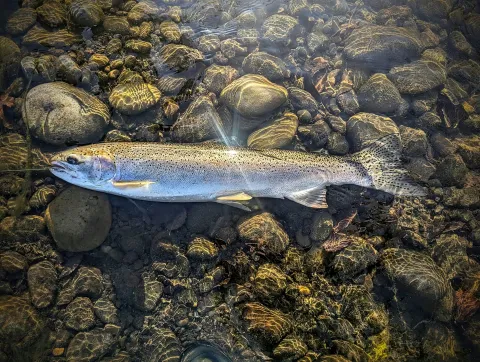
Oh, illusive and majestic Steelhead! One of Washington's most regulated fish is about to get its first opening in over a decade on the Methow River and portions of the Upper Columbia River. This is an unexpected announcement and one that will have excited anglers planning for the upcoming winter season.
Starting October 16th, 2024, you will have the opportunity to fish Steelhead on the Methow from the mouth to county road 1535 Burma Bridge Road. On the Columbia River, from the Beebe Bridge on Highway 97 to the Highway 173 Bridge at Brewster.
If you don’t have bank access or a boat, reach out to a seasoned professional like Upper Columbia Guide Service for the experience of a lifetime.
If you’re a fan of the fly-fishing experience try North Cascades Fly fishing, the longest-standing fly guide in the Methow Valley. Anglers of any age or experience are welcome to reserve their experience for floating, wading, and instructional experiences.
There are several affordable riverfront accommodations on the Methow and the Upper Columbia River. Highly rated Columbia Riverside Lodge and Lazy-Daze-Retreats work closely with local guides and have private dock access to the river.
Anglers can keep 2 hatchery Steelhead or Coho per day, identified by the clipped adipose fin. Steelhead minimum size is 20 inches, and Coho minimum is 12 inches. Wild Steelhead are to be released immediately. Selective gear rules and night closures are in effect. WAC 220-300-160(27) “Selective gear rules” means terminal fishing gear is limited to artificial flies with single-point barbless hooks or lures with single-point barbless hooks. Bait is prohibited.
Fishing from a floating device is prohibited from the second powerline crossing, one mile upstream from the first Highway 153 bridge.
Wild steelhead were listed endangered in 1997 under the Endangered Species Act and have been considered threatened since 2009, meaning that traditional recreational fishing is only allowed when there is an excess of returning hatchery Steelhead. Approximately 7,601 adults were counted over Priest Rapids Dam in 2023, and thus far in 2024, an estimated 9,336 adult fish have been counted. WDFW will continue to monitor the steelhead returns to determine if additional regions can be opened.
Steelhead populations in the Columbia River system have faced numerous challenges including habitat loss, dams, and changing ocean conditions. In response, local state and federal agencies, along with indigenous tribes and conservation groups have worked tirelessly to implement recovery plans. These efforts include habitat restoration, fish passage improvements at dams, and reducing bycatch in other fisheries.
This historic decision to reopen Steelhead fishing was made in consultation with NOAA fisheries to ensure wild steelhead populations remain protected while allowing recreational fishing for hatchery steelhead. For anglers, this is a moment to celebrate and continue advocating for the protection of this remarkable species.
/articles/big-comeback-steelhead-upper-columbia
How to Have a Blast At Brewster
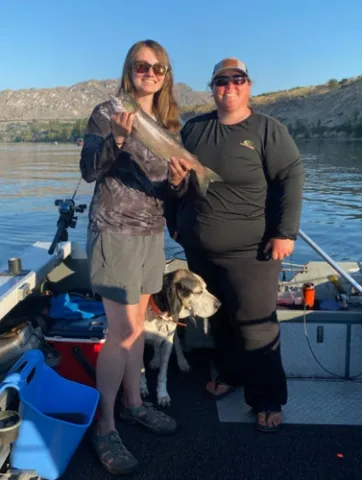
You’ve probably heard stories about the Brewster pool, if you haven’t fished it before. It’s one of the most productive and legendary fisheries in the state, and many fishermen look forward to fishing it every year. Thousands of chinook and sockeye salmon make their way up the Columbia River and stage in the cool waters of Lake Pateros (also known as the Brewster pool) before heading up the Okanagan River. The fishery typically opens up in July and can be extremely productive for both species of fish. Despite their long journey, the fish are willing biters and taste great on the grill or smoker. 20-pound chinook are regularly caught, and the sockeye are great eating quality.
It’s a fun fishery for a summer day, but learning how to fish it isn’t always easy. Brewster is about an hour north of Wenatchee, so it’s quite a drive. It can also be intimidating because there are so many other boats in the water. As long as you do some research and have patience, you’ll have a great time and catch some fish. Here’s some tips and tricks to help give you a successful day at the Brewster pool.

Chinook
The chinook fishery at Brewster tends to be a first light fishery, so grab the coffee and headlamps so you can launch in the dark. It’s a short run from the boat ramp to the pool, just stop when you see all the other boats! The most important thing to know about the Brewster pool is that it’s a trolling game. Some anglers jig or anchor up, but they are few and far between. There are just too many boats for anyone to anchor up. Most fishermen in the pool use cannon ball droppers and skip the downriggers. You can run anywhere between 4 to 12 ounces of lead, depending on the current and the stoutness of your rods. Brad’s Super Baits trolled behind 360 style flashers are the go-to, but many anglers have good success with spinners too.
Wrap or stuff your plug with tuna, herring, or shrimp to give it extra pizazz. If you run spinners, you can put some gel scent on them or hook on a coon shrimp. Don’t be afraid to swap out the hooks on your lures. Chinook have thick, tough jaws, so you want your hooks to stick. Troll between 1.5 to 2mph if you can, but you may have to match your speed with other boats if the pool is crowded enough. When fighting the fish, keep the pressure on. These fish will spit the hook if there’s any slack in the line, and they really tend to explode when they see the net. Adjust your drag and be patient.
Sockeye
If the chinook aren’t biting or you have bored kids in your boat, Brewster pool sockeye are plentiful and hungry! They are a bit smaller than Baker Lake sockeye, but they taste good and are much more numerous than the chinook. Like the chinook fishery, sockeye here are caught by trolling. There are usually two groups of boats in the pool, one that trolls faster for chinook on the current break between the Okanagan and the Columbia, and one that targets chinook closer to the mouth of the Okanagan. Chinook and sockeye do sometimes bite on the same gear, especially when the sockeye really start to stack up in the pool.
If you catch a chinook on sockeye gear, hang on! If you’re targeting sockeye, the same concepts you use when kokanee fishing apply. Use short leaders and lots of scent! Mack’s Lures offer a variety of sockeye lures that are all killer in the Brewster pool. Pink lures work best for sockeye. Pair them up with a dodger or smaller flasher, and you’re in business. Don’t forget to tip your lure with a piece of coon shrimp. You can cure your own or buy some pre-cured ones. No need to use the whole shrimp like you did for chinook that morning, you can just use a small tail piece. Thankfully, the sockeye bite all day, but the fish are more active in the early morning. Use lighter cannonballs than the ones that you used for chinook earlier in the morning. It’s worth using different weights to make sure your lines don’t tangle, particularly if you’re running 4 or more rods. The sockeye move deeper as the day heats up.
There’s a deep river channel somewhat near the shore that the sockeye like to hang out in, but definitely don’t be afraid to fish away from the crowd and try new areas. The sockeye in the Brewster pool are higher up in the water column than the chinook, so a good fish finder can really help you out. Just like their freshwater dwelling cousins, sockeye prefer a slow troll. Again, if you’re fishing in the crowd, you will probably have to match their general speed. Make sure your gear looks good before dropping it down. You’ll want your dodger to give your lure plenty of action to attract the sockeye, so shorten your leader if you need to.
Here’s a few words to the wise about the Brewster pool. Wear sunscreen! The sun can really beat down on those hot days between bites, you’ll be glad to have it on board. It’s a good idea to start fishing at first light and run back before noon, before the heat becomes too unbearable. Also, make sure to pay attention to your surroundings. The Brewster pool isn’t exactly a secret, so you can expect to have company. Sometimes there are hundreds of other boats out there, especially on weekends. Paying attention to the helm and giving other boats some space will help avoid flared tempers.
If you’d rather not deal with the potential stress, there are dozens of guides that you can book to fish the Brewster pool. You can kick back and enjoy the beautiful scenery, and come home with a cooler full of filets. Speaking of coolers, they are a must-have- both for cold drinks and for keeping fish. You’ll want to bleed and ice your fish ASAP for the best meat quality. Lastly, get to the boat ramp early and bring a good book. The boat ramp can get very crowded, especially when the sockeye are in. It’s a good idea to use the time spent waiting to prep your boat. This is another instance when having patience and a level head will help you out. If you’d rather not spend an hour or two waiting to launch, again, hiring a guide might not be a bad idea. Some of them actually launch the night before, anchor up, and sleep on the boat before they pick you up.
Once you’re done fishing for the day, head into the town of Brewster for lunch. There are several excellent restaurants, and downtown Brewster is worth exploring for the afternoon. It’s a great way to cap off your day of sockeye and chinook fishing! Fishing the Brewster pool is an unforgettable experience. Head out there and have fun!
/articles/how-have-blast-brewster
THE OUTDOORS ROUNDUP
BY JOHN KRUSE
CAPE DISAPPOINTMENT STATE PARK – A CROWN JEWEL
One of the best parks in Washington, a crown jewel amongst all the parks found in this state, is Cape Disappointment State Park. Located where the Columbia River meets the Pacific Ocean near Ilwaco, this expansive 1,882-acre park offers a healthy dose of history, a nautical setting, and abundant opportunities for outdoor recreation.
My wife, daughter, and I reserved a small cabin in the park months ago that sits right next to a small, lily pad lined body of water called O’Neill Lake. In addition to three cabins and several yurts, even lighthouse keeper’s quarters are available for rent. There are also 220 campsites, about a third of them with full or partial hookups for RVs.
There is a lot to see and do here. If you enjoy time at the beach, you can stroll to Waikiki Beach near the park entrance, or walk two-mile-long Benson Beach between the North Jetty and North Head, where a red and white lighthouse stands watch.
Another option is to drive on the beach from Seaview north of the park south to Beard’s Hollow, which offers the chance to explore rocky tidepools full of sea anemones at low tide.
At the beach you’ll see people flying kites, casting for surf perch, beachcombing, and just enjoying the chance to dip their toes into the surf of the Pacific Ocean. Speaking of fishing, early to mid-September offers a very good chance to chance to catch coho salmon in Baker Bay near Ilwaco, around Buoy 10 at the mouth of the Columbia, and even off the North Jetty, where surefooted anglers cast big spinners or drift plug cut herring or anchovies under a slip bobber.
Unfortunately, fisheries managers closed all salmon fishing on the Columbia River on September 2nd due to higher-than-expected catch rates for Chinook salmon in August. This leaves jetty anglers contenting themselves jigging for rockfish and lingcod as summer transitions into fall, though it is possible fishing for coho could reopen this month.
Coho salmon fishing is scheduled to remain open in the ocean through September, but check the emergency regulations before going.
Need something else to do? That would be crabbing. The best crabbing for keeper size Dungeness crab is from a boat in the Pacific near the mouth of the river. Land based crabbers or kayakers catch crab close to the North Jetty in the park. We tossed a crab ring and snares off the boat launch dock at the park, and over the course of three afternoons literally pulled up close to 500 Dungeness crab.
Unfortunately, not one of them was keeper sized. The bio mass of crab was amazing, but they were all small. Hopefully by next year, a lot of these crab in this area will be big enough to keep.
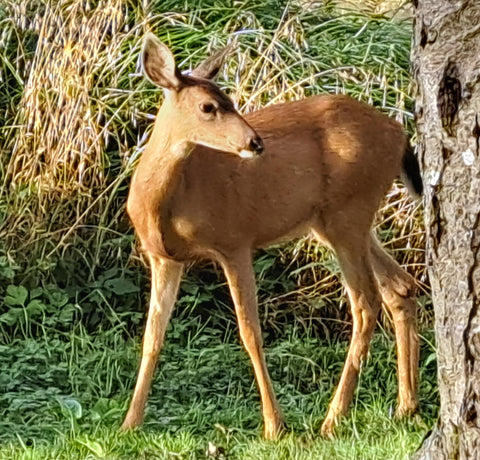
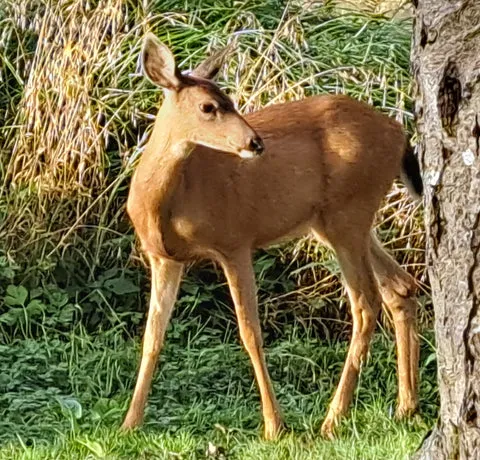
If you like to hike, you’ll be able to enjoy a trail system covering eight miles that will take you to Cape Disappointment, the North Head Lighthouse, and through forests to wetlands and to the beach. Wildlife watchers will be rewarded with the sight of black-tailed deer and raccoons in the park, along with birds like kingfishers and osprey around the freshwater lakes as well.
Meanwhile, there are bald eagles, cormorants, pelicans, and a wide variety of shore birds on the coast off the rocky points and the beach, along with the chance to see seals and the occasional whale.
There is also much to see and learn here from a historical point of view. The Lewis and Clark Expedition reached Cape Disappointment as they completed their initial mission of reaching the Pacific Ocean in November of 1805.
Today, a world-class interpretive center with over 200 exhibits and artifacts can be seen here. The Center is open seven days a week in the summer and has reduced hours the rest of the year.
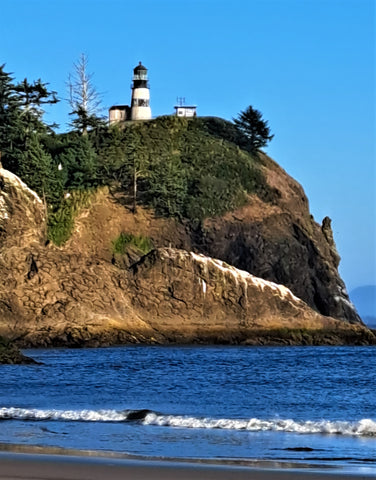
The mouth of the Columbia is difficult to navigate, and the waters around it became known as the Graveyard of the Pacific. To help ships safely enter the river, Cape Disappointment Lighthouse was built and became active in 1856. Aaron Webster, the head Interpretive Ranger at the State Park, was asked why a second lighthouse was built just two miles north.
Webster explained that initially, most shipping came from the south and San Francisco, and the light at Cape Disappointment worked fine. When rail lines reached Tacoma to the north, shipping began to come to the mouth of the Columbia that way, and they could not see the light of Cape Disappointment.
That’s why the North Head Lighthouse was built, which became operational in 1898. Today, tours are available at the North Head Lighthouse during the summer months.
This was also a military installation. Aaron Webster explained that this fort, along with Fort Stevens on the south side of the Columbia River mouth, were built during the Civil War because of a Confederate shipping presence in the Pacific Ocean.
The forts received state of the art coastal artillery pieces towards the end of the 19th Century and received more troops and artillery, along with radar stations, search lights and mines, in World War II. That’s when the threat was the Imperial Japanese Navy, which did have a submarine shell nearby Fort Stevens in 1942.
After the war, the fort was deactivated and Fort Canby was turned over to the Washington State Parks Commission. Today, you can walk among some of the WWII fortifications, which are located next to the Lewis & Clark Interpretive Center. You can find out more about this amazing destination and the North Head Lighthouse
At https://parks.wa.gov/486/Cape-Disappointment and http://northheadlighthouse.com.
John Kruse – www.northwesternoutdoors.com and www.americaoutdoorsradio.com
/articles/outdoors-roundup-1
How to fish for Columbia River Walleye
How to fish for Columbia River Walleye: The Easy Way!
By Kyle Jones
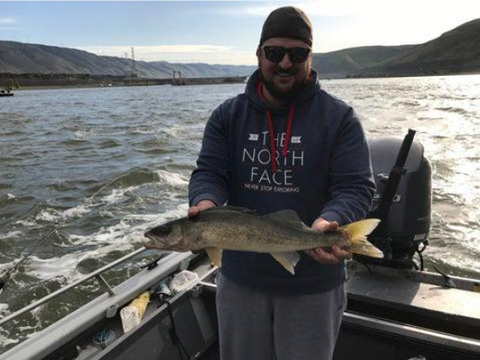
The Columbia River in Washington State and Oregon is one of the premier destination walleye fisheries in the United States. Anglers come from all around to target Walleye in the mighty Columbia River. The Columbia River is known, not only as a possible location for the next World Record Walleye, but also as a great place to catch unbelievable numbers of great eating size fish.
The point of this article is to be a starting point for people looking to take advantage of this great fishery. This is not an end all be all on Columbia River Walleye, just a simple article to get people catching fish fast. Catching good numbers of 14 – 20 inch Walleye on the Columbia River is easy, and with a little knowledge under your belt, you too will be putting lots of these tasty buggers in the boat.
How to Find Columbia River Walleye
It goes without saying that you need to “find fish to catch fish,” and when it comes to a beginner staring at the mighty Columbia River it’s easy to get overwhelmed. Walleye are an ultra-predator and they will always position themselves in the best possible locations to find food. The Columbia River is a literal conveyor belt of food for foraging walleye and positioning yourself in the correct locations can make or break your trip.
During the spring and summer there are millions of out migrating juvenile salmon, steelhead, and shad making the downstream migration to the ocean. Walleye take every advantage of this and position themselves to make the most of these easy meals. During this out migration period there is often a lot of current in the Columbia. Walleye are not particularly strong swimmers and so they gravitate to the slower moving parts of the river. What we do is locate the areas of the river that are moving slower than the main flow and concentrate our efforts there. Large points, islands, inside bends, rip rap, and other natural structures can create these current breaks. Walleye will use these areas to ambush whatever can fit in their mouth.
As a general rule of thumb for most of the areas below dams that we fish in the spring and early summer we are looking for water 20-50 feet deep in areas with very little current, or just out of the main flow, adjacent to shallow water. The adjacent to shallow water is key, as walleye will move up into the shallows to feed on bait fish at night, and like to position themselves close to their nightly food source. By targeting the deep slow moving water near shallow feeding flats we put ourselves on large numbers of feeding walleye during daylight hours.
How to Catch Columbia River Walleye: Easy rigging for immediate success
By far the quickest and easiest way to get into Columbia River walleye is to use bottom bouncers and worm harnesses. This method makes it easy for beginners to not only make and maintain contact with the bottom, but also insure that their gear is in the walleye zone all the time. Columbia River walleye in current are tight to the bottom. These fish live and feed within the bottom foot of the water column so maintaining constant bottom contact is a must

Bottom bouncers (also called Bottom Walkers) come in all sorts of different sizes ranging from as small as a quarter ounce to as large as four ounces. Even larger bottom bouncers are available, but they often need to be ordered from custom manufactures. Generally speaking for almost all the situations we fish during spring and early summer we find that the three and four ounce bottom bouncers to be our go to size. Typically when fishing four anglers the rods near the bow are rigged with four ounces and the rods out the stern are rigged with three ounces.

When it comes to the worm harness the options are unlimited. If you go to a tackle shop that sells walleye gear you will notice the many pre tied rigs from companies such as Mack’s Lure and other in house pre tied gear. All of this stuff works, but for our purpose we like to keep things simple and tie our own. We basically use three different styles of rigs and below we have listed and pictured some of our favorites. We fish all these rigs on leaders lengths of three to four feet.
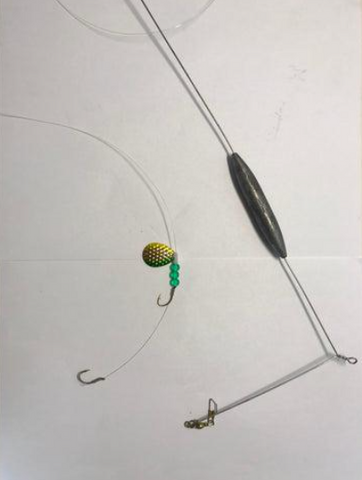
Spinner Blade rigs: These rigs are very simple and consist of a quick change clevis, size 1-4 colorado spinner blade, a few beads, and two #4 octopus style hooks tied four inches apart.
Smile Blade Rigs: This is again a very simple rig and consists of a size .8, 1.1, or 1.5 smile blade, a few beads, and the same two #4 octopus hooks tied four inches apart.
Corky Rig: This is by far the most simple rig we fish and seems to produce the best as the water starts to warm in late spring through early summer. It is simply one size #10 corky slid down the line on top of the two #4 octopus hooks.
How to catch Columbia River Walleye: Presentation
In general my favorite way to present a bottom bouncer and worm harness is to “troll” them down stream with the current. I put the quotations on the word troll because this is trolling in a very loose sense of the term. What we are actually doing is moving just fast enough to maintain the ability to steer the boat downstream. Enough emphasis cannot be placed on the need to go slow! When using bottom bouncers in this scenario I am often in and out of forward and neutral on my kicker motor and will often times spend a lot of the drift in neutral. Remember that you are already fishing in current that is pushing you downstream, so think of this more as a controlled drift.
The key to this presentation is to keep your gear on the bottom. The best way to do this is to fish with the rod in your hand. We see a lot of guys act like they are fishing for salmon and let their bottom bouncer and worm harness out, then let the rod rot in a rod holder. Don’t be that guy! This is active fishing and when you hold the rod in your hand you can make sure that you are always very near the bottom. When starting your troll slowly let out your gear so that it doesn’t get tangled, by slowly dropping your tackle you will ensure that you are actually fishing. Feel for the arm of the bottom bouncer to touch bottom, once you feel it bump bottom put your thumb on the spool and quit letting out line. Now you are fishing. To make sure you stay in the strike zone you need to actively fish your rod. At this point I start to lift the rod tip a few inches, I am intentionally trying to lift the arm of the bouncer off the bottom, and then drop my rod toward the water. If you do not feel it touch bottom you need to feed more line. You should be able to maintain contact with the bottom with every small lift and drop. I almost always fish the run with my thumb on the spool and prepared to feed more line. If you begin to feel the bouncer dredging bottom you need to reel in a few feet, remember that you just want the arm of the bouncer hitting bottom, as this will make sure your gear is at the correct level and minimize the inevitable hang ups on the bottom.
The second thing that the short lift and drop of the rod will help with is detecting bites. The bite from even a very large walleye is very subtle with this method. If at any time, while doing your lift and drop for the bottom you feel any extra weight or pressure on the rig you are getting a bite. When I feel the added pressure on my lift I continue a nice steady lift through the weight. There is no need for a hard hook set. You will miss fish if you try to give a big rip. Simply just lift through the weight and start reeling in your fish. Often times these fish are just barely hooked so bring them in nice and slow and have the net ready!
How to Catch Columbia river Walleye: Rods and Reel For Bottom Bouncing
The ideal rod and reel for this method of fishing can be debated for decades, but the bottom line is that it needs to be able to handle 3-4 ounce bottom bouncers, while still having a soft tip to detect the subtle take of a walleye.
Our favorite rod for bottom bouncing is a Gloomis E6X 7’1” 8-17 pound line rating in a medium heavy power. The model number is E6X 853C WBBR. While this rod is designed specifically for this use we also have used and really like an 8’6” 8-17 line rated medium heavy steelhead casting rod. This line rating seems to handle the weight of the rig nicely, but still lets you feel the subtle take.
For a reel we like a quality low profile casting reel such as the Shimano Curado. The reason we like a casting reel in this situation is that we are always adjusting how much line we have out and the ability to release line so easily and maintain feel of the bottom is much easier with the casting reel. We spool the reel with 30# power pro in either the high vis yellow or the low vis green. This is just personal preference here so go with the one you like.
In closing I hope that this article is of help to anyone who is trying to get into the wonderful walleye fishing the Columbia River has to offer. We love seeing new walleye anglers and if you decide to get a crash lesson on walleye fishing with us we will be happy to show you just how we do it and get you started off on the right foot. If you want more information on the walleye fishing trips we offer or to book a trip with us click here .
I just wanted to end on a small note of conservation. Even though these fish are not native to the Columbia River we want this exciting fishery to continue well into the future. I encourage anyone targeting walleye to please release the larger 25 plus inch fish. These larger fish are our brood stock, and their survival is key to having this fishery forever. The smaller fish are absolutely fantastic to eat and with the ability to catch them by the bucket load there is no real need to kill the larger fish.
Jones Sport Fishing is owned and operated by Kyle and Dani Jones. Kyle’s passion for the outdoors has driven him to commit to making his living as a professional fishing guide. Kyle prides himself in his commitment to make sure that your fishing trip meets and exceeds expectations, and is dedicated to serving his clients. You can follow Kyle on Northwest Fishing Reports and his web site JonesSportfishing.com
*This article was originally published March 2018.
/articles/how-fish-columbia-river-walleye
Shad Fishing is Heating Up
The annual run of American shad up the Columbia River is building steam. Over a 100,000 shad a day are being counted at the Bonneville Dam fish ladder. Marc Bush, owner of Twisted Waters Guide Service, recently took two clients shad fishing near Beacon Rock State Park and the two, Drew Monsey and his father Martin, caught 104 shad in short order, with Drew out fishing his dad by 11 fish. If you would like to book a trip with Bush you can go to his Facebook page or his website at www.twistedwaters-gs.com.
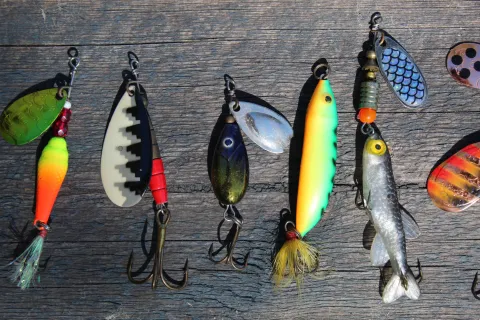
You don’t need to have a guide to have success catching shad. Two great places to fish for them from shore are just below Bonneville Dam and also below the John Day Dam. Simply cast a 1/16-ounce jig or shad dart and use anywhere from ¼ to ½ ounce of lead above it (depending on the current). Then, let it swing downstream with the current and wait for a bite before reeling in the jig and casting again.
Shad typically run between one and three pounds but they are scrappy fighters and fun to catch. Kids in particular enjoy the non-stop action when the shad run is going strong. The state record for shad is a 3.85-pound specimen caught by Tom Magnuson out of the Columbia River in 2005.
Some anglers will keep the shad to eat but others (myself included), cut these fish in half and use them for crab bait. They are a very oily fish and work very well when it comes to attracting crabs. Shad also work well as bait for sturgeon fishing and for catfish too.
John Kruse – www.northwesternoutdoors.com and www.americaoutdoorsradio.com
/articles/shad-fishing-heating