Summer Saltwater Salmon
Sockeye are arguably the best-eating salmon in the world, and as the summer rolls in, so do they. In Washington State, we are lucky enough to have several great sockeye fisheries to enjoy, both in the river and the lakes. No matter where you end up chasing them, there are a lot of basic building blocks to being a successful sockeye fisherman. Take those fundamentals and with a few location-specific tweaks, you can be successful just about anywhere you choose to target these tasty, feisty fish.
To start, let's talk about some basic sockeye fundamentals and what makes them tick. Unlike other salmon, sockeye are filter feeders, which means their diets mostly consist of krill and zooplankton. They are schooling fish who like to travel in numbers, which can make fishing for them more hunting and waiting that turns into a flurry of chaos. They also have the largest eyes of any salmon species, making them more light sensitive, but they can also see your gear from further away, bonus! We need to keep all these little quirks in mind while targeting sockeye to be successful.
Because sockeye are schooling fish, we need to focus our fishing time where they are most likely to travel. In the rivers, we’re looking for soft seams and slower water, or places that will hold them like thermal barriers, as is the case at Brewster. In the lakes, sockeye will cruise around in pods, looking for more of their kind to join as they get closer and closer to spawning. We can use this to our advantage by using dodgers and flash to mimic a school of fish and pull them into our gear from a distance. My favorite way to do this is trolling with dodgers, with my go-tos being the Mack's Sling Blade in 9” or 6” or the good ole standby 0 Les Davis. Metallic finishes like just a plain chrome will work for sockeye in any water, but I do love having a mix of metallics and colored dodgers. Sockeye are pretty lazy fish, so our troll speed is pretty slow, fluctuating between 0.8-1.5mph. Once we have them joined and following our gear, it's time for our lures and bait (where allowed) to do their job.
Since sockeye are filter feeders, and we target them in the freshwater, they aren’t attacking our lures as a feeding response. This means that they are grabbing our hooks out of reaction. Although the Lake Washington classic of bare red hooks still works, we can improve this reaction bite by using hoochies or flys, UV, flash or glow depending on time of day, and wings or blades that add even more flash and vibration. It’s pretty fun to have what my friends and I call “craft time” and build different lures and see what works best. My top color choices for sockeye, no matter where I go, are pink, orange, and red. I tie my sockeye leaders on heavy fluorocarbon, 25-40lb, with number 2 to 2/0 hooks. Not because they are big fish that are going to break your line, but because the heavier the line, the more action the dodger will impart to your lure.
Sockeye are also hard-hitting, aerobatic, and chaotic. They will take off and tangle up multiple rods or wrap around downrigger cable or anything else they can find. You’ll be glad for the heavier leader when (not if) this happens. My basic sockeye leader is 12” overall, and always has no less than 2 hooks. Once you have your leaders tied up, if you’re fishing where bait is allowed, it's sure to help your odds of hooking dinner. Cured coonshrimp, in pink or red, is a pretty universal sockeye bait; however, chunks of cured prawns work great too. In the fisheries closer to the salt, like Baker Lake, the Skagit, and the lower Columbia, live sand shrimp work very well. Scents can help you as well, and maybe even more so than other salmon; sockeye have a real sweet tooth. Slammin’ Sam’s XXX is one of my favorite sockeye scents, and I will even go as far as sprinkling my baits with pure granulated sugar. Aside from those, the regular standbys work great, like anise, garlic, and krill. Keep in mind that if you are fishing somewhere like Lake Wenatchee, which doesn’t allow bait, you also are not allowed to use scent.
These basics will get you started on the right foot when it comes to sockeye fishing, but each fishery has its own nuances. I approach each fishery differently, whether it’s a lake or river, how far from the saltwater I am, and water and weather conditions all play a role. We covered a little bit of this already, but let's get into a little more depth with some of my favorite fisheries.
Baker Lake is what I consider my “home lake” and where I do most of my sockeye fishing, spending as much as 50 days a year there. Baker Lake is a big, crystal clear lake that tends to stay on the colder side. It has a lot of structure, being a reservoir, with a few original lakes being big deep spots, lots of shelves, shallows, and some sunken forests/stumps. We generally focus our attention on the deeper water areas and along the edges of shelves, with most of our fish coming in the top 40’ of water. This allows me to leave my downriggers at home and just fish “droppers,” which is using lead cannon balls ranging from 4-10 ounces on sliders, followed by a 24-30” bumper line and then my dodger and leader. My heaviest lead is on my rods closest to the bow, with my lightest leads being out the back of the boat, and my line out is the opposite (shortest at the bow and longest at the stern).
An example of this, while running 6 rods, would be my bow rods having 10oz out 30’, my middle rods having 8oz out 40’, and my stern rods having 6oz out 50’. This gives me a good spread while keeping the rods from getting tangled with each other while trolling and turning, yet still keeping them pretty close in depth to give the illusion of a school of fish swimming together. This technique also allows us to get the gear out and fishing quicker, covers more water, and moves more in the water column during turns and speed changes. Baker Lake is also the place I troll the slowest for sockeye, with my target speed being around 0.8-1 mph.
I take this same technique to Brewster Pool, and really, any excuse I have to leave the downriggers off the boat, I will take! Our biggest differences here are that there’s much more current to take into consideration, and we are fishing in shallower water. Those currents are something to watch too, with how busy this fishery gets, you have the main current of the Columbia River as well as the incoming current from the Okanogan River. This Okanogan current will slow you down and can push you sideways into passing boats, so be extra aware of your surroundings. Here’s another reason I love fishing “droppers” because you can really see the action of your dodger, and in changing currents, I watch the thump of my rod to tell me I’m going the right speed instead of my speed over ground on my electronics.
Here at Brewster, I tend to use lighter leads than at Baker, more 3-6 ounces and target 20-35’ deep on average. Although as the day progresses and the sun gets higher, if the heat doesn’t get me off the water, I will start fishing deeper as those big eyes balls will start to drive the sockeye down to escape the sun. My go-to bait here is coonies, and pink is definitely my top color. Some fish will take a detour before getting all the way to Brewster and end up in Lake Wenatchee. Although the one single lane launch can make this fishery a little difficult to access, the fishing here is usually great and the fish tend to be bittier than at Baker.
This fishery is the most unique of all my sockeye fisheries, and I even have a Wenatchee-specific tackle box with all my tools of sockeye destruction. This is the one sockeye fishery I always bring my downriggers to, although I do still fish some droppers. I definitely have more success on the downriggers. Even though this lake is cold, deep, and clear like Baker, these Wenatchee fish seem to travel and be active deeper, and I catch most of my fish from 40-80’ deep. This fishery also doesn’t allow bait or scent, and to make up for this, we do some crazy stuff with our tackle.
Barbless hooks are also required here, which means a lot of lost fish. I always fish with at least two hooks and often three to up the odds of landing a fish. I still tie heavy fluorocarbon leaders but keep them on the short side, 8-10” overall. I don’t use a whole bunch of extra stuff on my leaders here, usually opting for one bead above each hook and sometimes a Mack’s Smile Blade on top of that bead. If I’m feeling really crazy I’ll throw a little LP plankton hoochie on there too, but I like to keep my profiles small here. The crazy part comes when you start checking out my dodgers. Here again, I use 0 dodgers or large Slingblades, but I get really crazy with the bends and accentuate them by increasing the bends on each end. By the time I’m done with them, they resemble an “S” more than a dodger. All this gives my gear a really erratic action, and my troll speed is a little faster here, where I try to keep it around 1-1.4mph.
So you can see that there are a lot of similarities from one fishery to another, and if you take the basic sockeye building blocks to any of these places, you’ll probably catch fish. But if you can tweak your program a little bit to really fit where you're fishing, your success will increase, and space in your freezer will decrease!
/articles/summer-saltwater-salmon
How to Have a Blast At Brewster
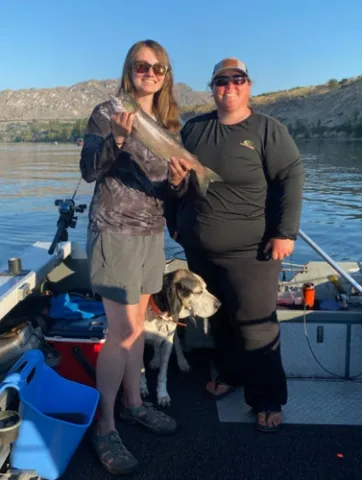
You’ve probably heard stories about the Brewster pool, if you haven’t fished it before. It’s one of the most productive and legendary fisheries in the state, and many fishermen look forward to fishing it every year. Thousands of chinook and sockeye salmon make their way up the Columbia River and stage in the cool waters of Lake Pateros (also known as the Brewster pool) before heading up the Okanagan River. The fishery typically opens up in July and can be extremely productive for both species of fish. Despite their long journey, the fish are willing biters and taste great on the grill or smoker. 20-pound chinook are regularly caught, and the sockeye are great eating quality.
It’s a fun fishery for a summer day, but learning how to fish it isn’t always easy. Brewster is about an hour north of Wenatchee, so it’s quite a drive. It can also be intimidating because there are so many other boats in the water. As long as you do some research and have patience, you’ll have a great time and catch some fish. Here’s some tips and tricks to help give you a successful day at the Brewster pool.

Chinook
The chinook fishery at Brewster tends to be a first light fishery, so grab the coffee and headlamps so you can launch in the dark. It’s a short run from the boat ramp to the pool, just stop when you see all the other boats! The most important thing to know about the Brewster pool is that it’s a trolling game. Some anglers jig or anchor up, but they are few and far between. There are just too many boats for anyone to anchor up. Most fishermen in the pool use cannon ball droppers and skip the downriggers. You can run anywhere between 4 to 12 ounces of lead, depending on the current and the stoutness of your rods. Brad’s Super Baits trolled behind 360 style flashers are the go-to, but many anglers have good success with spinners too.
Wrap or stuff your plug with tuna, herring, or shrimp to give it extra pizazz. If you run spinners, you can put some gel scent on them or hook on a coon shrimp. Don’t be afraid to swap out the hooks on your lures. Chinook have thick, tough jaws, so you want your hooks to stick. Troll between 1.5 to 2mph if you can, but you may have to match your speed with other boats if the pool is crowded enough. When fighting the fish, keep the pressure on. These fish will spit the hook if there’s any slack in the line, and they really tend to explode when they see the net. Adjust your drag and be patient.
Sockeye
If the chinook aren’t biting or you have bored kids in your boat, Brewster pool sockeye are plentiful and hungry! They are a bit smaller than Baker Lake sockeye, but they taste good and are much more numerous than the chinook. Like the chinook fishery, sockeye here are caught by trolling. There are usually two groups of boats in the pool, one that trolls faster for chinook on the current break between the Okanagan and the Columbia, and one that targets chinook closer to the mouth of the Okanagan. Chinook and sockeye do sometimes bite on the same gear, especially when the sockeye really start to stack up in the pool.
If you catch a chinook on sockeye gear, hang on! If you’re targeting sockeye, the same concepts you use when kokanee fishing apply. Use short leaders and lots of scent! Mack’s Lures offer a variety of sockeye lures that are all killer in the Brewster pool. Pink lures work best for sockeye. Pair them up with a dodger or smaller flasher, and you’re in business. Don’t forget to tip your lure with a piece of coon shrimp. You can cure your own or buy some pre-cured ones. No need to use the whole shrimp like you did for chinook that morning, you can just use a small tail piece. Thankfully, the sockeye bite all day, but the fish are more active in the early morning. Use lighter cannonballs than the ones that you used for chinook earlier in the morning. It’s worth using different weights to make sure your lines don’t tangle, particularly if you’re running 4 or more rods. The sockeye move deeper as the day heats up.
There’s a deep river channel somewhat near the shore that the sockeye like to hang out in, but definitely don’t be afraid to fish away from the crowd and try new areas. The sockeye in the Brewster pool are higher up in the water column than the chinook, so a good fish finder can really help you out. Just like their freshwater dwelling cousins, sockeye prefer a slow troll. Again, if you’re fishing in the crowd, you will probably have to match their general speed. Make sure your gear looks good before dropping it down. You’ll want your dodger to give your lure plenty of action to attract the sockeye, so shorten your leader if you need to.
Here’s a few words to the wise about the Brewster pool. Wear sunscreen! The sun can really beat down on those hot days between bites, you’ll be glad to have it on board. It’s a good idea to start fishing at first light and run back before noon, before the heat becomes too unbearable. Also, make sure to pay attention to your surroundings. The Brewster pool isn’t exactly a secret, so you can expect to have company. Sometimes there are hundreds of other boats out there, especially on weekends. Paying attention to the helm and giving other boats some space will help avoid flared tempers.
If you’d rather not deal with the potential stress, there are dozens of guides that you can book to fish the Brewster pool. You can kick back and enjoy the beautiful scenery, and come home with a cooler full of filets. Speaking of coolers, they are a must-have- both for cold drinks and for keeping fish. You’ll want to bleed and ice your fish ASAP for the best meat quality. Lastly, get to the boat ramp early and bring a good book. The boat ramp can get very crowded, especially when the sockeye are in. It’s a good idea to use the time spent waiting to prep your boat. This is another instance when having patience and a level head will help you out. If you’d rather not spend an hour or two waiting to launch, again, hiring a guide might not be a bad idea. Some of them actually launch the night before, anchor up, and sleep on the boat before they pick you up.
Once you’re done fishing for the day, head into the town of Brewster for lunch. There are several excellent restaurants, and downtown Brewster is worth exploring for the afternoon. It’s a great way to cap off your day of sockeye and chinook fishing! Fishing the Brewster pool is an unforgettable experience. Head out there and have fun!
/articles/how-have-blast-brewster