Panfishing Strategies and Tactics to Use for Year-Round Success
For many anglers, panfish are the first fish we've caught, and for good reason. Bluegill, Crappie, Perch, and other panfish are plentiful, cooperative, and can be enjoyed as a delicious meal. Yet, despite their reputation as "Beginner Fish", experienced anglers know that panfishing can be as technical and rewarding as any pursuit in freshwater fishing. With the right strategies and tactics, you can consistently put more fish in the boat or on the ice, no matter the season.
In this article, I will break down the keys to successful panfishing, from understanding their behavior to fine-tuning your presentation.
Know your Body of Water and Species you’re fishing.
"Panfish" is a catch-all term for several species, most notably bluegill, pumpkinseed, yellow perch, and both black and white crappie. While they all share similarities, each has its own quirks, which can help you understand how to approach each one on the water.
• Bluegill & Sunfish: Aggressive feeders that relate closely to weed edges and shallow flats, especially in the warm months.
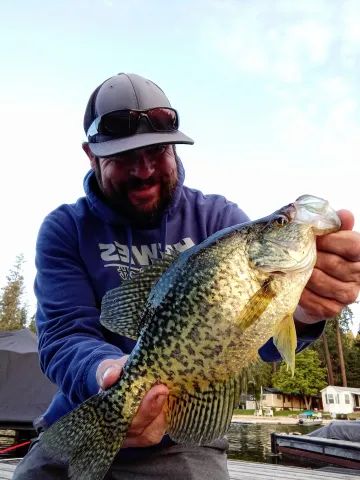
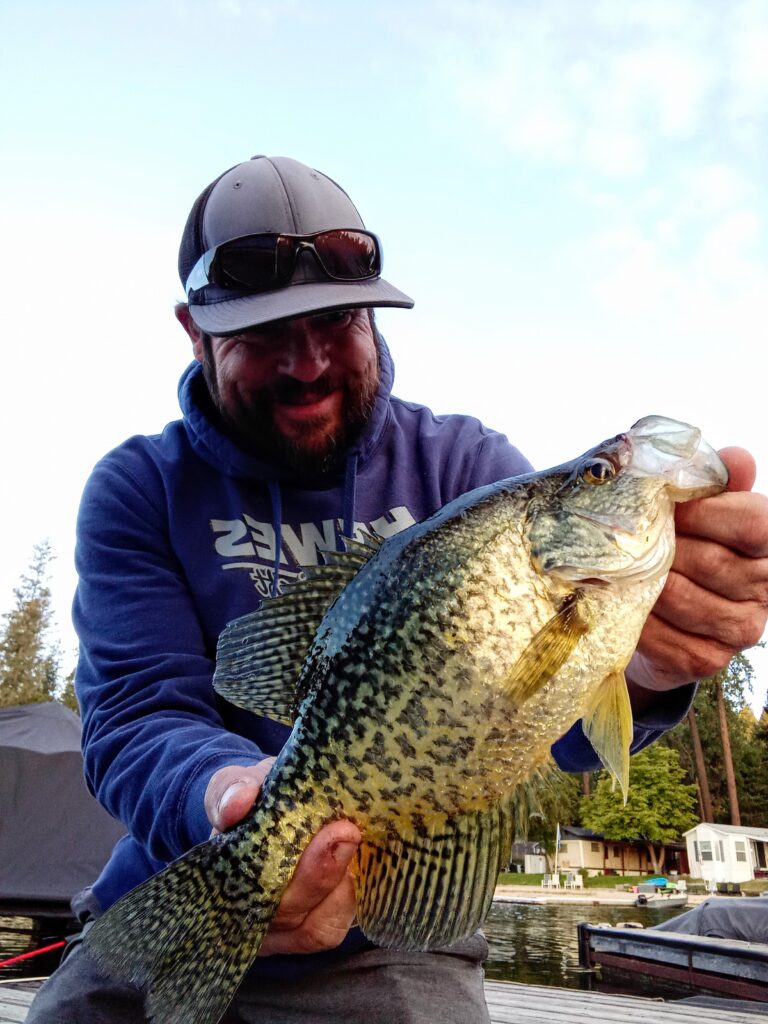
•Crappie: More structure-oriented, often suspended over deeper basins, or schooling up around brush piles. I also target large Marina docks and boats.
•Perch: Typically roam a little more, especially in winter, but will still relate to breaks, deeper weedlines, and especially sandy muddy flats where they gorge themselves on bloodworms.
Knowing the tendencies and behaviors of your target species will help you decide where to fish and what tactics to use.
Seasonal Patterns
Understanding how panfish move through the seasons is the foundation of consistent success.
•Spring: As water warms into the 50s, panfish start to move shallow to begin their spawn. Bluegill and Sunfish fan out nests in shallow bays, creating mine fields of circle beds, while Crappie will hold on to brush piles and structure a little longer before moving shallow.
•Summer: After spawning, Bluegill will typically remain in the shallows around their spawning grounds, if there's good cover. While the Crappie tend to move a little deeper, and when I say deeper, I'm referring to 15'-17'. This is prime time for early morning and late evening action near the weed edges.
•Fall: Cooling water pushes baitfish and panfish towards deeper structure. When crappie form large schools over deep basins, fan casting and bobbers come in handy. Perch will be found chasing baitfish on steep breaks and roaming the flats.
•Winter: Panfish will typically group tightly in the winter, and you can get into large schools when found. I will target the last remaining deep weed edges for Bluegill and Pumpkinseed, and hit them on the deep, muddy flats for the hungry Perch. The most difficult, and rewarding, is fishing the suspended Crappie, finding the 2'-3' just below the ice, cruising deep basins.
Locating Panfish
The most successful anglers spend more time finding fish than fishing empty water. Key tools and techniques to locate panfish include:
•Electronics: Sonar or Forward-Facing Sonar can reveal schools and depth preferences in seconds. In open water, Crappie are typically suspended while the Perch and Bluegill hug cover or bottom. Electronics will show you these behaviors of these fish in real-time.
•Visual Cues: In shallow or clean water, polarized glasses can help spot so much. Beds, weed edges, stumps, brush piles, deep ledges, and fish.
•Structure: Focus on those weed edges, fallen timber, brush piles, docks, and submerged humps.
•Mobility: Don't linger in that "Empty" water; if the fish aren't there, you have to move. Use those Electronics as you move spots, marking schools of fish or looking for that structure we've talked about. From the boat to the ice, this is what it takes to find 'em!
Tackle and Gear Selection
Panfish gear doesn't have to be complicated, but it should match the presentation.
•Rods: Light or ultra-light spinning rods (5'-7' feet) offer the sensitivity to detect soft bites. For ice fishing, I like the same action in a (24"-32" Inch) rod.
•Reels: Small 100-200 series reels with a good, smooth drag and bearing system are ideal.
•Line: I typically will run 2lb-6lb monofilament or fluorocarbon for most situations. Braid with a flouro leader works well when fishing deeper water, like 30'-50' feet at Curlew for those Jumbo Perch.
•Hooks and Jigs: Size 8-12 hooks for bait such as worms, maggots, or mealworms. These baits are Bluegill's favorites, while Crappie will indulge under a Slip bobber.
•Slip Bobber: A slip bobber will allow you to precisely control the depths of your bait, adjusting until you're right above the fish. Critical for suspended Crappie.
Live, real baits work in all seasons but can make the difference for finicky fish.
Artificial Lures & Presentations
Artificial baits often outfish live baits when fish are aggressive, or when you need to cover water quickly.
•Small Plastics: Tube jigs, curly tails, and micro swim baits mimic small prey and can be fished fast or slow.
•Spoons: Flashy and effective, especially for Perch and Crappie under the ice. Use subtle jigging motions to trigger bites.
•Panfish on a Fly: Don't be timid about pulling out the Fly gear on these shallow bedding fish, or a beaded head fly under a bobber, or under the ice. Possibilities are endless!
Experiment with different sizes, profiles, and colors. Staying more in the natural hues (White, Brown, Olive) or bright colors such as (Pink, and Chartreuse) excel in catching limits. Oh, and remember... "It doesn't matter what color it is as long as it's Gold"!
Presentation Tips
The way you present your baits is often more important than what's on the hook.
•Match the Mood: Aggressive fish respond to faster retrieves or sharper jigging. Neutral or negative fish may want a slower retrieve or movement about the water column.
•Depth Control: In suspended situations, keep your bait just above the fish, as most panfish feed upward. This is where the Electronics come into play, while you can see the fish and your bait.
•Pause and Hold: Especially in cold water, when fish are not as active. Pausing your bait can trigger strikes from hesitant fish. Often, we ice anglers will always have a "Dead Stick" fishing not too far from us.
Adjustments for Ice Fishing
Winter panfishing demands extra precision and extra clothing.
•Drill in Grids: I like to drill a grid pattern of holes over a flat or structure. Typically, I drill 15-30 holes before I start dropping lines.
•Downsize: Smaller baits and light lines are necessary. Tungsten baits are my go-to, as I can fish them fast and get down to depths quickly. Minimize the gear you bring to lighten the load in your sled you're dragging behind you.
•Stay Mobile: Panfish roam, and staying on top of them is key to steady action. Electronics are especially valuable here, letting you watch fish react to your bait in real time.
Conservation & Ethics
While panfish are abundant, local populations can be impacted by heavy harvest, especially large breeding fish.
•Practice Selective Harvest: Keep enough for a meal, but release the larger ones when you can, to maintain healthy genetics
•Know the Regulations: Size and bag limits vary State to State, and sometimes by body of water.
•Handle with Care: Use a wet hand when unhooking and handling fish in the cold temps. I try to minimize the time I lay a fish on the ice, as fish don’t have eyelids, so you can damage the eyes, not just the skin. Minimizing air exposure will help the survival of the fish you plan on releasing.
One of the best things about panfishing is its accessibility. Whether it's from the dock, boat, or ice, you can enjoy success. It's the Gateway to introduce kids and beginners into fishing, fast action, frequent bites, and plenty of smiles. But for a handful of us seasoned anglers, panfish offers a challenge. Finding the biggest Crappie in the lake or coaxing a wary Bluegill from its bed takes skill, patience, and attention to detail.
My final thought is this. If you approach panfishing with the same strategic mindset you would for Bass, Walleye, or Trout, you'll quickly discover that these "small fish" can be very rewarding. Whether you're filling a bucket for a fish fry or targeting Trophy Class Slabs, the combination of smart location choices, precise presentations, and seasonal awareness will keep your rod bent all year long!
And don't forget to "Reel in Those Memories"!
/articles/panfishing-strategies-and-tactics-use-year-round-success
Fall Panfishing in Eastern Washington
A treasure awaiting eager anglers
As the vibrant hues of summer give way to the crisp, golden tones of fall, Eastern Washington transforms into a paradise for outdoor enthusiasts. For many, this time of year means hunting or hiking through the scenic landscapes. However, for anglers in the know, fall represents one of the best opportunities for panfishing in this region. Panfish, including species such as bluegill, crappie, and perch, become particularly active as the temps begin to drop, offering a fantastic fishing experience.
The appeal of fall Panfishing
Fall is a transitional season, and for many fish species, it signals the need to feed aggressively, putting the feed bug on for the winter months ahead. For panfish like crappie and bluegill, this means moving from the deeper waters they inhabited during the hot summer months to shallower, more accessible areas where they can feast on minnows, insects, and other aquatic creatures. Anglers targeting panfish in the fall can enjoy several advantages:
Reduced fishing pressure
As fall arrives, many anglers turn their attention to hunting, leaving lakes and rivers quieter, and less crowded. The reduced fishing pressure can make panfish less warry and more likely to bite.
Ideal weather conditions
The mild temperature of fall provides a comfortable environment for fishing. The oppressive heat of summer is gone, and the cold chill of winter has yet to set in, creating the perfect conditions for a day on the water.
Spectacular scenery
There's nothing quite like spending a day on the water surrounded by the stunning fall foliage of Eastern Washington. The golden leaves of cottonwoods, aspens, and maples reflect off the glassy surface of the lakes, creating a breathtaking backdrop for any fishing trip.
Active fish
As water temps cool, panfish metabolism remains relatively high, encouraging aggressive feeding behavior. This is a stark contrast to the lethargic bites often experienced in the summer.
Best Panfish species to target in Eastern Washington
Crappie
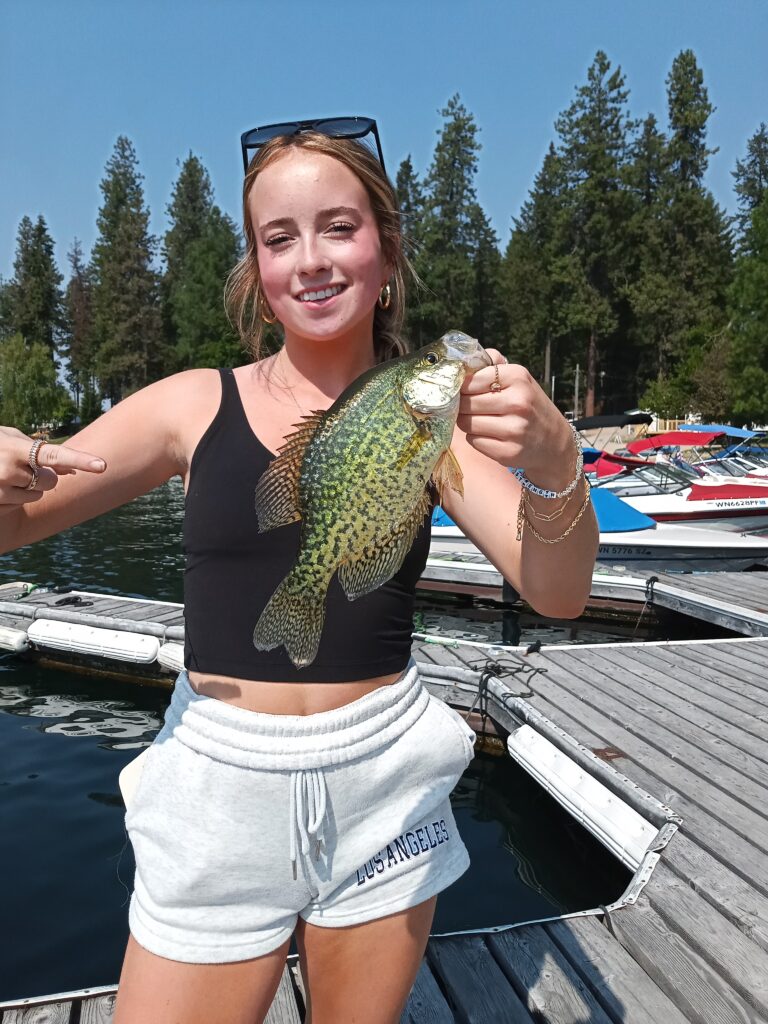
Crappie is a favorite among panfish enthusiasts due to its delicious, flaky meat and relative abundance in Eastern Washington waters. Two species, black crappie and white crappie can be found, though black crappie tends to be more common. During the fall, crappie often schools up in large numbers, making them easier to locate and catch.
Best spots
Moses Lake, Eloika Lake, Newman Lake, and Sacheen Lake are well known for their healthy abundance of populations. Look for crappies in areas with submerged structures such as fallen trees, docks, or rocky points where they seek shelter and forage.
Techniques
Casting small jigs with plastics, or bait, is highly effective for fall crappie. A slow steady retrieve near submerged structures often entices strikes. Night fishing can also be productive especially when using lights or lanterns to attract the crappie.
Bluegill & Sunfish
Bluegill and other sunfish species, such as pumpkin seeds, are abundant in Eastern Washington and provide great action for anglers of all skill levels. They are often found in shallow waters, especially around weed beds, submerged vegetation, and docks.
Best spots
Eloika Lake, Newman Lake, Sacheen Lake, and Loon Lake to name a few, are excellent choices for targeting bluegill and sunfish. These lakes offer plenty of fishing availability, making them perfect for both boat and shore anglers.
Techniques
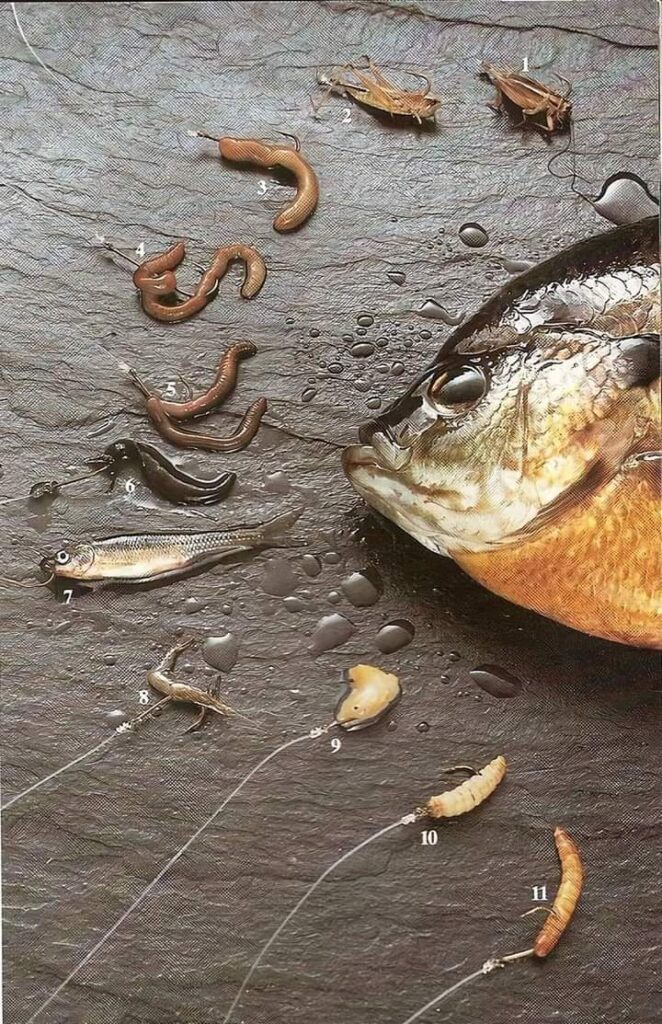
Bluegills are notorious for their lake of small, natural baits. Worms, crickets, and small jigs work wonders, particularly when fished below a bobber. Small flies, in the nymph patterns, can also be effective and add an extra way to approach these fish.
Yellow Perch
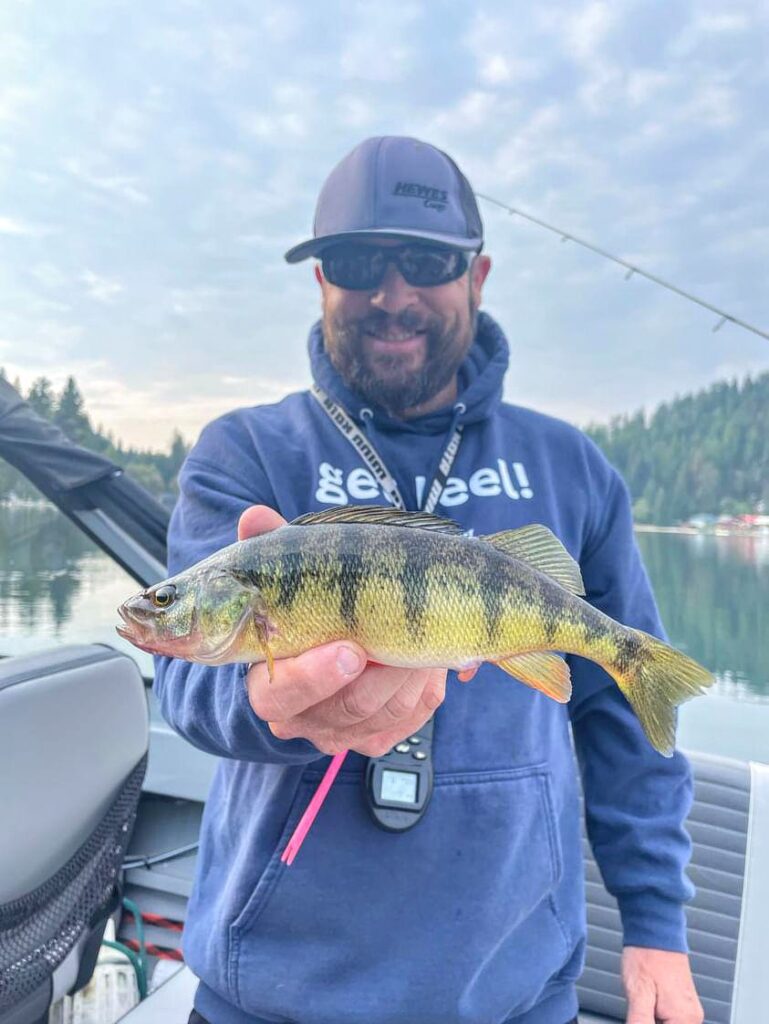
Yellow Perch are another panfish targeted by fall anglers in Eastern Washington. Known for their aggressive nature, and flakey tasty filets, perch are often found schooling up in deeper water, usually inhabiting a large mud flat looking for bloodworms, but don't overlook the shallows as temps drop and baitfish move toward the shore.
Best spots
Silver Lake, Moses Lake, Sacheen Lake, and Eloika Lake rank among prime locations for yellow perch. These waters provide plenty of food and cabbage where these perch can hide, and hunt. (Don't forget Long Lake.)
Techniques
Perch can be caught using a variety of methods, but jigging small spoons tipped with small plastics, or bait tends to be the most effective way. Vertical jigging from a boat can be best, especially when you locate a school of perch on your fish finder.
Tips for successful fall Panfishing in Eastern Washington:
Use light tackle
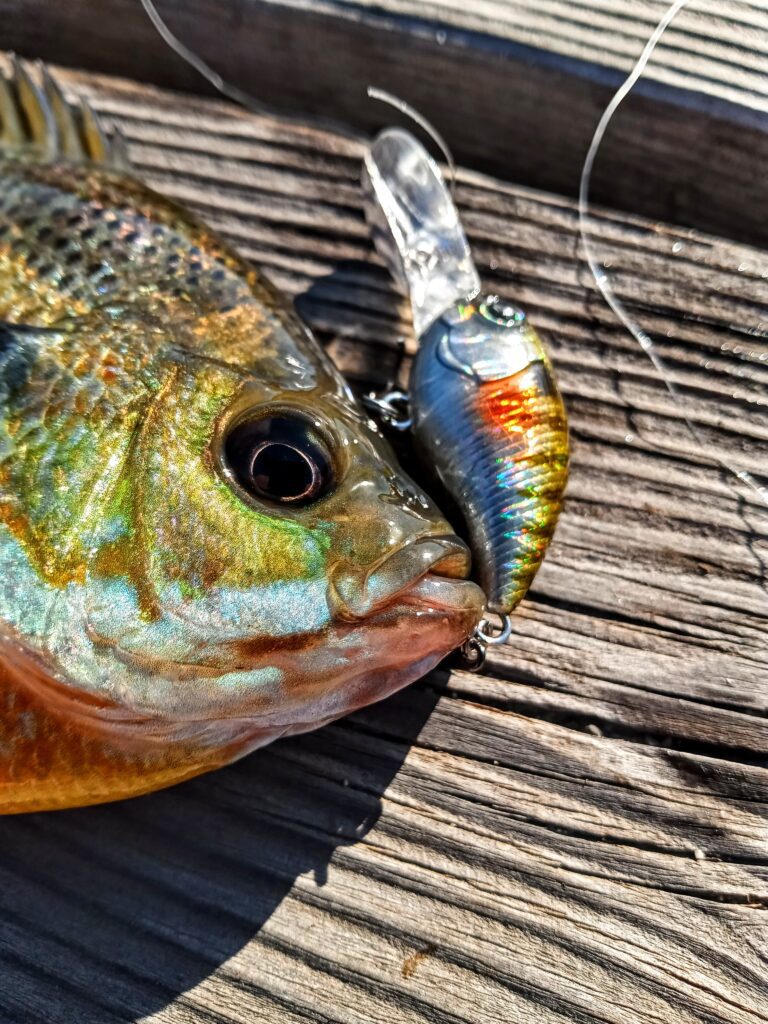
Panfish have small, soft mouths and are easily spooked by heavy tackle. Light spinning rods, small reels, and 4-6lb test lines are ideal for detecting subtle bites and presenting small baits effectively.
Look for structure
Panfish are actually drawn to structures that provide cover from predators and access to food. Fallen trees, weed beds, rock piles, and boat docks are all excellent places to find schools of panfish. Use a fish finder to locate submerged structures that aren't visible from the surface.
Experiment with lure colors and sizes
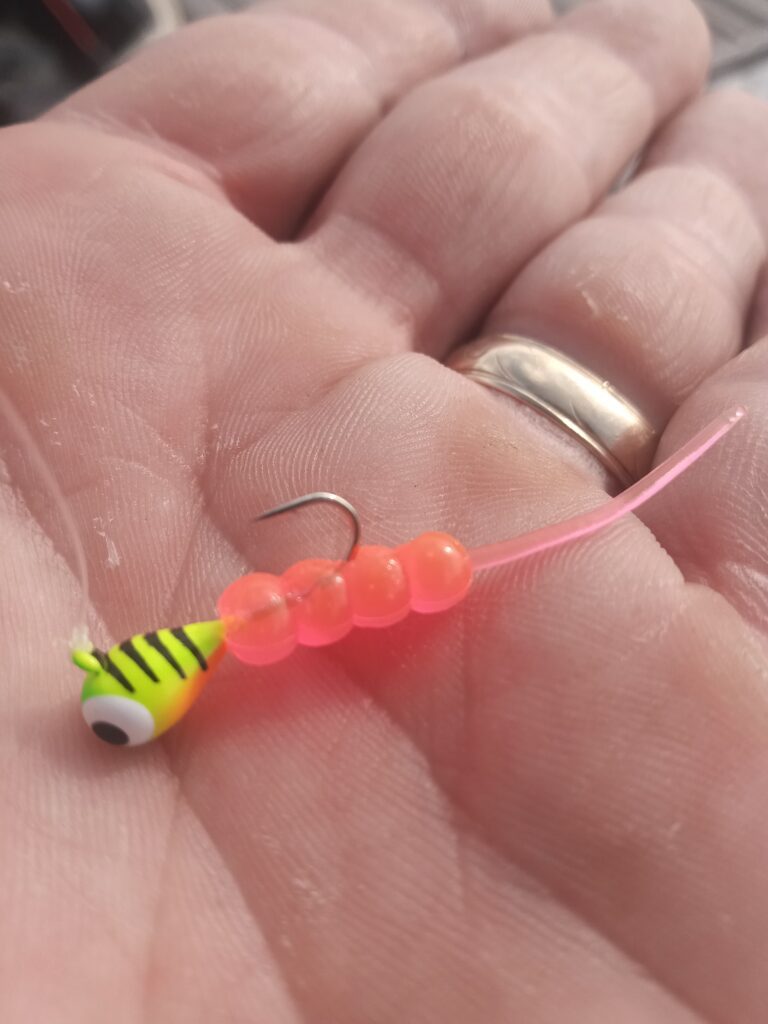
Different panfish species and even individual fish can have a unique preference, so it's good to experiment with variations of lures, with different colors and sizes. Or even trying to figure out what they are feeding on, and match the hatch.
Stay Mobile
If you're not getting any bites in one spot, don't be afraid to move around. Panfish schools can be highly mobile, especially in the fall, so covering more water can increase your chances of finding active fish.
Adjust your depth
Panfish can often be found at varying depths depending on water temperature during the day. Start shallow and gradually move deeper as the day warms up. Fish can sometimes be found surprisingly deep even in cool months - and don't overlook the suspended fish in the middle column.
The fall Panfishing experience
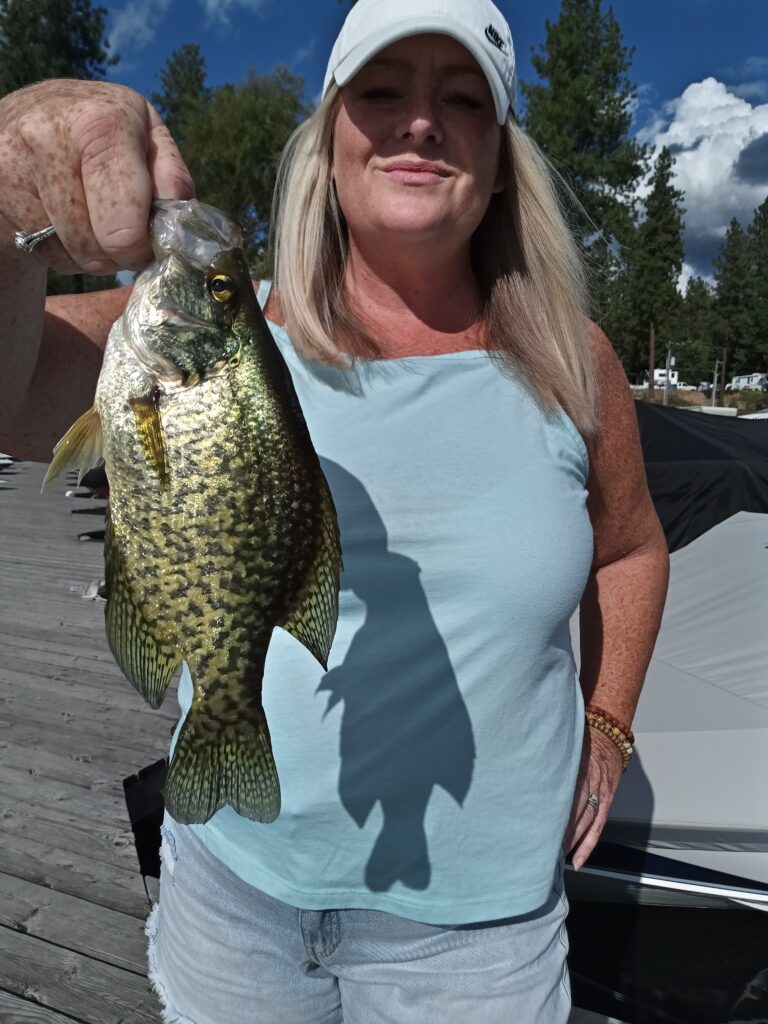
Fall panfishing in Eastern Washington offers a unique blend of excitement and tranquility. The crisp air, vibrant fall foliage, and the serenity of the lakes make for a peaceful escape from the everyday hustle and bustle. For those who enjoy the challenges of light tackle and the reward of a well-earned catch, there's no better time to get out on the water.
Whether you're a seasoned angler or a beginner looking to experience the thrill of fishing, Eastern Washington lakes and reservoirs offer plenty of opportunities to reel in some of the best and most enjoyable fish the region has to offer. With a bit of patience, and the right gear, and a sense of adventure, you'll find that fall panfishing in Eastern Washington is more than just a past time - it's a cherished tradition waiting to be discovered. So grab your fishing rod, pack your tackle box, and head out to the waters of Eastern Washington this fall. The panfish are biting, and the experience is one you won't want to miss.
![{"capture_mode":"AutoModule","faces":["-1482_-1552_-546_-616"]}](https://cdn.northwestfishing.net/sites/default/files/styles/large/public/images/IMG_20240907_122136_1-scaled.jpg.webp?itok=1nO2jnuv "{\"capture_mode\":\"AutoModule\",\"faces\":[\"-1482_-1552_-546_-616\"]}")
/articles/fall-panfishing-eastern-washington
Fall Fishing At Potholes Reservoir
September and October are my favorite times of year and one of my favorite places to recreate is at Potholes Reservoir, located between Moses Lake and Othello in Eastern Washington. This is a large irrigation reservoir fed by Crab Creek, Lind Coulee as well as Winchester and Frenchman’s Wasteway. At full pool, the lake has 28,000 surface acres of water but after a long summer of dropping water the lake definitely “fishes smaller”.
While there is not as much water to fish, particularly back in the sand dunes area and Crab Creek, there is still plenty of lake to fish and at this time of year, the fish are biting as they beef up for the long winter ahead. Let’s run through some of the species you can fish for here and some effective ways to catch them:
BASS:
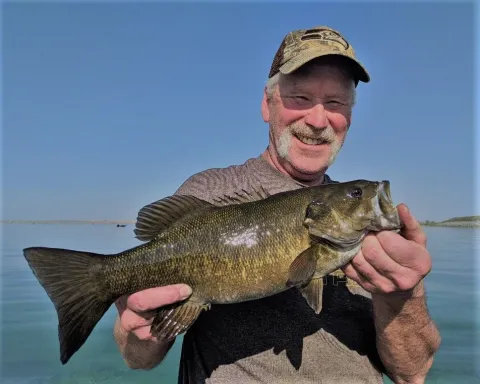
Bassmaster Magazine ranked Potholes Reservoir as the ninth-best bass fishing destination in the Western United States this year and for good reason. There is a healthy population of both largemouth and smallmouth bass in several age classes. The largemouth tend to be bigger, averaging two pounds and getting up to 7-plus pounds. At a typical bass tournament, you’ll need to have a five-fish bag weighing over twenty pounds for a chance to win. The smallmouth run a bit smaller, with one-pound fish being abundant. But I caught a 5.4-pound smallmouth here during September so big smallmouth are around.
At this time of year, the baitfish have moved out into the main lake, and so have the gamefish that are after them. Pete Fisher at the MarDon Resort Tackle Shop and the owner of Fisher Brothers Baits says fishing in front of the dunes on the main lake is the best place to go. The fish will be suspended around sandy humps and Pete says fishing a football head jig with a hula grub trailer is an effective way to catch these fish, which are primarily largemouth bass.
If you want to go after smallmouth bass head towards the face of O’Sullivan Dam or into Lind Coulee at the south end of the lake. Personally, I enjoy using deep diving crankbaits here this time of year which are effective for both bass and walleye. One of my favorite lures is a Berkley Digger crankbait, which dives to depths of 14 feet. When it comes to fishing near the dam, Pete Fisher likes to use perch colored ¾ ounce swimbaits or topwater plugs with white being a preferred color.
WALLEYE:
The walleye bite can be spectacular in the autumn months. These tasty fish tend to be found off the face of the sand dunes or the mouth of Crab Creek. As Nathan Lafrance says, “If you aren’t sure where to go, just look for the line of boats out there, easy to find.” As for how to catch them, Nathan recommends trolling diving crankbaits at a depth of 10 to 12 feet. Nathan says other lures to try are a jointed Berkley Flicker Shad #7 or a Bill Lewis Walleye Precise Walleye Lite crankbait.
PANFISH:
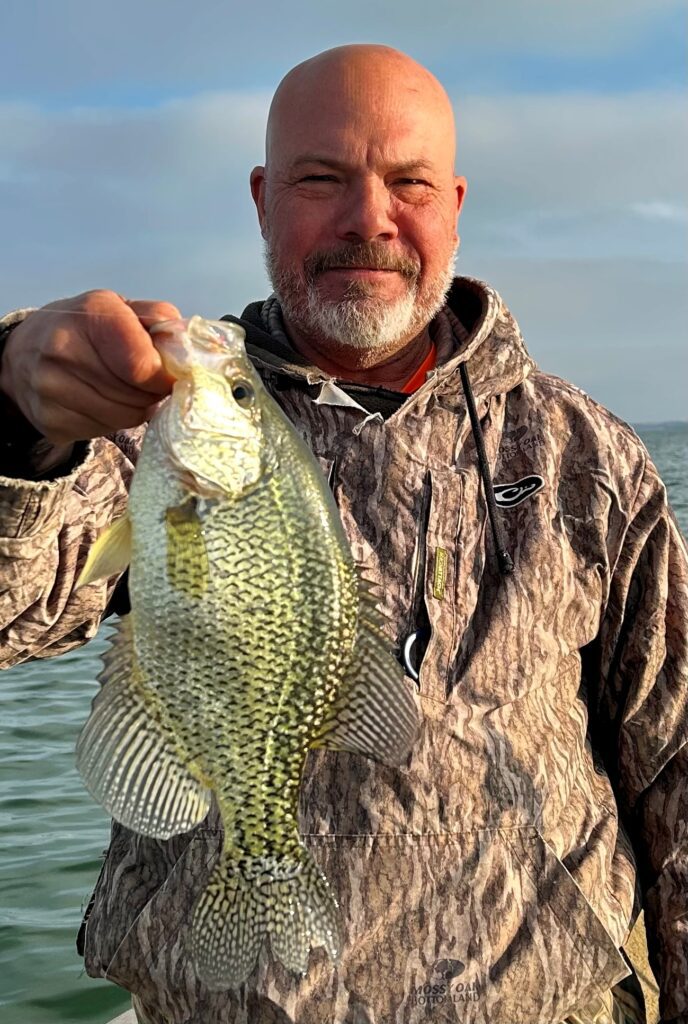
The autumn bite for panfish is excellent and sometimes overlooked by anglers targeting trout, bass and walleye. There is a combined limit for bluegill and crappie of 25 fish, and the crappie have to be at least nine inches long to keep. This regulation has helped turn the reservoir into a quality fishery and 15-inch crappie are relatively common. Last year, an angler reeled in a bluegill that weighed over 2.2 pounds, nearly beating the state record. The perch can also be sizeable here, reaching north of 14-inches in length.
One person who really enjoys fishing for crappie is Pete Fisher. He has a couple of suggestions about where to find them and catch them. Pete says the crappie, like the bass, migrate out of the sand dunes in the late summer. During the autumn months they will be found at the face (or in front of) the sand dunes on the main lake. Fisher says you can cast or troll Berkley #5 Flicker Shads, especially in a Chrome Clown color pattern. Another way to catch crappie is to fish a small jig under a slip bobber after you find a school of these fish. Fisher prefers a white Bobby Garland shad or DS Fry soft plastic lure paired with a small 1/32 or 1/64th ounce jig head. If you do catch a bunch of panfish, you’ll be happy to know there is a fish cleaning station at both MarDon Resort and at Potholes State Park near the boat ramp.
TROUT:
The rainbow bite really turns on in the fall and the size of these fish are impressive. One to three-pound rainbows are commonplace and sometimes you’ll get them bigger than that. Nathan LaFrance suggests trolling Berkley Flicker Shads or longer minnow shaped crankbaits. As to where to find the trout, a couple of good places are off the mouth of Frenchman’s Wasteway or in the northeast corner of the lake near the mouth of Crab Creek.
RESOURCES:
If you are looking for a place to stay you can camp at Potholes State Park or MarDon Resort, which also has cabins and cottages for rent. The resort also has a tackle shop and The Beach House bar and restaurant. The Potholes Bar and Grill is another nearby restaurant that is close to the entrance of the state park.
If you have never fished or hunted Potholes Reservoir before, consider booking a “Cast & Blast” trip with Ross Outdoor Adventures. These trips are only offered in October. Shelby Ross and his guides know how to navigate the tricky channels leading into the sand dunes like the back of their hands. They will take you in before dawn, treat you to a fun duck hunt, and finish the hunt with duck poppers cooked up in the blind. After that you put away the shotguns and go trolling for walleye, usually picking up several other fish species along the way. It makes for a fun day and a great introduction to the fall hunting and fishing scene at this spectacular destination.
WEBSITES:
By John Kruse, host of Northwestern Outdoors and America Outdoors Radio
/articles/fall-fishing-potholes-reservoir
Pan Fishing 101
(Crappie and Bluegill Technique and Set Up)
Fishing for Crappie and Bluegill, often referred to as panfish, provides both novice and seasoned anglers with an exciting challenge and a delicious reward. These popular freshwater species can be found in lakes, rivers, and ponds across Washington State, making them accessible targets for anglers of all skill levels. So grab your tackle box, and join me as we explore the effective techniques and setups tailored specifically for crappie and bluegill fishing.
Understanding Crappie and Bluegill
Crappie:
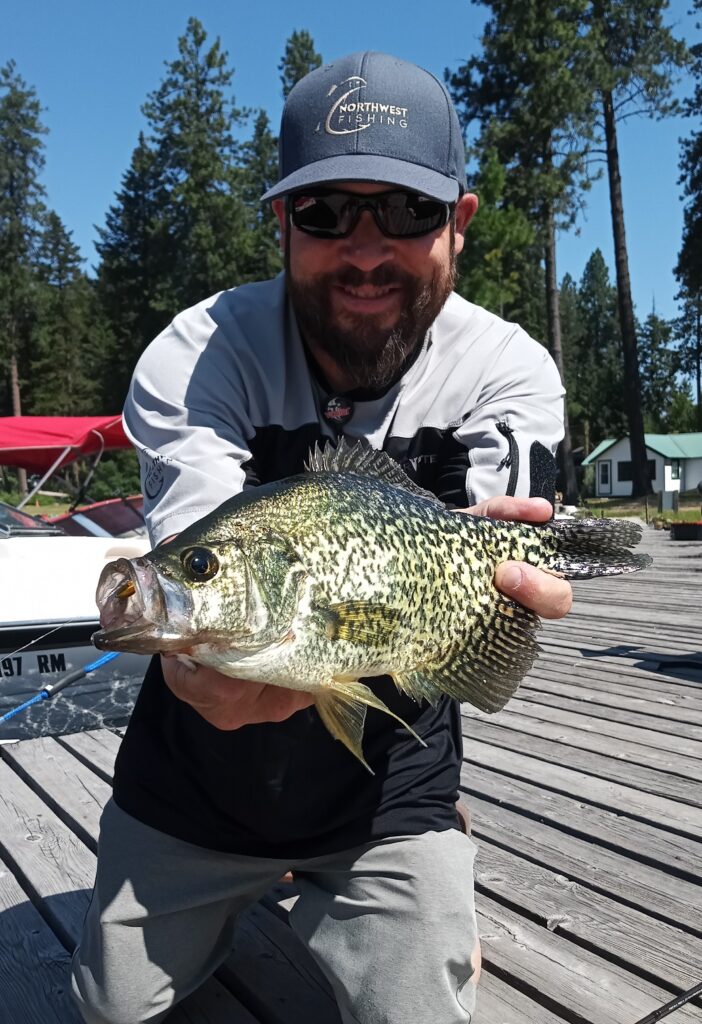
Crappie are highly sought after for this tasty white meat and can grow to impressive sizes with the white Crappie and the black Crappie being the most common species. They are known for their tendency to school around submerged structures such as trees, brush piles, and docks. If fishing from the boat, I'm typically a fan of casting small jigs, and bobbers around these structures searching for bites - and also using my electronics to tell me - what's below, and what are they schooled around? With fishing docks, I begin by jigging shallow and work my way deeper until I feel that “thump!” Usually, they are just suspended a few feet off the bottom below the docks, but at certain times of the day, they are just a foot below the docks, and hugging the boats making it a little tougher shooting your jig under them, trying not to spook em’.
Bluegill:
Bluegill is smaller than crappie but just as popular among anglers. They are characterized by their distinctive blue gill covers and can be found hanging out in shallow waters, around vegetation, and structures submerged in water. Bluegill are prolific breeders and often travel in schools, during their spawn, they will have a minefield of beds in the shallows as they become very aggressive in protecting their eggs. It's very fun targeting these, especially practicing catch and release. For many of us, the Bluegill was the first fish caught as a kid that sparked the interest.
Essential Equipment:
Rod and Reel:
For panfish, a light or ultra-light spinning rod and reel combo works best. This setup allows for casting bobbers and small baits accurately and provides the sensitivity needed to detect subtle bites.
Fishing Line:
Use light line, monofilament, or fluorocarbon. Typically in the 4-8lb range, as lighter lines allow for a better presentation of small baits and lures while maintaining enough strength to handle larger fish, I often choose monofilament in the 4-6lb test to allow a little stretch with my hook set, especially fishing crappie with their paper-thin mouths. (Hence the name “Lantern-mouths.”)
Terminal Tackle:
Small hooks such as a number of 6-10 for bluegill, and slightly larger for crappie 4-8, tipped with worms is the most simple way to approach these fish. Split shot weights and bobbers are another effective way to locate fish and to find the depth to adjust your bait too, keeping it in the strike zone.
Baits and Lures:
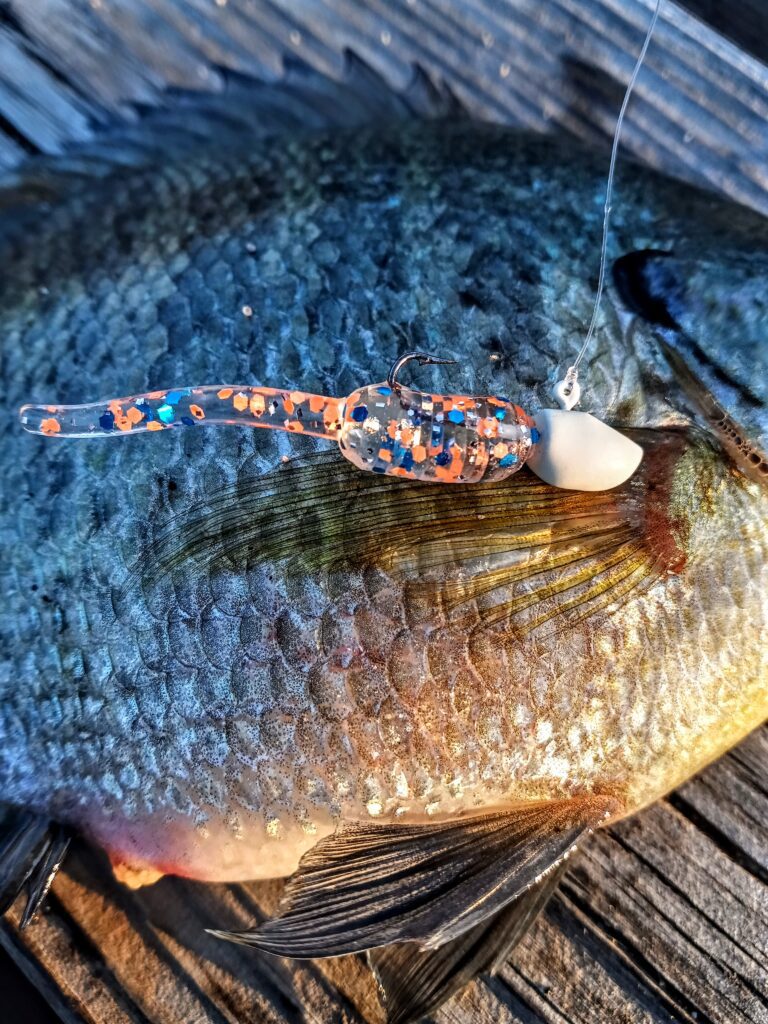
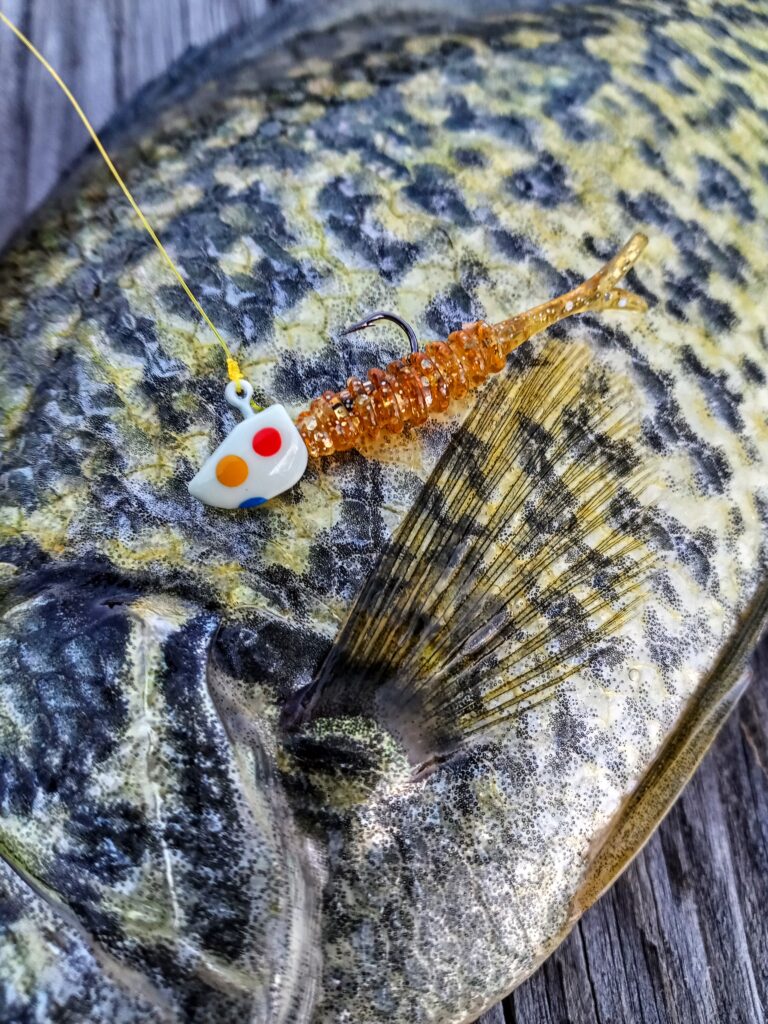
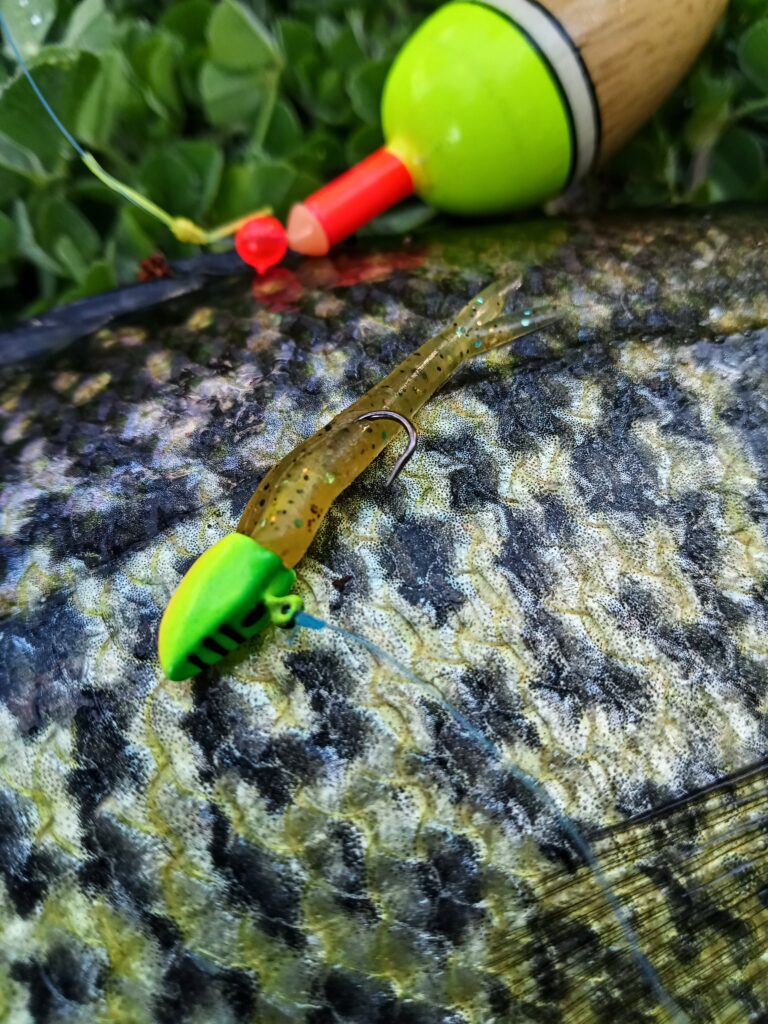
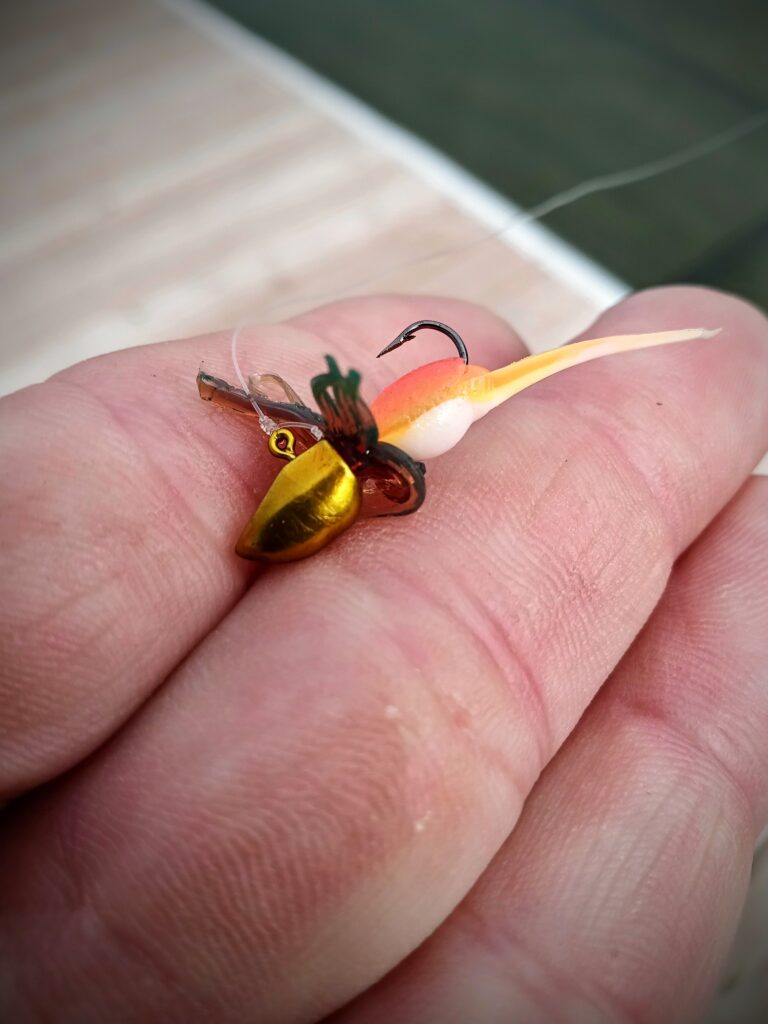
Though we can't use live bait, the most effective bait for both bluegill and crappie is a worm. Cured crickets and minnows work well, but you may have to work your bait more to attract the fish. When it comes to working your baits, we typically refer to artificial baits such as jigs, small crankbaits, spinners, and soft plastics like grubs. Soft plastics come in so many profiles, that you can define the bite with a minnow profile, to a buggy pattern.
Techniques For Crappie:
Vertical Jigging:
Drop a jig or your vertical presentation down near submerged structures, trees, and docks, areas where Crappie are likely to congregate. Use either slow retrieves after casting with an occasional twitch, or gentle jigging motions to act like a wounded, or swimming minnow to entice bites.
Fan Casting Bobbers:
Cast small bobbers around structure docks, brush piles, and/or just outside of major weedlines. I try to have at least 3 rods rigged up with my favorite bobbers, each at different lengths below the bobber to find the depth at the fish are suspended. Anywhere from 2-4 ft below the bobber is a good starting point. When you find the depth, stick to it, and if the bite dies down, continue to move until you get back to the school.
Dock Shooting:
Perfect for targeting Crappie hiding under docks. With a light jig or worm under a float, skip the bait under the docks and other overhead cover where Crappie lurk. I have a ton of success using this technique when I find the Crappie are sucked close to the bottom of boats in a marina.
Techniques For Bluegill:
Bobber Fishing:
Attach the small hook baited with the worm, and/or your favorite micro jig and plastic under the bobber and cast towards shoreline vegetation and those submerged structures. Slipping that bait even a foot or less directly under your float as you reel across the tops of their beds. Being able to adjust your float to the depth of the bait to find where the Bluegill are feeding is important.
Micro Jigging:
Very similar to jigging for crappie but with much smaller jigs and hooks, again casting and retrieving slowly varying the speed to find the most effective presentation, and jigging vertically with different cadences until you find what they want.
Micro Crankbait:
Yes, cranking for Bluegills. We have found much success fishing Micro Crank Baits such as the Z-Cranker from Eurotackle. Trolling right outside the weedlines adjacent from their beds, and they will smoke them baits as they are very aggressive during their spawn.
Tips For Success:
Location:
Use electronics and maps if possible to locate submerged structures, such as weed beds, drop-offs, brush piles, and sunken trees, where Crappies and Bluegills gather.
Time Of Day:
Early morning and late evening are prime times for Panfish, as they are active and feed in those low light conditions. We do find them of course throughout the day, but tend to have the hottest bites early and later.
Patience And Observation:
Panfish can be finicky. Be patient and pay attention to subtle bites or changes in bait behavior. They may want a micro Tungsten jig one morning, and the next they want a larger jigging spoon. Feeding habits can change by the hour too, so don't be afraid to even try beaded head flies.
Catch And Release:
Practice selective harvest and release larger breeding fish to sustain a healthy population. I always release any Bluegill over 9in, and release the majority of Crappie over 12in. Very rarely do I keep fish, but every now and then they are a good fish fry. (Please check regulations on your lake’s fishing)
Fishing for Crappies and Bluegill is not just about catching fish; it's about enjoying the outdoors and honing your skills, whether you prefer the challenge of targeting Crappies with jigs or the simplicity of bobber fishing for Bluegill, there's a technique that suits every anglers style. With the right equipment, techniques, and a bit of patience, you'll be well on your way to filling your cooler with these delectable freshwater treasures.
By mastering the techniques and setups, you'll enhance your Pan Fishing experience and increase your chances of success on your next fishing adventure. “I hope to see you out on the water!” - Eric Magnuson.
/articles/pan-fishing-101