The Other Red Meat
It has been an awesome year for chasing salmon out on the salt, but if you are a Marine Area 7 (San Juan Islands) fisherman you may be thinking now what? MA 7 chinook is closed for the year. At this point, there are limited fall chinook opportunities for our Western Washington salmon slayers. Then halibut, although the fishery is open through September 29th most of them are out in the open ocean doing halibut things. Lingcod are closed for the season and our rockfish fishery continues on a long-term conservation closure… What do we fish for? Why not chase San Juan Island coho, the other red meat?
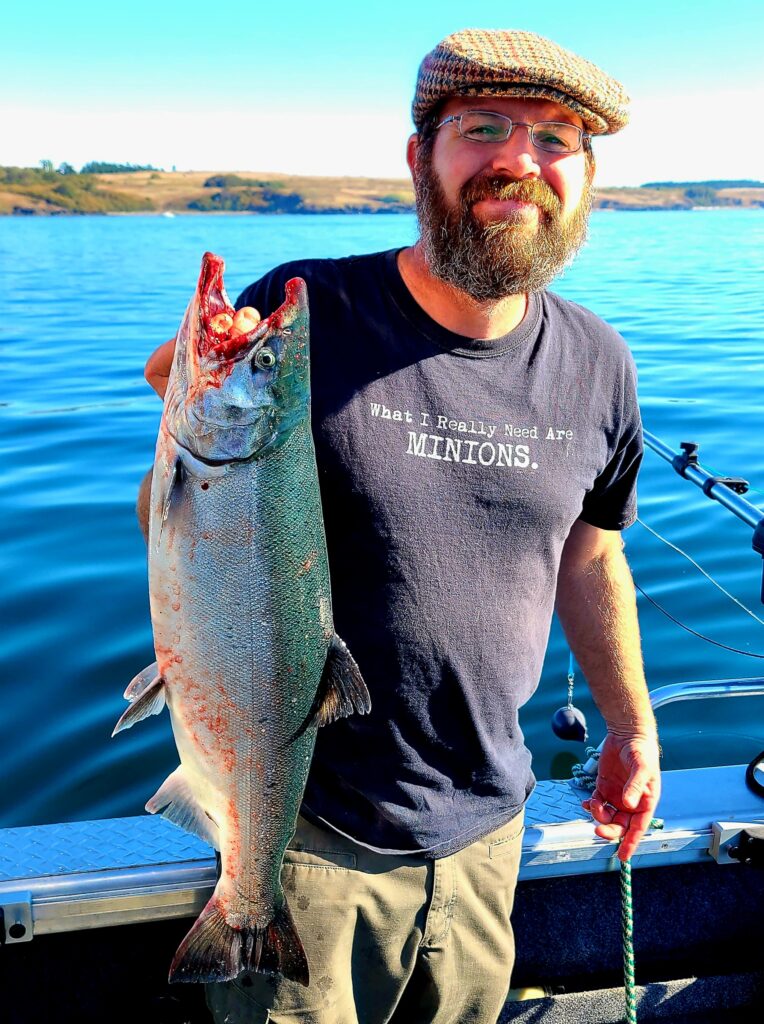
As always review the regulations and Emergency Regulation notices before heading out but the current season is modeled as being open as follows:
8/1-8/31 2 coho no minimum size, release wild fish
9/1-9/29 1 coho
When heading out to hunt San Juan Island Coho, make sure you are aware of the southeast MA 7 closure, and if you plan to fish the banks be cognizant of your actual location. Know where the Canadian border is and where both the MA 7 and MA 6 boundaries are.
Regarding regulations; this year there has been an increase in the number of WDFW staff Safety and Security Incident Reports filed for harassment of WDFW personnel. The Safety and Security Incident Reports relate to negative interactions with anglers and were submitted by Puget Sound Sampling staff over a two-month period this summer. The negative interaction makes WDFW recruitment and retention difficult and staff have quit their job over the treatment they've received this summer.
RCW 77.12.071
Sampling of fish, wildlife, or shellfish by department employees.
- (1) Department employees, in carrying out their duties under this title on public lands or state waters, may:
- (a) Collect samples of tissue, fluids, or other bodily parts of fish, wildlife, or shellfish; or
- (b) Board vessels in state waters engaged in commercial and recreational harvest activities to collect samples of fish, wildlife, or shellfish.
- (i) Department employees shall ask permission from the owner or his or her agent before boarding vessels in state waters.
- (ii) If an employee of the department is denied access to any vessel where access was sought for the purposes of (b) of this subsection, the department employee may contact an enforcement officer for assistance in applying for a search warrant authorizing access to the vessel in order to carry out the department employee's duties under this section.
- (2) Department employees must have official identification, announce their presence and intent, and perform their duties in a safe and professional manner while carrying out the activities in this section.
As a participant in our recreational salmon fishery, please remember that the department is required to monitor the fishery. If they do not have the staffing or there are safety concerns, they may have to close a given fishery because they are unable to monitor it as required under the Federal Fisheries permit.
Once you’ve sorted through the regulations and generally know where you are going, what’s the game plan? During Coho season a good chunk of MA 7 will have coho available. Many of the points along the SW side of San Juan Island produce tide rips that will concentrate bait. Find the bait and coho will be there. This time of the year coho put on the feed bag and fatten up for their spawning rituals. Instead of naming off several already busy point fisheries think bait.
Generally, coho will be found anywhere there is bait. Meter around offshore from the point fisheries and look for bait. Study your charts and note any high spots or ridges that will create a current break and have a look.
You don’t need to find a boiling tide rip, even a subtle rolling seam along an otherwise glassy sea will hold bait. Look for seabirds, a bunch of diving birds sitting on the water means deep bait. a flock of gulls, either floating around or on the wing usually means shallow bait, so continuously keep a lookout for birds.
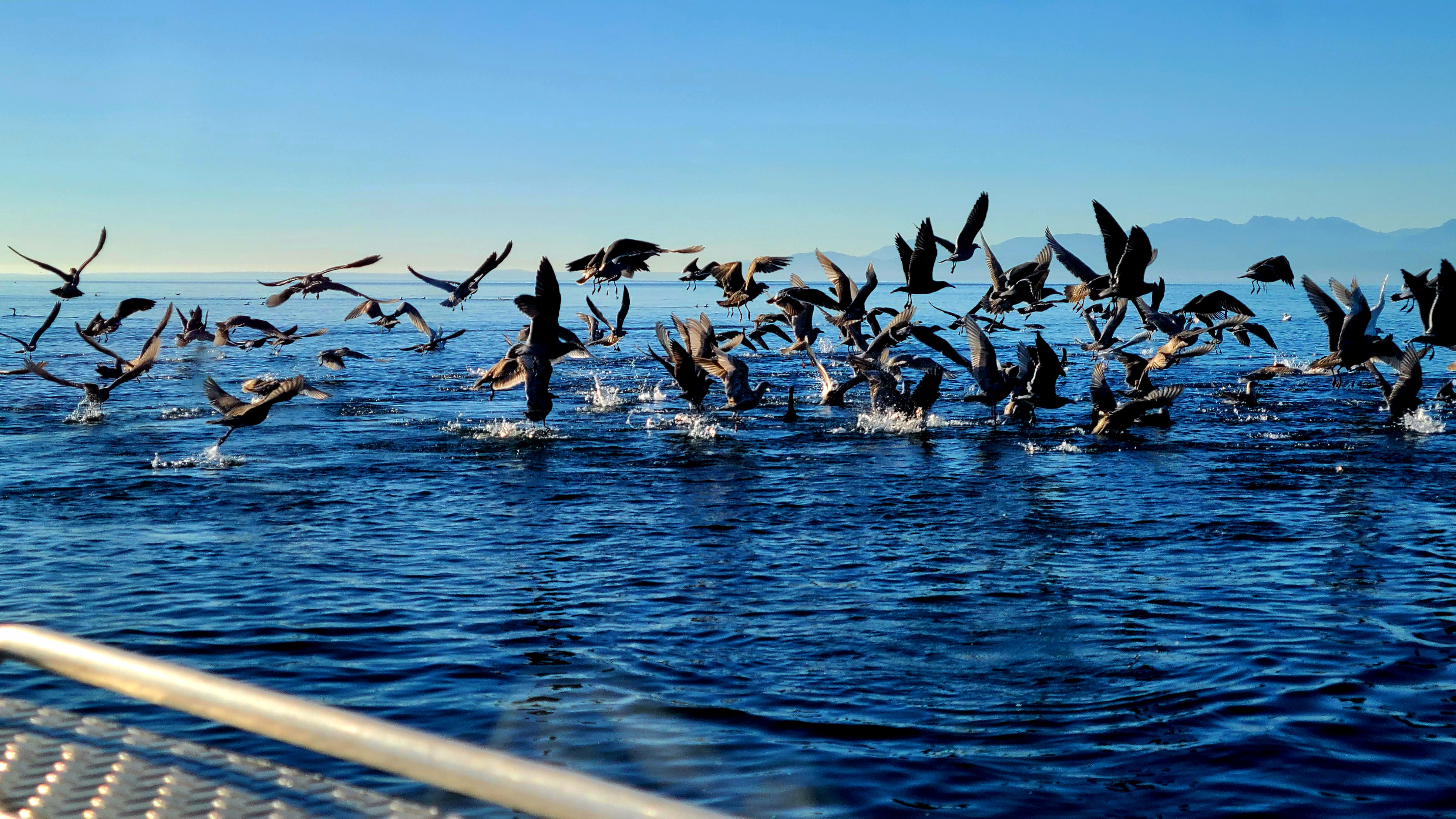
They are kind of the blue light special for coho fishing. Although fishing with the flotilla puts a lot of coho on ice each year, consider finding fish outside the masses. The key to locating coho is locating the bait, find the bait and you will find coho.
One previous September morning, after a quick stop at Holiday for nonethanol and a freshly made breakfast burrito I was off to Cornet Bay. On arrival, I found the bay glassy calm with no wind and was in the water in no time. Fishing with good friends we had agreed to meet at 5:30. I visited with my dock mate and readied the boat and gear for our adventure.
5:30 sharp a set of headlights signals my guests' arrival and we were on the way shortly thereafter. We were handed a gift; the water was dead calm as we motored our way through the predawn darkness. We planned to fish for coho in the Eagle Point area along the south side of San Juan Island. The point was really crowded so I headed offshore to look for bait.
We found a very subtle current break with a number of diving birds sitting on it. Although I had three downriggers onboard, one had problems so we were running 2 and focused on chasing meter marks. We would be rotating through hookups. With very few other boats around we went gear down and started the hunt.
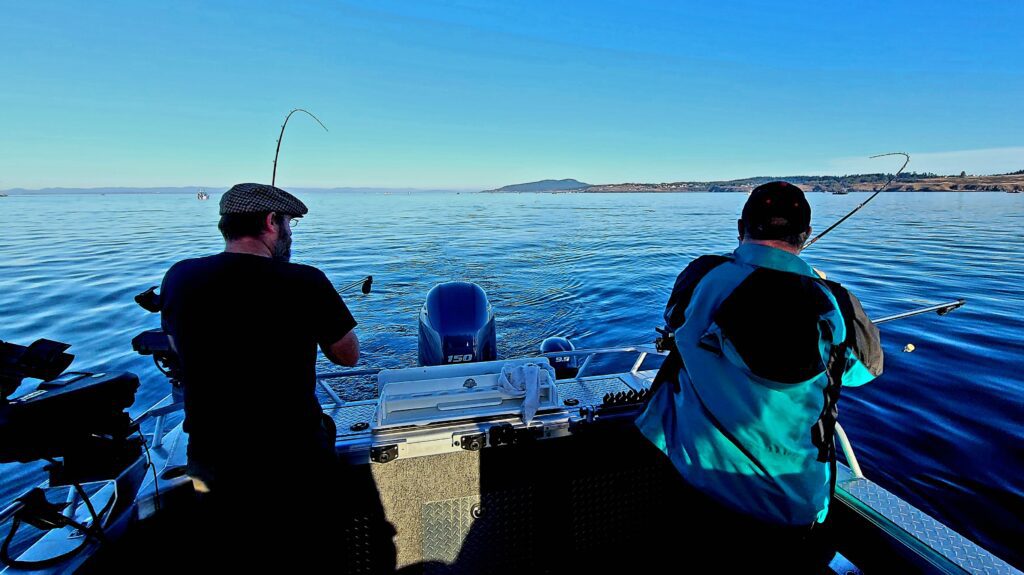
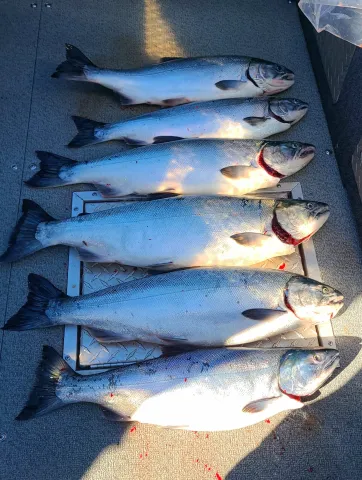
Running only two downriggers turned out to be a blessing because we were on fire. Every hookup turned into a double. Enjoying nonstop action, we had two people fighting fish and one on net duty (2 nets onboard) as we cycled through our rotation. When it was over we had lost about 10 or 12 fish, released a number of fat wild fish but still got easy limits of 8# - mid-teens coho.
It was a stellar day of coho fishing and other than some sore arms my guests had an absolute blast. It was one of the best coho days I have ever experienced. Although I was the skipper, I give credit for our success to a handful of diving birds sitting on a tide rip.
Although many coho are caught on the surface with a cut-plug herring or on trolling flies MA 7 coho are a downrigger show. While most days there is a butt crack of dawn surface bite and occasionally during the day you’ll get a fish with weight or a diver running at 33 pulls, downriggers are a must. Downriggers allow you to target feeding fish.
Regarding gear, probably not a popular opinion, but I think that MA 7 coho are brainless feeding machines. Once they move into the inner sound, they are more selective maybe even smart. In the straights, they focus on their next meal. We have caught coho that were either barfing up small herring or had a number of herring tails sticking out of their mouths, yet they had just snarfed down a hoochie/flasher rig.
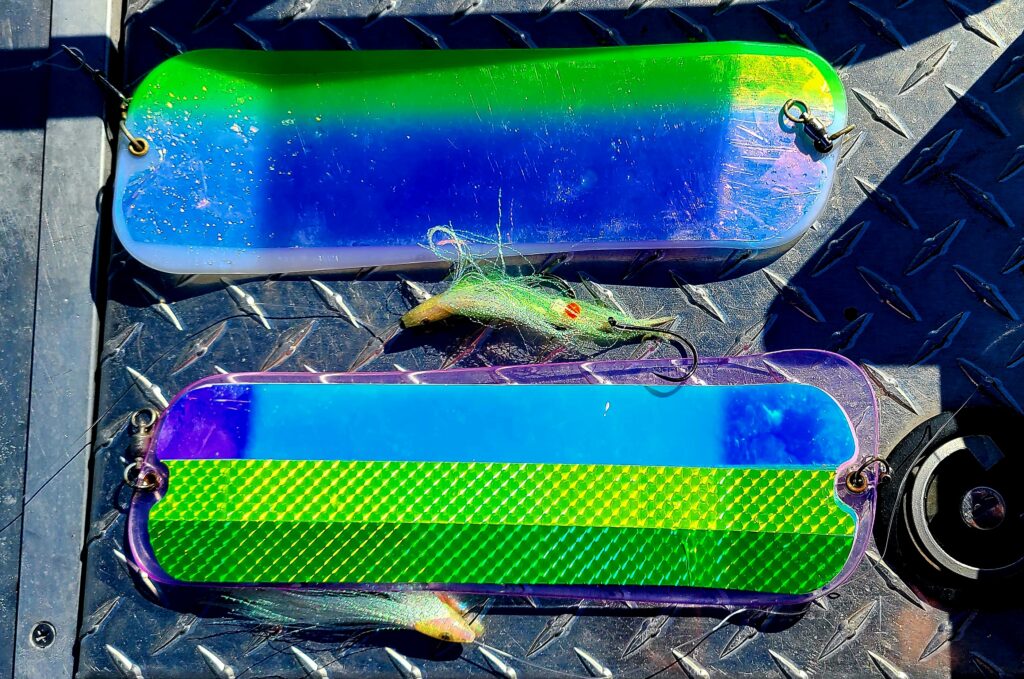
You can’t go wrong with a flasher/hoochie of a flasher/spoon combo. Some version of green or chartreuse would be my starting point but if presented correctly almost any color will work. Many other lures will work too. Consider an Old Goat Lure, a herring or anchovy in a helmet, hoochie/Wigglefin Action Disc combo or even a spinner/bait rig. While coho fishing I always run 11” flashers and the color will vary depending on what the fish want the day that I am fishing.
The day that I took my friends out we found huge schools of small bait so we sized our flies and spoons accordingly. We were running 32-34” of 30# fluorocarbon leaders with a 20’ setback from the clip. All our fish were caught with between 60’ and 140’ of cable out while trolling at 3.2-4.0 mph. The flies we were using were 2 barbless hook rigs and I tipped the lead hook with salted herring strips. The spoons were lathered up with either anchovy or herring goo and also ran on 32-34” leaders.
I want to address the MA 7 weather. I work 5 to 6 days a week on the water in MA 7. While working in the San Juans last year I encountered a significant squall line of thunderstorms. Basically, the weather went from summer boating weather to “what the heck” in minutes. It was windy, pouring icy rain/hail, and very dark. Then the thunder was relentless and deafening.
Coho season falls while our typical summer boating weather is transitioning to an unsettled weather pattern. Most of the time the sea conditions will be very pleasant. But be aware of and prepared for changing conditions. If the forecast is questionable don’t go, or at least proceed with caution. A 15-mph wind against a running tide can be uncomfortable or even dangerous.
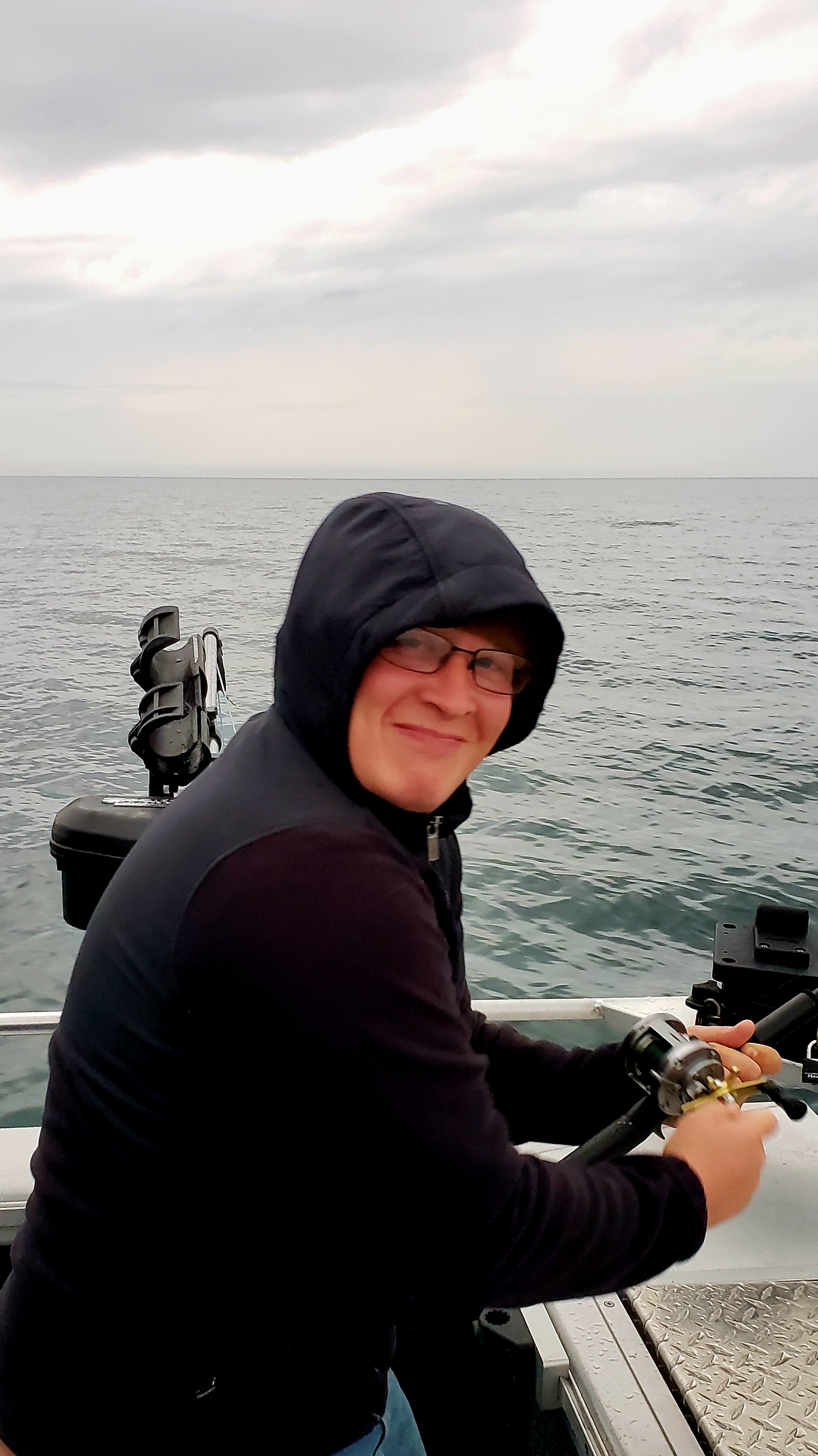
Especially as you depart/approach Deception Pass/Cornet Bay, a key launch area for MA 7 coho. Know the limits of both your boat and crew, and have properly fitting life vests for each person on board and the required safety equipment. Make sure that you have adequate fuel on board, with the longer runs to the fishing grounds and the potential for inclement weather this is not the fishery to play chicken with your fuel gauge. Always err on the cautious side.
Have a game plan for caring for your catch. It will be different for each skipper but have a fish bonker, a bleed bucket, or divers clip and ice available. Once you determine you have a legal fish in the net, stun it to prevent bruising. Then tear or cut a gill, bleed the fish, and get them on ice as soon as they are bled out. Coho are excellent table fare when properly cared for.
Good luck in your quest to catch a box full of San Juan fall coho. It is an ideal family fishery. They are relatively easy to find, usually hungry, and have some serious shoulders. Pack plenty of snacks (no bananas), watch the weather and think safety. Good times and you will find your freezer full of the other red meat, San Juan Islands coho!
/articles/other-red-meat
Bright Salmon on a Sandbar
An up-close epicurean angler perspective on the making of a Travel Channel special with Chef Andrew Zimmern.
It mattered to me. It mattered to Josh. It mattered to Andrew Zimmern, the host of Bizarre Foods on the Travel Channel.
On the Columbia, where the chinook blast upriver on swells of tide from the mouth of the river up past Washougal and then seek out the 12-16-foot deep travel corridors close to the banks, the hot salmon bite happens in the first hour.
It didn’t matter to the 17 other people on Zimmern’s crew.
Zimmern was following the Lewis & Clark trail with a perspective on the types of foods the explorers might have encountered. He chose September when the fall chinook salmon (also called king salmon) run is in full swing.
We started in the second hour, on a Tuesday in September, after camera operators, directors, drivers, handlers, drone techs, and a bodyguard were breakfasted, caffeine’d up, and constitutionalized.
Josh Cooper, stood, his hand on the tiller, his eyes on the water ahead. We idled away from the Rowena launch (Mayer State Park, west of The Dalles). Ahead of us, 64 other boats were on the fish. Rods bent and nets flashed as we took our place in the throng of watercraft.
Cooper, who makes his home in Vancouver, WA, our captain for the day, is one of the best anglers on the river. But sometimes that’s not enough. The bite was over when we dropped our baits.
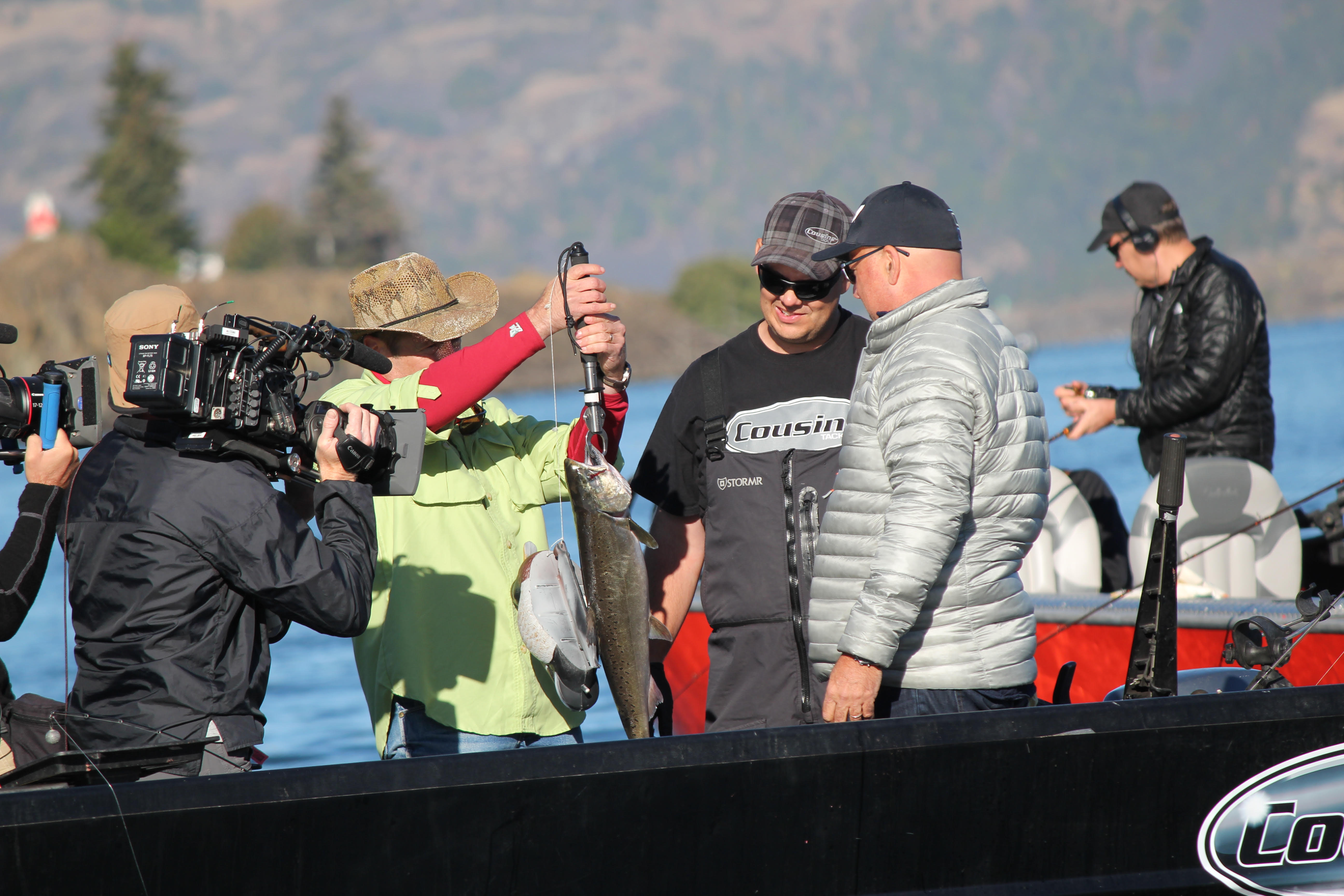
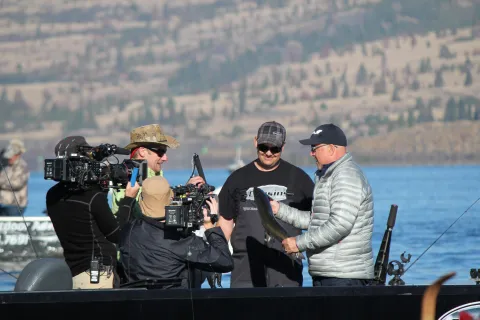
With us, on Josh's 26-foot Motion Marine Fishing Machine were two camera operators and a sound technician. A camera boat trailed in our wake with the director and additional camera operators. A drone operator and his team staged on the Washington side of the river near the mouth of the White Salmon. The bodyguard stayed on the beach.
Zimmern is no stranger to a fishing rod, but he hadn't fished for Columbia chinook before.
We showed him the baits, hoping he wouldn't gobble them or try to get us to eat them.
We call this hover-fishing when the fish stack two feet off the bottom and we drift our baits into a bio-mass of salmon, as drag-free as possible.
I looped a cluster of cured salmon roe and a sand shrimp tail on a blood-red Daiichi hook. We drizzled Pro-Cure Tuna on the potpourri in case our prospective salmon had cultivated palates.
To hover-fish, the procedure is to start at the top of holding water and run the boat a bit slower than the top currents, the baits "hovering" off the bottom.
Zimmern's rod had a Daiwa line-counter. Without digital advantage, I dropped the lead weight to the bottom and then cranked up two turns.
We tried to follow the contour of the river bottom. When it sloped up, we reeled up, when the water deepened, we dropped weights down to touch, then cranked up two turns.
Fish bit. They flared their gills, inhaled to sample the salmon eggs and shrimp then spit the baits.
Josh missed one. Andrew missed two and I missed a fish.
In the east, the sun climbed higher. Our chances diminished. A drone like an angel flew overhead and three hundred pairs of eyes on 65 boats looked to the heavens.
Then it happened! A fish bit and the hook stuck.
Andrew arced the spine of the rod against His Majesty, the king salmon. After a few tense minutes, a seven-pounder thrashed in the net.
I looked at it, pronounced it a female, and guessed Zimmern would try to spoon-feed us salmon eggs. With one in the boat, we motored away, back to the ramp where the crew had assembled a grill and Dutch ovens.
While a director in cowboy boots stalked up and down the beach, cigarette in and out of his mouth, eyes flicking from one element of the scene to another, Zimmern’s knives flashed. When I angled in to check on the ingredients, I saw prime red-fleshed steaks and two skeins of milt. Milt! Our fish was a male.
In a male salmon, the sperm we call milt lies in two foot-long rolls. About an inch in diameter, the texture of fresh liver, it is often discarded. It shouldn’t be.
On a sandbar on the big river that is the lifeline of The West, there is no better way to taste the elemental flavor of the salmon.
Roasted lemons, eggplant, and onions. Rice and a reduction. Zimmern wasted no motion.
Flames licked at the grill. Seasonings are seared into vegetables, salmon strips, and organs. In moments we held salmon bowls while the good smells wafted out to fishermen still angling for their limits of bright chinook.
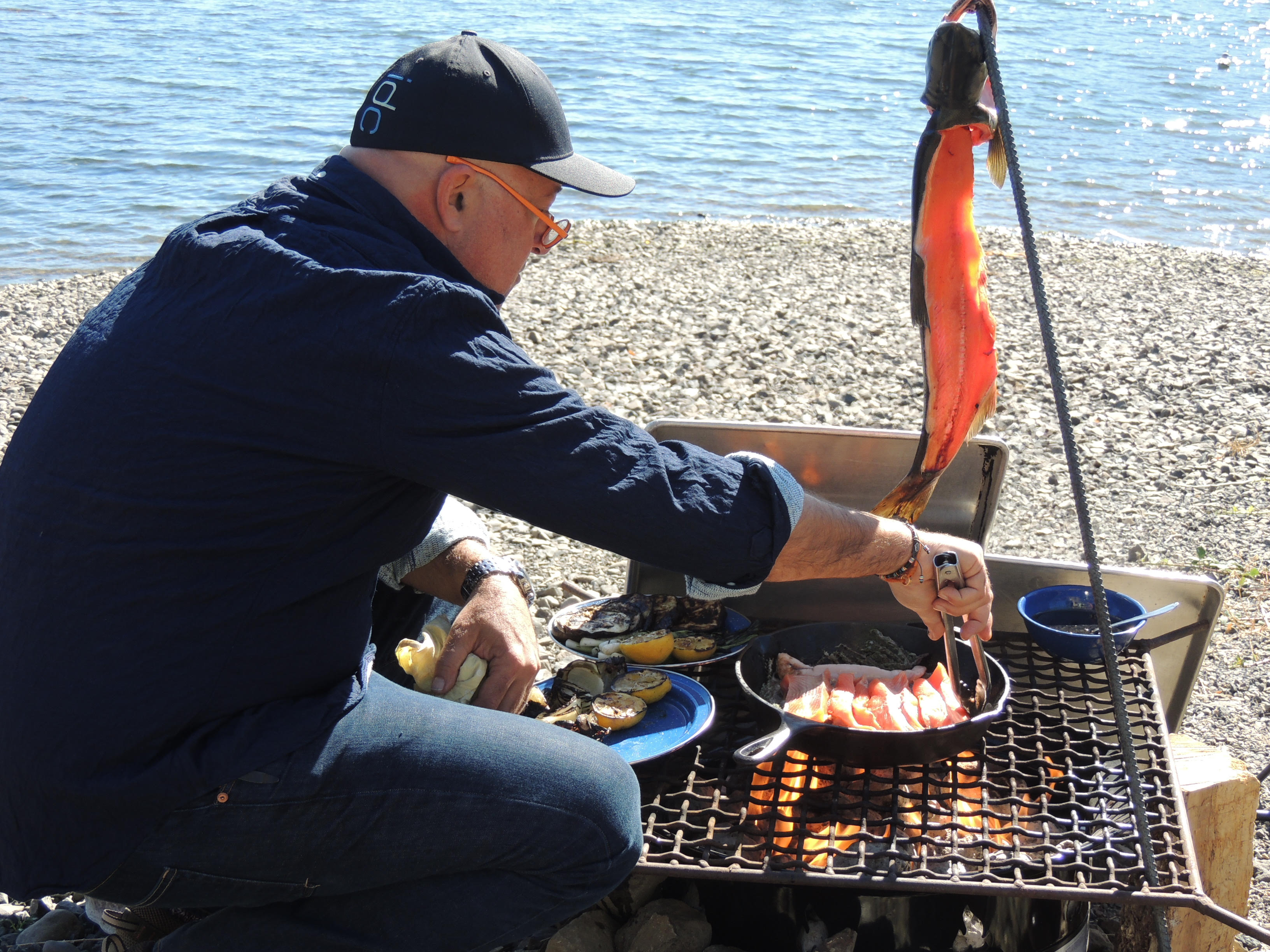
The best place to eat salmon is on a sandbar in September. We ate the strips of salmon with forks and fingers. We ate the milt and proclaimed it worthy. Milt and eggs. These are the building blocks of the protein that energizes the Columbia River. How does milt taste? It cooks up like a better version of tofu and it adds a certain something to a salmon bowl.
This was Zimmern's first time fishing for fall Chinook. While we labored for a bite we talked fly-fishing and grouse hunting. And it was a chance for me to get a glimpse into the machine that was a big Travel Channel production. At the heart of it all was a chef who was a risk taker, story-teller, all-showman, and a real sportsman.
# # #
For a copy of the Fishing Central Oregon book, send $29.99 to Gary Lewis Outdoors, PO Box 1364, Bend, OR 97709 To contact Gary Lewis, visit www.GaryLewisOutdoors.com
/articles/bright-salmon-sandbar
Fall Fishing At Potholes Reservoir
September and October are my favorite times of year and one of my favorite places to recreate is at Potholes Reservoir, located between Moses Lake and Othello in Eastern Washington. This is a large irrigation reservoir fed by Crab Creek, Lind Coulee as well as Winchester and Frenchman’s Wasteway. At full pool, the lake has 28,000 surface acres of water but after a long summer of dropping water the lake definitely “fishes smaller”.
While there is not as much water to fish, particularly back in the sand dunes area and Crab Creek, there is still plenty of lake to fish and at this time of year, the fish are biting as they beef up for the long winter ahead. Let’s run through some of the species you can fish for here and some effective ways to catch them:
BASS:
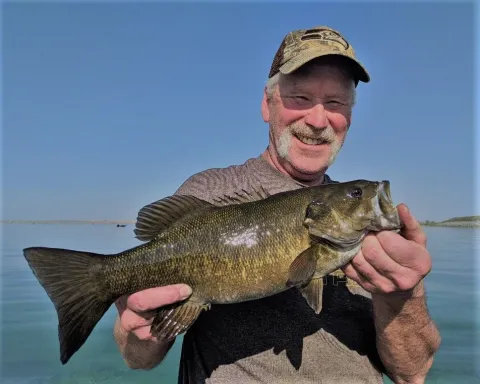
Bassmaster Magazine ranked Potholes Reservoir as the ninth-best bass fishing destination in the Western United States this year and for good reason. There is a healthy population of both largemouth and smallmouth bass in several age classes. The largemouth tend to be bigger, averaging two pounds and getting up to 7-plus pounds. At a typical bass tournament, you’ll need to have a five-fish bag weighing over twenty pounds for a chance to win. The smallmouth run a bit smaller, with one-pound fish being abundant. But I caught a 5.4-pound smallmouth here during September so big smallmouth are around.
At this time of year, the baitfish have moved out into the main lake, and so have the gamefish that are after them. Pete Fisher at the MarDon Resort Tackle Shop and the owner of Fisher Brothers Baits says fishing in front of the dunes on the main lake is the best place to go. The fish will be suspended around sandy humps and Pete says fishing a football head jig with a hula grub trailer is an effective way to catch these fish, which are primarily largemouth bass.
If you want to go after smallmouth bass head towards the face of O’Sullivan Dam or into Lind Coulee at the south end of the lake. Personally, I enjoy using deep diving crankbaits here this time of year which are effective for both bass and walleye. One of my favorite lures is a Berkley Digger crankbait, which dives to depths of 14 feet. When it comes to fishing near the dam, Pete Fisher likes to use perch colored ¾ ounce swimbaits or topwater plugs with white being a preferred color.
WALLEYE:
The walleye bite can be spectacular in the autumn months. These tasty fish tend to be found off the face of the sand dunes or the mouth of Crab Creek. As Nathan Lafrance says, “If you aren’t sure where to go, just look for the line of boats out there, easy to find.” As for how to catch them, Nathan recommends trolling diving crankbaits at a depth of 10 to 12 feet. Nathan says other lures to try are a jointed Berkley Flicker Shad #7 or a Bill Lewis Walleye Precise Walleye Lite crankbait.
PANFISH:
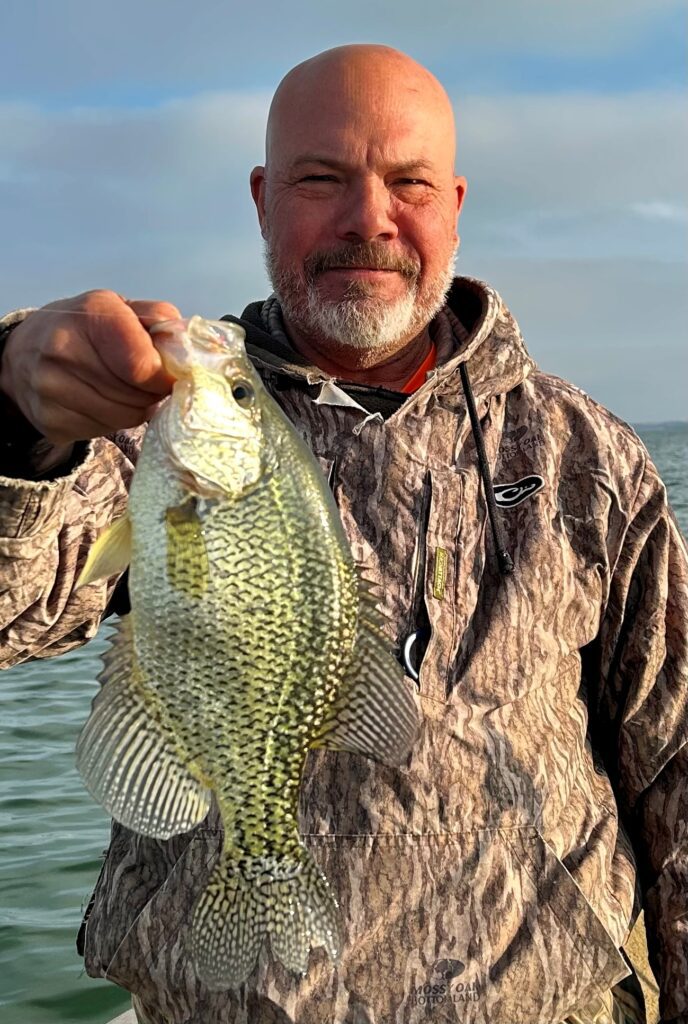
The autumn bite for panfish is excellent and sometimes overlooked by anglers targeting trout, bass and walleye. There is a combined limit for bluegill and crappie of 25 fish, and the crappie have to be at least nine inches long to keep. This regulation has helped turn the reservoir into a quality fishery and 15-inch crappie are relatively common. Last year, an angler reeled in a bluegill that weighed over 2.2 pounds, nearly beating the state record. The perch can also be sizeable here, reaching north of 14-inches in length.
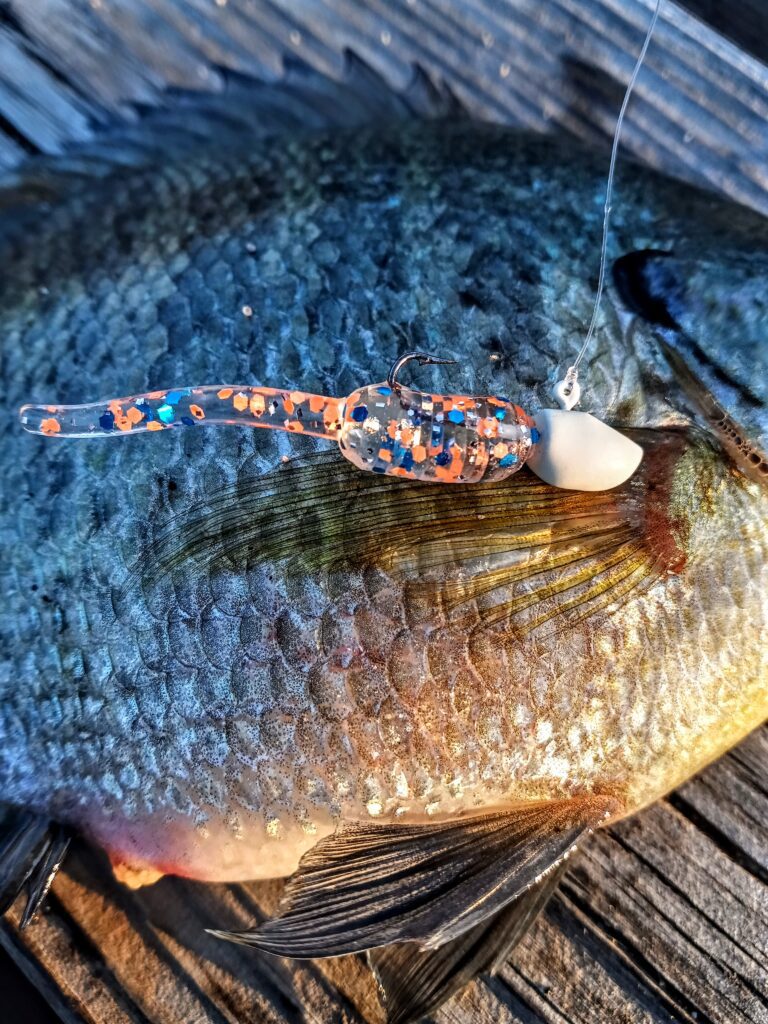
One person who really enjoys fishing for crappie is Pete Fisher. He has a couple of suggestions about where to find them and catch them. Pete says the crappie, like the bass, migrate out of the sand dunes in the late summer. During the autumn months they will be found at the face (or in front of) the sand dunes on the main lake. Fisher says you can cast or troll Berkley #5 Flicker Shads, especially in a Chrome Clown color pattern. Another way to catch crappie is to fish a small jig under a slip bobber after you find a school of these fish. Fisher prefers a white Bobby Garland shad or DS Fry soft plastic lure paired with a small 1/32 or 1/64th ounce jig head. If you do catch a bunch of panfish, you’ll be happy to know there is a fish cleaning station at both MarDon Resort and at Potholes State Park near the boat ramp.
TROUT:
The rainbow bite really turns on in the fall and the size of these fish are impressive. One to three-pound rainbows are commonplace and sometimes you’ll get them bigger than that. Nathan LaFrance suggests trolling Berkley Flicker Shads or longer minnow shaped crankbaits. As to where to find the trout, a couple of good places are off the mouth of Frenchman’s Wasteway or in the northeast corner of the lake near the mouth of Crab Creek.
RESOURCES:
If you are looking for a place to stay you can camp at Potholes State Park or MarDon Resort, which also has cabins and cottages for rent. The resort also has a tackle shop and The Beach House bar and restaurant. The Potholes Bar and Grill is another nearby restaurant that is close to the entrance of the state park.
If you have never fished or hunted Potholes Reservoir before, consider booking a “Cast & Blast” trip with Ross Outdoor Adventures. These trips are only offered in October. Shelby Ross and his guides know how to navigate the tricky channels leading into the sand dunes like the back of their hands. They will take you in before dawn, treat you to a fun duck hunt, and finish the hunt with duck poppers cooked up in the blind. After that you put away the shotguns and go trolling for walleye, usually picking up several other fish species along the way. It makes for a fun day and a great introduction to the fall hunting and fishing scene at this spectacular destination.
WEBSITES:
By John Kruse, host of Northwestern Outdoors and America Outdoors Radio
/articles/fall-fishing-potholes-reservoir
Pan Fishing 101
(Crappie and Bluegill Technique and Set Up)
Fishing for Crappie and Bluegill, often referred to as panfish, provides both novice and seasoned anglers with an exciting challenge and a delicious reward. These popular freshwater species can be found in lakes, rivers, and ponds across Washington State, making them accessible targets for anglers of all skill levels. So grab your tackle box, and join me as we explore the effective techniques and setups tailored specifically for crappie and bluegill fishing.
Understanding Crappie and Bluegill
Crappie:
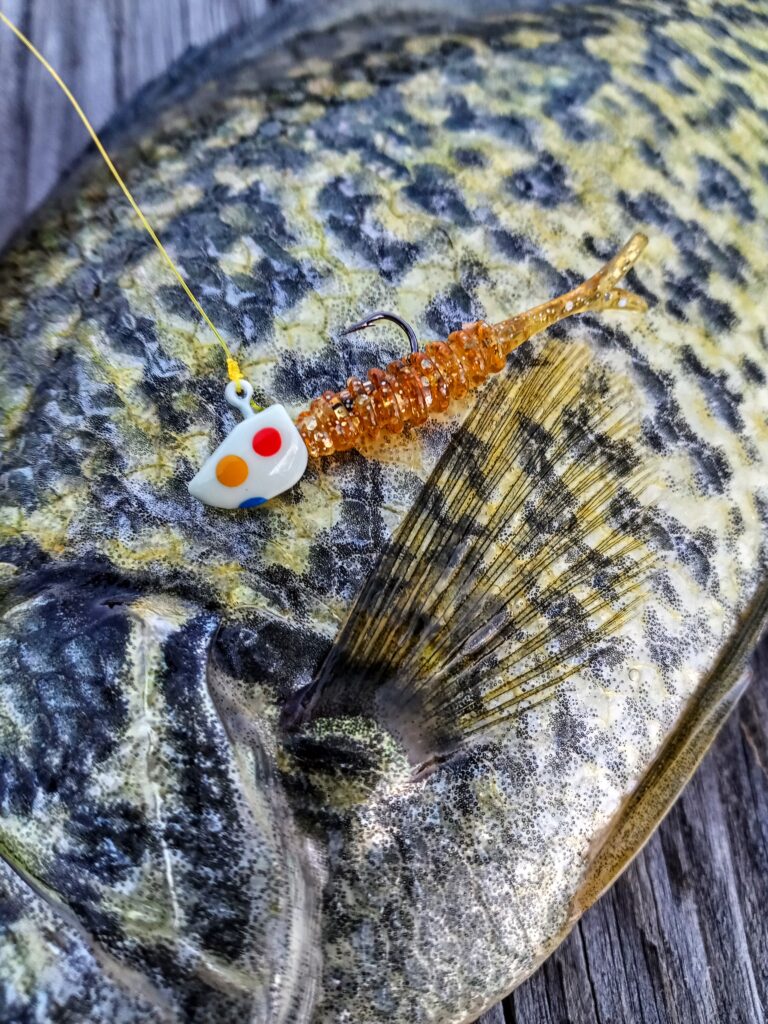
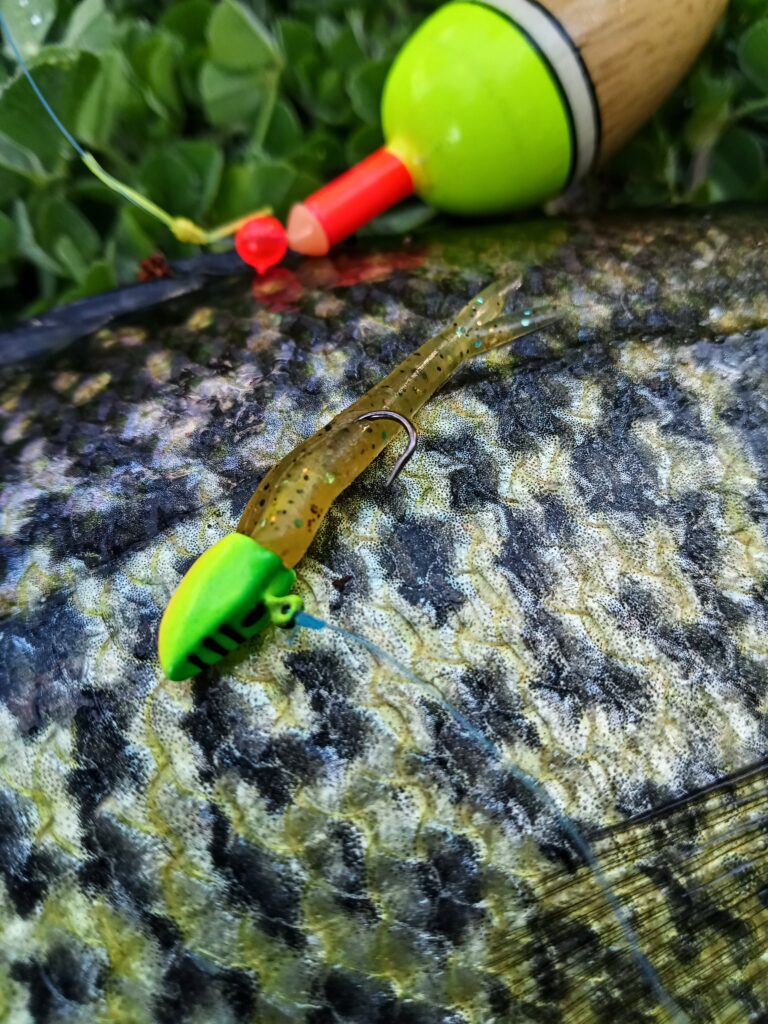
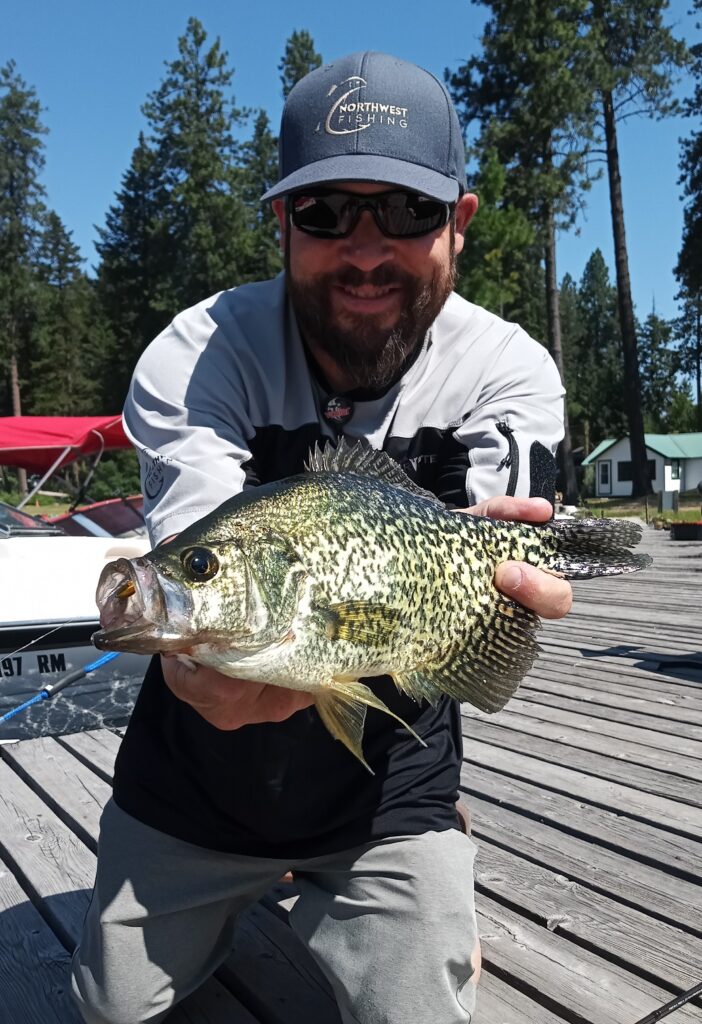
Crappie are highly sought after for this tasty white meat and can grow to impressive sizes with the white Crappie and the black Crappie being the most common species. They are known for their tendency to school around submerged structures such as trees, brush piles, and docks. If fishing from the boat, I'm typically a fan of casting small jigs, and bobbers around these structures searching for bites - and also using my electronics to tell me - what's below, and what are they schooled around? With fishing docks, I begin by jigging shallow and work my way deeper until I feel that “thump!” Usually, they are just suspended a few feet off the bottom below the docks, but at certain times of the day, they are just a foot below the docks, and hugging the boats making it a little tougher shooting your jig under them, trying not to spook em’.
Bluegill:
Bluegill is smaller than crappie but just as popular among anglers. They are characterized by their distinctive blue gill covers and can be found hanging out in shallow waters, around vegetation, and structures submerged in water. Bluegill are prolific breeders and often travel in schools, during their spawn, they will have a minefield of beds in the shallows as they become very aggressive in protecting their eggs. It's very fun targeting these, especially practicing catch and release. For many of us, the Bluegill was the first fish caught as a kid that sparked the interest.
Essential Equipment:
Rod and Reel:
For panfish, a light or ultra-light spinning rod and reel combo works best. This setup allows for casting bobbers and small baits accurately and provides the sensitivity needed to detect subtle bites.
Fishing Line:
Use light line, monofilament, or fluorocarbon. Typically in the 4-8lb range, as lighter lines allow for a better presentation of small baits and lures while maintaining enough strength to handle larger fish, I often choose monofilament in the 4-6lb test to allow a little stretch with my hook set, especially fishing crappie with their paper-thin mouths. (Hence the name “Lantern-mouths.”)
Terminal Tackle:
Small hooks such as a number of 6-10 for bluegill, and slightly larger for crappie 4-8, tipped with worms is the most simple way to approach these fish. Split shot weights and bobbers are another effective way to locate fish and to find the depth to adjust your bait too, keeping it in the strike zone.
Baits and Lures:
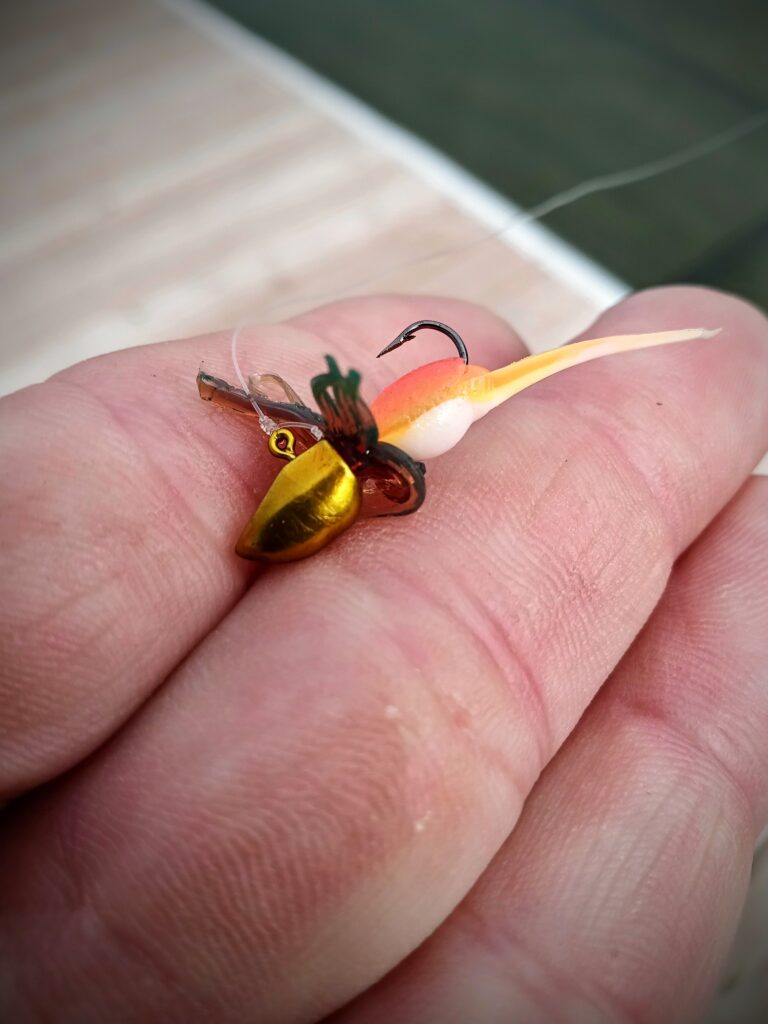
Though we can't use live bait, the most effective bait for both bluegill and crappie is a worm. Cured crickets and minnows work well, but you may have to work your bait more to attract the fish. When it comes to working your baits, we typically refer to artificial baits such as jigs, small crankbaits, spinners, and soft plastics like grubs. Soft plastics come in so many profiles, that you can define the bite with a minnow profile, to a buggy pattern.
Techniques For Crappie:
Vertical Jigging:
Drop a jig or your vertical presentation down near submerged structures, trees, and docks, areas where Crappie are likely to congregate. Use either slow retrieves after casting with an occasional twitch, or gentle jigging motions to act like a wounded, or swimming minnow to entice bites.
Fan Casting Bobbers:
Cast small bobbers around structure docks, brush piles, and/or just outside of major weedlines. I try to have at least 3 rods rigged up with my favorite bobbers, each at different lengths below the bobber to find the depth at the fish are suspended. Anywhere from 2-4 ft below the bobber is a good starting point. When you find the depth, stick to it, and if the bite dies down, continue to move until you get back to the school.
Dock Shooting:
Perfect for targeting Crappie hiding under docks. With a light jig or worm under a float, skip the bait under the docks and other overhead cover where Crappie lurk. I have a ton of success using this technique when I find the Crappie are sucked close to the bottom of boats in a marina.
Techniques For Bluegill:
Bobber Fishing:
Attach the small hook baited with the worm, and/or your favorite micro jig and plastic under the bobber and cast towards shoreline vegetation and those submerged structures. Slipping that bait even a foot or less directly under your float as you reel across the tops of their beds. Being able to adjust your float to the depth of the bait to find where the Bluegill are feeding is important.
Micro Jigging:
Very similar to jigging for crappie but with much smaller jigs and hooks, again casting and retrieving slowly varying the speed to find the most effective presentation, and jigging vertically with different cadences until you find what they want.
Micro Crankbait:
Yes, cranking for Bluegills. We have found much success fishing Micro Crank Baits such as the Z-Cranker from Eurotackle. Trolling right outside the weedlines adjacent from their beds, and they will smoke them baits as they are very aggressive during their spawn.
Tips For Success:
Location:
Use electronics and maps if possible to locate submerged structures, such as weed beds, drop-offs, brush piles, and sunken trees, where Crappies and Bluegills gather.
Time Of Day:
Early morning and late evening are prime times for Panfish, as they are active and feed in those low light conditions. We do find them of course throughout the day, but tend to have the hottest bites early and later.
Patience And Observation:
Panfish can be finicky. Be patient and pay attention to subtle bites or changes in bait behavior. They may want a micro Tungsten jig one morning, and the next they want a larger jigging spoon. Feeding habits can change by the hour too, so don't be afraid to even try beaded head flies.
Catch And Release:
Practice selective harvest and release larger breeding fish to sustain a healthy population. I always release any Bluegill over 9in, and release the majority of Crappie over 12in. Very rarely do I keep fish, but every now and then they are a good fish fry. (Please check regulations on your lake’s fishing)
Fishing for Crappies and Bluegill is not just about catching fish; it's about enjoying the outdoors and honing your skills, whether you prefer the challenge of targeting Crappies with jigs or the simplicity of bobber fishing for Bluegill, there's a technique that suits every anglers style. With the right equipment, techniques, and a bit of patience, you'll be well on your way to filling your cooler with these delectable freshwater treasures.
By mastering the techniques and setups, you'll enhance your Pan Fishing experience and increase your chances of success on your next fishing adventure. “I hope to see you out on the water!” - Eric Magnuson.
/articles/pan-fishing-101
PNW Sportsmen's Shows
Trade show season is here and calling all sportsmen and women. It is the time to ponder and think about what changes we will make to our game this year, and wonder at the opportunities to be had this coming season. Trade shows give us sportsmen an upfront and personal glance into new products, new technologies, current trends, seminars, show specials, fishing ponds, tackle talk, gear, guides, lodges, food, and even more. It’s worth getting out to a show near you. The NW is home to competitive sportsmen and women, and the NW Trade Show circuit comes out swinging, just like its sportsmen. This traveling circus changes from city to city, each attracting local vendors, manufacturers, NW brands, and national companies.
The NW trade shows are built upon this premise: To Educate, Equip, and Execute make the sportsman and the adventurer. The NW was built upon this premise. The shows encompass this.
What to expect:
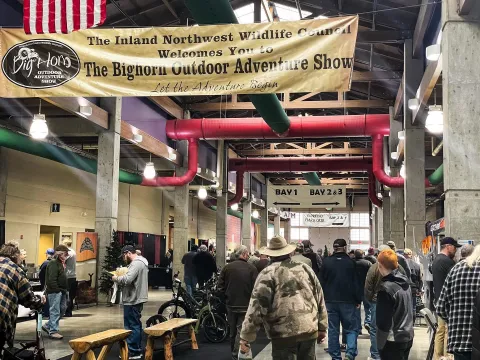
The Big Horn Show in Spokane is my favorite, and not just because it’s close to home. The Big Horn Show gets its name from its origin over 60 years ago, starting off as a competition for big game trophies using Boone and Crockett. It still brings in champion trophies, but alongside totes seminars, music, and some of the NW’s finest vendors and manufacturers. It’s a small city in a big town! Fly in! It's just a pond hop away. Proceeds go to INWC a 5013c.
Boise is home to Kyrptek. Making a presence with their camo apparel sale tent out front, Boise wears Kryptek proudly. They support the military and their local community. It’s Boy-see, not Boise, folks! Wear your boots! Buy a belt! It is also a pond hop away. Great access to the airport and nice hotels makes this a great weekend getaway. Buy luggage here to bring home your goods.
Tri Cities is sponsored by Griggs Ace Hardware! It’s a smaller show, but has all the fixings a show could offer.
Yakima! It’s not a big show and you will get to know people by the time you are through. It is a strong community. People here enjoy learning about new things going on in the industry, and I love that. The rifle range and the stories are prominent. The SunDome is fun, the people are friendly, and the tacos are muy bien. Bring the kids!
The Puyallup is a large show and brings in people far and wide: from Alaska to Nebraska, you will find it here. Stryker Rods comes in from Oregon, so pick up your NW manufactured rod while you have the chance. Buy an RV. Buy a boat. They have it in Puyallup. Book your hotel early for this one! Do the Puyallup!
Portland is the show that never ends. It goes on and on, my friends. Wear your Danner’s or your Nikes: you will get your steps in here. There is no sales tax in Oregon, so save 9% on top of the bargains already being offered. The beer flows in Portland, so be safe! Have fun! I wear my knife.
Wenatchee is home to Mack’s Lure. Go out and meet the legendary Bob Loomis and his younger self, Britton. Tell them Hillary sent you, and take a selfie! #NWFishing #MacksLure
The Big Sky Montana Sportsman’s Expo is here to stay. Can’t find their website? No worries! Check out their social media @montanasportsmansexpo. Big toys, big furniture, big EVERYTHING is in Montana. Bring a trailer. It’s worth the haul!
The BC Sportsman Show is just an hour and 45 minutes away from Everett. A lot is to be had in BC. Find a lodge and fisher’s package. Connect with hunters and outdoor adventurers. Meet manufacturers. Friends are to be made in BC and friends are to be kept, AYE? Buy a BOOT! Or a boat, it will be swell either way! Book a fishing charter for sure.
Redmond, Oregon. Don’t get this confused with Building 45 and the floating bridge. This is South. The traffic is much better, so hit the road and make the drive. Many people like to save on the sales tax in Oregon. The experience from vendors and guests is always the same, they say it is a great time. I have never been, but I trust Ed Iman, King of Walleye, when he tells me so.
If I missed any of your shows, please excuse me. I haven’t heard from you and can’t always be everywhere at one time. I would love to see what you are doing. Email NW Fishing!
Check your dates and pick your shows. Attending more than one is part of the fun! It’s a family and, like families, some family members won’t go to certain shows. You’ll see them at the next show, I bet.
Maybe I’ll see you there? Safe travels!
NW Trade Show Schedule
- Jan 27-29 Tri Cities Sportsmen’s Show-Pasco, WA
- Feb 1-5 Washington Sportsmen’s Show-Puyallup, WA
- Feb 15th-19th PNW Sportsmen’s Show- Portland OR
- Feb 24th -26th Wenatchee Valley Sportsmen’s show- Wenatchee, WA
- Feb 24th -26th Central Washington Sportsmen’s Show- Yakima WA
- Feb 24th-26th Montana Sportsman’s Expo-Kalispel MT
- March 2-5th Idaho Sportsmen’s Show- Boise, ID
- March 3rd-5th BC Sportsman’s Show-Abbotsford, BC
- March 9th-12th Central Oregon Sportsman’s Show- Redmond Oregon
- March 16-19th Big Horn Show- Spokane, WA
/articles/pnw-sportsmens-shows