Long Lake Walleye by Eric Magnuson
There are lakes you fish because they're close to home, and then there are lakes that become part of who you are. For me, that's Long Lake, known to some as Lake Spokane. Growing up on that lake, from the shores of my grandparents' place at Willow Bay, or at my favorite Aunt and Uncle's place just before Tum Tum. I have so many fond memories of this lake and how it's changed over time. Stretching nearly 24 miles, located northwest of Spokane, this reservoir has a personality that changes with every season. Some days it's calm and forgiving. Other days, it demands patience and humility. But one thing remains constant: the opportunity to catch incredible walleye if you're willing to learn the lake. Walleye aren't flashy fish. They don't explode on a topwater lure or leap skyward like a trout or bass. Instead, they reward anglers who pay attention to subtle details. That's exactly what keeps me coming back year after year.
Spring is when my anticipation begins to build. As water temperatures climb into the mid 40s and low 50s, walleye transition from spawning areas and begin feeding aggressively. I focus on rocky shorelines, gravel flats, and the mouths of smaller bays. Areas around Nine Mile Falls and just below, I focus on stretches with gradual drop-offs adjacent to gravel beds; this will often produce consistent action. Fish are usually holding in 8 to 20 feet of water, especially during low-light periods. This is a great time to take advantage of the night fishing near the Spokane House launch. Pulling crankbaits such as large Bandits really gets the big fish's attention. Typically, fish anywhere from 12'-17' feet directly in the rocks, making sure them Bandits are tickling them as you troll. You will lose lures, but the rewards are worth it. Just please be cautious of that stretch of river as there are plenty of boulders and good current. I have found 3' of water quickly in my Hewescraft, and it can get hairy.
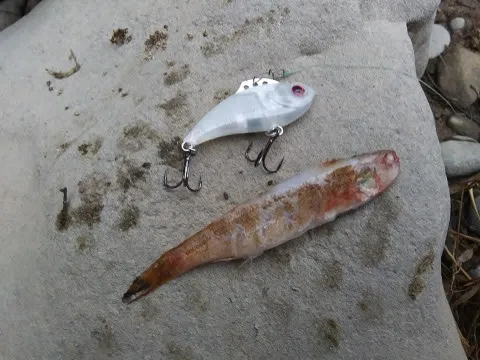
During spring, a jig tipped with a soft plastic paddle tail or curly-tail grub is also hard to beat. Natural colors like pearl, chartreuse, white, and motor oil consistently produce fish. Slowly hopping the jig along the bottom often triggers strikes. A live nightcrawler on a jig can make an already productive presentation even better when fish are less aggressive.
As spring gives way to summer, walleye begin following schools of baitfish toward deeper structure. Long tapering points, submerged humps, rock piles, and channel edges become prime real estate. Most fish settle into depths between 18 and 35 feet, although early mornings and evenings often pull them shallower to feed.
Summer is trolling season, and it's difficult to beat a well-presented bottom bouncer paired with a crawler harness. Smile blades in silver, gold, chartreuse, orange, and red finishes all have their moments depending on water clarity and sunlight. Keep your speed between .8 and 1.0 mph, making gentle turns to vary lure speed and trigger following fish. I really like to bottom bounce long sandy flats or gravel areas, finding a lot of these fish not too far from the main river channel.
Crankbaits also shine throughout the summer. Deep-diving models that imitate perch or juvenile trout can cover water efficiently. Productive colors often include firetiger during stained conditions and natural perch or silver patterns when the water is clear. If electronics reveal fish suspended over deeper water, trolling crankbaits slightly above them is often more productive than dragging lures directly through the school.
Fall is my favorite time on Long Lake. Boat traffic fades, temperatures cool, and the walleye feed heavily before winter. Fish move back toward shallower structure, often holding around rocky points, submerged rock piles, and weed edges in 10 to 25 feet of water.
This is when jigging becomes incredibly effective again. Sonic Baitfish, blade baits, jigging minnows, and traditional lead-head jigs all produce. Slow, deliberate movements often outperform aggressive retrieves as cooling water slows a walleye's metabolism. Every tap feels meaningful, and every fish seems a little heavier.
Many anglers put their boats away once winter arrives, but a few of us dedicated walleye fishermen know some of the year's best fishing is still ahead. Long Lake remains open year-round, and walleye continue feeding despite the cold water. They simply become more predictable.
Winter fish often concentrate along steep breaks and along the river channel around edges, and rocky structure in 20 to 40 feet of water I have found most success. Vertical jigging with SonicBaitfish, jigging soft plastics, or blade baits worked painfully slow can be incredibly productive. Patience becomes your greatest lure. Sometimes, a bait barely moving is exactly what a cold-water walleye wants. A presentation of a plastic that mimics a leech is deadly.
Throughout the year, electronics become one of your greatest tools. Modern sonar and forward-facing technology help identify baitfish, underwater structure, and subtle depth changes that often hold active fish. Still, technology only tells part of the story. Learning how wind pushes bait, how changing weather affects feeding windows, and how seasonal movements repeat themselves every year is what truly builds confidence on this lake.
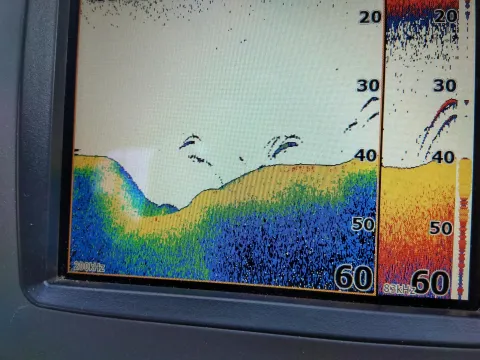
Long Lake is full of hidden rock piles, long underwater points, flooded timber, and contour changes that don't always appear obvious on the surface. Every trip reveals something new. Every missed fish teaches another lesson. That's part of its charm.
Walleye fishing isn't always about filling a livewell. It's about watching the sunrise paint the water gold, feeling that unmistakable thump on the end of your line, and knowing you earned it through patience and persistence. Long Lake has taught me that success isn't measured only by numbers but by time spent learning a place that never stops surprising you.
Every season tells a different story on Long Lake. Spring brings hope, summer rewards consistency, fall offers excitement, and winter reminds us that the best anglers are often the ones willing to fish when everyone else has gone home. That's why this lake keeps calling me back—and why I know it always will.
And for my last cast, always be aware of the winter water levels. Not every winter is necessarily fishable, depending on the levels. And check regulations before heading out, as Long has separate rules from Roosevelt.
Reel In the Memories!
/articles/long-lake-walleye-eric-magnuson
Walleye Here and There by Mike Carey
After moving to Great Falls, Montana, I’ve been spending much of my time exploring the various fisheries in my new State. The past year, my focus shifted to one of my favorite fish to eat, good old “marble eyes”, AKA walleye. It turns out that Montana isn’t just a trout state. The more I learned about Montana walleye, the more excited I became. While a walleye is a walleye and state borders don’t change that, I have noticed a few differences between fishing for walleye in Montana as compared to Washington.
I have many fond memories of fishing the Potholes, Banks Lake, and the Columbia River. All are beautiful destinations and hold healthy walleye populations. Over the years, I learned a lot about walleyes from Shelby Ross of Ross Outdoor Adventures. So, when I began exploring walleye fishing in Montana, I felt I had a pretty good idea of what I was doing. How pride goes before the fall!
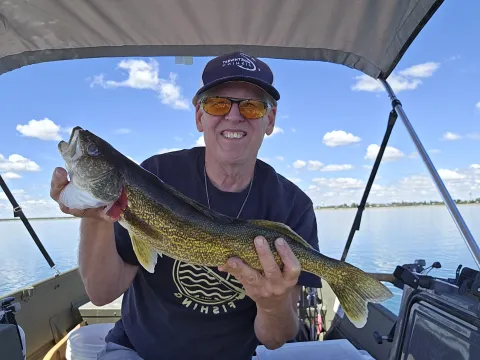
Walleye in Montana are… different. Underwater structure is different as well. While the Potholes in Washington features long stretches of submerged dunes that are made for trolling, reservoirs in Montana tend to be more vertical, with structures rapidly dropping off from shallow to deep water, and fewer long flats are present. And when you do find a flat area, it’s easier to find yourself dropping off from shallow to deep in a matter of seconds. Likewise, the Columbia River is significantly different from the Missouri River. Big, deep water vs. shallow water with distinct holes distinguishes the two rivers entirely different to approach and fish.
I’d read that the Missouri River was a challenge to unlock, and I found out just how true that was. One section below the Hauser Dam is prime trout water, with riffles, pockets, and runs that would make a line-flinger light up. And yet, walleye can be found in this very stretch of water, just waiting for someone to toss a plug their way. Go downriver farther to my neck of the woods, Cascade to Great Falls, and you’ll find deep holes of 15-20 feet and then stretches of sand bars waiting to trap an unsuspecting prop boater (best to have a jet boat in these waters). Farther down, as you reach Fort Benton and Loma and the river, free of dams until Fort Peck, reminds me of the Cowlitz River with fast runs, distinct tail-outs, and gorgeous pockets that just dry out “fish me!”
In other words, a walleye angler fishing the Missouri will need to be flexible with a number of different techniques. Bottom bouncing, jigs under floats, jigs with no floats, plugs, spinners, bait, no bait – whew! I’m going to need a bigger tackle box.
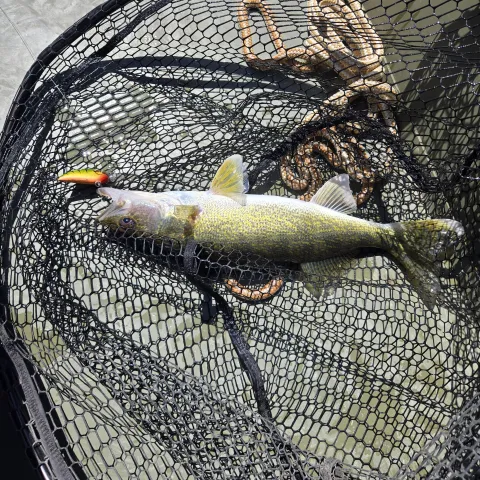
Meanwhile, in Montana, when we talk about lake fishing, we are often really talking reservoirs. A whole new set of challenges to learn. Yes, you can find nice flats to troll your bottom bouncers and diving plugs, but be ready for sudden and dramatic depth changes. These bodies of water have covered up river valleys and can reach depths of 120-200 feet in short order. In addition, you’ll find some very juicy bottom structure, underwater rocky humps that you’ll want to mark and come back to in your walleye search. Jig fishing these drops and humps is your best option here. Put away the trolling and use that spot lock anchor button and work these promising underwater drop-offs with a jig. Try tipping your jig with a minnow or a leech to entice even the stubbornest of walleyes.
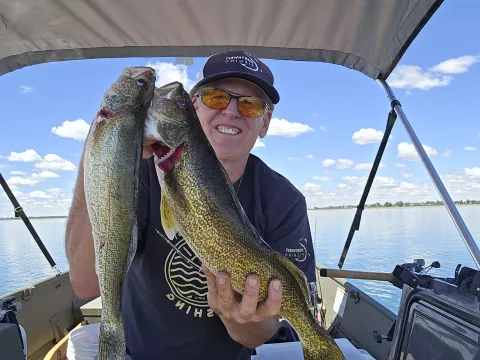
Something else I have noticed that is quite different between Washington and Montana walleye is growth characteristics. While Potholes and the Columbia are generally a numbers game, in Montana, my experience has been that quality and not quantity has been the norm. I can confidently say that every location I’ve fished for walleye has yielded not a limit of eaters, but rather, I tend to catch a couple of eaters and then a pig, 22-26”, fat, quality fish. Why this is so, I can’t say. Maybe less pressure and more feed allow for greater growth and more quality fish? Maybe pike keep the small fish in check? A recent trip I took to Nelson Reservoir yielded a dozen pike in the 28-33” range, and only four walleyes, one of which was a beautiful 23” specimen. Those pike must be feeding on something to produce so many big fish…
Montana has a healthy walleye fisheries program, and the hatchery at Fort Peck took 62 million eggs last year, enough to stock the needs of the entire state’s walleye fisheries. In addition, Montana Fish, Wildlife, and Parks (FWP) has introduced cisco, a herring-like forage fish for walleyes, into Fort Peck and Tiber reservoirs, resulting in an eye-popping winning weight of 143 pounds in the 2025 fishing derby at Tiber Reservoir.
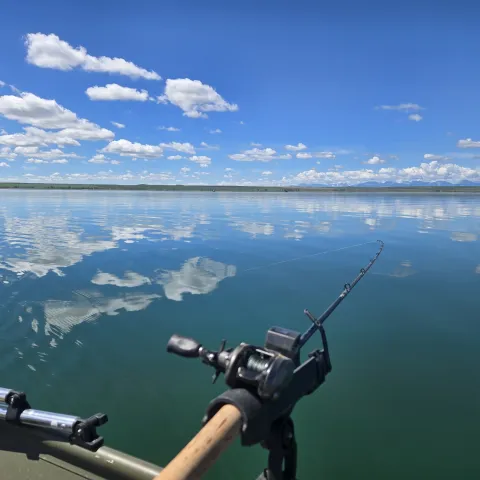
What isn't different between Washington and Montana walleye is the taste. Anglers can enjoy delicious fresh walleye year-round, either in open water or in the winter through the ice. Unfortunately, both states also share a common problem: contaminated waters. I strongly urge you to follow guidelines on fish consumption and limit the fish you keep to under 22". Doing so will reduce your risk of contamination from mercury and Per- and Polyfluoroalkyl Substances.
Stay safe and enjoy the incredible walleye fisheries each state has to offer!
/articles/walleye-here-and-there-mike-carey
Lake Roosevelt Walleye and Turkey Bonanza
Looking out over the field, darkness still obscured our vision. Out there beyond the field we set up in we could hear the rapid gurgling, gobbling sound made by male turkeys in their tree roosts. Daylight would be coming soon, but meanwhile, I couldn’t get the image from The Blair Witch Project out of my head. I subconsciously swiped at my nose, suppressing a cough, desperate to not make a sound.
Daylight would be coming soon and I didn’t want to be “the new guy” blowing our cover and scaring away our target. It was my first ever turkey hunt. Joining me, were Dave Mason of Toyota and Dan Gabriel of The General Store. Our host, Rick Wakefield, owner of Buck Canyon Lodge, had invited us on this Opening Day of turkey hunting to check out the fine hunting he offers guests on his lodge properties. It was part of a “Cast and Blast” adventure Northwest Fishing Reports were enjoying. The “cast” part of the trip were upper Lake Roosevelt walleyes with Lake Roosevelt Charters.
I had arrived late Friday evening after driving across the state from Redmond to the lodge, located near the town of Gifford. In normal conditions it would have been a not-too-bad five-hour drive, however, a traffic accident going over the pass had set me back a good hour and a half. I arrived tired but excited for what the weekend had in store. Meeting up with the NWFR crew Aaron Borg and Rob Holman, I crashed into my comfortable fleece-covered bed in anticipation of a leisurely 6:30 start time with guides Scott and Todd of Lake Roosevelt Charters. I was excited because of reports they had been posted about deep water jigging for walleye. The pictures of healthy catches of nice-sized eating walleye had my hopes up for bringing home plenty of one of the Pacific Northwest’s tastiest fish, the walleye.
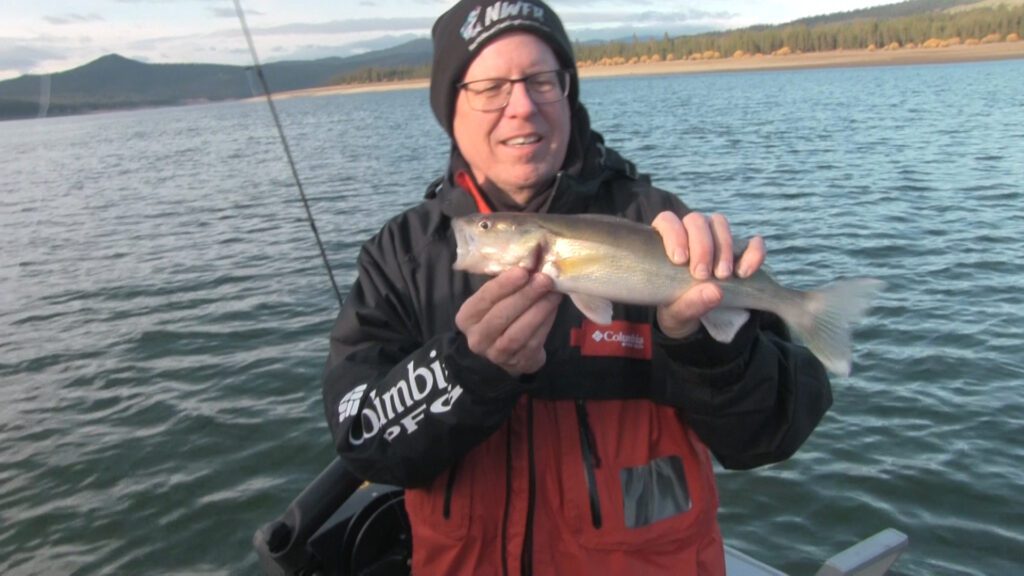
We met at the Hunters boat launch, which was high and dry, but still useable, if a little muddy. No matter, in short order we were off and cruising to a few preferred locations that Scott and Todd had been having success at.
I don’t know that Lake Roosevelt Charters were the first to deep jig for walleye, but I can say they were the first charter I’d ever seen promoting the fishery. I remember being instantly intrigued – jigging up walleye from 121-50 foot depths was so foreign to any other walleye technique I was familiar with that I just had to see and experience it for myself.
We pulled up to our first location and Todd handed out rods loaded with 20-pound Power Pro and one ounce, round jigs, To the jig he added a 4-5” curly tail plastic, and then a half a night crawler threaded several times with just a one inch tail sticking out. Again, very different from the traditional nightcrawler set up of a bottom walker and worm harness. Todd instructed us to let out our line until we made contact with the bottom.
“The trick to this fishery is you have to feel the “tap tap” of the jig as it bounces off the bottom. If you don’t feel that contact you aren’t fishing. Also, don’t make big jigging motions – 5-6” is plenty. The fish are deep and cold, they aren’t chasing after bait.”
I let my line out and at 120 feet could see the braid go slack. I closed the bale and reeled up the slack, starting gently upward motions of my rod tip, raising and lowering and being sure to keep in contact with the bottom. If I felt nothing I let out a little line until again making contact. I continued this technique for a few minutes and then felt the distinct tug and heaviness of a fish on the other end of my rod. Setting the hook, I reeled with steady pressure and soon enough brought up my first ever deep-water jigged walleye, a nice 15” “eater”.
Over the next two days the NWFR gang would catch a lot of these “eaters”. Looking over the vastness of this stretch of the upper Lake Roosevelt and seeing the low angling pressure, I was not surprised at the steady numbers we caught over the next two days. This fishery, while not untapped, is definitely under-utilized. The bites came pretty steadily throughout the day. As with most fishing, we had periods of fast fishing and then slow, but over-all it was pretty consistent. Along with the good numbers of fish we noted they are definitely smaller than what we have caught on the lower stretches of the Columbia River.
Our fish averaged mostly 13-15” with a few fish on either side of those sizes. Todd noted that there are big walleye to be had, but yes, the vast majority were these eater class fish. I’m OK with that – nice stringers of white-fleshed walleye are always welcome at my table! I did notice that the flesh of these upper Lake Roosevelt walleye are a whiter shade than fish we had been catching in the lower reaches of the Columbia.
When it comes to deep water jigging for walleye, wind is your enemy. Current is not an issue on this stretch of the Columbia, but wind will cause the boat to get pushed too fast and, just like salt water jigging, you’ll lose contact with the bottom. When this happens you’ll find yourself letting out more and more line in an attempt to maintain bottom contact. It’s time like this where a good captain knows ways to increase your chance for success.
Captain Scott deployed two large sea anchors, instantly slowing our drift down to a manageable speed. Another strategy is to find shallower water to jig in. Having a bow mounted trolling motor will also serve you well when the wind starts up. Finally, although there aren’t a lot of spots to get entirely out of the wind, guys who fish these waters a lot know the winds and places to move to when the winds do come up. Just one more reason for considering a guide the first time you fish these waters.
We fished until around noon, at which points the winds from the front blowing through made it too tough to fish effectively anymore. It was a decent enough morning. We were looking at around a dozen fish in the boat, and many lost as well. When you’re fishing at 120 feet deep it’s essential to keep a steady pressure on the fish, even with barbed hooks. Fortunately there is another common trait of the winds in this area – they tend to die off later in the afternoon. Scott and Todd were more than happy to bring us in and take us out after a couple hours siesta time. So after getting a power nap we were back out again, fishing from 4-7pm. This bite was actually better than the morning bite – don’t put your gear away! In short, there are fish to be had throughout the day if you’re willing to be flexible.
Darkness slowly gave way to dawn and the gobbling reached ever higher intensities. Soon we heard the first “whoosh” of a bird flying over our blind. Rick quietly announced – "the birds are starting to come off the trees where they roost. It won’t be long now. Get ready!”
I was anxiously anticipating my first opportunity at a turkey. Dave and Dan were old hands at tom hunting and they had given me a primer on Tom Hunting 101 Essentials. I knew the shot I needed to make was a head or neck shot. Hitting the body of a turkey is a low proposition shot. The feathers are thick and hard and act like armor making a “head shot” almost essential. My hunting skills thus far had been limited to pheasants and ducks – which in my experience were fairly easy to knock down, assuming I could hit them! But turkeys – head shots on a bobbing head? I was little intimidated…
“Toms coming from the right”. Rick’s whispered warning had me turning my head to the right and seeing – nothing. I turned and looked straight in front of me and there were three large toms strutting around the decoy Rick had set up. How did those large birds get there so quickly without me even seeing them?!?!?
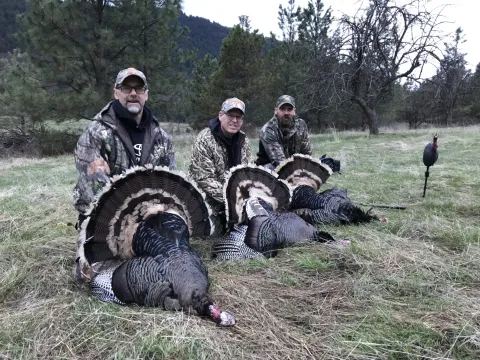
We three hunters slowly raised our guns to level, waiting for the three toms to separate enough that each of us had a clean shot at one bird. It seemed like forever as I hoped the birds wouldn’t startle and run off. Just then Rick gave the single to fire and in unison the three hunters let loose a booming volley of number 4 shot at each bird. It took a fraction of a second to travel the 15 yards to our targets and instantly two birds went down, and the third staggered, then rose into the air, flying over our blind. Three hunters, three shots, three birds! We came out of the blind and tracked down the third bird in the field behind us, around 30 yards away. Claiming this last bird we returned to the other two toms and admired our kills. The birds were all in the 25 pound range, gorgeous feathers and long beards. It was 6:30am and we were done for the day, with plenty of time to go back to the launch and get in more walleye fishing!
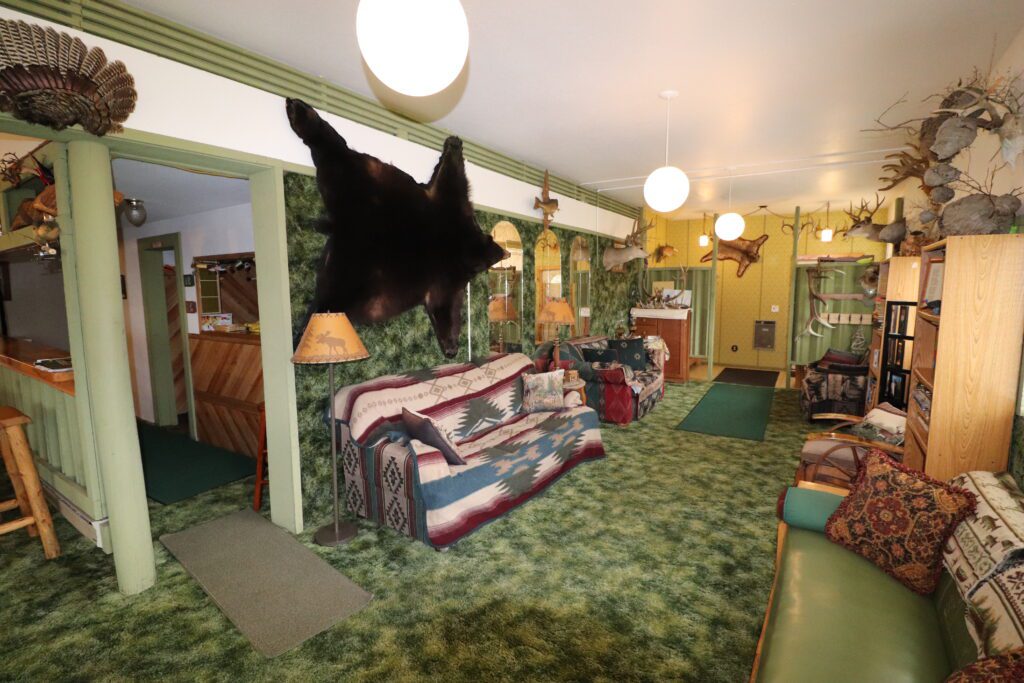
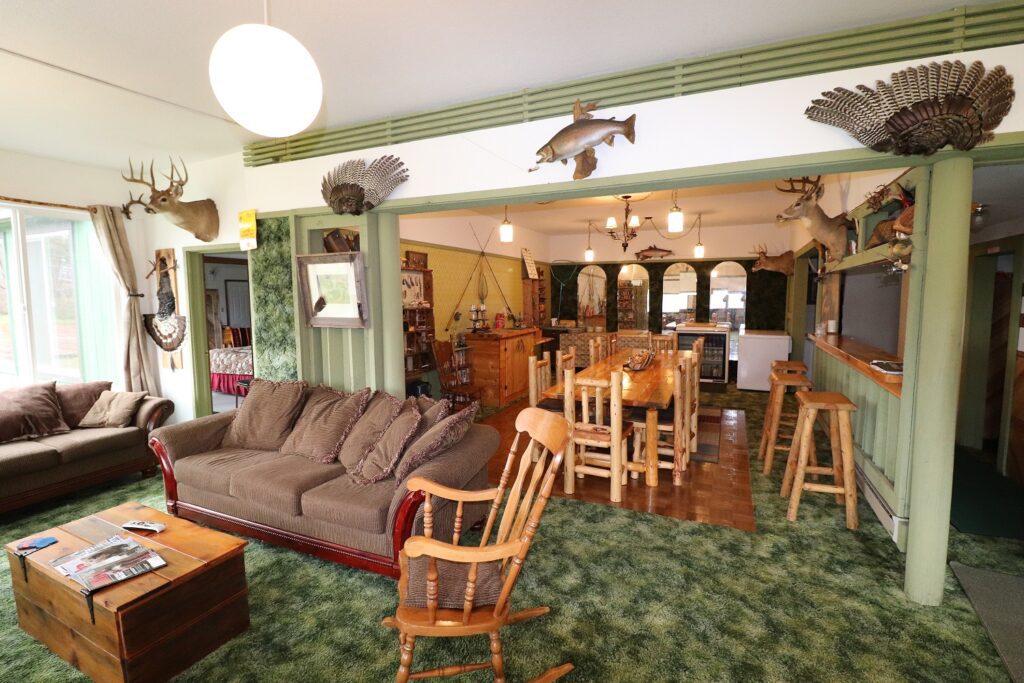
If you’re looking for a unique “Cast and Blast” adventure the spring turkey hunting and walleye fishing on Lake Roosevelt are not to be missed. Buck Canyon Lodge is the perfect base camp to take off on your adventures. Hosts Rick and Wendy Wakefield have a beautiful lodge and offer full amenities including provided meals. Rick does guided turkey hunts for guests, or, if you’re not a hunter, stay at the Lodge and get in on the great walleye fishing with Lake Roosevelt Charters. Either way (or both) way you go you’re guaranteed to have a wonderful adventure. The countryside is spectacular, wooded hills and breathtaking vistas great you at every bend in the road. It’s truly a unique experience you’ll remember for the rest of your life!
Visit Buck Canyon Lodge at Buck Canyon Lodge LLC or call 509-722-3949. Lake Roosevelt Charters web site is Lake Roosevelt Charters or call 509-722-3880.
/articles/lake-roosevelt-walleye-and-turkey-bonanza
Fall Fishing At Potholes Reservoir
September and October are my favorite times of year and one of my favorite places to recreate is at Potholes Reservoir, located between Moses Lake and Othello in Eastern Washington. This is a large irrigation reservoir fed by Crab Creek, Lind Coulee as well as Winchester and Frenchman’s Wasteway. At full pool, the lake has 28,000 surface acres of water but after a long summer of dropping water the lake definitely “fishes smaller”.
While there is not as much water to fish, particularly back in the sand dunes area and Crab Creek, there is still plenty of lake to fish and at this time of year, the fish are biting as they beef up for the long winter ahead. Let’s run through some of the species you can fish for here and some effective ways to catch them:
BASS:
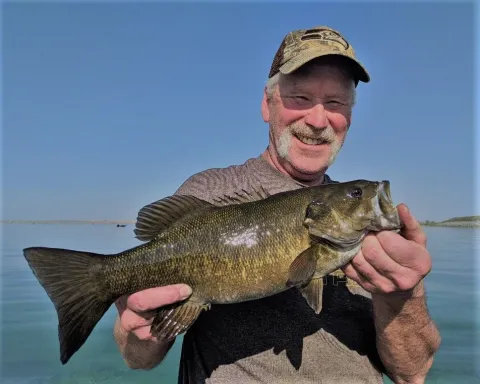
Bassmaster Magazine ranked Potholes Reservoir as the ninth-best bass fishing destination in the Western United States this year and for good reason. There is a healthy population of both largemouth and smallmouth bass in several age classes. The largemouth tend to be bigger, averaging two pounds and getting up to 7-plus pounds. At a typical bass tournament, you’ll need to have a five-fish bag weighing over twenty pounds for a chance to win. The smallmouth run a bit smaller, with one-pound fish being abundant. But I caught a 5.4-pound smallmouth here during September so big smallmouth are around.
At this time of year, the baitfish have moved out into the main lake, and so have the gamefish that are after them. Pete Fisher at the MarDon Resort Tackle Shop and the owner of Fisher Brothers Baits says fishing in front of the dunes on the main lake is the best place to go. The fish will be suspended around sandy humps and Pete says fishing a football head jig with a hula grub trailer is an effective way to catch these fish, which are primarily largemouth bass.
If you want to go after smallmouth bass head towards the face of O’Sullivan Dam or into Lind Coulee at the south end of the lake. Personally, I enjoy using deep diving crankbaits here this time of year which are effective for both bass and walleye. One of my favorite lures is a Berkley Digger crankbait, which dives to depths of 14 feet. When it comes to fishing near the dam, Pete Fisher likes to use perch colored ¾ ounce swimbaits or topwater plugs with white being a preferred color.
WALLEYE:
The walleye bite can be spectacular in the autumn months. These tasty fish tend to be found off the face of the sand dunes or the mouth of Crab Creek. As Nathan Lafrance says, “If you aren’t sure where to go, just look for the line of boats out there, easy to find.” As for how to catch them, Nathan recommends trolling diving crankbaits at a depth of 10 to 12 feet. Nathan says other lures to try are a jointed Berkley Flicker Shad #7 or a Bill Lewis Walleye Precise Walleye Lite crankbait.
PANFISH:
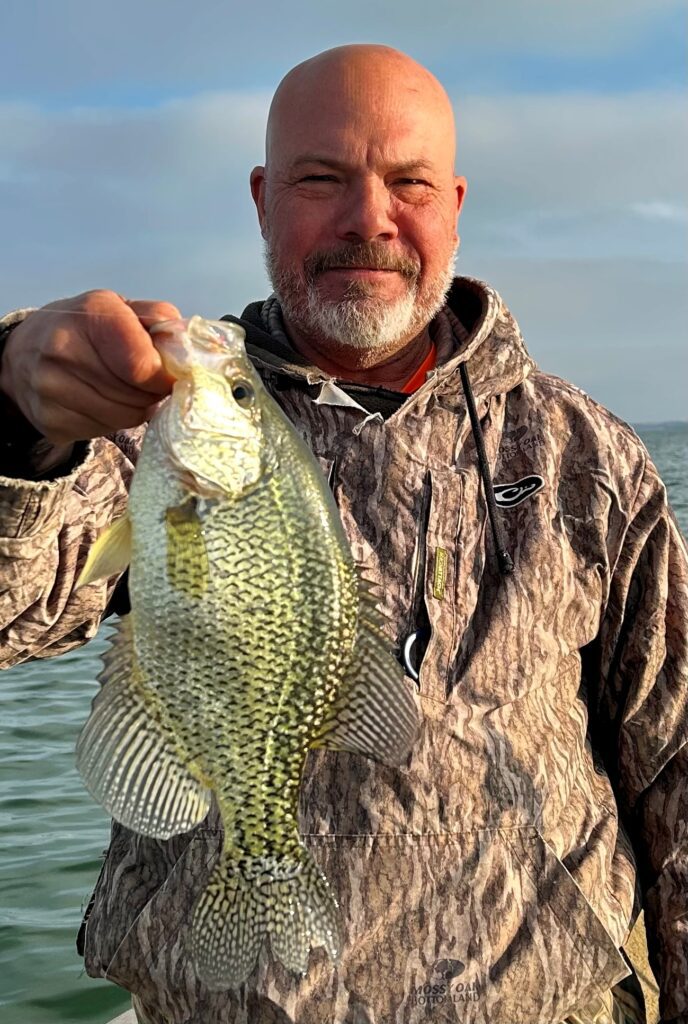
The autumn bite for panfish is excellent and sometimes overlooked by anglers targeting trout, bass and walleye. There is a combined limit for bluegill and crappie of 25 fish, and the crappie have to be at least nine inches long to keep. This regulation has helped turn the reservoir into a quality fishery and 15-inch crappie are relatively common. Last year, an angler reeled in a bluegill that weighed over 2.2 pounds, nearly beating the state record. The perch can also be sizeable here, reaching north of 14-inches in length.
One person who really enjoys fishing for crappie is Pete Fisher. He has a couple of suggestions about where to find them and catch them. Pete says the crappie, like the bass, migrate out of the sand dunes in the late summer. During the autumn months they will be found at the face (or in front of) the sand dunes on the main lake. Fisher says you can cast or troll Berkley #5 Flicker Shads, especially in a Chrome Clown color pattern. Another way to catch crappie is to fish a small jig under a slip bobber after you find a school of these fish. Fisher prefers a white Bobby Garland shad or DS Fry soft plastic lure paired with a small 1/32 or 1/64th ounce jig head. If you do catch a bunch of panfish, you’ll be happy to know there is a fish cleaning station at both MarDon Resort and at Potholes State Park near the boat ramp.
TROUT:
The rainbow bite really turns on in the fall and the size of these fish are impressive. One to three-pound rainbows are commonplace and sometimes you’ll get them bigger than that. Nathan LaFrance suggests trolling Berkley Flicker Shads or longer minnow shaped crankbaits. As to where to find the trout, a couple of good places are off the mouth of Frenchman’s Wasteway or in the northeast corner of the lake near the mouth of Crab Creek.
RESOURCES:
If you are looking for a place to stay you can camp at Potholes State Park or MarDon Resort, which also has cabins and cottages for rent. The resort also has a tackle shop and The Beach House bar and restaurant. The Potholes Bar and Grill is another nearby restaurant that is close to the entrance of the state park.
If you have never fished or hunted Potholes Reservoir before, consider booking a “Cast & Blast” trip with Ross Outdoor Adventures. These trips are only offered in October. Shelby Ross and his guides know how to navigate the tricky channels leading into the sand dunes like the back of their hands. They will take you in before dawn, treat you to a fun duck hunt, and finish the hunt with duck poppers cooked up in the blind. After that you put away the shotguns and go trolling for walleye, usually picking up several other fish species along the way. It makes for a fun day and a great introduction to the fall hunting and fishing scene at this spectacular destination.
WEBSITES:
By John Kruse, host of Northwestern Outdoors and America Outdoors Radio
/articles/fall-fishing-potholes-reservoir
FORT PECK RESERVOIR’S PLETHORA OF FISHERIES
Big lakes often mean big opportunities and Fort Peck Reservoir, located in Northeast Montana, qualifies in that regard. This huge impoundment of the Missouri River was formed when Fort Peck Dam was built in the 1930s. The lake is 134 miles long and with 1520 miles of shoreline, it is larger than the length of the California coast.
There are fifty different species of fish swimming in the waters of Fort Peck Reservoir, and one of the most important is the cisco, introduced as a forage fish for walleye and lake trout by Montana Fish Wildlife and Parks in 1984. The cisco population is thriving now and so are a variety of species that feed on them.
Today anglers flock to Fort Peck from spring into the fall for a variety of fisheries. The most popular of them being walleye, which can grow to a huge size here. Jason Mundel is a top walleye tournament angler in Montana who hauled in a 17.76-pound behemoth earlier this year, just missing the state record of 18.02 pounds. Mundel says he is certain the big female was over the limit when he netted it but when it was brought into the boat it began rapidly squirting eggs all over the place. By the time Mundel was able to weigh it and photograph the weight, it was down several ounces, to the still impressive weight of the big hen. He then released to finish spawning.
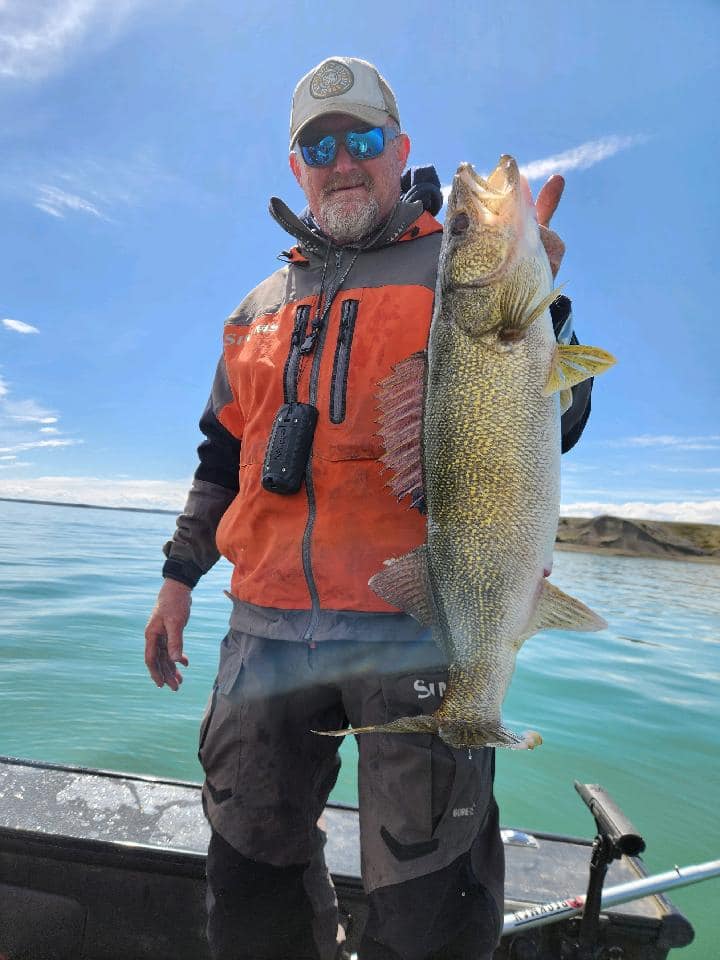
Mundel lives near Fort Peck and spends lots of time fishing in the reservoir (147 days last year). He likes to work long primary points and secondary points and uses sonar to find schools of Cisco. Once he finds the bait fish, he usually finds several different species in the same area feeding on them including walleye, northern pike, and smallmouth bass.
Mundel likes to cast paddle-tail jigs to the fish in the spring and will transition to trolling spinner worm harnesses behind bottom bouncers as the waters warm up over 55 degrees. The northern pike as well as the walleye are often caught with live bait. You are not allowed to use the ciscoes found in the lake for bait, but you can use fathead minnows, creek chubs, and shiners which he will simply fish in a dead-stick fashion, dropping them towards the bottom (but not on it) from the side of the boat. As spring turns to summer topwater baits can be very effective for both the smallmouth bass and pike.
Lake trout are another option. In the spring they will be found in relatively shallow water (15 – 20 feet deep) feeding on the ciscoes along with the bass, walleye, and pike. As the waters warm though, the Mackinaw head to deeper water. The Mackinaw run big here, up to 38-inches, according to Mundel.
In these deeper waters, you will also find Chinook salmon as well as coho salmon, all stocked in the lake from a hatchery below Fort Peck Dam. Mundel will troll using downriggers and flashers in front of his bait or lures to catch all three species.
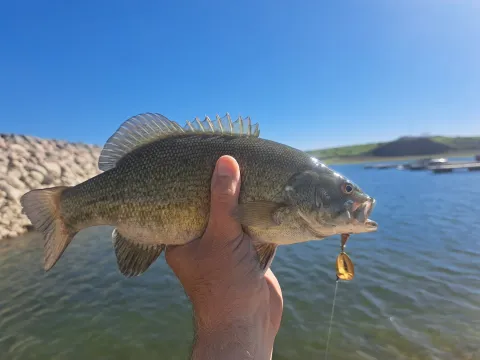
The salmon can get big here. The state record Chinook a 32-pound specimen, as well as the state record coho, a 4.88-pound salmon, both caught out of Fort Peck Reservoir. Speaking of state records, the current record smallmouth bass, sauger, saugeye, shortnose gar, and freshwater drum were also caught out of this big lake.
The primary access points for most anglers are near Fort Peck south of Glasgow which is almost all paved. Another option is Hell Creek Marina north of Jordan where you’ll travel 25 miles over gravel roads to get to the marina. There are campgrounds and boat launches at both locations. Additional access is available from Glasgow, Malta, and Highway 200 near Jordan though these roads can involve lengthy routes over gravel.
If you are looking for places to stay, eat, recreate and more in Montana’s Missouri River Country check out the local tourism bureau’s website at www.missouririvermt.com and be sure to ask for a free travel guide while you are there.
FORT PECK INTERPRETIVE CENTER
If you are fishing out of the Fort Peck area, you really need to make the time to visit the Fort Peck Interpretive Center. This first-class museum is operated by the U.S. Army Corps of Engineers and tells a variety of stories.
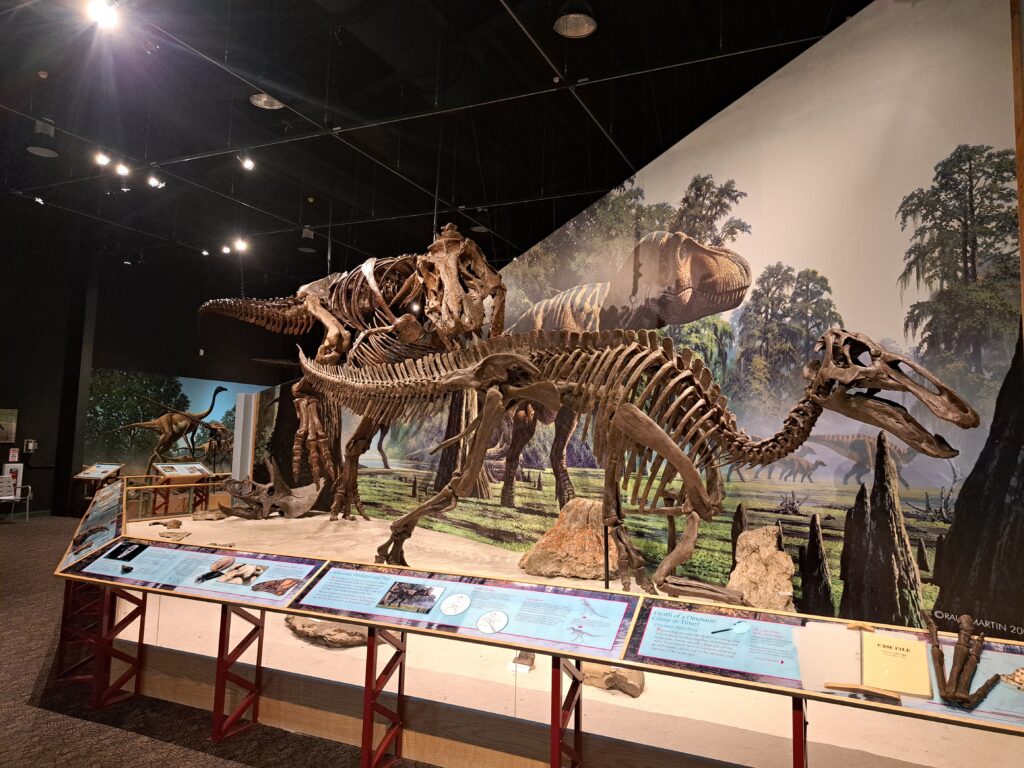
The biggest attraction is the story of the reptiles that lived here 65 million years ago. The Interpretive Center is part of Montana’s Dinosaur Trail. Two fossilized Tyrannosaurus Rex skeletons have been found near here. One is now on display at the Smithsonian Museum and the other can be seen at the Museum of the Rockies in Bozeman but replicas are on display here. Several other fossilized skeletons and replicas of dinosaurs and prehistoric marine reptiles can also be seen here.
The fish and wildlife found in and around Fort Peck Reservoir and the Missouri River are also on display. Fish can be seen in two large glass tanks and taxidermized animals can be viewed in an impressive diorama.
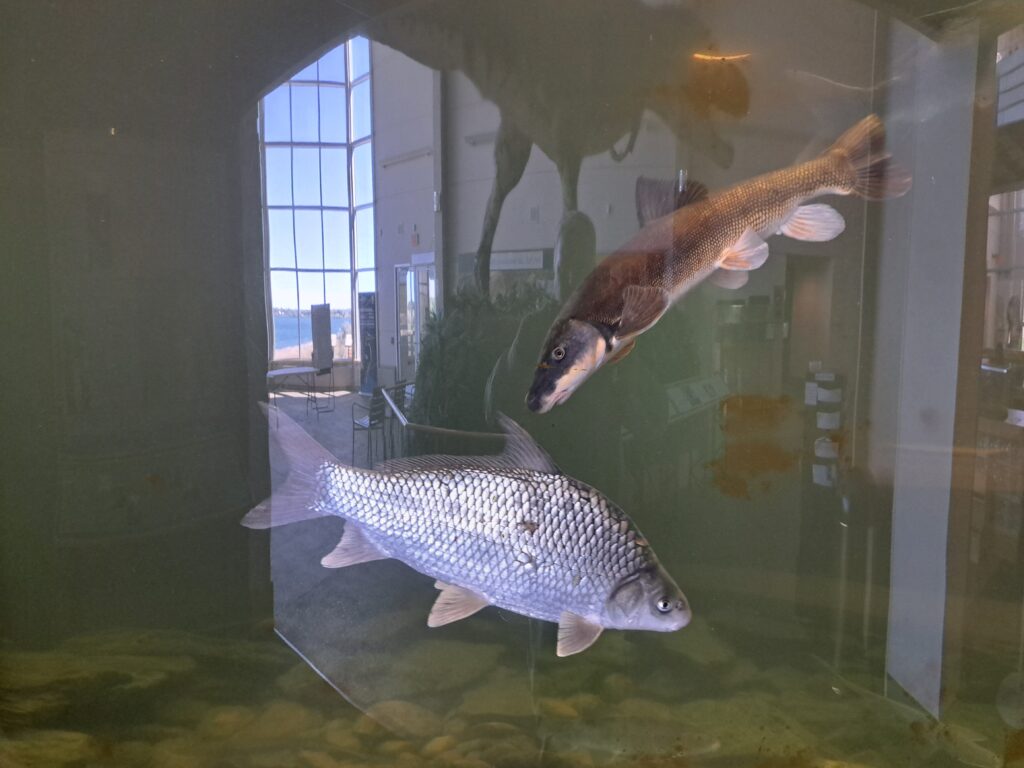
Finally, the Interpretive Center tells the story of how the dam, called the largest hydraulically filled earthen dam in the world, was built and how the community of Fort Peck came to be. The interpretive center is open from Thursday through Monday from 9 AM to 4 PM between Memorial Day and Labor Day weekend. There is also a nice campground and up to a two-mile-long nature trail adjacent to the Center.
John Kruse – www.northwesternoutdoors.com and www.americaoutdoorsradio.com
/articles/fort-peck-reservoirs-plethora-fisheries
Great Winter Fisheries East of the Cascades
LONG LAKE:
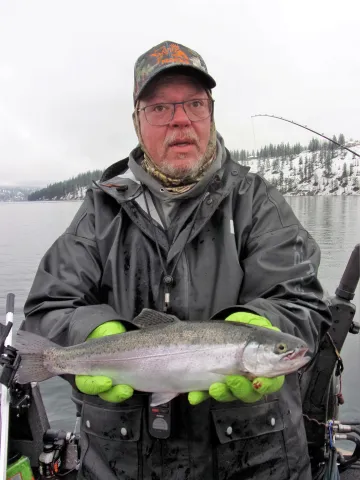
Located near Spokane, Long Lake kicks out good numbers of quality rainbow trout in November and December. The best fishing is found several miles up the lake from the main boat launch at the south end of this reservoir. Trolling Mack’s Lure Wedding Ring spinners is a good choice and orange is a great color. Dropping water levels in December often make the primary boat launch unusable so plan on fishing here sooner than later.
CURLEW LAKE:
Traditionally known as a summer destination for trout and the occasional tiger muskie, Curlew Lake is now known for its perch fishing. Perch are now the predominant species in this Ferry County lake and fishing for them in the winter, either through the ice or in open water, can reward you with quality fish averaging 9 to 11-inches in length.
LAKE ROOSEVELT:
This huge impoundment of the Columbia River offers excellent fishing for three species during the winter months. Walleye are often found biting near Kettle Falls and at the southern end of the Reservoir from Keller to Seven Bays you can find big rainbow trout and kokanee salmon that often weigh over two pounds. If you have never fished Lake Roosevelt in the winter before, consider booking a trip with a local guide and learn from a pro.
RUFUS WOODS RESERVOIR:
If you are looking for big trout, head to Rufus Woods Reservoir, an impoundment of the Columbia located between Grand Coulee Dam and Chief Joesph Dam. The best fishing is around the Nespelem net pens. You can fish from either the shore (An access fee is required) or from a boat. Jigs or dough baits both work well for trout that are measured in pounds, not inches. A Colville Tribal fishing permit is required to fish here. Looking for another option? Try fishing from shore just above Chief Joseph Dam. Anglers soaking bait from shore for trout can do quite well at times.
It's not just about trout at Rufus Woods Reservoir. There is an under-rated walleye fishery too which offers very good opportunities. The walleye here tend to be eater sized versus trophy sized and can be caught in the winter with blade baits or fishing nightcrawlers off the bottom.
MID-COLUMBIA RIVER:
Another great place for walleye during the winter is the mid Columbia River from The Dalles to the Tri-Cities. Unlike Rufus Woods Reservoir, you have a legitimate shot at big walleye in this stretch of the Columbia which has given up state records in both Washington and Oregon (20.3 pounds and 19 pounds, 15 ounces respectively). Try looking for walleye at least 30 feet deep and be prepared to go far deeper. Blade baits, jigs and slowly trolled spinner-worm harnesses behind a bottom bouncer weight all work. Wondering what color to use? Start with Chartreuse.
POTHOLES RESERVOIR:
Quality rainbow trout and walleye fishing is the name of the game here during the winter. Trout, averaging one to three pounds, can be caught either trolling or from shore at Frenchman’s Wasteway next to Potholes State Park or at Medicare Beach at the east end of this 27,000-acre reservoir. When it comes to the trout, fishing nightcrawlers (drifted or off the bottom) can be effective. If you are trolling, try a Berkley Flicker Shad, both #5 and #7 sizes work well. You can catch the walleye in the winter months in 20 to 50 feet of water with blade baits or vertical jigging spoons like a Mack’s Sonic Baitfish.
ROSES LAKE:
Last but not least, Roses Lake near Manson is a good place to go for rainbow trout and this lake typically gets a good stocking of catchable size rainbows in the fall. You can catch these fish in open water out of a small boat or from shore at the public access area on the south side of this small lake. Roses Lake is also a good destination for ice fishing too. Just make sure you are not the first person on the ice this season if you decide to venture out there!
John Kruse – www.northwesternoutdoors.com and www.americaoutdoorsradio.com
/articles/great-winter-fisheries-east-cascades
Looking Ahead to March Fishing
It’s hard to think of fishing for most of looking at iced in boat ramps and/or iced over lakes but the ice will likely thaw by the beginning of March and you’ll have some great opportunities for fishing when it does. Looking for some early-season trout and walleye ideas? Here’s a few for you:
LATE WINTER WALLEYE:
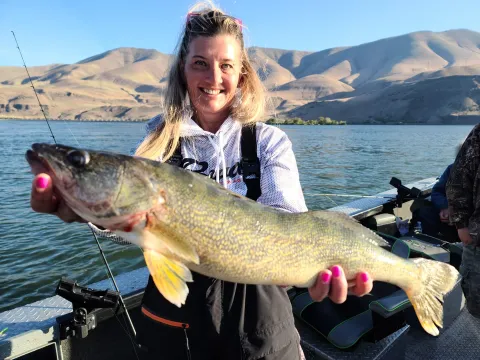
The Columbia River is the place to be in March for walleye as the big females get ready to spawn. In fact, this is the time of year to land a true trophy walleye. Traditionally, the bigger females have been targeted near the Tri-Cities but quality walleye can be found in The Dalles and John Day pools as well the Upper Columbia near Hydro Park in East Wenatchee, and in Rufus Woods Reservoir as well as the upper end of Lake Roosevelt.
When it comes to catching March walleye, try trolling a small spinner worm harness like a Mack’s Lure Slow Death Rig at a very slow speed (around 1 to 1.2 MPH). Once you find a school of fish you can jig for them. In addition to jigging for walleye with soft plastics on jig heads, you can also use metal blade baits or vertical jigs like a Mack’s Sonic Baitfish.
QUINCY LAKES TROUT FISHING:
The Quincy Lakes trout opener on March 1st is either a boom or a bust depending on the amount of ice remaining on this chain of lakes between Quincy and George which lie in a sizeable state wildlife area. The most popular lakes to fish are Quincy and Burke Lakes, which are both well-stocked with rainbow trout. There are also several small walk-in lakes southwest of these bodies of water that are stocked with smaller numbers of trout but which receive less pressure.
The opener often finds crowds of both day-anglers and overnight campers congregated close to the shore of the main two trout lakes, many of them in a festive mood, especially when early spring weather and sunshine is present. That isn’t always the case though, The Quincy Valley Chamber of Commerce, which has hosted an annual trout fishing derby with prizes for kids and adults in the first half of March, is hedging their bets this year (as to whether the lakes will be ice-free) and will wait until March 22nd and 23rd to hold their event at Burke and Quincy Lakes.
TUCANNON LAKES TROUT:
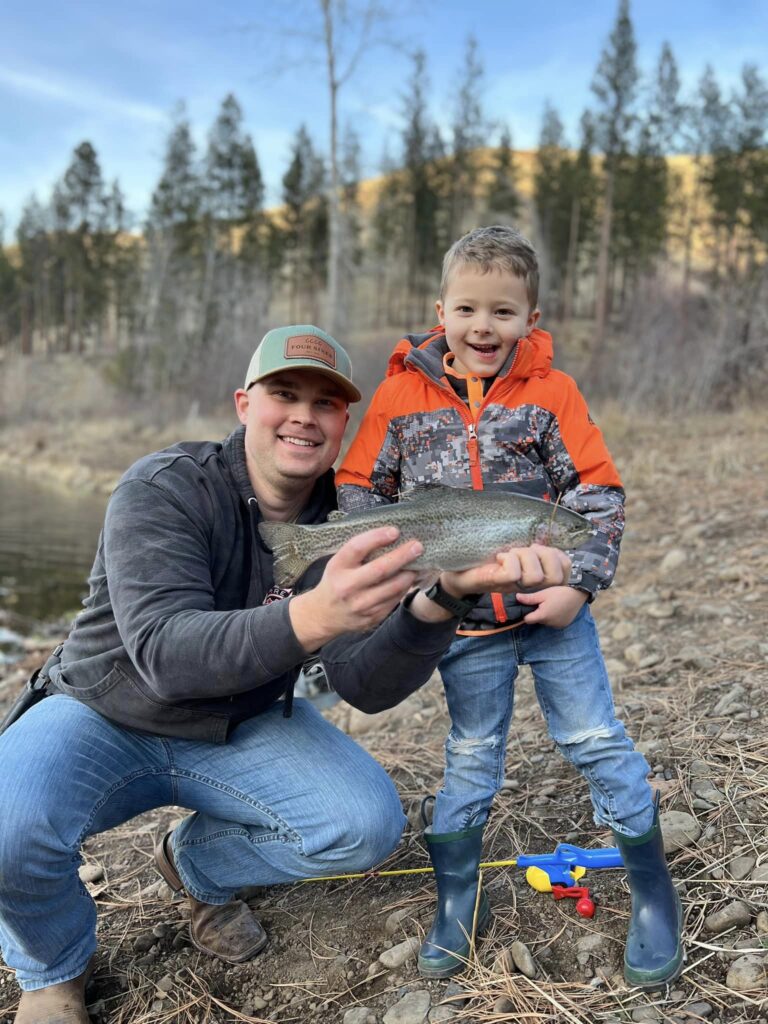
The Tucannon Lakes, nestled in the W.T. Wooten Wildlife Area and the Blue Mountains of Southeastern Washington, offer another March destination. Speaking with Kim Andersen at The Last RV Resort (the closest resort to these lakes), I learned two small lakes (Blue and Spring) are open all year and have historically received plants of 24,000 and 15,000 trout respectively.
Four additional lakes open on March 1st (Deer, Watson, Rainbow, and Big Four), though Anderson says since the area flooded a few years ago, Big Four Lake doesn’t really exist as such and should not be considered as a viable option. Asked which lakes fish best in early March, Anderson said Spring, Deer, Rainbow, and Watson Lakes all fish well when ice-free.
The Last RV Resort near Pomeroy has cabins, RV, and tent sites available along with a coffee bar. Anderson says they still have openings available for the popular March 1st opening day of trout fishing. www.thelastresortrv.com
LAKE LENORE TROUT:
If you are looking for some big trout to catch and release, consider a trip to the Columbia Basin north of Soap Lake and cast a line into Lake Lenore. You’ll find Lahontan cutthroat trout here, a species native to Nevada that was stocked in this very alkaline lake decades ago by WDFW. The trout commonly weigh two to three pounds but five to six-pound fish are not uncommon and there’s always the possibility of landing a ten-pound trout.
This was a very popular spring fishery in the 1990’s and early years of the 21st Century. Unfortunately, poaching efforts knocked down this fishery. Why anyone would want to take home fish that likely taste like soap, I do not know but enough people did that the fishing suffered.
Fortunately, the fish population has rebounded but despite that, the word hasn’t gotten out to most anglers and this place fishes under the radar. It is a selective fishery lake, where only single barbless hooks are allowed. If you are in a boat, you can only use an electric motor and your fishing net has to be knotless.
If you do decide to take a fish home you only get to take one and it must measure at least 18 inches long. There is plentiful shoreline access along the east side and at the north end of the lake though there are a couple of areas closed (marked by signage) by the inlet stream and irrigation pumping station towards the upper end.
Lake Lenore is a wonderful place to fish. The scenery of sagebrush and basalt cliffs is pleasant and the chorus of geese, ducks, chukar, and other wildlife add to the experience. The best times to fish Lake Lenore are in the spring (March and April) and again in the fall (late September through November).
In the spring, most of the trout are found at the northern end of the lake, cruising the shoreline in depths as shallow as three feet as they prepare to spawn. Fly fishing anglers target them from shore or float tubes and pontoon boats. The “go to” offering is a small black chironomid, fished under a strike indicator, in sizes 12 to 20.
Hardware anglers have success as well. You can use a spinner but you’ll likely be frustrated by all the grass floating in the water which limits the effectiveness of the spin itself. Instead, consider using a spoon. I’ve had good luck with Luhr Jensen Krocodile lures in 1/8th to ¼ ounce size. Hammered brass and orange as well as a frog-colored pattern have both worked well for me.
In the fall, the fish will be found further to the south, especially around the islands in the lake and casting or trolling for them from the boat can net you and your partner up to 35 fish a day if fortune smiles upon you. We’ll save that fall conversation for later though, because right now, it’s March and we’ve got fish to catch!
John Kruse – www.northwesternoutdoors.com and www.americaoutdoorsradio.com
/articles/looking-ahead-march-fishing