Long Lake Walleye by Eric Magnuson
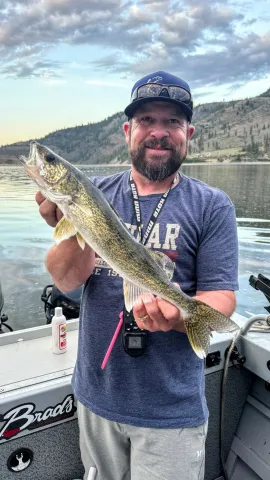
There are lakes you fish because they're close to home, and then there are lakes that become part of who you are. For me, that's Long Lake, known to some as Lake Spokane. Growing up on that lake, from the shores of my grandparents' place at Willow Bay, or at my favorite Aunt and Uncle's place just before Tum Tum. I have so many fond memories of this lake and how it's changed over time. Stretching nearly 24 miles, located northwest of Spokane, this reservoir has a personality that changes with every season. Some days it's calm and forgiving. Other days, it demands patience and humility. But one thing remains constant: the opportunity to catch incredible walleye if you're willing to learn the lake. Walleye aren't flashy fish. They don't explode on a topwater lure or leap skyward like a trout or bass. Instead, they reward anglers who pay attention to subtle details. That's exactly what keeps me coming back year after year.
Spring is when my anticipation begins to build. As water temperatures climb into the mid 40s and low 50s, walleye transition from spawning areas and begin feeding aggressively. I focus on rocky shorelines, gravel flats, and the mouths of smaller bays. Areas around Nine Mile Falls and just below, I focus on stretches with gradual drop-offs adjacent to gravel beds; this will often produce consistent action. Fish are usually holding in 8 to 20 feet of water, especially during low-light periods. This is a great time to take advantage of the night fishing near the Spokane House launch. Pulling crankbaits such as large Bandits really gets the big fish's attention. Typically, fish anywhere from 12'-17' feet directly in the rocks, making sure them Bandits are tickling them as you troll. You will lose lures, but the rewards are worth it. Just please be cautious of that stretch of river as there are plenty of boulders and good current. I have found 3' of water quickly in my Hewescraft, and it can get hairy.
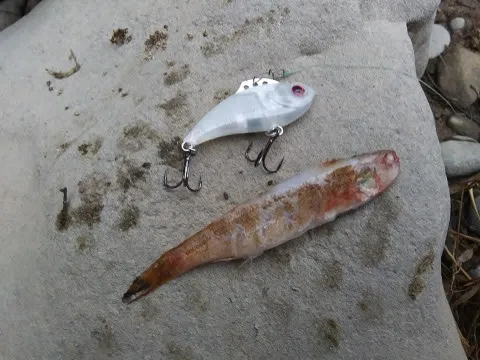
During spring, a jig tipped with a soft plastic paddle tail or curly-tail grub is also hard to beat. Natural colors like pearl, chartreuse, white, and motor oil consistently produce fish. Slowly hopping the jig along the bottom often triggers strikes. A live nightcrawler on a jig can make an already productive presentation even better when fish are less aggressive.
As spring gives way to summer, walleye begin following schools of baitfish toward deeper structure. Long tapering points, submerged humps, rock piles, and channel edges become prime real estate. Most fish settle into depths between 18 and 35 feet, although early mornings and evenings often pull them shallower to feed.
Summer is trolling season, and it's difficult to beat a well-presented bottom bouncer paired with a crawler harness. Smile blades in silver, gold, chartreuse, orange, and red finishes all have their moments depending on water clarity and sunlight. Keep your speed between .8 and 1.0 mph, making gentle turns to vary lure speed and trigger following fish. I really like to bottom bounce long sandy flats or gravel areas, finding a lot of these fish not too far from the main river channel.
Crankbaits also shine throughout the summer. Deep-diving models that imitate perch or juvenile trout can cover water efficiently. Productive colors often include firetiger during stained conditions and natural perch or silver patterns when the water is clear. If electronics reveal fish suspended over deeper water, trolling crankbaits slightly above them is often more productive than dragging lures directly through the school.
Fall is my favorite time on Long Lake. Boat traffic fades, temperatures cool, and the walleye feed heavily before winter. Fish move back toward shallower structure, often holding around rocky points, submerged rock piles, and weed edges in 10 to 25 feet of water.
This is when jigging becomes incredibly effective again. Sonic Baitfish, blade baits, jigging minnows, and traditional lead-head jigs all produce. Slow, deliberate movements often outperform aggressive retrieves as cooling water slows a walleye's metabolism. Every tap feels meaningful, and every fish seems a little heavier.
Many anglers put their boats away once winter arrives, but a few of us dedicated walleye fishermen know some of the year's best fishing is still ahead. Long Lake remains open year-round, and walleye continue feeding despite the cold water. They simply become more predictable.
Winter fish often concentrate along steep breaks and along the river channel around edges, and rocky structure in 20 to 40 feet of water I have found most success. Vertical jigging with SonicBaitfish, jigging soft plastics, or blade baits worked painfully slow can be incredibly productive. Patience becomes your greatest lure. Sometimes, a bait barely moving is exactly what a cold-water walleye wants. A presentation of a plastic that mimics a leech is deadly.
Throughout the year, electronics become one of your greatest tools. Modern sonar and forward-facing technology help identify baitfish, underwater structure, and subtle depth changes that often hold active fish. Still, technology only tells part of the story. Learning how wind pushes bait, how changing weather affects feeding windows, and how seasonal movements repeat themselves every year is what truly builds confidence on this lake.
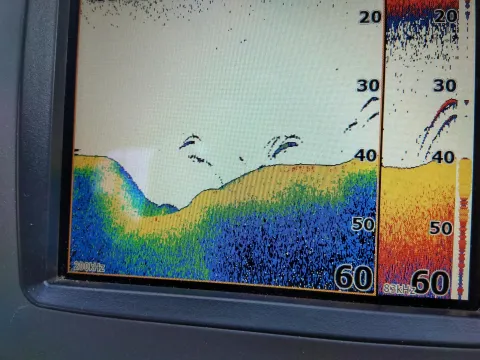
Long Lake is full of hidden rock piles, long underwater points, flooded timber, and contour changes that don't always appear obvious on the surface. Every trip reveals something new. Every missed fish teaches another lesson. That's part of its charm.
Walleye fishing isn't always about filling a livewell. It's about watching the sunrise paint the water gold, feeling that unmistakable thump on the end of your line, and knowing you earned it through patience and persistence. Long Lake has taught me that success isn't measured only by numbers but by time spent learning a place that never stops surprising you.
Every season tells a different story on Long Lake. Spring brings hope, summer rewards consistency, fall offers excitement, and winter reminds us that the best anglers are often the ones willing to fish when everyone else has gone home. That's why this lake keeps calling me back—and why I know it always will.
And for my last cast, always be aware of the winter water levels. Not every winter is necessarily fishable, depending on the levels. And check regulations before heading out, as Long has separate rules from Roosevelt.
Reel In the Memories!
/articles/long-lake-walleye-eric-magnuson
Walleye Here and There by Mike Carey
After moving to Great Falls, Montana, I’ve been spending much of my time exploring the various fisheries in my new State. The past year, my focus shifted to one of my favorite fish to eat, good old “marble eyes”, AKA walleye. It turns out that Montana isn’t just a trout state. The more I learned about Montana walleye, the more excited I became. While a walleye is a walleye and state borders don’t change that, I have noticed a few differences between fishing for walleye in Montana as compared to Washington.
I have many fond memories of fishing the Potholes, Banks Lake, and the Columbia River. All are beautiful destinations and hold healthy walleye populations. Over the years, I learned a lot about walleyes from Shelby Ross of Ross Outdoor Adventures. So, when I began exploring walleye fishing in Montana, I felt I had a pretty good idea of what I was doing. How pride goes before the fall!
Walleye in Montana are… different. Underwater structure is different as well. While the Potholes in Washington features long stretches of submerged dunes that are made for trolling, reservoirs in Montana tend to be more vertical, with structures rapidly dropping off from shallow to deep water, and fewer long flats are present. And when you do find a flat area, it’s easier to find yourself dropping off from shallow to deep in a matter of seconds. Likewise, the Columbia River is significantly different from the Missouri River. Big, deep water vs. shallow water with distinct holes distinguishes the two rivers entirely different to approach and fish.
I’d read that the Missouri River was a challenge to unlock, and I found out just how true that was. One section below the Hauser Dam is prime trout water, with riffles, pockets, and runs that would make a line-flinger light up. And yet, walleye can be found in this very stretch of water, just waiting for someone to toss a plug their way. Go downriver farther to my neck of the woods, Cascade to Great Falls, and you’ll find deep holes of 15-20 feet and then stretches of sand bars waiting to trap an unsuspecting prop boater (best to have a jet boat in these waters). Farther down, as you reach Fort Benton and Loma and the river, free of dams until Fort Peck, reminds me of the Cowlitz River with fast runs, distinct tail-outs, and gorgeous pockets that just dry out “fish me!”
In other words, a walleye angler fishing the Missouri will need to be flexible with a number of different techniques. Bottom bouncing, jigs under floats, jigs with no floats, plugs, spinners, bait, no bait – whew! I’m going to need a bigger tackle box.
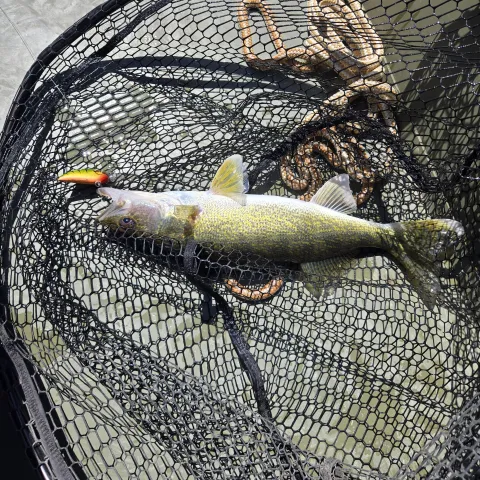
Meanwhile, in Montana, when we talk about lake fishing, we are often really talking reservoirs. A whole new set of challenges to learn. Yes, you can find nice flats to troll your bottom bouncers and diving plugs, but be ready for sudden and dramatic depth changes. These bodies of water have covered up river valleys and can reach depths of 120-200 feet in short order. In addition, you’ll find some very juicy bottom structure, underwater rocky humps that you’ll want to mark and come back to in your walleye search. Jig fishing these drops and humps is your best option here. Put away the trolling and use that spot lock anchor button and work these promising underwater drop-offs with a jig. Try tipping your jig with a minnow or a leech to entice even the stubbornest of walleyes.
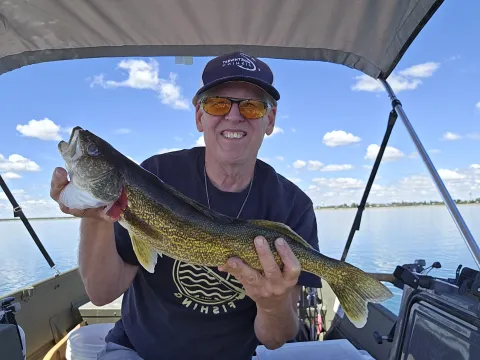
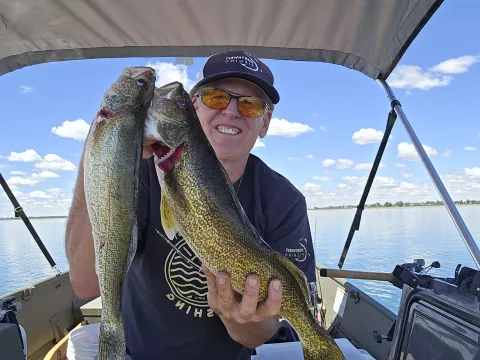
Something else I have noticed that is quite different between Washington and Montana walleye is growth characteristics. While Potholes and the Columbia are generally a numbers game, in Montana, my experience has been that quality and not quantity has been the norm. I can confidently say that every location I’ve fished for walleye has yielded not a limit of eaters, but rather, I tend to catch a couple of eaters and then a pig, 22-26”, fat, quality fish. Why this is so, I can’t say. Maybe less pressure and more feed allow for greater growth and more quality fish? Maybe pike keep the small fish in check? A recent trip I took to Nelson Reservoir yielded a dozen pike in the 28-33” range, and only four walleyes, one of which was a beautiful 23” specimen. Those pike must be feeding on something to produce so many big fish…
Montana has a healthy walleye fisheries program, and the hatchery at Fort Peck took 62 million eggs last year, enough to stock the needs of the entire state’s walleye fisheries. In addition, Montana Fish, Wildlife, and Parks (FWP) has introduced cisco, a herring-like forage fish for walleyes, into Fort Peck and Tiber reservoirs, resulting in an eye-popping winning weight of 143 pounds in the 2025 fishing derby at Tiber Reservoir.
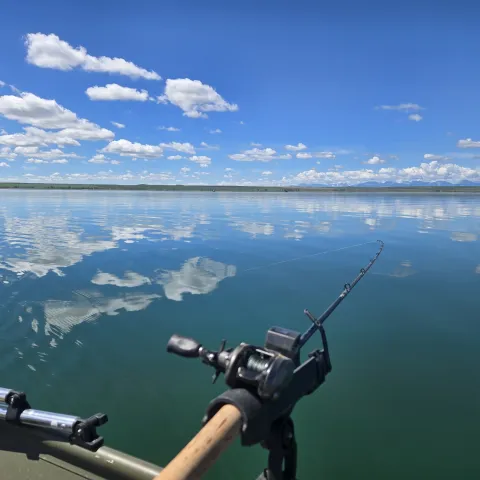
What isn't different between Washington and Montana walleye is the taste. Anglers can enjoy delicious fresh walleye year-round, either in open water or in the winter through the ice. Unfortunately, both states also share a common problem: contaminated waters. I strongly urge you to follow guidelines on fish consumption and limit the fish you keep to under 22". Doing so will reduce your risk of contamination from mercury and Per- and Polyfluoroalkyl Substances.
Stay safe and enjoy the incredible walleye fisheries each state has to offer!
/articles/walleye-here-and-there-mike-carey
FORT PECK RESERVOIR’S PLETHORA OF FISHERIES
Big lakes often mean big opportunities and Fort Peck Reservoir, located in Northeast Montana, qualifies in that regard. This huge impoundment of the Missouri River was formed when Fort Peck Dam was built in the 1930s. The lake is 134 miles long and with 1520 miles of shoreline, it is larger than the length of the California coast.
There are fifty different species of fish swimming in the waters of Fort Peck Reservoir, and one of the most important is the cisco, introduced as a forage fish for walleye and lake trout by Montana Fish Wildlife and Parks in 1984. The cisco population is thriving now and so are a variety of species that feed on them.
Today anglers flock to Fort Peck from spring into the fall for a variety of fisheries. The most popular of them being walleye, which can grow to a huge size here. Jason Mundel is a top walleye tournament angler in Montana who hauled in a 17.76-pound behemoth earlier this year, just missing the state record of 18.02 pounds. Mundel says he is certain the big female was over the limit when he netted it but when it was brought into the boat it began rapidly squirting eggs all over the place. By the time Mundel was able to weigh it and photograph the weight, it was down several ounces, to the still impressive weight of the big hen. He then released to finish spawning.
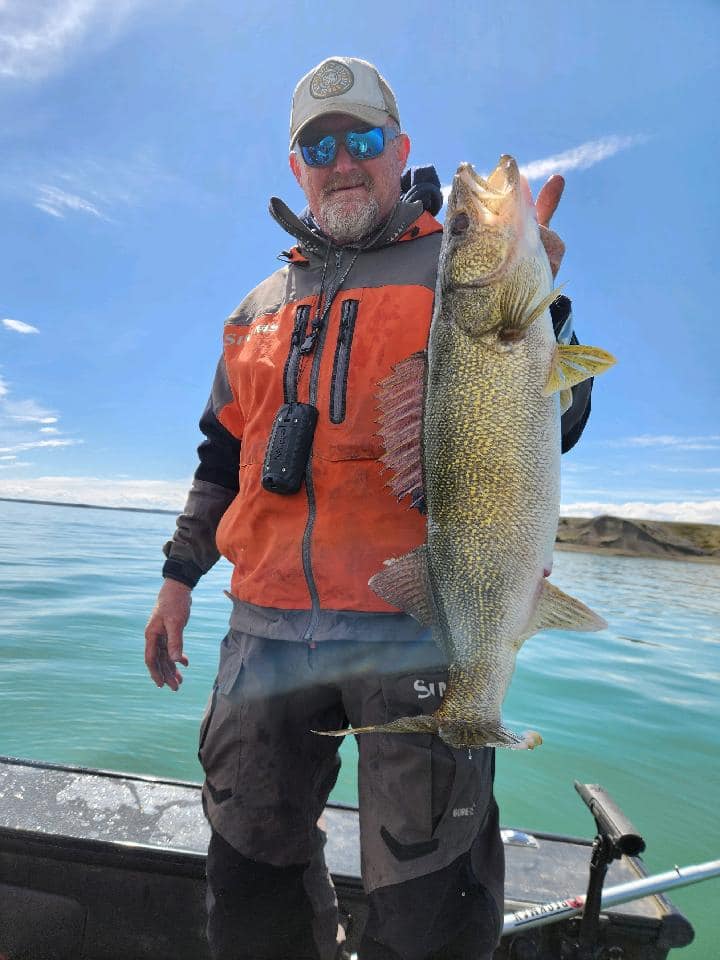
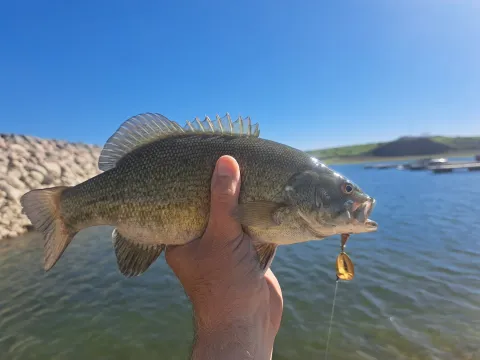
Mundel lives near Fort Peck and spends lots of time fishing in the reservoir (147 days last year). He likes to work long primary points and secondary points and uses sonar to find schools of Cisco. Once he finds the bait fish, he usually finds several different species in the same area feeding on them including walleye, northern pike, and smallmouth bass.
Mundel likes to cast paddle-tail jigs to the fish in the spring and will transition to trolling spinner worm harnesses behind bottom bouncers as the waters warm up over 55 degrees. The northern pike as well as the walleye are often caught with live bait. You are not allowed to use the ciscoes found in the lake for bait, but you can use fathead minnows, creek chubs, and shiners which he will simply fish in a dead-stick fashion, dropping them towards the bottom (but not on it) from the side of the boat. As spring turns to summer topwater baits can be very effective for both the smallmouth bass and pike.
Lake trout are another option. In the spring they will be found in relatively shallow water (15 – 20 feet deep) feeding on the ciscoes along with the bass, walleye, and pike. As the waters warm though, the Mackinaw head to deeper water. The Mackinaw run big here, up to 38-inches, according to Mundel.
In these deeper waters, you will also find Chinook salmon as well as coho salmon, all stocked in the lake from a hatchery below Fort Peck Dam. Mundel will troll using downriggers and flashers in front of his bait or lures to catch all three species.
The salmon can get big here. The state record Chinook a 32-pound specimen, as well as the state record coho, a 4.88-pound salmon, both caught out of Fort Peck Reservoir. Speaking of state records, the current record smallmouth bass, sauger, saugeye, shortnose gar, and freshwater drum were also caught out of this big lake.
The primary access points for most anglers are near Fort Peck south of Glasgow which is almost all paved. Another option is Hell Creek Marina north of Jordan where you’ll travel 25 miles over gravel roads to get to the marina. There are campgrounds and boat launches at both locations. Additional access is available from Glasgow, Malta, and Highway 200 near Jordan though these roads can involve lengthy routes over gravel.
If you are looking for places to stay, eat, recreate and more in Montana’s Missouri River Country check out the local tourism bureau’s website at www.missouririvermt.com and be sure to ask for a free travel guide while you are there.
FORT PECK INTERPRETIVE CENTER
If you are fishing out of the Fort Peck area, you really need to make the time to visit the Fort Peck Interpretive Center. This first-class museum is operated by the U.S. Army Corps of Engineers and tells a variety of stories.
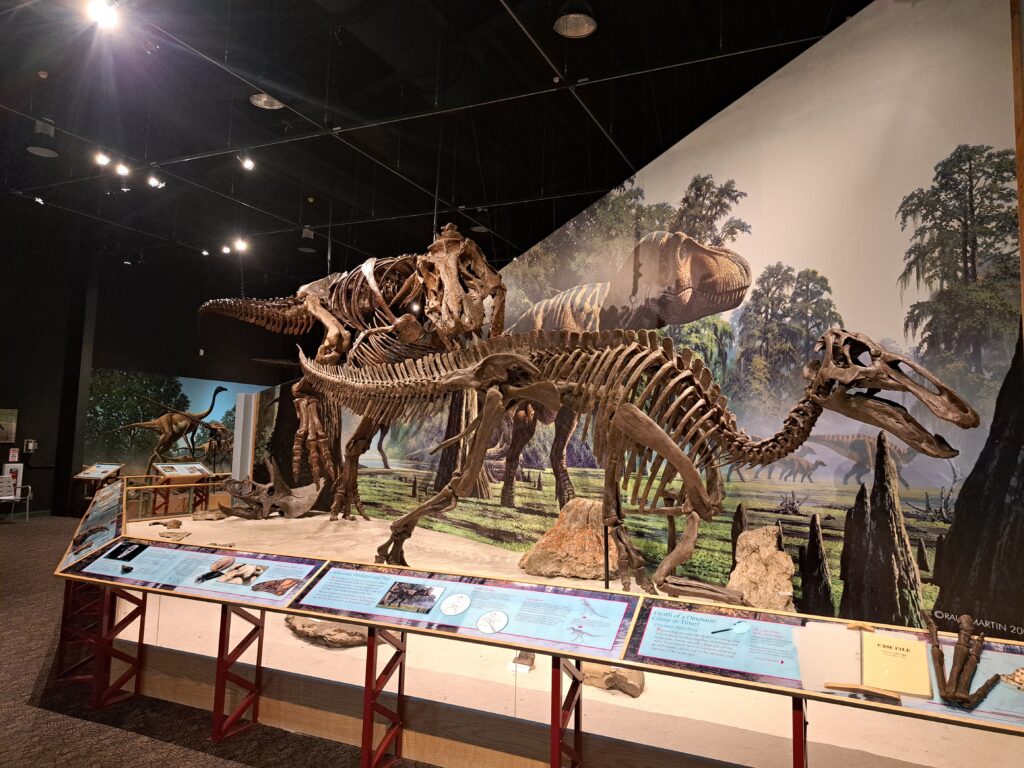
The biggest attraction is the story of the reptiles that lived here 65 million years ago. The Interpretive Center is part of Montana’s Dinosaur Trail. Two fossilized Tyrannosaurus Rex skeletons have been found near here. One is now on display at the Smithsonian Museum and the other can be seen at the Museum of the Rockies in Bozeman but replicas are on display here. Several other fossilized skeletons and replicas of dinosaurs and prehistoric marine reptiles can also be seen here.
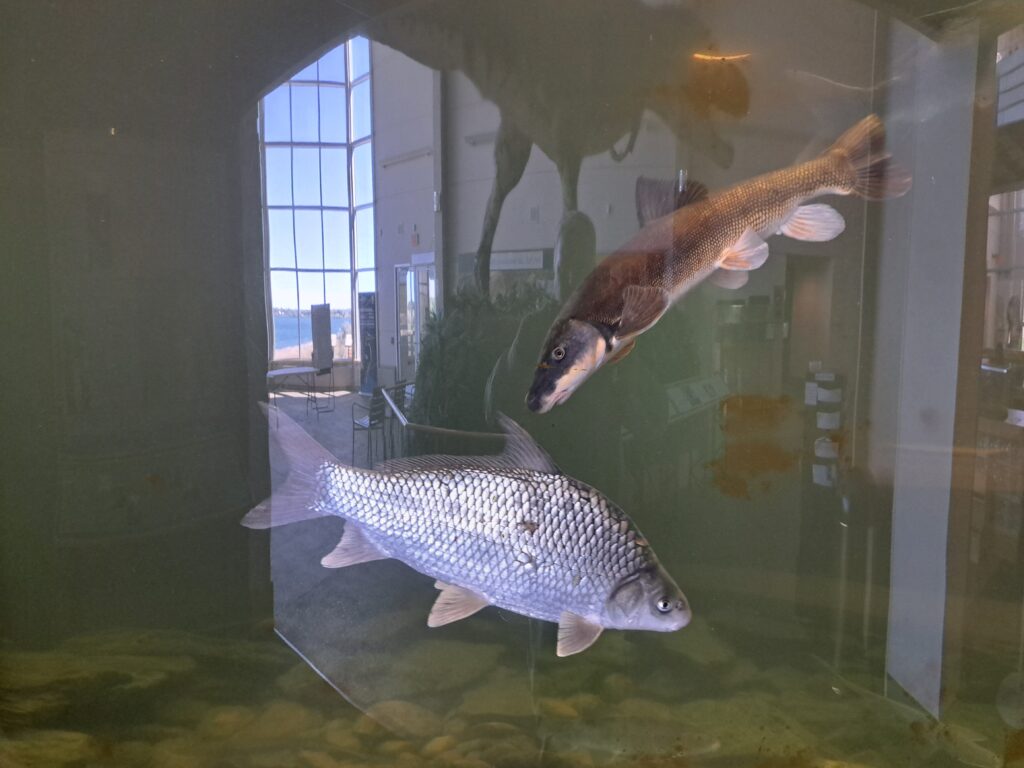
The fish and wildlife found in and around Fort Peck Reservoir and the Missouri River are also on display. Fish can be seen in two large glass tanks and taxidermized animals can be viewed in an impressive diorama.
Finally, the Interpretive Center tells the story of how the dam, called the largest hydraulically filled earthen dam in the world, was built and how the community of Fort Peck came to be. The interpretive center is open from Thursday through Monday from 9 AM to 4 PM between Memorial Day and Labor Day weekend. There is also a nice campground and up to a two-mile-long nature trail adjacent to the Center.
John Kruse – www.northwesternoutdoors.com and www.americaoutdoorsradio.com
/articles/fort-peck-reservoirs-plethora-fisheries