/articles/categories/hunting
Fall Duck Popper Recipe by Hillary Holman
*Makes approximately 32 poppers
Ingredients:
4 large duck breasts: 1” cubed, 8 cubes per breast
8 skewers; each skewer will hold 4 poppers; any more is too many & they won't cook evenly
8 large jalapeños; each large jalapeño makes 4 poppers (small makes 2); buy accordingly
1 cream cheese brick; approximately 1 TBL scoop for each popper
16 strips of thin-sliced bacon, halved to make 32 smaller strips
1 bottle Sesame Ginger Teriyaki marinade
Seasoning of choice; may use salt & pepper
Prep:
1) Pre-soak your duck for 1 to 2 days ahead of time in a bowl of water in the fridge. Change the water 3 to 4 times each day, as this removes the excess blood and influences the flavor. Drain, then set aside to marinate
2) Prepare your marinade; use what you like. Shelby uses Sesame Ginger Teriyaki. Put your duck in the marinade and let it sit overnight or as long as you can allow. Shelby will often freeze the duck in the marinade for a later time in Ziploc baggies or freezer-safe containers, which will also minimize freezer burn.
3) Cut off the ends of the jalapeños and cut into halves. Scrape away all of the seeds, then quarter the halves. For smaller jalapeños, do not quarter; just use the half.
4) Scoop approximately 1 Tablespoon of cream cheese onto the center of the jalapeño
5) Add 1” cube of marinated duck breast
6) Wrap in the halved strip of bacon; Shelby uses Honey Maple bacon and insists that whatever kind of bacon you like, it MUST be thin-sliced. The cooking time for the thin bacon is optimal for rare to medium-rare duck.
7) Skewer each popper onto the skewer with no more than 4 poppers per skewer
8) Season the outside of the bacon with preferred seasoning; Shelby likes to use Alpine Touch’s Prairie Fire
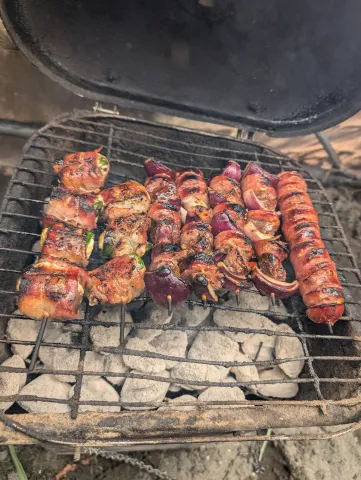
Shelby uses a charcoal grill made out of a 5-gallon metal bucket with a charcoal grate halfway up and a grill grate on the top. He keeps a spray bottle close by to control the temperature of the fire, so the bacon does not burn. When at home, Shelby uses a Traeger. He flips the poppers halfway through to obtain the required grill marks for flavor and presentation.
To book a trip with the legendary Potholes Duck Taxi or purchase Gift Certificates, call:
The Potholes Duck Taxi/ Ross Outdoor Adventures
(509)750-7763 or visit
http://ducktaxi.com/
Or http://rossoutdooradventures.com
Or you can call Mardon Resort
(509)346-2651
“The duck poppers were breakfast, and it was rejuvenating. Like when you go on a long hike and bring along some salami. Yummm!” - Cameron Holman
Written by Hillary Holman @thereelgal
Edited by Tanys Abbott Ross: https://nwfrtv.com/blogs/reel-life/northwest-reel-life-october-2021-issue-5
Pictures provided by Harrods Cookhouse, Ross Outdoor Adventures, and Rob Holman
/articles/fall-duck-popper-recipe-hillary-holman
My First Pheasant
This is not a fishing story, but it’s still pretty cool (if you’re into pheasants).
I got to spend three wonderful days of pheasant hunting with my son Matthew in the beautiful Montana outdoors, outside of Great Falls. We hunted on both public land and private farmland. The long weekend (Sat, Sun, Mon) had a mix of so-so weather to glorious weather, long and short hikes, a two-hour ordeal of Matt’s car being stuck in the mud, and hunting ranging from seeing no pheasant to Matt’s Brittany, Murphy flushing a dozen in one location. Besides getting to spend a lot of time with my son (the best part by far) this trip also featured my first ever pheasant!
Our weekend started off with a trap shooting season on Friday to warm up. I shot well and felt confident for the hunts to come. I’m learning that trap shooting is NOT the same as shooting at a live, flushed bird. But even so, it was a good start to the weekend.
Saturday morning dawned damp and cold. I was very grateful for my GHUnders base layer. They kept me warm in the morning and cool later in the day hiking. We hunted private land with one of Matt’s friends. Our guide for the morning was twelve-year-old Kale. I have to say, in Montana kids sure seem to be mature for their age, with a level of responsibility and confidence you don’t often see in kids on the West Coast.
Kale was a great guide for us. We covered various locations on their farm/ranch and I got to see Murphy in action. He’s still quite young, seven months, and is learning each trip. Even so, it was cool to watch him working prime holding spots and then seeing him get “birdy” and flush out pheasant. We had several hens and roosters flush but were unable to hit any. None the less, it was a good start to the weekend, giving us confidence we’d bag some birds this trip. After hunting in the morning with Kale we headed over to the Freezeout Lake hunting area and worked a large field.
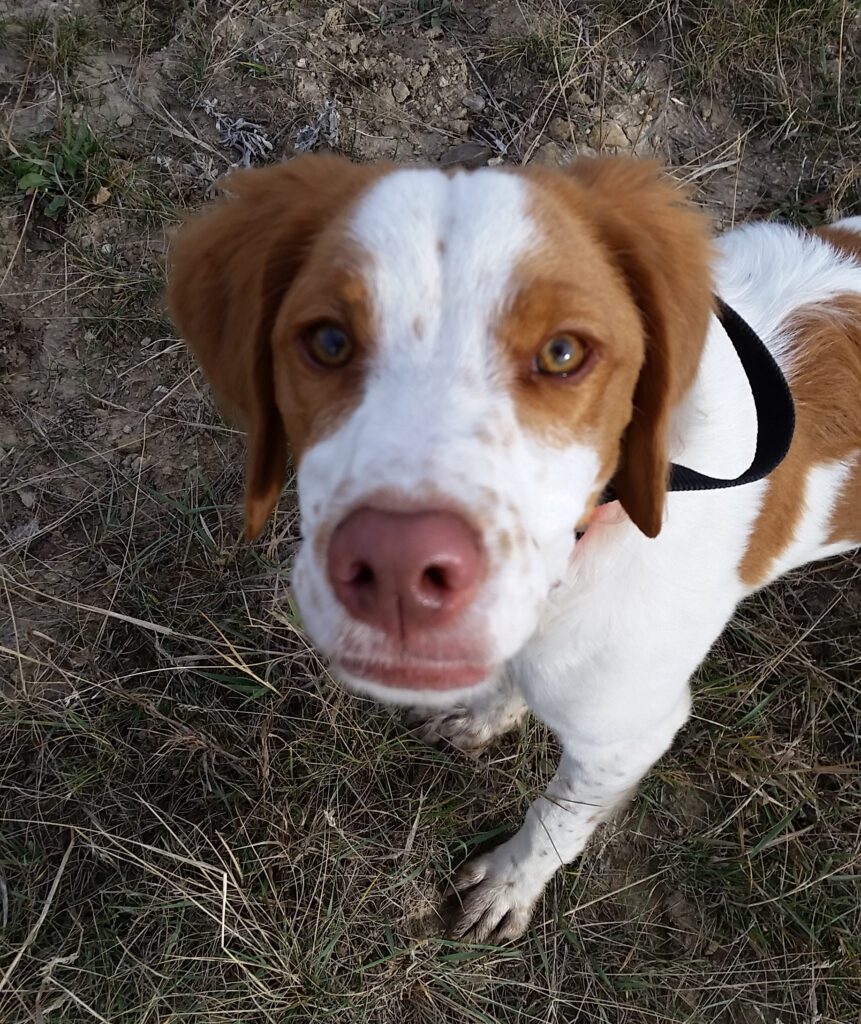
Murphy flushed out one rooster which was a bit of a long shot, and we weren’t able to bring him down. High point of the day – Murphy getting down on all fours, on his belly, totally stopped and looking at something in the brush. Me being a beginner I started walking toward Murphy telling him to keep moving when suddenly a rooster flushed up right in front of me! How I missed that bird I’ll never know. Oh, that’s right, I’m a beginner, only my second trip hunting pheasants.
The next day, the morning and early afternoon was spent watching the Seahawks football game. After that we drove to a nearby public land and hunted a very nice-looking stretch of land that Matt had success at earlier in the year, including a not so good flushing of a porcupine which poor Murphy had ended up at the vet to deal with quill removal. No porcupine this afternoon, nor pheasants. We were down to one last day to get our birds…
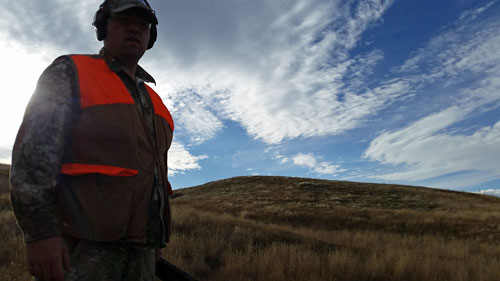
Monday morning. Rain during the night and the field roads were a bit muddier than we expected. Driving early and in the dark, we headed down a dirt road that was in reality a mud road. Much to our dismay we were stuck. Fortunately, there is always AAA, even in the Montana fields. In no time at all the tow truck came and pulled us out. The driver was amused and I’m sure he spotted us for non-natives. He did earn a nice tip for his efforts and off we went to check out another (non-muddy) location.
The farm we got to hunt had the best pheasant holding terrain I had ever seen with my neophyte eyes. A berm, 30 feet wide, 15 feet to the bottom, with marshy center and cattails providing thick cover looked to be ideal. Matt and I walked on opposite sides looking down as Murphy got right into the cover. We’d see him jump occasionally, cattails rustling. Then he’d be on the edges with that “birdy” look and sure enough, a hen or rooster would flush. We repeated this at least five times walking the quarter mile of this berm and missed five roosters. Now I could blame Murphy’s youth as several of those roosters got flushed far from us. I know Murphy will become more disciplined and not range so far ahead of us. I also know we will shoot better next time.
I’ll admit, we were frustrated after missing all those flushed birds. We decided to explore some other spots and give the location a rest, and return later.
We drove around, avoiding muddy roads and a repeat of the morning’s folly. One last effort at Freezeout Lake with no success and it was back to our private farm location to try the marshy berms again.
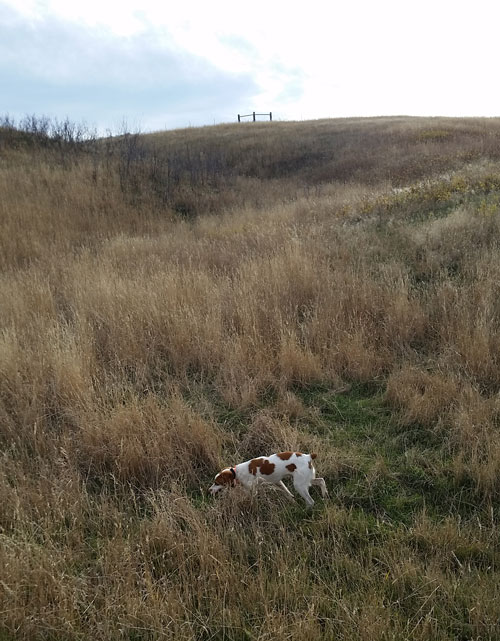
This time Murph was noticeably more tired and moving slower and steady. Or maybe he was just gaining experience as were Matt and me. Before we even had a chance to start a rooster flushed in front of us. Darn! The bird flushed on its own and farther down the berm. We continued, trying to keep ahead of the now (tired) Murphy.
Reaching the end of the property we turned around and headed back. Another rooster flushed up as we worked our way back and once again our aim was not good. I will be the first to admit, this hunting stuff is addicting - and challenging. It’s like fly fishing and trying to land your fly in a specific spot. It takes practice. The fact is, there are all kinds of parallels between hunting and fishing, including many of the standard fishing clichés we all know and love. “can’t catch em if your line isn’t in the water” translates to “can’t shot them if you aren’t hunting em”. I also couldn’t help but notice the “feast or famine” aspect. Some fields we’d get nothing, others a few, and this spot – wow, lots of action!
The sun was getting lower, and it was time to go. One last stretch of about a hundred yards of marsh left. Murphy, rutting in the marsh, getting birdy on us, and I’m ready. Will it be one last chance before the end of my pheasant trip? Suddenly, Murphy pushes forward and the cattails explode with the sound of wings flapping. The rooster is coming toward me as I’m ahead of Murphy. I have the perfect location and ample time to raise my gun to my shoulder. The bird is now just slightly below me and tracking away. It’s the perfect deflection shot of about 20 yards. I sight and pull the trigger of my 12-gauge Berretta Outlander.
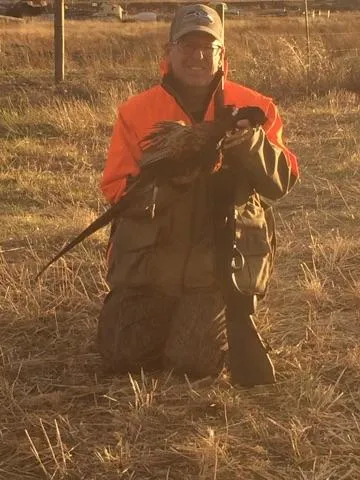
The bird drops in flight to the marsh below. Matt and I simultaneously let out an excited yell and then Matt tells me “Keep an eye where he landed, he may only be wounded and may be running”. Hey, that wasn’t in the program! I’m super excited about getting my first rooster and now I may not actually get to have him. No way! We secure our guns and descend into the cattails and start looking for my bird. Murphy is one step ahead of us though and quickly has the dead rooster firmly in his grip. The pheasant is a real beauty, with a 19" tail (Matt told me that was a good sized bird).
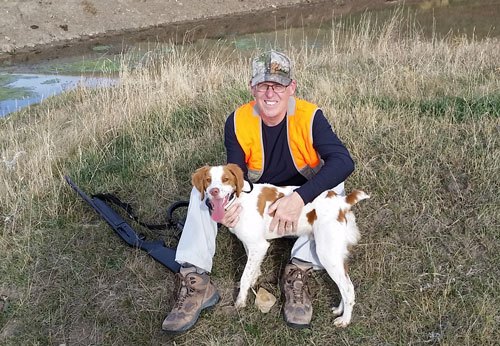
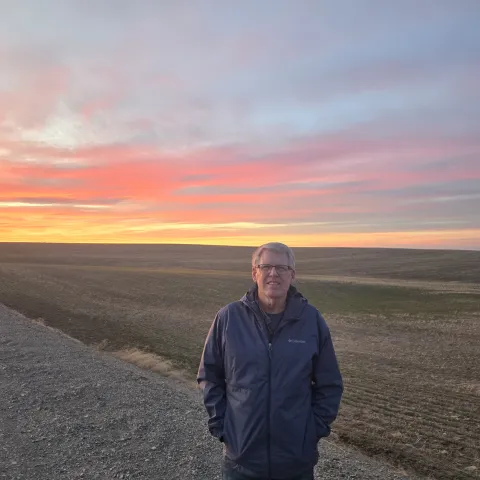
Matt and I sit down and enjoy the moment. A son’s joy at having guided his father to his first pheasant, and my joy at having shot my first pheasant are framed by the sinking sun, bathing us in a sunset never to leave our memories. The day is complete and the weekend a success beyond measure. It’s my first pheasant and a father and son bonding experience that is what life is all about.
Later, Matt showed me how to skin and clean a pheasant. I am again reminded how my son has grown into a man. I recall the past fishing trips where I have taught Matt various aspects of fishing. Now the son is teaching the father. Life comes full circle. I am blessed beyond words. And I look forward to my next opportunity to share the great Montana outdoors with Matt.
/articles/my-first-pheasant
Lake Roosevelt Walleye and Turkey Bonanza
Looking out over the field, darkness still obscured our vision. Out there beyond the field we set up in we could hear the rapid gurgling, gobbling sound made by male turkeys in their tree roosts. Daylight would be coming soon, but meanwhile, I couldn’t get the image from The Blair Witch Project out of my head. I subconsciously swiped at my nose, suppressing a cough, desperate to not make a sound.
Daylight would be coming soon and I didn’t want to be “the new guy” blowing our cover and scaring away our target. It was my first ever turkey hunt. Joining me, were Dave Mason of Toyota and Dan Gabriel of The General Store. Our host, Rick Wakefield, owner of Buck Canyon Lodge, had invited us on this Opening Day of turkey hunting to check out the fine hunting he offers guests on his lodge properties. It was part of a “Cast and Blast” adventure Northwest Fishing Reports were enjoying. The “cast” part of the trip were upper Lake Roosevelt walleyes with Lake Roosevelt Charters.
I had arrived late Friday evening after driving across the state from Redmond to the lodge, located near the town of Gifford. In normal conditions it would have been a not-too-bad five-hour drive, however, a traffic accident going over the pass had set me back a good hour and a half. I arrived tired but excited for what the weekend had in store. Meeting up with the NWFR crew Aaron Borg and Rob Holman, I crashed into my comfortable fleece-covered bed in anticipation of a leisurely 6:30 start time with guides Scott and Todd of Lake Roosevelt Charters. I was excited because of reports they had been posted about deep water jigging for walleye. The pictures of healthy catches of nice-sized eating walleye had my hopes up for bringing home plenty of one of the Pacific Northwest’s tastiest fish, the walleye.
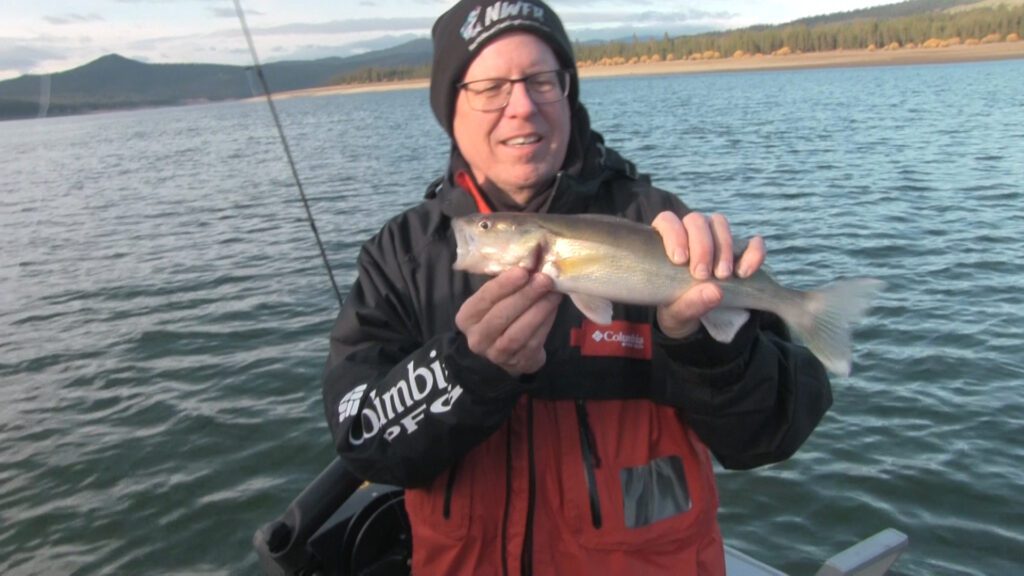
We met at the Hunters boat launch, which was high and dry, but still useable, if a little muddy. No matter, in short order we were off and cruising to a few preferred locations that Scott and Todd had been having success at.
I don’t know that Lake Roosevelt Charters were the first to deep jig for walleye, but I can say they were the first charter I’d ever seen promoting the fishery. I remember being instantly intrigued – jigging up walleye from 121-50 foot depths was so foreign to any other walleye technique I was familiar with that I just had to see and experience it for myself.
We pulled up to our first location and Todd handed out rods loaded with 20-pound Power Pro and one ounce, round jigs, To the jig he added a 4-5” curly tail plastic, and then a half a night crawler threaded several times with just a one inch tail sticking out. Again, very different from the traditional nightcrawler set up of a bottom walker and worm harness. Todd instructed us to let out our line until we made contact with the bottom.
“The trick to this fishery is you have to feel the “tap tap” of the jig as it bounces off the bottom. If you don’t feel that contact you aren’t fishing. Also, don’t make big jigging motions – 5-6” is plenty. The fish are deep and cold, they aren’t chasing after bait.”
I let my line out and at 120 feet could see the braid go slack. I closed the bale and reeled up the slack, starting gently upward motions of my rod tip, raising and lowering and being sure to keep in contact with the bottom. If I felt nothing I let out a little line until again making contact. I continued this technique for a few minutes and then felt the distinct tug and heaviness of a fish on the other end of my rod. Setting the hook, I reeled with steady pressure and soon enough brought up my first ever deep-water jigged walleye, a nice 15” “eater”.
Over the next two days the NWFR gang would catch a lot of these “eaters”. Looking over the vastness of this stretch of the upper Lake Roosevelt and seeing the low angling pressure, I was not surprised at the steady numbers we caught over the next two days. This fishery, while not untapped, is definitely under-utilized. The bites came pretty steadily throughout the day. As with most fishing, we had periods of fast fishing and then slow, but over-all it was pretty consistent. Along with the good numbers of fish we noted they are definitely smaller than what we have caught on the lower stretches of the Columbia River.
Our fish averaged mostly 13-15” with a few fish on either side of those sizes. Todd noted that there are big walleye to be had, but yes, the vast majority were these eater class fish. I’m OK with that – nice stringers of white-fleshed walleye are always welcome at my table! I did notice that the flesh of these upper Lake Roosevelt walleye are a whiter shade than fish we had been catching in the lower reaches of the Columbia.
When it comes to deep water jigging for walleye, wind is your enemy. Current is not an issue on this stretch of the Columbia, but wind will cause the boat to get pushed too fast and, just like salt water jigging, you’ll lose contact with the bottom. When this happens you’ll find yourself letting out more and more line in an attempt to maintain bottom contact. It’s time like this where a good captain knows ways to increase your chance for success.
Captain Scott deployed two large sea anchors, instantly slowing our drift down to a manageable speed. Another strategy is to find shallower water to jig in. Having a bow mounted trolling motor will also serve you well when the wind starts up. Finally, although there aren’t a lot of spots to get entirely out of the wind, guys who fish these waters a lot know the winds and places to move to when the winds do come up. Just one more reason for considering a guide the first time you fish these waters.
We fished until around noon, at which points the winds from the front blowing through made it too tough to fish effectively anymore. It was a decent enough morning. We were looking at around a dozen fish in the boat, and many lost as well. When you’re fishing at 120 feet deep it’s essential to keep a steady pressure on the fish, even with barbed hooks. Fortunately there is another common trait of the winds in this area – they tend to die off later in the afternoon. Scott and Todd were more than happy to bring us in and take us out after a couple hours siesta time. So after getting a power nap we were back out again, fishing from 4-7pm. This bite was actually better than the morning bite – don’t put your gear away! In short, there are fish to be had throughout the day if you’re willing to be flexible.
Darkness slowly gave way to dawn and the gobbling reached ever higher intensities. Soon we heard the first “whoosh” of a bird flying over our blind. Rick quietly announced – "the birds are starting to come off the trees where they roost. It won’t be long now. Get ready!”
I was anxiously anticipating my first opportunity at a turkey. Dave and Dan were old hands at tom hunting and they had given me a primer on Tom Hunting 101 Essentials. I knew the shot I needed to make was a head or neck shot. Hitting the body of a turkey is a low proposition shot. The feathers are thick and hard and act like armor making a “head shot” almost essential. My hunting skills thus far had been limited to pheasants and ducks – which in my experience were fairly easy to knock down, assuming I could hit them! But turkeys – head shots on a bobbing head? I was little intimidated…
“Toms coming from the right”. Rick’s whispered warning had me turning my head to the right and seeing – nothing. I turned and looked straight in front of me and there were three large toms strutting around the decoy Rick had set up. How did those large birds get there so quickly without me even seeing them?!?!?
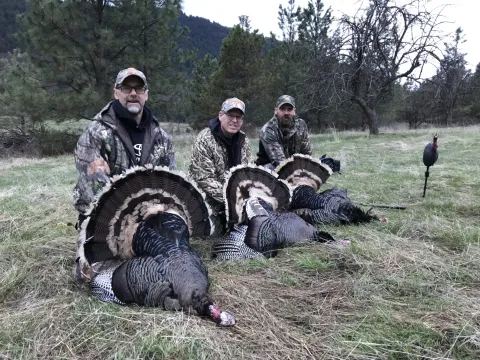
We three hunters slowly raised our guns to level, waiting for the three toms to separate enough that each of us had a clean shot at one bird. It seemed like forever as I hoped the birds wouldn’t startle and run off. Just then Rick gave the single to fire and in unison the three hunters let loose a booming volley of number 4 shot at each bird. It took a fraction of a second to travel the 15 yards to our targets and instantly two birds went down, and the third staggered, then rose into the air, flying over our blind. Three hunters, three shots, three birds! We came out of the blind and tracked down the third bird in the field behind us, around 30 yards away. Claiming this last bird we returned to the other two toms and admired our kills. The birds were all in the 25 pound range, gorgeous feathers and long beards. It was 6:30am and we were done for the day, with plenty of time to go back to the launch and get in more walleye fishing!
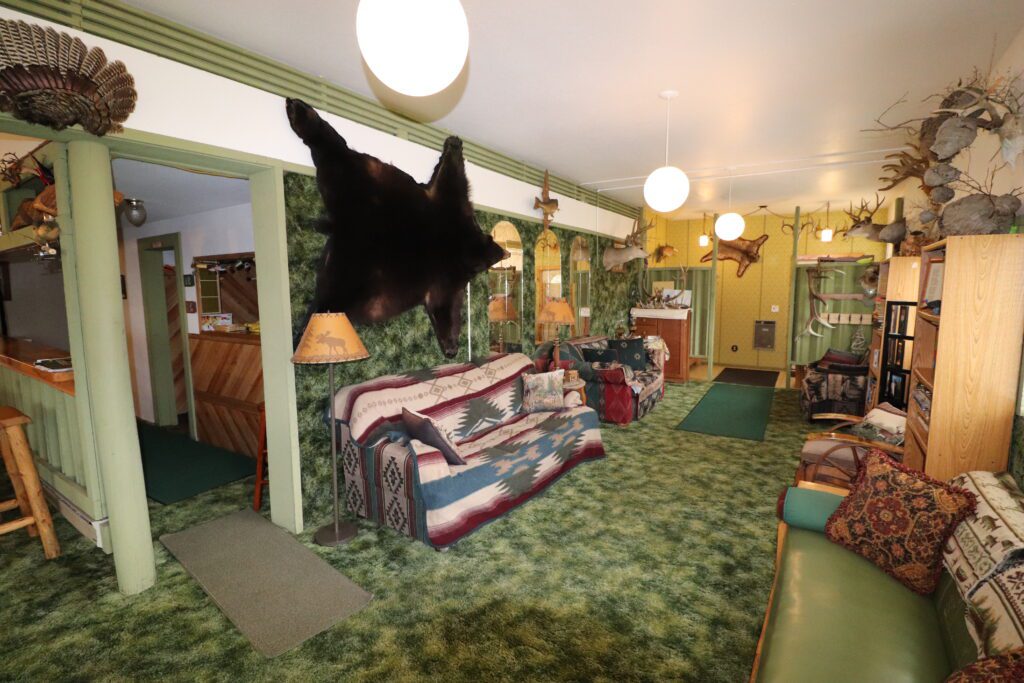
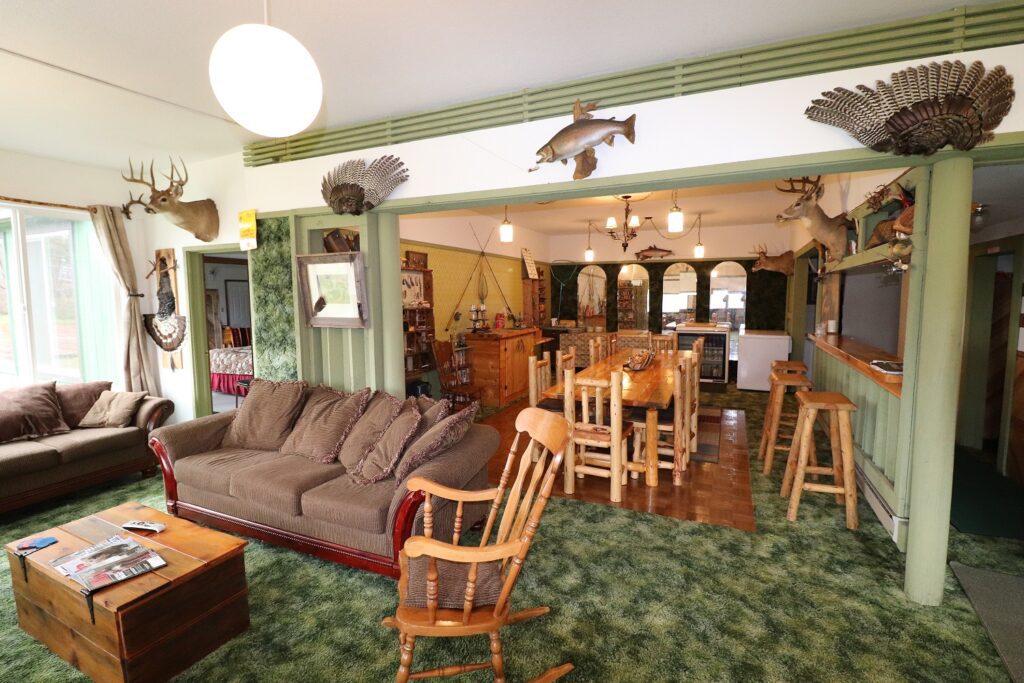
If you’re looking for a unique “Cast and Blast” adventure the spring turkey hunting and walleye fishing on Lake Roosevelt are not to be missed. Buck Canyon Lodge is the perfect base camp to take off on your adventures. Hosts Rick and Wendy Wakefield have a beautiful lodge and offer full amenities including provided meals. Rick does guided turkey hunts for guests, or, if you’re not a hunter, stay at the Lodge and get in on the great walleye fishing with Lake Roosevelt Charters. Either way (or both) way you go you’re guaranteed to have a wonderful adventure. The countryside is spectacular, wooded hills and breathtaking vistas great you at every bend in the road. It’s truly a unique experience you’ll remember for the rest of your life!
Visit Buck Canyon Lodge at Buck Canyon Lodge LLC or call 509-722-3949. Lake Roosevelt Charters web site is Lake Roosevelt Charters or call 509-722-3880.
/articles/lake-roosevelt-walleye-and-turkey-bonanza
The Worst Duck Hunting Dog I Ever Loved
By John Kruse
Georgia was an unlikely addition to our family. It was 2014 and I was looking for a dog that could hunt both upland birds and ducks. I settled on the springer spaniel as the breed I was going to get, and found one just a few miles from where I live.
My daughter Faith and I went over and met the dog who would soon be named Georgia. She was a year old and the runt of the litter. She was very timid and even growled a little at Faith. I was less than impressed.
We went home without her but I couldn’t get that dog out of my mind.
The next day I called the owner and asked if I could bring the dog over to my house and see what kind of retrieving instinct she had. Georgia was very excited to see me again. She hopped into my truck without hesitation and upon arriving at our home, she started racing and leaping around our yard with pure joy!
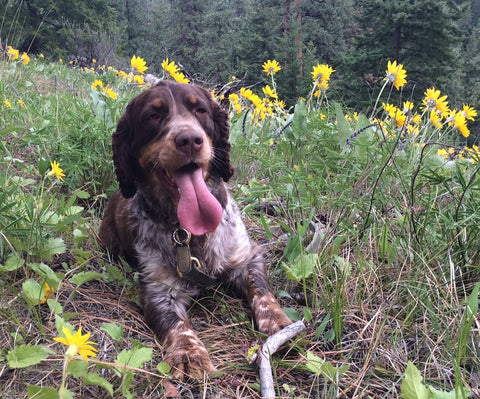
Faith was home and begged me to keep her. When Georgia calmed down, I started throwing dummies for her to retrieve. In the fourteen times I threw the dummy, the response was the same. She would charge to the dummy, look down at it, and then run around the yard until I called her back.
My son David came home from school while this was going on and asked what I was doing. I explained I was giving the dog a tryout and it wasn’t going well.
David, who had just been cut at tryouts for the high school baseball team for the second year in a row, said, “are you going to cut her like my coaches cut me?” And that was the moment I made the decision to keep that dog.
Georgia had a lot of energy and was very athletic. She loved to go on long hikes with me and she loved pheasant and quail hunting, flushing her fair share over the 8 ½ years we had together. When it came to duck hunting, though, she was the absolute worst.
First off, she was impatient. She wouldn’t stay still in the blind, and when I put her on a leash she would whine, bark occasionally, give you dirty looks, and start digging a hole into the ground that she would eventually writhe around in as a way to express her displeasure.

When she was let off the leash she would immediately charge into the water and it didn’t matter to her whether there were birds there or not. She would swim, and swim, and swim some more.
She loved the water and would completely ignore all commands to come out of the water until she was good and ready to do so, usually about 10 to 15 minutes after she went in.
She did occasionally retrieve ducks for me but the final straw was the time my daughter and I took her hunting to a place I like to go to in the Columbia Basin. The small pond is an early season hot spot for teal and it lived up to its promise. I actually kept Georgia in the truck until mid-morning. By this time, we had several ducks in hand but there were three floating in the pond we couldn’t retrieve. I brought Georgia from the truck to the pond, pointed out the dead floating ducks, and set her loose.
She immediately swam to the first duck and continued past it, swimming with reckless abandon. Eventually she ran across one of the other ducks and she grabbed it in her mouth. I praised her and told her to bring me the bird, blowing the whistle to come back as I did.
Instead, she went to a small island and dropped it off before reentering the water to swim some more. Eventually, she came across the other two ducks and again, took them to the island. At this point I was begging Georgia to bring me the birds.
Her response? She would pick each dead duck, wag her tail, and put them back down on the island. She was like a little girl playing with three Barbie dolls.
Finally, I waded out to the island, retrieved the ducks (dolls), and took Georgia back to the truck.
Georgia continued going with me on hunting trips for upland birds, but her duck hunting career essentially ended that day. Despite her poor performance in the marsh, she was a loyal companion.
She was well known by kids and adults alike in the small town of Cashmere I live in, where countless people would pet the “pretty puppy” I took for walks with me. She loved to go for rides, whether it be to the store or to a trailhead for a hike.
She followed me downstairs every morning to my office to spend the day with me at work, and every night she slept on the bed with me. She was a wonderful family dog and faithful companion with a ton of personality.
Unfortunately, two weeks ago we noticed she had developed a wheezy cough and she had very little stamina, not even able to walk a mile with me. I took her to Cascade Veterinary Clinic in Leavenworth and got bad news…cancer.
She had a large mass that had grown around her lungs and there were numerous smaller masses visible in the x-ray as well. I was given some pills to reduce pain and the inflammation around her lungs. They helped for a week and my daughter, wife, and I spoiled Georgia rotten.
We took her on rides to bark at deer from the truck window, fed her plain McDonald’s hamburgers which she loved, let her swim in a lake one last time, and more. It was a good week, but on the 8th day Georgia’s breathing became labored and it was time to let her go.
We did so at the veterinary clinic, all telling her what a good dog she was and what a blessing she had been to our family. The veterinarian, Dr. Warmenhoven, was very kind. He gave her a shot and she left the world in a very peaceful way.
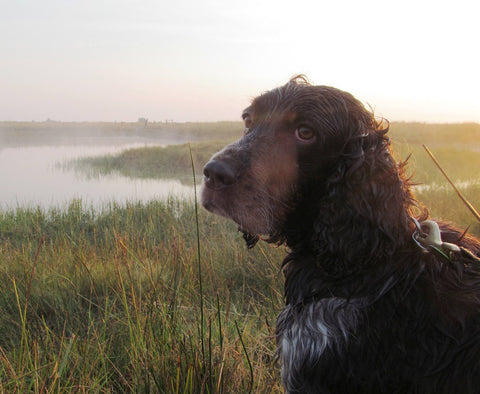
I’ve never seen a worse duck dog but I’m also so glad I had her in my life. We loved her very much and she brought our family much happiness. RIP Georgia. I hope to see you on the other side.
northwesternoutdoors.com
andamericaoutdoorsradio.com
/articles/worst-duck-hunting-dog-i-ever-loved-0
THE WORST DUCK HUNTING DOG I EVER LOVED
Georgia was an unlikely addition to our family. It was 2014 and I was looking for a dog that could hunt both upland birds and ducks. I settled on the springer spaniel as the breed I was going to get, and found one just a few miles from where I live. My daughter Faith and I went over and met the dog who would soon be named Georgia. She was a year old and the runt of the litter. She was very timid and even growled a little at Faith. I was less than impressed. We went home without her but I couldn’t get that dog out of my mind.
The next day I called the owner and asked if I could bring the dog over to my house and see what kind of retrieving instinct she had. Georgia was very excited to see me again. She hopped into my truck without hesitation and upon arriving at our home, she started racing and leaping around our yard with pure joy!
Faith was home and begged me to keep her. When Georgia calmed down, I started throwing dummies for her to retrieve. In the fourteen times I threw the dummy, the response was the same. She would charge to the dummy, look down at it, and then run around the yard until I called her back.
My son David came home from school while this was going on and asked what I was doing. I explained I was giving the dog a tryout and it wasn’t going well. David, who had just been cut at tryouts for the high school baseball team for the second year in a row, said, “Are you going to cut her like my coaches cut me?” And that was the moment I made the decision to keep that dog.
Georgia had a lot of energy and was very athletic. She loved to go on long hikes with me and she loved pheasant and quail hunting, flushing her fair share over the 8 ½ years we had together. When it came to duck hunting, though, she was the absolute worst.
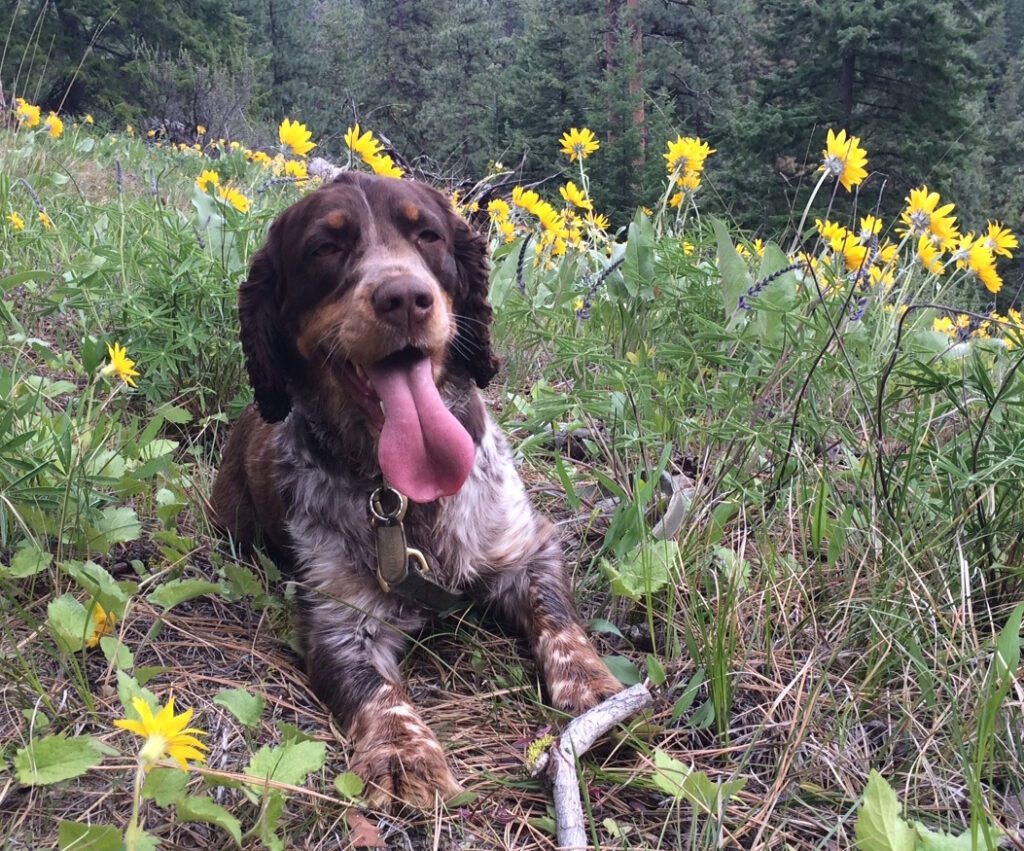
First off, she was impatient. She wouldn’t stay still in the blind, and when I put her on a leash she would whine, bark occasionally, give you dirty looks, and start digging a hole into the ground that she would eventually writhe around in as a way to express her displeasure.
When she was let off the leash she would immediately charge into the water and it didn’t matter to her whether there were birds there or not. She would swim, and swim, and swim some more. She loved the water and would completely ignore all commands to come out of the water until she was good and ready to do so, usually about 10 to 15 minutes after she went in.
She did occasionally retrieve ducks for me but the final straw was the time my daughter and I took her hunting to a place I like to go to in the Columbia Basin. The small pond is an early season hot spot for teal and it lived up to its promise. I actually kept Georgia in the truck until mid-morning. By this time, we had several ducks in hand but there were three floating in the pond we couldn’t retrieve. I brought Georgia from the truck to the pond, pointed out the dead floating ducks, and set her loose.
She immediately swam to the first duck and continued past it, swimming with reckless abandon. Eventually she ran across one of the other ducks and she grabbed it in her mouth. I praised her and told her to bring me the bird, blowing the whistle to come back as I did. Instead, she went to a small island and dropped it off before reentering the water to swim some more. Eventually, she came across the other two ducks and again, took them to the island. At this point I was begging Georgia to bring me the birds. Her response? She would pick each dead duck, wag her tail, and put them back down on the island. She was like a little girl playing with three Barbie dolls. Finally, I waded out to the island, retrieved the ducks (dolls), and took Georgia back to the truck.
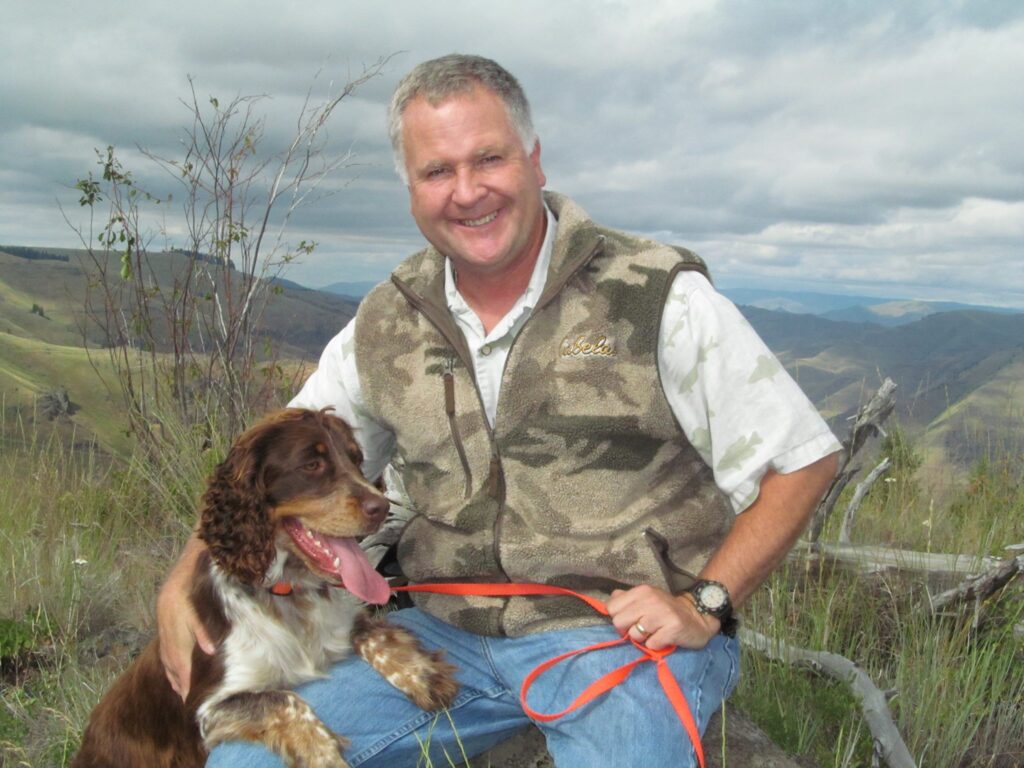
Georgia continued going with me on hunting trips for upland birds, but her duck hunting career essentially ended that day. Despite her poor performance in the marsh, she was a loyal companion. She was well known by kids and adults alike in the small town of Cashmere I live in, where countless people would pet the “pretty puppy” I took for walks with me. She loved to go for rides, whether it be to the store or to a trailhead for a hike. She followed me downstairs every morning to my office to spend the day with me at work, and every night she slept on the bed with me. She was a wonderful family dog and faithful companion with a ton of personality.
Unfortunately, two weeks ago we noticed she had developed a wheezy cough and she had very little stamina, not even able to walk a mile with me. I took her to Cascade Veterinary Clinic in Leavenworth and got bad news…cancer. She had a large mass that had grown around her lungs and there were numerous smaller masses visible in the x-ray as well. I was given some pills to reduce pain and the inflammation around her lungs. They helped for a week and my daughter, wife, and I spoiled Georgia rotten. We took her on rides to bark at deer from the truck window, fed her plain McDonald’s hamburgers which she loved, let her swim in a lake one last time, and more. It was a good week, but on the 8th day Georgia’s breathing became labored and it was time to let her go. We did so at the veterinary clinic, all telling her what a good dog she was and what a blessing she had been to our family. The veterinarian, Dr. Warmenhoven, was very kind. He gave her a shot and she left the world in a very peaceful way.
I’ve never seen a worse duck dog but I’m also so glad I had her in my life. We loved her very much and she brought our family much happiness.
RIP Georgia. I hope to see you on the other side.
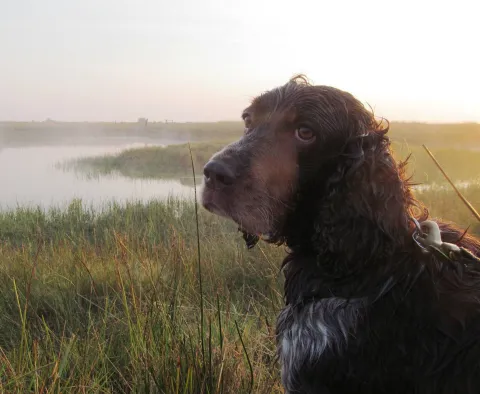
/articles/worst-duck-hunting-dog-i-ever-loved