Fishing the Palouse by Josh DeBruler
Far down in the southeastern corner of Washington State, there’s a river that is surrounded by millions of years of geological wonders. The journey begins at its headwaters in the Bitterroot Mountain Range of Northern Idaho. It meanders southwest and cuts through a landscape of grassy hills, formed by millions of years of wind-driven sediment that lay atop Pleistocene-era lava flows. For miles, it flows through a steep canyon carved out by the great Missoula flood that occurred during the rupture of an ice dam during our last glacial maximum. Finally, in Southeast Washington, it ends its solo journey at its confluence with the Snake River.
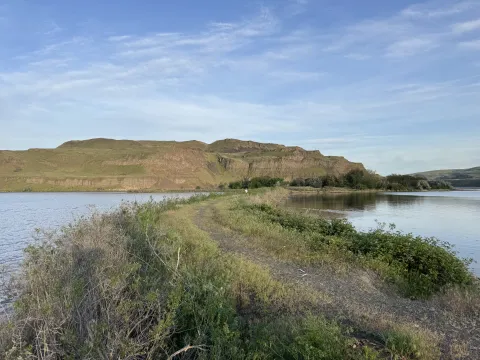
Historically, the waters at the confluence of the Snake and the Palouse were turbulent, characterized by rapids and fast-moving water. When Lewis and Clark reached the confluence of these two rivers during their expedition, they wrote about the ferocity of the water and how members of the group who didn’t know how to swim opted to go ashore and lug supplies on foot. Today, the waters here run much slower due to the construction of the Monumental Dam about 14 miles downstream on the Snake.
The slow-moving water near the confluence makes great habitat for a variety of fish like walleye, channel catfish, yellow perch, bluegill, smallmouth bass, and northern pikeminnow. What’s more, the fertile wheat land surrounding the Palouse offers a specific advantage for anglers targeting catfish. Peppered up and down the river are shoreline grain elevators where grain is transferred from barge to land, and during harvest season, these spots attract large numbers of Channel Catfish. Anglers can boat to these grain elevators and target fish that feed on grain spillover.
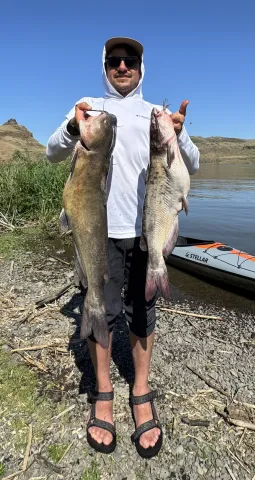
Catfish can also be targeted near shore in shallow, calm flats and deep holes with rocky bottoms. Channel catfish can be caught with night crawlers, bread dough balls, chicken livers, crawfish, shrimp, and stink baits, but the most consistent bait for me remains cut fish. Typically, a 1-2 inch chunk of yellow perch will do the trick.
Another method to deploy during the channel catfish spawning season (late spring-early summer) is running a small jig past a male catfish who sits guard over a nest. This often triggers a defensive strike from the male. This is a sight-fishing type of method, so to be successful, you’ll want a decent pair of polarized sunglasses and will need to be accurate with your casting.
Fishing the Palouse after June 16th in Washington State means 2 pole fishing is permitted. Since fishing for Channel catfish can often be a long waiting game, the two-pole endorsement offers up a great opportunity for rigging one rod up for the more passive catfishing while then using a second rod for something more active, like casting swim baits for walleye or smallmouth. It's good to equip your catfish rod with a bell at the tip to indicate a strike that you may not have noticed otherwise.
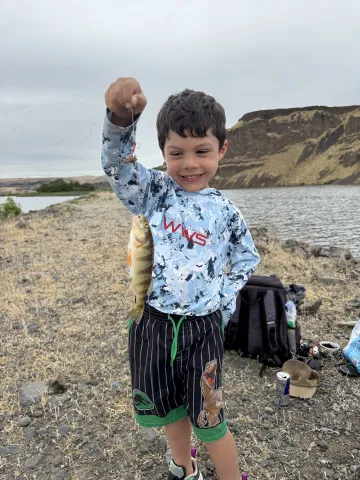
If you’re interested in catching a variety of fish and don’t want to deal with the hassle of switching from one setup to another, no need to worry; there is a simple solution. A nightcrawler, a hook, and a worm tied together on a simple drop rig is a setup that I use for shore fishing on the Palouse, and I have caught walleye, panfish, pike minnow, and large catfish on it. It's a one-size-fits-all set-up and works wonders in the calm waters of the Palouse. It’s also a great setup for kids, so long as they have the patience to sit and wait for a bite.
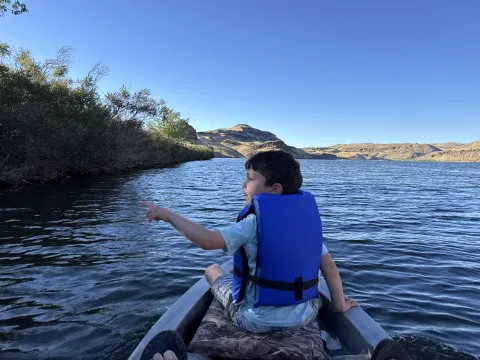
I’ve seen some pretty nasty winds at the Palouse, and each time I’ve been pleasantly surprised by the lack of effect the wind had on the water. This could be because of a sheltering effect from the canyon walls surrounding the water, the lack of depth in the river itself, or a combination of both. Either way, the lower Palouse is a safe and excellent spot to launch a kayak or any other type of boat for a day of fishing.
There are multiple boat launches on or near the lower Palouse. Lyons Ferry State Park offers a boat ramp and shore fishing opportunities. Riparia boat ramp on the Snake River is just east of the confluence of the Snake and the Palouse. Ayer Boat Basin is on the Snake River and about 7 miles west of the confluence. It has two boat ramps, a large parking lot to accommodate vehicles and trailers, and a campground for visitors,
So, if you’re looking to get out and explore some of the most beautiful and geologically rich lands that our state has to offer, and you wouldn’t mind coming home with a cooler full of a variety of fish, then the Palouse is where you should be heading on your next trip!
/articles/fishing-palouse-josh-debruler
It's Yellow Perch Time by Mark Yuasa
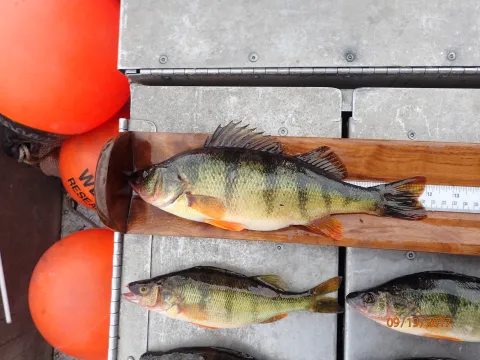
We’ve rounded the corner on summer, and the clock is ticking as the pre-fall chore list or heading back to school obligations become the front burners instead of on-the-water activities. Summer days are winding down, but that doesn’t mean you have to throw in the towel on fishing. Late summer and fall are prime times for yellow perch fisheries in many statewide waterways. Yellow perch are colorful and identified by their golden-yellow, orange, and brass-colored bodies with distinct olive-green, vertical, triangular bars along each of their sides.
One of the top locations to catch a batch of yellow perch is Lake Washington, which is situated right in the backyard of downtown Seattle. Yellow perch are a very stable population in the lake that covers nearly 22,000 acres and stretches 20 miles from Kenmore on the northern tip to Renton in the southeastern most section.
What makes these fish even more appealing is the fact that they’re available to catch year-round, with late summer through early fall being the most productive fishing period.
Yellow perch average 7 to 10 inches (made up of three- and four-year-old age class fish), although some will be as large as 12 to 14 inches or longer. The official WDFW state record – https://wdfw.wa.gov/fishing/basics/records – of 2.75 pounds caught by Larry Benthien at Snelson’s Slough in Skagit County on June 22, 1969, could eventually be broken and come from King County’s largest watershed.
Washington Department of Fish and Wildlife (WDFW) biologists say this is largely based on ample feed and lots of “elbow room” for yellow perch to grow in Lake Washington, the second-largest natural-bodied lake in Washington.
Yellow perch spawn in the spring well ahead of many other warm-water fish species in the lake. The female perch are the largest and tend to grow much faster (maturing in three to four years) and are long-lived up to eight to 10 years.
Lake Washington has a diverse ecosystem, and you can also catch cutthroat and rainbow trout, catfish, carp, peamouth chub, brown bullhead, smallmouth, and largemouth bass, and black crappie. Another abundant fish is the “rock bass”, a species of sunfish.
Fishing gear and tips
Yellow perch is one of Washington’s several "panfish" species, which are very popular across the state because they’re easy to catch and a great introductory fishery for beginners, young kids, and an overall fun family fishing activity. They are outstanding in eating quality, similar to the white, flaky flesh of walleye.
On lightweight fishing gear, yellow perch will put up a good fight, and they’ll often stay active all day. It is not unusual to see thousands of perch schooling in shallow water areas of the lake, and while reeling one in, you could see many others following it up to the surface.
Even during the middle of a summer afternoon, yellow perch aren’t spooked by all the boaters and jet- or water-skiers zipping around Lake Washington.
The best period to target yellow perch begins around July, when the water heats up, and will peak in August through October. As winter arrives in November, yellow perch become harder to catch since they usually move into deeper water locations.
Yellow perch tend to school in shallow water areas, 15 to 35 feet, and you’ll find them close to the shoreline or on the edge of drop-offs. Look for them hiding in shaded spots along the cover of weed beds, milfoil, aquatic weeds, and lily pads, or under docks or overhanging trees and brush. At night, they’ll often look for cover in these locations to avoid predators such as smallmouth and largemouth bass.
Yellow perch mainly feed on small fish, crayfish, snails, clams, and smaller invertebrates.
What makes this fishery fun for everyone is the fact that there are so many locations accessible by boat or from the shoreline and public docks around Lake Washington.
The lake has plenty of elbow room to fish around Seward Park; Gene Coulon Park in Renton; Yarrow Bay in Kirkland; Magnuson Park; Andrews Bay; Newport area; Webster Point in Union Bay; Juanita Bay; Foster Island in the Montlake Cut; and docks at Mount Baker Park, Madison Park, Stan Sayres Pits, Leschi Park, Luther Burbank on Mercer Island, Kirkland, and Kenmore.
You can find a list of public fishing piers on Lake Washington on WDFW’s website: https://wdfw.wa.gov/sites/default/files/publications/01996/wdfw01996.pdf.
Fishing gear consists of a light-to-medium-action trout fishing rod with a spinning reel attached to a four- to six-pound test main line. Simply stick to a piece of worm on a 15- to 24-inch leader with a small salmon egg-style hook to a drop-shot egg-style weight.
Once you catch your first perch, you can use a small chunk of the meat or — believe it or not — even an eyeball. Colorful, tiny three-inch plastic worms or small-skirted crappie jigs and lures tipped with maggots, wax worms, or shrimp will also catch fish.
Yellow perch are light biters and tend to nibble on your bait, so don’t set the hook hard and let them play with the bait. Then wait for your rod to bend before you gently reel them up. Yellow perch are bait stealers, and don’t be duped when you occasionally reel up bare hooks. The great news is that once you drop it back down, you’ll likely be rewarded with an actual fish!
Additional lakes to catch yellow perch
Besides Lake Washington, there are many other statewide lakes where you can find yellow perch.
A standout yellow perch fishery in Eastern Washington is Curlew Lake in Ferry County, located northeast of Republic. For more than a decade, the yellow perch population has continued to rapidly grow and, combined with the average size (9 to 10 inches), has generated considerable enthusiasm by anglers.
“Curlew is a special place because it has ideal habitat, good water quality, and plenty of food that creates a fast growth rate for the yellow perch population,” said Danny Garrett, a WDFW biologist.
Other east of the Cascades yellow perch fisheries include Moses Lake and Potholes Reservoir in Grant County; Leader Lake, Palmer Lake, Whitestone Lake, and Washburn Island Pond in Okanogan County; and Roses Lake and Wapato Lake in Chelan County.
Shifting back to the west side of the state, yellow perch can be found in Lake Sammamish near Issaquah; Lake Whatcom near Bellingham; Sawyer Lake northwest of Black Diamond; Lake Goodwin northwest of Marysville; Lake Stevens east of Everett; Beaver Lake and Pine Lake near Issaquah; American Lake near Fort Lewis; Lake Kapowsin southeast of Puyallup; Angle Lake south of Sea-Tac Airport; Lake Desire in Renton; and Lake Meridian in Kent.
Before heading out, check the WDFW regulation pamphlet for specific rules at https://wdfw.wa.gov/fishing/regulations. You can also find yellow perch information on the WDFW website at https://wdfw.wa.gov/species-habitats/species/perca-flavescens, including an informative video at https://youtu.be/-V5d--VkQ4Q.
Contributed by Mark Yuasa, WDFW
(Mark Yuasa is a Washington Department of Fish and Wildlife Communications Manager and longtime local fishing and outdoor writer.)
/articles/its-yellow-perch-time-mark-yuasa
Early Season Ice-off Panfishing by Eric Magnuson
This time of year is a sad part of the season for me, and that's "Ice Off". As many of you know, ice fishing is my favorite winter activity. When the last sheets of Ice melt away, freeing up the shoreline makes it easily accessible. Panfishing quietly slips into one of its most overlooked and most rewarding phases. The ice is gone, the crowds are not back yet, and beneath the surface, Bluegills, Crappie, and Perch are in that familiar transition. For most anglers who've just spent months staring at a hole in the ice, they know it's not the end of the season. It's simply a shift in approach.
The Ice Off Mindset
Ice-off panfish are not yet in full swing in Spring mode. Water temperatures are still cold, often hovering around the upper 30s to mid-40s, which means fish metabolism remains slow. They still won't chase far or waste a ton of energy chasing a meal. And typically, they won’t behave as they do during the shallow water spawning frenzy that's weeks away. The KEY during this window is understanding that panfish are migrating and usually aren't stationary. During late ice, many fish hold in deeper basins adjacent to their spawning beds. When the ice leaves, they don’t immediately flood the shallows. Instead, they stage along transition areas such as subtle breaks, inside bends, emerging weed edges, and dark bottom bays that warm slightly faster than the main lake. Basically, your job is not to find spawning fish, but to intercept the travelers.
Always Start Where Winter Ended
One of my most consistent strategies every year is to begin near the last ice locations I was fishing at prior. If I had found suspended Crappies over a basin in late February-March, I would begin on that same basin edge in early April. They may have slid shallower, just a few feet, but often remain close until stable warming patterns push them further shallow. Bluegills behave similarly but tend to relate more tightly to structure. Especially remaining weed lines, timber, and those soft-bottom transitions. Perch are often the panfish Wildcard. They will roam, sometimes in "Wolf Packs", feeding aggressively when conditions line up. I'll focus on vast shallow flats, just adjacent to deeper breaks and drop-offs. Particularly in areas with sand to mud transitions, as Perch love to gorge themselves on bloodworms. By pounding the bottom, creating a plume and disturbance, drawing in the Pearch. Electronics, whether it's a basic Sonar or a Forward-Facing unit, can be invaluable now. Fish may suspend unpredictably from one day to the next. Seeing them before casting saves hours of fan casting and blind effort.
Warmer Water Wins
In early open water, even a two-degree difference matters. Northwest-facing shorelines are protected from cold winds, shallow bays with darker bottoms, and areas that receive extended afternoon sunlight warm quickly first. These little micro warming zones attract zooplankton, which attracts baitfish, which attracts panfish. One other thing - don't overlook water clarity. Like wearing a darker shirt, stained water warms a little faster than crystal clear lakes. If I have several lakes to choose from, I'm typically hitting the stained body of water as they often out-produce clearer systems after Ice Off. So, remember, the Temperature is the compass. Let it guide you!
Slow Presentations Are Key,
Cold water demands patience and restraint.
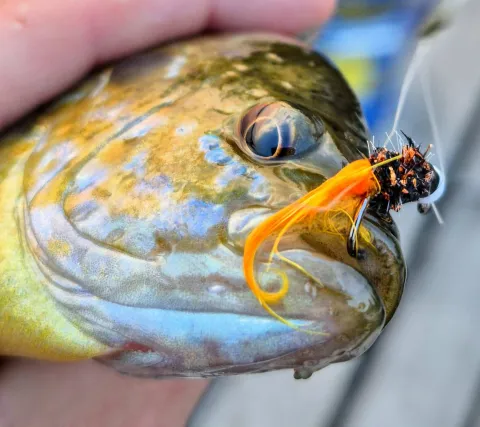
Small Jigs - 1/64th to 1/32nd ounce tipped either with soft plastics, waxworm, maggots, chunk of crawler. Hair Jigs work great during this period because of their movement. I keep my retrieve deliberate and slow. I will cast and allow my bait to pendulum naturally, as I add in subtle twitches. Many strikes will occur during the fall. If you feel a slight tick, or notice slack in your line, set the hook. I won't just fan cast jigs but also slip bobbers and jigs. Bobbers are a lethal tool. Suspending a jig and offering above suspended fish allows you to hover in the strike zone longer. Remember, patience pays dividends. If the fish won't chase, bring the bait to them and leave it there.
Think Vertical and Horizontal
Sometimes, there are situations with early-season panfish, where they might be suspended off breaks and not reachable by standard casts. If you’re able to position your boat over the top of them, jigging them vertically can unlock a different bite. I like to drift slowly with the wind, using 2lb-4lb test to maximize sensitivity and a natural presentation. Vertical jigging allows me to adjust to depths quickly until you dial in the exact depth the fish are holding. Meanwhile, from shore, keep fan casting as far out and cover water methodically. Early season fish group tightly, so you might go twenty casts without a bite, then suddenly connect on five in five casts. I'll say, when you find them, quickly get back on them because they don't travel alone.
Adapt To Mood Swings
Spring weather is unstable. A warm three-day stretch can ignite a bite that feels like peak season, only for a cold front to shut it down overnight. After a cold snap, I often find fish have slid a little deeper and become less aggressive. I'll downsize my presentation even more, 4mm-5mm tungsten jig maybe. I'll lengthen my pause and fish slower than I think I should. Conversely, during stable warm trends, fish may push shallower than expected. Don't be afraid to check two to four feet of water on calm afternoons. I've seen some of the biggest Bluegills caught in skinny water before most anglers believe they should be there. Flexibility separates average outings from memorable ones.
Light Tackle, Big Rewards
Ice Off panfishing is not about power, but more about finesse and feel. I will always have an Ultra-Light rod with a soft tip to detect subtle bites. Paired up with a smaller 500 series reels with 2-6lb line and a smooth drag for unexpected surges from a Slab Crappie, or a Bull Bluegill. And there's always something deeply satisfying during this period. The boat launches are quiet, and the air still carries a little chill. Blackbirds sing from the cattails while your breath fogs the morning. I really look forward to these special days every season.
Timing The Transition
Being able to home in on these migrating fish is very rewarding and gives you a sense of self-accomplishment. As water temperatures approach the low 50s, panfish begin committing to shallow spawning areas, as the Males begin scouting beds. The bigger schools of fish will break up, and that predictable staging bite shifts into shallow shoreline action. But to me, that in-between window, that subtle, strategic, thoughtful phase right after Ice Off, may be the purest form of panfishing I find all year long. It rewards observation and patience. And it rewards the anglers who understand seasonal movements and behaviors, instead of chasing yesterday's reports. When the ice melts, most anglers wait for the "Real Spring". The smarter move is to launch early, think like a migrating fish, and approach the lake with quite precision. Because under that freshly opened water, panfish are already on the move, and if you meet them halfway, the season starts long before most anglers realize it's begun!
"Reel in the Memories".
/articles/early-season-ice-panfishing-eric-magnuson
Panfishing Strategies and Tactics to Use for Year-Round Success
For many anglers, panfish are the first fish we've caught, and for good reason. Bluegill, Crappie, Perch, and other panfish are plentiful, cooperative, and can be enjoyed as a delicious meal. Yet, despite their reputation as "Beginner Fish", experienced anglers know that panfishing can be as technical and rewarding as any pursuit in freshwater fishing. With the right strategies and tactics, you can consistently put more fish in the boat or on the ice, no matter the season.
In this article, I will break down the keys to successful panfishing, from understanding their behavior to fine-tuning your presentation.
Know your Body of Water and Species you’re fishing.
"Panfish" is a catch-all term for several species, most notably bluegill, pumpkinseed, yellow perch, and both black and white crappie. While they all share similarities, each has its own quirks, which can help you understand how to approach each one on the water.
• Bluegill & Sunfish: Aggressive feeders that relate closely to weed edges and shallow flats, especially in the warm months.
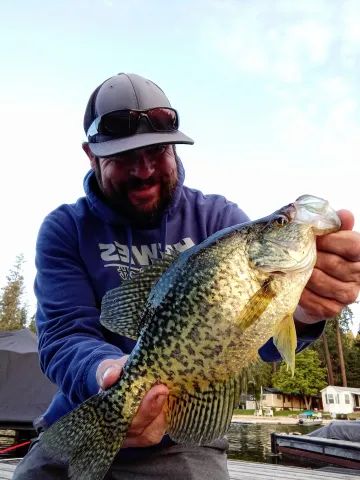
•Crappie: More structure-oriented, often suspended over deeper basins, or schooling up around brush piles. I also target large Marina docks and boats.
•Perch: Typically roam a little more, especially in winter, but will still relate to breaks, deeper weedlines, and especially sandy muddy flats where they gorge themselves on bloodworms.
Knowing the tendencies and behaviors of your target species will help you decide where to fish and what tactics to use.
Seasonal Patterns
Understanding how panfish move through the seasons is the foundation of consistent success.
•Spring: As water warms into the 50s, panfish start to move shallow to begin their spawn. Bluegill and Sunfish fan out nests in shallow bays, creating mine fields of circle beds, while Crappie will hold on to brush piles and structure a little longer before moving shallow.
•Summer: After spawning, Bluegill will typically remain in the shallows around their spawning grounds, if there's good cover. While the Crappie tend to move a little deeper, and when I say deeper, I'm referring to 15'-17'. This is prime time for early morning and late evening action near the weed edges.
•Fall: Cooling water pushes baitfish and panfish towards deeper structure. When crappie form large schools over deep basins, fan casting and bobbers come in handy. Perch will be found chasing baitfish on steep breaks and roaming the flats.
•Winter: Panfish will typically group tightly in the winter, and you can get into large schools when found. I will target the last remaining deep weed edges for Bluegill and Pumpkinseed, and hit them on the deep, muddy flats for the hungry Perch. The most difficult, and rewarding, is fishing the suspended Crappie, finding the 2'-3' just below the ice, cruising deep basins.
Locating Panfish
The most successful anglers spend more time finding fish than fishing empty water. Key tools and techniques to locate panfish include:
•Electronics: Sonar or Forward-Facing Sonar can reveal schools and depth preferences in seconds. In open water, Crappie are typically suspended while the Perch and Bluegill hug cover or bottom. Electronics will show you these behaviors of these fish in real-time.
•Visual Cues: In shallow or clean water, polarized glasses can help spot so much. Beds, weed edges, stumps, brush piles, deep ledges, and fish.
•Structure: Focus on those weed edges, fallen timber, brush piles, docks, and submerged humps.
•Mobility: Don't linger in that "Empty" water; if the fish aren't there, you have to move. Use those Electronics as you move spots, marking schools of fish or looking for that structure we've talked about. From the boat to the ice, this is what it takes to find 'em!
Tackle and Gear Selection
Panfish gear doesn't have to be complicated, but it should match the presentation.
•Rods: Light or ultra-light spinning rods (5'-7' feet) offer the sensitivity to detect soft bites. For ice fishing, I like the same action in a (24"-32" Inch) rod.
•Reels: Small 100-200 series reels with a good, smooth drag and bearing system are ideal.
•Line: I typically will run 2lb-6lb monofilament or fluorocarbon for most situations. Braid with a flouro leader works well when fishing deeper water, like 30'-50' feet at Curlew for those Jumbo Perch.
•Hooks and Jigs: Size 8-12 hooks for bait such as worms, maggots, or mealworms. These baits are Bluegill's favorites, while Crappie will indulge under a Slip bobber.
•Slip Bobber: A slip bobber will allow you to precisely control the depths of your bait, adjusting until you're right above the fish. Critical for suspended Crappie.
Live, real baits work in all seasons but can make the difference for finicky fish.
Artificial Lures & Presentations
Artificial baits often outfish live baits when fish are aggressive, or when you need to cover water quickly.
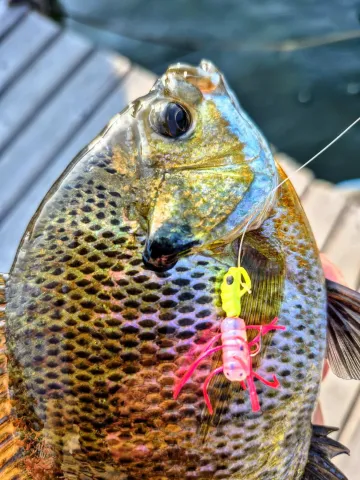
•Small Plastics: Tube jigs, curly tails, and micro swim baits mimic small prey and can be fished fast or slow.
•Spoons: Flashy and effective, especially for Perch and Crappie under the ice. Use subtle jigging motions to trigger bites.
•Panfish on a Fly: Don't be timid about pulling out the Fly gear on these shallow bedding fish, or a beaded head fly under a bobber, or under the ice. Possibilities are endless!
Experiment with different sizes, profiles, and colors. Staying more in the natural hues (White, Brown, Olive) or bright colors such as (Pink, and Chartreuse) excel in catching limits. Oh, and remember... "It doesn't matter what color it is as long as it's Gold"!
Presentation Tips
The way you present your baits is often more important than what's on the hook.
•Match the Mood: Aggressive fish respond to faster retrieves or sharper jigging. Neutral or negative fish may want a slower retrieve or movement about the water column.
•Depth Control: In suspended situations, keep your bait just above the fish, as most panfish feed upward. This is where the Electronics come into play, while you can see the fish and your bait.
•Pause and Hold: Especially in cold water, when fish are not as active. Pausing your bait can trigger strikes from hesitant fish. Often, we ice anglers will always have a "Dead Stick" fishing not too far from us.
Adjustments for Ice Fishing
Winter panfishing demands extra precision and extra clothing.
•Drill in Grids: I like to drill a grid pattern of holes over a flat or structure. Typically, I drill 15-30 holes before I start dropping lines.
•Downsize: Smaller baits and light lines are necessary. Tungsten baits are my go-to, as I can fish them fast and get down to depths quickly. Minimize the gear you bring to lighten the load in your sled you're dragging behind you.
•Stay Mobile: Panfish roam, and staying on top of them is key to steady action. Electronics are especially valuable here, letting you watch fish react to your bait in real time.
Conservation & Ethics
While panfish are abundant, local populations can be impacted by heavy harvest, especially large breeding fish.
•Practice Selective Harvest: Keep enough for a meal, but release the larger ones when you can, to maintain healthy genetics
•Know the Regulations: Size and bag limits vary State to State, and sometimes by body of water.
•Handle with Care: Use a wet hand when unhooking and handling fish in the cold temps. I try to minimize the time I lay a fish on the ice, as fish don’t have eyelids, so you can damage the eyes, not just the skin. Minimizing air exposure will help the survival of the fish you plan on releasing.
One of the best things about panfishing is its accessibility. Whether it's from the dock, boat, or ice, you can enjoy success. It's the Gateway to introduce kids and beginners into fishing, fast action, frequent bites, and plenty of smiles. But for a handful of us seasoned anglers, panfish offers a challenge. Finding the biggest Crappie in the lake or coaxing a wary Bluegill from its bed takes skill, patience, and attention to detail.
My final thought is this. If you approach panfishing with the same strategic mindset you would for Bass, Walleye, or Trout, you'll quickly discover that these "small fish" can be very rewarding. Whether you're filling a bucket for a fish fry or targeting Trophy Class Slabs, the combination of smart location choices, precise presentations, and seasonal awareness will keep your rod bent all year long!
And don't forget to "Reel in Those Memories"!
/articles/panfishing-strategies-and-tactics-use-year-round-success
Winter Perch Tips
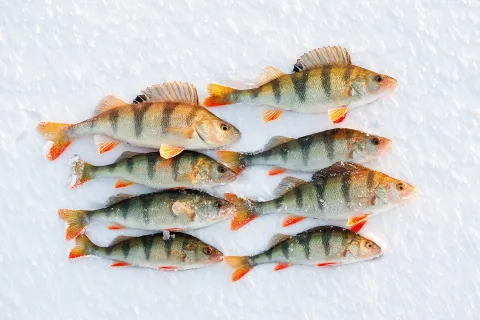
Now that the holiday craziness is over with, you might find yourself with the fishing itch. Maybe you got a new fishing rod for Christmas that you're dying to try out! Winter steelhead are a worthy pursuit, but kids might not have the patience to withstand casting all day. Winter perch are the perfect solution! Though they are small, they taste great when fried up and most lakes have an abundant population of them. They are eager biters, especially in the winter months, and you don't need much tackle other than a light action rod and some worms. Let's dive into it and talk about how to have a successful day at the lake fishing for perch.
Though shore fishermen can certainly be successful when fishing for winter perch, boaters have an advantage. The trickiest part of perch fishing in the winter is locating the fish. They move throughout the lake in large schools searching for food. These fish often hide in deep water, below the thermocline, where the water is warmer. Boaters can search the lake until they locate the schools of fish.
Fish finders can show you where the schools are, so you can drop your bait right in the middle of them. Check near drop-offs and underwater shelves first. Perch will tightly school up, so if you catch one, you're bound to catch more. Drop anchor or activate your spot lock and get a bucket ready! As with most fish in the winter, they don't like chasing down the meals. Keep your bait right in the middle of their school. If you aren't getting bites, move on. Perch schools will look like little clouds on your fish finder. Pay close attention and follow the fish.
If you're shorebound, remember to use bottom rigs so you can fish the bottom of the water column. This is a great situation to use your two-pole endorsement if you have one. The more rods in the water, the better your chances of finding the fish. Try to find a lake with a pier so that you can more easily reach the deep water. Reservoirs are harder for shore fishermen to effectively fish in the winter, since they're usually drawn down past the piers.
Another great thing about winter perch is that they're willing to hit a variety of lures and baits. I often start with worms or crappie jigs. Lower your offering to the fish and jig lightly until you feel the bite. Winter perch can be soft biters, so pay close attention and be ready to set the hook. Once you've caught one perch, you can cut it into small strips of meat and catch more. Perch cutbait is one of the best ways to catch more perch! One word of advice, use small hooks. I use size 8 or 10 hooks most of the time. I also use an ultralight crappie rod and reel for maximum sensitivity. Be careful when dropping the fish into the bucket or holding them for pictures, they have several spines in their fins that can prick you.
Though most lakes have yellow perch to some degree, you might be wondering where to start. I've had success at Lake Washington, Lake Sammamish, and Clear Lake. Lake Washington is my go-to for winter perch. If you launch on the southern end, try anchoring near the bridge. These are just suggestions- check your regulations and try a lake near you that's open year-round. Remember that perch tend to hug the bottom during the winter and study a map to find those deep pockets on your lake of choice.
Because of the cold weather, it's a good idea to be prepared before hitting the water. If it's been a while since you've run your boat, do an inspection, test your motors, and ensure your first aid kits and life jackets are aboard. Bundle up and bundle up your kids too. Hand warmers are essential! I picked up some electric hand warmers online and they work great.
The trickiest part is making sure they're charged before heading out! Like electronic hand warmers, heated jackets can also be a game changer. Winter perch fishing is a sedentary activity, so you'll want every advantage you can get to stay warm. I also highly recommend putting on base layers, especially underneath your pants. Costco and Sportco both offer affordable base layer packs for men and women. Winter fishing doesn't have to be cold and miserable. Making sure you're adequately prepared will go a long way toward having a fun day on the lake.
Have fun on your winter perch quest! Most lakes around here have no bag limit or size limit, but make sure to be responsible and only harvest what you're going to eat. Perch are one of the best fried fish out there, and they're easy to prepare for the frying pan. You can either fillet them quickly or cook them whole. Electric filet knives can make short work of a bucket of perch. My friend and fellow writer Randy Castello likes to batter his perch filets and freeze them so that his family can enjoy fried perch anytime. Put life jackets on the little ones, gas up the boat, and hit the lake!
/articles/winter-perch-tips
Great Winter Fisheries East of the Cascades
LONG LAKE:
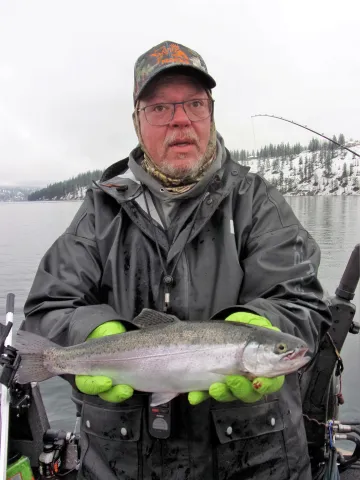
Located near Spokane, Long Lake kicks out good numbers of quality rainbow trout in November and December. The best fishing is found several miles up the lake from the main boat launch at the south end of this reservoir. Trolling Mack’s Lure Wedding Ring spinners is a good choice and orange is a great color. Dropping water levels in December often make the primary boat launch unusable so plan on fishing here sooner than later.
CURLEW LAKE:
Traditionally known as a summer destination for trout and the occasional tiger muskie, Curlew Lake is now known for its perch fishing. Perch are now the predominant species in this Ferry County lake and fishing for them in the winter, either through the ice or in open water, can reward you with quality fish averaging 9 to 11-inches in length.
LAKE ROOSEVELT:
This huge impoundment of the Columbia River offers excellent fishing for three species during the winter months. Walleye are often found biting near Kettle Falls and at the southern end of the Reservoir from Keller to Seven Bays you can find big rainbow trout and kokanee salmon that often weigh over two pounds. If you have never fished Lake Roosevelt in the winter before, consider booking a trip with a local guide and learn from a pro.
RUFUS WOODS RESERVOIR:
If you are looking for big trout, head to Rufus Woods Reservoir, an impoundment of the Columbia located between Grand Coulee Dam and Chief Joesph Dam. The best fishing is around the Nespelem net pens. You can fish from either the shore (An access fee is required) or from a boat. Jigs or dough baits both work well for trout that are measured in pounds, not inches. A Colville Tribal fishing permit is required to fish here. Looking for another option? Try fishing from shore just above Chief Joseph Dam. Anglers soaking bait from shore for trout can do quite well at times.
It's not just about trout at Rufus Woods Reservoir. There is an under-rated walleye fishery too which offers very good opportunities. The walleye here tend to be eater sized versus trophy sized and can be caught in the winter with blade baits or fishing nightcrawlers off the bottom.
MID-COLUMBIA RIVER:
Another great place for walleye during the winter is the mid Columbia River from The Dalles to the Tri-Cities. Unlike Rufus Woods Reservoir, you have a legitimate shot at big walleye in this stretch of the Columbia which has given up state records in both Washington and Oregon (20.3 pounds and 19 pounds, 15 ounces respectively). Try looking for walleye at least 30 feet deep and be prepared to go far deeper. Blade baits, jigs and slowly trolled spinner-worm harnesses behind a bottom bouncer weight all work. Wondering what color to use? Start with Chartreuse.
POTHOLES RESERVOIR:
Quality rainbow trout and walleye fishing is the name of the game here during the winter. Trout, averaging one to three pounds, can be caught either trolling or from shore at Frenchman’s Wasteway next to Potholes State Park or at Medicare Beach at the east end of this 27,000-acre reservoir. When it comes to the trout, fishing nightcrawlers (drifted or off the bottom) can be effective. If you are trolling, try a Berkley Flicker Shad, both #5 and #7 sizes work well. You can catch the walleye in the winter months in 20 to 50 feet of water with blade baits or vertical jigging spoons like a Mack’s Sonic Baitfish.
ROSES LAKE:
Last but not least, Roses Lake near Manson is a good place to go for rainbow trout and this lake typically gets a good stocking of catchable size rainbows in the fall. You can catch these fish in open water out of a small boat or from shore at the public access area on the south side of this small lake. Roses Lake is also a good destination for ice fishing too. Just make sure you are not the first person on the ice this season if you decide to venture out there!
John Kruse – www.northwesternoutdoors.com and www.americaoutdoorsradio.com
/articles/great-winter-fisheries-east-cascades