Black Friday Trout
Sure, the weather outside is frightful at this time of the year, but that won’t stop thousands of anglers from skipping out on the shopping malls and opting to go trout fishing instead!
“The holidays are great to spend quality time outdoors with family and friends, avoid the mall shopping madness and maybe even catch a fish,” said Steve Caromile, the Washington Department of Fish and Wildlife (WDFW) Inland Fish Program manager.
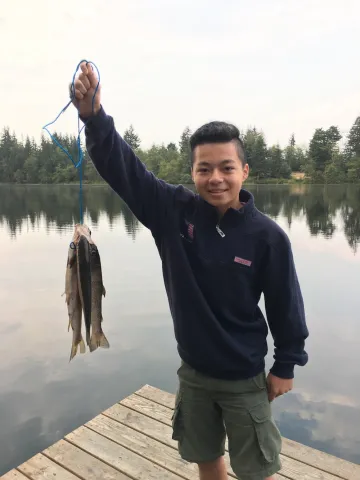
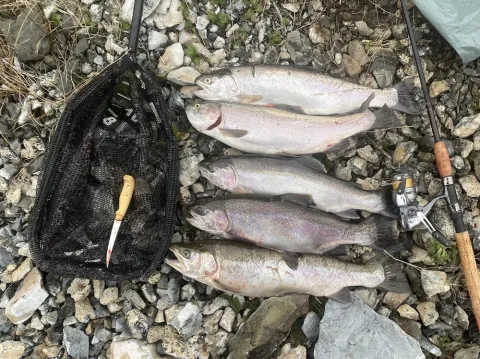
The fishing wish list just grew twofold as WDFW hatchery crews have been busy leading up to Black Friday by shuttling 64,350 jumbo-sized rainbow trout, averaging 1 to 2 pounds apiece, into 25 lakes around the Puget Sound region and southwest Washington, as well as several Eastern Washington lakes and ponds.
The Black Friday program, created more than a decade ago by WDFW, came up with a creative way to stock thousands of rainbow trout for a late-season fishery in year-round lakes. The post-Thanksgiving holiday fishing option has been a hit for anglers looking to wet a line at a time when the choices are sparse.
In October, a good number of other year-round lakes around Washington were also planted with trout for anglers who want to head before Thanksgiving. You can find trout stocking information that is usually updated weekly by going to the WDFW webpage at https://wdfw.wa.gov/fishing/reports/stocking.
Black Friday trout plants include:
- Chelan County: Roses, 20,000
- Clark County: Battleground, 2,000; and Klineline, 2,000.
- Cowlitz County: Kress, 2,000.
- Island County: x-Cranberry, 4,000.
- King County: x-Alice, 1,000; x-Beaver, 2,500; and x-Green, 5,000.
- Klickitat County: Rowland, 2,000.
- Lewis County: Fort Borst Park Pond, 2,000; and South Lewis County Park Pond, 2,000.
- Pacific County: Cases Pond, 300.
- Pierce County: American, 2,000; and Tanwax, 1,350.
- Snohomish County: x-Ballinger, 3,000; x-Blackmans, 1,500; x-Gissburg Ponds, 1,500; x-Silver, 3,000; and x-Tye, 2,000.
- Thurston County: Black, 3,000; Long, 1,000; and Offutt, 1,000.
- Yakima County: I-82 Pond #4, 2,000.
(x-Around 50% of the planned trout stocking occurred in October in the noted lakes, and the remainder will be stocked in time for Black Friday)
There are four Eastern Washington lakes opening on Black Friday that were stocked with trout fry this past spring that should be averaging 8 to 10 inches, plus some other larger fish were stocked of late.
Eastern Washington lakes trout plants include:
- Stevens County: Hatch Lake, 15,000 fry stocked in May, and 600 trout averaging 1 pound apiece stocked in October; and Williams Lake, 12,000 fry stocked in May, and 1,500 trout averaging a quarter pound apiece stocked in mid-April.
- Adams/Lincoln County: Fourth of July Lake, 60,000 fry stocked in May, and 18,000 trout averaging a quarter pound apiece stocked in mid-April.
Spokane County: Hog Canyon Lake, 20,000 fry stocked in May, 10,000 trout averaging a quarter pound apiece stocked in mid-April, and 1,600 trout averaging 1 pound apiece stocked in October.
Before you go
When fishing for trout, don’t overthink the necessary fishing gear.
A basic trout rod and reel averages $50 to $90, and a higher-end set is about $100 to $200. The rod should be light and limber in the 6 to 7 foot range with a 4- to 10-pound line weight range. A medium-sized spinning reel with a capacity to hold more than 100 yards of 6- to 8-pound test fishing line will do the job right.
From the mainline, attach one or two number 8 or 9 egg sinkers with a rubber bumper just above a small barrel swivel. Avoid the cheap store-bought pre-tied 12-inch leaders that are way too short in length. Either tie your own leaders or spend a few extra dollars on pre-tied versions in 3- to 8-pound test that measure 18 to 30 inches long. A smaller size 12 or 14 egg hook is the best choice when using a moldable dough bait or nugget, salmon eggs, worm pieces, or maggots. For live bait such as a whole worm, nightcrawler, or marshmallow, the optimal hook size is a size 8 or 10 worm hook. If you use an artificial fly, the stick with a size #14 hook or smaller. A hook that is too big or exposed may scare away the fish, and one that is too small may result in fewer hook-ups. Lastly, make sure your hooks are sharp and sticky.
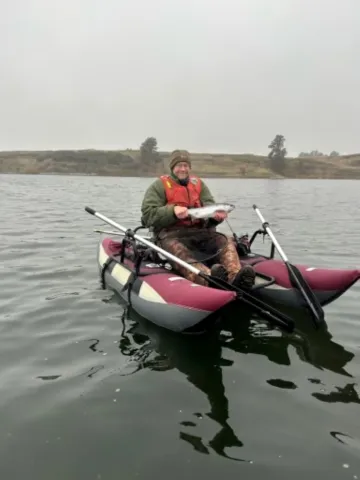
Most anglers casting from the banks or in a boat will stick with the popular moldable dough baits, which come in a variety of colors, and some are shaped like a salmon egg, marshmallow, maggot, or worm. The old school baits include salmon eggs, worms/nightcrawlers, maggots, and marshmallows.
From a boat troll a gang-flasher with a hook tipped with a piece of worm, maggot, or salmon egg, along with a tiny piece of scented dough bait or a liquid scent. A small spoon or spinner also gets its fair share of bites.
From the shoreline, cast out a small-sized bobber with your bait sitting just below the surface in 3 to 8 feet of water. Others like to go deeper, where it hangs just a few feet off the bottom, where the larger-size carryover trout lurk. Recently planted trout tend to hang around near or just under the surface of the water at depths of 3 to 10 feet. Once the stocked trout acclimate, they’ll eventually spread out and move into deeper areas of the lake. Anglers often look for schools of trout right where the hatchery truck placed them, usually near the shore, boat ramp, or dock areas.
Trout like to rise to the top of the water column to gobble up insects on the water’s surface. This is where artificial flies come into play, like a Woolly Bugger in black, dark green, or black-olive in a size 8 or 10 with a 5- or 6-foot leader. They can be cast from shore or trolled weightless close to the surface behind a boat or floating device.
A fishing license – https://fishhunt.dfw.wa.gov/login – is required for anyone age 16 or older. A Discover Pass – https://wdfw.wa.gov/licenses/parking – is required to park a vehicle at many state lands, including the state park system, WDFW lands, and the Department of Natural Resources lands.
The Washington State Parks and Recreation Commission Boating Program –
https://parks.wa.gov/find-activity/activity-search/boating – would also like to remind anglers to take a boater safety education course, if you haven’t already, to be prepared for spring and summer. In Washington, boaters who operate a vessel with a 15-horsepower engine or greater must carry a Boater Education Card to prove they passed an accredited boating safety education course.
/articles/black-friday-trout
Fall Panfishing in Eastern Washington
A treasure awaiting eager anglers
As the vibrant hues of summer give way to the crisp, golden tones of fall, Eastern Washington transforms into a paradise for outdoor enthusiasts. For many, this time of year means hunting or hiking through the scenic landscapes. However, for anglers in the know, fall represents one of the best opportunities for panfishing in this region. Panfish, including species such as bluegill, crappie, and perch, become particularly active as the temps begin to drop, offering a fantastic fishing experience.
The appeal of fall Panfishing
Fall is a transitional season, and for many fish species, it signals the need to feed aggressively, putting the feed bug on for the winter months ahead. For panfish like crappie and bluegill, this means moving from the deeper waters they inhabited during the hot summer months to shallower, more accessible areas where they can feast on minnows, insects, and other aquatic creatures. Anglers targeting panfish in the fall can enjoy several advantages:
Reduced fishing pressure
As fall arrives, many anglers turn their attention to hunting, leaving lakes and rivers quieter, and less crowded. The reduced fishing pressure can make panfish less warry and more likely to bite.
Ideal weather conditions
The mild temperature of fall provides a comfortable environment for fishing. The oppressive heat of summer is gone, and the cold chill of winter has yet to set in, creating the perfect conditions for a day on the water.
Spectacular scenery
There's nothing quite like spending a day on the water surrounded by the stunning fall foliage of Eastern Washington. The golden leaves of cottonwoods, aspens, and maples reflect off the glassy surface of the lakes, creating a breathtaking backdrop for any fishing trip.
Active fish
As water temps cool, panfish metabolism remains relatively high, encouraging aggressive feeding behavior. This is a stark contrast to the lethargic bites often experienced in the summer.
Best Panfish species to target in Eastern Washington
Crappie
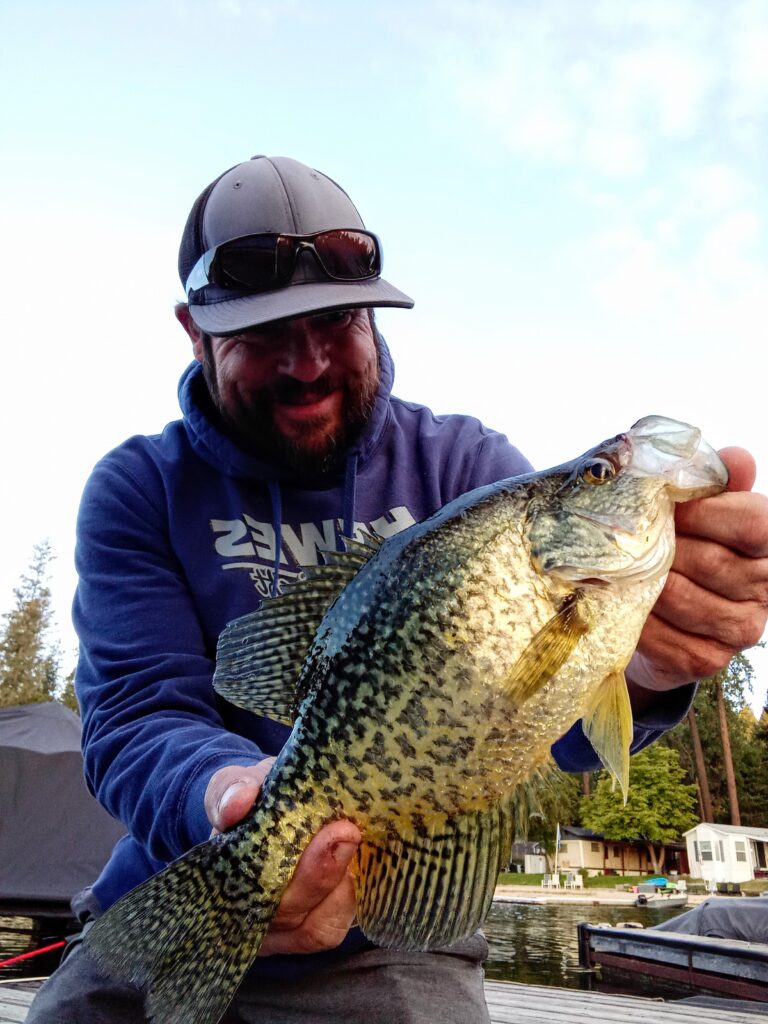
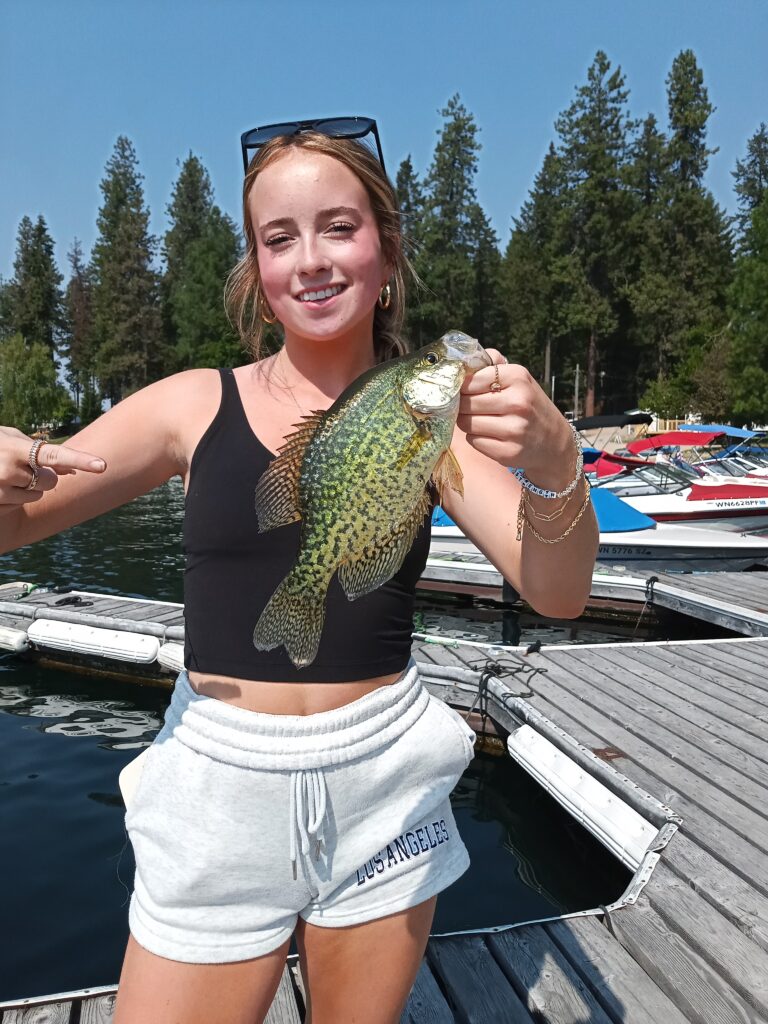
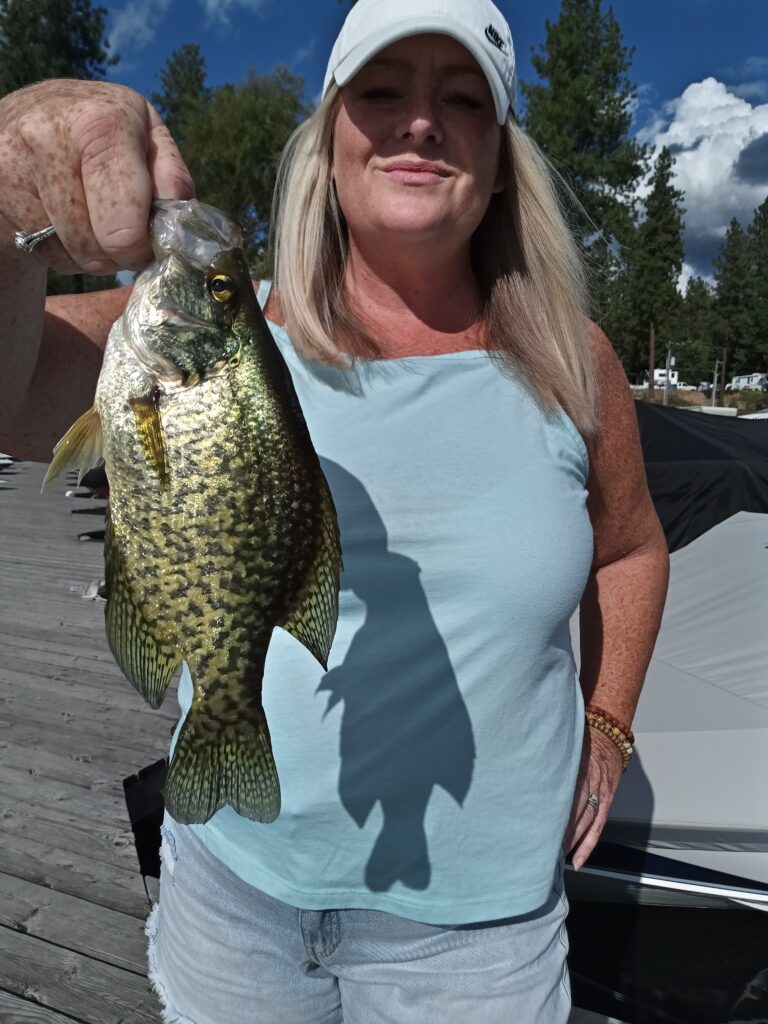
Crappie is a favorite among panfish enthusiasts due to its delicious, flaky meat and relative abundance in Eastern Washington waters. Two species, black crappie and white crappie can be found, though black crappie tends to be more common. During the fall, crappie often schools up in large numbers, making them easier to locate and catch.
Best spots
Moses Lake, Eloika Lake, Newman Lake, and Sacheen Lake are well known for their healthy abundance of populations. Look for crappies in areas with submerged structures such as fallen trees, docks, or rocky points where they seek shelter and forage.
Techniques
Casting small jigs with plastics, or bait, is highly effective for fall crappie. A slow steady retrieve near submerged structures often entices strikes. Night fishing can also be productive especially when using lights or lanterns to attract the crappie.
Bluegill & Sunfish
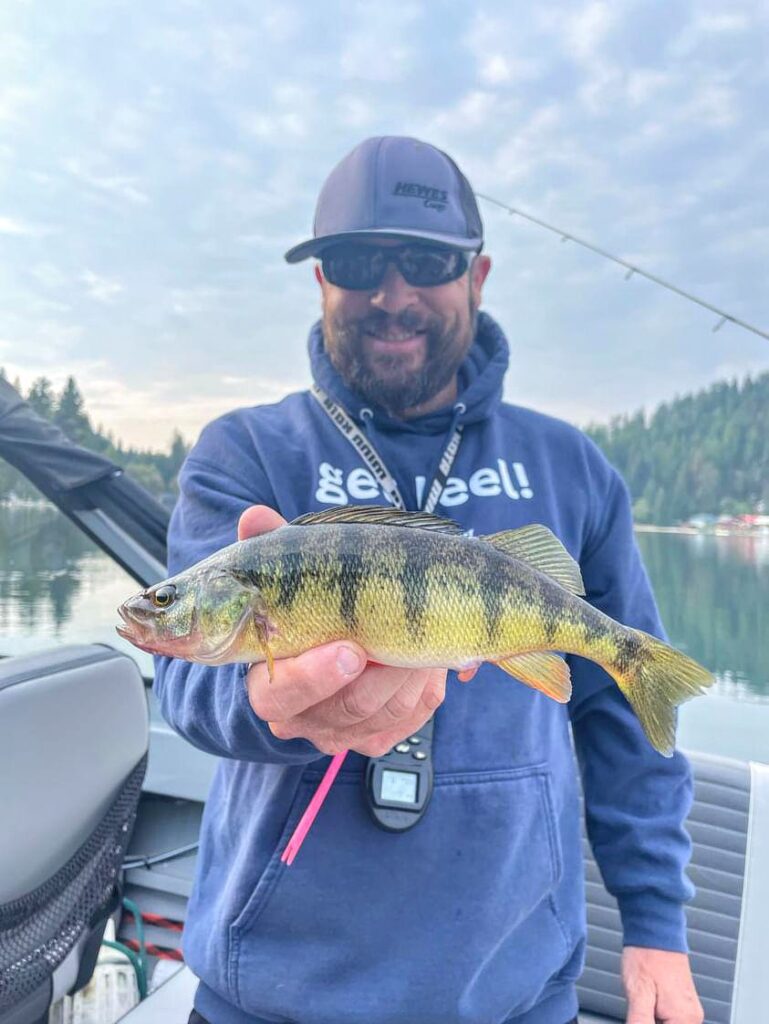
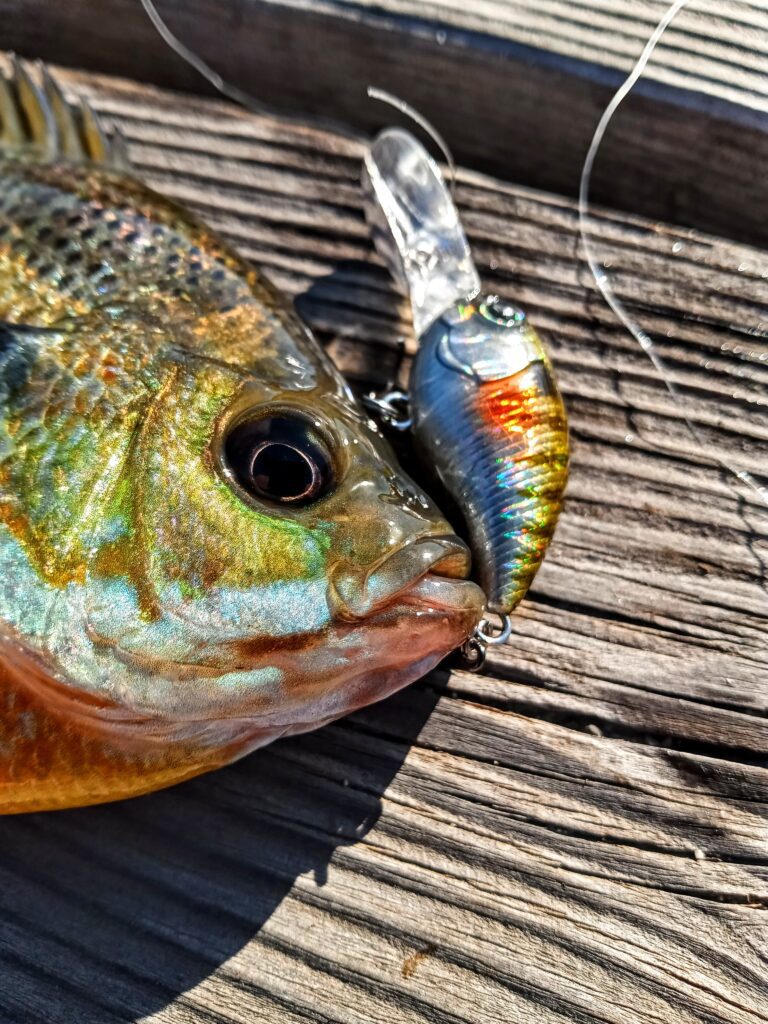
Bluegill and other sunfish species, such as pumpkin seeds, are abundant in Eastern Washington and provide great action for anglers of all skill levels. They are often found in shallow waters, especially around weed beds, submerged vegetation, and docks.
Best spots
Eloika Lake, Newman Lake, Sacheen Lake, and Loon Lake to name a few, are excellent choices for targeting bluegill and sunfish. These lakes offer plenty of fishing availability, making them perfect for both boat and shore anglers.
Techniques
Bluegills are notorious for their lake of small, natural baits. Worms, crickets, and small jigs work wonders, particularly when fished below a bobber. Small flies, in the nymph patterns, can also be effective and add an extra way to approach these fish.
Yellow Perch
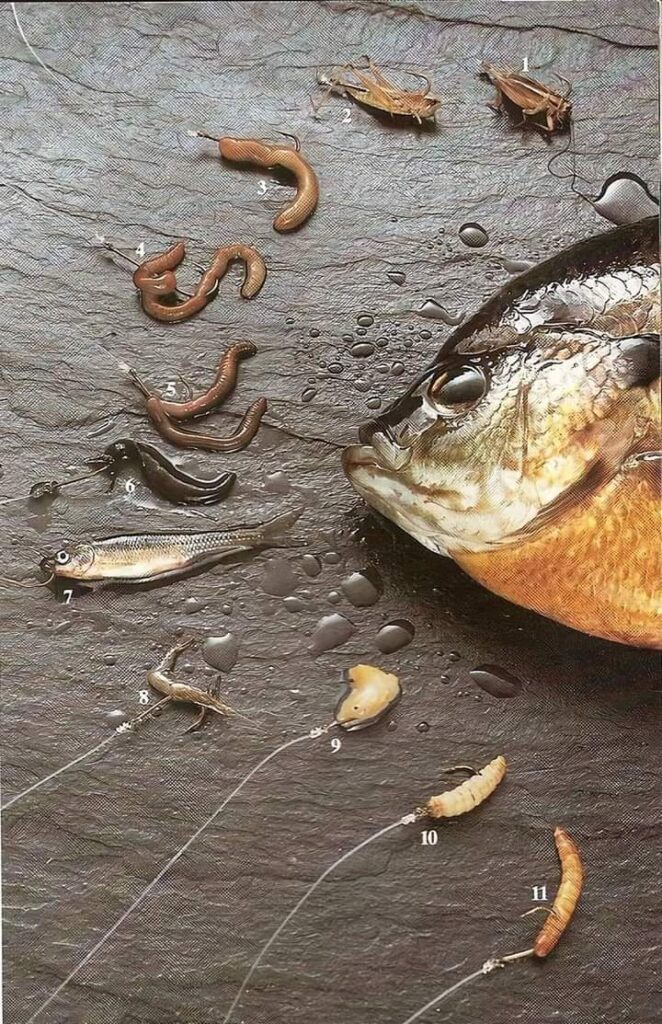
Yellow Perch are another panfish targeted by fall anglers in Eastern Washington. Known for their aggressive nature, and flakey tasty filets, perch are often found schooling up in deeper water, usually inhabiting a large mud flat looking for bloodworms, but don't overlook the shallows as temps drop and baitfish move toward the shore.
Best spots
Silver Lake, Moses Lake, Sacheen Lake, and Eloika Lake rank among prime locations for yellow perch. These waters provide plenty of food and cabbage where these perch can hide, and hunt. (Don't forget Long Lake.)
Techniques
Perch can be caught using a variety of methods, but jigging small spoons tipped with small plastics, or bait tends to be the most effective way. Vertical jigging from a boat can be best, especially when you locate a school of perch on your fish finder.
Tips for successful fall Panfishing in Eastern Washington:
Use light tackle
Panfish have small, soft mouths and are easily spooked by heavy tackle. Light spinning rods, small reels, and 4-6lb test lines are ideal for detecting subtle bites and presenting small baits effectively.
Look for structure
Panfish are actually drawn to structures that provide cover from predators and access to food. Fallen trees, weed beds, rock piles, and boat docks are all excellent places to find schools of panfish. Use a fish finder to locate submerged structures that aren't visible from the surface.
Experiment with lure colors and sizes
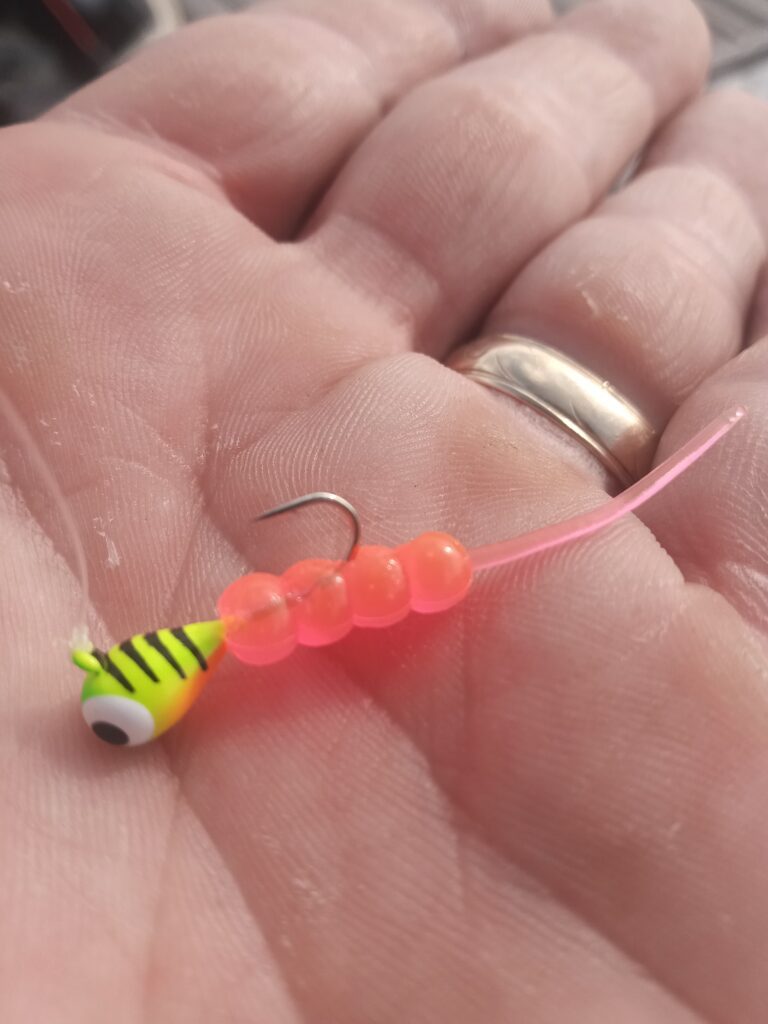
Different panfish species and even individual fish can have a unique preference, so it's good to experiment with variations of lures, with different colors and sizes. Or even trying to figure out what they are feeding on, and match the hatch.
Stay Mobile
If you're not getting any bites in one spot, don't be afraid to move around. Panfish schools can be highly mobile, especially in the fall, so covering more water can increase your chances of finding active fish.
Adjust your depth
Panfish can often be found at varying depths depending on water temperature during the day. Start shallow and gradually move deeper as the day warms up. Fish can sometimes be found surprisingly deep even in cool months - and don't overlook the suspended fish in the middle column.
The fall Panfishing experience
Fall panfishing in Eastern Washington offers a unique blend of excitement and tranquility. The crisp air, vibrant fall foliage, and the serenity of the lakes make for a peaceful escape from the everyday hustle and bustle. For those who enjoy the challenges of light tackle and the reward of a well-earned catch, there's no better time to get out on the water.
Whether you're a seasoned angler or a beginner looking to experience the thrill of fishing, Eastern Washington lakes and reservoirs offer plenty of opportunities to reel in some of the best and most enjoyable fish the region has to offer. With a bit of patience, and the right gear, and a sense of adventure, you'll find that fall panfishing in Eastern Washington is more than just a past time - it's a cherished tradition waiting to be discovered. So grab your fishing rod, pack your tackle box, and head out to the waters of Eastern Washington this fall. The panfish are biting, and the experience is one you won't want to miss.
![{"capture_mode":"AutoModule","faces":["-1482_-1552_-546_-616"]}](https://cdn.northwestfishing.net/sites/default/files/styles/large/public/images/IMG_20240907_122136_1-scaled.jpg.webp?itok=1nO2jnuv "{\"capture_mode\":\"AutoModule\",\"faces\":[\"-1482_-1552_-546_-616\"]}")
/articles/fall-panfishing-eastern-washington
Exploring My Favorite Waters: 7 Eastern Washington Lakes Every Angler Must Fish
When it comes to angling adventures, Eastern Washington boasts an array of lakes that promise unforgettable experiences for fishing enthusiasts. From serene hideaways to expansive waters teaming with aquatic life, each lake offers its own unique charm and beauty. In this article, we will go into the allure of 7 of my must-visit lakes in Eastern Washington. Loon Lake, Diamond Lake, Long Lake, Deer Lake, Waitts Lake, Sacheen Lake, and Lake Roosevelt.
#1 Loon Lake: A Tranquil Haven
Nestled amidst the scenic beauty of Stevens County, Loon Lake is a haven for anglers seeking tranquility and plentiful fish. Renowned for its population of Kokanee, Rainbow Trout, and Bass, this picturesque lake also offers World Record Tiger trout. An abundance of opportunities for both novice and seasoned anglers. Whether you prefer casting from the shore, chasing the sunfish and crappie around docks, or trolling on a boat, Loon Lake promises a rewarding fishing experience against a backdrop of natural beauty.
#2 Diamond Lake: A Gem For Anglers
True to its name, Diamond Lake sparkles as one of Eastern Washington’s hidden gems for fishing enthusiasts. Situated in Pend Oreille County, this pristine lake is celebrated for its clear water, and the diverse fish species. From trophy-sized Brown trout, and Rainbow trout, to feisty smallmouth bass, and some really nice perch, Diamond Lake presents anglers with a tantalizing challenge and the promise of unforgettable memories. From ice fishing to the warm summer months, the scenery year-round is amazing.
#3 Long Lake: Where Adventure Awaits
Stretching across Stevens and Spokane counties, Long Lake beckons anglers with its expansive waters and rich aquatic life. Boasting an array of fish species, including a healthy population of Walleye, some Northern Pike, great Perch and Crappie, plenty of Trout, and amazing bass fishing. This lake offers endless opportunities for exploration and angling excitement. Whether you prefer trolling, or casting from a boat, and or from the shore or dock, Long Lake invites you to embark on an adventure filled with anticipation and discovery.
#4 Deer Lake: A Serene Retreat
Tucked away in the foothills of Stevens County, Deer Lake exudes a charm that captivates anglers seeking solace in nature. With its clear waters and lush surroundings, this idyllic lake serves as a great place for relaxation and fishing. From Rainbow trout, and of course, the Mackinaw lurking below, you can also find some great bass and panfish. There was a time not too many years ago, when an angler could get into a mess of Kokanee, now the mystery is where did they go? Are they still swimming here? Deer Lake offers a bounty of opportunities for anglers to test their skills and unwind amidst the beauty of the great outdoors.
#5 Waitts Lake: Where Memories Are Made
Nestled in the heart of Stevens County, Waitts Lake stands as a testament to the enduring allure of Eastern Washington's fishing destinations. Boasting a rich history of big Brown trout, and abundant fish populations, Waitts has great opportunities for also Rainbow Trout, Perch, Bass, and Sunfish. Also a destination for many ice anglers in the winter months as well, as it's open year round. Whether you prefer trolling from the boat or fishing the resort's docks, Waitts Lake promises an experience filled with camaraderie, excitement, and the promise of cherished memories.
#6 Sacheen Lake: A Hidden Paradise
Not hidden like a secret, but tucked away in the forest of Pend Oreille County, Sacheen Lake beckons anglers with its year-round secluded beauty and great angling opportunities. This lake holds some gorgeous Brook trout, Rainbow, and Tiger trout. A healthy population of yellow perch, and crappie are a favorite target for the ice anglers. I saw some big bass pulled out of this lake as well. With its scenic surroundings, this lake offers something for every angler, whether novice or expert, Sacheen invites you to cast your line and immerse yourself in the peaceful rhythms of nature.
#7 Lake Roosevelt: The Jewel Of The Columbia
Stretching across the vast landscape of Eastern Washington, Lake Roosevelt is a testament to the region's natural grandeur and angling legacy. Formed by the mighty Columbia River, this expansive lake offers a wealth of fishing opportunities against a backdrop of rugged beauty and historical significance. With many launches and many miles of shore to enjoy and do some boat camping, you'll find that Lake Roosevelt offers a ton of activities. From trophy size Kokanee, and Trout, and an abundance of Walleye, some anglers may want to target the Sturgeon. Lake Roosevelt promises an angling adventure like no other.
Eastern Washington lakes offer a treasury of angling opportunities for enthusiasts of all ages and skill levels. From the small waters of Loon Lake to the expansive waters of Lake Roosevelt, each lake beckons with its own unique promise for adventure. So pack your gear, set your sights on those seven Eastern Washington lakes, and embark on a fishing journey filled with excitement, camaraderie, and the timeless beauty of our great outdoors.
![{"capture_mode":"AutoModule","faces":[]}](https://cdn.northwestfishing.net/sites/default/files/styles/large/public/images/IMG_20240127_094906_3-scaled.jpg.webp?itok=lCi6vt3M "{\"capture_mode\":\"AutoModule\",\"faces\":[]}")
/articles/exploring-my-favorite-waters-7-eastern-washington-lakes-every-angler-must-fish
Carp Bow-Fishing
A slight westerly wind nudged the port-side of my 14’ Smokercraft, sending me into a silent and gentle drift through an endless sea of lily pads. It was a quiet approach, ideal for sneaking up on unsuspecting prey, yet the piercing glare of the setting sun reflecting off the water rendered my eyes almost completely useless. Through a squinting gaze, I struggled to make out what looked like a slight ripple in the water, followed by a dorsal fin breaching the surface. Drawing back on my bow I prepared for what would not only be my last shot of the evening, but possibly the biggest common carp I’ve ever taken with a bow. A twang from the string pierced the silence, and at a 50 lb. draw weight the arrow pounded through the water, gliding right over the top of the fish. A near miss, and only one of many that I will experience when attempting to land carp through arguably one of the most difficult methods of fishing.
Beauty of Bow-Fishing
Bowfishing for carp is the crème de la crème of outdoor activities for those who have an affinity for both fishing and hunting. It combines two beloved pastimes in a way that is both unique and challenging, plus, it fulfills that nagging itch that plagues most hunters this time of year as they eagerly await fall hunting season. Just like fishing with a rod and reel, bowfishing is a game of patience. The beauty of bowfishing however, is that instead of sitting and waiting while you troll your rig under the water or wait for a bit of movement at the tip of your rod, you instead get to spend your time deeply focused as your ears are tuned into the sounds of thrashing water, or carp feeding at the surface. You’re in constant engagement as you scan the water looking for slight movements in the vegetation, or for fish jumping or flapping at the surface, or better yet, for a fish swimming within shooting range.
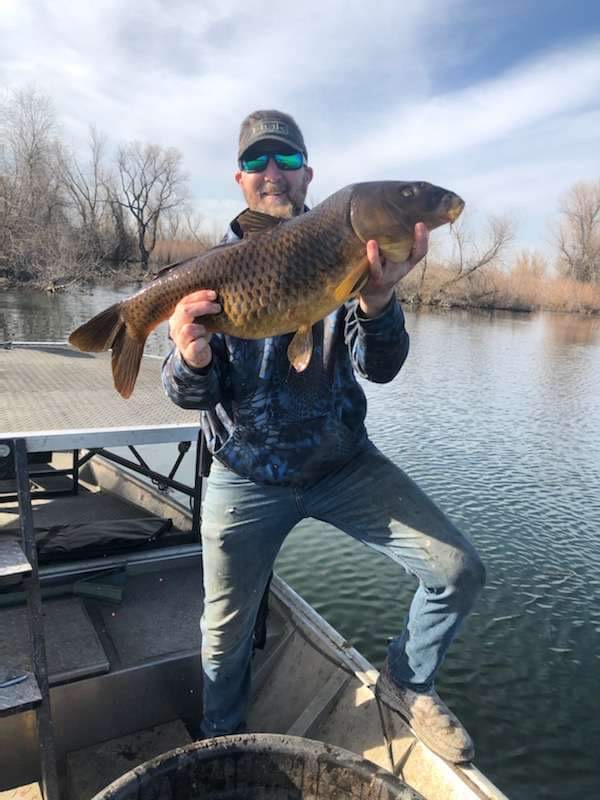
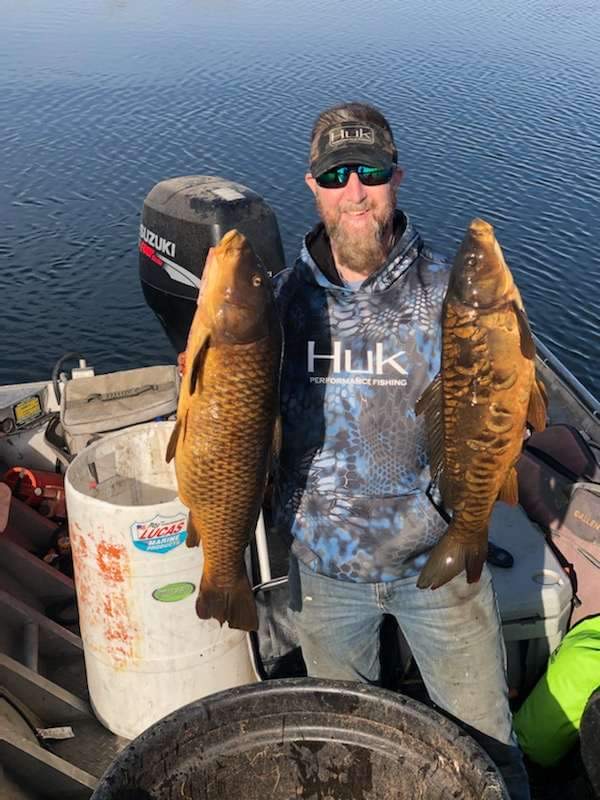
Aside from the large doses of adrenaline that are part and parcel to bowfishing, those who choose this method of taking on common carp also get the added benefit of taking part in lake and river ecosystem restoration. Though carp were introduced by well-intended folks, they are classified by the Washington State Department of Fish and Wildlife as an aquatic invasive species. These fish are highly fecund; with females laying up to 300,000 eggs per spring. Their ferocious appetites result in the removal of beneficial vegetation that would otherwise provide viable spawning habitat for native fish, they increase the amount of suspended solids in the water; causing increased turbidity, and they have been known to have a negative impact on phytoplankton production. Not only is the removal of common carp encouraged in Washington state, its supported to the extent that the WDFW does not require anglers to have a fishing license to catch or shoot them.
Looking to get into bowfishing for carp? If you’re already an archery hunter, then you’re over halfway there. For under 200 dollars, (at the time I write this) compound bows can be converted for bowfishing with the addition of a bottle reel, an arrow holder, pronged arrows, and some safety slides to prevent fishing line mishaps. Bottle reels are often preferred over spinning reels as they can hold heavier line for larger fish. The downside is that they require you to hand-line in your catch as opposed to reeling. If you own a high dollar bow, there’s a good chance you don’t want it getting banged and bloodied up in the boat, if that’s the case then there are plenty of options out there for bows built specifically for bowfishing.
Technique
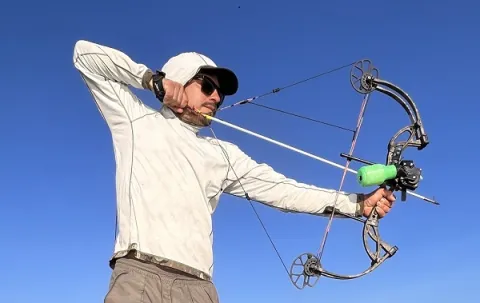
Bowfishing is essentially a spot and stalk hunt through the shallows. You can drift slowly in a boat, covering the ground as you move though the water, or you can anchor in a spot where the fish are present and actively feeding on vegetation. Another method is to simply wade in the water and get on your fish that way. Whether in a boat or on foot, the key difference between bowfishing and land hunting is that you won’t be using sights when you aim at your target. Bowfishing, for the most part, is done with instinctive aiming. This means that you look at the target, aim, and shoot. This method takes a bit of practice to become proficient at, but most bow fishermen will find that instinctive shooting comes quite naturally and is a quick and effective way to get off shots.
Light refraction might be one of the biggest challenges you face when first getting started with bowfishing. When light traveling through air hits denser water, it slows down and bends. This causes the perceived image of the fish we see in the water to be above where the fish is actually located. Because of this, you have to aim low to get your shot on target. Like instinctive shooting, adjusting to light refraction takes practice, but as you miss time and time again, you’ll eventually find that sweet spot and gain an intuitive understanding of where the arrow needs to go.
Where To Fish
Common carp can be spotted throughout the expanse of Washington state, although, akin to many of the region's fisheries, the eastern part of the state, east of the Cascades, is where the majority of prime locations for these fish can be found. Here's a compilation of lakes and ponds across Washington State where common carp can be encountered:
Eastern Washington
- Lake Spokane
- Whitestone Lake
- Palmer Lake
- Horse Thief
- Elton Pond
- North Myron Lake
- Zillah Winery Pond
- Soda Lake
- Banks Lake
- Billy Clapp Lake
- Moses Lake
- Evergreen Lake
- Potholes Reservoir
- Hideaway Lake
- Big Bow Lake
- Lake Wallula
- Columbia Park Pond
Western Washington
- Silver Lake
- Horseshoe Lake
- Lake Sacajawea
- Kress Lake
- Vancouver Lake
- Kineline Pond
- Lacamas Lake
- Lake Washington
- Green Lake
- Long’s Pond
- Black Lake
- Blackmans Lake
So, whether you’re an archery hunter who’s spent a little too much time day dreaming about the fall hunt and is just itching to go fling off some arrows, or if you’re an angler who wants to both diversify and add excitement to their outdoor lifestyle, bowfishing for Washington common carp might be exactly what you’re looking for.
/articles/carp-bow-fishing