Spring Ahead To Roses Lake
Looking back across the lake to the floating dock and small boat launch, it appeared much farther away than it was. Roses Lake, near the small orchard community of Manson, WA, is 130 acres and surrounded by foothills leading to the Cascade mountains. Roses Lake is not small, but also not nearly as large as the nearby 55-mile-long Lake Chelan which is the main reason why most visit the farming valley.
But on this springtime day, the afternoon winds had come up, blowing down the rolling hills and across Roses Lake. Between me and the newly redesigned boat ramp stretched a choppy expanse of wind-driven waves and whitecaps. In my small 12-foot rowboat, the real challenge wasn’t just the distance, it was the fact that I’d be rowing straight into the wind and crashing waves.
It had been a good day of fishing with several trout on the stringer and even more released as I rowed across the lake. Towing a green Mack’s Smile Blade fly in olive green with two small split shot a couple of feet before the fly meant catch and release was an option. If you choose to use bait then all fish caught must be counted towards the daily limit, even if released. Once I got to the far shore which is lined with cattails, I opted to switch over to a lightweight rod and a small jig with a curly tail grub under a float. This provided non-stop action with bluegills and small largemouth bass. Roses Lake offers anglers a lot of options all year long.
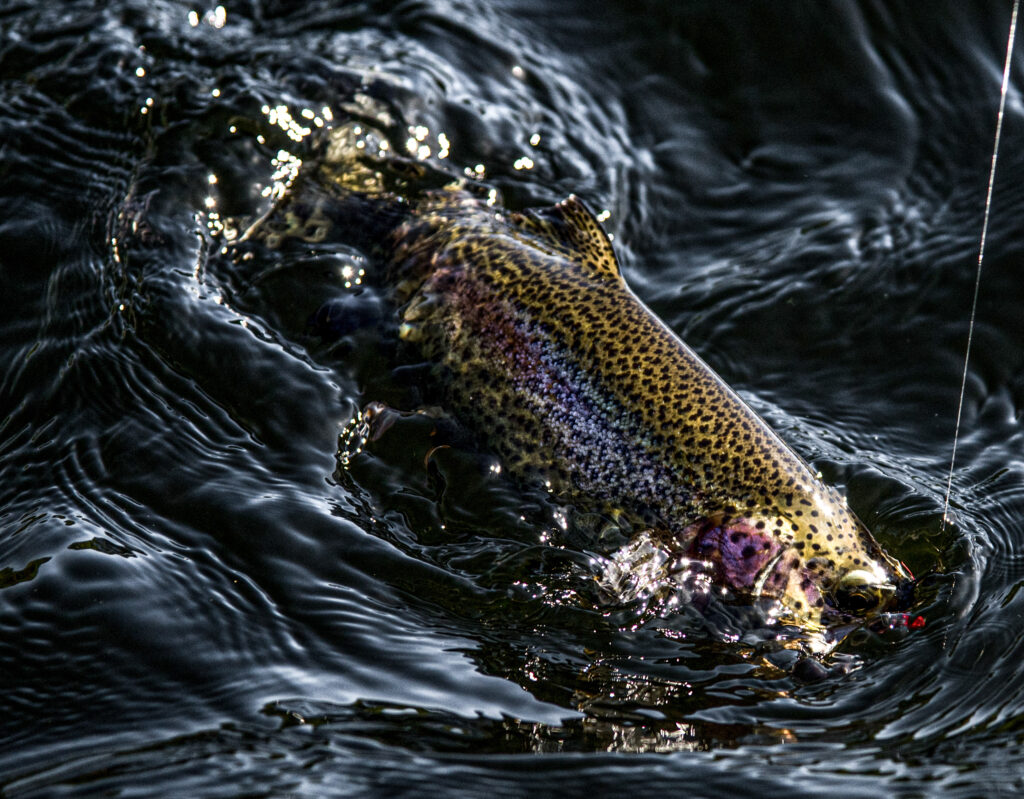
I grew up fishing this lake and back when it was a winter-only fishery, opening on December 1st and closing on March 31st; it was very popular with the locals. Every weekend there would be dozens of people sitting on buckets huddled around holes in the ice. But by the time the ice was gone, so were the locals. It seems they had their fill by March. Then several years ago the lake became a year-round season, now there is no rush of fishermen on December 1st.
When the ice is on this lake it is still very popular with the locals, but just like the days of years ago during the winter-only fishery, once the ice is off, the lake is all but forgotten. My dad fished it every day for a week straight this past January when the ice was thick and solid. He also limited on 10 to 12 inch rainbows in less than 2 hours each day he went out and the fishing continued to be good until the summer heat warmed up the water and brought out the water skiers.
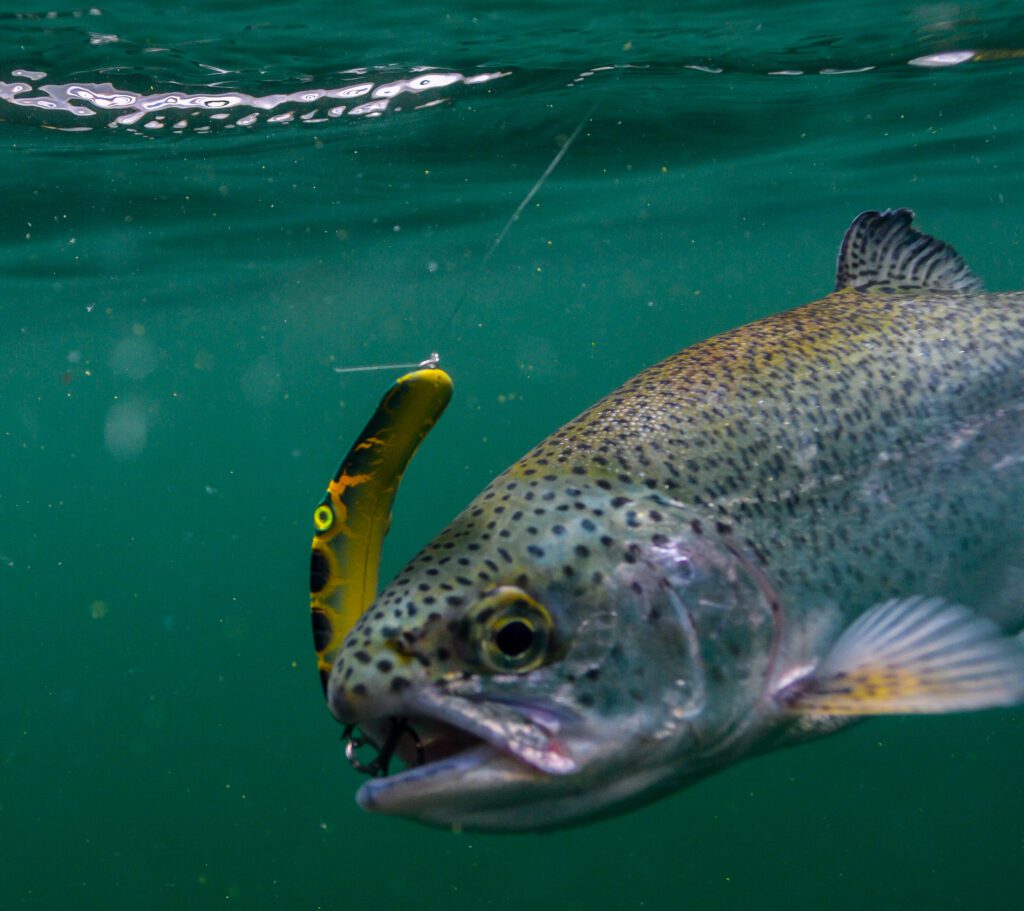
In March, the lake becomes very active, especially towards the end of the month when the water temps start rising and bugs start hatching. April and May are great months to fish the lake, especially trolling Mack’s Smile Blade flies or Carey Special flies either on a sinking fly line or on a lightweight spinning outfit with a few split shot above the flies. Since the lake receives trout plants throughout the year there always seems to be enough fish to make it worth the time to wet a line.
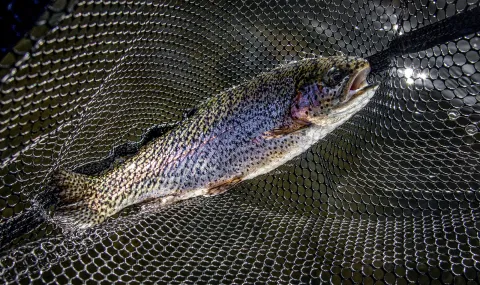
On average this lake sees a yearly planting of 31,000 rainbow trout, with 25,000 of those being triploids which are sterile and grow quickly. Washington Department of Fish and Wildlife also stocks around 2,000 brown trout and another 2,000 tiger trout, which are planted in hopes of keeping the warmwater spiny ray species in check. There are also catfish in this lake, though rarely targeted, and a good population of bass as well.
Access:
Roses Lake is 7 miles from the town of Chelan, along the north shore. Take Highway 151 towards Manson. Turn right on Wapato Lake Road, which is the same road that leads to the Colville Tribes casino and is across from Mill Bay County Park. Continue for approximately 2 miles until you come to Roses Ave. Turn left for about a ½ mile and the road veers right onto Green Avenue. Then head to the marked WDFW launch and access site about a ½ mile further.
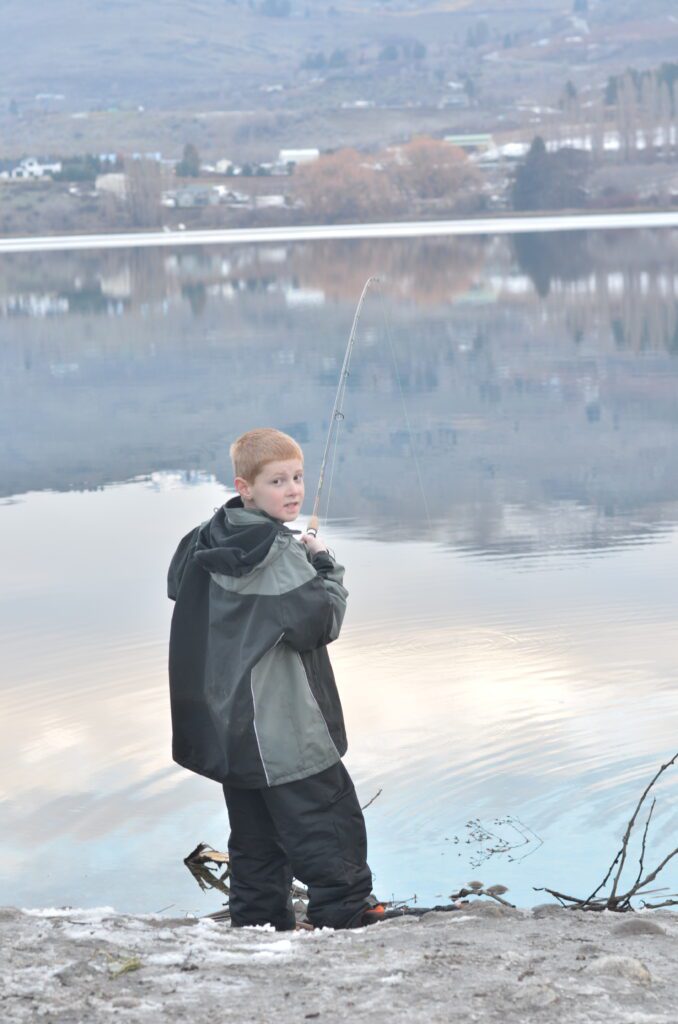
There is ample parking which was recently re-paved and has bathroom outhouse facilities. Roses Lake access site also had the boat launch improved a few years ago with a dock added to assist in launching small watercraft. For those bound to the shoreline, WDFW just added a new fishing dock and a handicapped access bulkhead to fish from. It should be noted that this is the only public access to the lake as the rest of the shoreline is private property.
Where to fish:
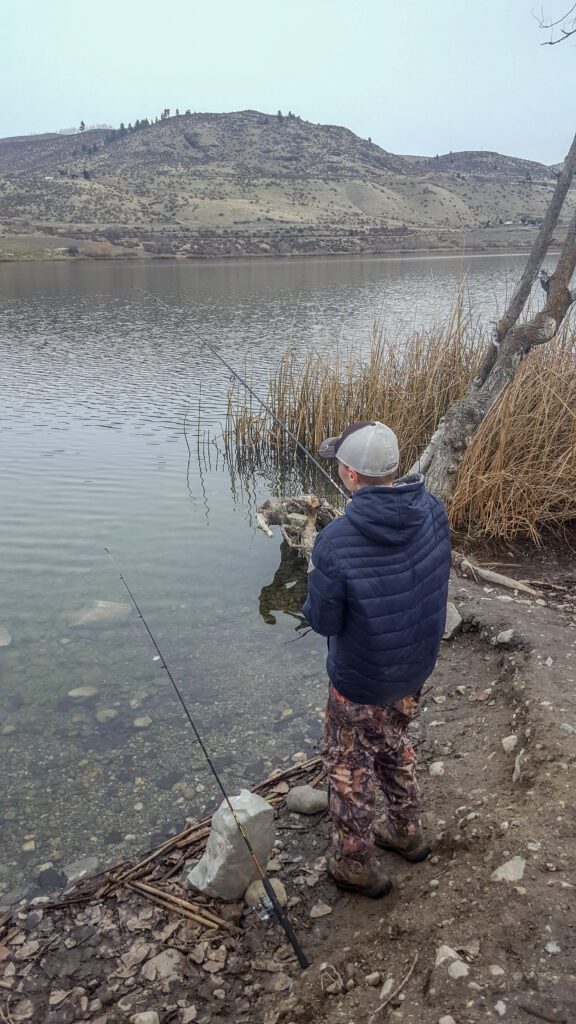
Right out in front of the boat launch and off of the two fingers at the public access site has always produced fish. But if you have a boat there are two other areas that I highly recommend. First is a cove to the Northwest end of the lake. This cove area is shallow compared to the center of the lake and the water temps can warm up a little bit here which makes for better bug activity and hungry fish.
The second area is the East shoreline. This area is also shallow and has a sandy bottom which heats up the water in the early spring. There is a spring to the north side of the eastern shore where fresh water enters the lake from the aquifer. As the ice comes off of the lake with the oxygen-deprived water this area always does well in early spring. Of course, my favorite area is actually trolling between the east shore and the cove to the northwest along the northern shoreline just outside of the cattails.
What to use:
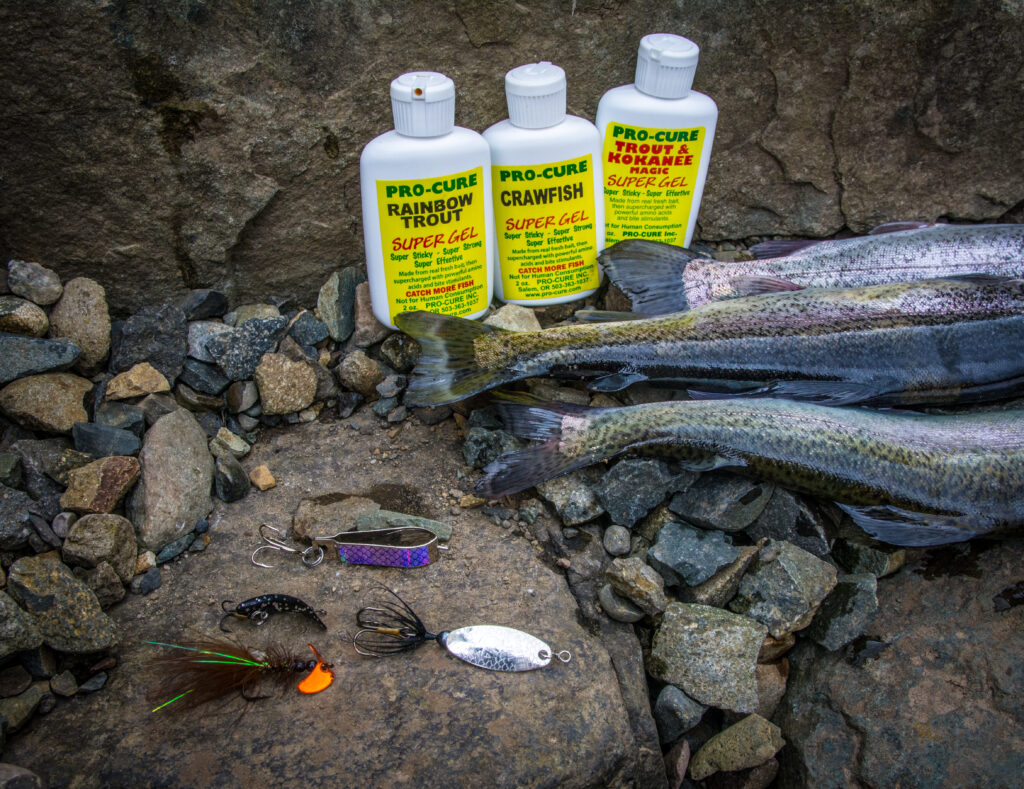
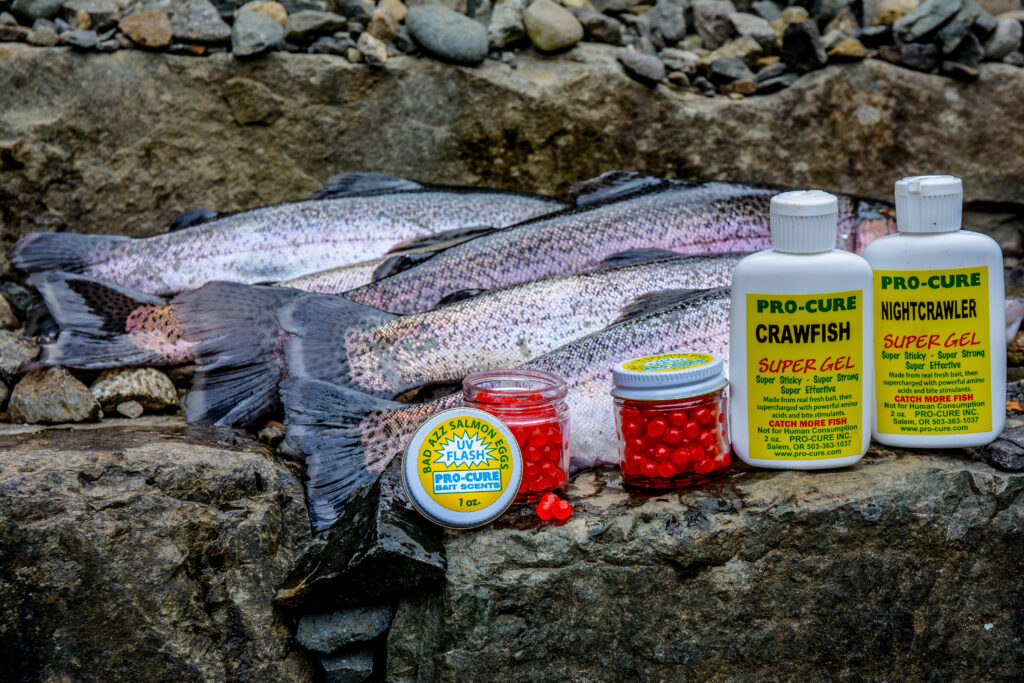
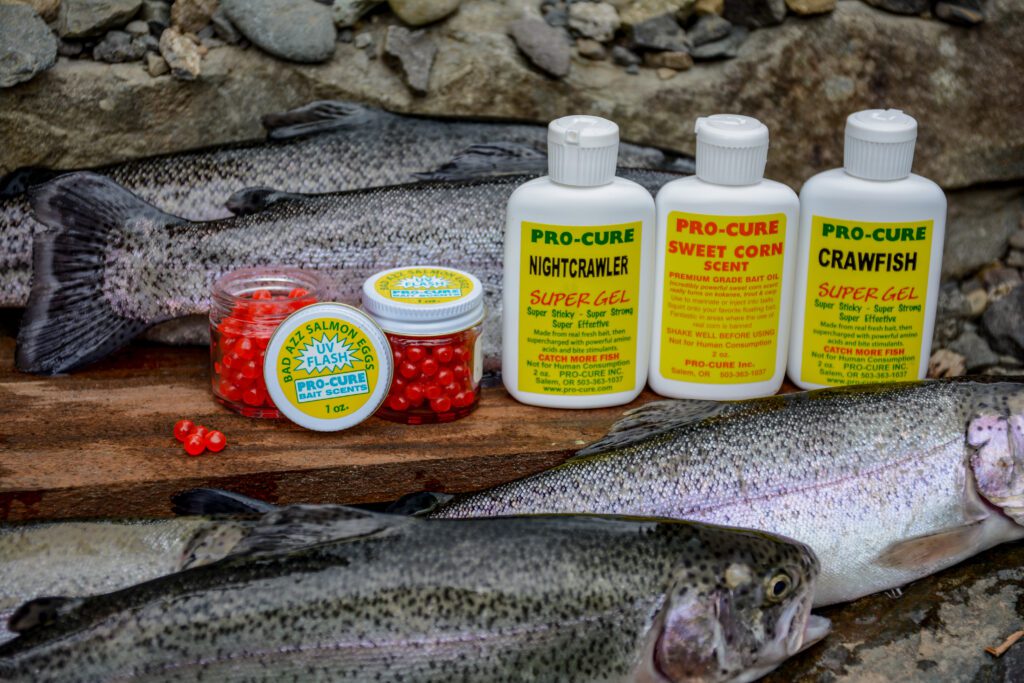
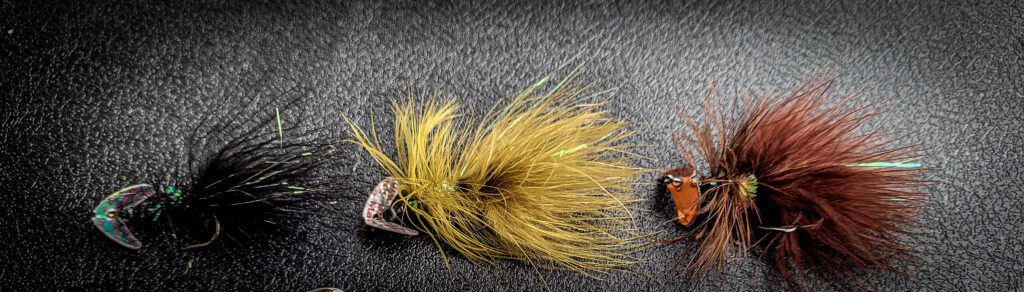
This is your standard trout lake and you can’t go wrong soaking powerbait or single salmon eggs doused with Pro-Cure SuperGel in nightcrawler or trophy trout. Be ready if you’re a bait plunker as there are also some big channel catfish in the lake that might gobble up your offering and give you a heck of a surprise when you’re expecting a planter rainbow! When the ice is on a favorite bait is cooked cocktail shrimp tipped with some corn soaked overnight in Pro-Cure bloody tuna SuperGel. But either before the ice or after it comes off my number one way to fish Roses is to troll a Carey Special or olive green Mack’s Lure Smile Blade fly, which is essentially a Whooly Bugger with a small Mylar blade in front.
Black leaches and a gold bead head black or green whooly bugger also works really well and you can use them to catch panfish and bass as well. You can use a 5 to 7 weight fly rod with a slow sinking line, or just a few small split shot two feet in front of the fly with a spinning outfit. Of course, if there was anyone joining me for the day I always made sure we had at least one Yakima Bait Company 2-inch Maglip in a green frog pattern being trolled behind the boat. You can use motors on the lake, but rowing can increase bites as it seems that the slower you go the more fish you catch.
Fly fishing too:
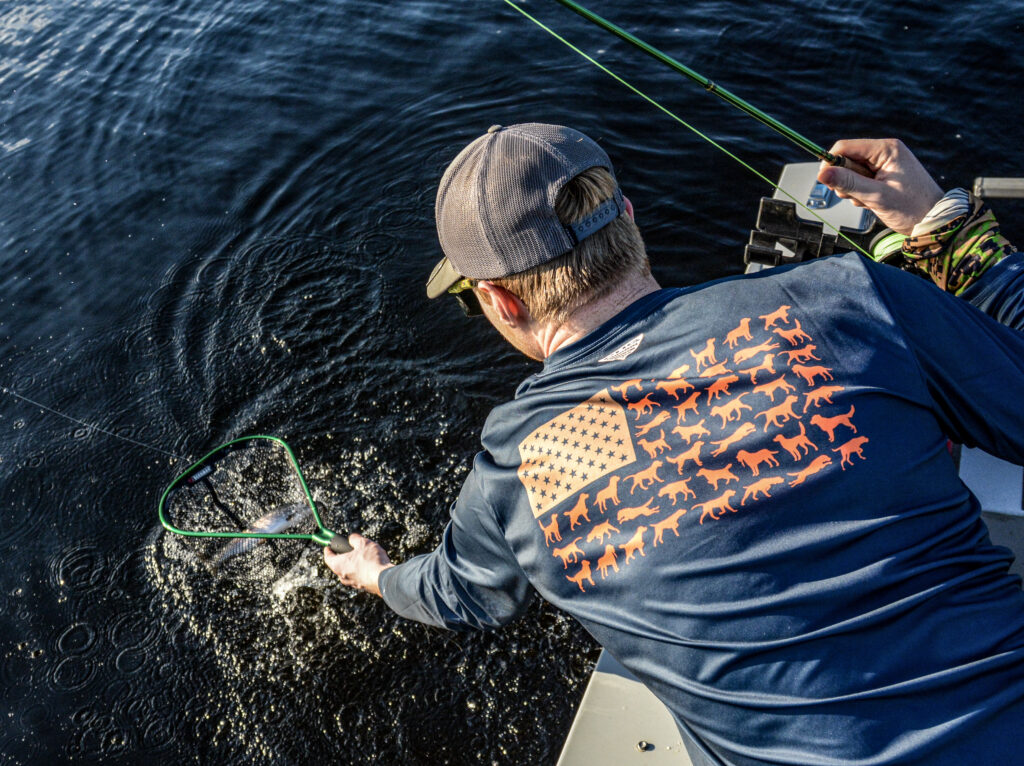
Just to the west of the boat launch is a little stream that outflows from Roses Lake to Dry Lake. Dry Lake is full of warm water fish, such as bass, crappie, bluegills and sunfish. These species always seem to sneak their way into Roses and this part of the lake is ideal for float tubing with a fly rod. There are also tiger trout in Roses and even a few browns, as WDFW tries curtailing the sunfish and invasive panfish that can spawn in lakes by using these predators. If the trout fishing is slow then you can try poppers or leach patterns for the pan fish.
Other options:
If you are planning a trip to the Chelan Valley to give this fishery a try, don’t forget a few other options as well. Dry Lake right next to Roses is a bass fisherman’s dream. This lake is very shallow and by summer the weeds have overtaken the lake, but in fall and spring the weeds aren’t as bad and it’s very fishable. I don’t recommend ice fishing this lake because it is so shallow that the ice seems to be thin or “rotten” in places as the water can remain a bit warmer than the deeper Roses Lake. There is no improved launch at Dry Lake, but a small car topper boat or a float tube works great here. There are some big bass in there as well as good-eating crappie and other pan fish.
Of course, Lake Chelan is also an option that you cannot overlook. Springtime is prime time for the Lakers as they are in their spawning cycle. It seems the bigger fish come up from the depths or from the up lake to the down lake area (little is known where the big fish hang out since the lake is so big and deep). By late spring you can target the kokanee which are heading to the east end of the lake. The standard pop gear and wedding ring tipped with a worm and shoepeg corn soaked in Pro-Cure’s anise or bloody tuna is the top producer for the Kokes.
It seems this migration of landlocked sockeye fatten the Mackinaw for a chance to break the state record for Lake Trout. Try off of the end of Wapato Point where the lake goes from 150 feet to over 250 feet, either jigging 1 oz white grub jigs tipped with pike minnow or herring strips or troll a U20 flatfish along the bottom off of downriggers. If you’re not equipped for the deep water, the smallmouth bass are found along the docks in the town of Chelan. The water is clear enough that you can often see fish for the bass.
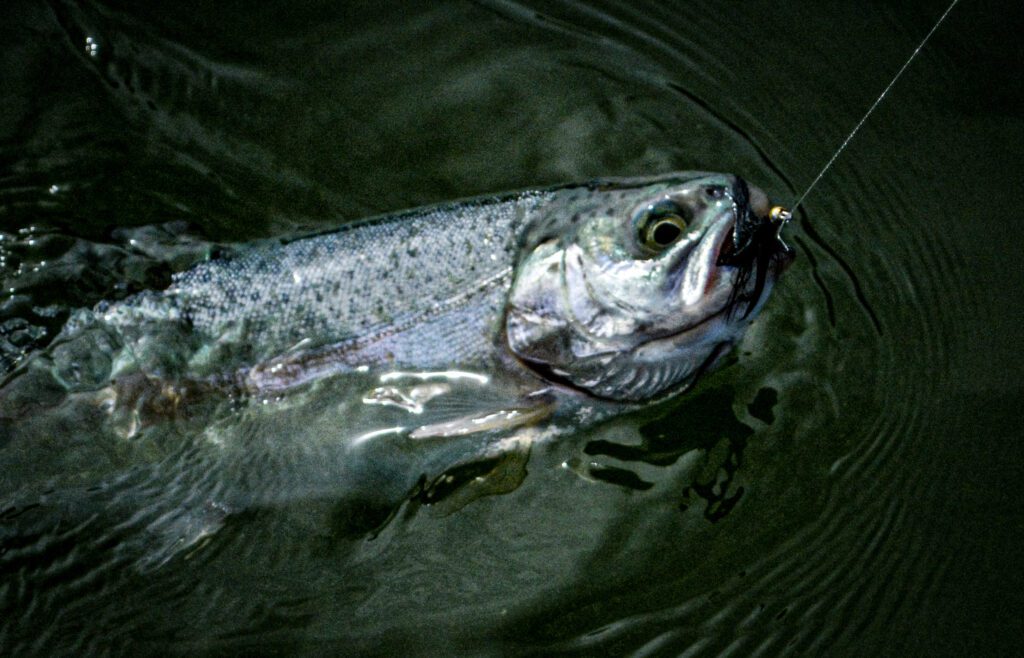
Back on Roses Lake, keep an eye on the afternoon winds and be ready to head for the boat launch. If the trout fishing slows then work the cattails for some incredible bass fishing. You might not find big bass here but they are plentiful and easy to catch. Keep in mind that there is often a water ski slalom course on the west end of the lake and that others will be using this lake as well. The 130-acre body of water is surrounded by orchards and a few houses and respect the shoreline.
The WDFW access site gets busy but there is plenty of parking and good bank access. This lake has it all, for everyone, from kayakers and float tube anglers to bass boats and tow boats, trout and bass, and some bluegill too. This makes it a perfect lake to take the kids as well as just spend some time catching fish while in the Lake Chelan Valley.
/articles/spring-ahead-roses-lake
Five Winter Fishing Options in Central Washington
Central Washington offers some great opportunities for anglers this year including river fishing, open water fishing in big lakes or reservoirs, and ice fishing in smaller lakes. Here are five solid bets for you this winter.
LAKE CHELAN
This 50-mile-long lake in North Central Washington is known for its lake trout, the largest often caught during the winter months. One person who knows this for a fact is Wenatchee resident Phil Colyar, who hauled a 35-pound, 10-ounce Mackinaw out of this lake in 2013. It’s a state record that stands to this day.
While lake trout fishing gets a lot of attention, there are other fish that can be caught during the winter months as well. Brad Wagner, owner of Bobber Down Guide Service out of Wenatchee (www.fishwenatchee.com) reported one of his guides took a couple of clients out on a trip and they came back with not only lake trout, but several kokanee and burbot.
Wagner says the kokanee last year were averaging 14 to 15 inches long. So far post-spawn, the kokanee are running around 12-inches long and most of them are being caught up the lake.
As for the burbot, they were a common sight at the lake until about 15 years ago when a virus nearly wiped them out. Wagner says the burbot population has bounced back though and if you jig for them in rocky areas about 150-feet below the surface, there is a good chance you will tie into one.
RUFUS WOODS RESERVOIR
The record lake trout may have been taken at Lake Chelan but the record resident rainbow trout was caught out of Rufus Woods Reservoir. Norm Butler accomplished that feat on Veteran’s Day of 2002 when he reeled in a 29.6-pound triploid rainbow trout from the 51-mile-long impoundment of the Columbia River above Chief Joseph Dam at Bridgeport.
Many anglers will jig for these trout out of boats near the net pens operated by the Colville Tribe. You can fish from shore on the Colville Reservation side of the reservoir, but you will need a tribal fishing permit to do so. You can also fish from shore on Washington State land just above Chief Joseph Dam or from a federal site called Brandt’s Landing on the Douglas County (east side) of the reservoir a few miles above Chief Joseph Dam.
Many anglers will still fish for their trout here sitting by a campfire. Rick Graybill, a local expert, likes to fish a shrimp and a marshmallow just off the bottom from shore. Others fish worms and marshmallows or even powerbait. If fishing from a boat near the net pens, Graybill will cast spinners, drift Corkies, cast flies, or jig for the trout with either a small piece of worm or shrimp on the jig.
If you have an RV, you can take it to the net pens where a campground has been developed with hook-ups. There is also a boat launch there, but a day or annual pass is required. You can find out more details at https://www.colvilletribes.com/lake-rufus-woods.
ROSES LAKE
Located near Manson, this small lake was stocked heavily in early November with over 10,500 rainbow trout. There is a public access and launch at the south end of the lake and if you don’t have a boat, you can have some success fishing from there before the lake freezes. After the lake freezes, this fishery really shines as an ice-fishing destination. Not only for trout, but also for warmwater species like bass, perch, crappie and bluegill. Better yet, you are allowed to use two rods here as long as you have your two-rod endorsement.
BONAPARTE LAKE
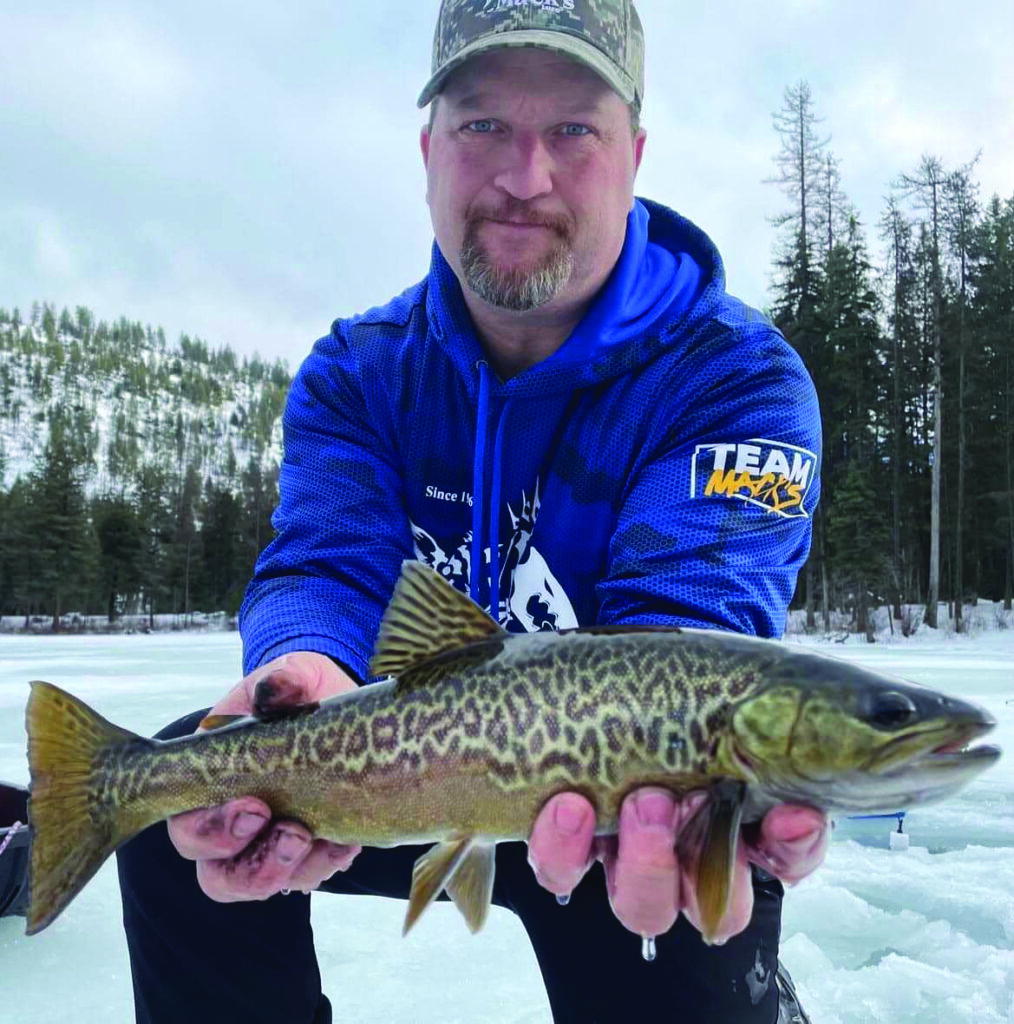
Chris Marcolin, a pro-staffer for Mack’s Lure, told me Bonaparte Lake offers opportunities for a variety of trout, including tiger, brook and rainbow trout that can be caught under the ice. Anglers can also reel in kokanee, smallmouth bass and if they’re lucky, catch one of the lake trout there.
The Third Annual Bonaparte Lake Ice Fishing Derby will take place on January 25th, 2025 with Ground Zero being Bonaparte Lake Resort. Last year, over 400 people attended the event and close to 350 adults and youth contestants fished in it. Stay tuned for details about this through the Bonaparte Lake Resort Facebook Page at www.facebook.com/bonapartelakeresort.
RIVER WHITEFISH
Another option this winter is to head to South Central Washington for mountain whitefish. The season opened for them on December 1st and runs through the end of February on the Yakima, Naches and Klickitat Rivers.
Rob Phillips is the long-time outdoors columnist for the Yakima Herald-Republic and has spent some time wading the cold waters of these streams hunting for whitefish. While you can catch these scrappy fighters with small spinners during the summer it’s a different technique that works in the winter.
Phillips recommends fishing a small nymph close to the bottom with a maximum size hook of #14. Black, brown, and yellow are all good colors, but the important thing is to tip the hook with a live maggot because the whitefish really like that bait.
So, there you have it. You can catch everything from whitefish to lake trout to kokanee to burbot to rainbows, tiger or brook trout as well as bass and panfish. Bundle up and head to one of these destinations and go fishing this winter!
John Kruse
www.northwesternoutdoors.com and www.americaoutdoorsradio.com
PHOTO CREDIT:
Chris Marcolin with a tiger trout caught while ice fishing at Bonaparte Lake – Courtesy Chris Marcolin
Phil Colyar’s state record lake trout – Courtesy Phil Colyar
/articles/five-winter-fishing-options-central-washington
The Outdoors Roundup
By John Kruse

It’s all fun and games in September and October as the foliage turns scarlet and gold. The fish put on the feed bag, biting readily. Then, November and December arrive, the leaves turn brown, tree branches become empty, and catching fish gets more challenging. Having said that, there are still some great places to catch fish in Eastern Washington in the late fall and early winter.
COLUMBIA RIVER GORGE
You know what they say, “the river never sleeps”, and neither do the fishing opportunities in the Gorge. At this time of year, the coho salmon bite is waning, but the walleye bite near John Day Dam, as well as catch and release sturgeon fishing, remains strong. If you are looking for current information, drop by Gorge Outfitters Supply in Rufus, Oregon.
GRANDE RONDE RIVER
It’s a long drive, but this picturesque river is worth it. Starting in November, good numbers of summer steelhead show up here, and fortunately, there is a good amount of public access for you to get at them, from Highway 129 at Boggan’s Oasis to Troy, Oregon. There is also some access near the mouth of the Grande Ronde, where it flows into the Snake River.
The steelhead run is much better than last year and anglers should be in for decent fishing from the bank, or from a raft or drift boat. Spinners, spoons, and small jigs fished under floats all work well here. Barbless hooks are required. Check the regulations for additional information.
POTHOLES RESERVOIR
The walleye bite continues well into December, and trout fishing is an option too! Try trolling near Medicare Beach or off the mouth of Frenchman’s Wasteway for quality size rainbow trout. Try off the face of the sand dunes, the mouth of Crab Creek, or in the Lind Coulee for walleye at this time of year. Trolling a spinner/worm harness behind a bottom bouncer weight works well in November, but as the water continues to cool, switch to blade baits for the walleye.
ROSES LAKE
Located near Manson, this 132-acre lake offers very good trout fishing during the fall and winter. There is a public access area on the south end of the lake, with some room to spread out for anglers fishing from shore. Once the lake freezes over, it becomes an ice fishing destination not only for trout but also for perch, which are found in good numbers here. Pro tip?
After you are done fishing, have breakfast or lunch at the nearby Blueberry Hills Restaurant. It will make the whole trip worthwhile even if you don’t catch a thing!

LONG LAKE
I was introduced to this lake when I was invited by Mack’s Lure President Bob Schmidt to fish with him and a couple of other friends on board Steve Morris’s boat, the man who owns SJM Guide Service. This lake is located just northeast of Spokane. Morris explained this fishery has a limited window because the boat launches become unusable by mid-December.
Our late November fishing trip was fantastic with a very quick limit of chunky, 12-to-14-inch rainbow trout. If you have never fished here before I would recommend using a guide like Steve. His website is www.sjmguideservice.com .
RUFUS WOODS RESERVOIR
This impoundment between Chief Joseph Dam in Bridgeport and Grand Coulee Dam is a long time draw for anglers going after the big triploid trout found in this reservoir. In the past, most of the triploids caught here were escapees reeled in near the net pens they were raised in on the reservoir. Now, the Colville Tribe raises triploid trout in a hatchery and releases them directly into the reservoir.
If you are fishing on tribal land, you will need a permit to do so, in addition to your fishing license. While many anglers take their boats to the areas just outside the net pens, bank anglers can also have success on tribal land by the net pens, as well as from shore at Bridgeport State Park, Brandt’s Landing, and the Willow Flats Recreation Area near Chief Joseph Dam. Oh, and if the triploid trout aren’t biting? Try trolling or jigging for walleye, there are a bunch of them here.
LAKE ROOSEVELT
Last but definitely not least, this 151-mile-long impoundment of the Columbia River stretching from Coulee Dam to Canada offers very good fishing during the winter months for quality rainbow trout and kokanee, both of which average 16 to 20 inches in size on a good year, with some fish even bigger than that. Walleye fishing is also very good here during the cool weather months, and they can get big (a walleye weighing nearly 12 pounds was caught this past March).
Anglers tend to fish around Keller, the mouth of the Spokane River, or by Kettle Falls. The kokanee are usually found in the lower end of the lake in the winter. If you want the latest fishing information about Lake Roosevelt, stop by Clark’s All-Sports in Colville.
/articles/outdoors-roundup-3
Catfishing in Washington
By Josh DeBruler
It was November 6th of 1902 at the confluence of the Ohio and Mississippi Rivers, where the great explorer, Meriwether Lewis, recorded in his journal that a prominent fisherman within their expedition had brought in a Goliath of a catfish that measured over 4 ft long and weighed in at 128 lbs.
Whether this accounting is of historical fact, or just generally accepted as American lore, the fact remains that Catfish get BIG. The record size catfish for the same river that Lewis and Clark’s men were dropping their lines in is currently a 104 lb.
blue catfish, and though we wont likely see those types of numbers coming out of our Pacific Northwest waterways anytime soon, we certainly do see some formidable sized cats here in Washington State. In 2019 a 15 year old boy hauled a 37 lb. state-record channel catfish out of Lake Terrell in northwest Washington, beating the previous record by 1.5 lbs.
If you’re looking to hook into a big catfish here in Washington State, chances are you’ll be fishing for channel catfish. Channel catfish are native to much of North America, but they didn’t make their debut here in Washington till 1892, when a load of them were dropped off in Skagit county’s clear lake.
From that point forward, these fish were distributed throughout Washington State for both recreational angling opportunities, and more recently, for management of problematic forage fish. Although, they can be found throughout the state, most anglers familiar with the fishery would agree, your best bet for harvesting some of these fish would be to head to the Columbia river to fish it and its tributaries that head north from the Bonneville Damn, and meander up and across the eastern portions of the state.
Rivers like the Columbia, Yakima, Snake, and Walla Walla, all provide reasonably suitable habitat for these fish to spawn and maintain self sustaining populations. Conversely, lowland lakes that are stocked with channel cats, will only provide anglers with fishing opportunities that reflect both the frequency of the WDFW stocking programs and the pressure the lake receives from anglers. Channel catfish are not known to reproduce in most Washington lakes.
Where to fish in Eastern Washington (Eastside of cascades )
-Lake Umatilla
-Lake Wallula
-Lower Yakima River
-Lower Walla Walla
-Lake Sacajawea
-Lyons Ferry State Park (confluence of Snake and Palouse rivers)
-Roses Lake
Where to Fish in Western Washington
- Green Lake
- Clear Lake
- Silver Lake
- Lake Terrace
- Swofford Pond
- Lake St. Claire
When to fish
Fishing is most productive when catfish are spawning. This typically peaks around June and you can expect the bite to taper off as we move into fall. The spawning season also causes catfish to move out of the larger Columbia river and into its tributaries where the shallow waters provide better spawning grounds. Take advantage of this time to target catfish in these smaller waters, and if you can fish the confluences of the Columbia and said tributaries at this time, a bottleneck opportunity occurs, and this is where the fishing can become excellent.
How to fish them
Being that most techniques are fairly straight forward, fishing for channel catfish should be suitable for anglers of all different experience levels. You’ll likely find that the most challenging part will be getting on top of the fish in the first place. If you are fishing at night, you’ll find catfish feeding in the shallow waters near the shore, and though night fishing is excellent for channel cats, it’s also not a very suitable time for the typical angler.
For this reason, many anglers fish throughout the day, and do-so successfully. During the day, you’ll find most of your channel catfish in deeper waters beneath the column of warm water known as the thermocline. Typically, 15-20 ft down will get you past the thermocline and into the cooler waters.
Since these fish are bottom feeders, the goal should be to get your bait at the bottom where it can be detected by the catfish’s keen since of smell. There’s a wide variety of baits you can use. Many anglers opt for chicken livers, oily cut baits, earthworms, chicken skins, hot dogs, shrimp, corn, or dough balls made specifically for catfish. These fish don’t seem to be extremely particular about their food as long as it’s in front of them.
As far as rigging goes: a slip sinker rig is both simple and productive. From your main line, add your preferred slip sinker, a stop bead, barrel swivel, about 5-20” of leader, and a 2/0 to 3/0 hook. You can get the hook suspended a bit off the bottom by adding a poly ball or foam peg float a few inches back from the hook if desired (note this becomes ineffective if a substantial amount of current is present)
A slip bobber rig is also a popular and effective method to get your bait suspended off the bottom while being able to detect bites visually. Just add a stop knot to your mainline, then a bead, a slip bobber, slide sinker, barrel swivel, and 10-20 inches of leader before your hook.
There are plenty of other methods available for catching channel cats, but these should be all you need to get started.
/articles/catfishing-washington