Razor Clam Forecast
It’s no secret that last year’s razor clam season was a banner year. Record number of clam diggers swarmed beaches, working hard to get their limits. 484,388 diggers showed up, harvesting 8,352,279 clams, over 120 total harvest days. That’s a lot of razor clams! This was a welcome success after the 2019-2020 and 2020-2021 seasons closed early due to COVID-19 and domoic acid, respectively. Thousands of eager razor clam diggers are wondering if this season will be as successful as the last.
Dust off those razor clam guns and get your hip boots ready, because the forecast is looking promising! WDFW assessed razor clam populations throughout the summer and all had strong, harvestable populations except for at Kalaloch, which will be closed this year to allow recovery. Let’s take a closer look at this year’s forecast, and how WDFW determines annual razor clam harvests.
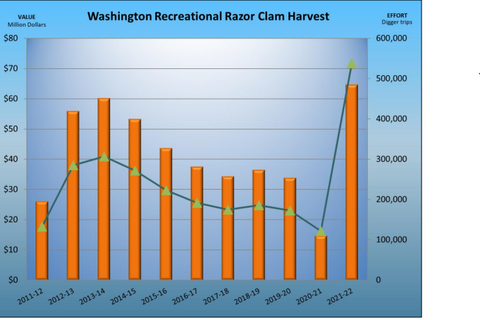
Razor clams have been enjoyed by millions of people over thousands of years. They are a valuable resource to hungry fishermen and local economies. WDFW estimated the fishery value to be $71,689 last year. So how are these crucial resources managed? Since 1929, WDFW has managed the coastal razor clam harvest. It’s a difficult job- they have to balance the demands of recreational fishermen with the rights of the tribes, all while keeping public safety in mind. Management strategies have been ever evolving.
From 1929 to 1942, there was a year-round season, and a 36-clam limit. In 1943, WDFW limited the season from March 1st to September 30th, and in 1960, the clam limit was reduced to 18. In 1973, the seasons were further reduced, and in 1974, the 15 clam limit we are familiar with today was implemented. In 2000, the seasons became much less set in stone and varied from October to May, depending on counts conducted through the “pumped area” method. In 2004, WDFW switched to the system still in use today, the “adjusted exploitation rate” method. Management strategies are ever evolving based on the increasing amounts of clam diggers every year, and changing oceanic conditions.
There are 3 pieces to the puzzle that WDFW must take into account before announcing razor clam digs: population counts, domoic acid levels, and tribal rights. The first piece of the puzzle is population counts. Each summer, WDFW conducts population counts at every beach: Long Beach, Twin Harbors, Copalis, Mocrocks, and Kalaloch. Based on these counts, they estimate the total number of clams measuring under 3 inches, and the total number of clams measuring over 3 inches.
They allow a certain percentage of razor clam population over 3 inches to be harvested each year, in order to make sure the population stays sustainable for years to come. Up to 40% of razor clams 3 inches and above may be harvested every year for the population to remain sustainable. After every harvest, WDFW calculates the remaining TAC (total allowable harvest), and sets further days based on that number. This way, poor tidal conditions and weather don’t mean we get shorter seasons. Alternatively, if conditions are great and there are more harvesters than predicted, the season may close early on that beach. Population counts are closely monitored throughout the year to make sure this popular fishery will remain for years to come.
Before WDFW opens recreational harvesting, they must also determine whether the clams are safe to eat. WDFW’s goals are not only to keep the resource around for years to come, but also to protect public health and safety. Unfortunately, clams are subject to accumulating marine toxins in their bodies which can make harvesters sick. Harmful algae blooms are naturally occurring, but concentrate in razor clam tissue. The most prevalent toxin is domoic acid, caused by consumption of marine plankton, called diatoms.
Eating a razor clam that has high levels of domoic acid can cause nausea, dizziness, memory loss, and stroke-like symptoms. There is no antidote, and the toxin is not destroyed by cooking/freezing. WDFW carefully tests razor clam populations for domoic acid throughout the year, and will close seasons accordingly, even if TAC (total allowable catch) hasn’t been met.
The final piece which WDFW must take into account is tribal fishing rights. Each year in August, WDFW discusses population estimates and domoic acid levels with the coastal tribes that have fishing rights on razor clam beaches, and comes up with the total allowable catch (TAC). 50% of the TAC goes to recreational fishermen and 50% goes to the tribes.
The coastal tribes work with WDFW staff to come up with joint population assessments, and share their data together. Tribal seasons take place on different days than non-tribal seasons, and each group makes their own harvest estimates and enforces the rules themselves. Razor clams are a co-managed resource that tribal and non-tribal stakeholders take very seriously.
Beach has by far the largest TAC (total allowable catch) share at 5,865,490 clams, and Mocrocks has the smallest, at 1,964,732. Interestingly, the average size of clams is slightly smaller this year. Last year, they were 4.4 inches long, and this year they were 4.22 inches on average. Although the clams are a little smaller, there are plenty of them! Overall, the forecast looks promising. WDFW always tries to schedule razor clam digs on weekends at least once a month during the months of October through May. The WDFW director checks marine toxin levels and looks at the remaining TAC for the year before announcing that the harvest dates can proceed. Clam digs have been tentatively approved throughout November and December.
In an unprecedented move, WDFW increased the limits from 15 to 20 razor clams last year. Will it happen again this year? For now, keep an ear to the ground and always check your rules and regulations before heading out. Speaking of rules and regulations, it’s always a good idea to brush up.
Make sure each harvester has their own container to put clams in. Many sporting goods stores sell clam nets, which readily tie to your wading belt to keep your hands free for digging and holding flashlights. Remember that the first 15 clams dug must be kept, no matter the size or condition. We’ve all accidentally crunched clams while digging them, or dug up a tiny one, but they still must be retained as part of your 15-clam limit. That being said, there are plenty of clams out there to be had. It’s shaping up to be a good year, so go out and get those razor clams!
/articles/razor-clam-forecast-0
Digging Into Razor Clams
Coastal razor clam enthusiasts are really digging the winter razor clam season, and later in March come much longer days and a switch to morning low tide harvest opportunities.
“Digging has been relatively good this winter when conditions allow, and hopefully we’ll see more spring-like weather as we bid farewell to February and welcome March,” said Bryce Blumenthal, WDFW’s recreational razor clam manager. “Once we receive final marine toxin test results for each series of digs then we’ll proceed with evening low tides during most of March and shift to morning low tides at the end of the month.”
The Department of Health (DOH) requires test samples for marine toxins, and domoic acid levels that must fall under the guideline level before a beach can open for digging. Domoic acid, a natural toxin produced by certain types of marine algae, can be harmful or fatal if consumed in sufficient quantities. Levels this winter have stayed well below the cutoff threshold and continue to remain that way.
Final approval usually occurs about a week before the start of each digging series. Details about domoic acid, as well as current levels at ocean beaches, can be found on the WDFW’s domoic acid webpage at https://wdfw.wa.gov/fishing/basics/domoic-acid.
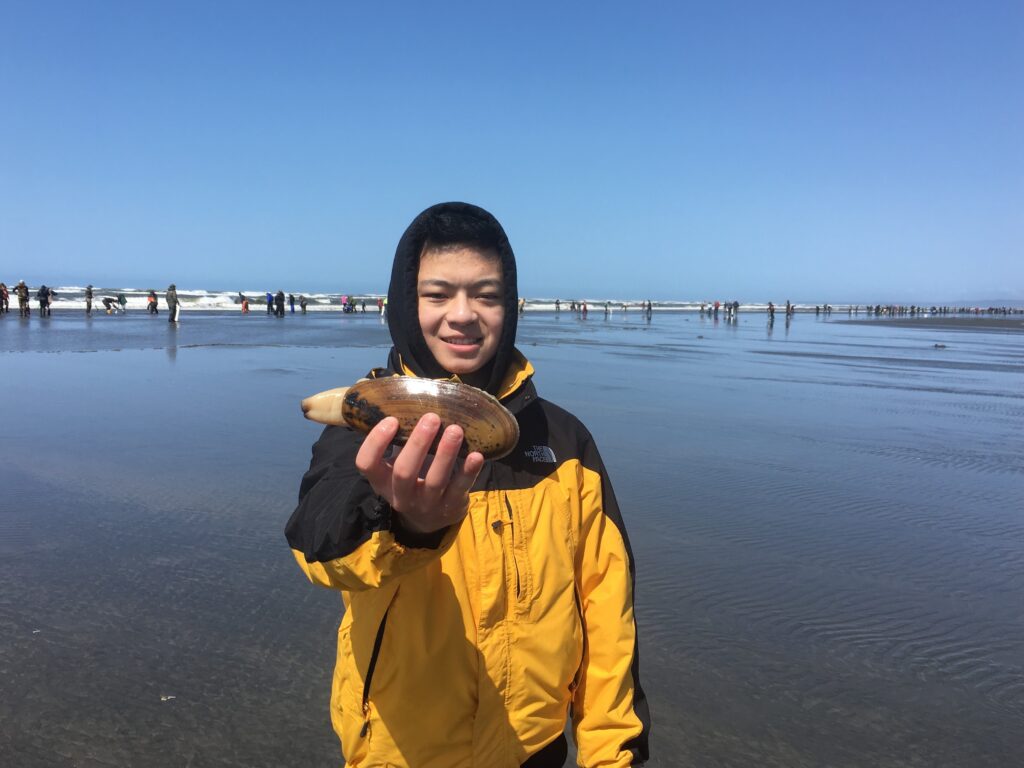
Not all coastal beaches are open for every dig, so diggers are encouraged to make sure their intended destination is open before heading out. Optimal digging occurs between one and two hours before the listed time of low tide.
Confirmed date during late afternoon/evening (noon to midnight only) low tides:
- Saturday, March 1: Low tide minus-0.1 feet, 7:15 p.m., at Long Beach, Twin Harbors, and Copalis.
Tentative dates during late afternoon/evening (noon to midnight only) low tides:
- Saturday, March 8: 0.6 feet, 2:13 p.m., at Long Beach, Twin Harbors, and Mocrocks.
- Sunday, March 9: 0.4 feet, 4:18 p.m., at Long Beach, Twin Harbors, and Copalis.
- Monday, March 10: 0.2 feet, 5:10 p.m., at Long Beach, Twin Harbors, and Copalis.
- Tuesday, March 11: 0.1 feet, 5:52 p.m., at Long Beach, Twin Harbors, and Mocrocks.
- Wednesday, March 12: 0.2 feet, 6:28 p.m., at Long Beach, Twin Harbors, and Mocrocks.
- Thursday, March 13: Low tide 0.4 feet, 7 p.m., at Long Beach, Twin Harbors, and Copalis.
- Friday, March 14: 0.7 feet, 7:30 p.m., at Long Beach, Twin Harbors, and Copalis.
Tentative dates during late afternoon/evening (noon to midnight only) low tides:
- Wednesday, March 26: 0.0 feet, 5:08 p.m., at Long Beach, Twin Harbors, and Mocrocks.
- Thursday, March 27: -0.1 feet, 5:50 p.m., at Long Beach, Twin Harbors, and Mocrocks.
- Friday, March 28: 0.0 feet, 6:29 p.m., at Long Beach, Twin Harbors, and Copalis.
Tentative dates during morning (midnight to noon only) low tides:
- Saturday, March 29: -0.1 feet, 6:58 a.m., at Long Beach, Twin Harbors, and Copalis.
- Sunday, March 30: 0.8 feet, 7:43 a.m., at Long Beach, Twin Harbors, and Mocrocks.
- Monday, March 31: -1.2 feet, 8:28 a.m., at Long Beach, Twin Harbors, and Mocrocks.
- Tuesday, April 1: -1.3 feet, 9:17 a.m., at Long Beach, Twin Harbors, and Copalis.
- Wednesday, April 2: -1.0 feet, 10:09 a.m., at Long Beach, Twin Harbors, and Copalis.
- Thursday, April 3: -0.5 feet, 11:07 a.m., at Long Beach, Twin Harbors, and Mocrocks.
DOH requires test samples for marine toxins, and domoic acid levels must fall under the guideline level before a beach can open for digging. Domoic acid, a natural toxin produced by certain types of marine algae, can be harmful or fatal if consumed in sufficient quantities. Refer to DOH’s website for more information at https://doh.wa.gov/community-and-environment/shellfish/recreational-shellfish/illnesses/biotoxins/amnesic-shellfish-poisoning. Details about domoic acid, as well as current levels at ocean beaches, can be found on WDFW’s domoic acid webpage at https://wdfw.wa.gov/fishing/basics/domoic-acid.
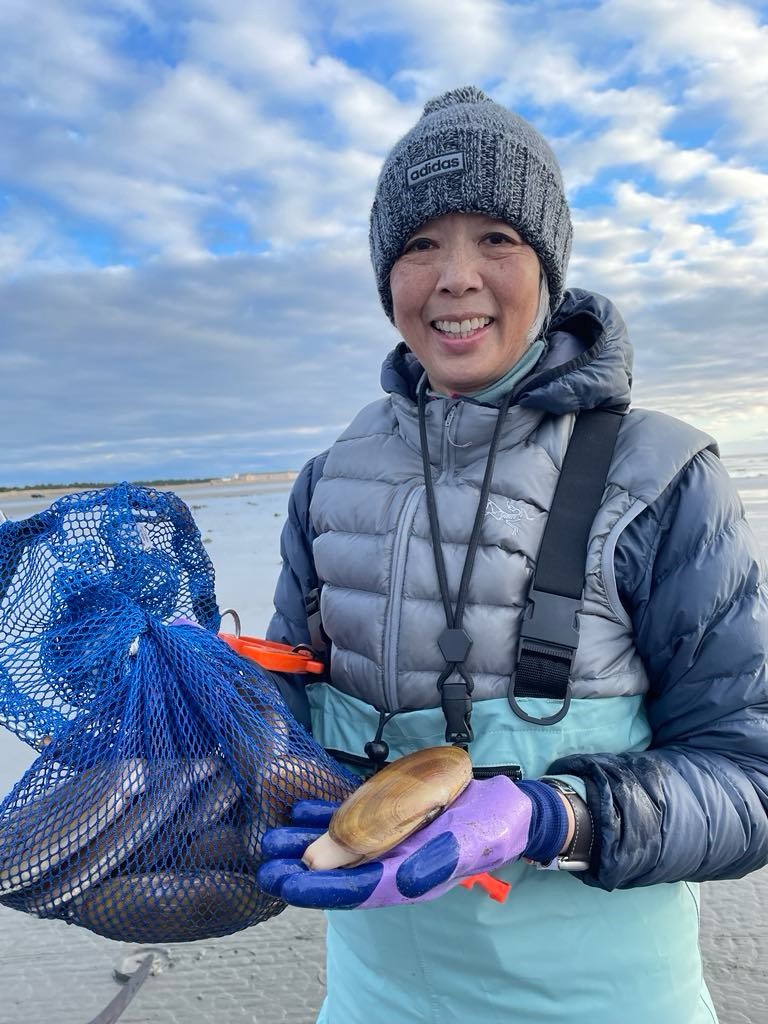
On all open beaches, the daily limit is 15 clams per person. Each digger’s clams must be kept in a separate container, and all diggers must keep the first 15 clams they dig, regardless of size or condition, to prevent waste.
With spring looming on the horizon, Washingtonians should consider buying 2025-2026 recreational licenses now especially if they plan to dig for razor clams in April. Licenses can be purchased from WDFW’s website at https://wdfw.wa.gov/licenses/fishing, or from hundreds of license vendors around the state. Be sure to buy your license before current licenses expire after March 31. All diggers age 15 or older must have an applicable fishing license to harvest razor clams on any beach. WDFW recommends buying your license before visiting coastal beach communities.
As in past years, WDFW is asking beachgoers to avoid disturbing nesting snowy plovers – a small bird with gray wings and a white breast – by staying out of the dunes and posted areas along the southwest coast. Snowy plover nests are nearly invisible, and it is vital to give birds the space to live and thrive during nesting period, especially along the southern end on Twin Harbors – known as Midway Beach – and the north end of Long Beach.
Also avoid leaving leftover food or trash – which attracts predators – on the beach and picnic areas, keep pets on a leash, stay out of dunes, and avoid areas which are clearly marked with posted signs.
Through March 1, WDFW has provided 72 digging days since the season began on Oct. 3, and if marine toxins aren’t an issue it is likely that total will climb to more than 100 days once the season ends.
As of Feb. 1, at estimated 154,759 diggers have harvested 1,806,071 razor clams. The daily average per digger of clams harvested from Oct. 3 through Feb. 1 is 12.1 razor clams at Long Beach (12.6 in 2023-2024), 11.9 at Twin Harbors (12.4 in 2023-2024), 11.0 at Copalis (12.6 in 2023-2024) and 11.1 at Mocrocks (12.7 in 2023-2024).
More coastal razor clam digs are possible in April and early- to mid-May depending on the harvest levels achieved at Long Beach, Twin Harbors, Copalis, and Mocrocks beaches. Look for details on the WDFW website.
The 2024-2025 Razor Clam Management Plan is available on WDFW’s website at https://wdfw.wa.gov/fishing/shellfishing-regulations/razor-clams#management. For more razor clam information, go to https://wdfw.wa.gov/fishing/shellfishing-regulations/razor-clams.
Digs are beneficial for coastal towns
The most recent surveys taken during the 2023-2024 season generated an estimated revenue of $51.9 million by diggers (351,062 digger trips for 100 days of digging) who visited the small coastal communities.
The highest since occurred during the 2021-2022 season, which generated a robust revenue of $71.7 million by diggers (474,427 digger trips). According to the WDFW Razor Clam Management Plan nothing has come close to that figure since economic data was tallied during the 1997-1998 season.
Stores, tackle shops, restaurants and gas stations rely on these opportunities during the lean tourist times in autumn, winter, and spring to help boost their economy.
The 10-year average is $35.9 million for 70 digging dates with 307,041 digger trips. The 20-year average is $30.6 million for 57 digging dates with 297,174 digger trips.
Coastal razor clam-related activities
- The free Ocean Shores Razor Clam Festival, organized by the Convention Center and City of Ocean Shores, is happening on March 21-23. There will be food vendors; exhibitors; live music; Dungeness crab meal (advanced ticket purchase recommended); a Sunday seafood brunch (advanced ticket purchase required); chowder cookoff and tasting passport available to sample and vote on Friday and Saturday; and a razor clam gun decorating contest. No razor clam digging will be allowed during those days because low tides aren’t conducive to digging. For details, go to https://tourismoceanshores.com/razor-clam-and-seafood-festival/.
- The Long Beach Peninsula Razor Clam & Shellfish Festival, hosted by the Long Beach Merchants Association, is April 26-27 at the Veterans Field in Long Beach. There will be food vendors; exhibitors; live music; clam digging lessons; restaurant chowder taste-off; amateur chowder cook-off; oyster shucking; crab plates; smallest and biggest clam contest. For details, go to https://www.longbeachmerchants.com/razor-clam-festival.
(Mark Yuasa is a Washington Department of Fish and Wildlife Communications Manager. He also was the outdoor reporter at The Seattle Times for 28 years.)
/articles/digging-razor-clams
Bennett's Fish Shack
By Hillary Holman
Winter is upon us, and ocean beaches will be opening throughout the season for Razor Clams. Rob and I spent last year in Ocean Shores to enter in the New Year with my cousin Lee Olson, out of Forks, old friends, Keith and Melissa Hudson and WDFW’s Dan Ayers.
After a cold and beautiful day clamming, we headed out looking for good food and a place to celebrate the new year. We landed at Bennet’s Fish Shack just a hop away from the beach. From outside, it was hard to miss the giant wreath hanging from the front monumental Bennet’s Fish Shack sign.
The inside was nicely decorated with beautiful holiday décor. The tables were made of copper and seasons greetings hung from every which way we looked.
It was New Year’s so Rob and I started off with a couple Bloody Mary’s and a Dungeness Crab Cocktail. Holy Moly was it good. This was a great way to start off the meal. So good, we repeated it on day 2. Next up was the entrees.
I got the beer battered cod. It was incredible. The fish could not have been fresher. The batter was perfectly crunchy, and the portions were healthy. Rob got the wrap, and it too was delicious and sizable! After a long day in the cold, this was the perfect place to kick up our heels and bring in the New Year.
I now have a new standard on comparing Dungeness Crab Cocktails because of Bennet’s. This place is the best I have found. When on the coast searching for Razor Clams, Give Bennet’s a try. I think you may like what you find

/articles/bennetts-fish-shack
Razor Clam Forecast
It’s no secret that last year’s razor clam season was a banner year. Record number of clam diggers swarmed beaches, working hard to get their limits. 484,388 diggers showed up, harvesting 8,352,279 clams, over 120 total harvest days. That’s a lot of razor clams! This was a welcome success after the 2019-2020 and 2020-2021 seasons closed early due to COVID-19 and domoic acid, respectively. Thousands of eager razor clam diggers are wondering if this season will be as successful as the last.
Dust off those razor clam guns and get your hip boots ready, because the forecast is looking promising! WDFW assessed razor clam populations throughout the summer and all had strong, harvestable populations except for at Kalaloch, which will be closed this year to allow recovery. Let’s take a closer look at this year’s forecast, and how WDFW determines annual razor clam harvests.
Razor clams have been enjoyed by millions of people over thousands of years. They are a valuable resource to hungry fishermen and local economies. WDFW estimated the fishery value to be $71,689 last year. So how are these crucial resources managed? Since 1929, WDFW has managed the coastal razor clam harvest. It’s a difficult job- they have to balance the demands of recreational fishermen with the rights of the tribes, all while keeping public safety in mind. Management strategies have been ever evolving.
From 1929 to 1942, there was a year-round season, and a 36-clam limit. In 1943, WDFW limited the season from March 1st to September 30th, and in 1960, the clam limit was reduced to 18. In 1973, the seasons were further reduced, and in 1974, the 15 clam limit we are familiar with today was implemented. In 2000, the seasons became much less set in stone and varied from October to May, depending on counts conducted through the “pumped area” method. In 2004, WDFW switched to the system still in use today, the “adjusted exploitation rate” method. Management strategies are ever evolving based on the increasing amounts of clam diggers every year, and changing oceanic conditions.
There are 3 pieces to the puzzle that WDFW must take into account before announcing razor clam digs: population counts, domoic acid levels, and tribal rights. The first piece of the puzzle is population counts. Each summer, WDFW conducts population counts at every beach: Long Beach, Twin Harbors, Copalis, Mocrocks, and Kalaloch. Based on these counts, they estimate the total number of clams measuring under 3 inches, and the total number of clams measuring over 3 inches.
They allow a certain percentage of razor clam population over 3 inches to be harvested each year, in order to make sure the population stays sustainable for years to come. Up to 40% of razor clams 3 inches and above may be harvested every year for the population to remain sustainable. After every harvest, WDFW calculates the remaining TAC (total allowable harvest), and sets further days based on that number. This way, poor tidal conditions and weather don’t mean we get shorter seasons. Alternatively, if conditions are great and there are more harvesters than predicted, the season may close early on that beach. Population counts are closely monitored throughout the year to make sure this popular fishery will remain for years to come.
Before WDFW opens recreational harvesting, they must also determine whether the clams are safe to eat. WDFW’s goals are not only to keep the resource around for years to come, but also to protect public health and safety. Unfortunately, clams are subject to accumulating marine toxins in their bodies which can make harvesters sick. Harmful algae blooms are naturally occurring, but concentrate in razor clam tissue. The most prevalent toxin is domoic acid, caused by consumption of marine plankton, called diatoms.
Eating a razor clam that has high levels of domoic acid can cause nausea, dizziness, memory loss, and stroke-like symptoms. There is no antidote, and the toxin is not destroyed by cooking/freezing. WDFW carefully tests razor clam populations for domoic acid throughout the year, and will close seasons accordingly, even if TAC (total allowable catch) hasn’t been met.
The final piece which WDFW must take into account is tribal fishing rights. Each year in August, WDFW discusses population estimates and domoic acid levels with the coastal tribes that have fishing rights on razor clam beaches, and comes up with the total allowable catch (TAC). 50% of the TAC goes to recreational fishermen and 50% goes to the tribes.
The coastal tribes work with WDFW staff to come up with joint population assessments, and share their data together. Tribal seasons take place on different days than non-tribal seasons, and each group makes their own harvest estimates and enforces the rules themselves. Razor clams are a co-managed resource that tribal and non-tribal stakeholders take very seriously.
Beach has by far the largest TAC (total allowable catch) share at 5,865,490 clams, and Mocrocks has the smallest, at 1,964,732. Interestingly, the average size of clams is slightly smaller this year. Last year, they were 4.4 inches long, and this year they were 4.22 inches on average. Although the clams are a little smaller, there are plenty of them! Overall, the forecast looks promising. WDFW always tries to schedule razor clam digs on weekends at least once a month during the months of October through May. The WDFW director checks marine toxin levels and looks at the remaining TAC for the year before announcing that the harvest dates can proceed. Clam digs have been tentatively approved throughout November and December.
In an unprecedented move, WDFW increased the limits from 15 to 20 razor clams last year. Will it happen again this year? For now, keep an ear to the ground and always check your rules and regulations before heading out. Speaking of rules and regulations, it’s always a good idea to brush up.
Make sure each harvester has their own container to put clams in. Many sporting goods stores sell clam nets, which readily tie to your wading belt to keep your hands free for digging and holding flashlights. Remember that the first 15 clams dug must be kept, no matter the size or condition. We’ve all accidentally crunched clams while digging them, or dug up a tiny one, but they still must be retained as part of your 15-clam limit. That being said, there are plenty of clams out there to be had. It’s shaping up to be a good year, so go out and get those razor clams!
/articles/razor-clam-forecast