Catching Bass After the Spawn by John Kruse
It is easy to fool yourself into believing you are a great bass angler when the bass are spawning in the springtime. Largemouth bass are defending nests full of eggs or fry and will readily strike a lure like a weightless worm or lizard cast near them. Catching a dozen or more bass is easy this time of year, both largemouth and smallmouth bass, but then comes the post-spawn, where those shallow water spawning beds become a ghost town. The fishing suddenly gets a lot tougher for some, and it’s easy to say out loud, “Now what?” as you futilely search for bass in places they are no longer found.
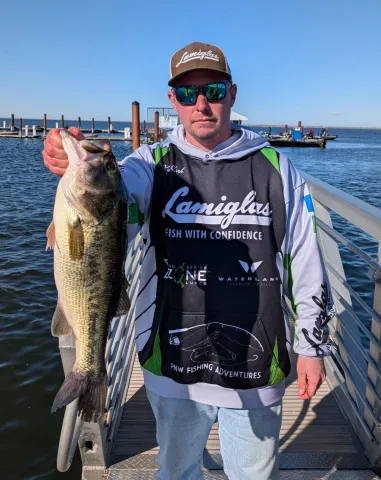
One thing you can do is ask a successful post-spawn angler how to go about catching those bass. One such fisherman is Kyle Clark, an avid bass tournament angler and the owner of PNW Fishing Adventures - www.facebook.com/pnwfishingadventures/.
I caught up with him at MarDon Resort the day he and his partner won a Washington Bass Federation tournament at Eastern Washington’s Potholes Reservoir. The two caught five largemouth bass weighing 20.8 pounds. When asked what he used to catch post-spawn bass in both Western and Eastern Washington, Clark replied with three of his favorites: Poppers, senkos, and jigs. All are solid offerings. Let’s break down these choices and a few more for late spring to summertime bass.
JIGS – Jigs are a staple for both largemouth and smallmouth bass all year. They come in many styles. There are swim jigs, football head jigs, flipping jigs, skipping jigs, Arkie jigs, and more. All of them work, and with bass tending to hide in or around cover such as wood, reeds, willows, or rocks, weedless jigs shine. A 3/8-ounce jig is a standard for many types of fishing in both shallow and medium depths. Common color schemes include green pumpkin, black & blue, chartreuse & black, or orange & brown. Fishing jigs in cover like willow thickets, under docks, or in open areas amongst lily pads are all effective ways to use these lures.
SENKOS – The senko is a plastic worm, generally measuring between five and six inches. The nose of the senko is subtly blunter than the tail. It is a deadly offering, fished weightless or with a very lightly weighted semi-weedless hook, when bass are spawning. However, it also works very well during the post-spawn phase. The two most common ways to fish a senko are Texas-rigged, where the bait is hooked through the nose and the body, making it weedless, or wacky-rigged. A wacky-rigged senko is hooked right in the middle of the worm, and the angler allows it to fall slowly in the water column.
POPPERS (AND OTHER TOPWATER LURES) – Early morning and evening hours are great times to fish a floating popper for bass, spring through early fall. Many think you can only fish with topwater baits when waters are calm, but truth be told, these lures are also effective during days when light breezes are blowing, creating rippled surface water.
Kyle Clark prefers to fish a topwater popper slowly versus the steady to fast retrieve used with a Zara Spool style topwater plug you retrieve in a zig-zag, “walking the dog” style. Other topwater lures that work well include weedless frogs (fished over grass, weeds, or lily pads), whopper-plopper style topwater lures brought back with a moderate retrieve, and buzzbaits, retrieved rapidly, making a clatter as you reel it in. Topwater poppers (and several of these lures) shine when fished over submerged weeds and grass, especially off points or around sunrise, near shore.
CRANKBAITS – Not on Clark’s list but certainly useful during the post-spawn period are crankbaits. There are two styles of crankbaits to fish this time of year: lipless cranks or diving crankbaits.
Lipless crankbaits, retrieved parallel along weed lines, brush lines, or rock riprap, work great for bass that aggressively bite the lure in a reactive manner. The lure can be retrieved at a moderate to fast pace after sinking for a few seconds. If that does not draw strikes, try a stop-and-go retrieve, with short pauses between reeling. Bass will often hit when the lure they are following literally stops and begins to drop in front of their nose. “Go To” lipless crankbaits include the Berkley WarPig or the original Bill Lewis Rat-L-Trap. When it comes to colors, match the hatch or forage base the bass are feeding on. The one exception to this rule is when the water is stained or murky. That is when a chartreuse colored or dark colored lure shines because it stands out better, a fact applying not only to lipless crankbaits but all sorts of lures.
Diving crankbaits are also easy to use, though most anglers fish them wrong. Lots of people will cast and retrieve them at a moderate pace, leaving them in the middle of the water column. However, depth matters, and diving crankbaits are best fished close to the bottom. So close in fact, that they are bumping the bottom and either bouncing off wood and rocks or churning up sand or gravel. Shallow three-to-five-foot crankbaits fished over flats or deeper diving crankbaits retrieved down slopes both catch plenty of largemouth and smallmouth bass.
Put it all together, and you have several simple, easy-to-fish lures that will get you into post-spawn bass from late spring and throughout the summer. Give one of these techniques a shot, and if it does not work, change to another. Let the bass tell you what they are in the mood to bite on any given day, and catch more bass after they are done spawning this spring.
John Kruse
www.northwesternoutdoors and www.americaoutdoorsradio.com
PHOTO CREDITS:
Kyle Clark with a quality 4.5-pound largemouth bass – Photo courtesy PNW Fishing Adventures
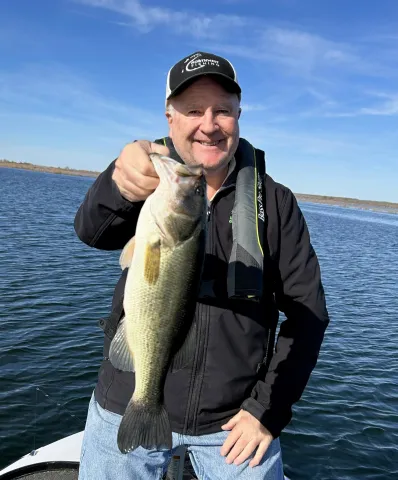
The author caught this bass with a green pumpkin colored weedless jig.
/articles/catching-bass-after-spawn-john-kruse
Catch More Bass This Summer!
Summer is an exciting season for bass anglers. The bass are done spawning and are actively feeding in both the shallows as well as deeper depths. There are also a variety of ways to catch bass, both largemouth and smallmouth, this time of year.
Perhaps the most exciting way to catch bass during the summer months is using topwater baits. Watching a largemouth bass explode out of the water to smash your lure is always an exhilarating experience! Just make sure you don’t set the hook when the bass comes out of the water. Pause and let them take it first. Easy to say, I know, but hard to do.
When it comes to topwater fishing, have a frog rigged up on at least one rod. Whether you use a standard frog or a popping frog, you have the advantage of fishing this weedless offering in heavy cover, whether it be weeds, grass, or lily pads.
If you are casting into more open water, I like to fish a topwater popper. My go-to popper is a Berkley Bullet Pop in either a bluegill, bass, or frog pattern. The Whopper Plopper made quite a splash in the bass fishing world when it was introduced in 2008, and many anglers insist it’s still a great offering. However, this is a low-confidence lure for me, and while I’ve had a blow-up or two, I’ve yet to catch a fish with a whopper plopper.
And then there are the classics. The Arbogast Jitterbug and Hula Popper have been around for over 70 years, but they still work, especially in the evening hours. Speaking of which, when is the best time to fish with a topwater lure? Conventional wisdom says you should fish topwater lures in the early morning and in the evening. However, if the weather is cloudy, you can experience good topwater fishing all day long.

LIPLESS CRANKBAITS
Lipless crankbaits like the original Bill Lewis Rat-L-Trap or my favorite, the Berkley War Pig, are great search lures. You can cast them a “country mile” and retrieve at a fast or moderate pace, which means you can cover a lot of water while looking for schools of bass. Places to fish lipless crankbaits are in shallow water (two to eight feet deep), especially parallel to brush lines, weed lines, or near points of land. These lures also work well over submerged grass or weed beds. One thing that can be particularly effective is to pause your retrieve, just for a moment, from time to time while you reel.
SPINNERBAITS
The spinnerbait, like the lipless crankbait, is used to search for schools of bass. One advantage the spinnerbait has is that, by design, it is more snag-proof than lipless crankbaits or topwater plugs with treble hooks. The spinner bait can be fished a couple of different ways in the summer. You can fish it mid-depth with a moderate retrieve, just under the surface of the water, creating a wake, with a fast retrieve. Or slow roll it, letting the spinnerbait sink to the bottom in six to 15 feet of water and bringing it slowly back just off the bottom. While ¼ and 3/8-ounce spinnerbaits are widely sold, I prefer to use a ½ or ¾ ounce spinnerbait, especially if I am fishing deep.
DEEP DIVING CRANKBAITS
High summer temperatures will drive those bass into deeper waters, especially smallmouth bass. So, how do you reach them? With a deep diving crankbait! Rapala and Berkley are two lure companies that make quality deep-diving crankbaits. I tend to use two types of crankbaits in the summer months. That would be lures that dive 8 to 12 feet deep and lures that will dive to 25 feet deep. Once you locate the fish, you can stay put and cast to them or switch over to a jig to pull bass out of the deep. As for crankbait colors, I try to “match the hatch” and use patterns that are forage for bass. Trout, perch, bluegill, and largemouth bass patterns all work well if these species live where you are fishing.
JIGS
I always have a weedless jig with a crawfish trailer tied on to one of my rods because they catch bass in the spring, summer and fall months. They can be fished in partially submerged brush, under docks, around beaver huts, trees and other areas where bass live, but other lures would get hung up.
Jigs can also be fished in deeper water on sloping banks, on underwater humps and other structure. Your choice is also wide. In addition to weedless jigs, you can fish neko rigs, which work great for smallmouth bass, and swim jigs, which have become a favorite for many bass anglers.
SOFT PLASTICS
You can’t go wrong fishing soft plastic baits. Drop Shot fishing with a weight a foot or two below a hook tied on the same line can work great, especially on heavily pressured waters. Put a small 4-inch worm or other small plastic grub or swimbait on your hook and just drop it to the bottom. Texas-rigged worms still work great for bass on the bottom, as do the tried-and-true Carolina rig, where a weight and glass bead are placed above a swivel. A foot to 18 inches of leader with a worm is tied behind that. Finally, tube baits, which were all the rage 25 years ago, still work fine today for bass.
The bottom line is this: When it comes to catching bass this summer, you have a lot of options. Don’t get stuck on one or two baits. If they are not working, try something new. As you can see, there is more than one way to catch a bass.
John Kruse
/articles/catch-more-bass-summer
Five Great Lure for Spring Bass Fishing
I love fishing for bass in the Spring! Bass are as big as they are going to get all year and as water temperatures warm and bass prepare to spawn, the bite can be amazing! By early May in the Pacific Northwest, with water temperatures around 60 degrees in many lakes, you can easily catch and release twenty-five bass a day. Here are five lures I love to use in the spring to help me get that done.
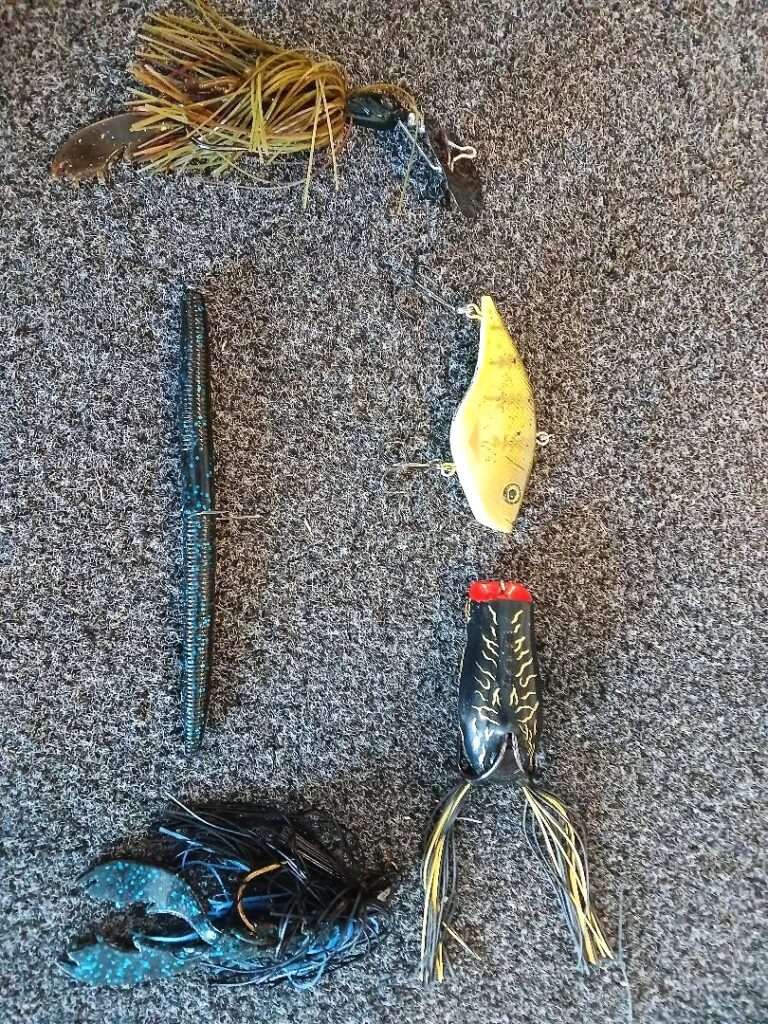
FOOTBALL HEAD JIG
A weedless jig is a lure that works all year long. The football head jig can be pitched or flipped into a variety of places bass like to hang out to include under docks, into brushy cover, rocky or gravel areas, beaver huts, flooded timber and the list goes on. I like to use a quarter, 3/8th ounce or half-ounce jig depending on how deep I am fishing.
One way to fish a football jig is to let it hit bottom and then slowly jig it back towards you. Most bites occur as the jig falls back towards the bottom. Another way is to us a sweeping motion with your rod, allowing the jig to drag across the bottom.
I always put a soft plastic trailer on any jig I am fishing with for bass. Good colors to use are black and blue or a green pumpkin.
CHATTERBAIT
A lot of bass anglers swear by the chatterbait for springtime fishing. This bait features a metal blade on top of the jig head that flashes and vibrates through the water. The chatterbait was popularized by Z-Man, and their original Z-Man ChatterBait still catches fish, especially in the spring. Many anglers, me included, let the chatterbait fall to the bottom and then retrieve it at a moderate pace next to brush or weed lines or near woody structure. If that does not work, try a very fast retrieve, even in colder water. That is a tactic Kyle Clark, an avid tournament bass angler and the owner of PNW Fishing Adventures, swears by.
A three-eighth to half-ounce chatterbait is a popular size to fish at depths of 10 feet or less. Popular colors are white, brown/black, black & blue and in stained water, chartreuse.
SENKO
When the bass are on their spawning beds a soft plastic worm called a Senko is hard to beat. This is a shallow water offering and precise casting while sight fishing for bass is a key to success. The number one color to fish is green pumpkin but at times, a purple worm with blue fleck can outshine the green pumpkin. I personally like to fish with a five-inch Berkley Powerbait Senko called The General, because the bass seem to hold onto it longer. However, many other serious bass anglers prefer Senko baits made by Yamamoto.
The Senko should be fished without weight. You can fish it Texas rigged through the nose and watch it slowly fall towards where the bass are. Others will fish it wacky rigged, with a hook right through the middle of the worm. The way a wacky rigged worm falls triggers vicious strikes from bass as it slowly undulates down through the water. Use a #2 or #1 Wacky hook and if you can find ones with wire weed guards that will help prevent some of the snags, you’ll encounter fishing around flooded timber and shrubs.
LIPLESS CRANKBAIT
The lipless crankbait can be fished in cool waters but really starts to prove itself when the water temperature hits 55 degrees. Bill Lewis came out with the original Rat-L-Trap decades ago. This is a hard lure with a slim profile designed to produce a very tight wiggle. BBs inside the lure provide a rattle as the lure is retrieved.
A lipless crankbait is a great search bait because it can be cast a long distance, and you can cover a lot of water looking for schools of largemouth or smallmouth bass. In the latter half of spring (and all the way into autumn) you can fish the lure with either a moderate or rapid retrieve. Very short pauses as you retrieve often trigger strikes. I like to fish this lure along rocky riprap or just outside the edges of cover like flooded willows or weed lines.
A number of companies manufacture lipless crankbaits. In recent years, I have gravitated to the Berkley War Pig. I have a couple of plastic tackle boxes filled with half ounce, three-inch War Pigs in a variety of colors and they have become a true high-confidence lure for me. In the spring red can be a good color or you can match the hatch and try fishing lures that imitate trout, perch, bluegill, or bass.
FROG
Never overlook a soft plastic, weedless frog for springtime bass. They are generally made with a hollow body and have hooks on the back of the body. The “legs” of the frog provide action that attracts bass, and if you have a concave face on your lure, a popping retrieve will often attract even more bass.
This is a lure designed to cast into the weeds or lily pads where you would not dare throw a traditional lure. Jerking the lure on top of the water and weeds can generate strikes from bass that erupt out of the water to smash the lure. The number one mistake most anglers make while fishing frogs is to set the hook too soon. As tempting as it is to set that hook when that bass comes out of the water, you need to wait until you feel the weight of the fish at the end of your line. That is when you set the hook with a hard jerk and begin fighting that bass.
Conventional wisdom says frogs (and other top water lures) fish best in the early morning and in the evening. However, a weedless from is a lure you can really fish all day, especially on a cloudy day.
So, there you go, five great lures to help you catch more bass from March through June (and beyond). Fill your tackle box with these staples and make the most of your day on the water with more hook-ups. You’ll be glad you did.
John Kruse
/articles/five-great-lure-spring-bass-fishing