Catching Bass After the Spawn by John Kruse
It is easy to fool yourself into believing you are a great bass angler when the bass are spawning in the springtime. Largemouth bass are defending nests full of eggs or fry and will readily strike a lure like a weightless worm or lizard cast near them. Catching a dozen or more bass is easy this time of year, both largemouth and smallmouth bass, but then comes the post-spawn, where those shallow water spawning beds become a ghost town. The fishing suddenly gets a lot tougher for some, and it’s easy to say out loud, “Now what?” as you futilely search for bass in places they are no longer found.
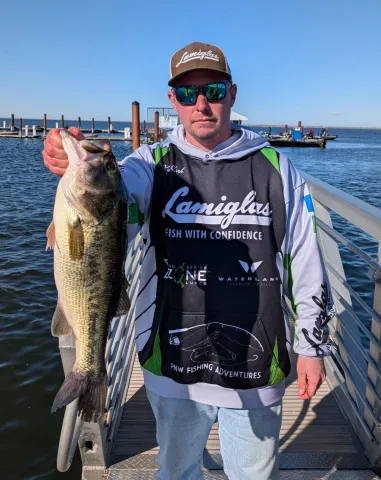
One thing you can do is ask a successful post-spawn angler how to go about catching those bass. One such fisherman is Kyle Clark, an avid bass tournament angler and the owner of PNW Fishing Adventures - www.facebook.com/pnwfishingadventures/.
I caught up with him at MarDon Resort the day he and his partner won a Washington Bass Federation tournament at Eastern Washington’s Potholes Reservoir. The two caught five largemouth bass weighing 20.8 pounds. When asked what he used to catch post-spawn bass in both Western and Eastern Washington, Clark replied with three of his favorites: Poppers, senkos, and jigs. All are solid offerings. Let’s break down these choices and a few more for late spring to summertime bass.
JIGS – Jigs are a staple for both largemouth and smallmouth bass all year. They come in many styles. There are swim jigs, football head jigs, flipping jigs, skipping jigs, Arkie jigs, and more. All of them work, and with bass tending to hide in or around cover such as wood, reeds, willows, or rocks, weedless jigs shine. A 3/8-ounce jig is a standard for many types of fishing in both shallow and medium depths. Common color schemes include green pumpkin, black & blue, chartreuse & black, or orange & brown. Fishing jigs in cover like willow thickets, under docks, or in open areas amongst lily pads are all effective ways to use these lures.
SENKOS – The senko is a plastic worm, generally measuring between five and six inches. The nose of the senko is subtly blunter than the tail. It is a deadly offering, fished weightless or with a very lightly weighted semi-weedless hook, when bass are spawning. However, it also works very well during the post-spawn phase. The two most common ways to fish a senko are Texas-rigged, where the bait is hooked through the nose and the body, making it weedless, or wacky-rigged. A wacky-rigged senko is hooked right in the middle of the worm, and the angler allows it to fall slowly in the water column.
POPPERS (AND OTHER TOPWATER LURES) – Early morning and evening hours are great times to fish a floating popper for bass, spring through early fall. Many think you can only fish with topwater baits when waters are calm, but truth be told, these lures are also effective during days when light breezes are blowing, creating rippled surface water.
Kyle Clark prefers to fish a topwater popper slowly versus the steady to fast retrieve used with a Zara Spool style topwater plug you retrieve in a zig-zag, “walking the dog” style. Other topwater lures that work well include weedless frogs (fished over grass, weeds, or lily pads), whopper-plopper style topwater lures brought back with a moderate retrieve, and buzzbaits, retrieved rapidly, making a clatter as you reel it in. Topwater poppers (and several of these lures) shine when fished over submerged weeds and grass, especially off points or around sunrise, near shore.
CRANKBAITS – Not on Clark’s list but certainly useful during the post-spawn period are crankbaits. There are two styles of crankbaits to fish this time of year: lipless cranks or diving crankbaits.
Lipless crankbaits, retrieved parallel along weed lines, brush lines, or rock riprap, work great for bass that aggressively bite the lure in a reactive manner. The lure can be retrieved at a moderate to fast pace after sinking for a few seconds. If that does not draw strikes, try a stop-and-go retrieve, with short pauses between reeling. Bass will often hit when the lure they are following literally stops and begins to drop in front of their nose. “Go To” lipless crankbaits include the Berkley WarPig or the original Bill Lewis Rat-L-Trap. When it comes to colors, match the hatch or forage base the bass are feeding on. The one exception to this rule is when the water is stained or murky. That is when a chartreuse colored or dark colored lure shines because it stands out better, a fact applying not only to lipless crankbaits but all sorts of lures.
Diving crankbaits are also easy to use, though most anglers fish them wrong. Lots of people will cast and retrieve them at a moderate pace, leaving them in the middle of the water column. However, depth matters, and diving crankbaits are best fished close to the bottom. So close in fact, that they are bumping the bottom and either bouncing off wood and rocks or churning up sand or gravel. Shallow three-to-five-foot crankbaits fished over flats or deeper diving crankbaits retrieved down slopes both catch plenty of largemouth and smallmouth bass.
Put it all together, and you have several simple, easy-to-fish lures that will get you into post-spawn bass from late spring and throughout the summer. Give one of these techniques a shot, and if it does not work, change to another. Let the bass tell you what they are in the mood to bite on any given day, and catch more bass after they are done spawning this spring.
John Kruse
www.northwesternoutdoors and www.americaoutdoorsradio.com
PHOTO CREDITS:
Kyle Clark with a quality 4.5-pound largemouth bass – Photo courtesy PNW Fishing Adventures
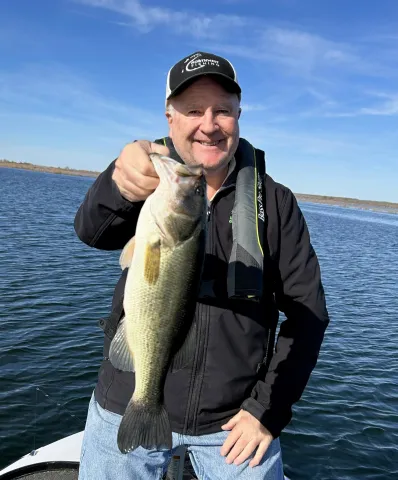
The author caught this bass with a green pumpkin colored weedless jig.
/articles/catching-bass-after-spawn-john-kruse
Catch More Bass This Summer!
Summer is an exciting season for bass anglers. The bass are done spawning and are actively feeding in both the shallows as well as deeper depths. There are also a variety of ways to catch bass, both largemouth and smallmouth, this time of year.
Perhaps the most exciting way to catch bass during the summer months is using topwater baits. Watching a largemouth bass explode out of the water to smash your lure is always an exhilarating experience! Just make sure you don’t set the hook when the bass comes out of the water. Pause and let them take it first. Easy to say, I know, but hard to do.
When it comes to topwater fishing, have a frog rigged up on at least one rod. Whether you use a standard frog or a popping frog, you have the advantage of fishing this weedless offering in heavy cover, whether it be weeds, grass, or lily pads.
If you are casting into more open water, I like to fish a topwater popper. My go-to popper is a Berkley Bullet Pop in either a bluegill, bass, or frog pattern. The Whopper Plopper made quite a splash in the bass fishing world when it was introduced in 2008, and many anglers insist it’s still a great offering. However, this is a low-confidence lure for me, and while I’ve had a blow-up or two, I’ve yet to catch a fish with a whopper plopper.
And then there are the classics. The Arbogast Jitterbug and Hula Popper have been around for over 70 years, but they still work, especially in the evening hours. Speaking of which, when is the best time to fish with a topwater lure? Conventional wisdom says you should fish topwater lures in the early morning and in the evening. However, if the weather is cloudy, you can experience good topwater fishing all day long.

LIPLESS CRANKBAITS
Lipless crankbaits like the original Bill Lewis Rat-L-Trap or my favorite, the Berkley War Pig, are great search lures. You can cast them a “country mile” and retrieve at a fast or moderate pace, which means you can cover a lot of water while looking for schools of bass. Places to fish lipless crankbaits are in shallow water (two to eight feet deep), especially parallel to brush lines, weed lines, or near points of land. These lures also work well over submerged grass or weed beds. One thing that can be particularly effective is to pause your retrieve, just for a moment, from time to time while you reel.
SPINNERBAITS
The spinnerbait, like the lipless crankbait, is used to search for schools of bass. One advantage the spinnerbait has is that, by design, it is more snag-proof than lipless crankbaits or topwater plugs with treble hooks. The spinner bait can be fished a couple of different ways in the summer. You can fish it mid-depth with a moderate retrieve, just under the surface of the water, creating a wake, with a fast retrieve. Or slow roll it, letting the spinnerbait sink to the bottom in six to 15 feet of water and bringing it slowly back just off the bottom. While ¼ and 3/8-ounce spinnerbaits are widely sold, I prefer to use a ½ or ¾ ounce spinnerbait, especially if I am fishing deep.
DEEP DIVING CRANKBAITS
High summer temperatures will drive those bass into deeper waters, especially smallmouth bass. So, how do you reach them? With a deep diving crankbait! Rapala and Berkley are two lure companies that make quality deep-diving crankbaits. I tend to use two types of crankbaits in the summer months. That would be lures that dive 8 to 12 feet deep and lures that will dive to 25 feet deep. Once you locate the fish, you can stay put and cast to them or switch over to a jig to pull bass out of the deep. As for crankbait colors, I try to “match the hatch” and use patterns that are forage for bass. Trout, perch, bluegill, and largemouth bass patterns all work well if these species live where you are fishing.
JIGS
I always have a weedless jig with a crawfish trailer tied on to one of my rods because they catch bass in the spring, summer and fall months. They can be fished in partially submerged brush, under docks, around beaver huts, trees and other areas where bass live, but other lures would get hung up.
Jigs can also be fished in deeper water on sloping banks, on underwater humps and other structure. Your choice is also wide. In addition to weedless jigs, you can fish neko rigs, which work great for smallmouth bass, and swim jigs, which have become a favorite for many bass anglers.
SOFT PLASTICS
You can’t go wrong fishing soft plastic baits. Drop Shot fishing with a weight a foot or two below a hook tied on the same line can work great, especially on heavily pressured waters. Put a small 4-inch worm or other small plastic grub or swimbait on your hook and just drop it to the bottom. Texas-rigged worms still work great for bass on the bottom, as do the tried-and-true Carolina rig, where a weight and glass bead are placed above a swivel. A foot to 18 inches of leader with a worm is tied behind that. Finally, tube baits, which were all the rage 25 years ago, still work fine today for bass.
The bottom line is this: When it comes to catching bass this summer, you have a lot of options. Don’t get stuck on one or two baits. If they are not working, try something new. As you can see, there is more than one way to catch a bass.
John Kruse
/articles/catch-more-bass-summer
Drop-shot Technique for Bass
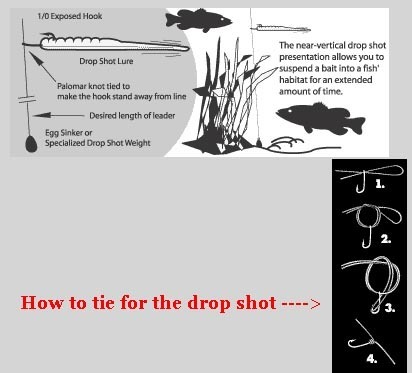
I am no expert by any stretch of the imagination, but I have grown fond of the Drop Shot technique in my short, four-season fishing journey. I have been using it for just over a season’s time. This is a very productive method to catch fish in a variety of states. In my first outing for smallies this season, I hooked and caught 3 smallies on three consecutive casts. It is the only method that has done this for me to date, and from the shore to boot. At the very least, I can share with you what I have learned through trial, error, and experience (which isn't much).
You don't need a Drop Shot specific rod. A medium-light to medium-action rod from 6'6" on up to 7' should work for you for now. If you find drop shotting to your liking, you can then opt to go with a Drop Shot specific rod of your choice. As a rule of thumb, a longer rod will enable you to have more line control and leverage; two big pluses in drop shotting.
I prefer spinning reels (a size 20 or 2500 reel is an excellent choice) because they require less work to give the bait a better (IMHO) descent than a baitcast reel. Sorry baitcast reel users, but the way a spinning drops the bait smokes a baitcast reel any and every day for drop shotting. To those who use baitcast reels exclusively, please note I said for drop shotting. There will not be a need to strip line off just to make the bait fall. With that said, casting reels can also be used. I just prefer a spinning reel. You may use whatever reel you want. Even a Barbie pole can get it done for drop shotting! However, I would opt for heavier line and a BC reel if I were to drop shot heavy cover.
Drop Shot Weight and Type
A 3/16 - 1/4 oz weight is a good starting weight. Going any lighter might make it harder for you to read what is going on until you get experience. As for the shape, I like to use either a teardrop or a cylindrical shape. I have not experimented with other shapes. Windier conditions and stronger currents might make you want to choose a heavier weight, but let’s not worry about that for now.
Line
Because you are drop shotting, lighter line is preferred if the cover you are fishing allows it. Go up in # strength if the cover dictates this. I like and use 6# fluorocarbon, particularly Seaguar's Invizx. This line kicks fanny. No doubt about it. The plus in going with fluorocarbon in a higher # test if needed is despite having a slightly thicker line diameter; the angler retains the benefit of fluorocarbon’s trait of near invisibility as advertisers so claim. Whichever line you choose, I think the fluorocarbon line of your choice will be fine.
Baits
Keep an open mind here. Many baits of a variety of shapes can be used. The general rule of thumb is a tendency to use smaller baits since we are "finesse" fishing (translates to downsizing in general). The typical length of a drop shot bait usually ranges from 3" - 4.5" but this is NOT set in stone. Roboworm, Senkos, Sniper Snubs and Bolts (these two are locally made baits), Reaction Innovations Flirts, and heck, even Baby Brush Hogs and Tubes can be used. Think out of the box. I have used longer worms too. This season, the 4.5” Roboworm (in Aaron’s Magic) and Sniper Snubs in Watermelon and Dark Brown have been so effective that to date I have not seen a need to try something else or other colors. It might be different for bass in other waters. If you wish to know, so far the most effective baits for me have been, the snubs and roboworms.
Hooks/Knot
I prefer to use size 1 or 2 (mostly size 2) Gamakatsu Split Shot/Drop Shot hooks, or Owner Mosquito hooks. I attach the hook to the line with a Palomar knot and after it is tied, I insert the extra line (tag end) through the hook's eye before attaching the weight. I have heard good things about size 4 Gamakatsu hooks, but I have not yet had a chance to try them yet.
Leader Length (Distance from the hook to the weight)
The best way to figure this out is to experiment. I have had success with leaders being as short 4-6" to nearly but not quite 2'. Because drop shotting is not limited to a purely vertical presentation, a longer leader is a good idea if you wish to work it somewhat like a Texas or Carolina rig. The longer leader length (which I define here as the distance between the weight and your hook, perhaps 18" as a ballpark figure) will enable you to keep the bait off the ground with the shallow angle that will result from a long cast. For a more vertical presentation, a shorter distance from the hook to the bait can work.
Imparting Life to the Lure
Despite the initial perception of working this lure, it is not all about jiggling and wiggling the bait. An angler can indeed work the bait this way, but I can tell you from personal experience, that wiggling and jiggling has accounted for the fewest number of catches.
So what should one do in addition to the wiggling/jiggling tactic?
Keep the weight on the bottom for the most part and leave enough slack to let the bait sink on its own weight. Then, when you think the bait is near the bottom lift/twitch the rod just enough to move the bait a little (without moving or minimizing the movement of the weight on the bottom) and repeat. In effect, what you are doing is working a semi-slack line and this is what is imparting action to the bait. No hits? Repeat if you wish, or add a little dead sticking to the mix or, drag your bait to the next spot. All are good choices. The dragging of the weight from one spot to the next also imparts life and action to the lure and can help to draw a strike. In addition, working with the slack and dead sticking have been far more effective for me compared to wiggling and jiggling the bait to death
Not sure what the bait will do? Find some shallow water and drop down your bait. The depth should be one where you can see all the way to the bottom. Once the weight is on the bottom, let your bait fall by lowering your rod. Before the lure hits the bottom, raise the rod’s tip enough to bring the lure up, and do your best to keep the weight in place. Watching this will give you an idea of what will likely be happening when you are not able to see the bait with your own eyes. Visualizing what the bait is doing when I can’t see it helps me to focus on what I am trying to do, and that is catching fish.
The Strike or Hit
This can vary depending on the activity level of the fish, the quality of your set up to a certain extent, and the line you are using. More sensitive rods do a better job of transmitting what is going on to you. I have had the blessing of drop shotting with my Berkley Cherrywood Rod, which is decent and not too shabby, but comparing it to my Lamiglas Certified Pro Drop Shot rod is something else. Here is my analogy. If the Cherrywood provides stereo sound to me while watching a DVD movie, the Lamiglas gives me the sound in THX, for the full cinema experience. The latter rod is not necessary to enjoy drop shotting, but it makes it a lot easier to feel and detect the subtle strikes.
The line you use also can influence the feel of the strike. My experience working with both mono and fluorocarbon is that the latter always seemed to give me a better picture. We all know now that although FC line can have as much or more stretch than a comparable monofilament line, it is likely that its density still enables it to beautifully transmit information from the end of our line, to the rod and to our hands.
The hit or strike can feel like:
1) A mushy tug or tick, which could translate to a complete inhalation of your bait or the fish attacking the lure from the hook's side.
2) A nibble or nibbling, that transmits vibrations through the line to you. Sometimes you can see or feel the line vibrate through your semi-slack line. More sensitive rods tell you this much better and more clearly. I believe when the hit is like this (my best guess anyway as I visualize the strike), it is possible that the fish might have taken the lure from the side opposite the hook and the nibbling/vibrations you feel is the fish taking in the bait into its mouth, eventually getting to the hook.
3) Bam! It's on!
The Hook Set
For one and three, just reeling up the slack and adding enough tension to make the line taught is sufficient for most cases to drive the light wire hook home. For case two, you have to wait until the fish gets to the hook and then do as mentioned above. If you don't, you will pull the lure from the fish's mouth. Since it didn't get to the hook, there is no way the fish can get hooked.
I have written this based on the experience I gained from drop shotting. Take it for what it’s worth, an opinion at best. I will close by giving you a final warning:
WARNING: Drop Shotting is as addictive as it is effective.
Good luck and go get’em!
/articles/drop-shot-technique-bass
Tips & Tactics: Pitching Plastics
It's the time of year when the fish are on their spawn, and in their beds and many of us anglers are throwing artificial baits, especially plastics. I'm going to share 3 different tactics you can use while pitching plastics, may it be Bass, Walleye, or Panfish.
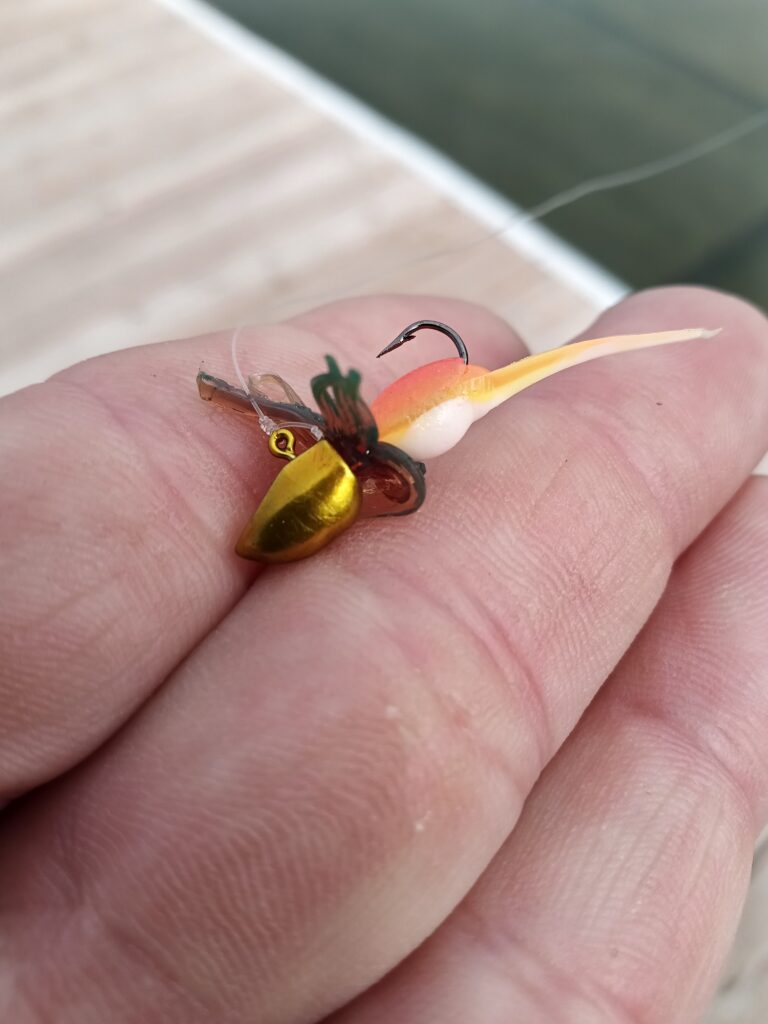
#1 Pairing two different plastic profiles together on one jig has been an effective way to entice the most finicky pan fish. A collared style with a ton of movement, and a subtle trailing tail gives them the best of both worlds.
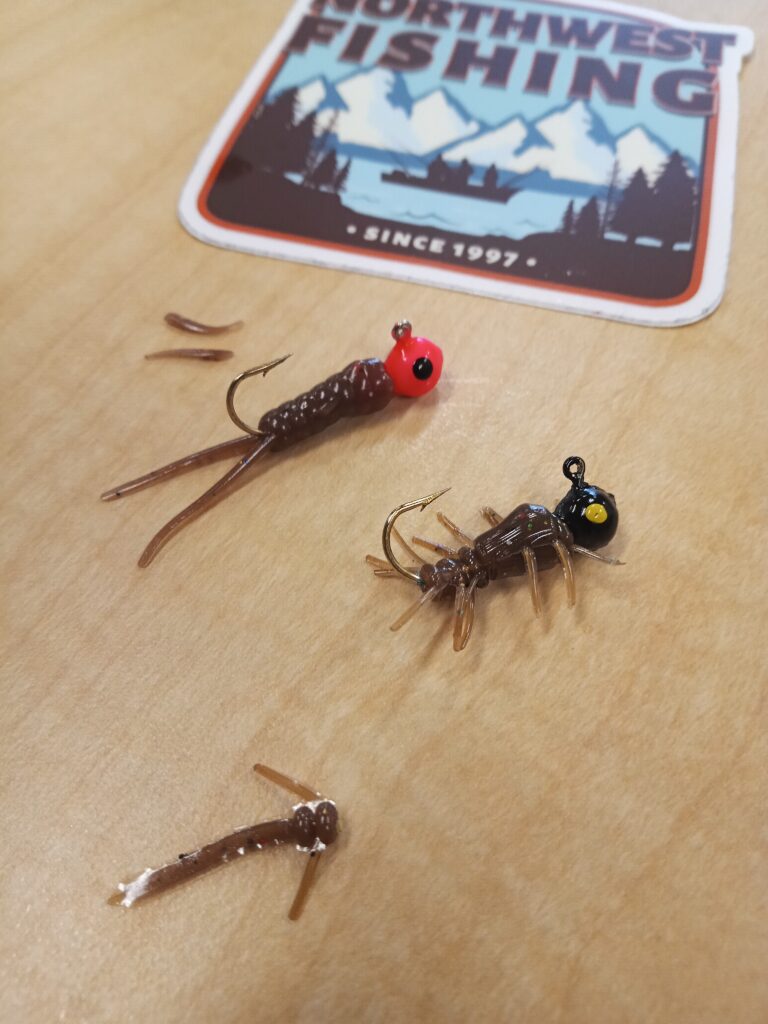
#2 We've all had the tail, and or legs ripped off the plastic we're using thinking we need to change it out. Well, don't.... Inspect it, and if it still looks fishy, fish it. Some of these, which I call "Creature Bait" have sometimes outperformed the original profile. Sometimes they may not want all that frill in their face, just something more sized down and buggy.
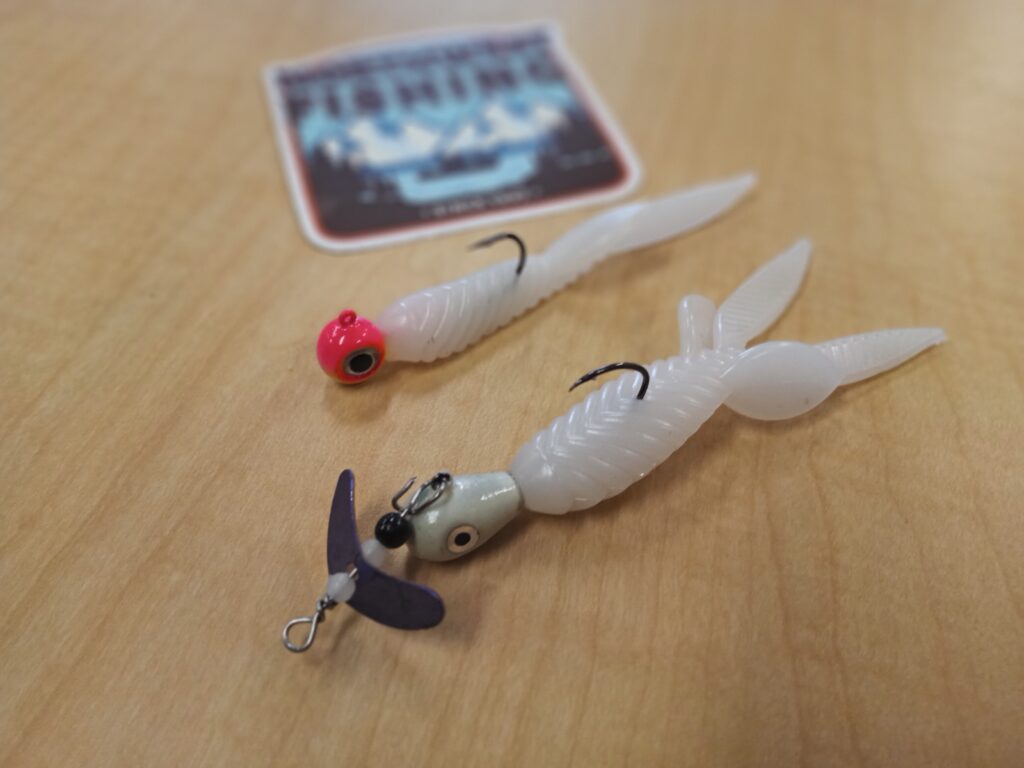
#3 I've tinkered with larger bait while bass and walleye fishing. May it have been a damaged plastic I refinagled on the jig knowing it would still fish. Or I change the profile completely myself for a different look and action. Like this here Burbot Bomb from Bad Dad's Jigs, I've fished the original profile with a ton of success. One day fishing Smallmouth, I cut one in half with scissors and tossed it on another jig head, and the action drove the fish "Bonkers"!
Try it next time, don't change out in such a hurry, inspect the bait, and fish it if it looks fishy. Or go create your own "Creature Bait" that will make them fish crazy.
![{"capture_mode":"AutoModule","faces":[]}](https://cdn.northwestfishing.net/sites/default/files/styles/large/public/images/IMG_20240627_055915_3-scaled.jpg.webp?itok=QZ0r3E67 "{\"capture_mode\":\"AutoModule\",\"faces\":[]}")
/articles/tips-tactics-pitching-plastics