5 Frozen Treasures
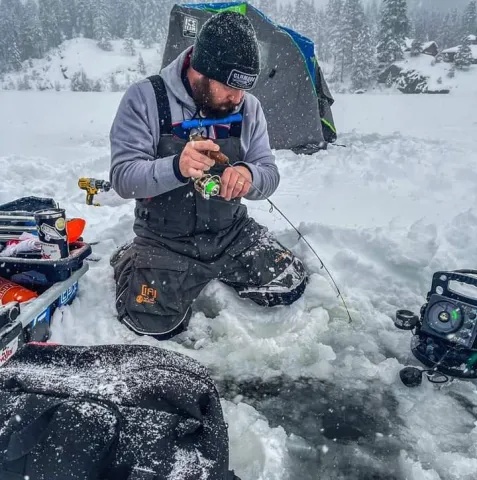
Washington State, known for its stunning landscapes and diverse outdoor activities, offers a unique and thrilling experience for anglers during the winter months, Ice Fishing. As the temperatures drop and the lakes freeze over, enthusiasts from all over gather their gear and head to some of the state's most picturesque frozen waters. In this article, we’ll dive into the icy wonderland of 5 lakes that stand out as prime destinations for ice fishing in Washington: Curlew Lake, Bead Lake, Sacheen Lake, Banks Lake, and Eloika Lake.
Curlew Lake: A Frozen Oasis In The Northeast
Curlew Lake, nestled more in the Northcentral portion of the state, transforms into a winter wonderland, drawing anglers seeking a tranquil ice fishing experience. The lake spans over 900 acres and is surrounded by snow-covered mountains and hills, creating a beautiful backdrop to your frozen adventure.
The lake is home to a variety of fish, with Rainbow Trout and Yellow Perch being the most sought-after during the winter months. Anglers often set up shanties or their ice fishing spots right outside the state park patiently waiting for the telltale signs of the fish below, which doesn't take long. The vast mud flat just outside the park holds amazing numbers and is easy to get into. The camaraderie among anglers and the stunning scenery make Curlew Lake a must-visit destination for any Ice Fishing aficionado.
Bead Lake: A Hidden Gem in The North Mts.
Nestled in the North of Spokane Mountains, Bead Lake is a hidden gem that offers a secluded and serene ice fishing experience. The lake, surrounded by dense forests and snow-covered peaks, provides a pristine setting for anglers looking to escape the hustle and bustle of everyday life.
Bead Lake is known for its healthy population of Kokanee, and the popular large lake trout that roams the depths. As large marks appear on your sonar, don't be surprised if it's not a laker, but a monster of a burbot making this lake an enticing destination for those seeking a variety of catches. As you set up your gear on the frozen expanse of Bead Lake, the quietude and natural beauty will transport you to a world of tranquility, making each catch a memorable moment.
Sacheen Lake: Serenity and Splendor In Pend Oreille County
Located in Pend Oreille County, Sacheen Lake offers a charming blend of serenity and splendor during the winter months. Surrounded by evergreen forests and snow-covered hills, the lake becomes a haven for ice-fishing enthusiasts seeking a peaceful escape.
Sacheen Lake is known for its panfish, including perch and crappie, which are abundant and fun to chase. Also, fun to target nice trout under the ice as well, with good chances of catching! Rainbow, Brook, and Tiger Trout provide excellent opportunities for ice anglers to enjoy a variety of catches. As you drill your fishing holes and set up your equipment, take a moment to absorb the quiet tranquility of Sacheen Lake, where the only sounds are the soft crunch of snow beneath your boots and the occasional call of a winter bird.
Banks Lake: A Vast Frozen Playground in Central Washington
For those looking for a more expensive ice fishing experience, Banks Lake in Central Washington is a prime destination. This reservoir spans close to 27,000 acres and is known for its diverse fish population, including Walleye, Rainbow Trout, Burbot, and Whitefish which are the most popular to go after.
Ice fishing on Banks Lake is a social affair at times, with clusters of anglers setting up their shanties in popular spots and many staying overnight. The vast frozen expanse provides ample opportunities for exploration, and to get away from the crowds if needed. As the sun sets over the snow-covered horizon, the frozen lake transforms into a canvas of colors. Banks Lake is not only a haven for anglers, but also a visual spectacle that captivates the senses.
Elokia Lake: An Ice Anglers Original
Nestled in the heart of Northeastern Washington State, Elokia Lake transforms into a winter wonderland for avid ice fishing enthusiasts. As temperatures drop, the lake's icy surface becomes a haven for those seeking the thrill of angling beneath a blanket of snow.
Eloika Lakes expands over 600 acres, providing ample space for ice fishermen to explore its frozen expanses. One of the primary draws for anglers is the diverse range of fish species that inhabit this lake. Brown Trout, Rainbow Trout, Large-mouth Bass, Perch, Crappie, and Sunfish. Seems that Crappie are what attracts most ice anglers.
The savvy ice anglers will target the Brown and Rainbow Trout early season just a couple of feet below the ice and near creek outlets. Eloika’s cold waters create an ideal environment for these fish. Anglers can also test their skills against the Large-mouth bass, known for their elusive behavior even in freezing temperatures, and they are big in this lake, especially on an ice rod.
Yellow Perch and Crappie add a variety to the fishing experience at Eloika. These panfish offer more of a relaxing angling experience, making the lake suitable for seasoned veterans and beginners alike. Perch are abundant and make sure to check the regulations for the Crappie size and limit.
As ice fishing shelters and anglers dot the frozen landscape, camaraderie flourishes among anglers who gather to share stories and tips. Eloika Lakes icy embrace beckons, offering a unique and thrilling experience for those willing to brave the cold pursuit and snag the perfect catch!
/articles/5-frozen-treasures
Trout Fishing: When Life Gives You Lemons.
Farmed. Hatchery. Wild.
I fed a rusty orange streamer into the current, threw an upstream mend, and let it swing. We call it First Water. It's what you get early in the morning when you get to the river before the next guy. First Water makes you smile after a hard week at work. Like making lemonade out of lemons.
A trout hammered the fly and the tippet snapped. Heart pounding, I cut the leader back to 8-pound, tied on another fly and cast quartering-down. This time when the fish hit, it turned and charged, coming straight out of the water. Five minutes later we slid the net under a four-pound gnarly, hook-jawed brood stock rainbow. We have learned from experience it's hard to revive the big hatchery rainbows, so it was an easy decision to keep it for the table.
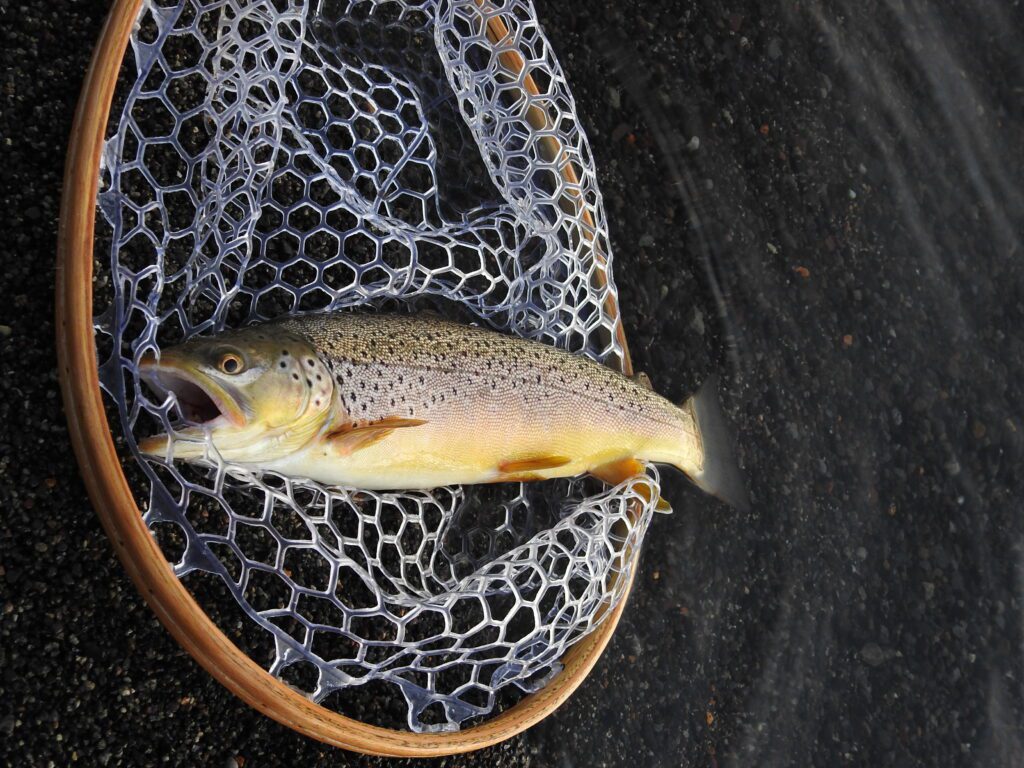
FARMED, HATCHERY, WILD OR NATIVE?
Here's a thing that doesn't make sense. We go to the grocery store and complain about the price of groceries and then we drive to the lake and catch and release a limit of rainbow trout at $10 a pound. I've done it.
Hey, those fish were put there to catch and keep. It's healthy food, high in omega-3 fatty acids and B vitamins. Easy to catch (sometimes). Easy to clean. Tastes good. Good for you.
Think of it like this: we have rainbows, cutthroats, brook trout, brown trout, bull trout, and lake trout in our lakes, rivers, and hatchery raceways. Some of them end up behind the butcher's glass at the grocery store. How do we tell where they came from? The ones in the cellophane and Styrofoam, that's easy. Those are farmed fish, which are generally shoveled a high-quality pelletized food and then fed a carotenoid called Astaxanthin which gives the meat an orange color and improves the taste.
According to Luke Allen, from the Wizard Falls Hatchery and Tim Foulk from the Fall River Hatchery, astaxanthin is produced by microalgae which is ingested by small fish and invertebrates like krill, which are then ingested by fish.
In Oregon, hatchery-raised rainbow trout (and cutthroats) are classified as legals (usually 8 to 12 inches), trophies (usually 14 to 18 inches), and brood stock, which are the surplus breeding trout that tip the scales somewhere between four to ten pounds. In Central Oregon, these fish end up in places like Pine Hollow Reservoir, Walton Lake, South Twin, and Fall River. Hatchery trout may also be released as fingerlings in waters like Lava Lake, East Lake and Diamond Lake where the natural feed is so good the fish grow fast. Fingerlings are also released in the high lakes every other year. Fingerlings, although raised in hatcheries in geometric order, tend to behave and look more like wild trout as they reach a harvestable age.
The terms wild and native can refer to the same fish or mean two different things. Brown trout, brook trout, and lake trout are not indigenous to Oregon but were introduced. Browns come from Germany and brooks come from the East Coast. That's why we refer to them as German browns and Eastern brooks. But if they were hatched in gravel we call them wild trout.
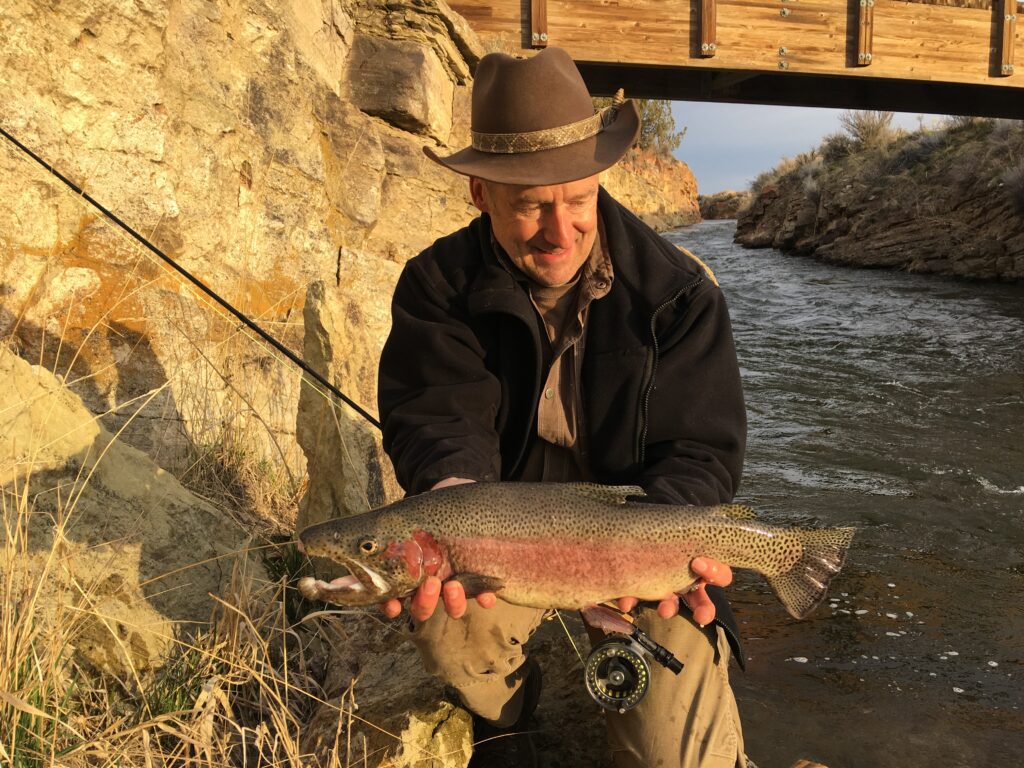
Photo courtesy Don Lewis
The term native is inclusive of rainbows, cutthroat and bull trout. In some cases these fish may be caught, kept and eaten, but it’s a good idea to release them to spawn and prosper. If you catch a brookie in the high lakes, hey, that's some of the best wild food you can get. And you are not eating a native fish.
A steelhead is a rainbow trout that migrated from freshwater to the ocean and returned. If a person eats farmed steelhead, it is probably not steelhead at all, but rainbow trout packaged as steelhead. An angler that catches and eats a fin-marked steelhead has consumed a hatchery steelhead. Surplus steelhead that returned to their hatcheries in places like Nehalem or Three Rivers are often trucked to coastal lakes and set free to give anglers another chance at them. Because they will probably not thrive in the lake, the highest use of these fish is to turn them into a good meal.
Fisheries managers sometimes struggle with the divide between the consumptive and the catch-and-release ethic.
Diamond Lake was devoid of fish before it was stocked by mule trains in the early 1900s. The food-rich lake still grows fish to trophy proportions and not enough gets taken home by sportsmen. It's a resource we could be making better use of, and the same principle applies all over the state from Lake Selmac to Wallowa Lake to Bikini Pond to Rock Creek Reservoir to Lava Lake. Those fish are there to eat. And there are some really good things like dill, parsley and lemon that go great with a pan full of eastern brookies or hatchery 'bows.
That's why I say when life gives you lemons, go catch a trout.
For a copy of the Fishing Central Oregon book, send $29.99 to Gary Lewis Outdoors, PO Box 1364, Bend, OR 97709 To contact Gary Lewis, visit www.GaryLewisOutdoors.com
/articles/trout-fishing-when-life-gives-you-lemons