How to Catch a Cone Licker
Fishing Lake of the Woods in Southern Oregon
You know what a cone licker is. You see them in places like Seaside and on the sand at Diamond Lake and they have cone lickers at Lake of the Woods in southern Oregon too. These are the poor folks whose mommas and papas never taught them how to fish. They like to go to the lake too, and they are the ones who, if you bump into them on their floaties, ask "Didja catch anything?" Or, "What kind of fish are in this lake?" It's not a sin to be a cone licker. It wasn't their fault they were born in Sacramento.
There's another kind of cone licker. They are the big trout that eat a steady diet of midge larvae and are particularly susceptible to a pattern called the Ice Cream Cone.
Lake of the Woods is a classic fishing lodge destination for the whole family. It's got something for everybody - a well-stocked marina store with boats and paddleboards to rent, a gift shop, cabins to rent, campgrounds, a great restaurant with a view of the lake, and a bar on the second floor with even better views.
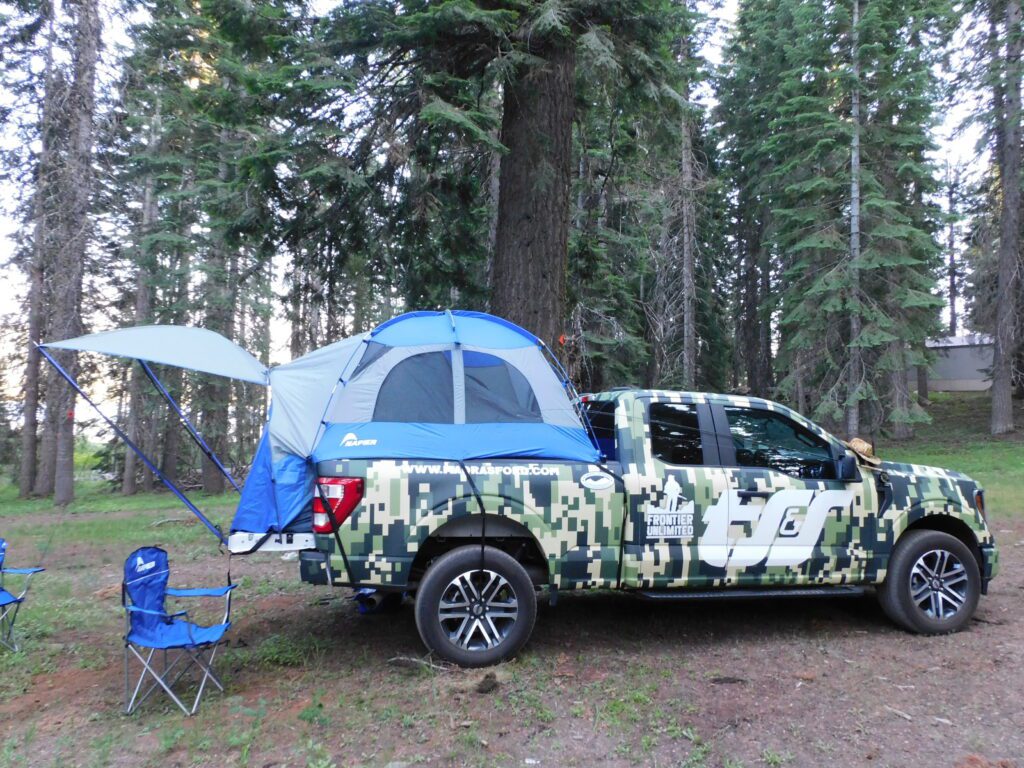
I set up the tent in the back of the F-150, a roomy two-man tent from Napier ( napieroutdoors.com ), specially made to the Ford's dimensions. Then I went down to the lakeside to look at the boat I had rented for the morning.
I knew exactly where I was headed, remembering it from the last time I had fished Lake of the Woods, which was too long ago. We were going to still-fish, having brought spinning rods and fly rods and a selection of jar baits and chironomids.
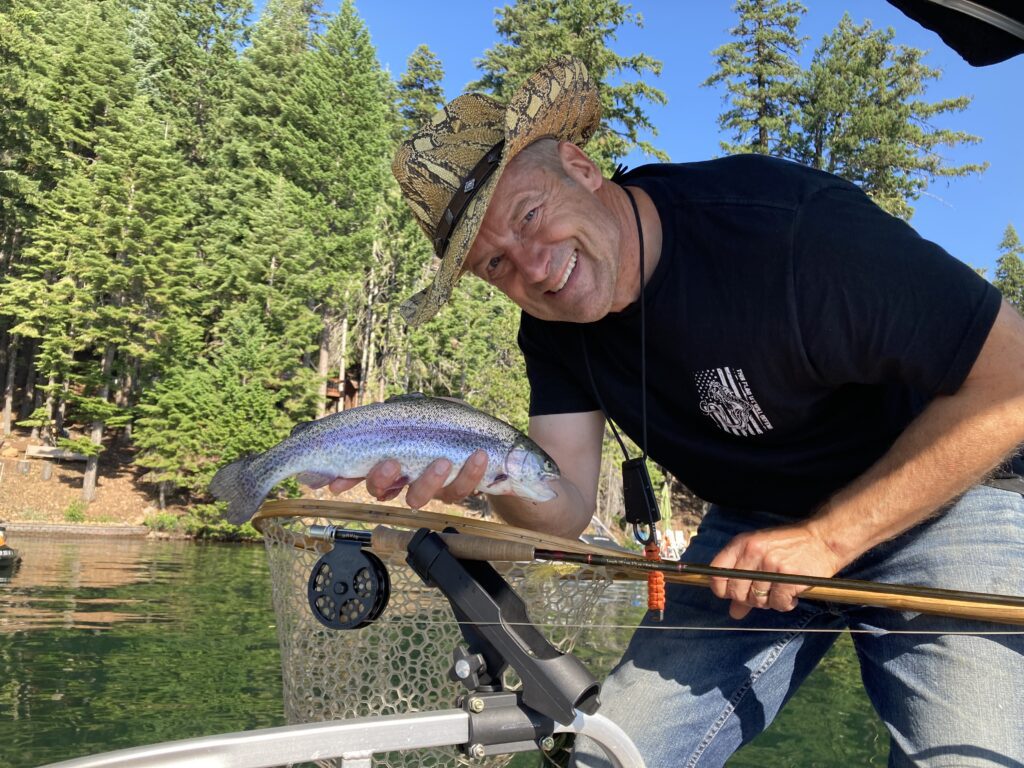
Soaking in the vacation vibe at Lake of the Woods, I could not help but smile. A lot of people are looking for exactly this kind of American experience. They just don't know where to find it.
FISHING CHIRONOMIDS
Set up the rod with a tapered leader down to 4X tippet. Affix a Thingamabob indicator well up the line and tie on a No. 8-10 Ice Cream Cone chironomid pattern. With another 12 to 18 inches of tippet add a second Ice Cream Cone tied off the bend of top fly.
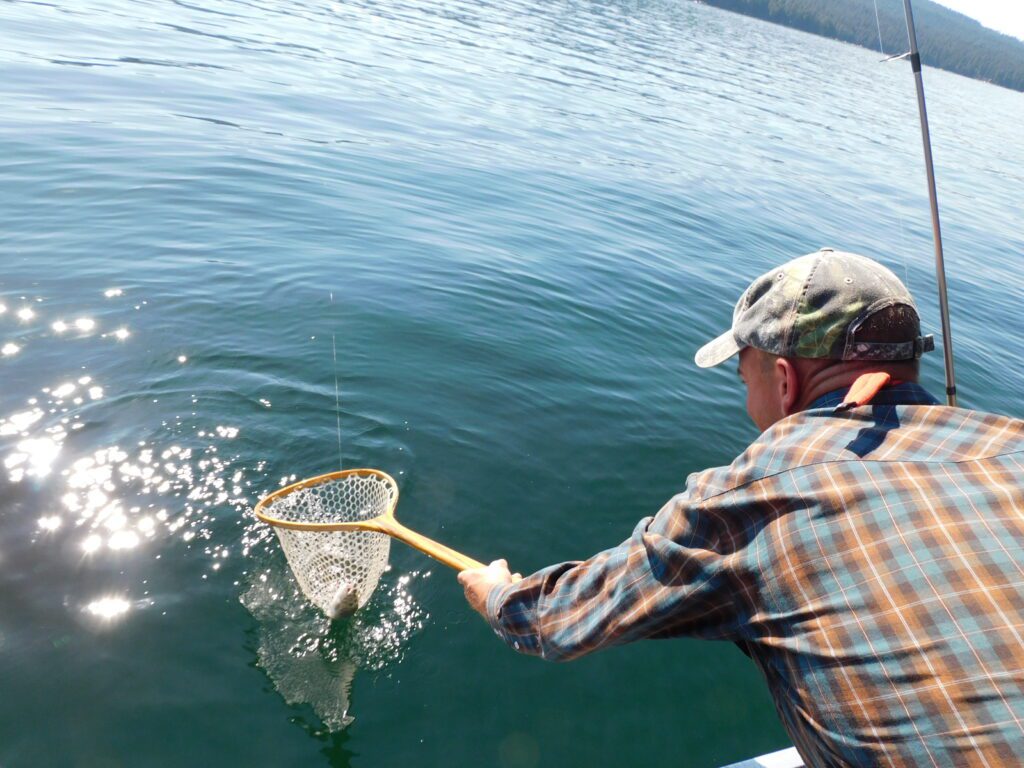
Casting a two-fly rig is not an art form. The main thing is to put the flies at the depth of the feeders, keep slack out of the line, and watch for the indicator to indicate. The fun thing about this type of fishing is that some of the biggest fish move the indicator the least. Keep the rod tip low, touching the surface of the water, and be ready to set the hook. Like a rattlesnake.
Finding the feeders is the main thing with fishing chironomids. One trick is to drive the boat over the place you will fish then with a hemostat clamped to the bottom hook, gauge the depth of the water. Then adjust the float so that it puts the bottom fly something like 18 inches off the bottom. That puts the top fly 36 inches off the bottom. Pay attention to which bug gets bit the most and reset the rods accordingly.
You might have heard of the big bait-big fish principle. That doesn't apply to midge larvae. Big trout eat a whole of a lot of these tiny things.
WHERE TO ANCHOR UP FOR TROUT
A large mountain Stillwater in a forested setting, Lake of the Woods is fed by several creeks but gets the majority of its water from groundwater seepage. The deepest water is found along the western shore where the depth is reported as 50 to 55 feet. There is a good mix of shallows where weeds and bugs grow and colder water deeps and rocky ledges, which makes for interesting fishing.
The resort is situated on the eastern side of the lake on the north shore of Rainbow Bay.
One of the best spots for trout is just outside of the marina. Anchor up anywhere within 100 to 150 yards of the marina and within casting distance of either the east shore or the west shore. Anywhere out in front of the marina can hold trout.
The other great trout area is along the west shore where a deep ledge makes for a great spot to anchor up or troll for rainbows and/or kokanee and the browns that hunt them.
We caught nine trout, a catfish, a perch, and a couple of smallmouth bass in a couple of hours on both fly-fishing gear and spinning gear.
Standard trout rules apply for the Southeast Zone with a limit of 5 trout per day (only 1 trout over 20 inches) and 25 kokanee per day in addition to the trout limit. There is a 5 bass limit with only 1 bass over 15 inches. Angling is allowed 24 hours per day.
This lake is capable of growing hatchery trout big and holding them over. Trout can be caught year-round, but spring and fall are peak seasons for rainbows and browns. Trolling is popular on the lake, but still-fishing can fill out a limit faster, at least in my opinion.
Looking for a family fishing tradition to start? It's hard to beat Lake of the Woods with something for the whole family, even those cone-licking cousins who grew up in Sacrapimento. Heck, you might even teach them to fish.
# # #
For a copy of the Fishing Central Oregon book, send $29.99 to Gary Lewis Outdoors, PO Box 1364, Bend, OR 97709 To contact Gary Lewis, visit www.GaryLewisOutdoors.com
Directions: From Klamath Falls travel 35 miles west on State Highway 140; from Medford, take State Highway 62 north to Highway 140 then east 45 miles. From Ashland, travel 35 miles east on Dead Indian Memorial Road.
/articles/how-catch-cone-licker
Madison River Shoulders
Mountains come out of the sky and they stand there. Snow-covered peaks create a breathtaking backdrop as we work our way down the fast-flowing, slightly off-color river. I could say a whiter shade of pale, but I’d be pushing the 70s music lyrics references a bit too much.
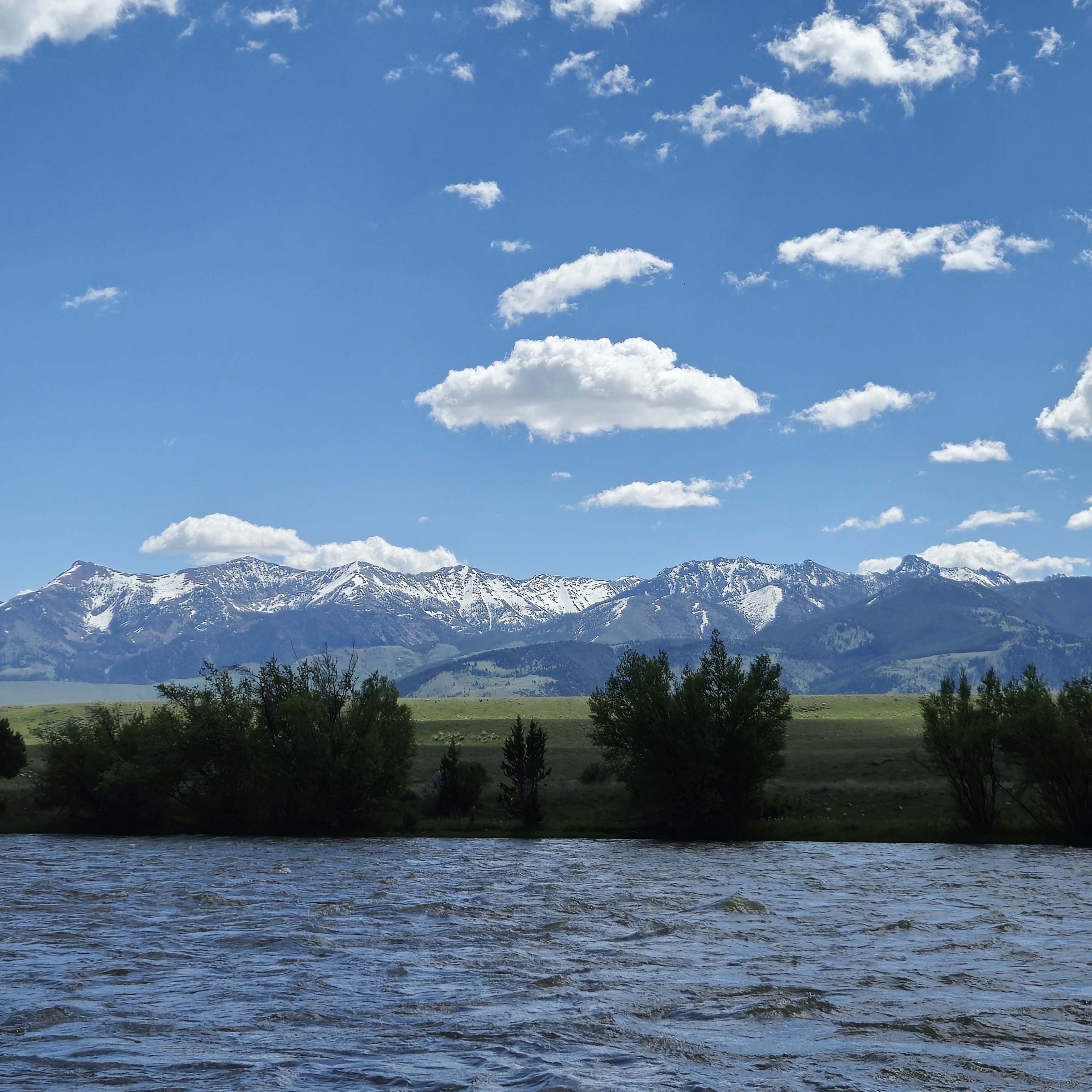
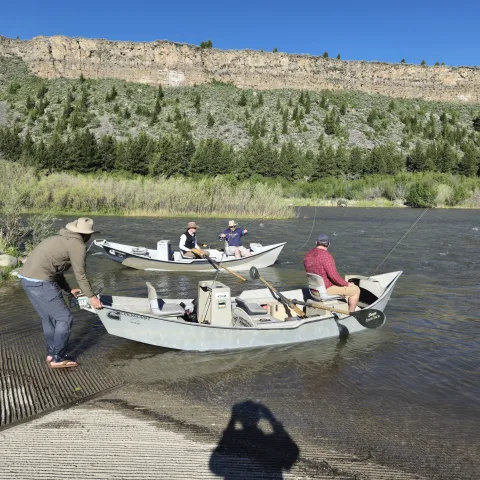
Matt and I are floating the Madison River, Epic, Historic, Blue-ribbon… pick your adjectives. At first glance, I wondered “Where do you even fish this?” To the untrained eye, the river looked uniform from side to side, a fast-moving, rocky, never-ending flow of energy.
Hunter and Sam, our guides from River Borne Outfitters, had briefed us on the strategy to fish for this untamed wild river. “Today you’re going to be fishing buckets” Hunter elaborated, “When the water is running this fast, you want to target the small back eddies, slicks, and close to the shore. You’ll see the holding water better as the day progresses. It requires some accurate casting but it’s not that hard. The fishing can be really good, but I’m a bit worried about the color of the water.”
For my part, I was glad to be fishing and not rowing. We rapidly drifted past large boulders that would easily have flipped a less skilled rower. “That’s why you fish with a guide”, I thought.
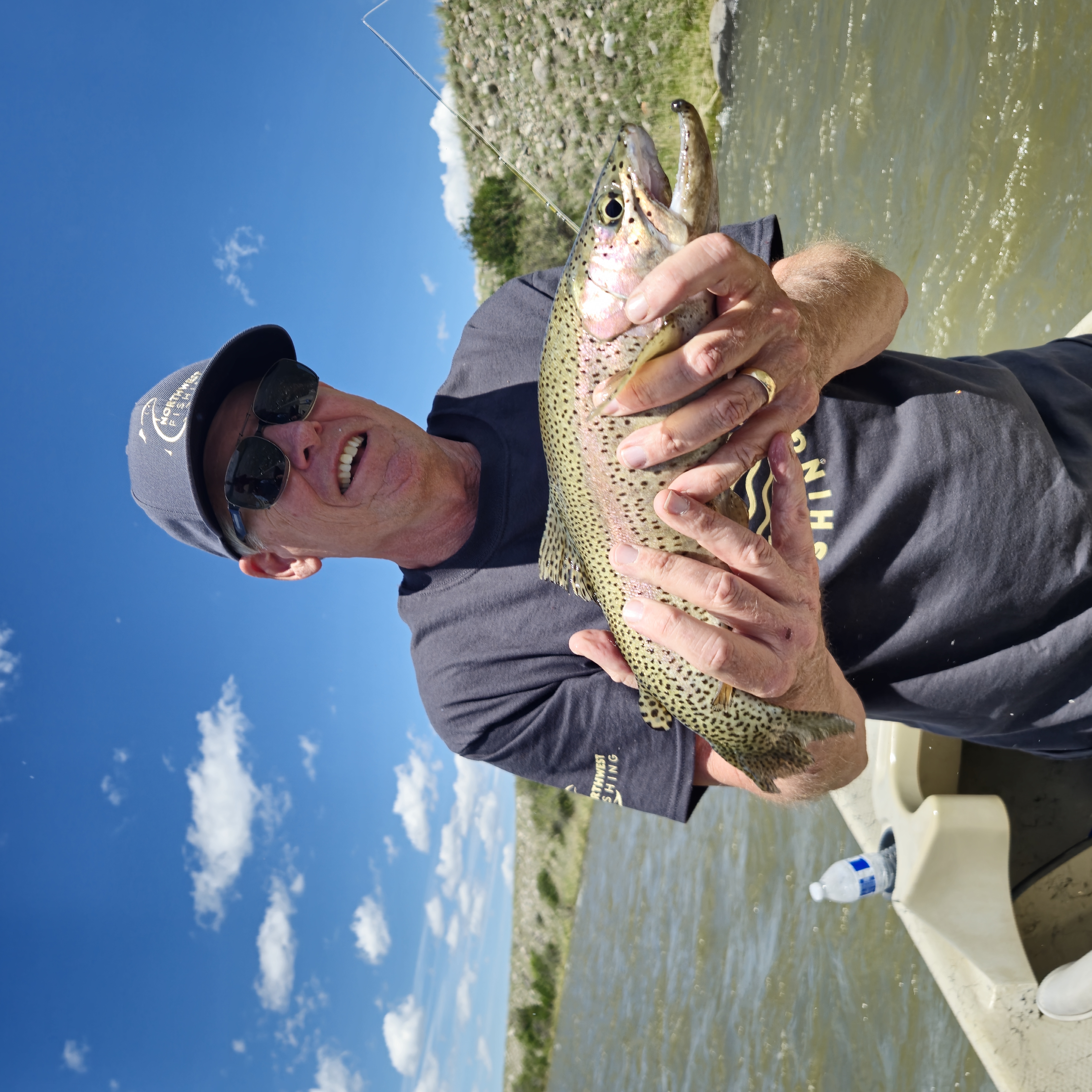
Suddenly Matt called out “Fish on!”. I looked back and his rod was doubled over with the weight of a solid fish, which revealed itself with a series of impressive jumps, clearing the surface a good three feet. A chrome bright, wild (that’s the only kind of trout in the Madison) rainbow was giving Matt a good battle. He skillfully took his time and brought the glistening 18-inch fish to the net. Scooping him up, Hunter let out an excited “skunks out of the boat” and it was the start of a memorable day on one of Montana’s most amazing and wild rivers.
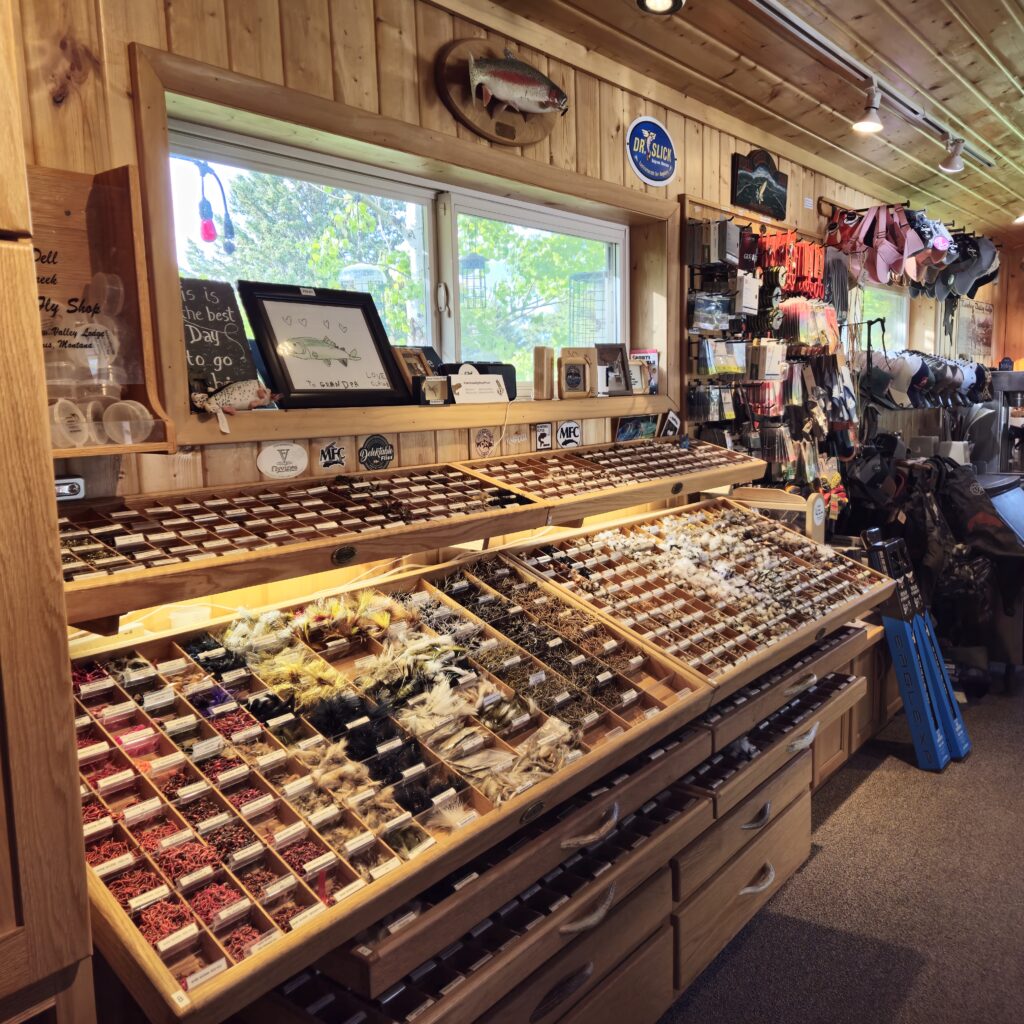
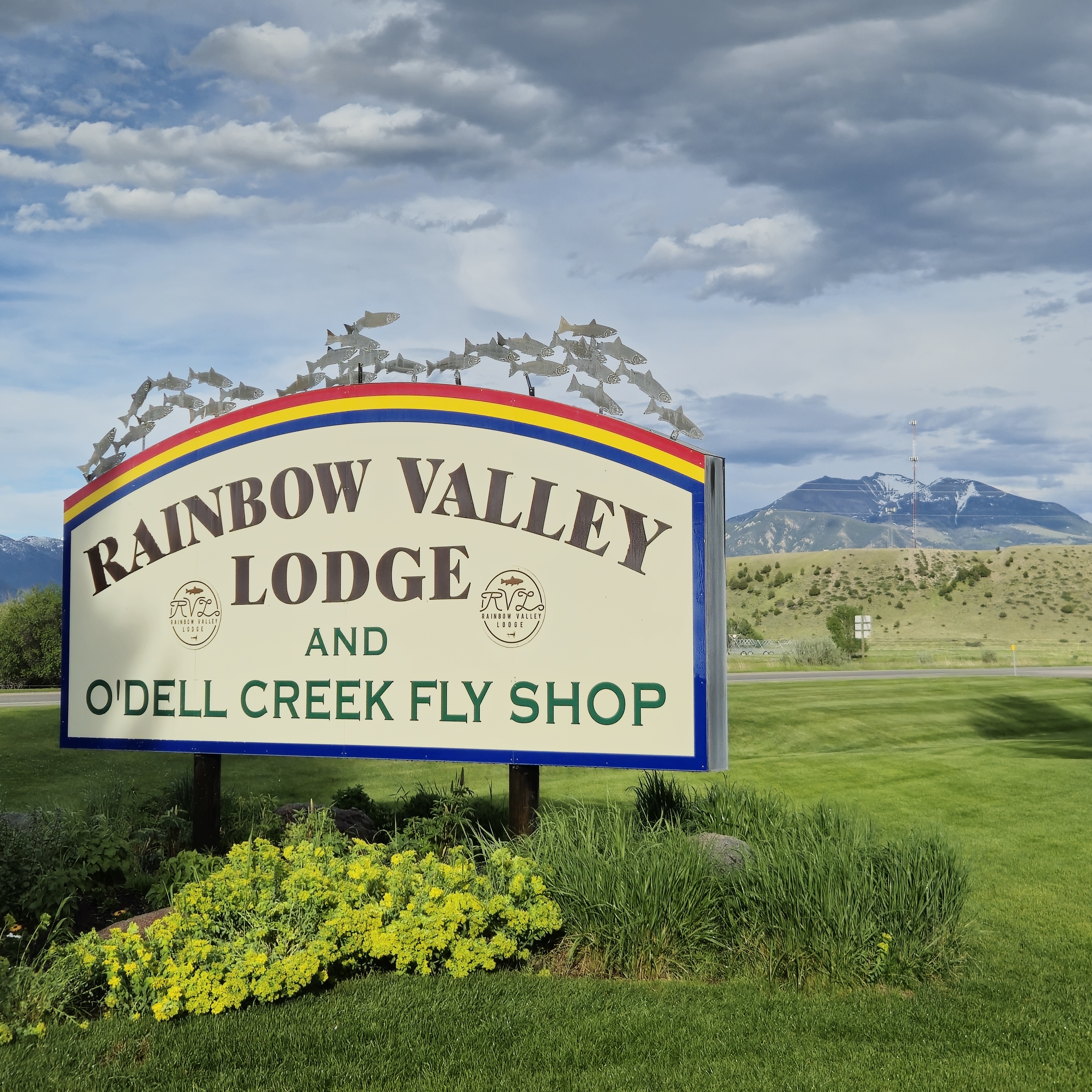
We had arrived the previous day at the invitation of Ed and Jeanne Williams, owners of Rainbow Valley Lodge. Ed and Jeanne had moved from California to Ennis, Montana over 35 years ago and taken over the lodge, growing it over the years into a destination for the rich and famous, and the average person. The two of them radiated an aura of enthusiasm and hometown friendliness that I have come to treasure over the past two years of living in Montana. We felt as if we had new friends we could return to year after year, and indeed, many of their guests expressed the same feelings to us. Not the largest lodge in Ennis, but certainly the most homey and one you’d want to return to year after year. Heated pool, rustic pine wood interiors, and beautiful flowers everywhere give you that “western feel” you are looking for when traveling to Montana’s fishing destinations. The impressive collection of fishing memorabilia in the lobby could keep an angler’s attention alone, not to mention their well-stocked O’Dell Spring Creek Fly Shop. The evenings are a gathering of guides and guests, chatting about the day’s fishing adventures and making new friends and acquaintances.



“Shoulder Season” is the term Ed had shared with me about the lodge’s seasons. Spring and fall anchored a full and busy summer of guests coming through Ennis to fish the famous Madison and use Ennis as a base camp for the 70-mile drive to Yellowstone National Park. Ennis is the last major town on the road to the north Yellowstone entrance. As such, come the end of the school year it rapidly fills up with tourists and summertime adventurers streaming to visit America’s most iconic national park. Anglers stream in as well, as the Madison River shares its impressive fishing with fishermen from near and far.
While the summer is a busy time for the lodge, spring and fall are another matter, and visitors can experience a slower and more relaxed pace if they’re willing to take a few chances. For us, the weather was outstanding with a day in the upper seventies and sunny. The recent warm-up had increased river flows to over 2,500 cfs (cubic feet per second), which had us drifting at a solid pace, but not too fast to catch fish. And as we found out as the day progressed, the visibility at about 18 inches was just fine for fish catching.
Soon after Matt’s nice start to the day, I watched as my strike indicator ducked under the water. I gave a quick tug and felt the heavy pressure of a nice fish. Unlike Matt’s fish which had treated us to a fun aerial display, my fish was a bulldog, the sign of a nice brown trout. Headshakes and hard runs kept me focused and I worked the fish back to Hunter’s waiting net. He skillfully scooped up the brown-speckled fish and after a quick measurement, we released a nice 16-inch thick brown trout.
Our setup for the day was a quality 5-weight Orvis rod and reel, floating line, and 8-foot leader. A pair of size 8 girdle (stonefly) bugs tied 18 inches apart were the fish enticement, and bites were monitored by orange strike indicators (all the better to see in the early morning sunny glare). Our instructions – when in doubt, set the hook!
While “bucket fishing” requires a degree of accuracy, it is a technique that lends itself well to intermediate and even beginner fly anglers. The casts are not terribly long, and if you miss the sweet spot of the “bucket” there is enough underwater structure that you still have a good chance of getting a hookup. While the Madison does not have the fish numbers of the Missouri, there are still plenty of fish to be had, and Sam explained that guides only promote catch and release on the river, so numbers have remained very consistent over the years.

As I noted earlier, this river, at springtime flows, in my opinion, would be a degree of difficulty I would not recommend to beginners behind the sticks. There were more than a few large boulders that could easily pin or flip a driftboat. So, if your rowing skills are marginal, leave the boat at home and hire a guide. Or wait for the slower flows of summer, but plan on having to share the river with a whole lot more anglers.
We continued the float catching fish at a regular pace, beautiful rainbows and brown trout, and an occasional whitefish. We didn’t catch any of the great white buffalo, AKA arctic grayling, but Hunter assured us they were in there. Brent, our film crew for the weekend, even caught his first trout on the fly with the help of his guide, Sam. The big fish of the day was Matt’s 20-inch brown he caught at the end of the day (what a way to finish!).

If you’re looking for the true western trout fishing river experience, keep the Madison River in mind, and don’t be afraid of fishing those shoulder seasons. You’ll find more than a few big-shouldered trout willing to share their day with you.
Rainbow Valley Lodge, Ed and Jeanne Williams, 800-452-8254
River Borne Guide Service, 406-581-2953, guides Hunter Schumacher and Sam Hall.
/articles/madison-river-shoulders
Backcountry Trout
All winter long we kept hearing about the Pacific Northwest's lack of snowpack and how it would affect our summer. A call for a drought, possible bad wildland fire season, lack of drinking water, and all the “doom and gloom” news agencies use to sell us fear. Sure, the snowpack is low but spring rains came and filled our reservoirs so the threat of a significant wildfire season is still lingering but what I kept hearing all winter and spring was how the backcountry would be snow-free very soon.
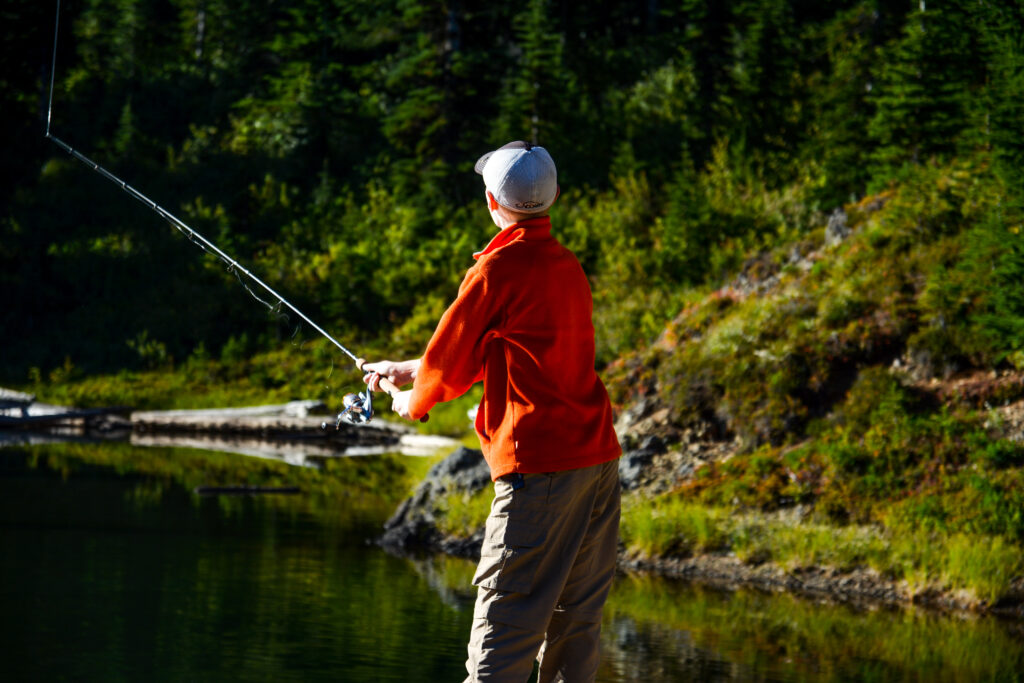
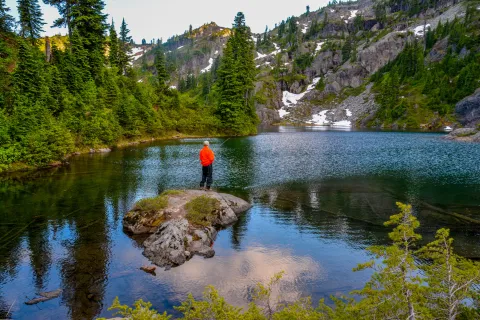
My normal backcountry fishing trips usually start around the 4th of July and continue well into late fall. However, this year the trails will likely be open and navigable, streams will be receding, and lakes will be ice-free come mid-June and that means it is time to strap on the boots, load the tent into the backpack, and grab the lightweight fishing gear.
Before you load up the pack and throw it in the small tackle container it is best to check mountain conditions. Even in June, you should always be ready for some chilly weather and high stream crossings. The SNOTEL Washington website provided by the U.S. Department of Agriculture will give you up-to-date data on current snowpack. Then do a quick search for river levels at the USGS website to let you know how much of that snow is melting.
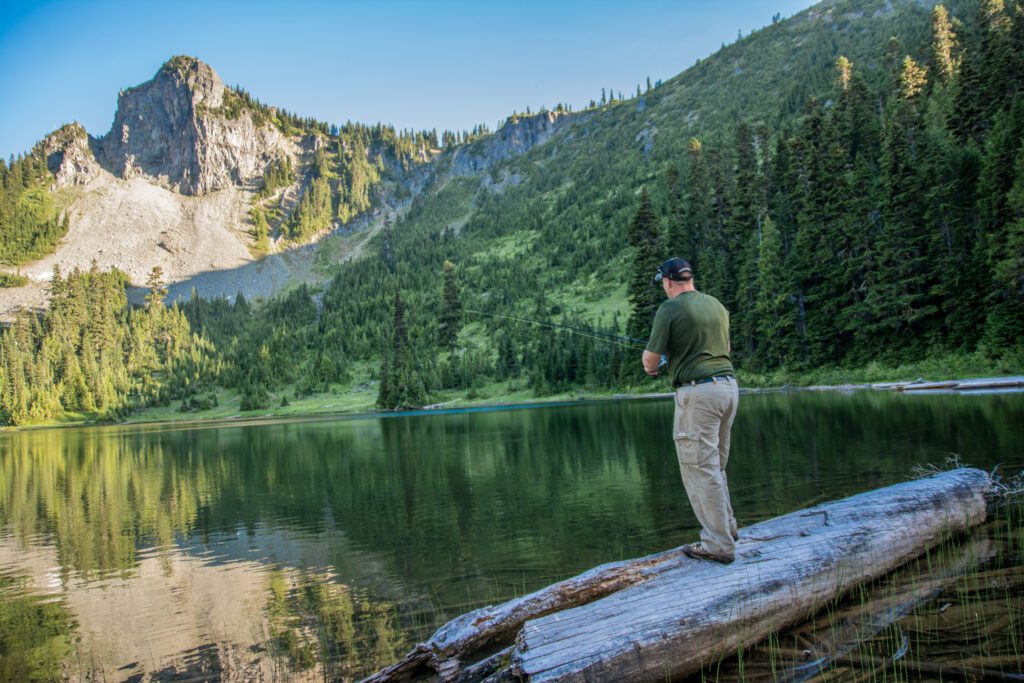
Once you figure out if the lake you are trying to get to is not only ice-free and if any streams you might have to cross to get there are safe to wade then one last web check for trail conditions at websites like the Washington Trails Association can provide you with important information such as any hazards on the trail, or if downed trees and other useful tidbits have blocked the trailhead. The main reason you want to research before you go is that June can be an interesting month for those trying to get to the backcountry. South-facing slopes will be open and snow-free but any north-facing slopes might still have lingering snow and making it impossible to get to the lake.
As the month wanes on most of the high country will be opened up and access will not be as much of an issue. Bugs will be hatching and though that makes for great fishing it also means a bit of an annoyance. Last year my son and I hiked into a relatively low “high mountain lake” that was at about 3,000 feet elevation. Fish were jumping and we soon found out why. Mosquitos flocked to our skin and swarmed us to the point that Deet was not going to be enough. Luckily, I had brought along Thermacells for both of us and plenty of extra butane cartridges and chemical pads that keep the bugs away. I also had a quick lesson on Thermacell's and that if you choose to strap them onto your pack to be sure that the vents do not become blocked as it can overheat and even melt the nylon on your pack.
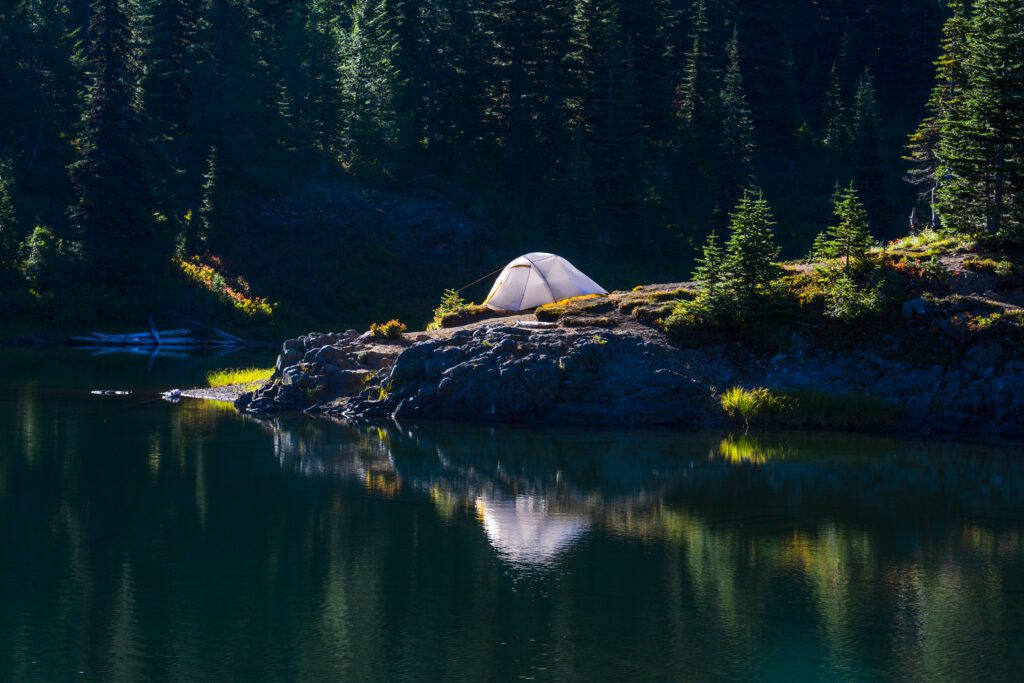
Long-sleeved shirts, lightweight hiking pants, and head nets will help with keeping bugs away and make for a more comfortable day of hiking and fishing. A lightweight double wall tent is also an excellent choice so you can make a quick bug-free area to sit and eat lunch or just rest and get away from the bugs for a bit. Being double-walled means the inner wall is a mesh material and you can leave the rainfly off if the weather is nice or put it on if the clouds come up.
Weather is another factor for June’s high-country adventures. Cool mornings and warm afternoons often mean thermal winds. Welcome the breeze as it will help keep the mosquitos at bay but also be ready if an afternoon thunderstorm approaches. Rain and even a snow shower is common in June in higher elevations as it is still springtime up in the mountains. Keep in mind that if you hike into a wilderness area fires are often not allowed so drying out can be a challenge.
When it comes to finding the right lake be sure to check out the fish and wildlife website and other resources. For those of us in Washington the WDFW has a tab for “high lakes” and there you can find a list of lakes which include their location by GPS as well as their elevation and size. It also will have directions to the trailhead or lake itself and even a stocking schedule on when it was last stocked. These lakes are often supplemented with fish that are hiked in by volunteer groups and periodically restock the lake. Some lakes have natural production if there is a cold creek that trout can spawn in or if they have brook trout, which is a member of the char family and can spawn in the lake itself.
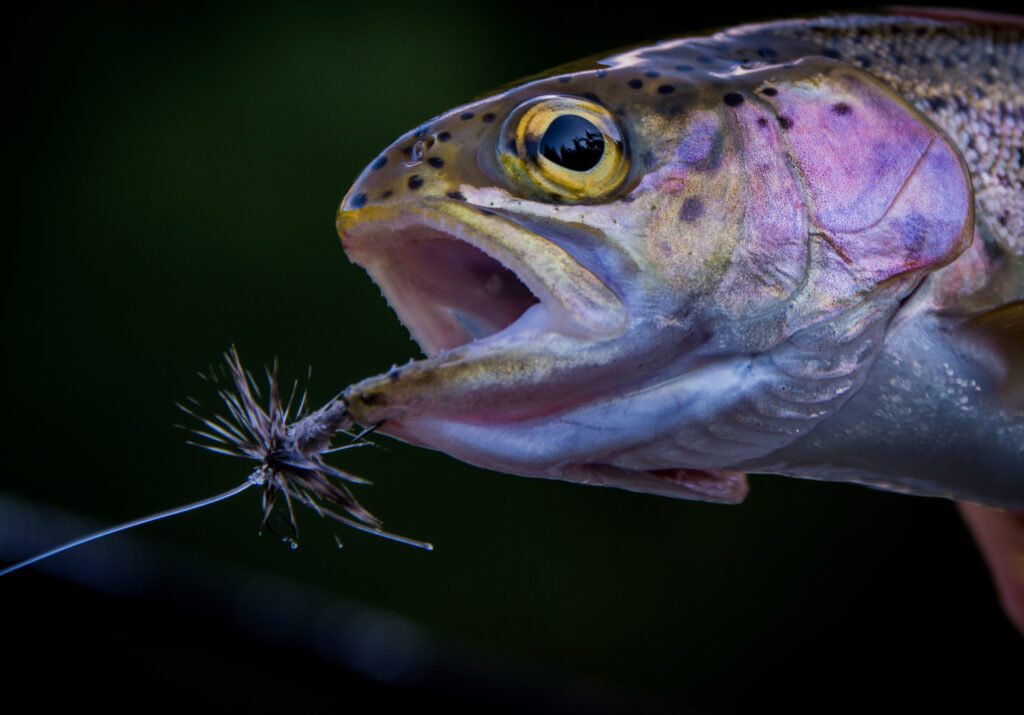
Backcountry fishing is often done in solitude. Once you find a few of these high mountain lakes you will soon realize which ones are popular with other hikers and anglers and which ones are “secret”. If you find a lake that is full of trout, and nobody around, then do yourself a favor and keep it a secret. These lakes cannot take much pressure and if you post your trip on social media and include the lake, trail, or even a nearby mountain then soon the lake will get new visitors and the next time you go there it might be void of fish.
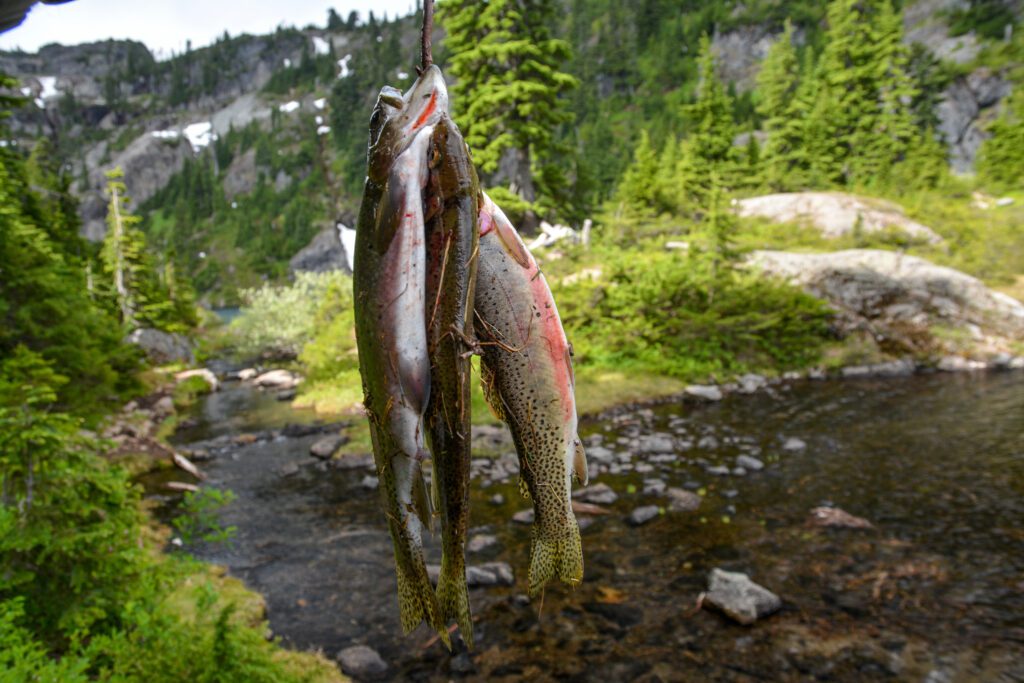
Then again, there are several lakes that are already popular, and those lakes tend to get regular re-stocking of fish so if you find other anglers do not feel bad about it. Same with harvesting a fish or two for dinner, these lakes either had or have a natural way to repopulate them with trout or were sterile to begin with and the fish were introduced into the lake for the specific reason to be caught. This does not mean you should catch a limit of trout to take home as there are plenty of lowland lakes to do that with. Instead, catch and release using artificial flies and lures is a wonderful way to spend the day. When it’s time for lunch, you can eat what you caught.
When it comes to cooking your catch, again, know the rules if you can have a campfire or not. A small titanium frying pan and a butane stove is a great way to cook up some fish. If fires are allowed, then packing a small piece of tinfoil is lightweight and makes cooking the fish easy or you can make a skewer and cook it open over the rising heat of the flames. High mountain trout make a great lunch, probably because of the work it takes to get to these lakes as well as the views as you sit along the shoreline.
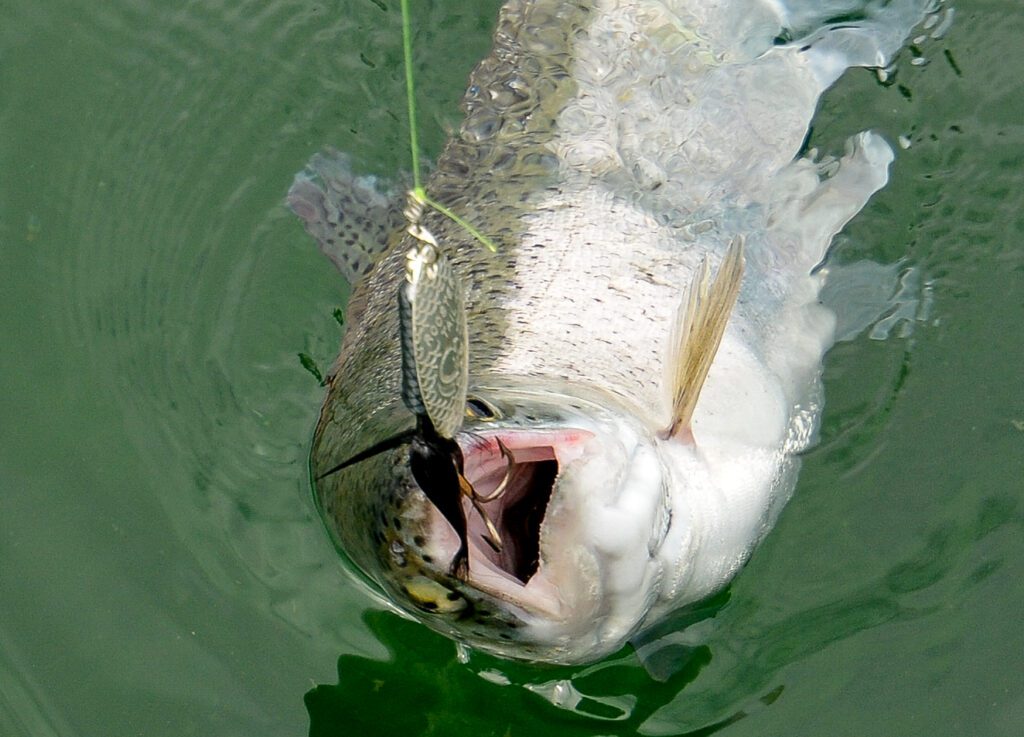
One of my favorite ways to fish high mountain lakes is with a lightweight fiberglass spinning rod. This rod is nearly indestructible and can take a beating while strapped to my pack. The spinning outfit allows the angler to cast lightweight lures such as Roostertail's and other spinners, but you can also use a plastic bubble style bobber and a dry fly. Fly fishing is a lot of fun and a lot of the lakes will have gradual shorelines as they are remnants of large ice fields. Other lakes might have a scree field where you can climb out on the rocks but be aware of your back cast and that rocks can shift.
In the early part of the month it might still be a bit chilly to wade, but by month's end a day out swimming and wading in the cool water also means being able to cast further. Regardless if you use a fly rod or the spinning rod with a bubble bobber very few things can beat a rising trout taking a dry fly. Most of these fish will be small and malnourished due to long winters and not much bug activity in the chilly water. This means using small dry flies such as a size 12 elk hair caddis or a size 14 mosquito. Light leaders in 4 to 6-pound monofilament will suffice and keeping the mainline light, around 6 to 8-pound test will help with casting long distances.
June offers the first chance at getting up to the backcountry. Lakes will become active with hungry trout and snow will melt from the trails. Load up the pack, be ready for changing conditions and strap on the trout rod. It is finally time to head to the high mountain lakes for some great fishing with incredible views.
Cooking Backcountry Trout
When it comes to a shore lunch along the banks of a high mountain lake it is hard to beat fresh trout. To make things easier pre-mix a spice shaker with some flour and your favorite spices, salt and pepper. This will help with adding flavor to the fish and keeps the mess down. Clean the trout and then butterfly it, cutting along the backbone from the underside, keeping the skin intact. Then simply shake the flour and spice mixture onto the flesh of the fish. When it comes to frying the fish, take along a small jar of coconut oil as it will remain solid at room temperature.
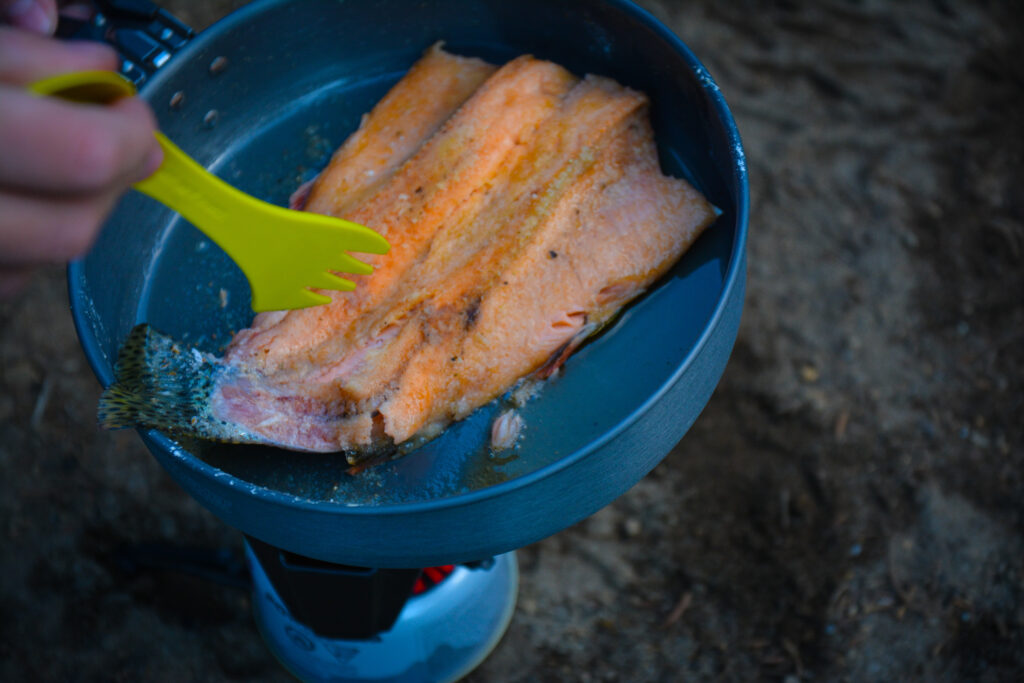
No worries about it leaking or spilling into your pack on the hike up to the lake. Scoop some out and put it in the frying pan and it turns into your standard frying oil and adds to the flavor. Once you are done cooking and the pan cools the oil turns back into a solid and can be scraped out of the pan and if you clean your pan in a nearby creek it will not mix with the water or stick to any rocks, though you should not clean anything in a creek. The coconut oil can be easily wiped out with a paper towel and stored in a zip-loc bag and can be used as a fire starter if needed much like paraffin waxed paper.
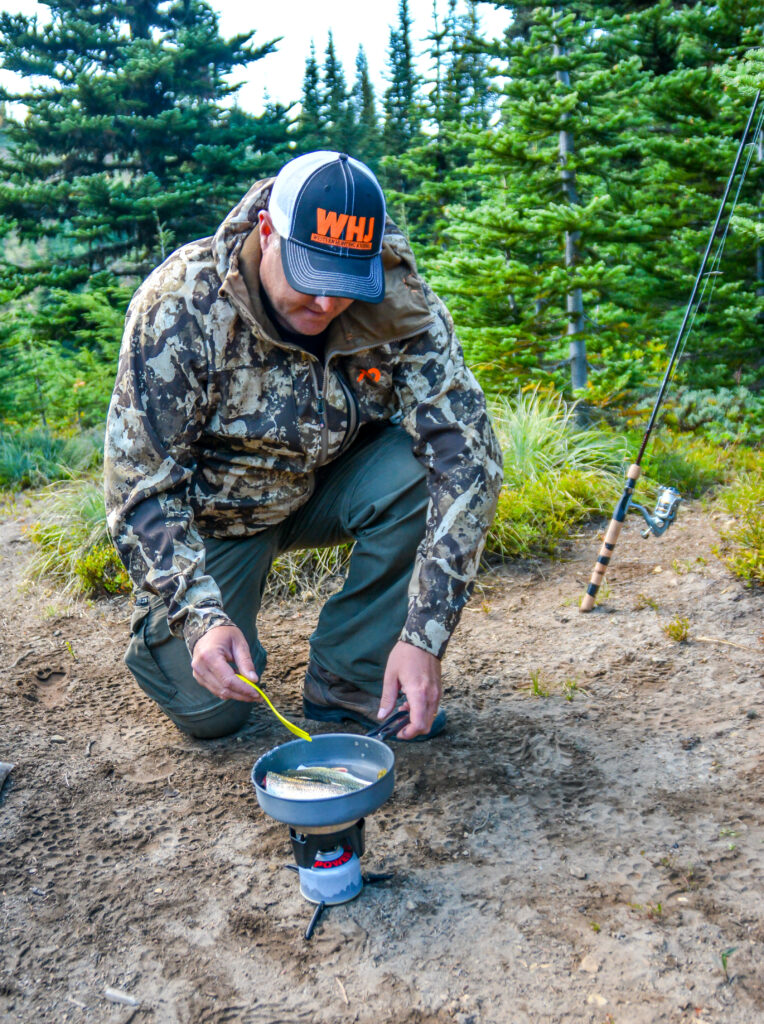
Another fun way to cook backcountry trout is to butterfly it just like described above and then use green sticks to skewer it. Build a small fire (where permissible) between rocks or make a rock oven and once the fire dies down place the skewered fish over the hot coals. Season with your favorite seasoning salt and let the heat cook the fish. Easy and no dishes to clean up afterward.
/articles/backcountry-trout
Fishing for Washington’s Stocked Rainbow Trout
Spanning through the past 130 years or so, Washington’s lakes have been stocked with a variety of fish species. The types of fish typically fall under two categories, the first being game fish like rainbow trout, Kokanee, steelhead, and cutthroat. These are all planted for the specific purpose of increasing public angling opportunities. The second category would be an aquatic vegetation control fish like the common carp, that was planted primarily by private landowners intending to mitigate overgrowth of vegetation in lakes and ponds. Regardless of the purpose of fish stocking, the practice has generated various stages of controversy throughout the years, and rightfully so as the early versions of fish stocking had been practiced without much consideration of ecological impacts on native fauna. Thankfully, the days of reckless and illegal stocking of ecologically sensitive lakes by private citizens are, for the most part, a thing of the past in Washington state. Nowadays, The Washington State Department of Fish and Wildlife and local tribes operate stocking programs that involve strict management guidelines and make use of both surveying and long-term field studies to effectively provide anglers with fishing opportunities while not disturbing vulnerable ecosystems.
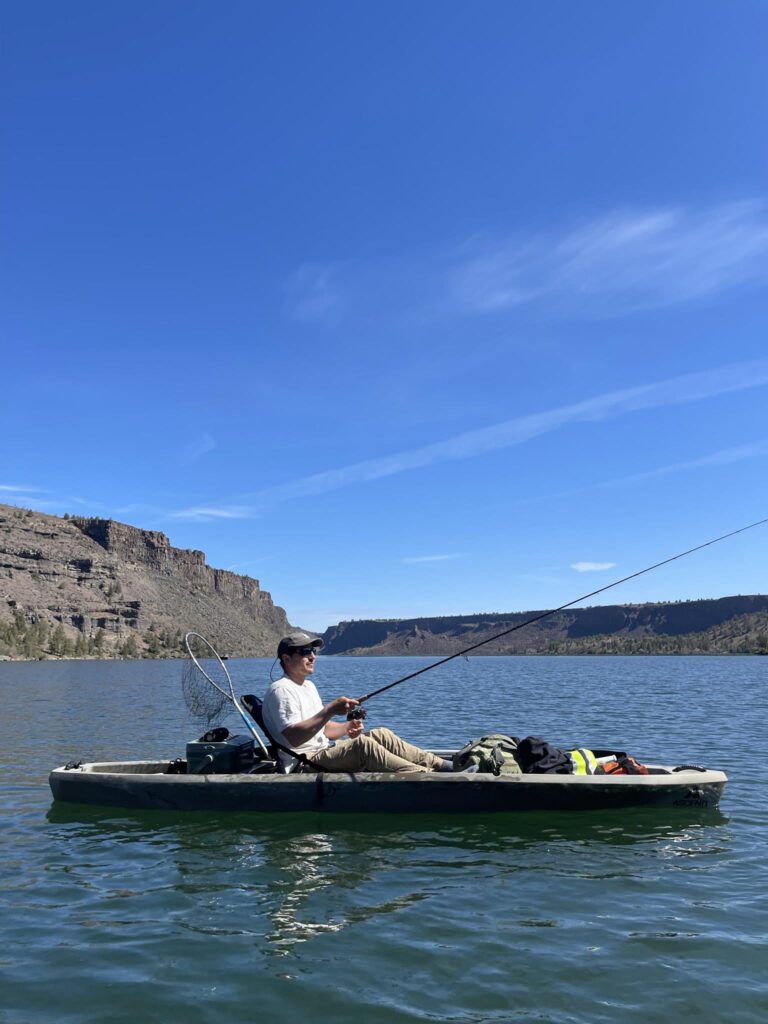
Rainbow trout are by in large the most widely stocked fish in Washington lakes, thus, they are the most common trout targeted by Washington State anglers. And though a stocked rainbow trout from a local lake might not be quite as alluring as say, a wild rainbow trout from some remote stream in the high-country wilderness, comparing these two is a bit like comparing apples and oranges. One can consider these stocked fisheries to be the staple of a lifestyle that places high value on family-friendly outdoor recreation, whereas the wild fish pursuit is an activity that often takes a bit more work and travel, and isn’t always quite as easy to get the family involved in
So, each has its place, and lucky for us, springtime marks the beginning of the trout stocking programs around the state. There’s a good chance that if you live on either side of the cascades, you won’t be far from a lake that’s getting a dump of catchable-sized hatchery-reared rainbow trout right about now. A visit to the Washington Department of Fish and Wildlife website will show you all of the recent catchable trout plants in Washington lakes. Here’s just a sample of some recent western and eastern Washington trout plant reports.
- Lake Thomas, Stevens County: 9,000 catchable trout
- Devereaux lake, Mason County: 7000 catchable trout
- Klineline pond Clark County: 10,000 catchable trout
- Black lake, Thurston County: 10,800 catchable trout
- Rotary lake, Yakima County: 3150 catchable trout
- Columbia Park pond, Benton county: 2012 catchable trout
There’s a myriad of techniques you can deploy to catch rainbow trout. Methods range from dropping jigging spoons down through a hole in the ice during the winter to casting flies out of a float tube in the summer. Stocked rainbow trout are not terribly picky and are known to strike at many different types of lures and bates. A surefire way to get some hookups would be to bring an arsenal of tackle so you can use the process of elimination in figuring out what the fish are biting on for that given day (it shouldn’t take you long). Below is a list of common techniques to catch stocked rainbow trout during the spring and early summer seasons.
Casting lures
This is by far my favorite method for rainbow trout. It’s simple in that you hardly need any gear other than rod, reel, and lure, but it also keeps you busy and engaged as you are constantly casting and retrieving while feeling for a strike. Casting lures like Rooster tails, spinners, spoons, wedding rings, and plugs have all proven effective at catching rainbow trout. Fishing during the morning and evenings when the fish are up near the surface will only increase the effectiveness of casting lures.
Trolling
Casting lures like the ones mentioned above can all be trolled behind a kayak or motorboat. If the fish are holding lower in the water column due to midday heat, try using a lightweight downrigger with a dodger. Or, if in a kayak, you can use a diver like a Deep 6 or Dipsy diver. Rainbow trout generally like faster trolling speeds around 1.5 to 2.0 mph
Sliding egg sinker rig.
This rig is very easy to set up and will get you onto the fish if they are holding deep towards the bottom of the water column. Slide a 1/2 oz egg sinker onto the mainline. Beneath that egg sinker attach a snap swivel. From there, attach your leader. Depending on how high off the bottom you want your bait to float will determine the length of your leader. 2-3 ft is generally a good bet. Tie your size 8-14 hook and bait it with a worm or dough bait. You will need to make sure your hook and bait are both floating. So, if you’re rigging an earthworm (or anything else that doesn’t float) you will need to add something with buoyancy. That can be either a small marshmallow (like the ones you’d buy from a grocery store) or a piece of buoyant dough bait.
Fixed Bobber
This is a fun and easy method for kids or new anglers to try out. Plus, it can also be extremely effective. Attach a fixed bobber to the mainline, and then anywhere from 18-24 inches beneath that a number 5 lead split shot (add more if there’s current). About 6 inches beneath that you can attach a size 8-14 octopus hook with a night crawler. Nightcrawlers can be replaced with a red plastic worm or dough bait.
Slip bobber rig
A slip bobber has a few more parts than a fixed bobber setup, though, unlike the fixed bobber, this setup will allow you to adjust your rig to virtually any depth. This is very handy for when the fish are suspended midway in the water column.
Add a pre-tied bobber stopper knot to your mainline. From there, add your bobber stop bead so that the bobber won’t slip past that knot. Add the slip bobber to the mainline, then add 1/2 oz egg sinker, and then a snap swivel. From here add 2-3 ft of leader and then your size 8-14 octopus hook. Now you can put your gear into the water and start sliding your knot up the mainline to adjust the depth of your hook and bait.
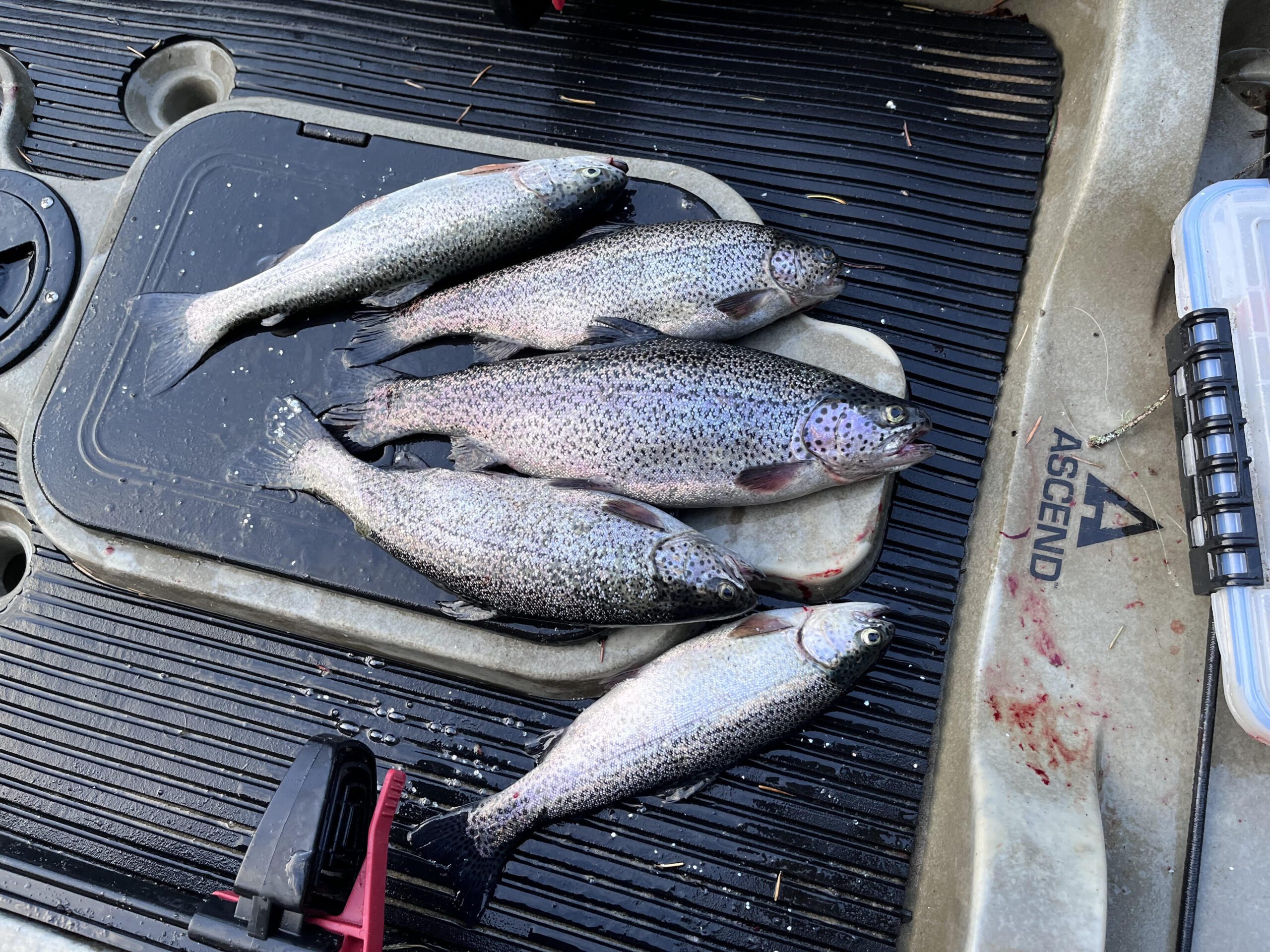
I’d wager that if you polled some friends and family and asked them what their first memories of fishing are, a good portion of them would likely start to share stories of fishing for rainbow trout off a dock during a hot summer day, or out of a john boat cruising around the lake hoping to land a big silver and pink beauty. I know this is true for me, and I encourage anyone who has kids (or adults for that matter) who are new to fishing, to take them out to your local lake and try out some of these tactics to bring home some fish. Despite what anyone might say about stocked trout, I assure you, they make great table fair, and they also do very well in the smoker. Fish on!
/articles/fishing-washingtons-stocked-rainbow-trout