Mountain Trout As Art
We are captivated by trout. And we wonder why. Trout don't love us, they don't love each other, and they don't do anything for their fellow trout, except by accident or by instinct.
But the same could be said of art. We appreciate art for maybe the same reason we love trout. Let's see if the words — art and trout — are interchangeable.
Wynetka Ann Reynolds might have said,
“Anyone who says you can't see a thought simply doesn't know trout.”
For two summers, I spent afternoons and weekends exploring back roads, backcountry, and backwaters in streams and lakes down the flanks of Wy'East for a book we called Fishing Mount Hood Country. My co-author, Robert Campbell, covered most of the western water, and I fished more of the east side.
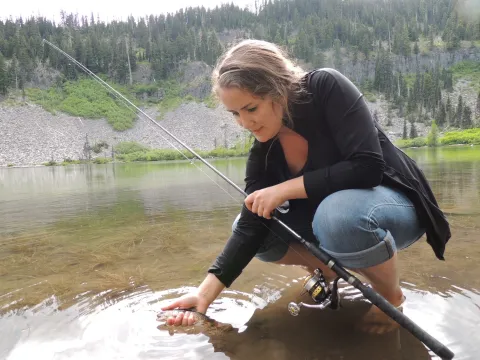
Early in the project, Campbell began to send close-ups of trout — Veda Lake cutthroats, Timothy Lake brookies, Salmon River rainbows — in hand, going back into the water. The imagery seeped into my consciousness, and when I brought East Fork Hood River cutts, or Boulder Lake brooks, or Badger Creek rainbows to the bank, I began to look at each one as a piece of art, at each scale as a stroke of a brush.
We seldom fished the same water twice during the two summers on and off the mountain. We caught bass, sturgeon, steelhead, and salmon, but the fish that defined the effort was the coastal cutthroat. There are many variations. The Clackamas watershed fish were different in coloration from Zigzag River fish, and in bigger lakes, trout coloration varied due to the micro-environments they frequented.
We might put the distinct differences down to genetics, habitat, food sources, and light penetration.
Hood River wild fish, where there are fewer trees above the water and the bottom is light, are bright and shiny. Fish in west-sloping rivers with darker streambeds are often tinted, an adaptation that helps them survive.
While there are a few resident rainbows near the mouth, Campbell's exploration of the upper Clackamas turned up big rainbows, part of a remnant strain that can grow to several pounds in that mountain water. I plan to research that water again soon.
If Goethe had been born to a fly-fishing family rather than to German drama, he might have written:
“There is no surer method of evading the world than by following trout, and no surer method of linking oneself to it than by trout.”
We caught hatchery planters, of course, and the further they were removed from the raceways, the better they looked. Holdovers — fish that had made it through a winter and gained inches and pounds — were the prettiest. We might call them modern trout and appreciate them in that regard.
John Anthony Ciardi could have said:
“Modern trout is what happens when fishermen stop looking at girls and persuade themselves they have a better idea.”
For me, one stream and one fish defined the project. A Still Creek cutthroat, about nine inches long, took a dry fly and threw the hook. The next fish was a bit smaller, but it shone in hand like treasure. I sent a picture to my friend Tye Krueger, and he drew it in every detail — a wild cutt with white tips on its fins and parr marks still visible on its sides.
Kojiro Tomita might have written it thus:
“It has been said that trout is a tryst, for in the joy of it, maker and beholder meet.”
Conditions seem to force beauty to the surface. Up toward the timberline, an angler finds the most striking examples — wild trout that in other environs would grow to be measured in pounds, not inches. Here, an eight-inch rainbow is mature, with white tips on the edges of his fins and a tint of rose in his gill plates, dark spots all the way to the tail.
G.K. Chesterton might have put it this way:
“Trout consists of limitation. The most beautiful part of every picture is the frame.”
Here in the Northwest, we have the run of an ancient gallery. The price of admission is a fishing license and the will to seek it.
“All trout requires courage,”
with apologies to Anne Tucker.
In the passage of time, we become collectors of art, the images stored in digital files and memories. And sometimes we make that beauty part of ourselves with brook trout grilled over a campfire.
If Scott Adams had been consulted, he might have offered:
“Creativity is allowing yourself to make mistakes. Trout is knowing which ones to keep.”
/articles/mountain-trout-art
Omak Lake Cutthroat Action
Omak Lake, nestled within the picturesque landscape of Washington State, is a hidden gem for anglers seeking the thrill of catching Lahontan cutthroat trout. This expansive body of water is renowned for its crystal-clear waters and the bountiful presence of this unique trout species.
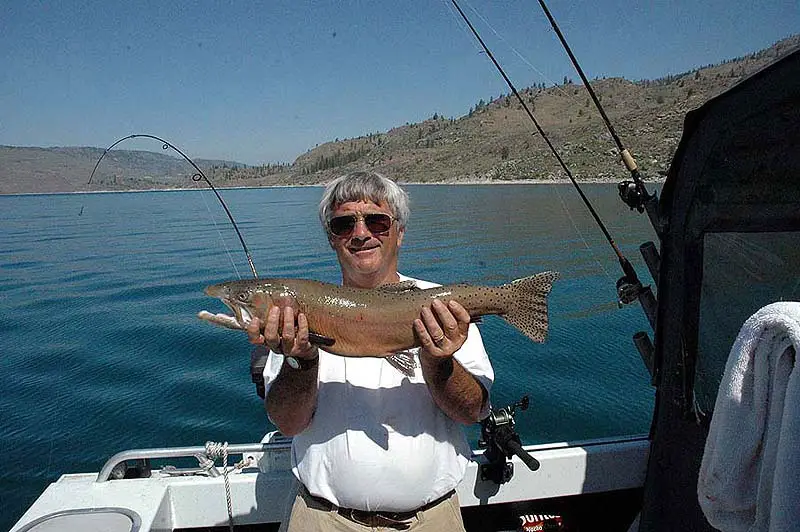
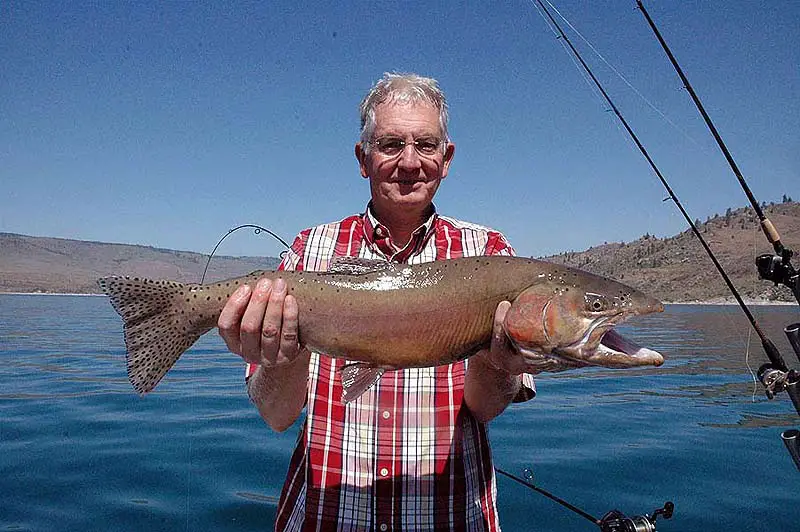
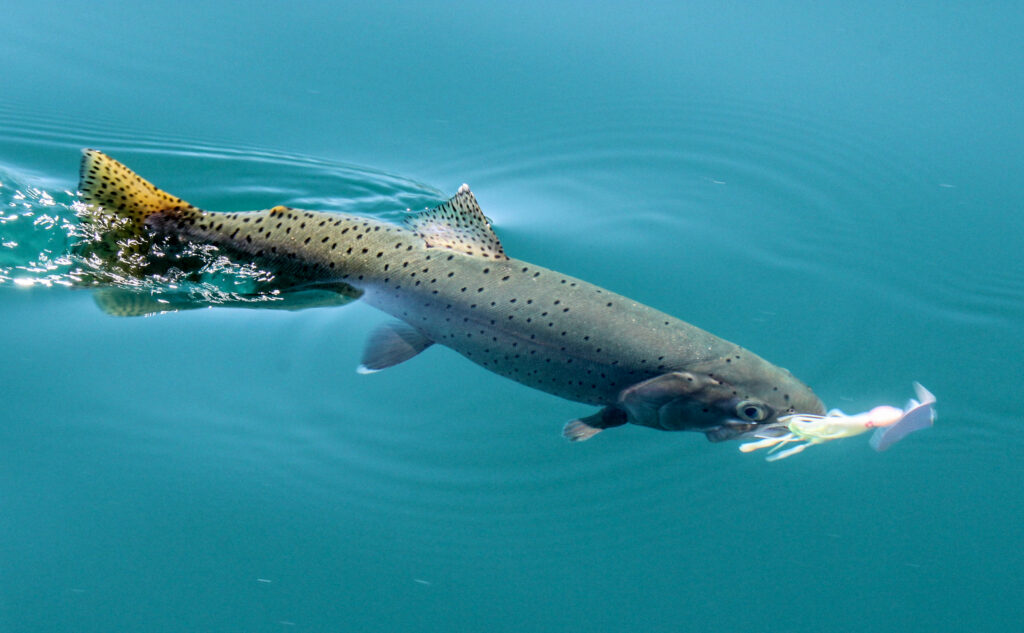
The Lahontan cutthroat trout (Oncorhynchus clarkii henshawi) is native to the Lahontan Basin of Nevada, Eastern California, and Southern Oregon. These trout are well-adapted to the alkaline and saline conditions of the region, making Omak Lake an ideal habitat. Lahontan cutthroat trout are known for their striking appearance, characterized by vivid red and orange hues along their sides and beneath their jaws. They can grow to impressive sizes, with the Washington State record at 18.04 pounds and was caught out of Omak Lake.
Omak Lake is located on the Colville Confederated Tribes Reservation, and is 3,244 acres, nestled in a high desert of rolling sagebrush hills. The prime fishing season at Omak Lake runs from early spring to late autumn. During these months, the water temperatures are optimal for trout activity, and the fish are more likely to be found near the surface. The early mornings and late afternoons are particularly productive times for fishing, as the trout are more active in these cooler hours
Due to its large size and regulations by the tribe that protects the shallow shorelines in the northern part of the lake during the May spawning period, this is primarily a boat fishery. As the lake begins to thaw in March and warms up through May, the regulations change from a catch and keep to a catch and release fishery, which means using fly gear or single barbless hooks on lures and no bait. Just like the other popular Lahontan waters in Washington, the fish start cruising the shallows and shorelines looking for creeks and sources of cold water for spawning.
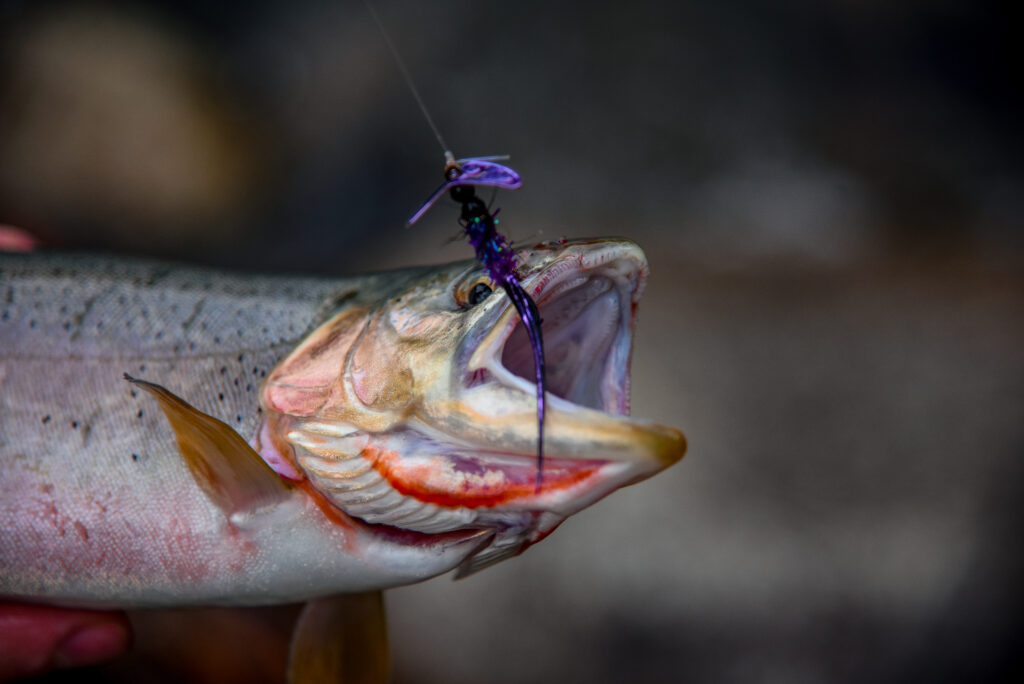
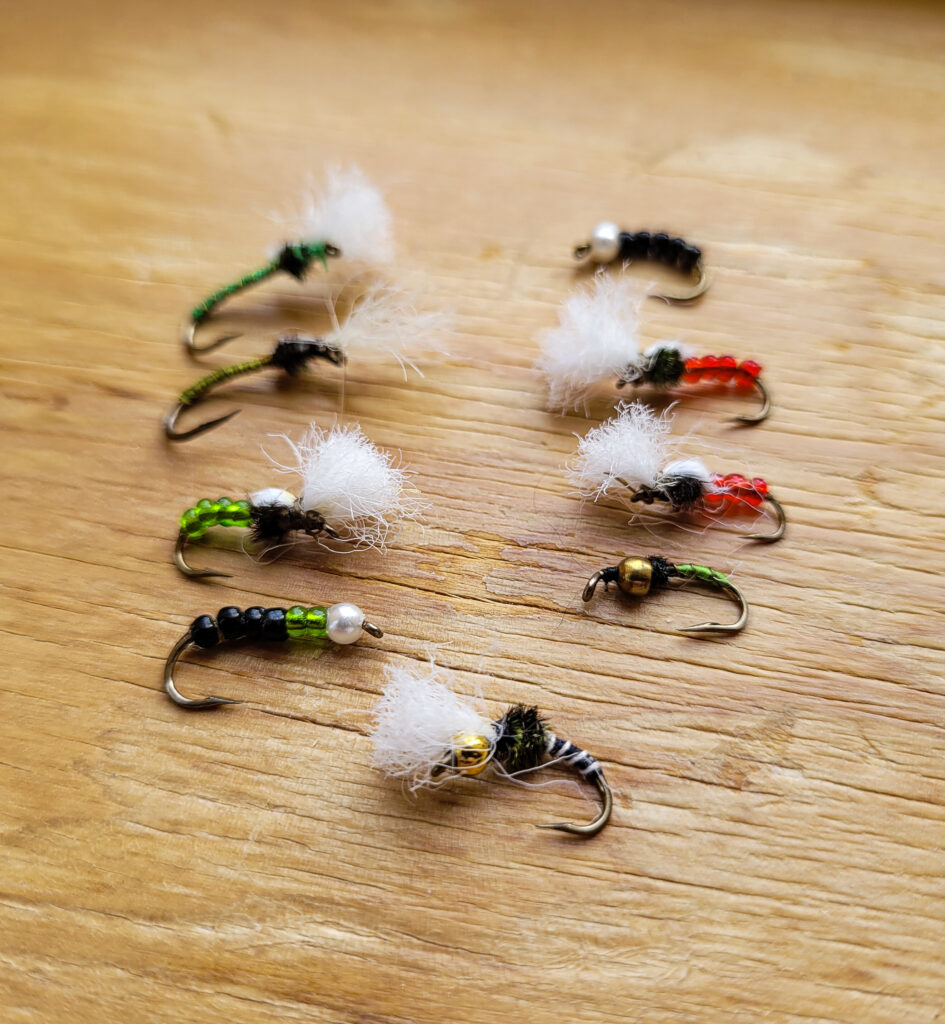
Fly rod toting anglers usually target these areas with the same standard flies for Lake Lenore, another Lahontan Cutthroat producing lake in Washington. A black or green whooly bugger in size 8 to 4, or very small bead head chironomids in sizes 14 to 18. A heavy 6-weight rod is best since fish can be measured in pounds over inches, but some anglers will use a 5-weight or even a 4-weight. Sinking lines and the ability to cast in an afternoon thermal breeze are a must.
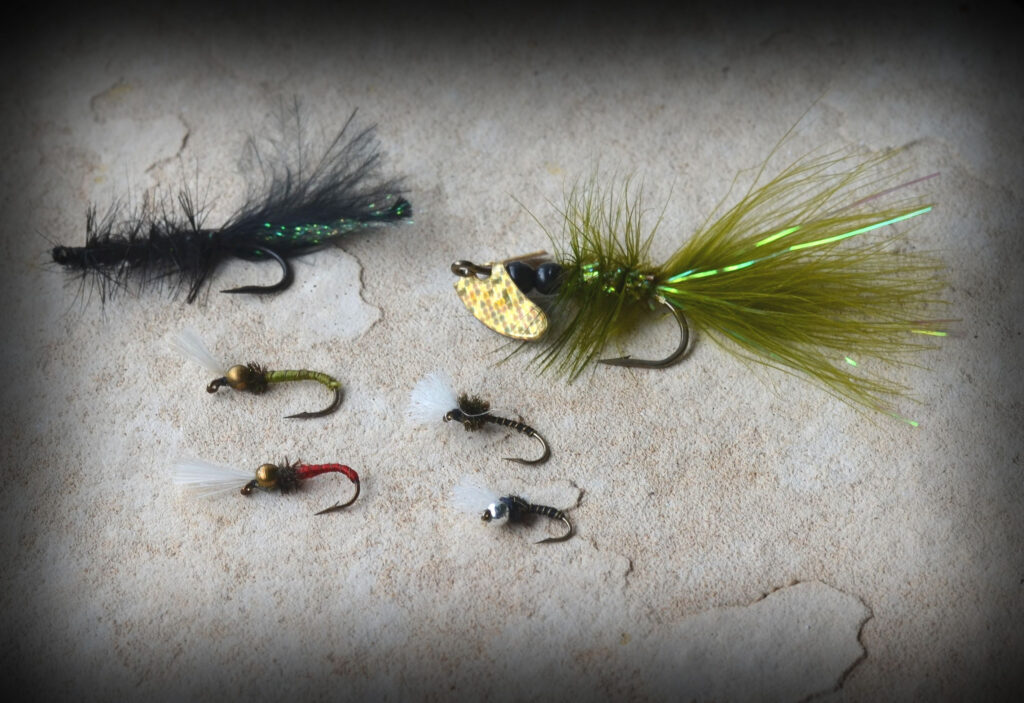
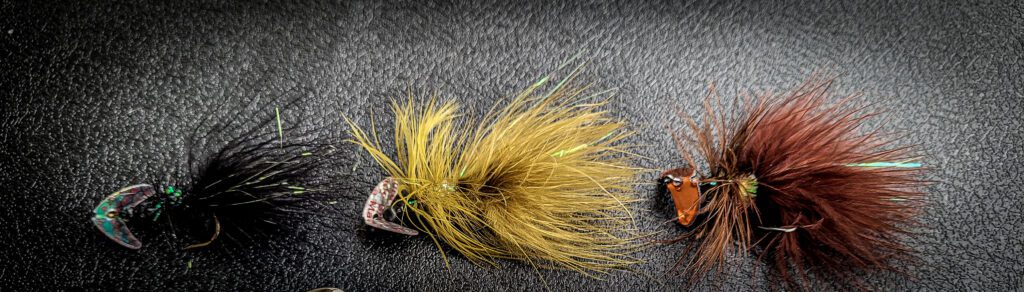
For those who prefer to use a spinning or casting rod, using lures such as spoons, spinners, and soft plastics can be highly effective. These lures mimic the movements of baitfish and can provoke aggressive strikes from predatory trout. Top producing lures to try are the Luhr-Jensen Krocodile spoon in the frog pattern and Dick Nites in silver and chartreuse. Another option is to troll the F4 Kwik Fish in a frog pattern. For both fly fishermen and gear trollers can do very well using a Smile Blade Fly by Macks Lure, which is a whooly bugger with a smile blade in front as a “go to” fly. For the gear guys, simply put a few split shots a foot or two above the fly and troll at slow speed. The fly anglers should use a slow-sinking tippet line and strip it in slowly.
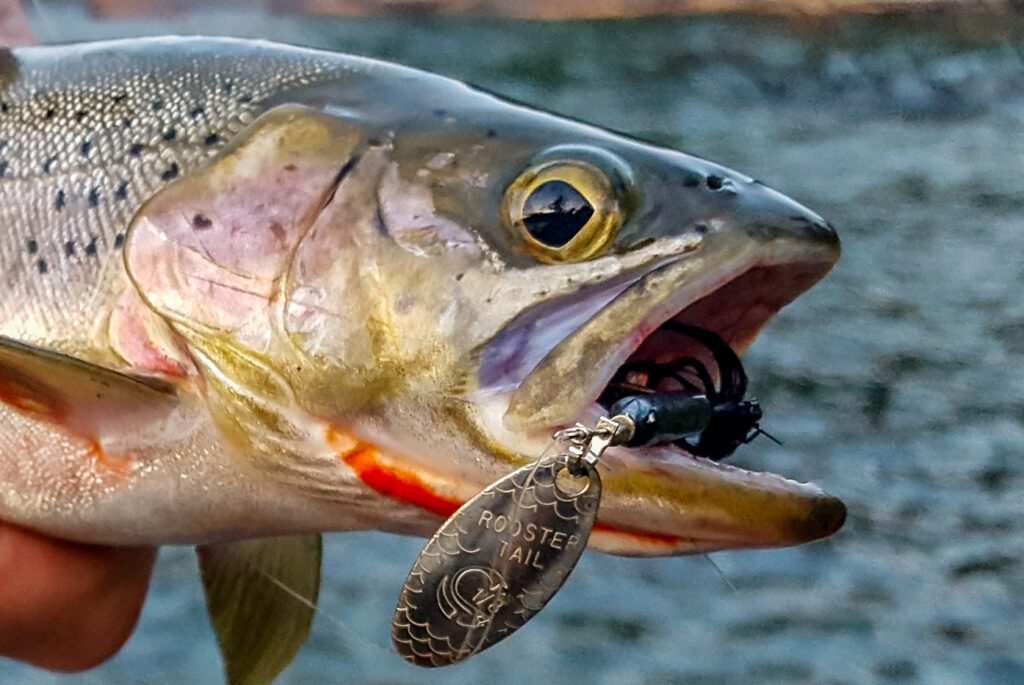
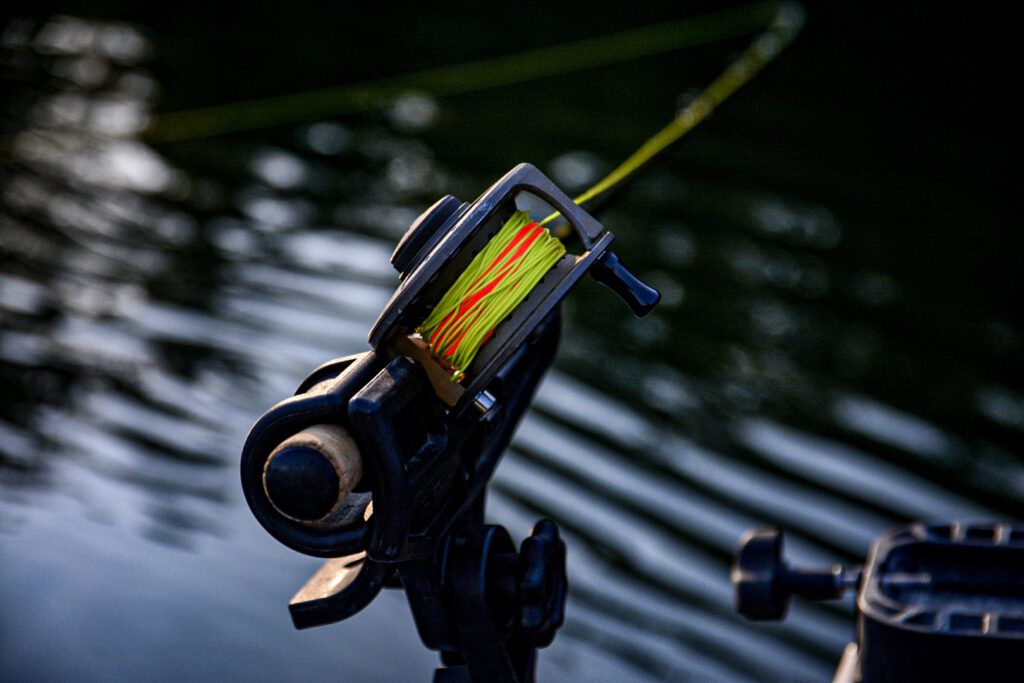
Fishing for Lahontan cutthroat trout at Omak Lake is more than just a sport; it's an experience that connects anglers with nature. The serene beauty of the lake, surrounded by rolling hills and open skies, creates a tranquil setting for a day on the water. What makes this trip to Omak Lake unique is that you are fishing a part of history.
First, the region itself should be explored. It is rich in Native American culture. In fact, Chief Joseph of the Nez Perce, who gave the famous surrendering speech “I will fight no more forever” died on the Colville Reservation in 1904 and is buried at Nespelem. The Grand Coulee Dam is bringing back its laser night show during the summer months, and just seeing this dam is worth the nearby side trip. There are also several trails to hike and, of course, the Columbia River to fish if you want to add other places to cast a line.
Omak Lake received its first plantings of Lahontan Cutthroats in 1968, which is noted in a report “Colville Lakes Compendium, Limiting Factors, and Management Plan” published by John Arterburn in 2003. These fish were a cross of rainbow hybrids from Lake Heenan in California and Lahontan’s from Pyramid Lake in Nevada. The reason why these fish were put in the lake was due to its alkalinity. Back in 1953 a netting of the lake revealed only chum suckers lived there.
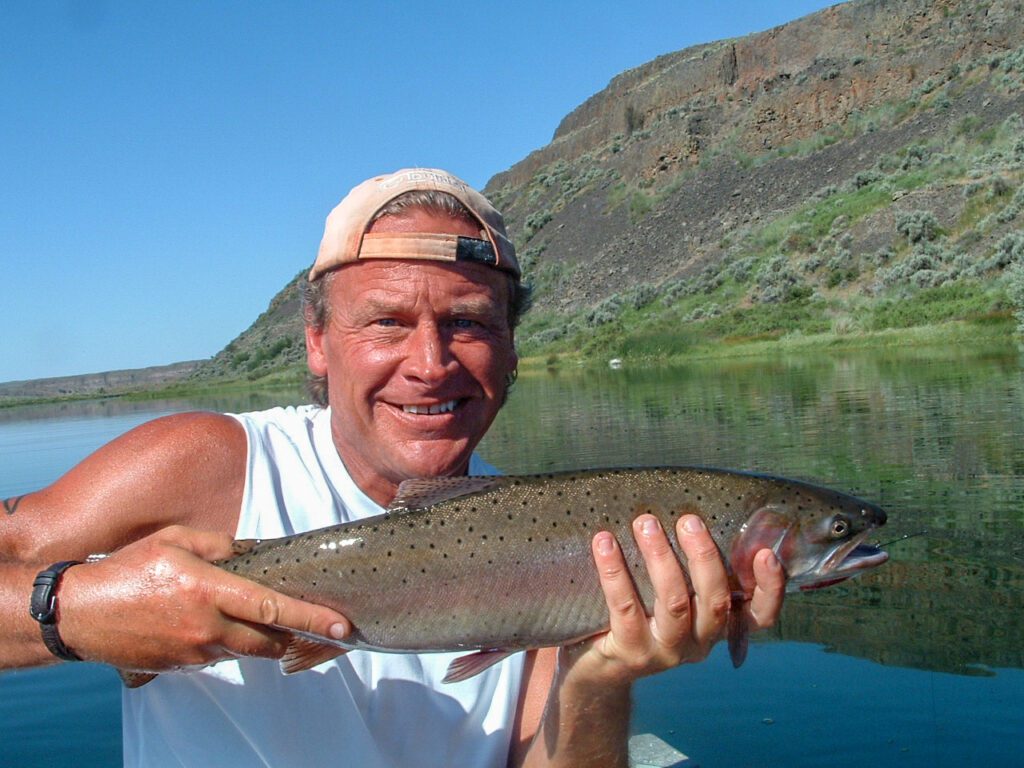
The lake was stocked with rainbows from 1950 to 1960, and in 1956, brook trout were planted. None of these fish survived, so in 1968, they tried the Lahontan’s which did well in the alkaline waters with successful fishing since 1975. A creel census that the tribes conducted from 1975 to 2001, over 26 years of data showed that the average fish caught weighed just under 2 ½ pounds, with most of the fish in the 19 to 20 inch range, but some fish were recorded over 30 inches, including that state record of 18 pounds.
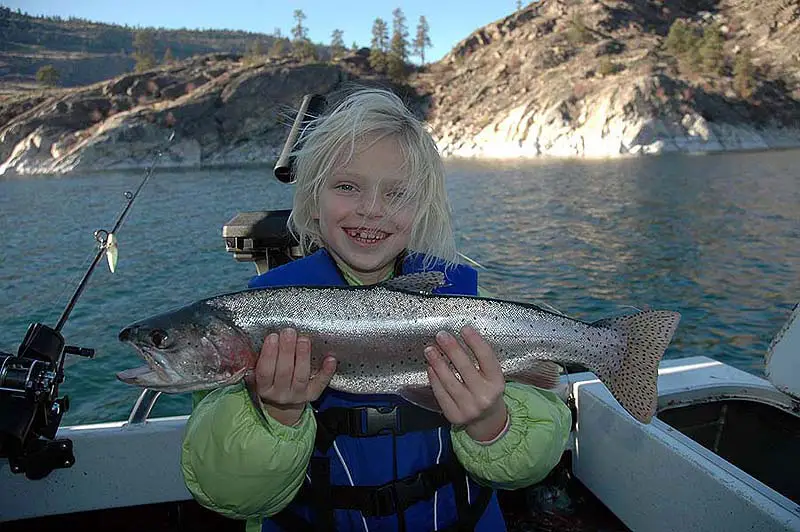
You will need a fishing permit from the tribe. For non-tribal members, the cost is $10 for a single-day use permit, a three-day permit is $20, a seven-day is $30, and the yearly permit is $40. Also, get a copy of the current regulations as it will describe the closed waters, closed shorelines to all access, and also give launch sites that can be used by non-tribal members. There is some camping available, but again, contact the tribe for more information.
Before going to Omak, you should contact the Colville Confederated Tribes Fish and Wildlife Department for current regulations and also where to launch. The Mission Bay launch was recently closed, and other launches are mostly for small watercraft. A launch permit is also needed in addition to a fishing license. The south end of the lake’s shoreline is closed to non-tribal members, and the north end is closed to fishing.
Colville Tribes Fish & Wildlife Department can be contacted at:
Front Desk (509) 634-2110
Main website: https://www.cct-fnw.com/
/articles/omak-lake-cutthroat-action
Riffe Lake Roundup
Fishing season is officially in full swing! With so many lakes, rivers, and marine areas to choose from, it can be hard to pick your next adventure. If you’re never fished Riffe Lake before, or if it’s been a while, you should put it at the top of your list. It’s one of my favorite fishing destinations, and I make it a point to fish it as much as I can every year. Not only is the fishing top notch, but the scenery is beautiful and the surrounding towns are well worth visiting. I can’t think of many other lakes that offer such a wide variety of fish, let alone with such a good opportunity.
You can catch brown trout, cutthroat trout, smallmouth bass, chinook salmon, coho salmon, crappie, and brown bullhead. The lake is simply packed with fish, and they’re willing biters. You can take the boat out or shore fish, and finish out the day with a Dam Burger from Pioneer Bar & Grill in Mossyrock before heading home to grill your catch. It’s a bit of a drive, but it’s a great way to spend a day!
Located in Lewis County, Tacoma Power created RIffe Lake by constructing Mossyrock Dam on the Cowlitz River in 1968, flooding the communities of Riffe, Nesika, and Kosmos. It has a maximum depth of 360 feet and is about 23.5 miles long. Not only does the lake boast good populations of land-locked coho salmon, but you can also catch triploid trout! Back in 2020, Tacoma Power bought about 400,000 Rufus Woods strain triploid trout and released them into the lake for anglers to catch. The fish have had plenty of time to grow and they are a ton of fun to catch. If you’re lucky, you may even hook into a steelhead or a chinook salmon on the same day! Tacoma Power releases these fish into the lake as well, once they’ve met their stocking quotas. With such a plethora of fish to catch, you can see why Riffe Lake is a favorite of many northwesterners.
Trolling Techniques
Riffe Lake has plenty of room for boats of all shapes and sizes. It is almost 24 miles long and up to 360 feet deep, which can sound intimidating. Not to worry, there are thousands of fish in the lake, and most days they are willing biters. There have been many days when we can’t even put the planer boards out because the two downrigger poles or lead lines are constantly going off! Early in the season, lead lines, divers, and dropper weights work just fine. The fish are still feeding on the surface and haven’t been driven down to the depths by the hot sun. As the season progresses, however, a good fish finder is a must, particularly for the land-locked coho. Troll until you find a school, mark where you get bites, and don’t be afraid to put a little scent on your lure.
I find that the land-locked coho are particularly attracted to pink lures and dodgers. You can use corn or maggots to bait your hooks. Spinners, plugs, spoons- they all catch fish at this lake. I tend to use whatever I already have rigged up for kokanee fishing at other lakes. As for locations, you really can’t go wrong on Riffe Lake- you can start trolling almost as soon as you launch at Mossyrock Park and will usually start catching fish right away. If the fish are being stubborn, try targeting points and coves. Keep an eye on your fish finder if you’re using downriggers, the lake can shallow up surprisingly quickly.
In recent years, it’s been difficult to keep the triploid trout off your hooks if you want to target the land-locked coho salmon in the reservoir. The salmon and trout tend to bite on the same lures and hang out at the same depths in the early season, so you can expect to catch a mixed bag. In general, the coho hang out deeper than the trout in the later season, making downriggers and a good fish finder almost a necessity for targeting them. The salmon tend to like a faster troll, so don’t be afraid to bump it up to 1.9 or 2.2 MPH. However, the trout taste great on the grill and put up a great fight, so most anglers don’t mind catching them.
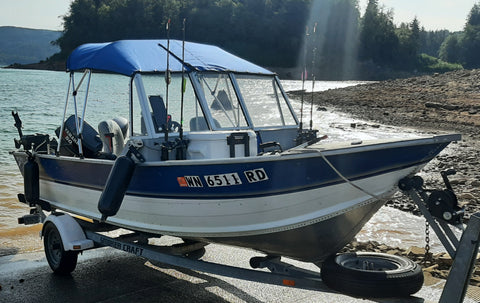
As a word of caution to boaters, check the water levels at Tacoma Power’s website or give them a call before heading out. The lake’s level fluctuates throughout the year and launching can be difficult when water levels are low. The launch at Mossyrock Park is usually your best bet year-round. It has a large dock with 2 lanes to launch at, which is nice when the ramp is busy. Don’t sweat the crowds too much though, the lake is massive and there is plenty of room for everyone. The other boat launches, Taidnapam and Kosmos, are unsuitable for low water conditions. Check the wind forecast before hitching up the boat- the afternoon winds at Riffe Lake can kick up and create nasty white caps, catching unprepared boaters off guard.
Still Fishing Techniques
Don’t have a boat? No worries, Riffe Lake has plenty of shore access! You can fish at the dam in Mossyrock or at the fishing bridge at Taidnapam Park. These spots can get crowded on nice weekends though. Most shore anglers cast out shrimp or worms under a bobber with a sliding weight. Experiment with setting your bobber stopper anywhere from 3ft to 15 ft until you figure out where the fish are at.
If you can’t get a spot at the dam or fishing bridge, fishing at nearby Lake Mayfield or Swofford Pond is a good alternative. Lake Mayfield is stocked with tiger muskies, which are difficult but extremely rewarding to catch. WDFW also stocks decent numbers of rainbow trout there every year. Swofford Pond has good populations of panfish, stocked rainbow trout, and brown bullhead. There is a boat launch at both lakes, and good shore access. Many folks fish Swofford Pond with inflatables and kayaks, as there is an internal combustion motor ban.
Before you grab those poles and hook up the boat, keep in mind that Riffe Lake has a 5 fish limit. They can be any combination of landlocked salmon and trout, so you cannot legally keep 5 coho and 5 trout. The land locked coho don’t tend to survive catch and release very well, particularly in the summer heat. The lake is large and deep, and those afternoon winds can kick up unexpectedly, so make sure that everyone on your boat has a life jacket. Keep these rules in mind, hook up the boat, and have fun!
/articles/riffe-lake-roundup