Fishing for Washington’s Stocked Rainbow Trout
Spanning through the past 130 years or so, Washington’s lakes have been stocked with a variety of fish species. The types of fish typically fall under two categories, the first being game fish like rainbow trout, Kokanee, steelhead, and cutthroat. These are all planted for the specific purpose of increasing public angling opportunities. The second category would be an aquatic vegetation control fish like the common carp, that was planted primarily by private landowners intending to mitigate overgrowth of vegetation in lakes and ponds. Regardless of the purpose of fish stocking, the practice has generated various stages of controversy throughout the years, and rightfully so as the early versions of fish stocking had been practiced without much consideration of ecological impacts on native fauna. Thankfully, the days of reckless and illegal stocking of ecologically sensitive lakes by private citizens are, for the most part, a thing of the past in Washington state. Nowadays, The Washington State Department of Fish and Wildlife and local tribes operate stocking programs that involve strict management guidelines and make use of both surveying and long-term field studies to effectively provide anglers with fishing opportunities while not disturbing vulnerable ecosystems.
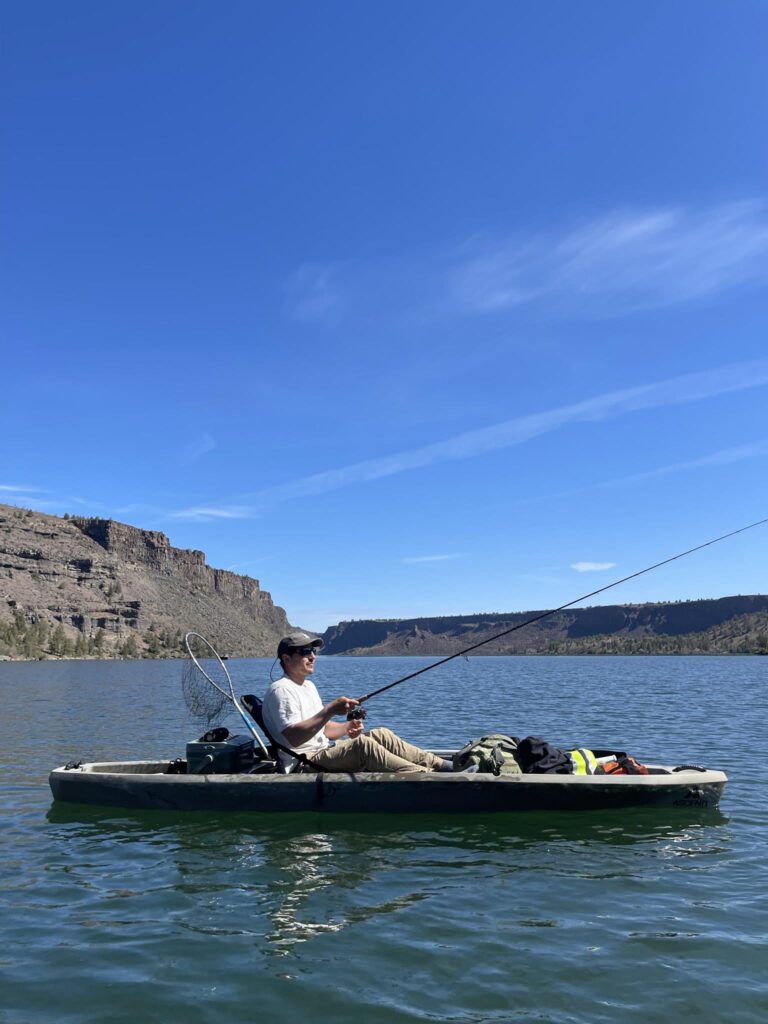
Rainbow trout are by in large the most widely stocked fish in Washington lakes, thus, they are the most common trout targeted by Washington State anglers. And though a stocked rainbow trout from a local lake might not be quite as alluring as say, a wild rainbow trout from some remote stream in the high-country wilderness, comparing these two is a bit like comparing apples and oranges. One can consider these stocked fisheries to be the staple of a lifestyle that places high value on family-friendly outdoor recreation, whereas the wild fish pursuit is an activity that often takes a bit more work and travel, and isn’t always quite as easy to get the family involved in
So, each has its place, and lucky for us, springtime marks the beginning of the trout stocking programs around the state. There’s a good chance that if you live on either side of the cascades, you won’t be far from a lake that’s getting a dump of catchable-sized hatchery-reared rainbow trout right about now. A visit to the Washington Department of Fish and Wildlife website will show you all of the recent catchable trout plants in Washington lakes. Here’s just a sample of some recent western and eastern Washington trout plant reports.
- Lake Thomas, Stevens County: 9,000 catchable trout
- Devereaux lake, Mason County: 7000 catchable trout
- Klineline pond Clark County: 10,000 catchable trout
- Black lake, Thurston County: 10,800 catchable trout
- Rotary lake, Yakima County: 3150 catchable trout
- Columbia Park pond, Benton county: 2012 catchable trout
There’s a myriad of techniques you can deploy to catch rainbow trout. Methods range from dropping jigging spoons down through a hole in the ice during the winter to casting flies out of a float tube in the summer. Stocked rainbow trout are not terribly picky and are known to strike at many different types of lures and bates. A surefire way to get some hookups would be to bring an arsenal of tackle so you can use the process of elimination in figuring out what the fish are biting on for that given day (it shouldn’t take you long). Below is a list of common techniques to catch stocked rainbow trout during the spring and early summer seasons.
Casting lures
This is by far my favorite method for rainbow trout. It’s simple in that you hardly need any gear other than rod, reel, and lure, but it also keeps you busy and engaged as you are constantly casting and retrieving while feeling for a strike. Casting lures like Rooster tails, spinners, spoons, wedding rings, and plugs have all proven effective at catching rainbow trout. Fishing during the morning and evenings when the fish are up near the surface will only increase the effectiveness of casting lures.
Trolling
Casting lures like the ones mentioned above can all be trolled behind a kayak or motorboat. If the fish are holding lower in the water column due to midday heat, try using a lightweight downrigger with a dodger. Or, if in a kayak, you can use a diver like a Deep 6 or Dipsy diver. Rainbow trout generally like faster trolling speeds around 1.5 to 2.0 mph
Sliding egg sinker rig.
This rig is very easy to set up and will get you onto the fish if they are holding deep towards the bottom of the water column. Slide a 1/2 oz egg sinker onto the mainline. Beneath that egg sinker attach a snap swivel. From there, attach your leader. Depending on how high off the bottom you want your bait to float will determine the length of your leader. 2-3 ft is generally a good bet. Tie your size 8-14 hook and bait it with a worm or dough bait. You will need to make sure your hook and bait are both floating. So, if you’re rigging an earthworm (or anything else that doesn’t float) you will need to add something with buoyancy. That can be either a small marshmallow (like the ones you’d buy from a grocery store) or a piece of buoyant dough bait.
Fixed Bobber
This is a fun and easy method for kids or new anglers to try out. Plus, it can also be extremely effective. Attach a fixed bobber to the mainline, and then anywhere from 18-24 inches beneath that a number 5 lead split shot (add more if there’s current). About 6 inches beneath that you can attach a size 8-14 octopus hook with a night crawler. Nightcrawlers can be replaced with a red plastic worm or dough bait.
Slip bobber rig
A slip bobber has a few more parts than a fixed bobber setup, though, unlike the fixed bobber, this setup will allow you to adjust your rig to virtually any depth. This is very handy for when the fish are suspended midway in the water column.
Add a pre-tied bobber stopper knot to your mainline. From there, add your bobber stop bead so that the bobber won’t slip past that knot. Add the slip bobber to the mainline, then add 1/2 oz egg sinker, and then a snap swivel. From here add 2-3 ft of leader and then your size 8-14 octopus hook. Now you can put your gear into the water and start sliding your knot up the mainline to adjust the depth of your hook and bait.
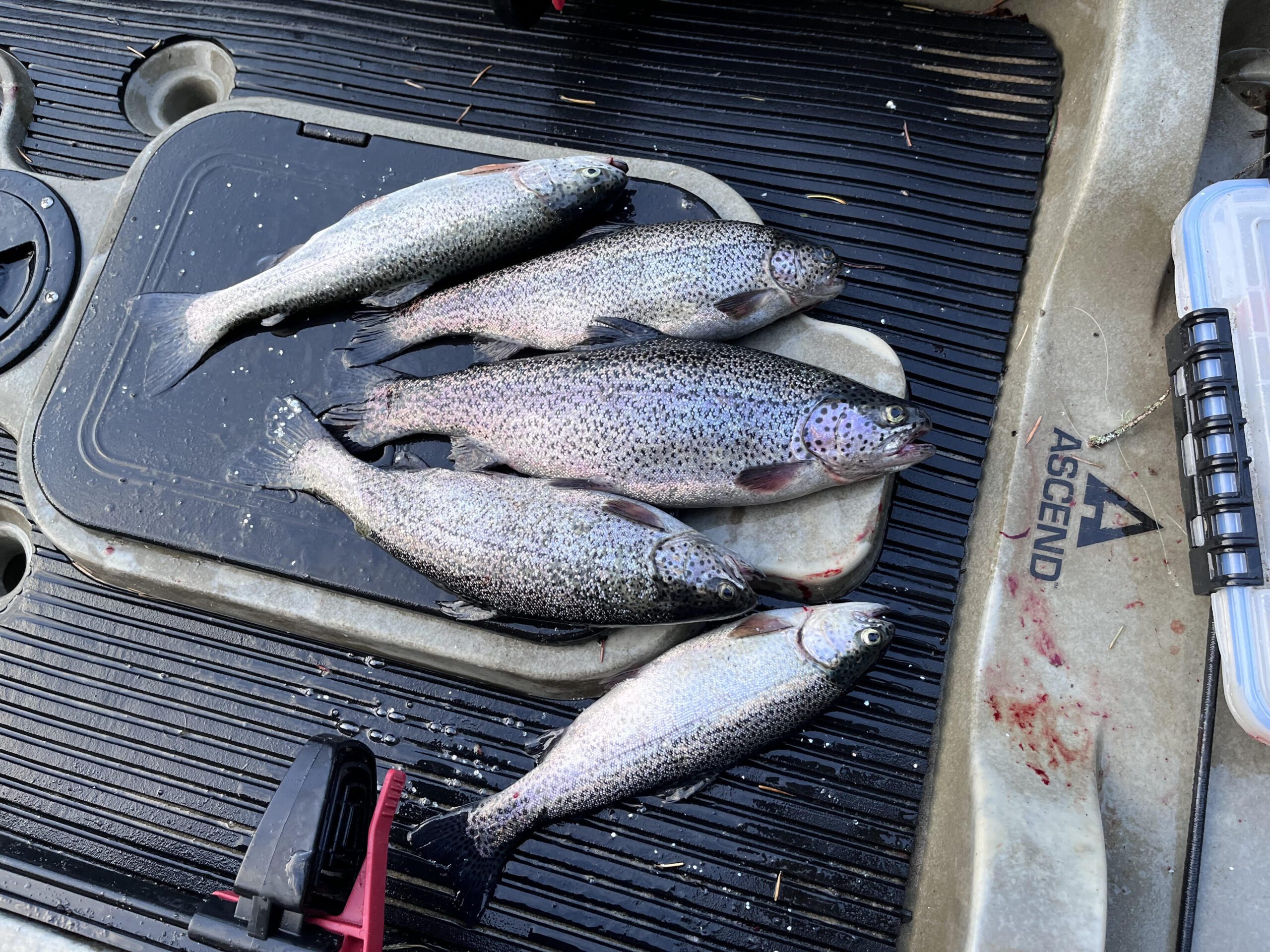
I’d wager that if you polled some friends and family and asked them what their first memories of fishing are, a good portion of them would likely start to share stories of fishing for rainbow trout off a dock during a hot summer day, or out of a john boat cruising around the lake hoping to land a big silver and pink beauty. I know this is true for me, and I encourage anyone who has kids (or adults for that matter) who are new to fishing, to take them out to your local lake and try out some of these tactics to bring home some fish. Despite what anyone might say about stocked trout, I assure you, they make great table fair, and they also do very well in the smoker. Fish on!
/articles/fishing-washingtons-stocked-rainbow-trout
March Steelhead Madness
March madness is more than just college basketball, especially if you live and fish in the Pacific Northwest. Steelhead are filling the rivers with late returning hatchery fish along with native sea run rainbows. Unfortunately, watersheds are being shut down; fisheries closed, while hatcheries are overflowing with fin-clipped fish as wild fish returns struggle. It is enough to drive an angler mad, and it should. For those that still wish to catch a steelhead before the spring chinook season kicks off there are a few places to go, especially in Oregon and Idaho but for those in Washington, it is primarily a Southwest river endeavor.
The mighty Cowlitz is where most steelhead anglers will be come March as it is one of the few rivers still open in Washington and has good hatchery returns. For other rivers look at the hatchery smolt plants and projected returns. Once you find a river that has a good plant and return rate be sure to check the regulations including any emergency rules changes and announcements.
Maybe we will get lucky with some openers but likely this will not happen. One catch and release fishery just announced is the Skagit, slated to be open through the month with a restricted days per week schedule. This is a catch and release fishery which means be sure to use the right gear and help keep the encounters low. Do not go there expecting to catch a lot of fish but embrace the ones you do catch, and release with kindness back into the river. By following all the rules, we will get this fishery to stay open until April. The coastal rivers of Oregon are your best bet but also look to the tributaries of the Columbia, on both sides, for some opportunities.
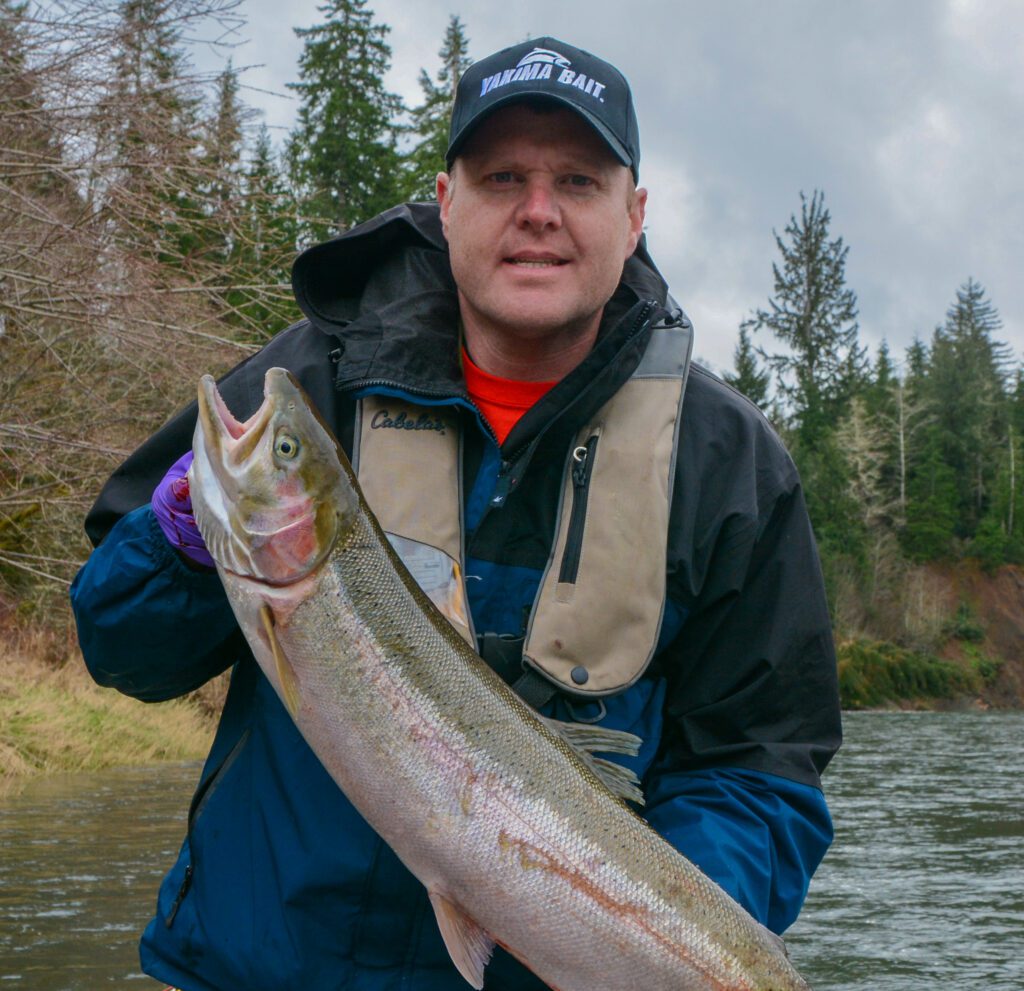
When it comes to fishing for March steelhead you will likely be on a river where hatchery fish are prevalent but with the chance of catching wild fish. This means March is the time to put away the bait and pick up hardware. Even leave the scents at home and use techniques that do not allow steelhead to swallow the hook. One way to keep this from happening is to change hooks to a size or two larger than you are used to using.
Also, re-spool the reels with heavier line and upsize the leaders and use rods of medium-to-medium heavy action. The idea is to hook a fish, get it to the soft rubber net quickly and if wild then release it unharmed. One of the surest ways to kill a fish is to over play it to exhaustion. Steelhead are trout and that means they need clean, cold water and are sensitive to stress.
Swinging spoons or tossing spinners is a great way to catch March steelhead as they hit the hardware hard but will not likely swallow the hook. It is also an active way to fish and learn about rivers. Look at tailouts for holding fish or a riffle where fish will hide from eagles while making their way upriver. A long run can be worked for hours and anglers who know fish are in the system also know that the fish will be on the move. No need to leave a good stretch of river and let the fish come to you. Brass, nickel, and copper are good colors but if the sun is bright then look through the tackle box for a few that are tarnished so not to scare the fish away.
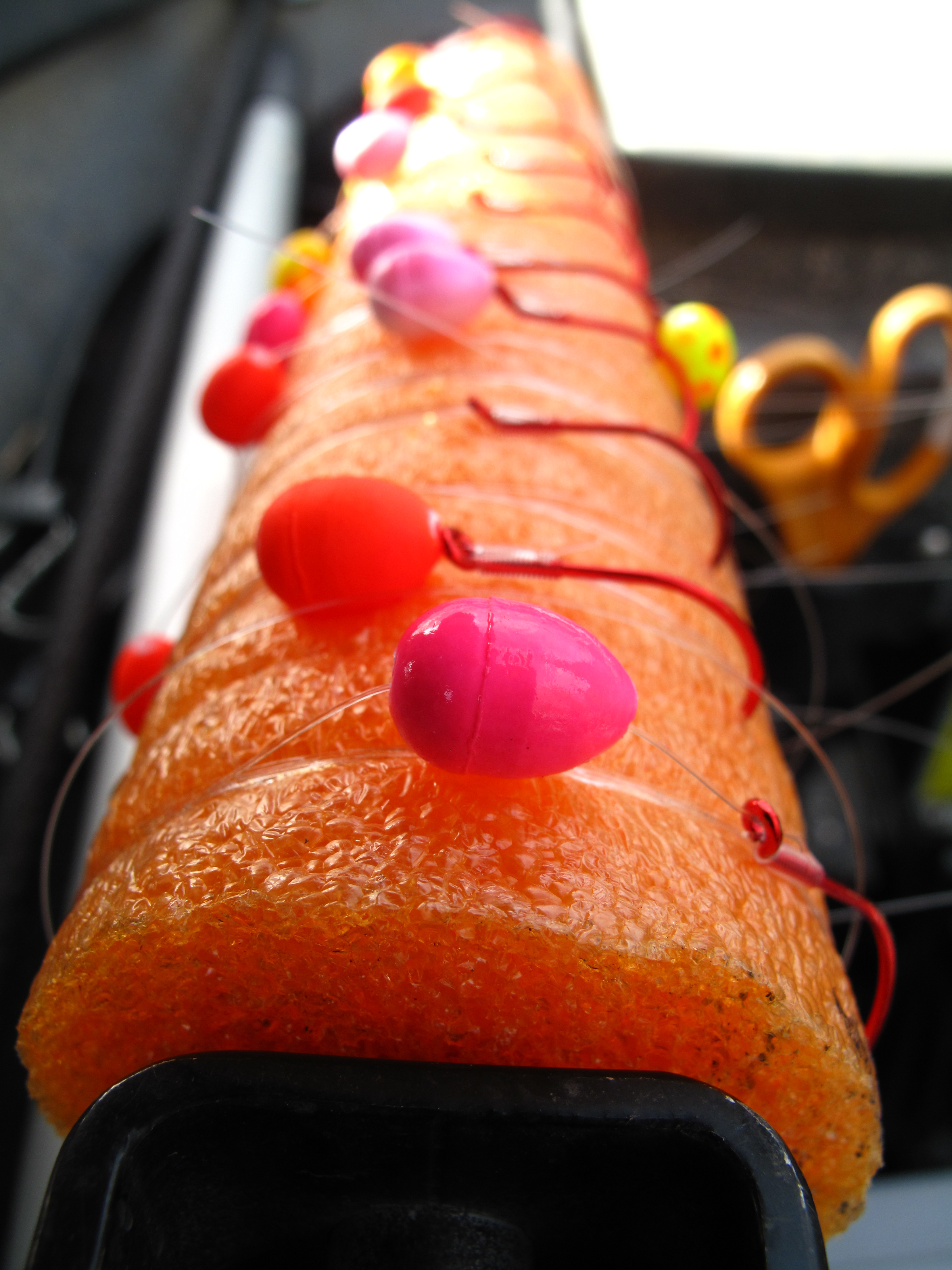
Floating jigs is one of the easiest ways to catch steelhead and a lot of fun. Not only can you fish a jig under a float in about every type of water, any stretch on the river, or most flows but you also will not lose much gear. It is effective and if you only have one rod or technique to use for a day of fishing you cannot go wrong with floating jigs.
Steelhead like to hide behind boulders, both to create a current break to rest and to flush aquatic insects by them to feed on. But drift fishing or swinging a spoon through a boulder garden often means losing gear and you cannot get the lure in the right spot for the steelhead to grab it. This is where floating jigs really shine. Set the depth and cast the line. If you notice you are hitting a boulder then a soft pull on the rod will help it over and the jig falls right into place.
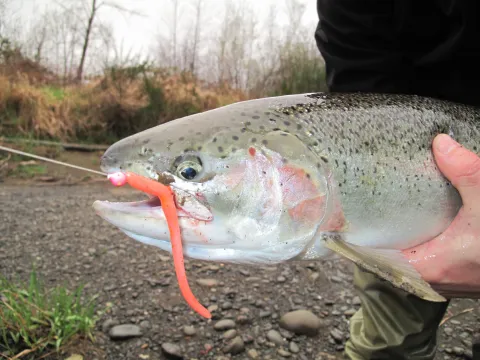
When fishing jigs be sure to not tip them with bait or use scent. Again, the idea is to catch steelhead and if necessary to release them unharmed. Since the hook point is upwards it is likely the jig will be pinned in the upper jaw of the fish. After a hard rain you can use a pink rubber worm threaded onto a bare jig head and fish it just like a jig. Steelhead crave washed out nightcrawlers that are being flushed into the river and will grab the rubber worm, again likely to have it pinned to the top of their mouth.
Drift fishing often means gobs of cured roe but for March leave the bait in the fridge and head to the river with some pre-tied pink worms threaded onto the leaders or use beads. Bead fishing has become extremely popular in the past few years and one discovery is that larger soft beads tend to catch more fish than small beads that mimic a single egg. The large bead might look like an egg cluster or a piece of egg skein. Rig the bead with a stop two to three inches in front of the hook so when the steelhead grabs the bead the hook sets in the outside of the jaw. Not only is this a non-killing hookset but it is also strong and helps keep the fish on the hook until landed.
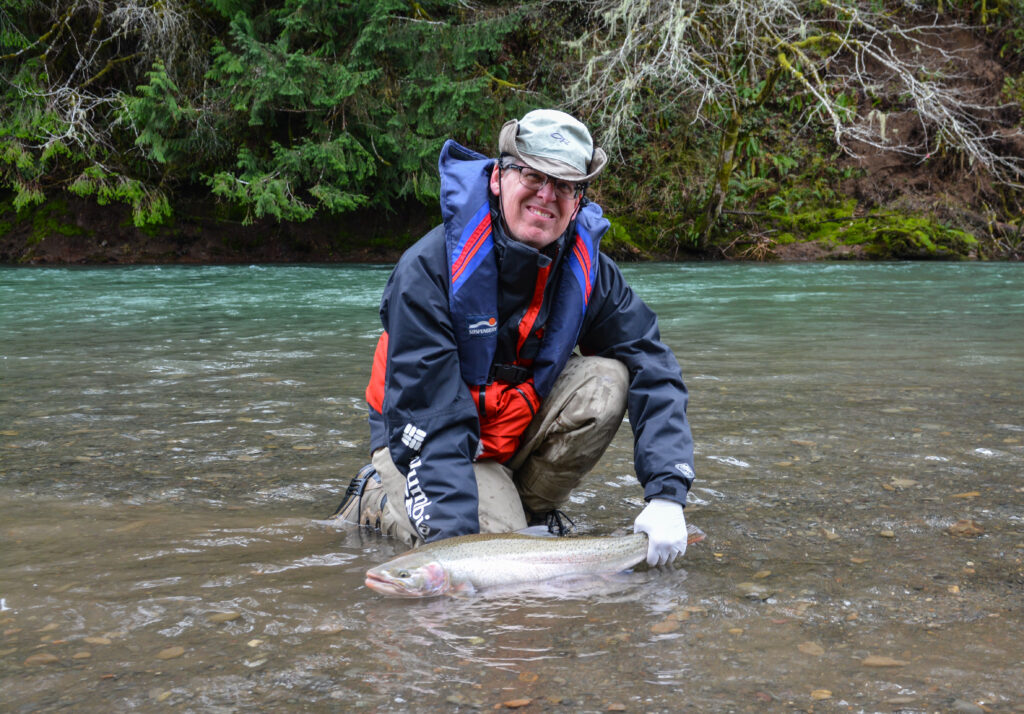
Some anglers will use a tandem or double bead set up where you use one bead with a hook and then a trailing bead with another hook 24 to 30-inches behind. This is a great set up for bobber dogging which is where you use a sliding weight, a long length of mainline and bobber stop to the swivel with a weight and then the leader. The idea is that the weight is dragging on the bottom and with the bobber stop set so far ahead that the weight can keep in contact with the contour of the river bottom. The beads are dragging behind as if drifting down the river. If a fish misses the first bead the second one is trailing right behind and gives the angler a second chance at catching the fish.
Do not think you have to have a boat or raft to fish for steelhead in March. With smaller rivers that get runs of fish, or even larger ones with good access, anglers can target steelhead from the shore. Being a migrating fish and March often means high water the steelhead will be using the bank to break up the strong flows. One technique often overlooked is using a side planer designed for fishing plugs from shore. There are a few on the market and the idea is that it clips onto the mainline and uses the current to pull the plug away from the bank.
Once you get the planer to the area you want to work the plug just close the bail and let the plug do its job. You can also use the bobber dogging technique if you have a long run and can walk the bank easily. Cast out and start walking down the river as the float drags the lures. Floating jigs can be fished this way but it is much harder as you want a natural drift and a lot of times you might pull on the rod and that moves the jig. The reason it works with bobber dogging is because you are dragging the weight on the bottom of the river and less likely to affect the beads movement. If you float jigs from shore be sure to have a lot of mainline and just open the bail to extend the drift.
There are plenty of ways to fish for winter steelhead, just not a lot of places to fish. Do some research and pick a river. As the month wanes towards April the rivers often calm down and the weather can give a few nice springlike days. Be sure to use techniques that will not harm wild fish and be ready to get the fish to hand quickly. Having a conservation mindset will ensure fisheries in the future and keep you from going mad.
/articles/march-steelhead-madness
The State of Bottomfish
One of the most sought-after ocean-dwelling fish is the bottomfish, also called rockfish and groundfish. Anglers also refer to some of the species as “sea bass” as they resemble freshwater largemouth bass. Regardless of what you call them anglers who target these fish all call them “tasty” which is why they are so popular. But do not expect the various species of bottomfish to take up a lot of space in magazines or flood your social media feed with lots of sea-bass photos and “how to’s”. Maybe it is because they are often a bycatch or used to fill the time between salmon bites or maybe it is because most daily limits offer enough fish to fill a freezer fast so anglers only fish for them a few times a year. If it is the latter, then be aware that regulations and fisheries are changing quickly.
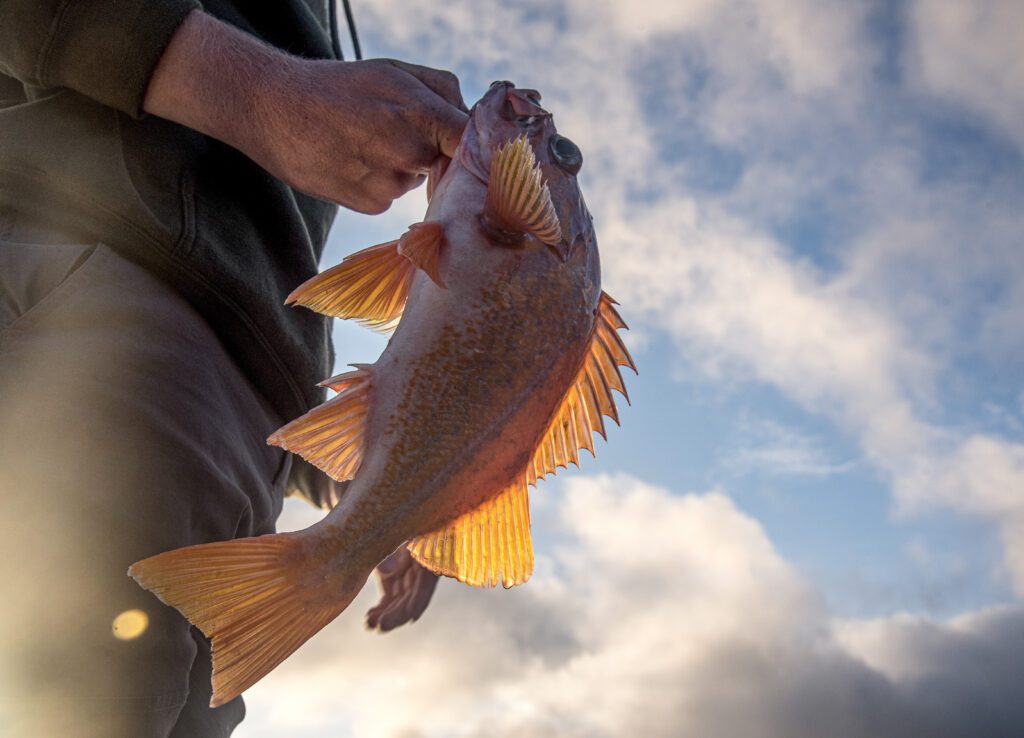
A few years ago, back in 2010, the yelloweye rockfish was listed on the Endangered Species List as threatened and remains there today in Washington and Oregon waters. This is because it is one of the largest rockfish species which means it lives an exceptionally long time, like over 100 years, with the oldest living yelloweye aged at 118 years and estimated to be able to live 147 years.
This long life means they mature slowly and do not reach adulthood until they are 19-22 years old. When it takes a species this long to mature, the over-harvest can be problematic. One of the saving graces for this species is that they live very deep, averaging 300 feet and can live as deep as 1,500 feet in the abyss. This is also a common detriment to most rockfish species and that is they are prone to barotrauma which is when the swim bladder becomes distended as the fish comes up from the high-pressure deep water. Using a descending device will help reduce mortality.
Like the yelloweye rockfish, most of the rockfish found in Puget Sound are off-limits due to the loss of species. There are some Marine Areas where rockfish can still be caught and kept including the ocean areas such as Marine Areas 1 through 4. Daily limits here were reduced a few years ago and now 7 rockfish of certain species combined such as black rockfish, blue rockfish, canary and vermillion, and a few other species.
Also new last year is a restriction for certain species between June 1st and July 31st, including copper, canary, and other popular species. There is also a depth restriction of 20 fathoms except for halibut days which can be a bit confusing. As of this writing the current regulations have not been published for the upcoming license season so be sure to check the WDFW website for updates.
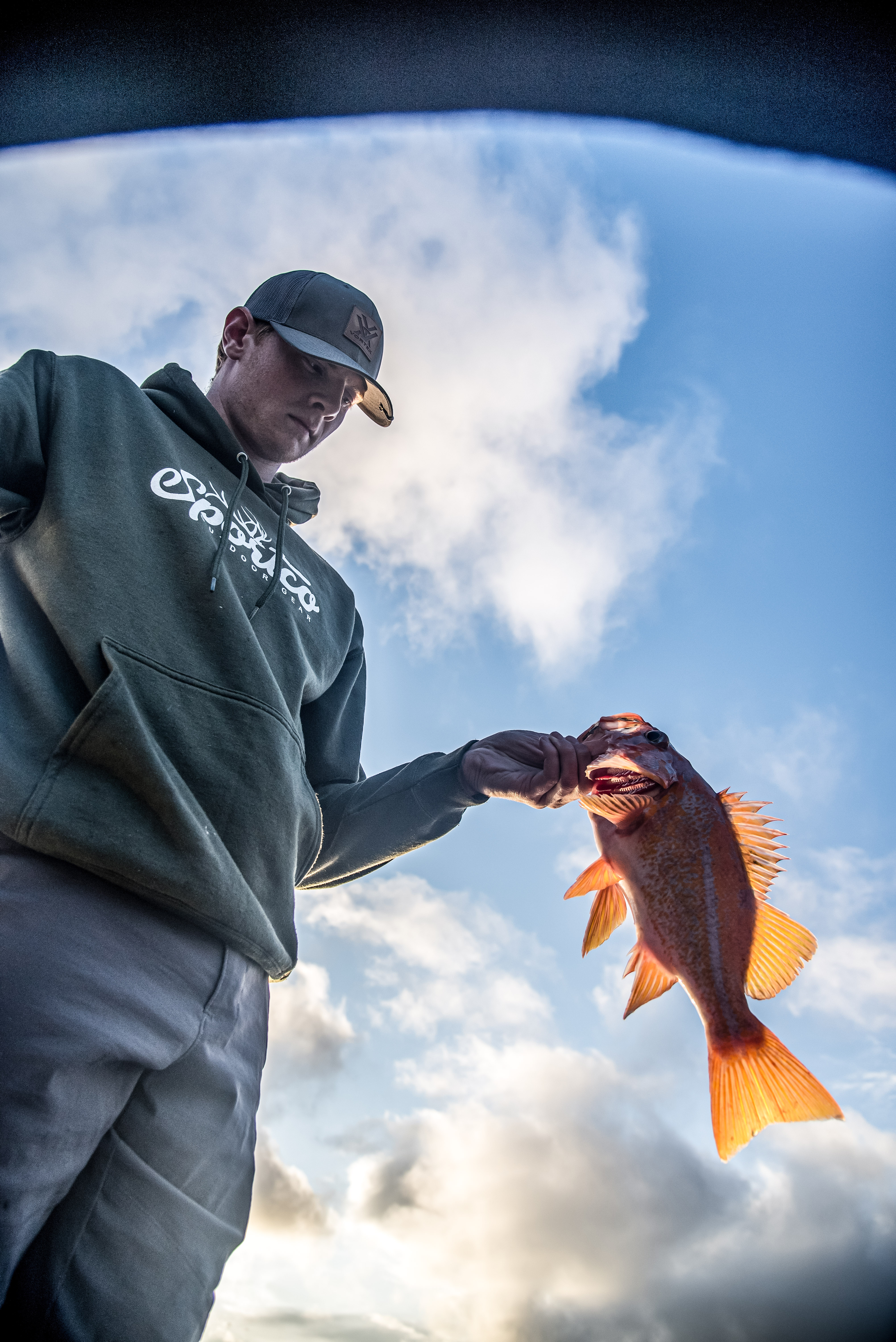
In Marine Area 5 which is the only other marine area where rockfish can be retained in Washington, the limit is 1 or 3 depending on which side of Slip Point you are on, and only black or blue rockfish can be kept. You also must use barbless hooks, even for non-rockfish bottomfish, such as halibut and lingcod which most anglers do not realize is required. After a quick chat last year at the dock at Sekiu with a WDFW Game Warden we learned that the only thing she wanted to check was our hooks. Not worried about our licenses or catch record cards, she just wanted to make sure we were using barbless hooks in the halibut we caught.
The last one had swallowed the bait and hook, and it was easier to just cut the leader, so we obliged and allowed her to cut the hook out which was barbless, and she was happy. Turns out that anglers did not know about the new rule, so it was more of a day of education for them. Luckily, we knew the rules. We also showed our licenses and catch record cards just to really put an exclamation point on following all the rules. She was thankful and it was a good interaction, always a plus when talking with WDFW staff.
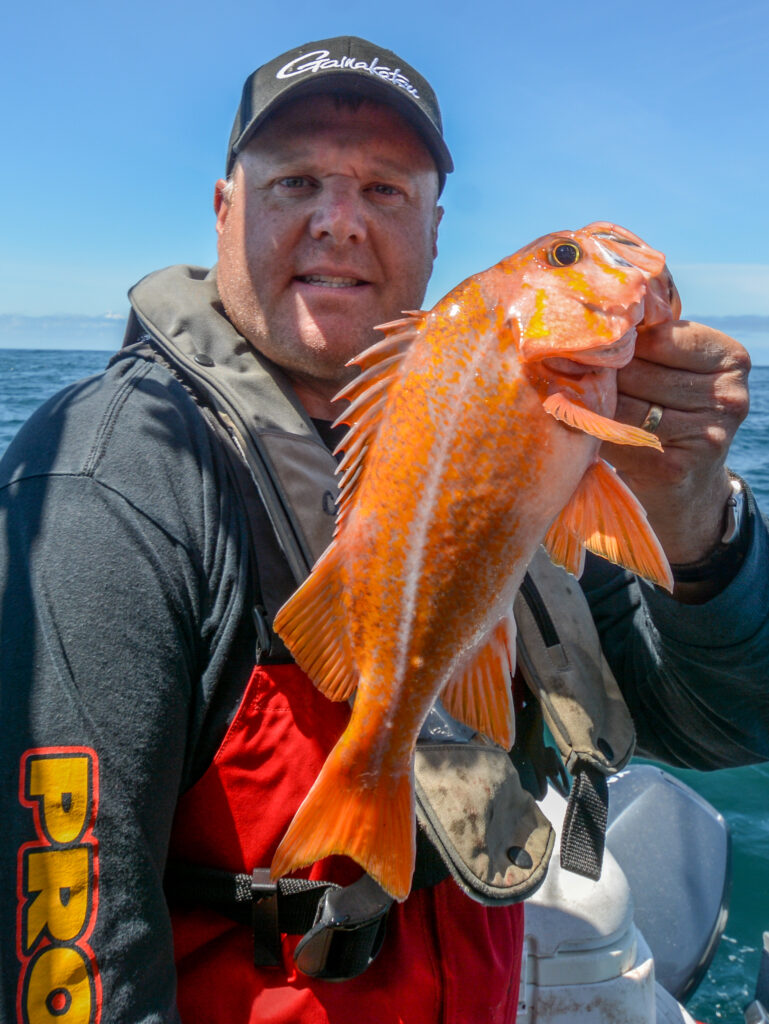
Oregon has simplified regulations compared to Washington but has even more restricted bag limits. As of now, the season is open year-round with no depth restrictions but a daily limit of 5, as well as a coastwide closure of yelloweye and quillback rockfish. Oregon also has a unique gear restriction when fishing deeper than 40 fathoms which is the use of “long leader” gear. Their website has tutorials on what this means and how to rig it. As always be sure to check current regulations before you go out fishing.
Both states have safety zones or rockfish conservation areas which are off limits to fishing for rockfish or any bottomfish. The reason for these conservation areas is to set aside a breeding and nursery area of sorts where rockfish are threatened, including the yelloweye. All rockfish species take a while to mature and since they tend to school up and live along structures such as underwater pinnacles, reefs, and rocky ledges they can be easy to locate and target.
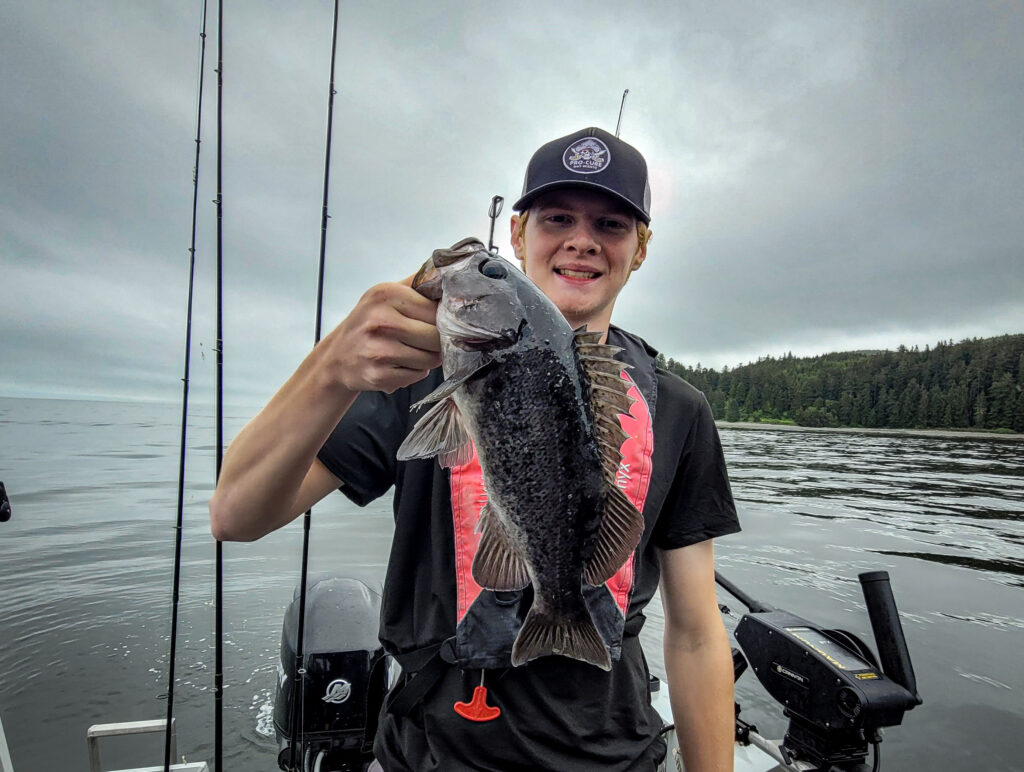
The Pacific Fishery Management Council keeps tabs on various fish species along the west coast including groundfish. Since these fish live a long time and can be subjected to over-harvest the Council provides a stock assessment and guideline regarding certain fisheries. When it comes to bottomfish, which again they refer to as groundfish, the Pacific Fishery Management Council realizes the importance of these fish. Popular in both commercial and recreational fisheries, bottomfish are prized for their great eating and provide a valuable economy to the fishing industry.
A quick walk around the boardwalk and harbor in Westport, Washington does not take long for someone to see how many charter fishing boats there are. Offering an opportunity for anglers who do not own a boat or have the savvy to head to the open Pacific Ocean, anglers can book a day trip on one of the many charters and have a good chance at catching some tasty rockfish. This is the same for every seaside town up and down the Washington and Oregon coast, and several towns in California.
Keeping management goals of conservations, economics, and utilization of these fisheries the Pacific Fishery Management Council establishes objectives for each management goal outlined for the Pacific Coast groundfish. Taking in everything from gear used by both commercial and recreational anglers to social and economic impacts. Knowing that groundfish populations can be affected by several factors including areas where caught, as fish can be migratory the need for such a council helps track bottomfish and their populations.
If all of this seems a bit confusing that is because it is, and it is because bottomfish are highly sought after and they can be overfished. Anglers need to realize this and respect the fish population accordingly. Keep a descender device onboard, as required by regulation but also know how to use it. When you catch an undesired species then use the device. Also know your own limits, just because you can keep 7 fish per day does not mean you should keep that many.
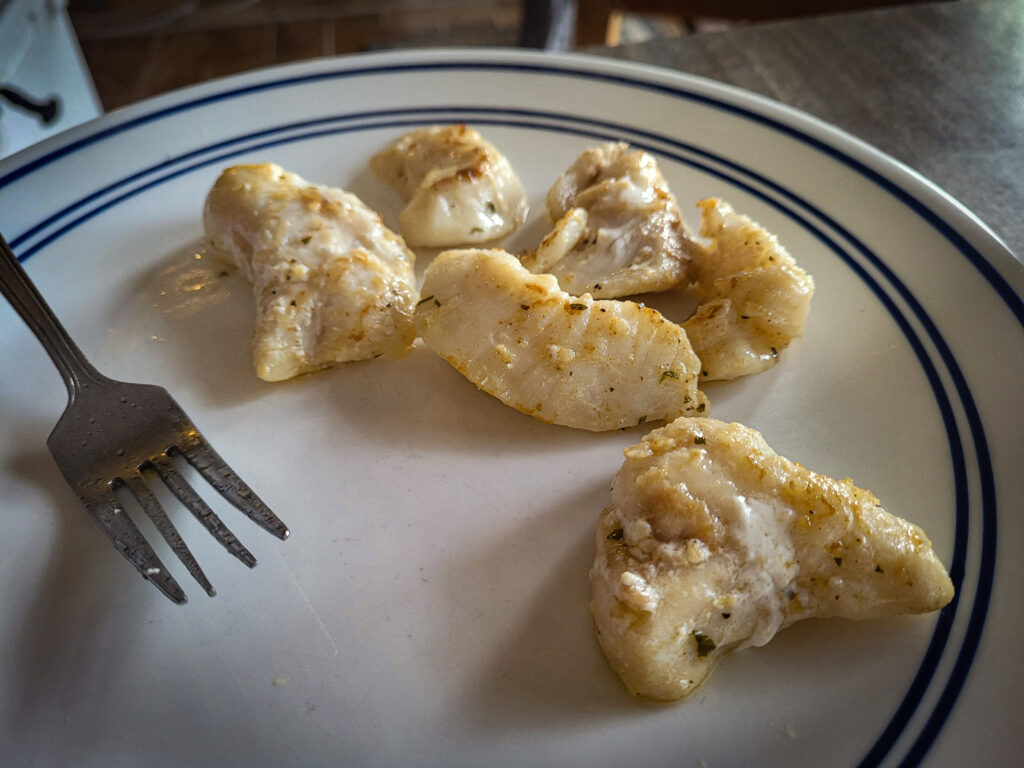
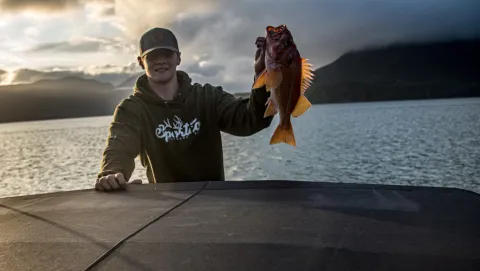
A few years ago, while on a multi-day vacation at Neah Bay my son and I went out and limited on rockfish. Between the two of us that was 14 fish, and we also caught some salmon that day and our lingcod we came back to the dock with nearly 20 fish to clean and fillet. That made for a long day, and we decided that the rest of the trip would be spent salmon fishing and that only if it were a slow day would we switch to bottomfish. Even then we kept our personal limits to what we wanted to clean that day, and by our third day we decided we had more than enough white flakey fillets for our trip. The last two days were spent trolling for salmon and watching local wildlife. Rockfish are delicious and fun to catch but make sure to catch responsibly.
/articles/state-bottomfish
Cowlitz River Smelt Dipping
Although this time of year can seem low on fishing opportunities, there is one fishery that I always look forward to. The Cowlitz River smelt fishery is a truly special opportunity. It's unique for several reasons. One, you don't even use a fishing pole! Two, you usually have less than a week's notice when it opens. Three, it's only open for a few hours at a time.
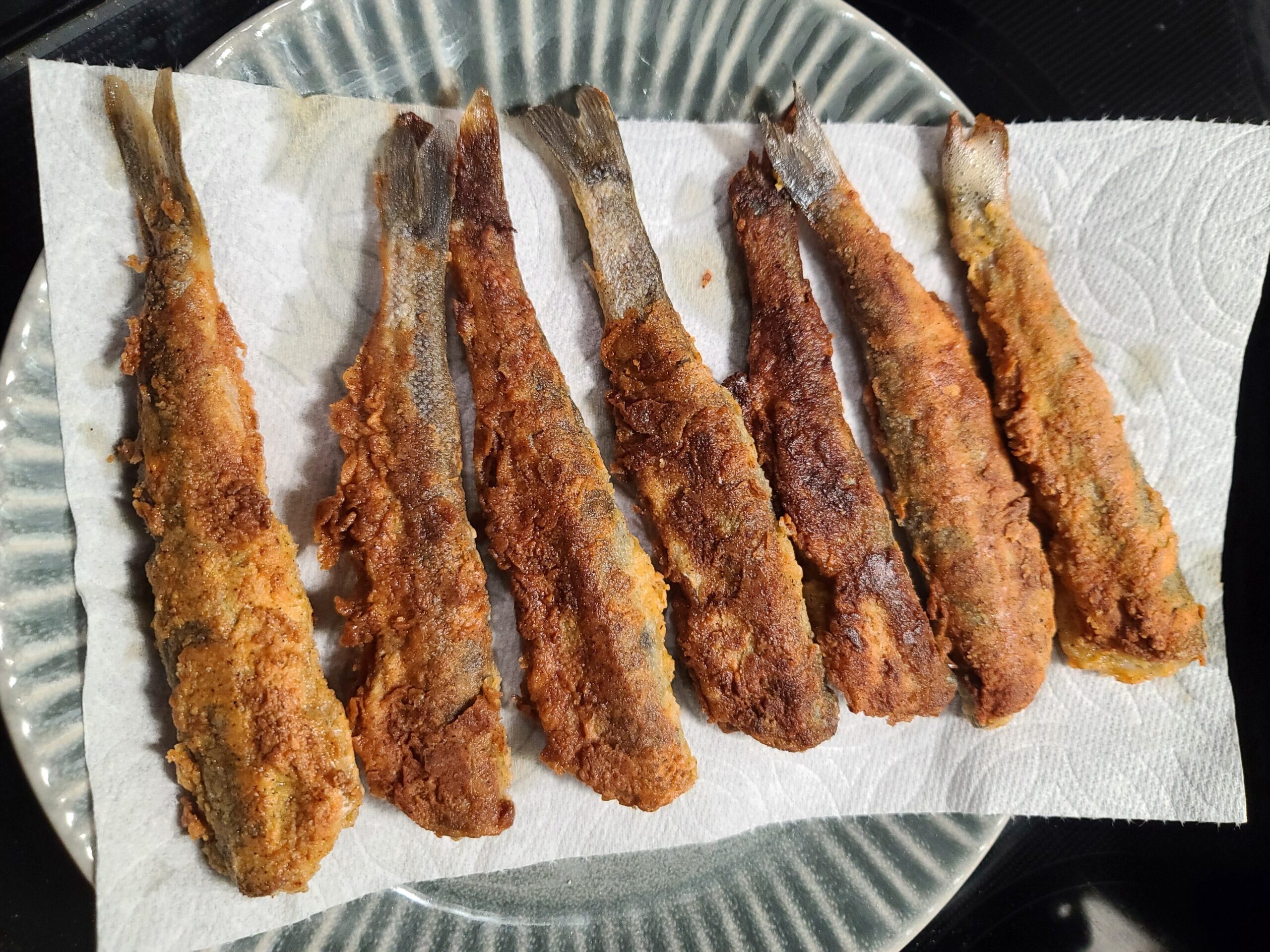
Thankfully, there is a generous 10-pound limit, and you don't need a fishing license to participate. Smelt are absolutely delicious when fried or smoked. They're very oily fish, and their meat is soft and sweet. If you aren't interested in eating them, they make great cut bait or crab bait. Interested in trying the fishery? Let's dive into how and where to get them.
Thankfully, the gear needed for smelt dipping is pretty minimal. You will need a bucket to hold your catch, a scale, and a long-handled net. I typically use a 5-gallon bucket, but you can get away with using a smaller bucket if that's what you have. The limit is 10 pounds, which WDFW says is typically a quarter of a 5-gallon bucket. It's a good idea to carry a scale though, in case you get checked by a game warden.
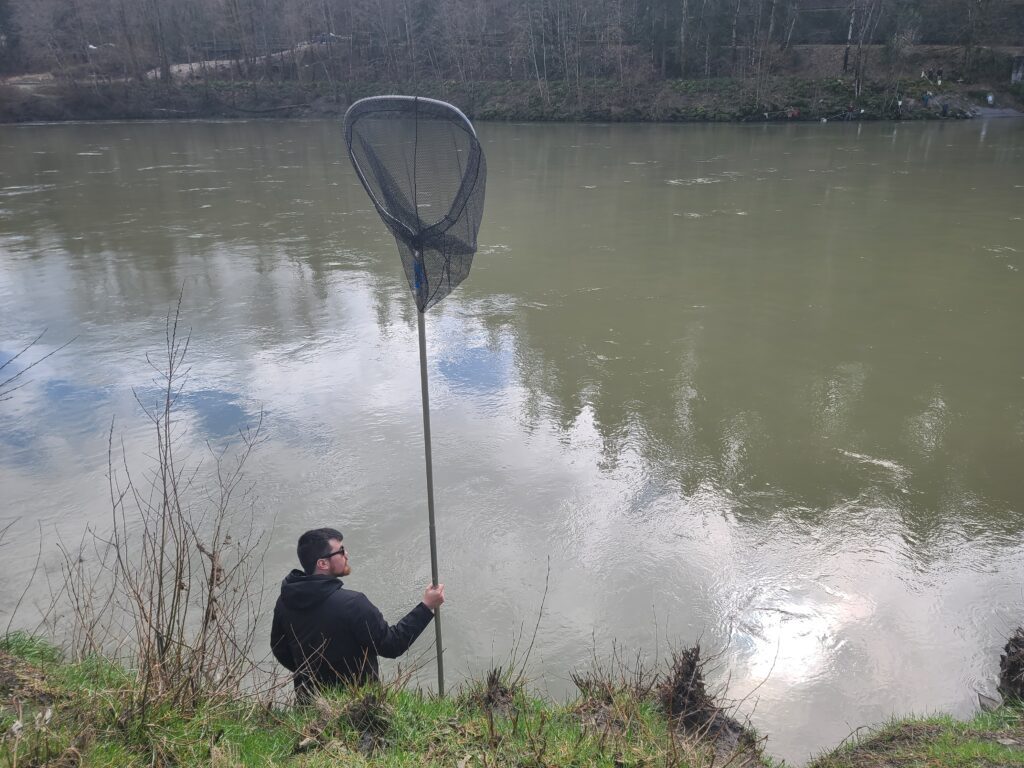
The most important advice I can give you is to make sure your net has a long handle and fine mesh. A typical landing net won't do the job. The handle isn't long enough to scoop down to the bottom of the river, and your smelt will slip through the wide mesh in the net. Here's another word of advice--get your net during the off-season and don't wait until the next dip is announced. Sporting goods stores can and do sell out when a smelt dip is announced, so if you wait, you might have to drive far to get one, or you can make your own.
If you're interested in participating in the next smelt dip, you're probably wondering where to go. During the last dip, the boundaries were between the Tenant Way Bridge and the mouth of the North Fork Toutle River. This stretch of the Cowlitz River has ample public shore access. You can find a map of popular spots on WDFW's smelt web page, or strike out on your own (but be mindful of private property). You can expect to have company, so it's a good idea to show up an hour or so early to stake out your spot. Longview, Kelso, and Castle Rock all have gas stations and restrooms. There's a dock at the boat launch in Castle Rock, if you don't want to get your feet wet or risk falling in the river while navigating the steep riverbank.
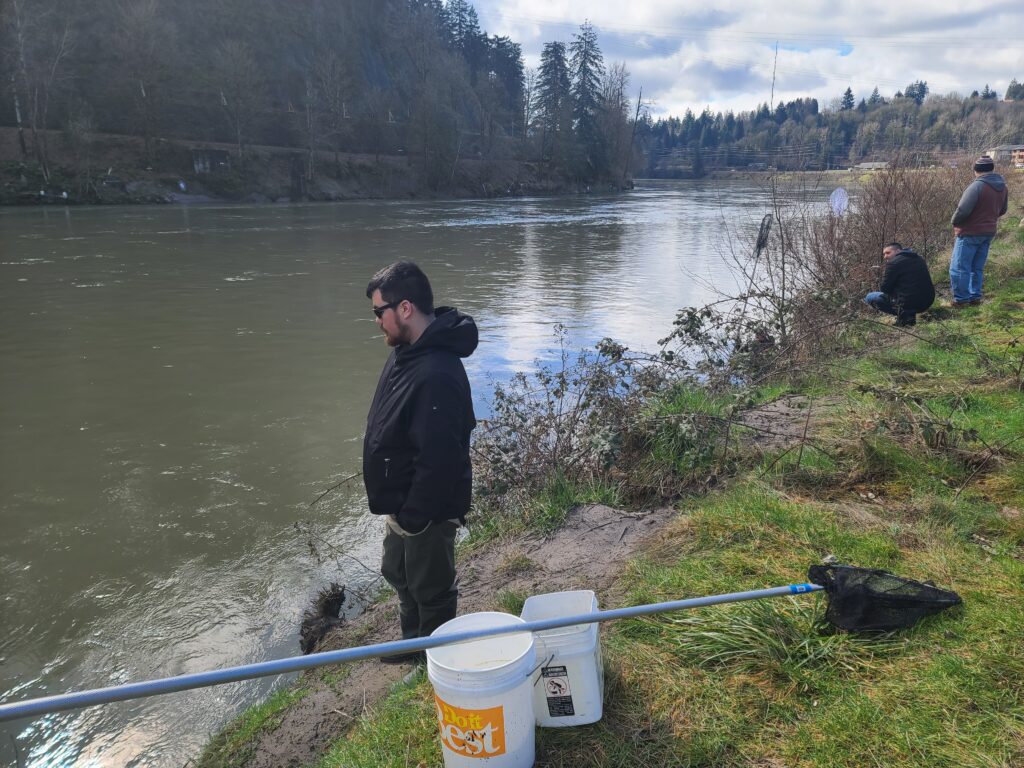
Once you're at the river, pick your spot. As previously mentioned, riverbanks can be steep, not to mention thorny. Be careful not to trip or slide- no fish is worth a fall in the river! You can wear a life vest to be extra cautious and put life vests on any kids joining the adventure. If the fish are in, one spot is as good as any. Dip your net in the river and sweep through it with one fluid motion.
You want to go quickly enough so that the fish can't swim out of the net. You should be able to feel them hitting your net. Don't be afraid to drag against the bottom if you need to. Resist the temptation to net as far away from you as you can. Sometimes the fish are right up against the bank! Deposit your catch carefully in the bucket and keep weighing them to ensure you don't exceed your 10-pound limit. Like any other fish, put your catch in an iced cooler on the way home so that their meat stays fresh and firm.
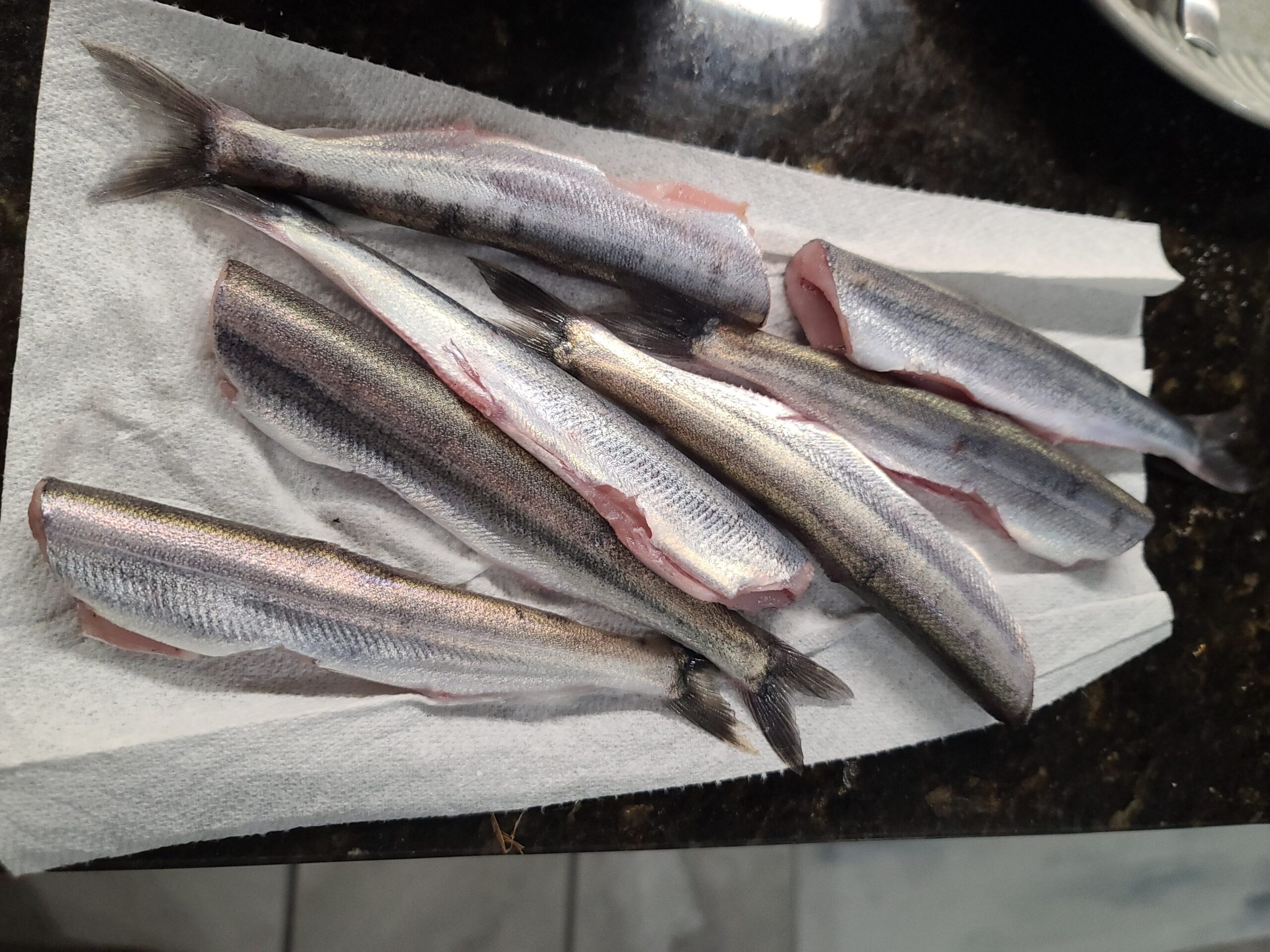
I'll leave you with some interesting facts about Pacific Smelt. Just like salmon, they hatch in rivers and spend their lives at sea. They return to their home rivers to spawn when they're between 2 to 5 years old. Again, just like salmon, they're an oily fish. They're about 15% oil! They're also called “candlefish” because they will catch on fire if you hold them up to a lighter.
Sadly, they're considered an endangered species. Around the mid 90's, their populations began to sharply decline. WDFW closely monitors their return numbers and determines if they are healthy enough to support a recreational fishery. This year, we were lucky enough to get not one, but two smelt openers. The reason that our smelt fishery is so limited is to protect their sensitive populations. They are susceptible to overfishing, so to ensure that future generations get to enjoy this fishery, it is tightly regulated and monitored.
Be sure to follow the rules! Don't exceed your 10-pound per person limit, and only net the section of the river that is open. Carry a watch or check your phone so that you don't start dipping until the time WDFW specifies. Most importantly, have fun!
/articles/cowlitz-river-smelt-dipping
Choosing a Fishing Guide
I have been fishing my entire life, but even today, try to fish with at least two to three different guides a year to learn new techniques and methods. Outside of time on the water, fishing with a guide is the single greatest way to become a better angler. Note that even the most experienced anglers can learn new things and your guide will be your teacher.
What continually impresses me is just how much our fishing methods can change from one place to the next and even within a specific system, such as the Columbia River for example. I am also surprised at how confident guides tend to be in their techniques. It is equally surprising how much those techniques may differ from other guides fishing the same fishery.
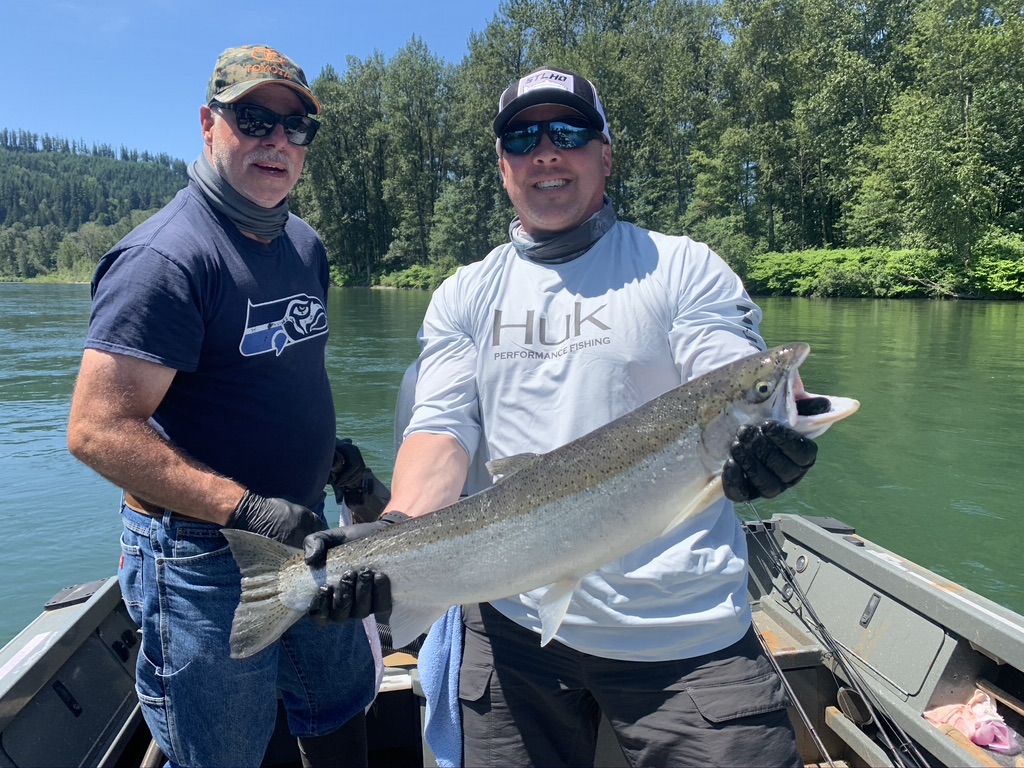
As a client, I find that I receive a constant barrage of feedback on what I am doing correctly or incorrectly and why. It seems that one guide tells me to fish a certain way and when I replicate this fishing technique with a different guide, I am re-educated. As hard as this is, it does build perspective and allows us to become better overall anglers.
Now that we have established that guides vary in their approaches, I would like to address how different their client approaches can be. For this purpose, I have categorized guides into three categories, the great, the effective, and for me, the “no thanks”.
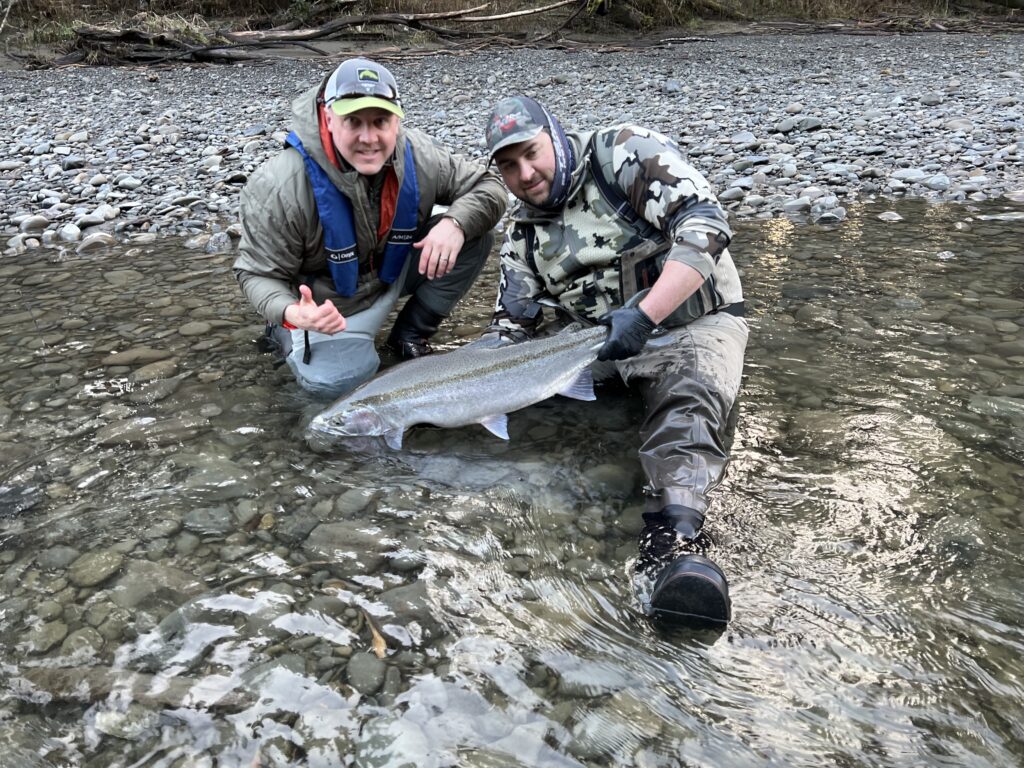
THE GREAT
The first guide type, the Great, is without question my favorite. Though their goal is to put you on fish, they are more concerned with providing an experience and making sure that their clients have a great time. This is the approach that makes fishing fun and the type of guide to fish with, regardless of how “fishy” they might be. I highly recommend that you seek this type of guide as I guarantee that you will fish with them again and again and laugh every time.
They tend to be a lot of fun, laid back, funny, and willing to teach you little things that allow you to become a better fisherman. Rarely will this guide correct you with sharp criticism. They have generally honed their skills around feedback and are fantastic teachers who lead with a positive approach.
THE EFFECTIVE
The second type of guide, the effective, tends to be more intense and highly competitive. This guide is all about catching limits and will put in a long day to make this happen. I feel that an angler can learn a lot from this type of guide, but often the experience can be intense, and the fisherman might leave feeling inadequate and exhausted. This is a tough one because the experience itself is not necessarily laid back and enjoyable, but the outcome is often good, and you learn new skills. I have not entirely determined the best approach to use with this type of guide, but I feel like you should give them feedback on their approach and define the limits of your expectations. It is a toss-up whether I fish with this type of guide more than once, but again, they tend to be very good fishermen, and much can be learned while fishing with them.
THE "NO THANKS"...
The third is the guide, whom I call the “no thanks”, who wants to put you on fish and get you back to the launch or dock as quickly as possible. I tend to avoid these types. As an example, I recently had a guide in Alaska who asked us to be at the ramp at 3:45AM. No big deal for me, but a bit tough for my 17-year-old son. I inquired about going an hour later and the guide responded by telling me that he had six fish in the freezer and would be happy to give them to us if we wanted to sleep in. Really? Did he think that we were only going out to fill the freezer? Needless to say, I will not be fishing with this guide ever again. As you can see from my story, this guide has little interest in the experience that he or she provides, and I feel that their approach is very self-serving. Fishing with this type of guide is why I started writing!
With social media prevalent, it is much easier to find a guide today who meets your requirements and expectations. It is also much easier to determine client approval ratings before you spend money fishing with someone who is only going to disappoint you. This makes things better, but it also does not tell the story of who the person is. Getting to know the guides that I fish with and building a lifelong relationship is not something that can be done on social media. Join a Facebook group, ask friends, do your homework, and look for guide #1 above. I promise that you will thank me for it later.
Need ideas or recommendations, email me at bknight@iss-safe.com and I will do what I can to help.
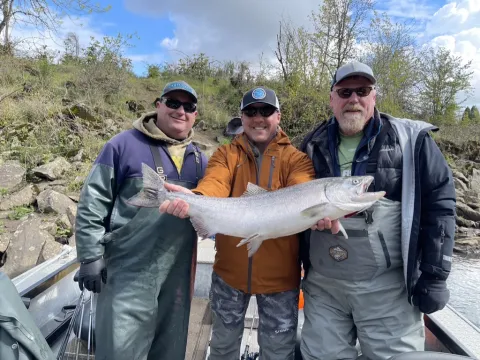
One final thought. Anglers need to understand that they play a role in their success and the experience itself. The guide can only do so much; you need to meet them in the middle, listen to what they tell you, and engage with them. Don’t be afraid to tell them what you want and how they are doing. If they exceed your expectations, tip them well as they work hard for a meager income. A decent tip is around $100 per person, per trip.
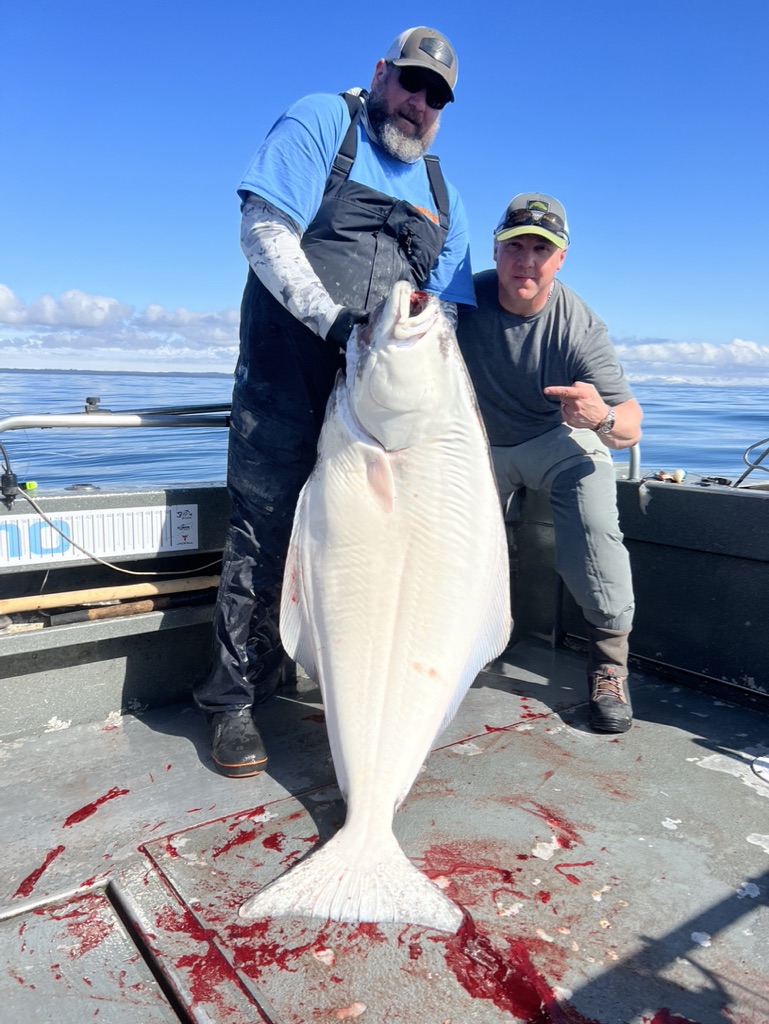
I hope that you find this information useful and helpful in selecting your next adventure and the guide who is going to take you there. Find a good one and you will go back year after year. An argument can be made that you can buy your own boat and do it yourself, but I would counter that argument by addressing the fact that when you are running the boat, you are not fishing, and you are often feverishly catering to the anglers in the boat.
It is a lot of fun but can be exhausting. I would argue that this is a great option if you love to watch other people catch fish and if you love to teach. This can be extremely rewarding. If you love to fish, go with a guide, and let them do the work so that you can relax and have a great time.
/articles/choosing-fishing-guide
Bucket List Fishing
What an adventure this whole fishing thing is. Like many things in life, often the journey is more fulfilling, exciting, and memorable than the ending. I shouldn't even say “ending”. Maybe outcome or result are better words. I have no intention of stopping fishing for what quickly became one of my new favorite fish—the latest stamp to be added to my fishing passport.
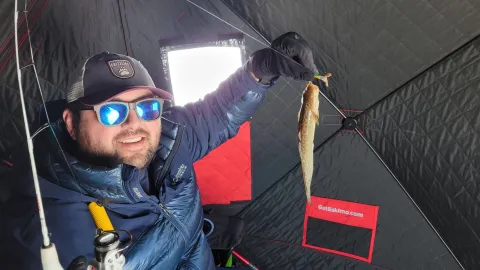
I’m going to come right out with it, the fish pictures included with this article are not show-stopping, wall-mounting, brag to your buddies type of fish. Some might look at them and wonder if they were even photo-worthy at all. But to those folks, I’d retort with a new phrase that has newly become part of my regular vernacular. A polite way to say be nice, be joyful for others, or perhaps more bluntly, a phrase we all heard as kids, if you don’t have anything nice to say, don’t say anything at all. Don’t yuck someone’s (my) yum. My recent yum, both literally and figuratively as you’ll come to read, centers around catching what became a winter fishing obsession. I am referring to one of the more mysterious fish I’ve come across as an angler, the burbot.
Highly regarded for its taste as poor man's lobster yet criticized for its appearance, I knew I had to catch one, two, as many as I could. They are most active during the winter months and at night, two challenges as we’ve had an unseasonably warm winter and I’m more apt to hit the snooze button and sleep in than drive to a frozen lake and sit outside in the dark or first light of the morning hours. Still, I had to add this fish to my checklist of caught species.
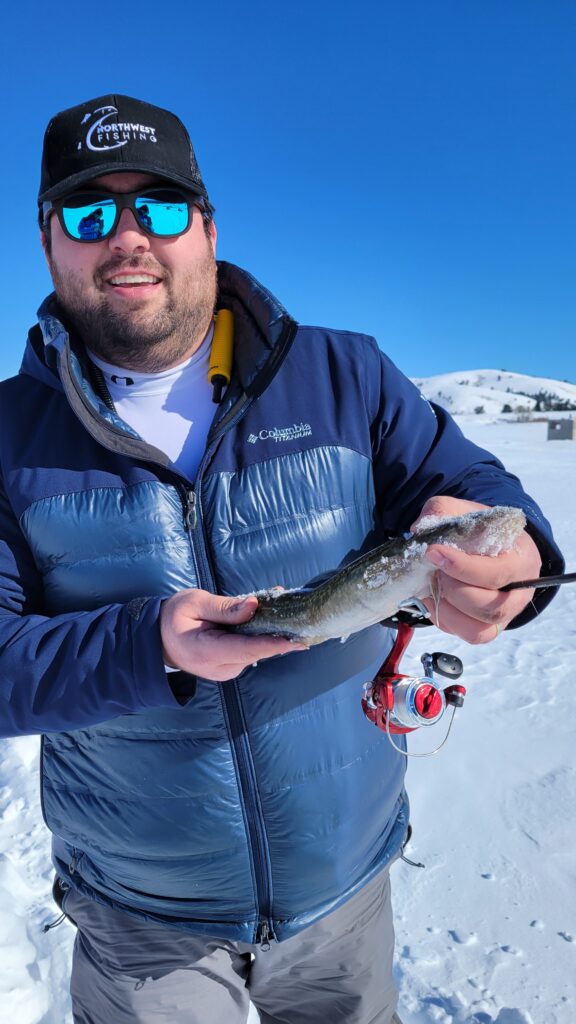
The fish is an oddity with their eel-like appearance, freshwater habitat (the only cod to live in such an environment in North America), and some seeming barriers in place - fishing during the winter, night activity, and competition with other anglers - I was obsessed. I researched online, talked with other anglers, called MT FWP for information from biologists in the field, asked questions when buying gear at local shops, and watched YouTube clips (check out our ProTip video with Craig Dowdy on the website or our YouTube channel on how to filet burbot), anything you could think of to educate myself on how to best catch this fish. Maybe a bit counter to the introductory prose, I’m all for enjoying the experience of fishing and the ambiance of the outdoors, but darn it, I really like catching fish, too. Especially with all the work and background knowledge I had completed. Not catching the fish would’ve been a letdown, surely.
After finding a few reservoirs in my area and properly gearing up, the only thing left to do was hit the ice. A scenic 20-minute drive to my first location yielded no fish. Slightly concerning, but motivating at the same time, another angler told me about some perch and a small ling (another name for the burbot) he released. Good to know, but after a few more evenings on the ice with no fish, it was time to try somewhere new. How about 40 minutes away? I had heard more consistent information about the fish being abundant in this second location but again, coming up sevens at this new spot.
For those without an interest in throwing dice at the craps table like myself, that means I didn't catch anything here either. So, perhaps where I should've started all along, a trip to White Sulphur Springs, MT about 1.5 hrs. away would host my next attempt. As with most fishing, the lulls made for some long hours. Despite the wait, I had the opportunity to hook into my newest fish friends both jigging for them and through a stationary rod, both targeting slightly off the bottom, about 40 feet. I'll never forget the sight of my first burbot as it appeared from the icy blue depths below. Examining this new-to-me fish, it had greenish, yellowish, olive covered spots all along its body. A catfish like appearance with a more than normal amount of fish slime coating the body, which I quickly became acquainted with as it slithered snake-like in my hands. Knowing I had finally caught one had me pumped up! All that was left was to see how it tasted.
As mentioned, they are highly regarded for their table fare. Bringing my catch home, I had done my homework as to how I should prepare my meal. Simplicity is sometimes the answer. Boil a little lemon soda, poach the fish for a few minutes and dip in some garlic butter with lemon on the side. Enjoy, easy. One thing I hadn’t accounted for, sharing with my family. My wife, not as invested in the pursuit of this fish, was fine to try it, compliment me on cooking it and move on with her evening. My kid, 2 years old, however, grabbed this fish by the fistful. So much so that I started getting a little jealous!
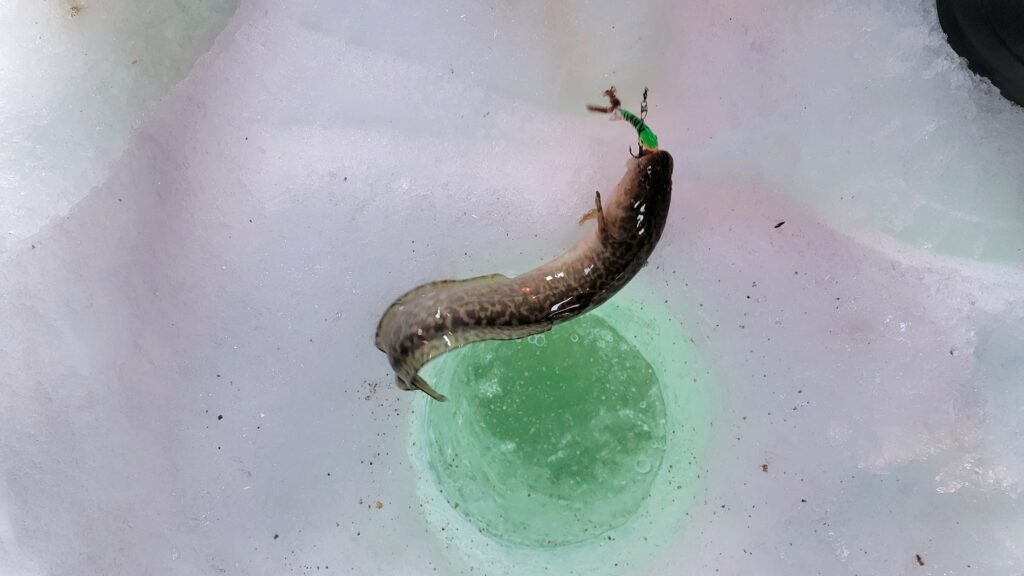
I put in the legwork to catch this fish and had built my first meal up in my head and here she is eating it all! Rationing out my portion, I was glad to see my daughter enjoyed the meal, but I was for a moment inclined to respond like the 2-year-old I was interacting with - to say “mine” and grab it all back. They don’t call this fish the poor man’s lobster for nothing I suppose. The white meat is what you’d expect from any similar cod fish, but the firm texture and taste of the fish paired with the garlic butter and lemon certainly lived up to my expectations. The enjoyable meal was the culmination of my burbot experience and a fitting way to affirm my latest fishing craze.
So, now that I’ve caught what was previously a mysterious fish to me, I look forward to another season with refined skills but the same level of excitement I had before encountering the burbot. A note for myself, I’ll have to do some research on some of those other strange fish to be caught…paddlefish, an arctic grayling, pallid sturgeon…all to hopefully be checked off the species bucket list.
/articles/bucket-list-fishing
Looking Ahead to March Fishing
It’s hard to think of fishing for most of looking at iced in boat ramps and/or iced over lakes but the ice will likely thaw by the beginning of March and you’ll have some great opportunities for fishing when it does. Looking for some early-season trout and walleye ideas? Here’s a few for you:
LATE WINTER WALLEYE:
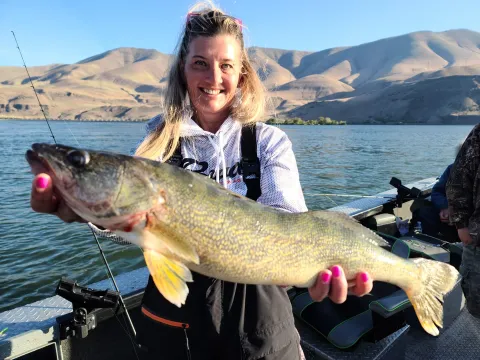
The Columbia River is the place to be in March for walleye as the big females get ready to spawn. In fact, this is the time of year to land a true trophy walleye. Traditionally, the bigger females have been targeted near the Tri-Cities but quality walleye can be found in The Dalles and John Day pools as well the Upper Columbia near Hydro Park in East Wenatchee, and in Rufus Woods Reservoir as well as the upper end of Lake Roosevelt.
When it comes to catching March walleye, try trolling a small spinner worm harness like a Mack’s Lure Slow Death Rig at a very slow speed (around 1 to 1.2 MPH). Once you find a school of fish you can jig for them. In addition to jigging for walleye with soft plastics on jig heads, you can also use metal blade baits or vertical jigs like a Mack’s Sonic Baitfish.
QUINCY LAKES TROUT FISHING:
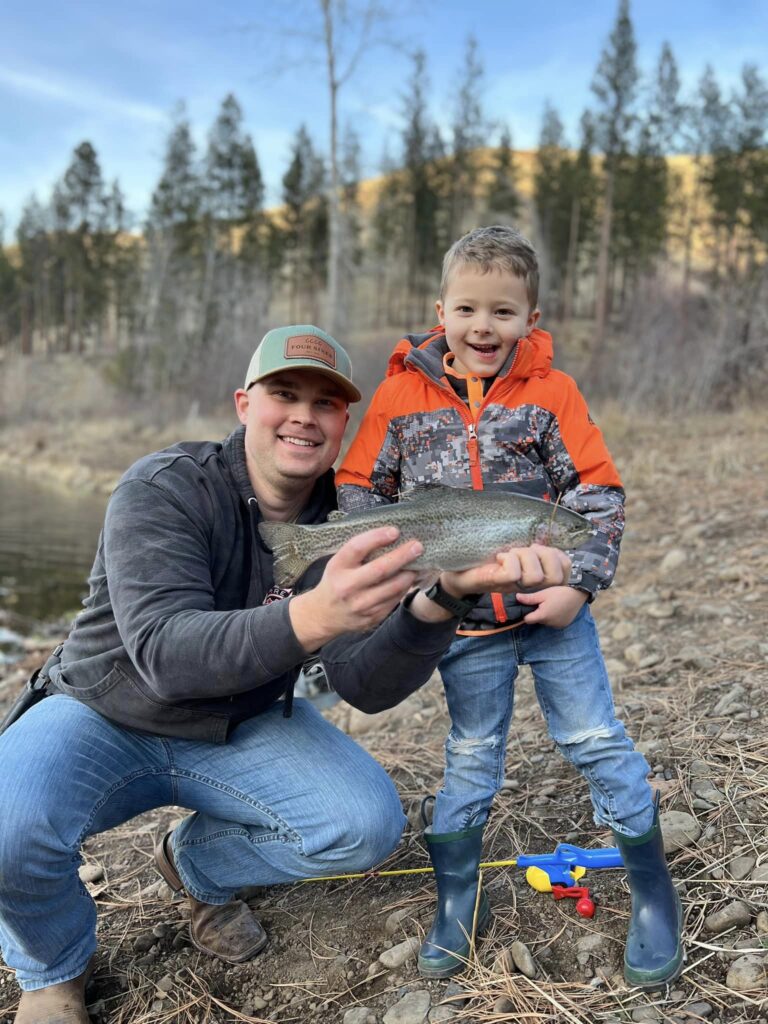
The Quincy Lakes trout opener on March 1st is either a boom or a bust depending on the amount of ice remaining on this chain of lakes between Quincy and George which lie in a sizeable state wildlife area. The most popular lakes to fish are Quincy and Burke Lakes, which are both well-stocked with rainbow trout. There are also several small walk-in lakes southwest of these bodies of water that are stocked with smaller numbers of trout but which receive less pressure.
The opener often finds crowds of both day-anglers and overnight campers congregated close to the shore of the main two trout lakes, many of them in a festive mood, especially when early spring weather and sunshine is present. That isn’t always the case though, The Quincy Valley Chamber of Commerce, which has hosted an annual trout fishing derby with prizes for kids and adults in the first half of March, is hedging their bets this year (as to whether the lakes will be ice-free) and will wait until March 22nd and 23rd to hold their event at Burke and Quincy Lakes.
TUCANNON LAKES TROUT:
The Tucannon Lakes, nestled in the W.T. Wooten Wildlife Area and the Blue Mountains of Southeastern Washington, offer another March destination. Speaking with Kim Andersen at The Last RV Resort (the closest resort to these lakes), I learned two small lakes (Blue and Spring) are open all year and have historically received plants of 24,000 and 15,000 trout respectively.
Four additional lakes open on March 1st (Deer, Watson, Rainbow, and Big Four), though Anderson says since the area flooded a few years ago, Big Four Lake doesn’t really exist as such and should not be considered as a viable option. Asked which lakes fish best in early March, Anderson said Spring, Deer, Rainbow, and Watson Lakes all fish well when ice-free.
The Last RV Resort near Pomeroy has cabins, RV, and tent sites available along with a coffee bar. Anderson says they still have openings available for the popular March 1st opening day of trout fishing. www.thelastresortrv.com
LAKE LENORE TROUT:
If you are looking for some big trout to catch and release, consider a trip to the Columbia Basin north of Soap Lake and cast a line into Lake Lenore. You’ll find Lahontan cutthroat trout here, a species native to Nevada that was stocked in this very alkaline lake decades ago by WDFW. The trout commonly weigh two to three pounds but five to six-pound fish are not uncommon and there’s always the possibility of landing a ten-pound trout.
This was a very popular spring fishery in the 1990’s and early years of the 21st Century. Unfortunately, poaching efforts knocked down this fishery. Why anyone would want to take home fish that likely taste like soap, I do not know but enough people did that the fishing suffered.
Fortunately, the fish population has rebounded but despite that, the word hasn’t gotten out to most anglers and this place fishes under the radar. It is a selective fishery lake, where only single barbless hooks are allowed. If you are in a boat, you can only use an electric motor and your fishing net has to be knotless.
If you do decide to take a fish home you only get to take one and it must measure at least 18 inches long. There is plentiful shoreline access along the east side and at the north end of the lake though there are a couple of areas closed (marked by signage) by the inlet stream and irrigation pumping station towards the upper end.
Lake Lenore is a wonderful place to fish. The scenery of sagebrush and basalt cliffs is pleasant and the chorus of geese, ducks, chukar, and other wildlife add to the experience. The best times to fish Lake Lenore are in the spring (March and April) and again in the fall (late September through November).
In the spring, most of the trout are found at the northern end of the lake, cruising the shoreline in depths as shallow as three feet as they prepare to spawn. Fly fishing anglers target them from shore or float tubes and pontoon boats. The “go to” offering is a small black chironomid, fished under a strike indicator, in sizes 12 to 20.
Hardware anglers have success as well. You can use a spinner but you’ll likely be frustrated by all the grass floating in the water which limits the effectiveness of the spin itself. Instead, consider using a spoon. I’ve had good luck with Luhr Jensen Krocodile lures in 1/8th to ¼ ounce size. Hammered brass and orange as well as a frog-colored pattern have both worked well for me.
In the fall, the fish will be found further to the south, especially around the islands in the lake and casting or trolling for them from the boat can net you and your partner up to 35 fish a day if fortune smiles upon you. We’ll save that fall conversation for later though, because right now, it’s March and we’ve got fish to catch!
John Kruse – www.northwesternoutdoors.com and www.americaoutdoorsradio.com
/articles/looking-ahead-march-fishing
Late Winter Steelhead Fishing
Winter Steelhead fishing… where do we start? First off, winter Steelhead fishing in Washington is unique and different from many of our other fisheries based on one simple fact, the weather. The winter generally brings cold, dark, and wet days which makes this type of fishing a bit more extreme. So then, why do we do it? Great question, but the bigger question is, why would we not?
There is an allure to Steelhead fishing that is hard to describe. I know that there is nothing that I would rather do. On top of inclement weather, Steelhead are more elusive than our migrating salmon and less predictable, making them more difficult to catch. Changes in river conditions during the wet, winter months are constant, forcing us to drop what we are doing and go when the conditions are best.
We also need to change up our techniques based on river conditions. One more thing worthy of mention is that there are limited hatchery program opportunities left, so much of our Steelhead fishing is the catch and release of wild fish. I find that wild fish tend to fight better and to me, there is nothing quite like battling an amazing fish and holding onto its tail as it builds up the energy to swim off to where it came from.
For those of you interested in winter Steelhead, I would like to share some information that might help in getting started. I am only sharing what I have learned but I hope that the information is useful. Also, if you have followed my articles in other outdoor magazines, then you probably know that I spend a lot of time fishing with professional guides all over the Pacific Northwest. This helps as I can share a perspective that has been obtained across many experiences and years of fishing.
Most of my Steelhead fishing has been done in the rivers in NW Washington, SW Washington, and the Washington Coast, specifically Forks and the Quinault and Queets Rivers within the reservation. There are so many options available, so I recommend that you start with a river that is near you and learn a little about it…the rules, the opportunities, and most importantly, some good guides who know the river well. I encourage you to spend the money to fish with a guide to learn what works and understand how to target fish in different conditions. Know that every guide has a different opinion and approach, so try a few to gain a broader perspective.
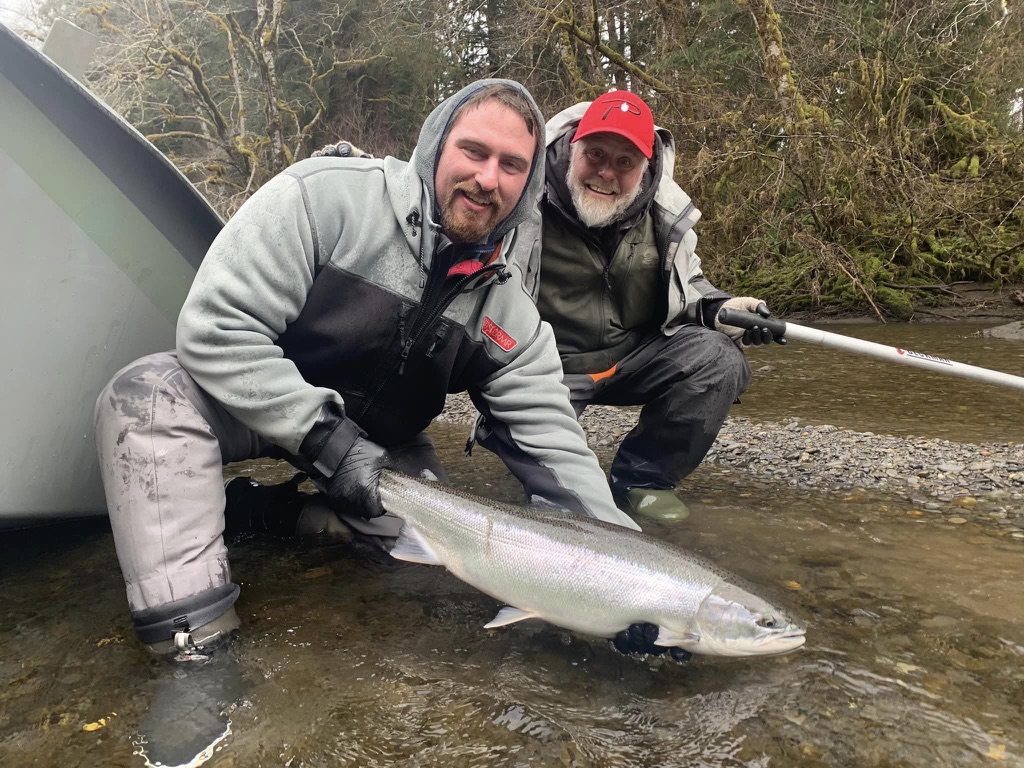
Once you have spent time on the river with a guide or two, you can focus on the gear that you need. Believe me, you can spend a lot of money quickly so make sure that you get it right. To start, you should have a nice pair of waders and wading boots and a waterproof jacket. Getting cold and wet will ruin your day in a hurry. Next, and just my opinion, focus on 2-3 techniques that you would like to try and focus on the gear needed for those specific approaches. I find that it is best to master a few techniques before expanding your toolkit.
There are many popular techniques for catching Steelhead such as casting or trolling plugs from the bank or shore, throwing spoons and spinners, float fishing beads, bait, jigs and other offerings, drift fishing or bobber dogging beads, yarnies, bait and other offerings, and much more. So many different options to choose from and they all work.
If had to pick 2-3 techniques, here is what I would do. It’s hard to choose because they all work and some work better at certain times and under certain conditions. I like to float fish maribou jigs and soft plastic worms on jig heads, and I really like to float fish beads. My float fishing approach for beads combines a float, inline weight, a long leader with some split shot in the middle, and a soft bead that bounces along the bottom. Aside from these techniques, I love to throw spoons and spinners. If I am fishing from a drift boat as opposed to bank fishing, I like to troll plugs in long stretches of slower-moving, deep water.
If I was to start fresh right now, I would have a lot less gear in my garage. Now there are many different types of rods and some work better for certain techniques. If I had to pick one rod to use for multiple techniques, I would go with a 9’6”, 6-10# to 8-17# rated spinning rod with a 30/3000 or 35/3500 size spinning reel. I prefer a bit lighter rod to maximize sensitivity and have found that 30# braid works best for my mainline along with a 10-15’ bumper of fluorocarbon. This is a great all-around rod and reel setup that will allow you to employ most of the methods that I listed above.
If you want to focus on float fishing, I recommend a 10’6” rod that is designed for this purpose. The added length really helps you mend your line easily. For “old school” drift fishing, I prefer a one-piece 7’6” rod but most of the time I am bobber dogging, which is simply drift fishing with the addition of a float/bobber to pull your gear naturally along the bottom and downstream. A 9’6” rod works great for bobber dogging, and you can easily break it down to fit inside your car.
Once you have your clothing, rod, and reel, you can focus on terminal tackle. For this, I recommend going to your local tackle shop as opposed to a “big box” store. You will get valuable advice that will help you to purchase the best gear. Also, lean on what you learned from the guides you fished with, and make sure to take pictures of their gear setups and rigging when you fish with them. At this point, you’re going to need a collection of swivels, bobber stops, small beads for your bobber stop, and leader material, generally fluorocarbon. Note that if you don’t want to tie your leaders immediately, you can purchase them pretied.
It’s also a good idea to have a selection of hooks in sizes from #4 to 1/0 or even 2/0 in some cases. Purchase a box of soft beads in a variety of sizes and colors, some maribou jigs in pink/cerise/orange combinations and the red/white/black nightmare patterns, as well as 1/8 or 1/4oz jig heads (I prefer white) and some 3.5” plastic/rubber worms. Don’t forget a selection of weights. I am a big fan of the stainless-steel weights from Dave’s Tangle Free. You have enough gear to get you through a winter of learning and chasing Steelhead. Between maribou and worm jigs and beads, you can fish in just about any condition. It would not be a terrible idea to have a few spinners and/or spoons as well. They are fun to toss when nothing else seems to be working.
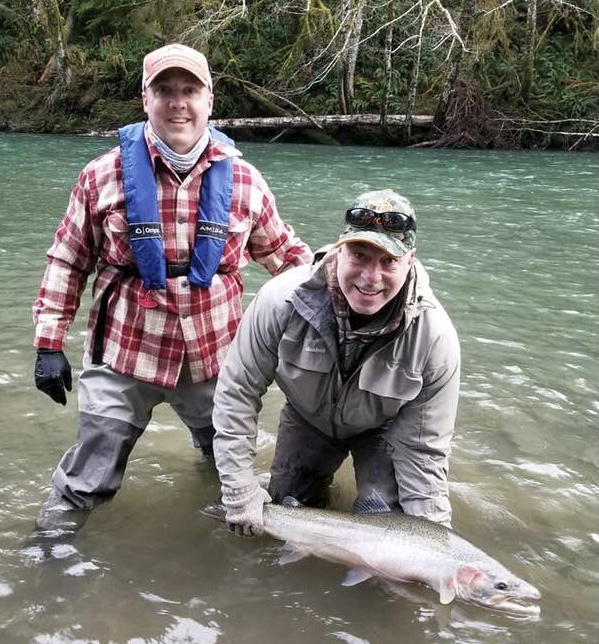
Now, you have learned the basics from one or more guides, you have learned how to fish a specific river system, you have purchased a handful of the gear that you need and the time has come to go out and give it a shot. Believe me, you don’t have to go buy a drift boat to fish. There are plenty of opportunities to wade and bank fish. Also, I encourage you to continue to fish with guides if you want to boat fish or make a friend who has one. Believe it or not, many fishermen who own boats are looking for fishing buddies, so join a Facebook group to make some friends.
Winter Steelhead fishing is an amazing pastime and until you have spent some time doing it, you really don’t realize how special it is. One warning, don’t expect to go out and catch a Steelhead on your first trip. They are called a fish of 10,000 casts for a reason. I can say that they are very special fish, and you will never forget your first, or for that matter, any Steelhead that you catch. Now, get out there and good luck.
/articles/late-winter-steelhead-fishing
Spring Kokan-Energy
After our very cold January followed by the big thaw that brought us almost summer-like weather, more than our toes have thawed out. The average kokanee-obsessed sportsman is suddenly waking up with thoughts turning to spring kokanee fishing, kokan-energy.
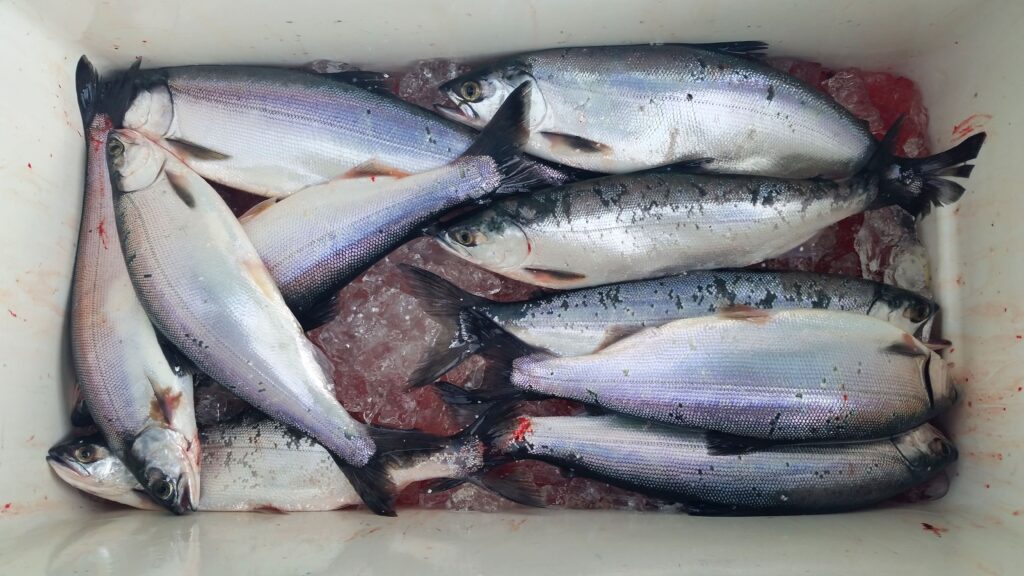
If so, plug in and use your kokan-energy to get ready for this year’s kokanee adventures. Spend the time making sure everything is in tip-top condition. Check out your boat, gear, and tackle while developing a game plan for filling the freezer with mini sockeye. Let me share some ramblings that may help you prepare for this year’s Kokanee crusades.
If you store your boat outside and are a seasonal user you have some work cut out for you. Garage-stored or year-round boaters have a task or two to attend to also and now is the time to get at it. The number 1 most important item on your pre-season chores list is your fuel system. Even if you used a fuel conditioner or stabilizer in your portable tanks get rid of last year’s fuel. Pour any gas from the portable tanks into the lawnmower gas can. I have nothing against lawn mowers but a little SeaFoam will cure many small engine fuel-related ailments that you don’t want to deal with on the lake.
For built-in tanks, hopefully last season you treated the fuel with each fill up. Even so, it is a good idea to drain the fuel filter bowl and replace the fuel filter/water separator cartridge as appropriate. If your rig (built-in tank or portable) is not equipped with a fuel/water separator, now is a great time to install one.
Check all fuel lines and fuel line fittings. Replace anything that is brittle, cracked or otherwise damaged. If you are a seasonal user and your boat was winterized this task is much easier. Next check fluid levels for your hydraulic steering, power tilt/trim units, lower unit/gearcase and your 4-stroke motor oil. Use your motor manufacturer's recommended products and do not top off or mix the various products.
Pull the propeller and check the shaft for fishing line or damage. Remember to lay all the nuts, washers, sleeves, or adaptors out in the same order they came off the shaft. This makes reassembly much easier and remember that most thrust washers have a right way and a wrong way to install them. Look at the propeller, if the blade edges are showing an excessive number of nicks/dings, now might be the time to send it off to be rebuilt. Even slightly damaged blades will affect performance and running a boat with severely damaged blades can lead to all kinds of shaft/seal problems down the road.
Each spring, be sure to top off the batteries with distilled water. It’s a good idea to get them on the appropriate charger for your battery type and bring them up to a full charge. If you find corrosion on the terminals remove the battery from the boat and clean it off with a mild solution of baking soda and water. Once everything is clean, it is also a good idea to use one of the various corrosion guard offerings. As long as you have 12-volt wiring on the brain you should also go through the rest of your electrical installation and look for loose connections and damaged wiring.
Mice and other rodents can cause a lot of damage during the off season. Check all the switches and breakers to make sure they are working. Then hook up the fish finder, VHF chart plotter, VHF, trolling motor and any other major electronics you are running to make sure they have power. Check all the lights to make sure they work. Electrical gremlins are difficult to trace and best investigated in your driveway.
Independent of the weather, my retirement job has me on the water running a small boat as many as 6 days a week. The winter weather is not forgiving and often rattles or jars nerves and electrical connections loose. I have lost the radio, wipers, tilt/trim motor and the bilge pump while running in winter chop. I just deal with things as required but you don’t want to spend your precious fishing time troubleshooting electrical problems.
After all things electrical are functioning as expected, hook the engine up to the garden hose (be sure to familiarize yourself with the manufacturer recommendations) or dunk it in a livestock trough and start your baby up. If your rig has water pressure and temperature gauges check them now. Make sure the tilt and trim are working. Check the steering, especially mechanical steering, to see if there are any problems. Also, before you shut the engine off pull the kill-switch to make sure it works. Check all the switches and breakers to make sure they are working.
Inspect the condition of your downrigger cable or braid. If you are running a stainless steel cable and it is rusted or kinked, replace it. If you are running one of the synthetic braids cut off a few feet and re-tie it. You don’t want 10-15 pounds of lead to suddenly head for the bottom, potentially taking your rod and rod holder with it. However, if it does, it may be an indication that your release clip was a bit too tight. Also check for loose fasteners, worn or missing parts and corroded electrical connections. Fix anything that is even remotely questionable.
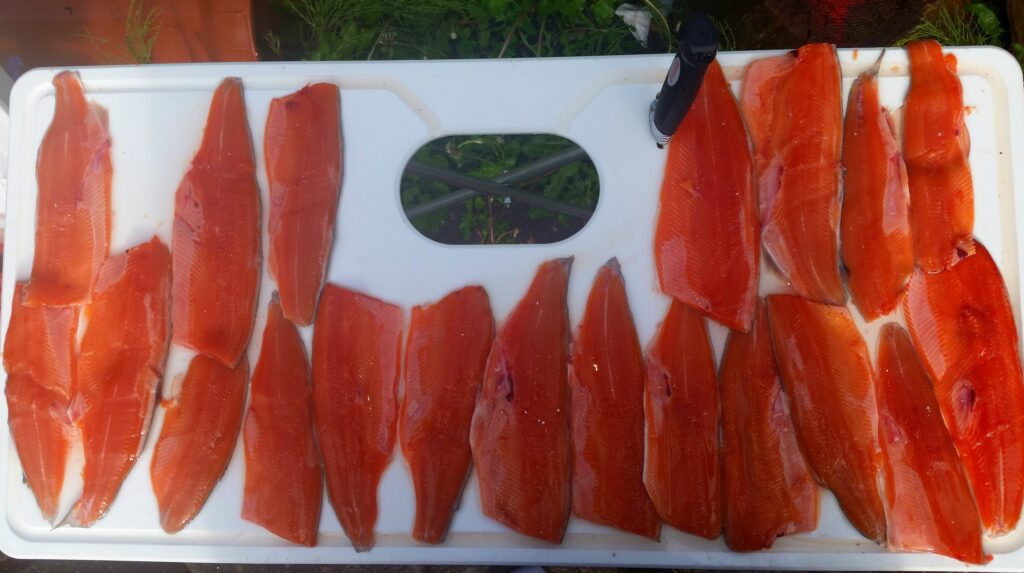
Give your trailer the once over. Now is the time to check the trailer lights and trailer brake fluid levels. Also, check the tire pressure on all the tires including the spare. Ensure that all bunks and/or rollers are in good condition. Check your safety chain, winch strap or cable and tie down straps and replace them if they are questionable. Check your lights and if they need replacing consider replacing them with waterproof LED lights. Initially, they are more costly but with increased reliability they will pay for themselves in no time. As an added safety benefit the LEDs are much brighter than the standard 12-volt incandescent lights. Now is also a good time to check and maybe even repack your trailer bearings, better safe than sorry.
I know, all your rods are piled up safe and sound in the corner of the garage and better yet everything worked fine last year so you have nothing to do, wrong! It is the start of what should be a productive fishing season and you don’t want to lose the fish of a lifetime because your favorite reel has a case of the herkie-jerkies. Although with most reels it is easy enough to replace the drag washers, sometimes getting the replacement parts can be a challenge. When you disassemble your reels use simple green to thoroughly clean the reel components. Rinse and then dry the parts using the low setting on a blow-drier or heat gun before reassembly. Once the parts are clean inspect everything, look for unusual wear and replace anything suspect. Use advanced synthetic lubricants and reel grease sparingly during the reassembly process.
If you are running mono, replace it with new line. Take your reels to a high-volume tackle store (Think Holiday Sports in Burlington or similar) and have them bulk-fill your reels. Their line should be fresher, and most tackle shops recycle your old line.
Also, give all your rods the once over. Make a point to verify that each line guide is not cracked or worn. You can use a cotton swab and swirl around in each guide. If the guide catches any cotton fibers the guide needs to be replaced. I have lost a few notable fish due to cracked ceramic guide inserts.
On any given trout or kokanee trip I pack several pre-tied rigs and various components to craft more. Often several of them were tied the previous year. Last year we caught a lot of fish and the 12# fluorocarbon I use to tie gear looks frazzled. It’s time to retie much of my Kokanee arsenal. Fishing with sharp hooks is critical when chasing kokanee. Check your hooks and replace them as required. Look over your gear, and retie anything questionable.
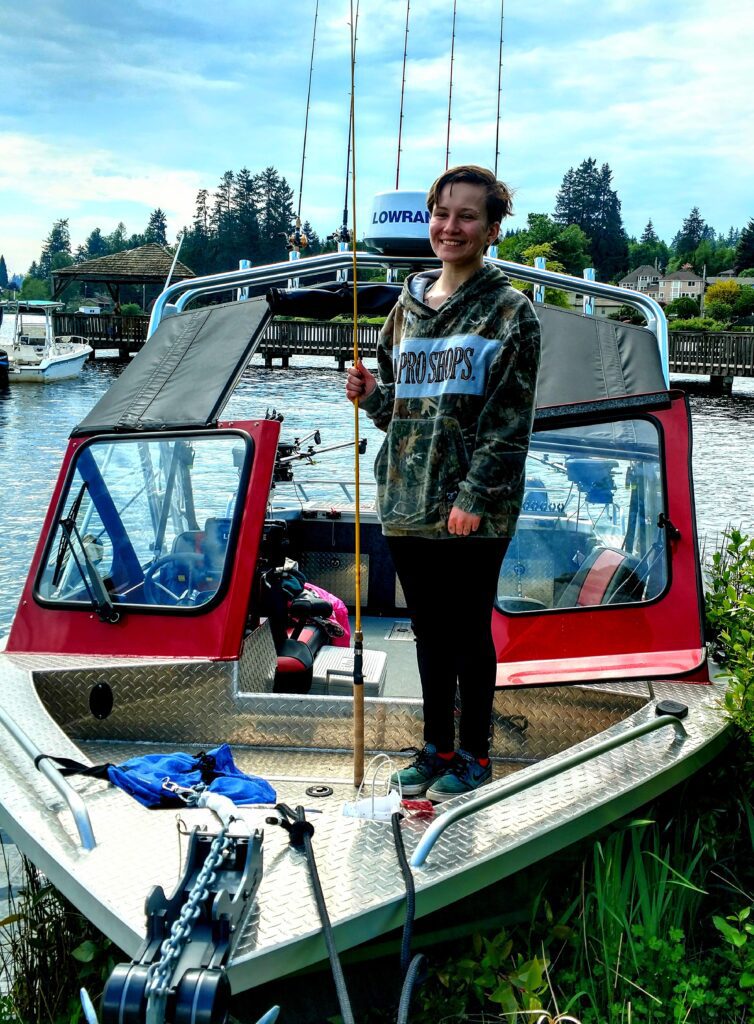
A few years back, one of the kids and I were fishing at the Lake Stevens Kokanee Derby. We ended up losing a huge kokanee. When I looked at the rig afterward, the trailing hook had come unraveled. It was a home-tied kokanee fly and after catching many fish it had just failed. There’s peace of mind in knowing that your gear is in tip-top condition.
Now is a great time to develop your Kokanee game plan. With all the PNW Kokanee lakes to choose from, my recommendation is that you choose a Kokanee lake close to your home. Somewhere where you can fish both on the weekend and during the week as your schedule permits. Don’t fret about the size of the fish or even the numbers. This will be your learning/confidence building lake. Learn your boat, fish finder, downriggers, trolling speed, lure presentation and generally become the local expert while building confidence in your kokanee angling abilities. Then, whether you’re fishing a new lake or fishing a frequently visited lake the lessons learned at your home lake will help you catch kokanee with confidence.
Kokanee are filter feeders, and the bulk of their calories come from plankton blooms. There are windows any given day where a bloom or hatch will occur, and the kokanee will briefly leave their comfort zone to feed. Because the bite may go off at 2:08-2:24 with your gear running at 43’, it is best to choose a kokanee lake close to home and as said before learn it. Especially when late winter or spring kokanee fishing, keep a detailed fishing log.
Be the local expert and share your hard-earned knowledge. Back at the ramp… “Yeah, it was great fishing today… Good luck, tight lines and may your cooler be full”
Although I align my tactics for a given lake, seasonally I don’t really change my overall approach much. The usual kokanee drill: a small dodger, lure with tuna corn is a great place to start when hunting for spring kokanee. Make sure you have your favorite scents, maybe a container of worms and additional leader onboard. Not always but occasionally you will need to revise your leader length. When trolling for spring kokanee you will want to run 0.8-1.2 MPH. “S” turns or tools like the iTroll “Hunt” mode help. Make sure to make a mental note of what’s working when you get bitten. “Monkey see, monkey do” strongly applies to kokanee fishing. Repeat what works.
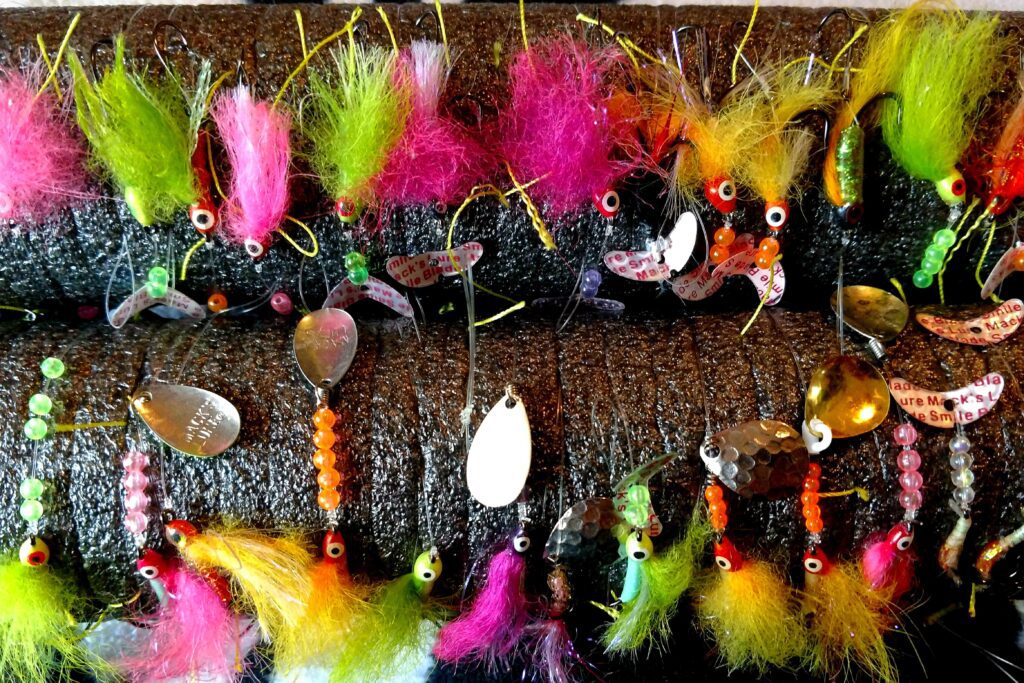
Our dodger box has more dodgers in it than most but during the spring Kokanee fishery my go-to dodgers are painted dodgers in various colors. Using either spinner rigs, flies or a very small Spin-n-glo behind the dodger seem to consistently produce kokanee during the spring fishery. After you hook your prize, gently fight the fish. Always lead the fish to the net, don’t repeatedly stab at the fish with your net and hope that the slimy bugger ends up in your cooler. As with any kokanee fishery, a long-handled net will increase your actual catch verses hook up statistics.
During the spring the lake temperatures should be down. But still make sure you still care for your catch. Bleed them and keep them on ice or even better in a slurry (ice, water, and salt) in your cooler. You’ll want to preserve the quality of your hard-earned prize.
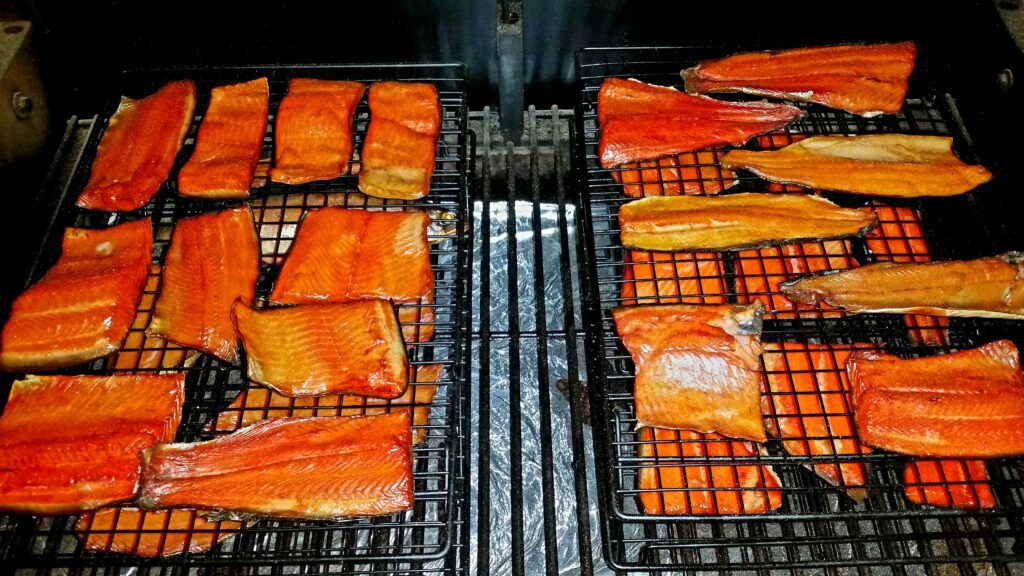
Kokanee are a noble opponent. They often make short runs, jump and go bonkers at the net. Summer fish are more aggressive, but spring kokanee take more finesse to get them in the net. After grilling, smoking or chowderizing hundreds of Kokanee, both the summer and the winter fish are excellent table fare. But the early spring fish are outstanding for whole or fillet panfries and grilling.
The above is just a starting point. Choose a lake, learn it and you’ll soon be the local expert! Trolling for Washington State kokanee can be frustrating. But, with the management challenges impacting most of our salmon fisheries; a bit of kokanee frustration will quickly become an addiction. Enjoy your spring koka-energy!
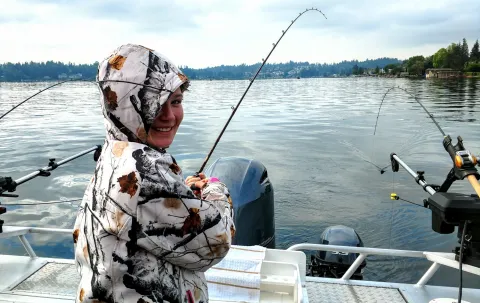
/articles/spring-kokan-energy
Winter Trout
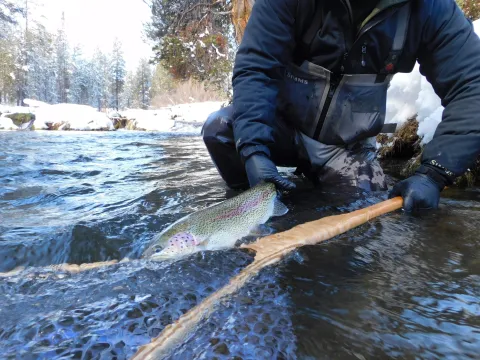
These are some of the best days on the water, in December and January, when a lot of other sportsmen are watching football. Fly-rodders watch the weather and hope for a hatch of midges and look forward to the little black stoneflies, but there are better ways to tempt bigger trout in December and January. Plastic worms and minnows can tease big trout out from beneath the undercut banks and beads, tailored to size and color can turn on the bite.
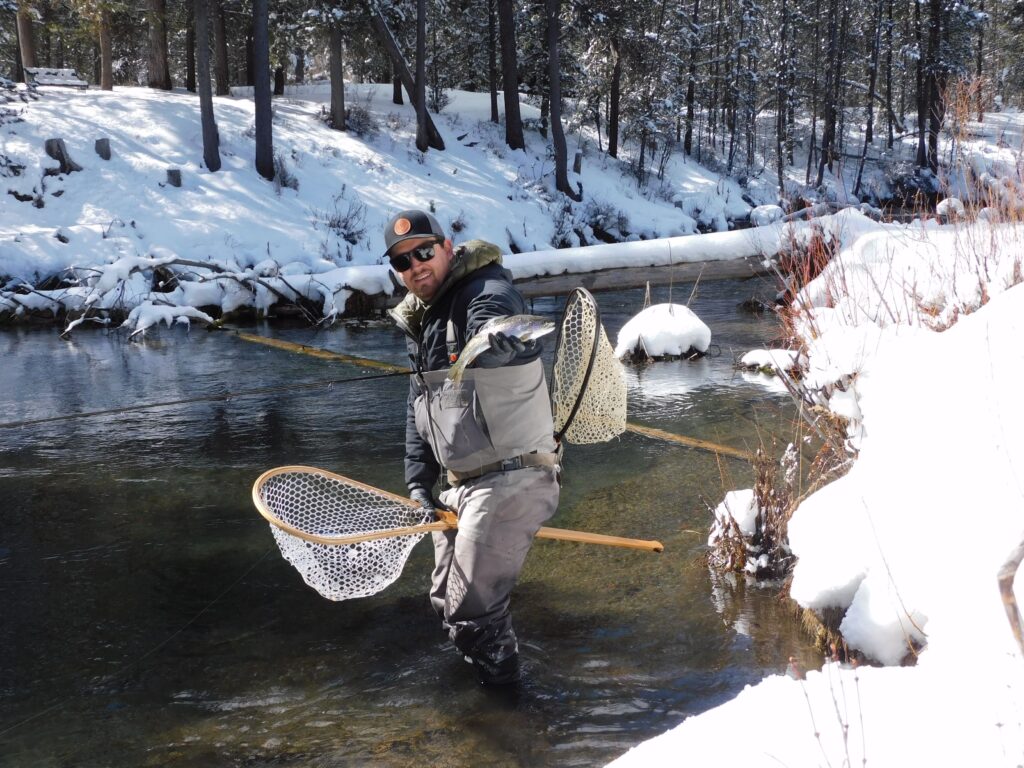
TWITCHING PLASTIC
Plastic worms tend to produce as many fish as natural baits. And you don't have to dig through the compost pile to find them.
Adapted from steelhead drift fishing the best rig is a six-pound main line tied to a barrel swivel. A sliding sinker on the main line is a good way to get the bait down but another option is to leave a tag on the main line knot and crimp on removable split shot. The leader should be 20 inches long terminated at a No. 10-8 single egg hook.
Rig to drift the edge of a seam with just enough weight to tickle the tops of the rocks. Jeff Warner, founder of X Factor Tackle, relies on three main colors in cold winter water - hot red, fluorescent pink, and natural worm.
Warner's go-to for brown trout on his home water is a 1/16-ounce jig head on a No. 4 hook and an X-Factor Teaser minnow. He fishes without a float.
"In my experience, it is better to allow the bait to do its work as an injured bait fish. I don't want a natural drift, I want violent rips and jerks. It's why I like the lightweight jig. I don't need it to be down on the bottom. It lets the bait look more erratic than it does with a heavy jig head."
Jeff Warner
Warner's favorite on a bright sunny day is motor oil with red flake. Warner recommends a plastic minnow in the tail-outs and along the seams and ripping it back.
"I like to cast it upriver and then work the clock so to speak. Even cast it straight downriver and twitch it. If I don't catch a fish by that time there ain't one in there."
Jeff Warner
The bite can be hard to detect. Keep the index finger on the line to stay in touch with the rocks and set the hook at the least tug that signals a grab.
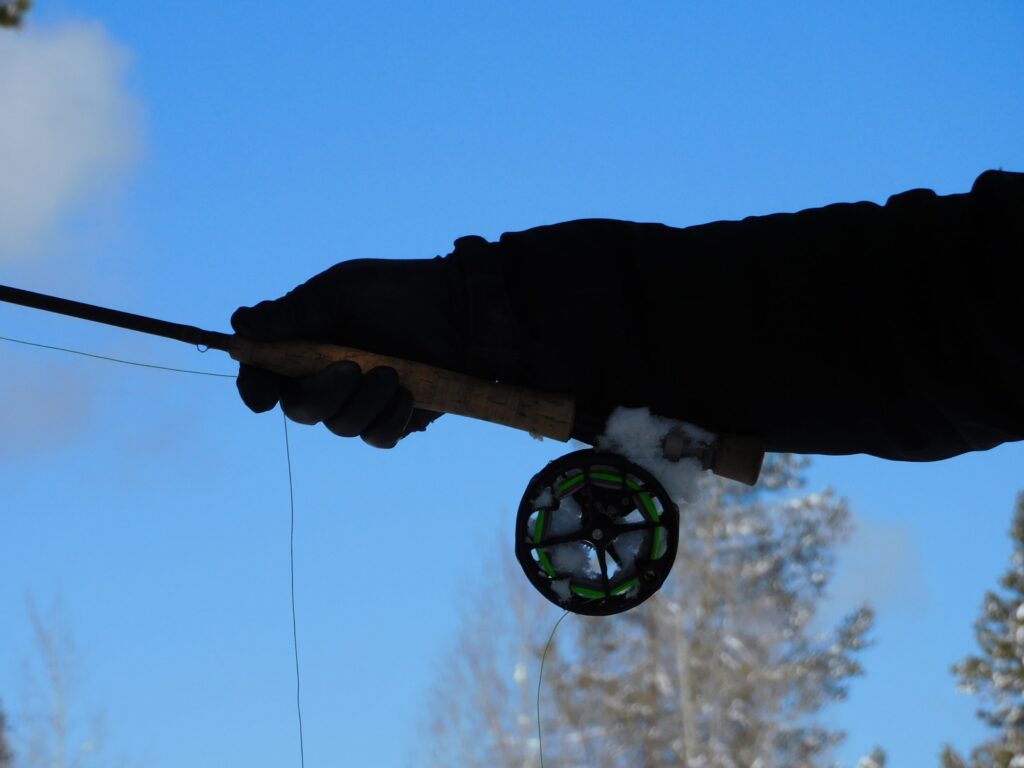
FLY ROD EGGS/BEADS
When fishing egg imitations and hard beads, the big challenge is to get them at the level the fish are holding and allow a dead-drift presentation.
Try to position the bead about two inches above the hook. This can be accomplished in several different ways. One easy way to do it is to nail knot a piece of clear mono on the leader and position it two inches above the hook acting as a stop.
Set the indicator (a good one is the easy-to-cast plastic Thingamabobber) and put split shot on above the tippet knot (or swivel) and set the float about the depth of the water.
When the trout bites the bead the angler reacts with a short upward lift which tends to pull the bead through and pin the hook in the outside corner of the mouth.
With whitefish spawning in western rivers in late January and February we have bait to match. Trout that key on whitefish spawn get used to gobbling the yellow eggs and its why some fly-fishermen tie on yellow wet flies in February without knowing the reason why the trout are biting. Summer steelhead may also spawn in January and February, in which case, the trout are eating orange eggs. In any case, small orange beads or tiny yellow eggs can turn a rainbow's head this month.
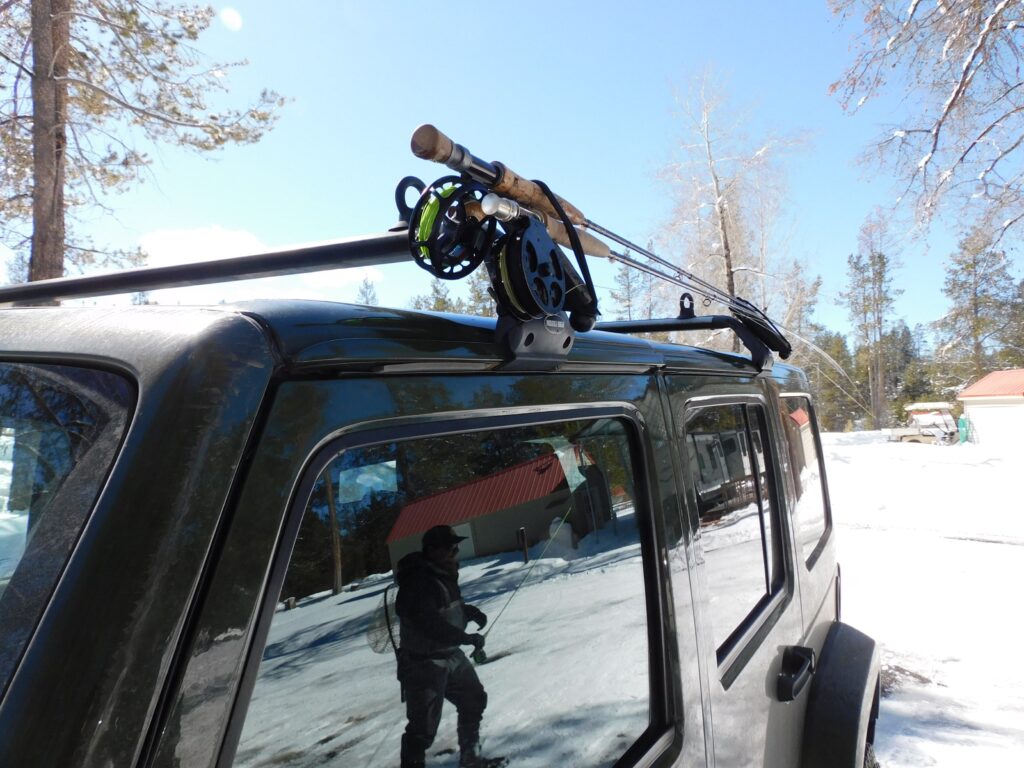
SOFT PLASTIC BEADS
One of the greatest moments in drift fishing is to watch a trout peel away from its holding lie and follow a soft orange egg downstream then crush it. A squishable, scented egg imitation tumbled along the gravel with a drift fishing rig or a bottom-walking drop shot setup is a good bet in December.
My favorite hook for this work is a Daiichi salmon egg bleeding bait hook sized No. 12 up to No. 8. Again, the soft bead is best positioned two inches above the hook, which can be accomplished by using a nail knot, a blood knot, a sequin or similar bead stopper.
One of the mistakes we make is using an indicator in shallow, clear water. If the fish and the bottom is visible, dispense with the indicator and just watch for the take.
A mistake we often make is allowing the weight to control the movement of the egg. This is why a sliding sinker is sometimes the best choice. And why a drop shot weight might be the best choice with a tag end of a surgeon's knot used to splice on a bit of 4-pound fluoro. That bait should present as freely as possible in multiple braided currents. The egg wants to be free!
# # #
For a copy of the Fishing Central Oregon book, send $29.99 to Gary Lewis Outdoors, PO Box 1364, Bend, OR 97709
To contact Gary Lewis, visit www.GaryLewisOutdoors.com
/articles/winter-trout