Midnight Magic
Chasing the Elusive Burbot in the Dark of Winter
There's a certain kind of angler who willingly trades sleep, warmth, and convenience for the chance to tangle with a fish most folks have never seen, let alone pursued on purpose. If you ask me why I have spent so many nights sleeping on the lake, hunched over a glowing hole, waiting on a creature that looks sketched from a memory of someone who had once seen an eel. I will say this, burbot fishing isn't a pastime – it's a pilgrimage.
Most species reward you with a mid-day sun or an early morning bite window. Burbot prefer the dark. Truly, the dark. The kind that settles over the lake like a wool blanket, thick and muting everything else around you, except for your breath. That's when they slip across the lakebed, hunting and haunting the edges of structure, and that's when you need to be present and on top of them.
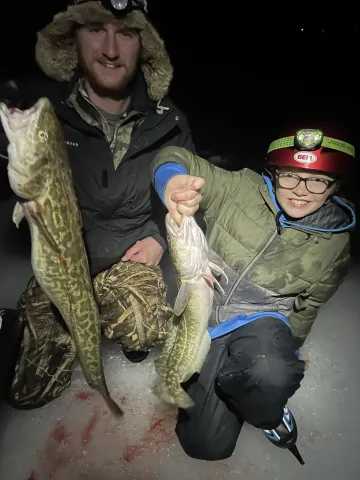
Preparing for burbot means dialing in gear that feels more expedition than recreational. I've come to rely typically on a Medium-Heavy rod with enough backbone to wrestle a surprised, twisting fish from 30-80ft. But enough sensitivity to detect that soft, hesitant pickup burbot are notorious for. A quality reel with a dependable drag is key; these fish, at times, will take runs and have vicious head thrashes, while spinning and twisting in a ball. Pair your reel up with a braided line and a fluorocarbon leader for minimal stretch during deep water hooksets.
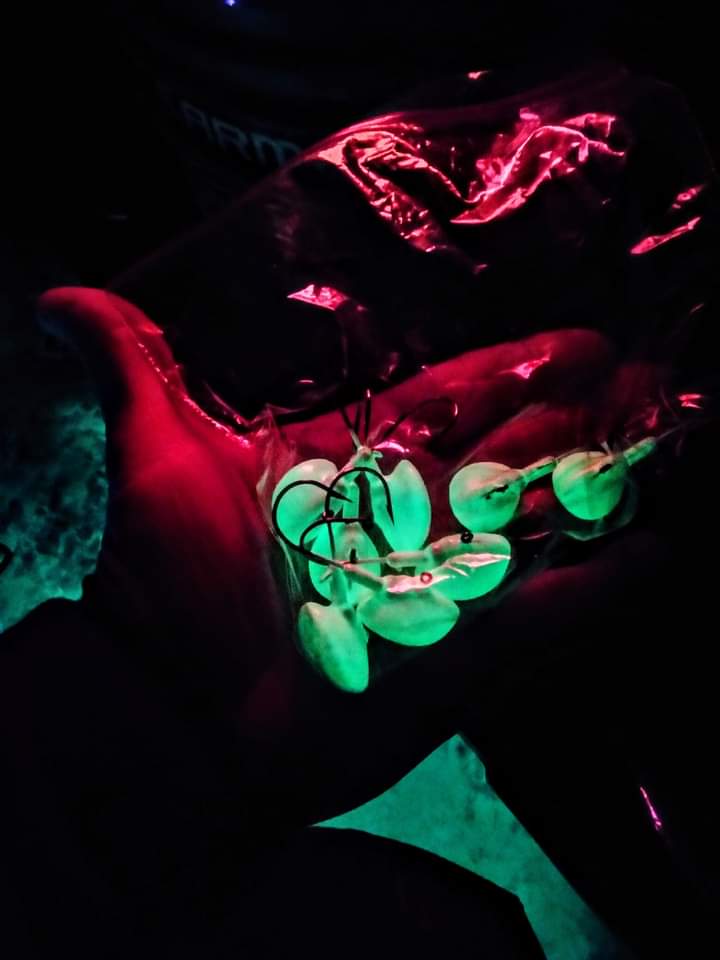
The tackle box for burbot is its own mystical museum of creature baits. The uglier the bait, the better! I've noticed over the years, fishing these bottom dwellers, that GLOW is better. Everything should GLOW that you fish. From Spoons, Rattle Traps, Blade Baits, Jigs, Tubes, Curly Tail Grubs, whatever it may be, it had better be GLOW! I've spent more time charging baits with a UV light than I care to admit. But in the dark below the ice, that soft halo of light is key to helping these fish to find your offering. It can be the difference between a passing glance and a decisive strike.
The technique is nothing graceful, just constant jigging. With burbot, it's almost like putting in a day’s work. You drop your jig or spoon and bang it on the bottom several times, lifting it to pause. Keep repeating that cadence over and over, disturbing the bottom. They use the noise and vibration to home in on your offering, giving them the illusion of something rummaging in the territory. When they do bite, it's subtle -- just a faint pressure, followed by a heaviness on your line. When that burbot takes hold of your lure, you realize patience has been your best asset.
I've been known to set up spreads of Tip Ups when I find where they are hanging out, waiting for the burbot to come to me, take a dead stick, or cut bait below the tip-up. I do prefer to stay mobile and hunt them, jigging one or two holes aggressively. If I set up camp for the night, I will drill a constellation of holes around my shack in various depths, fishing those holes throughout the night, till I find them.
Burbot are a special species, and anglers should be selective on harvest, especially depending on the body of water. What makes burbot special isn't their fight and rarity, or even their nocturnal mysteries. It's the commitment they demand. They ask you to be patient, to be uncomfortable, to embrace the cold and quiet and the uncertainty. They ask you to show up when most people are heading home. And when they finally arrive, slithering out of the dark to take your lure, it feels earned in a way few catches do.
Get out there, enjoy the peace and quiet of the dark, as it's like nothing else. The Elusive Burbot is elusive for a reason, and it takes those mystic midnight hours to pull them up from their depths. OH, did I mention that they are really good eating?
Reel In The Memories!
/articles/midnight-magic
Chasing The Elusive Burbot - A Guide To Ice Fishing Techniques
As winter tightens its icy grip on the local northern lakes, a dedicated group of anglers emerges from their homes, braving frigid temperatures and frozen waters. Their prize? The elusive and quite often underrated burbot. This curious freshwater species, often referred to as “poor man's lobster”, is highly prized for its delicate, white meat, and is a staple winter pursuit for many ice anglers.
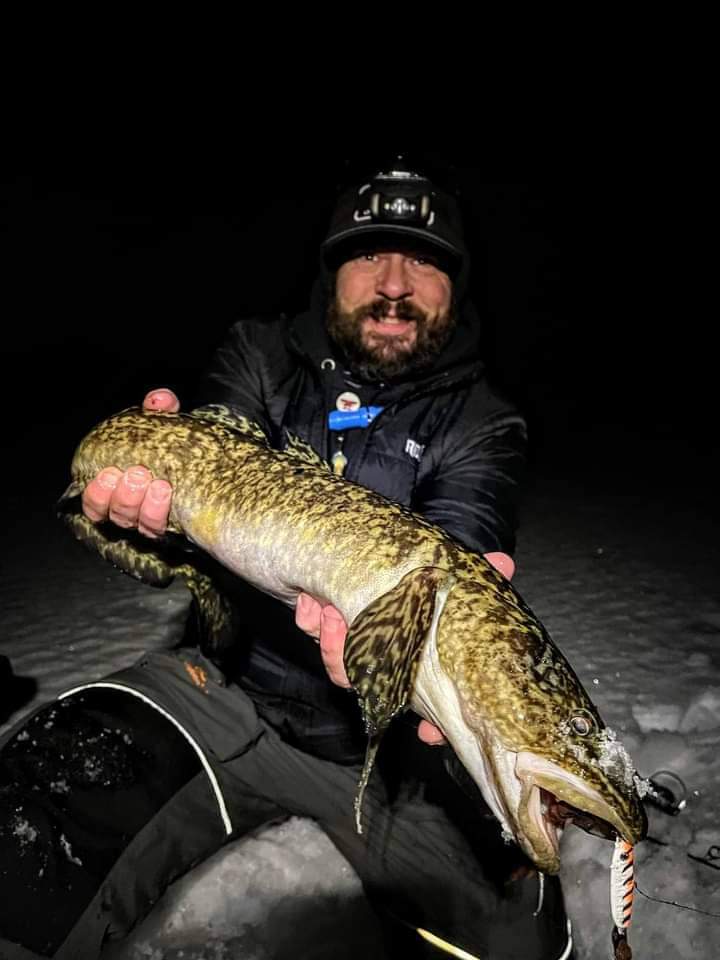
While ice fishing for burbot can be challenging, it is also incredibly rewarding. With their bottom-dwelling tendencies and nocturnal habits, catching burbot requires specialized techniques and a solid understanding of their behavior. In this article, we will explore the best strategies, gear, and tactics to help land this slippery catch beneath the ice.
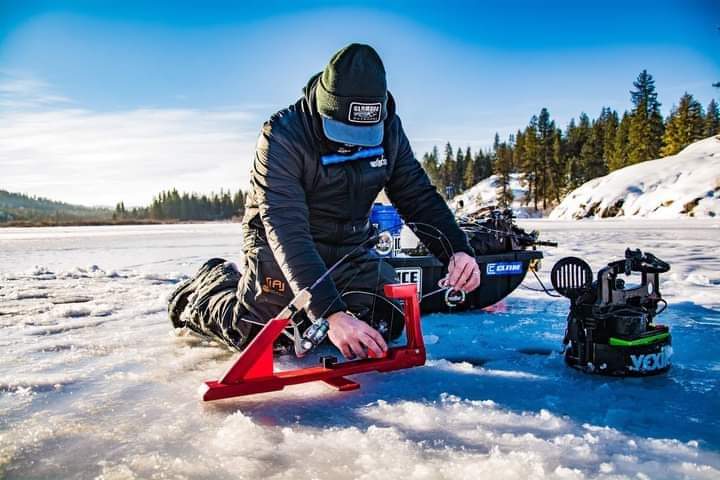
Understanding Burbot: Behavior and Habitat
Burbot (LotaLota) is a unique species, the only member of the cod family found in freshwater. They are typically found in cold, deep lakes and rivers across North America. During the winter months, burbot are active as they prepare for their spawning season, making them a prime target for ice fishing. Burbot are known for their nocturnal behavior, being mostly active during the late evening and early morning hours. They prefer to linger near the bottom of lakes, often inhabiting rocky shorelines, deep basins, and steep drop-offs. Understanding these habits is crucial to developing an effective ice-fishing strategy.
One key element to burbot fishing is their winter spawning season, which typically occurs from mid-January to early March. During this time, burbot move into shallow waters, congregating in large numbers over sandy, or gravelly bottoms chasing crawdads. This makes them a little easier to catch and increases the chances of being successful.
Essential Ice Fishing Gear for Burbot
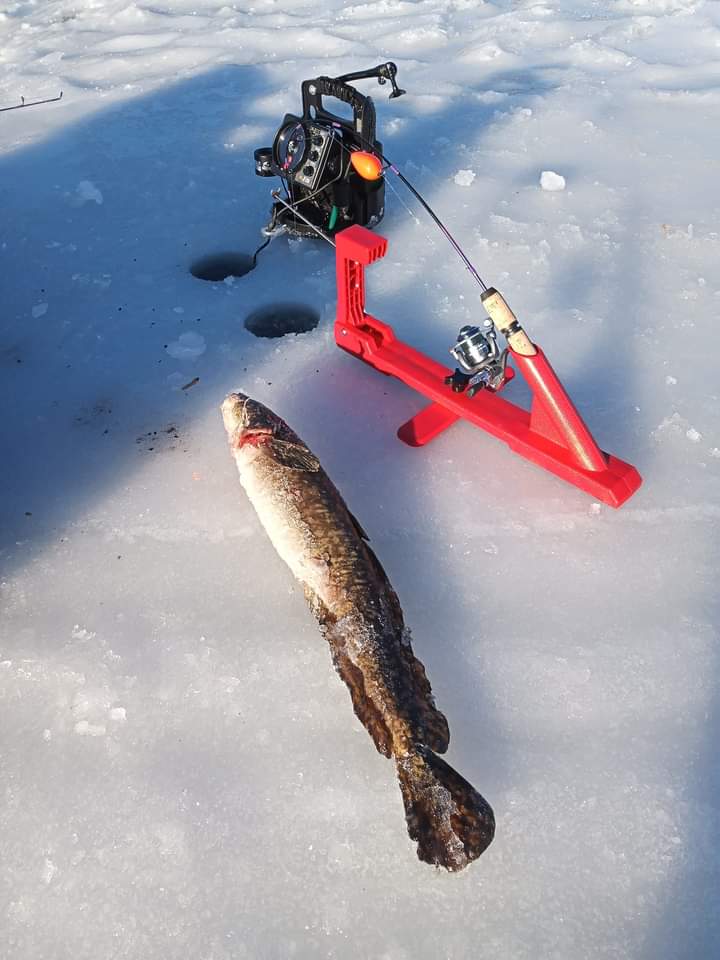
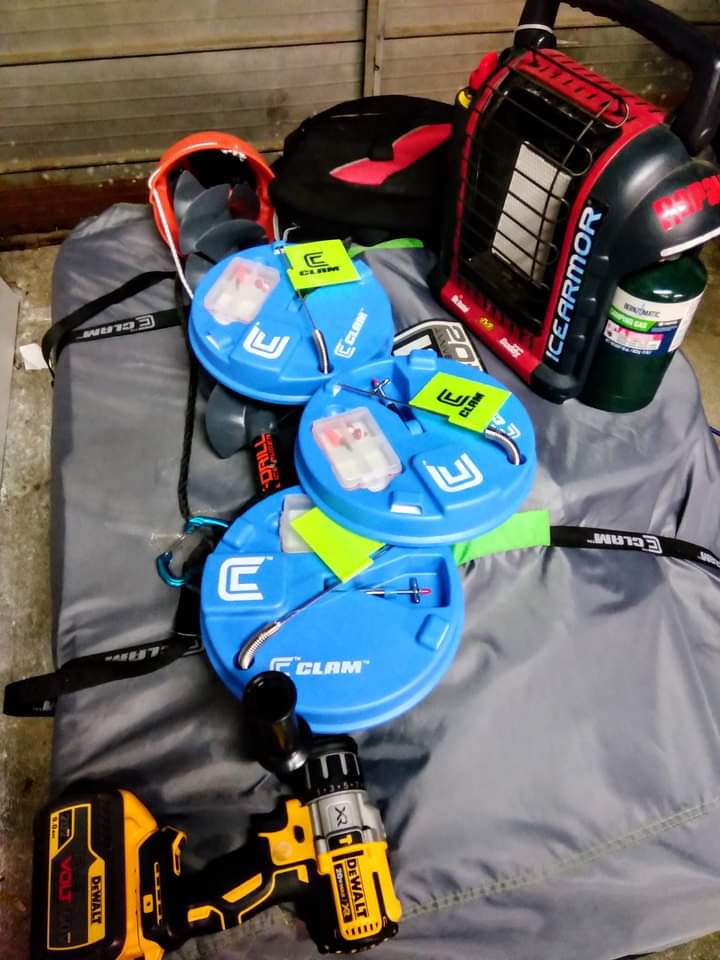
Ice fishing for burbot requires the right gear and equipment. While basic ice fishing gear will suffice, certain adjustments and tools can improve your chances of success. Let's take a closer look at what you will need.
Rods and Reels.
When targeting burbot, a sturdy medium-heavy ice rod paired with a reel capable of handling heavy fish is recommended. Since burbot are bottom dwellers and tend to put up a strong fight once hooked, a rod with good sensitivity and backbone is crucial. A rod in the 28-36 inches in range is ideal, allowing enough flexibility to feel them pick the bait up, but enough strength to handle a large fish.
Line.
Braided line is preferred by many burbot anglers due to its strength and low stretch, which is useful for detecting subtle bites on the bottom. A 10-15lb line is plenty, but braid will freeze in the cold as it absorbs water. Some anglers opt for a lighter line in a clearwater situation, to minimize visibility. Like braids, fluorocarbon has low stretch, helping with hooksets in deep water.
Jigs and Lures.
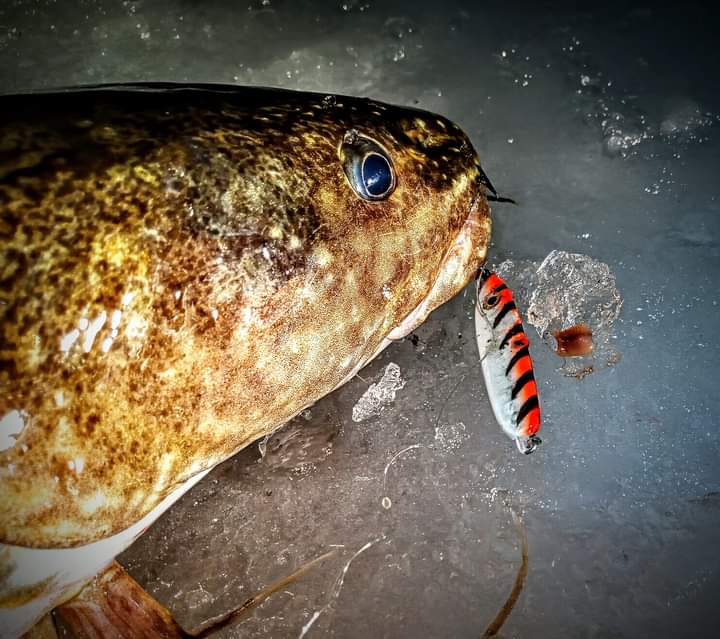
Burbot are opportunistic feeders, and their diet consists mainly of smaller fish, invertebrates, and of course, crawfish. Therefore, using a variety of baited jigs and spoons is a proven strategy. Glow-in-the-dark lures are especially effective, as burbot are often most active in low-light conditions.
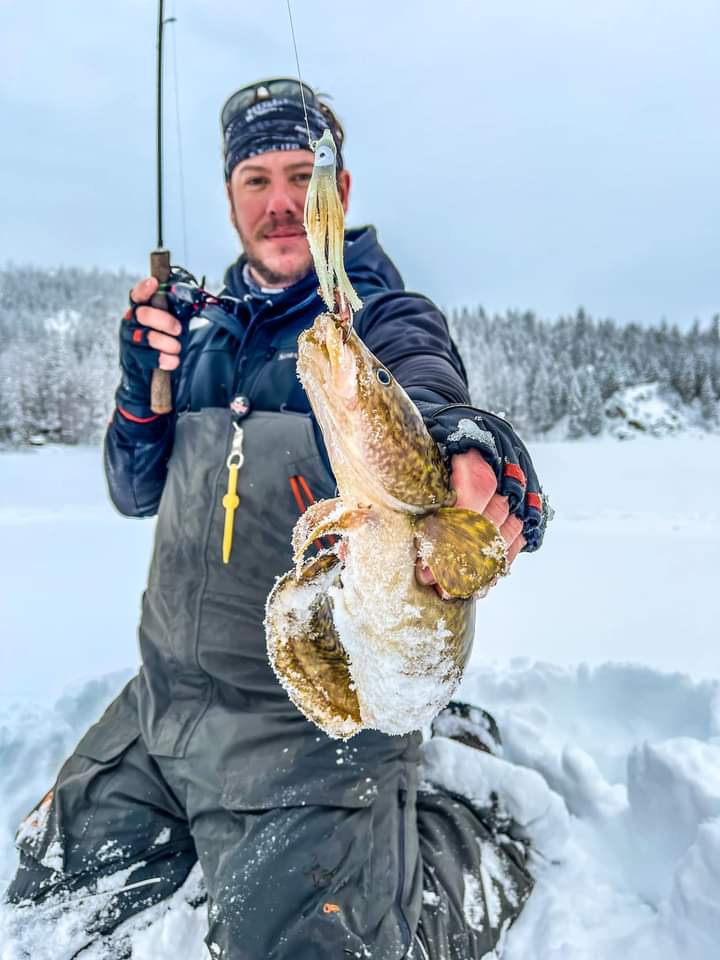
Some popular jigging lures for burbot include:
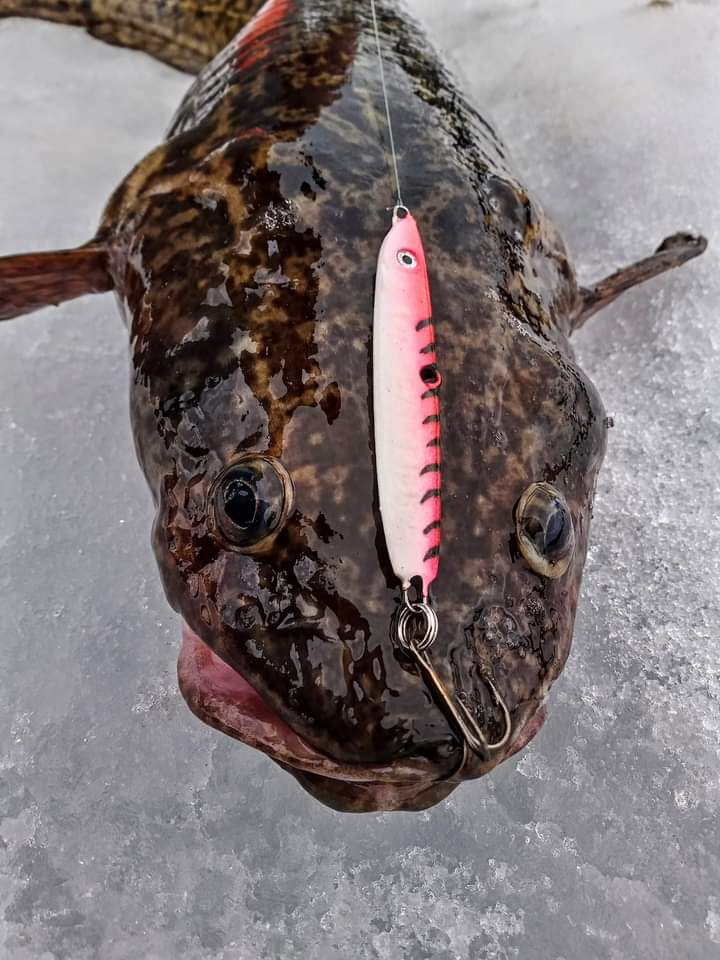
- Glow Jigs and Spoons: These lures provide maximum visibility in the dark, deep waters where burbot often reside. Tip them with cut bait, or a curly tail grub, and pound the bottom.
- Bucktail Jigs: Heavy Bucktail jigs, especially those with glow can mimic small baitfish, drawing the burbot's attention. Or the material of the jig holding a scent longer if used.
- Blade Baits: These produce vibrations that catch the attention of the burbot in deeper water where sound travels more effectively, typically tipped with cut bait.
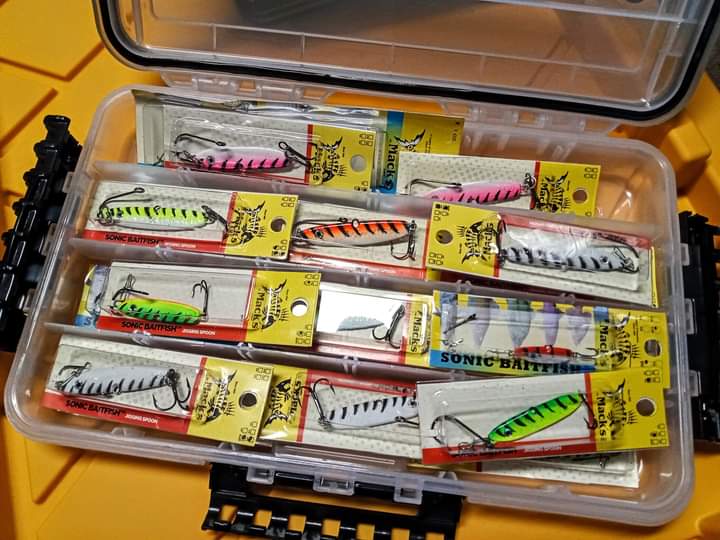
- Mack's Lure, Sonic Baitfish: My favorite burbot lure is the Sonic Baitfish from Mack's Lures. Glow finish tipped with my favorite cut bait is dynamite. The lure itself is so versatile in shallow and deep water.
Bait:
While artificial lures are useful, tipping your presentation with natural bait is essential for burbot fishing. Cutbait such as store-bought smelt, or herring work, I recommend using fresh cut bait from the body of water with your fishing if state law approves. In the lakes we fish, we use many baits from the lakes themselves such as chubs, bluegill, crawfish, etc. The natural scent of the bait and the appeal of your jig will help entice burbot lurking on the bottom.
Key Spots to Target Burbot:
- -Rocky Structure: Burbot love rocky bottoms, especially areas with boulders surrounded by large areas of cobblestone-sized rocks. This is where they are constantly feeding and chasing the crawdads.
- -Deep Basins and Deep Drop-offs: These fish often patrol deep basins and steep underwater drop-offs, looking for food. Check your depth maps and focus on areas where the depth changes rapidly near the rocky flats.
- -Mouths of Rivers and Streams: Burbot are often found at the mouths of rivers or inlets, such as streams or creeks that dump into many lakes. This is where they can hunt small fish moving in and out of the main system, with a flow of fresh cool water to lay in.
Drilling multiple holes in different locations, along the structure, to drop-offs. I like to start deep during the day and drill holes shallower as the day begins to fade away. As it gets dark, the burbot tends to follow the crawfish to shallow waters. Using a sonar or flasher will help you detect burbot holding on the bottom and adjust your presentation accordingly.
Burbot Ice Fishing Techniques
- 1. Dead sticking - One of the most effective ways to catch burbot is dead sticking. This involves dropping a baited spoon or jig to the bottom, giving it minimal movement, and letting it sit still. Burbot being scavengers are attracted to the scent of bait and will often bite without hesitation. Periodically lift the rod tip to create small movements to trigger a bite. Dead sticking is great for the lakes that allow a two-pole endorsement, as you can get the best of both worlds.
- 2. Active Jigging - While dead sticking works well, actively jigging a two-pole endorsement does just as well.
Conservation and Ethical Considerations
When targeting burbot, it's important to understand and practice ethical fishing and conservation techniques. While burbot populations are generally healthy, overfishing during the spawning season can harm local populations. Check your regs for and rules or regs on the lakes you're planning on fishing, most local lakes have the same regs. Practicing catch and release on the larger, breeding fish can help sustainable fishery for future generations.
Ice fishing for burbot may not be as popular or glamorous as chasing other winter species like lake trout, pike, walleye, or big trout, but it offers a unique and rewarding challenge. By understanding the behavior and patterns of these nocturnal fish, using the right gear, and applying proven techniques, you can increase your chance for success. Whether you're dead sticking with a baited hook, actively jigging at night, or setting a minefield of tip-ups over a rock flat, chasing burbot under the ice can be an exciting and fulfilling adventure this winter.
So grab your gear, bundle up, and head out to the frozen lakes in pursuit of these bottom-dwelling predators. You may just find yourself hooked on fishing for the “poor man's lobster.”
/articles/chasing-elusive-burbot-guide-ice-fishing-techniques
Bucket List Fishing
What an adventure this whole fishing thing is. Like many things in life, often the journey is more fulfilling, exciting, and memorable than the ending. I shouldn't even say “ending”. Maybe outcome or result are better words. I have no intention of stopping fishing for what quickly became one of my new favorite fish—the latest stamp to be added to my fishing passport.
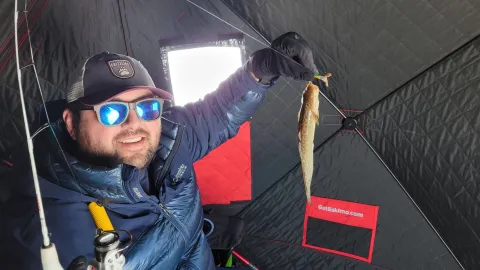
I’m going to come right out with it, the fish pictures included with this article are not show-stopping, wall-mounting, brag to your buddies type of fish. Some might look at them and wonder if they were even photo-worthy at all. But to those folks, I’d retort with a new phrase that has newly become part of my regular vernacular. A polite way to say be nice, be joyful for others, or perhaps more bluntly, a phrase we all heard as kids, if you don’t have anything nice to say, don’t say anything at all. Don’t yuck someone’s (my) yum. My recent yum, both literally and figuratively as you’ll come to read, centers around catching what became a winter fishing obsession. I am referring to one of the more mysterious fish I’ve come across as an angler, the burbot.
Highly regarded for its taste as poor man's lobster yet criticized for its appearance, I knew I had to catch one, two, as many as I could. They are most active during the winter months and at night, two challenges as we’ve had an unseasonably warm winter and I’m more apt to hit the snooze button and sleep in than drive to a frozen lake and sit outside in the dark or first light of the morning hours. Still, I had to add this fish to my checklist of caught species.
The fish is an oddity with their eel-like appearance, freshwater habitat (the only cod to live in such an environment in North America), and some seeming barriers in place - fishing during the winter, night activity, and competition with other anglers - I was obsessed. I researched online, talked with other anglers, called MT FWP for information from biologists in the field, asked questions when buying gear at local shops, and watched YouTube clips (check out our ProTip video with Craig Dowdy on the website or our YouTube channel on how to filet burbot), anything you could think of to educate myself on how to best catch this fish. Maybe a bit counter to the introductory prose, I’m all for enjoying the experience of fishing and the ambiance of the outdoors, but darn it, I really like catching fish, too. Especially with all the work and background knowledge I had completed. Not catching the fish would’ve been a letdown, surely.
After finding a few reservoirs in my area and properly gearing up, the only thing left to do was hit the ice. A scenic 20-minute drive to my first location yielded no fish. Slightly concerning, but motivating at the same time, another angler told me about some perch and a small ling (another name for the burbot) he released. Good to know, but after a few more evenings on the ice with no fish, it was time to try somewhere new. How about 40 minutes away? I had heard more consistent information about the fish being abundant in this second location but again, coming up sevens at this new spot.
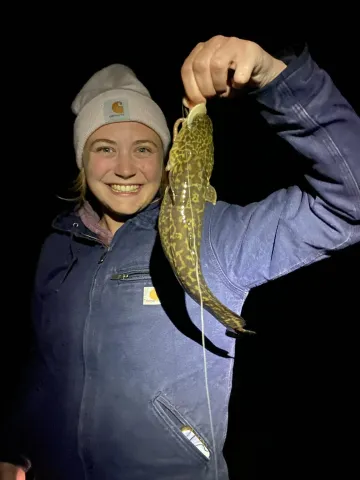
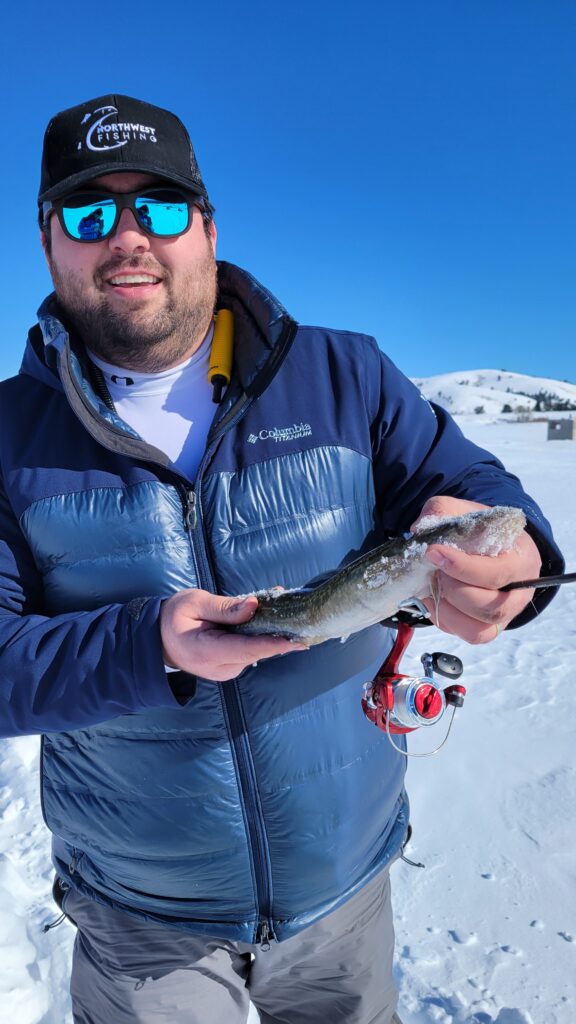
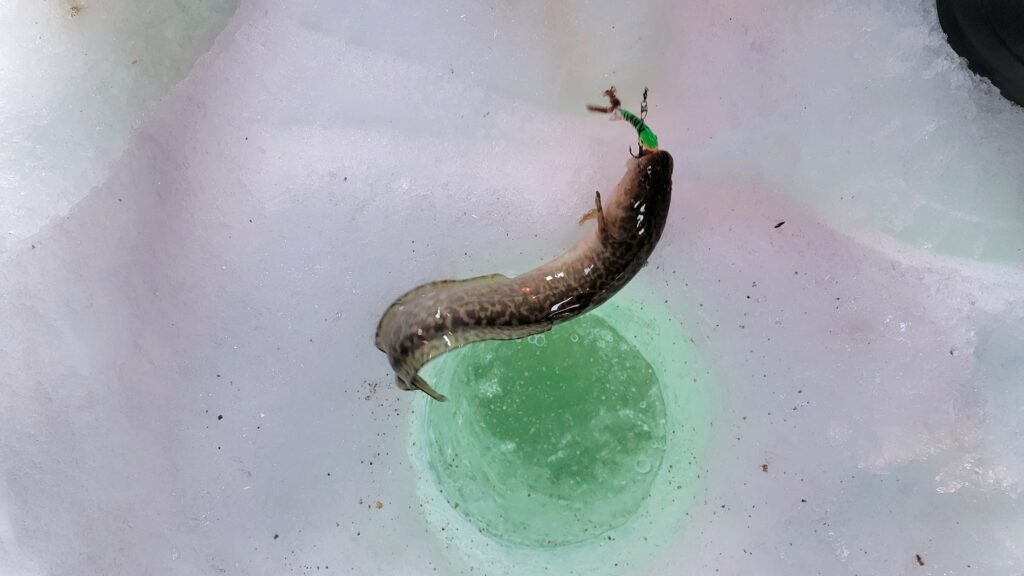
For those without an interest in throwing dice at the craps table like myself, that means I didn't catch anything here either. So, perhaps where I should've started all along, a trip to White Sulphur Springs, MT about 1.5 hrs. away would host my next attempt. As with most fishing, the lulls made for some long hours. Despite the wait, I had the opportunity to hook into my newest fish friends both jigging for them and through a stationary rod, both targeting slightly off the bottom, about 40 feet. I'll never forget the sight of my first burbot as it appeared from the icy blue depths below. Examining this new-to-me fish, it had greenish, yellowish, olive covered spots all along its body. A catfish like appearance with a more than normal amount of fish slime coating the body, which I quickly became acquainted with as it slithered snake-like in my hands. Knowing I had finally caught one had me pumped up! All that was left was to see how it tasted.
As mentioned, they are highly regarded for their table fare. Bringing my catch home, I had done my homework as to how I should prepare my meal. Simplicity is sometimes the answer. Boil a little lemon soda, poach the fish for a few minutes and dip in some garlic butter with lemon on the side. Enjoy, easy. One thing I hadn’t accounted for, sharing with my family. My wife, not as invested in the pursuit of this fish, was fine to try it, compliment me on cooking it and move on with her evening. My kid, 2 years old, however, grabbed this fish by the fistful. So much so that I started getting a little jealous!
I put in the legwork to catch this fish and had built my first meal up in my head and here she is eating it all! Rationing out my portion, I was glad to see my daughter enjoyed the meal, but I was for a moment inclined to respond like the 2-year-old I was interacting with - to say “mine” and grab it all back. They don’t call this fish the poor man’s lobster for nothing I suppose. The white meat is what you’d expect from any similar cod fish, but the firm texture and taste of the fish paired with the garlic butter and lemon certainly lived up to my expectations. The enjoyable meal was the culmination of my burbot experience and a fitting way to affirm my latest fishing craze.
So, now that I’ve caught what was previously a mysterious fish to me, I look forward to another season with refined skills but the same level of excitement I had before encountering the burbot. A note for myself, I’ll have to do some research on some of those other strange fish to be caught…paddlefish, an arctic grayling, pallid sturgeon…all to hopefully be checked off the species bucket list.
/articles/bucket-list-fishing