Angler-Based Psychotherapy
“Welcome back to the 'Winter Doldrums’”, read the message on the marquis in front of the local fly shop. My buddy and I just glanced at each other and went inside anyway. I was hosting a bonefish trip to Mexico in less than a month. I had chosen a local fly shop to meet with everyone on the trip to assist with gear prep, clothing needs, travel details, etc. You know, all those things that a good host should do instead of just sending a pack list/itinerary and hoping for the best. Once we were inside the shop, it didn’t take long for me to realize the twelve inches of newly fallen snow and more than 60 days of frigid temperatures had won the battle for “chipper attitude of the month.” Hence the marquis message.
Notice I said “a local fly shop”, not “my local fly shop.” The majority of the guests on that particular trip were from the upper Midwest, so I chose a fly shop most convenient to them to meet. Plane tickets were cheap for me back then. Alas, the old days of AirTran. I had spoken with the shop owner in great detail about our trip meeting. I had hoped it would generate some revenue for the shop as well as help him get into the travel fishing business. It seemed like a grand idea to use his shop, and it was. As the group started filing in one by one, the vibe in the room went from mass melancholia to downright elation in just a few minutes. It’s funny how just a little bit of talk about planning a fishing trip can change the mood.
Nowadays, I plan all my fishing trips in January/February. It is a superb time to have a get together with my buddies and plan a trip. My family calls it angler-based group psychotherapy. Either way, the timing works. Over the years, we have put together so many trips. Some turned out beyond great, others not so much. Through all the group therapy down in the fly-tying shop, I have learned that following a particular planning protocol will lead to a more successful trip, no matter if I am booking a lodge or going full DIY. In addition, the amount of flexibility I am willing to bestow makes a difference as well. The following is the way I plan not only for myself but for anyone who asks me to help them plan their fishing trip. Since the last two decades of my guiding career have been based in Alaska, we will work with that planning protocol. However, you will find that using this protocol will work for just about anywhere you want to go, third world countries included.
1) Decide what species of fish you want to target.
This seems simple, doesn’t it? One would think so. Put 10 anglers in a room and start the discussion and you will find out that 6 of them are like minded when it comes to what species they want to target on any particular trip. Singling out a particular species to target for this fishing trip is the very most important part. Everything else will fall into place after that. Once this obstacle is overcome, move to step 2. Don't jump ahead in line. Trust the protocol.
2) Decide where you want to travel to target the chosen species.
This is the part where you get to control the financial commitment towards your fishing trip. For example; I have decided that I really want to catch giant, clowned up, sea run Dolly Varden. I would love to travel to some remote portion of Siberia to cast to a Dolly that has absolutely never seen a human, much less been fished to. Without a doubt, it would be the trip of a lifetime, right up until I see that it’s gonna cost a second, third, and fourth mortgage. So that gives me the opportunity to reevaluate my financial commitment to another location. Once you've got this nailed down, move to step 3.
3) Deciding when you go is pretty easy after steps one and two are done, especially with Alaska trips.
Most of the fishing is based around the migration of Pacific salmon and their lifecycle as a target species, or a food source for another species of fish that capitalizes on salmon eggs and flesh. So, if I wanted to target king salmon during the peak of the run on the Nushagak River, I would plan to be there in late June. But, if I wanted to target leopard rainbows behind spawning sockeye in a creek, I would go mid-August. Now we have that established, go to step 4.
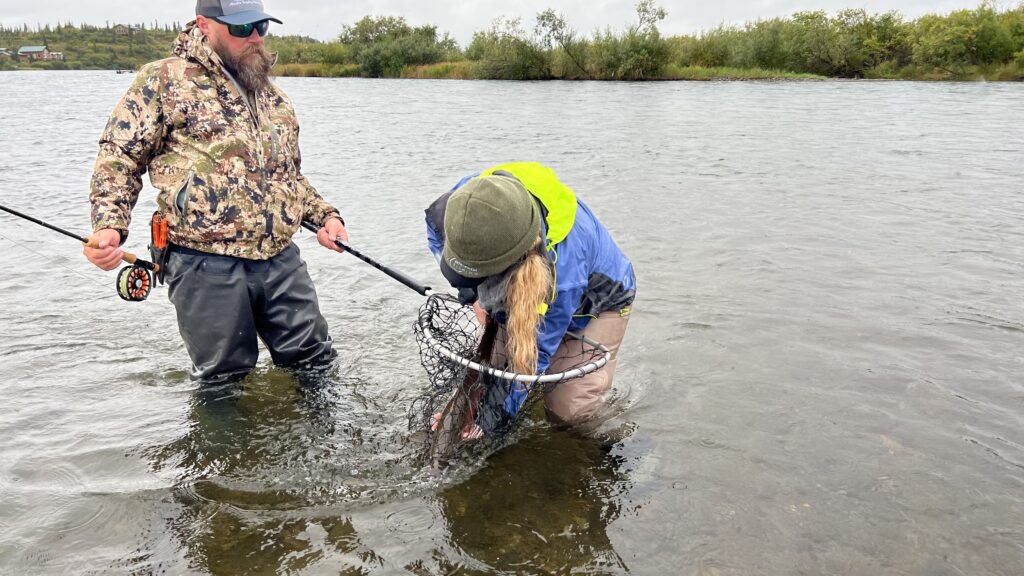
4) Last, and certainly far from least, is how to go.
How you go encompasses everything left about your trip. Are you going to DIY or book a lodge? Maybe you want to do a combination of DIY and day trips with a guide. I look at every option available, how much it costs, and figure out the bang for the buck. In some cases, a DIY trip turned into a fully guided lodge booked trip, only because the lodge had a special price that coincided with my species and timing. The lodge price wasn't much more than the DIY price estimate, and all the guess work was taken out of the program. Therefore, it was easily worth doing the lodge deal. This doesn't always happen, but it’s worth doing the research.
If you are like most of us self-taught anglers and wouldn't dream of doing a guided lodge trip even if budget wasn't a concern, I implore you to do your research. Make sure that where you are going and what you are targeting is still a viable thing. If you are doing a DIY raft trip for trout, make sure the river you chose has a good trout population in it. Alaska seems like a dreamy wonderland for all cold-water salmonids, but everything is cyclical. Just make sure. Don’t trust social media. Not all lodge owners and booking agents are telling the truth, some are just selling empty beds and boat seats. Probably the most valued asset you can find is a trip consultant. A trip consultant doesn't have any allegiance to a lodge or travel company, and for a couple hundred dollars, you will gain more information than you bargain for.
So, call your friends over, smoke a brisket, and plan a trip. It will do wonders for your mental state and seasonal affective disorder.
/articles/angler-based-psychotherapy
The Outdoors Roundup
August 05 - August 11, 2022
Wallowa County Fun
Bordering Washington and Idaho, Northeast Oregon’s Wallowa County offers all sorts of outdoors fun. I visited there this week and had a fulfilling day and a half of outdoors recreation. I started off visiting with Brad Snook at the Sports Corral in Joseph to get a fishing report for Wallowa Lake, a beautiful body of water that sits in a glacial moraine.
Snook reported the trout fishing was going well. Rainbow trout are stocked on a regular basis and anglers were catching a good number of 12 to 13-inch trout along with the occasional 17 to 19-inch fish. Wallowa Lake is also a well-known kokanee salmon fishery. In fact, the world record kokanee, a 9.67-pound land-locked salmon, was caught here in 2010. Not long after that the population of large kokanee crashed, replaced by a huge number of small fish. Over time though, the kokanee have been getting bigger and Snook reported that a seven-pound salmon had been caught earlier this year. Snook cautioned August is generally a tough month to fish for kokanee, but the fact there are a few giants swimming in the water bodes well for another potential record fish in the future.
I also spoke with Rob Lamb at the Joseph Fly Shoppe. He confirmed Snook’s reports about the trout fishing at Wallowa Lake and said dry fly anglers were having some magnificent days, catching and releasing up to 30 trout per outing, at the south end of the lake where the Wallowa River flows in.
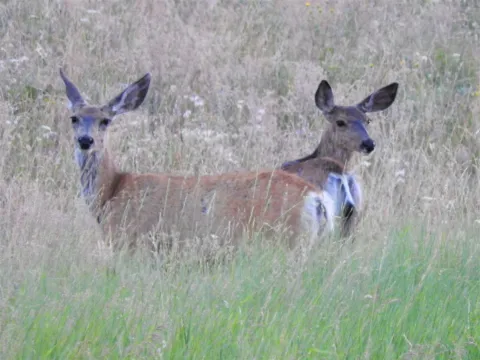
After dinner in town, I drove some 30 miles to the Zumwalt Prairie Preserve. Managed by the Nature Conservancy, this 33,000-acre property is known for the native prairie grasses as well as the wildlife that live here. In addition to deer and elk, there are also coyotes, badgers, and other animals along with a wide variety of bird species. I enjoyed a serene hike amongst the prairie grass, not hearing any man-made sound at all, just crickets and a gentle breeze blowing through the bunchgrass. As for the wildlife, they didn’t come out until sunset, but when they did, I got to see deer and a small group of elk, including a spike bull that was only a hundred yards away.
After a restful night’s sleep, I went on a pleasant hike at the State Heritage Site just south of town. The trail meandered through a meadow and around a scenic pond with the Wallowa Mountains serving as a backdrop. After eating fresh fruit and a flank steak breakfast burrito at the Kokanee Inn, it was off to the Wallowa Lake Tramway to meet with the General Manager and co-owner, Mike Lockhart. The two of us entered an enclosed gondola car and traveled close to two miles in 15 minutes, gaining 3700 feet in elevation until we reached the top of 8200-foot-tall Mount Howard. We took a seat at The Summit Grill, which Mike says is the highest elevation café in the Northwest, next to the tramway. It’s an open-air restaurant styled after European cafés in the Alps, and the offerings on the menu are surprisingly affordable. The two of us chatted about the many upgrades made to the tramway in recent years and how popular this tramway is, with some 30,000 visitors a year. The reason for the popularity, besides the unique way to get to the summit, becomes obvious upon your arrival. On a clear day you can see well into the three states of Oregon, Idaho, and Washington, enjoying views of Wallowa Lake below, and the magnificent Wallowa Mountains and Eagle Cap Wilderness to the south and west. A well maintained 2.5-mile-long trail system with interpretive signage looping around the summit allows you to enjoy the views from different viewpoints. It’s definitely a bucket list experience! You can find out more details about the tramway at www.wallowalaketramway.com
As for where to stay, I would highly recommend the Kokanee Inn. Located on Main Street in Joseph, the well-appointed inn has eight rooms and lots of sitting and dining areas both indoors and outdoors. The breakfasts are amazing, the beds are comfortable, and the amenities include the free use of a cruiser bike for guests to cycle around town or down to the lake. The owners have lots of knowledge about where to bicycle and hike and will help you find the perfect outing. In addition to this great bed & breakfast, there are a number of other lodging and camping options in the area, including the very popular Wallowa Lake State Park. Find out more details at www.wallowacountychamber.com and www.kokaneeinn.com.
John Kruse – www.northwesternoutdoors.com and www.americaoutdoorsradio.com
/articles/outdoors-roundup-0
Brewster Salmon Derby Adventures
In all my years of fishing, I have heard many legends and stories about fishing at the infamous Brewster Pool. Articles on the Internet caution readers about hostile fishermen and hundreds of inexperienced boaters creating chaos. My own experience couldn’t have been further from these stories. This year, I was lucky enough to get the opportunity to film and participate in the derby on behalf of Northwest Fishing.
From the moment I got to Brewster, I was blown away by the friendly locals and energetic atmosphere of the derby. Other fishermen were giving each other high fives and complementing one another on their catches. This was far from the stories of combat fishing and fishermen yelling at one another that I had heard. Although there were hundreds of other boats out there, everyone was very patient and gave one another plenty of space. Guides and recreational fishermen alike were joking with one another and having a great time doing the sport we all love. I saw hundreds of beautiful fish caught and weighed in over the 3 days of the derby, and even got to reel in some of my own. Here’s the story of my experience at this year’s Brewster Salmon Derby.
Cori Kogan: Interview with Mike Mauk
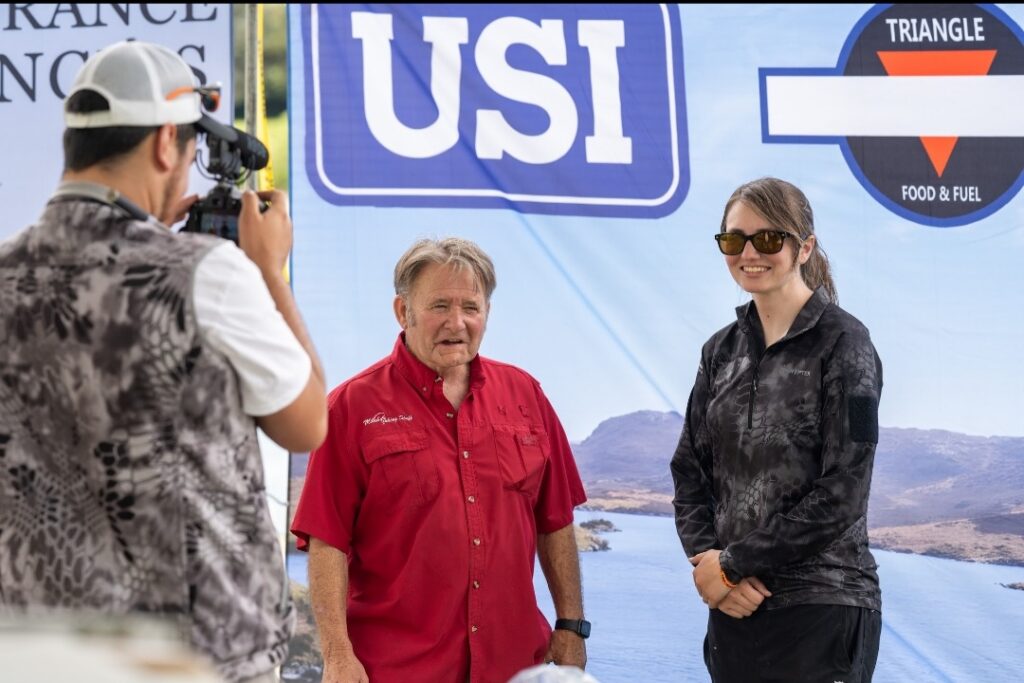
On day 1, Mike Mauk, the president of the Brewster Chamber of Commerce, greeted me with a warm handshake and a big smile. Mike organized this year’s derby, bringing together dozens of sponsors and coordinating prizes and staffing for the event. He gladly took some time from his busy schedule to chat, and I interviewed him about the history of the derby and the town of Brewster. He told me that the proceeds from ticket sales go towards helping the community of Brewster and enabling them to run the derby year after year. The Brewster Salmon Derby is the largest derby on the Columbia River, and up to $20,000 in cash and prizes are given out every year. Next, I interviewed the derby weigh master, Ernie Mauk. Ernie brought incredible energy to the weigh station, high fiving each kid that brought a fish to him. He showed me how he weighs each fish, taking the girth and length measurements and calling them out to be recorded and put on the board. He said that even though he weighs hundreds of fish every year, he still admires the beauty of each and every fish he weighs. WDFW also had a presence at the weigh station, scanning the fish for tags. When they found a tagged fish, they cut the nose of the fish off to remove the tag (after making sure the fisherman had gotten all the pictures they wanted). They let me know that the information they get from the tag helps WDFW determine the health and abundance of salmon populations. Not only does the derby help the small community of Brewster, it also aids WDFW’s research and provides valuable insights into this amazing fishery.
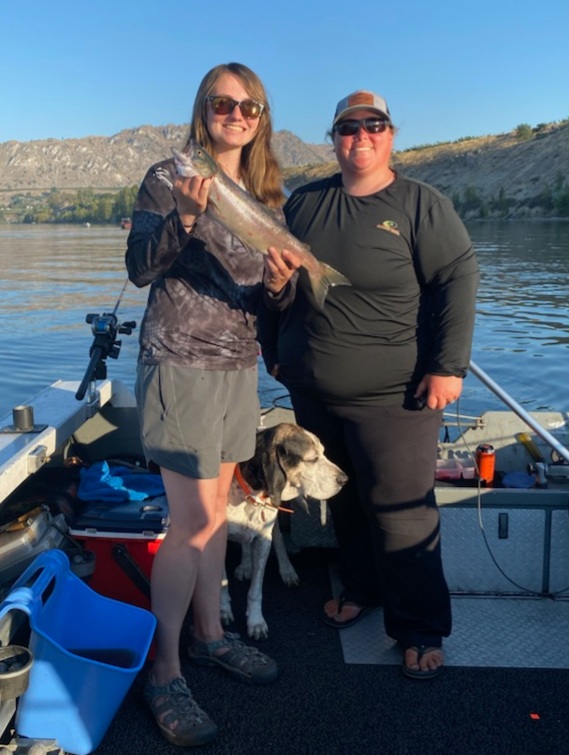
Bree, Waylon, and Hannah with a nice sockeye
While getting to see the ins and outs of the weigh station was certainly a fascinating experience, fishing is truly my passion, and my experience participating in the derby was absolutely unforgettable. Brianna Bruce of Livin’ Life Adventures was our guide during our 3-day adventure. My friend Michael Francisco, my fiancé Chris Decker, and Northwest Fishing regulars Andrew and Joe Czapla were on board. Brianna (Bree) kept us entertained with dozens of fishing stories from her 11 years of guiding. She told us all about the fishery and what makes it so productive and popular. Every year, thousands of sockeye and chinook salmon stage in Lake Pateros, also known as the Brewster Pool, between the dam and the mouth of the Okanogan River. The mouth of the Okanogan River heats up and creates a thermal barrier, and the fish wait in the pool for it to cool down so they can enter and reach their spawning grounds. This year, Bree said there were over 100,000 sockeye in the pool! Good numbers of chinook are caught every year, some reaching over 30 pounds. Some fishermen got their limits of sockeye and headed back to town for breakfast before the heat of the day began. Others stayed out until 6PM, braving the heat for a chance at a derby winning chinook. There was a 4 fish limit for sockeye, and a 2 fish limit for chinook. The bite seemed best in the early hours of the morning, but there were fish caught all day. Bree’s dog, Waylon, was our bite alarm throughout the weekend. Every other fisherman in the pool knew when we hooked onto a fish! Bree alternated between steering around other boats, netting fish, baiting hooks, and swapping fishing stories, making it all look easy. Her natural talent, great humor, and mastery of the fishery made for an unforgettable experience. On day 2, one of our cameramen had a big, feisty sockeye on the end of his line. As he brought it up to the boat, he lifted the fish out of the water and the hooks popped out. Our hearts sank, but Bree effortlessly scooped the fish into the net and saved the day!

Some early morning sockeye action!
We started off fishing for chinook the first day, armed with spinners and chrome flashers. Bree is an expert in this fishery, and told us that sockeye often hit chinook gear, and vice versa. The second day, we fished sockeye gear, and were rewarded with many nice fish. For her sockeye gear, Bree ran homemade pink spinners and smaller flashers. On the third day of the derby, we fished a combination of sockeye and chinook gear. She ran 2 spinners, 2 sockeye setups, and 2 tuna stuffed Brad’s Super Baits. It was tough to find the right speed to get the different gear to fish right, but like a true pro, Bree made it work. We trolled slowly, between .8 and 1.2 MPH, and kept an eye on the depth. To avoid tangling our 6 lines, Bree used a variety of different cannonball weights, which also allowed us to fish throughout the water column.
No matter how tired and hot we were after fishing all day, we always looked forward to lunch at one of Brewster’s amazing, locally owned restaurants. Mike Mauk and the Brewster Chamber of Commerce treated us to lunch and dinner each day. The sizzling, fragrant fajitas at Campreros were absolutely delicious! Later in the afternoons, we usually got some time to explore the area each day. I was surprised by just how much the town of Brewster has to offer. There are numerous family-owned stores that offer cool refreshments and homemade snacks. If you’re fishing the Brewster Pool, it’s definitely worth it to take the time to sample some of the local cuisine and explore the town.
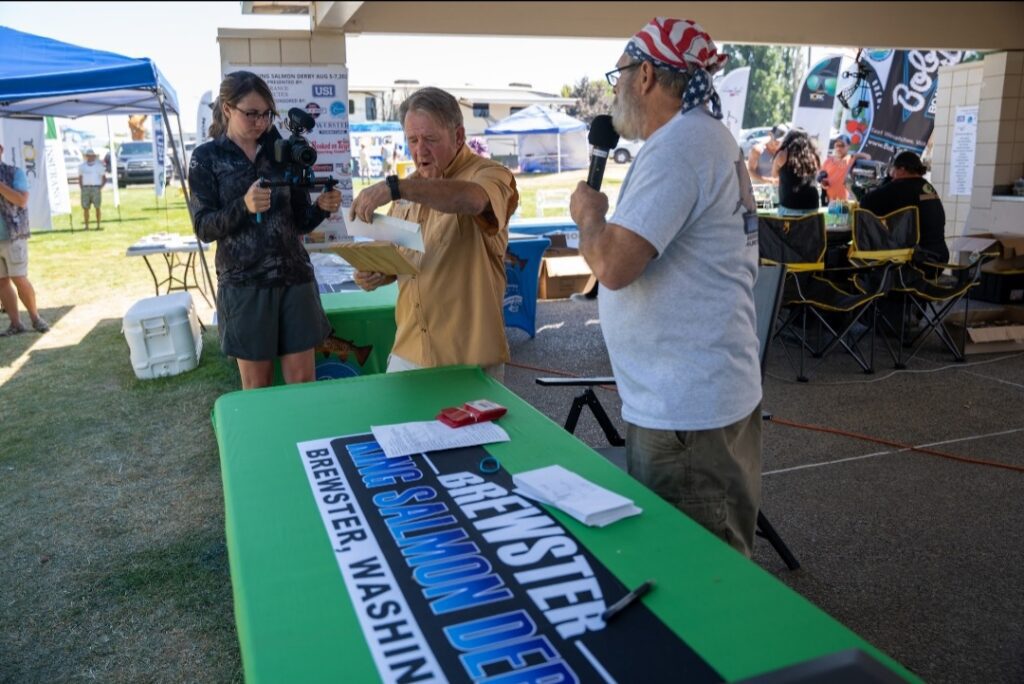
Cori Kogan: Filming the derby winners!
On day 3 of our adventure, we got to see the winners of the derby take home their prizes and win their bragging rights. The winning fish, the “king of the pool”, was a tank of a chinook weighing in at 29 pounds and 10 ounces that got the winning angler a nice check for $2,000. The top 10 winners got a beautiful wooden plaque to commemorate their win. One of the most memorable parts of the weekend was when a young girl weighed in a 26-pound chinook. She ended up winning the youth category of the derby! Besides the competition for the top 25 biggest chinook, there were also side pots and a raffle to take part in. There were many raffle prizes, such as free fishing trips for 4 people, a bow, and a downrigger. The grand prize for the raffle was a 9.9 HP Mercury outboard motor. Weigh master Ernie announced the winners, and photographer Cori Kogan snapped photos of them holding their prize next to Mike Mauk.
All 3 days of my experience at the Brewster Salmon Derby culminated into an unforgettable adventure. From Mike Mauk’s warm welcome to Bree’s terrific netting skills and incredible sense of humor, I’ll always tell stories about the derby with a smile. I know I’ll be back next year for another shot at winning the derby!
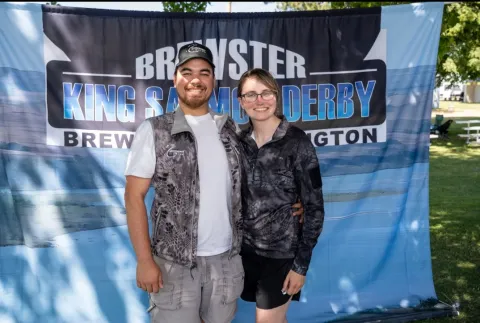
/articles/brewster-salmon-derby-adventures
Little Boat in Big Water
Chasing Fish in The Straits of Juan De Fuca
As summer winds to an end, readers are likely anticipating glorious tales of monster sized salmon bending rod tips over the sides of boats, while adrenaline filled anglers run about with nets in hand, hoping to assist a buddy in bringing the big-one aboard for a well earned grip-and grin photo of a lifetime. This story, regretfully, does not end in such a manner. The story does, however, dispel some myths about importance of boat size, shares some boating safety advice that pertains to smaller boats, and ends with a nice haul of tasty fish (the type that are more suited for a fryer rather than a smoker).
It was Saturday morning in the Sekiu village, and the gentle waves of the incoming tide at Clallum bay woke me in my tent at Masons Marina. Thick marine fog typically blankets the waters from Sekiu to Neah Bay during the summer mornings, however, the start to this day greeted me with glassy calm seas, and blue skies that extended from Masons marina, all the way north, across the straits, and to the mountainous shores of Victoria B.C. It was perfect weather, and it helped ease the nerves that had been accumulating over the past two days as I obsessed about all of the things that could possibly go wrong in a small boat out on the big water.
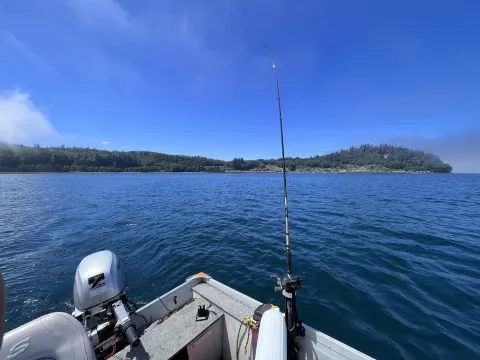
My boat is a V-hull 2008 14’ Smoker Craft Pro Mag with a 20 HP Honda. It’s a good little boat, equipped with a live well, an electric trolling motor, navigation lights, and a backup 6 hp Suzuki that I keep onboard in case of emergencies. I take her out often, with most of my destinations being on the Puget Sound, Hood Canal, and various lakes in my region. But, as with many others that own boats similar to mine, the thought of taking a small boat out onto water that behaves a lot like the ocean never really crossed my mind. Boating is fun, until it isn’t. And I’ve always figured it was better to avoid a bad situation than to plop myself directly into one. It wasn’t until I was on the Hood Canal that a friend told me about Sekiu, and how anglers were easily catching their limits of chinook and coho up there, that I began to put more thought into the idea. Thus, a seed was planted. As I researched and asked around, I found that it was actually quite common to take smaller boats out around Clallum bay. In fact, 14’ kicker boats were at one time the most common sport-fishing boats seen on the water. At least, that was the case in the 1940’s, when most people weren’t towing around larger boats and instead opted to rent the 14 footers from the marinas. The marinas still rent boats of this size today, most of them equipped with 15 HP outboards.
Sekiu is the quintessential small fishing town. It has two main marinas (both with campgrounds), a handful of motels, a cafe, a restaurant, and plenty of fishing tackle. The town got it start as a salmon cannery back in the late 1800’s, but after regulations ceased to allow commercial fishing, the cannery business crashed, and Sekiu had to look to other industries like logging, hide tanning, and sport fishing. The latter of the three being the one that worked, and oh did it work well. The fishing is world-class, and seldom will you find anywhere outside of Alaska that has this type of salmon and other saltwater fishing. The unincorporated community is situated right inside Clallum bay, in the northwestern portion of the Strait of Juan De fuca. The bay itself, and just west of the bay, enjoys decent protection from S,SW,W, and NW winds. Once you head further towards the ocean or out north into the open water, you become more exposed to the common west and northwesterly winds. Luckily, you will find excellent fishing near-shore, or without having to travel too far west in the direction of the ocean. In fact, most fisherman catch their limits of salmon just west of the bay near what is known as “the Caves”. Two main summer-run salmon routes exist in the area, and those two routes follow near shore on the Canada side and near shore on the Washington side. This is an ideal situation for a small boat fisherman who doesn’t want to venture too far out into the open water.
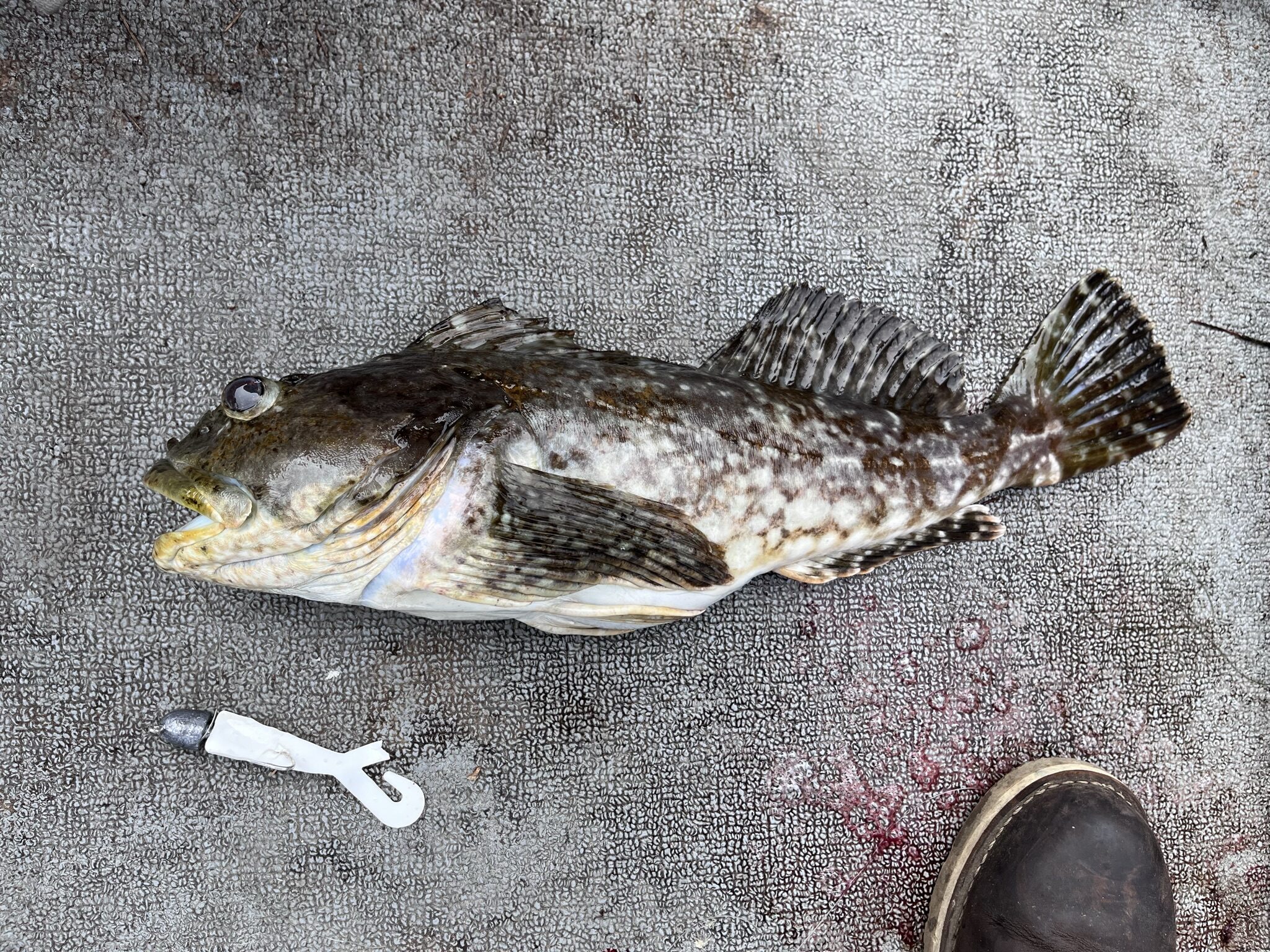
When I motored out of the marina that first morning, I was a day behind on my already limited schedule. This had me fishing on an odd numbered day of the month. At the time, odd days were closed to salmon retention due to emergency regulations set by the Department of Fish and Wildlife. This meant that fishing for salmon that day was out of the picture. However, in Marine Area 4, just northwest of me, lingcod, rockfish, and other bottom dwellers were all very much on the table! To get to these, I had to run about 5 miles west to Shipwreck Point just east of Neah Bay. So, with calm waters on my port side, I gunned it west towards the MA-4 boundary line. The swell and wind forecast for that day were predicted to be favorable up until around 1pm, and so far, the predictions seemed to be holding up. My little boat planed quite nicely heading out with the ebb tide and gracefully skipped over the rolling swells. My first “yikes” moment occurred when I approached Kaydaka point. This large point that sits roughly 2 miles from the marina brings underwater structure out into the straits, and as a result, kicks up the wave height significantly. Though the increased wave size didn’t pose a significant threat to me, I still figured it was a good idea to run a bit further offshore to avoid the turbulence. It’s worth noting that points like these can present sea conditions that might not be tolerable for particularly small boats during rougher conditions.
The bottom fishing was hot within minutes of being inside the MA 4 boundary.
I fished a 2 oz jig head with a pearl white double tailed grub over some structure, and within minutes I was into some fish. A few good-sized lingcod found my hook, along with several rockfish and a beautiful cabezon that fought like a bull! All in all, the day was a success. I won’t bore you with the details of my next morning’s salmon trolling trip. I only had an hour to get it done, and let’s just say I’m still eating last season’s silvers from my freezer (and yes, some of it’s looking a little freezer burnt). But the success was had in that I made it back to the marina both days in one piece. And this wasn’t accomplished in a 30’ fishing boat that’s worth more than my life savings- nope, this was done in 14’ aluminum boat with a small engine and an even smaller backup.
Now, let’s talk the important stuff. Small boat safety. Is it safe to take a small aluminum boat onto the straits? It certainly can be! There are inherent risks that come with any type of boating, regardless of the boat size or the water that you are on. Risk assessment, risk avoidance, and preparation are all key components to keeping you safe on the water.
DISCLAIMER: I am by no means, an expert on boating safety. All I can do is share what works for me and what I have learned myself.
My first bit of safety prep comes well before I arrive at the marina. Fortunately for me, I have a work schedule that affords me the liberty to plan my trips around weather windows, so I’ll start by looking for consistently fair weather in the long-range forecasts. As I get closer to my desired departure dates, I’ll home in on the NOAA webpage and start looking at wind directions and speed, wind waves, then swell predictions (paying close attention to wave period or duration), and then tide charts. It’s important to know how wind, swell, and tide currents all work together to cause either rough or manageable conditions. I don’t have the page space to get into that here, but there are plenty of resources available online for anybody who wants to educate themselves on the nuances of ocean behavior. The calm waters typically occur in the morning, so be up and ready before sunrise. If the winds are predicted to pick up, say, by 1pm, then I’ll be heading back to the marina at least 2 hours before those winds are predicted to occur.
Safety equipment.
Before I leave the docks I want to make sure I have life jackets (I carry an auto-inflate and a standard), a waterproof radio, working navigations lights, at least two GPS devices, a manual bilge pump in case my auto fails, a well-tuned and properly functioning outboard motor, a backup kicker, flare gun, an air- horn, and a reflector to hang up in case of dense fog.
Aside from these things, I also try to scout out beaches nearby that would be suitable for beaching my boat in case a situation calls for it. This is definitely a last-ditch option, as the risk of damaging the boat on rocks is very present. So, will I be taking my boat my boat out to Sekiu again? Absolutely! I already have my next trip planned! Do larger boats afford more comfort and protection in the event you get stuck in some adverse conditions? They absolutely do. But, if a capable small boat is all that you have, and you have educated yourself on all the safety measures necessary, then there is no reason for you to wait till you get that 100k boat to go have some fun and catch fish in arguably the most productive fishing grounds in our region.
/articles/little-boat-big-water
River Coho
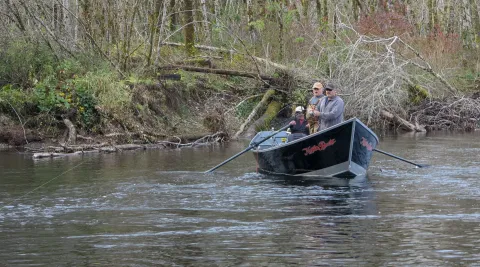
Slowly drifting along with the current until we reached the next hole, I heard a splash along the shoreline. Looking to my right I could see the rings in the water where a fish jumped near the tall grass that lined the river. Instead of continuing on, I quickly dropped the anchor and told my fishing partner to cast his float over to the shoreline and be sure to do so a bit upstream. As the float neared where the fish jumped, it disappeared underwater and he set the hook. A large coho leaped out of the water and took off to the fast water below. All the while, line began peeling off of the reel.
That is what I love about river fishing for coho: you think you know where they are, then you find one in a spot you normally would have just rowed right by. After he fought that fish to the net, we slid it into the fish box and just looked at each other for a minute. Then we saw another boat coming down the river. The quiet discussion we had was if we should pull anchor and try to stay ahead of the other boat to get to the deep hole we were heading to first, or to stay put. Electing to do the latter, we waved as the boat went by and never said a word about the fish we just caught. Once out of sight, we cast towards the shoreline again and the float went down once more. After pulling three more fish from that grassy bank, the fish had moved on and so had we.
Normally, anglers who head to the rivers target coho with spinners or twitching jigs, and mostly concentrate in known areas for chinook with the float rods. This works well, and is what I like to do too, but I also always have the float rod ready. Last year, we were almost to the take out and I saw a fish roll under a tree. Just downstream from this overhanging branch was a fallen tree with a large root ball sticking out. I cast ahead of the branch and let it go under it, but nothing happened. Then, just before I decided I needed to get my gear out of the water, as it neared the root ball the float went under. Thinking it was part of the roots, I pulled back, hoping it would free my gear, but instead a fish jumped out of the water with my float in tow. Coho are known to be acrobatic, and I was once again pleasantly surprised to have one bite the eggs.
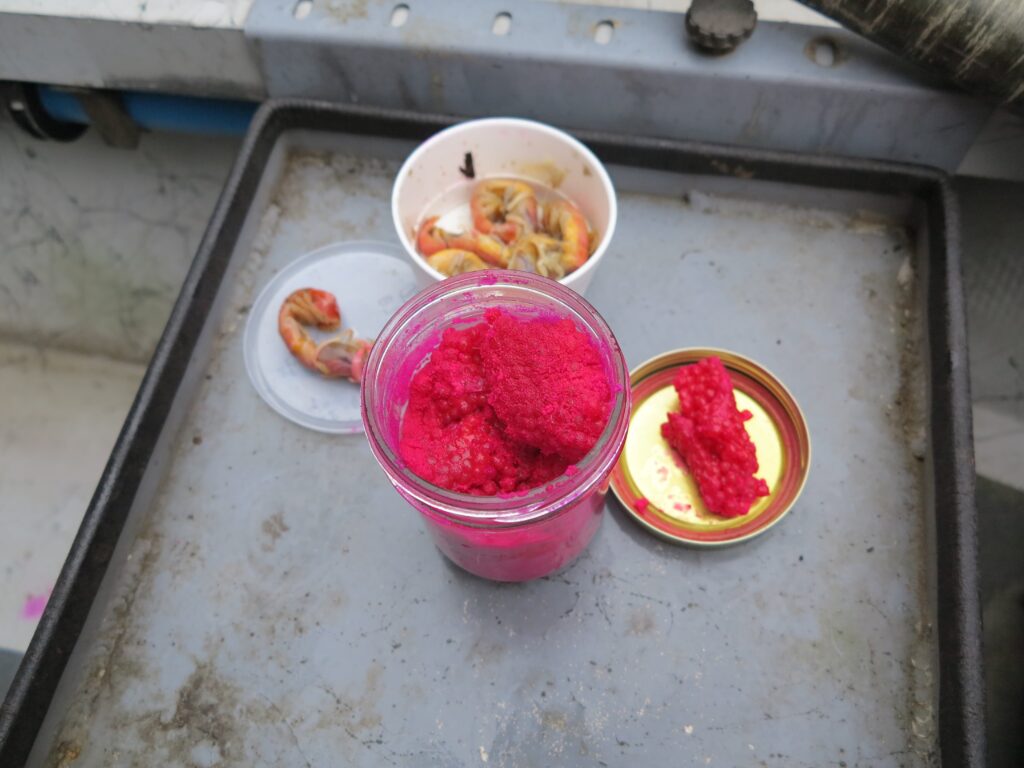
The reason why I threw a float with eggs to this fish wasn’t because I thought it was a chinook that was hiding under the tree branch that I first saw, but instead it was the only way I could fish this spot. Tossing a spinner was an option, except I didn’t have one tied on my rod. Twitching was out, as I knew that if I tried to lift the line from the water it would catch in the branch, so I threw out some eggs and it ended up being the right choice. The float would easily drift under the branch and continue down to the hazard below.
I always have a float rod rigged and ready as we make our way down the river, for this very reason. But when I come to a spot that is known to hold coho, it is time to break out the twitching rods. Deep holes often strewn with logs means coho. Knowing how to twitch is important, but also knowing where to twitch will lead to more coho in the box. For deeper holes I actually use the lightest jig possible. This means 3/8 ounce or ¼ ounce jigs if the water is very still. Twitching has been given a bad name in the past because anglers tend to foul hook fish. Most of the time this happens because the heavier jigs fall fast and end up below the fish. What the angler should do is use a jig that will fall slowly and into the fish, then when twitched will jump up in their face and again fall slowly, allowing the coho to grab it. If the jig is too heavy it often falls too fast, and when you go to twitch again you end up foul hooking the fish. By using the right weight, you not only reduce the chance of foul hooking fish, but also increase your chances of them biting.
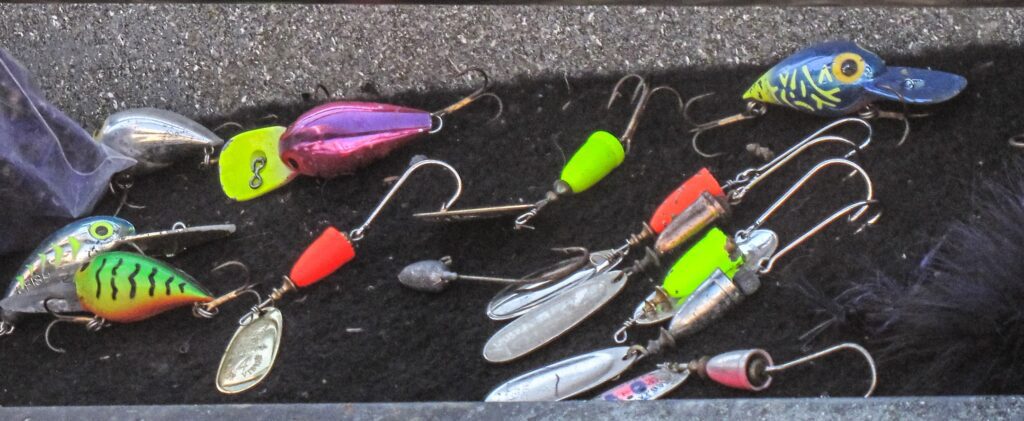
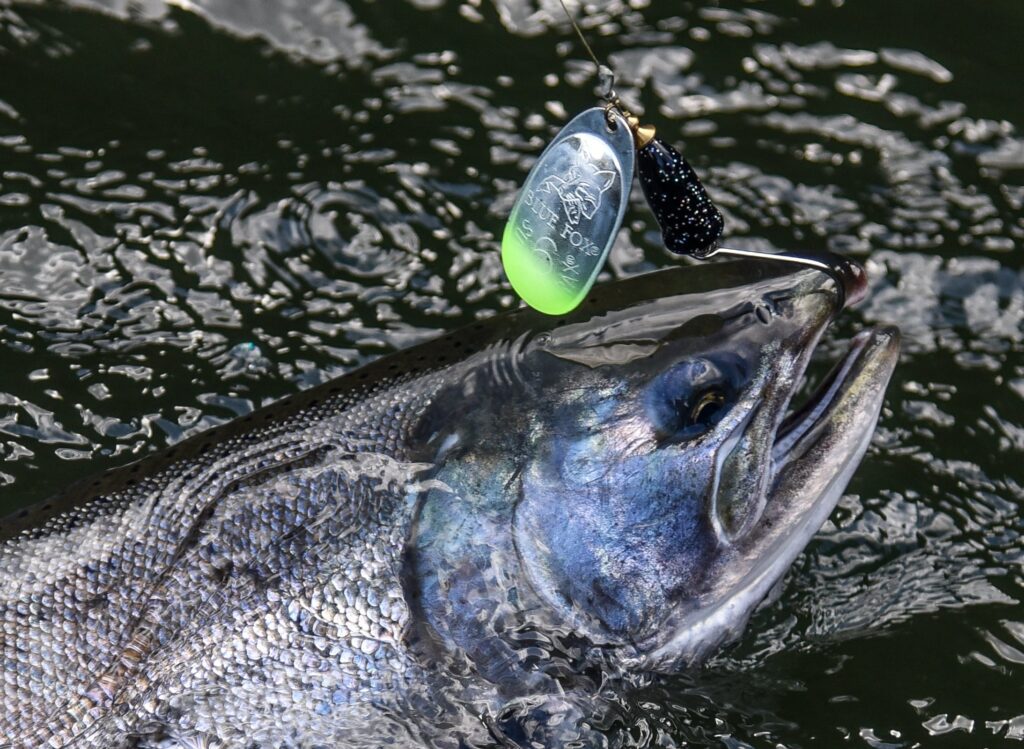
Spinners are a top technique for good reason. When fishing spinners, they are always working. A good cast into a seam, and then the swing of the spinner and the thumping of the blade reinforces the confidence of the lure to the angler. There is nothing like a hooknose coho violently grabbing your spinner and yanking the rod nearly out of your hands. There is no guessing if it is a bite, and the fight is on right away. Spinners also work well in different water conditions. Several years ago, we were fishing during a hard rain. The water was getting murkier by the minute, and after the bite seemed to go off on twitching jigs we began throwing spinners. That thumping silver blade reflecting the sunlight was all it took to get the bite back on again.
On sunny days, try using a dark bladed spinner, or alter the ones you have with a black permanent marker. Dark bodies like black and purple tend to do well, but on dark days or in murky water try chartreuse or fluorescent orange bodies. A Blue Fox Vibrax spinner in sizes 4, 5, and 6 are top producers for fall coho.
Knowing when to go and which river or part of river to fish will lead to more success. A couple of years ago we were going to hit my favorite Olympic coast river for the opener on September 1st. Normally this time of year the river is running as low as it will get all year, but that night a rainstorm approached. The river went from 400 cfs to over 3,000 cfs in twelve hours. Waking up and seeing the brown murky water flowing quickly, we should have canceled for the day. Instead, we launched the boat and had a nice ride down the river, and a fast one at that. We didn’t touch a fish or see another boat all day. Returning a few weeks later, that same run was back to normal and we caught fish.

This particular river has several access points and can be broken down to three main runs. The upper run is usually unfishable until October, when the rains fill the banks and make it floatable. That part of the river is where we should have gone to that day. The middle section is good almost all of the time, but offers very few holes which tend to get crowded early in the day. The lower part is tidal influence, so not only do you need to keep an eye on the river flows, but also the tides.
Fishing tidal waters is often overlooked by anglers. Fish only stack up here when there is a really low tide and that can also be at different times of the day. Personally, I prefer to fish tidal areas because they are predictable. You know that with each tide a new push of fish will come in. I try to time it to fish as the high tide is over and water is pushing out. This is best when it is mid-day to late afternoon, because most anglers will want to be on the water at daylight. Instead, I like to fish “clean up” or after everyone else has gone down the river. The fish fresh from the salt haven’t been harassed all day and anglers are gone, often leaving me in holes all to myself.
If you don’t have a choice but to head to the river early, then remember that during high tide fish will be on the move. This is a good time to drop anchor and let the fish come to you. One year during a high tide time, we sat on the anchor for several hours, casting jigs to a small pocket along the shoreline. This area had a back eddy and the moving fish would stack up here to rest. When they showed up, we would catch a fish, and when they moved on we would take a break. One way to keep fishing during times when fish are moving is to throw out diving plugs or plunk. Plunking tends to be a lost art, but the idea is to cast out and let your lure or bait sit in a spot where the fish will come along at some point and bite it. Why not do it from a boat while taking a break, as this will lead to more fish and it is a great way to know when fish are arriving.

There are a lot of ways to catch coho in rivers, and learning to fish them all not only adds to the experience but also keeps you engaged in fishing. Once you learn to twitch, then learn to float eggs, and then throw spinners. Discover where the holes are and where to fish when the tide is in or out. Best of all, most of the river conditions and routes will change each year, so each time you go to the river it is like learning a new spot all over again. Just like when we were drifting along that grassy cutbank and heard that fish jump; you never know where you will find coho, and that is what makes river fishing for them so fun.
/articles/river-coho
Off the Radar Coho
With improving ocean conditions, the Puget Sound 2022 fall coho season could be the best in recent history. 666,648 coho are forecasted to return to the Puget Sound basin. With a few exceptions, our local coho fisheries (Marine Area 5-13) will open August 16th. Following is a quick breakdown of our inside coho fisheries. Make sure to review the WDFW Fish Washington App, WDFW Washington Sports Fishing Rules pamphlet and the emergency (https://wdfw.wa.gov/fishing/regulations/emergency-rules) for current daily limits and emergency closures.
- MA 5 8/16-9/28 Hatchery Only
- MA 6 8/16-9/28 Hatchery Only
- Dungeness Bay fishery 10/1-10/31 Hatchery Only
- MA 7 8/16-8/30 Hatchery Only
- Bellingham Bay 8/16-9/30 Hatchery and Wild
- MA 8-1 8/1-10/1 Hatchery and Wild
- MA 8-2 South and West of the Line Defined by the Mukilteo and Clinton Ferry Docks 8/13-9/19 Hatchery Only
- MA 9 8/16-9/25 Hatchery Only
- MA 10 Through 10/31 Hatchery and Wild
- The Sinclair Inlet Fishery Through 9/30 Hatchery and Wild
- MA 11 Through 10/31 Hatchery and Wild
- MA 12 North Through 10/31 Hatchery and Wild
- MA 12 South Through 11/30 Hatchery and Wild
- MA 13 Year-round Hatchery Only
What, somebody said coho? Break out the gear, check the trailer lights and move the garbage cans out of the way. It’s time to go fishing. I think that more than any other Western Washington fishery, our local coho opportunity is an eagerly anticipated family event. Where there are many commonly known “stock” coho fisheries, this article will focus on a few of our out of the way opportunities.

Although areas like Eagle Point off San Juan Island, Point No Point, Possession Bar, the Edmonds Oil Docks, Meadowdale Point, Jeff Head, Kingston, Des Moines, Three Tree Point, Point Robinson, and the Slag Pile off Point Defiance are all solid coho fisheries, they can get crowded. Are there other coho opportunities? The answer is affirmative, and even better, finding off the radar coho is pretty rewarding.
For me, pulling up on a spot and being the only boat in sight is magical. A quick look at the meter confirming there is bait and individual coho on the prowl gets my old ticker going. In general, coho are a very worthy opponent. Being on a school of them without another boat in sight could be the highlight of your summer.
Finding off the radar coho starts at home. Sit down with a digital chart, preferably one that will give you current arrows, and develop your game plan. Your game plan should include a few layers of back up plans. If you use your phone, screenshot the areas you want to fish. In doing your research, consider the tides and how they will be flowing or interacting with adjacent structure or opposing tidal flows.
A few examples to get you started:
Eagle Point
On the south side of San Juan Island is an option. Most people set up along the pronounced rips just off Eagle Point. The reality is that those rips will concentrate bait much further offshore than you would expect. At the surface, the current break is very subtle, but at depth the current forms a hard wall trapping bait that the coho are feeding on.
Double Bluff
Is another sleeper and rarely has more than a few boats on it. I really like Double Bluff; on the right day you can fish the general area and never have to fire up the main and go on the hunt. Depending on the tides you can drag gear, mooch cut-plug herring, and even fish jigs. On the flood tide you want to fish the rips south of the bluff, and on the ebb, fish from the buoy north. You will need to keep an eye on the fish finder, but many of the early season coho will be suspended in less than 150’ of water. If you’re not seeing anything on the meter, move around. More than any other place on the Sound, there will be coho holding somewhere at Double Bluff.
Partridge Bank
Another out of the way and often overlooked coho spot is Partridge Bank. That said, Partridge bank is one of my go-to coho spots. Depending on the given tide series, it typically fishes well on any tide. Fish along the edge of the shipping lane on the west side of the bank. A couple things to note regarding the Partridge Bank fishery: sometimes there is a big swell that fractures as it approaches the bank. The resulting chop can be unpredictable and you need to be alert to changing sea conditions. Secondly, you may stray into the shipping lane so keep your radio on and give any passing ships the right of way. Consider setting your VHF up on Tri-Watch, monitor 16, 13 (Bridge to Bridge, commercial traffic) and a floating channel. I have mine on 22 but many recreational boaters monitor channel 68.
The previous three examples are just a few of the areas to find off the radar coho. Again, sit down with some form of chart and current table and do your homework. There are many other locations in MA 5-11 where you won’t be necessarily be chasing coho with a fleet of like-minded friends. Look for points, underwater structure, and areas where opposing currents will concentrate bait and you’ll find coho.
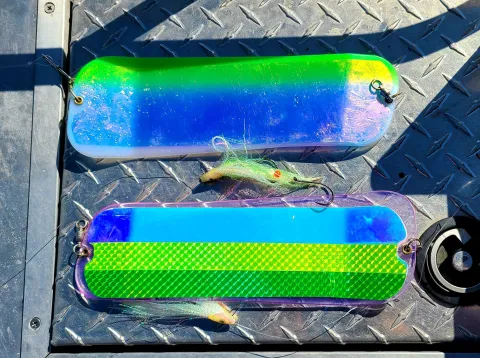
Now that you have identified your coho hidey-hole, what’s next? The coho drill on my boat is pretty basic. Although I have a couple jigging and/or mooching rods ready to go it’s mostly a trolling show. I pull 11” flashers and flies, hoochies or spoons. Coho Killers, Silver Horde 3.5” Kingfisher Lite spoons and Gibbs G-Force spoons are my go-to spoon offering. I run 36” of 30# fluorocarbon between the flasher and the spoon. Regarding color; you can’t go wrong with any combination of green or chartreuse but a Purple Haze flasher and a clear hoochie with a green insert can be deadly. Always head out with an assortment of flies, hoochies, or spoons and cycle through gear until you find the magic combination for the day. Also, use scent on your spoons. Try a sticky Bloody Tuna, Herring, or Anchovy goo and re-scent often. Add a salted herring strip to the leading hook on all your flies and hoochies.
At the butt-crack of dawn, fast trolling cut plug herring in the top 30’ of water is a solid option, but after first light it will be a downrigger show. Use 12 pound or heavier downrigger weights and troll 3.5 to 4 mph. At the speed you’ll be trolling for coho it is likely that you will not see your downrigger balls on the meter and remember that with the blowback you will need additional cable out for a given depth. Especially for coho, I chase meter marks, so keep an eye on the meter. Be ready for action, we have had every rod on the boat go off at once when trolling for early AM coho. Have a game plan, net ready, and a bleed bucket to assure that your silvery opponent makes its way into the fish box in the best possible condition.
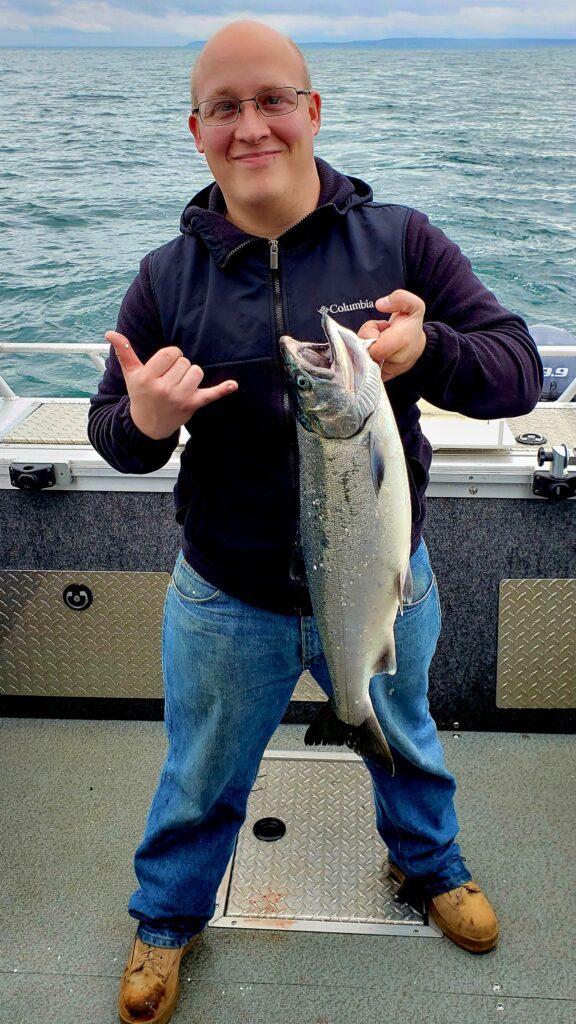
Good luck and remember that our fall coho fishery is an ideal family fishery. They are relatively easy to find, usually hungry, and have some serious shoulders. As a last thought, I want to address the weather. I work 5 to 6 days a week on the water. While in the San Juans today I encountered a significant squall line of thunderstorms. Basically, the weather went from summer boating weather to “what the heck” in minutes. It was windy, pouring and very dark. Then the thunder was relentless and deafening. Since I had not hit send for the article yet, I figured that a quick note about coho weather was in order.
Coho season falls while our summer boating weather is transitioning to an unsettled weather pattern. Most of the time the pond will be very pleasant. Be aware of and prepared for changing conditions. If the forecast is questionable, don’t go, or at least proceed with caution. A 15-mph wind against a running tide can be uncomfortable or even dangerous. Know the limits of both your boat and crew, then always error on the cautious side.
/articles/radar-coho
Ten Rules of Coho Trolling
September is a special time for me. Like the change in the weather, I can feel a change in myself, a pent up anticipation that has slowly been building over the summer and like clockwork bursts forth in full bloom. It’s coho time in Puget Sound!
Yes, this is a great time of the year to be a salmon angler in Puget Sound, if the runs are strong and the fishing is open. Last year was unique in that we had closures in the ocean and straits. The coho arrived to Puget Sound in good numbers and virtually unmolested. This year was questionable what kind of a season we would be given. As of this date, coho is open in areas 8.2, 9, and 10. Check the regs and emergency closures for updates of course. As it stands the daily limit is two coho.
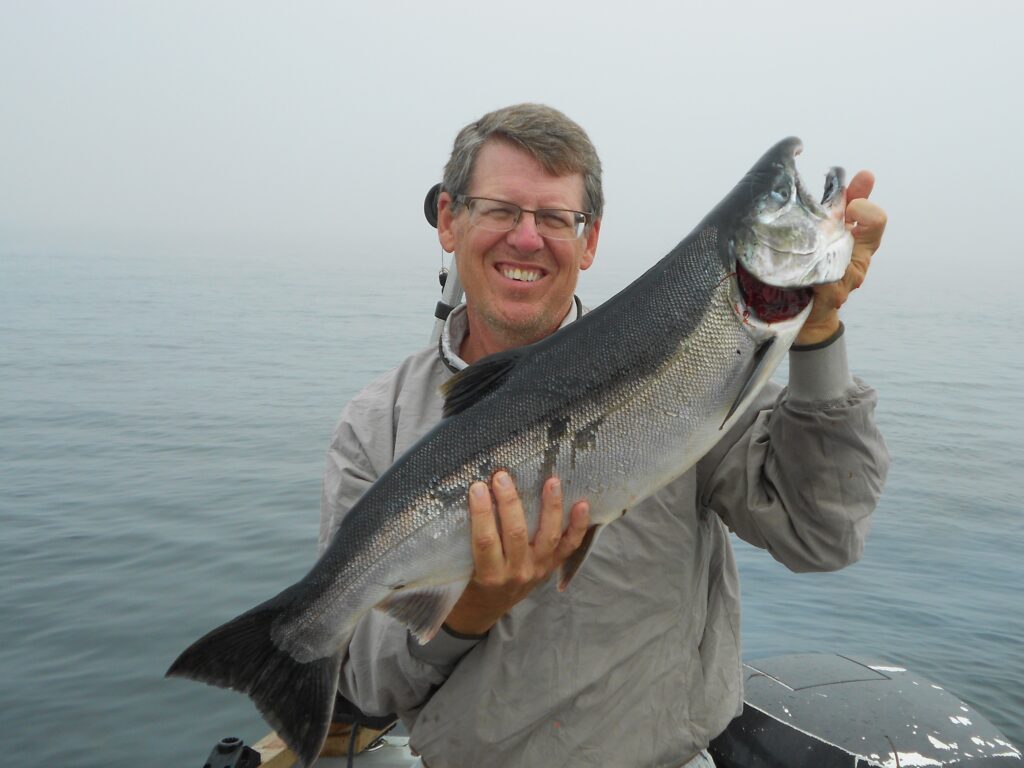
Looking at my fishing reports data from trips going back twenty years, it becomes pretty obvious that September is the time to put away freshwater gear and focus on salmon. August can be productive, but September can be (and often is) lights out. My reports show multiple trips with limits by 9am, red hot fishing, and lots of pictures of shiny chrome coho. As the season progresses into later September, the fish show a steady increase in size. By late September to early October, the 6-8 pound coho are replaced by beautiful 10-14 pound hooknose monsters. It’s the time of year to stock up the freezer on tasty coho!

For those new to the fishery, you’ll find a wealth of information on techniques and locations scattered on the web. I've broken down some of my thoughts on coho trolling into Ten Rules of Coho Trolling.
Coho tend to be a pretty cooperative salmon when it comes to catching them. As these fish stream in from the ocean, heading through the Strait of Juan De Fuca and into Puget Sound, they are putting on the feed in preparation for their runs up to the spawning grounds. It’s not unusual to find coho stuffed with herring. Don’t get me wrong, there are days they, like other salmon, will have lock-jaw. But that truly is the exception, not the rule. Speaking of rules, I offer a list of rules I’ve developed over the years to catch more coho. You’ll likely have your rules to add to this list. Or you may disagree with some of them. But hopefully it will give you some additional ideas when targeting coho in the Sound.
Rule #1
As Russell Wilson would say, “Separation is in the preparation”.
- When you put your boat in the water, you should have everything ready to go. No fiddling around with gear or bait the morning of a trip. My fishing ritual is to have everything ready to go the night before. It’s like a general planning for battle. My rods are ready and geared up. My bait has been cut and cured. My boat is prepped and clean, batteries are charged, gas tank is full, snacks are bought, there’s ice in the coolers for the fish. This evening before prep time is actually a ritual I cherish because like Russ, I’m visualizing success and making a plan in my head. I try to never go fishing without a plan.

Rule #2
Start early, go shallow.
I try to be on the water as early as possible. Ideally, that means running lights on and gear going in the water while it’s still dark or just turning light. I will run my gear in the top 10-30 feet of water to start. This is the time of day when a salmon fly in the prop wash can be deadly. I like Artic Fox Trolling Flies. Denis Peirce ties a nice fly in a variety of effective salmon colors. Try running the fly back 40-50 feet and troll fast (more on that later) with the fly practically skipping on the surface. Just be sure to have the clicker on the reel because these strikes can be vicious. I love the sound of a clicker going off in the morning!
Rule #3
Watch your fish finder, drop your depth
As the morning progresses, drop your downriggers down. I’ve read the “rule of thumb” is ten feet every hour until you’re trolling your gear around 40-60 feet. That’s fine, I guess, but I also use my fish finder. If I see bait and fish marks down 50-70 feet, I’ll drop down to those fish even if it’s early in the morning. As the day goes on I may even drop my downrigger ball down to 110-120 feet deep. Depth can be a tricky thing because when coho fishing I troll fast, which leads us to the next rule.
Rule #4
Troll fast!
In my experience, coho love a fast troll. I have an itroll throttle control and will set it on “hunt” mode to keep my boat going fast, around 3.3 to 3.9 mph. A few years back I did a lot of underwater filming and noticed a distinct increase in salmon aggression when the flasher was whipping around in a complete rotation. If it was only doing a lazy rotation, or not doing a full rotation, coho would tend to swim behind the gear, just watching. But speeding up and getting that flasher fully spinning would elicit vicious strikes. I will troll both with and against the tide and catch fish going both ways. Just be sure to increase your throttle going into the tide to maintain that 3.5 mph speed. I’ll also program my itroll to give a periodic 3-5 second slow down and then speed back up to “wake up” coho that may be lazily following but not biting. It can often trigger a bite. Oh, another thing that will often trigger a bite – if you’re checking gear, pop your line off the release and set the rod in the rod holder. Let the gear come up on its own. I have caught a lot of coho that will chase the gear as it ascends to the surface. Don’t reel your gear in until it hits the surface.
Rule #5
Coho are hungry, feed them!
Coho love a strip of herring on just about any lure. I will add strips to hoochies, flies, and even a small strip on the hook of a spoon (but not too much, you don’t want to kill the spoon’s action). Be sure to brine the herring strips a day ahead of time in rock salt and/or commercial herring brine. Add scents and bite enhancers as well. Check your gear every 20-30 minutes and freshen up with a new herring strip. If you get a bite but no release, bring it in and check it! The one exception to this rule I have is if the dogfish are in thick, I will go without bait.
Rule #6
Experiment
My “go to” set up is a magnum green splatter glow hoochie, herring strips, 26-30” leader, and an 11” dodger (pick your color…). I always start with this set up. On a second rod I may run a different color and smaller hoochie. If there is no action and I am seeing fish on the fish finder I will start trying spoons and plastic lures like the old Big Al’s Cripple Herring. Sometimes the coho just want something with more action. This year I’m going to be trying the new Old Goat OG2 5” salmon lure. The Old Goats have been awesome on kokanee and I think they will be deadly on coho. They have an amazing action that I think coho will love.
Rule #7
Fish Where They Ain’t (anglers that is)
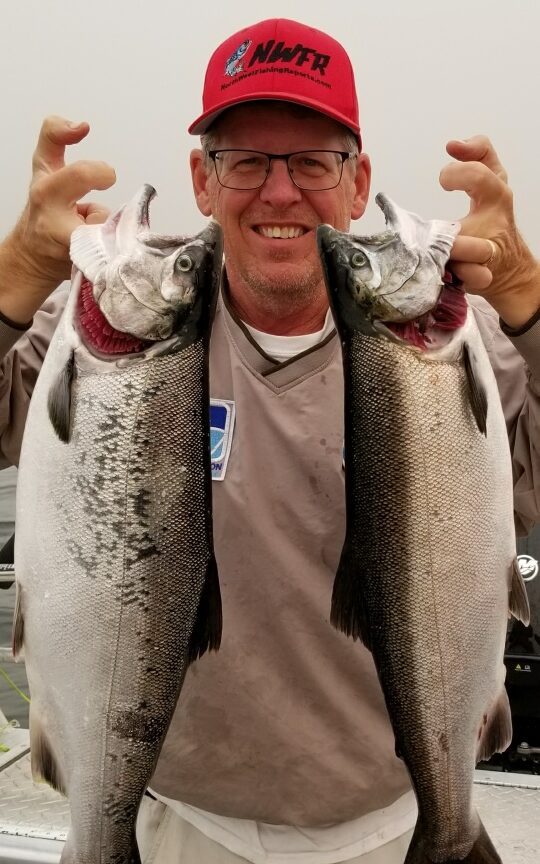
Coho in Puget Sound can be found pretty much anywhere. We all have favorite starting locations and it’s human nature to follow the crowds of boats because “hey, they must know something I don’t”. Maybe…and maybe not. I try to start my troll away from clusters of boats. Why be surrounded by additional lures in the water? You want to troll over fish that aren’t seeing offerings non-stop. So, move away from everyone else – and if you take my advice and troll fast you will, very quickly. You’ll still find the fish if they are there, and cover more water to find the biters. When you do, don’t be afraid to mark the fish on your fish finder and troll around and right back over the same spot. Again, in viewing underwater footage, I invariably see groups of 4-6 coho following my gear. A solo fish is very rare. So, work over those spots when you pick up a fish.
Rule #8
Mid day and tide changes are good
I know I said earlier I like to hit the water at daybreak, but there are days when that just doesn’t happen. The good news with coho is that it doesn’t matter. You can (and will) catch coho all morning and into midday. Tide bites are the period before and after a low or high tide, and these times can be very productive. My favorite tide sequence is a high tide at around 9-10am. The flood tide pushes fish and as the tide slows down it triggers a feeding opportunity below for the coho salmon. Bait becomes easier to pick off without a steady flow of water and the coho bite often turns on. If you miss that crack of dawn bite, fear not, the coho will cooperate. I’ve caught my biggest hooknose fish from 11am to 1pm.
Rule #9
Playing and netting your fish
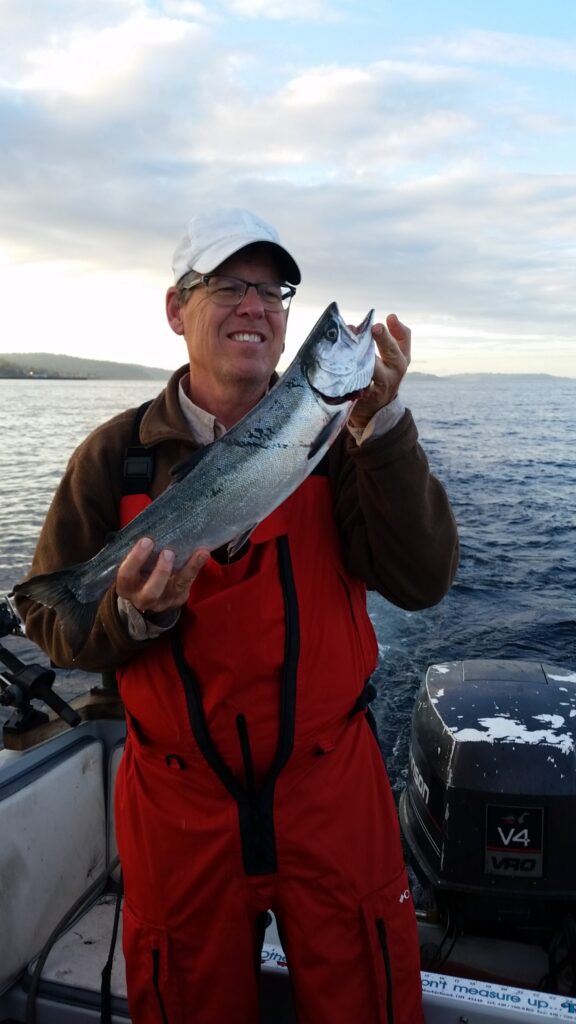
OK, you have a big fish on and are trolling at 3.5 mph. What do anglers often do? Why, slow down the of course. Bad move. In today’s age of barbless hooks, slowing down is an invitation to let the fish go. The second there is slack in that line the hook can slip out. Trolling for coho is not a fishery that is about the fight, it’s about catching fish. If you want an epic battle against coho (and they are a hoot), catch them in rivers, or mooch for them. Trolling with an 11” flasher gives these fish a focal point with which they can get slack line. We don’t want to do anything to help them out, like slowing down. Once they are on the surface, do your best to keep the flasher out of the water. This will help prevent the fish getting slack line between the hook and the flasher. Make sure you have a net with a long handle and big opening. This will help as the netter reaches out. Remember, the netter scoops as the angler guides the fish into the net. Don’t make the mistake of the netter reaching to net the fish! Once the fish is close to the boat slowing down a bit is OK, by the way- just keep that flasher out of the water.
Rule #10
Take good care of your fish
Non-anglers have no idea what a freshly caught salmon tastes like. As anglers we are blessed to be able to have the freshest salmon on the planet. So, take good care of your caught fish. Bonk the fish enough to stun it, then cut a gill and bleed the fish out for a few minutes. After that, into the ice cooler it goes. Don’t hang it off the side of the boat to bake in the sun. At the end of the day, gut and cut into steaks, or filet the fish out. If possible, vacuum-seal whatever fillets you don’t eat for dinner. Properly cared for, you’ll have tasty fish until the next season, when you get to do it all over again!
There you have it. Ten “Rules” that will help increase your odds of success this coho season. Have fun out there and remember to be safe, have life jackets and all the safety equipment required and needed in case something goes sideways.
Good luck fishing and I’ll see you on the water.
/articles/ten-rules-coho-trolling
THE WORST DUCK HUNTING DOG I EVER LOVED
Georgia was an unlikely addition to our family. It was 2014 and I was looking for a dog that could hunt both upland birds and ducks. I settled on the springer spaniel as the breed I was going to get, and found one just a few miles from where I live. My daughter Faith and I went over and met the dog who would soon be named Georgia. She was a year old and the runt of the litter. She was very timid and even growled a little at Faith. I was less than impressed. We went home without her but I couldn’t get that dog out of my mind.
The next day I called the owner and asked if I could bring the dog over to my house and see what kind of retrieving instinct she had. Georgia was very excited to see me again. She hopped into my truck without hesitation and upon arriving at our home, she started racing and leaping around our yard with pure joy!
Faith was home and begged me to keep her. When Georgia calmed down, I started throwing dummies for her to retrieve. In the fourteen times I threw the dummy, the response was the same. She would charge to the dummy, look down at it, and then run around the yard until I called her back.
My son David came home from school while this was going on and asked what I was doing. I explained I was giving the dog a tryout and it wasn’t going well. David, who had just been cut at tryouts for the high school baseball team for the second year in a row, said, “Are you going to cut her like my coaches cut me?” And that was the moment I made the decision to keep that dog.
Georgia had a lot of energy and was very athletic. She loved to go on long hikes with me and she loved pheasant and quail hunting, flushing her fair share over the 8 ½ years we had together. When it came to duck hunting, though, she was the absolute worst.
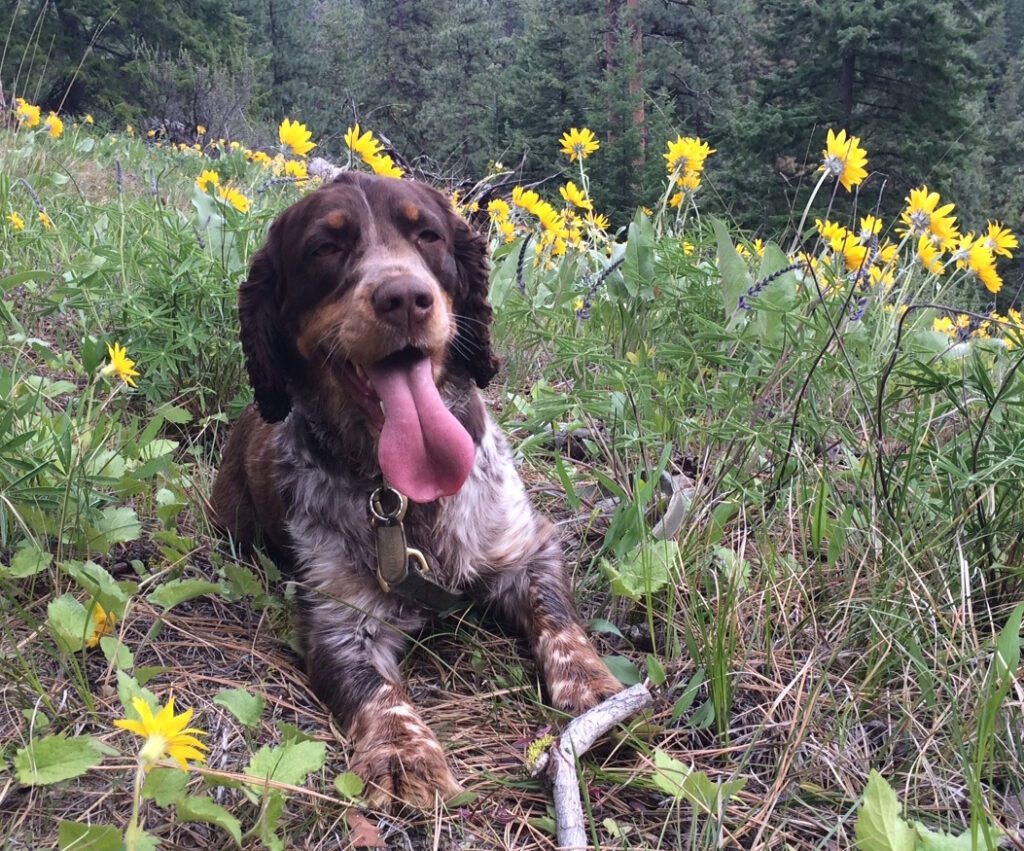
First off, she was impatient. She wouldn’t stay still in the blind, and when I put her on a leash she would whine, bark occasionally, give you dirty looks, and start digging a hole into the ground that she would eventually writhe around in as a way to express her displeasure.
When she was let off the leash she would immediately charge into the water and it didn’t matter to her whether there were birds there or not. She would swim, and swim, and swim some more. She loved the water and would completely ignore all commands to come out of the water until she was good and ready to do so, usually about 10 to 15 minutes after she went in.
She did occasionally retrieve ducks for me but the final straw was the time my daughter and I took her hunting to a place I like to go to in the Columbia Basin. The small pond is an early season hot spot for teal and it lived up to its promise. I actually kept Georgia in the truck until mid-morning. By this time, we had several ducks in hand but there were three floating in the pond we couldn’t retrieve. I brought Georgia from the truck to the pond, pointed out the dead floating ducks, and set her loose.
She immediately swam to the first duck and continued past it, swimming with reckless abandon. Eventually she ran across one of the other ducks and she grabbed it in her mouth. I praised her and told her to bring me the bird, blowing the whistle to come back as I did. Instead, she went to a small island and dropped it off before reentering the water to swim some more. Eventually, she came across the other two ducks and again, took them to the island. At this point I was begging Georgia to bring me the birds. Her response? She would pick each dead duck, wag her tail, and put them back down on the island. She was like a little girl playing with three Barbie dolls. Finally, I waded out to the island, retrieved the ducks (dolls), and took Georgia back to the truck.
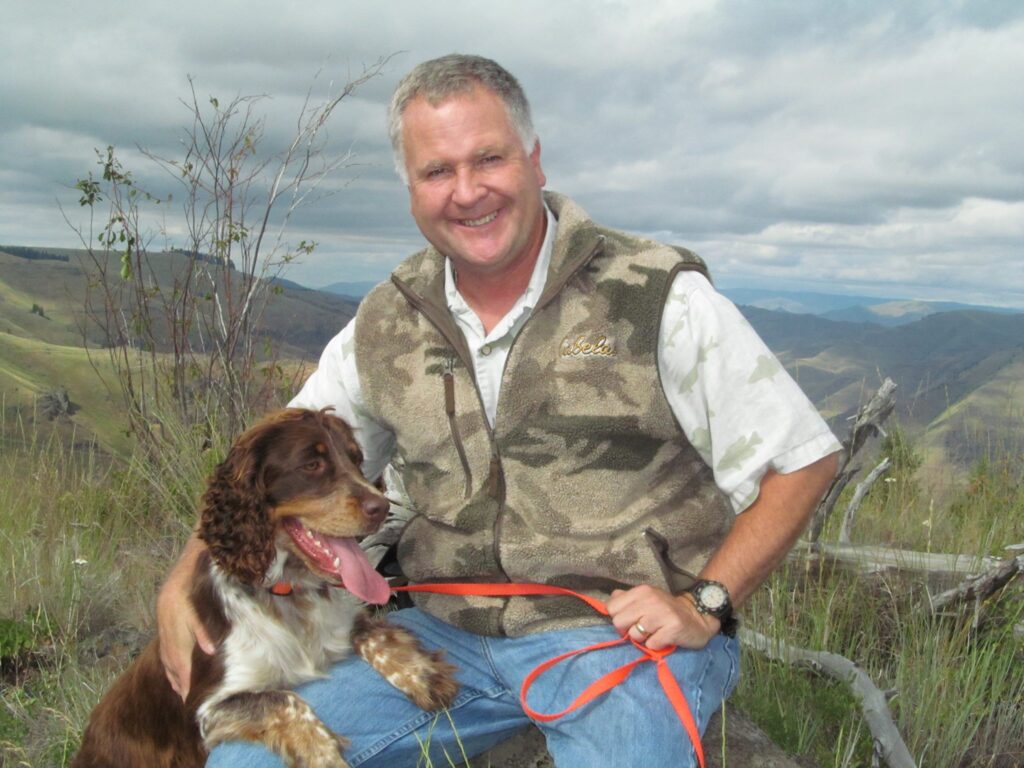
Georgia continued going with me on hunting trips for upland birds, but her duck hunting career essentially ended that day. Despite her poor performance in the marsh, she was a loyal companion. She was well known by kids and adults alike in the small town of Cashmere I live in, where countless people would pet the “pretty puppy” I took for walks with me. She loved to go for rides, whether it be to the store or to a trailhead for a hike. She followed me downstairs every morning to my office to spend the day with me at work, and every night she slept on the bed with me. She was a wonderful family dog and faithful companion with a ton of personality.
Unfortunately, two weeks ago we noticed she had developed a wheezy cough and she had very little stamina, not even able to walk a mile with me. I took her to Cascade Veterinary Clinic in Leavenworth and got bad news…cancer. She had a large mass that had grown around her lungs and there were numerous smaller masses visible in the x-ray as well. I was given some pills to reduce pain and the inflammation around her lungs. They helped for a week and my daughter, wife, and I spoiled Georgia rotten. We took her on rides to bark at deer from the truck window, fed her plain McDonald’s hamburgers which she loved, let her swim in a lake one last time, and more. It was a good week, but on the 8th day Georgia’s breathing became labored and it was time to let her go. We did so at the veterinary clinic, all telling her what a good dog she was and what a blessing she had been to our family. The veterinarian, Dr. Warmenhoven, was very kind. He gave her a shot and she left the world in a very peaceful way.
I’ve never seen a worse duck dog but I’m also so glad I had her in my life. We loved her very much and she brought our family much happiness.
RIP Georgia. I hope to see you on the other side.
/articles/worst-duck-hunting-dog-i-ever-loved
Bull Trout in the Metolius
With the water swirling around us, we waded in at the mouth of Jack Creek. Skip Morris had hooked and lost a big rainbow here the day before. Today he stood back while Carol plumbed the two-foot deep run with a big stonefly nymph trailing a small beadhead attractor, called Gabriel's Trumpet.
For a moment we thought Carol's rig was hung up, but when she tightened the line, a fish torpedoed away. The fish rolled mid-river and I saw his tail and dark fins silhouetted against bright water: a bull trout. Close to eight pounds, I guessed. The line broke and Carol reeled in the slack. The fish had taken the big stonefly nymph after a 13-minute battle and a last headlong flight.
That’s what can happen when kokanee are on the move and bull trout follow them into the shallows.
LAKE RUN BULL TROUT
Kokanee are thickest in the Metolius in late September and October. And the biggest bull trout, which can get to 30 inches or more, hammer them. Bull trout are meat eaters and if it's a third of their size they will crunch it. If it's half their size, they will try to choke it down anyway. Anyone who has caught a bunch of big bull trout has seen the tail end of a kokanee or a whitefish sticking out of that gullet.
The Metolius River and Lake Billy Chinook are home to resident and migratory bull trout. The bulls move up the river to spawn in late August, September, and October. Oriented to ice-cold water, bull trout stage near springs and off the mouths of major tributaries like Canyon Creek and Jack Creek. After the spawn, they need to replace the calories they expended over the last few weeks. That’s when they find the kokanee.
The kokanee spawn puts both species in the river at the same time. And the bull trout are the winners. Preoccupied, the landlocked salmon are easy prey for sharp-toothed bull trout. Whitefish are on the menu for bull trout year-round, and many are the stories of anglers fighting whitefish only to lose them to bull trout which charge out from under a log to grab the hapless poor man's bonefish.
Bull trout are apt to eat the limp, the lame, the lazy. It’s the erratic behavior that trips the predatory sear in a bull trout's brain. Think strike triggers. Tie or buy streamers with big eyes, a flash of blood red near the gills. On the water, fish them on the wet fly swing, but give them action. Make the imitation twitch. Like a wounded fish in deep trouble.
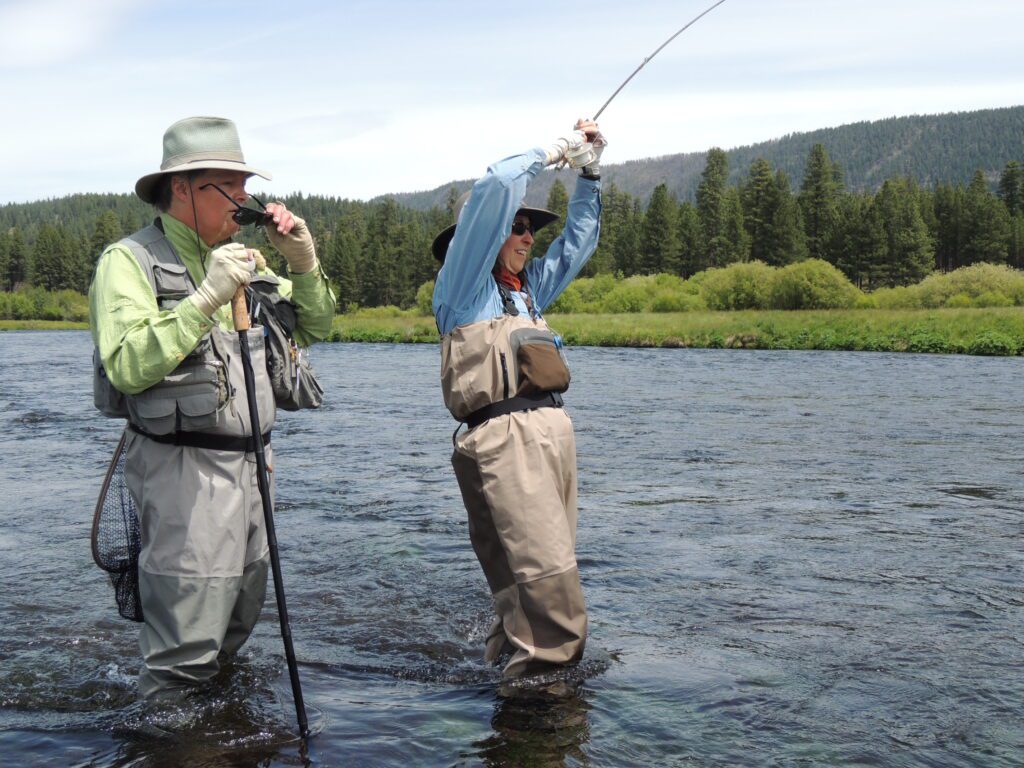
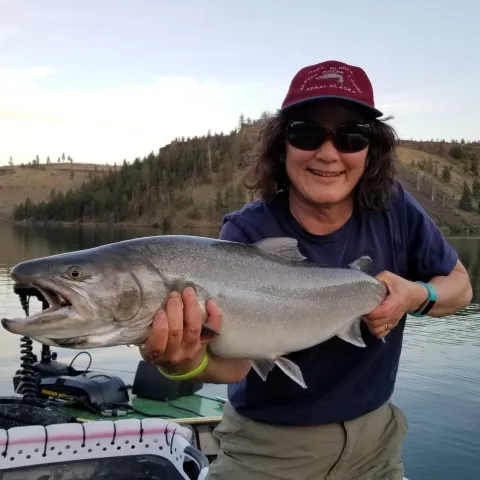
Carol Ann Morris fights a bull trout on the Metolius. Photo by Gary Lewis
FISHING LAKE BILLY CHINOOK
A down-running Metolius River bull trout ends up running into Round Butte Dam and turning around to make its living in a 4,000-acre reservoir fed by three rivers: the Metolius, the Deschutes and the Crooked River. Best time to target bull trout in Lake Billy Chinook is when the waters begin to warm in March and April. Bull trout hunt close to shore in the late winter and early spring. Anglers who throw Zonkers and other minnow imitations on long casts and strip hard can elicit hard strikes from fish. It's one of the best ways to get the biggest bull trout. A lot of 17- to 19-inchers will be brought to the net as well as the occasional 10-pounder.
SWINGING STREAMERS
When whitefish are schooled up, working the bottom, they are hard for bull trout to feed on, but when one of them leaves formation and streaks up to eat a mayfly emerger, its defenses are down and its easy money for bull trout.
When fishing a small streamer or a larger bunny leech, try to work it like a fish that is out of its element, a scared minnow that thought it could play in the deep end of the pool. It's vulnerable. It's lunch.
A variation on that theme is the sculpin. Bull trout eat sculpin year-round. In the river, they eat sculpin. In the lake - sculpin. When sculpin are doing what they do, daubing in the mud, they are pretty safe. But when they climb up through the water column or get caught in the current, something is going to nail them. Big lead eyes, blood-red gill flare or Flashabou, and prominent fins are some of the strike triggers to play on when tying sculpin flies.
Cast down and cross-current, let it swing and chug it. On long runs and into the tailout, let the sculpin work back and forth. Tied small, a sculpin imitation can be fished with a slackline presentation that keeps it working back and forth over bull trout holding water.
Think big. If a 30-inch bull can choke down a 12-inch whitefish, it will go for a 10-inch streamer. Big bunny leeches double as flesh flies. Just change the presentation.
DREDGING WITH A TWO-FLY RIG
As kokanee carcasses and decaying flesh become harder to find, bull trout begin to focus on bugs. Streamers and flesh flies can provoke a grab, but a dead-drifted nymph can pay off as well. To conserve strength, the biggest fish claim the best lies, hugging the bottom along downed timber and behind rock slabs and boulders. The major difference between drifting beadhead nymphs for rainbows and for bull trout is the length of the leader and the tightness of the presentation to the bottom. Fish the bottom. Keep the leader short so the dropper fly doesn't ride too high in the water column.
Tie on a big, heavy stonefly nymph and knot eight to ten inches of fluorocarbon tippet material to the bend of the hook. The primary fly can be a Flashback Pheasant Tail, an egg pattern, or a No. 16 Serendipity. The main thing is to get that heavy fly bumping on the bottom. Make it easy! That bull trout should be able to spot the trailing dropper fly, lean its head over, and grab without leaving its lie.
Metolius River File
- Origin: Metolius Springs
- Mouth: Lake Billy Chinook
- Length: 28.6 miles
- Nearest cities/towns: Sisters, Camp Sherman
- Designation: National Wild and Scenic River
- Major Species: Rainbow, Bull trout, Kokanee, Whitefish
- Camp Sherman Store - www.campshermanstore.com
- Fly Fisher's Place - www.flyfishersplace.com
- Metolius River Association - www.metoliusriver.com
- Best Coffee: Fishing Central Oregon Reserve Roast
/articles/bull-trout-metolius
A Lifetime of Fishing Memories
Measured in terms of people killed, the last year of World War II (1945) is regarded as the worst year in human history. On April 27, the day Italian partisans captured Mussolini, Gordon Vance caught two in the morning on flies and three in the evening on salmon eggs. The day after the U.S. dropped fire bombs on Tokyo, Gordon Vance dropped salmon eggs in Johnston Lake and caught six small ones. On August 9, the day a plutonium bomb was dropped on Nagasaki, Gordon Vance was on Walterville Canal with a fly rod.
If you don't keep a fly fishing journal, maybe you should. It's a great way to remember good days on the water and figure out how to have more of them. But it can also be a link to the past when a son or daughter finds the journal years later. Think about Gordon Vance. Remember him? No? Well, his family does.
When he was a little boy, his mother would give him a pail of water and a stick with a line and a bent pin. "He would sit in the kitchen for hours, waiting for a bite," I spoke to Janice (Vance) McCargar after I received a package in the mail; she had found her father's fishing and hunting journals, kept in a three-ring binder, written in longhand.
Gordon Vance began to keep track of his fishing trips in 1931. Picture a barefoot boy in a tiny kitchen in Missouri in the 19-teens. Picture him a bit bigger in dry-as-a-bone Arizona. "When my dad's family moved again to the McKenzie River in 1926, he thought he had died and gone to heaven." Gordon Vance was 16 when he moved to Oregon.
On May 15, 1932, he writes of fishing Walterville Canal and Cogswell Creek. He caught five on a blue quill body grey hackle and, that evening, on the McKenzie, caught eight "in a hurry on a yellow body deer hair fly."
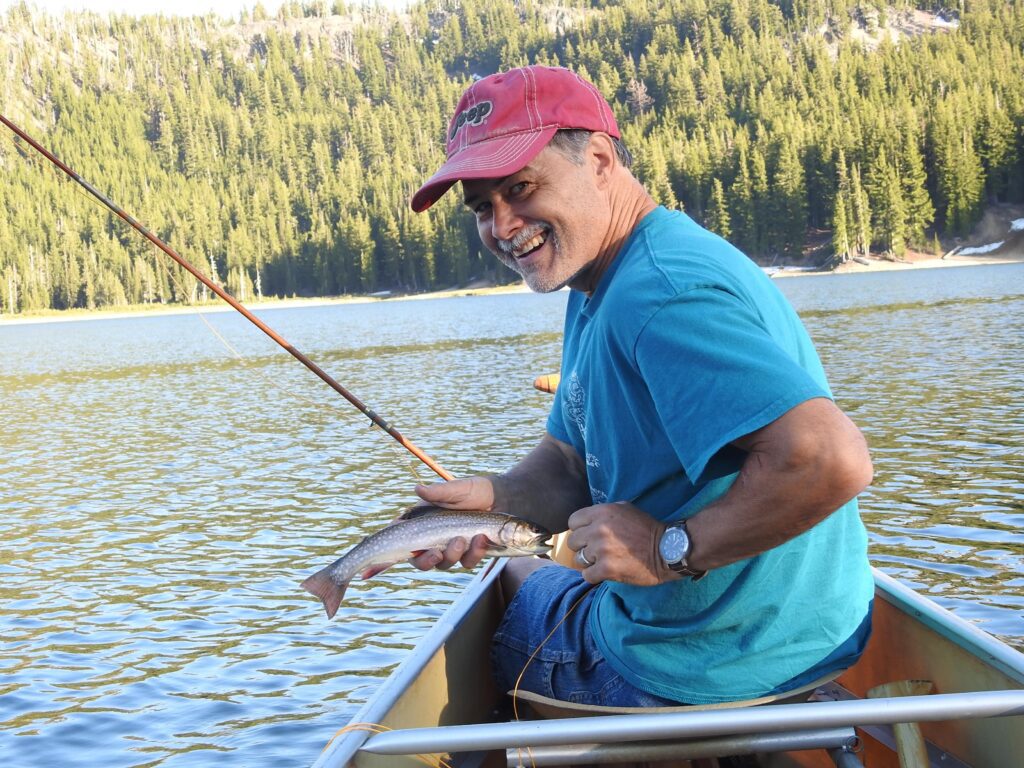
Don't just write down the number of fish you catch in your journals, but who was with you, the temperature, the weather, the barometer. Jon Guenther on a mountain lake in Oregon with a fly-rod brookie. Photo by Gary Lewis
Twenty-two years old in '32, Vance recorded 15 entries, on Leaburg Lake, the canal, Cogswell Creek, Horse Creek and the McKenzie. In 1933, he fished 20 times and would have fished more, but in September, according to his notes, he picked up a Winchester Model 54 and spent a good deal of time in the woods. "It was the fashion in those days to keep a journal," Janice said. People took the time to record thoughts and observations. Journaling helped the young man develop his craft on the water and in the woods. It was fun to think of the determination it took to drive to Diamond Lake, Miller Lake, Odell and Crescent in those days. Easy jaunts now, they were all-day rumbles along narrow timbered tracks in the 1940’s and '50s.
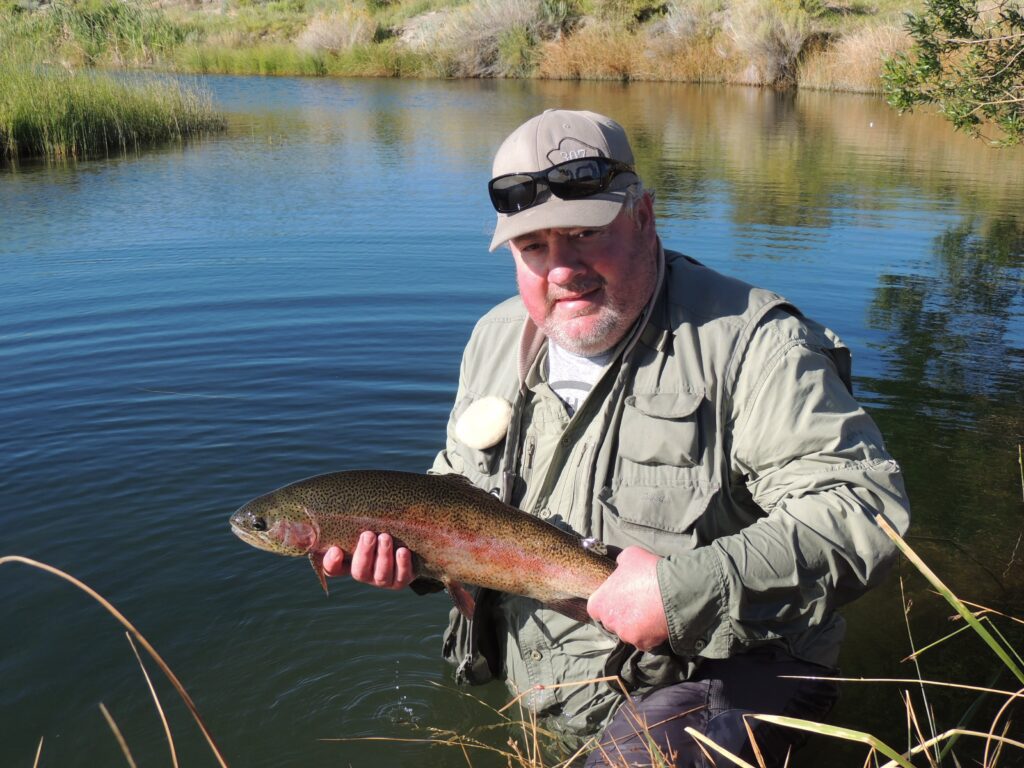
Keeping a journal reminds of the flies we used on that July morning in '16. Jeremy Groh, of Bend, Ore., with a big still water rainbow. Photo by Gary Lewis
In 1956, Vance fished Diamond Lake and wrote, "Don, Marion and I gave the Kamloops of the reborn lake an end of the season try. We caught 22 from 15 inches to 18 inches." He added, "A monofilament line is a must. Fish had been eating algae and tasted terrible." Monofilament: we take it for granted now, but it was the latest in fishing technology in the 1950s.
Some things haven't changed. On September 17, 1980, Vance fished Miller Lake. "Thirteen washboard miles from Chemult and up to 5,600 feet, the 550-acre lake is a beauty and if I had taken a fly rod could have been fun." A mayfly hatch was on and Vance had brought the wrong tackle. He ended the day with two small kokanee.
In 1990, the year he turned 80, Vance started with a March outing to Triangle Lake and recorded 27 trips on Cottage Grove Reservoir, Hills Creek Reservoir, Odell Lake, Cougar Reservoir, Green Peter, the Siuslaw and on his home waters, the McKenzie and Walterville Canal.
My friend, the noted outdoor writer Scott Haugen, makes his home in Walterville. He remembers Gordon Vance. And he remembers good days fishing the Walterville Canal. "There used to be really nice cutthroat in it," Haugen said. "When I was in high school, lots of jack salmon used to run up one section. I caught steelhead out of it too."
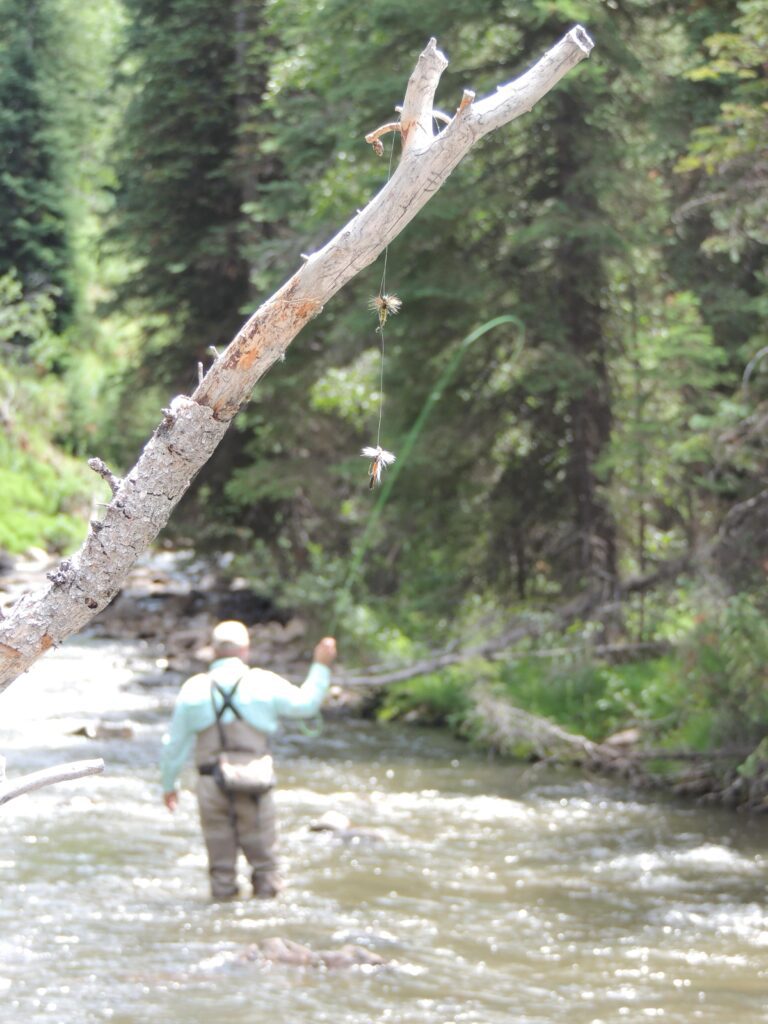
Lost and found on a mountain stream. Photo by Gary Lewis
It was interesting to look at my journals next to Vance's. I started my first notebook in 1980. I was in my teens and lived in southwest Washington and later in western Oregon; he would have been in his 70’s when our paths crisscrossed each other's, fishing the North Umpqua and Central Oregon lakes. We have planted our waders on the same rocks and caught trout, steelhead, and salmon in the same holes.
Vance recorded his last entry November 30, 2000, after a day on Foster Reservoir. "Well, I ran out of luck at Foster or ran out of fishing knowledge." He did catch one salmon, but figured he could have caught more. "Should have had a fly rod or tried smaller spoons or something!"
Vance passed away a month later, at the age of 90, on Christmas Day, leaving a lifetime of outdoor experience in his wake and a journal for his family to remember him by.
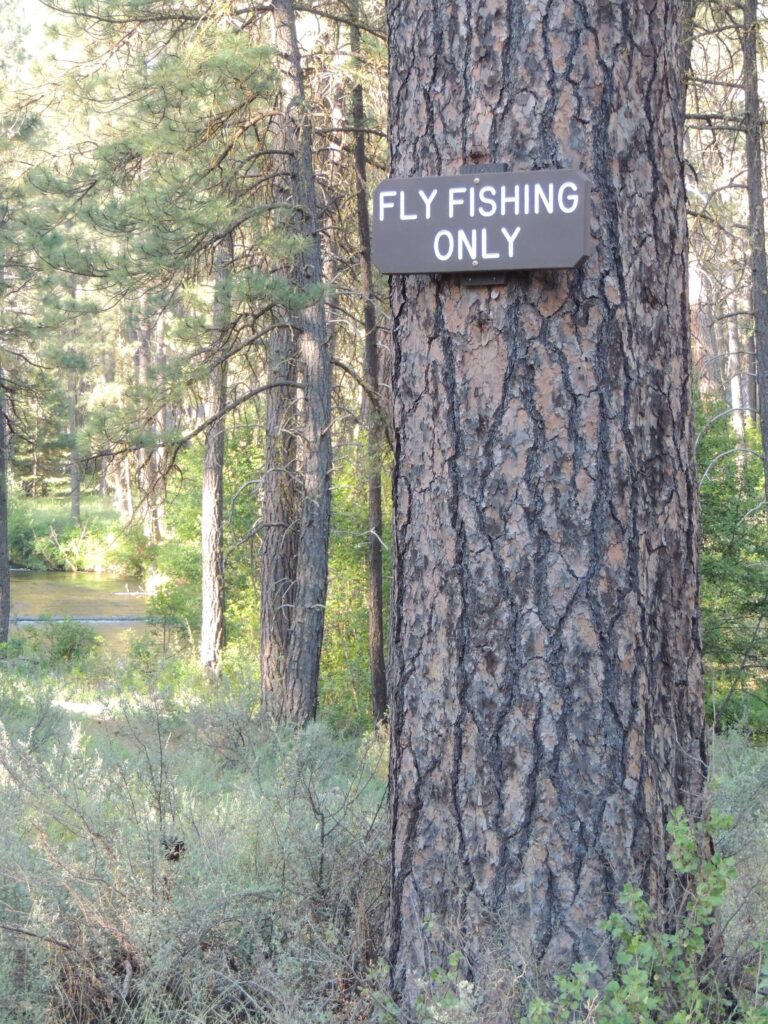
Fly Fishing Only on the Metolius. Photo by Gary Lewis
To contact Gary Lewis, visit www.GaryLewisOutdoors.com.
/articles/lifetime-fishing-memories