A Very Special Place
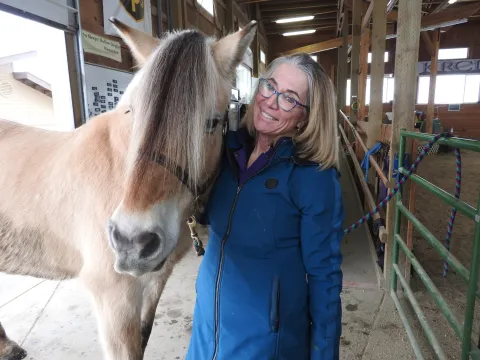
A friend of mine suggested I do a story about the Alatheia Therapeutic Riding Center near Wenatchee and I’m so glad she did. I visited there this past week and met with the co-founder of this very special place, Nancy Grette.
Nancy and her husband Glenn started this non-profit organization at their home on Sleepy Hollow Heights in 2011. The two had purchased several horses they kept on their property but their children had grown and left home and they were pondering what to do. That’s when a five-year-old girl who was physically disabled came out for a ride for her fifth birthday on one of their horses. The ride was an amazing experience for the child and Nancy said she knew what she was meant to do for the rest of her life.
After that Nancy and Glenn started offering weekly rides to disabled children and adults as a means of emotional and physical therapy. The word Alatheia is a Greek word from the New Testament that means “disclosed truth.” It specifically comes from Ephesians 4:15 where the Apostle Paul exhorts all to speak the truth (alatheia) in love to one another.
In Nancy’s words, “It is a way of living, and the riding center is how we choose to speak truth.”
The Alatheia Riding Center provides some 108 individuals the opportunity to spend an hour or more with and on their horses every week. This includes not only physically and mentally disabled children and adults but also combat veterans suffering from Post-Traumatic Stress Disorder. The rides take place on their 12 Norwegian Fjord horses, a small, stout, and ancient breed known for their gentle temperament and sure-footedness. Nancy says these horses are very empathetic and reflect the feelings of individuals they come in contact with. She also explained the weekly rides offer therapeutic benefits for their riders in a physical, emotional, and mental way.
Nancy explains the reason it is a weekly program (as opposed to a one-time experience) is that you need continued exposure to the movements of the horse to get the benefit.
“Physically, when an individual is on a horse, for every minute, a hundred balance accommodations are going on in the body. You are developing balance, and coordination as well as large and small motor skills which is helpful for physical disabilities. Those with learning disabilities benefit from the socialization and peers and executive function of the brain while those who suffer from trauma are ministered to by the horse in a way you can’t explain. The horses are intuitive and in the moment and there is no judgement. People can be who they are with a horse.”
The rides happen in an indoor arena or on a trail overlooking the Wenatchee Valley. This non-profit organization has several employees who work right out of the Grette’s home along with a number of volunteers. One group of volunteers is the barn buddies. These are young adults with developmental disabilities who work at the ranch for two to three hours a couple of times a week. Nancy says they started this program because they learned that once children were out of special education classes in school and on their own as adults, they didn’t have much in place to develop further life skills. The Barn Buddies program allows these individuals, ranging from 21 to 40 years of age, the opportunity to learn how to work on a ranch or in a barn and socialize with other individuals.
The Alatheia Therapeutic Riding Center has plans to expand from its current location soon so that it can increase the number of individuals it serves.
If you want to support this non-profit organization with donations or time as a volunteer contact them through their website at www.alatheiaridingcenter.com or call Tel. 509-630-8710.
John Kruse – www.northwesternoutdoors.com and www.americaoutdoorsradio.com
/articles/very-special-place
Did WA State Parks Cancel Thanksgiving?
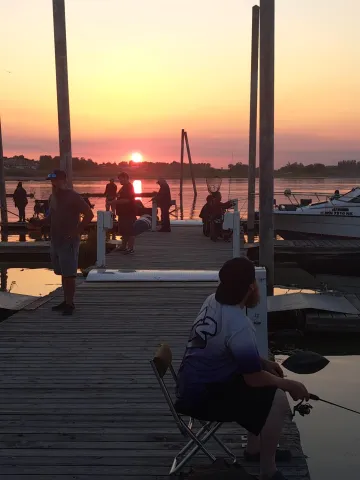
I was reading the September Washington State Parks e-newsletter, which covered the remaining free days available for day visitors to enter and park in Washington’s State Parks without a Discover Pass. One of those dates is the day after Thanksgiving: Friday, November 24th. I was curious why the State Parks and Recreation Commission chose to not call it a Thanksgiving or Day after Thanksgiving free day and emailed the media department to ask them why.
Having not received a response right away, I began researching this and found the day after Thanksgiving was first made a free day to enter state parks in 2017 which was called Autumn Free Day. It remained as Autumn Day through 2021, but in 2022 the free day after Thanksgiving got a new name, Native American Heritage Day. However, in 2023, the late November free entry day was once again designated, Autumn Day. Is this all about wokeness and cancel culture towards Thanksgiving? Did someone object to it being called Native American Heritage Day?
I did receive a reply from State Parks media staff shortly before this column went to press stating, “Washington State Parks and the departments of Fish and Wildlife (WDFW) and Natural Resources (DNR) have offered a Discover Pass “free day” the day after Thanksgiving for several years. The free day is not associated with Thanksgiving. It is the last free day of the year and coincides with autumn and school vacation for many families.”
So perhaps I’m mistaken about cancel culture, though the reply doesn’t answer the question as to why they changed the name from Native American Heritage Day back to Autumn Day for 2023.
Maybe it’s just the way things are done by our state agencies in Washington these days. A great example is the Hungarian partridge, nicknamed the “Hun” for short, which saw its name changed to the completely non-offending and uninspiring name, gray partridge, a few years ago by WDFW. Autumn Day falls into the same category. Afraid to offend any one person or group of people, you just change the name to something that won’t offend (or inspire) anyone.
Of course, that’s just my opinion. However, no matter what it’s called, November 24th would be a good day to get outside into one of our state parks instead of spending the day inside big box retail stores or in front of a computer all day shopping online.
*This article does not necessarily represent the opinion of Northwest Fishing or NW Reel Life magazine.
/articles/did-wa-state-parks-cancel-thanksgiving
How to Have a Blast At Brewster
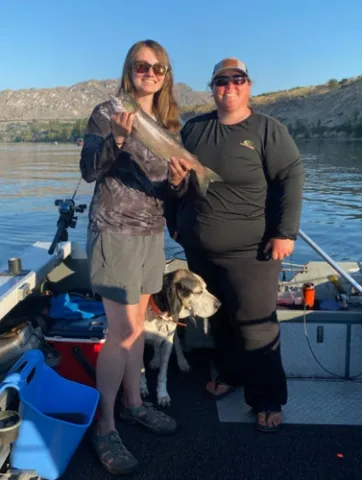
You’ve probably heard stories about the Brewster pool, if you haven’t fished it before. It’s one of the most productive and legendary fisheries in the state, and many fishermen look forward to fishing it every year. Thousands of chinook and sockeye salmon make their way up the Columbia River and stage in the cool waters of Lake Pateros (also known as the Brewster pool) before heading up the Okanagan River. The fishery typically opens up in July and can be extremely productive for both species of fish. Despite their long journey, the fish are willing biters and taste great on the grill or smoker. 20-pound chinook are regularly caught, and the sockeye are great eating quality.
It’s a fun fishery for a summer day, but learning how to fish it isn’t always easy. Brewster is about an hour north of Wenatchee, so it’s quite a drive. It can also be intimidating because there are so many other boats in the water. As long as you do some research and have patience, you’ll have a great time and catch some fish. Here’s some tips and tricks to help give you a successful day at the Brewster pool.

Chinook
The chinook fishery at Brewster tends to be a first light fishery, so grab the coffee and headlamps so you can launch in the dark. It’s a short run from the boat ramp to the pool, just stop when you see all the other boats! The most important thing to know about the Brewster pool is that it’s a trolling game. Some anglers jig or anchor up, but they are few and far between. There are just too many boats for anyone to anchor up. Most fishermen in the pool use cannon ball droppers and skip the downriggers. You can run anywhere between 4 to 12 ounces of lead, depending on the current and the stoutness of your rods. Brad’s Super Baits trolled behind 360 style flashers are the go-to, but many anglers have good success with spinners too.
Wrap or stuff your plug with tuna, herring, or shrimp to give it extra pizazz. If you run spinners, you can put some gel scent on them or hook on a coon shrimp. Don’t be afraid to swap out the hooks on your lures. Chinook have thick, tough jaws, so you want your hooks to stick. Troll between 1.5 to 2mph if you can, but you may have to match your speed with other boats if the pool is crowded enough. When fighting the fish, keep the pressure on. These fish will spit the hook if there’s any slack in the line, and they really tend to explode when they see the net. Adjust your drag and be patient.
Sockeye
If the chinook aren’t biting or you have bored kids in your boat, Brewster pool sockeye are plentiful and hungry! They are a bit smaller than Baker Lake sockeye, but they taste good and are much more numerous than the chinook. Like the chinook fishery, sockeye here are caught by trolling. There are usually two groups of boats in the pool, one that trolls faster for chinook on the current break between the Okanagan and the Columbia, and one that targets chinook closer to the mouth of the Okanagan. Chinook and sockeye do sometimes bite on the same gear, especially when the sockeye really start to stack up in the pool.
If you catch a chinook on sockeye gear, hang on! If you’re targeting sockeye, the same concepts you use when kokanee fishing apply. Use short leaders and lots of scent! Mack’s Lures offer a variety of sockeye lures that are all killer in the Brewster pool. Pink lures work best for sockeye. Pair them up with a dodger or smaller flasher, and you’re in business. Don’t forget to tip your lure with a piece of coon shrimp. You can cure your own or buy some pre-cured ones. No need to use the whole shrimp like you did for chinook that morning, you can just use a small tail piece. Thankfully, the sockeye bite all day, but the fish are more active in the early morning. Use lighter cannonballs than the ones that you used for chinook earlier in the morning. It’s worth using different weights to make sure your lines don’t tangle, particularly if you’re running 4 or more rods. The sockeye move deeper as the day heats up.
There’s a deep river channel somewhat near the shore that the sockeye like to hang out in, but definitely don’t be afraid to fish away from the crowd and try new areas. The sockeye in the Brewster pool are higher up in the water column than the chinook, so a good fish finder can really help you out. Just like their freshwater dwelling cousins, sockeye prefer a slow troll. Again, if you’re fishing in the crowd, you will probably have to match their general speed. Make sure your gear looks good before dropping it down. You’ll want your dodger to give your lure plenty of action to attract the sockeye, so shorten your leader if you need to.
Here’s a few words to the wise about the Brewster pool. Wear sunscreen! The sun can really beat down on those hot days between bites, you’ll be glad to have it on board. It’s a good idea to start fishing at first light and run back before noon, before the heat becomes too unbearable. Also, make sure to pay attention to your surroundings. The Brewster pool isn’t exactly a secret, so you can expect to have company. Sometimes there are hundreds of other boats out there, especially on weekends. Paying attention to the helm and giving other boats some space will help avoid flared tempers.
If you’d rather not deal with the potential stress, there are dozens of guides that you can book to fish the Brewster pool. You can kick back and enjoy the beautiful scenery, and come home with a cooler full of filets. Speaking of coolers, they are a must-have- both for cold drinks and for keeping fish. You’ll want to bleed and ice your fish ASAP for the best meat quality. Lastly, get to the boat ramp early and bring a good book. The boat ramp can get very crowded, especially when the sockeye are in. It’s a good idea to use the time spent waiting to prep your boat. This is another instance when having patience and a level head will help you out. If you’d rather not spend an hour or two waiting to launch, again, hiring a guide might not be a bad idea. Some of them actually launch the night before, anchor up, and sleep on the boat before they pick you up.
Once you’re done fishing for the day, head into the town of Brewster for lunch. There are several excellent restaurants, and downtown Brewster is worth exploring for the afternoon. It’s a great way to cap off your day of sockeye and chinook fishing! Fishing the Brewster pool is an unforgettable experience. Head out there and have fun!
/articles/how-have-blast-brewster
Pink Salmon Everywhere!
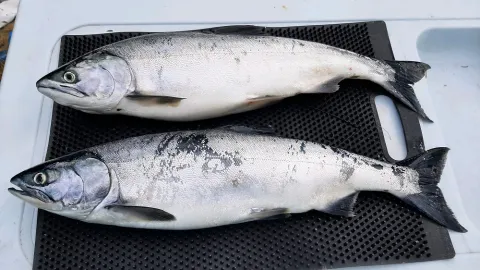
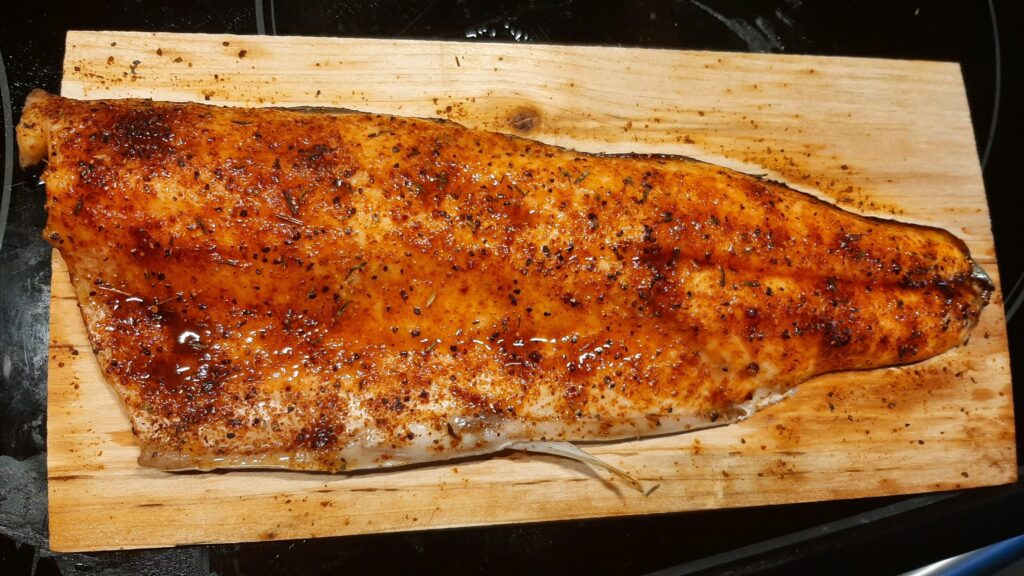
Introducing the unique Pink salmon: distinguished by their distinct life cycle, these fish follow a two-year journey, returning to their spawning rivers as two-year-olds. Adding to their allure is the intriguing fact that they exclusively run during odd years within Washington State. This year, an estimated 4 million Pink salmon are projected to traverse the Sound. Despite their classification as the smallest Pacific salmon, their tenacity in battle and delightful flavor remain unyielding. Their culinary versatility shines as they excel on the grill, particularly atop a cedar plank, and find their way into many anglers' smokers. For numerous enthusiasts, Pink salmon mark their initiation into the world of Washington State salmon fishing, thanks to their abundant presence and approachable nature compared to their larger counterparts.
Around this time of year, pinks flood the Sound and begin to stage near their home rivers. One of the best things about pink salmon is that you don’t need a boat to catch them from the shore or pier. They tend to swim within casting distance most of the time, and at this point in their life cycle they are still actively feeding, so they aggressively attack most offerings they see. With millions of pink salmon cruising by the shoreline looking for a meal, this is the perfect time to head to your local saltwater pier or beach and bring home some pinks for the grill.
Presenting A Jig
By and large, most shore anglers fish for pink salmon with jigs. There’s no need to use bait because pink salmon will aggressively bite a well-presented jig. Buzz Bombs and Rotators are the most commonly used jigs. They are easy to use and thousands of pink salmon readily gobble them up every year. They are designed to resemble a wounded baitfish, and they flutter erratically as they fall. Rigging them up is pretty simple: put on your buzz bomb, then thread on a bead and a bumper. Then tie directly to your hook (don’t forget to pinch the barb if it’s required). I usually use a 1/0 or 2/0 hook for pinks. To use jigs, cast out to where you think the fish are at, let your jig sink for a few seconds, then reel in and lift your rod tip up. Next, quickly lower your rod tip and let the jig fall. Repeat this until you reach the shore or catch a fish. Make sure to jig all the way until shore- sometimes the fish will follow your lure and strike at the last second.
Most of your strikes will be as the jig is falling. If you get a bite, quickly set the hook and keep up the pressure, especially if you’re using barbless hooks. As their name suggests, pink salmon love the color pink! It’s a good idea to start with that color, then switch it up if you aren’t getting fish. Buzz Bombs come in a variety of different weights. For pinks, I’d suggest using the lightest weight that you can cast well. If the bite is slow, try rubbing on some shrimp, anise, or herring scent. Gel based scent will cling to the jig longer. You can also thread on a small pink hoochie for extra action. If switching lures doesn’t work, you can switch locations as well. Sometimes just walking down for a few minutes on the beach can make all the difference.
Spinners
Another viable option if fish don’t seem to be hitting your jig is to use spinners. Vibrax spinners tend to be light, so it’s a good idea to thread on some bullet weights above a swivel to help get them down to where the fish are at. Several other brands such as Mepps make heavier spinners that will get to the proper depth without additional weight. Bring several options, and don’t be afraid to add scent or thread a hoochie on.
For your rod and reel, I’d recommend using a rod that can handle ½ to 1 ½ oz. weights, probably around 8 to 10 feet in length. I highly recommend using braided line because you can feel those sensitive bites easier, but mono will definitely do the job. A size 3000 to 4000 reel will have plenty of backbone to handle the fish. Remember to rinse your reel after fishing, saltwater is very corrosive and can cause damage if not washed off.
Where To Start?
Wondering where to start? Les Davis Pier, Edmonds Pier, Des Moines Pier, Browns Point, and Point No Point are all popular locations that reliably produce pinks every year. Any beach with a point and a good drop-off will most likely hold fish. Expect to have some company, though. Just be patient and try to avoid tangling your line with other anglers, especially if the current is strong. If you go to a pier, have a plan for netting your catch. Most piers are too far from the water to be able to use traditional nets. Pier anglers have taken to using crab rings. Just lower them down to the water and scoop up your fish. It takes some practice though! Beach anglers need not use a net, simply back up and swing your fish onto the beach.
As always, be sure to check the rules and regulations before going fishing. Don’t forget to swap those treble hooks for barbless single-point hooks, if required. You can buy barbless hooks or simply pinch the barb yourself with pliers. If you’re new to salmon fishing, WDFW offers salmon identification guides. It’s important to be able to tell the difference between salmon species, because they are regulated differently. You may be able to keep pinks but not chinook, for example.
In general, hatcheries do not clip pink salmon fins, so don’t worry about checking if they’re hatchery or wild. The way to identify pink salmon is by checking the gums and the spots on the tail. Pink salmon have large spots on the tail and a white mouth with black gum line and tongue. For optimum meat quality, don’t forget to bleed and gut your catch before going home. Despite what some anglers say, pink salmon tastes great on the smoker or grill. Since they don’t have as much fat as their cousins, they have a milder taste than other salmon, which some people actually enjoy more. My favorite way to eat them is to season them with some of my favorite rub and then grill them on cedar or alder planks. They’re a great summertime treat that the entire family will love!
/articles/pink-salmon-everywhere
Outdoor Serenity
Let’s take a step back away from fishing for a moment, please. That may be sacrilegious, coming from a magazine that is on its face wholly dedicated to fishing. I mean it’s called Reel Life for Pete’s sake, the pun couldn’t be any more fishing related. Consider the experiences that we add to our core memories from our passion for life outside the concrete jungle.
The sights and sounds of places we’ve just experienced for the first time. Those times with friends and family. The sometimes-trivial outings that we build into our routines because we are outdoorsmen and outdoorswomen at our core. Being present at those times is crucial to our ability to take a deep breath and hit the reset button.
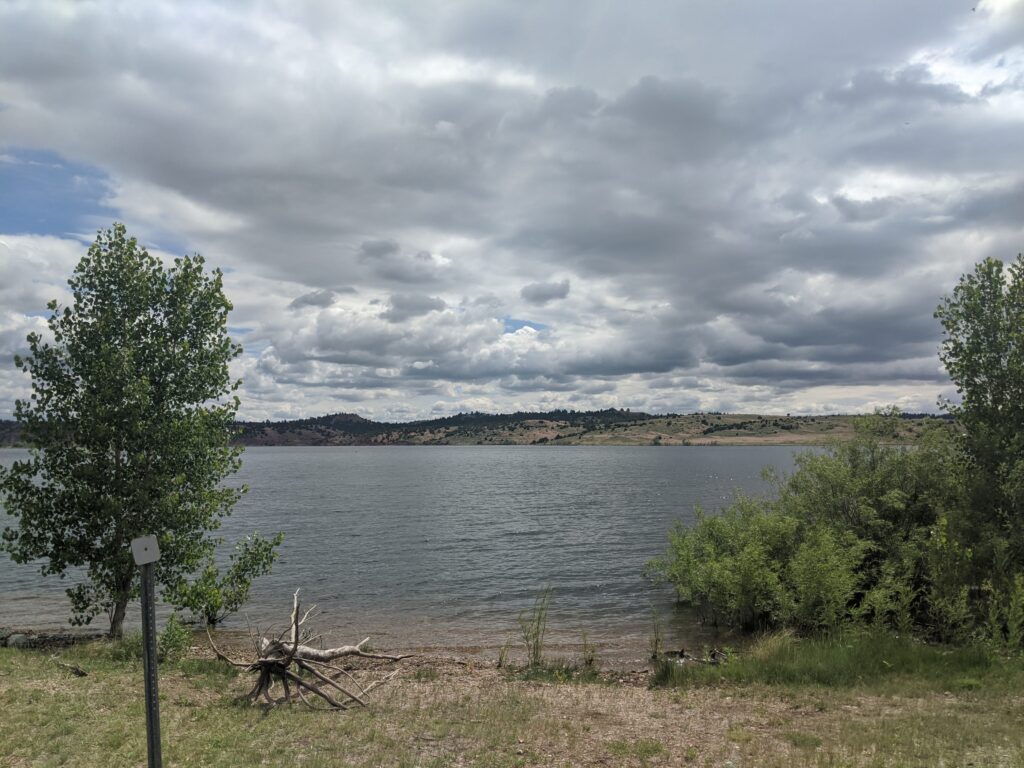
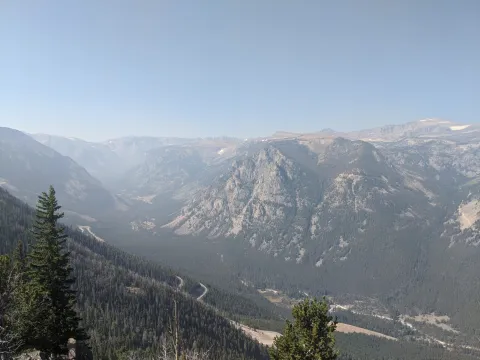
One of the most scenic drives I have ever experienced came from a trip along the Beartooth Highway in the heart of the Custer National Forest. It is one of those winding, nauseating, fear of height inducing drives that really make you appreciate the work of engineers. The drive up the mountain is narrow. A two-lane highway with an unforgiving drop on one side of the road and an immovable rock face on the other.
It makes me wonder how folks drive campers, boats, or trailers up such a road. There are points along the drive where, if you’re on the outside lane, by peering out of the window, you’ll realize the full effect of the over 9,000-foot drop off the road, add another nearly 2,000 feet if you decide to get to the very top. It’s a road so treacherous, it is closed during the wintertime, and rightfully so.
In addition to these crystal-clear memories of peril, are the wondrous views that come from the observation point. The attraction looks around 360 degrees and has all the amenities you’d expect: a bathroom, parking, informational signs, and posters. But, more importantly, there are the sights. Mountains, that from below looked ominous, are now eye level and expansive. On a clear day, like the one we thankfully had when we made the journey, that allows you to see for miles.
The funny thing about being at the point is my lack of memory about the people or whatever else was going on. I know there were other cars in the parking lot and people walking around the trails, but I really can’t remember any of them. The calmness of the moment and realization of these breathtaking views is something I’ll keep with me. Even in these moments where modernization blends, crosses over, and cheapens the outdoor experience, it’s still easy to find ourselves appreciating what the outdoors can do for us.
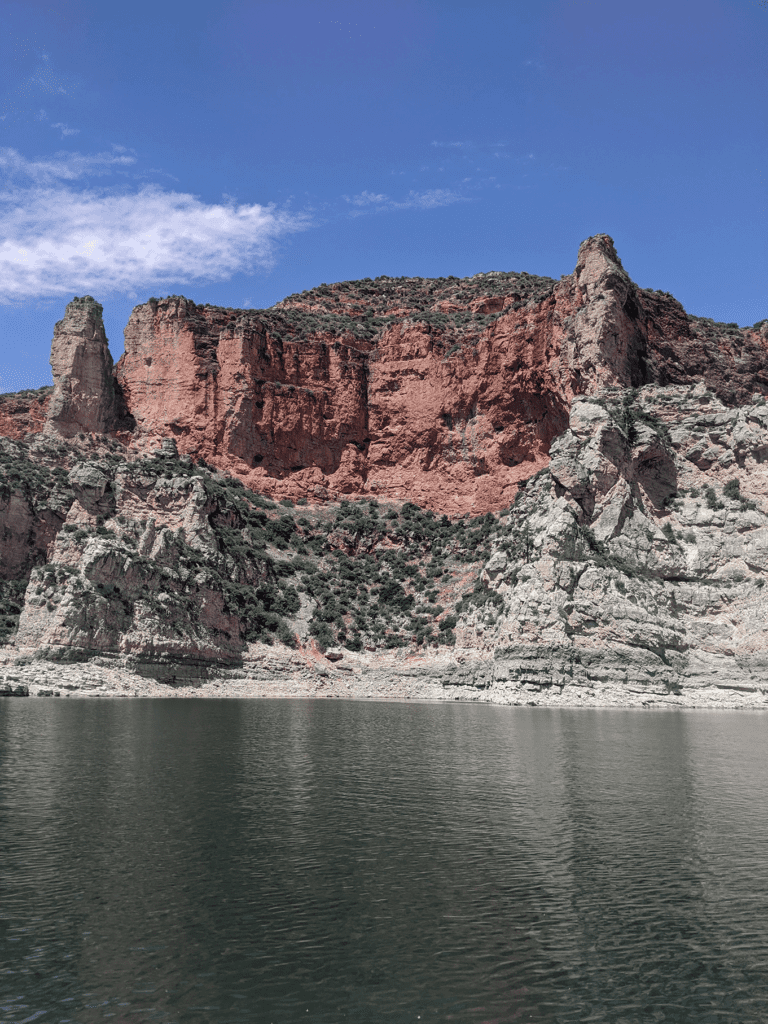
Ok, let’s bring it back to fishing, just slightly. The Bighorn Canyon sits in the heart of the Crow Reservation in Montana’s eastern third of the state. The area is simply gorgeous. It doesn’t hurt that the area produces some of the highest quality trout you can find, as is the case in many of the Blue-Ribbon Montana waterways. For the hiking or ATV enthusiasts, you’ll want to stop at Pryor Mountain, as the Bighorn Canyon offers a few trails along the way, but the area primarily runs along the Bighorn River. A few fishing trips with a close friend of mine will always draw me back to the area and the peacefulness I experienced, with one memory, particularly in mind.
Did I mention the canyon is incredible? It really cannot be understated the jagged edges of the cliffs and the deep red colors slowly fading to a subtle yet muted granite. The water is a pristine blue. Seemingly untouched and calm as glass. We nearly had the canyon to ourselves except for a few families enjoying the day on the water and some kids fishing from the dock.
My buddy in fact complimented the kids on their small bucket of fish they had accumulated and in turn, they gave him the lure they’d been using. It was a fun little exchange and was nice to see that kids can still be thoughtful. And of course, we used the lure and caught some of our own! We put my boat in the water and didn’t travel too far from the dock, maybe a few hundred yards into a nice rocky hole that was loaded with bass.
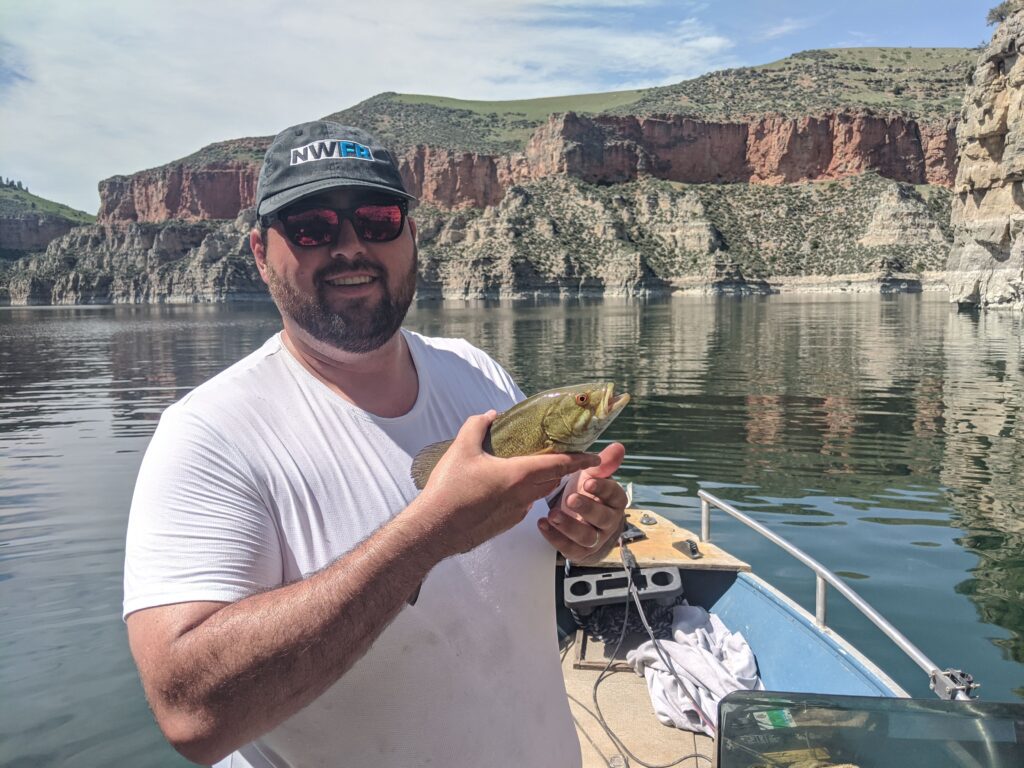
We trolled around slowly to different bays within the river for a few hours and continued to pull out solid sized fish. The kind of fish that makes you appreciate being outdoors with a consistent bite and decent weight behind them. All the while, talking about work, family, plans, and all the other things you’d expect to visit about. It was a fishing trip I’ll remember fondly because of the time with a valued friend and the opportunity for breathtaking views. It was also memorable due to a trailer tire popping and me driving on the axle for who knows how many miles, but that’s a story for a different time.
Let’s not mistake the vivid memories from our time appreciating the tranquility of the outdoors as more meaningful than the opportunities outside we capitalize on through the routine of our lives. For me, those instances take shape in the form of an activity as easy as walking my dog. He’s a hunting dog by trade and at 7 years old is still full of energy and prey drive. Tracking anything and everything is still a large part of his world, even if the hunting season is a few short months. Those other 9 months of the year he’s relegated to leashed walks around the hardware store or some off-leash trails and parks around town. Taking the dog out for a walk is not unique or special.
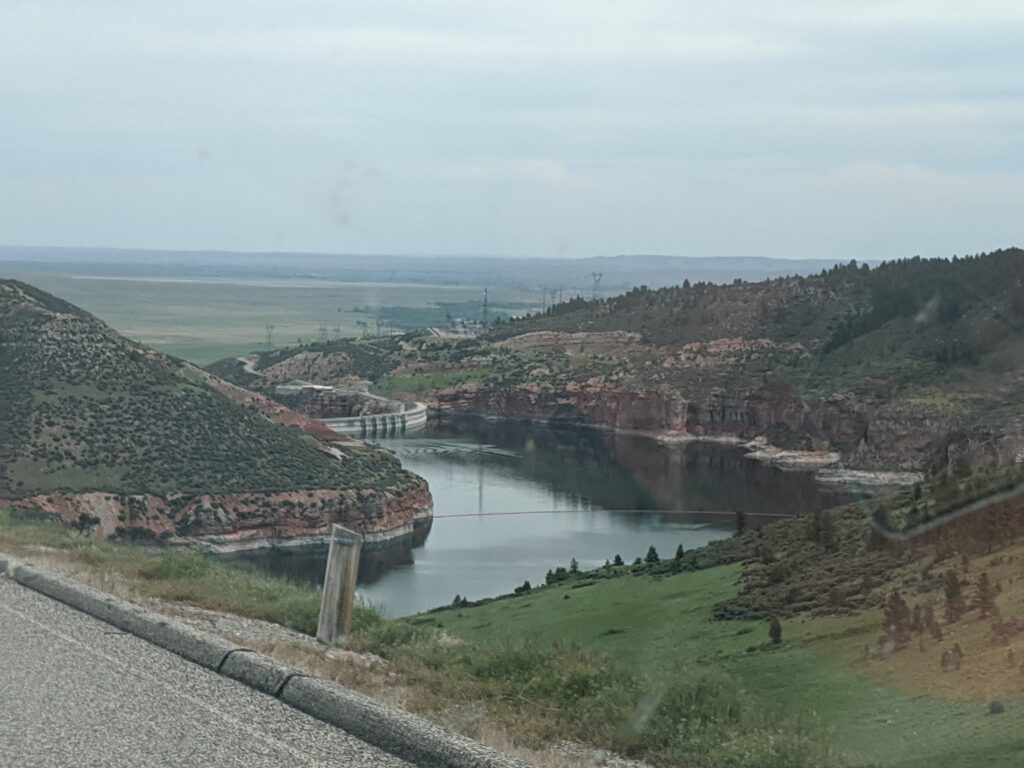
Perhaps you reading this have a dog yourself. You probably do the same routine part of your day as I do mine. Get up, go to work, come home, spend time with your family, and take the dog on an evening walk. Rinse, repeat. I would challenge you to be present in those moments outside if you aren’t already. I’m guilty of putting on a podcast during a walk or listening to music like anybody else. But I’ve tried to make a habit of putting these things aside if I’ve got the opportunity. A leashed walk down the street? Fine, music’s not a big deal provided you’re on the sidewalk. The hardware store? Well, we’re here buying stuff so it’s not much of an outing for the dog, but it is a chance for socialization and to break up his day. What about a hike on a trail or a stroll on some public land?
Those are the outings I try to be cognizant of. Quiet. A passing hello to another person briefly, and then back to isolation. Although built into the day-to-day of everyday life, something as simple as a walk with the dog can bring a calmness and recognition for everything we experience beyond our home’s front door or the office. Why drown out the peaceful silence when in that moment?
/articles/outdoor-serenity
5 Frozen Treasures
Washington State, known for its stunning landscapes and diverse outdoor activities, offers a unique and thrilling experience for anglers during the winter months, Ice Fishing. As the temperatures drop and the lakes freeze over, enthusiasts from all over gather their gear and head to some of the state's most picturesque frozen waters. In this article, we’ll dive into the icy wonderland of 5 lakes that stand out as prime destinations for ice fishing in Washington: Curlew Lake, Bead Lake, Sacheen Lake, Banks Lake, and Eloika Lake.
Curlew Lake: A Frozen Oasis In The Northeast
Curlew Lake, nestled more in the Northcentral portion of the state, transforms into a winter wonderland, drawing anglers seeking a tranquil ice fishing experience. The lake spans over 900 acres and is surrounded by snow-covered mountains and hills, creating a beautiful backdrop to your frozen adventure.
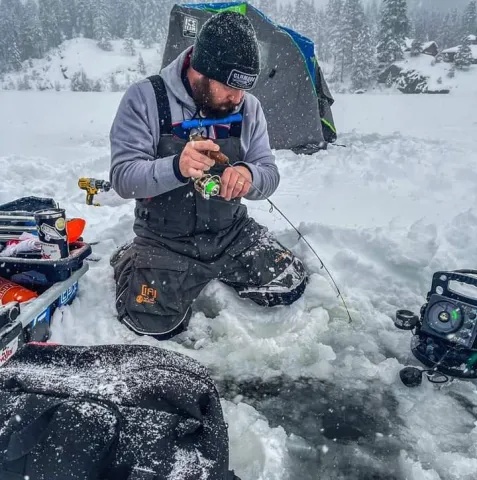
The lake is home to a variety of fish, with Rainbow Trout and Yellow Perch being the most sought-after during the winter months. Anglers often set up shanties or their ice fishing spots right outside the state park patiently waiting for the telltale signs of the fish below, which doesn't take long. The vast mud flat just outside the park holds amazing numbers and is easy to get into. The camaraderie among anglers and the stunning scenery make Curlew Lake a must-visit destination for any Ice Fishing aficionado.
Bead Lake: A Hidden Gem in The North Mts.
Nestled in the North of Spokane Mountains, Bead Lake is a hidden gem that offers a secluded and serene ice fishing experience. The lake, surrounded by dense forests and snow-covered peaks, provides a pristine setting for anglers looking to escape the hustle and bustle of everyday life.
Bead Lake is known for its healthy population of Kokanee, and the popular large lake trout that roams the depths. As large marks appear on your sonar, don't be surprised if it's not a laker, but a monster of a burbot making this lake an enticing destination for those seeking a variety of catches. As you set up your gear on the frozen expanse of Bead Lake, the quietude and natural beauty will transport you to a world of tranquility, making each catch a memorable moment.
Sacheen Lake: Serenity and Splendor In Pend Oreille County
Located in Pend Oreille County, Sacheen Lake offers a charming blend of serenity and splendor during the winter months. Surrounded by evergreen forests and snow-covered hills, the lake becomes a haven for ice-fishing enthusiasts seeking a peaceful escape.
Sacheen Lake is known for its panfish, including perch and crappie, which are abundant and fun to chase. Also, fun to target nice trout under the ice as well, with good chances of catching! Rainbow, Brook, and Tiger Trout provide excellent opportunities for ice anglers to enjoy a variety of catches. As you drill your fishing holes and set up your equipment, take a moment to absorb the quiet tranquility of Sacheen Lake, where the only sounds are the soft crunch of snow beneath your boots and the occasional call of a winter bird.
Banks Lake: A Vast Frozen Playground in Central Washington
For those looking for a more expensive ice fishing experience, Banks Lake in Central Washington is a prime destination. This reservoir spans close to 27,000 acres and is known for its diverse fish population, including Walleye, Rainbow Trout, Burbot, and Whitefish which are the most popular to go after.
Ice fishing on Banks Lake is a social affair at times, with clusters of anglers setting up their shanties in popular spots and many staying overnight. The vast frozen expanse provides ample opportunities for exploration, and to get away from the crowds if needed. As the sun sets over the snow-covered horizon, the frozen lake transforms into a canvas of colors. Banks Lake is not only a haven for anglers, but also a visual spectacle that captivates the senses.
Elokia Lake: An Ice Anglers Original
Nestled in the heart of Northeastern Washington State, Elokia Lake transforms into a winter wonderland for avid ice fishing enthusiasts. As temperatures drop, the lake's icy surface becomes a haven for those seeking the thrill of angling beneath a blanket of snow.
Eloika Lakes expands over 600 acres, providing ample space for ice fishermen to explore its frozen expanses. One of the primary draws for anglers is the diverse range of fish species that inhabit this lake. Brown Trout, Rainbow Trout, Large-mouth Bass, Perch, Crappie, and Sunfish. Seems that Crappie are what attracts most ice anglers.
The savvy ice anglers will target the Brown and Rainbow Trout early season just a couple of feet below the ice and near creek outlets. Eloika’s cold waters create an ideal environment for these fish. Anglers can also test their skills against the Large-mouth bass, known for their elusive behavior even in freezing temperatures, and they are big in this lake, especially on an ice rod.
Yellow Perch and Crappie add a variety to the fishing experience at Eloika. These panfish offer more of a relaxing angling experience, making the lake suitable for seasoned veterans and beginners alike. Perch are abundant and make sure to check the regulations for the Crappie size and limit.
As ice fishing shelters and anglers dot the frozen landscape, camaraderie flourishes among anglers who gather to share stories and tips. Eloika Lakes icy embrace beckons, offering a unique and thrilling experience for those willing to brave the cold pursuit and snag the perfect catch!
/articles/5-frozen-treasures
Trout Fishing: When Life Gives You Lemons.
Farmed. Hatchery. Wild.
I fed a rusty orange streamer into the current, threw an upstream mend, and let it swing. We call it First Water. It's what you get early in the morning when you get to the river before the next guy. First Water makes you smile after a hard week at work. Like making lemonade out of lemons.
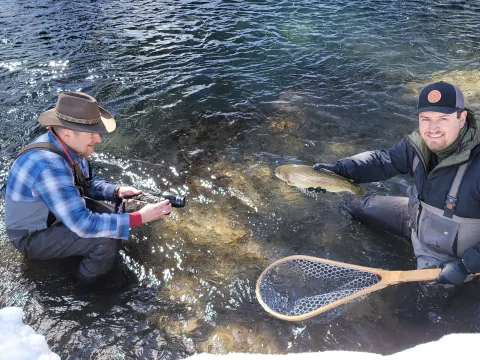
A trout hammered the fly and the tippet snapped. Heart pounding, I cut the leader back to 8-pound, tied on another fly and cast quartering-down. This time when the fish hit, it turned and charged, coming straight out of the water. Five minutes later we slid the net under a four-pound gnarly, hook-jawed brood stock rainbow. We have learned from experience it's hard to revive the big hatchery rainbows, so it was an easy decision to keep it for the table.
FARMED, HATCHERY, WILD OR NATIVE?
Here's a thing that doesn't make sense. We go to the grocery store and complain about the price of groceries and then we drive to the lake and catch and release a limit of rainbow trout at $10 a pound. I've done it.
Hey, those fish were put there to catch and keep. It's healthy food, high in omega-3 fatty acids and B vitamins. Easy to catch (sometimes). Easy to clean. Tastes good. Good for you.
Think of it like this: we have rainbows, cutthroats, brook trout, brown trout, bull trout, and lake trout in our lakes, rivers, and hatchery raceways. Some of them end up behind the butcher's glass at the grocery store. How do we tell where they came from? The ones in the cellophane and Styrofoam, that's easy. Those are farmed fish, which are generally shoveled a high-quality pelletized food and then fed a carotenoid called Astaxanthin which gives the meat an orange color and improves the taste.
According to Luke Allen, from the Wizard Falls Hatchery and Tim Foulk from the Fall River Hatchery, astaxanthin is produced by microalgae which is ingested by small fish and invertebrates like krill, which are then ingested by fish.
In Oregon, hatchery-raised rainbow trout (and cutthroats) are classified as legals (usually 8 to 12 inches), trophies (usually 14 to 18 inches), and brood stock, which are the surplus breeding trout that tip the scales somewhere between four to ten pounds. In Central Oregon, these fish end up in places like Pine Hollow Reservoir, Walton Lake, South Twin, and Fall River. Hatchery trout may also be released as fingerlings in waters like Lava Lake, East Lake and Diamond Lake where the natural feed is so good the fish grow fast. Fingerlings are also released in the high lakes every other year. Fingerlings, although raised in hatcheries in geometric order, tend to behave and look more like wild trout as they reach a harvestable age.
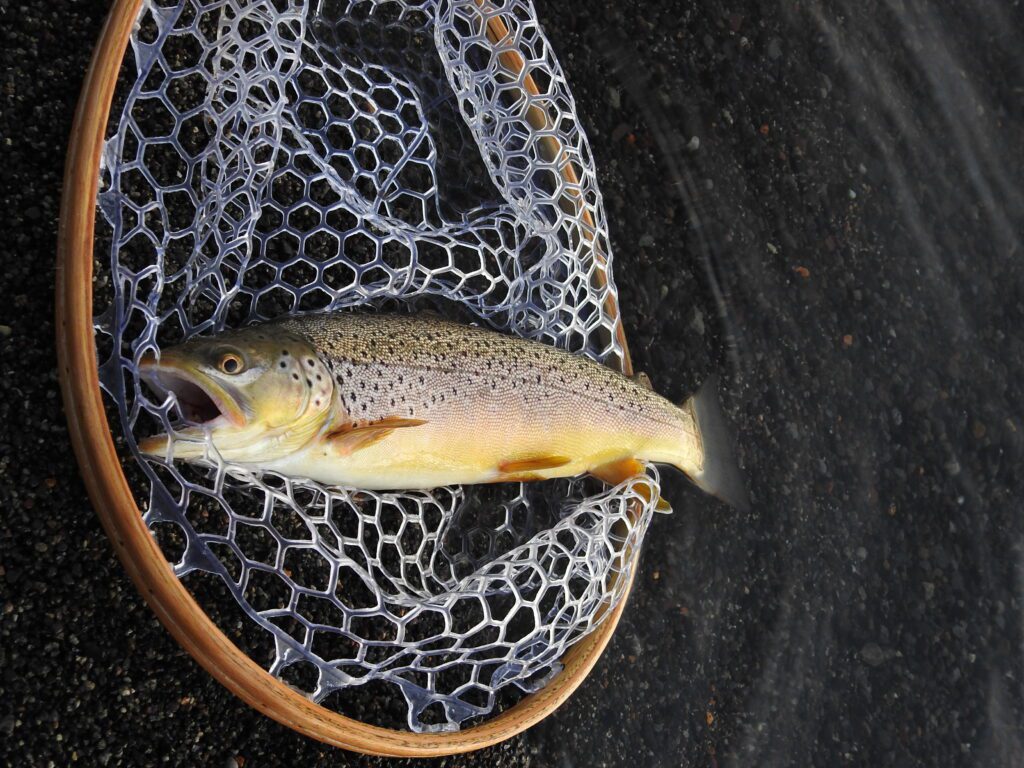
The terms wild and native can refer to the same fish or mean two different things. Brown trout, brook trout, and lake trout are not indigenous to Oregon but were introduced. Browns come from Germany and brooks come from the East Coast. That's why we refer to them as German browns and Eastern brooks. But if they were hatched in gravel we call them wild trout.
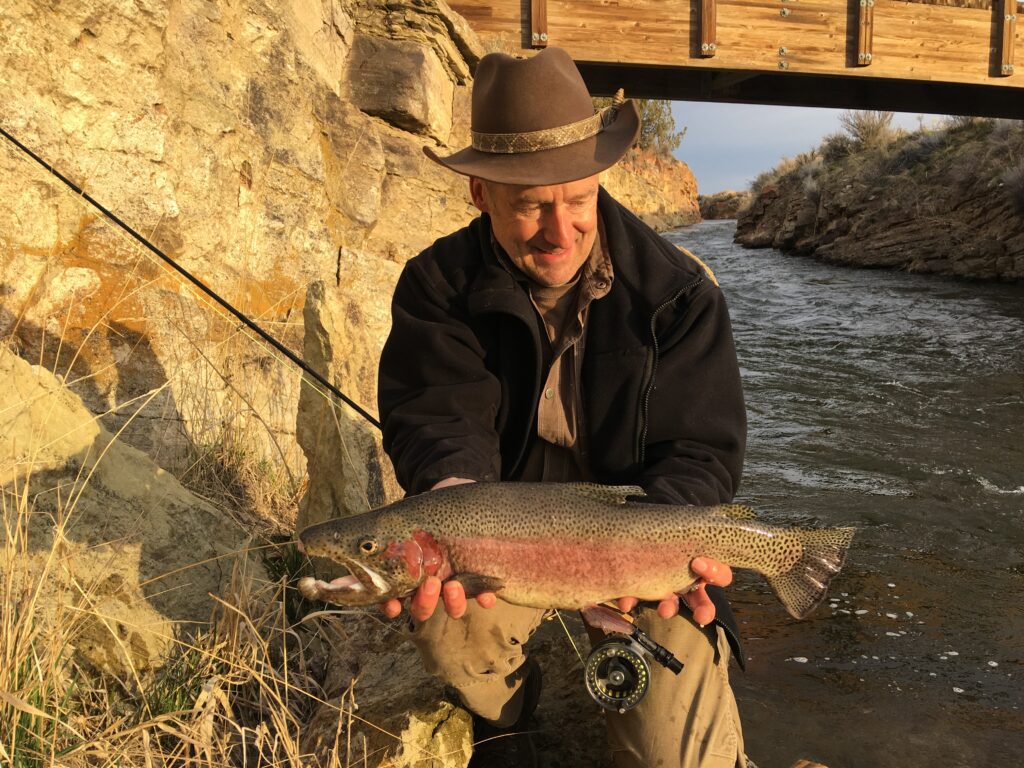
Photo courtesy Don Lewis
The term native is inclusive of rainbows, cutthroat and bull trout. In some cases these fish may be caught, kept and eaten, but it’s a good idea to release them to spawn and prosper. If you catch a brookie in the high lakes, hey, that's some of the best wild food you can get. And you are not eating a native fish.
A steelhead is a rainbow trout that migrated from freshwater to the ocean and returned. If a person eats farmed steelhead, it is probably not steelhead at all, but rainbow trout packaged as steelhead. An angler that catches and eats a fin-marked steelhead has consumed a hatchery steelhead. Surplus steelhead that returned to their hatcheries in places like Nehalem or Three Rivers are often trucked to coastal lakes and set free to give anglers another chance at them. Because they will probably not thrive in the lake, the highest use of these fish is to turn them into a good meal.
Fisheries managers sometimes struggle with the divide between the consumptive and the catch-and-release ethic.
Diamond Lake was devoid of fish before it was stocked by mule trains in the early 1900s. The food-rich lake still grows fish to trophy proportions and not enough gets taken home by sportsmen. It's a resource we could be making better use of, and the same principle applies all over the state from Lake Selmac to Wallowa Lake to Bikini Pond to Rock Creek Reservoir to Lava Lake. Those fish are there to eat. And there are some really good things like dill, parsley and lemon that go great with a pan full of eastern brookies or hatchery 'bows.
That's why I say when life gives you lemons, go catch a trout.
For a copy of the Fishing Central Oregon book, send $29.99 to Gary Lewis Outdoors, PO Box 1364, Bend, OR 97709 To contact Gary Lewis, visit www.GaryLewisOutdoors.com
/articles/trout-fishing-when-life-gives-you-lemons
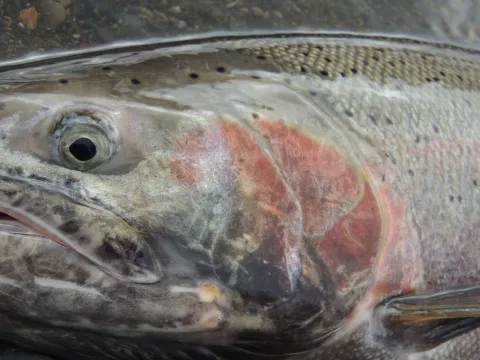
Telling the Truth about Surplus Steelhead
"Recycled" ocean-going rainbows breathe big fish bounty into Oregon's small lakes and ponds.
I didn't want to tell a lie in front of the pastor. But I had a ten-pound hatchery steelhead and I didn't feel like blabbing to this guy about where it came from. My pastor wanted to go steelhead fishing and we picked a Monday morning. To get to one of my favorite pieces of river, I had to walk past a trout lake. This lake was stocked a half a dozen times in spring and summer, and sometimes ODFW would put surplus summer-runs in it.
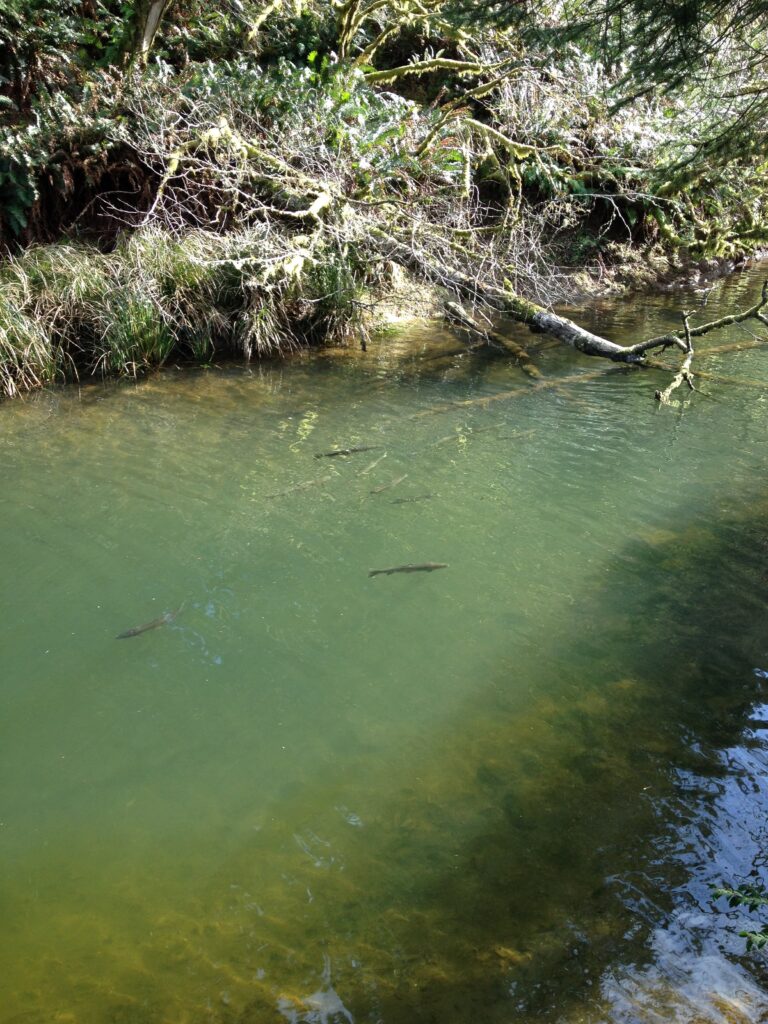
Coming back from the river, I carried my ten-pound spinner-caught prize past the end of the lake. At that moment, a fisherman, spinning rod and worm carton in hand, appeared in our path.
"That's a huge trout," the angler gaped. "Did you get THAT in the lake?"
"Yep." Bald-faced lie.
"Where did you catch it?"
"Right there at the end of the lake," I said. Bald-faced lie Number Two.
We walked on, the pastor and I, and after a suitable space had been put between us and the fisherman, he said, "I guess sometimes you have to lie." Truth.
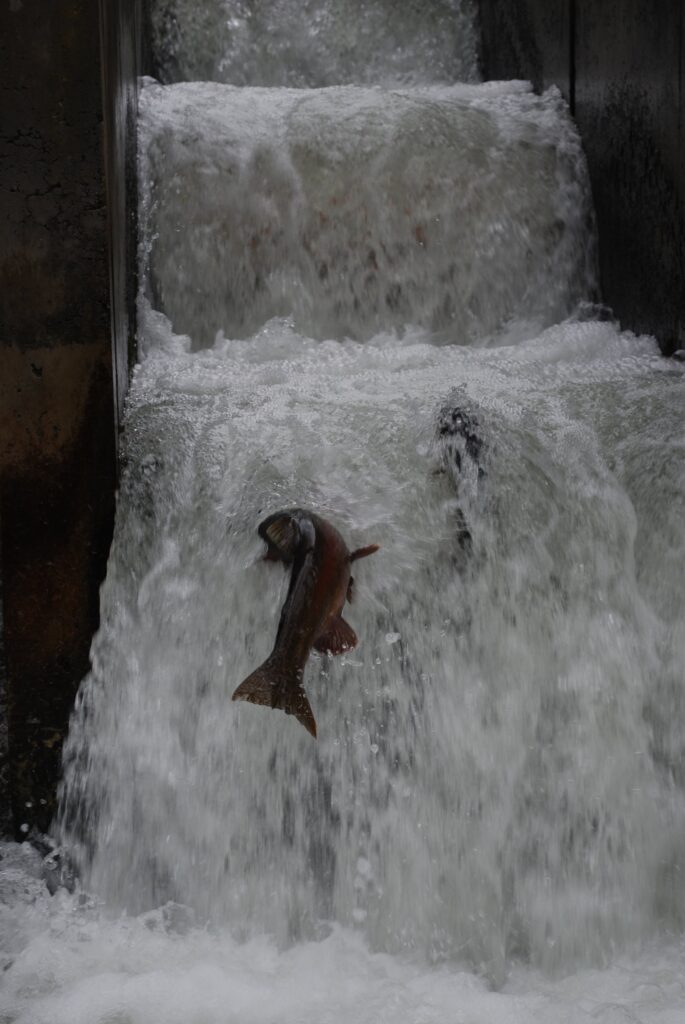
In fact, I could have caught that steelhead in the lake because that lake was, and still is, one of the spots where the Oregon Department of Fish and Wildlife deposits surplus fish they don't need for spawning purposes. On any given day, a trout fisherman with a jar bait or a worm could luck into a steelhead. Wherever fish and wildlife agencies artificially spawn steelhead, there is likely to be a surplus of sea-run rainbows. And when that happens, the fish have to go somewhere.
In some cases, steelhead are picked up and trucked back downriver for another trip past the fishermen. Another option are local food banks. Sometimes surplus fish end up going into a big hole in the ground to feed the worms. The highest use might be to give anglers one more chance. That's why ocean-going steelhead (and sometimes salmon) end up in lakes and ponds.
WHERE & WHEN
Decisions on whether or not to stock lakes and ponds are based on the numbers of fish and the run timing. Most of the summer steelhead in the surplus program on the North Coast come out of the Cedar Creek Hatchery. In most cases, the steelhead at the end of the line is likely to be a buck. The policy on the north coast is for female steelhead to be stripped of eggs, then put back into the river, while the males are separated to spend the rest of their days in a lake.
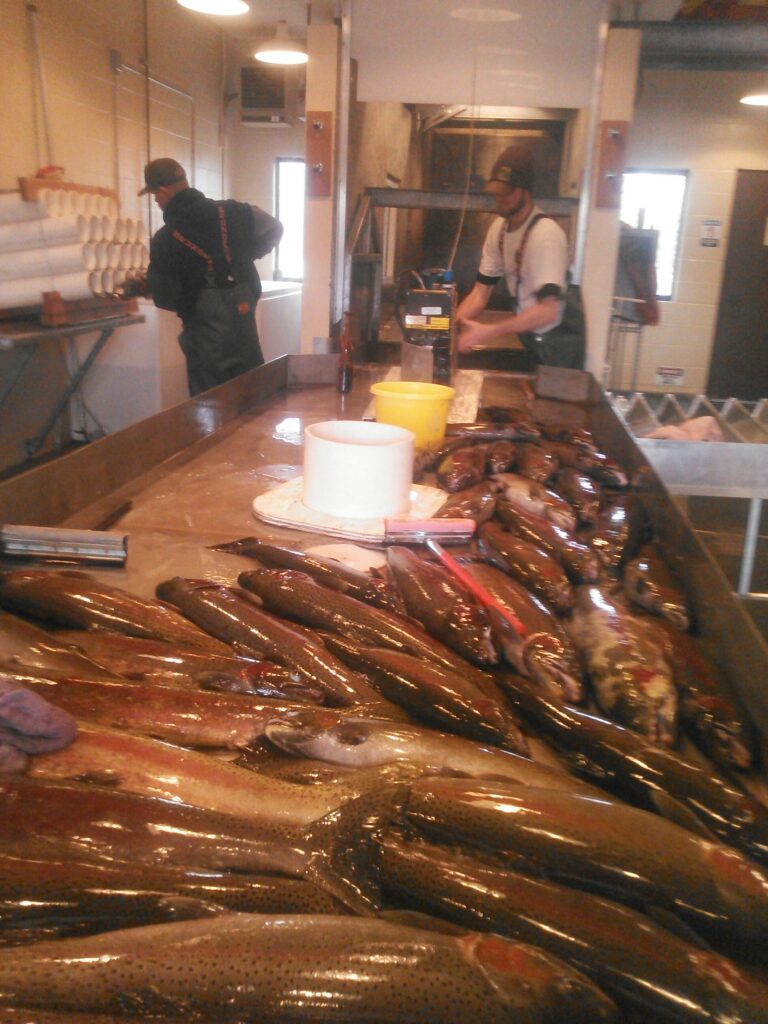
On the Oregon Coast, the Cedar Creek Hatchery at Hebo raises fish that end up in the Nestucca and nearby streams. Both summer-run and winter fish can end up in the recycling program, but summer fish, when they are stocked in a lake, usually hit the water in November, while winter-runs might be available in February and later. In any case, the steelhead don't seem to last in the lakes past mid-summer.
- Coffenbury Lake, near Astoria, is one of the beneficiaries when there are surplus steelhead in nearby hatcheries.
- Town Lake, near Pacific City, is one of the first to be stocked with steelhead when there is a surplus (summers or winters) from the Cedar Creek and Nehalem hatcheries. Vernonia Pond, Lost Lake (in the Nehalem drainage), Lake Lytle, and Sunset Lake are also stocked with steelhead.
- Cape Meares Lake, north of Tillamook, and Loren's Pond, east of Tillamook, are the other candidates for stocking if there are enough fish to go around.
- On the mid-coast, 120-acre Olalla Reservoir occasionally gets steelhead when there is an excess in the Siletz River trap.
- South along the coast, inside the city limits of Port Orford, an angler can sit on the shores of Garrison Lake and have a pretty good chance at tangling with a big steelhead at the right time of year.
- Middle Empire Lake in Coos County is another place where surplus steelies are deposited in late winter.
- In the Willamette region, Faraday Lake, east of Estacada, is one of the first waters to get steelhead if there are too many for the hatchery to handle. Walling Pond in Salem and Junction City Pond are also on the surplus stocking schedule.
- In Eastern Oregon, surplus fish from the Big Canyon hatchery often end up in Roulet Pond near Elgin and also in Weaver Pond (a.k.a. Wallowa Wildlife Pond). Surplus steelhead that return back to Enterprise are recycled to Marr Pond.
- Peach Pond in Ladd Marsh is another potential steelhead fishery if surplus numbers are high. March and April are the best timing for these eastern Oregon waters.
# # #
Gary Lewis is the host of Frontier Unlimited TV and author of Fishing Central Oregon, Fishing Mount Hood Country, Hunting Oregon and other titles. Contact Gary at www.GaryLewisOutdoors.com
The End
/articles/telling-truth-about-surplus-steelhead
Early Ice Fishing Tactics for Trout
While frigid temperatures and dustings of snow mark the end of the open water fishing season for some, it signals the beginning of another exciting ice fishing season for others.
Previously a sport dominated by anglers in the Midwest and Canada, ice fishing in the inland Pacific Northwest has boomed in recent years thanks to its reputation as a fun winter activity for the entire family, as well as the vast number of accessible lakes in the region.
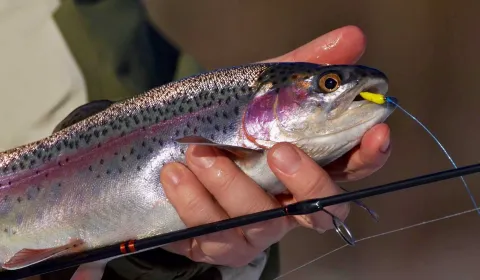
Northwest lakes offer plenty of hard water game fish opportunities, including yellow perch, walleye, and other schooling fish, but there’s also plenty of trout species ripe for the catching — and these salmonids should be at the top of any ice anglers’ target list. Ice fishing for trout, however, is different than other species, but it can be just as plentiful.
Using the correct gear when ice fishing for trout
While not impossible to use when ice fishing, a typical 6- to 8-foot trout rod is likely to be a nuisance relatively quickly on the ice, as you’ll be sitting on a bucket most of the day. Instead, an affordable, 30- to 36-inch ice fishing rod with light- to medium-action is plenty sufficient for nearly any type of ice fishing adventure.
Spool your spinning reel with 4-pound fluorocarbon line and you’ll be in good shape for anything that bites, but especially trout. If you’re concerned about your line, there’s many fluorocarbon options that are designed for ice fishing that will handle the conditions better, but that’s simply personal preference.
In addition to your rod, reel, and line, you’ll want all the ice fishing staples, including an ice auger, as well as a bucket, a rope, ice scoop, warm, layered clothing, and a sled to tow it all onto the ice with you — or, even better, a snow machine.
Locating trout through the ice in early winter
To catch the fish, you first need to find the fish. On ice, that can be tricky, but trout, including rainbow, cutthroat, and browns, all cold-water species, are predictable in the winter months.
Trout crave cool, highly oxygenated water. Thus, as the lake turns over, they move into cold, shallow water, while panfish, including yellow perch, evacuate the shallows and head into deeper drop-offs. The trout’s migration into shallow water is ideal for ice anglers, as you can target them in flats as shallow as 4- to 8-feet. This is ideal for early season ice fishing, as it’s just short walk from the shoreline, an area that typically features the safest ice on the lake.
Experienced ice anglers will troll during the open water season to scout areas on the lake that will inhabit trout in the winter months. To locate these trout-rich areas, use electronic depth finders to look for areas with large, shallow flats, between 4- and 20-feet, and drop-offs adjacent to weed lines. It’s common for trout to cruise these drop-off edges and seek forage along the weed lines.
Once you’ve settled on a spot to fish for the day, it’s time to start drilling. Trout, though, are easily spooked, therefore moving around and drilling holes throughout the day can be counterproductive. Instead, pre-drill your holes early in the morning. Using your ice auger, begin drilling holes close to shore in 3- to 6-feet of water, drilling into deeper water every 5- to 10-feet until you see weeds. Once you’ve found the weed line, begin pre-drilling holes from the weed line into deeper water in a Z-pattern to cover more ice.
If the lake you’re fishing doesn’t feature many weeds, you’ll instead look for large, flat regions with muddy lake floors. Use the same technique, drilling in a Z-pattern, into deeper water, as later in the day, the trout will become less active and move into these areas, suspending themselves in the middle of the water column chasing small prey.
Selecting the best tackle for targeting trout through the ice
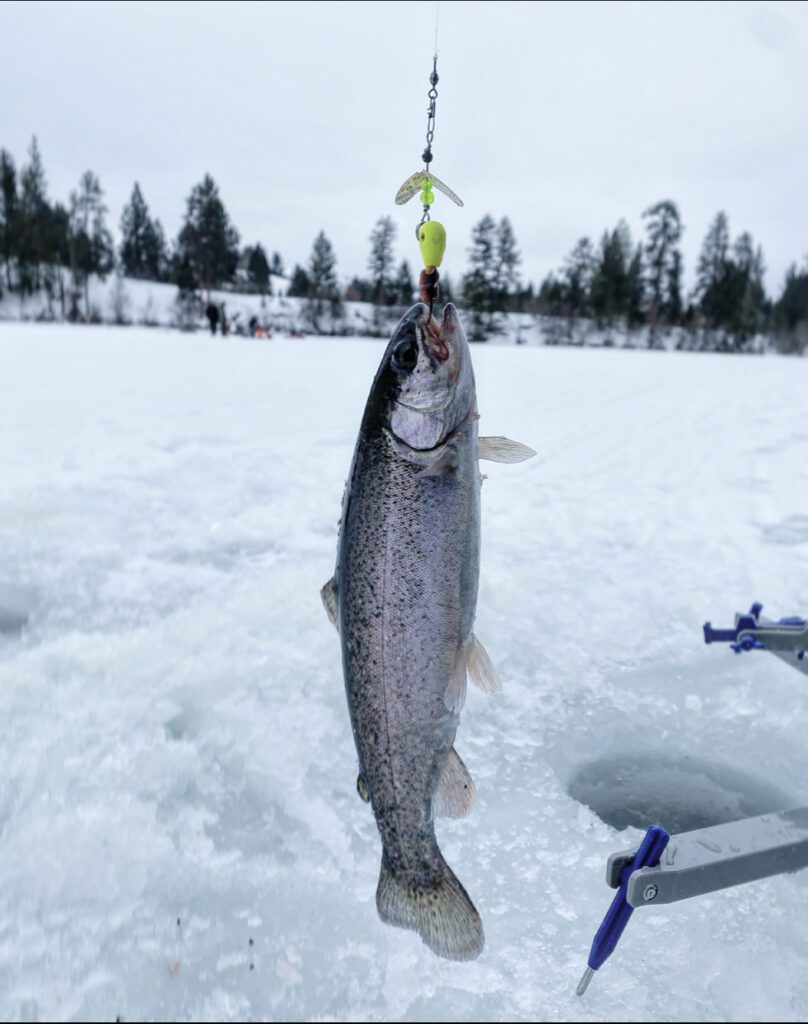
Trout, being the apex predator in most lakes, will cruise the weed lines looking to aggressively find any snack available to them, thus it’s imperative that you have reactionary type baits that emulate a dying baitfish to entice them to bite.
Small spoons, such as the Mack’s Lure Sonic BaitFish (1/16 oz. to 1/6 oz.) and the Mack’s Lure Hum Dinger (1/8 oz.), tipped with artificial pink maggots, meal worms, or corn will do the trick — and don’t be afraid to add scent to the lures and bait as well. When aggressively jigged, these spoons will create flutter and vibration, attracting trout from further distances.
If you’re not having luck with spoons, it likely means the trout aren’t as aggressive. Instead, use the smallest bait possible to reach your target depth. Try a Mack’s Lure Glo Hook (#6), tipped with maggots, corn, or meal worms, and a little split shot to get your presentation to the bottom.
Don’t be afraid to mix up your colors often. Begin with natural colors, including silvers and whites, but be quick to shift to brighter colors, including chartreuses, reds, and oranges if they’re not taking your offering. The trout will tell you what they want, so be versatile in your tackle selection and change often if they’re simply not biting.
Effective jigging techniques for targeting trout through the ice
When fishing closest to the weed line, make sure your presentation is hugging the bottom, typically 8- to 12-inches from the lake floor. Drop to the bottom, then a couple cranks up and you’re in the strike zone.
There’s no jigging cadence that’s tried and true. Really, it’s whatever you feel comfortable with. One thing that is for certain, however, is that your jigging cadence needs to be consistent and in rhythm. If you’re erratic, the trout will have a tough time attacking your presentation — and we’re in the business of making it easier for trout to bite your lure, not harder.
The only exception to rhythmic jigging is, occasionally, dropping your presentation to the bottom to drum up some silt and create a disturbance. Trout, in shallower water, are constantly feeding on prey that burrow in the sand, thus anything out of the ordinary is sure to catch their eye, especially from further distances. Alternatively, on really slow days, you can try dead sticking, just a few inches off the bottom, meaning you’re doing nothing with your presentation (tipped with a worm or bait) except holding it still.
Later in the day, when the trout move deeper, you’re going to follow them, as you’ve already pre-drilled holes in this deeper water. Fish to these suspended trout, at least six feet from the top of the water column, using the same, rhythmic jigging cadence as before.
Practice safety at all times when ice fishing
While ice fishing is a perfect activity for the entire family, it can quickly go badly if you’re not prepared. Use common sense, dress warm and, especially early in the season, always check the ice conditions before venturing out. To do so, drill your first hole, then measure its thickness. Ice 4-inches and thicker is safe for small groups, but be sure to spread out.
At the end of the day, just being out on the ice with friends and family is a blast. Hooking into some trout on super light gear, however, is the prize. Hopefully, by using the tips here, you’ll be well on your way to a successful ice fishing season targeting trout.
/articles/early-ice-fishing-tactics-trout
A Beginner’s Guide to Winter Steelheading
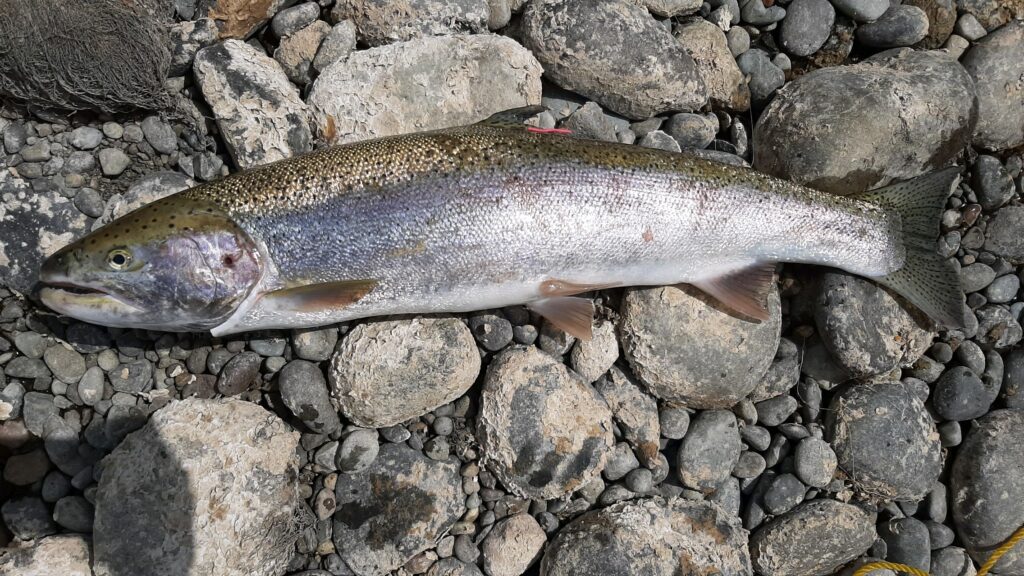
Slap on your earmuffs and grab that tacklebox, it’s winter steelhead season here in the Pacific Northwest! Steelhead, which are sea-run rainbow trout, call out to devoted anglers like a siren’s call. There’s just something special about these fish. They are elusive and wary. Some fishermen go their entire lives without landing one. These silver bullets are well worth pursuing, however. They make delicious table fare and put up terrific fights. Winter weather can create extra challenges, but it just makes netting these beautiful fish even more rewarding. Many anglers are tight lipped about their steelhead tips, which can make steelhead fishing intimidating to beginners. Let’s go over some tackle ideas, clothing tips, and hot spots to help make your first winter steelheading trip as productive and safe as it can be.
Tackle
In order to understand how to catch winter steelhead, you must know that there are some differences between summer and winter steelhead. Summer run fish head into the rivers early, and mature in the river over several weeks or months. Winter runs go into the river mature and ready to spawn. In general, winter steelhead are less aggressive. The cold water slows down their metabolism and makes them less willing to grab your offering. If you’re able to entice one into striking, hang on! Steelhead are famous for their long, athletic runs. Winter steelhead are often a bit bigger and fatter than their summer-run cousins as well.
One of the most convenient things about winter steelheading is that they are perfectly willing to bite cured salmon eggs! Around this time, I always have a fresh supply of eggs leftover from the previous salmon season. They are one of the best baits for winter steelhead! However, you’ll generally want to use a different strategy for curing them. Steelhead generally like a sweeter cure than salmon do. Most egg brines meant for steelhead create a harder, more durable egg, while salmon cures will make a softer, “milkier” egg. You can either drift your eggs or float them with a bobber. If you’re all out of salmon eggs, don’t fret. Winter steelhead absolutely love sand shrimp and coon shrimp! Make sure to tie a good egg loop knot and tuck your bait inside the loop. You can use stretchy thread for extra security. You can use a combination of eggs and shrimp to make your bait even more enticing.
If you’re fishing on a river where bait isn’t allowed, or you don’t feel like covering your winter gloves with shrimp and dye, spinners, spoons, and jigs are deadly effective on steelhead. Just remember that the fish will be holding near the bottom, and let your lure sink before reeling it in. Bring a variety of different colors and weights: river flows and depths change constantly, and you may need a heavier lure than you were using the other day just to reach the bottom. Steelhead can be surprisingly light biters despite their size, so make sure you are attentive and ready for the strike. One of the most popular ways to catch steelhead is to float a 1/4 oz jig under a bobber. Make sure to adjust your bobber stopper so that your jig is floating just above the bottom, however. You can tip your jig with a bit of prawn if bait is legal where you’re fishing. There are a wide variety of jigs out there, and many anglers even tie their own! Experiment with a variety of colors and jig materials until you find what the fish are keying into.

Clothing
Nothing can ruin a fishing trip like the cold. Layers are the winter steelheader’s secret weapon! The fish don’t wait for good weather before moving in, and you may not be willing to wait weeks or days for a clear day. Check the forecast, but we prepared for sudden inclement weather too. Neoprene waders offer good insulation from cold water, but a good base layer and loose, warm pants can also work. Wool socks are a must! Gloves can make a huge difference. Even on relatively mild days, my hands can get cold, making it difficult to switch lures or apply scent. Hand warmers have come a long way these days. In addition to disposable, shake to activate handwarmers, there are also reusable ones. Many sporting goods stores in the area offer lighter fluid powered and battery powered hand warmers. Test out your options and figure out what you like best. Propane space heaters are also great options. My friend recently put a diesel heater in his Thunderjet, and it makes a world of difference. I’d recommend pre-tying your leaders, to minimize the amount of tying you have to do while fishing. It’s a good idea to bring a change of socks too, just in case. Nothing will make you feel more cold and miserable than wet socks. Earmuffs, hats, or head bands will help, but partnering them with a warm scarf will make all the difference on those frigid winter days. Be prepared! I would recommend gearing up the day before and spending some time outside. If you’re already cold, pack on a few more layers and try again until you’re comfortable.

Locations
More so than any others, steelhead fishermen tend to be the most tight-lipped about their secret spots. While it’s not my intention to “blow up” anyone’s honey hole, I do want to at least steer beginner anglers in the right direction. I’ll always remember the euphoric rush from landing my first steelhead, and I wouldn’t have known where to go without guidance. As previously mentioned, summer steelhead enter the rivers sooner in their life cycle, and spend months maturing and moving upriver. By contrast, winter steelhead don’t travel nearly as far upriver, and some spawn within a few days of going in the river. Check the WDFW hatchery escapement report daily for updated numbers. The Skykomish River, Cowlitz River, Humptulips River, and Wynoochie River all boast good returns of winter steelhead every year. The Cowlitz River is usually open every year, but the Humptulips and Wynoochie River may be closed if they do not reach their escapement goals. You can try coastal rivers such as the Hoh, Sol Duc, and Calawah if you are willing to make the drive. Make sure to check the regulations though, several of these rivers do not allow fishing from a boat. Be respectful of private property and tribal land. Drift boating is always hazardous, but the frigid waters during winter create extra danger. It’s never a bad idea to go out with a guide on your first winter steelhead trip. They can show you the right way to drift the river safely. Remember that rivers change every year, and always be on the lookout for submerged rocks and trees.
While looking up popular locations for steelheading can be a good way to get started on your journey, you should also be able to recognize water that fish are likely to be holding in. In case your desired location is already full of anglers, or you just want to try a new spot, familiarize yourself with “steelhead water”. These fish are looking to spend the least amount of energy to get upriver and will take the path of least resistance. Sometimes the path of least resistance is right next to the shore, so make sure you fish your lures all the way to the bank. Look for calm waters near tailouts where fish are likely to be resting. Also check behind boulders and logs, but be careful of snags. I’d recommend thoroughly fishing one hole before moving on. Try both bait and lures, you never know what the fish will want that day. Winter steelheading can be a bit of a grind, but you’ll forget all about the cold and your numb hands and ears when you’re fighting a 15 pound silver bullet!
Wherever you decide to fish for winter steelhead, make sure you check your rules and regulations. Familiarize yourself with catch and release best practices. All wild steelhead in Washington State must be released. Make sure to check for an adipose fin before removing your fish from the net or pulling it into the boat- it’s illegal to remove wild steelhead from the water. Never grab a fish you intend to release by its jaw or gill plate. Wet your hands before touching the fish, to avoid damaging its protective slimy layer. Rather than just throwing the fish back, it’s a good idea to gently put the fish back in the water, facing it into the current so that water can flow over their gills. Let it swim off when it’s ready. If you must take pictures, take them quickly, and prioritize getting the fish released as soon as possible. Wild steelhead are beautiful, rare creatures that should be treated with the utmost respect and care.
Good luck on your winter steelheading adventure! Bundle up and stay warm out there!
/articles/beginners-guide-winter-steelheading