/articles/categories/fishing
Summertime Bass Fishing
Catching bass in the shallows during the spawn is a fun thing to do in the spring, but when it comes to summertime fishing, few things are more enjoyable than catching aggressive largemouth and smallmouth bass. Here are a few of my favorite ways to hook them:
Topwater Fun
There are a lot of ways to skin a cat, as they say, and there are also a lot of ways to catch a bass during the summer months. However, nothing is more enjoyable than watching a bass erupt out of the water to smash a topwater lure. The best time to fish topwater lures is early in the morning or in the evening (even after dark on a moonlit night). However, if the waters are calm, you can also have success with topwater lures anytime, especially in shaded areas or on cloudy days.
What kind of topwater lures should you use? If you are fishing an area full of hydrilla, milfoil, or lily pads, it’s hard to beat a weedless frog. Tournament angler Jeremy LeCaire favors frog lures with a white belly since that mimics an actual frog belly. Others swear by frogs that are black in color, while others believe in using a frog with, well, a frog pattern! No matter what color you use, twitching it over pads into small open areas of water can trigger many strikes.
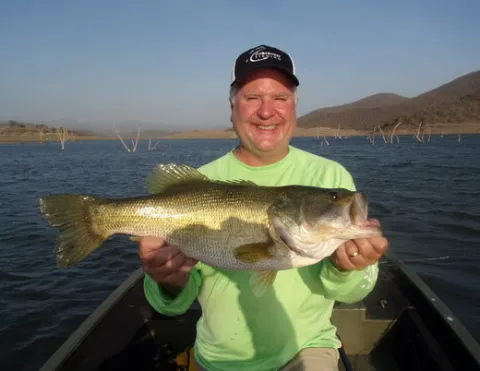
If you are not fishing in cover, you have lots of other options. The biggest bass I ever caught (8+ pounds) was caught on a Berkley Bullet Pop popper in a frog pattern, fishing the lure near wood stick ups. Similar poppers or lures like a Zara Spook can be fished at a slow pace or a faster pace in a “walk the dog” fashion, popping left, then right, while you retrieve the lure. As an old friend once told me when it comes to speed, “Let the fish tell you what they want”.
Are there other topwater lures that work? You bet! A fairly new offering is the Whopper Plopper, which is can be cast and reeled in with a slow, steady retrieve as it gurgles along the surface. Buzzbaits retrieved at a fast pace can trigger violent strikes, and don’t forget classic lures like the Arbogast Hula Popper or Jitterbug. They have both been around for over 80 years but they both still work.
Spinnerbaits
Spinnerbaits are always a good summertime bet for bass. I personally favor a white spinnerbait for most conditions but will go with a chartreuse color if there is low visibility in the water. A ¼ or 3/8-ounce spinnerbait can be retrieved rapidly, just under the surface of the water, creating a wake. Heavier spinnerbaits between ½ to one ounce in weight can be slowly retrieved near the bottom. Both methods can be effective. Again, let the fish tell you what they want.
Crankbaits
Crankbaits are a big favorite of mine for both summer and fall bass. Many anglers mistakenly believe these lures should be fished without hitting any structure. That is a mistake. Shallow water crankbaits should bang off of wood and deeper diving crankbaits should be ticking the bottom because that contact is what triggers reaction strikes from bass. One of my favorite lures is the Berkley Digger which runs at a depth of 8 to 11 feet. If I need to go deeper, the Berkley Dredger will get down to a depth of 20 feet. As for colors, try to match the forage base. For example, a perch or bluegill pattern if that’s what the bass are eating, a reddish color if crawfish are in the lake, or blue and chrome if the bass are feeding on trout.

Lipless Crankbaits
Another confidence bait for me is the lipless crankbait. The original Bill Lewis Rat-L-Trap has caught countless bass since it was introduced in 1971. Rattle trap style lures have no bill (hence the word, lipless). They create a sharp vibration when retrieved and thanks to BB sized shot inside the lure, they create a rattling noise as well. The combination of the vibration and sound triggers bass hanging out in ambush points along weed lines or other structure such as log lay downs, beaver huts, boulders, or rocky riprap.
The lure excels in depths of two to eight feet. You can rapidly retrieve the lure and draw strikes but I prefer to pause several times when I retrieve a rattle trap, just for a quick second. I do this because following fish will often strike it when it stops in their face or as the lure begins to fall like a wounded fish. Another method is to use a Yo-Yo retrieve, fishing the lure off the bottom. This technique works best when the fish are deep.
As for what lure to use? There are a lot of lipless crankbaits out there in various sizes but my hands down favorite is the ½ ounce Berkley Warpig, which I’ve used to catch not only bass, but also walleye and other species since it was introduced a few years ago.
There’s so much more to talk about when it comes to catching summer time bass (soft plastic baits for example) but we’ll have to leave that for another time. Until then, use crankbaits, spinnerbaits and topwater lures to reel in some hard-hitting bass during these hot weather months!
John Kruse – www.northwesternoutdoors.com and www.americaoutdoorsradio.com
/articles/summertime-bass-fishing
The Voles of Summer
As fly anglers, we are all cultured to believe that trout eat insects and nothing more. Trout gently sipping bugs from the surface of a calmly flowing stream paints the image of fly fishing narrative. It’s what we all learn in the beginning. Anything else would be culturally unacceptable in the fly fishing world. For years, I believed that no self-respecting trout would ever eat anything other than some form of aquatic insect or terrestrial bug. Fly fishing in Appalachia ingrained that into my head. That was right up until I read an article in Fish Alaska magazine about rainbow trout eating mice.
The level of disbelief wielding in my brain about what I was akin to what my grandfather thought about space travel. It wasn't happening. It didn’t happen and it wasn’t ever going to happen. Sure, I had seen a brown trout slashing at other fish and had buddies in the upper midwest that talked about mouse fishing for brown trout at night. But never, ever would a rainbow trout chase down and annihilate a mouse. Rainbows weren't that type of aggressor and besides, they didn’t get big enough to eat a mouse. Right? That’s what I, the 25 year old knower of all things trout, thought. No way.

I must have read that story 10 times before I finally accepted that the writer must have had a very minute amount of success using this “mousing” method for Alaskan Rainbow Trout. Back in those pre-internet days all we had to rely on was a trusted publication with mass circulation and a photo album. Yes kids, before internet and social media we all carried photo albums with us to trade shows, speaking engagements, etc. A three ring binder notebook full of print photographs. Sometimes carrying just one album was not enough; depending on the situation and competition. It was the only way to advertise your trade of skills and to prove that you weren't just a liar. In fact, the next trade show I worked at was where I found living proof that the “mousing” I had read about was in fact real. Not only real but a viable method for targeting the largest of the species. I was befuddled.
At that show, I met a lodge owner that hosted the writer for the story I had read in Fish Alaska. He explained to me how the whole Alaska trout universe operated. Upon understanding, the program made sense. It was no great consequence that this guy gave me my first job in Bristol Bay some years later. I adapted his explanation into my own version. If you have fished with me as a lodge guest, client or friend new to the Alaska trout universe, you have heard me deliver this lecture. Some of you may have heard it more than once. Its as follows - Alaska rainbow trout live a different life and lifestyle than lower 48 rainbow trout. They only have a three, maybe four, month window of time to get in a full twelve month life cycle, as compared to a regular lower 48 rainbow that might have nine or ten months to get everything in before the water cools to a point that their metabolism slows to a crawl.
So, in three months, an Alaska rainbow trout has to find a girlfriend, find a house or two and, it has to eat everything it can. And by eating everything it can, I mean everything starting with the highest forms of protein first. In spring, voles (mice) and leeches are the prominent source. As summer comes so do the salmon producing first eggs, then flesh after the spawn is over. Fall brings on the sculpin, more leeches and whatever else they can find. All that along with finding a girlfriend and a couple houses in three months. Its a lot of living.
But more importantly, the “mousing.” While in spring and summer hordes of mice or voles, red back voles to be specific, make their seemingly ridiculous trek transitioning from tundra animal to aspiring olympic swimmer. Why? I don’t know. Some say its because of some migration pattern. Maybe. Others say its because they are seeking the same things all mammals seek. Could be. Why a tiny little vole would jump into a raging river flowing at upwards of ten knots is beyond my level of good reasoning and understanding. Why do voles jump in the river? My opinion is because they just do and I don’t care why as long as trout continue to eat them. If you are more worried about why they do as opposed to the consequences of it, you should probably change the channel. I heard re-runs of the greatest Bob Hope Christmas specials were going to air in July. You might check that out.

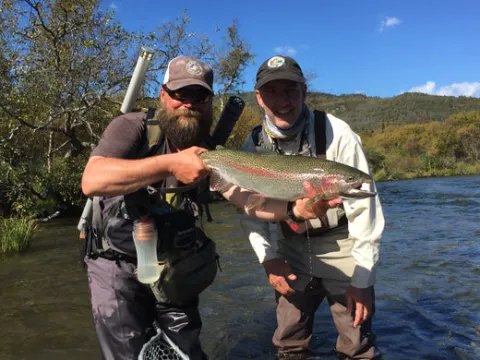
The first time I watched a rainbow “mousing” left a scorching imprint of what really happens in the bush. Eat or get eaten. Brutality in its purest form. This poor little red back vole was just swimming across the river in a narrow channel that didn’t seem deep enough to hold a rainbow. Its swimming along just trying to get to the other side for who knows why and this two foot rainbow manifests, chases the vole, swirls and smashes on it but misses. Then it swirls and smashes again only to miss the vole again. Just when we all thought the show was over the trout comes back for one last grab. Third times a charm right. Nope. Another swing and miss precluded with a full body leap out of the water to come crashing down on top of the vole, missing completely.
All the while this vole is still just swimming. Doing its thing. While I am sure the thing was horrified beyond belief, it didn’t change its pace or course. Probably because it wasn't capable of physically fighting the river current. The fourth and final attempt from the rainbow proved worthy but not without show. The fish came back waking the even more shallow water like a great white shark chasing a seal. It literally powered its way through six inches of water to annihilate the vole just before it reached the other side of the narrow river channel. Pure unforgiving brutality. I and my Swiss clients stood there looking at each other. Until that moment, we had all struggled with a language barrier. they didn't speak much English and I didn’t speak Romansch. Once that rainbow crushed the vole, we all understood what needed to happen and it did.
The first pass with a “mouse” pattern fly was nothing less than epic. Three chases and then a hook up. Next guy cast and had four chases and then hooked up. This went on all day and the rest of the week. At one point, I even took all the flies out of my pack except mice. The fact that they witnessed the initial sacrificial lamb significantly flattened the curve. They knew not to set the hook until they felt weight on the hook. Like the precision watches the guys built, with systematical precision they took apart the entire river and covered every bit of water with mouse patterns. All week.
Now I have clients that book for Alaska specifically when “mousing” is peak. Usually, June and July. They bring only mouse pattern flies, and floating seven weight lines on 9’ rods. Most folks bring two rods, just in case the unspeakable happens. The bush isn’t a place to not be prepared but, that’s another story.......
/articles/voles-summer
Too Many Kokanee? Here's the Cure
Too many kokanee. That was the problem. We had the cure.
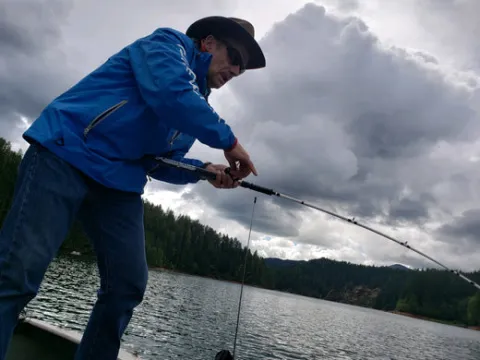
As we idled away from the dock in the Nomad's Fishing Adventures 24-foot Koffler sled, Bill Kremers and Josh Hopkins tied up rigs. Our guide, Damon Struble, passed out cups of cured corn. Garlic on the starboard side and krill-marinated kernels on the other. Then Struble pointed the bow up into the narrows.
A few minutes later, when Struble shut off the Mercury, he looked each of us in the eye - Tim Wehde, Kremers, Hopkins, and me. "We're going to set the back rods at 60 feet out and the front rods at 70 feet. Put one to two kernels of corn on each hook. Things are going to be chaotic. If a rod starts bouncing, don't worry about whose rod it is. Pick it up. If you are tying up a new bait and see a rod with a fish, set the first rod down and get the fish in the boat."
Each rod was loaded with a 3-ounce weight to run the baits 30 to 40 feet down where thousands of kokanee schooled below us.
At full pool, Green Peter covers 3,700 acres and is ten miles long, with 38 miles of shoreline.
The water level fluctuates and the fish move around, but some of the best kokanee spots are by the dam, in the Quartzville arm (where we fished), and around the peninsula in the main channel. Jigging is a favorite technique early in the year, but trollers seem to do better in the summer.

Damon uses a Simon 4.0 kokanee dodger on the main line with a Gold Star micro hoochie. Another good bet is a Kokanee Kid Super Mysis Bug or a Mack's Lure Double Whammy with a 10-inch leader. Most anglers add white corn. Damon likes to marinate the corn overnight in Pro-Cure krill powder and Garlic Plus. Hopkins had brought two prototype Lamiglas kokanee rods, graphite/fiberglass hybrids with slow actions. We would put them to the test with these heavy 3-ounce weights.
For several years, ODFW found themselves with a surplus of sockeye smolts, Struble explained. Those fish ended up in Green Peter Reservoir.
"The result is such an overabundance there isn't enough food for all the fish. So they are stunted," Struble said.
In less than two minutes, we had the first bite. The fish came fast, sometimes with two or three rods bouncing at once. As quick as we could put fish in the box and put fresh bait on hooks, there would be another bite. Our kokanee averaged eight to nine inches each. The direct beneficiary of the kokanee experiment is a little known landlocked chinook salmon fishery created by ODFW almost 20 years ago.
"They wanted to see if the chinook salmon would migrate through the dam and return. For seven or eight years, ODFW put 20,000 chinook smolts in the reservoir," Struble said. "After some high water flood years that blew out the catch nets, the project was abandoned." Technically, the experiment didn't prove successful, but the chinook are still there. "They turned Green Peter into their ocean and spawn up in the creeks," Struble said.
How big do they get?
"The biggest one I have caught was 16-1/2 pounds, while trolling for kokanee with a dodger and a little hoochie," Struble said. Those landlocked chinook are growing big on the kokanee. Struble estimates he has caught 25 or 30 chinook between two and ten pounds while fishing for kokanee.
"When they are small, I'm not sure what they feed on, but inside that 16-1/2 pounder was a mostly digested kokanee about eight inches long."We didn't have time to target Green Peter rainbows, but that is another facet of this interesting fishery. Ahead of every Memorial Day weekend, the state plants 10,000 rainbows. Anglers don't get them all.
"Come springtime there is a really good population of hungry holdovers that range from 12 to 18 inches," Struble said. While we worked back and forth above a biomass of kokanee, the eagles and ospreys watched. When we lost a fish at the surface, a raptor would swoop down to pluck it out of the wind-riffled water.

At Green Peter, the kokanee limit is 25 per day in addition to the daily five-trout limit. There is no size restriction for kokanee. Landlocked chinook salmon may be retained as part of the kokanee limit.
Damon glanced at the western sky, which had suddenly filled with clouds and said, "Unless you guys want part of that, we should run for the dock!" And run we did. By the time the Ford was pointed back toward Central Oregon, the windshield wipers were working overtime. We had boated 45 kokanee in two hours. We hardly put a dent in them.
/articles/too-many-kokanee-heres-cure
Washington Ocean Salmon Prospects
With salmon seasons being ever-changing, from season to season, month to month, and even minute to minute depending on where you fish, the recent announcement of summer salmon seasons was met with some excitement and hesitation. Fisheries managers met over several weeks during the North of Falcon process where everyone with an interest in salmon planned out the quotas and seasons. Washington’s governor added a new apprehension at the table with concern over making sure there is enough food for south Sound Orcas well as fish sport anglers, commercial harvesters, and tribal fisheries, while still allowing for escapement.
The escapement is the main focus, with ESA-listed stocks and wild fish returns dictating how and when anglers can pursue salmon. Once the run estimates are established then the managers need to figure out how many fish can be caught in the ocean and still allows for fishing, and escapement in each of the predicted runs. This is where the marine area gets its seasons and regulations. This year the allotment for ocean salmon off of the coast of Washington was set at 39,000 chinook and 159,600 coho. Each marine area will get its own seasons and a share of the fish.
Starting with Marine Area 4, Neah Bay, the northernmost ocean section which borders Canadian waters, will get first dibs on the salmon, along with Marine Area, 3 La Push, which will have the same start date of June 17th. This is just like last year, when the areas opened up on Father’s Day weekend, but this year anglers can still keep two salmon per day. However, only one can be a chinook and all coho must be clipped. It is open 7 days per week, but later this summer, chinook will be closed east of the Bonilla-Tatoosh line starting on August 1st.

Marine Area 3 will have similar regulations as Area 4 but will also have a late “bubble” fishery from October 3rd to the 7th with a one chinook per day limit. La Push is not nearly as popular as Neah Bay, mostly because it is an open water fishery where the area to the north in Neah Bay has some protected fishing. Since the Covid restrictions have lifted, both reservations are now open. Neah Bay offers a bit more in amenities, but nearby Forks is a great town to stay in when fishing out of either port and has accommodations, restaurants, and gas stations, along with a sporting goods store in case you forgot anything.
Westport in Marine Area 2 is probably the most popular of all offshore ocean fishing locations. The famed Grays Harbor bar is not fun to cross, but on good days the fishing makes it all worth it. This tiny fishing town has everything you need, and if the bar is not cooperating or you are looking for some bottom fish to take home, then fishing along the jetty or the many rock piles off the coast makes for a fun fishery. The season here opens June 24th and will be open 7 days per week with a two salmon daily limit. Only one can be a chinook, and all coho must be clipped.
The coast of Ocean Shores is a popular area to fish in Marine Area 2. You can use the hotels as a marker on where to fish. The casino is a well-known landmark where anglers will fish in 60 feet of water and make their way out deeper from there. Another good spot is south of the jetty, where you can intercept fish making their way to Willapa Bay and the Columbia River. One of the reasons why Marine Area 2 is such a good fishery is because anglers are targeting fish heading to Grays Harbor, and as they near the entrance they tend to hang out in the saltwater just offshore. Add in the fish migrating further south to Willapa Bay, the Columbia River, and even Oregon rivers, and it makes for a highway of salmon to intercept.
Marine Area 1 out of Ilwaco is for the serious salmon angler. The season is set to open June 24th with a two salmon per day limit, but only one can be a chinook and all coho must be clipped. Ilwaco is a protected port with a long jetty that protrudes out into the Columbia, and it can mislead the novice angler into thinking everything is good to go. Be sure to know how and when to cross the Columbia River bar safely. This is the deadliest bar in the world and there is a reason why the U.S. Coast Guard trains their rescue swimmers here. But if you can make it out to the ocean then you will get your first chance at the 554,000 fall chinook or the 595,300 coho making their way back to the Columbia River.
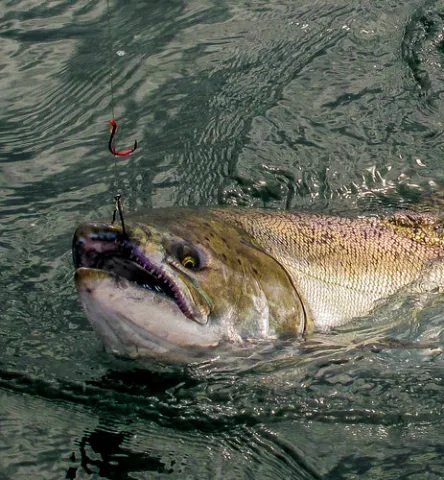
When it comes to salmon fishing in the ocean, nothing beats fishing fresh bait. I use brined herring that has sat overnight in Pro-Cure’s Brine-n-Brite and been toughened with some Bait Spice, an infused rock salt with bluing agents and scents. Learning to plug cut herring can be tricky but once you get the perfect cut down, it is one of the most productive ways to fish. But if you find yourself in a school of crazed coho where most will not be clipped and before you know it bait is running low, then there are a few things you can do to increase your catch rate when the bait runs out. There are many spinning plugs on the market now, including the SpinFish by Yakima Bait Company, the Cut Plug by Brad’s, and now the Simon Spin Dawg and Simon Cut Plug.
The first two have a hollow cavity to place scents, herring strips or canned tuna, but the products by Simon are solid and have a scent cavity. One benefit of the solid bait is that it won’t come apart when a chinook grabs hold. The other lures, though, offer more scent-holding capabilities. All of them work on the same wounded baitfish principle and work great when the real bait runs low or you don’t want to mess with brining and plug cutting. Old Goat Lures also makes a hollow one-piece wounded baitfish lure and they make it out of plastics that glow for those low-light days or early morning fisheries. With each of these lures, it is best to use a super sticky scent such as those by Pro-Cure in their Bait Sauce line.

To rig up the spinning plug lures, there are two primary ways to fish them when trolling in the ocean. The first is behind a 360-flasher such as a Mack’s Lure UV Paddle ScentFlash, which can be filled with even more scent. Use a long leader from 42 to 56 inches to the lure, and then use the downrigger to get it to the depth of choice. The other way to rig it is just like how one would mooch using a mooching weight from 2 to 5 ounces, depending on how deep you want to run it, and then a long leader, again 42 to 56 inches. Simply let this rod out of the back of the boat about 50 feet, and put it in the rod holders. This makes for a great top water rod when targeting coho. Once you find a school of chinook you can then use this same set-up to mooch for them, and even drop it down over a rock pile and catch rockfish and lingcod. It is a simple and very versatile set-up and one I always have rigged and ready in the boat when heading to fish the ocean.
It is time to do a little homework and figure out where you want to catch some salmon. With the marine areas now open, it is a matter of checking the tides and winds and making sure all of the safety equipment is up to date. This is also a good time to update any software for the sonar unit and make sure the life jackets are serviceable. Motor maintenance should have been done months ago, but if you haven’t done so then be sure to get them running right before heading out to the open ocean. The saltwater is one of the best places to catch salmon as long as you are prepared and know how to navigate the bar crossings safely. Head out to the open sea and catch some salmon.
/articles/washington-ocean-salmon-prospects
European Green Crabs: What Anglers Need To Know
If you fish, boat, crab, or just read the news in Western Washington, by now you’ve probably heard about the invasive European green crab. But how to identify this green menace, what are the rules if you encounter one, and what is the state doing about them? Read on for answers as well as tips to avoid spreading these and other aquatic invasive species.
Native to western Europe from the Baltic Sea to Morocco, the European green crab is a damaging crab that threatens native shellfish, estuary habitats, eelgrass, the aquaculture industry, and other recreational, tribal, economic, and environmental values. The European green crab first became established in the United States in the mid-1800s, arriving by ship to New England, where they contributed to dramatic declines in the soft-shell clam fishery.
Studies have shown these voracious shore crabs (meaning they live in shallow, often intertidal waters, including bays, inlets, sloughs, and estuaries) can consume as many as 40 clams a day! In areas where European green crabs have established large populations for extended periods, they have had dramatic impacts on other species, particularly smaller shore crabs, clams, and small oysters.
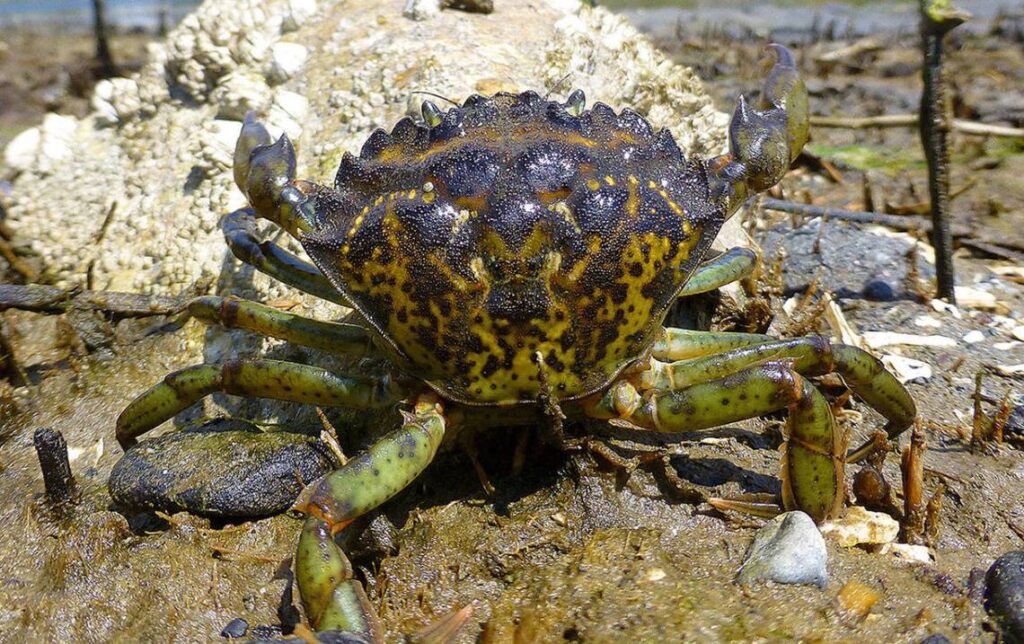
In addition to preying on shellfish, European green crabs are vigorous diggers and have severely harmed New England’s eelgrass beds and estuaries. If allowed to do the same here in the Pacific Northwest, loss of estuary and eelgrass habitat would threaten the harvest of wild shellfish like geoducks and cockles, undermine shellfish businesses, hurt salmon and forage fish recovery, and disrupt complex native food webs. Research is also ongoing regarding potential impacts on juvenile Dungeness crab and crab fisheries.
Back to Washington state, European green crabs were first discovered on our coast in 1998 in Willapa Bay, remaining in small numbers but slowly spreading north over the following decades. European green crabs were first documented in Washington’s inland waters in the San Juan Islands in 2016, and were confirmed near Victoria, British Columbia the previous year.
Beginning around 2018, state and federal agencies, tribes, and partners began to detect significant increases in European green crabs—likely linked to warmer water conditions, especially in 2021—in areas including Willapa Bay, Grays Harbor, Makah Bay, and Lummi Bay. In just a matter of years, green crabs in these areas had exploded from a few hundred to tens of thousands of crabs; necessitating emergency control measures.
Since then, emerging “hotspots” have also been detected in Discovery Bay and Drayton Harbor, as well as smaller numbers of crabs in northern Hood Canal near Seabeck. Most recently, green crabs were detected in May 2025 near Port Gamble.
Thankfully, European green crabs have not yet been confirmed south of Hood Canal and Whidbey Island, including no detections to date in Puget Sound proper.
How to identify green crabs
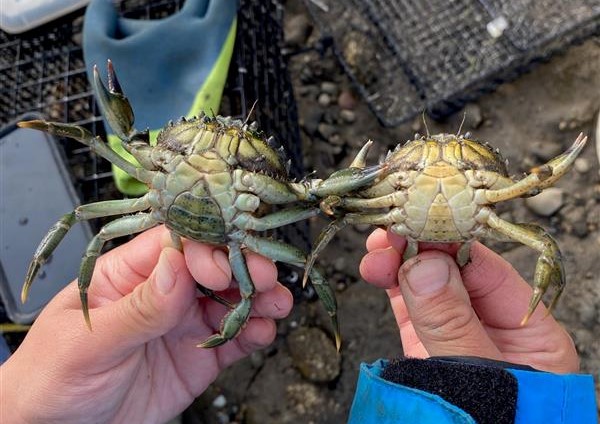
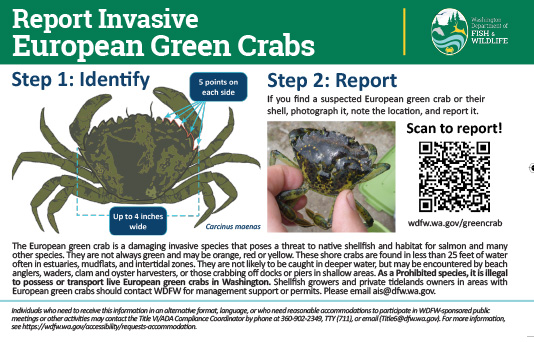
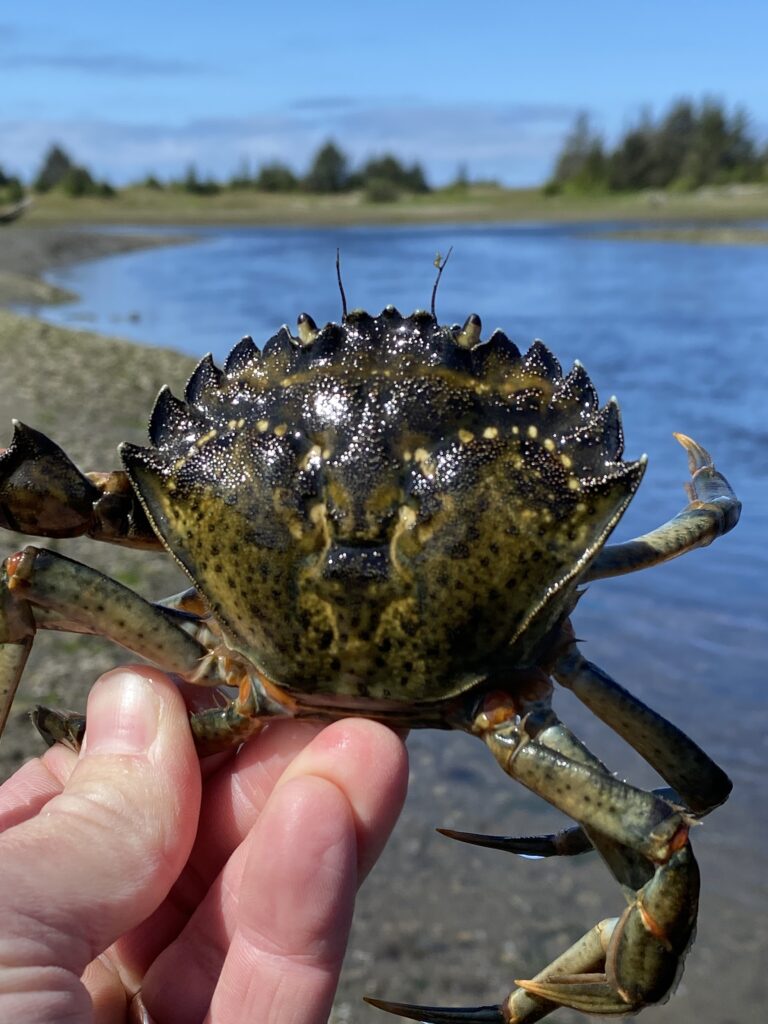
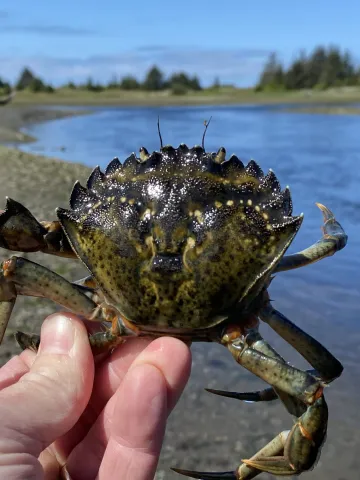
Don’t be fooled by the name; European green crabs can be green, red, orange, brown, or yellow. To identify them, look for five spines or teeth on each side of the shell. Guides and tips for identification are available from the Washington Department of Fish and Wildlife (WDFW) European green crab webpages and Crabs of Washington identification guide, available online.
People are often surprised by how small these crabs are – the average green crab captured by WDFW is around 2 inches across the shell. They can get up to 4 inches wide, much smaller than mature Dungeness or red rock crabs. In Washington state, the European green crab is most often confused with the native hairy shore crab, helmet crab, or kelp crab.
They typically live in areas with less than 25 feet of water. Beachgoers, waders, clam and oyster harvesters, and people crabbing off docks or piers in shallow areas are most likely to encounter these shore crabs. Recreational shrimpers or crabbers operating in deep water are unlikely to catch them.
Rules and regulations
If you find a suspected European green crab or its shell in Washington, take photos and report it as soon as possible at wdfw.wa.gov/greencrab or through the Washington Invasive Species Council’s WA Invasives mobile app. Depending on the area, WDFW or permitted partners will follow up with trapping to remove as many green crabs as possible and slow their spread.
As a prohibited invasive species, it is illegal to possess a live European green crab in Washington. Currently, WDFW is not asking the public to kill suspected EGC. This is to protect native crabs, which are often misidentified.
More information on EGC regulations is available on WDFW’s webpage and in the Washington Sport Fishing Rules. Under Washington regulations, prohibited invasive species may be killed and retained if you are certain about species identification and assume responsibility for correct identification and adherence to state fishing rules.
Targeting European green crabs with traps requires a permit from WDFW. If you own or manage shellfish beds, beaches, or tidelands, support and permits for European green crab control may be available. Learn more by contacting ais@dfw.wa.gov.
Managing green crabs
WDFW, tribes, shellfish growers, other agencies, and partners have made significant progress managing European green crabs. Since January 2022, more than one million have been captured and removed, most from Willapa Bay, Grays Harbor, and Lummi Bay.
In 2024, WDFW published a long-term management plan for European green crab after a year-long collaboration with tribal governments, U.S. federal agencies, Washington state agencies, shellfish growers, public universities, and additional partners.
The plan includes detailed guidance for European green crab early-detection monitoring, rapid response, ongoing control trapping, and other efforts across defined management areas and coordination zones for Washington’s Outer Coast and Salish Sea. More information on green crab management, regular catch reports, and more ways to get involved can be found on the WDFW website.
You can also help prevent the spread of European green crabs and other aquatic invasive species by practicing Clean, Drain, Dry methods with all your gear, equipment, and watercraft. Visit WDFW’s webpage or search “Clean, Drain, Dry” for tips on ways to prevent green crab larvae, which can be very small and hard to see, and other invasive species from hitching a ride on your equipment.
/articles/european-green-crabs-what-anglers-need-know
The Art of Finding Kokanee
In the years since Kokanee University was written, many wonderful developments have happened. The tackle designs, for example, are way different now as technology has made available vast improvements in action and color. What has not changed are the concepts outlined in previous articles. Let’s take a look at fishing strategies to catch more kokanee!
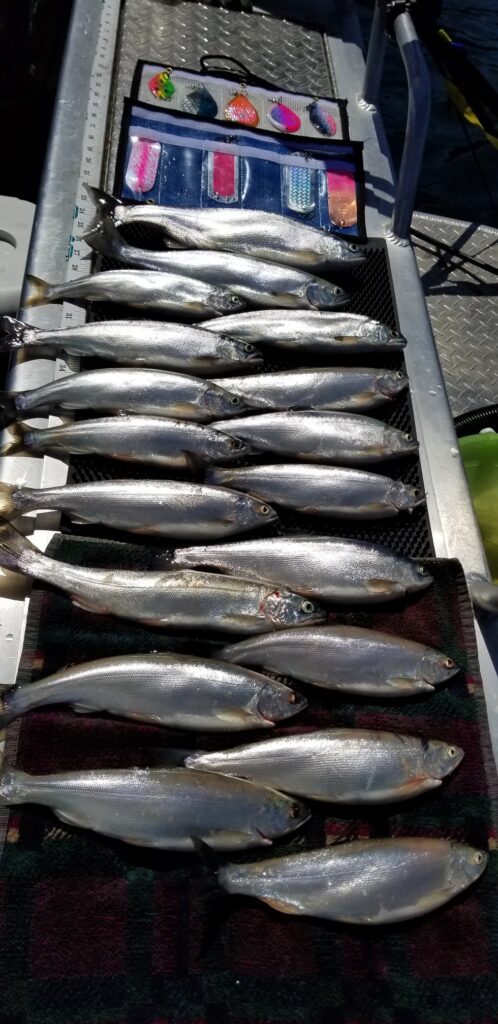
Color Fish Finder
No doubt, the very best piece of electronic equipment is the color fish finder–sonar. Color is better because of the unique biology of the kokanee, which have an unusually large air sac, and sonar cannot penetrate air. Because of this, kokanee can be seen on the fish finder, usually as bright orange (the default color on many systems). No other freshwater fish has this distinct detectable characteristic, so you can easily tell the depth of kokanee by this method.
The fish finder will let you know the current depth. Knowing the depth of the bottom is essential, especially if your lake has varying contours. On more than one occasion, I have raised downrigger balls "just in time" to avoid getting hung up on a bottom that suddenly came up, seemingly out of nowhere. Your fish finder will track your downrigger ball, and you can use this to verify the accuracy of the counter on the downrigger.
One factor to consider is how large a viewing area there is. The larger the viewing area, the higher the cost. Screen resolution is another factor to consider – will your viewer be viewable in sunlight and with polarized sunglasses? Another critical factor is the location of the fish finder in relation to where you are sitting while fishing. You need to be able to see the details on the screen.
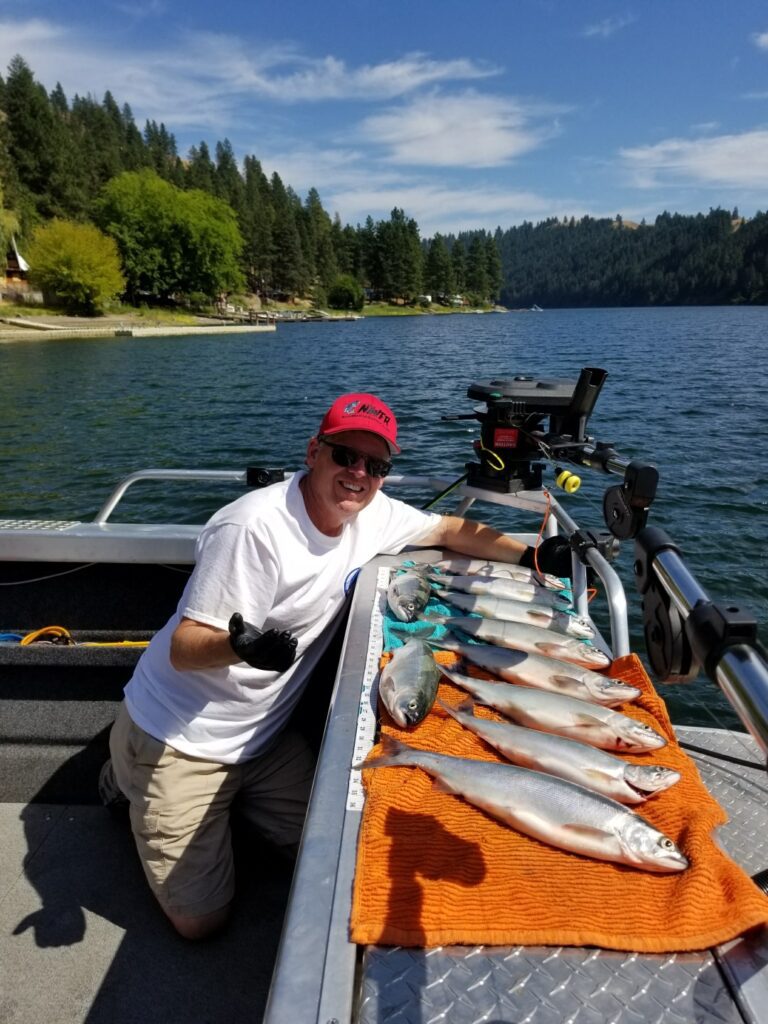
GPS
GPS serves many useful functions. One of the best is showing accurate boat speed. (The little paddle wheel on the fish finder is unreliable and next to useless.) If you are targeting a speed of 1.4 MPH, you will be able to know when you are going 1.4 MPH. You will also be able to know when you are NOT going 1.4 MPH.
GPS will display a track of where you have been, and the memory will store those tracks until you erase them. I have had these tracks for years on the same device, showing both where I have been and also where my favorite and most successful areas have been.
Another fabulous feature is the cartography, which shows the contour depths of the lake you are on. You can either purchase the SD card, or many now come with the cartography pre-installed. My SD card covers all the lakes in the western US. You can get these cards to cover your region as well. Knowing the depth contours is a tremendous help. For example, it will allow you to stay on course within a former river channel. It will show points of land that are underwater and which could be a problem in navigation when the downriggers are out.
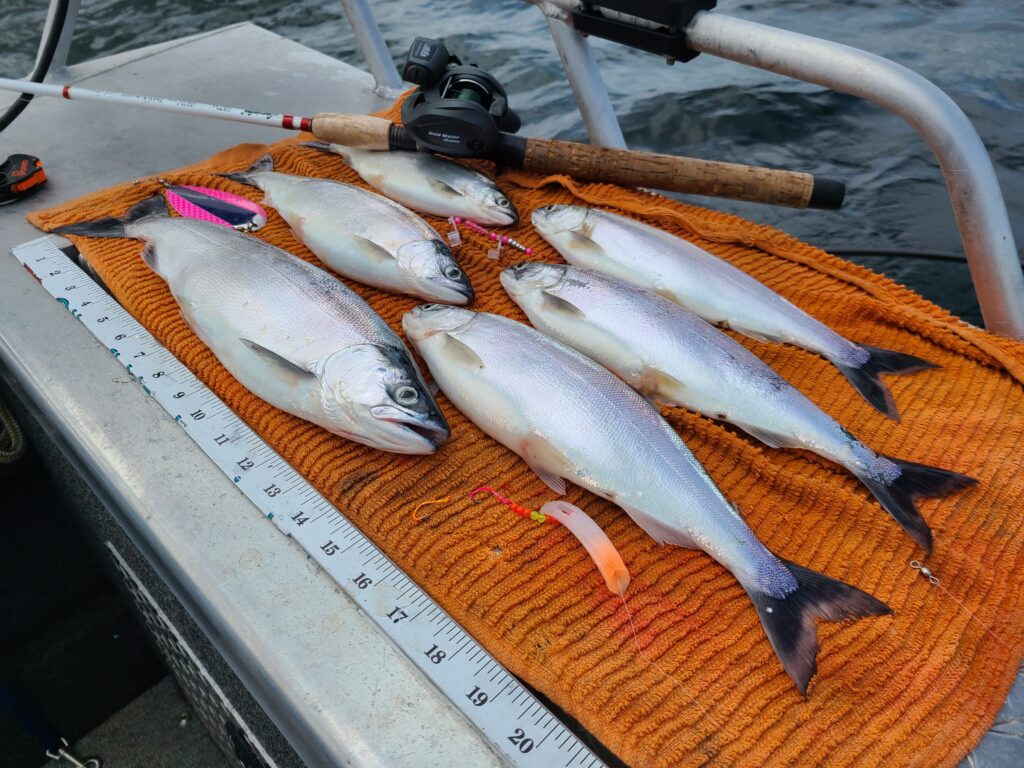
Temperature At Depth
One of the very best recent developments in technology is the ability to accurately measure the temperature of the water at depth. While the temperature function on your fish finder only tells you the surface temperature, the simplest device for measuring water temperature at depth is from FishHawk Electronics.
This little device is called the FishHawk TD. It is easy to use by simply attaching the device to your fishing line, pressing START, waiting for READY, then lowering it into the water. I send it down deep, then retrieve it, then press view, and it shows the water temperature in 5-foot increments down the water column as far as you have lowered the probe. This is extremely useful, particularly when looking for that 54-degree temperature depth in kokanee season.
I have also used the device to understand what was going on underwater. During one early September outing on a high mountain lake, I could see on the fish finder a few scattered kokanee at 40 feet, and a whole bunch of kokanee at 60 feet. Try as I could, no kokanee could be enticed from the 60-foot depth. The kokanee at the 40-foot depth were the only ones that would bite. I set out the FishHawk TD to determine if temperature had anything to do with it. Sure enough, it did.
The fish at 40 feet enjoyed a temperature of 54 degrees. The fish at 60 feet were at 44 degrees. The deeper fish were already starting to settle in for the winter. Since it was September, I could tell these were the two-year-olds (next year's fish). Most of the kokanee I had caught at the 40-foot level were either turned or were turning color. By combining what I learned from the temperature measurements with what I saw on the fish finder, I was able to figure out why I was not getting bit at the deeper depths.
Electric Trolling Motors
The single best advantage of the electric trolling bow-mounted motor is the ability to steer the boat by wireless remote control from wherever you are in the boat. I simply strap the small control on my wrist, and that lets me easily control the boat's direction and speed, even when I am fighting a fish or setting the downrigger.
Scouting A New Lake
Once you have enjoyed some success fishing for kokanee, you can have confidence in fishing any lake with a kokanee population. Kokanee are kokanee regardless of whether they are in Oregon, Idaho, Montana, North Carolina, British Columbia, Washington, Colorado, New Mexico, Utah, Wyoming, or California. When I know I am going to fish a new lake, the very first thing I do is to find the lake using Google Earth. I need to know the shape of the lake, where the deep water is, and where the shallow water is. I need to know what feeder streams come into it and where the outlet(s) are. I need to know the structure of the surrounding terrain, such as whether one side coming into the lake is steep and the other side is gentle.
I also check out the lake using my GPS cartography. I can sit in my boat in Central Oregon and study lakes in any other location simply by moving the cursor on my GPS.
Generally, what I am looking for is where the current might be and where feeder streams come into the lake. Those are two locators of what I call "active" water. This is where water mixes with the regular lake water, adding oxygen to the water. Fish need oxygen. This is also where trace nutrients come into the lake from feeder streams. These nutrients act like fertilizer to the plankton (phytoplankton) that the zooplankton, kokanee, and other baitfish feed on.
I look for drop-offs, where the lake suddenly gets deeper. Recall that as you go deeper down the water column, the water gets colder. It cannot get colder unless it gives up heat that rises to the surface. This process causes mixing - water movement up and down. This process is also good for the plankton and, hence, good for the kokanee.
If I am fishing early in the season, I look for structures, such as points of land coming into the water. I have found that in the early season, kokanee relate to structure.
Finally, using the internet allows you to research in ways we never could years ago. Don’t limit yourself to fishing forums. Searching and finding hidden gems can give you inside information that many anglers have overlooked.
The whole idea is to learn as much reliable information about the new lake as you can from the available sources. Be assured, what has worked for you on your local lake will also work on the new lake.
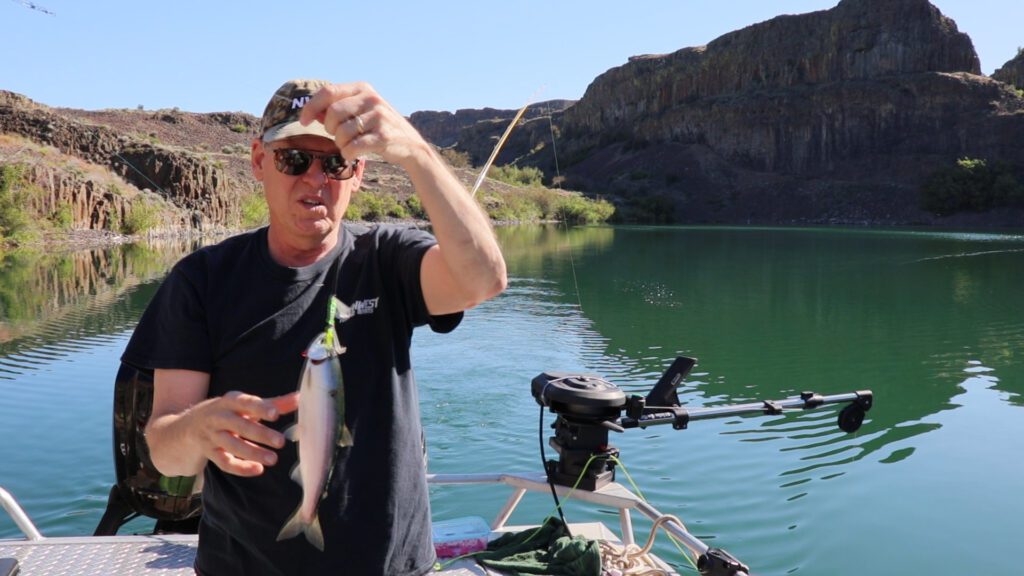
The Science Of "Scent"
All fish have nares, which are scent-detecting tubes on the snout of the fish. A fish's ability to detect scent is flat out amazing, often measured in parts per million. And salmonids are probably near the best in scent detection. For thousands of years, fishermen have used bait on hooks to persuade fish to bite.
Some awesome kokanee fisherman or fisherwoman discovered a long time ago that kokanee will bite a lure baited with white shoepeg corn. And that discovery has been passed down for many years to the present time. What has not been passed down is why white shoepeg corn works so well.
It turns out that white shoepeg corn has an amino acid that is a bite stimulant for kokanee, something that yellow corn does not have. White shoepeg corn also manages to stay on the hook fairly well at kokanee trolling speeds. My research has revealed another interesting characteristic of white shoepeg corn: it stays white down the entire water column without any fade. As such, it presents a clearly defined target for the fish to attack. (For doubters, take a kernel of white shoepeg corn into a dark closet and shine a black light on it.)
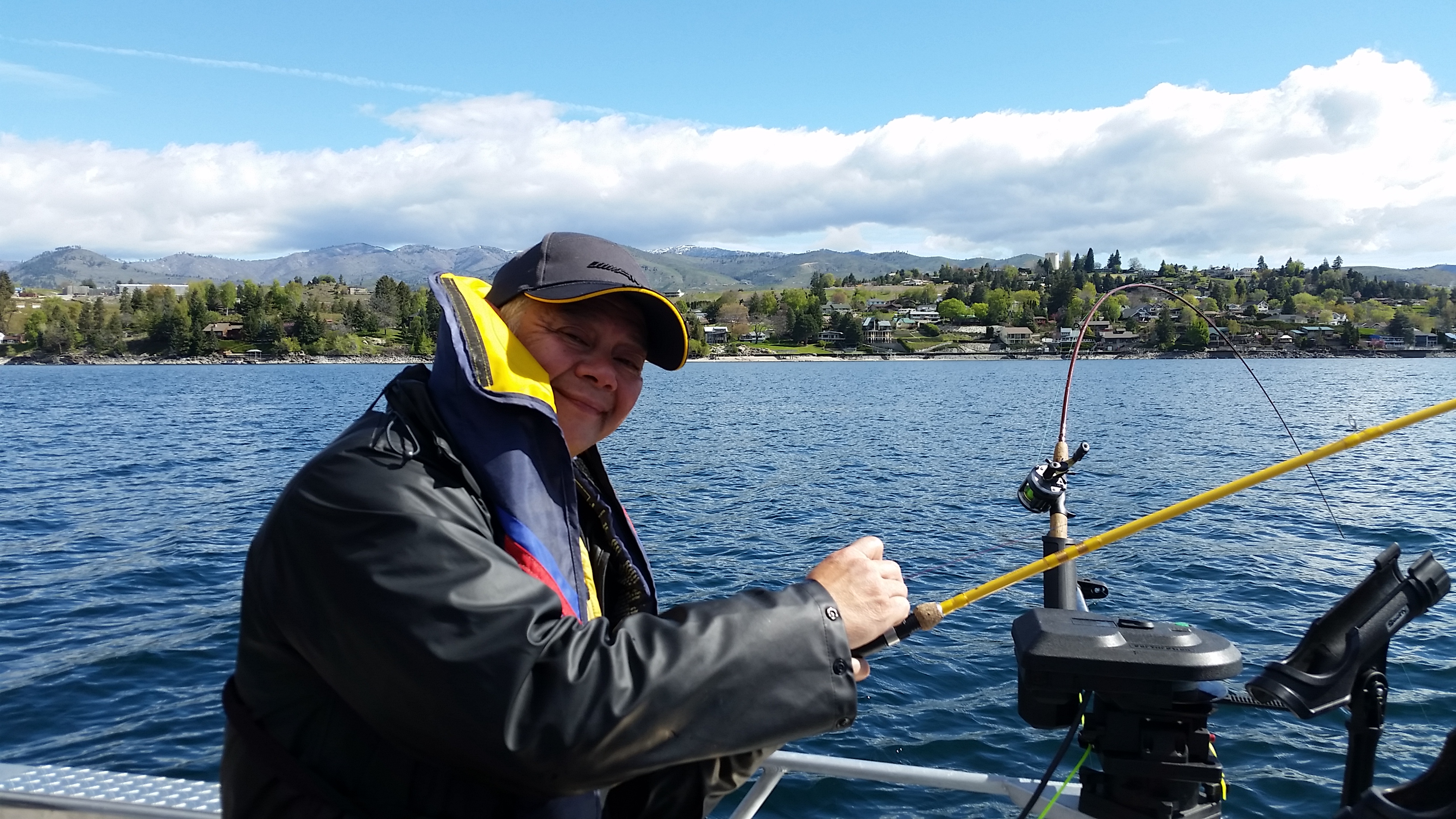
Over the years, it has become popular to add additional scent to the corn by brining it first. Such scents have included anise, garlic, vanilla, and a host of others. Savvy kokanee fishermen would have more than one type of scented corn to entice the kokanee; in case the first one didn't seem to work, they would have a backup. I know that making up different scent combinations is part of the wonderful pre-fishing ritual. Some even dye the corn different colors. More ritual.
In the past, I endorsed using two kernels of corn on each of the tandem hooks in the lure. I have changed my philosophy a bit over the years. I found out that putting corn only on the leading hook helped prevent that dreaded "short" bite. A "short" bite is where the fish targets the trailing hook, hits it, and does not get hooked. The same concept is where the fish will take a bite out of a worm that extends beyond the hook. Either way, the fish wins, and you get that wonderful, frustrated feeling.
Placing the corn on the leading hook takes advantage of a fish's biology. Since a fish cannot see directly in front of its snout a distance of about two inches, placing the target scent corn on the leading hook will make the trailing hook invisible to the fish. The result is a higher percentage of hook-ups and deeper penetration of the hooks.
I have also studied the hydrodynamics of putting two kernels of corn on the leading and trailing hooks. At kokanee trolling speeds, using two kernels on each hook significantly dampens the action of the lure. This poses an issue. I want maximum action on my lure, and I also want to maximize the scent on my lure. Can I have both action and scent without compromising the action of the lure? And I also want to prevent the "short" bite.
The best solution finally emerges as being obvious all along. Many scents now come available with a sticky gel. In my opinion, these scents are more powerful bite stimulants than anything that corn can produce by itself. I now use only a single kernel of undyed, and otherwise unscented, white corn on the leading hook only, and place some gel on the beads of my beaded spinners. This gives maximum scent to my lure without interfering with its action. If I am using a squid or a hoochie, I place some of the gel inside the squid or hoochie body, again using but a single piece of white shoepeg corn on the leading hook. I believe my success rate has increased using this setup.
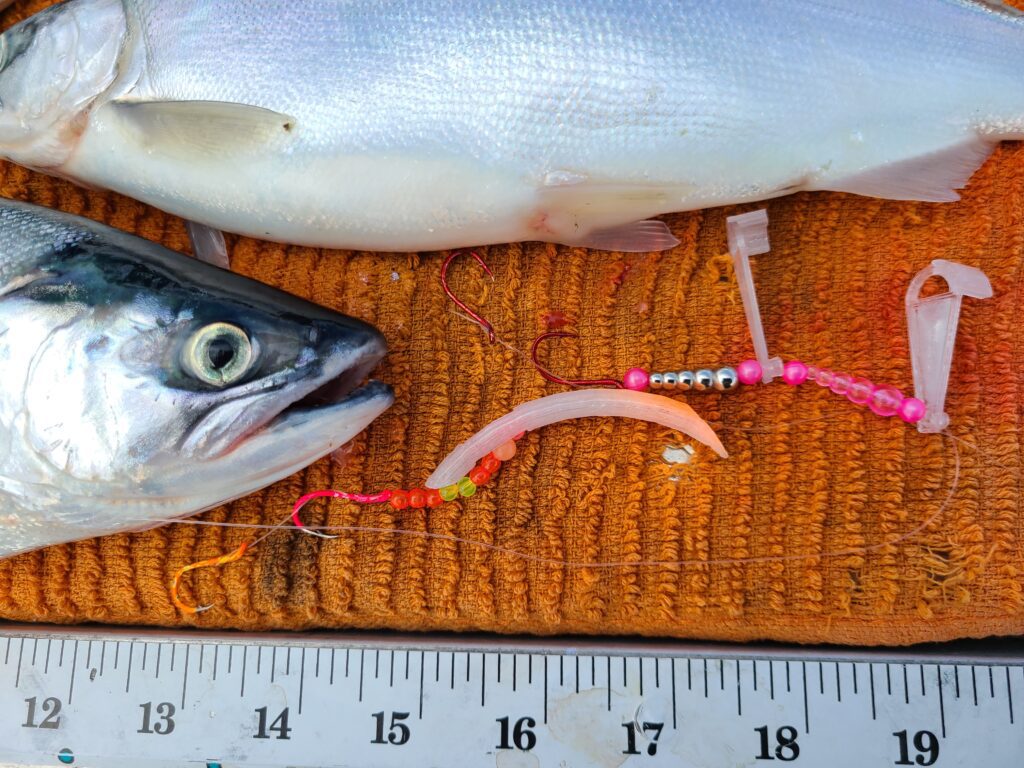
At the end of the day, do your best to rinse off the gel on your lures. Using generous amounts of hot water will help. I have now substituted my pre-fishing "brine the corn ritual" for a post-fishing "clean the lures ritual." I have found the gel scents of anise, kokanee special, garlic, and especially bloody tuna to be excellent.
Next month, we'll look at the gear you need to catch more
Fish With Gary - Kokanee university
/articles/art-finding-kokanee
Razor Clam Forecast
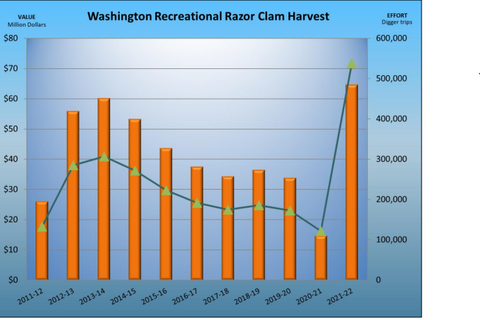
It’s no secret that last year’s razor clam season was a banner year. Record number of clam diggers swarmed beaches, working hard to get their limits. 484,388 diggers showed up, harvesting 8,352,279 clams, over 120 total harvest days. That’s a lot of razor clams! This was a welcome success after the 2019-2020 and 2020-2021 seasons closed early due to COVID-19 and domoic acid, respectively. Thousands of eager razor clam diggers are wondering if this season will be as successful as the last.
Dust off those razor clam guns and get your hip boots ready, because the forecast is looking promising! WDFW assessed razor clam populations throughout the summer and all had strong, harvestable populations except for at Kalaloch, which will be closed this year to allow recovery. Let’s take a closer look at this year’s forecast, and how WDFW determines annual razor clam harvests.
Razor clams have been enjoyed by millions of people over thousands of years. They are a valuable resource to hungry fishermen and local economies. WDFW estimated the fishery value to be $71,689 last year. So how are these crucial resources managed? Since 1929, WDFW has managed the coastal razor clam harvest. It’s a difficult job- they have to balance the demands of recreational fishermen with the rights of the tribes, all while keeping public safety in mind. Management strategies have been ever evolving.
From 1929 to 1942, there was a year-round season, and a 36-clam limit. In 1943, WDFW limited the season from March 1st to September 30th, and in 1960, the clam limit was reduced to 18. In 1973, the seasons were further reduced, and in 1974, the 15 clam limit we are familiar with today was implemented. In 2000, the seasons became much less set in stone and varied from October to May, depending on counts conducted through the “pumped area” method. In 2004, WDFW switched to the system still in use today, the “adjusted exploitation rate” method. Management strategies are ever evolving based on the increasing amounts of clam diggers every year, and changing oceanic conditions.
There are 3 pieces to the puzzle that WDFW must take into account before announcing razor clam digs: population counts, domoic acid levels, and tribal rights. The first piece of the puzzle is population counts. Each summer, WDFW conducts population counts at every beach: Long Beach, Twin Harbors, Copalis, Mocrocks, and Kalaloch. Based on these counts, they estimate the total number of clams measuring under 3 inches, and the total number of clams measuring over 3 inches.
They allow a certain percentage of razor clam population over 3 inches to be harvested each year, in order to make sure the population stays sustainable for years to come. Up to 40% of razor clams 3 inches and above may be harvested every year for the population to remain sustainable. After every harvest, WDFW calculates the remaining TAC (total allowable harvest), and sets further days based on that number. This way, poor tidal conditions and weather don’t mean we get shorter seasons. Alternatively, if conditions are great and there are more harvesters than predicted, the season may close early on that beach. Population counts are closely monitored throughout the year to make sure this popular fishery will remain for years to come.
Before WDFW opens recreational harvesting, they must also determine whether the clams are safe to eat. WDFW’s goals are not only to keep the resource around for years to come, but also to protect public health and safety. Unfortunately, clams are subject to accumulating marine toxins in their bodies which can make harvesters sick. Harmful algae blooms are naturally occurring, but concentrate in razor clam tissue. The most prevalent toxin is domoic acid, caused by consumption of marine plankton, called diatoms.
Eating a razor clam that has high levels of domoic acid can cause nausea, dizziness, memory loss, and stroke-like symptoms. There is no antidote, and the toxin is not destroyed by cooking/freezing. WDFW carefully tests razor clam populations for domoic acid throughout the year, and will close seasons accordingly, even if TAC (total allowable catch) hasn’t been met.
The final piece which WDFW must take into account is tribal fishing rights. Each year in August, WDFW discusses population estimates and domoic acid levels with the coastal tribes that have fishing rights on razor clam beaches, and comes up with the total allowable catch (TAC). 50% of the TAC goes to recreational fishermen and 50% goes to the tribes.
The coastal tribes work with WDFW staff to come up with joint population assessments, and share their data together. Tribal seasons take place on different days than non-tribal seasons, and each group makes their own harvest estimates and enforces the rules themselves. Razor clams are a co-managed resource that tribal and non-tribal stakeholders take very seriously.
Beach has by far the largest TAC (total allowable catch) share at 5,865,490 clams, and Mocrocks has the smallest, at 1,964,732. Interestingly, the average size of clams is slightly smaller this year. Last year, they were 4.4 inches long, and this year they were 4.22 inches on average. Although the clams are a little smaller, there are plenty of them! Overall, the forecast looks promising. WDFW always tries to schedule razor clam digs on weekends at least once a month during the months of October through May. The WDFW director checks marine toxin levels and looks at the remaining TAC for the year before announcing that the harvest dates can proceed. Clam digs have been tentatively approved throughout November and December.
In an unprecedented move, WDFW increased the limits from 15 to 20 razor clams last year. Will it happen again this year? For now, keep an ear to the ground and always check your rules and regulations before heading out. Speaking of rules and regulations, it’s always a good idea to brush up.
Make sure each harvester has their own container to put clams in. Many sporting goods stores sell clam nets, which readily tie to your wading belt to keep your hands free for digging and holding flashlights. Remember that the first 15 clams dug must be kept, no matter the size or condition. We’ve all accidentally crunched clams while digging them, or dug up a tiny one, but they still must be retained as part of your 15-clam limit. That being said, there are plenty of clams out there to be had. It’s shaping up to be a good year, so go out and get those razor clams!
/articles/razor-clam-forecast
Five 5-Star Fishing Destinations
Calling a fishing destination “5-star” can mean a lot of things to different people.
Some people are all about the fishing and only the fishing. Five stars to them means spectacular fishing opportunities for that prized species on their list. For them, it could be good numbers, rare fishes, or even “trophy” size. If this means sleeping in a car on the side of the road it makes no difference to them. It’s all about the fish.
Other people are looking for a trip the whole family can enjoy, a vacation with a side of good fishing. They want some amenities, some nightlife, maybe some local culture and sightseeing. Then a couple days on a blue water charter.
Throw in all the factors like; do you want a guided/charter experience or are you more into self-guided adventures? What time of year? What species? What’s on the bucket list? Boat or shore? Fly fishing? Budget? Well, you get a lot of answers for what a 5 Star Fishing Destination entails. And guess what? Everybody’s right. Your dream fishing destination is a personal thing. Whether you’re a trophy hunter or dream of ten inch trout on a quiet Alpine Lake, who can say its not “5 star”? Fishing is many things for everyone, but here are some of our favorites from over the years and why we think of them as “5 star”. (Hint: the reasons aren’t all the same.)
Starting from East to West:
Fort Peck, Montana
DIY Road Trip Adventure
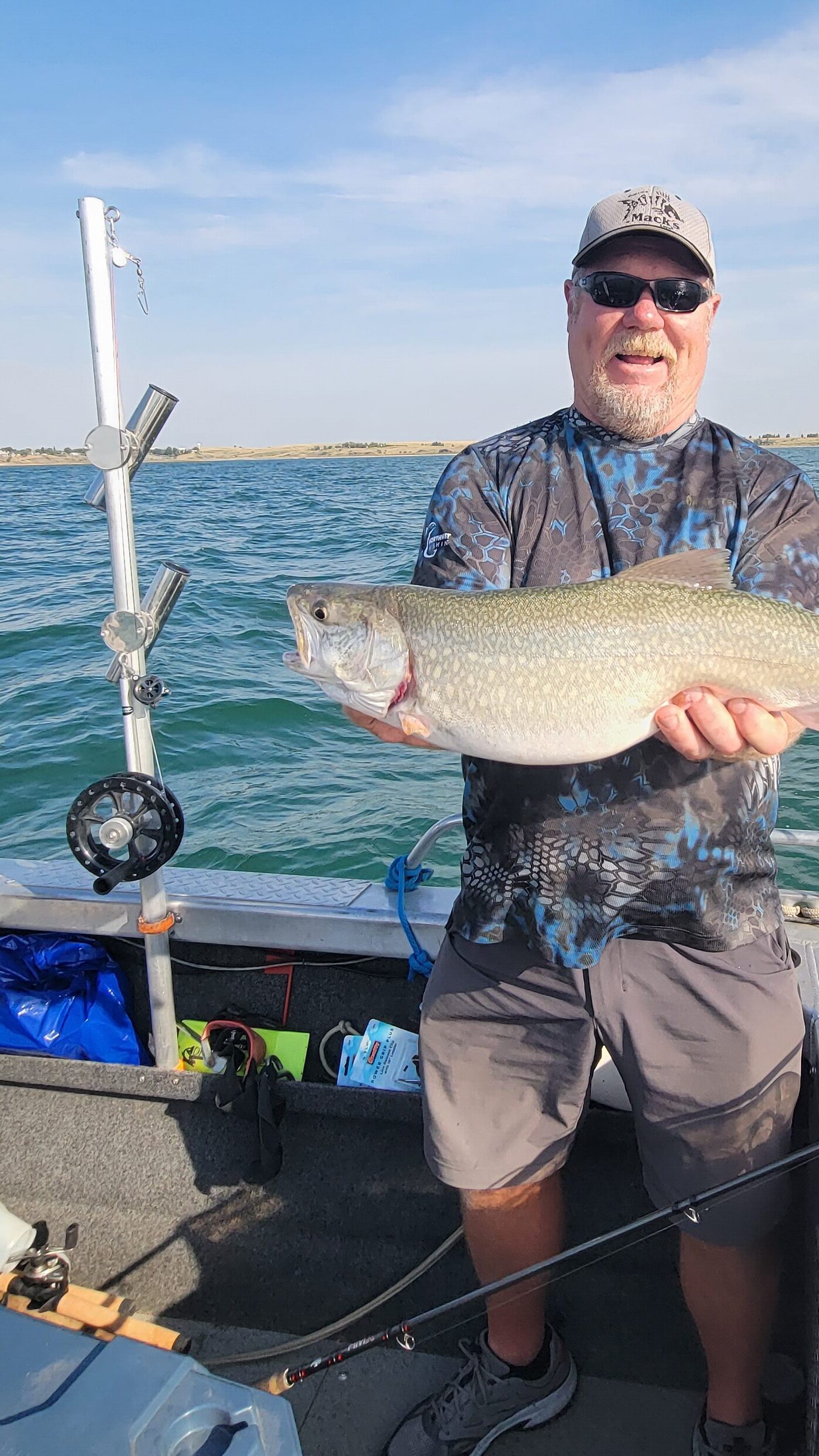
For some people seeking out fishing destinations, the adventure of getting there is more than half the fun. Fort Peck Montana is nearly 1000 miles from Seattle and a 15-hour drive straight through. It is so far East it’s not really PNW anymore. The road to Fort Peck has its share of roadside attractions, beautiful scenery, and fun stops if you plan your time accordingly. If your 5-star fishing destination means a nice long road trip, you should put Fort Peck on your list.
Why Fort Peck? Last year a new state record came out of Fort Peck that caught the attention of anglers across the U.S.. You might be surprised that the record was for Chinook Salmon, a 32.62 Chinook to be exact. That’s a nice fish anywhere! And travelling across the northwest to this unlikely spot for a chance at 30 pound plus Kings is what makes this one of our 5-star destinations. The fishing opportunity doesn’t stop with salmon at Fort Peck, Walleye, Sauger, Northern Pike, Lake Trout, and Small Mouth Bass all abound in one of the most beautiful, uncrowded fishing destinations in the United States. And from experience, they grow them large in Big Sky country!
Fort Peck Reservoir is a big lake (about 134 miles in length, 1520 miles of shoreline, and roughly 220’ deep when full) created by the Fort Peck Dam on the Missouri River, and boats are recommended but there are a lot of marinas and campgrounds to plan your trip around with many having shore fishing opportunities. Glasgow, Montana serves as a good base camp with various lodging, restaurants, and re-supply options and is just 17 miles from the Fort Peck Marina. The Cottonwood Inn & Suites has a variety of options for lodging; from RV Parking to hotel rooms, and amenities include boat parking, a casino, and restaurant.
You can learn more about Fort Peck, and how to fish it at https://fwp.mt.gov/fish
Lake Pend Oreille, Idaho
North Idaho Trophy Hunting
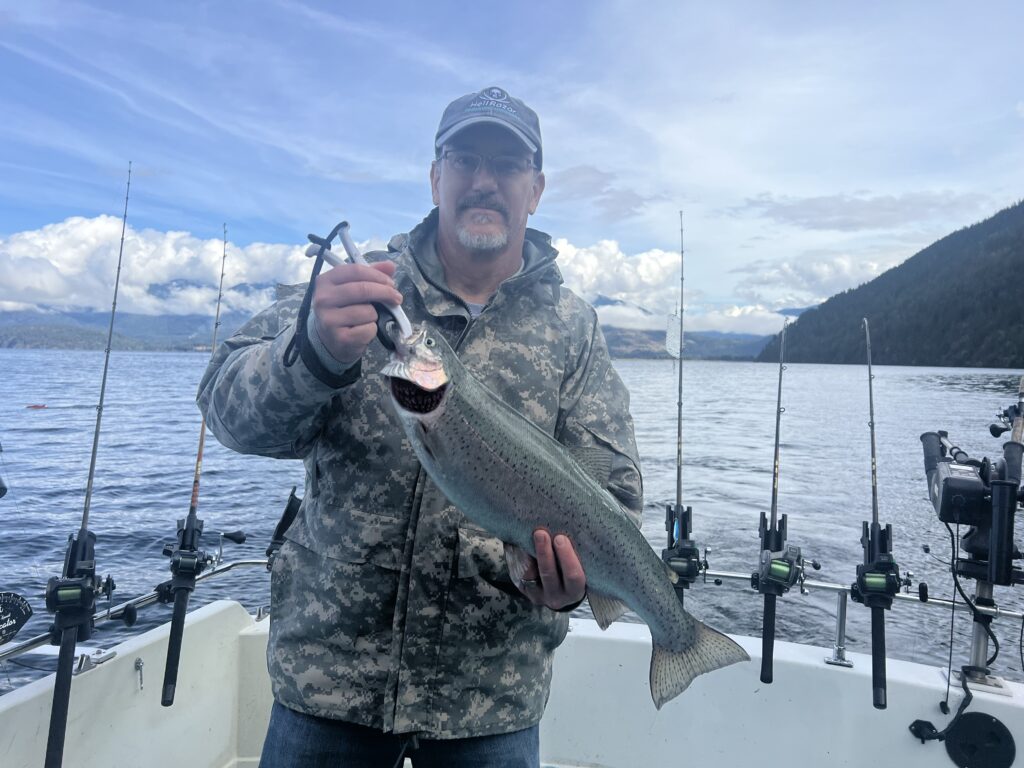
Lake Pend Oreille is the largest lake in Idaho and in the top 50 for the U.S.. It is really deep (over 1000 feet in some areas) and is known for naval submarine testing. This is beautiful country, with a host of fishing options, but what many come for are the Kamloops. Kamloops are a Gerrard strain of rainbow trout and that are known as some of the biggest trout around, and are highly sought after to round out an avid trout anglers trophy checklist. Your chance for “Big fish” is what makes Lake Pend Oreille a 5-star fishing destination.
The Idaho state record Kamloops rainbow trout was caught out of Pend Oreille in 1947 by Wes Hamlet in 1947. That’s a long time for a record to hold up, but that doesn’t stop anglers from pursuing glory every year in tournaments, by boat, and from shore. Pend Oreille is also home to massive schools of kokanee (a favorite food of the Kamloops), and populations of pike, bass, perch, walleye, crappie and mackinaw. The lake has a history of big fish taken from it in addition to the trout record, these include a 43-pound 6-ounce mackinaw in 1995, and a world record 32-pound bull trout in 1949.
The idyllic town of Sandpoint sits on the shores of Lake Pend Oreille, nestled in forests between the mountains and the lake. A destination town for skiers in the winter and boaters in the summer, Sandpoint is a great home base for the family fishing destination vacation with some boujee amenities not too far from some small town, rustic escapes. The theme park, Silverwood, is less than 30 minutes away. If you’re looking to plan a trip with something for everyone, shopping, hiking, dining, and trophy fishing, Sandpoint and the neighboring town of Ponderay are great options.
The word is out, and the popularity of the area has grown immensely for so plan ahead! Jeff and Mona Laybourne of Superfly Tackle not only operate the local tackle store and carry everything you need, but they make specialized gear to target the lake’s prized trophies. They are a wealth of information and can be reached online at https://superflyflies.com/.
Clearwater River, Idaho
Steelhead Mecca
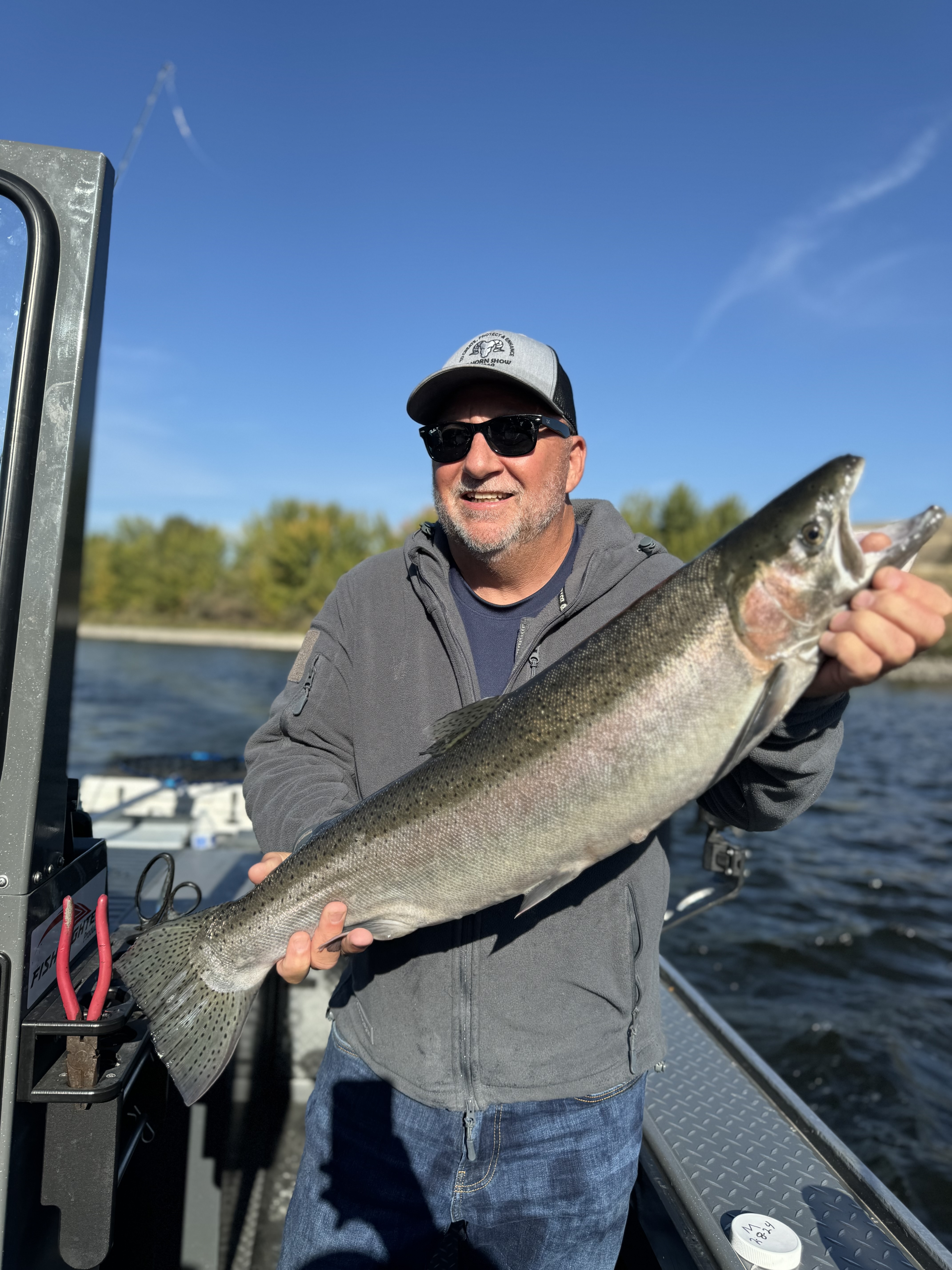
Arguably the most consistent steelhead fishing in the region and your best shot at steelhead retention (catch and keep), the Clearwater River’s retention steelhead season runs from early October to mid-April, with prime time being October through January. You can be at this steelhead promise land in just under 6 hours from Seattle.
The river draws steelhead enthusiasts from around the northwest, offering outstanding opportunities for catch-and-release fishing, fly fishing, shore fishing, and of course drift boats and power boats. The Clearwater’s “B-run” may be the best bet in the region for a trophy 20 pounder, and B-run fish typically average 12-14 pounds. Many of the fish originate at the Dworshak National Fish Hatchery managed by the Nez Perce tribe of Idaho, located at the confluence of the North Fork and mainstem Clearwater, about 3 miles west of Orofino, Idaho.
While the epic steelhead fishing and amazing stretches of highly fishable water make this a 5-star fishing destination, the Clearwater is not a one trick pony. The Dworshak hatchery bolsters catch and keep chances for King and Coho salmon with sustainable fish production goals. Coho were declared extinct in the river in 1986, but this year there was an overlapping sport season for Coho, Kings, and Steelhead! These October days are prime time and can be some of the most amazing, quality, days of an angler’s life. With returning Coho averaging 8-12 pounds, 10 to 20 pounds plus Chinook, and those amazing B-run in the river at the same time, pandemonium has been the theme more than once! Recent years have seen spring run Chinook seasons as well.
This adventure is really about the fishing and those special days on the water. There are a variety of options in the area for shore fishing, multiple boat launches, and some great area outfitters. Many folks skip the hassle of pulling the boat and learning the river, instead walking onto a guides boat and getting right into the hot spots. Many of these area professionals provide a “hot lunch” as well, and around noon you can smell burgers and brats all around the river. Guides we recommend in the area include Toby Wyatt of Reel Time Fishing https://reeltimefishing.com, Kyle Jones of Jones Sport Fishing https://jonessportfishing.com, and Adam Hocking of Steel Dreams Guide Service https://steeldreamsfishing.com. For lodging Lewiston, Idaho has all the amenities with the Hell’s Canyon Grand being our usual choice. Orofino, Idaho, has several good options as well.
Potholes Reservoir, Washington
Walleye Wonderland
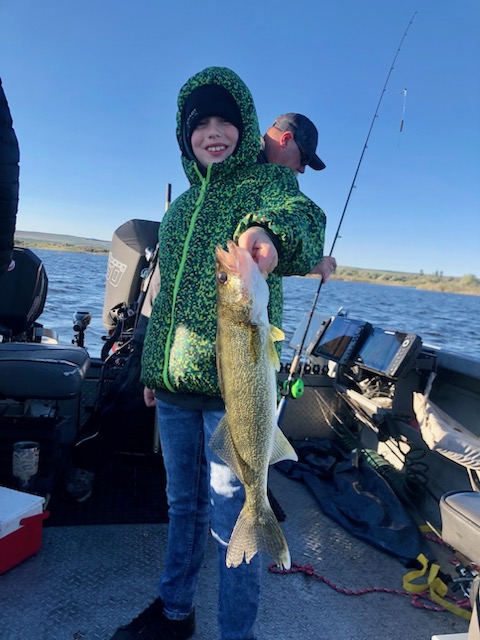
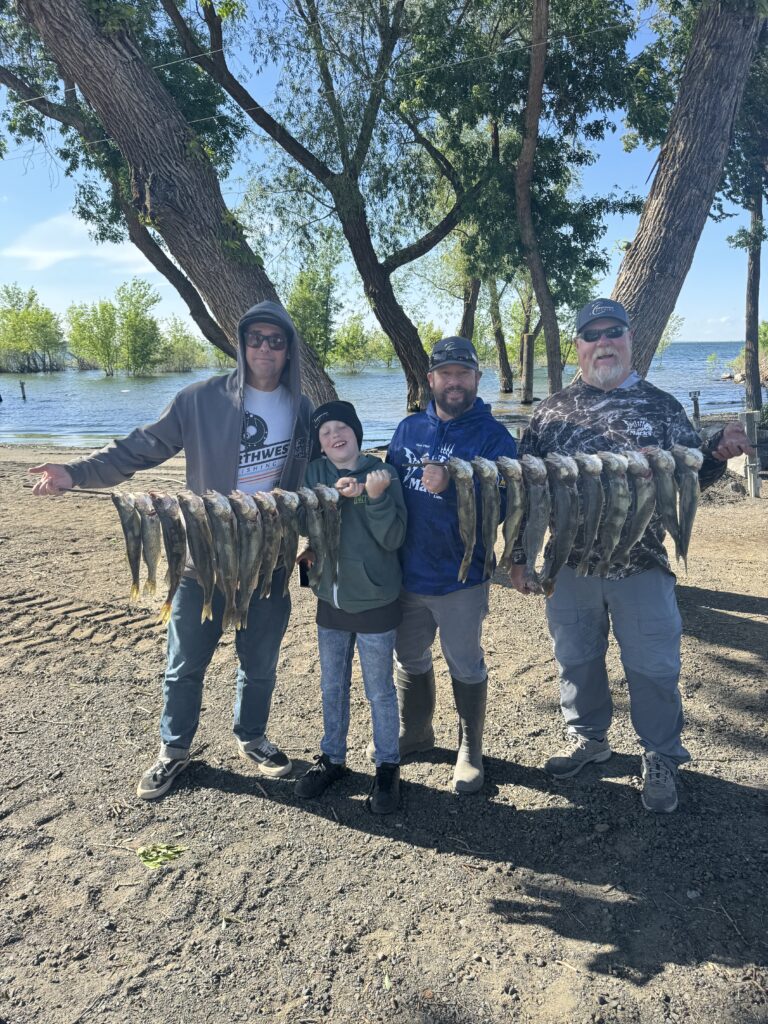
Not everyone’s into walleye, but if you are, Potholes Reservoir should be on your list. Located about seven miles south of Moses Lake in Central Washington, Potholes Reservoir offers year-round fishing opportunities for walleye, smallmouth bass, largemouth bass, and panfish. Dinner plate bluegill are not unknown and last year there was some great rainbow fishing.
The lake is large and shallow, with most of the lake less than 30 feet deep. What used to be, and still is to some extent, a large collection of sand dunes, is now a one-of-a-kind regional destination for bass and walleye anglers and recreation of all sorts. Part of the Columbia Basin Irrigation Project, multiple tournaments are held on the Lake annually, most held at the MarDon Resort Marina.
With over 300 days of sunshine, MarDon is popular as a destination for families, and vacationers nearly year-round (boating, camping, resort events, wildlife & birdwatching), with the Fall and Winter offering excellent waterfowl hunting opportunities. The resort has a variety of lodging opportunities from big RV spots and campsites to beach houses and cabins, you can customize your Potholes Lodging experience to your needs. The marina offers quick access to the Lake, and the restaurant and resort store means you don’t really need to go anywhere.
The consistent walleye fishing, and the flexibility to tailor the trip to whatever you’re looking for is what makes this a 5-star fishing destination. Walleye are delicious table fare, and the big boys can offer a surprising fight. Nothing beats a mess of walleye grilled up after a day of fishing with one of those epic Potholes sunsets on the horizon.
You can fish from the shore or the marina dock, launch your boat, rent a boat, or hire a local guide to experience Potholes Reservoir Fishing. Shelby Ross of Ross Outdoor Adventures is the resident expert on lake conditions and where the fish are.
To learn more about MarDon Reservoir visit https://mardonresort.com/ to contact Shelby Ross of Ross Outdoor Adventure visit: https://rossoutdooradventures.com
Zeballos, BC
Trip of a Lifetime
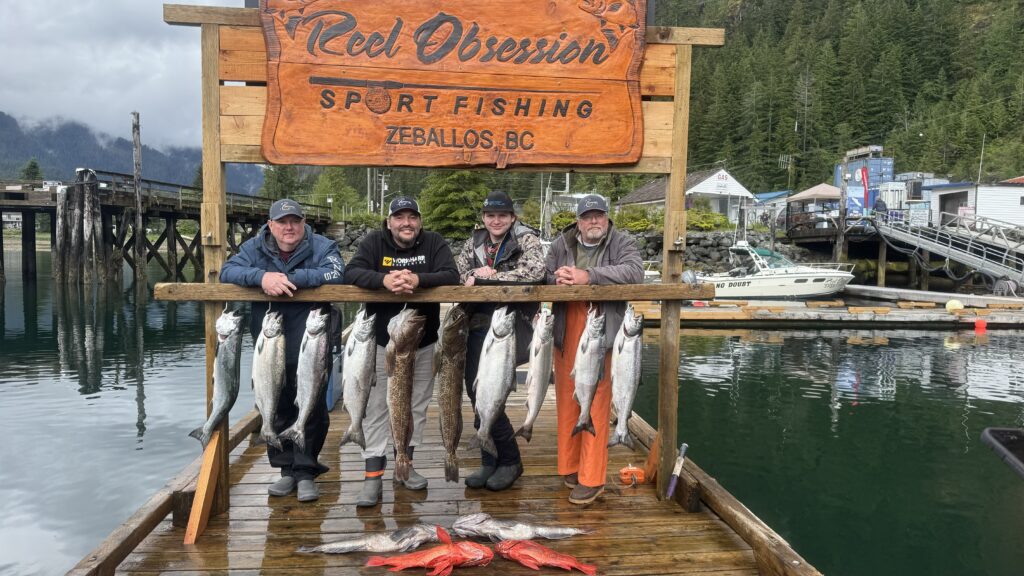
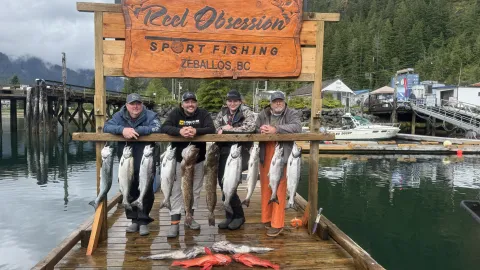
This one is for those people who want the ultimate PNW fishing experience. You want salmon, you want halibut, you want the smell of saltwater and rugged untouched shorelines. This destination is not for people that one shopping, nightlife, and dance clubs. When you pull into Zeballos, BC you drive into the past. There’s one thing to do: Fish, Eat, Sleep, Repeat.
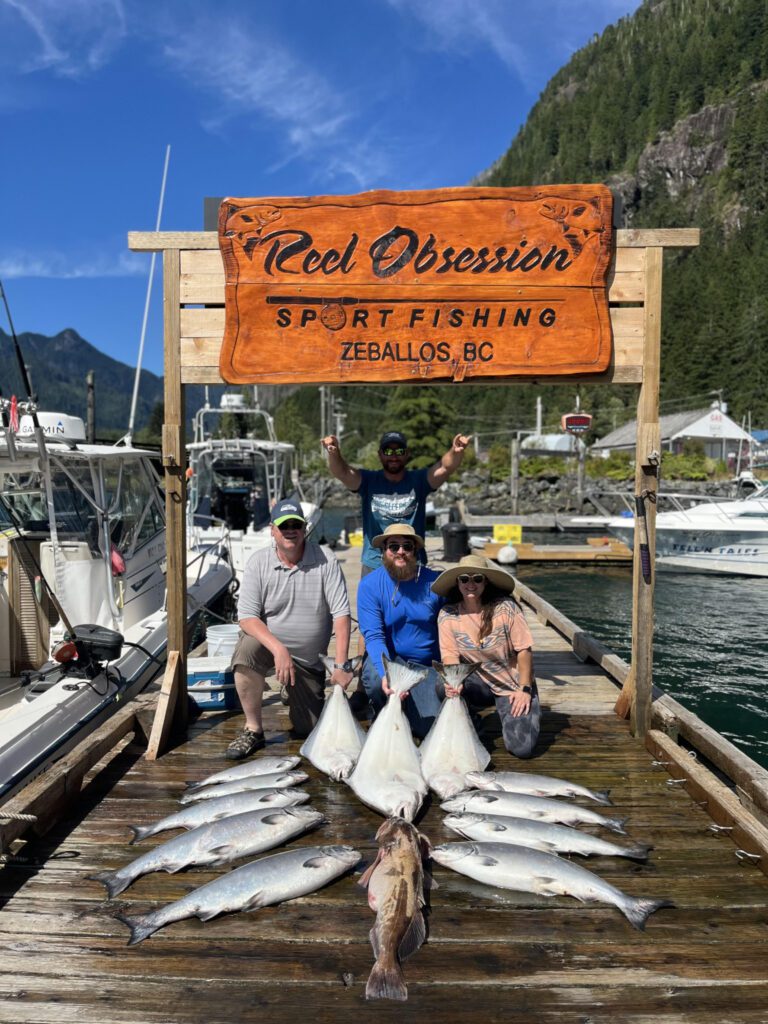
There’s one primary business in this town: Reel Obsession Sportfishing. Zeballos is about halfway up the west coast of Vancouver Island in British Columbia. It looks just like the coastal parts of the PNW. On the drive up (about 4 1/2 hours from the ferry in Nanaimo) there are towering Cedars and Firs, jagged mountains and pristine streams. There aren’t any mini-marts though. This trip is all about decompressing and enjoying some of the consistently best all-around salmon & halibut fishing in the region, and the team at Reel Obsession is obsessive in providing an unforgettable experience for their guests.
From the time you arrive until you depart, they have thought of everything. Wonderful accommodations, amazing chef prepared meals, top quality boats, gear, and equipment, and off the hook fishing is what makes this a 5-star fishing destination. Owners Adrian and Angie O’Connor have grown their operation to include up to 30 guests daily with groups of two, three, and larger visiting for three- or four-day inclusive trips. Guests start their day with breakfast in the common room then head for the boats, lunches already onboard, after eight hours of fishing your captain returns you to the dock. Fish are filleted, vacuum packed, and flash froze – all while you enjoy the latest chef’s creation. Then you wake up and do it again.
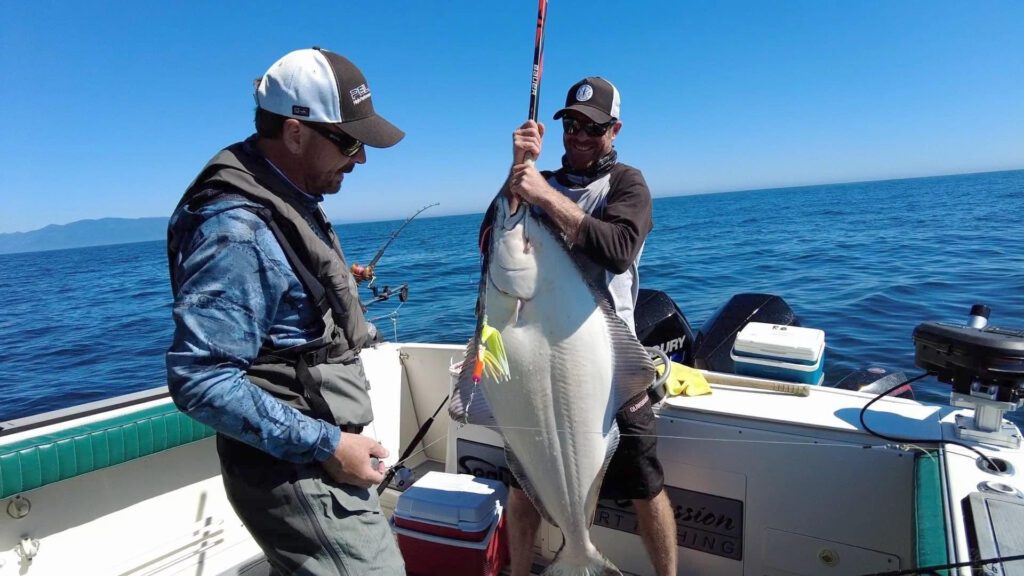
Located at the end of Esperanza Inlet which leads to Nootka Sound and then the Pacific Salmon Highway, fishing from Zeballos allows multiple options to intercept salmon, access to reliable halibut grounds, and the chance at ling cod and bottom fish nearly every trip. Later in the season Albacore Tuna trips are possible as are the chances for the prized Tyee Salmon (30 pounds or larger).
U.S. guests are limited to specific travel limits which usually fill a good cooler. Reel Obsession books up fast each season, we recommend you reach out to them early to plan your destination fishing adventure. For more information about Reel Obsession visit https://reelobsession.ca
/articles/five-5-star-fishing-destinations
Steelhead... are back?
Let's start with a recap of Steelhead season 2024 early predictions called for a record run.
JULY & AUGUST
Most people were skeptical considering the last 15 years have been less than stellar. Snake River Steelhead enter the Columbia River in July and August and unlike Salmon, Steelhead migrate slower. They often stop in areas known as cold water refuges for many days, or sometimes weeks, on their way upriver to spawn.
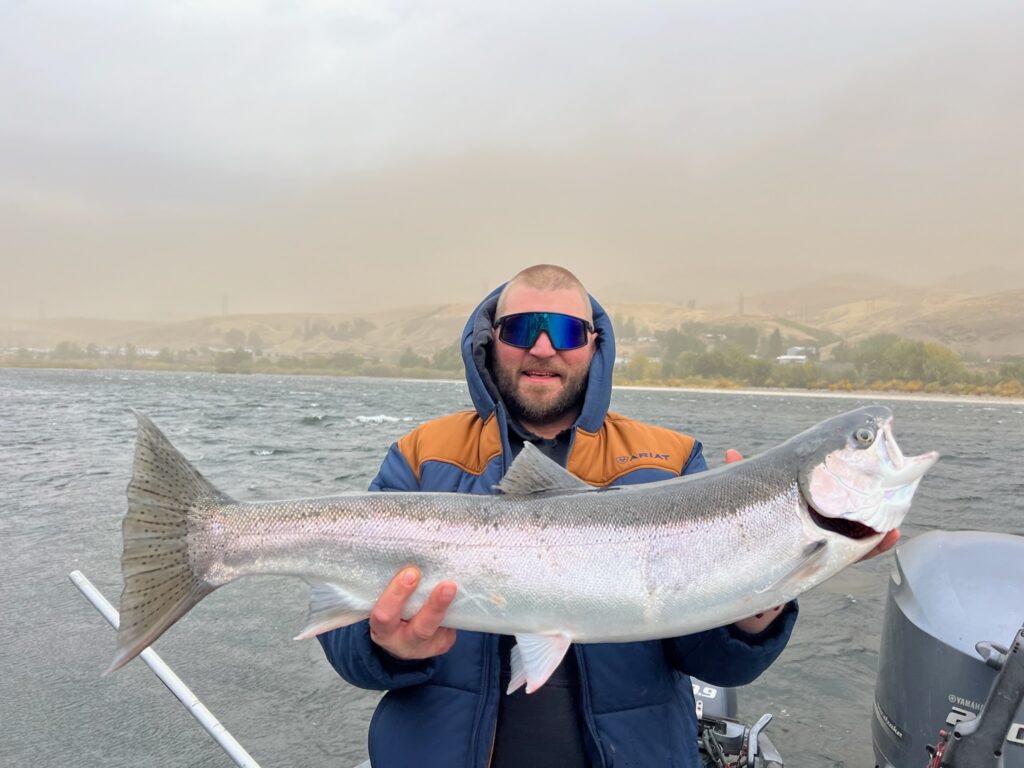
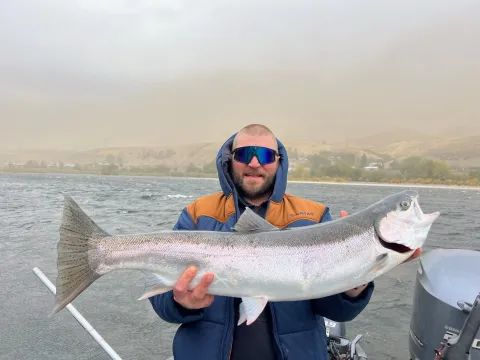
The first thing we noticed was higher numbers of fish than we were accustomed to seeing over the last 15 years. The second thing we noticed was the fish were mostly bigger B-run steelhead. Steelhead are classified into two groups: A-run identified as a Steelhead under 30", and B–over 30".
A-run spend 1 year in the ocean, and B-run spend 2 or more. September 1st when the Steelhead Season opened on the Snake River, we had a good feel for the run. Fishery managers had pumped up the run and the numbers crossing each dam did not lie. It’s going to be a good year.
SEPTEMBER
September for my company, Reel Time Fishing, is primarily spent trolling 360 flasher setups or hovering eggs targeting King Salmon around the Confluence of the Snake and Clearwater rivers. This area has a temperature difference known as a thermal barrier. In this case, the Clearwater is close to 10 degrees colder than the Snake River. Salmon fishing was slow this September but the Steelhead fishing was much better. It was strange to tell the clients Salmon is slow, while Steelhead is hot.
We had a lot of success trolling bobbers and shrimp at an ultra-slow pace in the usual steelhead spots around the bridges and the neutral water flat on the north side of the confluence. We also caught a fair amount on our Salmon gear superbaits and spinners as the season progressed we started to move upriver to the free-flowing areas of the Clearwater trolling Maglips by Yakima Bait and Bradss Wiggler. These plugs tipped with a shrimp are a deadly combination.
NOVEMBER & DECEMBER
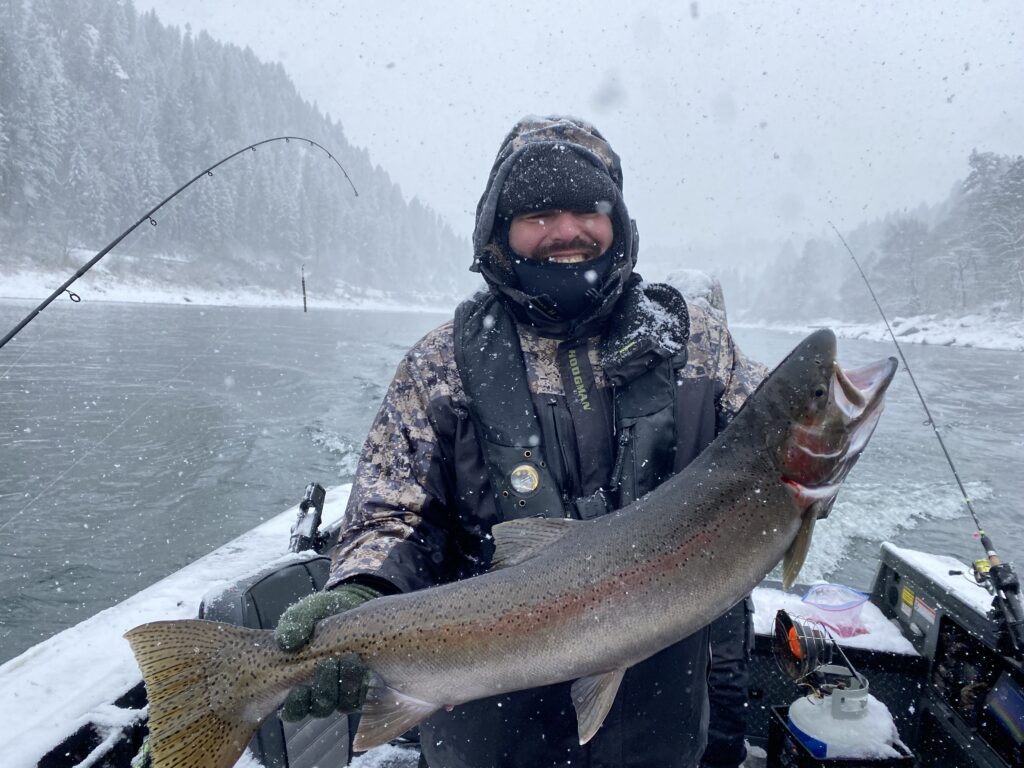
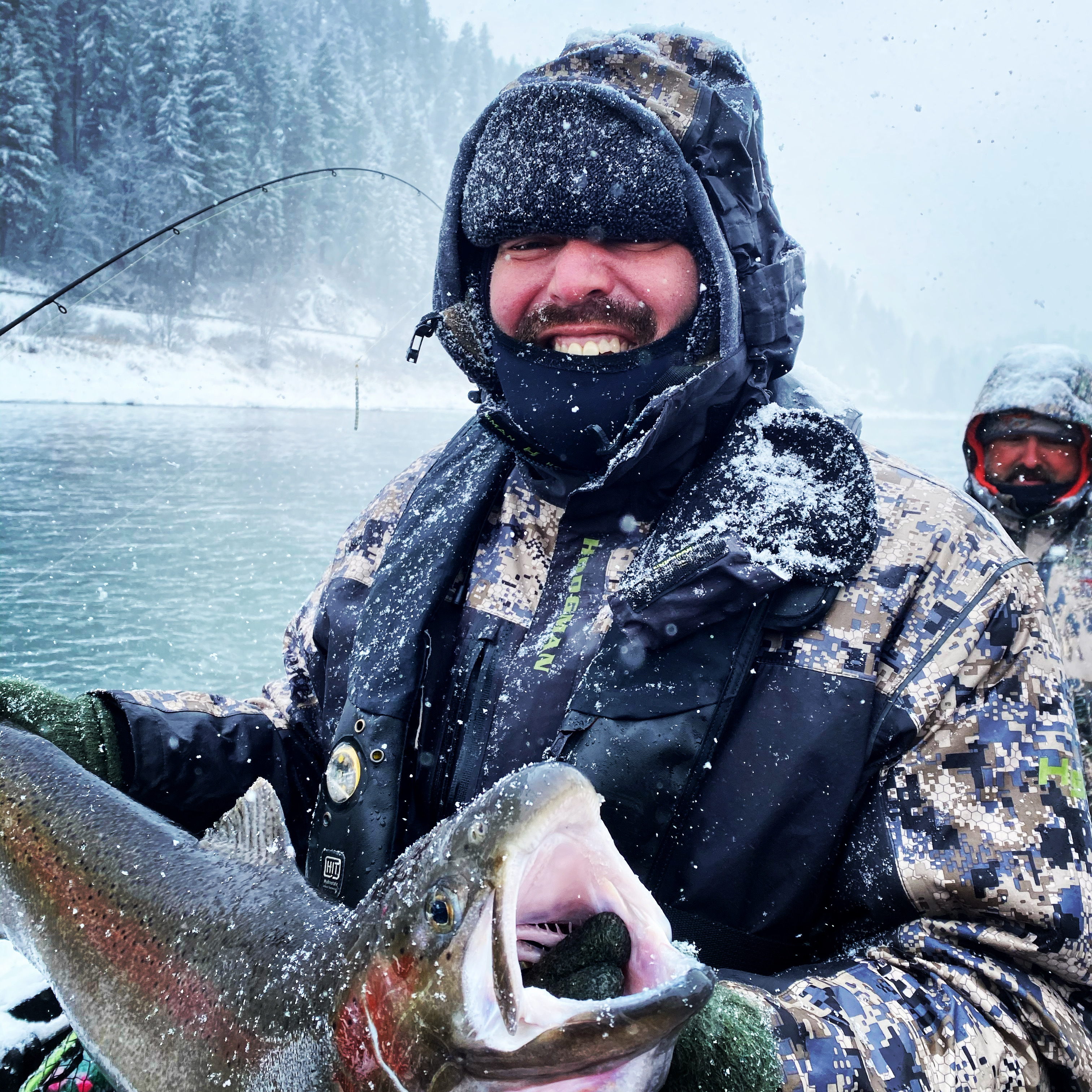
That brings us to the now. Currently, the Steelhead are through all river systems and anglers are enjoying both the increased numbers and size. In my 35 years of guiding experience, this is how the rest of the season should shape up: Steelhead are going to hang in the slower water around Lewiston, Clarkston, and Asotin to wait for a good shot of rain that signals the fish to move upriver.
This makes November and December amazing fishing in the slack water in the day and the night. Yes, I said night. Night fishing is allowed and it can be very productive pulling lighted lures like the old Brads Wigglers, Vortex and the new Night Strike day time. I would concentrate on Bobber and Shrimp around the bridges and in the neutral water in the confluence on the north side or trolling 360 flashers and a very small spinner such as the 3.0 colorado blade in shades gold, chartreuse, and green.
Many steelhead can be caught upriver as well. The Clearwater is an amazing bank fishery that targets deeper slower runs with bobber and shrimp. If you prefer fishing upriver from a boat my suggestion is Heller Bar or the entire Clearwater from Lewiston to Orofino. Keep in mind these river systems are very dangerous, a person can get into trouble not knowing the water. I suggest hiring one of the many local guide services to show you the river.
JANUARY & FEBRUARY
After the first of the year, most of the Steelhead will begin to head to areas closer to their spawning grounds but keep in mind Steelhead migration is unique. Sometimes they actually move downriver for some time. For example, during January and February, you can still catch fish in the Lewiston-Clarkston area but there are definitely less fish hanging around in this area.
On the Clearwater, anglers will begin to pile into the Orofino area targeting the fish from Dworshak hatchery, the largest Steelhead hatchery in the world. Amazing bank fishing can be had on the North Fork of the Clearwater below Dworshak Dam.
Other hot spots include the Cottonwood Creek hatchery on the Grande Ronde, and Mouth of the Little Salmon on the Salmon River. These areas are all hotspots and because of this, they are high-traffic areas. If you would like to avoid the crowds, fish river sections up to 15 miles downriver of these hot spots and just cover some ground. The fish aren’t as concentrated, so it’ll likely be a situation where you find one here and there.
MARCH & APRIL
In March and April, all the fish will be piled up near hatcheries or spawning grounds. This is a hot time for Orofino, Clear Creek hatchery, and the south fork of the Clearwater. Little Salmon heats up in Riggins Idaho, the Cottonwood creek area on the Grande Ronde, and Hell’s Canyon dam will begin to produce.
LATE SEASON
Let's talk techniques for these late-season fish. The #1 technique is drifting a pegged bead. I use a yakima bait size 10 pink or orange corky with a toothpick pegging the bead 4 or 5 inches above the hook, this technique is deadly with a very soft subtle presentation. The Steelhead's focus is on the bead, he never sees the hook, but when he clamps down on the bead and you set the hook you stick him in the corner of the mouth and never get a gut-hooked fish. It’s the perfect catch and release system and perfect for rivers with wild fish release. I suggest presenting this bead system free drifting, bobber dog, or just straight-up bobber, but you will need to use a sinking bead on this straight-up system. Other techniques that work well include free drift or bobber and eggs, back trolling or bobber and jig.
Now we need to ask ourselves a few questions. So why is this year so good? Will this be normal in the future? Are we recovering Steelhead? What can we do to help the Steelhead? The answer in my opinion is that this year was good because ocean conditions have been favorable for Steelhead. I do think we will get many more years like this one, but if you look at the overall trend, Steelhead are still on the decline. So no, we are not recovering Steelhead. We release billions of smolt and get less than a 1% return.
HOW TO HELP
Here are a few things we need to focus on to help the Steelhead:
#1 Improve passage: a journey that used to take Steelhead smolt around 15 days, now takes them over 30 days. Going hand-in-hand is predator pressure. Predator pressure is intense—these fish are facing an overwhelming and growing number of predators like walleye, bass, cormorants, and pelicans, whose populations are skyrocketing.
#2. Selective Harvest. I feel any human should not kill a wild Steelhead. If we could eliminate gill nets and switch to selective harvest methods for hatchery fish, allowing wild fish to swim free, it would be a clear win. Individuals harvesting fish for commercial or subsistence purposes could selectively harvest at each dam using dip nets, sorting out hatchery fish, and letting all wild Steelhead go free.
That's a start. There are many more factors contributing to the decline, but for now, we are enjoying a wonderful Steelhead season and we are only halfway through. So get off the couch grab a rod and head to the river. Tight Lines -Toby Wyatt-
/articles/steelhead-are-back
2024 Reel Obsession Fishing Season Recap & Newsletter
Eat, Sleep, Fish, Repeat
Looking back at this past fishing season makes us reflect and realize how lucky we are to be in such a prolific and beautiful part of the coast. Not a day goes by that we don’t feel blessed to be able to offer these adventures to guests, friends, and family.
With our sold-out lodge season and the incredible fishing we experienced in 2024, our prime spots are in high demand. Already, just over 70% of our guest list have taken their returning dates for our 2025 season. With that said, if you're contemplating on a fishing vacation with Reel Obsession, drop us a line and don’t miss out on getting your preferred dates locked in with us.
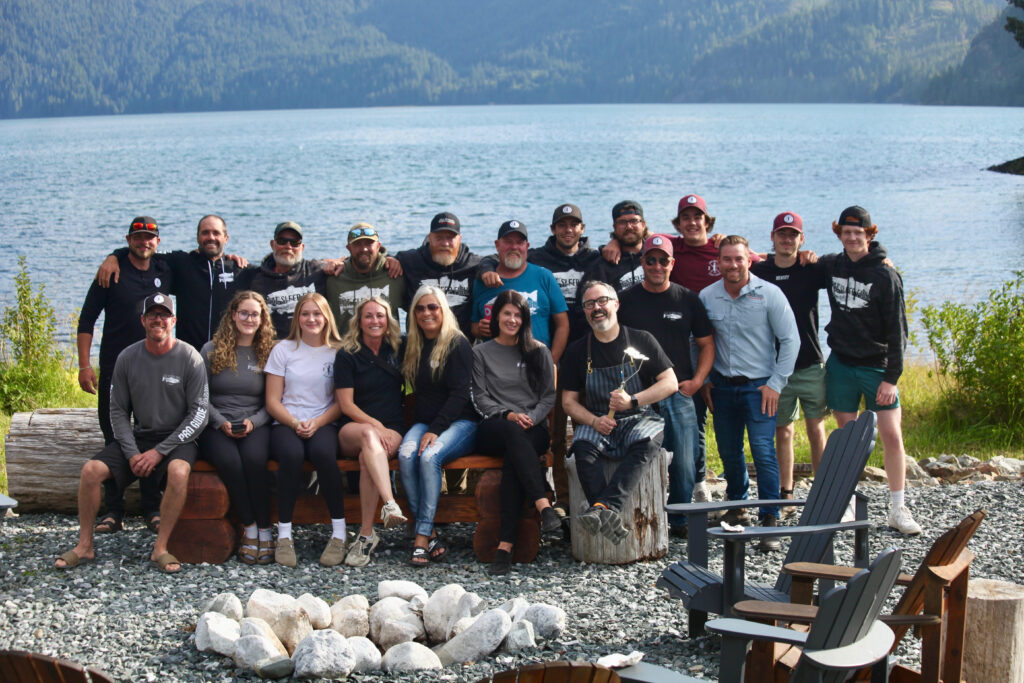
Allow us the opportunity to express a heartfelt shoutout to our 2024 team of professionals. From land to sea, with out each and every one of these incredible humans, we could not do what we do. Trust me when I say, you are in excellent hands when experiencing one of our all-inclusive packages with this crew.
2024 SEASON RECAP
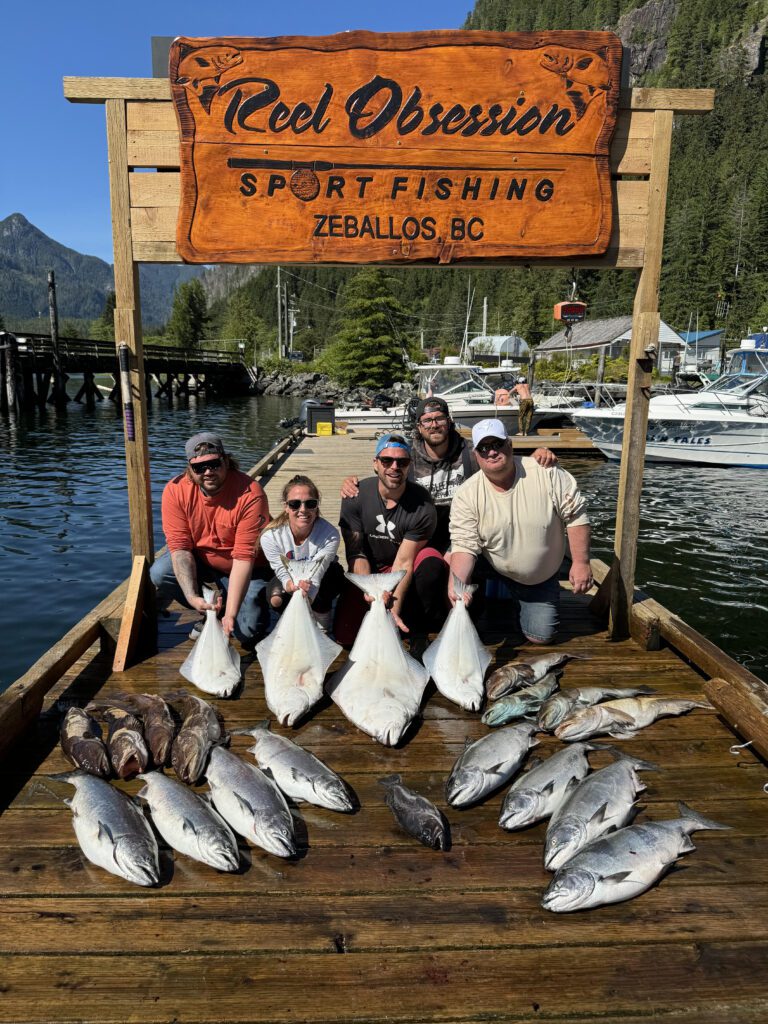
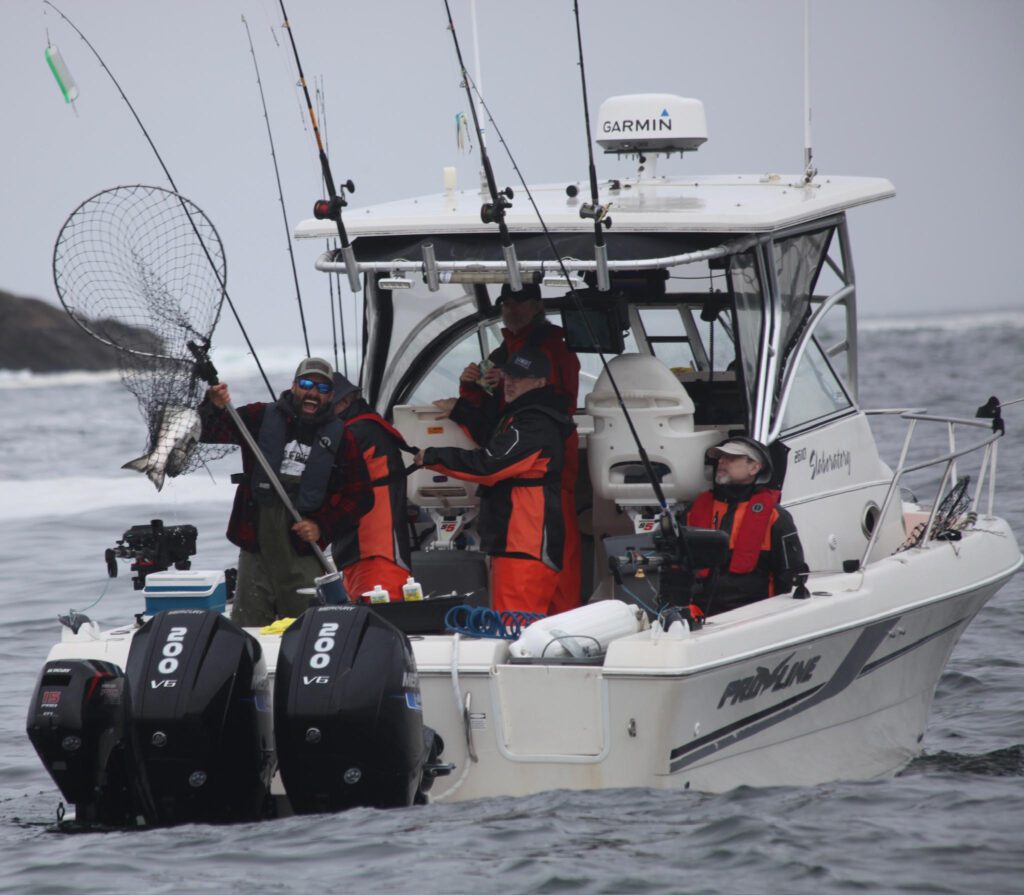
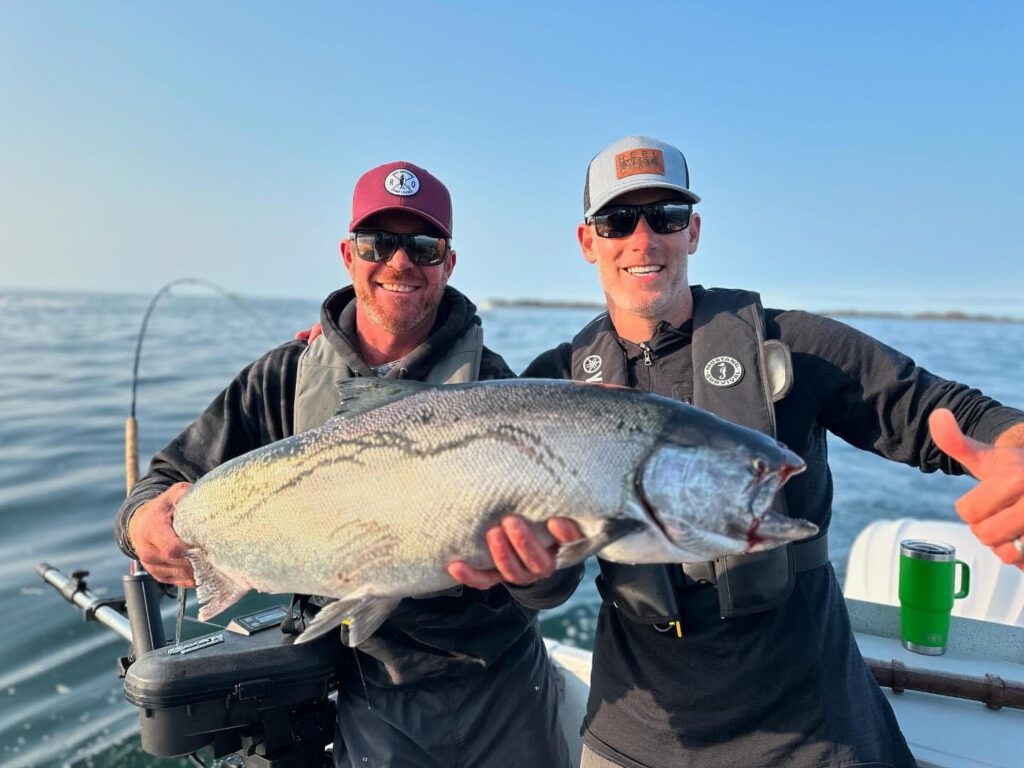
From our opening day the first week of June to our season end early September, we had incredible fishing for halibut, bottom fish... while the Chinook fishing was the most consistent in my 24 years of guiding our area. Each boat was hooking up 15-40 Chinook each day. This kind of action continued for most of the Summer!!
The action speaks for itself. In 2023, the West Coast of Vancouver Island saw the largest return of Chinook salmon in 44 years. These kinds of statistics give us great confidence in knowing we have a healthy fishery that is second to none. The official 2024 run returns won’t be out for a few months however all indicators are showing that we matched or surpassed the 2023 numbers.
You know what this means... we are looking forward to having some incredible fishing in years to come!!
[FISH DATES: June 7-9, 2024]
[FISH DATES: August 1-3, 2024]
VICTORIA CHARTERS ARE AVAILABLE WITH REEL OBSESSION
Just because the lodge is shut down for the season doesn’t mean fishing is over! Victoria is our winter home and a fantastic place to get out for a charter with the family, get away from the cold, or perhaps organize a team building session out on the waters for your employees.
Coho fishing is electric at the moment with nonstop action, tons of double headers and even some triples. Winter Chinook are showing up in great numbers on Constance Bank and will be thick in the Straight within the next month. Halibut fishing remains open and looks like it should stay open until the new year.
Give us a call this Fall to keep the action going!!!
Many exciting TV shows on the horizon for Reel Obsession
Keep your eyes peeled!!
- West Coast Sporting Journal with Mark Pendlington has released one of our 2 new episodes airing this Fall.
- Northwest Fishing TV will be airing next month with our first ever Victoria show featuring Winter Springs followed by a couple of Zeballos lodge episodes.
- Reel West Coast with Brendan Morrison will also be airing in the New Year with some exciting action out of Esperanza from this past July.

Come join us in the prime summer months of 2025 for an unforgettable all-inclusive fishing vacation!
Please check out our online reviews through Google and Trip Advisor.
Don’t miss out booking your preferred dates and let’s talk today!
Give us a call or drop us a line anytime to discuss your next great fishing vacation!
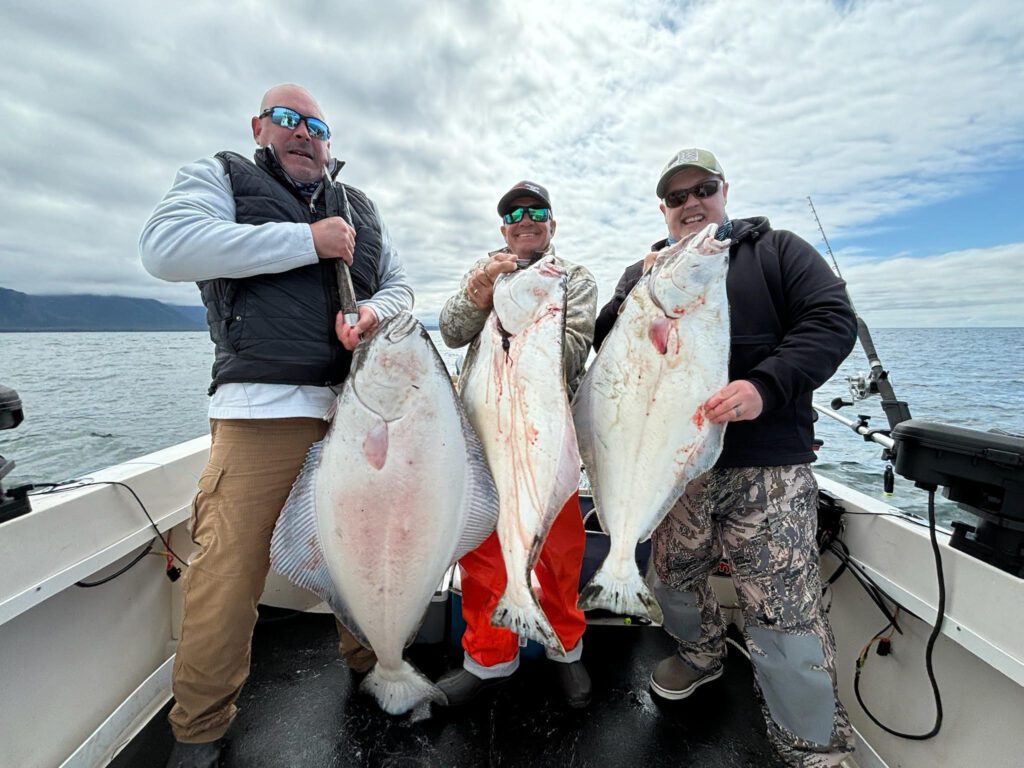
TRIPADVISOR REVIEW - LARRY AUSTIN, FISH DATES: JUNE 17-19, 2024
GUIDE: Kashes
"Amazing trip. Fishing was fantastic. We got limits everyday. We fished out of a Grady White and our guide was great. Worked hard and definitely got us into fish. The dining experience was fantastic. Our chef prepared gourmet meals every night with appetizers at 5:00. Great atmosphere hanging out having a cocktail and sharing fun stories with other anglers. Top notch breakfast as well as lunches. Everything was taken care of from beginning to end. Angie and Adrian were great host as well as all the employees. Great folks. We would do it again!"
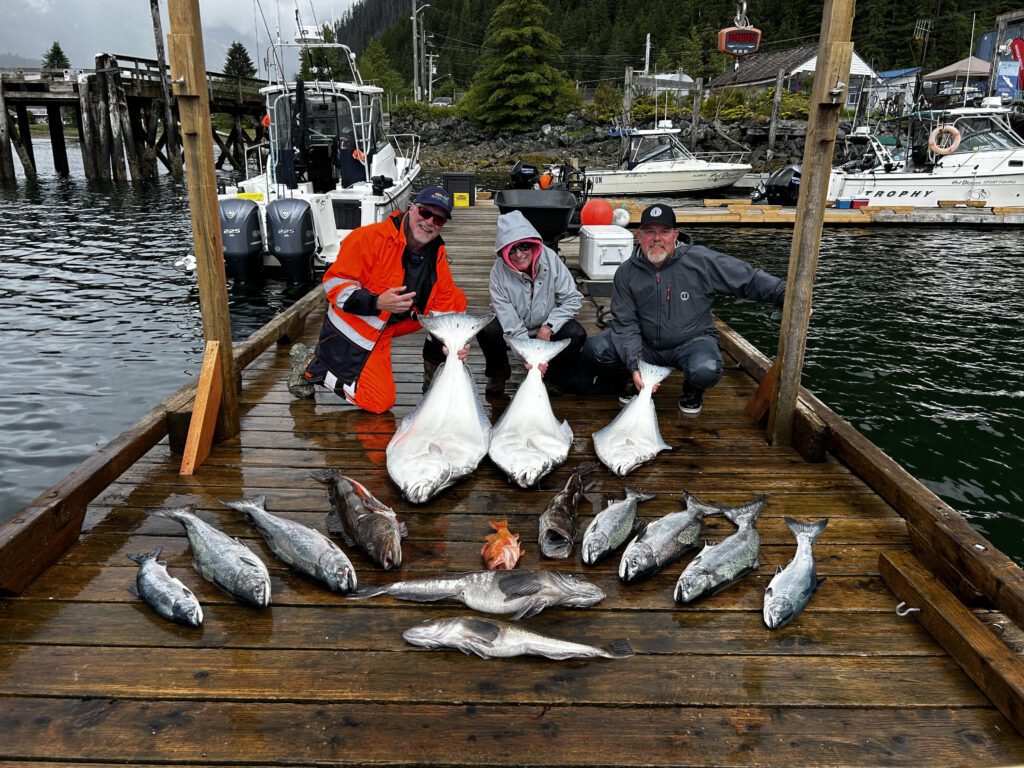
TRIPADVISOR REVIEW - RANDY & KAREN, FISH DATES: JUNE 13-15, 2024 DERBY DATES!!
GUIDE: Dave aka Sprinkles
"So much fun and so many fish!! Good food. Comfortable lodging. Happy people! We enjoy fishing here better than Alaska!!!!"
At Reel Obsession this is a lifestyle and a passion, and we feel grateful for it. Don’t be left on the dock or fishing with an outfit that wasn’t your first choice.
For more information on our warm west coast hospitality, incredible fishing and stories that last a lifetime, give us a call or drop us a line anytime. We look forward to hearing from you!
BC's smallest village awaits -
Adrian O'Connor, Owner & Master Guide
Reel Obsession Sport Fishing
1-888-855-7335 | adrian@reelobsession.ca
Mailing Address: 644 Millstream Lake Rd. Victoria BC V9B 6E9
"Where Real Fishing Stories Begin!"
/articles/2024-reel-obsession-fishing-season-recap-newsletter