/articles/categories/fishing
Lake Washington Kokanee Secrets
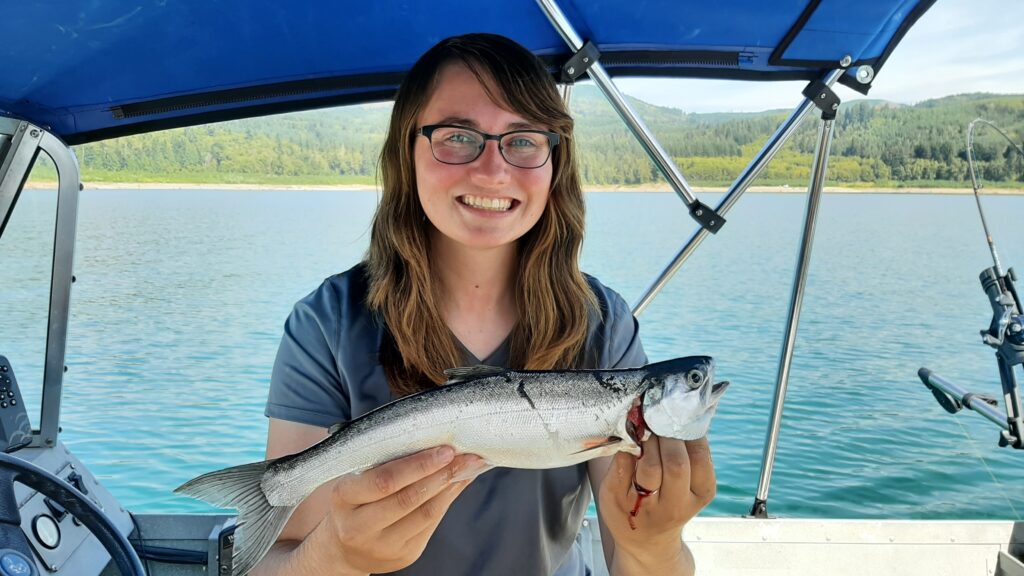
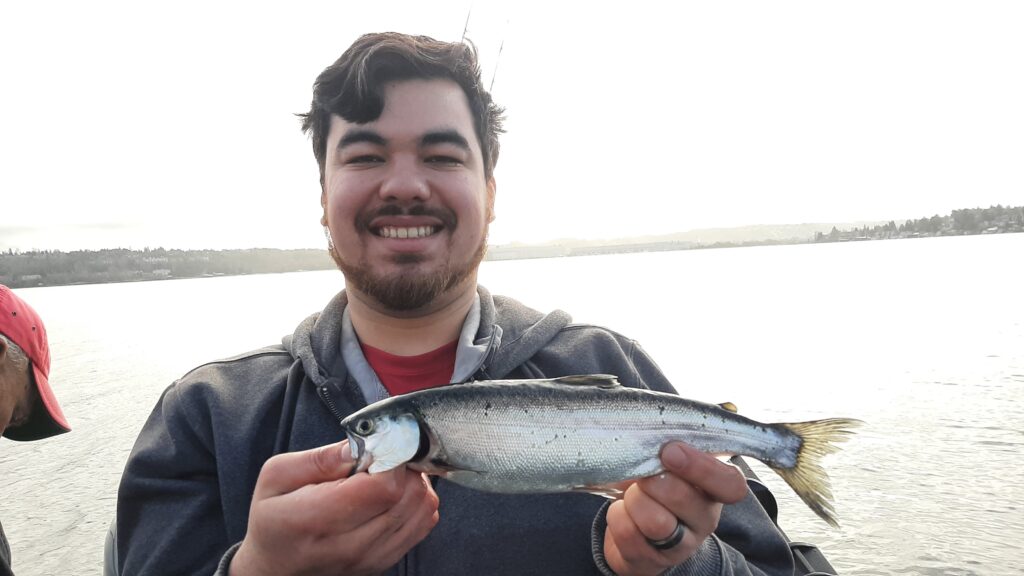
For most people, a trip to Lake Washington means a day of kayaking, jet skiing, or picnicking. But did you know that the lake plays host to thousands of kokanee? These land-locked sockeye salmon are smaller than their ocean-going cousins, but they taste great and are available year-round. Early summer is the perfect time to target them.
They are aggressive and plentiful. Learning how to troll for kokanee is a great way to dip your toe in the water before you fish for salmon in the fall. Whether you're an avid kokanee fisherman or a beginner, you should add Lake Washington to your list of summer fishing destinations. Not sure how to start? Let's go over some key information to make your trip to Lake Washington a success: which launches to use, tried and true techniques, and productive locations to start with.
Launches
There are many boat launches surrounding Lake Washington, so I'll just name the most popular ones here. In the south, the Atlantic City boat ramp is pretty spacious and has restrooms available. There is a fee to launch your boat, but the parking is free and plentiful. Gene Coulon Park is another popular option at the southern end of the lake. Parking can be tight, especially during weekends. There is a launch fee but there are restrooms and an Ivar's close by if you get hungry!
Near the middle of the lake, the Kirkland Marina has a small boat ramp. The launch fee is steep, but you can buy an annual pass to save some money. On the other side of the lake, Magnuson Park offers a well-maintained and easy to use boat ramp. At the very northern tip of the lake is the Kenmore boat ramp. It gets pretty shallow here, so be careful when launching in the early morning. There is no dock, but there's a nice bathroom and there's no launch fee. Although Lake Washington is quite large, you're never very far from a boat ramp!
Techniques
Although Lake Washington has a wealth of shore access, kokanee tend to hang out in water out of casting distance. Your best bet is to troll for them. Typical kokanee gear works well. Toss out a variety of lures and let the fish tell you what they want. Some days they like spinners, other days they want plugs. Kokanee can be very picky.
Artificial maggots and corn should both be in your tackle bag, as well as a few bottles of scent. While pink is the classic kokanee color for a reason, orange, red, and watermelon are all great choices for lure colors too. Sometimes giving the fish something they haven't seen before is the key to success. Trolling flies works great! Make sure you have a variety of dodgers too. You can experiment with different dodger styles and colors. I also tend to use a shorter leader than usual on Lake Washington. The fish seem to respond well to a 9-inch leader.
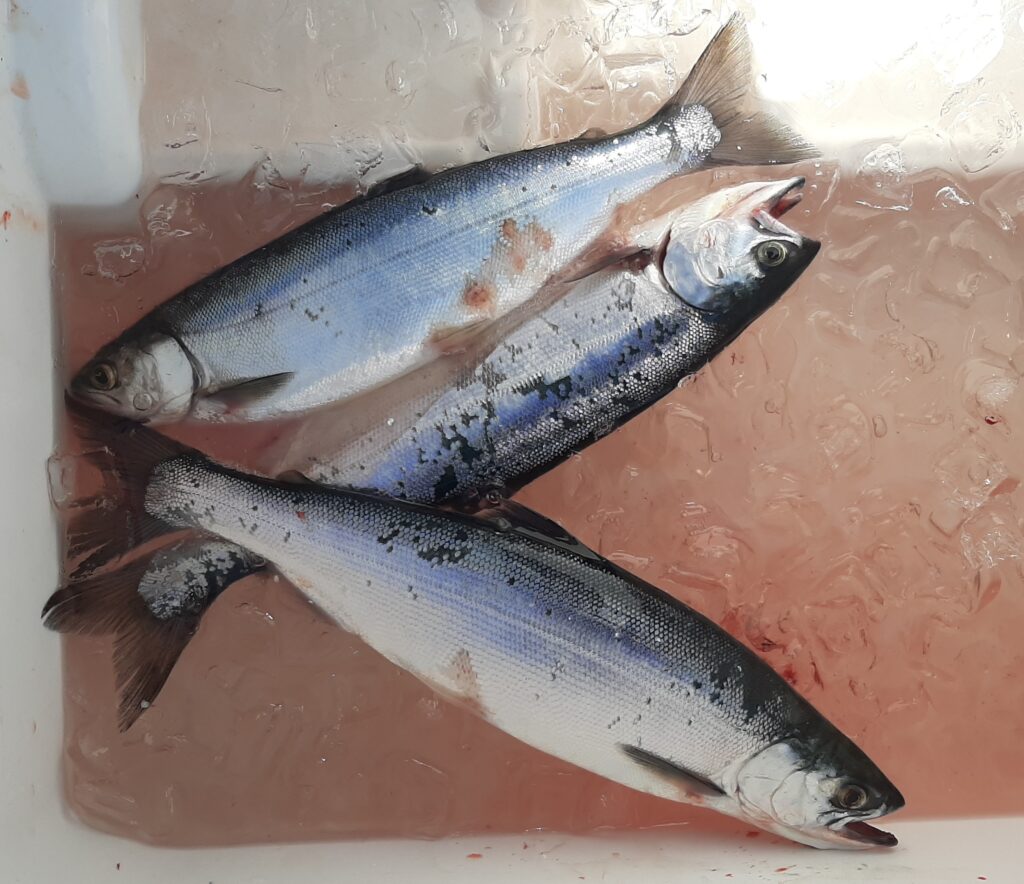
Make sure to bring a long-handled net for landing the fish. Kokanee have soft mouths- boat flipping them often results in lost fish. It's also a good idea to bring a stringer or a bucket to bleed the fish in. A cooler full of ice to keep your fish cool once bled is also crucial. Kokanee also has soft meat, to get the best meat quality it's a good idea to bleed and ice them.
Locations
One of the most important things to bring along on your Lake Washington trip is a fish finder. Especially during late summer when the kokanee dive down deep to escape the warm surface water, you'll need your fish finder to show you what depth to fish. I also recommend placing marks when you get hits or reel in a fish. Set your fish finder to show your trail, and you can set up a good trolling pattern. On the southern end of the lake, try fishing on either side of the I-90 bridge. On the north end, try fishing south of Highway 520. Target points and coves. The fish will move depending on the time of day and weather. Don't be afraid to try somewhere new!
Before we wrap up, let's talk about a few last-minute tips for your Lake Washington trip. First, I highly recommend planning on starting and ending your fishing trip early in the morning. This lake is incredibly popular with jet skiers, inner tubers, and water skiers, particularly later in the day.
If you get off the water early, you'll minimize your chances of tangling your lines or getting a rocky ride. It's a good idea to wear a life jacket and make sure your kids and/or dogs have them as well. The limit is 5 fish, and you must release any fish over 18 inches in length. This rule is in place to protect sockeye that run in the lake during late summer.
Lake Washington kokanee are the perfect fish to go after on a warm summer day. They're absolutely delicious on the smoker or even fried. Kids will love reeling in fish after fish! So, head out to Lake Washington and get your limit!
/articles/lake-washington-kokanee-secrets
Exploring My Favorite Waters: 7 Eastern Washington Lakes Every Angler Must Fish
When it comes to angling adventures, Eastern Washington boasts an array of lakes that promise unforgettable experiences for fishing enthusiasts. From serene hideaways to expansive waters teaming with aquatic life, each lake offers its own unique charm and beauty. In this article, we will go into the allure of 7 of my must-visit lakes in Eastern Washington. Loon Lake, Diamond Lake, Long Lake, Deer Lake, Waitts Lake, Sacheen Lake, and Lake Roosevelt.
#1 Loon Lake: A Tranquil Haven
Nestled amidst the scenic beauty of Stevens County, Loon Lake is a haven for anglers seeking tranquility and plentiful fish. Renowned for its population of Kokanee, Rainbow Trout, and Bass, this picturesque lake also offers World Record Tiger trout. An abundance of opportunities for both novice and seasoned anglers. Whether you prefer casting from the shore, chasing the sunfish and crappie around docks, or trolling on a boat, Loon Lake promises a rewarding fishing experience against a backdrop of natural beauty.
#2 Diamond Lake: A Gem For Anglers
True to its name, Diamond Lake sparkles as one of Eastern Washington’s hidden gems for fishing enthusiasts. Situated in Pend Oreille County, this pristine lake is celebrated for its clear water, and the diverse fish species. From trophy-sized Brown trout, and Rainbow trout, to feisty smallmouth bass, and some really nice perch, Diamond Lake presents anglers with a tantalizing challenge and the promise of unforgettable memories. From ice fishing to the warm summer months, the scenery year-round is amazing.
#3 Long Lake: Where Adventure Awaits
Stretching across Stevens and Spokane counties, Long Lake beckons anglers with its expansive waters and rich aquatic life. Boasting an array of fish species, including a healthy population of Walleye, some Northern Pike, great Perch and Crappie, plenty of Trout, and amazing bass fishing. This lake offers endless opportunities for exploration and angling excitement. Whether you prefer trolling, or casting from a boat, and or from the shore or dock, Long Lake invites you to embark on an adventure filled with anticipation and discovery.
#4 Deer Lake: A Serene Retreat
Tucked away in the foothills of Stevens County, Deer Lake exudes a charm that captivates anglers seeking solace in nature. With its clear waters and lush surroundings, this idyllic lake serves as a great place for relaxation and fishing. From Rainbow trout, and of course, the Mackinaw lurking below, you can also find some great bass and panfish. There was a time not too many years ago, when an angler could get into a mess of Kokanee, now the mystery is where did they go? Are they still swimming here? Deer Lake offers a bounty of opportunities for anglers to test their skills and unwind amidst the beauty of the great outdoors.
#5 Waitts Lake: Where Memories Are Made
Nestled in the heart of Stevens County, Waitts Lake stands as a testament to the enduring allure of Eastern Washington's fishing destinations. Boasting a rich history of big Brown trout, and abundant fish populations, Waitts has great opportunities for also Rainbow Trout, Perch, Bass, and Sunfish. Also a destination for many ice anglers in the winter months as well, as it's open year round. Whether you prefer trolling from the boat or fishing the resort's docks, Waitts Lake promises an experience filled with camaraderie, excitement, and the promise of cherished memories.
#6 Sacheen Lake: A Hidden Paradise
Not hidden like a secret, but tucked away in the forest of Pend Oreille County, Sacheen Lake beckons anglers with its year-round secluded beauty and great angling opportunities. This lake holds some gorgeous Brook trout, Rainbow, and Tiger trout. A healthy population of yellow perch, and crappie are a favorite target for the ice anglers. I saw some big bass pulled out of this lake as well. With its scenic surroundings, this lake offers something for every angler, whether novice or expert, Sacheen invites you to cast your line and immerse yourself in the peaceful rhythms of nature.
#7 Lake Roosevelt: The Jewel Of The Columbia
Stretching across the vast landscape of Eastern Washington, Lake Roosevelt is a testament to the region's natural grandeur and angling legacy. Formed by the mighty Columbia River, this expansive lake offers a wealth of fishing opportunities against a backdrop of rugged beauty and historical significance. With many launches and many miles of shore to enjoy and do some boat camping, you'll find that Lake Roosevelt offers a ton of activities. From trophy size Kokanee, and Trout, and an abundance of Walleye, some anglers may want to target the Sturgeon. Lake Roosevelt promises an angling adventure like no other.
Eastern Washington lakes offer a treasury of angling opportunities for enthusiasts of all ages and skill levels. From the small waters of Loon Lake to the expansive waters of Lake Roosevelt, each lake beckons with its own unique promise for adventure. So pack your gear, set your sights on those seven Eastern Washington lakes, and embark on a fishing journey filled with excitement, camaraderie, and the timeless beauty of our great outdoors.
![{"capture_mode":"AutoModule","faces":[]}](https://cdn.northwestfishing.net/sites/default/files/styles/large/public/images/IMG_20240127_094906_3-scaled.jpg.webp?itok=lCi6vt3M "{\"capture_mode\":\"AutoModule\",\"faces\":[]}")
/articles/exploring-my-favorite-waters-7-eastern-washington-lakes-every-angler-must-fish
Old School Catfishing
While some memories come and go, others stay with you for a lifetime.
One of my earliest fishing memories is of fishing on the Yahara River in the heart of Madison, Wisconsin. The river in this location was a channel that went from the Lake Mendota Locks, through the heart of the city, and a mile later emptied into Lake Monona. It was urban fishing at its finest, and as 12-year-olds we would look forward to fishing it often.
The day would start the night before, with a flashlight in hand my brothers and I would go into the backyard after dark and hunt for nightcrawlers. They always came out at night, and if one was stealthy, it would be possible to reach down and, pulling from the hole, ease out a plump crawler that was sure to be breakfast for one of the many species in the river. But pull too hard, and you ended up with half a crawler, which we would not keep as somewhere in our childhood brains we knew that putting in a broken crawler into the bait box would cause the other crawlers to die. I have no idea where we got that urban myth, but in any case, it caused us to be careful pulling those crawlers up.
The next morning we’d hop on our bikes and ride the three miles through Madison to reach our destination, and with any luck, our favorite spot was empty. This location had a small creek flowing from some ponds in the park into the Yahara River. The creek flowing into the larger river made for some good holding water.
Our rig of choice was simplicity itself. A hook and a couple of split shots 18 inches up, with a nightcrawler threaded onto the hook, and cast out into the river, along a seam from the inflowing creek. Let the bait hit bottom, tighten up the line, and watch for those first telltale jerks on the rod. Pickup said rod and set the hook. The tried-and-true Zebco 202 reel would squeak and moan at the weight of the fish on the end of the line. Sometimes a bass, walleye, or bluegill, but most often we would reel in a brown bullhead. On rare occasions, the excitement of a snapping or spiny softshell turtle would break up the morning’s procession of fish. These were always a joy for a twelve-year-old boy to catch.
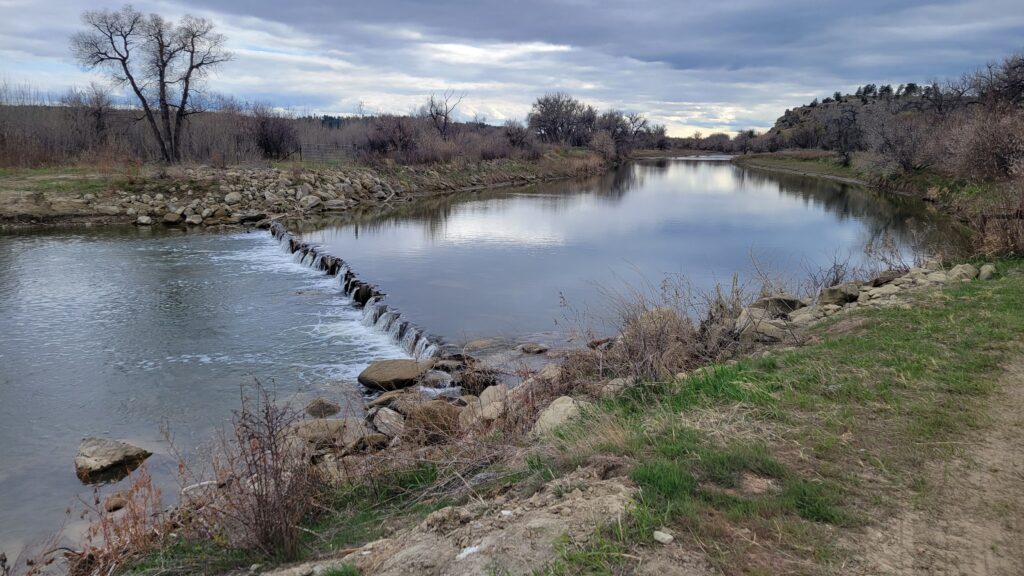
Fast forward 50+ years, my son Matt and I were heading to his father-in-law’s ranch on a spring turkey hunt. Years ago, Bill mentioned that the Musselshell River, which flows through his land, held catfish. After doing a little research I learned that indeed, the river in this area was well known to hold nice cats. The Musselshell flows from the small town of Melstone another fifty miles or so and empties into the Missouri River at the point where the river widens to form Fort Peck Reservoir. This stretch of water is known as the “warm water zone”. Catfish work their way up the Musselshell for spring spawning and live in the many deep holes the river has as it twists and bends through beautiful prairie and wooded hillside. Bill told me that cats in the 10-15 pound range can be caught, but 4-6 pounders were more common. Stopping their upriver passage is the Davis Diversion Dam, downstream for the town of Roundup, which we would be fishing below.
After a leisurely drive from Great Falls through ever-changing prairie land and wooded hillsides, I arrived at Bill’s ranch. Grabbing a quick dinner, I followed Bill as he drove along a gravel road to a prime spot on his land. Deer darted away from us, and turkey leisurely ate their dinners in the recently plowed fields. I had to resist the worry of someone being in “our spot”. The land is private property, so unless one of his neighbors were fishing there it would be devoid of other anglers. After living in Washington for thirty years I’m still getting used to the concept of being able to fish with no one around me!
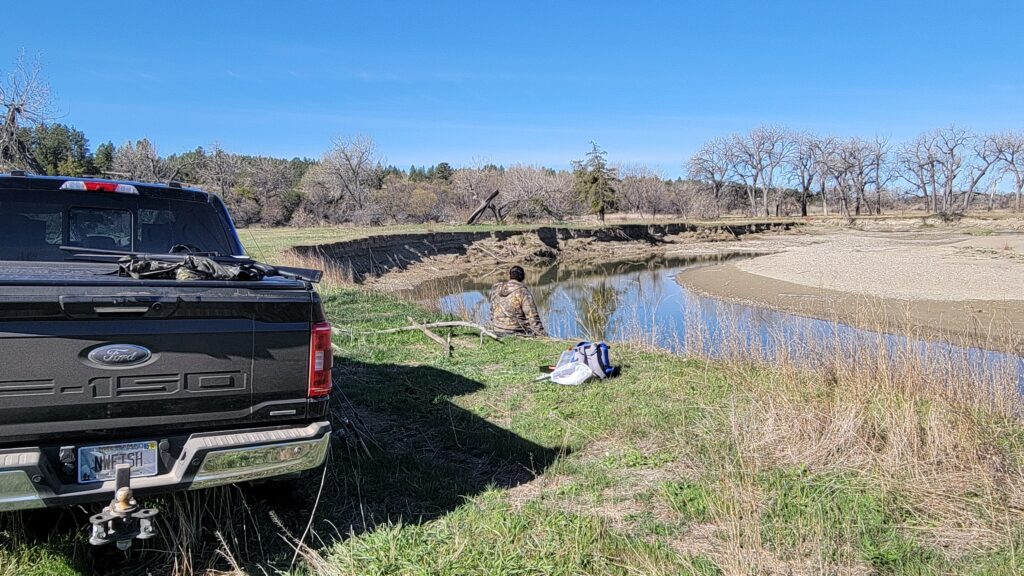
We arrived at an irrigation dam that had a beautiful hole below it and a clean river falling over the top of the spillway. As Bill drove off, I pulled out my seven-foot medium-weight spinning rod/reel combo and, like the days of my youth, tied on a large bass wide-gap hook. Two feet above the hook and tied a barrel swivel, and above that a sliding 3/8 ounce weight. For dinner, I was offering the fish down there a large, juicy nightcrawler.
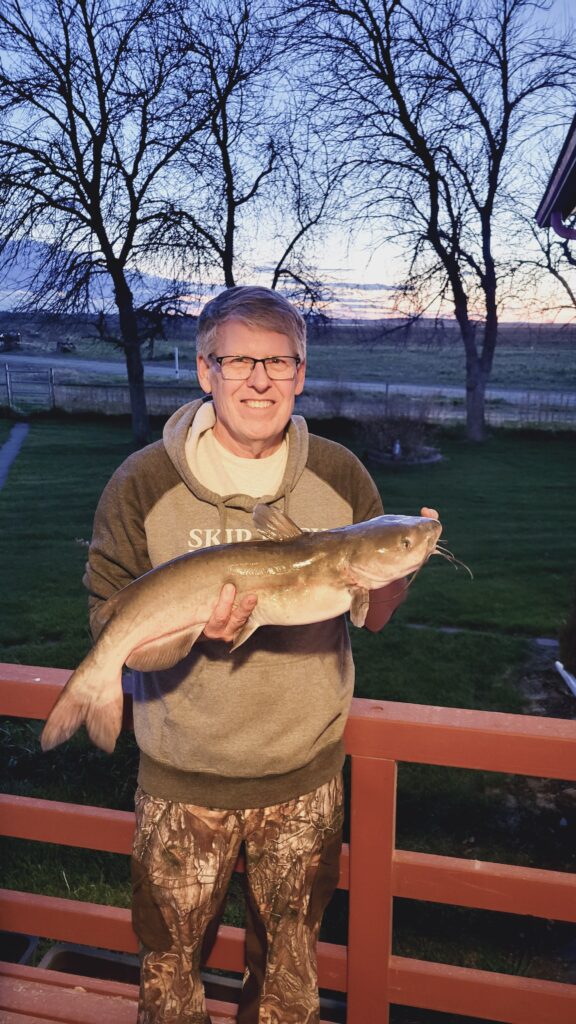
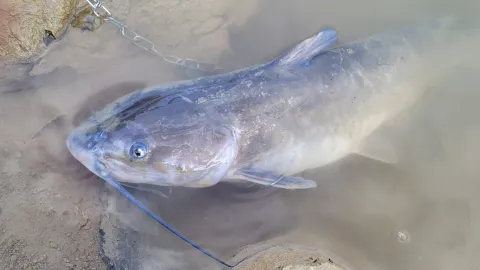
My first cast landed two-thirds of the way across the river. I reeled in the slack line and found a broken branch to prop my rod up against. Within minutes the rod tipped started to twitch, and then took a wild bend that started to pull the rod towards the river. I grabbed my rod and felt a solid fish on the other end of the line. The fish made several strong runs in the current and then settled down to a battle of tug of war with me. Working him ever closer to the shoreline, I saw that my first Musselshell fish was indeed a beautiful catfish! I found a sandy area of shoreline and dragged the fish onto land. What a beauty!
I re-baited my hook and cast it out to the middle of the river again. After a few minutes of waiting my rod again doubled over from the pull of a large fish. Setting the hook, this time I noted a different fight, and sure, enough, had a beautiful smallmouth bass on my line. Bringing in the fish I admired him, looking to be a solid 4 pounds. I released Mr. Smallmouth back to the river. With the sun beginning to set I decided to call it an evening and get back to the ranch before dark.
Arriving at Bill’s ranch my son Matt was there, having driven from Helena. “How’d you do”? they asked me. Pulling out the catfish from my cooler, Bill looked at it and said, “That’s a nice one, I’d say about ten pounds”. Matt’s eyes got wide and he asked, “When do we go?”
The next day’s sunrise was a classic Big Sky Painting, with red and yellow hues breaking over the trees. We had been shadowing a group of about thirty turkeys, trying to keep below a ridge that separated us from the turkeys between the field and the river. Finding an opportunity for an ambush location, we set up and started calling the mix of hens and gobblers toward us. Donn Morse of Old Goat Lures is also an avid turkey hunter and had given me a couple of the 3D pot calls that he makes and sells. The pots have great tone and soon several turkeys started our way. And then stopped. Dismayed, we watched the birds turn and head for the river, flying across to safety.
Returning to the ranch Bill had prepared for us a breakfast fit for a, well, a rancher. We made plans for the day, deciding to visit some friends and hitting the river after dinner for an evening bite.
I was excited to be fishing old school with Matt. Our lifetime fishing experiences had generally been from a boat, and I couldn’t recall bank fishing with him before. It gave me pause to think how sometimes possessions and technology can rob us of something so simple by making it complex. All the tools we use for fishing from a boat are certainly important, but there is just something about sitting on a bank and soaking a worm, waiting for a bobber to get pulled underwater, or seeing a rod tip twitch, knowing that on the other end, some kind of fishing is preparing to make your bait his meal.
After dinner we headed over to our fishing hole, passing groups of turkeys teasing us in the fields. They would have to wait for another day, we were Tom Sawyer and Huck Finn, our fishing rods and a box of worms in hand, looking for the perfect piece of forked tree branch to serve as a rod holder.
Matt baited up and cast out, and in a matter of minutes announced that he had a bite. Tightening down on the line, he set the hook and reeled in his first Musselshell catch, a nice smallmouth bass.
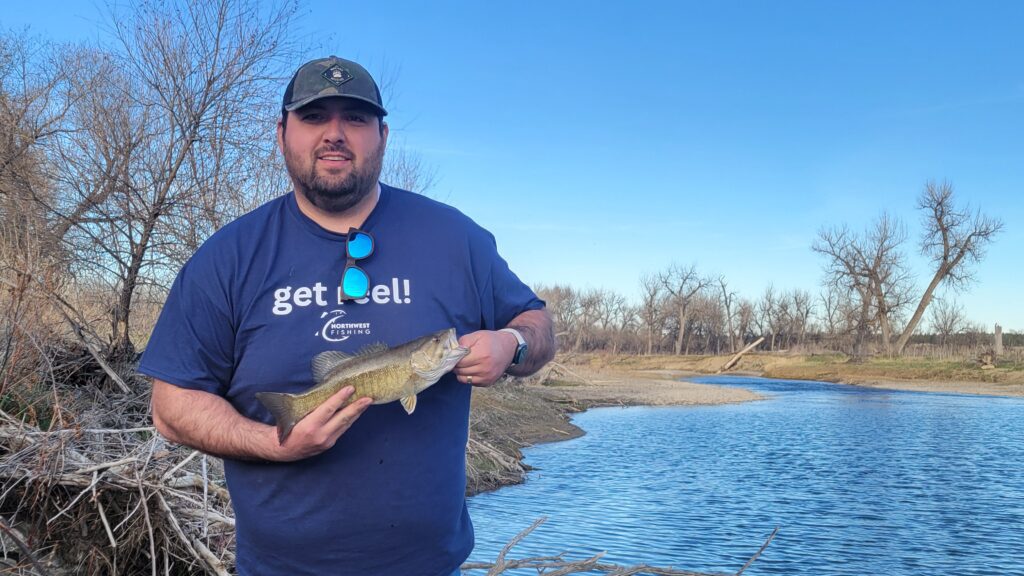
And so, the evening went on. Matt and I were kept busy with a steady evening bite. The smallmouth were most active, and we caught around a dozen ranging from dinks to nice 2-3 pounders. Thrown in the mix were plenty of yellow eye, which is a Montana version of a giant herring, around 12” in length and very spunky to catch. Sadly, the catfish bite was dead. No worries, though, with the Missouri River as our backyard there will be plenty of new places to explore the next time we decide to go “Old School” fishing.
/articles/old-school-catfishing
Alpine Kokanee Trifecta
There’s an Alpine Kokanee Trifecta that is often over-looked compared to the more well-known and popular kokanee fisheries. What if I told you that within an hour and a quarter of traffic-free driving from Seattle you could enjoy pristine Alpine lake fishing with little to no other boats on the water and have the chance to catch generous limits of kokanee every time out? No way you say? It’s true and waiting for you. But a little planning and tempering of expectations is required. These fisheries won’t yield 18-20” Lake Roosevelt kokanee, but they do have an abundance of under-fished kokanee that will still give you a nice bounty to bring home. Have I got your attention yet?
The Alpine Kokanee Trifecta I speak of is familiar to many, but passed by with a reputation of having small kokanee. I’m here to tell you, that is a myth. While it’s true you won’t find those 20” koks, you will find fish that range from 10” up to 14”. The lakes I’m referring to?
Keechelus, Kachess, and Cle Elum. Yup, that first big reservoir as you crest Snoqualmie Pass going east is one of three Alpine Kokanee Lakes that I think you should make plans to visit. Let’s look at them one by one, going from west to east.
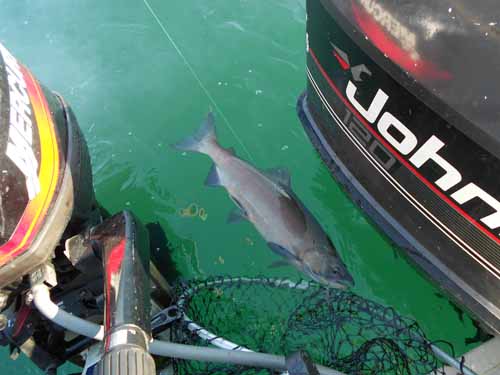
Keechelus Reservoir
This lake is the one that we all gaze at as we are driving somewhere else. It’s also the one that come August turns into a giant stump field. At 2,408 acres, it’s the smallest of the three lakes. At 2,521 feet of elevation it’s also the highest of the three lakes. The lake holds rainbow, cutthroat, whitefish, bull trout (which are endangered and are to be carefully released), burbot, and kokanee. Of the three lakes we will look at, this lake probably has the smallest kokanee in it. But check this out – the 2016 stocking numbers for this lake were a whopping 256,892 kokanee! In 2015 it was 265,000 and in 2014 it was 238,000 kokanee. So bottom line, that’s a lot of kokanee swimming around waiting to be caught!
Here’s the catch (there’s always a catch, right?). This reservoir gets drawn down as the summer progresses. Seriously drawn down, as in not able to launch a boat drawn down. So if you want to fish the Trifecta next year, you’d best plan on hitting this lake first. The primary boat launch is found on the west end of the lake. The earthen dam is on the far east end of the lake. Be aware, this lake, perhaps worst of the three, is prone to heavier wind and whitecaps. Be prepared to get back to the launch if the wind picks up. The lake is also the least serene of the three lakes as the constant hum of the freeway and view of semis roaring past are a sharp contrast to the beautiful surrounding mountains. This lake is a one pole only lake.
Kachess Reservoir
If you’re looking for a beautiful camping location with stunning scenery this is your lake. The Kachess Forest Service Campground is one of the nicer ones around. Plenty of camping spots and some larger pull through sites make it “boat friendly”. The restrooms are - surprise – running water and flush toilets! The boat launch is a two lane concrete ramp with nice grade and plenty of surrounding shoreline to pull your boat up on. Winds can be an issue as it’s not in a sheltered location. Parking is good.
Like Keechelus, Kachess holds a nice variety of fish. Rainbow, cutthroat, bull trout (protected), whitefish and burbot can all be found in addition to the kokanee. As to kokanee stocking, in 2014 WDFW stocked 365,000 fish, 2015 490,000, and for 2016 413,098. You’ll get into the kokanee as soon as you launch the boat. Motor out a hundred yards and watch as your depth finder shows the bottom dropping to 180 feet and deeper. And then you’ll see your fish finder light up with kokanee arches 35 to 80 feet deep. You’ll find fish all the way the length of the lake down to the dam end, over four miles away. But beware, if you head north the lake shallows up at a choke point north of the launch and you’ll find yourself in ten feet of water.
On our most recent trip, we found a great early morning bite that turned off at 8:30am. After an hour of fruitless trolling we ran all the way down to the dam and were rewarded with good action the rest of the morning. Don’t be afraid to leave non-biting fish in search of the biters! On this trip we also caught and safely released a powerful 16” bull trout. What a thrilling fight on kokanee gear. We hooked him at 55 feet deep on the downrigger. To help protect these beautiful fish bring a knotless net.
Kachess is 4,377 acres and an elevation of 2,258 feet.
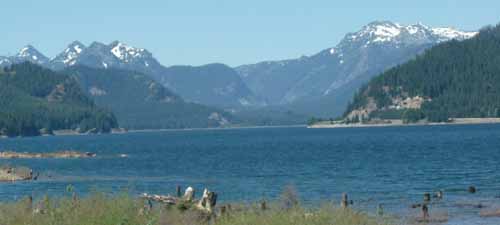
Cle Elum Reservoir
The final gem of our trifecta is Cle Elum reservoir. Although the farthest of the three lakes, it’s still a day trip for the Seattle area angler. Cle Elum also has a Forest Service campsite and nice paved launch (an old road, actually). Not as nice as Kachess, but the scenery is again spectacular and there is no freeway sound to ruin the experience. Cle Elum also has the nearby town of Roslyn to grab provisions and a nice dinner at the end of your day of fishing.
Cle Elum is the largest of the three reservoirs at 4,566 acres. It’s the lowest lake, at 2,227 acres. As the summer water draw down lowers the lake, the ramp becomes high and dry. Boaters then will launch among the stumps at the southeast side of the lake by the dam. Watch your props and winds out of the north as this can be a risky proposition.
The lake holds the same species as our other two lakes with a notable and significant difference. First there is Mackinaw trout in the lake.
These fish are on WDFW and the Yakima Tribe’s radar screen to remove from the lake. Why, you may ask, when some dandy lakers up to 15 pounds and more have been caught? Well, in the (hopefully) not too distant future Cle Elum may join Baker and Wenatchee lakes as a destination sockeye fishery.
That’s right; the Yakima Tribe has been working since 2009 to restore a sockeye run to Lake Cle Elum. It works like this: the sockeye are captured at Priest Rapids dam and transferred to the lake. They then run up the Cle Elum River and spawn. When the fish hatch, they spend 1-2 years in the lake and then leave the lake via a flue around an earthen dam to the Yakima River. From the Yakima River, they will swim to the Columbia, and traveling on another 330 miles, around four Columbia River dams, to the Pacific Ocean.
Here’s more information from the Yakima Nation Fisheries website:
“One thousand adult sockeye were transplanted in the summer of 2009, 2,500 in 2010, 4,500 in 2011, 10,000 in 2012 and 4,000 in 2013. The sockeye successfully spawned in tributaries above the Lake in all years becoming the first sockeye to spawn in the Yakima Basin in over 100 years. Juveniles from the 2009 brood were observed migrating downstream at Roza and Prosser Dams in 2011. Preliminary data from trapping operations at Prosser indicated a 2011 smolt outmigration of approximately 80,000 sockeye. From July - Oct. 2013, 701 Sockeye migrated to the Yakima River Basin (numbers reported at October 17, 2013). So far, 211 sockeye have migrated back home to the Yakima River Basin (updated July 1, 2014).Once these fish move north to Roza Dam they will be transported into Lake Cle Elum or Cle Elum River. So far, we have trapped and hauled 4,500 sockeye from Priest Rapids to Lake Cle Elum. We will continue to monitor fish run numbers and trap and haul accordingly (updated July 1, 2014).”
So where are the kokanee you may ask? Well, WDFW has stopped stocking Lake Cle Elum since this recovery process started. But that doesn’t mean you can’t catch kokanee.
According to a fisheries biologist I spoke with on the subject, some of the kokanee you catch are actually sockeye that have decided to not migrate back to the ocean. Instead, they spend their adult lives in lake Cle Elum, and then spawn as well in the Cle Elum River. In order to protect the sockeye in Cle Elum, WDFW has placed a slot limit of 9” to 15”on kokanee in Cle Elum. The limits are different on Cle Elum as well. As of 2016, Keechelus and Kachess had ten kokanee limits, and not including trout. Cle Elum has a five fish limit, including trout. Cle Elum is also the only lake of the three to allow the two pole endorsement. Finally, there is NO limit on lakers, brown, and eastern brook trout. WDFW wants these non-native species out of the lake to benefit juvenile sockeye salmon and encourages anglers to help in that effort. As always, be sure to check current regs for any updates.
There you have it. Three Alpine Lake Kokanee gems, all day trips from the greater Seattle region offer the angler spectacular scenery and fisheries that produce abundant (if not huge) kokanee. With gas prices at historical lows now is the time to plan a trip to these great destinations and leave the masses behind.
I will offer a couple words of caution for boating anglers. First, the winds blowing down the mountainsides on these three lakes can kick up and blow whitecaps, especially in the afternoon. So keep an eye on the weather and be ready to head back in if things start blowing. Second, if you troll with downriggers, be aware that these reservoirs may have trees sticking up from the bottom that didn't get clear cut. So be ready to bring those downrigger balls up fast!
See you on the water catching some tasty kokanee on these Alpine Lake Gems!
/articles/alpine-kokanee-trifecta
Shellfish Harvesting on the Puget Sound
During the mid-1800s, the Duwamish people, a coast Salish tribe that’s indigenous to the south Puget Sound, provided aid to the newly arrived European and Euro-American settlers by showing them how to utilize clam juice as a substitute for cow’s milk, a staple that the settlers no longer had substantial access to. The salty clam broth is rich in potassium, protein, and sodium, and served as a well-needed supplement to the often-malnourished settlers.
The Duwamish, along with many other Coast Salish tribes, had mastered the art of procuring nutrients from the Puget Sound through the harvesting of clams, mussels, oysters, and geoducks. Their mastery was so advanced that they even cultivated their own clams by creating clam gardens by stacking rocks in a line along the zero-tide zone. This practice greatly increased the number of clams that could be harvested in a given area and is often considered the oldest form of aquaculture known to Washington state.
Shellfish harvesting has continued to be a mainstay in both industry and culture alike throughout the years of Washington State's development. It’s estimated that the shellfish industry rakes in over 200 million dollars per year, making Washington the United States foremost producer of shellfish. However, it’s not just the commercial outfits that get to soak in the glory of our bivalve oasis, which is the Salish Sea, there is also ample opportunity throughout the year for the recreational harvester, and for the 2024 year—monthly tide predictions show that March is the kickoff for noteworthy daytime low tides. On these upcoming lows, harvesters will have good access to oysters, cockles, manilla, butter, and horse clams. If you're looking to harvest geoducks, you’ll have to wait till April when the daytime low tides drop to -2 ft and lower.
From the islands to the mainland shores, there are miles upon miles of beach where you can dig for clams and collect oysters in Washington. The main things to consider are whether the beach is open to the public and if shellfish are safe to eat in that area. Head to the WDFW website on the day of your dig to assure you that shellfish have been deemed safe for consumption in your given dig area and that the beach is open to the public for recreational shellfish harvesting.
Oysters
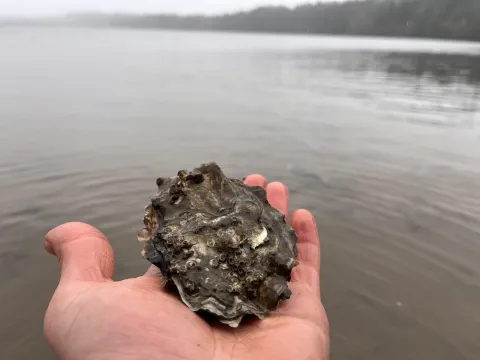
Oysters can be found on most rocky beaches of the Puget Sound and no two beaches are the same regarding how low the tide needs to be for oyster beds to be exposed. A good rule of thumb is to stick to +2 ft tides and lower for your best chance at reaching your daily limit. As a complementary insider tip, I will add that Oakland Bay in Shelton, Washington exposes oyster beds at tides much higher than this.
Oysters would likely be the easiest shellfish to harvest on the Puget Sound if it wasn’t for one important aspect of the process, and that is the shucking of the oyster itself. Legally oysters must be shucked on the beach and the shells should be left where they were found. This allows oyster larvae to use these shells during the colonization process. For more information on best shucking practices please refer to my 2022 April article where this process is explained in great detail. Oysters require little to no cleaning and can be eaten whole in a variety of preparations. Steaming, barbecuing, and deep frying are all popular choices. Minimum size 2 1/2 inches.
Manila
Manila clams are one of the most popular clams to harvest on the Puget Sound and their populations remain healthy throughout the region. They grow up to 2.5 inches long and can be found in sand, gravel, or mud during +2 ft tides or lower. A variety of common garden tools can be used to collect Manila clams. The most popular tools are a hand shovel, hand rake, or a hand pick. Raking along the surface, or simply scooping a few inches of the substrate with a shovel, should easily expose these bivalves at low tide.
After collecting your clams, you’ll want to store them in a cooler with a few ice packs to keep them chilled during transportation. Do not submerge them in water during transport. Once you are home, you can then submerge them in saltwater that you collected from the area where they were harvested. You’ll want to keep the saltwater cool with ice packs. This submerging process is intended to purge the clams of any sand or grit they have stored inside them. Discard any dead clams (clams that stay open and will not close no matter how much you poke at them, should be considered dead). Manilla clams can be eaten whole and are great for chowder, pasta, or soups. Minimum size is 1 1/2 inches.
Butter clams
Butter clams are significantly larger than manilas, often growling up to about 5 inches. At a +2 ft tide or lower, search along the beach for small holes in the sand or mud. Once a hole is located, you can dig with a spade shovel down to around 18 inches or until you reach the clam. Use the same technique as with Manila clams to purge. Though butter clams are delicious when served with melted butter, this is not where they get their name. Instead, butter clams get their name because of the natural buttery flavor of their flesh. They can be used for chowder, barbecued on the half shell, or even fried. Minimum size is 1 1/2 inches.
Horse clams
Ah, the mighty horse clam. Different from the oyster, manilla, or butter clam, the horse clam presents a set of challenges that place it in a category not far from the Pacific Coast razor clam. These clams grow quite large and can reach up to 5 lbs. They can be found in the sand or gravel and are easiest to harvest when located in sand substrate. Walk the beach and scan the surface for a siphon protruding out of the sand.
Horse clams’ siphons are rough to the touch. Once you find the siphon, you can either start digging with your shovel immediately, or you can take a stick and push it down into the siphon. The stick will stay in place and will keep you keyed in on the exact location of the clam. These guys will usually be around 1 ft to 1 1/2 ft deep. Shovel the sand around the clam until you can get your hand on the shell and then give it a good wiggle to free from its hole. If the clam is deep enough, you will need to place a 5-gallon bucket with the bottom cut out into the hole that you are digging. This will act as a retaining wall for the surrounding sand, and it will keep the hole from collapsing in on itself. After the clam is removed, you can place it in a cooler with some ice packs and transport it home.
The horse clam doesn’t require siphoning, instead, these clams need to be processed like a razor clam, and the stomach needs to be removed. The abductors, the foot (or digger), and the neck can all be eaten. Be sure to cut off the siphon (the tip of the neck). Horse clams fry up well with a nice coating of flour and or cornmeal. There is no minimum size for horse clams.
Cockles
Cockles grow up to 5 inches but are more commonly found in the 2 inch - 2 1/2 inch range. Their shells have several ribs that run down each side, making them popular for those who like to repurpose shells for art and other decorative purposes. They can be found in 1-2 inches of sand or cobble at a +2 ft tide or lower and are harvested the same way as manila and butter clams. Cockles can be eaten whole and are often steamed or boiled. Be sure to purge these clams to free up any sand or grit. Minimum size 1 1/2 inches.
As noted before, geoduck opportunities don’t pick up till April, so we will save that behemoth of a clam for a later article. For now, march is the preamble to spring clamming and it’s a great opportunity to get out with friends and family and take advantage of the numerous culinary wonders that grace the waters of our beloved Puget Sound.
/articles/shellfish-harvesting-puget-sound
Winter Perch Tips
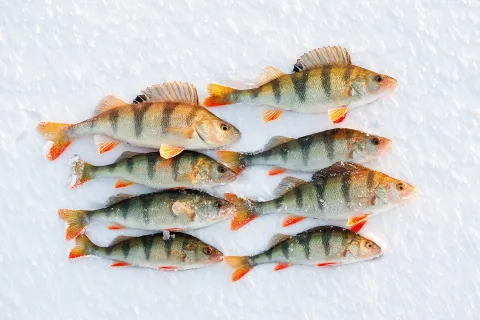
Now that the holiday craziness is over with, you might find yourself with the fishing itch. Maybe you got a new fishing rod for Christmas that you're dying to try out! Winter steelhead are a worthy pursuit, but kids might not have the patience to withstand casting all day. Winter perch are the perfect solution! Though they are small, they taste great when fried up and most lakes have an abundant population of them. They are eager biters, especially in the winter months, and you don't need much tackle other than a light action rod and some worms. Let's dive into it and talk about how to have a successful day at the lake fishing for perch.
Though shore fishermen can certainly be successful when fishing for winter perch, boaters have an advantage. The trickiest part of perch fishing in the winter is locating the fish. They move throughout the lake in large schools searching for food. These fish often hide in deep water, below the thermocline, where the water is warmer. Boaters can search the lake until they locate the schools of fish.
Fish finders can show you where the schools are, so you can drop your bait right in the middle of them. Check near drop-offs and underwater shelves first. Perch will tightly school up, so if you catch one, you're bound to catch more. Drop anchor or activate your spot lock and get a bucket ready! As with most fish in the winter, they don't like chasing down the meals. Keep your bait right in the middle of their school. If you aren't getting bites, move on. Perch schools will look like little clouds on your fish finder. Pay close attention and follow the fish.
If you're shorebound, remember to use bottom rigs so you can fish the bottom of the water column. This is a great situation to use your two-pole endorsement if you have one. The more rods in the water, the better your chances of finding the fish. Try to find a lake with a pier so that you can more easily reach the deep water. Reservoirs are harder for shore fishermen to effectively fish in the winter, since they're usually drawn down past the piers.
Another great thing about winter perch is that they're willing to hit a variety of lures and baits. I often start with worms or crappie jigs. Lower your offering to the fish and jig lightly until you feel the bite. Winter perch can be soft biters, so pay close attention and be ready to set the hook. Once you've caught one perch, you can cut it into small strips of meat and catch more. Perch cutbait is one of the best ways to catch more perch! One word of advice, use small hooks. I use size 8 or 10 hooks most of the time. I also use an ultralight crappie rod and reel for maximum sensitivity. Be careful when dropping the fish into the bucket or holding them for pictures, they have several spines in their fins that can prick you.
Though most lakes have yellow perch to some degree, you might be wondering where to start. I've had success at Lake Washington, Lake Sammamish, and Clear Lake. Lake Washington is my go-to for winter perch. If you launch on the southern end, try anchoring near the bridge. These are just suggestions- check your regulations and try a lake near you that's open year-round. Remember that perch tend to hug the bottom during the winter and study a map to find those deep pockets on your lake of choice.
Because of the cold weather, it's a good idea to be prepared before hitting the water. If it's been a while since you've run your boat, do an inspection, test your motors, and ensure your first aid kits and life jackets are aboard. Bundle up and bundle up your kids too. Hand warmers are essential! I picked up some electric hand warmers online and they work great.
The trickiest part is making sure they're charged before heading out! Like electronic hand warmers, heated jackets can also be a game changer. Winter perch fishing is a sedentary activity, so you'll want every advantage you can get to stay warm. I also highly recommend putting on base layers, especially underneath your pants. Costco and Sportco both offer affordable base layer packs for men and women. Winter fishing doesn't have to be cold and miserable. Making sure you're adequately prepared will go a long way toward having a fun day on the lake.
Have fun on your winter perch quest! Most lakes around here have no bag limit or size limit, but make sure to be responsible and only harvest what you're going to eat. Perch are one of the best fried fish out there, and they're easy to prepare for the frying pan. You can either fillet them quickly or cook them whole. Electric filet knives can make short work of a bucket of perch. My friend and fellow writer Randy Castello likes to batter his perch filets and freeze them so that his family can enjoy fried perch anytime. Put life jackets on the little ones, gas up the boat, and hit the lake!
/articles/winter-perch-tips
Great Winter Fisheries East of the Cascades
LONG LAKE:
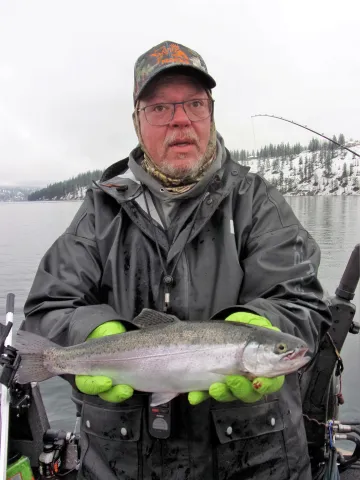
Located near Spokane, Long Lake kicks out good numbers of quality rainbow trout in November and December. The best fishing is found several miles up the lake from the main boat launch at the south end of this reservoir. Trolling Mack’s Lure Wedding Ring spinners is a good choice and orange is a great color. Dropping water levels in December often make the primary boat launch unusable so plan on fishing here sooner than later.
CURLEW LAKE:
Traditionally known as a summer destination for trout and the occasional tiger muskie, Curlew Lake is now known for its perch fishing. Perch are now the predominant species in this Ferry County lake and fishing for them in the winter, either through the ice or in open water, can reward you with quality fish averaging 9 to 11-inches in length.
LAKE ROOSEVELT:
This huge impoundment of the Columbia River offers excellent fishing for three species during the winter months. Walleye are often found biting near Kettle Falls and at the southern end of the Reservoir from Keller to Seven Bays you can find big rainbow trout and kokanee salmon that often weigh over two pounds. If you have never fished Lake Roosevelt in the winter before, consider booking a trip with a local guide and learn from a pro.
RUFUS WOODS RESERVOIR:
If you are looking for big trout, head to Rufus Woods Reservoir, an impoundment of the Columbia located between Grand Coulee Dam and Chief Joesph Dam. The best fishing is around the Nespelem net pens. You can fish from either the shore (An access fee is required) or from a boat. Jigs or dough baits both work well for trout that are measured in pounds, not inches. A Colville Tribal fishing permit is required to fish here. Looking for another option? Try fishing from shore just above Chief Joseph Dam. Anglers soaking bait from shore for trout can do quite well at times.
It's not just about trout at Rufus Woods Reservoir. There is an under-rated walleye fishery too which offers very good opportunities. The walleye here tend to be eater sized versus trophy sized and can be caught in the winter with blade baits or fishing nightcrawlers off the bottom.
MID-COLUMBIA RIVER:
Another great place for walleye during the winter is the mid Columbia River from The Dalles to the Tri-Cities. Unlike Rufus Woods Reservoir, you have a legitimate shot at big walleye in this stretch of the Columbia which has given up state records in both Washington and Oregon (20.3 pounds and 19 pounds, 15 ounces respectively). Try looking for walleye at least 30 feet deep and be prepared to go far deeper. Blade baits, jigs and slowly trolled spinner-worm harnesses behind a bottom bouncer weight all work. Wondering what color to use? Start with Chartreuse.
POTHOLES RESERVOIR:
Quality rainbow trout and walleye fishing is the name of the game here during the winter. Trout, averaging one to three pounds, can be caught either trolling or from shore at Frenchman’s Wasteway next to Potholes State Park or at Medicare Beach at the east end of this 27,000-acre reservoir. When it comes to the trout, fishing nightcrawlers (drifted or off the bottom) can be effective. If you are trolling, try a Berkley Flicker Shad, both #5 and #7 sizes work well. You can catch the walleye in the winter months in 20 to 50 feet of water with blade baits or vertical jigging spoons like a Mack’s Sonic Baitfish.
ROSES LAKE:
Last but not least, Roses Lake near Manson is a good place to go for rainbow trout and this lake typically gets a good stocking of catchable size rainbows in the fall. You can catch these fish in open water out of a small boat or from shore at the public access area on the south side of this small lake. Roses Lake is also a good destination for ice fishing too. Just make sure you are not the first person on the ice this season if you decide to venture out there!
John Kruse – www.northwesternoutdoors.com and www.americaoutdoorsradio.com
/articles/great-winter-fisheries-east-cascades
Ten Rules of Coho Trolling
By Mike Carey
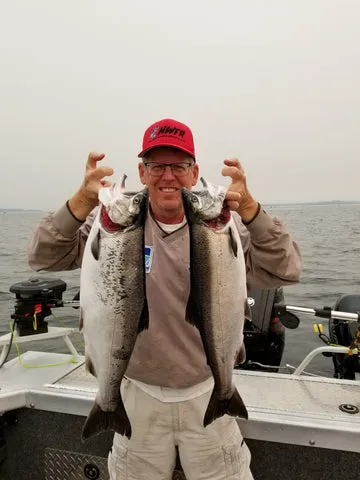
September is a special time for me. Like the change in the weather, I can feel a change in myself, a pent up anticipation that has slowly been building over the summer and like clockwork bursts forth in full bloom. It’s coho time in Puget Sound!
Yes, this is a great time of the year to be a salmon angler in Puget Sound, if the runs are strong and the fishing is open. Last year was unique in that we had closures in the ocean and straits. The coho arrived to Puget Sound in good numbers and virtually unmolested.
This year was questionable what kind of a season we would be given. As of this date, coho is open in areas 8.2, 9, and 10. Check the regs and emergency closures for updates of course. As it stands the daily limit is two coho.

Looking at my fishing reports data from trips going back twenty years, it becomes pretty obvious that September is the time to put away freshwater gear and focus on salmon. August can be productive, but September can be (and often is) lights out.
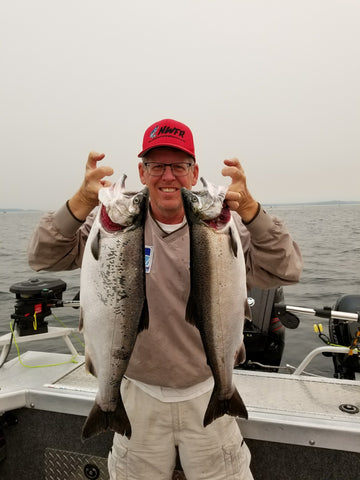
My reports show multiple trips with limits by 9am, red hot fishing, and lots of pictures of shiny chrome coho. As the season progresses into later September, the fish show a steady increase in size.
By late September to early October, the 6-8 pound coho are replaced by beautiful 10-14 pound hooknose monsters. It’s the time of year to stock up the freezer on tasty coho!
For those new to the fishery, you’ll find a wealth of information on techniques and locations scattered on the web. I've broken down some of my thoughts on coho trolling into Ten Rules of Coho Trolling.
Coho tend to be a pretty cooperative salmon when it comes to catching them. As these fish stream in from the ocean, heading through the Strait of Juan De Fuca and into Puget Sound, they are putting on the feed in preparation for their runs up to the spawning grounds.
It’s not unusual to find coho stuffed with herring. Don’t get me wrong, there are days they, like other salmon, will have lock-jaw. But that truly is the exception, not the rule. Speaking of rules, I offer a list of rules I’ve developed over the years to catch more coho.
You’ll likely have your rules to add to this list. Or you may disagree with some of them. But hopefully it will give you some additional ideas when targeting coho in the Sound.
Rule #1
As Russell Wilson would say, “Separation is in the preparation”. - When you put your boat in the water, you should have everything ready to go. No fiddling around with gear or bait the morning of a trip. My fishing ritual is to have everything ready to go the night before.
It’s like a general planning for battle. My rods are ready and geared up. My bait has been cut and cured. My boat is prepped and clean, batteries are charged, gas tank is full, snacks are bought, there’s ice in the coolers for the fish.
This evening before prep time is actually a ritual I cherish because like Russ, I’m visualizing success and making a plan in my head. I try to never go fishing without a plan.
Rule #2
Start early, go shallow. - I try to be on the water as early as possible. Ideally, that means running lights on and gear going in the water while it’s still dark or just turning light. I will run my gear in the top 10-30 feet of water to start.
This is the time of day when a salmon fly in the prop wash can be deadly. I like Artic Fox Trolling Flies. Denis Peirce ties a nice fly in a variety of effective salmon colors. Try running the fly back 40-50 feet and troll fast (more on that later) with the fly practically skipping on the surface.
Just be sure to have the clicker on the reel because these strikes can be vicious. I love the sound of a clicker going off in the morning!
Rule #3
Watch your fish finder, drop your depth – As the morning progresses, drop your downriggers down. I’ve read the “rule of thumb” is ten feet every hour until you’re trolling your gear around 40-60 feet. That’s fine, I guess, but I also use my fish finder.
If I see bait and fish marks down 50-70 feet, I’ll drop down to those fish even if it’s early in the morning. As the day goes on I may even drop my downrigger ball down to 110-120 feet deep.
Depth can be a tricky thing because when coho fishing I troll fast, which leads us to the next rule.
Rule #4
Troll fast! - In my experience, coho love a fast troll. I have an itroll throttle control and will set it on “hunt” mode to keep my boat going fast, around 3.3 to 3.9 mph. A few years back I did a lot of underwater filming and noticed a distinct increase in salmon aggression when the flasher was whipping around in a complete rotation.
If it was only doing a lazy rotation, or not doing a full rotation, coho would tend to swim behind the gear, just watching. But speeding up and getting that flasher fully spinning would elicit vicious strikes. I will troll both with and against the tide and catch fish going both ways.
Just be sure to increase your throttle going into the tide to maintain that 3.5 mph speed. I’ll also program my itroll to give a periodic 3-5 second slow down and then speed back up to “wake up” coho that may be lazily following but not biting.
It can often trigger a bite. Oh, another thing that will often trigger a bite – if you’re checking gear, pop your line off the release and set the rod in the rod holder. Let the gear come up on its own. I have caught a lot of coho that will chase the gear as it ascends to the surface.
Don’t reel your gear in until it hits the surface.
Rule #5
Coho are hungry, feed them! - Coho love a strip of herring on just about any lure. I will add strips to hoochies, flies, and even a small strip on the hook of a spoon (but not too much, you don’t want to kill the spoon’s action).
Be sure to brine the herring strips a day ahead of time in rock salt and/or commercial herring brine. Add scents and bite enhancers as well. Check your gear every 20-30 minutes and freshen up with a new herring strip. If you get a bite but no release, bring it in and check it!
The one exception to this rule I have is if the dogfish are in thick, I will go without bait.
Rule #6
Experiment – My “go to” set up is a magnum green splatter glow hoochie, herring strips, 26-30” leader, and an 11” dodger (pick your color…). I always start with this set up. On a second rod I may run a different color and smaller hoochie.
If there is no action and I am seeing fish on the fish finder I will start trying spoons and plastic lures like the old Big Al’s Cripple Herring. Sometimes the coho just want something with more action. This year I’m going to be trying the new Old Goat OG2 5” salmon lure.
The Old Goats have been awesome on kokanee and I think they will be deadly on coho. They have an amazing action that I think coho will love.
Rule #7
Fish Where They Ain’t (anglers that is) – coho in Puget Sound can be found pretty much anywhere. We all have favorite starting locations and it’s human nature to follow the crowds of boats because “hey, they must know something I don’t”.
Maybe…and maybe not. I try to start my troll away from clusters of boats. Why be surrounded by additional lures in the water? You want to troll over fish that aren’t seeing offerings non-stop. So, move away from everyone else – and if you take my advice and troll fast you will, very quickly.
You’ll still find the fish if they are there, and cover more water to find the biters. When you do, don’t be afraid to mark the fish on your fish finder and troll around and right back over the same spot. Again, in viewing underwater footage, I invariably see groups of 4-6 coho following my gear.
A solo fish is very rare. So, work over those spots when you pick up a fish.
Rule #8
Mid day and tide changes are good – I know I said earlier I like to hit the water at daybreak, but there are days when that just doesn’t happen. The good news with coho is that it doesn’t matter. You can (and will) catch coho all morning and into midday.
Tide bites are the period before and after a low or high tide, and these times can be very productive. My favorite tide sequence is a high tide at around 9-10am. The flood tide pushes fish and as the tide slows down it triggers a feeding opportunity below for the coho salmon.
Bait becomes easier to pick off without a steady flow of water and the coho bite often turns on. If you miss that crack of dawn bite, fear not, the coho will cooperate. I’ve caught my biggest hooknose fish from 11am to 1pm.
Rule #9
Playing and netting your fish – OK, you have a big fish on and are trolling at 3.5 mph. What do anglers often do? Why, slow down the of course. Bad move. In today’s age of barbless hooks, slowing down is an invitation to let the fish go. The second there is slack in that line the hook can slip out.
Trolling for coho is not a fishery that is about the fight, it’s about catching fish. If you want an epic battle against coho (and they are a hoot), catch them in rivers, or mooch for them. Trolling with an 11” flasher gives these fish a focal point with which they can get slack line.
We don’t want to do anything to help them out, like slowing down. Once they are on the surface, do your best to keep the flasher out of the water. This will help prevent the fish getting slack line between the hook and the flasher. Make sure you have a net with a long handle and big opening.
This will help as the netter reaches out. Remember, the netter scoops as the angler guides the fish into the net. Don’t make the mistake of the netter reaching to net the fish! Once the fish is close to the boat slowing down a bit is OK, by the way- just keep that flasher out of the water.
Rule #10
Take good care of your fish – Non-anglers have no idea what a freshly caught salmon tastes like. As anglers we are blessed to be able to have the freshest salmon on the planet. So, take good care of your caught fish. Bonk the fish enough to stun it, then cut a gill and bleed the fish out for a few minutes.
After that, into the ice cooler it goes. Don’t hang it off the side of the boat to bake in the sun. At the end of the day, gut and cut into steaks, or filet the fish out. If possible, vacuum-seal whatever fillets you don’t eat for dinner.
Properly cared for, you’ll have tasty fish until the next season, when you get to do it all over again!

There you have it. Ten “Rules” that will help increase your odds of success this coho season. Have fun out there and remember to be safe, have life jackets and all the safety equipment required and needed in case something goes sideways.
Good luck fishing and I’ll see you on the water.
/articles/ten-rules-coho-trolling-0
Too Big To Ignore
By Gary Lewis
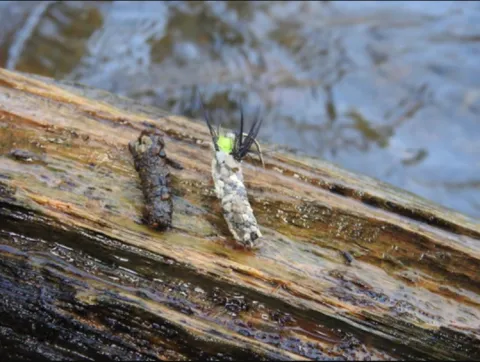
With this giant of western river caddis, what the angler sees on the surface is just a hint of what goes on beneath.
Across the West, the October caddis hatch begins in September and hits its stride in the first weeks of October. Even into November, the big bugs can still be found above the river.
Separate a caddis larva from its shell and what you have is a pale yellow rock worm with jet black head and legs. Trout eat them shell and all, but the larva itself can be compared to trout candy.
Sometime in August, the caddis begin their final transitional stage, similar to the process of a caterpillar enclosing itself in a cocoon. The caddis attaches itself to a rock and seals itself inside its case, where it transitions from the larval stage into a pupa. When the time is right, the pupa breaks out of the case and begins to migrate to the edge of the stream, where it crawls out upon a branch or a rock and dries its wings.
Trout feed on caddis throughout the year, but they are suddenly more available in August, September, and October.
Hatch timing is not as easy to mark as a stonefly hatch. Much of the hatch can come off during night hours. In fact, it is safe to say that if a single orange-bodied, tent-winged bug can be seen above the river, the hatch is on. To the trout's way of looking at the world, the party has started, and it's mostly below the surface.
LARVAL
The larval stage is imitated in both cased and uncased versions. Artificials can be tied on scud-style on English bait hooks, or on straight hooks sized No. 10 to 6 and 2X to 4X long. The fly should be heavy. Beads, lead wire, and copper ripping can all be used to make sure it sinks fast. To tie a passable cased caddis imitation, peacock herl works as a good body base and may be overlaid with a rooster hackle to add depth to the body. The body of the worm can be tied to represent it partially out of the case, or not.
To be ready in the event of an October caddis feeding frenzy, tie or buy John Hazel's Deschutes Cased Caddis, Oswald's BH Rock Roller, Peeking Caddis.
Now picture the worm free from its case. This is a really good fly to fish by itself anytime between the middle of July and end of September. My favorite representations are tied in off-white, yellow, and orange overlaid with clear latex. Heads and legs are completed with dark rabbit or muskrat with the guard hairs picked out. Some other good caseless larva patterns include Tan Caddis Larva, Rip Caddis (Hafele and Morris).
For all intents and purposes, these flies should be fished dead-drift. I learned to fish them with the rod in the high-stick position, but they can also be fished with a strike indicator. Trout tend to suck them in and spit them out just as fast, so it pays to set the hook at the slightest suggestion of a grab.
EMERGENT
Peak caddis hatch activity will probably take place on cloudy days from late afternoon until dark. Anticipating this can precipitate what I think is the most important and exciting stage of the hatch.
Exploit the "pre-hatch" phase with a tandem rig that includes a pupal imitation up top and a larva imitation down deep.
Fish the two-fly rig on a dead-drift, then let the flies swing at the end of the drift.
If a few naturals begin to hatch, it might pay off to tie on a dry with a pupa imitation on a 24-inch trailing dropper. Cast, dead-drift, swing, lift the rod, twitch.
Some of the better pupa imitations include the Tungsten Dirty Bird, Mercer's Tungsten October Caddis, Morrish October BH Caddis Pupa.
ON THE SURFACE - HATCHING
Fishing the dry is a lot like fishing in hopper season. October caddis are not typically all across the surface with trout attacking them. But the flies are big and some trout are looking for them. The fly is trying to break free from the surface, get its wings dry, and fly off. Some accomplish this with ease, while others struggle.
After the natural has left the surface, it will not be available to trout again unless a strong wind drives it back to the river. At such times, the fly may be wind-smacked and a dead-drift is the preferable presentation.
Some of the great October Caddis dry imitations include Morrish October Caddis Dry Fly, Improved Orange Sofa Pillow, and Orange Stimulator.
This is a good time to stay with the time-honored dry and dropper routine with a small Rubber Leg Pheasant Tail, Emergent Sparkle Pupa (brown and yellow) or a yellow X Caddis in tow. Run the dropper about 24 inches back.
ON THE SURFACE - MATING
The next opportunity for the trout to eat the big bug is when the female returns for the egg laying dance.
When the adult female drops eggs atop the water, she touches down, lifts off, and touches down again. Sometimes the current pulls her under and she beats her wings to get back to the air, only to touch down again. This most often takes place from late afternoon until after dark, and the process will assuredly bring trout up off the bottom. Some trout get so engrossed in the ritual they will chase caddis out of the water and try to take them in the air.
Add skitter to the end of a dead-drift dry fly presentation with a quick mend to get the line up, and then turn a small circle with the rod tip. If the fly lifts off the water and touches back down, creating a bit of drag, it is okay. It is one of those moments in a dry fly fisherman's career when drag is a good thing.
Trout seem to materialize in the clear water and chase the bug for two, three, four, five feet across the surface.
Look at the "hatch" of the October caddis not as a single event, but as a process. It's October, what are we waiting for?
# # #
To contact Gary Lewis, visit www.GaryLewisOutdoors.com
The End
/articles/too-big-ignore
The Outdoors Roundup
By John Kruse

It’s all fun and games in September and October as the foliage turns scarlet and gold. The fish put on the feed bag, biting readily. Then, November and December arrive, the leaves turn brown, tree branches become empty, and catching fish gets more challenging. Having said that, there are still some great places to catch fish in Eastern Washington in the late fall and early winter.
COLUMBIA RIVER GORGE
You know what they say, “the river never sleeps”, and neither do the fishing opportunities in the Gorge. At this time of year, the coho salmon bite is waning, but the walleye bite near John Day Dam, as well as catch and release sturgeon fishing, remains strong. If you are looking for current information, drop by Gorge Outfitters Supply in Rufus, Oregon.
GRANDE RONDE RIVER
It’s a long drive, but this picturesque river is worth it. Starting in November, good numbers of summer steelhead show up here, and fortunately, there is a good amount of public access for you to get at them, from Highway 129 at Boggan’s Oasis to Troy, Oregon. There is also some access near the mouth of the Grande Ronde, where it flows into the Snake River.
The steelhead run is much better than last year and anglers should be in for decent fishing from the bank, or from a raft or drift boat. Spinners, spoons, and small jigs fished under floats all work well here. Barbless hooks are required. Check the regulations for additional information.
POTHOLES RESERVOIR
The walleye bite continues well into December, and trout fishing is an option too! Try trolling near Medicare Beach or off the mouth of Frenchman’s Wasteway for quality size rainbow trout. Try off the face of the sand dunes, the mouth of Crab Creek, or in the Lind Coulee for walleye at this time of year. Trolling a spinner/worm harness behind a bottom bouncer weight works well in November, but as the water continues to cool, switch to blade baits for the walleye.
ROSES LAKE
Located near Manson, this 132-acre lake offers very good trout fishing during the fall and winter. There is a public access area on the south end of the lake, with some room to spread out for anglers fishing from shore. Once the lake freezes over, it becomes an ice fishing destination not only for trout but also for perch, which are found in good numbers here. Pro tip?
After you are done fishing, have breakfast or lunch at the nearby Blueberry Hills Restaurant. It will make the whole trip worthwhile even if you don’t catch a thing!

LONG LAKE
I was introduced to this lake when I was invited by Mack’s Lure President Bob Schmidt to fish with him and a couple of other friends on board Steve Morris’s boat, the man who owns SJM Guide Service. This lake is located just northeast of Spokane. Morris explained this fishery has a limited window because the boat launches become unusable by mid-December.
Our late November fishing trip was fantastic with a very quick limit of chunky, 12-to-14-inch rainbow trout. If you have never fished here before I would recommend using a guide like Steve. His website is www.sjmguideservice.com .
RUFUS WOODS RESERVOIR
This impoundment between Chief Joseph Dam in Bridgeport and Grand Coulee Dam is a long time draw for anglers going after the big triploid trout found in this reservoir. In the past, most of the triploids caught here were escapees reeled in near the net pens they were raised in on the reservoir. Now, the Colville Tribe raises triploid trout in a hatchery and releases them directly into the reservoir.
If you are fishing on tribal land, you will need a permit to do so, in addition to your fishing license. While many anglers take their boats to the areas just outside the net pens, bank anglers can also have success on tribal land by the net pens, as well as from shore at Bridgeport State Park, Brandt’s Landing, and the Willow Flats Recreation Area near Chief Joseph Dam. Oh, and if the triploid trout aren’t biting? Try trolling or jigging for walleye, there are a bunch of them here.
LAKE ROOSEVELT
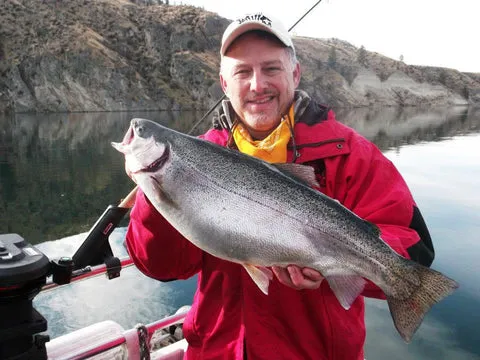
Last but definitely not least, this 151-mile-long impoundment of the Columbia River stretching from Coulee Dam to Canada offers very good fishing during the winter months for quality rainbow trout and kokanee, both of which average 16 to 20 inches in size on a good year, with some fish even bigger than that. Walleye fishing is also very good here during the cool weather months, and they can get big (a walleye weighing nearly 12 pounds was caught this past March).
Anglers tend to fish around Keller, the mouth of the Spokane River, or by Kettle Falls. The kokanee are usually found in the lower end of the lake in the winter. If you want the latest fishing information about Lake Roosevelt, stop by Clark’s All-Sports in Colville.
/articles/outdoors-roundup-3