A Bounty On Water Wolves
From the late 1800’s until the middle of the 20th century, there was a bounty on wolves in the Midwest and Western United States. Both individual and government hunters used any means necessary to kill these animals, deemed a dangerous nuisance to livestock. By the time this program ended, wolves were essentially exterminated from the lower 48 states. It wasn’t until 1995, when wolves were reintroduced to Yellowstone National Park, that their numbers began to come back, and today, we are seeing healthy populations of these animals in several states.
The relationship between humans and northern pike is a bit more complicated. These torpedo shaped fish are green in color with white spots and a white belly. They can grow to over 50 inches long and weigh over 45 pounds, though an average sized pike measures between 16 and 22 inches in length. Pike are ambush predators and feed on other fish as well as frogs and even ducklings, waiting in weeds or behind rocks and logs, and then lunging forward to attack their prey. With a mouthful of long, sharp teeth, they have garnered themselves the nickname, “water wolves”.
Land Wolf
Unlike the land-based wolf, there was no historical dislike for these fish, which are found in the northern tier of the United States as well as in Canada and Alaska. They are a sought-after catch because of their size and good fighting ability. They also taste good, though a y-bone in their body makes them more difficult to clean and fillet than walleye or trout. In the winter, anglers will target these fish through the ice, while in the spring they are often caught in places like Lake Coeur d’ Alene, fishing bait under a slip bobber. They can also be caught from spring through fall throughout their native range, using large spoons. Red and white Dardevle spoons and yellow spoons with red diamonds on them (known as a Five of Diamonds) are traditional offerings.
In Washington State, northern pike are found in Long Lake, the Pend Oreille River, and Lake Roosevelt, having migrated there from Lake Coeur d’ Alene in Idaho and Montana’s Clark Fork River. The fish are not welcome in the Evergreen State. Both the Washington Department of Fish and Wildlife as well as the Colville Tribes are extremely concerned about their impact to native populations in these waterways such as redband trout, sturgeon, burbot, and kokanee salmon. Fisheries managers also want to ensure northern pike do not get into the mainstem Columbia River below Grand Coulee Dam, where they could wreak havoc with native salmon and steelhead populations.
Pike
Since 2015, the Colville Tribes, Spokane Tribe, and Washington Department of Fish and Wildlife have been working hard to eradicate pike from these waterways. They have had good success in reducing a burgeoning population of these fish in the Pend Oreille River, and since 2015 have removed over 19,100 fish from Lake Roosevelt. The primary method the Colville Tribes use to catch these pike is with gill nets, but they have found this method alone is not enough.
That’s why a bounty program has been introduced at Lake Roosevelt for recreational anglers. Anglers who catch northern pike (of any size) can turn in the head of the fish at designated drop off sites around Lake Roosevelt and be paid $10 for each fish head turned in.
Anglers can drop off their pike heads at Noisy Waters Gas Station, Kettle Falls boat launch, Hunters boat launch, Fort Spokane boat launch, or at the Inchelium Fish and Wildlife office.
In 2022, anglers turned in 125 heads and were paid $1,250.
Increased Efforts
In an effort to increase the number of fish caught by recreational anglers for this program, the Colville Tribes Fish and Wildlife Department has published a map showing pike hot spots around the lake. Some of these hotspots are found at the mouth of the Kettle River, near Evans, on the eastern end of the lake near Noisy Waters, and at the mouth of the Colville River, south of Kettle Falls. Additional places worth fishing can be found south of Gifford and on either side of the reservoir near Hunters.
Here are the rules if you want to participate in the Northern Pike Bounty Program:
- You must be 17 years of age or older to participate in the program.
- Anglers must completely fill out the tag information at the designated drop off area. Fish heads must be placed in a freezer bag with the label and dropped into the freezer or brought to the Inchelium Fish and Wildlife office.
- Fish heads must be in good condition and clearly identifiable. Unidentifiable heads will not be accepted or awarded.
- Fish must be caught in the main stem Columbia River from Wells Dam upstream to the Canadian border, the Spokane River upstream to Little Falls, the Kettle River, or the Okanogan River.
- There are no size restrictions on northern pike.
- Anglers must adhere to all applicable state/tribal fishing regulations for the area in which you fish. Contact your local state or tribal agency for license requirements and current fishing regulations.
- Please allow 2 to 3 weeks to receive your reward.
Additional information about the program can be found at www.cct-fnw.com/northern-pike
John Kruse – www.northwesternoutdoors.com and www.americaoutdoorsradio.com
/articles/bounty-water-wolves
Get Ready to Catch More Fish
Anglers often hear about how ten percent of the fisherman catch ninety percent of the fish, and maybe this is not completely true, but there are things that you can do before hitting the water that will increase your catch. Guides are often blamed for showing anglers how to catch more fish, increasing pressure, and “taking” fish away from other anglers, but it is not the guides’ fault that they catch more fish. The difference between guides, those ten percent anglers, and the rest of those on the water often comes down to preparation. Success begins well before the boat gets wet, and those that learn to take care of gear, do needed maintenance, and prep for the day of fishing often catch more fish.
A few years ago, we were up in Nootka Sound fishing for chinook and early arriving coho. After fighting a fish to the boat, the toothy king had chewed up the leader to the point that the hooks broke off just as it was scooped into the net. A quick bonk on the head and a few photos along with taking care of the fish in the box, and it was time to get back to fishing. Instead of dropping the gear right back down to the school of salmon, we had to take a few minutes and re-tie the rigging. The few moments it took to do this caused us to lose the bait ball and the salmon feeding on it. That little mistake cost us an hour of fishing before we hooked up with another chinook and, once again, that fish tore up the leader and we were right back to needing to re-tie. If you have ever tried to snell a hook out in the open ocean you know how hard this can be, and it can cause you to start getting seasick.
Pre-tying leaders is necessary. Not only does it save time when you break off, but it can also help with switching presentations. It is not enough to just snell a bunch of hooks on leaders and call it good. Instead, tie up different set-ups so you can switch out easily. When winter steelhead fishing, one of the most popular lures is the pink rubber worm. Sometimes it is the rubber worm with a chartreuse tip tail, or a red and black worm, and other times it is the 4-inch worm or the 6-inch worm. Regardless, if you just tie up leaders and still need to thread the worm on then you are wasting time. Instead, use a Macks Pips Box and Leader Caddy, where you can pre-tie several different rigs and have them ready to go. Same when bead fishing, where you might need to change out to different size or color of beads.
Check the hooks. Sticky, sharp hooks are a must, no matter what species you are pursuing, but how often do you check the hooks or re-sharpen them? Keep a hook file handy, as in one in the boat tray, one in the tackle box, and one in your pocket. The idea is to keep them ready and make a few strokes on the hook each time you check the bait or switch out the lure. At the end of the day, re-sharpen the hooks so they are ready to go the next time you go fishing.
Wash your gear. The boat and trailer need good washing at the end of the day, but so does all the gear, including rods, reels, and lures. If you fish saltwater, then the benefits of washing everything metal is obvious, but even if you fish freshwater you should clean your gear. Using scents and baits, and even just sweating on the rod handle can lead to unwanted odors and cost you fish. Once, after a trip out shrimping, we came home and washed the exterior of the boat lightly rinsed the interior. A few weeks later, our garage reeked badly. Turns out we missed one shrimp that had fallen out of the pot and slid under the back decking. It took a few hours of re-washing the boat deck to get the stink out. If we had done a thorough cleaning of the boat the first time, we would have found that wayward prawn and avoided a stinky mess.
Rod and reel maintenance are often not done correctly or at all. Rods need to be inspected for broken or cracked guides, loose handles, and cracks in the blanks. If you have broken a rod, it might have been avoided by doing a simple inspection before the day of fishing. Reels have gears, bearings, and springs. Take them apart and learn how to grease and lubricate them, as well as clean the inside of the reels. Drag washers often need to be replaced as well, and once that is all done, then strip off all the line and re-spool. This type of maintenance can often be done once a year unless you fish in the saltwater a lot. If you do, then be sure to maintain the reel before and at least once during the season, and then again once after the season is over.
A deep cleaning followed by removing all the grease and reapplying is all that’s needed. Braided line can often be used for a few years, and one trick is to reverse the line or just strip off the top few hundred yards, use a surgeon's knot, and respool the amount of line you removed. When fishing braid, I often use a “top shot” of fifty feet or so of monofilament, and this gets replaced after each trip when using downriggers, as the clips can cause small nicks or crimps in the monofilament, which can cost you a fish if not checked or replaced.
Prepare the bait the day before. Most bait can be cured, brined, and rigged the day before the trip. Cured salmon eggs are often done months prior and then frozen, so be sure to take them out of the freezer and allow them to thaw slowly as a quick thawing can cause them to become mushy. One tip to thawing salmon roe is to add borax to the container or plastic bag they are frozen in, as this will soak up any moisture that is released during the thawing process and keep the eggs firm. Anglers who use herring or anchovies can make up the brine solution the day before and add the frozen baitfish, then place it into the refrigerator to allow the baits to thaw slowly and absorb the salted brine.
This keeps them firm and allows the chemicals in the brine to slowly soak, which will keep any chemical burns from occurring and toughen the baits. Brined herring can be used for multiple days if kept in the cold brine. If you plan to use a herring strip and wrapping plugs, do this the day before and keep them in the refrigerator by hanging them in a bait cooler. Having a day's worth of plugs pre-wrapped will save a lot of time on the water, and the more time the plugs are fishing, the more chances you will have of catching fish.
Trailer maintenance is more than just washing it and calling it good. The lights should be checked every time you go fishing, as well as before you put the boat away. A brake light out might not seem important, but it could lead to a collision with another driver who does not know you are braking. More than once, we were on our way to the river in the early morning hours, cruising down the highway, and we came upon a boat and trailer being hauled by an unsuspecting angler with the trailer light not hooked up or burnt out. The problem was the boat blocked the truck's rear lights and we almost ran right into the back of the truck. You cannot catch fish if you do not make it to the lake.
Batteries are one of the least thought of items boat owners and anglers think about. Marine batteries last a long time, but they do require maintenance. The best way to keep a battery in full charge and ready condition is to use a battery tender or on-board charging system that you plug in when you are back at home. This will charge the battery and then keep it topped off during the off season. Be sure to check all the cables at the beginning of each fishing season and especially after a trip where you encounter rough water.
Bouncing along and hitting waves causes loose connections, and you do not want to find out the motor will not start, or the downrigger will not retrieve, because the connection was loose or came undone. While you are checking the battery, be sure to look at the fuse box. Not only making sure they are all in good order and the wires are secure, but also what fuses you need to have on board for spares. Some are different AMPs, so it is best to have a handful of spares along.
Motor maintenance is more than just changing the oil. Be sure to open the cowling and look at all the connections. They should be tight and covered in marine grease. Same with any bolts, nuts, and electrical connections- they all need to have a special electrical grease on them. Fuel systems are an integral part of motor maintenance, including the fuel-water separator and fuel treatments.
With each tank re-fill, it is a good idea to add a fuel additive made for your motor. Be sure to check what the manufacturer recommends, and at the end of the season, a fuel additive and preservative is necessary. Even then, it is best to run the boat motor every few weeks or months until it is fishing season again, or have your motor properly winterized.
When you see a guide or one of those “fishy” anglers out on the water, realize that their success often comes down to preparation. If you have ever fished with a guide, you will notice good guides have good gear and are ready for anything that comes up. A nicked leader is quickly switched out with one ready to go, motors fire up right away, and baits are prepared before you step foot on the boat.
It is the trivial things that make the difference, and that is why those that prepare for the season ahead are successful. The old saying, “failing to prepare is preparing to fail” holds true when it comes to fishing success.
/articles/get-ready-catch-more-fish
October Trout
By Jason Brooks
Every April, trout anglers get excited for the general lowland lakes opener: a day steeped in tradition, with tackle shops catering to the angler with spring sales, campgrounds hanging “welcome fishermen” banners, and families making long distance trips in the R.V. to their favorite lake.
State fisheries departments also get into the act by stocking the lakes full of “catchable” sized trout that are eager to bite. But by mid-summer, those same lakes are full of water skiers, swimmers, pleasure boats, and pure chaos on the weekends.
No wonder why trout anglers move away from these lakes during the hot months, but why do anglers forgo returning to the lakes once the summer tourists are gone? There is no need to wait until next spring for some good fishing, but don’t wait too long, as most of these lakes will close at the end of the month.
Those planter trout have put on some weight and learned to eat natural food sources. Instead of little “stocker” fish, the trout are now more like their native cousins: eager to bite, putting up a way better fight, and more likely to survive if you choose to do some catch and release fishing.
Trout will have also dispersed throughout the lake and lurk in places where they can feed and stay away from predators. Much like native fish, the planted trout now cruise the shoreline looking for bugs, or head to the deeper water during the day, only to come to the surface at last light when a hatch occurs and the fish rise.
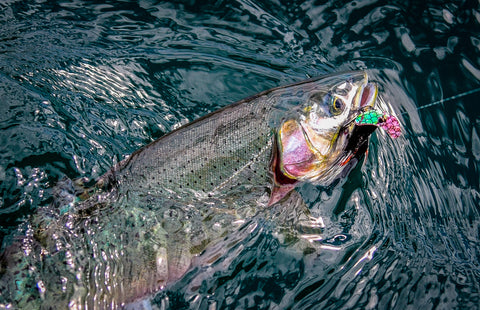
Since the fish are no longer hanging out near the surface or the stocking area, you might find it a bit harder to catch them. In reality, it is still easy to get them to bite, you just need to find where they are so you can offer them something they want to eat or attack.
Trolling is your best bet but it doesn’t have to involve downriggers, sonar units, GPS plotters, or other “high tech” accessories like those that are used out salmon fishing in the ocean. The key to finding the fish is to remember that trout are affected by the water temperature, and our warm fall days followed by cool nights varies the water temperature more so than in the summer.
It is much like the spring when the same conditions are occurring. In the early morning and evening hours the fish will still be up towards the surface, both for bug activity as well as warmer water temperature.
As the bright sunlight of the mid-day sun hits the surface, the fish will go a little bit deeper, to get away from predators as well as stay in a moderate temperature. If you do have a sonar unit that can show you the thermocline, then use this for the mid-day fishing and concentrate on that depth.
Trolling is one of the most productive ways to find fish in a lake. A basic trolling set-up is a 3 or 4 blade “Flash Lite’s” gang troll by Mack’s Lure trailed by a Double Whammy Smile Blade Wedding Ring Spinner, tipped with a piece of worm.
Put a ½ ounce or a 1-ounce banana weight sinker in front and slowly troll along until you get bit. Another set-up is to use the free slider by Yakima Bait Company, but modify it a bit by adding a small pinch release to the front of the slider and attach a one-ounce cannonball weight.
From the mainline, tie a leader trailing behind a swivel. A black, brown, or olive-green Rooster Tail spinner, a wooly bugger fly, or a even a Mack’s Lure Smile Blade Fly is great for this set-up. Let the line out about twenty feet while holding onto the slider.
Use the pinch release to secure the slider on the mainline, and then drop it to your desired depth. This allows you to fish a small lure or fly with a weight to get it down to your desired depth, but the weight won’t affect or scare off the fish.
When a fish gets hooked, a small yank on the mainline will cause it to come free of the pinch release, and now you are fighting the fish with the slider back in its original free-sliding condition. Buzz Ramsey taught me this trick while out spring chinook fishing a few years ago and it works great for trout and kokanee anglers who don’t have downriggers.
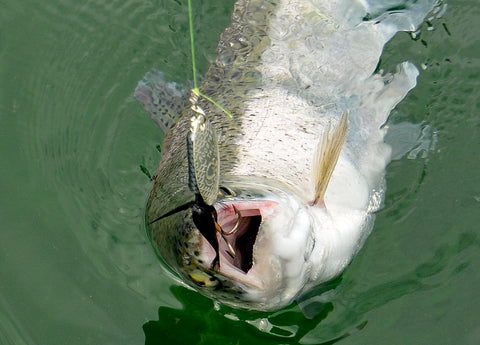
Now that you found the fish, it is important to concentrate on that part of the lake. Circle back around and keep trolling in the same area. Making a figure eight pattern also keeps you on the fish. Watch the clock though, as once the bite “turns off” it could be something as simple as the fish moving depths due to the sun or water temperature.
Bait anglers also do well, but unlike in the opening week of the spring season, the fish are not all congregated around the stocking area. Since they are spread out a little bit, don’t expect a “hot bite” to occur. One of the best things you can do if you prefer to use bait is to increase your leader length to at least 48 inches.
This is because the weeds have had all summer to grow and you need that bait to get above them. Another option is to use a slip-bobber. This allows you to adjust the depth of your bait. Make sure to put a weight below the hooks if you are using a floating bait such as Power bait.
Using scents is probably the most under-utilized techniques for trout anglers. Those that fish for steelhead use scents all the time but we tend to forget that a steelhead and a rainbow trout are the same fish.
By using scent, you can attract the fish to you as well as cover up unwanted scents that you transferred to your bait or lures that are undesirable to fish. Just like in winter steelhead fishing, some of the same popular scents work for fall trout fishing. When fishing lures, it is best to use “sauces” or gels as they tend to stick on the metal or plastic much better and you don’t need to reapply as often.
Bait oils are a good “all-around” and can be used on baits, lures, and some flies. If you are using a delicate fly, such as a wooly bugger that has a marabou tail or a hackle, then make sure to use the water-soluble oils so they don’t ruin the fly or its action. Popular scents that are extremely productive are Pro-Cure’s Bloody Tuna, Trophy Trout, Sweet Corn, and Nightcrawler.
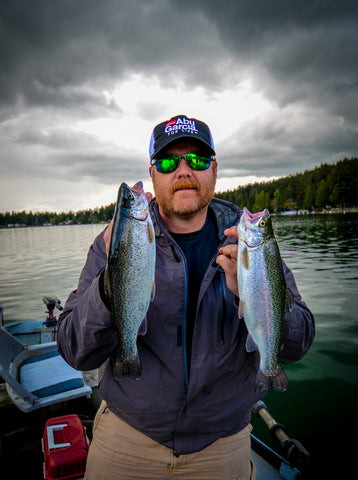
Fly anglers know that the fall is a prime time to head to a lake. Trout are used to eating aquatic insects and have adjusted their feeding from the hatchery pellets rained down from heaven to the various insects in the lake, as well as those flying above.
For early mornings, try a moderate to slow sinking line and fish wet flies. Small streamers, leeches, and wooly buggers are fun to strip in but the chironomids, pheasant tail nymphs, and hare’s ears can be more productive.
Mid-day, the air temperature warms up, and a daily dry fly hatch occurs. Most of the bugs are small, so try a mosquito, Adams, and duns, but be on the look-out for a few damselflies and be ready to switch out to them for an exciting fishery when the hatch occurs.
Work the cover near any edges or cattails with a grasshopper or madam-x for larger trout.
One of the greatest things about October trout fishing is the lack of other anglers on the water. Our days can be very pleasant with mild temperatures. There is no need to rush to the boat ramp, and even the summertime jet-skiers and pleasure boats are gone.
The trout are still there and since they have had several months in the lake to change their diet, you will notice they taste much better. The fish are bigger and tend to bite better when it comes to fly-fishing.
So, if you prefer to use a fly rod, then grab your float tube or small car-topper boat, and head to a local lake. We only have until the end of the month for some of the best local lakes fishing.
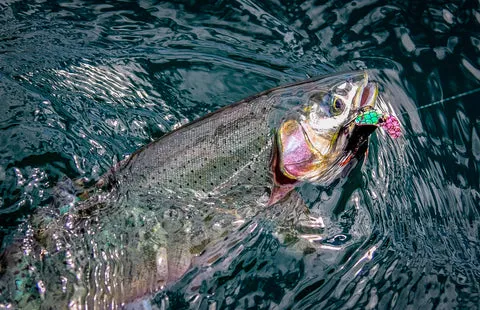
/articles/october-trout
Hoodsport Chum
For salmon anglers in the Pacific Northwest, November heralds the final transition from targeting open saltwater to focusing on tidewaters and rivers. Yes, there are some saltwater opportunities (for example, blackmouth, when open), but the vast majority of anglers have put away their boats and are pursuing salmon in the rivers. That said, there are some prime opportunities to target and catch salmon out of your fishing boats, so don’t button them up just yet!
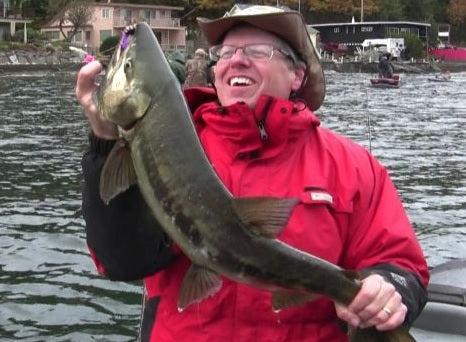
One of my favorite fisheries out of my boat in November has to be the Hoodsport chum fishery. The fight of a 10-15 pound chum ranks up there as one of the hardest fighting salmon you can catch. Taking on a chum with steelhead gear will give you all the battle you could ask for as these brutes slash and pull with every ounce of energy they have. One look at their fighting canine teeth and you’ll know this is a fish that is serious, very serious, about its reproducing goal.
All up and down Hood Canal you’ll find chum as they work their way toward their spawning grounds. The state hatchery at Hoodsport and three miles south of there at Potlatch (a smaller, Native American hatchery) are the destination for many of these chum as they work their way down Hood Canal.
I have caught fish in both locations, and each spot has reason to recommend it. Potlatch, being smaller, has limited shore angling and parking, which is roadside only. That said, there are also fewer anglers there. Hoodsport, meanwhile, is the Fishing Mecca that chum anglers are drawn to. Fishing right out in front of the hatchery and watching hundreds of fish jockey for position as the tide sweeps them into the small feeder creek leading to the hatchery is truly a sight to behold. Of course, along with the fish comes combat fishing in all its glory. As the tide comes in and fishing space decreases, getting to know your neighbor takes on a whole new meaning.
If you’re a fortunate one you’ll be fishing out of a boat – or some type of floating device. The waters around Hoodsport are open and the wind can come up and blow hard, plus fast running tides can make it a challenge to get an anchor to set. Be sure to bring an anchor with some bite, and terminal chain so you’ll stick in the rocky bottom. I’ve seen anglers fishing out of all manner of floating devices on calm days, including single person pontoons and float tubes. Be sure to have your life jackets on and just don’t venture too far off shore. If you are feeling anxious that’s your inner voice telling you a fish isn’t worth your life – pay attention to it!
For boaters, the launch is two miles south of Hoodsport at the Skokomish Park at Potlatch. The launch has two concrete lanes which are in varying state of repair (read that as back down with caution!). There is ample parking, and a restroom. Once launched it’s a quick run to either terminal hatchery, faster to the small Potlatch facility.
When you arrive, survey the already anchor boats, taking into account the amount of anchor line you’ll need to get a solid grip on the bottom, as well as the shore anglers. Anchoring too close to the shore bound anglers will earn you a steady rain of lures and weights at your boat. Stay outside their casting zone - you’ll have plenty of water to work over and opportunities to catch fish the shore anglers don’t have.
As to the type of gear you should bring… you’re going to enjoy a variety of methods to catch these Hoodsport chum. Like chum everywhere, chartreuse and green are always great colors to choose. Pink or cerise is also good color choices. For rod/reel setups I use my steelhead gear, both spinning reels and casting will get the job done. I like an 8 ½ foot medium action rod. Line should be strong enough to turn these big brutes so as to avoid massive tangle ups with your fellow anglers. I like 18-20 pound test. Chums are not leader shy in my experience so keep things hefty.
What technique you use is up to you but here are a few tried and true methods:
Floats and jigs , or floats and corkies with yarn can be deadly. A ¼ or 3/8-ounce pink, black or purple marabou jig fished under a float is deadly. Tipped with a piece of shrimp meat or coon shrimp tail is even better. The yarn is a nice trick as it helps by getting caught up in the chums teeth, allow you to drive the hook home. Other bait you can put under a float includes the ever popular anchovy or herring, whole or plug cut.
Think of the tide as the river current. Set your depth for the lure so it’s running a foot or so off the bottom. Vary the depth if you aren’t getting bites. These fish will hit suspended jigs. Cast “upstream”, i.e. up into the tide, and let your gear drift down with the tide to the end of the “drift”. If the coast is clear, free spool your line, keeping the float straight up and down to extend the drift. When the float goes under set the hook and be ready to do battle!
Twitching jigs – ditch the float and cast the jig on its own. Another effective technique, but be prepared for a lot of foul-hooked chum. Dragging a chum in by the tail is not fun, nor is it sporting to be snagging fish. If you find yourself foul hooking too many fish move on to a different method…
Casting spinners. Again, it’s a solid technique to try if the action is slow. I personally would remove the treble hook and use a single si-wash hook. A number 3 or 4 blade fished with a slow retrieve is just the ticket.
Corkie, yarn, and slinky. I personally have caught a lot of fish using this method and seldom snag fish. Again, think of the tide as a river. Cast out and let your gear drift. You’ll know you have a bite because your rod will be about ripped out of your hands. I use a 3-4 foot leader length.
Regarding the above technique, I’m sure I’m going to get comments about flossing – I personally think it’s a bunch of malarkey. Why do I say that? Because I remember a day years ago fishing Hoodsport when the chum were in thick, jumping all around us, swimming by in schools of 10-20 fish. I had my corkie/yarn/slinky set up going, casting, retrieving, and not getting a bump for a good hour. Suddenly, the bite magically turned on and my gear started getting bit. In came fish after fish, hooked in the jaw. Explain to me how one can have a steady procession of fish go by with mouths open for a good hour and not “floss” one fish, then suddenly start catching one jaw hooked fish after another? And trust me when I say this, those hook-ups were solid strikes, not to be mistaken with a snagging sensation. Anyway, the flossing debate is one we anglers love to engage in every year and likely will do so as long as we fish corkies.
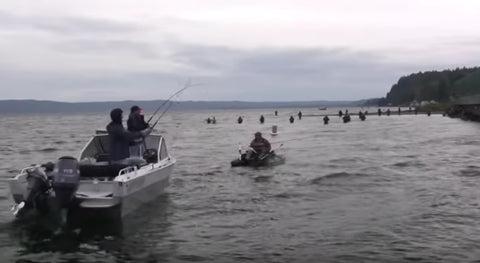
The fly fishermen do quite well at Hoodsport as well, fishing sinking tips and flies of various styles and colors. I’m not a fly guy but it sure does look like fun. Maybe on my next trip I’ll give it a try.
Before you set out, be sure to check the Hoodsport netting line at 360-877-5222. Typically the nets go in on Tuesdays and Thursdays, but this is not set in stone. There’s nothing worse than driving a hundred miles only to find nets spread in every direction. So save yourself that aggravation before you set out.
Fishing for hard fighting chum is a blast. Get in on the action this November!

/articles/hoodsport-chum