/articles/categories/fishing
The Other Red Meat
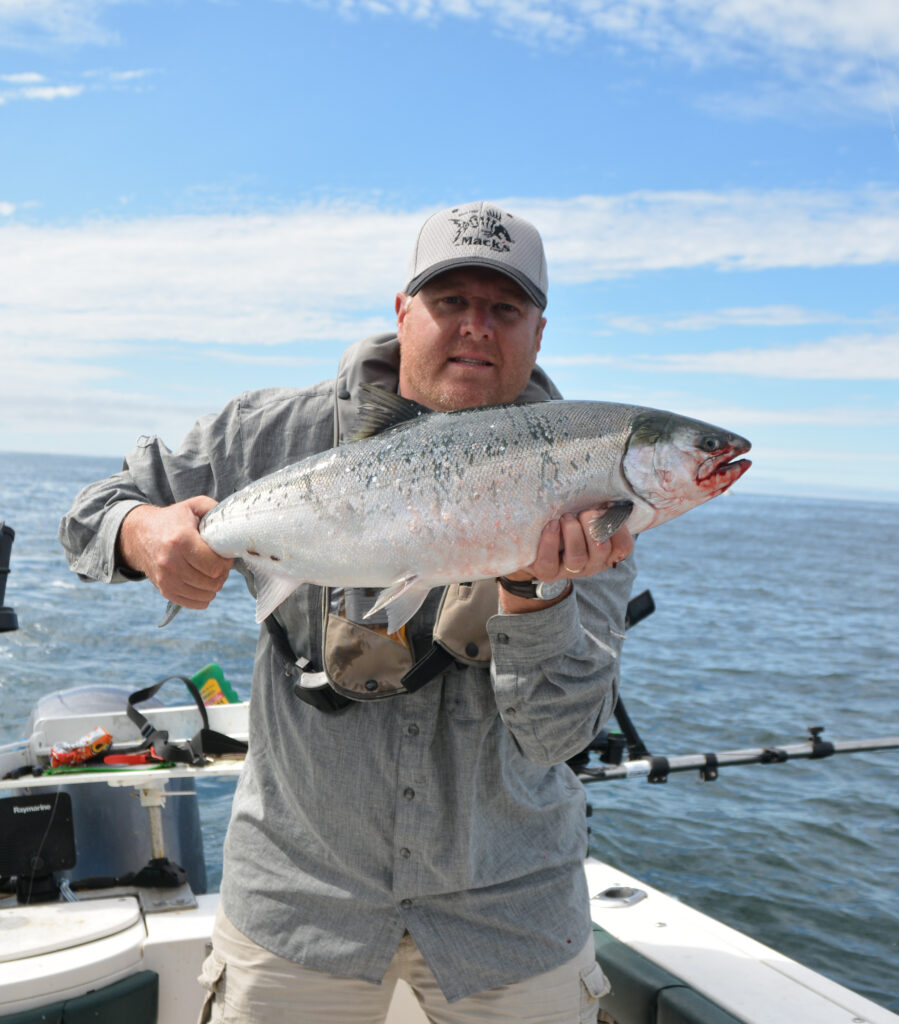
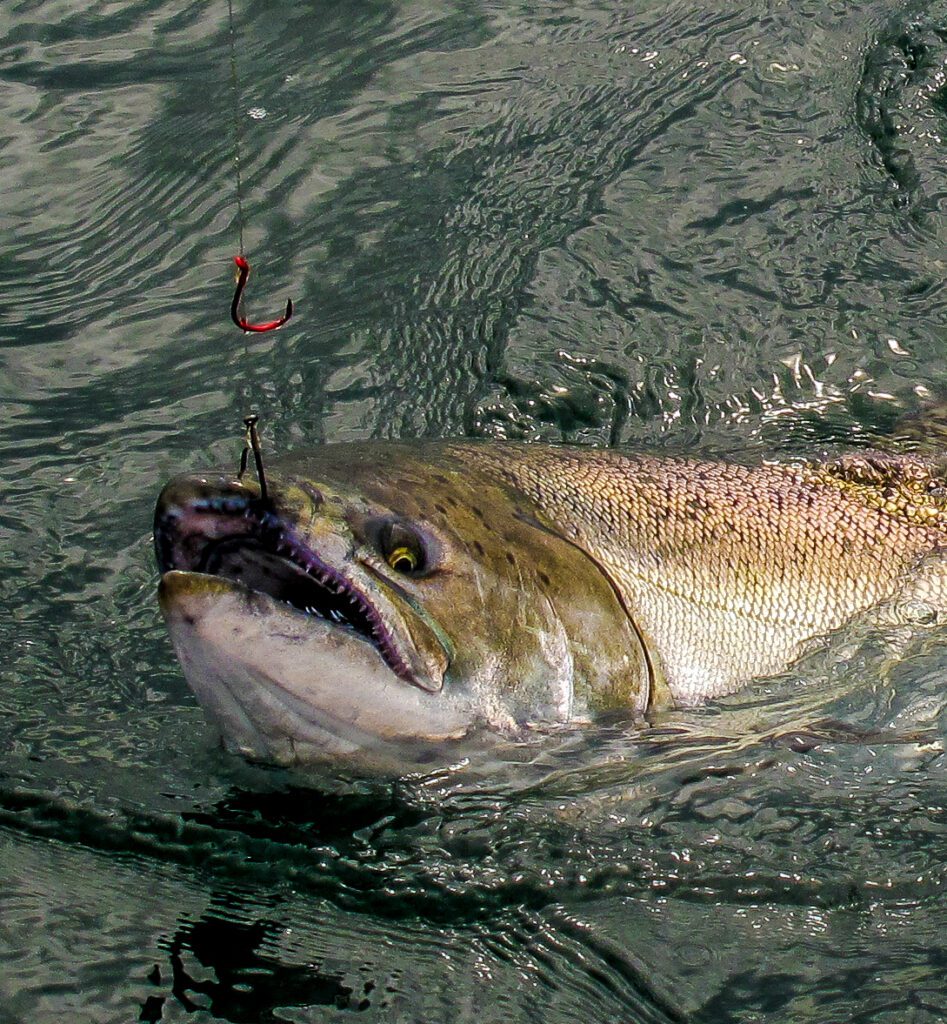
It has been an awesome year for chasing salmon out on the salt, but if you are a Marine Area 7 (San Juan Islands) fisherman you may be thinking now what? MA 7 chinook is closed for the year. At this point, there are limited fall chinook opportunities for our Western Washington salmon slayers. Then halibut, although the fishery is open through September 29th most of them are out in the open ocean doing halibut things. Lingcod are closed for the season and our rockfish fishery continues on a long-term conservation closure… What do we fish for? Why not chase San Juan Island coho, the other red meat?
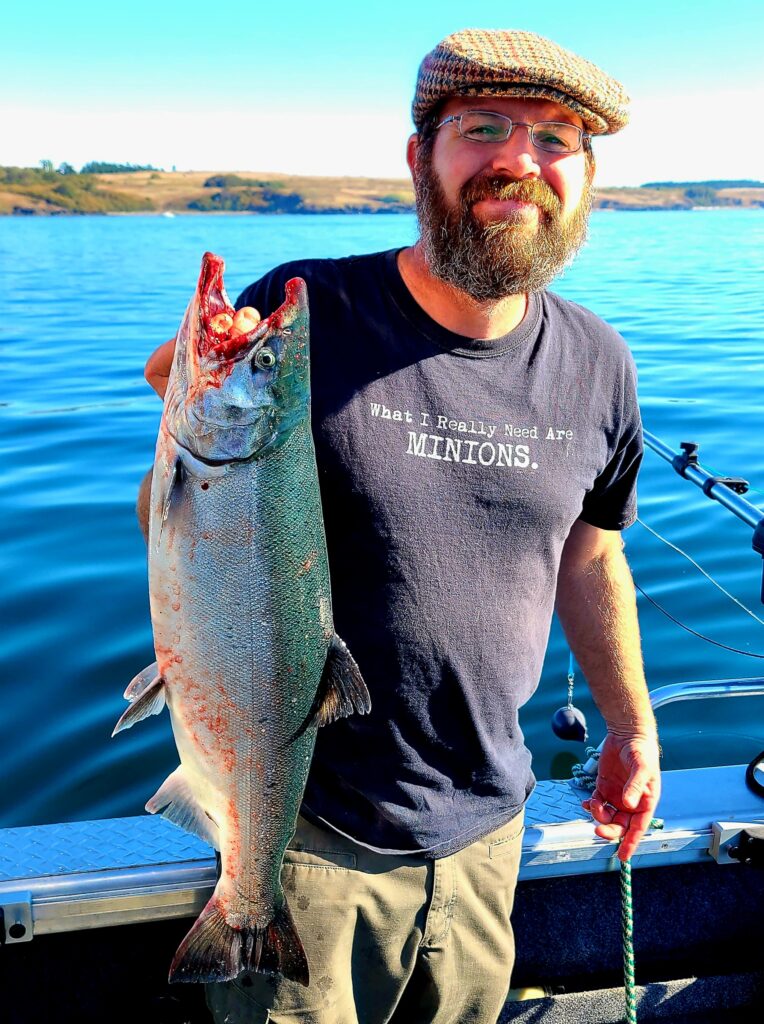
As always review the regulations and Emergency Regulation notices before heading out but the current season is modeled as being open as follows:
8/1-8/31 2 coho no minimum size, release wild fish
9/1-9/29 1 coho
When heading out to hunt San Juan Island Coho, make sure you are aware of the southeast MA 7 closure, and if you plan to fish the banks be cognizant of your actual location. Know where the Canadian border is and where both the MA 7 and MA 6 boundaries are.
Regarding regulations; this year there has been an increase in the number of WDFW staff Safety and Security Incident Reports filed for harassment of WDFW personnel. The Safety and Security Incident Reports relate to negative interactions with anglers and were submitted by Puget Sound Sampling staff over a two-month period this summer. The negative interaction makes WDFW recruitment and retention difficult and staff have quit their job over the treatment they've received this summer.
RCW 77.12.071
Sampling of fish, wildlife, or shellfish by department employees.
- (1) Department employees, in carrying out their duties under this title on public lands or state waters, may:
- (a) Collect samples of tissue, fluids, or other bodily parts of fish, wildlife, or shellfish; or
- (b) Board vessels in state waters engaged in commercial and recreational harvest activities to collect samples of fish, wildlife, or shellfish.
- (i) Department employees shall ask permission from the owner or his or her agent before boarding vessels in state waters.
- (ii) If an employee of the department is denied access to any vessel where access was sought for the purposes of (b) of this subsection, the department employee may contact an enforcement officer for assistance in applying for a search warrant authorizing access to the vessel in order to carry out the department employee's duties under this section.
- (2) Department employees must have official identification, announce their presence and intent, and perform their duties in a safe and professional manner while carrying out the activities in this section.
As a participant in our recreational salmon fishery, please remember that the department is required to monitor the fishery. If they do not have the staffing or there are safety concerns, they may have to close a given fishery because they are unable to monitor it as required under the Federal Fisheries permit.
Once you’ve sorted through the regulations and generally know where you are going, what’s the game plan? During Coho season a good chunk of MA 7 will have coho available. Many of the points along the SW side of San Juan Island produce tide rips that will concentrate bait. Find the bait and coho will be there. This time of the year coho put on the feed bag and fatten up for their spawning rituals. Instead of naming off several already busy point fisheries think bait.
Generally, coho will be found anywhere there is bait. Meter around offshore from the point fisheries and look for bait. Study your charts and note any high spots or ridges that will create a current break and have a look.
You don’t need to find a boiling tide rip, even a subtle rolling seam along an otherwise glassy sea will hold bait. Look for seabirds, a bunch of diving birds sitting on the water means deep bait. a flock of gulls, either floating around or on the wing usually means shallow bait, so continuously keep a lookout for birds.
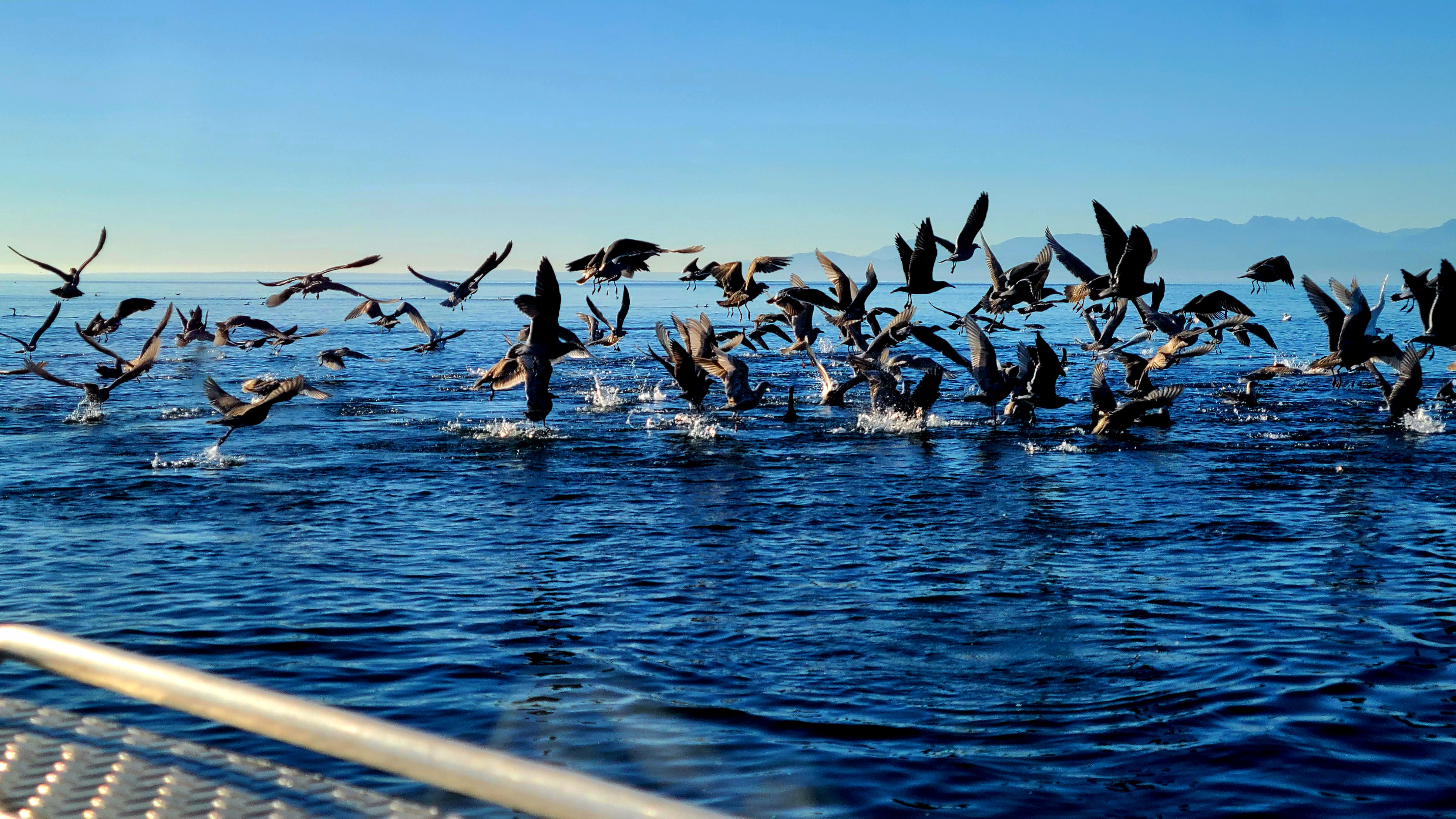
They are kind of the blue light special for coho fishing. Although fishing with the flotilla puts a lot of coho on ice each year, consider finding fish outside the masses. The key to locating coho is locating the bait, find the bait and you will find coho.
One previous September morning, after a quick stop at Holiday for nonethanol and a freshly made breakfast burrito I was off to Cornet Bay. On arrival, I found the bay glassy calm with no wind and was in the water in no time. Fishing with good friends we had agreed to meet at 5:30. I visited with my dock mate and readied the boat and gear for our adventure.
5:30 sharp a set of headlights signals my guests' arrival and we were on the way shortly thereafter. We were handed a gift; the water was dead calm as we motored our way through the predawn darkness. We planned to fish for coho in the Eagle Point area along the south side of San Juan Island. The point was really crowded so I headed offshore to look for bait.
We found a very subtle current break with a number of diving birds sitting on it. Although I had three downriggers onboard, one had problems so we were running 2 and focused on chasing meter marks. We would be rotating through hookups. With very few other boats around we went gear down and started the hunt.
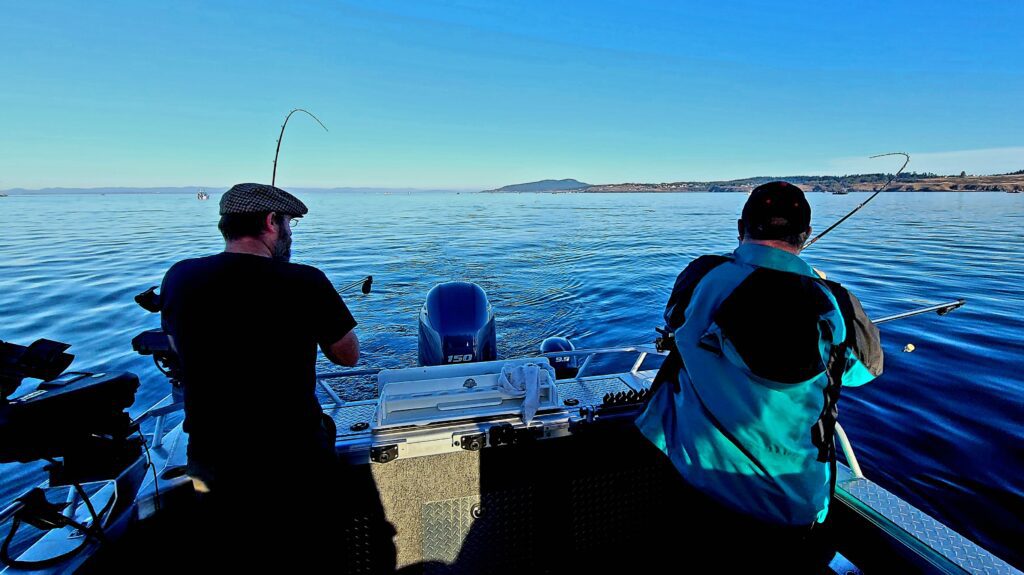
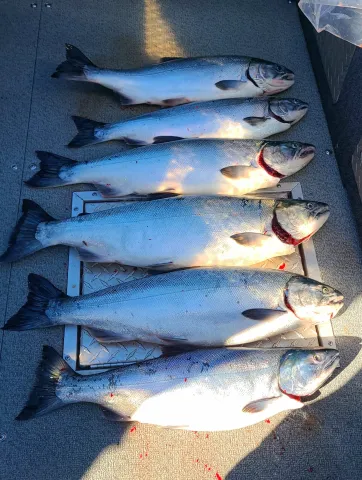
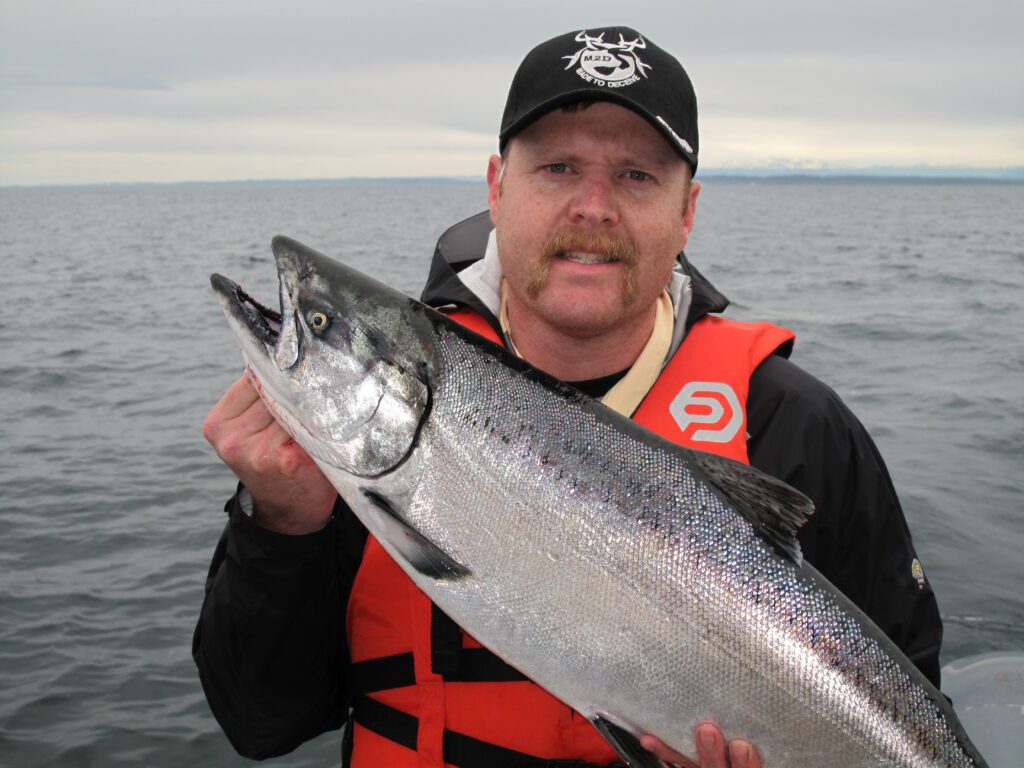
Running only two downriggers turned out to be a blessing because we were on fire. Every hookup turned into a double. Enjoying nonstop action, we had two people fighting fish and one on net duty (2 nets onboard) as we cycled through our rotation. When it was over we had lost about 10 or 12 fish, released a number of fat wild fish but still got easy limits of 8# - mid-teens coho.
It was a stellar day of coho fishing and other than some sore arms my guests had an absolute blast. It was one of the best coho days I have ever experienced. Although I was the skipper, I give credit for our success to a handful of diving birds sitting on a tide rip.
Although many coho are caught on the surface with a cut-plug herring or on trolling flies MA 7 coho are a downrigger show. While most days there is a butt crack of dawn surface bite and occasionally during the day you’ll get a fish with weight or a diver running at 33 pulls, downriggers are a must. Downriggers allow you to target feeding fish.
Regarding gear, probably not a popular opinion, but I think that MA 7 coho are brainless feeding machines. Once they move into the inner sound, they are more selective maybe even smart. In the straights, they focus on their next meal. We have caught coho that were either barfing up small herring or had a number of herring tails sticking out of their mouths, yet they had just snarfed down a hoochie/flasher rig.
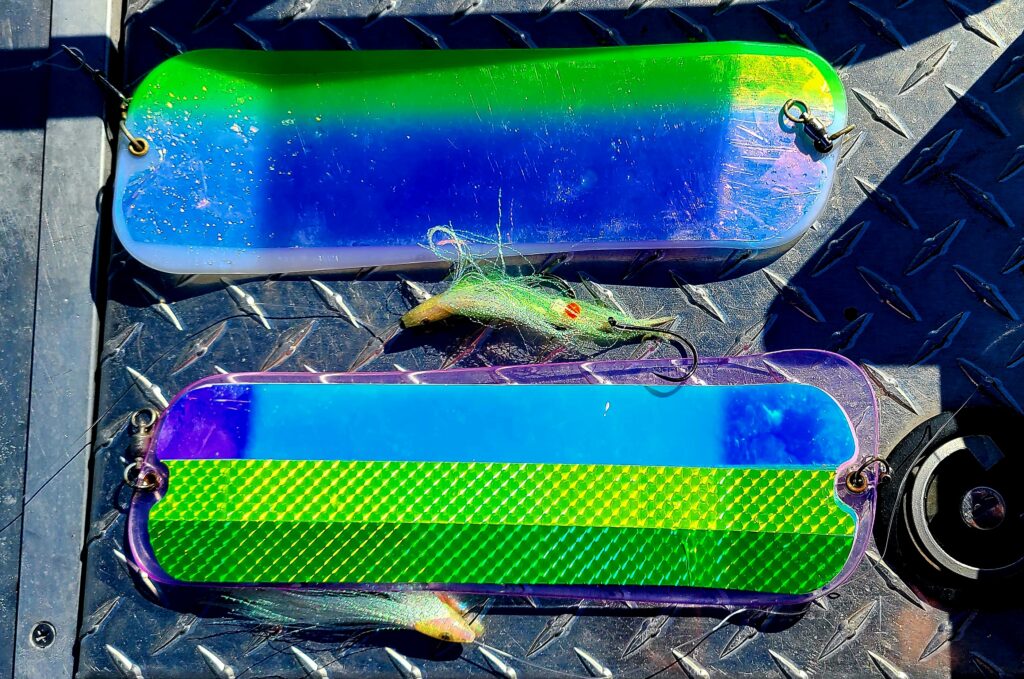
You can’t go wrong with a flasher/hoochie of a flasher/spoon combo. Some version of green or chartreuse would be my starting point but if presented correctly almost any color will work. Many other lures will work too. Consider an Old Goat Lure, a herring or anchovy in a helmet, hoochie/Wigglefin Action Disc combo or even a spinner/bait rig. While coho fishing I always run 11” flashers and the color will vary depending on what the fish want the day that I am fishing.
The day that I took my friends out we found huge schools of small bait so we sized our flies and spoons accordingly. We were running 32-34” of 30# fluorocarbon leaders with a 20’ setback from the clip. All our fish were caught with between 60’ and 140’ of cable out while trolling at 3.2-4.0 mph. The flies we were using were 2 barbless hook rigs and I tipped the lead hook with salted herring strips. The spoons were lathered up with either anchovy or herring goo and also ran on 32-34” leaders.
I want to address the MA 7 weather. I work 5 to 6 days a week on the water in MA 7. While working in the San Juans last year I encountered a significant squall line of thunderstorms. Basically, the weather went from summer boating weather to “what the heck” in minutes. It was windy, pouring icy rain/hail, and very dark. Then the thunder was relentless and deafening.
Coho season falls while our typical summer boating weather is transitioning to an unsettled weather pattern. Most of the time the sea conditions will be very pleasant. But be aware of and prepared for changing conditions. If the forecast is questionable don’t go, or at least proceed with caution. A 15-mph wind against a running tide can be uncomfortable or even dangerous.
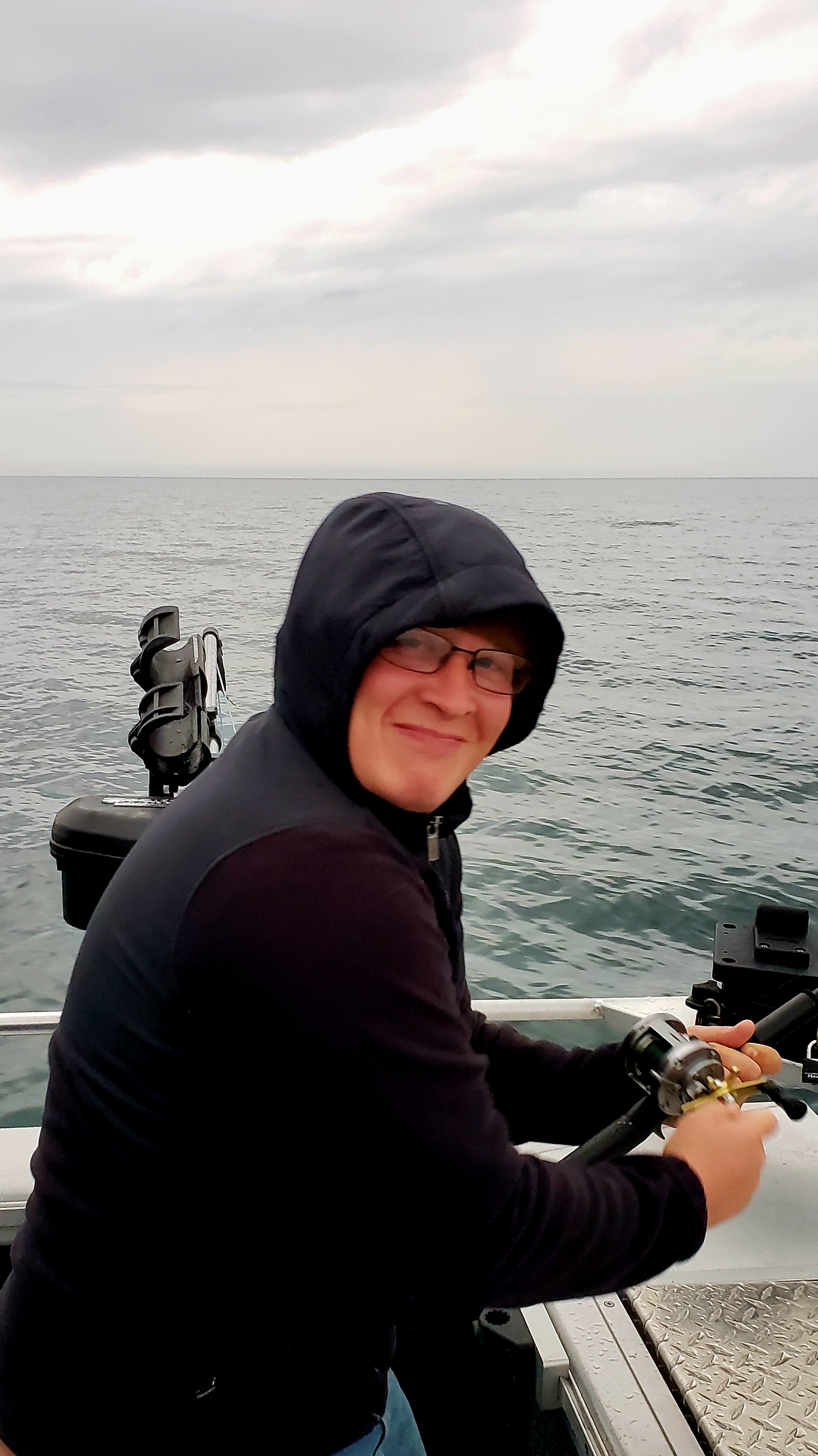
Especially as you depart/approach Deception Pass/Cornet Bay, a key launch area for MA 7 coho. Know the limits of both your boat and crew, and have properly fitting life vests for each person on board and the required safety equipment. Make sure that you have adequate fuel on board, with the longer runs to the fishing grounds and the potential for inclement weather this is not the fishery to play chicken with your fuel gauge. Always err on the cautious side.
Have a game plan for caring for your catch. It will be different for each skipper but have a fish bonker, a bleed bucket, or divers clip and ice available. Once you determine you have a legal fish in the net, stun it to prevent bruising. Then tear or cut a gill, bleed the fish, and get them on ice as soon as they are bled out. Coho are excellent table fare when properly cared for.
Good luck in your quest to catch a box full of San Juan fall coho. It is an ideal family fishery. They are relatively easy to find, usually hungry, and have some serious shoulders. Pack plenty of snacks (no bananas), watch the weather and think safety. Good times and you will find your freezer full of the other red meat, San Juan Islands coho!
/articles/other-red-meat
Bright Salmon on a Sandbar
An up-close epicurean angler perspective on the making of a Travel Channel special with Chef Andrew Zimmern.
It mattered to me. It mattered to Josh. It mattered to Andrew Zimmern, the host of Bizarre Foods on the Travel Channel.
On the Columbia, where the chinook blast upriver on swells of tide from the mouth of the river up past Washougal and then seek out the 12-16-foot deep travel corridors close to the banks, the hot salmon bite happens in the first hour.
It didn’t matter to the 17 other people on Zimmern’s crew.
Zimmern was following the Lewis & Clark trail with a perspective on the types of foods the explorers might have encountered. He chose September when the fall chinook salmon (also called king salmon) run is in full swing.
We started in the second hour, on a Tuesday in September, after camera operators, directors, drivers, handlers, drone techs, and a bodyguard were breakfasted, caffeine’d up, and constitutionalized.
Josh Cooper, stood, his hand on the tiller, his eyes on the water ahead. We idled away from the Rowena launch (Mayer State Park, west of The Dalles). Ahead of us, 64 other boats were on the fish. Rods bent and nets flashed as we took our place in the throng of watercraft.
Cooper, who makes his home in Vancouver, WA, our captain for the day, is one of the best anglers on the river. But sometimes that’s not enough. The bite was over when we dropped our baits.
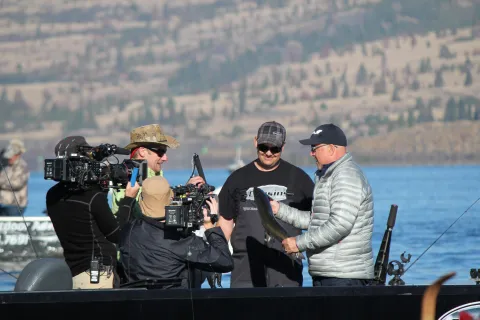
With us, on Josh's 26-foot Motion Marine Fishing Machine were two camera operators and a sound technician. A camera boat trailed in our wake with the director and additional camera operators. A drone operator and his team staged on the Washington side of the river near the mouth of the White Salmon. The bodyguard stayed on the beach.
Zimmern is no stranger to a fishing rod, but he hadn't fished for Columbia chinook before.
We showed him the baits, hoping he wouldn't gobble them or try to get us to eat them.
We call this hover-fishing when the fish stack two feet off the bottom and we drift our baits into a bio-mass of salmon, as drag-free as possible.
I looped a cluster of cured salmon roe and a sand shrimp tail on a blood-red Daiichi hook. We drizzled Pro-Cure Tuna on the potpourri in case our prospective salmon had cultivated palates.
To hover-fish, the procedure is to start at the top of holding water and run the boat a bit slower than the top currents, the baits "hovering" off the bottom.
Zimmern's rod had a Daiwa line-counter. Without digital advantage, I dropped the lead weight to the bottom and then cranked up two turns.
We tried to follow the contour of the river bottom. When it sloped up, we reeled up, when the water deepened, we dropped weights down to touch, then cranked up two turns.
Fish bit. They flared their gills, inhaled to sample the salmon eggs and shrimp then spit the baits.
Josh missed one. Andrew missed two and I missed a fish.
In the east, the sun climbed higher. Our chances diminished. A drone like an angel flew overhead and three hundred pairs of eyes on 65 boats looked to the heavens.
Then it happened! A fish bit and the hook stuck.
Andrew arced the spine of the rod against His Majesty, the king salmon. After a few tense minutes, a seven-pounder thrashed in the net.
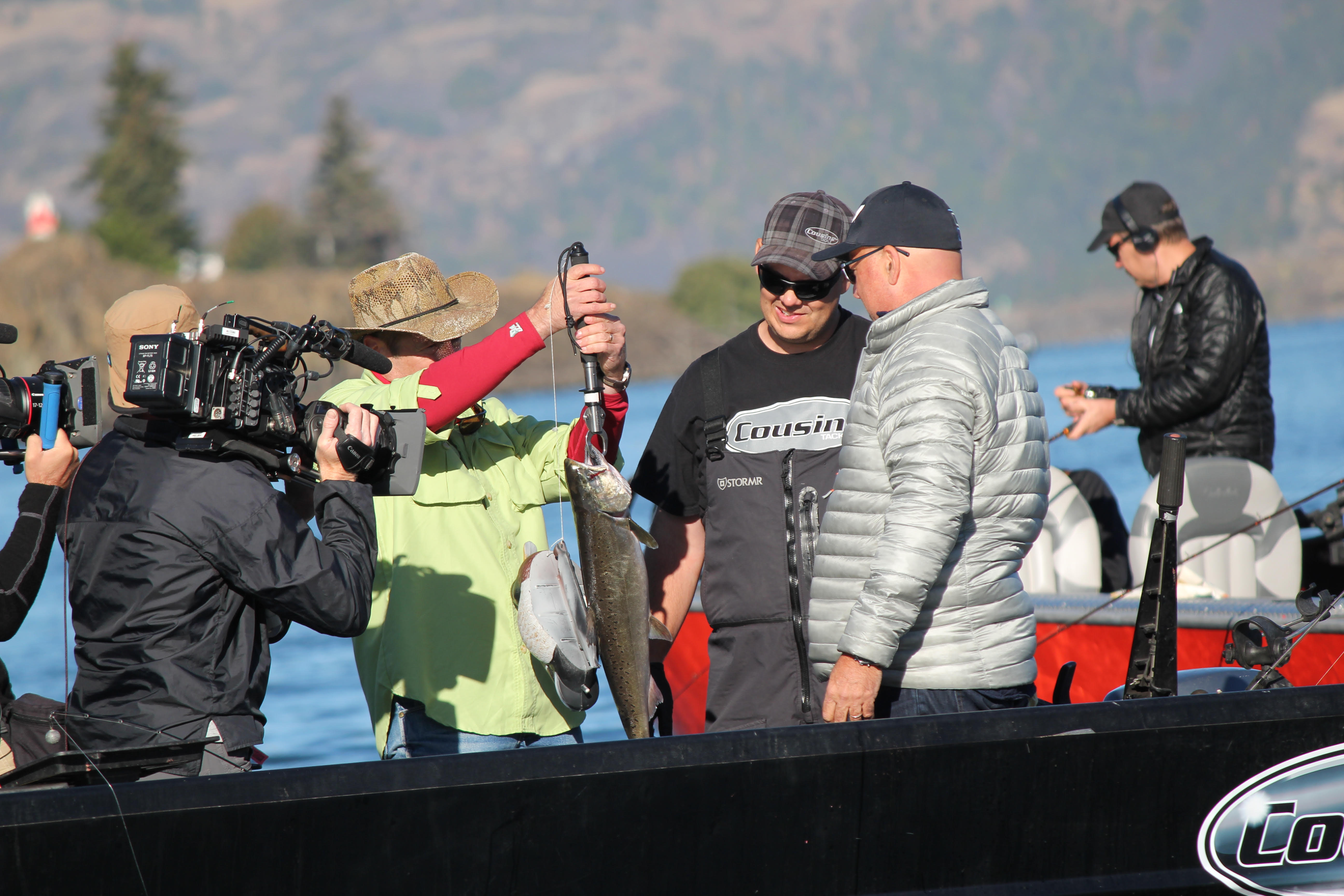
I looked at it, pronounced it a female, and guessed Zimmern would try to spoon-feed us salmon eggs. With one in the boat, we motored away, back to the ramp where the crew had assembled a grill and Dutch ovens.
While a director in cowboy boots stalked up and down the beach, cigarette in and out of his mouth, eyes flicking from one element of the scene to another, Zimmern’s knives flashed. When I angled in to check on the ingredients, I saw prime red-fleshed steaks and two skeins of milt. Milt! Our fish was a male.
In a male salmon, the sperm we call milt lies in two foot-long rolls. About an inch in diameter, the texture of fresh liver, it is often discarded. It shouldn’t be.
On a sandbar on the big river that is the lifeline of The West, there is no better way to taste the elemental flavor of the salmon.
Roasted lemons, eggplant, and onions. Rice and a reduction. Zimmern wasted no motion.
Flames licked at the grill. Seasonings are seared into vegetables, salmon strips, and organs. In moments we held salmon bowls while the good smells wafted out to fishermen still angling for their limits of bright chinook.
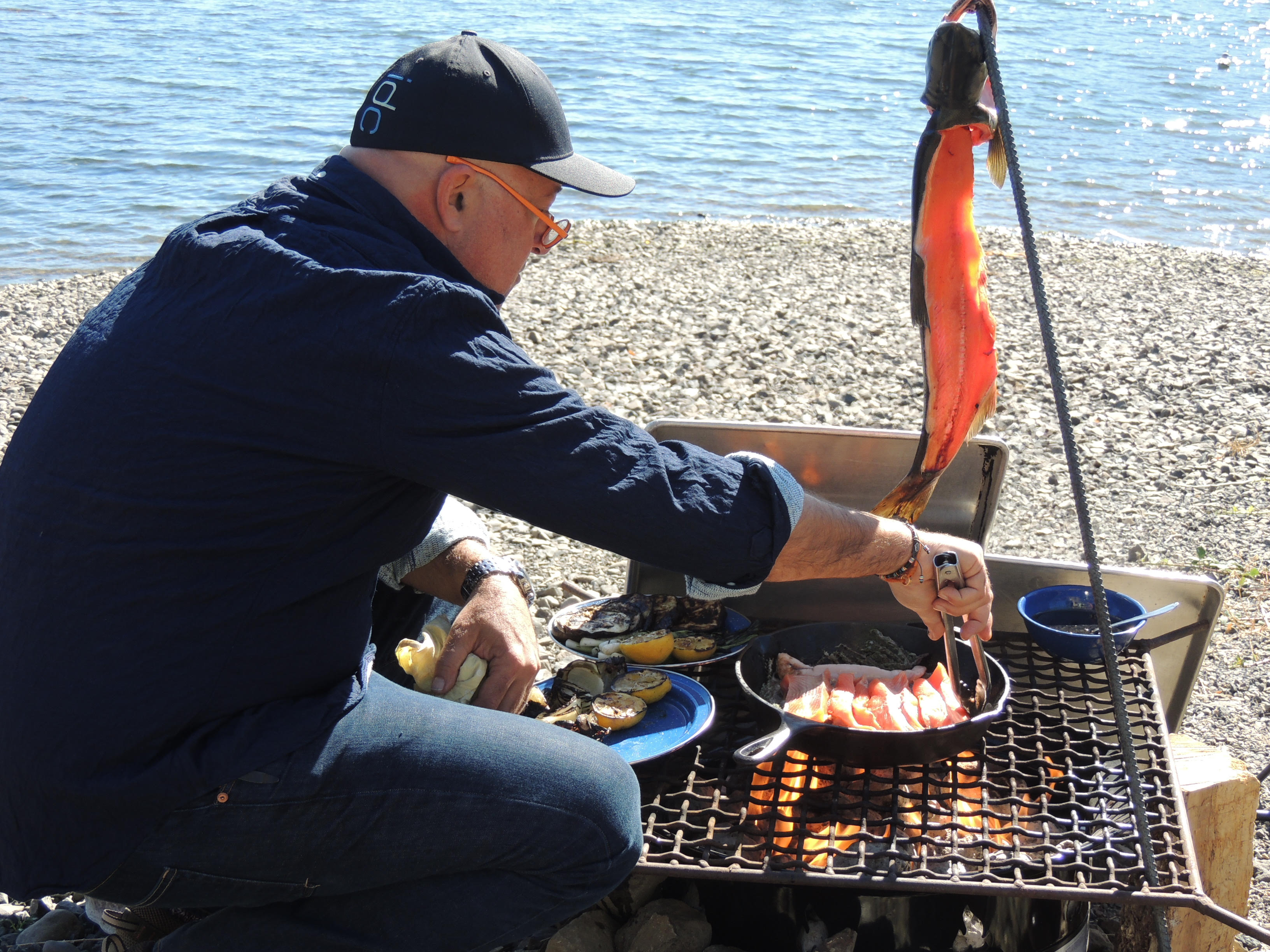
The best place to eat salmon is on a sandbar in September. We ate the strips of salmon with forks and fingers. We ate the milt and proclaimed it worthy. Milt and eggs. These are the building blocks of the protein that energizes the Columbia River. How does milt taste? It cooks up like a better version of tofu and it adds a certain something to a salmon bowl.
This was Zimmern's first time fishing for fall Chinook. While we labored for a bite we talked fly-fishing and grouse hunting. And it was a chance for me to get a glimpse into the machine that was a big Travel Channel production. At the heart of it all was a chef who was a risk taker, story-teller, all-showman, and a real sportsman.
# # #
For a copy of the Fishing Central Oregon book, send $29.99 to Gary Lewis Outdoors, PO Box 1364, Bend, OR 97709 To contact Gary Lewis, visit www.GaryLewisOutdoors.com
/articles/bright-salmon-sandbar
Fall Fishing At Potholes Reservoir
September and October are my favorite times of year and one of my favorite places to recreate is at Potholes Reservoir, located between Moses Lake and Othello in Eastern Washington. This is a large irrigation reservoir fed by Crab Creek, Lind Coulee as well as Winchester and Frenchman’s Wasteway. At full pool, the lake has 28,000 surface acres of water but after a long summer of dropping water the lake definitely “fishes smaller”.
While there is not as much water to fish, particularly back in the sand dunes area and Crab Creek, there is still plenty of lake to fish and at this time of year, the fish are biting as they beef up for the long winter ahead. Let’s run through some of the species you can fish for here and some effective ways to catch them:
BASS:
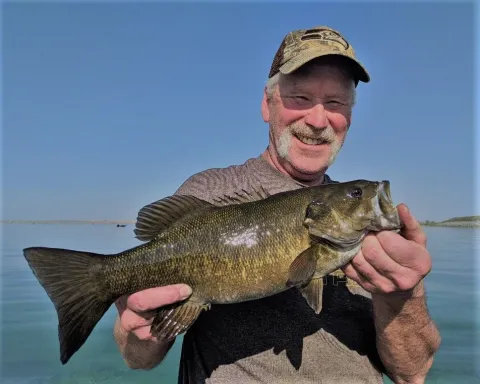
Bassmaster Magazine ranked Potholes Reservoir as the ninth-best bass fishing destination in the Western United States this year and for good reason. There is a healthy population of both largemouth and smallmouth bass in several age classes. The largemouth tend to be bigger, averaging two pounds and getting up to 7-plus pounds. At a typical bass tournament, you’ll need to have a five-fish bag weighing over twenty pounds for a chance to win. The smallmouth run a bit smaller, with one-pound fish being abundant. But I caught a 5.4-pound smallmouth here during September so big smallmouth are around.
At this time of year, the baitfish have moved out into the main lake, and so have the gamefish that are after them. Pete Fisher at the MarDon Resort Tackle Shop and the owner of Fisher Brothers Baits says fishing in front of the dunes on the main lake is the best place to go. The fish will be suspended around sandy humps and Pete says fishing a football head jig with a hula grub trailer is an effective way to catch these fish, which are primarily largemouth bass.
If you want to go after smallmouth bass head towards the face of O’Sullivan Dam or into Lind Coulee at the south end of the lake. Personally, I enjoy using deep diving crankbaits here this time of year which are effective for both bass and walleye. One of my favorite lures is a Berkley Digger crankbait, which dives to depths of 14 feet. When it comes to fishing near the dam, Pete Fisher likes to use perch colored ¾ ounce swimbaits or topwater plugs with white being a preferred color.
WALLEYE:
The walleye bite can be spectacular in the autumn months. These tasty fish tend to be found off the face of the sand dunes or the mouth of Crab Creek. As Nathan Lafrance says, “If you aren’t sure where to go, just look for the line of boats out there, easy to find.” As for how to catch them, Nathan recommends trolling diving crankbaits at a depth of 10 to 12 feet. Nathan says other lures to try are a jointed Berkley Flicker Shad #7 or a Bill Lewis Walleye Precise Walleye Lite crankbait.
PANFISH:
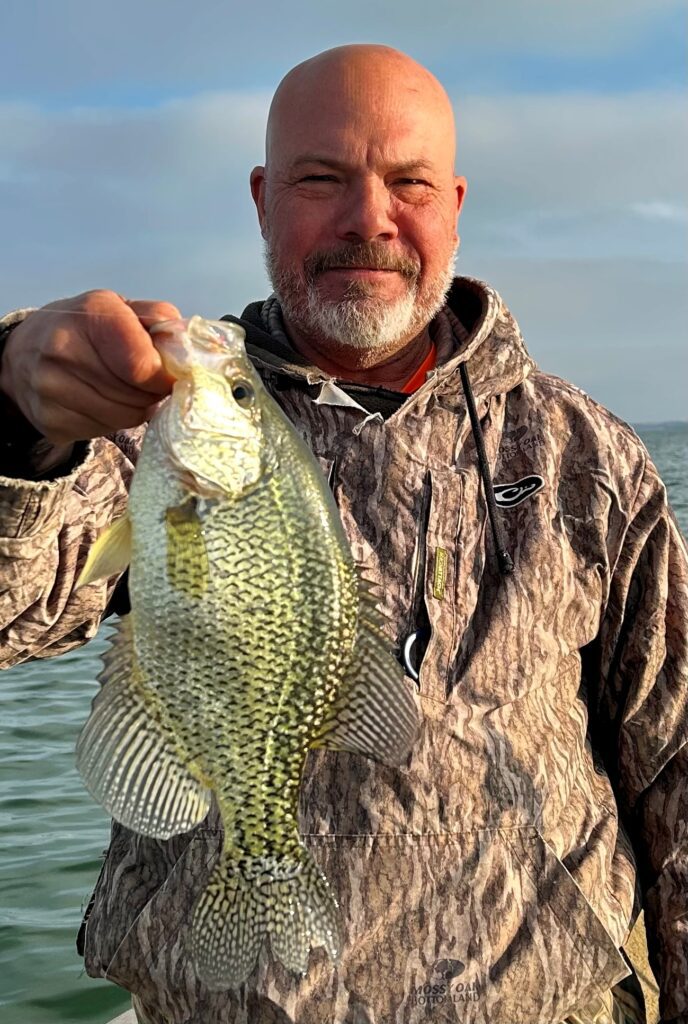
The autumn bite for panfish is excellent and sometimes overlooked by anglers targeting trout, bass and walleye. There is a combined limit for bluegill and crappie of 25 fish, and the crappie have to be at least nine inches long to keep. This regulation has helped turn the reservoir into a quality fishery and 15-inch crappie are relatively common. Last year, an angler reeled in a bluegill that weighed over 2.2 pounds, nearly beating the state record. The perch can also be sizeable here, reaching north of 14-inches in length.
One person who really enjoys fishing for crappie is Pete Fisher. He has a couple of suggestions about where to find them and catch them. Pete says the crappie, like the bass, migrate out of the sand dunes in the late summer. During the autumn months they will be found at the face (or in front of) the sand dunes on the main lake. Fisher says you can cast or troll Berkley #5 Flicker Shads, especially in a Chrome Clown color pattern. Another way to catch crappie is to fish a small jig under a slip bobber after you find a school of these fish. Fisher prefers a white Bobby Garland shad or DS Fry soft plastic lure paired with a small 1/32 or 1/64th ounce jig head. If you do catch a bunch of panfish, you’ll be happy to know there is a fish cleaning station at both MarDon Resort and at Potholes State Park near the boat ramp.
TROUT:
The rainbow bite really turns on in the fall and the size of these fish are impressive. One to three-pound rainbows are commonplace and sometimes you’ll get them bigger than that. Nathan LaFrance suggests trolling Berkley Flicker Shads or longer minnow shaped crankbaits. As to where to find the trout, a couple of good places are off the mouth of Frenchman’s Wasteway or in the northeast corner of the lake near the mouth of Crab Creek.
RESOURCES:
If you are looking for a place to stay you can camp at Potholes State Park or MarDon Resort, which also has cabins and cottages for rent. The resort also has a tackle shop and The Beach House bar and restaurant. The Potholes Bar and Grill is another nearby restaurant that is close to the entrance of the state park.
If you have never fished or hunted Potholes Reservoir before, consider booking a “Cast & Blast” trip with Ross Outdoor Adventures. These trips are only offered in October. Shelby Ross and his guides know how to navigate the tricky channels leading into the sand dunes like the back of their hands. They will take you in before dawn, treat you to a fun duck hunt, and finish the hunt with duck poppers cooked up in the blind. After that you put away the shotguns and go trolling for walleye, usually picking up several other fish species along the way. It makes for a fun day and a great introduction to the fall hunting and fishing scene at this spectacular destination.
WEBSITES:
By John Kruse, host of Northwestern Outdoors and America Outdoors Radio
/articles/fall-fishing-potholes-reservoir
Pan Fishing 101
(Crappie and Bluegill Technique and Set Up)
Fishing for Crappie and Bluegill, often referred to as panfish, provides both novice and seasoned anglers with an exciting challenge and a delicious reward. These popular freshwater species can be found in lakes, rivers, and ponds across Washington State, making them accessible targets for anglers of all skill levels. So grab your tackle box, and join me as we explore the effective techniques and setups tailored specifically for crappie and bluegill fishing.
Understanding Crappie and Bluegill
Crappie:
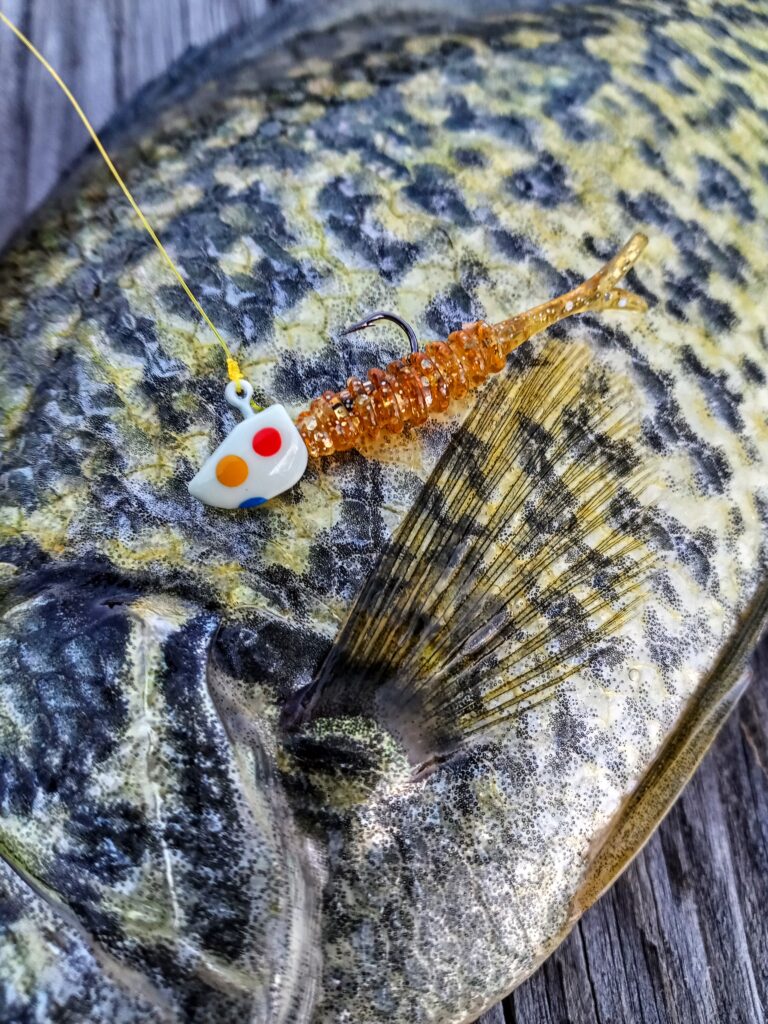
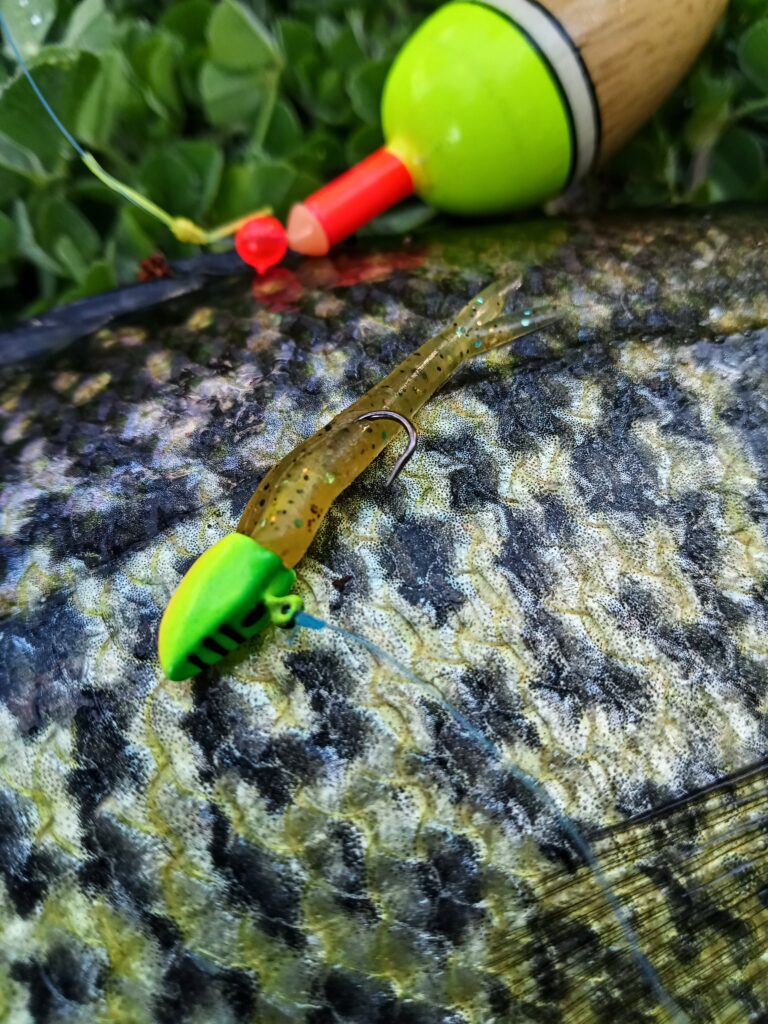
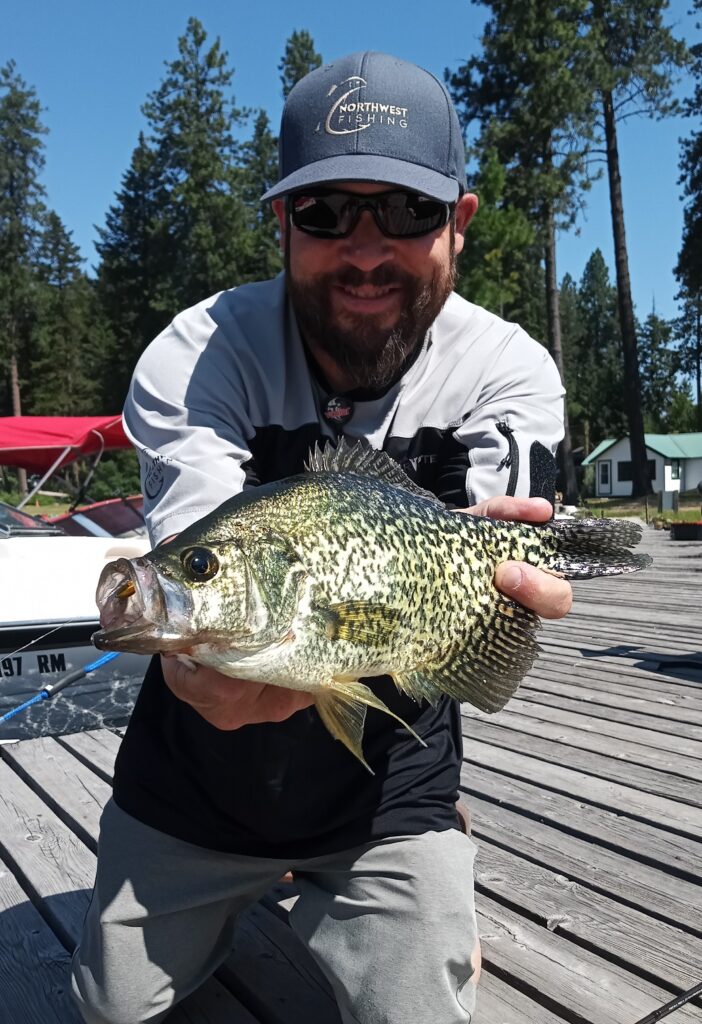
Crappie are highly sought after for this tasty white meat and can grow to impressive sizes with the white Crappie and the black Crappie being the most common species. They are known for their tendency to school around submerged structures such as trees, brush piles, and docks. If fishing from the boat, I'm typically a fan of casting small jigs, and bobbers around these structures searching for bites - and also using my electronics to tell me - what's below, and what are they schooled around? With fishing docks, I begin by jigging shallow and work my way deeper until I feel that “thump!” Usually, they are just suspended a few feet off the bottom below the docks, but at certain times of the day, they are just a foot below the docks, and hugging the boats making it a little tougher shooting your jig under them, trying not to spook em’.
Bluegill:
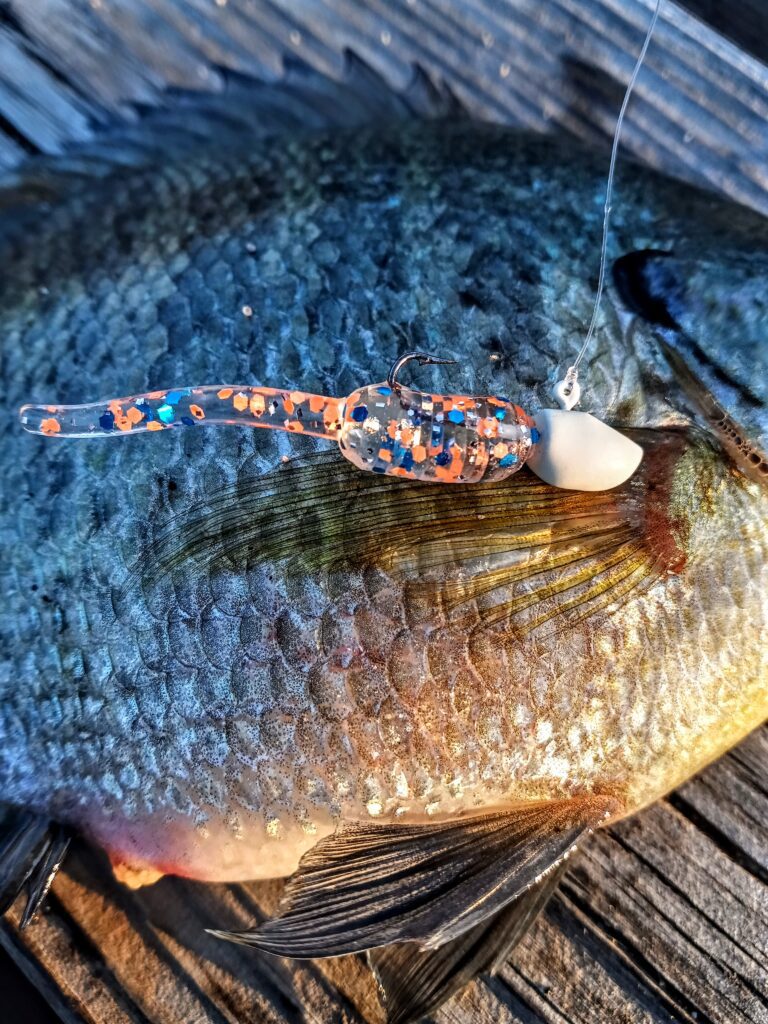
Bluegill is smaller than crappie but just as popular among anglers. They are characterized by their distinctive blue gill covers and can be found hanging out in shallow waters, around vegetation, and structures submerged in water. Bluegill are prolific breeders and often travel in schools, during their spawn, they will have a minefield of beds in the shallows as they become very aggressive in protecting their eggs. It's very fun targeting these, especially practicing catch and release. For many of us, the Bluegill was the first fish caught as a kid that sparked the interest.
Essential Equipment:
Rod and Reel:
For panfish, a light or ultra-light spinning rod and reel combo works best. This setup allows for casting bobbers and small baits accurately and provides the sensitivity needed to detect subtle bites.
Fishing Line:
Use light line, monofilament, or fluorocarbon. Typically in the 4-8lb range, as lighter lines allow for a better presentation of small baits and lures while maintaining enough strength to handle larger fish, I often choose monofilament in the 4-6lb test to allow a little stretch with my hook set, especially fishing crappie with their paper-thin mouths. (Hence the name “Lantern-mouths.”)
Terminal Tackle:
Small hooks such as a number of 6-10 for bluegill, and slightly larger for crappie 4-8, tipped with worms is the most simple way to approach these fish. Split shot weights and bobbers are another effective way to locate fish and to find the depth to adjust your bait too, keeping it in the strike zone.
Baits and Lures:
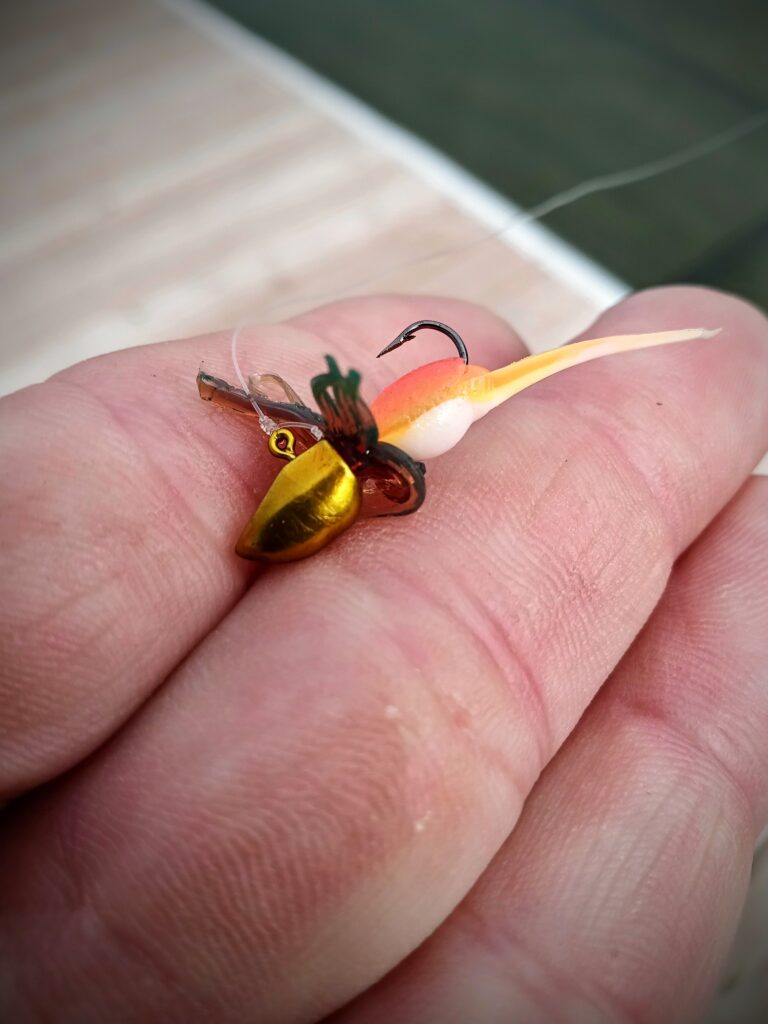
Though we can't use live bait, the most effective bait for both bluegill and crappie is a worm. Cured crickets and minnows work well, but you may have to work your bait more to attract the fish. When it comes to working your baits, we typically refer to artificial baits such as jigs, small crankbaits, spinners, and soft plastics like grubs. Soft plastics come in so many profiles, that you can define the bite with a minnow profile, to a buggy pattern.
Techniques For Crappie:
Vertical Jigging:
Drop a jig or your vertical presentation down near submerged structures, trees, and docks, areas where Crappie are likely to congregate. Use either slow retrieves after casting with an occasional twitch, or gentle jigging motions to act like a wounded, or swimming minnow to entice bites.
Fan Casting Bobbers:
Cast small bobbers around structure docks, brush piles, and/or just outside of major weedlines. I try to have at least 3 rods rigged up with my favorite bobbers, each at different lengths below the bobber to find the depth at the fish are suspended. Anywhere from 2-4 ft below the bobber is a good starting point. When you find the depth, stick to it, and if the bite dies down, continue to move until you get back to the school.
Dock Shooting:
Perfect for targeting Crappie hiding under docks. With a light jig or worm under a float, skip the bait under the docks and other overhead cover where Crappie lurk. I have a ton of success using this technique when I find the Crappie are sucked close to the bottom of boats in a marina.
Techniques For Bluegill:
Bobber Fishing:
Attach the small hook baited with the worm, and/or your favorite micro jig and plastic under the bobber and cast towards shoreline vegetation and those submerged structures. Slipping that bait even a foot or less directly under your float as you reel across the tops of their beds. Being able to adjust your float to the depth of the bait to find where the Bluegill are feeding is important.
Micro Jigging:
Very similar to jigging for crappie but with much smaller jigs and hooks, again casting and retrieving slowly varying the speed to find the most effective presentation, and jigging vertically with different cadences until you find what they want.
Micro Crankbait:
Yes, cranking for Bluegills. We have found much success fishing Micro Crank Baits such as the Z-Cranker from Eurotackle. Trolling right outside the weedlines adjacent from their beds, and they will smoke them baits as they are very aggressive during their spawn.
Tips For Success:
Location:
Use electronics and maps if possible to locate submerged structures, such as weed beds, drop-offs, brush piles, and sunken trees, where Crappies and Bluegills gather.
Time Of Day:
Early morning and late evening are prime times for Panfish, as they are active and feed in those low light conditions. We do find them of course throughout the day, but tend to have the hottest bites early and later.
Patience And Observation:
Panfish can be finicky. Be patient and pay attention to subtle bites or changes in bait behavior. They may want a micro Tungsten jig one morning, and the next they want a larger jigging spoon. Feeding habits can change by the hour too, so don't be afraid to even try beaded head flies.
Catch And Release:
Practice selective harvest and release larger breeding fish to sustain a healthy population. I always release any Bluegill over 9in, and release the majority of Crappie over 12in. Very rarely do I keep fish, but every now and then they are a good fish fry. (Please check regulations on your lake’s fishing)
Fishing for Crappies and Bluegill is not just about catching fish; it's about enjoying the outdoors and honing your skills, whether you prefer the challenge of targeting Crappies with jigs or the simplicity of bobber fishing for Bluegill, there's a technique that suits every anglers style. With the right equipment, techniques, and a bit of patience, you'll be well on your way to filling your cooler with these delectable freshwater treasures.
By mastering the techniques and setups, you'll enhance your Pan Fishing experience and increase your chances of success on your next fishing adventure. “I hope to see you out on the water!” - Eric Magnuson.
/articles/pan-fishing-101
Gear Up for Puget Sound Coho
Grab your rods and coolers, it's time for Puget Sound coho! As far as saltwater salmon go, coho tend to be aggressive and eager biters. You can find them in most areas of the Sound, and the bite will only improve as the season progresses. Coho are plentiful and tasty! They taste good when caught in rivers, but you can't beat a chrome coho fresh from the salt. Having the right strategy, the proper gear and good preparation will help you get a boatload of coho this summer!
Trolling is the most popular way to catch these Puget Sound coho. It's a great way to cover water and adjust your depth based on the fish's location. Having the right gear is certainly important, but having a good strategy makes all the difference. I recommend getting an early start and fishing shallow. As the day progresses, fish deeper. Watch for marks and don't be afraid to drop your gear right down into the fish. Pay close attention to your fish finder.
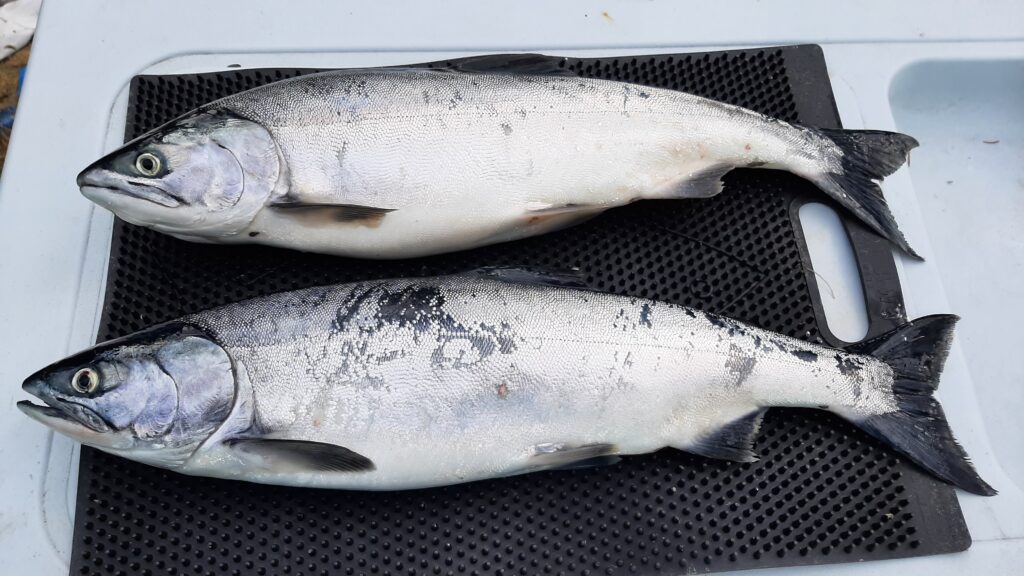
Coho will school up most of the time, so don't be afraid to circle back to wherever you get bites. Coho like a shorter setback than you'd think. I usually use a 50 to 75-ft setback. Trolling speed for coho can be a controversial topic. Speeds anywhere from 2.5 mph to 3.5 mph will work. Here again, is where having a fish finder is crucial. In addition, study tide tables ahead of time. It's no secret that coho love a good tide change. Targeting tide changes early in the morning often results in a full cooler.
So, what gear do you need? There are several different ways to go. You can use trolling flies, herring, spoons, plugs, or spinners. Sometimes coho can be picky, so it's best to employ a variety of lures. You'll want to run your lures behind a flasher. Many different tackle companies make flashers that work well. Don't forget to smear your flasher and lure with a bit of scent! Coho are smart and some scent can fool them into grabbing your lure a little longer. Most days, coho just can't resist herring. They're out there feeding before going into rivers to spawn, so they're hungry! Don't be afraid to add a herring strip to any lure. You can brine up herring strips ahead of time and attach them to hooks, tie herring bellies to your plugs, or stuff your plugs with herring and tuna. Some fishermen dye their herring during the brining process, others don't.
Knowing the right spots to fish is an important part of your prep work that you should research ahead of time as well. The fish start flooding into the Sound through the Strait, so fishing will be best up north early in the season. My experience fishing for saltwater coho is within Marine Areas 9 and 11, so we will discuss those locations here. The oil docks, shipwreck, and Picnic Point are all well-known producers.
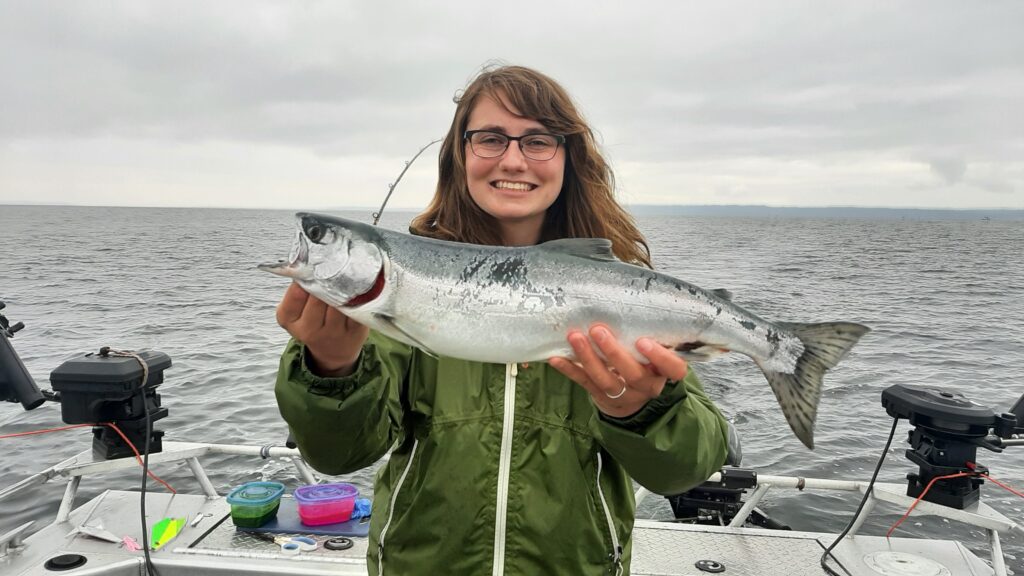
You can launch your boat at Edmonds, Mukilteo, and Whidbey Island. Just be mindful that you don't accidentally cross into another Marine Area once you have fish on board. Sometimes you can keep wild fish in one area, but not in another. In Marine Area 11, common spots include the Yacht Club, Dash Point, and Browns Point. In both areas though, I'd caution against just following the crowd. Don't be afraid to study maps and find your own spots. Points and bays are always good places to start.
Preparation is key! Make sure to check for emergency rules before heading out. Don't forget to brine your bait ahead of time and grab ice to ensure your catch stays cool. Grab those life jackets and check the weather forecast. The Sound can turn nasty at the drop of a hat, especially for small boats. Preparation can make all the difference between a cooler full of coho and a day of disappointment. I'll leave you with a story to help drive this point home.
One day, I was out on the Sound fishing for coho on Mike Carey's boat with another friend. The day had started well- we got on the water at the crack of dawn and saw lots of fish on the meter. We started getting our 3 fishing rods set up when my friend said "Uh oh... I forgot my fishing license!" Mike and I immediately stopped setting up the 3rd rod and told my friend he was on boat-driving duty for the rest of the day. It went from a (potential) 6-fish day to a 4-fish day for us. Preparation is everything! Do your research, make a checklist, and give yourself plenty of time to get ready. Have fun and go catch a cooler of coho!
/articles/gear-puget-sound-coho
August 2024 “Ocean Salmon Update”
When it comes to fall salmon, anglers consider August to be part of the time of year when pumpkin spice lattes and crisp mornings are the norm. The eighth month of the year is technically still summer but anyone who has headed to the ocean this time of year can feel the chill of an early fall coming on. Fog and rainstorms are normal, along with high winds and rough seas but then there are the days of bright sunshine and hot temperatures that remind us it is still summertime, even if only for a few hours in the afternoon. Much like the weather, salmon fishing can change in an instant… Mostly in the form of regulations.
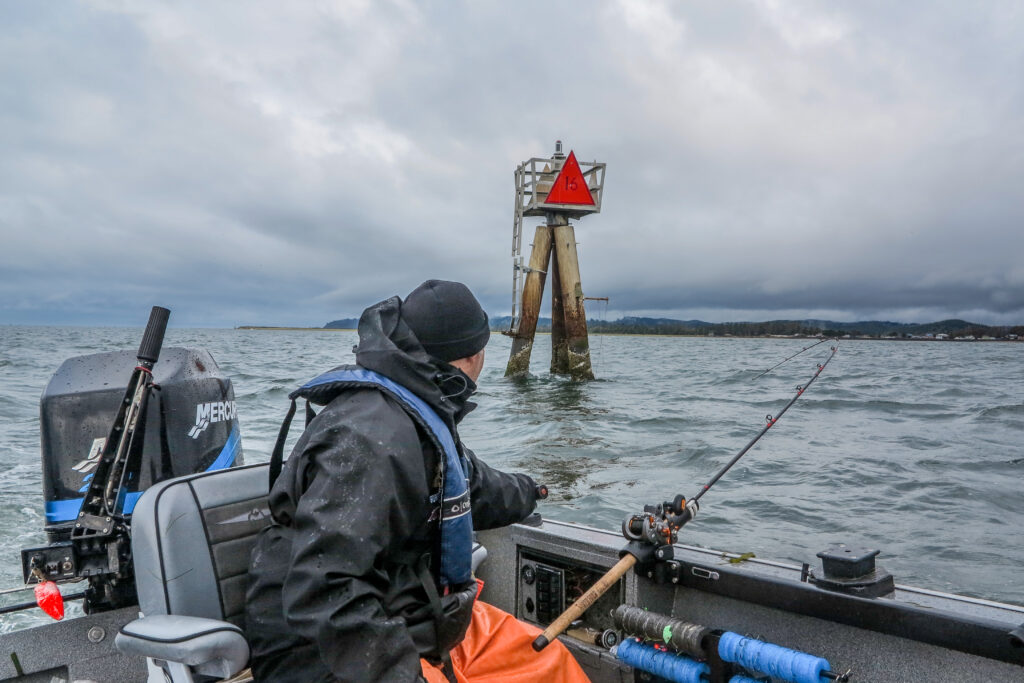
August ocean salmon fishing is all about the rules and emergency closures and openings. The fish are regulated by quotas and estimated returns to natural rivers so be sure to check the regulations and emergency rules daily and be ready to change your location to fish as often as you switch out your cut plug herring. Knowing the rules also means knowing where you are fishing.
Marine Area 1 is slated to be open for salmon fishing in August for both chinook and coho and this is where anglers will be targeting fish stacked up to enter the Columbia River. Known as Buoy 10, the famed August fishery at the mouth of the Columbia River continues out beyond this buoy marker but is considered Marine Area 1. Depending on sea conditions and bar crossing, fishing can be good out in the open ocean. Especially for coho as the chinook are mostly staging in the brackish water and rushing into the Columbia with each tide change. Coho will stay just offshore a bit longer as they prefer to enter the river in September and into late fall.
Keep an eye on the Buoy 10 rules and regulations as well as any emergency closures or adjustments. If you have the right boat and navigation skills to cross the deadly Columbia River bar, then Marine Area 1 could save your trip if they close or restrict the Buoy 10 fishery. The same goes for about every ocean area you need to know before you go.
Marine Area 2 gets a little more complex come fall. You can still hit the open ocean from the tiny town of Westport. Extremely popular in July when it first opens Westport becomes a mecca of salmon anglers come August. The complexity comes from the Marine Area itself which is broken down into three segments. Marine Area 2 is the open ocean and is slated to be open, but most likely for coho as the chinook quota gets eaten up quickly as the fish pass by heading to the Columbia or start to stage for Grays Harbor and Willapa Bay. This is where Marine Area 2 is broken down into sub-areas.
Marine Area 2-1 is Willapa Bay which has three separate zones known as zones 4, 5, and 6. Zones 4 and 5 are closed and zone 6 is most of the bay itself. A kelp and grass shallow water bay where salmon will stage for weeks before heading up the Willapa River and to hatcheries. Wild chinook must be released, and anglers can use two rods each with the endorsement. A dropper weight system is used since this is shallow water and the amount of eelgrass makes it hard to use downriggers. Watch your gear closely and change out baits often but it is hard to beat hooking a large chinook in shallow water which is why this fishery can be immensely popular.
Grays Harbor is Marine sub-Area 2 known as Area 2-2 with zones 1, 2, and 3. Zone 1, known as the Grays Harbor Control zone, closes in mid-August to salmon fishing, which allows fish to enter the harbor. Zone 2 is the Humptulips North Bay fishery zone and is limited to 1 fish, no wild fisher per day. The other zone known as the East Grays Harbor Zone 3 is mostly a coho fishery in front of the Johns River as all chinook must be released.
The Grays Harbor area is not exceedingly popular as you also compete with commercial and native fisheries but can be productive for those that try it. One of the most unique fisheries in the Grays Harbor area is the Westport boat basin fishery which is fishing in the marina where the fleets of charters and commercial boats are stored. Coho returns here thanks to a release effort with a recent addition of 50,000 late coho expected to return in October and November starting in 2026. For now, the fish arrive in late August and into September and can be caught right off the docks at Westport.
Marine Area 3 is known as LaPush and is very remote. With limited launches and extreme weather area 3 is mostly accessed on days with optimal ocean conditions. It is slated to be open in August for both chinook and coho, but this is one fishery that is often adjusted with an emergency rule. Chinook are prime and targeted in July which often means an August closure but coho here are making their way to the many rivers that have both robust hatchery returns and wild runs as well. Wild coho are not allowed to be kept keeping those runs going so be sure to only keep clipped silvers. This is also a staging area for chums and in the salt, they can be misidentified easily as their purple bars are light and sometimes even non-existent this time of year. Chums must be released so be sure to look at the fish closely and know what you have caught.
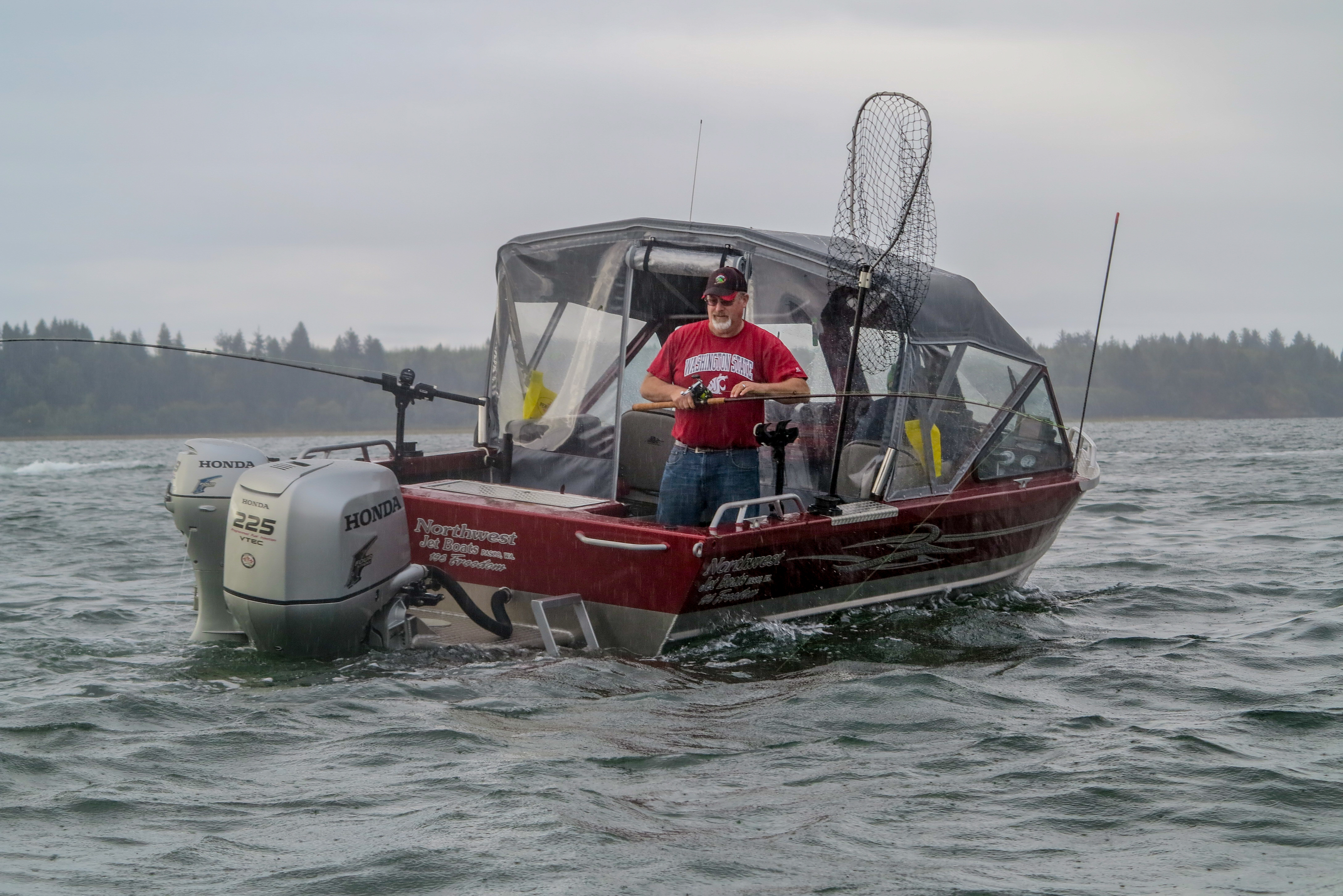
Marine Area 4, the last of the “ocean” areas had a rough start to the chinook fishing. As of July 11th, only 25% of the quota had been caught which normally that time of year the quota is getting close to being filled. I fished this area on July 12th and 13th, when the daily limit of chinook went to 2 per day and we did not hook a single adult chinook. The seas were rough and kept my little 18-foot boat limited to trolling along the kelp line and near shore but those that could make it further out did well. This indicated the chinook were here but out deeper than usual. Coho were being caught but not in respectable numbers which could indicate a later return this year which is great since area 5 to the east is slated to be open into October for coho. Come August the rules for chinook change in Marine Area 4 with it only being open west of the Bonilla-Tatoosh line. Coho is slated to remain open until mid-September in all Marine Area 4.
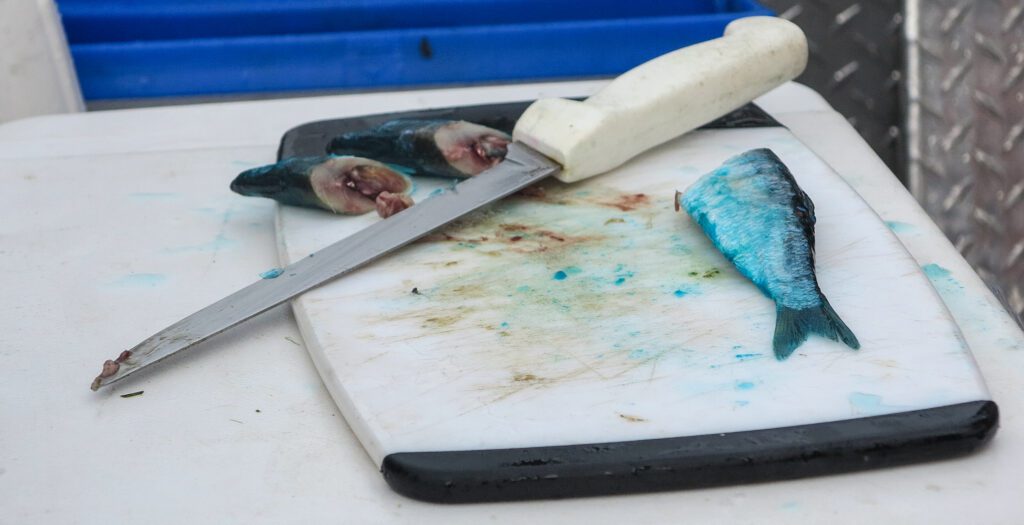
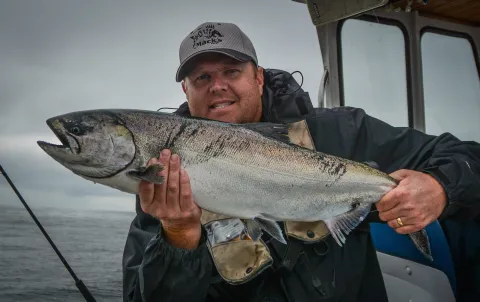
Regardless of where you decide to go, be sure to head out to the open ocean for some great fall salmon fishing. Of course, before you go be sure to check the emergency regulations as these fisheries are subject to quotas and can close quickly. They can also open or be extended as well and just maybe you will find a bonus opportunity out in the ocean. Either way, be ready for some cold, wet, and rough weather as well as bring sunscreen as afternoons are known to burn off the fog and remind us it is still summertime.
/articles/august-2024-ocean-salmon-update
Five Coastal Salmon Rivers to Check Out
Summer is upon us and for many of us, that means that our home rivers are closed to fishing to protect ESA-listed wild Chinook. As a result, we are looking forward to fall when we begin to see runs of Coho and Chum salmon flooding into our rivers with increasing opportunities to catch them. Fingers crossed!
It is anyone’s guess what WDFW will do and many of us are eagerly awaiting news concerning our seasons, emergency closures, and changes in general. Keeping this in mind, let’s look at five coastal river systems to check out that could present great opportunities.
Let’s start on the Northern Coast and work our way South. For the sake of this article, the focus will be from Forks in the North to Grays Harbor in the South. There are other coastal river systems South of Grays Harbor, but we are going to focus on the most popular systems.
Quillayute River System
The Quillayute empties into the Pacific Ocean at La Push, Washington. The Quillayute River is formed by the confluence of the Bogachiel River, Calawah River , and the Sol Duc River near the town of Forks, WA. The Dickey River joins the Quillayute from the north, just above the river's mouth at the Pacific Ocean. Though it is world-renowned as a winter Steelhead mecca, this system also receives returns of all five species of salmon. With spring and summer Chinook salmon returning in lower numbers than expected, the Quillayute river system, including the Bogachiel, Calawah, Dickey, Sitkum, and Sol Duc rivers, as well as Thunder Creek closed to all fishing on July 15. Historically this system produced great returns of spring and summer chinook, but like so many of our rivers, the runs are now endangered. The Coho and Chum will return in September and hopefully, there will be opportunities to catch and retain hatchery fish.
Hoh River
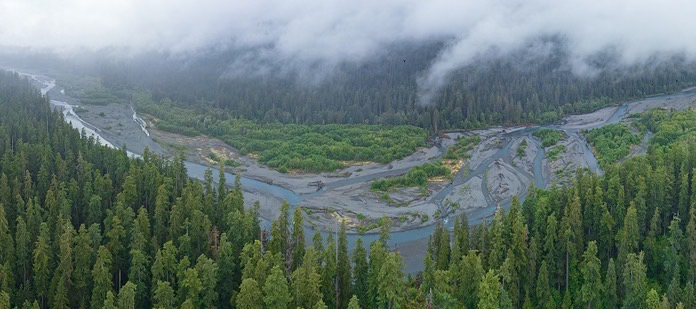
At 56 miles long, the Hoh River originates at the snout of Hoh Glacier on Mount Olympus and flows westward through the Olympic Mountains of Olympic National Park and Olympic National Forest, then through foothills in a broad valley, emptying into the Pacific Ocean at the Hoh Indian Reservation. The final portion of the Hoh River's course marks the boundary between the south coastal segment of Olympic National Park and the Hoh Indian Reservation.
Returns of Steelhead and Salmon make the Hoh River a fishing destination worth exploring. While there are fish in the Hoh River year-round, Steelhead are mostly targeted in the Winter, Chinook, and Coho are mostly targeted in August through November, and Dolly Varden and Cutthroat Trout are targeted anytime the water is in shape.
According to the 2024-2025 regulations, parts of the Hoh will open for Salmon fishing on September 16th, presenting some great opportunities to target Coho.
Queets and Quinault Rivers
The Queets and Quinault Rivers and their tributaries flow from the Olympic National Park into tribal lands. While opportunities exist in the upper reaches of these systems and within the park, they are most noted for their tribally guided lower sections. Note that the rivers are governed by WDFW, the Federal Government, and the Tribes, depending on where you are, so pay close attention to the rules.
The Quinault and Queets Nations have built some very robust hatchery programs, and they control the lower stretches of the rivers. Anglers can fish for all five species of Salmon as well as Steelhead and Trout. Fall Coho on the lower Quinault is a very fun fishery and can result in a freezer full of fish to last the winter. Note that you must book a trip with a tribal guide to fish the waters that lay within the reservations.
Humptulips River
The Humptulips River is located in Grays Harbor County, just North of Aberdeen and Hoquiam. Its main tributaries are the East Fork Humptulips River, about 20 miles long, and West Fork Humptulips River, about 30 miles long. After the forks join, the main river is approximately 20 miles long and provides some of the best salmon habitat in Washington. This river is not a secret and is often very congested, when open.
I will say that the “Hump” as it is called is one of my favorite rivers for fall Salmon fishing. It is renowned for its runs of Chinook, Coho, Chum, and Steelhead. As with other coastal rivers and due to low returns of wild Chinook, opportunities are limited. According to the current regulations, parts of the river should open in early September for hatchery Chinook and Coho. As this river can get very congested, it is best to know what you are doing and even better, book a trip with a guide.
Chehalis River System
The Chehalis River originates in several forks in southwestern Washington, flows east, then north, then west, in a large curve, before emptying into Grays Harbor, an estuary of the Pacific Ocean. The river is the largest solely contained drainage basin in the state. Both the Wynoochee and Satsop Rivers flow into the Chehalis between the towns of Elma and Montesano. While the Chehalis has many other tributaries, the Satsop and Wynoochee are likely the most popular and offer fantastic fall Coho fisheries. The mainstem Chehalis, near the mouth of these rivers, can be epic when conditions are favorable and some of the largest Coho in the state can be caught here. This system is also known for large limits of Coho allowed but check the most up-to-date regulations for specific details and don’t forget to look for emergency closures.
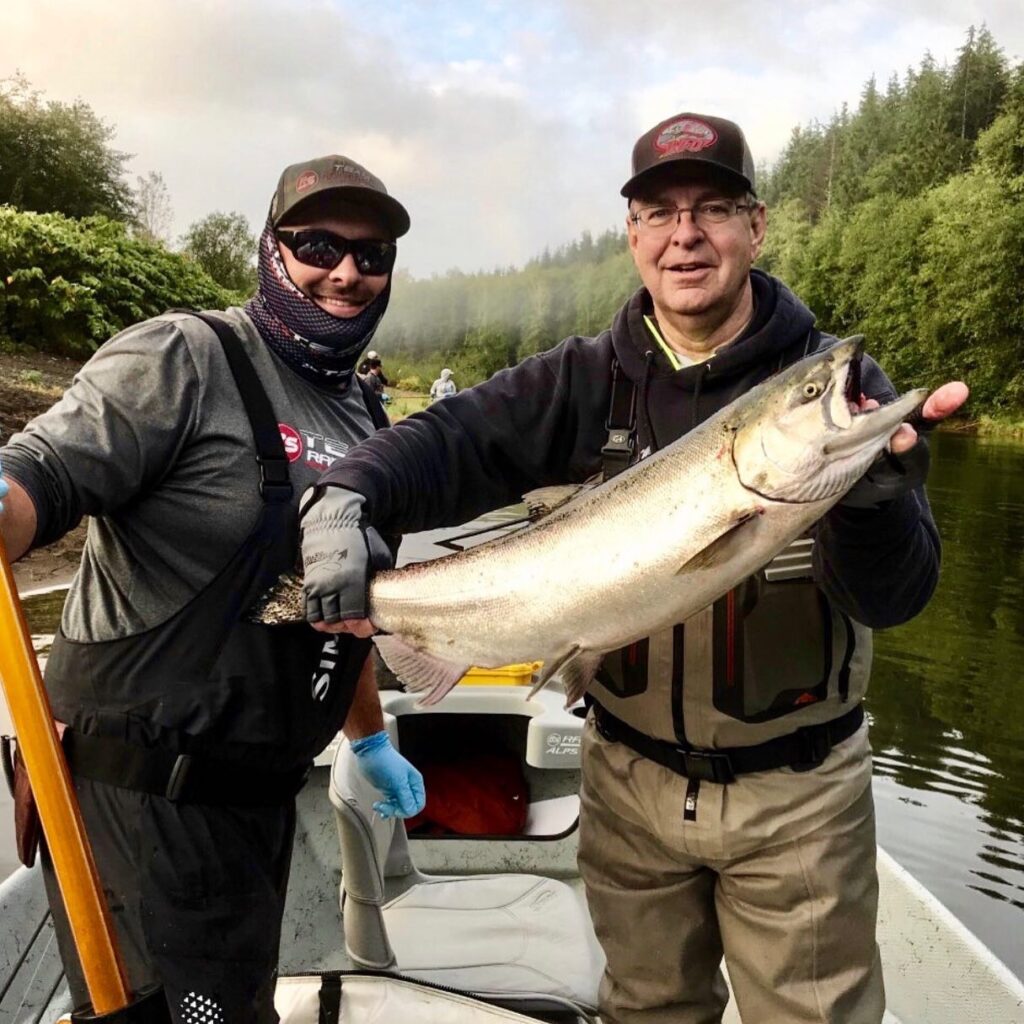
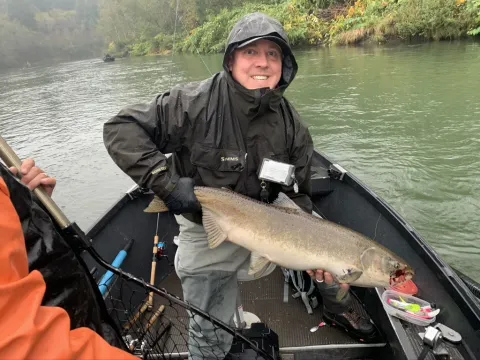
With all these rivers, please remember to check the regulations before you make plans or head out to fish. Things change often and it is very important to make sure that a river is open to avoid disappointment. Also, do yourself a favor and book a trip with a guide. I just cannot emphasize this enough. Your opportunities for success will greatly improve if you learn from a local guide and you are more likely to take fish home to eat later.
In closing, you are welcome to message me if you need to be connected to a guide. I am easy to find on Facebook (https://www.facebook.com/brent.knight.148) and am happy to help. Good fishing!!!
/articles/five-coastal-salmon-rivers-check-out
Holding Onto Hope: The Complicated State of Salmon in the Pacific Northwest
Well before the Pacific Fur Company set up their first trading post in Astoria, Oregon, Before the earliest fish canneries on the Columbia River began popping up in the mid-1800s, the Pacific Northwest and its people have been defined by a culture of sustenance and heritage that is deeply steeped in the very existence of the pacific salmon.
The rich abundance of salmon didn’t just sustain the indigenous communities of the northwest, it allowed them to thrive and aided in developing rich cultures over the millennia. It was, and is, the cornerstone of art, sustenance, ritual, and community within nearly all of the Pacific Northwest First Nations people. This history of Northwest salmon harvesting dates so far back (an estimated 10,000 years) that it forces us to consider salmon as a sport and commercial fishery, as something that exists only as a small blip in time—200 years, to be exact. Furthermore, it's within that 200 years that many northwest salmon populations have been pushed to the brink of extinction.
So where did we go wrong? And is there any fixing a fishery that has changed so dramatically over the years? To look at the details within context may be a good place to start, and perhaps this article can help us navigate through the weeds of a topic that has historically sown divisions between anglers, commercial fishermen, tribes, and fish and wildlife agencies.
Historical decline of salmon
It’s no secret that salmon runs were once much healthier than they are today. Though the state of Washington didn’t start record keeping on fisheries until 1935, we have plenty of scientific and anecdotal evidence that depicts a long history of vibrant salmon runs which looked significantly different than they do today. Lewis and Clark noted the great abundance of salmon observed by their party on the Columbia River, early settlers took advantage of the fish for sustenance use, and soon, savvy entrepreneurs seized what was viewed as a highly profitable market opportunity. Taking advantage of the great numbers of salmon in the Columbia, early commercial fishing companies constructed fish wheels—a large ferris wheel like trap that scooped considerable amounts of salmon out of the water. It’s said that some of these fish wheels were known to harvest up to 70,000 salmon per day.
Dams
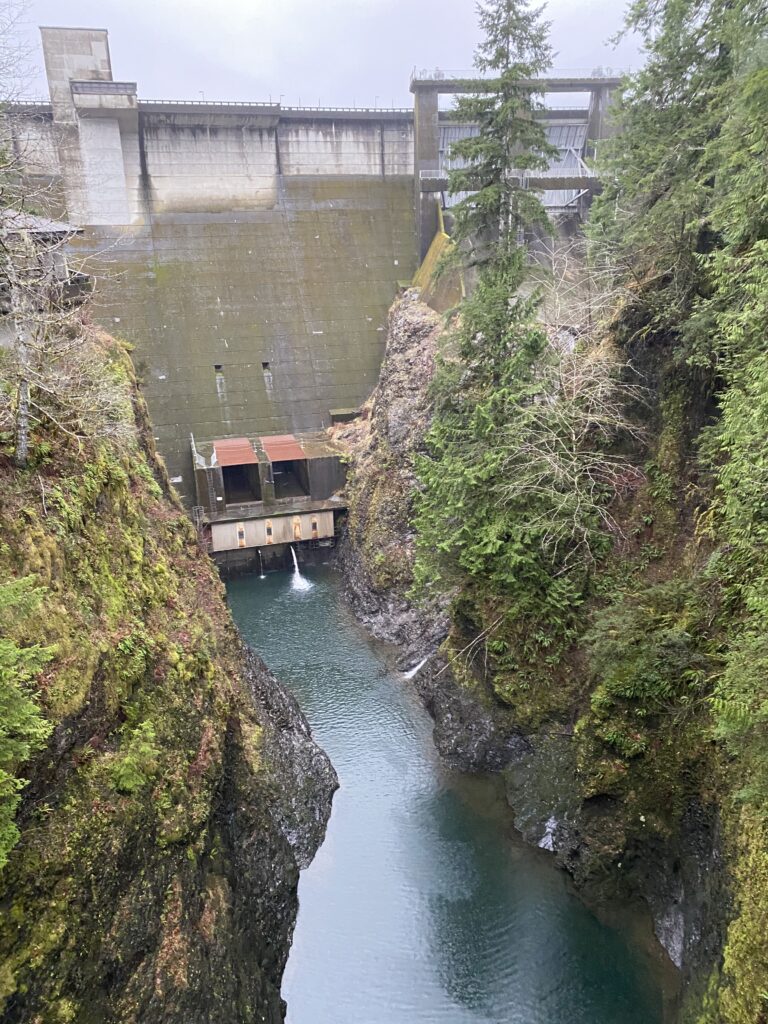
Then came the dams. A number of dams were erected throughout the northwest for the purpose of hydroelectricity, a zero-emissions source of power. All these dams, in some form, inhibited salmon and other fish from reaching miles of prime spawning habitat while also disturbing their natural habitats in several ways. On the
Columbia—the Grand Coulee and the Chief Joseph Dam, on the Snake River—the Lower Granite, Little Goose, Lower Monumental, and Ice Harbor Dam. These dams are likely the most contentious, but other smaller dams up the Snake River have effectively eliminated salmon returns at the furthermost portions of the Columbia River basin, specifically, northeastern Nevada. Historically, salmon would make a 900-mile journey from the Pacific Ocean, up the Columbia River, up the Snake River through eastern
Washington and Idaho, then finally arriving at their spawning grounds in the Owyhee River, where Shoshone-Paiute tribes would spear a portion of these fish for sustenance.
Deforestation
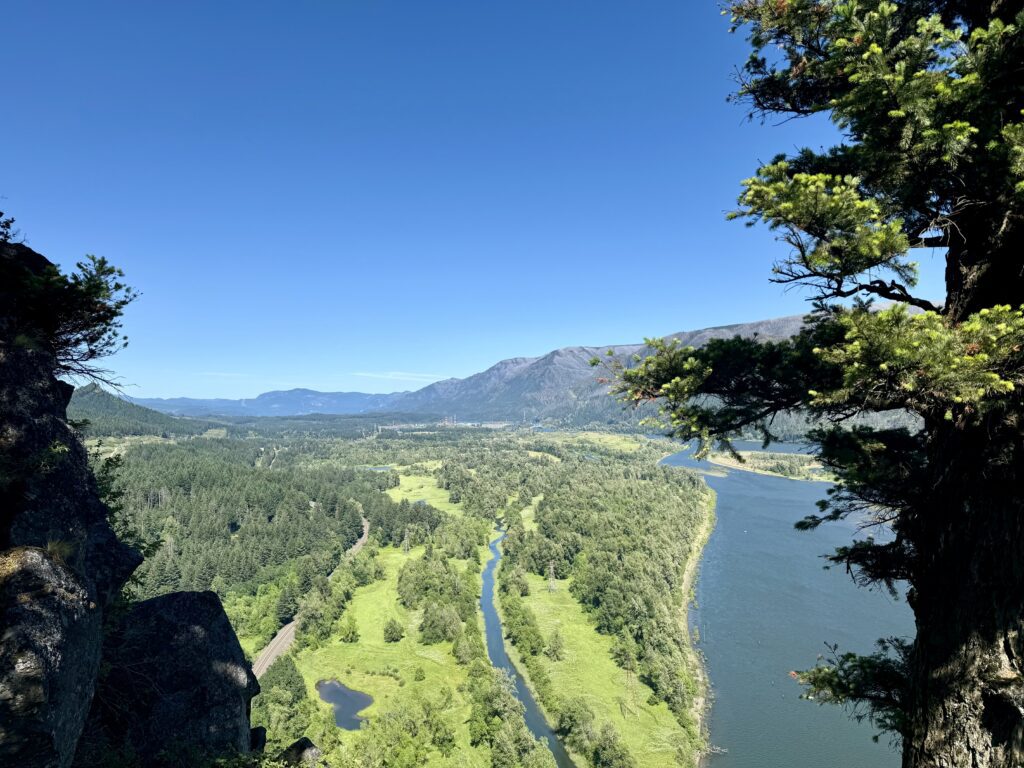
Whether it be for commercial timber harvesting or development, deforestation has created a multitude of problems for salmon habitat. When land is cleared around streams, the natural ecosystems become compromised, and the various organisms that salmon feed on diminish or disappear. Aside from the loss of food resources, the natural shade produced by the canvas of the trees diminishes or disappears as well. Without shade from trees, streams are subjected to an increased amount of sunlight, thus increasing the temperature of the water. Salmon are incredibly sensitive when it comes to water temperature, and drastic increases or decreases in temperature affect metabolic rate, cause salmon to seek out colder water upstream, and increase vulnerability to predation. In a nutshell, altered ecosystems due to altered habitats complicate the survival and reproduction processes of salmon.
Development and pollution
Water pollutants are believed to have a detrimental effect on salmon health, size, mortality, and reproductive success. Though the effects of pollution and salmon survival can be hard to quantify, it is well-accepted amongst scientists that pollutants from a variety of sources like storm runoff from vehicles or improperly disposed industrial waste, are contributing factors to the decline in salmon stock.
Positive trends
On the West Coast, there are currently 17 salmon populations listed as threatened or endangered under the Endangered Species Act. These populations range from California to Washington State and include (but are not limited to) the Lower Columbia River Coho, Snake River Sockeye, Hood Canal chum, and Puget Sound Chinook salmon. Though these facts might not inspire optimism at first glance, it’s important to note that “threatened” doesn’t necessarily mean these populations aren’t on an upward swing in terms of recovery. For example, the Lower Columbia River
Coho has steadily been making progress toward the federally approved recovery goal.
Hood Canal Summer Chum and Snake River Fall Chinook are both currently approaching that set goal. Yet, more needs to be done.
Dam removal
Enter damn removal. Dam removal works for salmon recovery, but there are many issues created by the removal of dams. For example, on the lower Snake River, dams create vast amounts of clean energy, and reduce water velocity, thus allowing easy movement of barges for agricultural product transportation, and they help provide irrigation for swaths of agricultural land. In short, they are a huge part of local economies and infrastructure alike.
These inherent issues with dam removal were finally addressed in what was a culmination of years of lawsuits and litigation and is believed to be the most comprehensive salmon recovery plan to date. In December of 2023, The Biden-Harris administration came to a historic agreement when they signed a Memorandum of understanding between Columbia River Basin Sovereign tribes, the state of Washington, the state of Oregon, and environmental groups. This 1-billion-dollar settlement agreement is a 10-year federal partnership with tribes and states that prioritizes salmon restoration and recovery, while also allocating funds to research on other infrastructural needs that will be an inevitable byproduct of the removal of the 4 Lower Snake River dams.
Ultimately, it is up to Congress whether the dams will be removed, but the groundwork is now in place to make these possibilities viable. This is a huge and unprecedented leap in the right direction for salmon recovery.
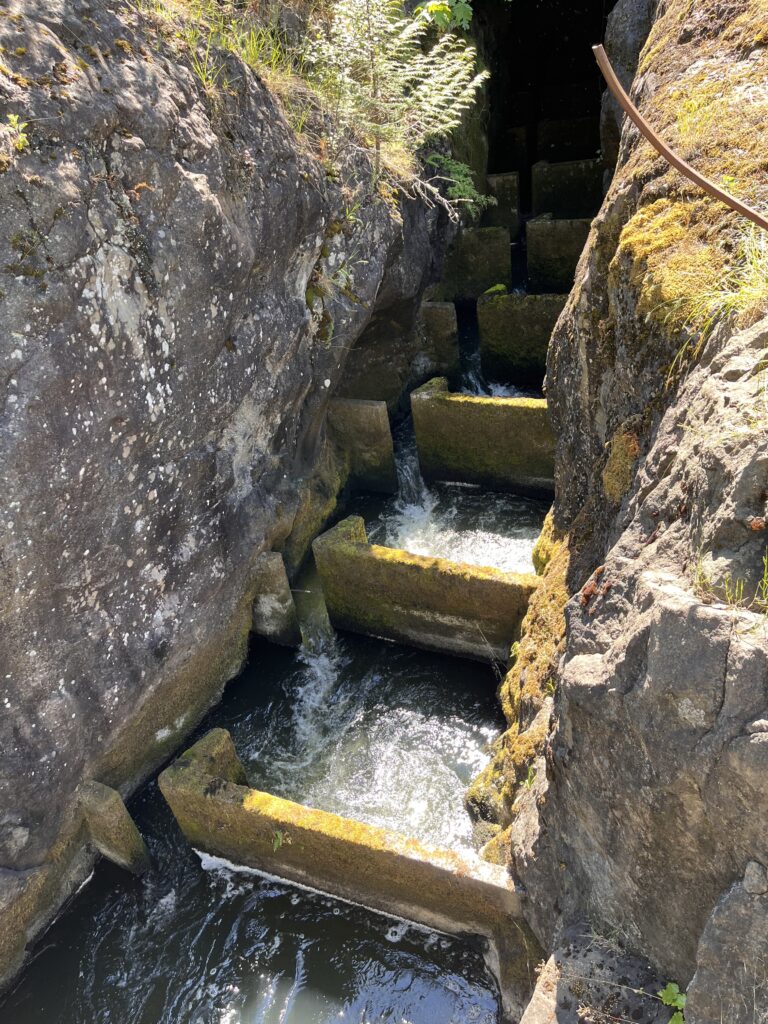
Hatchery programs
Hatchery programs are a lot of things…
They were once believed to be the solution to the impact commercial overfishing had on salmon numbers, they were offered as an answer to the devastation caused by the damming of waterways, and they were a mechanism to uphold the treaty rights of Washington indigenous tribes under the Boldt Decision of 1974 (decision granting Washington tribes fair and equal share of fish harvest). But despite the best efforts of hatchery managers, these hatcheries have often fallen short of the goals that had been set forth.
Much research has been conducted on the efficacy of hatchery programs, and the findings have often been bleak. One important example is the Columbia River. A journey to the Pacific Ocean down the Columbia River has always been a perilous task for young salmon, and naturally, many don’t complete their journey. Throw in a myriad of dams, warming slack waters behind these dams, and an increase in invasive predators, the journey becomes even more fraught with danger. To compound the problem, salmon bred at hatcheries are losing their genetic diversity, and fast. Without the highly developed genes of their native counterparts, the fish become weaker, and survival rates drop.
This is not to say hatcheries don’t create a positive impact on a declining salmon population. After all, most Pacific salmon returning to our rivers today are hatchery salmon. Amid the new Biden administration commitment to salmon recovery, 60 million dollars is being invested in NOAA fisheries to facilitate improvements to current fish hatcheries, many of which were on the brink of failure. Furthermore, many West Coast hatcheries are implementing new techniques within their facilities to improve salmon survival rates. These techniques include changing the way fish are fed so that the process will more closely mimic natural feeding, including natural features in the tanks where fish are being stored, and breeding hatchery-salmon with more wild-salmon to increase genetic diversity.
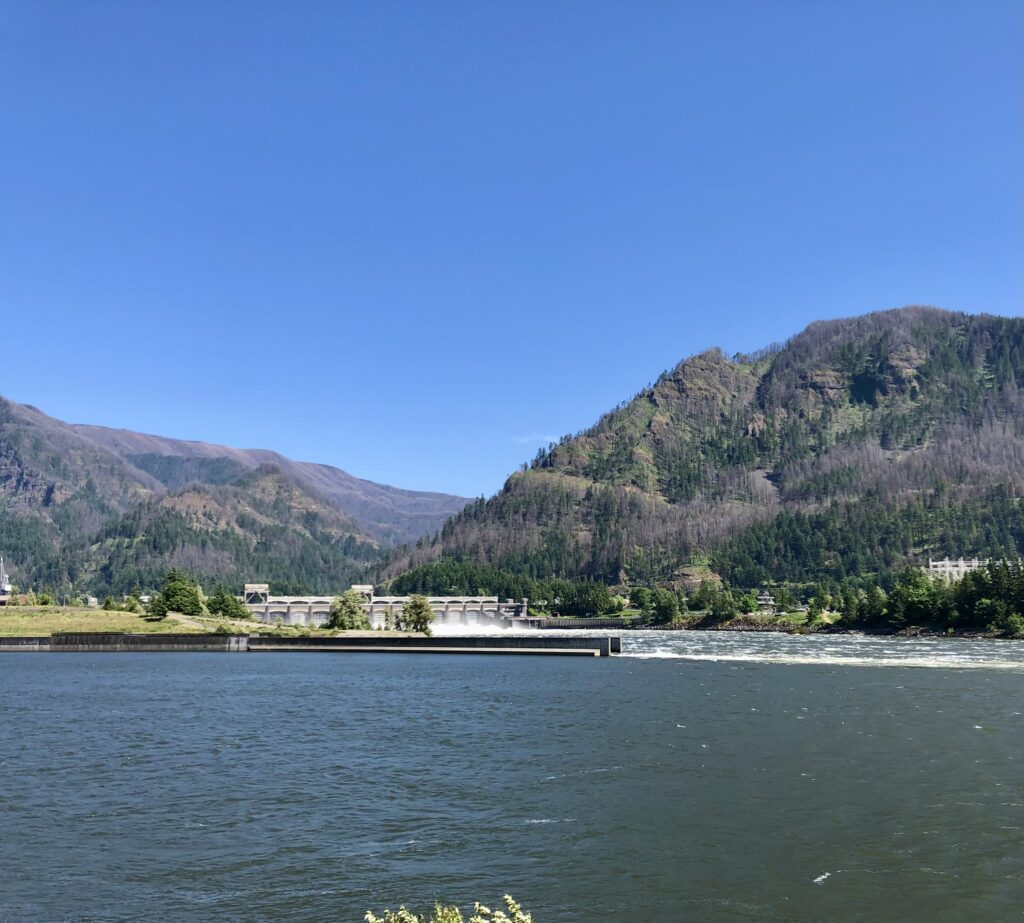
Habitat restoration
To date, 474 acres of wetlands, 9,257 acres of estuaries, and 31,564 acres of waterway have been restored in Washington state through collaborative efforts between the Department of Fish and Wildlife, NOAA, The Nature Conservancy, various nonprofits groups, and volunteers. Working to improve the waters and land that create salmon habitat is a vital component of the comprehensive approach needed for a task as complex and crucial as salmon recovery.
Resources
Below, you will find a list of volunteer opportunities for salmon habitat restoration. Together, we can all do our part in protecting a resource that is so important to our communities, our families, and future generations.
- Mid-Columbia Fisheries Enhancement Group midcolumbiafisheries.org
- Skagit Fisheries Enhancement Group skagitfisheries.org
- Washington Department of Fish & Wildlife wdfw.wa.gov>get-involved
- Coast Salmon Partnership coastsalmonpartnership.org
- Sound Salmon Recovery soundsalmonsolutions.org
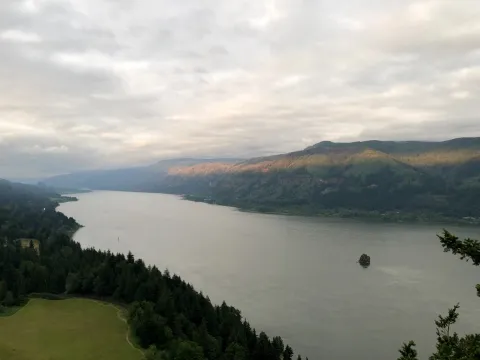
/articles/holding-hope-complicated-state-salmon-pacific-northwest
Madison River Shoulders
Mountains come out of the sky and they stand there. Snow-covered peaks create a breathtaking backdrop as we work our way down the fast-flowing, slightly off-color river. I could say a whiter shade of pale, but I’d be pushing the 70s music lyrics references a bit too much.
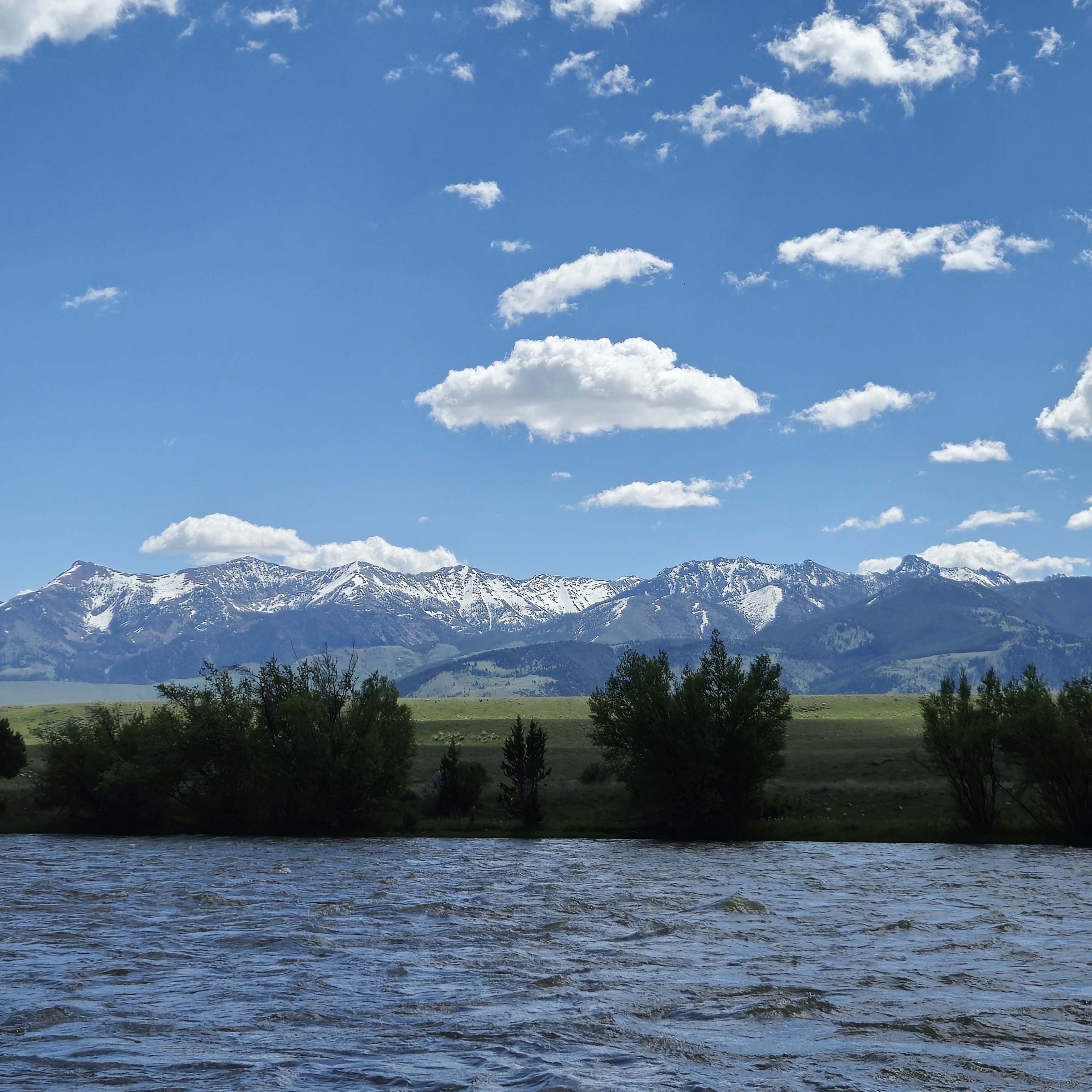
Matt and I are floating the Madison River, Epic, Historic, Blue-ribbon… pick your adjectives. At first glance, I wondered “Where do you even fish this?” To the untrained eye, the river looked uniform from side to side, a fast-moving, rocky, never-ending flow of energy.
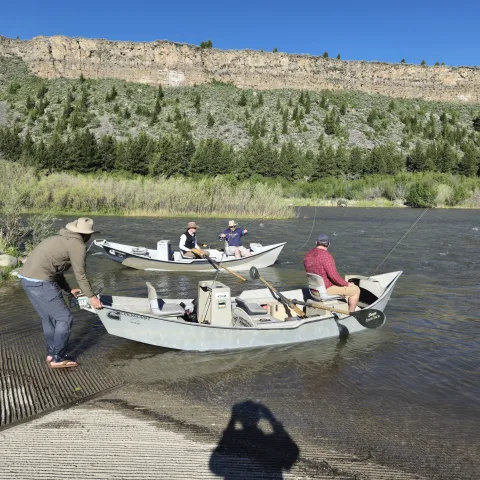
Hunter and Sam, our guides from River Borne Outfitters, had briefed us on the strategy to fish for this untamed wild river. “Today you’re going to be fishing buckets” Hunter elaborated, “When the water is running this fast, you want to target the small back eddies, slicks, and close to the shore. You’ll see the holding water better as the day progresses. It requires some accurate casting but it’s not that hard. The fishing can be really good, but I’m a bit worried about the color of the water.”
For my part, I was glad to be fishing and not rowing. We rapidly drifted past large boulders that would easily have flipped a less skilled rower. “That’s why you fish with a guide”, I thought.
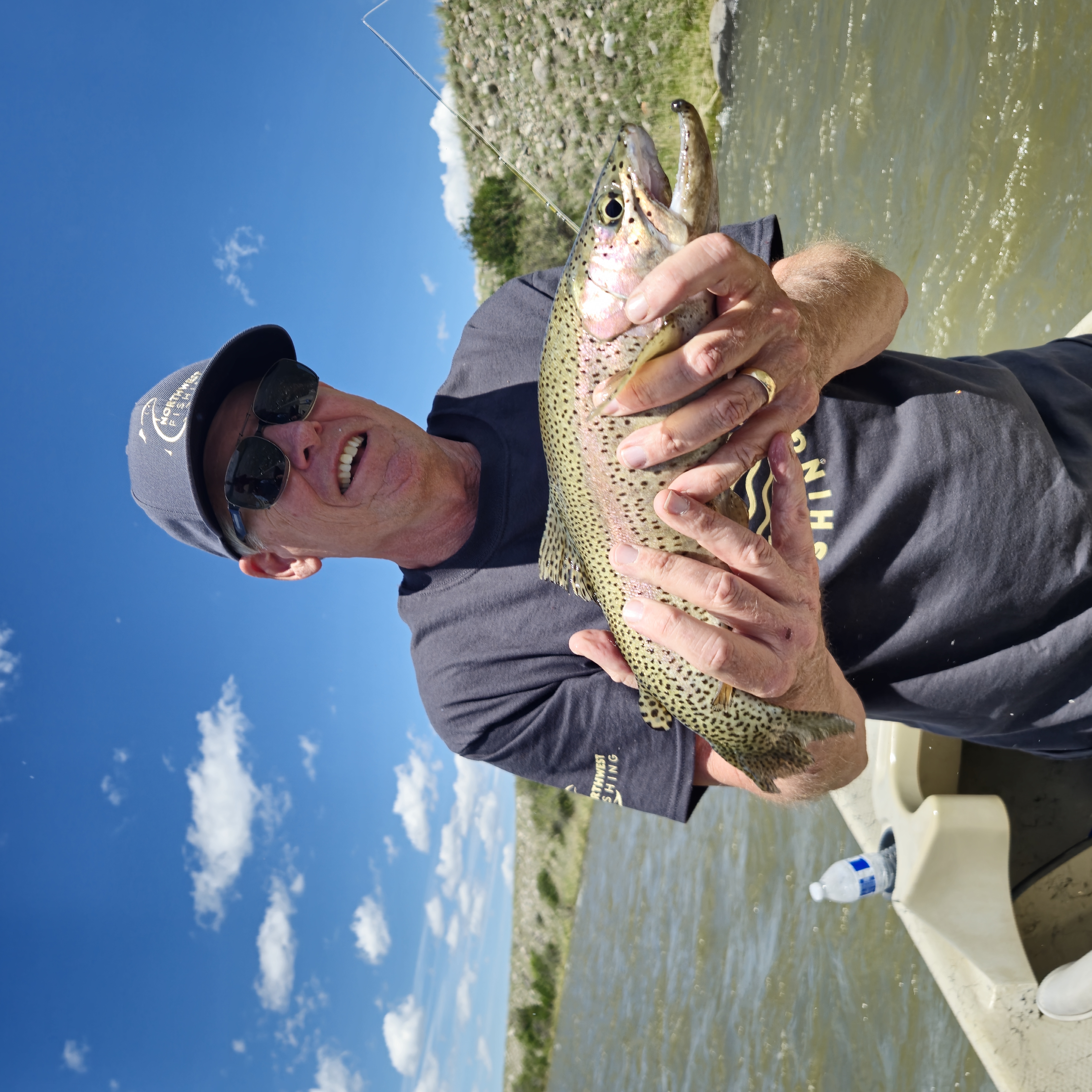
Suddenly Matt called out “Fish on!”. I looked back and his rod was doubled over with the weight of a solid fish, which revealed itself with a series of impressive jumps, clearing the surface a good three feet. A chrome bright, wild (that’s the only kind of trout in the Madison) rainbow was giving Matt a good battle. He skillfully took his time and brought the glistening 18-inch fish to the net. Scooping him up, Hunter let out an excited “skunks out of the boat” and it was the start of a memorable day on one of Montana’s most amazing and wild rivers.
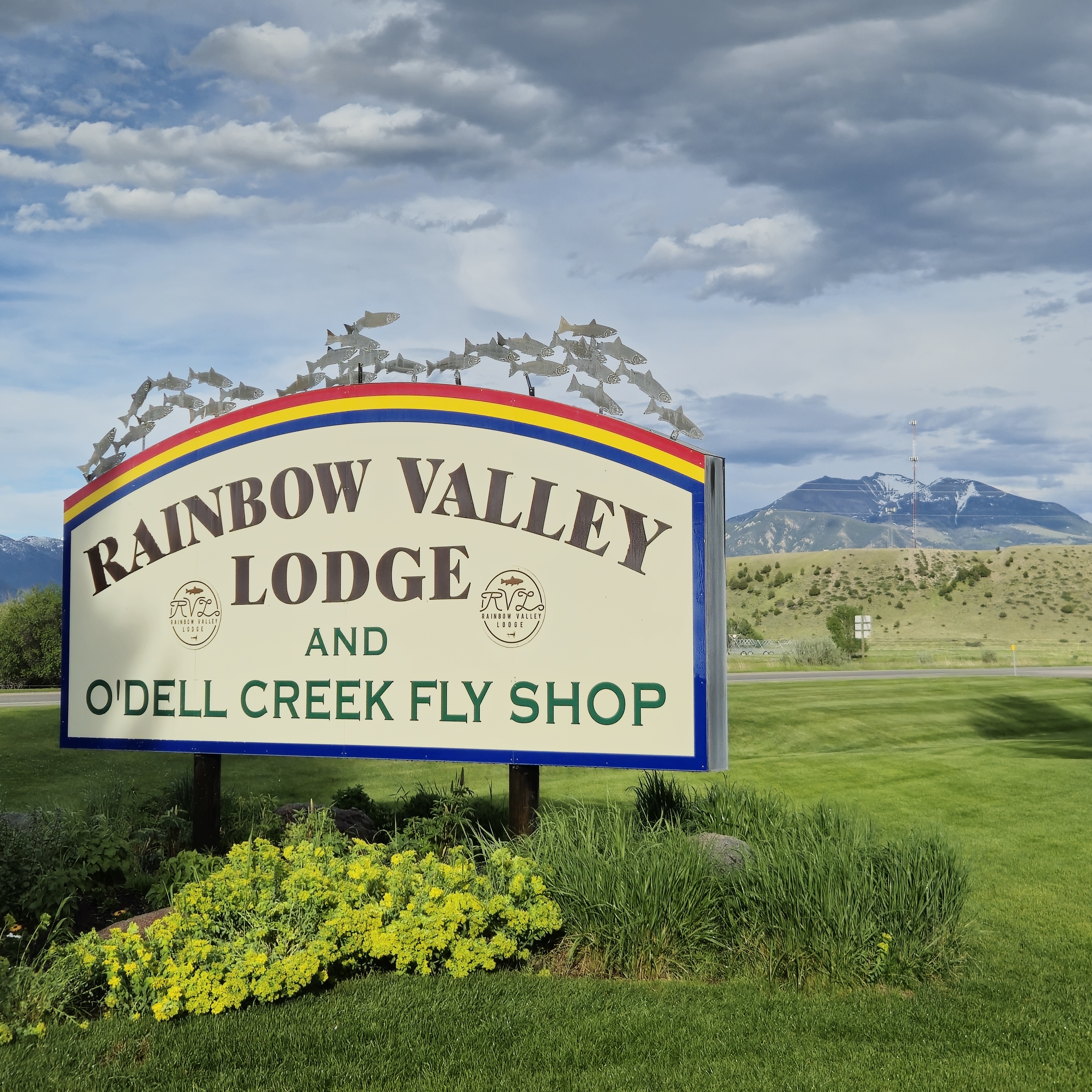
We had arrived the previous day at the invitation of Ed and Jeanne Williams, owners of Rainbow Valley Lodge. Ed and Jeanne had moved from California to Ennis, Montana over 35 years ago and taken over the lodge, growing it over the years into a destination for the rich and famous, and the average person. The two of them radiated an aura of enthusiasm and hometown friendliness that I have come to treasure over the past two years of living in Montana. We felt as if we had new friends we could return to year after year, and indeed, many of their guests expressed the same feelings to us. Not the largest lodge in Ennis, but certainly the most homey and one you’d want to return to year after year. Heated pool, rustic pine wood interiors, and beautiful flowers everywhere give you that “western feel” you are looking for when traveling to Montana’s fishing destinations. The impressive collection of fishing memorabilia in the lobby could keep an angler’s attention alone, not to mention their well-stocked O’Dell Spring Creek Fly Shop. The evenings are a gathering of guides and guests, chatting about the day’s fishing adventures and making new friends and acquaintances.


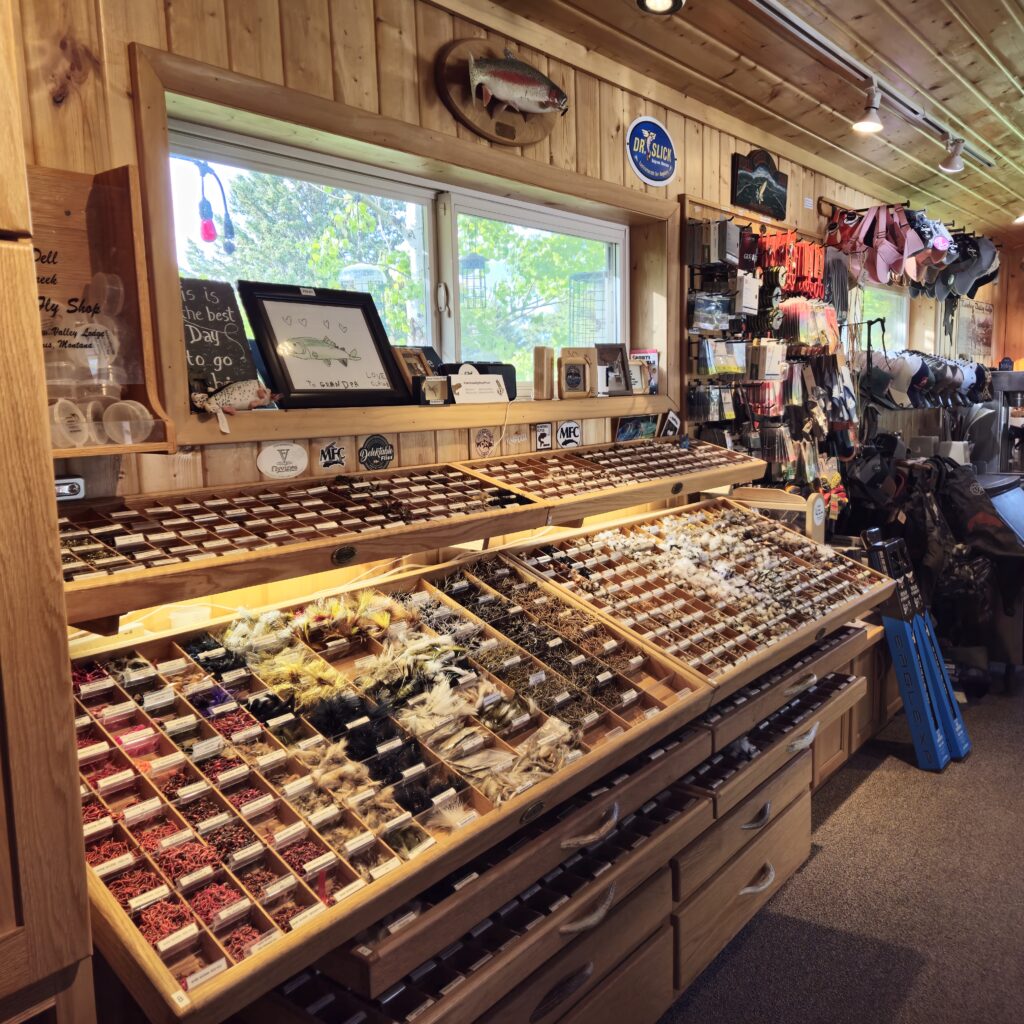

“Shoulder Season” is the term Ed had shared with me about the lodge’s seasons. Spring and fall anchored a full and busy summer of guests coming through Ennis to fish the famous Madison and use Ennis as a base camp for the 70-mile drive to Yellowstone National Park. Ennis is the last major town on the road to the north Yellowstone entrance. As such, come the end of the school year it rapidly fills up with tourists and summertime adventurers streaming to visit America’s most iconic national park. Anglers stream in as well, as the Madison River shares its impressive fishing with fishermen from near and far.
While the summer is a busy time for the lodge, spring and fall are another matter, and visitors can experience a slower and more relaxed pace if they’re willing to take a few chances. For us, the weather was outstanding with a day in the upper seventies and sunny. The recent warm-up had increased river flows to over 2,500 cfs (cubic feet per second), which had us drifting at a solid pace, but not too fast to catch fish. And as we found out as the day progressed, the visibility at about 18 inches was just fine for fish catching.
Soon after Matt’s nice start to the day, I watched as my strike indicator ducked under the water. I gave a quick tug and felt the heavy pressure of a nice fish. Unlike Matt’s fish which had treated us to a fun aerial display, my fish was a bulldog, the sign of a nice brown trout. Headshakes and hard runs kept me focused and I worked the fish back to Hunter’s waiting net. He skillfully scooped up the brown-speckled fish and after a quick measurement, we released a nice 16-inch thick brown trout.
Our setup for the day was a quality 5-weight Orvis rod and reel, floating line, and 8-foot leader. A pair of size 8 girdle (stonefly) bugs tied 18 inches apart were the fish enticement, and bites were monitored by orange strike indicators (all the better to see in the early morning sunny glare). Our instructions – when in doubt, set the hook!
While “bucket fishing” requires a degree of accuracy, it is a technique that lends itself well to intermediate and even beginner fly anglers. The casts are not terribly long, and if you miss the sweet spot of the “bucket” there is enough underwater structure that you still have a good chance of getting a hookup. While the Madison does not have the fish numbers of the Missouri, there are still plenty of fish to be had, and Sam explained that guides only promote catch and release on the river, so numbers have remained very consistent over the years.

As I noted earlier, this river, at springtime flows, in my opinion, would be a degree of difficulty I would not recommend to beginners behind the sticks. There were more than a few large boulders that could easily pin or flip a driftboat. So, if your rowing skills are marginal, leave the boat at home and hire a guide. Or wait for the slower flows of summer, but plan on having to share the river with a whole lot more anglers.
We continued the float catching fish at a regular pace, beautiful rainbows and brown trout, and an occasional whitefish. We didn’t catch any of the great white buffalo, AKA arctic grayling, but Hunter assured us they were in there. Brent, our film crew for the weekend, even caught his first trout on the fly with the help of his guide, Sam. The big fish of the day was Matt’s 20-inch brown he caught at the end of the day (what a way to finish!).

If you’re looking for the true western trout fishing river experience, keep the Madison River in mind, and don’t be afraid of fishing those shoulder seasons. You’ll find more than a few big-shouldered trout willing to share their day with you.
Rainbow Valley Lodge, Ed and Jeanne Williams, 800-452-8254
River Borne Guide Service, 406-581-2953, guides Hunter Schumacher and Sam Hall.
/articles/madison-river-shoulders
Backcountry Trout
All winter long we kept hearing about the Pacific Northwest's lack of snowpack and how it would affect our summer. A call for a drought, possible bad wildland fire season, lack of drinking water, and all the “doom and gloom” news agencies use to sell us fear. Sure, the snowpack is low but spring rains came and filled our reservoirs so the threat of a significant wildfire season is still lingering but what I kept hearing all winter and spring was how the backcountry would be snow-free very soon.
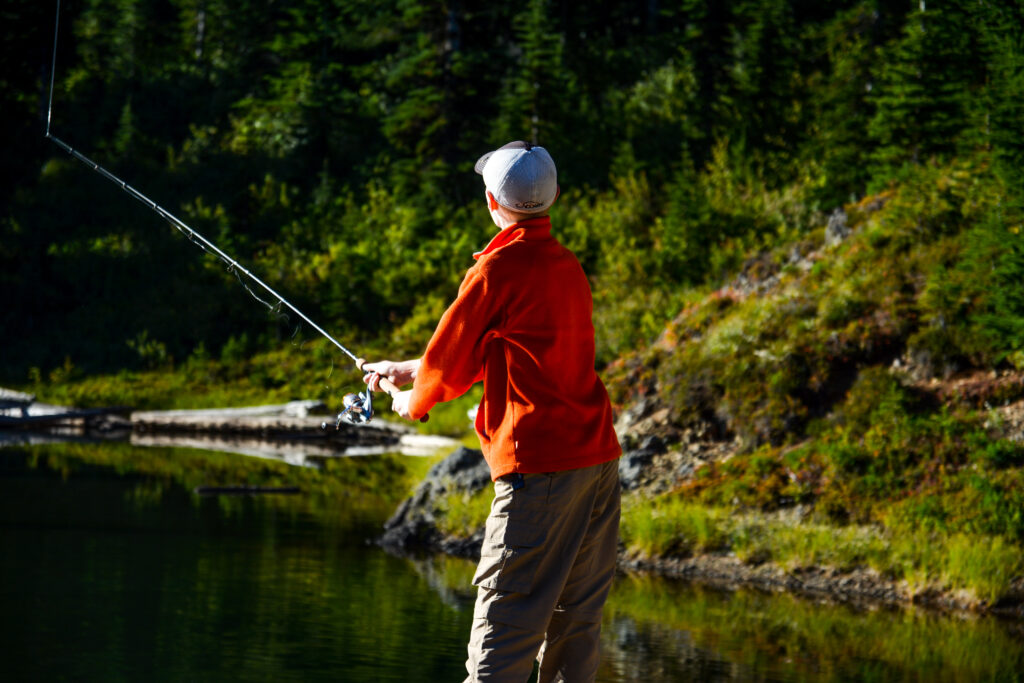
My normal backcountry fishing trips usually start around the 4th of July and continue well into late fall. However, this year the trails will likely be open and navigable, streams will be receding, and lakes will be ice-free come mid-June and that means it is time to strap on the boots, load the tent into the backpack, and grab the lightweight fishing gear.
Before you load up the pack and throw it in the small tackle container it is best to check mountain conditions. Even in June, you should always be ready for some chilly weather and high stream crossings. The SNOTEL Washington website provided by the U.S. Department of Agriculture will give you up-to-date data on current snowpack. Then do a quick search for river levels at the USGS website to let you know how much of that snow is melting.
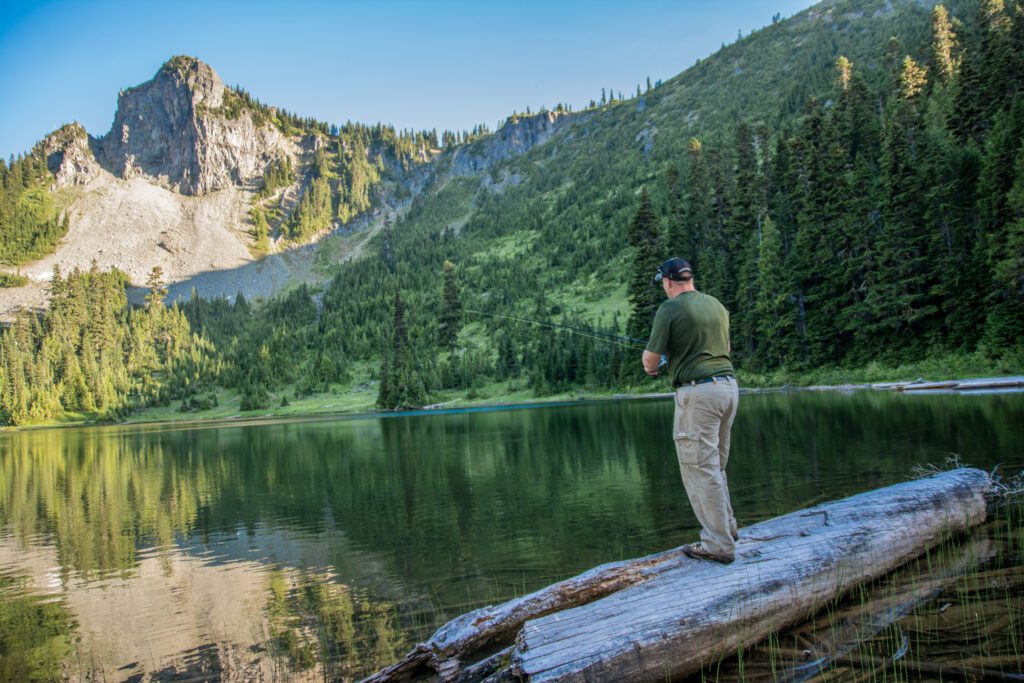
Once you figure out if the lake you are trying to get to is not only ice-free and if any streams you might have to cross to get there are safe to wade then one last web check for trail conditions at websites like the Washington Trails Association can provide you with important information such as any hazards on the trail, or if downed trees and other useful tidbits have blocked the trailhead. The main reason you want to research before you go is that June can be an interesting month for those trying to get to the backcountry. South-facing slopes will be open and snow-free but any north-facing slopes might still have lingering snow and making it impossible to get to the lake.
As the month wanes on most of the high country will be opened up and access will not be as much of an issue. Bugs will be hatching and though that makes for great fishing it also means a bit of an annoyance. Last year my son and I hiked into a relatively low “high mountain lake” that was at about 3,000 feet elevation. Fish were jumping and we soon found out why. Mosquitos flocked to our skin and swarmed us to the point that Deet was not going to be enough. Luckily, I had brought along Thermacells for both of us and plenty of extra butane cartridges and chemical pads that keep the bugs away. I also had a quick lesson on Thermacell's and that if you choose to strap them onto your pack to be sure that the vents do not become blocked as it can overheat and even melt the nylon on your pack.
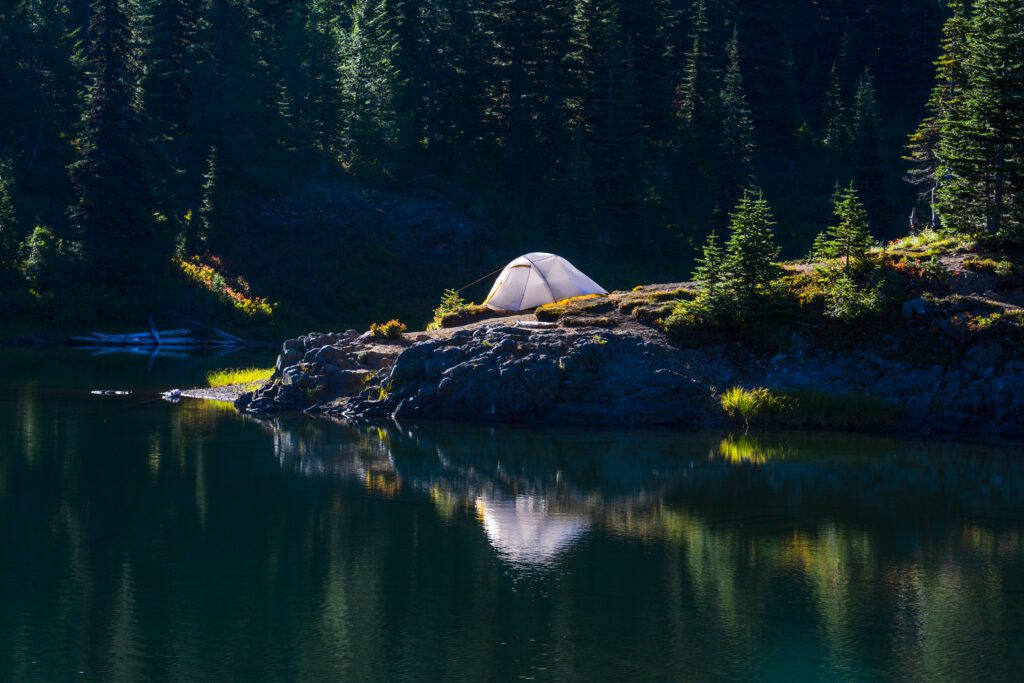
Long-sleeved shirts, lightweight hiking pants, and head nets will help with keeping bugs away and make for a more comfortable day of hiking and fishing. A lightweight double wall tent is also an excellent choice so you can make a quick bug-free area to sit and eat lunch or just rest and get away from the bugs for a bit. Being double-walled means the inner wall is a mesh material and you can leave the rainfly off if the weather is nice or put it on if the clouds come up.
Weather is another factor for June’s high-country adventures. Cool mornings and warm afternoons often mean thermal winds. Welcome the breeze as it will help keep the mosquitos at bay but also be ready if an afternoon thunderstorm approaches. Rain and even a snow shower is common in June in higher elevations as it is still springtime up in the mountains. Keep in mind that if you hike into a wilderness area fires are often not allowed so drying out can be a challenge.
When it comes to finding the right lake be sure to check out the fish and wildlife website and other resources. For those of us in Washington the WDFW has a tab for “high lakes” and there you can find a list of lakes which include their location by GPS as well as their elevation and size. It also will have directions to the trailhead or lake itself and even a stocking schedule on when it was last stocked. These lakes are often supplemented with fish that are hiked in by volunteer groups and periodically restock the lake. Some lakes have natural production if there is a cold creek that trout can spawn in or if they have brook trout, which is a member of the char family and can spawn in the lake itself.
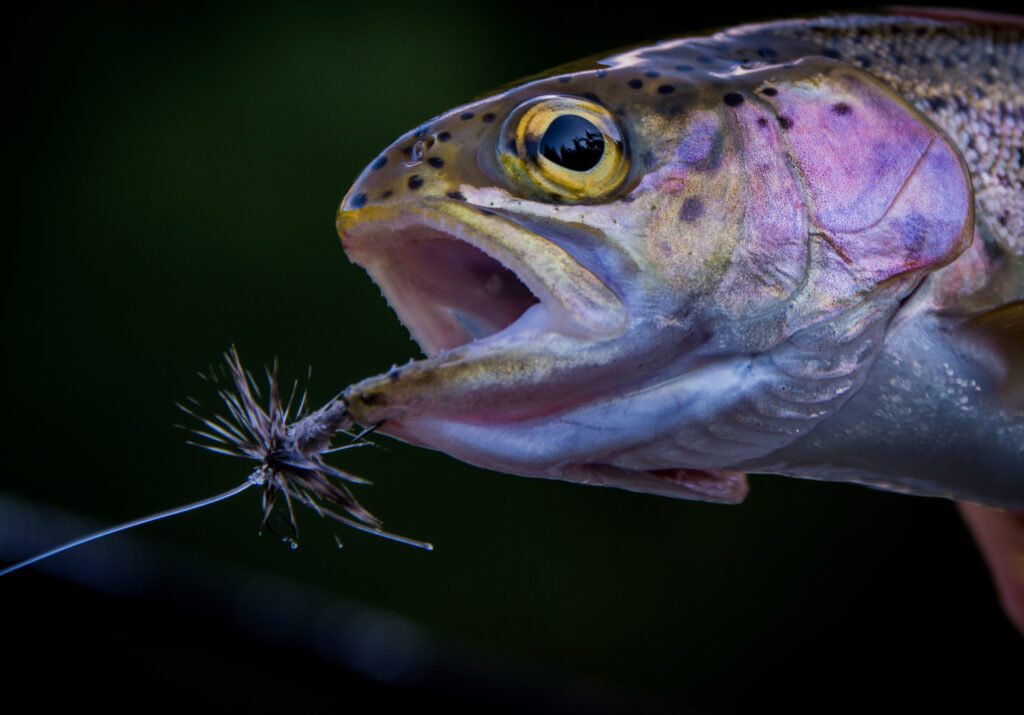
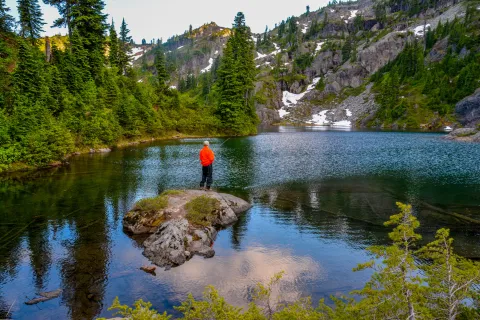
Backcountry fishing is often done in solitude. Once you find a few of these high mountain lakes you will soon realize which ones are popular with other hikers and anglers and which ones are “secret”. If you find a lake that is full of trout, and nobody around, then do yourself a favor and keep it a secret. These lakes cannot take much pressure and if you post your trip on social media and include the lake, trail, or even a nearby mountain then soon the lake will get new visitors and the next time you go there it might be void of fish.
Then again, there are several lakes that are already popular, and those lakes tend to get regular re-stocking of fish so if you find other anglers do not feel bad about it. Same with harvesting a fish or two for dinner, these lakes either had or have a natural way to repopulate them with trout or were sterile to begin with and the fish were introduced into the lake for the specific reason to be caught. This does not mean you should catch a limit of trout to take home as there are plenty of lowland lakes to do that with. Instead, catch and release using artificial flies and lures is a wonderful way to spend the day. When it’s time for lunch, you can eat what you caught.
When it comes to cooking your catch, again, know the rules if you can have a campfire or not. A small titanium frying pan and a butane stove is a great way to cook up some fish. If fires are allowed, then packing a small piece of tinfoil is lightweight and makes cooking the fish easy or you can make a skewer and cook it open over the rising heat of the flames. High mountain trout make a great lunch, probably because of the work it takes to get to these lakes as well as the views as you sit along the shoreline.
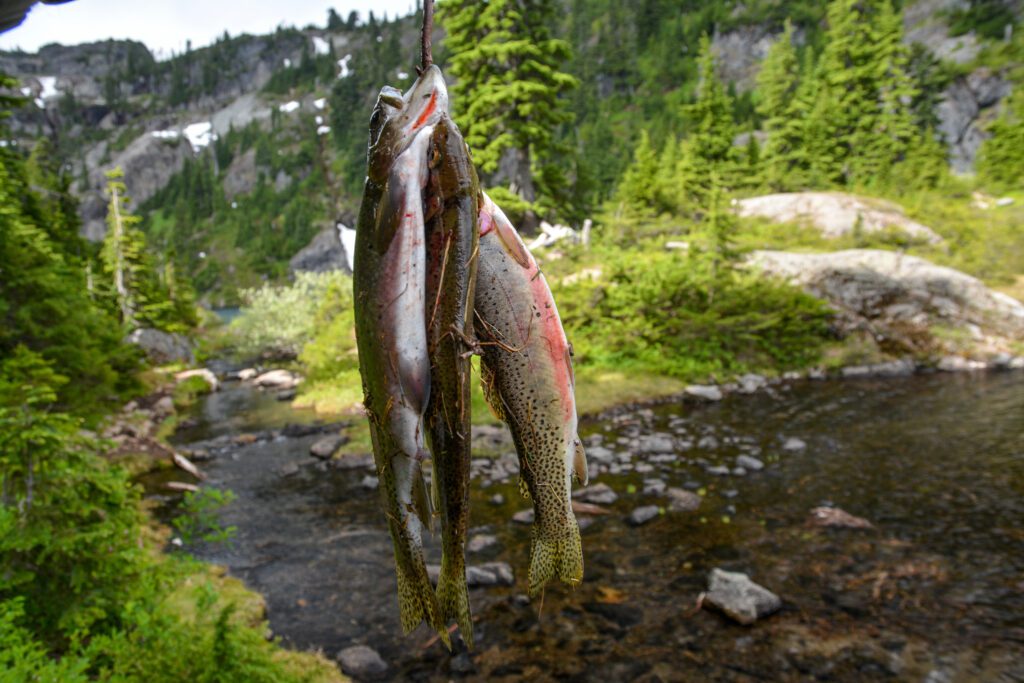
One of my favorite ways to fish high mountain lakes is with a lightweight fiberglass spinning rod. This rod is nearly indestructible and can take a beating while strapped to my pack. The spinning outfit allows the angler to cast lightweight lures such as Roostertail's and other spinners, but you can also use a plastic bubble style bobber and a dry fly. Fly fishing is a lot of fun and a lot of the lakes will have gradual shorelines as they are remnants of large ice fields. Other lakes might have a scree field where you can climb out on the rocks but be aware of your back cast and that rocks can shift.
In the early part of the month it might still be a bit chilly to wade, but by month's end a day out swimming and wading in the cool water also means being able to cast further. Regardless if you use a fly rod or the spinning rod with a bubble bobber very few things can beat a rising trout taking a dry fly. Most of these fish will be small and malnourished due to long winters and not much bug activity in the chilly water. This means using small dry flies such as a size 12 elk hair caddis or a size 14 mosquito. Light leaders in 4 to 6-pound monofilament will suffice and keeping the mainline light, around 6 to 8-pound test will help with casting long distances.
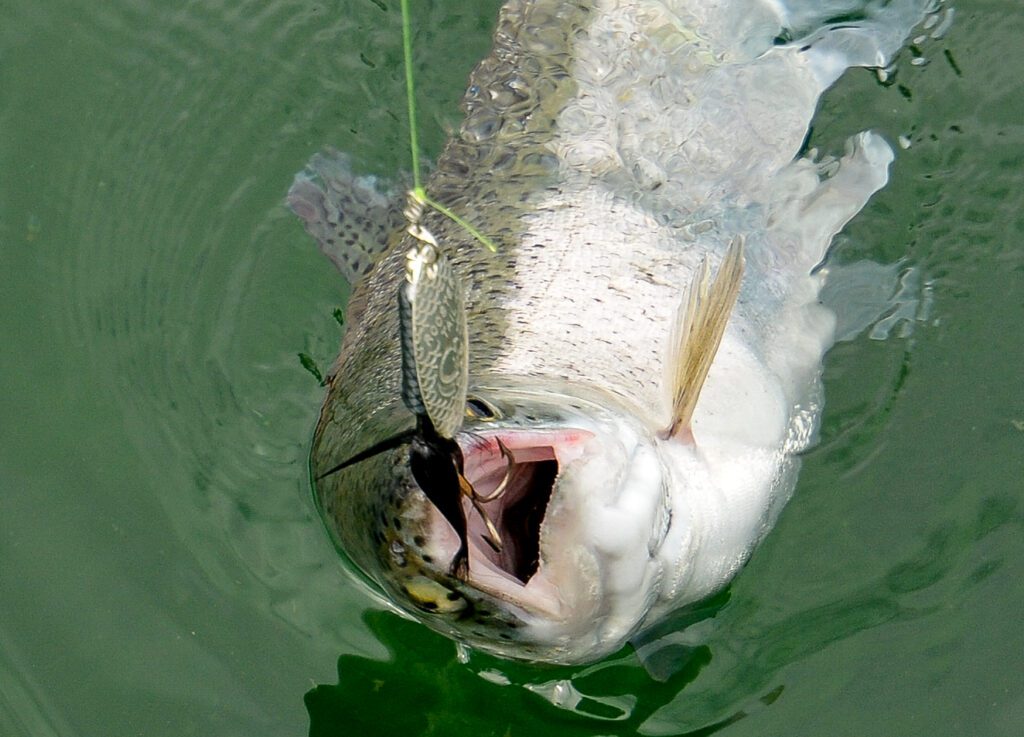
June offers the first chance at getting up to the backcountry. Lakes will become active with hungry trout and snow will melt from the trails. Load up the pack, be ready for changing conditions and strap on the trout rod. It is finally time to head to the high mountain lakes for some great fishing with incredible views.
Cooking Backcountry Trout
When it comes to a shore lunch along the banks of a high mountain lake it is hard to beat fresh trout. To make things easier pre-mix a spice shaker with some flour and your favorite spices, salt and pepper. This will help with adding flavor to the fish and keeps the mess down. Clean the trout and then butterfly it, cutting along the backbone from the underside, keeping the skin intact. Then simply shake the flour and spice mixture onto the flesh of the fish. When it comes to frying the fish, take along a small jar of coconut oil as it will remain solid at room temperature.
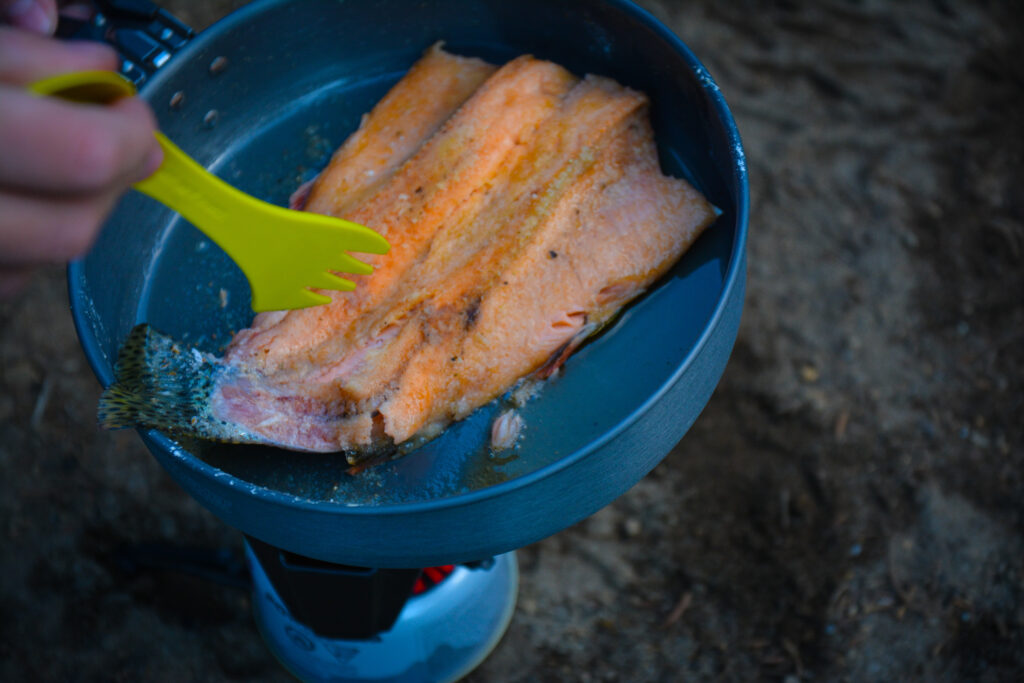
No worries about it leaking or spilling into your pack on the hike up to the lake. Scoop some out and put it in the frying pan and it turns into your standard frying oil and adds to the flavor. Once you are done cooking and the pan cools the oil turns back into a solid and can be scraped out of the pan and if you clean your pan in a nearby creek it will not mix with the water or stick to any rocks, though you should not clean anything in a creek. The coconut oil can be easily wiped out with a paper towel and stored in a zip-loc bag and can be used as a fire starter if needed much like paraffin waxed paper.
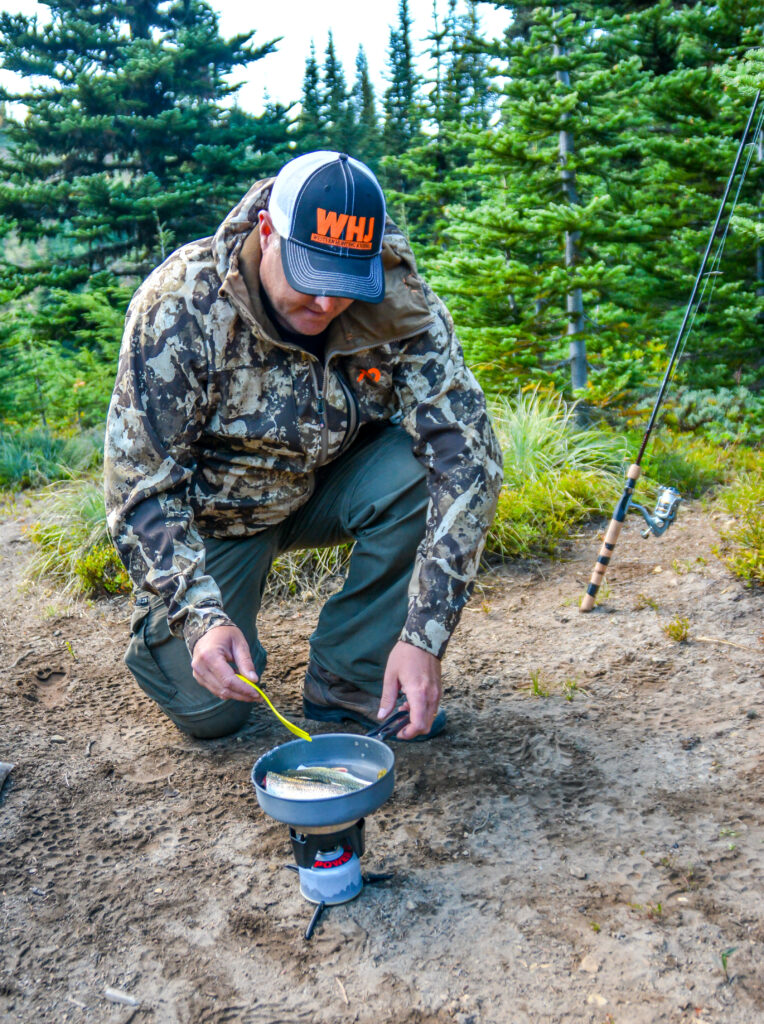
Another fun way to cook backcountry trout is to butterfly it just like described above and then use green sticks to skewer it. Build a small fire (where permissible) between rocks or make a rock oven and once the fire dies down place the skewered fish over the hot coals. Season with your favorite seasoning salt and let the heat cook the fish. Easy and no dishes to clean up afterward.
/articles/backcountry-trout