Lake Washington Kokanee Secrets
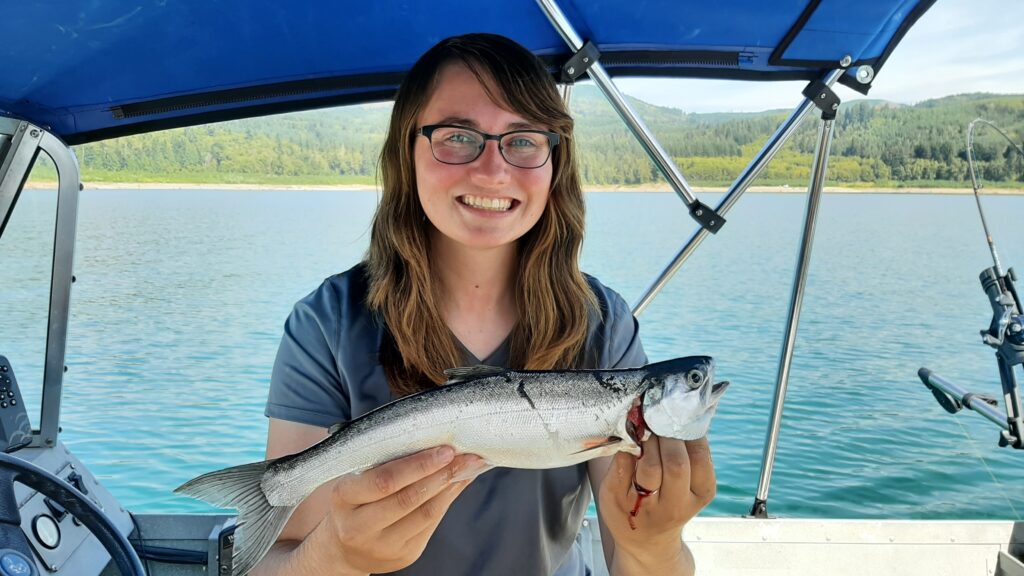
For most people, a trip to Lake Washington means a day of kayaking, jet skiing, or picnicking. But did you know that the lake plays host to thousands of kokanee? These land-locked sockeye salmon are smaller than their ocean-going cousins, but they taste great and are available year-round. Early summer is the perfect time to target them.
They are aggressive and plentiful. Learning how to troll for kokanee is a great way to dip your toe in the water before you fish for salmon in the fall. Whether you're an avid kokanee fisherman or a beginner, you should add Lake Washington to your list of summer fishing destinations. Not sure how to start? Let's go over some key information to make your trip to Lake Washington a success: which launches to use, tried and true techniques, and productive locations to start with.
Launches
There are many boat launches surrounding Lake Washington, so I'll just name the most popular ones here. In the south, the Atlantic City boat ramp is pretty spacious and has restrooms available. There is a fee to launch your boat, but the parking is free and plentiful. Gene Coulon Park is another popular option at the southern end of the lake. Parking can be tight, especially during weekends. There is a launch fee but there are restrooms and an Ivar's close by if you get hungry!
Near the middle of the lake, the Kirkland Marina has a small boat ramp. The launch fee is steep, but you can buy an annual pass to save some money. On the other side of the lake, Magnuson Park offers a well-maintained and easy to use boat ramp. At the very northern tip of the lake is the Kenmore boat ramp. It gets pretty shallow here, so be careful when launching in the early morning. There is no dock, but there's a nice bathroom and there's no launch fee. Although Lake Washington is quite large, you're never very far from a boat ramp!
Techniques
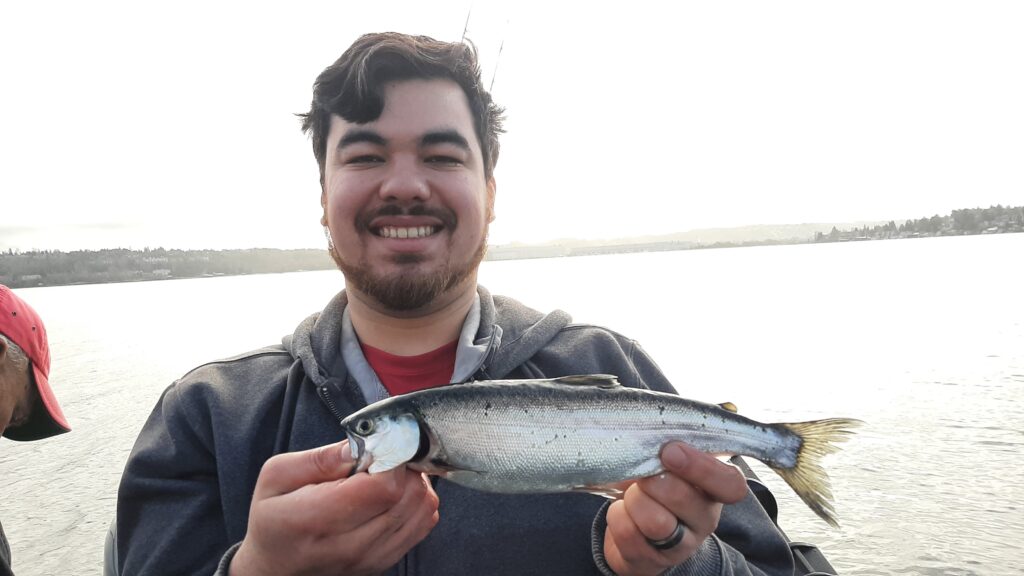
Although Lake Washington has a wealth of shore access, kokanee tend to hang out in water out of casting distance. Your best bet is to troll for them. Typical kokanee gear works well. Toss out a variety of lures and let the fish tell you what they want. Some days they like spinners, other days they want plugs. Kokanee can be very picky.
Artificial maggots and corn should both be in your tackle bag, as well as a few bottles of scent. While pink is the classic kokanee color for a reason, orange, red, and watermelon are all great choices for lure colors too. Sometimes giving the fish something they haven't seen before is the key to success. Trolling flies works great! Make sure you have a variety of dodgers too. You can experiment with different dodger styles and colors. I also tend to use a shorter leader than usual on Lake Washington. The fish seem to respond well to a 9-inch leader.
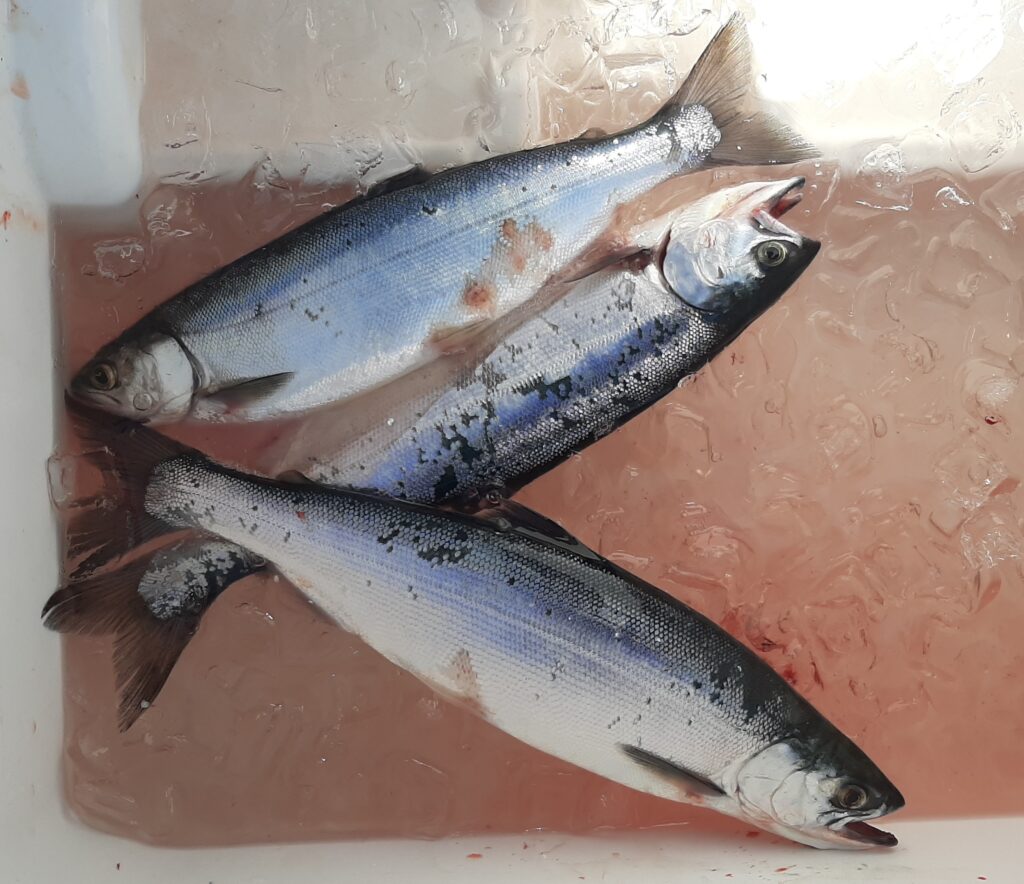
Make sure to bring a long-handled net for landing the fish. Kokanee have soft mouths- boat flipping them often results in lost fish. It's also a good idea to bring a stringer or a bucket to bleed the fish in. A cooler full of ice to keep your fish cool once bled is also crucial. Kokanee also has soft meat, to get the best meat quality it's a good idea to bleed and ice them.
Locations
One of the most important things to bring along on your Lake Washington trip is a fish finder. Especially during late summer when the kokanee dive down deep to escape the warm surface water, you'll need your fish finder to show you what depth to fish. I also recommend placing marks when you get hits or reel in a fish. Set your fish finder to show your trail, and you can set up a good trolling pattern. On the southern end of the lake, try fishing on either side of the I-90 bridge. On the north end, try fishing south of Highway 520. Target points and coves. The fish will move depending on the time of day and weather. Don't be afraid to try somewhere new!
Before we wrap up, let's talk about a few last-minute tips for your Lake Washington trip. First, I highly recommend planning on starting and ending your fishing trip early in the morning. This lake is incredibly popular with jet skiers, inner tubers, and water skiers, particularly later in the day.
If you get off the water early, you'll minimize your chances of tangling your lines or getting a rocky ride. It's a good idea to wear a life jacket and make sure your kids and/or dogs have them as well. The limit is 5 fish, and you must release any fish over 18 inches in length. This rule is in place to protect sockeye that run in the lake during late summer.
Lake Washington kokanee are the perfect fish to go after on a warm summer day. They're absolutely delicious on the smoker or even fried. Kids will love reeling in fish after fish! So, head out to Lake Washington and get your limit!
/articles/lake-washington-kokanee-secrets
Get on the Water Now!
by Randy Castello
With football season recently behind us, baseball opening day is months away and they’re just dropping the checkered flag at either our local or at sanctioned tracks nationwide, how are we supposed to burn off our nervous energy? Assuming that you have already completed your winter maintenance regiment for your boat and gear, made all the lures that you and your neighbors can use in the foreseeable future, and read every issue of NW Reel Life for the third time, it’s time to go fishing.
The decision to wet a line is always the easy part, sorting through seasonal closures and winter accessibility can be a challenge. As with any PNW fishery, double check the regulations and Emergency Changes before you head out to participate in the many solid fishing opportunities available this time of the year. The following are a few ideas to get you started, and may your fish box need frequent cleaning.
Lakes
Lake Washington is an urban gem. Cutthroat trout, kokanee, perch, and various warm water fish are available year-round. There is great trailer boat access as well as a number of fishing piers. During the winter months it is primarily a cutthroat, kokanee, and smallmouth show but there are also large schools of perch available along deeper drop-offs.
The primary winter cutthroat and kokanee fishery is at the south end of Mercer Island. But if you are willing to go on the hunt, there are other areas that hold fish; some real trophies. Make sure to quickly release any chinook that take interest in your offerings.
Lake Merwin is a local go-to for winter kokanee. If you are traveling to get there, make sure you check the wind forecast before you head out the door. The lake can get very windy and choppy, make sure that you have all your safety gear in order.
When fishing Lake Merwin during the winter, try to troll at 1.0 MPH, and the smaller your presentation, the better. You will see multiple schools of fish on your electronics, but not all will be in a playful mood. When you do find a snappy lot, mark it on your electronics or take a visual bearing and keep after it.
Lake Cavanaugh and Lake Samish both host a winter kokanee fishery. They are kind of fickle during the winter and the bite may be during a brief afternoon hatch. We have limited at either lake during the winter but that’s not the norm.
Persistence is the name of the game. Troll 1.0-1.3 MPH. Small micro hoochies, flies, and spinners seem to have the edge. In addition to your secret corn recipe, a small tidbit of nightcrawler, worm, or a live maggot will greatly enhance your allure. You may even want to add them to your hooks, it will drive the kokanee wild!
Lake Roosevelt; as the weather permits, if you’re looking for lunker kokanee, Roosevelt is the place to be. Although I don’t like hauling the boat over the pass in the winter anymore, I love fishing Lake Roosevelt, so with the right weather forecast we may head that direction. I’m sure kokanee are available throughout the lake, but we usually fish out of Spring Canyon.
We tend to focus on the dam area but we also fish the lower 5 or 6 miles. I typically start at 10-40’ with a 60’ setback, but may fish deeper as required. Because there is the potential to hook a 3+ pounder, I typically up my leader to 20-pound fluorocarbon.
Winter road conditions are still a possibility. I addressed this in a previous article but it’s worthy of a mention. Again, pay attention to winter boating safety/etiquette. If the road conditions are questionable, carry chains for both your tow vehicle and for at least 1 axle on the trailer. Bring a couple sand bags and shovel. A liberal application of sand can be a lifesaver.
At the ramp, assess the situation before you back down a long, icy ramp. Take the time to chain up your tow vehicle if required. The area between the top of the ramp and the water could be icy. If you lose traction, don’t panic, it is likely that once your tires hit the water, you’ll regain traction. Just keep your cool, you don’t want to jackknife ½ way down the ramp.
It would put a damper on your plans. Once the trailer is wet, you may have to let the rig sit in the water for a bit to thaw before the boat will boat float free. No kokanee shuffle or celebratory dancing while onboard or at the dock, you don’t want to slip and end up sharing the lake with your aquatic rival. The fish won’t bite when they’re laughing their tails off.
Finally, and as a courtesy; at the end of your time on the lake load your boat and slowly pull out of the water just enough to clear the water. Stop and let the rig drain or drip-dry, this will minimize ice buildup on the lower 1/3 of the ramp.
In addition to winter lake opportunities, a trip on the salt can be very productive. Both Marine Area 10 and 13 should be open. MA 10 is scheduled to be open February 1, 2023 through March 31st, but check the WDFW Emergency Regulations for early closures or seasonal schedule adjustments. MA 13 is open year-round, but again, check the WDFW Emergency Regulations before you leave the driveway.
When open for winter chinook, MA 10 is one of the most consistent salmon fisheries in the state. The minimum size limit is 22” and the fish need to be clipped. 4-10# fish are common, with possibility of a trophy fish any time you hook up all makes for a very exciting fishery. I believe that pound for pound, blackmouth are one of the hardest fighting fish in the PNW.
Although many fish are caught mooching cut plug herring or jigging, the fishery is primarily a downrigger show. You want to be fishing right on the bottom. Often you will notice that your fish is all scraped up and find gravel in the fish’s belly when you clean them. Flies or small spoons paired with 11” flashers, plugs and helmeted anchovies all catch fish.
We fished the MA 10 opener this year. My boatmates and I had agreed to make it a C &R day. We hadn’t fished salmon in the salt since September, and didn’t want to go 3 and out in the first hour. We had a stellar trip. From the moment we went gear down, we had fish on. We had to wade through a lot of 20-22” fish and cycled through probably 10 or 12 legal fish before keeping one. I pulled the hook on the big fish of the day and the estimated 10 pounder swam off before we were able to slide the net under it.
I took full responsibility for the lost fish and had to wear the “farmer” overalls. We had already decided to finish the pass and pull the plug for the ride back to Everett. The meter showed a cloud of bait with a few salmon holding just off the bottom. 1, 2, 3, BAM! The port downrigger goes off, and we are on a very solid fish. Hoping to hook the second meter mark, I decided to keep the boat at speed and put the screws to the fish. It was up on top but way off to the side when it got sideways to the flasher, and it swam off. We rarely lose a fish, and I got too big for my farmer britches.
Although we had plugs and an assortment of both trolling flies and spoons on board, we started with Skinny-G spoons and never looked back. We did determine that the lighted flashers had an edge over our regular flashers. We fished the bottom in 80-120’ of water and tried to stay on the down current face of any underwater structure, or along underwater points. It was an incredible day of fishing and an excellent option for a winter fishery.
There are a number of winter steelhead opportunities in the PNW. Many coastal streams are open and occasionally Puget Sound rivers open under WDFW Emergency Rules. I considered breaking the February, April steelhead fisheries down, but I think that that is a whole different article and best written by a coastal steelhead expert. The point in mentioning winter steelhead is that when many of our fisheries are closed, we have a steelhead fishery available. A theme here; again, as with any PNW fishery, double check the regulations and Emergency Changes before you head out.
Fishing withdrawals, cold sweats, and general heebie-jeebies? There don’t have to be, with a little research you have multiple options to treat your fishless disorder. Whether you’re a freshwater, salt angler, or bankie, there are many opportunities to soothe what ails you.
/articles/get-water-now
The Hunt for Lake Washington Kokanee
By Hannah Pennebaker
What’s the first thing that comes to mind when you think about Lake Washington? The I-90 bridge, SeaFair hydroplane races, and waterskiing are all popular answers. Lake Washington is the state’s second largest lake, right behind Lake Chelan, and spans about 22 miles long and 108 feet deep on average.
Fishing may not be the first thing that comes to mind about Lake Washington, but there are an astounding variety of fish in the lake, and October is a great time to target them.
Although houses and parks surround the lake, there are many boat launches and fishing docks as well. You may have heard that crappie, bass, cutthroat trout, and yellow perch inhabit the lake.
There are several bass fishing tournaments every year at Lake Washington, with 6 pounders being fairly common. Anglers of all ages line up at the many docks during the summer to catch buckets full of crappie and yellow perch.
You may have also heard about the coho and sockeye salmon fisheries in this lake. While the sockeye fishery has been closed down for years, the coho fishery is still going strong, with good returns predicted this year. Few anglers know about the Lake Washington kokanee fishery, and even fewer still take the time to figure out how to catch them in this enormous lake.
Intimidated by the size of the lake, many kokanee anglers will drive right past Lake Washington and go all the way up to Lake Samish or Lake Whatcom to fish. Don’t be daunted by this lake, it’s well worth taking the time to learn how to fish it.The fat, football shaped kokanee often measure up to 16 or 18 inches in size, and they have bright red meat that is hard to beat on the grill or smoker.
Fellow Northwest Fishing member and Lake Washington master Barry Dubnow often remarks that he would rather fish the lake and come home with 5 fat kokanee than drive all the way out to the Sound, then fight the wind and tides, only to have the chance at catching 2 fish at most!
Did I mention that the kokanee fishery is open year-round at Lake Washington? October is prime time for kokanee fishing, so don’t put the boat away for the season just yet. Let’s start off your Lake Washington journey with some tackle tips, then we’ll dive into locations and tactics.
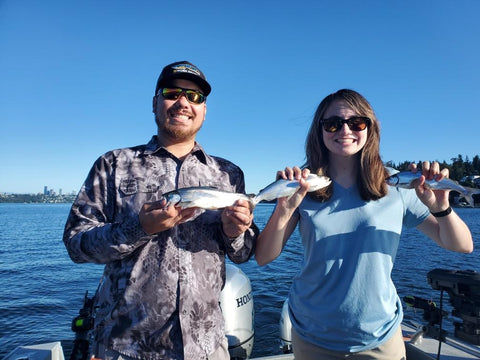
While typical kokanee tackle works at Lake Washington, there are some strategies and tactics that can make your trip more successful. The kokanee fishery has its peculiarities, and it differs year by year, and day by day.
Short leaders seem to be the ticket, no matter what time of year. Mack’s Wiggle Hoochies, Brad’s Cut Plugs, and Mack’s Wedding Rings all work great. I’ve had days where Old Goat spinners and God’s Tooth spoons were all the fish wanted. Don’t forget to use scent, and plenty of it!
Tuna, herring, and anchovy are all tried and true. Leaded line works great early in the season, but as the fish push deeper due to the heat, you’ll likely need to use your downriggers. Pink is the old kokanee standby, and it works well, but color combinations with some contrast can do better on days when the bite is slow. Watermelon, pink and yellow, and orange and purple will all catch fish.
Like any good kokanee fishery, the key to success is having a few colors and scents of cured corn. Maggots will catch fish on some days, but corn seems to be the ticket. Keep in mind that no matter what you use, kokanee have soft mouths and tend to come off the hook, so take your time when playing your fish and have a net ready.
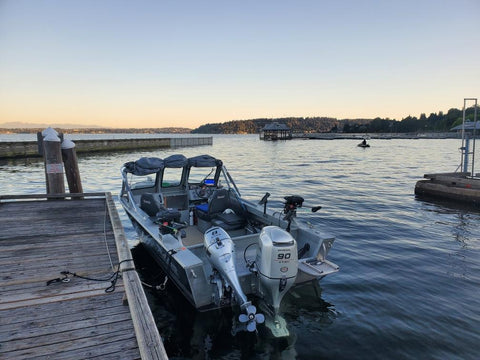
With miles of shoreline on both sides of Lake Washington, it can certainly be an intimidating lake to fish. How do we find the fish in such an enormous lake? The good news is that there are a few reliable spots around the lake where fish tend to congregate.
There are good kokanee spots throughout, so don’t feel like you need to run far from the boat launch. Those launching from Gene Coulon and Pacific Beach on the southern end of the lake tend to fish near the southern tip of Mercer Island. If you launch from Kenmore or the Kirkland Marina, you can fish in the cove near Juanita Beach Park and all alongside the shore near Kirkland.
Look for points and coves, and try to think about where the krill that kokanee feed on would tend to gather. Find those marks, and locate schools. Drop a pin where you get bites, and pay attention to what depth and speed you were fishing at.
Don’t be afraid to change up your speed or depth until you’ve figured out what the fish want that day. Remember to troll slow, and throw some s-turns and circles in!
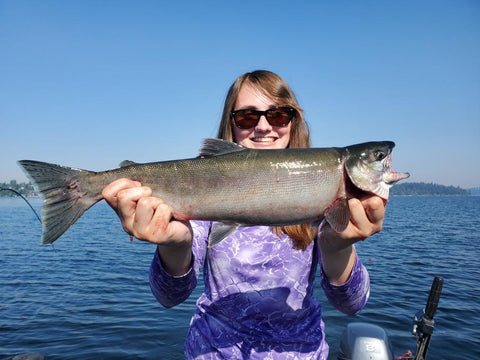
Before you grab your poles and cooler, there are a few things to keep in mind while fishing Lake Washington. If you fish during the late summer or early fall, there is a chance you may hook onto a sockeye salmon. You’ll know when the sockeye are in the lake: they show up as large arches near the bottom.
Unfortunately, the kokanee tend to mix in with the sockeye, particularly in the late season when the water heats up and pushes them closer to the bottom. This creates a problem because sockeye retention is forbidden in the lake, and they do not tend to survive catch and release well.
If your rod slams down and starts peeling drag more than usual, be prepared to net the sockeye and release it as quickly as possible. But how do you tell the difference between a sockeye and a kokanee? After all, a kokanee is just a land-locked sockeye salmon.
Legally, any kokanee over 18 inches is a sockeye and must be released, so keep a measuring tape on your boat! Although there is a fish consumption advisory in Lake Washington for pikeminnow, bass, and cutthroat trout, there are no advisories for kokanee as of this writing.
Bad news for those fishermen who like to fish as many rods as possible; two pole endorsement fishing is also not allowed on Lake Washington. Keep these peculiarities in mind, and you’re sure to have an amazing day reeling in your kokanee limit at Lake Washington!
While it can be hard to find information on how to fish this lake, you can find all the reports made by local anglers by visiting our website at www.northwestfishing.net and clicking on the “latest fishing reports” button. Good luck, and I hope to see you out there!
/articles/hunt-lake-washington-kokanee