The Best Kind of Fishing Trip by Jerad Sorber
Early-season Spring Chinook is always a bit hectic. There's a short window between when the fishing gets realistic and when the first season closes. The annual uncertainty about when the next opener will be increases the pressure. Both the fishing kind and the internal kind, even if the fish aren't quite here yet. It's easy to get discouraged when you don't see a lot of fish, and nobody else is catching them either. When the magic does happen, though, it makes it all the better. Recently, we had one of those days.
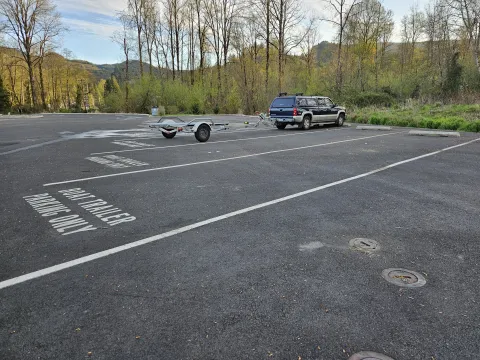
I arrived at the ramp around 5:15 AM to get the boat in the water and do any final preparations. I had told my clients to be there by 6 AM. There was a good morning outgoing tide, and there would be competition for spots to anchor up. As I prepped, I listened to the conversations from the other guides that were doing the same thing. This is a great time to get intel on what's going on with the fish.
Just as I finished up, my clients came down the dock. They had booked the whole boat and brought 4 people. If this had been a July ocean salmon trip, I would be excited about lots of fish. Today I was figuring out how to manage expectations. The fish checker reports the day before were 3 fish on 35 angler trips. We went through the usual greetings, and they hopped on board. A quick safety briefing, and we pulled away from the dock at precisely 6 AM.
I ran us out to the spot I had planned on. That was at least a good sign. With the anchor set, I put out the first round of plugs. I was hoping for the best. The water looked good, and the temperature had risen about half a degree. If they were here, they should be biting. A little bit later, another friend and fellow guide swung by and anchored to the outside of me. A bit after that, another guide popped in, and we had an old-fashioned hog line set up. We were covering everything from 12 feet of water to 40 feet. If a salmon was moving through it would have to look at our gear.
The conversation bounced between boats as it should for hog line fishing. One of my clients seemed to really love hearing the "inside baseball" chat. I talked to my clients about what they had been doing. I answered a lot of questions about fishing and fish biology. I learned about the ins and outs of building embassies for the US government in faraway places. My clients had been working internationally, and this was spring break for the youngest son. Their most recent location was Malawi in Africa. They chose to come back home and enjoy a day of fishing.
I swapped out the initial plugs with ones wrapped with tuna belly. If the water is slow, I usually start with bare plugs covered with some gel scent. This gives them a bit more action. Once the water speeds up with the outgoing tide, I wrap them with tuna belly and send them back. We coordinate line lengths and make sure that there is a literal wall of plugs. Between 3 boats, there were 9 rods in the water. We all waited for a fish to come in. The middle boat had a bite, but it didn't hook. They had a second and lost it within a minute. Then nothing.
The outgoing tide pulled my depth from 18 feet down to 16 on the sonar. It was getting shallow. The water wasn't that murky, and the sky was clear. By this time, I had swapped my middle rod to a flasher in the middle with a cut plug herring. It had worked before when nothing else did. I pulled out a spin glow, putting it on ahead of a coon shrimp. I hooked it to my inside rod and sent it flying to about 4 feet of water. There had been steelhead moving through. If three guide boats captained by guys I respect can't find a springer, maybe I could find some other action. Still nothing.
All three of us started calling and texting our friends that we knew were fishing nearby. Each time, we hoped desperately for a good report. Nothing below us. Nothing above us. A few take-downs, but nothing stuck. I was getting antsy. My clients were enjoying the day, watching ospreys dive on bait. They made a game of trying to spot the sea lion that would periodically cruise the channel. Fortunately, he never came close, but it didn't matter. I found myself talking about the better days of fishing. I stopped myself and cringed a bit inwardly. These guys were probably thinking, "he should have had us come then, instead of now". I do my best to be clear about what to expect with early Springer fishing. I describe it as the most challenging fishery we have. Even with that, I think that people often come to the dock expecting to be the exception. I know several guides that don't offer early spring chinook trips for that reason. They don't want people to be disappointed if they go home empty-handed.
The outside boat moved upriver to a different spot, and I moved out where he was. 23 feet of depth felt a lot better given the high sun and clearing water. All the rods were back to plugs, and the sun was getting high. I remembered some advice from a mentor. When the fishing is tough, don't go crazy changing things. Just go with what you know works best and keep at it. I put fresh wraps on all the plugs and set them down. One of my clients was glued to the sonar like it was a final four game during overtime. If a fish came by, or even something that looked like a fish, I knew he would let me know. There was still nothing. The boat that was now inside of me started picking up. They had to go home early for a doctor's appointment. I decided to make a move as well.
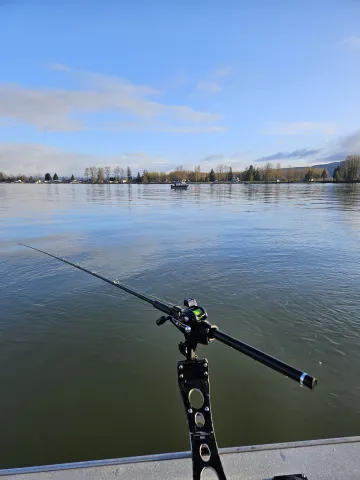
I started swapping out plugs for trolling gear. The outside rods would have 360 flashers with stuffer baits. The inside rods would be running in-line flashers with cut plug herring. There was enough current going that I could get the rods out while we were on anchor. I pulled the socks, fired up the kicker, pulled the anchor, and started trolling. I looked at either side of me on the side-scan looking for fish. I swerved out into even deeper water when the shallow wasn't showing anything. I thought I saw one mark, but nothing came of it. We reached the end of the pass and reeled up. It was time for a bigger move.
Usually, I move downriver when the fishing isn't good. If you're in a gap of fish moving upriver, there's no sense in staying in that gap. Going downriver means a chance to catch fish that you haven't seen. The reports from downriver had been poor, though, and the trolling area there was pretty spread out and fragmented. I had seen some fish move through on the sonar while we were on plugs. I chose to go upriver.
I went way up above the other boats that I saw. The boat that had been outside of us was there. I also spotted some other boats that I recognized as belonging to some really good fishermen. "If that guy is still fishing, then I don't feel so bad," I thought. That little bit of comfort quickly disappeared as the water got a bit choppy and the wind picked up.
The top was on the boat, and it started catching the wind. My clients and I struggled a bit to get the rods out, and we had a tangle. Clearing tangles in a foot and a half high chop while trolling into the wind is not easy. Finally, the torn cut plugs were replaced, and the gear was fishing. I worked the boat against the wind to try to keep it straight. I didn't put a sock on the bow to add stability, but probably should have. I did trim the main over a bit to help compensate. We worked our way out of the worst of it, and the water smoothed out. Even worse than no bites, I wasn't seeing any fish at all.
I stayed glued to the sonar and adjusted the throttle to counter any wind gusts. The 360's were working slowly, which is what I wanted. I didn't want things to move too fast in the water. It was a delicate dance between having enough power to steer and trolling too fast. About halfway down the pass, there is a big shelf that you must swing out wide to avoid. While the depth isn't bad on top of it, it's covered in weeds. They make it nearly impossible to fish in anything less than 18 feet of water. But moving away from the island would subject me to more wind. I had to swing out anyway.
The wind caught the top, and I soon found myself in 35 feet of water. My clients adjusted the rod depth down, and we continued, trying to make the best of it. It's not that 35 feet was magically too deep; I just didn't think the fish were out that far. We passed the shelf, and I pointed the bow back towards the island. The sonar ticked shallower again. At 25 feet, I turned back west and started running parallel to the shore. I looked up at the side scan and saw what looked like a diagonal streak. It started at the edge and moved towards the boat as the sonar scrolled. I waited to see if something would show up on the 2D and down scan. I looked over at the rods on the left side to see if something would come in. They kept working normally. False alarm.
I turned my head to look back and noticed the right inside rod take a dive. This was one of the triangles with a cut plug on it. "Probably bottom," I thought. I started to turn to give it a crank when it took another dive, more assertively this time. Before I could reach it, it started bouncing, then pulling. The line started rolling off the reel. "Fish! Fish! Fish!" We had designated the youngest as the first one to catch a fish. He had never caught a salmon before. He was also sleeping under the top. His dad shook him awake, and he stumbled to the back of the boat. I directed everyone else to start reeling. I grabbed a rod, got it in, handed it off, grabbed the net, and turned around. "I don't think it's there," he said. I looked at the flasher, and it was steady in the water.
When a flasher is moving normally, it has a motion to it, even an inline one. It sways and wobbles a bit with the current. If the lure is loaded with weeds or a fish, there is no sway. It moves firmly. This flasher was moving firmly. "Keep reeling," I told him. "Don't stop reeling, don't give it any slack". He blinked his eyes a couple of times and started to say, "I still don't think..." then chrome flashed under the water, just behind the flasher. The fish was thrashing.
"Reel to the bead, and when I tell you to, swing the rod to the front of the boat. Keep the tip down, it helps keep them from jumping”, I instructed. He reeled down to the orange bead I put just ahead of the line lock. I could see the fish get close, as it turned towards the boat, I took my chance. Just as the net hit the water, the fish turned away, and I brushed its tail with the net. It went wild and shot off. I pulled the net back.
"It's pulling!" The rod was bent over, and the line screamed off the drag.
"It's ok, just keep reeling," I tried to help him not panic. My own mind resembled a pack of chipmunks on a trampoline after someone dropped a bunch of nuts on it. He reeled down to the bead again, and the fish glided in front of me. It took a quick turn, but then came back towards the boat. I shoved the net under it, lifted, and watched it get surrounded. Feeling the net, the fish started thrashing around. I started looking for an adipose fin. We haven’t gotten a fish yet. It had to be hatchery.
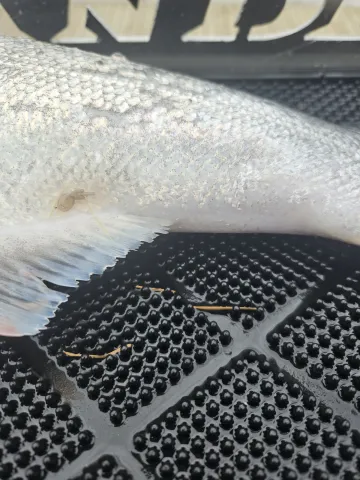
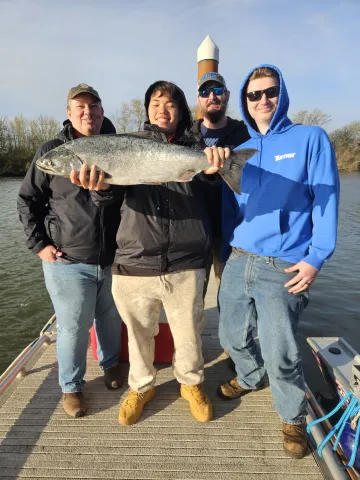
I pulled the fish towards the boat and reached in to steady the fish while trying to avoid the hooks. The fish flipped around, and I saw the back. It was smooth with a beautiful healed scar just ahead of the tail. No mis-clip, just perfect. "Hatchery!" I yelled. My own heart was pumping, and I could barely hear the cheers behind me. I lifted the fish and heard four jaws hit the deck. In the net was a beautiful, purple-backed, chrome-sided, slightly gray belly upriver Spring Chinook. I looked up and saw smiles all around. Dad seemed beside himself; the younger guys were thrilled. They were all talking about how excited they were.
I rushed to get the rods back out while my client tagged the fish. We took pictures, and I filled the bleed bucket with water. With the gills cut, the fish went headfirst to make sure the meat was as high-quality as possible. The latest price on Columbia River Spring Chinook was $70 per pound. This fish would give them about 8 lbs. of meat. I wanted to treat it right.
I put us back on course, circled back through the area where we had caught the fish, and hoped for another. It wasn't to be. Once bled, I put the fish in a bag, and it was placed on ice. I always bag the fish first so clients can use the ice in coolers on the way home. Another trick I learned from a mentor. We said hi to the boat that had been on the outside of us for most of the morning. He had one take-down that didn't stick, and didn't see any other boats catch anything. We set up for one final pass. That fish had bit just before 4 PM. We had been fishing for 10 hours. If we had found one, I didn't want to give up a chance at a second. I didn't have any clients the next day, and they wanted to keep fishing, so we did.
The second pass didn't give any results. I thought I saw one more on the sonar come in, but it didn't hook up. We got to the bottom, and I looked around. Everyone was still flying high from catching that fish. We all agreed that it was time to head back to the dock. There were only two other trailers left when we pulled in. The boat for one of them was already on the dock. I tied up, and everyone headed for the restroom. I retrieved my fillet table from the back of my truck.
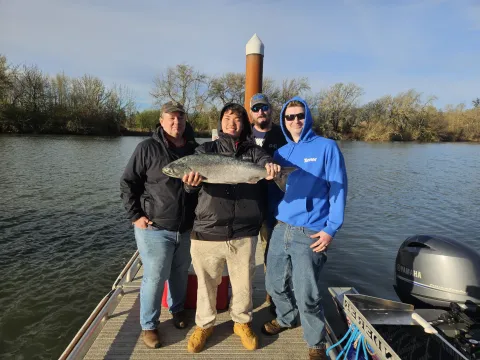
After a group photo, I cut up the fish and gave out a quick recipe tip. For Springer, just bake it at 425 for about 12-15 minutes maximum. Maybe a little salt and pepper. If you're looking to spice it up, top it with some mayo and sriracha first.
Dad pulled me aside and thanked me. "The point of today was to get my son on his first salmon. I just want to say mission accomplished. The salmon is great, but we're going to remember this for a long time. Thank you." They headed for their vehicle, still smiling. The other boat came in, loaded up, and headed out while I was cleaning up. Mine was the last trailer in the parking lot. Once in the truck, I sent a quick thank-you message and headed home.
I was exhausted. I thought about fishing on my own the next day, but decided against it. I wanted to savor the experience myself, and maybe sleep in. Like I said at the start, springer fishing can be tough, but the payoff is worth it!
/articles/best-kind-fishing-trip-jerad-sorber
Fishing For a Buddy
Society and Fishing
I’m a pretty introverted guy, believe it or not. Confident enough to enjoy time by myself and not feel like I’m missing out in my social life, but I am still a person. And people were meant to be around one another, enjoy each other’s company, find commonalities, and work together in this thing we call “society”.
Fishing, of course, offers the chance to enjoy a passion with another person. Sometimes that person can be a significant other, a child, or a parent. More often than not, when on the water, you’ll encounter a fishing party with folks just like you all enjoying time together, fishing for their limit. So, the question becomes, what to do when a friend to go fishing with seems hard to find.
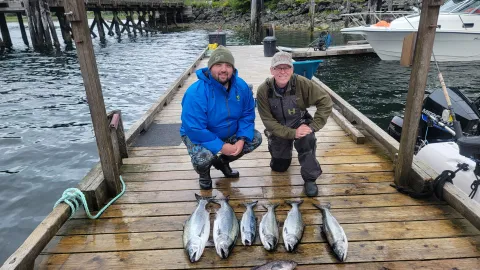
Finding a fishing buddy can transform a solitary pastime into a shared adventure, deepening both skill and enjoyment for all involved. While fishing alone has its quiet charm, having a partner beside you adds camaraderie, safety, and a sense of connection to each outing. Fear not, as finding someone who shares a love for the water isn’t as difficult as it may seem. With a bit of intention and openness, anyone can build the kind of partnership that turns ordinary fishing trips into memorable experiences with a new friend.
Get Social
One of the most effective ways to find a fishing buddy is to start with your existing social circle. Friends, coworkers, neighbors, or family members may already have an interest in fishing, even if they’ve never mentioned it. I can’t tell you how many times my wife reminds me that “so-and-so”’s husband likes to fish too, or that I seemed to be excited a while ago when mentioning a co-worker who often wets a line. Casual conversations often reveal surprising overlaps in hobbies. Mentioning your weekend plans or sharing a recent catch can spark curiosity in someone who has been wanting to try fishing but hasn’t had the opportunity.
Even beginners can make excellent fishing partners; teaching someone the basics can be rewarding, and the shared learning process often strengthens the bond. Think of mentors you’ve had in your own life. The appreciation you feel for them as they taught you a skill, technique, or trade. If able to teach another person the finer details of fishing, the sense of loyalty and camaraderie between you both will only lead to more fishing adventures.
If your immediate circle doesn’t yield a partner, local fishing communities offer a wealth of possibilities. Many towns have fishing clubs, angler associations, or conservation groups that welcome newcomers. These organizations often host events, workshops, and group outings, making them ideal spaces to meet people who share your enthusiasm.
Joining a club not only helps you find a buddy but also exposes you to new techniques, local knowledge, and a supportive network of experienced anglers. For someone new to an area or new to fishing entirely, these communities can be invaluable. How many episodes have you seen on Northwest Fishing TV where we are out with community groups or organizations? Fishing with the Ilwaco Tuna Club? Check. Fishing in a Salmon Derby? A great opportunity to connect with other anglers.
New Digital Age
In the digital age, online platforms have become powerful tools for connecting with fellow anglers. Social media groups, fishing forums, and specialized apps allow people to meet others who fish in the same region or target the same species.
Northwest Fishing’s roots come from the days of blogging in the 90’s (Washingtonlakes.com), where anglers could share tips, tricks, and friendly banter about fishing around the region. Now resources like Facebook, Instagram, TikTok, and X give us the chance to quickly filter and search for those with similar interests as us. Our Northwest Fishing Group on Facebook alone has nearly 54k members, and our Northwest Fishing TV page has 35k followers!
I’m willing to bet those platforms can connect you with someone who wouldn’t mind hitting the water. These spaces are full of trip invitations, gear discussions, and shared photos that help break the ice. Posting a simple message like: “Looking for a fishing partner around Helena, MT” can lead to multiple responses from people eager to share their favorite spots. Online communities also make it easy to vet potential partners by reading their posts, seeing their experience level, and getting a sense of their personality before meeting in person.
Tackle Shops
Local tackle shops are another underrated resource. These small businesses often serve as informal hubs for the fishing community. The staff usually know regular customers, local hot spots, and upcoming events. Striking up a conversation while buying bait or asking for advice can naturally lead to meeting other anglers. Many shops keep bulletin boards where people post fishing reports, club announcements, or partner requests. Because everyone there already shares a common interest, it’s one of the easiest places to make connections.
Once you’ve found someone who seems like a good match, communication becomes essential. Discuss expectations before heading out: preferred fishing styles, target species, early-morning start times, and whether you’re fishing for relaxation or competition. Even something as simple as where you plan to meet up, what kind of vehicle you drive, or that your favorite food is bananas and you plan to bring a bunch on board with you can’t be assumed. Aligning these details helps avoid misunderstandings and ensures both people enjoy the experience. It’s also wise to talk about practical matters like gear sharing, transportation, and safety habits. Ideally, you’ll click with this person and have many more fishing trips planned in the future.
New Connections
Finally, be open-minded. The ideal fishing buddy might not look exactly like you expect. They might be older, younger, more experienced, or brand new to the sport. What matters most is compatibility, respect, and a shared appreciation for the water. Sometimes the best partnerships form between people who bring different strengths to the boat or shoreline.
In the end, finding a fishing buddy is about more than just catching fish. It’s about building a connection rooted in patience, nature, and shared adventure. With a little effort and a willingness to reach out, anyone can find someone to cast a line with, and maybe even form a friendship that lasts far beyond the fishing season.
/articles/fishing-buddy
Elemental Telepathy
By Gary Lewis
After 26 rainbows brought to hand and released, I reeled up the loose coils at my feet and clipped the Muddler Minnow off the line. Rain had been steady for the last hour and, soaked, I looked forward to climbing back in the Mustang and turning up the heater.
Upstream from a two-lane bridge, the river cut a channel through rock leaving a pool deeper than a man’s head. In the winter, an angler might catch a steelhead here; in the spring it was chinook, but the river offered a trout fishery too.
Today’s lipstick was a Muddler Minnow tied on a No. 8 long-shank hook, unweighted, with a turkey feather for the dorsal.
With no one else for company, it was easy to start at the top of the run, shake out a bit of line and stack-mend to get the fly to work into the seam this side of the riffle.
Lengthening the line, making micro-mends, the diminutive sculpin imitation presented to the trout below, and rainbows streaked up from the bottom to follow the Muddler across its arcs. And the longer the arc, the more likely the trout would grab.
After several trout I was startled to realize I did not feel a single bite. Instead, at best, it was a movement of the line, a two-inch indication, not even a tick that I responded to. Now and then a trout would give itself away with a flash below the surface. Trout after trout bit. Almost every cast they grabbed, but I only counted them when I could fight them all the way to the bank.
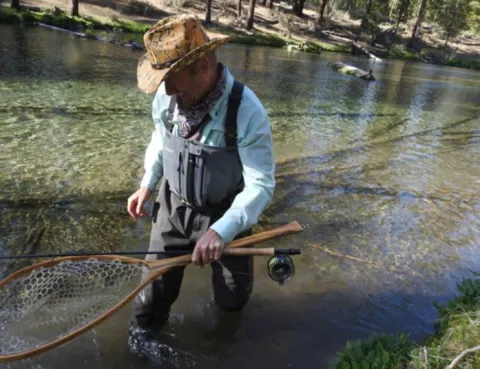
As time passed, I stepped downstream, roll-cast the same length of line each time and teased trout out from beneath the shadow of the bridge. When, properly soaked from the rain, I saw another angler headed toward me. He cast a glance toward the fly I had just removed from my line.
“Take this,” I said. “It’s working.” And before I walked up to the bridge, I pointed out where I supposed the trout were lying in the tea-colored water.
But I couldn’t leave. I had to watch from the bridge to see what the trout were doing. Taking care to not cast my shadow over the fish, I leant both elbows on the rail and watched the angler work out line and swing the Muddler across.
A trout streaked up from the middle of the water column, followed a couple of feet and then closed its mouth over the deer hair streamer. There was no reaction from the fisherman. He let the fly continue to swing while the trout moved with the Muddler then opened its mouth and spit it out.
Surprised, I said nothing and continued to watch. In twenty casts, ten trout grabbed and the guy did not a single time sense the bite. I could not stand it. I walked back down.
He was ready to change flies.
“You’re getting bit on almost every cast,” I said. He didn’t believe me but he consented to cast again. When the fish bit, I called the strike. And he caught a fish. And I left him to it.
What was the difference, I wondered then, and I still wonder today when I fish alongside someone who clearly catches more fish than me. If the fly is the same and the presentation is the same, why does one angler catch fish and another does not? How many fish bite and we do not know it?
Line control and sensitivity is hard to teach and even harder to learn.
Let’s call it electricity, an impulse in a conductor. Cast out a dead thing; the conductor swings out in the void. And then, out of the void comes a live thing and closes the circuit. For a moment, the line tingles and energy pulses from the muscles of the trout on the other end. In tune with the lightning rod that is the graphite in your hand, you sense it. Exchange of energy. Reaction making contact.
Let the fish take a bit of line, lift the rod or turn the tip toward the bank. Let the trout hook itself. It’s electric.
# # #
Gary Lewis is the host of Frontier Unlimited TV and author of Fishing Central Oregon, Fishing Mount Hood Country, Hunting Oregon and other titles. Contact Gary at www.GaryLewisOutdoors.com
The End
/articles/elemental-telepathy
The Joys and Challenges of Fishing a New State
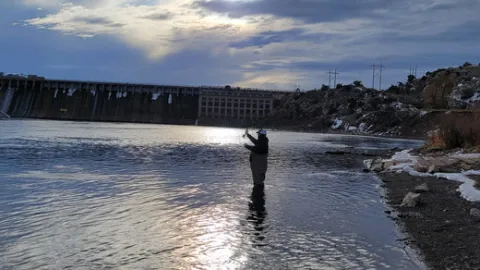
The rainbow on the other end of my line was giving a good accounting of himself. After a solid take, the winter rainbow awoke with several strong jumps, clearing the water with an impressive aerial display, before settling down to a solid tug of war with my 7-weight rod. I slowly worked the fish into the shallows, carefully backstepping on the gravel bottom of the Missouri River. As the fish grew weary, I slipped him into my net and gently slid out the #16 streamer that fooled him. Resting the tired fish, with a strong splash he gave a signal that he was ready to return to his home. I eased the glistening rainbow out of my net and watched satisfied as he darted back to the depths.
It was the middle of January, and my former home state of Washington was trapped in a cycle of wet, icy roads causing a general standstill from accidents throughout the Puget Sound area. Meanwhile, in Montana we were experiencing our first “Chinook Winds” , a warming trend I was told was a common occurrence in the Great Falls area. With temps hitting the upper forties I decided it was high time to explore the winter trout fishery that I had heard and read about on the Missouri River. In Great Falls the river was frozen from an earlier cold snap, but traveling 50 miles to the angling community of Craig revealed a free-flowing river devoid of the summer line up of drift boats plying the waters.
Reaching the Bull Pasture access, I shared a beautiful drift with one other angler. He graciously gave me some tips and an extra leader (I had forgotten mine!). Saying “I’ll see you on the water”, I followed at a respectful distance, giving him first water.
Moving to a new home is not easy. Moving to a new home in another state multiples the challenges and frustrations. For my wife and I it had been a year of packing belongings, cleaning, getting quotes for house repairs, and slowly but surely learning our new hometown, Great Falls. Somewhere in that mix of seemingly never ending tasks I vowed to myself that I would get some fishing and exploring in. Over previous visits my son Matt and I had fished different locations and so I knew a few places to go, but I also wanted to learn new spots and explore fresh places.
Montana has a wealth of angling options, but they are very different from Washington. Lakes are fewer and farther between. Trophy trout rivers are seemingly around every bend. Reservoirs offer big bodies of water which suited my Thunderjet well, but I was also looking for those local spots closer to home where I could make a quick drive, fish, and return home with time left in the day to do chores.
Fortunately, I discovered a totally unexpected source of fishing information other than YouTube and internet searches. That information source was none other than the various handymen and contractors that came to our home to work on building a fence, repairing a garage door, and graveling our driveway. Striking up conversations I quickly discovered that, like myself, these anglers were more than happy to talk about fishing and share places to go, times to fish, and gear to use. Following our chats, I would go to my computer and do the further research needed to start expanding my fishing horizons. New locations and fishing adventures were what I craved, and suddenly my world was opening to a wealth of exciting opportunities.
Networking is nothing new, but in our new age of social media it seems to me we are losing that piece of our human connection. Or, maybe it’s just that I’ve read one too many harangues of comments such as “I don’t share locations” anytime someone asks for help on social media. As if that is the cause of our woes as anglers, and being more selfish is the solution to shrinking opportunities. Perhaps the answer is we all expand our horizons, finding those new locations and species to target. And we share the wealth, instead of tightly clinging to our ever-shrinking little world, becoming bitter and inward focused. But I digress…
As I made new friends and we shared our passion for fishing, more ideas and destinations swirled in my head. Epic adventures lay ahead of me – a trip to Fort Peck to target land-locked chinook salmon, or maybe an RV trip to a remote high country lake to fly fish out of my belly boat. Or win the Montana angler lottery’s trip of a lifetime and float the Smith River on a four day camping-fishing adventure. Can’t forget Flathead Lake with its famed lake trout fishery.
In addition to learning new spots to fish, I realized with both a feeling of sadness but also intrigue that the fishing routines I was used to in Washington were going to be very different in Montana. For one thing, gone will be the days of waiting to hear what seasons will or won’t be open. No longer would my boat see the salt water and flow of the tides. Battling seaweed while trolling for salmon will be a thing of the past. Having my choice of dozens of kokanee lakes was done. And steelheading… I can only say I am very thankful to have seen the days when local rivers had healthy returns and anglers had a multitude of opportunities to catch these magnificent fish.
In their place, however, were new piscatorial pursuits. Reservoirs with solid populations of large walleye, bass, and pike awaited. Kokanee lakes, while less in number and more spread out, offered solitude and bigger fish. Smaller mountain lakes and high elevation ponds compelled me to buy a new belly boat, bringing me full circle back to my first year in Spokane when I would travel to the multitude of trout lakes and fly fish out of a float tube. I realized with a feeling of excitement that I would need to dust off my neglected fly rods, go through my fly gear, and reacquaint myself with the fine art of fly fishing.
Montana is truly the Mecca of fly-fishing and my new home put me in close proximity to one of the most famous and bountiful trout rivers in the west, the Missouri River. I will confess, my first few trips to the “Mo” were humbling experiences. My fly-casting skills left much to be desired and Missouri rainbows are not easily fooled by sloppy casts. That said, I am embracing the challenge of becoming a better fly-fishing angler, and I observe with satisfaction a steadily improving presentation and distance in my fly tossing.
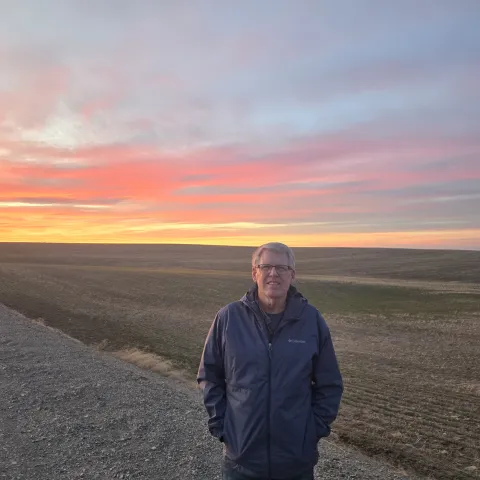
Most of all I am excited to share new adventure stories and TV episodes with our readers featuring the “Big Sky” country. I look forward to taking friends new and old out to enjoy with them the beauty that is Montana. In the meantime, wherever you call home, I encourage you to broaden your horizons, fish new waters, and share your love of fishing with other anglers. Take a kid fishing and help spark the passion in the next generation so our waters will have advocates to take care of them, help them flourish, and protect them.
/articles/joys-and-challenges-fishing-new-state