/articles/categories/destination
Brewster Salmon Derby Adventures
In all my years of fishing, I have heard many legends and stories about fishing at the infamous Brewster Pool. Articles on the Internet caution readers about hostile fishermen and hundreds of inexperienced boaters creating chaos. My own experience couldn’t have been further from these stories. This year, I was lucky enough to get the opportunity to film and participate in the derby on behalf of Northwest Fishing.
From the moment I got to Brewster, I was blown away by the friendly locals and energetic atmosphere of the derby. Other fishermen were giving each other high fives and complementing one another on their catches. This was far from the stories of combat fishing and fishermen yelling at one another that I had heard. Although there were hundreds of other boats out there, everyone was very patient and gave one another plenty of space. Guides and recreational fishermen alike were joking with one another and having a great time doing the sport we all love. I saw hundreds of beautiful fish caught and weighed in over the 3 days of the derby, and even got to reel in some of my own. Here’s the story of my experience at this year’s Brewster Salmon Derby.
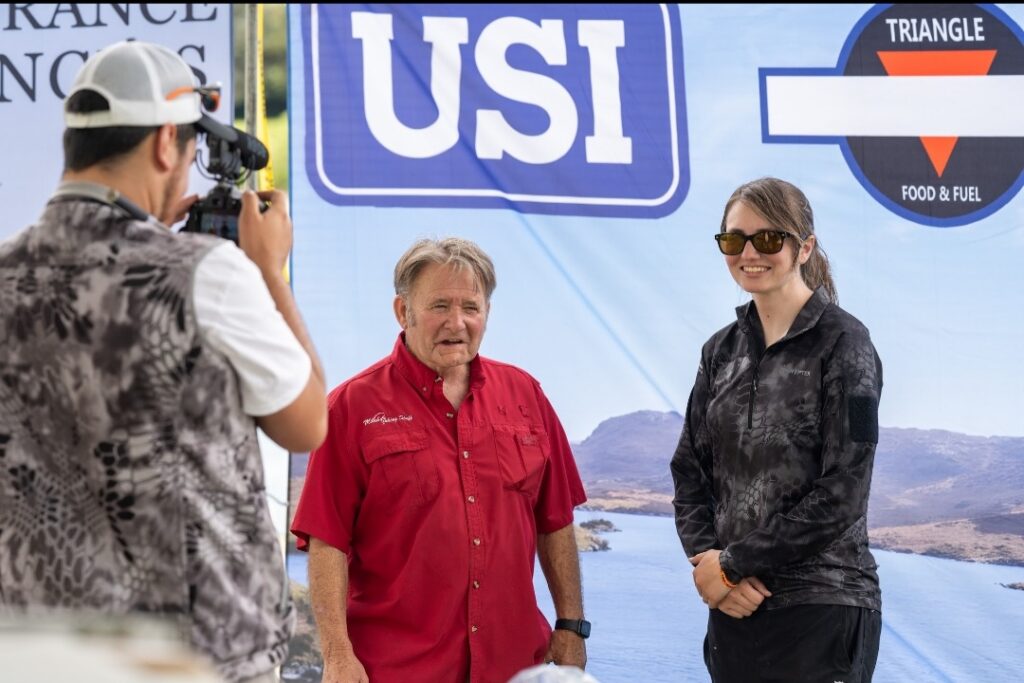
Cori Kogan: Interview with Mike Mauk
On day 1, Mike Mauk, the president of the Brewster Chamber of Commerce, greeted me with a warm handshake and a big smile. Mike organized this year’s derby, bringing together dozens of sponsors and coordinating prizes and staffing for the event. He gladly took some time from his busy schedule to chat, and I interviewed him about the history of the derby and the town of Brewster. He told me that the proceeds from ticket sales go towards helping the community of Brewster and enabling them to run the derby year after year. The Brewster Salmon Derby is the largest derby on the Columbia River, and up to $20,000 in cash and prizes are given out every year. Next, I interviewed the derby weigh master, Ernie Mauk. Ernie brought incredible energy to the weigh station, high fiving each kid that brought a fish to him. He showed me how he weighs each fish, taking the girth and length measurements and calling them out to be recorded and put on the board. He said that even though he weighs hundreds of fish every year, he still admires the beauty of each and every fish he weighs. WDFW also had a presence at the weigh station, scanning the fish for tags. When they found a tagged fish, they cut the nose of the fish off to remove the tag (after making sure the fisherman had gotten all the pictures they wanted). They let me know that the information they get from the tag helps WDFW determine the health and abundance of salmon populations. Not only does the derby help the small community of Brewster, it also aids WDFW’s research and provides valuable insights into this amazing fishery.
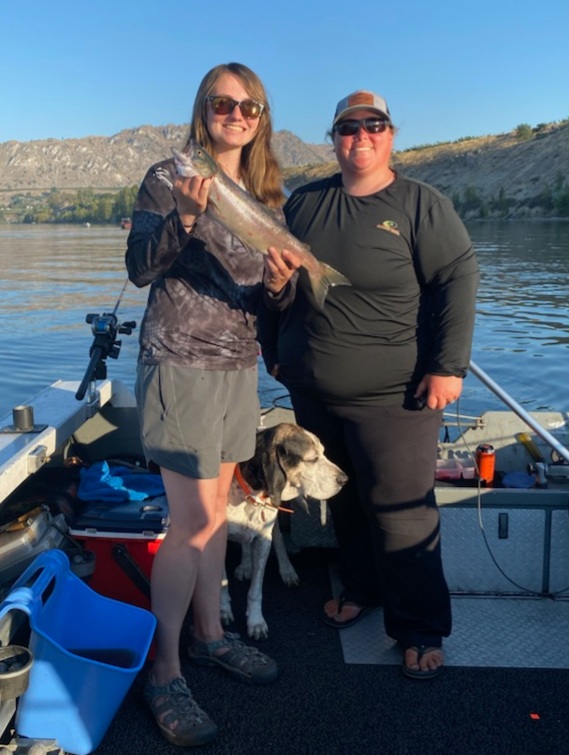
Bree, Waylon, and Hannah with a nice sockeye
While getting to see the ins and outs of the weigh station was certainly a fascinating experience, fishing is truly my passion, and my experience participating in the derby was absolutely unforgettable. Brianna Bruce of Livin’ Life Adventures was our guide during our 3-day adventure. My friend Michael Francisco, my fiancé Chris Decker, and Northwest Fishing regulars Andrew and Joe Czapla were on board. Brianna (Bree) kept us entertained with dozens of fishing stories from her 11 years of guiding. She told us all about the fishery and what makes it so productive and popular. Every year, thousands of sockeye and chinook salmon stage in Lake Pateros, also known as the Brewster Pool, between the dam and the mouth of the Okanogan River. The mouth of the Okanogan River heats up and creates a thermal barrier, and the fish wait in the pool for it to cool down so they can enter and reach their spawning grounds. This year, Bree said there were over 100,000 sockeye in the pool! Good numbers of chinook are caught every year, some reaching over 30 pounds. Some fishermen got their limits of sockeye and headed back to town for breakfast before the heat of the day began. Others stayed out until 6PM, braving the heat for a chance at a derby winning chinook. There was a 4 fish limit for sockeye, and a 2 fish limit for chinook. The bite seemed best in the early hours of the morning, but there were fish caught all day. Bree’s dog, Waylon, was our bite alarm throughout the weekend. Every other fisherman in the pool knew when we hooked onto a fish! Bree alternated between steering around other boats, netting fish, baiting hooks, and swapping fishing stories, making it all look easy. Her natural talent, great humor, and mastery of the fishery made for an unforgettable experience. On day 2, one of our cameramen had a big, feisty sockeye on the end of his line. As he brought it up to the boat, he lifted the fish out of the water and the hooks popped out. Our hearts sank, but Bree effortlessly scooped the fish into the net and saved the day!

Some early morning sockeye action!
We started off fishing for chinook the first day, armed with spinners and chrome flashers. Bree is an expert in this fishery, and told us that sockeye often hit chinook gear, and vice versa. The second day, we fished sockeye gear, and were rewarded with many nice fish. For her sockeye gear, Bree ran homemade pink spinners and smaller flashers. On the third day of the derby, we fished a combination of sockeye and chinook gear. She ran 2 spinners, 2 sockeye setups, and 2 tuna stuffed Brad’s Super Baits. It was tough to find the right speed to get the different gear to fish right, but like a true pro, Bree made it work. We trolled slowly, between .8 and 1.2 MPH, and kept an eye on the depth. To avoid tangling our 6 lines, Bree used a variety of different cannonball weights, which also allowed us to fish throughout the water column.
No matter how tired and hot we were after fishing all day, we always looked forward to lunch at one of Brewster’s amazing, locally owned restaurants. Mike Mauk and the Brewster Chamber of Commerce treated us to lunch and dinner each day. The sizzling, fragrant fajitas at Campreros were absolutely delicious! Later in the afternoons, we usually got some time to explore the area each day. I was surprised by just how much the town of Brewster has to offer. There are numerous family-owned stores that offer cool refreshments and homemade snacks. If you’re fishing the Brewster Pool, it’s definitely worth it to take the time to sample some of the local cuisine and explore the town.
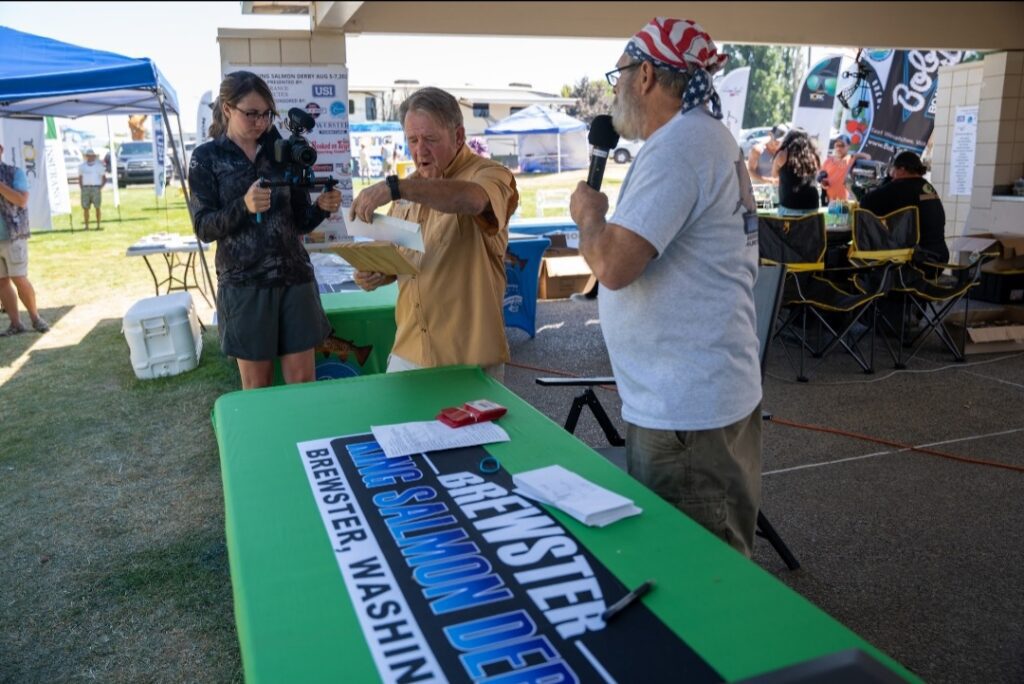
Cori Kogan: Filming the derby winners!
On day 3 of our adventure, we got to see the winners of the derby take home their prizes and win their bragging rights. The winning fish, the “king of the pool”, was a tank of a chinook weighing in at 29 pounds and 10 ounces that got the winning angler a nice check for $2,000. The top 10 winners got a beautiful wooden plaque to commemorate their win. One of the most memorable parts of the weekend was when a young girl weighed in a 26-pound chinook. She ended up winning the youth category of the derby! Besides the competition for the top 25 biggest chinook, there were also side pots and a raffle to take part in. There were many raffle prizes, such as free fishing trips for 4 people, a bow, and a downrigger. The grand prize for the raffle was a 9.9 HP Mercury outboard motor. Weigh master Ernie announced the winners, and photographer Cori Kogan snapped photos of them holding their prize next to Mike Mauk.
All 3 days of my experience at the Brewster Salmon Derby culminated into an unforgettable adventure. From Mike Mauk’s warm welcome to Bree’s terrific netting skills and incredible sense of humor, I’ll always tell stories about the derby with a smile. I know I’ll be back next year for another shot at winning the derby!
/articles/brewster-salmon-derby-adventures
No Kill Kalama
Sometimes we don’t get the fish, sometimes we don’t get the shot. And sometimes we don’t even think about it because there is just too much going on.
You are not going to get a slick fish picture, but I am going to let you in on a little secret called “License to Chill” on the Kalama River in Washington State. This underdog tributary of the Columbia River is often overlooked, but why? Well, it's hard to get to, and access is limited, but there are substantial year-long opportunities for salmon and steelhead runs. It's a sweet spot, roughly 45 miles long, and narrow enough to cast across to the opposite bank.
It may be relatively small, but when you're there you feel the pulse. It’s a mainline to the Pacific Northwest heartbeat. The swift mossy green waters amble through the Cascades from Mt St Helens to the Columbia.
License to Chill hosts 19 private acres of preserved forest, easy access to the riverbank, and multiple runs every year. Spring chinook get a lot of attention, followed by summer steelhead, coho in the fall, and the almighty winter steelhead running well into the spring.
Can you keep them? No. This is a strictly managed catch-and-release barbless fly-fishing stretch.
Should you pull them out of the water, take a picture, and admire your fish? No, what's the point of that? You're causing stress, suffocation, and possible internal injury. This river isn't for the eating fish, it's for the experience. No Kill Kalama is just the place to go if you want to unwind and wet your line.
I am one of those people who believes that all humans should have the right to forage, hunt, and fish for our own sustenance. And, why not fun? However, I also think we should absolutely look outside of ourselves at the natural world, sustainability, and what we are leaving for each other and our children.
This isn't a debate, but a few words to share what a great time I had on the Kalama River. If other like-minded folks appreciate the suggestion, then I'm pleased about that!
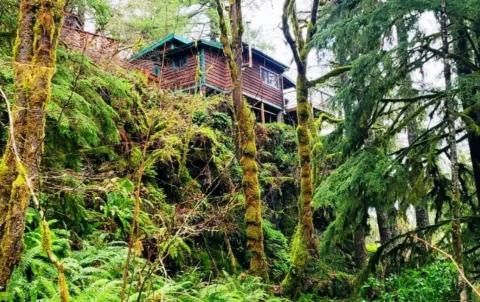
So much love and history has gone into this cabin and property. It is really one of a kind. At 90 feet above the river, you can feel it roar under you as you drift to sleep. If you like eagles, how about taking a shower outdoors while they fly above giant Red Cedars? It is epic!
/articles/no-kill-kalama
5 Family Friendly Trout Lakes in Western Washington
With opening day of the Western Washington Lowland Lake opener in the rearview mirror, many of us are looking for future lake fishing opportunities. Let’s take the family fishing! Following are a list of 5 family oriented Northern Washington trout/kokanee fishing adventure lakes. One of them, Lake Samish, would be a day adventure. The other four could be a multiday family camping and fishing expedition. All offer at least one boat ramp and shore fishing, a fishing pier, or both. This article will focus on opportunity, and not necessarily technique. All the lakes offer opportunities for trollers, bait soakers, and even fly fishers. That said, pack up the family, a frypan, maybe the sleeping bags, your favorite gear, then hit the road!
Cranberry Lake (Island County)
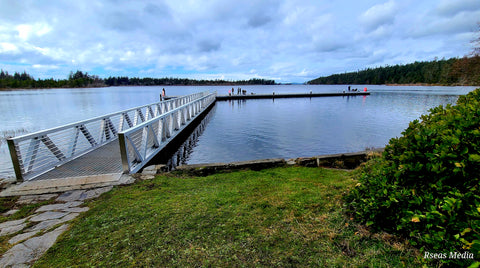
Cranberry Lake is located within the boundaries of Deception Pass State Park. There are multiple shore fishing access points and a very nice fishing pier. There is also a small boat ramp with very limited parking. If you are boating, internal combustion engines are not allowed on Cranberry Lake. You can use an electric motor but oars, paddles, or peddle power are perfect.
At 133.9 acres, Cranberry Lake hosts rainbow trout, coastal cutthroat trout, and an occasional brown trout. I’ve heard that that there are also smallmouth bass and perch in the lake but I’ve never seen anybody fishing for them. No picture, but when I was a teenager (Boy Scout camping trip) I caught a huge brown trout from one of the large boulders by the campground. The brute hit a worm/corn/marshmallow combo.
Not really sure why, but I love fishing Cranberry Lake. Although it is not, to me it feels like you’re fishing some remote lake in the Canadian wilderness. Be aware though, NAS Whidbey is right next door. There may be military aircraft doing maneuvers right overhead. I am in awe anytime one of the Navy aircraft are overhead but not everybody feels that way. It’s the sound of freedom!
If you’re not familiar with Deception Pass State Park, it is an absolute recreational gem. There are multiple well separated campsites, miles of hiking trails, and 77,000 feet of saltwater beaches to enjoy. Across Highway 20 from the lake, there is even a large saltwater boat launch with moorage. It’s not really mentioned anywhere, but in season you can fish for dungeness crab and smelt from the moorage floats. On the west side of the park, the sunsets from West Beach can be spectacular.
https://wdfw.wa.gov/fishing/locations/lowland-lakes/cranberry-lake
https://www.parks.wa.gov/497/Deception-Pass
Lake Samish
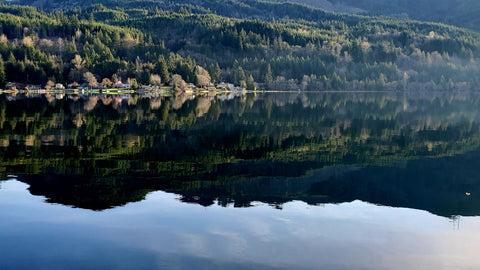
At 809.9 acres, Lake Samish is open to fishing year-round. It is managed as a multi-species lake, offering coastal cutthroat, large and smallmouth bass, crappie, brown bullhead/catfish, yellow perch, and excellent kokanee populations. I can personally attest that there are also largemouth bass and brown bullheads in the lake. The lake consists of a smaller lake connected to a larger main lake by a narrow channel. The larger main lake has significant weedy shallows at the south end and a max depth of 60 feet or so. The smaller lake located at the west end of the two-lake chain is up to 150 feet deep and maintains a large pocket of cool water throughout the late summer and fall. The cool water effectively extends the Lake Samish kokanee fishery when other west side lakes are too warm to support a fall kokanee fishery.
In late April-June, Lake Samish can be red hot kokanee fishing, easily giving up limits of fat 12”-16” kokanee. One of our biggest local kokanee came out of the smaller lake during a mid-October trip a few years back. It hit our old school gear running 2 colors on the lead line, 40’ of 8-pound leader, a rainbow color kokanee gang troll, and an orange wedding ring spinner tipped with a maggot. The fish was nearly 3 pounds and was in full spawning colors.
While the kokanee fishery is a trolling show, there is a fishing pier at Lake Samish Park. The fishing pier catch is primarily coastal cutthroat and peamouth chub. Lake Samish Park offers a couple of well-groomed picnic areas, a swim beach, hiking trails, and seasonal boat rentals. The park is the perfect place for a family outing and picnic with a little fishing thrown in.
An AIS Permit is required for every boat operating on Lake Samish. Here’s a few words about the AIS program at Lake Samish. Aquatic invasive species are non-native plants, animals, and pathogens that live primarily in water. They thrive in a new environment and cause economic loss, environmental damage, and harm to human health and property. An Annual AIS Permit and a per use boat inspection is required to operate your boat on Lake Samish. Whatcom County maintains an AIS inspection station at Lake Samish.
Boat inspections are important because they can help to prevent the transport of aquatic invasive species to Whatcom County lakes. AIS are transported on boats travelling from infested waters and can result in significant impacts to lake ecosystems, water quality, and water supply infrastructure. AIS can also make shoreline areas hazardous and uninviting for recreational users and property owners. To prevent the introduction, AIS inspectors are on the lookout for any animal or plant material on the watercraft that might pose a risk to Lake Samish. They will also be checking to see if your boat has been cleaned, drained, and dried, as some aquatic invasive species larvae can be transported in any areas on the boat that remain damp or have standing water in them. Inspectors will also conduct a physical inspection of the outside of your boat to feel for any signs of mussel larvae, algae, or other organic material on the hull that could pose a risk to the lakes.
As currently planned for 2023, Whatcom County will be staffing the inspection station at the Lake Samish WDFW Boat Launch. The AIS program is sensitive to the needs of anglers participating in the kokanee fishery at Lake Samish. They are planning/budgeting to staff the inspection station 5:30am-8:30pm 7 days a week. Although the AIS inspection program will be a bit of an inconvenience, having AIS inspectors on-site at Lake Samish will help to reduce the unfortunate vandalism problem at the Lake Samish WDFW launch.
On a similar note: Boat motor labels must have at least one star to operate on Lake Samish. Generally, any motor that is certified and labeled as meeting the 2006 or later model year United States EPA emissions standard will be compliant.
https://wdfw.wa.gov/fishing/locations/lowland-lakes/lake-samish
https://www.whatcomcounty.us/3542/Samish-Park
Silver Lake – Whatcom County
157.3 acre Silver Lake in Whatcom County is another unique recreational opportunity. It is a family friendly destination with camping, good trout fishing, and a WDFW boat ramp. The WDFW boat ramp is located at the north end of the lake and has ample trailer parking. The fishery is primarily for planted rainbow and coastal cutthroat trout. Even though the average depth is only 24 feet, holdovers are not uncommon. The fishery is friendly to whatever trout fishing style suits your style, but don’t be afraid to soak some dough bait.
Silver Lake Park is a large Whatcom County Parks and Recreation facility on Silver Lake. The park has 3 campgrounds and a RV accessible group campground. There are also cabin rentals, a handful of hiking trails, a playground, multiple picnic areas, an equestrian center, seasonal boat rentals, and a small boat launch that is probably best suited for hand carry boats.
https://wdfw.wa.gov/fishing/locations/lowland-lakes/silver-lake-whatcom
https://www.whatcomcounty.us/3517/Silver-Lake-Park
Fish Lake – Chelan County
Another family friendly trout destination is Cove Resort on 492-acre Fish Lake in Chelan County. For whatever reason it is probably better known for its winter, hardwater perch fishery but it hosts a solid spring and fall rainbow trout fishery. The lake also has a few respectable brown trout available. The brown trout fishery is kind of a specialty, but if you stick with it there are some true trophies cruising around, just waiting to be caught. In an interesting twist, the WDFW has been experimenting with kokanee fry plants in Fish Lake and it seems that there is blossoming kokanee fishery at hand. The lake also hosts a spring fishery for largemouth bass along with a year-round perch fishery. Access to the lake is primarily through Cove Resort.
Cove Resort is operated under a Forest Service private concession. You can bring your own boat: Cove Resort has a boat launch and moorage. They also have a store, boat rentals, a fishing dock, cabins, and a large campground.
https://wdfw.wa.gov/fishing/locations/lowland-lakes/fish-lake-chelan
https://www.coveresortatfishlake.com/
Lake Pearrygin
183-acre Lake Pearrygin is another first-rate choice for a family outing. There are 4 boat ramps, including a WDFW access point/boat ramp, 2 state park ramps, and a ramp at Silverline Lakeside Resort. For the shore fisherman there are many options. The state park alone has 11,000 feet of shoreline and there is a handicap accessible dock.
The trout fishing at Lake Pearrygin can be either fast and furious or just plain good. The seasoned trout angler can pull out the stops and get technical in their approach to the fishery, or, fortunately, anybody can catch fish using dough bait or casting their favorite spinner. A single salmon egg or a small piece of nightcrawler under a float can be deadly. As a bonus, Lake Pearrygin gives up more than its share of fat holdovers each season. Whether your family are trout fishing newbies or experienced trout hunters, Lake Pearrygin is an excellent choice for a family fishing getaway.
Lake Pearrygin State Park has a swimming beach, 169 various use campsites, 2 group sites, and cabin rentals. There are also 6.5 miles of hiking trails and picnic areas. As staffing permits, they offer campfire programs; they are conducted every Tuesday and Thursday night from June 15 - Labor Day. The park also offers a Junior Ranger program for kidlets.
It just keeps getting better; Silverline Lakeside Resort on Lake Pearrygin is a clean, well-maintained resort. They offer RV and tent sites and a group campground. The resort has RVs available for rent, boat rentals, aquatic equipment rentals, propane fire pit rentals, a store, and a small restaurant. If that’s not enough to spark your interest, Silverline Lakeside Resort also has 3 fishing docks, horseshoe pits, a playground, swimming beach, and mini golf.
https://wdfw.wa.gov/fishing/locations/lowland-lakes/pearrygin-lake
https://www.parks.wa.gov/563/Pearrygin-Lake
https://www.silverlineresort.com/
Have a hankering for a family outing and the sizzle of fresh trout in the ole cast iron? If so, add a trip to one or all of these lakes. Cranberry Lake, Lake Samish, Silver Lake, Fish Lake, and Lake Pearrygin each offer a unique family trout fishing experience. With the exception of Lake Samish, there is a campground adjacent to each lake with many of the campsites right on the lake. You better go pick up the phone, or bring up their websites, reservations are going fast!
/articles/5-family-friendly-trout-lakes-western-washington
Josie & the Tomcats go to Alaska
The first time I met Josie Regula was when she boarded our charter boat, the Mystic Lady, at Sportsman's Cove Lodge on Prince of Wales Island in Southeast Alaska. The 50-something year-old-woman was accompanied by her husband, Max. The two had come here from San Diego, California to fish for salmon, halibut, cod, and more during a three-day stay at this luxury Alaska fishing lodge.
It turns out Josie isn't shy. As she boarded the boat for an orientation prior to the next morning of fishing, Josie let us know this was her very first fishing trip. She then told all of us with much bravado she intended to catch the biggest fish on the boat and probably the most as well.
Her husband Max looked shyly downward but the rest of us did not. Her shipmates were myself, my best friend Rusty Johnston, well known Pacific Northwest outdoors writer Terry Sheeley, Frank Skipworth (a veterinarian from Kentucky), and the Captain of the Mystic Lady, Steve Helton. I think Josie was expecting a chorus of loud guffaws and snorts from us but several of us nodded in agreement and said there was a good chance she would do just that.
Josie looked momentarily confused until I explained first time anglers, especially women, tended to out fish their male shipmates because they had not formed a lifetime of bad habits like the rest of us had. Add to that, first time women anglers tend to not only pay attention to the fishing advice dispensed by the captain, but actually follow it. Several of us went on to say we had indeed seen women with no experience catch the biggest fish or the most fish because of this. I'm not sure Josie believed what she was telling us but we all knew her prediction could well come true.
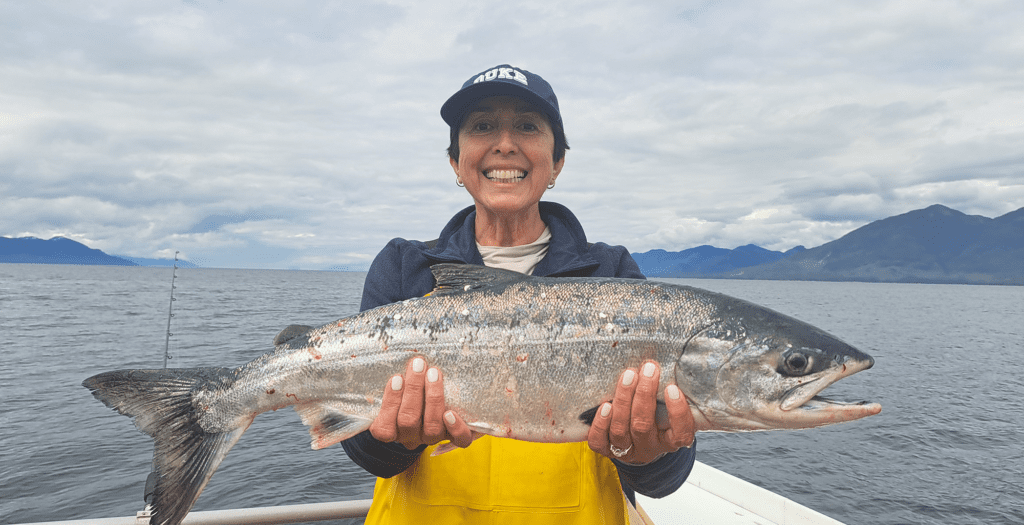
When I asked Josie her name, she said it was "Josie, like Josie and the Pussycats". Being all over 50 years of age on the boat, we all recognized the reference to the old television cartoon show featuring Josie, the star of a female rock band, and her supporting cast the Pussycats. With all of us being men Terry Sheeley said we wouldn't be the Pussycats as her band members, but we would be willing to be the Tomcats. And with that, the fishing band was formed.
On our first morning we fished a large sandy bottom flat that was about 260 feet deep, a non-descript part of the ocean some 35-minutes away from the lodge by boat. Dropping down our bait of herring with 12-ounce lead weights on a short leader, we began to jig for halibut, and wouldn't you know it, Josie caught the first fish of the day, a healthy five-pound true cod. Josie’s luck (and learning curve) increased over the next three days of fishing and she reeled in more than her share of cod, halibut, and salmon but it was our third day of fishing that Josie played her greatest hit.
The weather the first two days was mild but our final day on the water was a rough one. We endured a steady drizzle most of the day and rough seas that had Josie feeling under the weather. In fact, despite the fact she took Dramamine to combat motion sickness, she became sea sick. I’ll give her credit though; she stuck it out on deck as we jigged for halibut during a slow morning of fishing that only yielded a few smaller halibut and true cod. Then, Josie’s rod tip bent down in a big way. She set the hook and the fight was on. The fish Josie hooked was definitely no small halibut; oh no, it was a very big one.
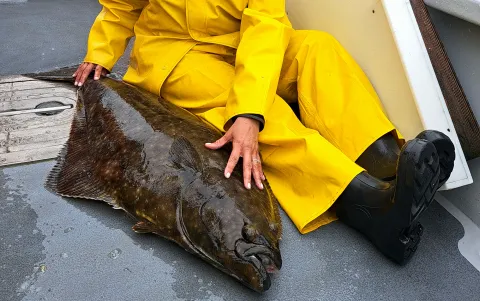
Josie, who was not above using colorful language, used it in abundance during the fight that followed with this goliath of a fish. Having never battled a big fish before, she decided to kneel down on the deck on one knee and brace her fishing rod against the deck rail as she reeled. It was an unorthodox way to fight a fish but it worked. The fish made several runs towards the bottom, robbing Josie of line as it did, and each time the fish made a run Josie would loudly express her dismay. However, Josie stuck it out, kept reeling and eventually, after a long fight, got that halibut to the surface.
The fish was brought on board and it measured well over the 40 inches where non-resident charter anglers are allowed to keep a halibut in this part of Alaska. In fact, that fish measured a whopping four-feet and weighed an estimated 53 pounds. After snapping a few photos, that halibut was released back into the sea unharmed to grow even bigger and Josie’s day one prediction of catching the biggest fish on the boat came true.
After taking a short break to deal with fatigue from both the fight and sea sickness, she was right back on the rail for the final afternoon of fishing, reeling in half a dozen salmon in the process. In the end it just goes to show first time female anglers really can out fish all the experienced men on board, and Josie’s Tomcats were more than happy to be here supportive band as performed her greatest hit!
If you would like to find out more about the first-class fishing adventures available at Sportsman’s Cove Lodge for anglers of any experience level, go to their website at www.alaskasbestlodge.com .
/articles/josie-tomcats-go-alaska
Horseback in the Wallowas for Brook Trout
A September wind rattled in the yellowing cottonwood leaves and made the red and orange vine maples shiver. The last mile was a series of switchbacks that took us into the Ice Lake basin at 8000 feet above sea level.
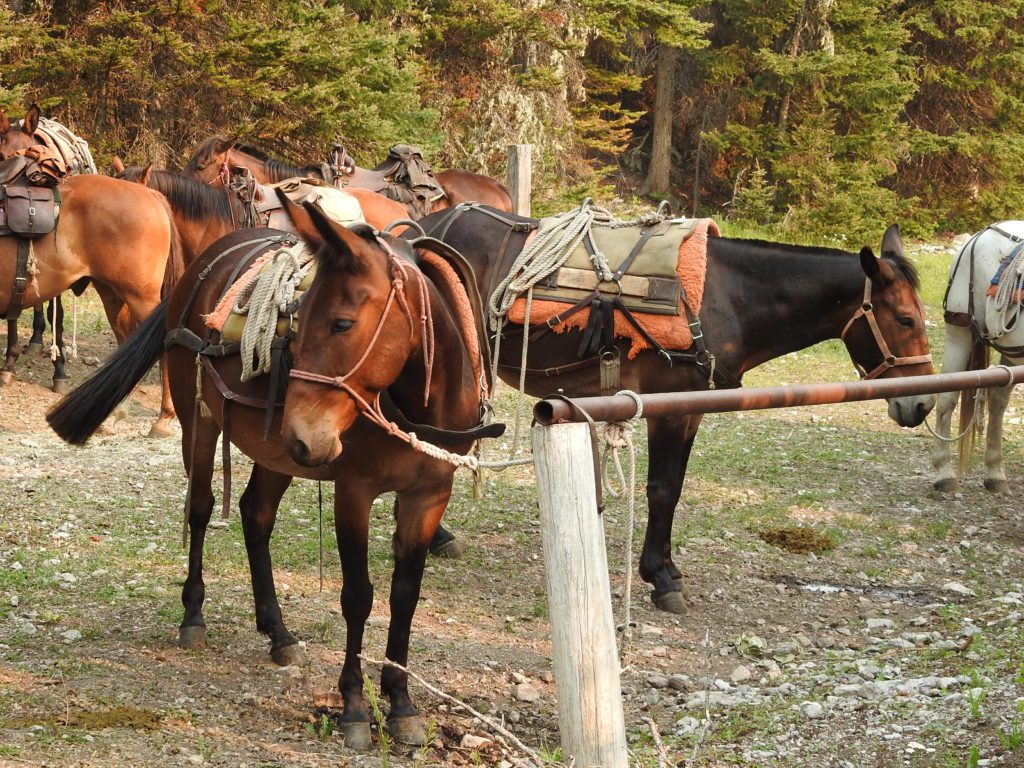
Our guide, Barry Cox, led the way on his buckskin, a pack-horse on a lead rope behind him. I was mounted on a bay and dad brought up the rear on a sure-footed gray. I could see the lake finally through the trees, deep blue and green. Alpine meadows with weather-twisted firs and pine trees gave way to steep, landslide country where little in the way of plant life grew. High above, were granite cliffs and rocky, rugged peaks. I shaded my eyes with my hand to look. Somewhere up there, I was told, there were mountain goats.
Barry turned his horse left and we crossed Adams Creek, leaning forward in our saddles as the horses scrambled up the high bank. We rounded a knob and followed a narrow trail along the rocky beach. At the water’s edge, we saw brook trout, our reason for being here. A few eight- to ten-inch brookies hung suspended in the clear blue water where the shallows gave way to deeper water.
We made camp in a little basin away from the water, moving a few rocks to make room for the tent. While dad opened our packs, Barry borrowed a fly rod and headed down to the water. I was right behind him.
Before I could even make a cast, Barry had hooked and landed a ten-inch brook trout. It took three casts before I hooked a fish. I was using a No. 14 Adams and I set it down outside of the shallows and saw a brook trout, coming up and up from the dark green depths. He opened his mouth and took the fly back down. It promised to be a good day of fishing. Barry soon retired for a nap and a lunch of trout while dad and I continued on around the lake. We moved down the beach a few yards whenever the bite slowed.
It didn't seem to matter what fly we used. After I lost the Adams I switched to a bead head Prince Nymph. We caught fish on whatever fly we tried. A Mosquito pattern worked as did the Hare's Ear and Zug Bug. Streamer patterns caught fish and so did a Mouserat that I cast alongside a log and swam back.
The most fun were the grasshopper patterns we cast along the shoreline or just outside of the shallows to entice cruising fish. These fish knew how to eat a grasshopper. They exploded on top of the fly, seeming to want to dunk the hopper before swallowing it. In the clear, calm water we could often see the fish as it climbed to smash the fly.
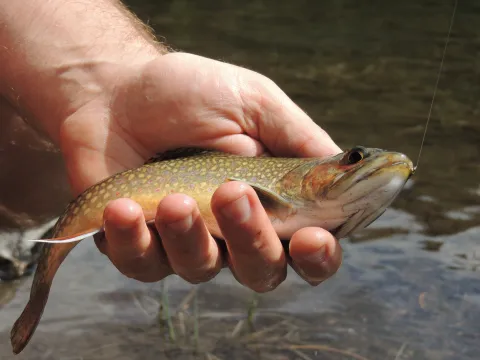
It was three o'clock when we finally stopped for lunch, carrying five brookies back to camp and frying them over a small fire. Afternoon gave way to evening and dad and I fished until it was nearly dark. The trout were so hungry I believe I could have caught 300 fish that day if I had kept at it. They ranged in size from six to eleven inches with most of the fish measuring between eight and ten inches.
Each fish was different in appearance though all were brookies. Some had dull coloration while others were brilliant with orange fins tipped in white. Some had extremely large heads with underfed bodies, older fish whose bodies had not kept up with the growth of their heads. Too many fish and not enough food.
In the morning the fish didn't come as quickly to the fly as they had the previous night. I guess I spent more time looking at the mountains and the wildflowers too, hoping to imprint on my mind what I was seeing.
The showy daisies were in bloom, as well as alpine buttercups, Indian paintbrush and mountain gentian.
In the afternoon, we rode out, leaning back in our saddles as the horses picked their way down the switchbacks, our stirrups hanging over nothing but the pure mountain air.
# # #
For a copy of the Fishing Central Oregon book, send $29.99 to Gary Lewis Outdoors, PO Box 1364, Bend, OR 97709 To contact Gary Lewis, visit www.GaryLewisOutdoors.com
/articles/horseback-wallowas-brook-trout
Hoodsport Chum
For salmon anglers in the Pacific Northwest, November heralds the final transition from targeting open saltwater to focusing on tidewaters and rivers. Yes, there are some saltwater opportunities (for example, blackmouth, when open), but the vast majority of anglers have put away their boats and are pursuing salmon in the rivers. That said, there are some prime opportunities to target and catch salmon out of your fishing boats, so don’t button them up just yet!
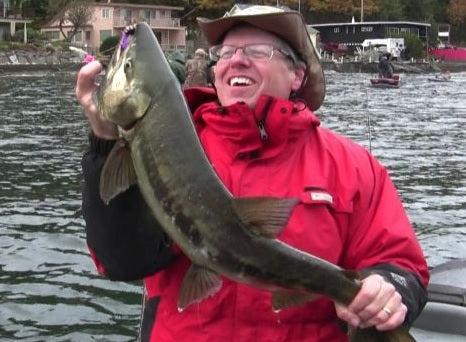
One of my favorite fisheries out of my boat in November has to be the Hoodsport chum fishery. The fight of a 10-15 pound chum ranks up there as one of the hardest fighting salmon you can catch. Taking on a chum with steelhead gear will give you all the battle you could ask for as these brutes slash and pull with every ounce of energy they have. One look at their fighting canine teeth and you’ll know this is a fish that is serious, very serious, about its reproducing goal.
All up and down Hood Canal you’ll find chum as they work their way toward their spawning grounds. The state hatchery at Hoodsport and three miles south of there at Potlatch (a smaller, Native American hatchery) are the destination for many of these chum as they work their way down Hood Canal.
I have caught fish in both locations, and each spot has reason to recommend it. Potlatch, being smaller, has limited shore angling and parking, which is roadside only. That said, there are also fewer anglers there. Hoodsport, meanwhile, is the Fishing Mecca that chum anglers are drawn to. Fishing right out in front of the hatchery and watching hundreds of fish jockey for position as the tide sweeps them into the small feeder creek leading to the hatchery is truly a sight to behold. Of course, along with the fish comes combat fishing in all its glory. As the tide comes in and fishing space decreases, getting to know your neighbor takes on a whole new meaning.
If you’re a fortunate one you’ll be fishing out of a boat – or some type of floating device. The waters around Hoodsport are open and the wind can come up and blow hard, plus fast running tides can make it a challenge to get an anchor to set. Be sure to bring an anchor with some bite, and terminal chain so you’ll stick in the rocky bottom. I’ve seen anglers fishing out of all manner of floating devices on calm days, including single person pontoons and float tubes. Be sure to have your life jackets on and just don’t venture too far off shore. If you are feeling anxious that’s your inner voice telling you a fish isn’t worth your life – pay attention to it!
For boaters, the launch is two miles south of Hoodsport at the Skokomish Park at Potlatch. The launch has two concrete lanes which are in varying state of repair (read that as back down with caution!). There is ample parking, and a restroom. Once launched it’s a quick run to either terminal hatchery, faster to the small Potlatch facility.
When you arrive, survey the already anchor boats, taking into account the amount of anchor line you’ll need to get a solid grip on the bottom, as well as the shore anglers. Anchoring too close to the shore bound anglers will earn you a steady rain of lures and weights at your boat. Stay outside their casting zone - you’ll have plenty of water to work over and opportunities to catch fish the shore anglers don’t have.
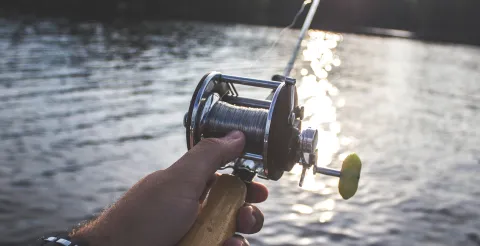
As to the type of gear you should bring… you’re going to enjoy a variety of methods to catch these Hoodsport chum. Like chum everywhere, chartreuse and green are always great colors to choose. Pink or cerise is also good color choices. For rod/reel setups I use my steelhead gear, both spinning reels and casting will get the job done. I like an 8 ½ foot medium action rod. Line should be strong enough to turn these big brutes so as to avoid massive tangle ups with your fellow anglers. I like 18-20 pound test. Chums are not leader shy in my experience so keep things hefty.
What technique you use is up to you but here are a few tried and true methods:
Floats and jigs , or floats and corkies with yarn can be deadly. A ¼ or 3/8-ounce pink, black or purple marabou jig fished under a float is deadly. Tipped with a piece of shrimp meat or coon shrimp tail is even better. The yarn is a nice trick as it helps by getting caught up in the chums teeth, allow you to drive the hook home. Other bait you can put under a float includes the ever popular anchovy or herring, whole or plug cut.
Think of the tide as the river current. Set your depth for the lure so it’s running a foot or so off the bottom. Vary the depth if you aren’t getting bites. These fish will hit suspended jigs. Cast “upstream”, i.e. up into the tide, and let your gear drift down with the tide to the end of the “drift”. If the coast is clear, free spool your line, keeping the float straight up and down to extend the drift. When the float goes under set the hook and be ready to do battle!
Twitching jigs – ditch the float and cast the jig on its own. Another effective technique, but be prepared for a lot of foul-hooked chum. Dragging a chum in by the tail is not fun, nor is it sporting to be snagging fish. If you find yourself foul hooking too many fish move on to a different method…
Casting spinners. Again, it’s a solid technique to try if the action is slow. I personally would remove the treble hook and use a single si-wash hook. A number 3 or 4 blade fished with a slow retrieve is just the ticket.
Corkie, yarn, and slinky. I personally have caught a lot of fish using this method and seldom snag fish. Again, think of the tide as a river. Cast out and let your gear drift. You’ll know you have a bite because your rod will be about ripped out of your hands. I use a 3-4 foot leader length.
Regarding the above technique, I’m sure I’m going to get comments about flossing – I personally think it’s a bunch of malarkey. Why do I say that? Because I remember a day years ago fishing Hoodsport when the chum were in thick, jumping all around us, swimming by in schools of 10-20 fish. I had my corkie/yarn/slinky set up going, casting, retrieving, and not getting a bump for a good hour. Suddenly, the bite magically turned on and my gear started getting bit. In came fish after fish, hooked in the jaw. Explain to me how one can have a steady procession of fish go by with mouths open for a good hour and not “floss” one fish, then suddenly start catching one jaw hooked fish after another? And trust me when I say this, those hook-ups were solid strikes, not to be mistaken with a snagging sensation. Anyway, the flossing debate is one we anglers love to engage in every year and likely will do so as long as we fish corkies.
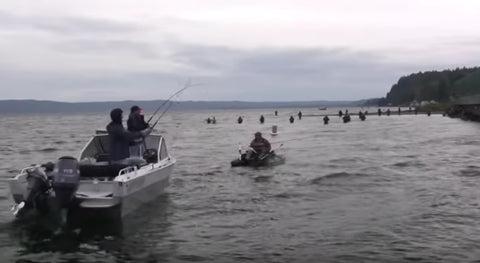
The fly fishermen do quite well at Hoodsport as well, fishing sinking tips and flies of various styles and colors. I’m not a fly guy but it sure does look like fun. Maybe on my next trip I’ll give it a try.
Before you set out, be sure to check the Hoodsport netting line at 360-877-5222. Typically the nets go in on Tuesdays and Thursdays, but this is not set in stone. There’s nothing worse than driving a hundred miles only to find nets spread in every direction. So save yourself that aggravation before you set out.
Fishing for hard fighting chum is a blast. Get in on the action this November!
/articles/hoodsport-chum
Hanford Reach Fall Chinook Bounty
My reel was peeling line at a dizzying rate and it felt like I had a freight train attached on the other end. Without thinking I applied my thumb to the level line spool and pulled back with a loud “ouch!” “That’ll leave a mark” our guide Dave deadpanned. The fish was a good fifty yards behind our boat before I was able to slowly start to regain line. Foot by foot the strong chinook and I battled back and forth, each of us gaining, and then losing line to the other.
The most popular location anglers congregate is Vernita Bridge. There is a large open area to the north of the bridge on the east side of the river. Every year a small town of anglers set up their base camp here. All variety of tents, RVs, and sleeping in the back of trucks can be seen. At night the cries of the coyotes remind you that this is wild country. Camping is free, but a Discovery pass is required. The launch here is rough and rocky and four-wheel drive is a must. Plan on your boat getting scraped up on the rocky shoreline and be sure to bring waders to help during the launch and retrieval process. Launching, by the way, starts at o-dark hundred. Alarm clocks are optional – unless you’re a deep sleeper, you will be awakened by the lights and sounds of anglers starting to launch around 3am.
Closer and closer the powerful fish came, each run a little less intense. Now a giant tail could be seen, trailing a large V wake behind it. Finally, the fish, exhausted came to the side of the boat and I saw the reassuring sign of fatigue as the fish laid on its side, telling us we were getting closer to that critical moment. Net sliding under the fish Dave skillfully scooped him up and into our boat. But not before the big fish gave one final flip of his tail, giving all of us an early morning soaking. Wow! This upriver fall bright was twenty plus pounds of pure power and beauty, not to mention great eating. The smiles and high fives of my friends were the icing on the cake and the day was just beginning!
A perfect morning, the sun just breaking over the shoreline and catching a hot Hanford Reach fall chinook - it’s the stuff dreams are made of, and it was living up to be everything I had heard about the Reach.
Washington’s Hanford Reach is synonymous with some of the state’s best fall chinook fishing to be found – and not coincidentally, the last of the chinook fishing to be found for the season. It’s the icing on the cake, and what icing it is! The Reach is the perfect setting and the perfect fish to end the year’s salmon fishing on the Columbia River. These are the brutes that dreams are made of. A fish worth dreaming about during the long off season and savoring the brief weeks they are available to catch. Battle plans must be made, so let’s talk about what you need to know to get into this fishery and have a chance at one of these amazing fish.
They call “The Reach” the last free-flowing stretch of the Columbia. With dams seemingly from one end of the Columbia to the other, this stretch of water has no dams to impede it. Here, from Priest Rapids dam down to Richland anglers have 63 miles of productive water to fish. Ideal spawning grounds make this a natural holding location for big chinook to do their reproducing thing. For the boat angler, you’ll find a variety of deep holes, shallow runs, and everything in between. A prop boat can be used – with extreme caution, however, downriver in the area known as Coyote Rapids a jet is the way to go.

Just upstream from the rough launch at Vernita you’ll run into the first hole, the Hog Hole. This spot will hold fish early and throughout the season. It’s in the middle of the river and runs a couple hundred yards in length and has a depth of 15-40 feet. Fish will be both suspended and hugging the bottom here. The hole is deep enough to require a way to get your gear down to the fish. This can include divers, dropper weights, and, yes, downriggers. A word of caution – the Columbia is a big, strong, and powerful river. Snagging a downrigger ball on the bottom of the Columbia has the potential for some seriously bad consequences and requires the boat captain and crew to be ready to deal with them. The times I’ve used downriggers I always have a wire cutter at the ready and a good dose of “always pay attention” to go along with it. It goes without saying if another boat hooks up to be ready to pull those riggers up. Backtrolling this hole works well and as you push the fish ever shallower by ready for that take down.
A variety of salmon catching gear can be used for Hanford chinook depending on the depth and speed of the spot you are fishing. Among the most popular setups are flashers with super baits (packed with tuna), plugs, flatfish (wrapped with a sardine or herring strip), and the ever-effective spin-n-glo with eggs, or eggs and shrimp. Anglers that are flexible and willing to adapt techniques to river flow and time of day will be most successful. Backtrolling your gear down the hole can be very effective, pushing fish back down the hole and triggering them to bite out of aggression is a tried-and-true technique.
Farther upriver as you head to toward the dam, you’ll find the King Hole about a mile and a half above the bridge, then the China Bar and Midway Drifts. One of my personal favorite spots is the deep hole just down from the dam. As well as being great holding water, it’s a stunningly beautiful spot. The deep hole off the rocks is great for downrigger fishing. You may even want to try running a diver twenty feet behind your release and bringing the ball up ten feet off the bottom, letting the diver do the work of bring your bait down to the bottom. Be sure to pay attention to the regulations and know the areas that are closed, downriver from the dam and on the west shoreline where the hatchery is located.

Below the Vernita Bridge you will find several more popular spots, including those famous old reactors. It’s about a three-mile run down to the B/C hole, and another four miles to reactor number one, and then number two. Beyond a large bend you’ll find the famous White Bluffs with a nice sixty-foot-deep hole. There’s a concrete launch located here, however; this is the area where running a prop boat becomes a dicey proposition. Be mindful that water levels can go up and down five to six feet in a day, leaving riffles where clear passage had been. It would be best to learn this water by first going with a guide before venturing out on your own.
Finally, farther downstream around the areas of the mouth of the Yakima down to the mouth of the Snake you’ll find slower water, more suited for prop boats. With several launches located around Richland, Pasco, and Kennewick, smaller boats will have a safer time of it than at the fast-flowing upper Reach spots.
As to timing, these up-river brights can be targeted from mid-September well into late October. Don’t be fooled by the dark coloring on these fish – they cut just fine and taste great!

The Reach is truly an amazing place to fish with the very real opportunity of hooking into large chinook. Multi-fish days are not unusual. As a bonus, while fishing you’ll be treated to amazing scenery. Besides moth-balled nuclear reactors, it’s very possible to see coyote, mule deer, several varieties of waterfowl, and even herds of elk on the shoreline. Some of the best weather in the Pacific Northwest can be had with temperatures moderating from the scorching hot summer days. You’ll find cool nights and a sky full of stars to gaze at as the coyotes sing you to sleep. And most likely you’ll be rewarded with some tasty chinook to take home.
/articles/hanford-reach-fall-chinook-bounty
Return to Riffe Lake
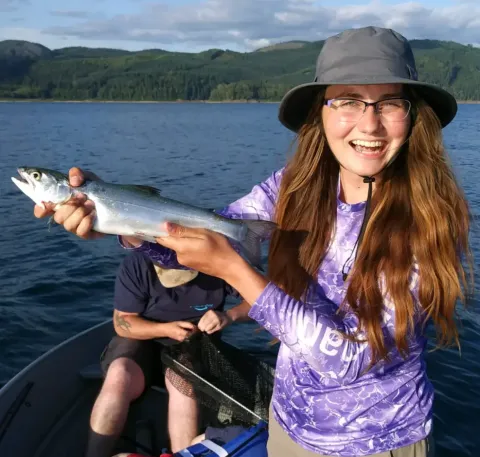
While there are so many lakes with amazing fishing opportunities in Washington State that I love, Riffe Lake may just be my favorite. Located just 60 miles south of Tacoma, Riffe Lake is a 13-mile long reservoir that’s famous for its landlocked salmon fishing. Tacoma Power not only raises and lowers the water levels of this lake, but they also stock it with thousands of coho salmon every year. Once they meet their quota of fish, they put the excess fish in Riffe Lake to give sportsmen an opportunity to target them there. It’s usually well worth the drive, Riffe Lake is a consistently good fishery. I cut my teeth learning how to troll on this lake. Landlocked coho taste amazing on the grill and the smoker. The action is typically hot and fast. Let’s go over how to have a successful day at Riffe Lake!
Trolling is by far the most popular way to fish Riffe Lake. You don’t need to run all the way across the lake to catch fish; you can start trolling right after you launch. You can use your kokanee setups- the coho here are about the same size. Coho in Riffe Lake love the color pink! You’ll want to use small pink dodgers and pink lures. Some popular lures include Mack’s Wedding Rings, Brad’s Kokanee Cut Plugs, small spoons, and small hoochie spinners. The coho are usually willing, aggressive biters. If you get some hits but no fish, reel up and check your bait. This trait also makes them a great way to teach kids how to reel in bigger fish. Before taking your kids out to the Sound to target the big boys, let them practice reeling in these feisty Riffe Lake coho!
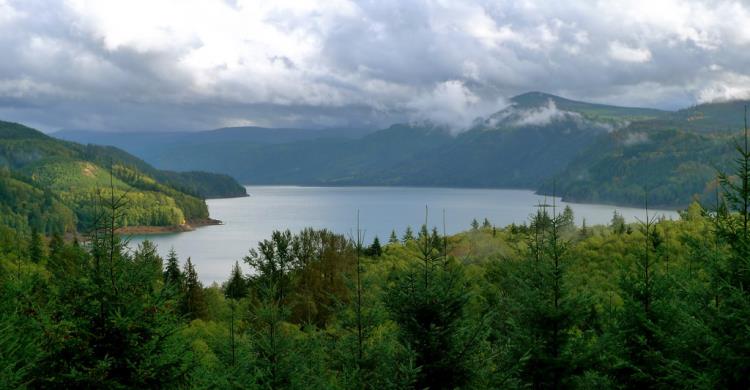
During this time of year, the heat will have pushed the coho down in the water column. Salmonids do not tolerate warm water temperatures as well as other species. They will also travel deeper during the heat of the day to escape the sun. During sunset, sunrise, and on cloudy days, you won’t have to fish quite as deep. A good fish finder is essential to find out how deep to run your downriggers. Riffe Lake is extremely deep and large. With 13 miles of 200 feet deep water, there’s a lot of room for fish to spread out.
Keep a close eye on your fish finder, it’s easy to get lulled into a false sense of security when trolling in such deep water. The lake shallows up surprisingly quickly, especially near islands. Some days the fish can be 90 feet deep. The fish school up very tightly, so they will be easy to find on your fish finder. Be ready to adjust the settings on your fish finder, especially if you’re used to fishing shallow lakes. You don’t need to see all 200+ feet of the lake, adjust your settings so you only see the depth you need.
As of this writing, all boat launches except Mossyrock Park are closed due to low water levels. As previously mentioned, Tacoma Power raises and lowers the water levels throughout the year. You can give them a call or check their website to see which boat launches are open. There’s a nice fish cleaning station at Mossyrock Park, restrooms, ample parking, and a play area for the kids. You can find restaurants, stores, and other amenities at the nearby town of Mossyrock.
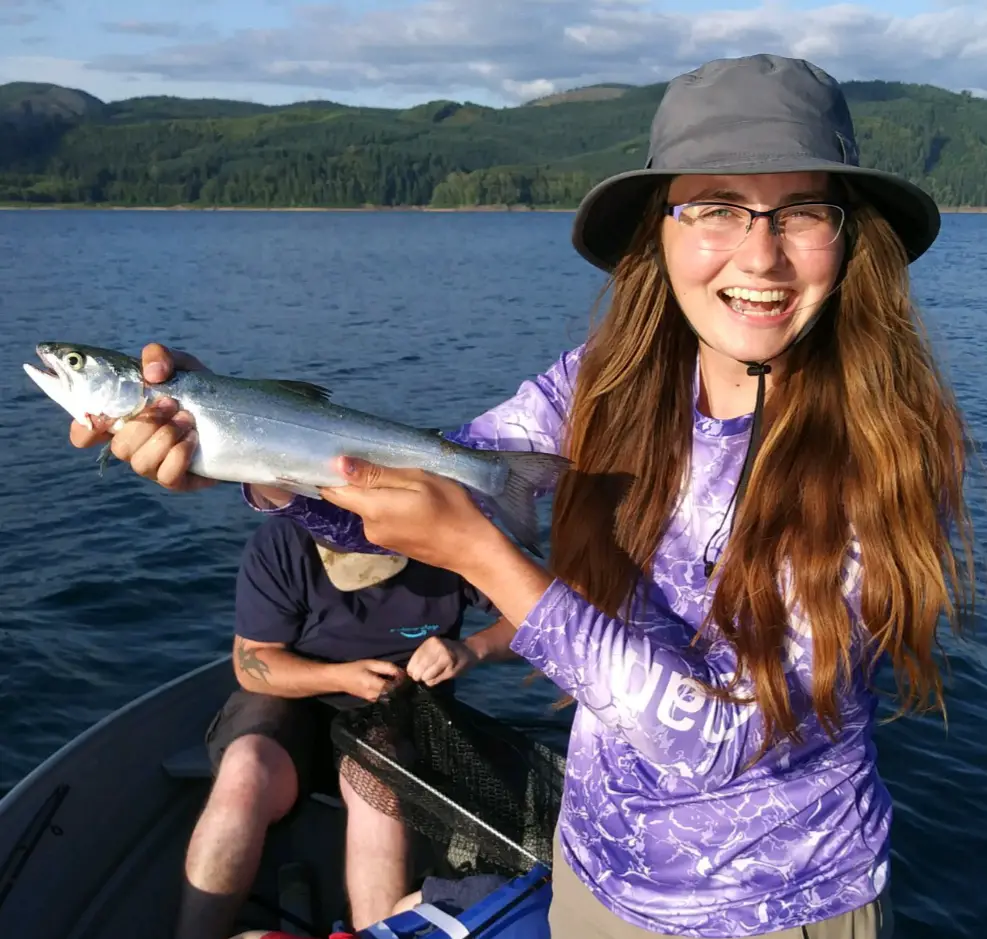
Once you’ve launched, you can start your troll and turn left or right. I’ve consistently found fish in both directions. Some days, we’ve limited out all 4 people in an hour, and couldn’t even get all 4 rods back in the water! There are fish all over Riffe Lake. If you’re struggling to find willing biters, try targeting points and islands. These fish like drop-offs, just like their saltwater cousins.
There’s something for everyone at Riffe Lake. Don’t have a boat? No worries, there are several places near the dams that you can shore fish. Cast out a piece of shrimp underneath a bobber, and wait. Just like when you’re fishing from a boat, you’ll want to adjust the depth you’re fishing at to find the fish. Remember that there is a 5 fish limit. You can catch a variety of species at this lake other than coho, including cutthroat trout, rainbow trout, brown trout, chinook salmon, and steelhead. Salmonids have a hard time surviving catch and release, especially in this hot weather.
Another word of warning, check the forecast before heading out. Riffe Lake is famous for those afternoon winds that can blow small vessels off the . Most importantly, remember to have fun! Riffe Lake is a special fishery. Where else can you consistently bring home limits of land locked salmon? Go catch your limit, let the kids play at the park, and have some ice cream and burgers in Mossyrock before heading home to barbeque your fish!
/articles/return-riffe-lake
Riffe Lake Roundup
Fishing season is officially in full swing! With so many lakes, rivers, and marine areas to choose from, it can be hard to pick your next adventure. If you’re never fished Riffe Lake before, or if it’s been a while, you should put it at the top of your list. It’s one of my favorite fishing destinations, and I make it a point to fish it as much as I can every year. Not only is the fishing top notch, but the scenery is beautiful and the surrounding towns are well worth visiting. I can’t think of many other lakes that offer such a wide variety of fish, let alone with such a good opportunity.
You can catch brown trout, cutthroat trout, smallmouth bass, chinook salmon, coho salmon, crappie, and brown bullhead. The lake is simply packed with fish, and they’re willing biters. You can take the boat out or shore fish, and finish out the day with a Dam Burger from Pioneer Bar & Grill in Mossyrock before heading home to grill your catch. It’s a bit of a drive, but it’s a great way to spend a day!
Located in Lewis County, Tacoma Power created RIffe Lake by constructing Mossyrock Dam on the Cowlitz River in 1968, flooding the communities of Riffe, Nesika, and Kosmos. It has a maximum depth of 360 feet and is about 23.5 miles long. Not only does the lake boast good populations of land-locked coho salmon, but you can also catch triploid trout! Back in 2020, Tacoma Power bought about 400,000 Rufus Woods strain triploid trout and released them into the lake for anglers to catch. The fish have had plenty of time to grow and they are a ton of fun to catch. If you’re lucky, you may even hook into a steelhead or a chinook salmon on the same day! Tacoma Power releases these fish into the lake as well, once they’ve met their stocking quotas. With such a plethora of fish to catch, you can see why Riffe Lake is a favorite of many northwesterners.
Trolling Techniques
Riffe Lake has plenty of room for boats of all shapes and sizes. It is almost 24 miles long and up to 360 feet deep, which can sound intimidating. Not to worry, there are thousands of fish in the lake, and most days they are willing biters. There have been many days when we can’t even put the planer boards out because the two downrigger poles or lead lines are constantly going off! Early in the season, lead lines, divers, and dropper weights work just fine. The fish are still feeding on the surface and haven’t been driven down to the depths by the hot sun. As the season progresses, however, a good fish finder is a must, particularly for the land-locked coho. Troll until you find a school, mark where you get bites, and don’t be afraid to put a little scent on your lure.
I find that the land-locked coho are particularly attracted to pink lures and dodgers. You can use corn or maggots to bait your hooks. Spinners, plugs, spoons- they all catch fish at this lake. I tend to use whatever I already have rigged up for kokanee fishing at other lakes. As for locations, you really can’t go wrong on Riffe Lake- you can start trolling almost as soon as you launch at Mossyrock Park and will usually start catching fish right away. If the fish are being stubborn, try targeting points and coves. Keep an eye on your fish finder if you’re using downriggers, the lake can shallow up surprisingly quickly.
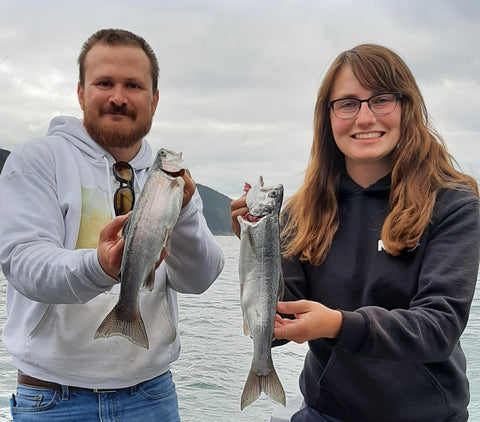
In recent years, it’s been difficult to keep the triploid trout off your hooks if you want to target the land-locked coho salmon in the reservoir. The salmon and trout tend to bite on the same lures and hang out at the same depths in the early season, so you can expect to catch a mixed bag. In general, the coho hang out deeper than the trout in the later season, making downriggers and a good fish finder almost a necessity for targeting them. The salmon tend to like a faster troll, so don’t be afraid to bump it up to 1.9 or 2.2 MPH. However, the trout taste great on the grill and put up a great fight, so most anglers don’t mind catching them.
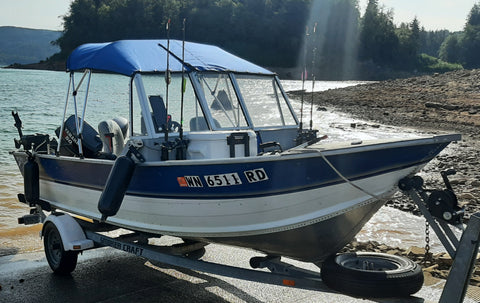
As a word of caution to boaters, check the water levels at Tacoma Power’s website or give them a call before heading out. The lake’s level fluctuates throughout the year and launching can be difficult when water levels are low. The launch at Mossyrock Park is usually your best bet year-round. It has a large dock with 2 lanes to launch at, which is nice when the ramp is busy. Don’t sweat the crowds too much though, the lake is massive and there is plenty of room for everyone. The other boat launches, Taidnapam and Kosmos, are unsuitable for low water conditions. Check the wind forecast before hitching up the boat- the afternoon winds at Riffe Lake can kick up and create nasty white caps, catching unprepared boaters off guard.
Still Fishing Techniques
Don’t have a boat? No worries, Riffe Lake has plenty of shore access! You can fish at the dam in Mossyrock or at the fishing bridge at Taidnapam Park. These spots can get crowded on nice weekends though. Most shore anglers cast out shrimp or worms under a bobber with a sliding weight. Experiment with setting your bobber stopper anywhere from 3ft to 15 ft until you figure out where the fish are at.
If you can’t get a spot at the dam or fishing bridge, fishing at nearby Lake Mayfield or Swofford Pond is a good alternative. Lake Mayfield is stocked with tiger muskies, which are difficult but extremely rewarding to catch. WDFW also stocks decent numbers of rainbow trout there every year. Swofford Pond has good populations of panfish, stocked rainbow trout, and brown bullhead. There is a boat launch at both lakes, and good shore access. Many folks fish Swofford Pond with inflatables and kayaks, as there is an internal combustion motor ban.
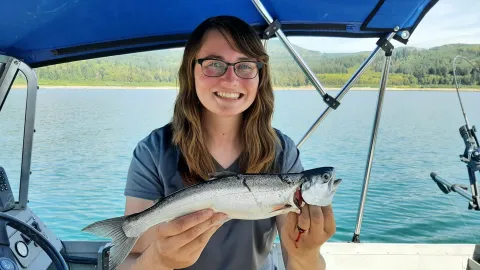
Before you grab those poles and hook up the boat, keep in mind that Riffe Lake has a 5 fish limit. They can be any combination of landlocked salmon and trout, so you cannot legally keep 5 coho and 5 trout. The land locked coho don’t tend to survive catch and release very well, particularly in the summer heat. The lake is large and deep, and those afternoon winds can kick up unexpectedly, so make sure that everyone on your boat has a life jacket. Keep these rules in mind, hook up the boat, and have fun!
/articles/riffe-lake-roundup
Reel Time in Cabo
In the previous year, Rob and I had the chance to connect with Toby Wyatt, the Northwest Guide from Reel Time Fishing, along with his wife Cindy, while we were in Cabo San Lucas. We eagerly seized the opportunity to escape the chilly season and head down to Mexico to explore the exciting developments of Reel Time Fishing in Cabo.
Toby, an experienced PNW guide renowned for fishing from Buoy 10 to the Clearwater River, has devoted several years to developing his Mexico venture. He has fine-tuned the guest experience down to a science, curating everything from local captains and upscale resorts to luxurious transportation and diverse vacation possibilities beyond fishing. Upon our arrival, his team was readily available to steer us in the right direction and acquaint us with the intricacies of Cabo. Having Toby's steadfast support provided us with a reassuring sense of security and tranquility as we ventured abroad.
Planning Ahead
In early December, we strategically planned our journey to Cabo, a prime period for sport fishing, especially with favorable Marlin-catching opportunities (which both Rob and I were enthusiastic about). Our airfare was secured, and our dates with Reel Time were locked in, thanks to arrangements made half a year prior with a cohort of industry friends from Spokane. We also ensured our passports were up to date. Accompanying us on this adventure were the renowned Chef and Restaurateur Adam Hegsted, Chef Aaron Fish and his wife Miranda, Creative Director Jason Olsen and his wife Heather, as well as Rob and myself. Embarking on this expedition as a group added an enjoyable dimension, and thanks to Toby's recommendations, we were able to shape the ideal trip we had envisioned.
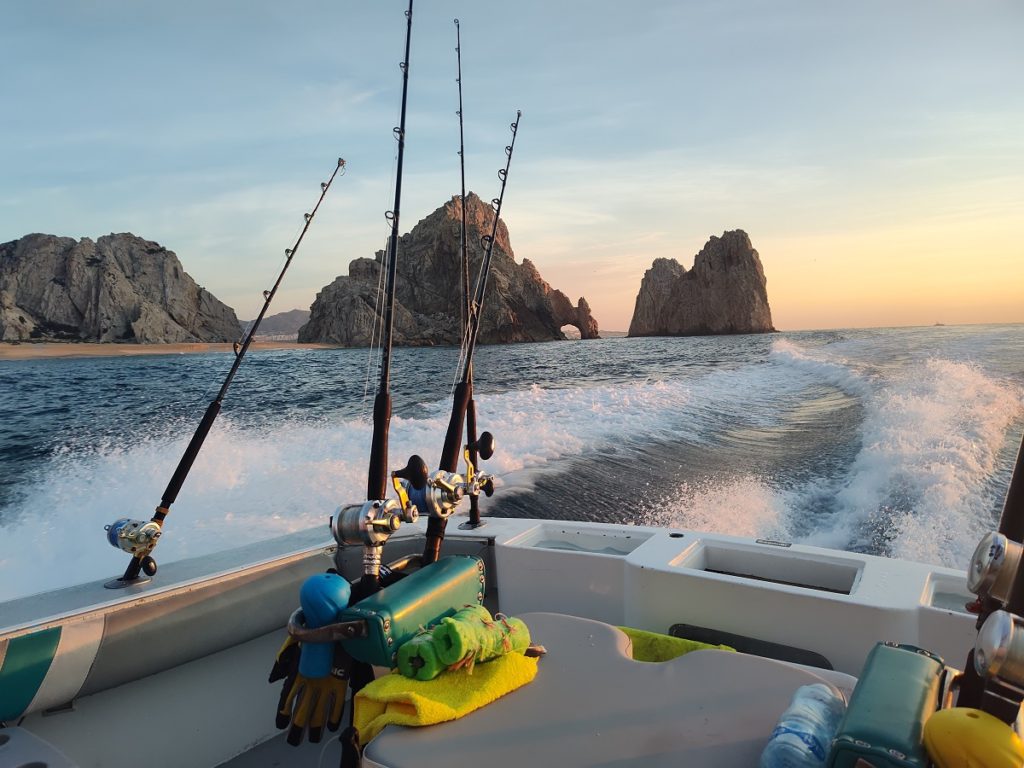
As a united group, we touched down in Cabo and navigated customs, proceeding to the transportation meticulously coordinated by Reel Time Fishing. Awaiting us was a sleek black Escalade, and our designated driver, "Eddie," who could only be likened to our personal guide – Toby's trusted on-site emissary. Our airport pickup was characterized by sophistication, and we were subsequently transported to our lavish all-inclusive abode, the Hotel Riu Palace Cabo San Lucas. Throughout our journey, Eddie remained at the wheel, chauffeuring us to the docks, an exciting ATV escapade, and any destination of our choosing, ensuring a seamless and convenient experience.
Our Stay
The resort proved to be an absolute marvel. Our desires were not only met but effortlessly anticipated. Our all-inclusive package encompassed both beverages and cuisine, with a plethora of restaurants, entertainment options, and pools that catered to every whim. Our refrigerator remained abundantly stocked, and a continuous flow of tequila was readily available, satisfying our every indulgence.
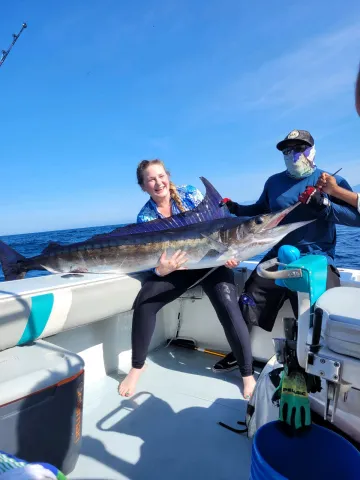
The primary motivation behind our trip revolved around the fishing prospects, and we were not disappointed – they were exceptional! Rob and I both achieved the thrilling feat of reeling in our first Marlin, an experience that will forever stand out in our memories. Across two days of deep-sea angling, we hauled in Ahi Tuna and Mahi Mahi as well. The intense battles Rob and I waged against our Marlin catches surged with an adrenaline rush unparalleled in the waters of the Northwest. The sensation was beyond expectation; truly an extraordinary encounter worthy of being on anyone's bucket list. Our cooler brimmed with the bounties of Mahi Mahi and Tuna, all set to journey home with us. Following the local custom, we released the Marlin back to the sea. The crew adeptly managed the cleaning process and even connected us with a processor to ensure our catch was expertly prepared for transport on our flight back.
Crave TV
We embarked on a Crave TV episode alongside Chef Adam Hegsted and Chef Aaron Fish, capturing the awe-inspiring sight of Northwest culinary experts skillfully crafting fish dishes infused with the vibrant flavors of Cabo's ingredients. Our poolside relaxation day proved refreshing, and we delved into the local shopping scene, exploring charming boutiques. A leisurely boat taxi ride across the bay allowed us to embrace the coastal charm. Venturing into the countryside, we engaged in an exhilarating desert off-road adventure, navigating the terrain with four-wheelers.
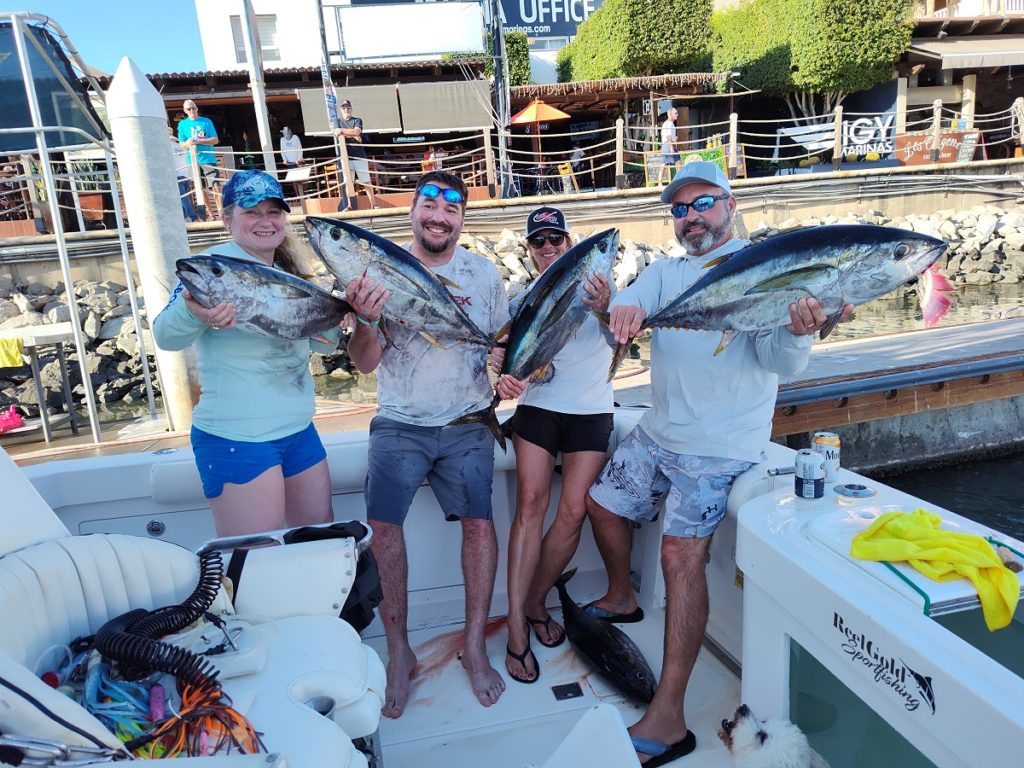
"It's an incredible way to punctuate the time spent on the water. There's something invigorating about cruising through the Mexican desert that truly makes you feel alive." - Jason Olsen
I had the opportunity to sit down with Jason Olsen and discuss his firsthand experience in Cabo with Reel Time Fishing.
Jason:
How was your fishing experience with Toby's team?
"Second to none! Nothing compares to that whole trip. It’s a lot of buildup. And it doesn’t disappoint. As far as going out on the boat with Pepe, knowing he was linked to Toby, I felt comfortable and safe knowing I was in good hands. Toby has seasoned dudes, and he has a standard for bringing people on. I would definitely go again at the drop of a dime. I was impressed with Pepe. He knew exactly what to do and where to go. He had an innate instinct on where to go to catch the fish and had electronics to get us on the fish. Also, having someone to show us around and be our wheels on the ground, saved us money and we did it in style."
What kinds of fish did you reel in?
"Yellow Tin Tuna, mostly. We went out from about 5 am and by 11 am we caught 10 Tuna."
What was the battle like?
"A lot harder than freshwater fish. High energy. At one point I had to strap myself into the chair."
Can you tell me about the flags?
"So the whole experience coming back to the dock was pretty great. After we caught the fish, Pepe had me hang up these flags I wasn’t sure what for. The minute we pulled into the marina, It was a bit of a parade. A bragging parade. Everyone could see what kind of fish we caught and how many from the amount of flags that were flying on our boat. It was pretty great to showboat our way into the Marina."
How was the dining experience?
"The resort accommodations and restaurants were amazing! The experience of going out in the morning and coming back and having my fish prepared by a local chef, was like no other. My liver hurt when I came home."
Jason's Wise Words:
"Take the seasickness patch, don’t be a hero! Go with a guide that is credible. Toby’s network takes the worry out of travel. Listen to Toby and you will do just fine. Use his knowledge and connections. The culture and being able to start my fishing endeavors at such a high caliber was an amazing opportunity."
Toby:
"One thing we do is we babysit our guests. We transport them from the airport to the resort to fishing and back. “We are like a coach in your corner.”
"We have a full service-all Baja Peninsula tour company that specializes in sport fishing. We help keep you safe and save you money. We have 4 captains in Cabo and packages with many of the Cabo Resorts. We can accommodate Groups of up to 40 people and have access to a 45 ft boat and 90 ft yacht. "
/articles/reel-time-cabo