Becoming A SeaWalker In Neah Bay
What Anglers Can Expect While Fishing Washington's Saltwater Frontier
It was mid-June, and we rolled into Neah Bay just before evening. Our scenery was fishing boats packed into the marina and the heavy smell of fireworks, as the local kids ran the waterfront. Surrounded by lush rainforest and steep cliffs, the village sat within the Makah Reservation and served as a hub for recreational and tribal fishing. June marks the start of the busiest season here. As waters warm and baitfish like sand lance, herring, and anchovies flood the area, predators follow in force. From the protected inshore waters of the Strait to the jagged pinnacles and kelp beds offshore of Cape Flattery, anglers have options for nearly every style of saltwater fishing imaginable. So we got some sleep, cause early the next morning we had a meeting at the dock with Captain Fred Walker of SeaWalker Charters.
Waking up early to the smells and sounds of the harbor is something I love. Walking down to the boat, seeing all the hustle and bustle so early, watching everyone load gear, and exchanging stories will get you excited for the day. Finding the "SeaWalker" boat was easy, and the captain and deckhand were eager and ready to go. Our captain for the day was Captain Fred Walker, and he had one of the cleanest and most organized boats and operations, which immediately put us at ease, knowing we were in good hands. Not to mention he's been fishing these waters for over 30 years. The top-notch Kingfisher boat was loaded with the highest quality of gear. From the Tanacom electric reels to the Custom Prolite Rods, we had everything from mooching, trolling, and bottom fishing covered. And he and his deckhand, Max, take safety very seriously, and the success comes with it.
●Lingcod And Rockfish
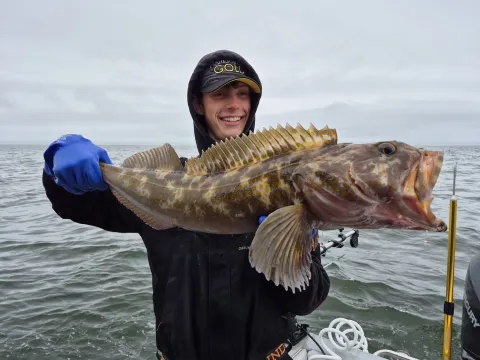
As we motored out, we were anywhere from 50-60 miles from shore and had everything prepared for the long day. Neah Bay is legendary for bottomfish, and June is prime time. Lingcod are aggressive and plentiful, often lurking around rocky reefs, underwater pinnacles, and kelp edges. These toothy predators just hammer the jigs, or whatever offerings you're presenting, with equal enthusiasm. It's not unusual for anglers to catch their 2 keeper-sized lings in a day, along with a chance at a true trophy over 30lbs. Rockfish, both black and yelloweye, fill out the action, providing near consistent bites for those dropping smaller spoons and jigs into the schools, making them furious while filling limits quickly. With daily limits generous compared to other parts, anglers can usually count on a cooler of rockfish to complement those lingcods.
●Halibut
By June, Washington's Halibut season is still underway, though regulations shift year to year. When opened, halibut is a major draw. Neah Bay is one of the few places in the state where anglers can run relatively short distances offshore to productive halibut grounds. Places like Swiftsure Bank and areas West of Tatoosh Island hold halibut ranging from 20lbs "chickens" to "barn door" halibut topping 100+ pounds. Fishing for halibut here is not only an exercise for the body, but an exercise in patience and persistence. Heavy lead and big baits waiting for the unmistakable thump of a halibut inhaling your offering. The payoff, however, is unmatched table fair and a true trophy to catch. Couldn't be more thankful for Captain Fred having them Tanacom 750 reels on board to winch up these flatfish from the depths of 380ft-500ft.
●Salmon
June is often the month when salmon begin filtering into the region. Chinook (Kings) are the headliners, while the main summer salmon season in Neah Bay typically kicks off later in July. Early arrivals show up in June, especially along kelp lines and nearshore structure, where we seemed to find ours. These early-season Kings are strong, chrome bright, and are prized by many anglers. Mooching can be a very exciting way to fish; having the knuckle-busting action can be just part of the fun. Coho may also be appearing offshore, although they are usually more prevalent in July and August. For those lucky enough to hook up in June, Coho provide acrobatic fights, and a taste you'll return for.
(Also, don't forget the opportunity for Albacore Tuna in late June, depending on water temps)
●Tactics And Techniques
•Bottomfish: Most anglers target lingcod and rockfish by jigging heavy spoons or jigs tipped with bait or soft plastics near rocky structure. Larger, similar profiles work very well for lingcod. GPS and electronics definitely help you stay directly on productive reefs and rocky structures.
•Halibut: Halibut set-ups typically consist of a stout rod, like the Prolites we used specifically for the bottom fishing. Heavy-duty reel, like a Tanacom, is ideal for the depths, matched with a quality braided line. Often drifting over humps and flats, bouncing pipe jigs and larger offerings, tipped with herring, squid, scents, drawing in fish at depths of 200-500 feet.
•Salmon: When targeting salmon, trolling is the go-to method. Downriggers with flashers and hoochies, spoons, or herring rigs dominate the setup. Inshore, mooching with different offerings can be deadly, particularly when schools of bait are thick near kelp lines. Definitely a "Knuckle Busting" Mooching reel can be so fun, and very sporty at times.
●Conditions And Weather
June weather at Neah Bay can be notoriously unpredictable. Anglers should expect anything from flat calm seas to fog, rain, and possible stiff winds. Mornings are often the calmest, as wind typically builds in the afternoon. Having the flexibility to fish on shorter notice, when the forecast cooperates, can make or break a trip. Fog can be a factor; the Strait and nearshore waters can sock in with heavy fog, making it invaluable for navigating, even with GPS and radar. Always plan for safety, as the Pacific can turn hostile quickly. Being on a guide’s boat, such as the SeaWalker, and knowing it was equipped with the best crew and safety gear, makes the trip so much more enjoyable.
●Regulations And Access
Neah Bay is subject to both Washington Department of Fish and Wildlife (WDFW) regulations and tribal considerations. Seasons for halibut and salmon can change annually, even for bottomfish. So anglers must review the most current rules and regulations before making the trip. Size limits, bag limits, and barbless hook requirements are strictly enforced. Access also requires awareness, as you are on a reservation. As a visitor, always respect the policies and rules of the tribe. And while launching and returning to the Big Salmon marina, there is a cleaning station to clean your catch daily. Or pay a couple bucks to have a couple locals do it for you.
Fishing Neah Bay in June is an adventure into one of the richest marine environments on the West Coast. With stunning scenery from the rugged cliffs of Cape Flattery, the westernmost point in the contiguous United States, to the pristine beaches and rainforest nearby. Wildlife is abundant, and so many bald eagles share the water with anglers.
The community itself is small and welcoming, with local lodging, camping, and the Makah Cultural and Research Center offers a window into the rich history of the Makah people and the many years of fishing. It's a place where the Pacific reveals both its bounty and its raw power. A destination where every trip feels like an expedition, and every fish tells a story. For those who are looking to make the trek, expect long days on the water, a cooler of catches, and the memories you reeled in at Washington's Saltwater Frontier.
●Tips For Success
1. Book lodging early; June is popular, and options are limited
2. Hire a charter for your first trip. Water can be intimidating, and a good captain like Fred Walker with SeaWalker Charters would be my choice.
3. Pack for all weather. Layered clothing, rain gear, deck boots, waterproof bag or backpack.
4. Stay Flexible - weather and seas dictate much of the fishing. Having a couple of backup days built into the trip always helps.
5. Pack snacks, drinks, meds, and motion sickness medication. Not all charters cover a lunch, but most will have water on board.
6. Know the rules and regulations, as they can change yearly, and enforcement can be strict
7. Have fun, and respect the boat and the operation going on around you.
8. And most of all, "Reel In The Memories"!
/articles/becoming-seawalker-neah-bay
Ten Pink Salmon Shore Locations
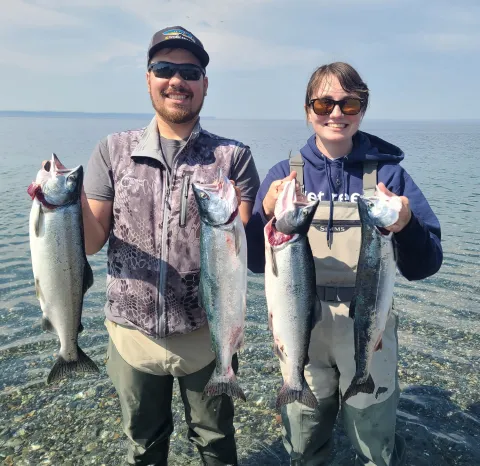
Of all the Pacific salmon species, pink salmon are the most common. 7.76 million pink salmon are expected to return to the Puget Sound this year; the third largest run on record! This is going to be a great year to teach newbies how to fish or learn a new fishery yourself. Pink salmon are snappy, eager biters, perfect for kids or new fishermen. They are named for the pink color of their meat. Speaking of their meat, they taste great grilled or smoked, especially when bled and iced right away.
August is a great time of year to target pink salmon in both the ocean and rivers. They run close to the shore, enabling many bank fishermen the chance at getting a limit. Let's go over 5 Puget Sound saltwater locations and 5 freshwater locations to get you started.
Lincoln Park
A favorite beach for Seattle locals! There is plenty of room to spread out on this large beach. It is a bit of a walk from the parking lot, but don't let that deter you. The fishing here is quite good! The fish run close to shore all the way up and down the beach. Bring your pink Buzz Bombs!
Point No Point
Probably the steepest beach on the list, Point No Point is a beautiful spot to fish. It has an old lighthouse with an adjoining park. The main parking lot is closed down, but you can park at the nearby overflow parking lot and walk to the beach. Make sure to look at a tide chart before you go. The current tends to rip here, which can lead to tangled lines.
Picnic Point
This is another beach that has good concentrations of pink salmon. Bring your waders and watch for schools swimming by. This beach is popular with fly fishermen; make sure to leave them plenty of room to cast. If the fish aren't biting, Edmonds Pier and Mukilteo Beach are both nearby.
Edmonds Pier
Though you'll definitely have company, especially on weekends, this is a fantastic pier for catching all types of salmon. You'll want to have a plan for bringing your fish up on the dock, however. Most people bring a crab ring and haul their catch up that way. Since you're in an elevated spot, it's easier to see fins and tails that signal when the schools of salmon are coming.
Les Davis Pier
This is another saltwater pier that has gained popularity since Dash Point and Redondo Piers were both closed. There are lots of nearby amenities, including a small cafe near the entrance of the pier. Schools of fish swim by frequently during the peak of the season. You'll want to bring a crab ring here to bring your fish up to the dock.
Puyallup River
Like many other fishermen, I learned how to catch pinks on this river! There is a ton of shore access, but it can be crowded, especially on weekends. Tread carefully when wading- it can be almost impossible to spot submerged boulders and trees in the murky water. Most people here drift pink corkies and yarn. Levee Road and River Road near the lower part of the river offer good bank access. Look for gravel bars and bends in the river. The Puyallup runs into the Carbon River, which also has great shore access, but typically opens later in the year. Look for parks and access points near Orting.
Green River
This river has a surprising amount of bank access. Numerous parks and trails dot the river. You can find spots to drift fish, toss spinners, and twitch jigs. The river is called the Duwamish as it gets closer to the mouth. Start in the Duwamish early in the season and follow the fish as they move into the upper river. Most of the river is clear and shallow, so you'll be able to see the schools coming. If they aren't biting at one spot, move to another.
Snohomish River
One of the most popular rivers for fishing pink salmon, there is plenty of shore access here. Thomas Eddy Park and Lord Hill Park have many trails you can walk to find your spot. Many anglers here drift Dick Nite spoons with good success. There are several other parks with good shore access on the lower river.
Nisqually River
This beautiful South Sound river doesn't have much bank access, but it is projected to get an especially strong run of pinks this year. The Nisqually River Public Access has a trail and some rocks that you can fish off of. Bring a lot of extra gear; there are some nasty snags in the river.
Skagit River
Most of the shore access here is at boat ramps and gravel bars. The folks at Holiday Sports in Burlington are always willing to share hot spots with anglers. Just about any gear will work on this river. There are shallow, fast runs that are perfect for drifting as well as slow, deep pockets for twitching jigs or throwing out a bobber. Versatile anglers will do well on this river.
Tackle
For Puget Sound beaches, I'd recommend bringing at least an 8-foot rod; casting distance is important. Make sure it can sling about an ounce of lead. Pink Buzz Bombs are the standard lure. Toss it out to schools of fish and try different jigging speeds and patterns to see what works. Make sure not to dunk your reel in sand or saltwater, and always rinse it thoroughly when you come home.
For rivers, you can use the same rod and reel you used for the beaches. Tie on a corky and yarn if you want to drift fish. About 4 to 6 feet of leader should do the trick. It takes some time to be able to feel the difference between the bottom and a fish bite. Bring a few different weights so you can adjust according to the speed of the current- you want to tick bottom every few seconds, not drag on it. Pink spinners and twitching jigs will also catch fish.
Before heading out, always make sure to check the latest rules and regulations. Emergency closure can and does happen. Pinch your barbs in the Sound and rivers with barbless requirements. Make sure to bring a cooler with ice: pink salmon don't taste as good when they're left flopping on the bank.
/articles/ten-pink-salmon-shore-locations
Washington Saltwater Salmon Opportunities
The list of saltwater salmon fishing options in early summer are far and wide, and in this column, I’ll break down the path to success around Puget Sound and off the Washington coast.
One important factor to keep in mind, when planning a fishing excursion is that the entire 2025-2026 season package won’t be officially adopted until sometime in early to mid-June. What tends to happen is that these early-season summer fisheries will require emergency opening approvals, so anglers should regularly check the Washington Department of Fish and Wildlife (WDFW) website (https://wdfw.wa.gov/) for possible updates and changes.
Back in mid-April, the Pacific Fishery Management Council held meetings in San Jose, California, and the 2025-2026 tentative statewide salmon fishing seasons were adopted by the Council. The season recommendations set forth by WDFW are then moved forward for federal approval by NOAA Fisheries.
While we wait for the ink to officially dry on the approval process, let’s visualize the possibilities of where to go and wet a line in the upcoming weeks, as well as a few pro tips to improve your chances of hooking a fish.
Since no salmon fishing season mirrors another, anglers have learned to become more adaptable to the constant ebb and flow of change. First off, anglers should be mobile and willing to move from location to location to maximize their time on the water.
Don’t focus all your time on one specific area. By doing a little bit of homework and reading this column below, you’ll likely find more choices by going outside of the box. Second, since many seasons are driven by catch quotas/guidelines, it is wise to go sooner rather than later.
Next, build a communication network to stay informed about the latest fishing trends, including the WDFW website and blog posts. Many other social media platforms can be used to gather this kind of information. Attending fishing seminars is another good avenue to gain more knowledge.
Other tips include reading blogs and watching YouTube videos from fishing influencers, especially publications like this magazine, which provide a plethora of information.
Where to go in June
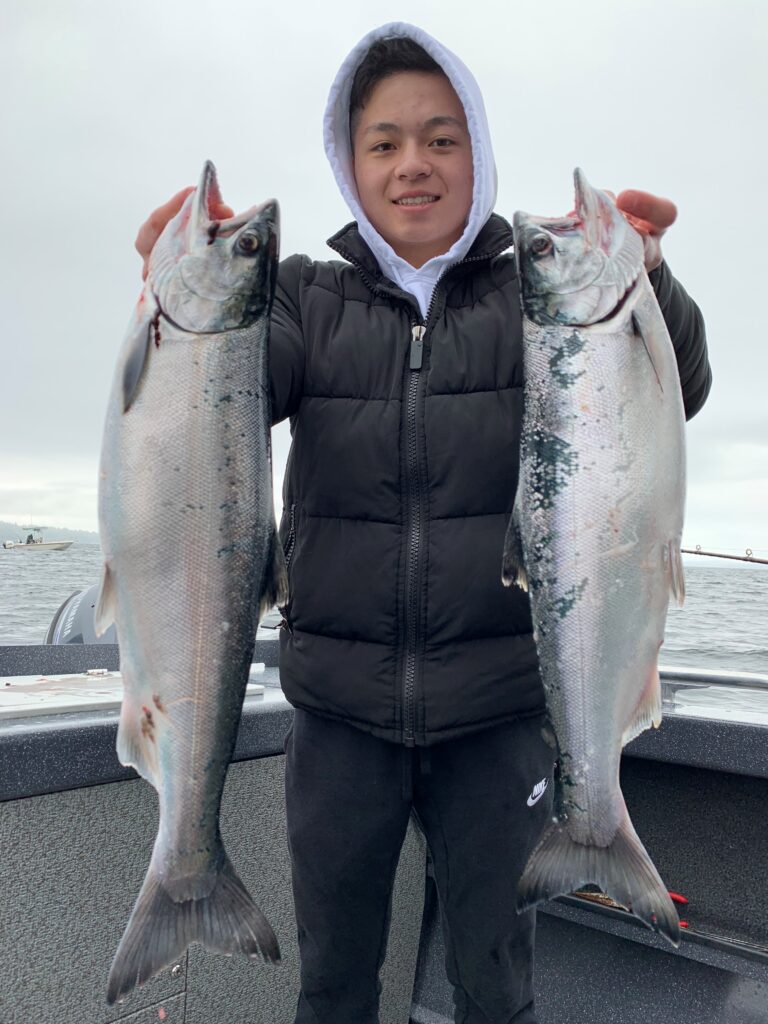
For the past several summers, Marine Area 10 (Seattle-Bremerton Area), mainly the northern portion, has been good for early coho and is open daily beginning June 1. The resident coho average 2 to 4 pounds, along with a few larger ones, and are fairly snappy. Their bright red-orange meat is excellent for the BBQ grill. This is due in part to the abundant schools of krill: small, microscopic, shrimp-like crustaceans found in Marine Area 10 during the summer.
Most will target coho in the shipping lanes off Jefferson Head to the Kingston-Apple Tree Point boundary line, and from the Edmonds oil dock to Richmond Beach. Other locations worth a try are Point Monroe off the north side of Bainbridge Island, West Point south of Shilshole Bay, Blake Island/Southworth area, and the entire eastern side of Bainbridge Island.
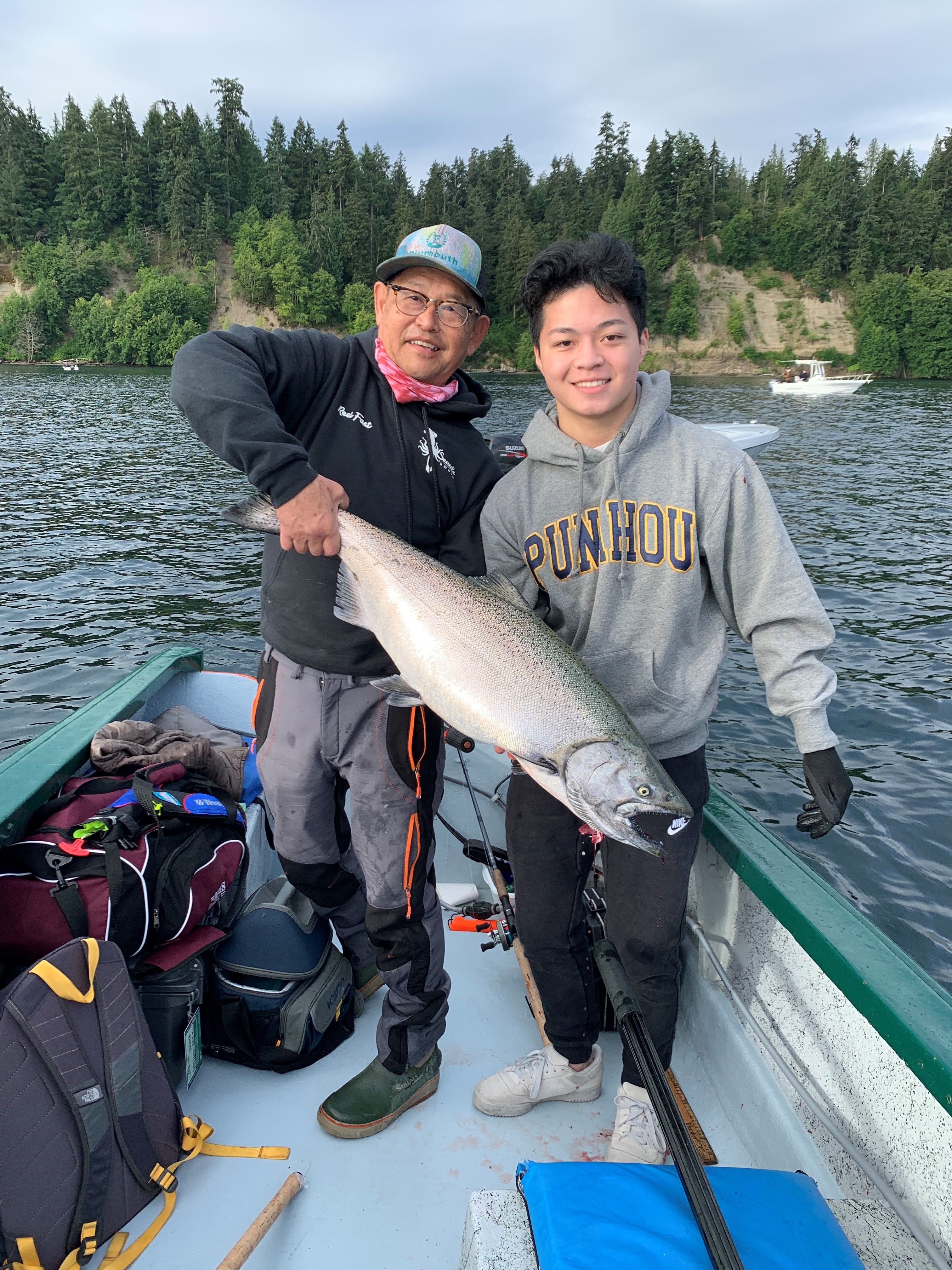
If you’re looking to catch an early summer hatchery Chinook, then Marine Area 11 (Tacoma-Vashon Island) is an option and open Wednesdays through Saturdays only from June 4 to 30. These hatchery kings average 8- to 15-pounds along with some topping exceeding the 25-pound mark.
WDFW will regularly monitor the Marine Area 11 fishery and could close sooner if the quota or other guidelines are attained. The Chinook catch quota for June is 1,423 (1,423 in 2024 and 2023, 580 in 2022, and 431 in 2021) with a total unmarked encounter of 818, and a total sublegal encounter of 1,601. The Chinook fishery is managed under two separate summer quotas, and a second window of opportunity happens in late July. Commencement Bay east of the Cliff House Restaurant/Sperry Ocean Dock boundary line is closed to salmon.
Those who fish for salmon regularly in Puget Sound marine areas – especially in the Tacoma region – know that dogfish can be an issue in the summer.
To avoid pesky schools of dogfish, anglers will jig or troll with downriggers and meat liners using plugs, spoons or a plastic hoochie squid. If you drop a whole or cut plug herring, make sure you’ve got plenty of extra leaders tied. The sharp teeth and abrasive sandpaper-like skin of a dogfish will fray leaders. Lesson learned, I’ve burned through more than a dozen in a matter of a couple of hours.
In Marine Area 11, look for Chinook lurking around the Clay Banks to Owen Beach at Point Defiance Park in Tacoma, the Slag Pile off the Tacoma Yacht Club, the “Flats” outside of Gig Harbor, Quartermaster Harbor, and Point Dalco on the southwest side of Vashon Island.
In the northern part of Marine Area 11, try Dolphin Point and Point Robinson on the northeast side of Vashon Island, south of the Southworth Ferry Landing, Colvos Passage, Dash Point, and Apple Tree Cove to Redondo Beach.
Keep in mind that the salmon fisheries mentioned above for Marine Area 10 and Marine Area 11 are only for June, and that additional salmon fishing opportunities will occur in both areas. Anglers should check the WDFW North of Falcon webpage for additional season information.
Another June option for hatchery Chinook is south of the Tacoma-Narrows Bridge in Marine Area 13 (South Puget Sound), which is open seven days per week. Look for fish are Gibson Point, the concrete dock off Fox Island’s east side, Hale Passage, Johnson Point and Point Fosdick.
The Tulalip Bubble Fishery (Marine Area 8-2) is open through Sept. 1 with fishing allowed from 12:01 a.m. Fridays to 11:59 a.m. on Mondays of each week, and closed June 21. Before going, anglers should check the WDFW website as intermittent closures may be needed to ensure the hatchery is meeting spawning escapement goals. Fishing is also open Sept. 6 to 21 and allowed Saturdays and Sundays of each week. The bubble fishery is open within the terminal boundary only – closed east of a line from Mission Point to Hermosa Point – and can be decent for summer Chinook in the 10- to 20-pound range, and is mainly a trolling or jigging show.
You can jig drop down a glow, chartreuse, pearl-white, green-nickel, blue-pearl or blue-gold pattern in three to six-ounce sizes depending on the current and wind. Remember, store-bought jigs have a treble hook, and they’re illegal for salmon in all marine areas. Only single-pointed barbless hooks and one fishing line with up to two hooks may be used.
Trolling is the popular method with downriggers and a flasher combined to plug, spoon, and/or a plastic hoochie squid. Before or at daybreak, the fish tend to be found from the surface down to 90 feet, and as the sun rises, they’ll go deeper up to around 100 to 175 feet.
Many anglers are making plans to visit the coastal ports where Chinook and hatchery coho fishing get underway in late June. The ocean salmon season includes a recreational Chinook quota of 53,750 (41,000 in 2024) and a hatchery-marked coho quota of 99,720 (79,800 in 2024).
Marine Area 1
(Ilwaco)
Is open seven days per week from June 25 through Sept. 30, all salmon, with a subarea guideline of 16,600 Chinook (12,510 in 2024) and a subarea quota of quota of 49,860 marked coho (39,900 in 2024). The daily limit is two salmon and one Chinook only. Columbia Control Zone closed.
Marine Area 2
(Westport-Ocean Shores)
Is open seven days per week from June 21 through June 28, with a subarea guideline of 22,270 Chinook (17,430 in 2024), and the daily limit is one salmon, release all coho. Open seven days per week beginning June 29 through Sept. 15, all salmon, with a subarea quota of 36,900 marked coho (29,530 in 2024). Beginning June 29, the daily limit is two salmon, and only one may be a Chinook.
Marine Area 3
(La Push)
Is open seven days per week from June 21 through July 3, with a subarea guideline of 2,280 Chinook (1,630 in 2024), and the daily limit is one salmon, release all coho. Open seven days per week beginning July 4 through Sept. 15, all salmon, with 2,590 marked coho subarea quota (2,070 in 2024). Beginning July 4, the daily limit is two salmon. No chum retention beginning Aug. 1.
Marine Area 4
(Neah Bay)
Is open seven days per week from June 21 through July 3, with a subarea guideline of 12,600 Chinook (9,430 in 2024), and the daily limit is one salmon, release all coho. Open seven days per week beginning July 4 through Sept. 15, all salmon, with a subarea quota of 10,370 marked coho (8,300 in 2024). Beginning July 4, the daily limit is two salmon. No chum retention beginning Aug. 1. Beginning Aug. 1, Chinook non-retention east of the Bonilla-Tatoosh line during the managed ocean fishery.
WDFW fishery managers will monitor the number of salmon caught in season and may close areas earlier if quotas or guidelines are met. In-season management may be used to sustain season length and keep harvest within the overall Chinook and coho total allowable catch.
Piers open year-round for salmon in Puget Sound include the Edmonds Marina (usually a good place for early summer kings in June), Fox Island, Mukilteo Ferry Landing, Seacrest in West Seattle, Dash Point Dock, Point Defiance Park Boathouse, Les Davis, and Des Moines.
Note: The salmon daily catch limits, species and size restrictions, and other regulations vary for each marine area. Emergency closures or adjustments to marine area seasons are also possible. Anglers should check for details on the WDFW website or the 2025-2026 regulation pamphlet.
(Mark Yuasa is a Washington Department of Fish and Wildlife Communications Manager and a longtime local fishing and outdoor writer.)
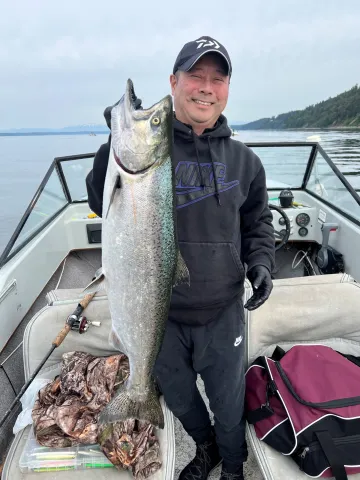
/articles/washington-saltwater-salmon-opportunities
The Derby Mentality
A fishing derby? I'd better set up a team and sign up. I’m the “Fish Whisperer", my buddies and I can outfish anybody! Actually, that’s not fair. Although the fame and money would be nice. Most people sign up for a derby just to participate in the event and to enjoy the camaraderie and fellowship. Winning would be a sidebar to enjoying the fishing trip, enhancing the overall experience.
Fishing derbies and tournaments for just about everything that swims are organized throughout the country each year. In the US, there are 30,000-50,000 derbies and tournaments organized each year. In 2023, there were around 58 million licensed anglers. Even if only a small percentage of licensed anglers participate in an event, participation could range from 1.5 million to 5 million anglers annually.
Here in the Pacific Northwest, there are derbies for trout, kokanee, walleye, tuna, salmon, surf perch, halibut, razor clams, and chowder cook-offs. There may be derbies targeting other species, and those anglers will know the whens and wheres. The basics of this article will cover all species.
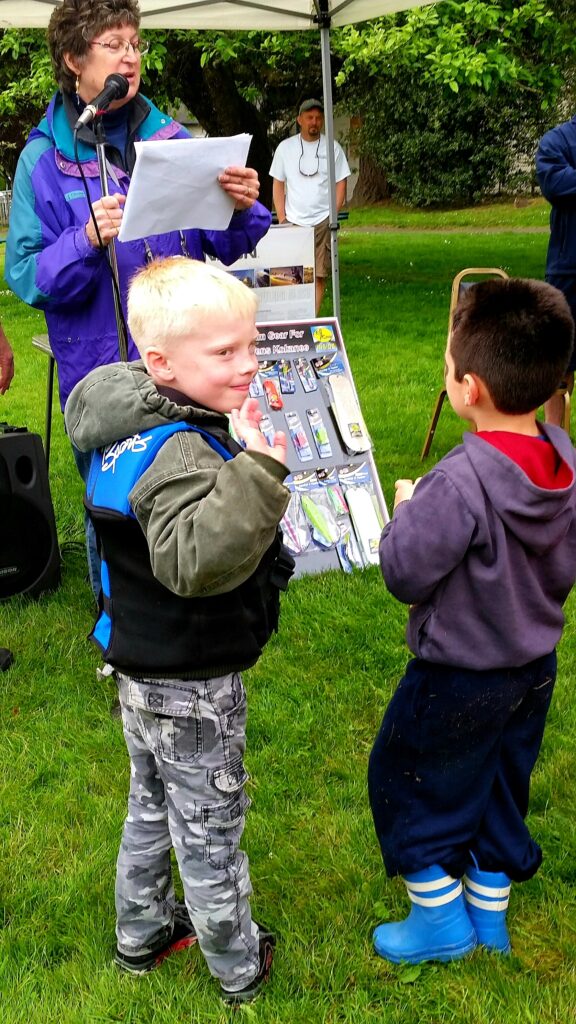
Although over the years the Castello clan has enjoyed occasional success while participating in various derbies, overall success has been metered. That said, I’ve had many “almost” in the money derby experiences.
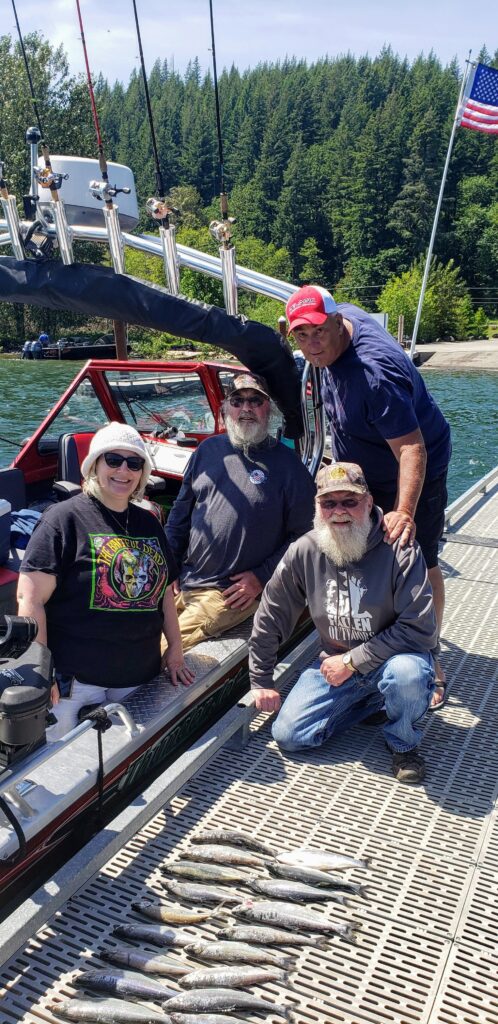
Many years ago, while fishing in a big money tuna tournament out of Ensenada, Mexico, we hooked a large big eye tuna with just hours to go before the weigh-in. By the time the fish was secured on deck, we only had a short few hours to make a 40+ mile run back to the marina for weigh-in. Despite having one of the fastest boats in the tournament, we did not make the weigh-in queue in time. We were quite the talk around town, but made the drive back to the border with nothing more than a stack of swag bags and my own flip-flop print on my board shorts.
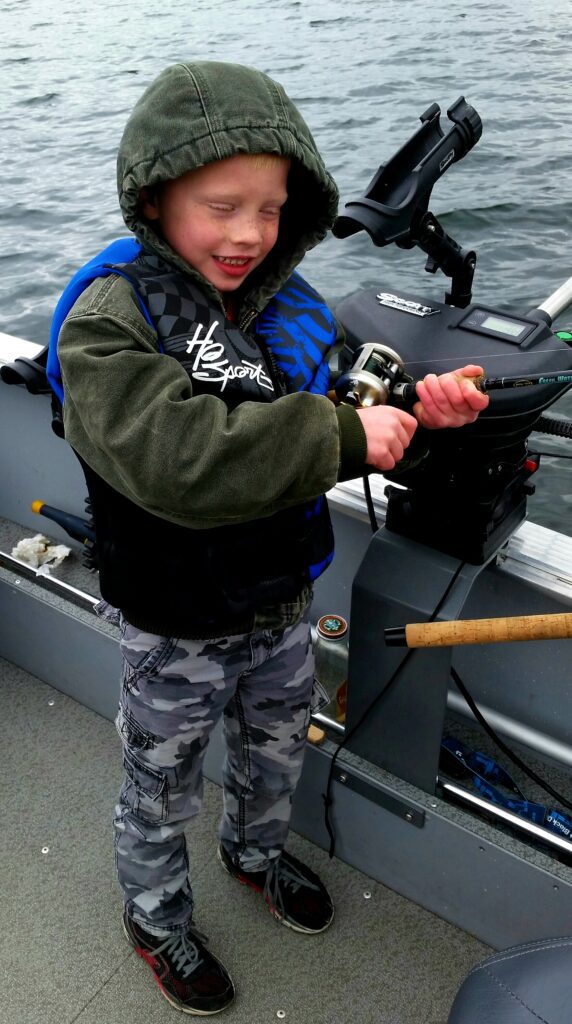
Then locally, with a derby contender, coho on ice, I’ve missed the weigh-in for the Everett Coho Derby by probably 15 minutes because of another last-minute fish. These were all skipper miscalculations where I knew the rules but pushed the time limit. The list goes on, but you get the idea. These kinds of errors can be minimized by creating a plan and then sticking with it.
If you plan to fish a derby or tournament, have a plan! Although it doesn’t hurt, your plan does not need to be written out. Either way, you and your fishing partners need to sit down and come up with a plan for derby day.
In working out a plan, consider basic things like getting enough sleep, being on time, and not showing up at the dock hung over.
One of the first items to discuss is how to handle winnings. On my boat, there is usually an agreement that all winnings are split evenly. Occasionally, we just let the prize go to the person catching the fish, but either way, this should be agreed upon before Derby morning. If a juvenile is part of the team, they always get their winnings in full.
There are many variations of how to distribute derby winnings. The team should consider a means of covering the day's expenses, such as fuel, launch fees, and moorage. Back to my boat, I usually cover the boat-related expenses, fuel, bait, and provide all the gear, but this is a team decision. Again, discuss winnings as an element of your derby plan, friendships depend on it!
In your derby plan, you should also discuss your catch rotation. Again, on my boat, we do a rotation through solid hookups with the skipper being last. Many teams will take a more traditional route where each angler runs with their personal gear, but this is a team decision.
Your derby plan needs to address technique, gear, and location. It is important that the boat fishes as a team, and everyone knows what to expect. At the end of the day, you want everybody to have fun and feel like they had an equal say in your potential success or if so, disappointment.
The plan should include an agreement for a meeting place, time, and ensure the skipper has everyone’s phone numbers. Also, decide what each angler should bring. Example: ice, lunch, derby tickets, license, and gear if required. Maybe also discuss parking and usage fees at the launch area.
For derby day, you want your deck as clear as possible, so it could be a good idea to address storage space and limit personal items. Use a common ice chest for fish. I have a case of fish bags, and each angler gets 1 for their Derby catch.
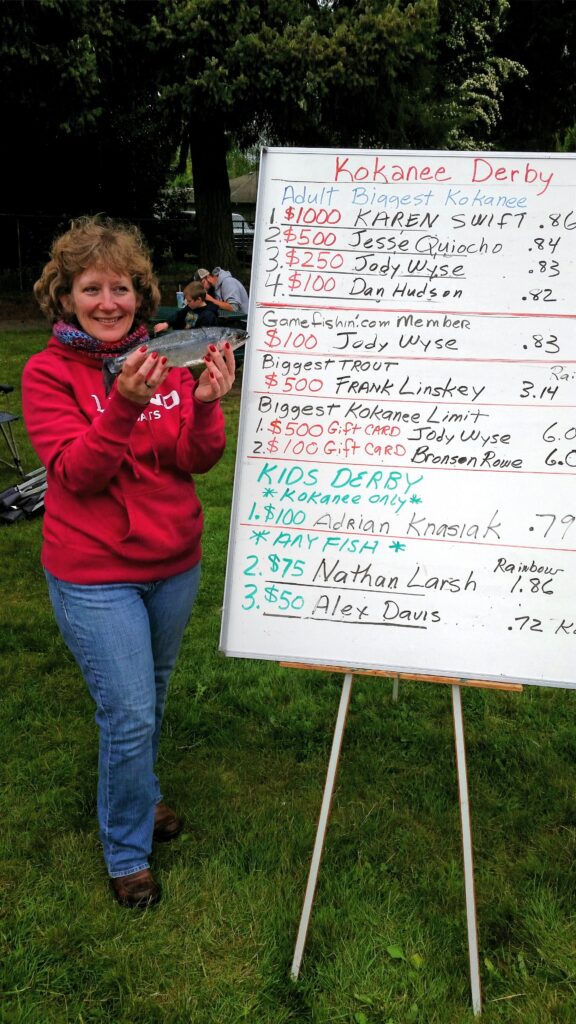
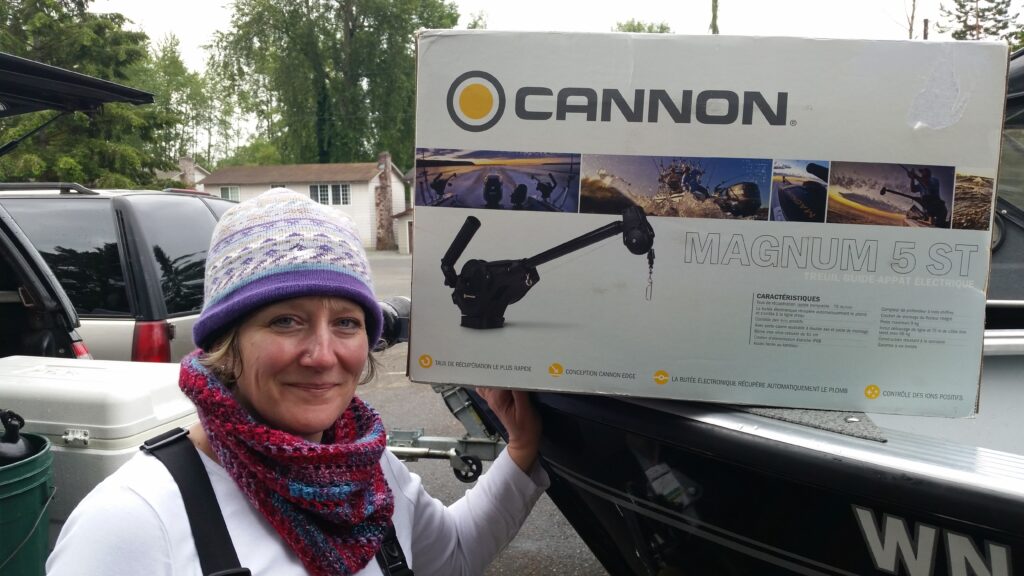
Back to location, your derby day plan should include an agreement regarding fishing location throughout the day or changes required for changing conditions. This is especially important when fishing in marine areas influenced by the tides.
The skipper is responsible for making sure the boat and gear are ready for derby day. This includes a rod and reel check, replacing line and or top shots as required. I always have a backup rod or three on the boat. Typically, I have two nets on board anyway, but having two nets available is especially important on derby day.
Depending on the derby, it is also important that at least one other team member can run the boat, drive the tow vehicle, and be familiar with the boat’s electronics. (Mostly in case the team gets tired of the skipper and the flipping plan, thus throwing the skipper overboard.)
As the skipper, I find Derby days pretty stressful. To be honest, I experienced this for any fishing trip, but for me derby day is worse. It’s not that I’m not having fun, but I feel a true responsibility towards my crew’s success.
That said, don't forget to have fun. Turn setbacks into opportunities and laugh in the face of calamity. Winning is icing on the cake of an otherwise enjoyable fishing trip. By developing a derby day plan, the skipper and crew are more likely to enjoy the day, even increasing their chances of putting a fish on the leader board.
/articles/derby-mentality
Springers Are Here
When May rolls around, the spring Chinook fishery kicks into high gear as more and more fish begin filtering into the “Big-C.”
While most of the effort will shift to tributaries in May, the Columbia River mainstem spring Chinook fishery opportunities both above and below Bonneville Dam still remained up in the air as of this magazine’s publication deadline.
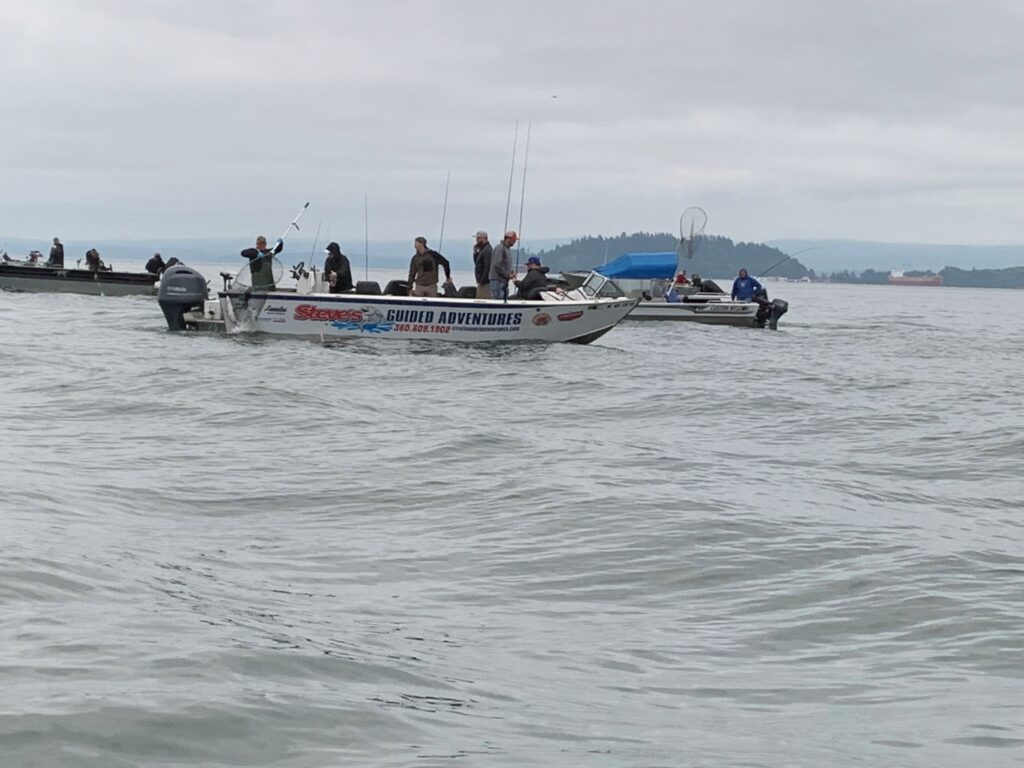
All decisions on whether the Columbia River mainstem reopens later in May and possibly into early summer are left up to joint Washington and Oregon in-season management decisions. To keep track of updates, the public is encouraged to sign up for WDFW Columbia River Compact mailing list notices at https://wdfw.wa.gov/about/lists.
The 2025 forecast for Columbia upriver spring Chinook is 122,250 fish, more than the 116,332 that returned in 2024, but lower than the 10-year average of 139,676 fish.
Several factors influence the arrival of spring Chinook, including flow patterns, which can change on a daily basis. These fish are known to work their way up the maze of channels and will follow bottom structure in the river. They will avoid turbulent water and are known to stall below dams when abrupt changes occur at the tailrace and fish ladder channels.
The initial spring Chinook fishing seasons for the Columbia River mainstem were set in late February, with end dates in mid/early April for below Bonneville Dam and late April upstream. It is usually soon after that when the run begins to ramp up. In recent years, the timing of the run has been later and later.
As of mid-April, the spring Chinook fishing success was just starting to build in the lower river. The number of fish seen at the Bonneville Dam fish ladder was also sporadic. Anglers can track daily fish counts by going to Columbia River adult salmon counts at https://www.fpc.org/currentdaily/HistFishTwo_7day-ytd_Adults.htm, which is key to knowing when to go fishing.
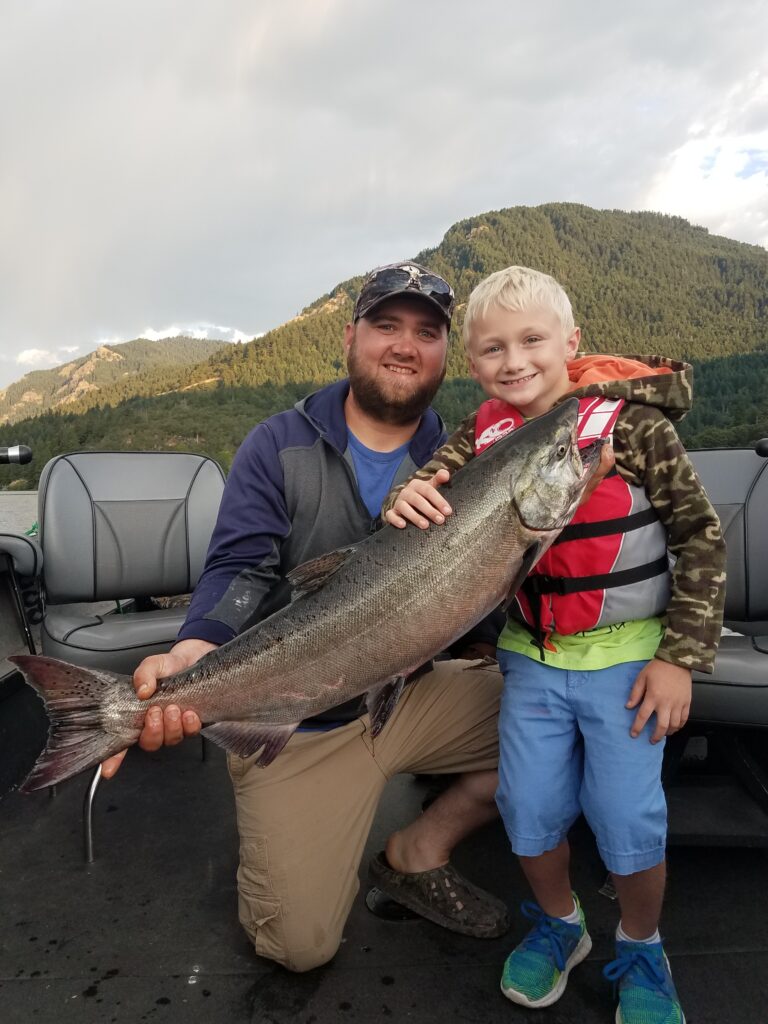
It’s also wise to not wait to go fishing once the run begins to peak, as you’ll likely miss out on the best time period. “For 2025, the corresponding harvest rate tiers are determined by the Snake River wild abundance estimate. Following that, we apply a 30% buffer applied to the forecast until we get a run size update, this is then used to determine the harvest rate,” said Ryan Lothrop, Columbia River fisheries manager with the Washington Department of Fish and Wildlife (WDFW), which he referred to as step one.
Next, fishery managers calculate the allowable catch. Lastly, fishery managers apply the commission guidance of proportion of the Endangered Species Act splits by sector and area.In 2025, recreational anglers are projected to harvest approximately 5,200 adult spring Chinook below Bonneville Dam in the Columbia mainstem, and 550 spring Chinook from Bonneville Dam upstream to the Washington/Oregon border.
“Fortunately, we were able to provide additional quality April days of opportunity downstream of Bonneville Dam this year, given there was a substantial balance remaining,” Lothrop said. “Upstream of Bonneville Dam, increasing catch rates in recent years have led to early closures, resulting in fewer open fishing days before this year’s in-season run size update."
However, if the run size update is large enough or if there’s remaining catch allocation, additional fishing time is likely. ”Fishery managers will monitor the fisheries, dam counts, and hatchery returns as the season progresses and adjust as necessary. The U.S. v. Oregon Technical Advisory Committee typically provides a run size update in mid-May. Based on the 2025 preseason forecasts, anglers can expect to find a decent number of spring Chinook in the Cowlitz, Kalama, and Lewis rivers. Tributary fisheries are managed based on hatchery spring Chinook surplus.
Places like the Cowlitz experienced closures a few years ago, but with a forecast of 13,310 (4,580 and 8,822), a closure isn’t necessary in 2025. The Cowlitz spring Chinook forecast to the tributary mouth is greater than the recent five-year and 10-year average return of 5,300 and 9,800, respectively. In the Kalama River, the spring Chinook forecast to the tributary mouth is 2,900 (1,840 was forecast with an actual return of 2,310 in 2024).
The Kalama spring Chinook forecast to the tributary mouth is similar to the recent five-year and 10-year average return of 2,200 and 2,500, respectively.In the Lewis River, the spring Chinook forecast is 3,060 (3,270 and 2,553). The Lewis spring Chinook forecast to the tributary mouth is similar to the recent five-year average return of 3,700 and greater than the 10-year average return of 2,600. During May a lot of the spring Chinook fishing attention also shifts to tributaries above Bonneville Dam such as Drano Lake, and the Wind and Klickitat rivers. The best way to gauge when it’s time to go is by watching the fish counts at Bonneville Dam.
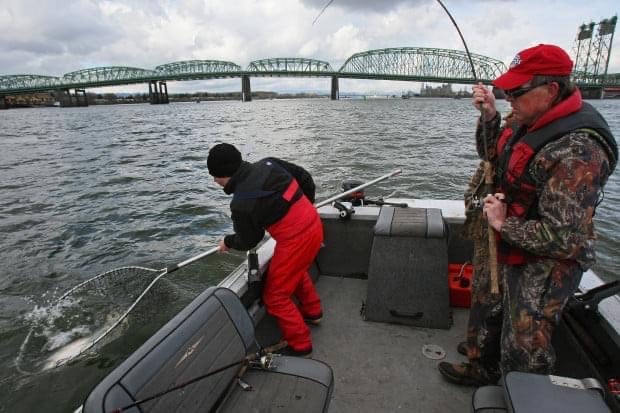
The Wind forecast is 4,900 (4,200 forecast and actual return of 4,604 in 2024) and is greater than the recent five-year and 10-year average return of 4,100 and 4,000, respectively. In Drano Lake (aka Little White Salmon) the forecast is 7,600 (5,300 and 7,863) and forecast is similar to the recent five-year average return of 7,400 and less than the recent 10-year average return of 8,100. The Klickitat forecast is 1,200 (1,300 and 491) and is similar to the recent five-year average return of 1,300 and less than the recent 10-year average return of 1,500.
In Drano Lake, the best action happens in the area referred to as “Toilet Bowl,” a popular spot where anglers troll in a tight circle near the entrance of the lake. While most are Drano Lake stock fish some of these fish are known as “dip-ins” as they first enter the lake before migrating further up the Columbia River. There isn’t much space to troll so make sure you’re following the same path as others and are good at handling your boat and keep your lines right underneath to avoid getting tangled up with others. If someone nearby hooks a fish stay clear of them.
If you plan to fish Drano Lake, be aware the Columbia River outside the mouth of Drano Lake is closed. There is a marked boat fishing boundary area in Drano to allow for some bank angling to occur near the mouth. From the shore cast spinners or Wiggle Warts. Anglers also fishing for springers in the Wind River must stay within the fishing boundary of the river itself and not stray into Columbia River mainstem area. Spring Chinook tips and tactics I could list a hundred different ways to successfully catch spring Chinook and what to use varies depending on river location, flow patterns and water clarity but the most important factor to keep in mind is patience.
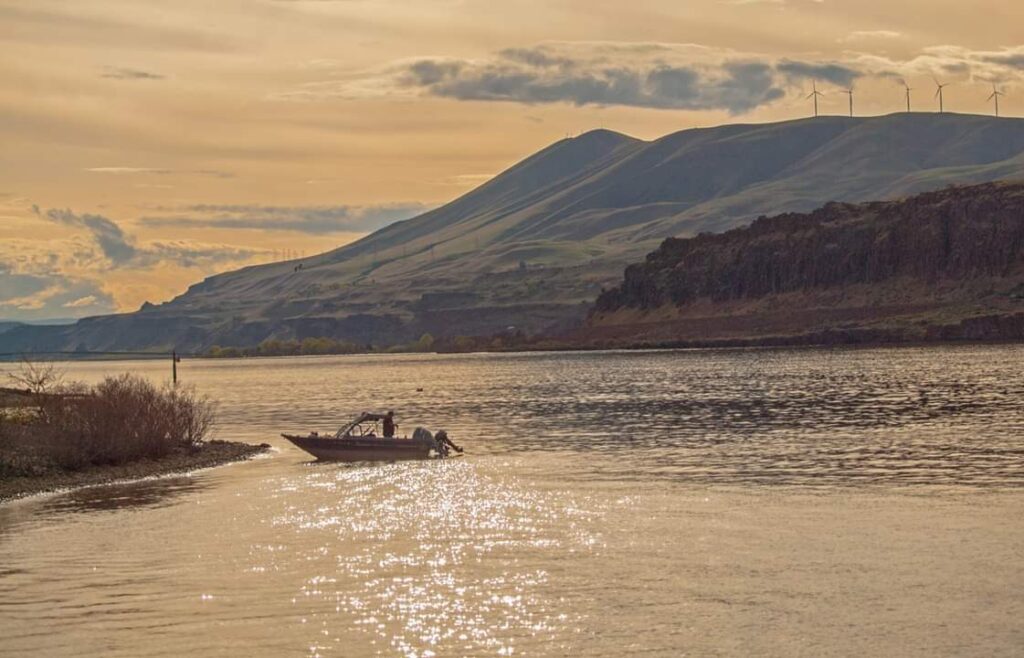
Earlier last month, I had a friend who spent six days and nearly 50 hours on the water of the Lower Columbia River and managed to bring home one hatchery-marked fish.
As for fishing gear, don’t skimp on the rod and reel and spending money wisely will be an investment toward catching more fish. The rods of choice are usually a 9 ½ to 10 ½ foot of 15 to 25 pounds with a lot flex and soft tip. Oftentimes these fish will grab the bait and turn away so flexibility in the rod will allow for a proper hook-up. Let the salmon pull your rod tip down a few times before gently setting the hook and don’t jerk hard since usually the depth of water you’re fishing isn’t very deep to begin with.
Line counter reels are the norm nowadays and enable you to find the sweet spot by aligning the depth on your fish finder to the area where the fish are lurking. Many like to use braided line, but I’m old school and will stick with monofilament line for a bit of stretch and give when the fish bites. The standard setup for trolling is a three-way swivel with 10 to 18 inches of 15-pound monofilament to an eight- to 15-ounce dropper weight, depending on current and flow.
On the other end of the swivel is 24 inches of 30-pound monofilament line to your fish flash and then another 40 to 50 inches of 30-pound monofilament line with a swivel halfway down the leader to allow the bait or lure to spin freely and eliminate the line from twisting and tangling. Often I’ll go “naked” and not use a fish flash which creates less drag too.
The traditional bait is a green-label herring, whole or cut-plug, with the proper tight spin. Many will soak their bait in a brine mixture to toughen them up. After bouncing off the bottom a few times or running into debris they’ll tend to get blown out or will lose their quality spin. To get the right spin on a whole herring, I like to insert a toothpick in the anal vent of the herring and bend the herring to a 45 degree angle. Then take the top hook and insert it under the lower jaw and out through the hard spot between the eyes. About halfway down the side of the body insert and pull out the trailing hook so it dangles freely.
Others like to pin a plastic bait helmet – Krippled Herring or Rhys Davis – to avoid wear and tear on the herring. Before dropping it down, add some scent and make sure it has the right spin. Other top choices are a 3.5 spinner and prawn, flat fish wrapped with a sardine or a Brad’s Super Bait. Downsizing to smaller Kokanee Cut Plugs, or a 2.5 or 3.0 Spinfish filled with tuna to tandem trailing hooks are effective in warmer water conditions and when it gets crowded during a slow troll like at Drano Lake.
Colors are also key to catching fish. Be sure to carry a wide variety but usually chartreuse, silver, orange and red work well. The scent of bare hands can be a deterrent so keeping some environmentally safe liquid soap, clean hand towels and elastic nitrile gloves will enable you to stay in the game of catching fish. Have a small bucket to wash down your lures and be sure to keep your rod handles and cranks on the reel clean.
Be sure to check the WDFW website at https://wdfw.wa.gov/ for current daily limits, other area-specific rules, any emergency rule changes, and closures or openings that tend to occur during the spring Chinook fisheries.
Tight lines, and I’ll see you on the water very soon!
(Mark Yuasa is a Washington Department of Fish and Wildlife Communications Manager. He was also the outdoor reporter at The Seattle Times for 28 years.)
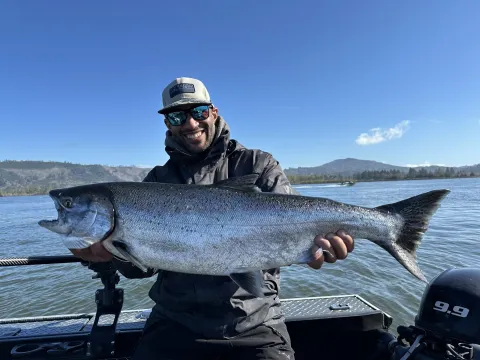
/articles/springers-are-here
Catch and Release Fishing
As many anglers know, our fishing opportunities in Washington are dwindling, specifically when we are talking about salmon and steelhead. With retention opportunities waning, we are often fishing in catch-and-release fisheries, which are very misunderstood.
I was recently reminded by someone from the State of Washington that as outdoor writers, we have a responsibility to educate readers about topics such as the ethical handling of fish that we will release. We all want a picture or two of our trophy catch, but we should always place the mortality of the fish ahead of ourselves.
Please note that I took much of the information below from an Oregon Department of Fish and Wildlife article written in 2019 and titled, Catch-and-release: Tips to reduce fish mortality. One very important note to share. ODFW will allow anglers to take a fish out of the water before releasing it. In Washington, it is illegal to remove a fish from the water that must be released.
One way anglers can help maintain and restore native fish populations is to learn how to catch and release wild fish properly. Before fishing, anglers should always consult WDFW fishing regulations for any harvest restrictions.
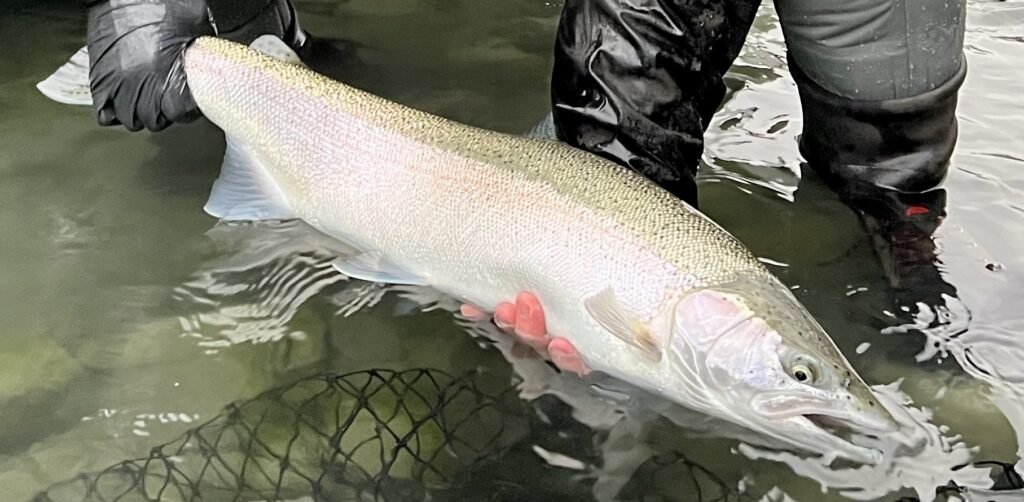
Here are some tips for the safe and ethical release of a wild fish or a hatchery fish that is caught out of season.
Land the fish quickly.
A fish on the end of the line is under stress, so don't play the fish to utter exhaustion. Severe exhaustion reduces the fish’s odds of surviving.
Support the fish when bringing it in.
Support the fish underwater in a natural position, handling it as little as possible. Give it time to recover and keep it in the water, it needs all the oxygen it can get from the water passing over its gills.
Use barbless hooks.
Bring the fish quickly within reach. Leave the fish in the water and, without squeezing it, remove the hook carefully with long-nosed pliers or thumb and forefinger. If necessary, cut the leader near the hook, which will dissolve over time.
Revive the fish before releasing.
Point the fish into the current or in standing water, gently move the fish forward until its gills are moving and it maintains its balance on its own. Let the fish swim freely from your hands.
Use appropriate gear.
Use tackle, including line and rod, that are strong enough to bring your fish in quickly and gently.
Safe handling.
Note that fish have a natural slime on them, which is a coating that prevents disease and protects them. Though the slime makes the fish slippery and hard to hold onto, avoid using any material, such as a cloth glove or towel that will remove the slime from the fish. This will increase the odds or chances that the fish survives.

Getting a photograph
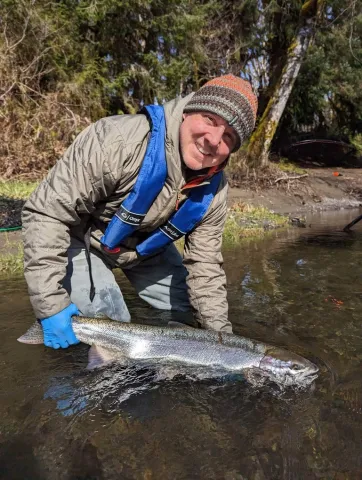
Taking a photograph with your fish can be a lovely way to capture the moment. But try to minimize handling and keep the fish in the water as much as possible with these tips:
- Have help. If someone is helping you with the photo, make sure they’ve composed the shot and adjusted the camera settings before you position the fish. Remember, the fish must remain in the water, so the head and gills should always be submerged, never leaving the water.
- Get your hands wet before handling the fish. This will help protect the delicate membrane on the fish’s skin.
- Support the fish properly. Put one hand under the forward part of its body and the other at the base of its tail. Keep the fish in the water. Do not place fingers or objects into or under the gill plates.
- When you’re ready, cradle the fish at or just above water level and snap a quick picture, again, keeping the head and gills submerged in the water. Note that most pull the head quickly up for the shot with the mouth still submerged and then immediately place the fish back into the water, fully submerged, to revive the fish and begin the release process.
- Return the fish to the water quickly. Then revive it gently before letting it swim away. It is very important to revive the fish and let it swim off under its own power to ensure that it is ready to go.
Many anglers may not agree with these rules and may have heartache with our regulatory agencies, but I feel strongly that we need to be bigger than our frustration. We must do what is best for the fish to preserve them and ensure that future generations will have the opportunity to experience what we get to today. Things may not be what they were 20-30 years ago, but at least we still get to fish and experience that feeling of the tug on the other end of the rod.
/articles/catch-and-release-fishing
Fishing Destination Zeballos
The scream of the reel as the broad shouldered king salmon took another run was music to my ears. The single action reel handles spun dangerously around as I got my hand out of the way just in time. They don’t call them knuckle busters for nothing and I had learned that painful lesson earlier in the day.
That said, it was a lesson gladly accepted because it meant the fishing action was hot – and indeed it was. Our boat’s fish hold was steadily filling up with the bounty of the ocean in this remote location off Zeballos, on Vancouver Island, British Columbia, Canada.
Ever since I moved to the Pacific Northwest and started going to Sportsman’s Shows, I had the dream of someday fishing a true “destination” fishing location. Wandering up and down the booths, looking at pictures of giant halibut, ling cod, and Chinook salmon, it just got me thinking how much I wanted to try something like this out.
All the maps of far away, exotic places to fish – I wanted to go! But I had other priorities and needs, not the least of which was raising my two boys. They are grown now and moved out of the house, and with a wife encouraging my dreams, my opportunity final came.
We were on the road north to the border crossing as my friends Aaron Borg, Rob Holman and myself began our journey to Zeballos, B.C. Aaron and Rob had driven over the evening before from Spokane and then stayed at my home.
We talked excitedly of the trip and fishing to come. None of us had been out of the country on a fishing adventure quite like this. We had been invited by Northwest Fishing Reports sponsor Adrian O’Connor to come up for a few days and enjoy the fishing and stay at his fishing lodge, Reel Adventures Sportfishing. What can I say? My jaw dropped when Rob had told me we would be traveling to this fishing Mecca in B.C.
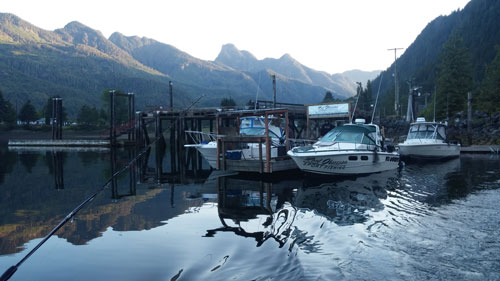
Zeballos is a small, remote town located at the end of Zeballos Inlet on the west side of north Vancouver Island, a little more than halfway along the large island. In days past it had been a vibrant town of a couple thousand. A gold rush between 1938 and 1942 produced a boom town, which quickly faded post World War II when the price of gold collapsed.
The town turned to forestry and fish processing. It’s the tourist and sport anglers that come now to visit now, at least, those in the know.
Our crossing at the border was uneventful. Although, I must admit to being taken aback when we told the border officer our destination was Zeballos, and his response was “Are you making that up?” No officer, and please don’t pull us over and empty our vehicle! But he smiled and waved us on. Next stop, was the ferry crossing at Tsawwassen, due south of Richmond (nearby Vancouver). It’s a two hour crossing from Vancouver to Nainmo. The B.C. ferry system is pretty impressive. Large, comfortable ferries, reservations systems (recommended) and good food on board made the crossing a breeze. Not to mention the beautiful scenery and ever closer Vancouver Island in the distance growing our anticipation with every kilometer travelled (hey, we’re in Canada now, eh?).
I had looked at the map of Vancouver Island many times, and in my mind I imagined winding, narrow, gravel, two lane roads, taking forever to reach our final destination. Imagine my surprise when we unloaded in Nanimo and promptly got on a smooth, four lane freeway.
The road to Campbell River was smooth sailing and the miles, er, kilometers flew by. We gassed up Aaron’s truck and had to do some quick and dirty conversions – let’s see, there are about 4 liters per gallon of gas… but the exchange rate is 22% in our favor… so the cost of gas here is – more. But not that much more, so relax, you won’t go broke filling up your vehicle.
From Campbell River the road did reduce to a two lane road, but it was still a nice road to drive and we made good time. Wooded hills stretched out in all directions and signs of civilization were few and far between. Towns composed of a half dozen buildings became the norm.
Finally, there it was, the turn off for Zeballos! Now things began getting interesting. Our paved road became a gravel logging road. Hills gave way to snowcapped mountains as we first climbed, and then descended through the Haihte Costal Range of the Vancouver Island Ranges, a mountain range that extends along the length of Vancouver Island. Creeks and small rivers worked deep and narrow canyons into the hillsides.
The landscape is likely very little changed from a hundred years ago. There are clear cuts here and there, but nothing like what one sees in Washington. Finally, the descent smoothed out, and a few small, worn houses began to appear. Then more, and final we had arrive, destination, Zeballos. We had a scenic nine and a half hour trip from Seattle by car, two hours of which was a ferry ride. Very do-able and not near as strenuous as I had imagined it would be.
Once we arrived, we met Adrian and his staff, and other guests. This was a Northwest Fishing Reports “Get-Together” of sorts as Adrian had given a special discount to our members and had filled up the lodge with them. We enjoyed meeting fellow NWFR members and sharing stories of fishing past and to come. To cap things off, everyone graciously held up dinner for us. We sat down and Chef Jason promptly appeared to introduce our first dish.
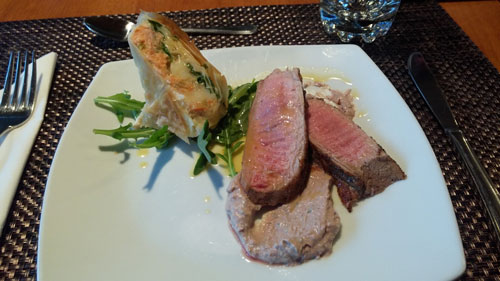
What can I say about Chef Jason? A smile seems to be a permanent part of his personality. Always open to conversation and playing the most cool, eclectic music in the background, he truly made coming to dinner an experience in its own right. Not to mention, Jason has his cooking chops down! Our meals were five star affairs every day. From a quick morning breakfast before fishing, to abundant lunch packs, to afternoon snacks, to appetizers and main courses that had us eating ever last bite off my plate, we ate like kings!
We had the luxury of fishing three days with owner/operator Adrian O’Connor. Adrian has fished these waters for a lifetime and knows the best off-shore reefs and underwater humps to fish, not to mention the migratory habits of the Chinook salmon as they flood into this region every year. With four boats in his fleet we learned that hot bites are shared and his boats get on the fish right away.
The waters leading away from Zeballos, Esperanza Inlet, are breathing-taking in its scenery. First explored by the Spanish in 1774, and then Captain James Cook in 1778, it is the traditional territory of the Nuu-chah-nulth First Nation, who inhabited these lands for thousands of years. The inlet was formed by glaciers during the last ice age, and now attracts anglers, kayakers, divers, and hikers to the wilderness area.
Wildlife is everywhere to be seen, including otters, sea lions, bear, cougar, and bald eagles. As we departed the inlet for open waters we scanned the horizon for killer whales (Orca), migrating gray whales, seals, and porpoises. To Adrian’s surprise, however, we instead got to see a pilot whale leisurely swimming along, its large tail fully revealed as it sunned itself.
Once on the open ocean we tolerated the swells and moderate chop until a short time later we reached our anchoring locations. Even though it’s about a thirty mile run to this spot, because most of it is in sheltered waters it’s an easy trip. Adrian quickly set us up on anchor in two hundred feet of water. The plan was to start with halibut, and then after getting our limits troll for salmon.
I believe the term is “easy limits”, and that’s just what we experienced. Within minutes of lowering our bait (salmon bellies), Aaron had the first fish, a giant dogfish. Not what we wanted, but no worries, because in the next hour we pulled up our limits of halibut ranging from 15 to 60 pounds, perfect eating size!
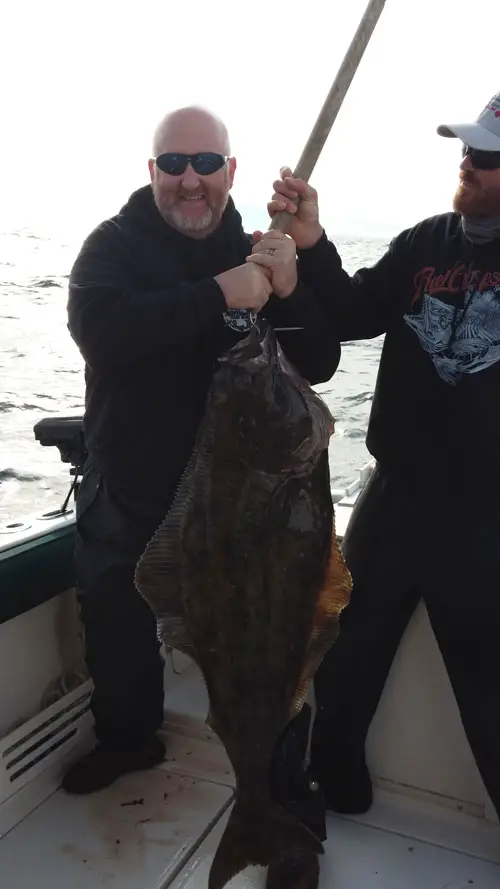
Bigger fish can and will be caught. Adrian reported just the previous week customers having caught one hundred pound-plus sized halibut. They, however, have to go back, as there is a slot limit on these tasty fish. Personally, I was perfectly happy getting my “big” and not having to haul up a hundred pounds of muscular fish only to let it back down. Maybe another time fish…
Adrian pulled anchor and set up gear from trolling Chinook. In Canada the preferred gear is a single action “knuckle buster” reel with a ten foot rod. “These are traditional rod set ups in Canada, you won’t find too many anglers using level winds for salmon”, Adrian explained.
Over the course of the next three days I grew to love this set up – the sporting nature of catching a salmon is greatly enhanced with this gear. With no gear advantage you have to be fast on the retrieve when the fish runs at the boat, and be always ready to remove your hands when they run (or you will have your knuckles “busted”).
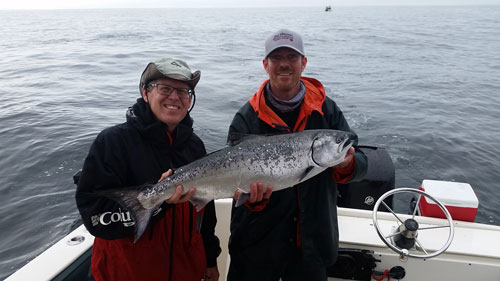
Just like the halibut, we managed to catch our daily limits without too much difficulty. The hot gear was a large flasher with either a 5” spoon or a whole anchovy fished “off the deck”. The bite that deep is kind of subdued, but once off and running these kings put up great fights, running at the boat, taking out line, but ultimately joining our halibut for dinner. The big king of the trip fell to Rob, 25 pounds of delicious springer.
“And now for something completely different”. That’s what came to my mind when Adrian informed us Wednesday he was going to take us to some locations to troll for ling cod and bottomfish. “This should be interesting” I thought. He explained “we’ll be fishing a large underwater reef that has a rocky bottom surrounding a sandy bottom. This rocky bottom is habit to smaller fish and octopus, and it draws in the larger fish. It can produce well for ling cod”.
Before we went trolling for bottomfish, we trolled some near-shore, shallow water locations for chinook salmon. What spectacular scenery! The waves crashing into the rocky shoreline and reefs made for some amazing pictures. Not to mention, a huge sea lion standing watch over his domain and eagles flying overhead. Our port rod exploded in short order and I grabbed the rod. This was a nice king! Multiple strong runs gave me a great challenge on the knuckle buster reel and 10 foot rod - I love this set up! The fish eventually weakened and I was able to slide him into the awaiting net. Wow, what a beautiful fish to start the day!
The salmon bite was slow so it was time to head to our next spot and troll up some lings. We used flashers and bait, using downriggers to get the gear down to the bottom, a few feet off the deck in 120 feet of water. Trolling speed was fairly slow, we were going fast enough to keep the flashers wobbling back and forth, but not rotating.
I’d never trolled for ling cod, nor had Aaron or Rob. It didn’t take too long before we were able to recognize the sometimes light tap tap of a bottomfish. Of course, the lings had a more forceful tap tap. And on release from the downrigger clip it was pretty obvious when we had a ling. We worked this productive location for a couple hours, and caught a lot of fish.
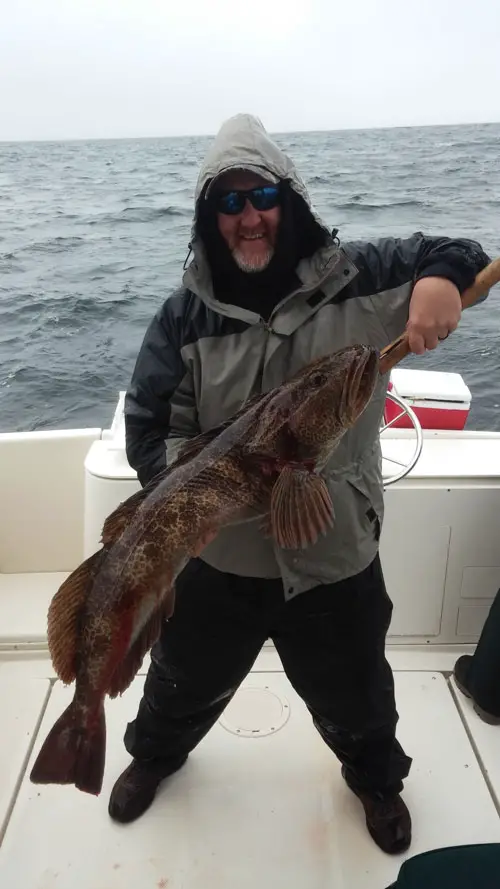
A limit for each of us, in fact. But it wasn’t ling cod we were mainly catching. Nope, instead, time after time huge, brightly colored yellow eyes and vermillion came to Adrian’s sharp gaff. As we hit our limit for vermillion, we could have kept fishing this area for lings, however, rather than stress and kill bottomfish that likely would not recover being caught from 120 feet deep, he decided to move us to another, smaller reef location.
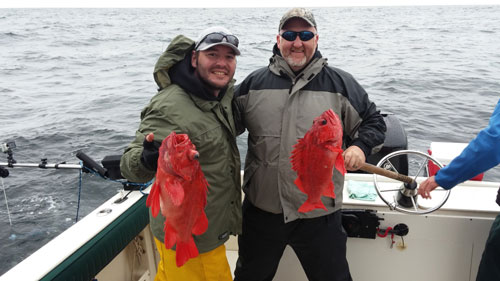
It was a good location change! Within seconds of lowering our first rig the rod doubled over. Aaron grabbed the rod and battled in a beautiful 20 pound ling in to the boat. Shortly after, Rob and I got nice lings. Another pass yielded some smaller lings and with that we were done for the day.
Back at the lodge, Chef Jason had prepared another five star meal. We visited with the other Northwest Fishing Reports guests who reported good fishing and bountiful catches. Just another day in paradise!
Traveling to Zeballos from the Seattle area is not nearly the ordeal I had in my mind prior to the trip. The drive is easy and Canada couldn’t be a nicer place to visit. People are so friendly and polite, and we were welcomed everywhere we stopped. As to the fishing, I’d rate it a slam dunk “10”. And not that I like to think in these terms when I fish, but the amount of fish we brought back at the prices you’d pay in the grocery store amounted to easily a couple thousand dollars’ worth of fresh fish, far superior to anything you’d find in a store. Plus, it’s all processed, vacuum sealed, and flash-frozen at the lodge. My family and friends will be eating like kings for the next year, until we get a chance to do it again!
To book a trip with Reel Obsession Sportfishing give them a call at 1-888-855-7335 or check them out on Facebook, or their web site.
/articles/fishing-destination-zeballos
Chum Salmon Time
Here we go…Fall is upon us. The Sockeye have done their thing, Chinook have made their way into the rivers and are spawning, and the Coho are showing up until January in some places. Since it is an even year in the Pacific Northwest, we will not see a return of pink salmon this year. That leaves us with the fifth species of salmon, the Chum salmon.
Chum salmon, also known as dog salmon or keta salmon, is a species of anadromous salmon native to the coastal rivers of the North Pacific and the Beringian Arctic. The Chum is an often-overlooked species that is not targeted by recreational anglers quite like Chinook and Coho. The primary reason for this is that we don’t usually target or catch them in the salt, and they turn very quickly upon hitting the fresh water in our tributary rivers.
Since they are not great table fair unless caught at the perfect time, we tend to focus on the other species that remain edible after they have spent weeks or months in the freshwater. It is important to note that Chum are targeted in the salt water up and down the Pacific Coast, but they are talked about much less than their coveted cousins, the Chinook and Coho.
Chum salmon are typically commercially caught and marketed as canned or smoked products and exported to Asia and Europe. Their flesh tends to be lighter in color and oil content than other species of salmon, but its firmness and flavor, if caught fresh, make chum salmon pleasant table fair.
One thing to be said for the mighty Chum however is that pound for pound, they are one of the toughest and hardest fighting salmon species. They can grow to nearly the size of Chinook with an average weight of 8-15 pounds, and large fish weighing up to 35 lbs. Chum have an ocean coloration of silvery blue-green with some indistinct spotting in a darker shade, and a paler belly.
When they move into fresh water the color changes quickly to dark olive green and the belly color deepens. When adults are near spawning, they have purple blotchy streaks near the caudal peduncle that resemble stripes that get darker towards the tail. Spawning males typically grow an elongated snout or kype, their lower fins become tipped with white, and they have enlarged teeth. This may explain the nickname “dog” salmon. They are also sold for both dog food and are popular in Italy as food for prisoners.
As mentioned, Chum tend to transition and turn very quickly, even before they enter freshwater. Their flesh is not good for consumption when they begin to turn, but then again, to each his own. Also, Chum migrate, spawn, and die rather quickly, usually within a period of a few weeks after entering fresh water. The key is to know when they show up and get after them while you have a short window of opportunity.
Since returns of Chum are dwindling in many of our rivers, we are often not allowed to target them and when we are allowed to, they often must be released. Check your WDFW regulations or call a local office for information on Chum salmon and ask about volunteer opportunities to catch them for broodstock programs that are being used to restore the runs in some of our rivers.
I have participated in the broodstock collection on the Snohomish River system for the past few years, focusing on the Skykomish River. We catch chum and safely transport them to net pens that are located up and down the river. The fish are collected and taken to a hatchery where the milt and eggs are collected, and the salmon are reared for release back into the system. In my opinion, this is the most effective method to help Chum recover and increase the annual returns to our rivers.
Chum Salmon are usually very aggressive once they enter the river. They will travel and hold in slow to moderate currents that are deeper than 4 feet. You can target them from the tidewater all the way up to their spawning grounds. Once they transition into spawning mode, and flood into the shallow spawning areas, leave them alone and let them do their thing. We really need them to procreate to ensure their long-term sustainability.
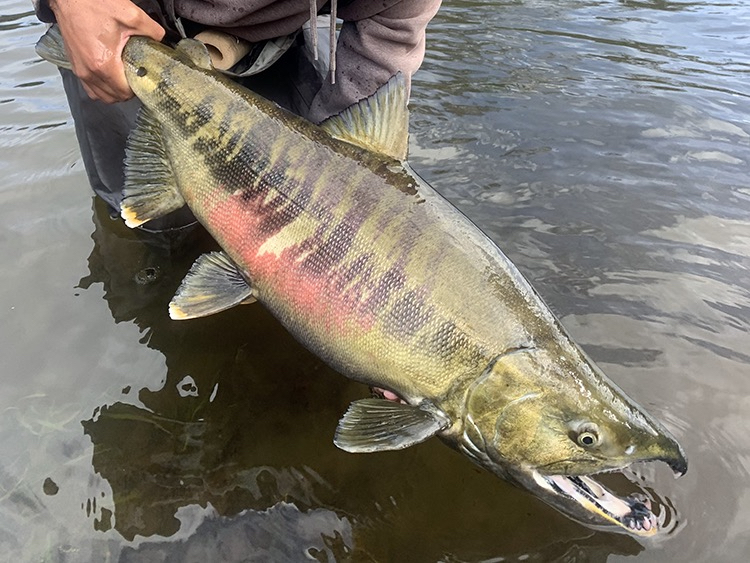
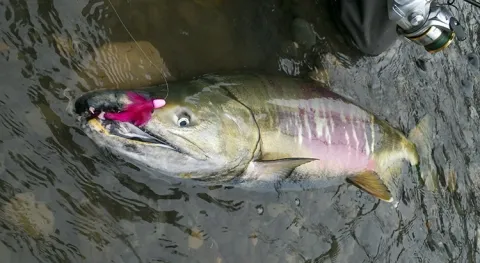
Catching Chum can be a lot of fun. They are aggressive fish and fight much like a Chinook. Chum mostly feed on plankton and shrimp in the ocean. Purple, pink, green/chartreuse are great colors for targeting Chum. Small hoochies work well. Tie up your hoochies with a 30-40-lb fishing line with short leaders of two to three feet behind an inline sinker or use hardware such as spinners with hoochie skirts to target the soft edges and corners. As with any salmon, you can catch Chum on pretty much anything and anywhere in the river but understanding their habits will increase your catch ratio.
The following techniques will offer the shore and boat anglers some great options. You can try using a float/bobber and jig (tip with shrimp or prawn if allowed), twitching jigs much like Coho, casting or pulling plugs, drift fishing a corky and yarn tipped with prawn/shrimp or flavored with a scent such as herring, sardine, shrimp and anchovy which are awesome for Chums, or you can try your hand at throwing flies. I am a big fan of using hardware and my favorite is a Blue Fox Vibrax Size 5 spinner in chartreuse or pink with a hoochie skirt. I find this to be the most fun and active method to cover water and entice a testy Chum to bite in pretty much any type of water. When they decide to bite your offering, it is game on.
Check the regs and get out there. Catching Chum is a ton of fun. You can catch your Coho for the BBQ and freezer and if allowed, wrap up your day on the water targeting some Chum for the fight of it. Have fun and good fishing!
/articles/chum-salmon-time
Silver Salmon River Lockjaw Strategies
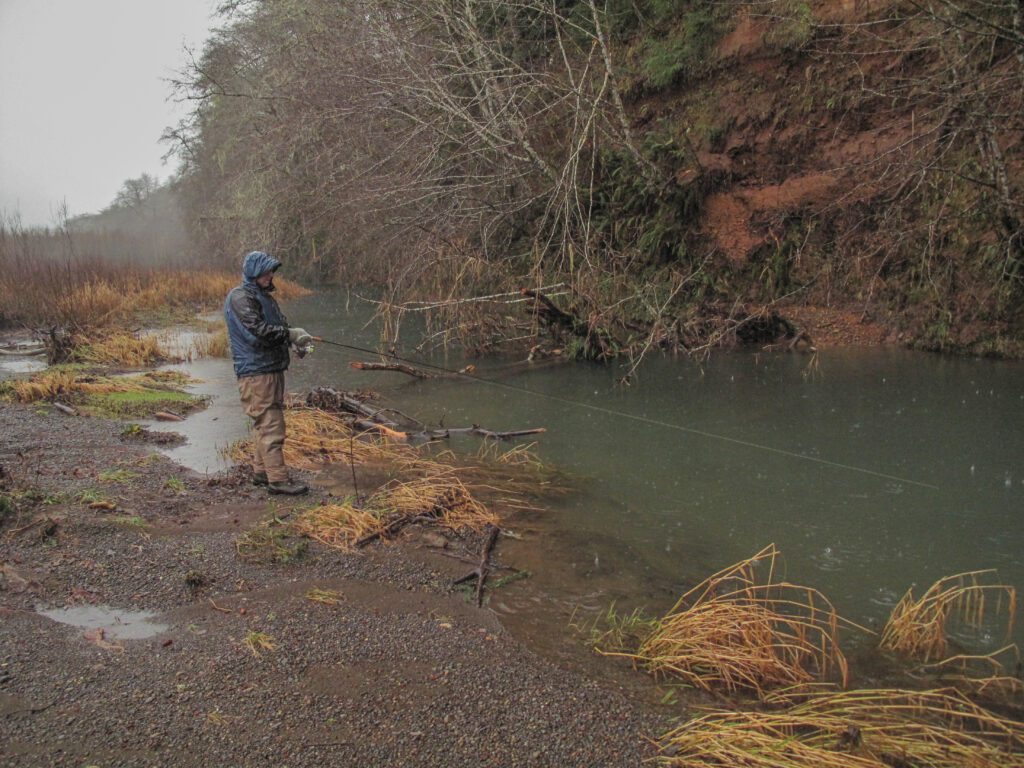
Standing at the river's edge and surveying the waters, a loud splash disrupted the silence of the day. Coho or silver salmon are known to roll and jump often, and this gives away their location. This fish was in heavy cover where downed logs had created a log jam and there was no way to get to it without risking gear being lost to the sunken trees. But it meant that fish were in the river and that was good enough to load the tackle into the drift boat and launch for a day of searching for more coho.
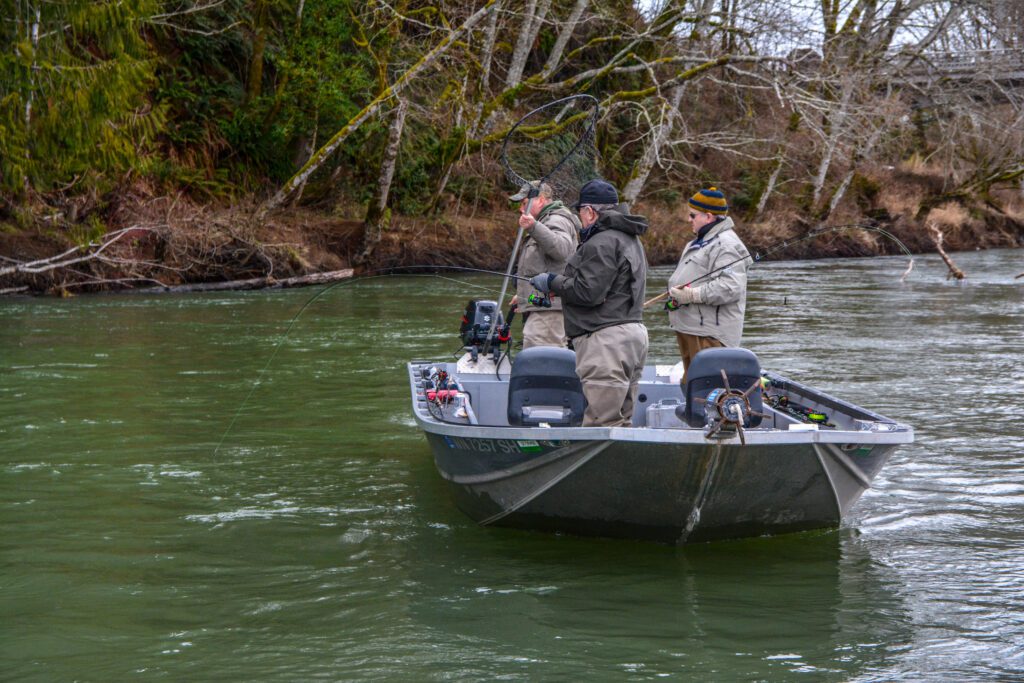
Rowing down the river, which was calm and quiet, we came to a large back slough. The water here was stacked up from the previous winter's floods that cut the side channel deep but now the water was shallow at the outfall creating a lake of sorts. This is known as “frog water” and coho prefer to sit here and rest until they regain energy to continue upriver. With a lot of fish holding in the stagnant waters, one would think these fish are easy to catch but anglers often forget that these are resting fish and that means they are lazy and often lockjaw.
The term “lockjaw” means salmon unwilling to bite. Unfortunately, when anglers come upon a dozen or more fish that are lockjaw the temptation to snag becomes overwhelming. Not only is this illegal but also it hurts the runs of coho because these are resting fish and when snagged they exert energy they are trying to use to head upriver and spawn. When a fish becomes too tired to move it simply dies because water needs to flow through the gills and if the fish cannot move and it is released into slow or stagnant water it will suffocate and die.
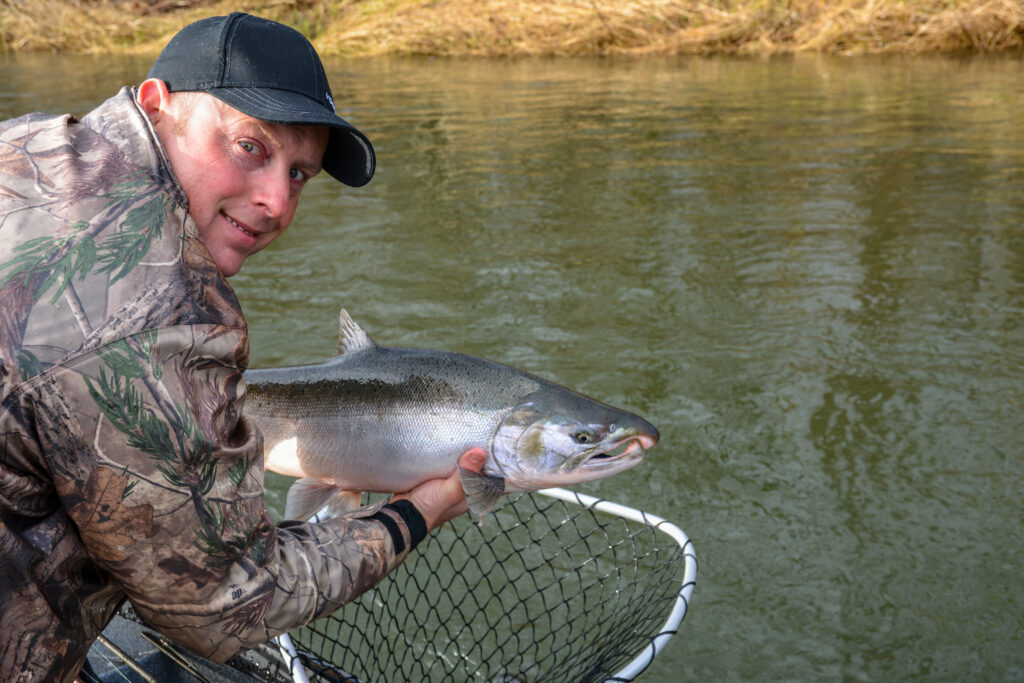
So, how do you get fish to bite when they are all lockjawed? The answer is simple and that is to find fish that are not lockjawed. Seems silly to say that but it is true, you will not get a lockjawed silver to bite. This does not mean giving up fishing for the day but instead knowing that there are biting fish, or a bite might turn on throughout the day. Back to the stagnant waters of the slough.
These fish are resting but that also means they will get their energy back and will bite. If you have ever thrown a spinner or twitched a jig in this water when it is clear enough to see the fish, then you will notice a fish or two out of the school will start to give chase. These are fish that are done resting and have energy and are just waiting for the right conditions.
The right conditions can be anything from enough time to recover to a shot of rain bringing up the river just enough to make it easier for them to migrate. Anglers often head to the river early to get the “early morning bite” but what is really happening is the water has cooled off from a brisk fall night and the fish are more active. As the day heats up the water also warms, and this means less dissolved oxygen and therefore tired salmon. One way to beat the lockjaw is to fish on cool days, after it rains, or early in the day.
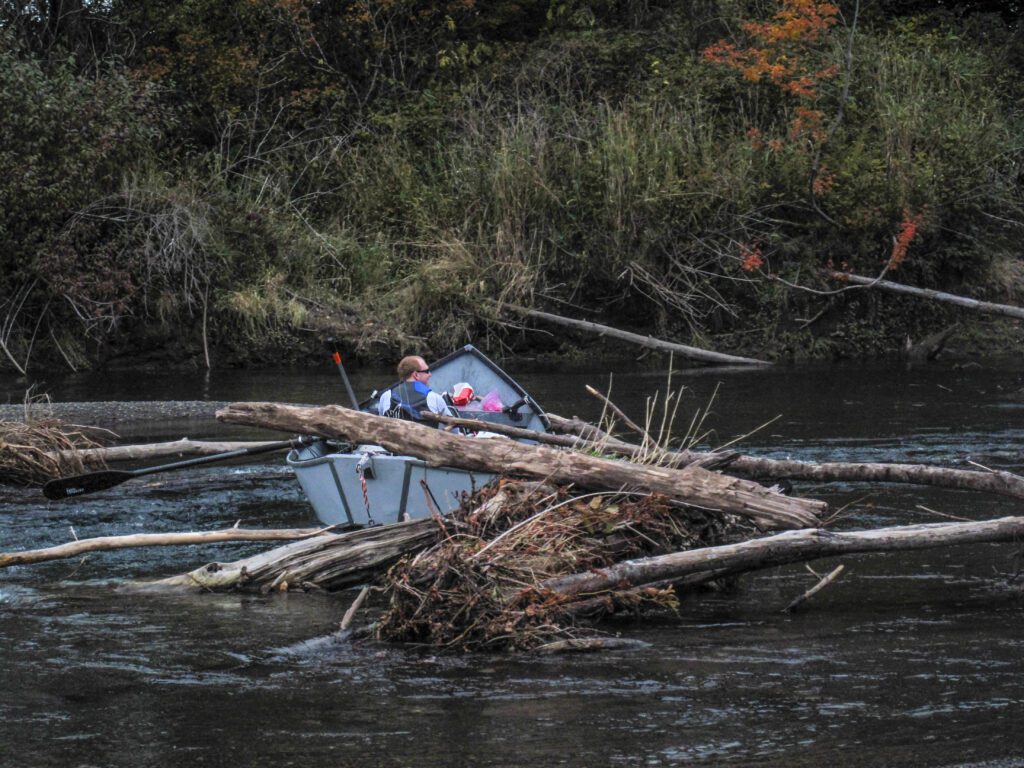
Sometimes, our schedules do not line up with the perfect conditions and anglers can only hit a river when the conditions are all wrong for active fish. You can still beat the lockjawed effect by looking for parts of the river where the fish are active. For coho this can be a deep hole where the water is cooler, and boulders churn the flowing water creating dissolved oxygen. Same with riffles and holding areas in the shade. One hot fall day we were floating a coastal river and working on our sunburns when we came across a long stretch of water.
The current was moderate, and the bank had overhanging trees. Peering into the shadows we saw coho stacked up in the shade, swaying their tails in the current and we thought they were just resting. Tossing a jig and a few quick twitches later a fish slammed it hard and erupted out of the water. These were not lockjawed fish but ones that were just staying out of the bright sun and being protected by the overhanging branches. They were also not in “frog water” but instead in a moderate current where they could sit and let the water run through their gills.
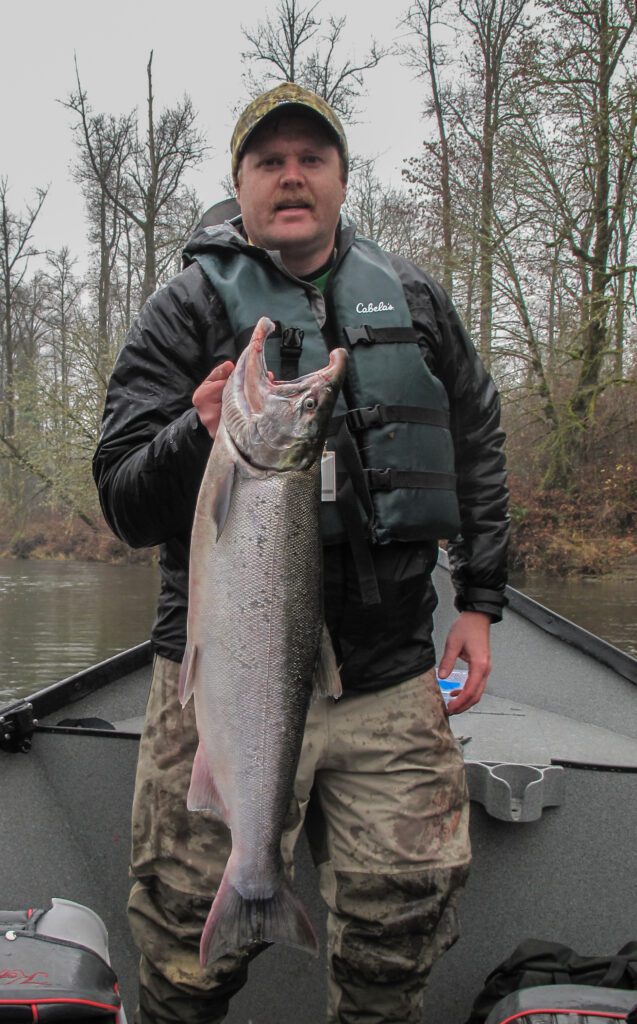
Log jams are notorious places for coho and for eating gear. It is the hardest place of all to catch salmon. Look for deep holes often created by the log jams and watch the fish, or when you see the splashing and rolling as this often means fish are active. A tired fish will sit and rest, but an active fish will be splashing and rolling as it uses energy to do this. Why salmon do this is still unknown with several theories but one thing that is known is that fish that are active are not lockjawed.
Be careful parking the boat over a log jam in current but if you find one that is in a soft part of the river then you can oftentimes move the boat over and tie up to the log jam. The key here is to let the hole rest because it is likely the fish moved out once you put the boat over them. Coho like log jams because it is covered and they feel safe from predators here; the boat will become part of that cover once the commotion stops. Several times we have looked over the edge of the boat and seen coho underneath, sitting there just like they do in other cover.
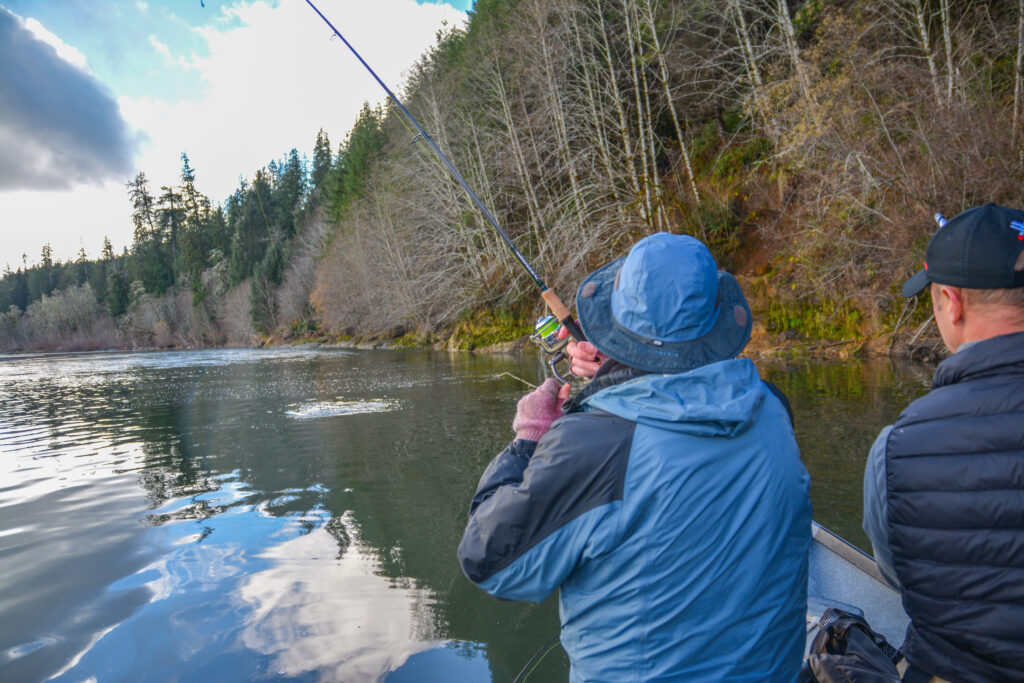
Techniques vary and sometimes you can get a “lockjawed” silver to bite–though the fish was just resting and is now recovered-by using a bait that it simply cannot resist. Such techniques are often the presentation of bait like cured eggs. If you have ever hoverfished, then you have caught resting fish using eggs. This technique which is extremely popular in the Columbia River Gorge is done at tributary mouths where the colder water from the tributary is dumping into the warmer Columbia. The fish will stack up here to rejuvenate in the cooler water and the bite is often very subtle. Floating eggs under a bobber is a top technique to get resting coho to bite. Back to the frog water slough, it is best to float fish it first and see if there are any resting but willing biters in there.
Twitching jigs and swinging spoons or spinners are for active fish. Use these techniques where fish that are more active, such as in runs, riffles, and deep holes. Yes, they also work in stagnant waters but again you will notice that out of the entire school of fish, only a few will chase down the lures. This means having patience and knowing that the fish will eventually get their strength back and bite.

Same with moving fish, be ready for a long lull in action and then all a sudden the “bite” is on. It is likely fish moved upriver and to your location. One cold November day we were fishing the Satsop River and anchored by a small back eddy along a cut bank. We stayed there all day long twitching jigs and occasionally, a pod of coho would make their way upriver. This was announced by one of us hooking a fish and then it would be “on” for a few minutes with everyone catching a fish or two and then the coho simply moved on.
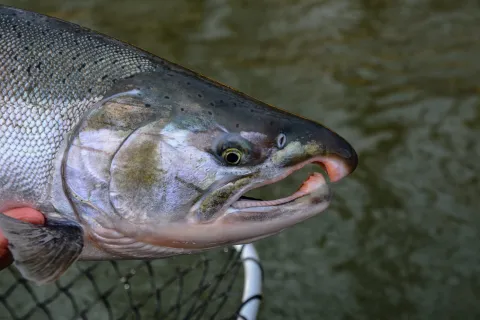
Lockjawed coho are hard to catch and the best way to catch them is to look for fish that are willing to bite. Knowing when they are lockjawed and not harassing them is the best technique you can do to catch more fish. Find willing biters and leave the tired fish alone. Wasting time on them only hurts the run and will cause you to become frustrated. When you make your way to the edge of the quiet river, pause and look around, listening for the splash of a coho. These are the fish you can catch.
/articles/silver-salmon-river-lockjaw-strategies
British Columbia Tuna Time
Timing is everything, especially in fishing. As fishers, we do our best to utilize our logarithmic skills to factor bait, tackle, gear, equipment, safety, weather, time, and environment. Sprinkle on a little bit of hope and you may have a recipe to catch the infamous Canadian Tuna like we did last August in Zeballos, BC in Zeballos, BC with Reel Obsession Sport Fishing.
Nearly a year in the making, last August, we headed out of Spokane to Vancouver Island. Me, Rob, and our two daughters, Cameron and Sarah, headed out on the 700 mile-2 day trip to Zeballos. We had our passports, bibs, maps, lodging itinerary, ferry tickets, snacks, coolers and a navigation plan. We set out to BC hoping to catch the infamous BC Tuna.
Our hopes multiplied as we left Spokane. Rob had been on the horn with Adrian of Reel Obsession and the scuttlebutt was that our timing was right for Tuna. We planned on fishing for Salmon, Halibut, and Bottom fish and the idea of Tuna was a BONUS. All factors were adding up to ideal conditions. The water temperature was right, and the weather was cooperating. Adrian and his fleet were in the Tuna between 20 and 40 miles out when we left Spokane. Our imaginations ran wild as we drove. Would we get there in time?
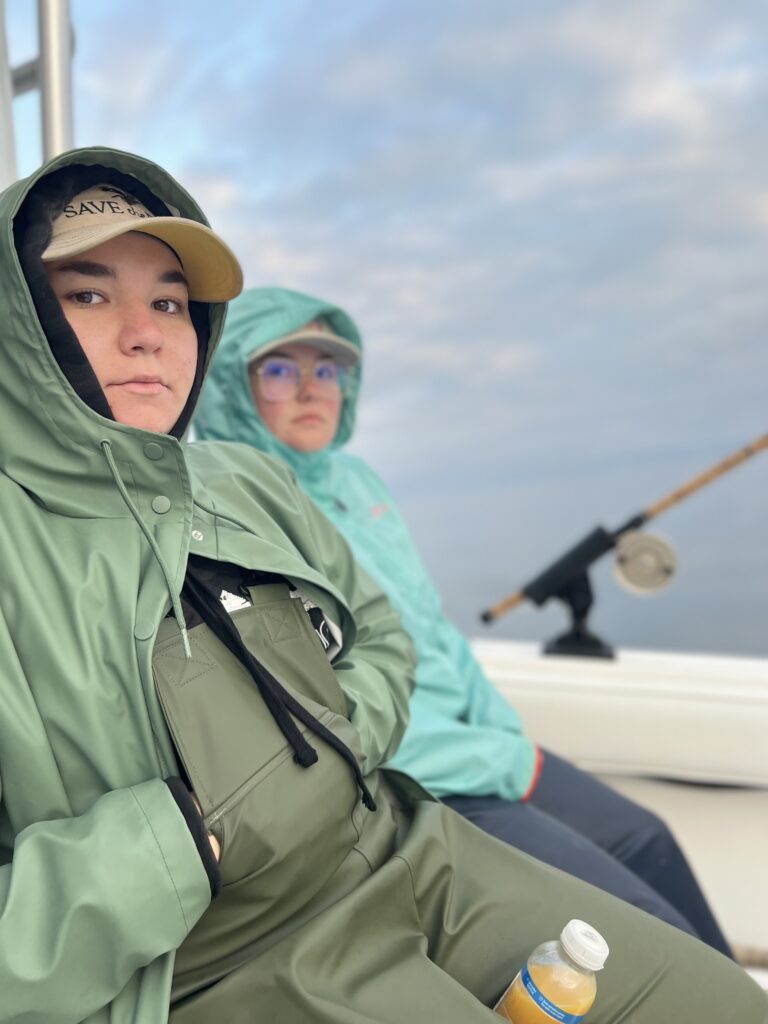
Now, our girls are seasoned on the Salt, and they can travel independently abroad. They were ready for this trip. Their skills would be put to use and pushed. Their mental toughness was developed. They had their own gear, and their stamina was up. The time was right for them to go 40 miles out to sea for a long grinding day of hauling in up to 20 tuna per person as the limit.
It took a while at the border. We were the last truck that loaded the ferry on the last boat of the night. (Planning for this is key. Any delays may affect your ferry sailing)
We got into Nanaimo late and grabbed a hotel. We set out early for Zeballos on the 4-hour drive. We hit a few stores on the way. Zeballos has one small store that is open with limited hours and limited supply, grab your niceties on the way.
Angie, Adrian's wife and Operations Manager, had everything dialed for us upon arrival. Our rooms were great. The main lodge was bustling. Folks gathered around the firepit with a glass of wine to soak up the views while being contentful waiting for dinner. Sitting down for dinner, the buzz was in, the Tuna were still here! We would be getting our shot at the Tuna Dance!
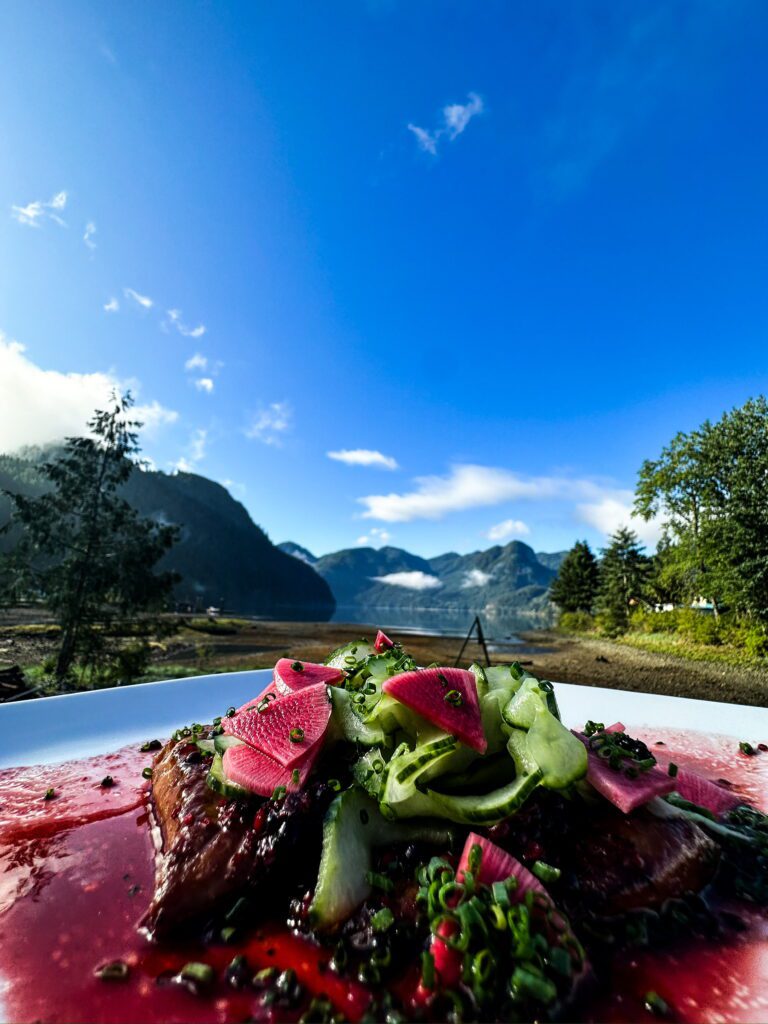
The morning was met with a communal breakfast and lunch coolers to tote. The scene of the fleet of boats heading out together was a sight to revel in. My girls soaked in the scenery as they gazed with wonder at the open sea. We went 40 miles out. Not all the fleet, but a handful of us Reel Obsession boats were working together over the horn. The radio chimed pleasantries rarely heard over the com in Washington waters. Like, “Lookin’ good aye?” and “Great job, aye!” BC fishers are some of the nicest, hardworking folks I’ve met.
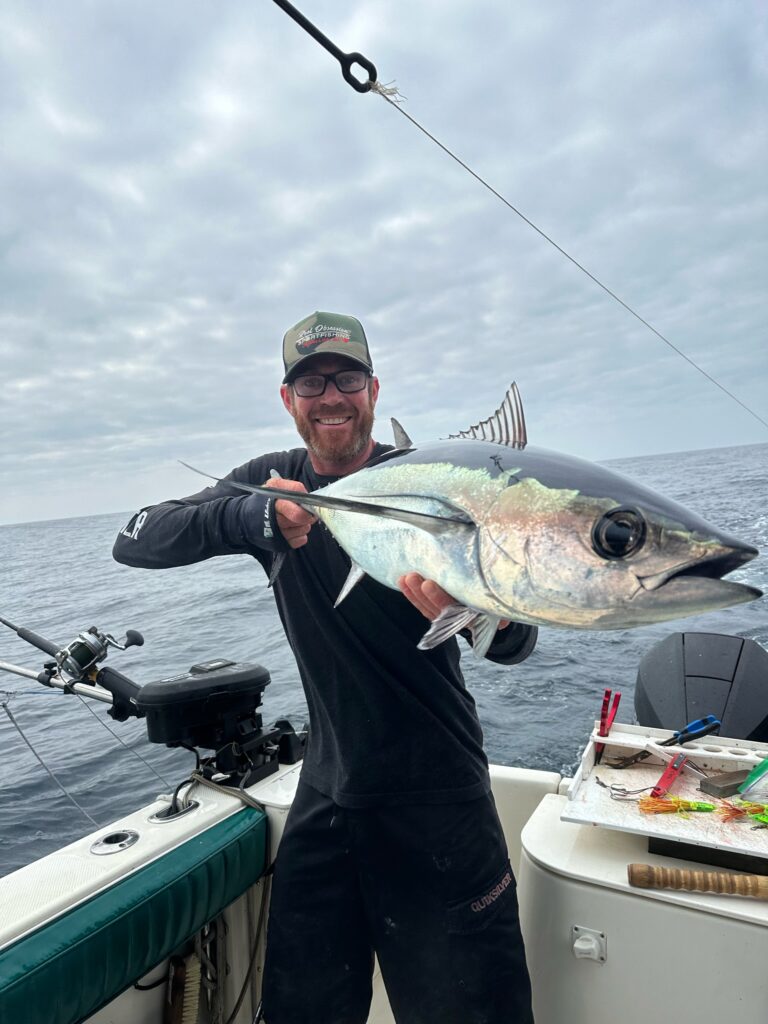
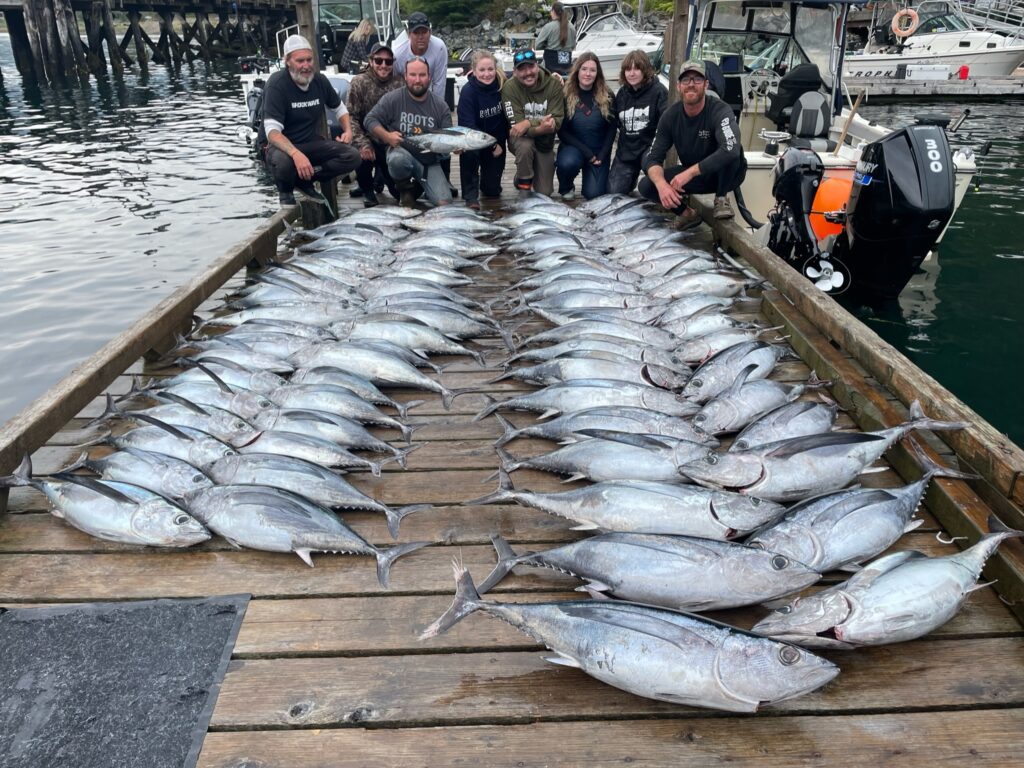
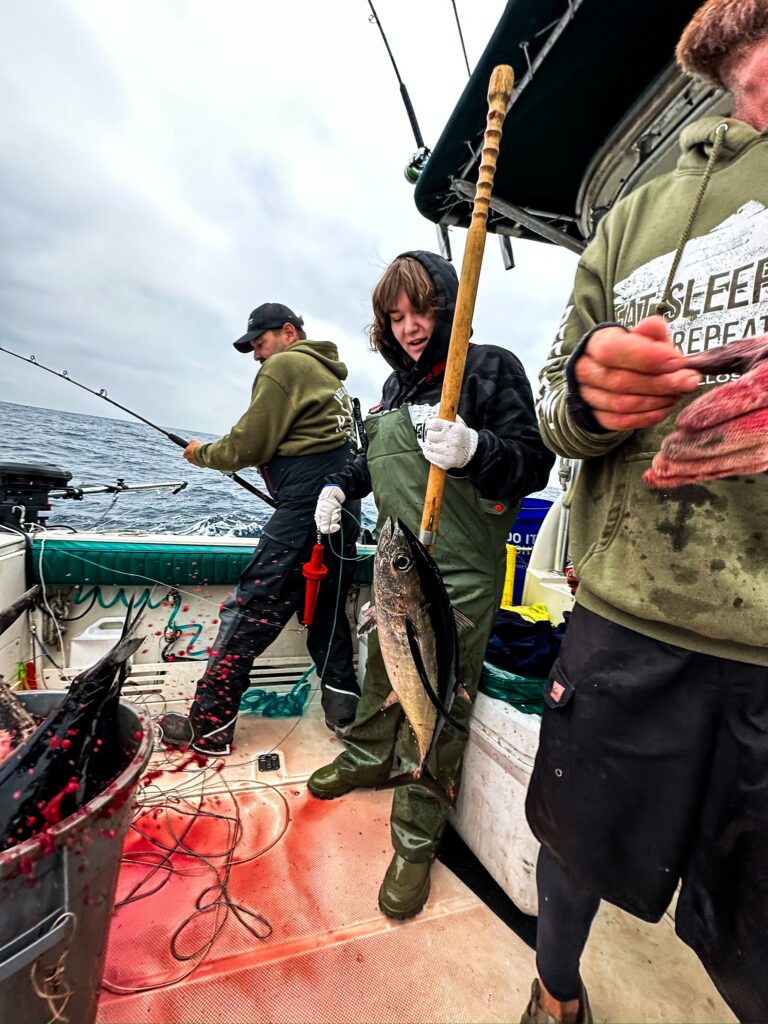
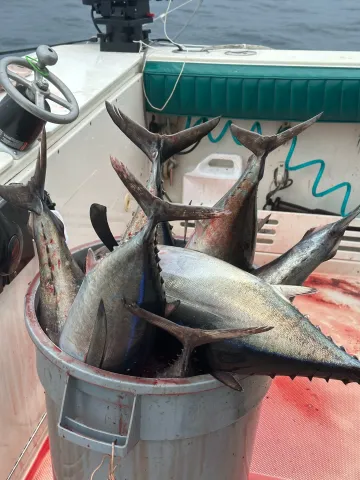
We get to the grounds and Adrian shows the girls the ropes. Essentially, he shows them how to dance for Tuna in a brief 2-minute tutorial. We started to move as a team. We were trolling at about 7 knots fishing with rods and reels and hand lines. Level lines and hand lines are productive and fast; and less awkward than a rod and reel when trolling. “The hand lines help keep the trolling speed up.” Adrian had said. The girls got into it. The handlines helped keep their stamina up. We grinded all day, with not a moment to spare. Adrian was incredible at teaching the girls new techniques, picking up slack when the girls felt a wave of fatigue. Rob and Adrian pulled in the extra slack that day. Mentors are good like that. We grabbed snacks as our energy slowed. Angie and the staff had prepared a delicious lunch for fuel and endurance. We brought in around 40 Tuna! It was incredible! It was rigorous, it was hard, it was fun and It was the time of our lives!
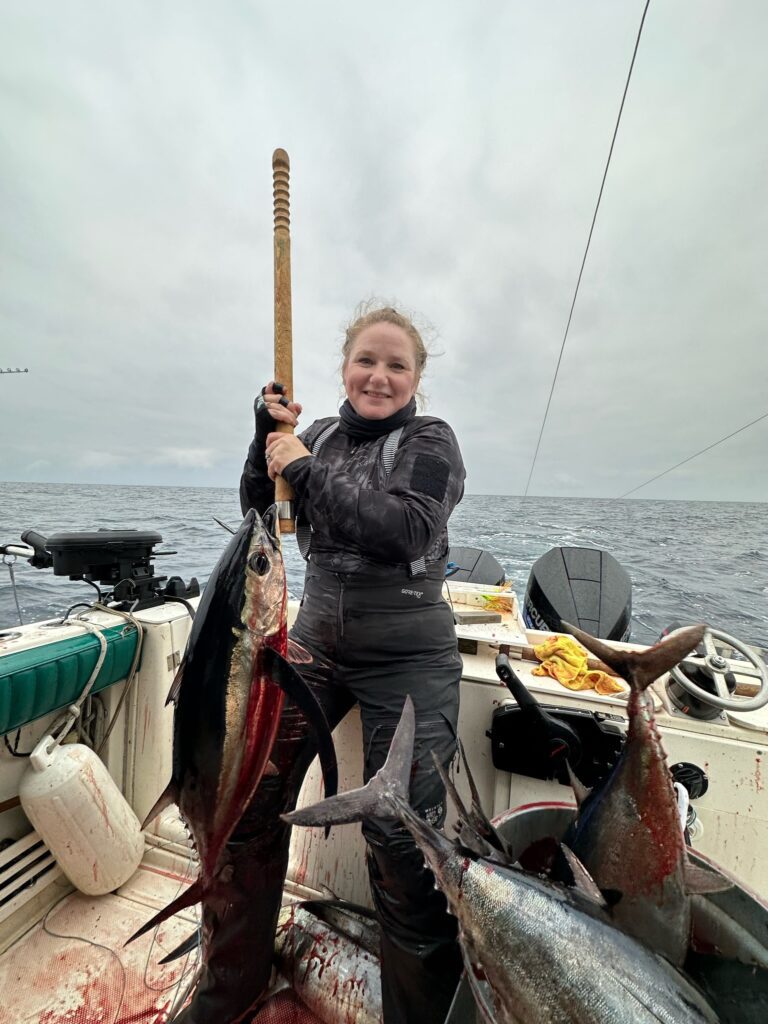
We headed in with the other “Reel” boat that was out. We got to the dock, exhausted. Ange and her team were waiting for us to offload and begin processing. They laid out all the tuna from both boats for some pictures. It was glorious! We headed up to the lodge to get cleaned up and ready ourselves for dinner while the Reel Obsession Crew got to work.
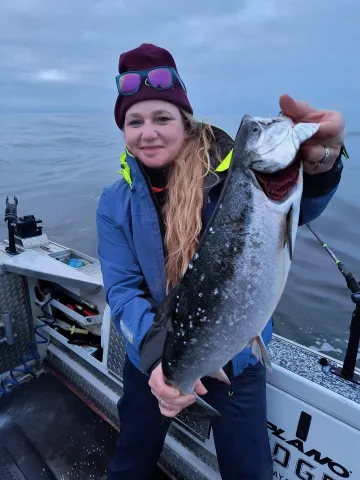
We fished for 3 more days. The fishing was great. The girls wanted to fish for halibut, so we fished in the rain at 300 ft and let them do most of the reeling. We caught our fair share of salmon and some bottom fish. Each day the crew would do the same and offload our catch and get to work while we sat reminiscing about the day in comfort as we soaked in the company and scenery.
We headed out early in the morning with our fish packaged and ready to go for the border. We spent an extra day in Vancouver to play around. We headed home the next day in a straight 8-hour shot. Looking back, Sarah recalls, “The food, scenery, and the people are extraordinary! Zeballos is Awesome!” I agree with her. It was the time of our lives!
*Reel Obsession is a Family Operation. Adrian, and his wife Angie, own and operate the Lodge alongside their two children. Angie runs the land part as the Operation Manager and Adrian runs the Marine side as Operations Manager. Keegan, their son works on the docks and in processing and Kenzie helps serve and operations in the Lodge.
*Reel Obsession is an All-inclusive Fishing Vacation Lodge. Packages include lodging, all meals, snacks, beverages, and guided fishing. They are a licensed processing facility and process and vacuum seal all our fish.
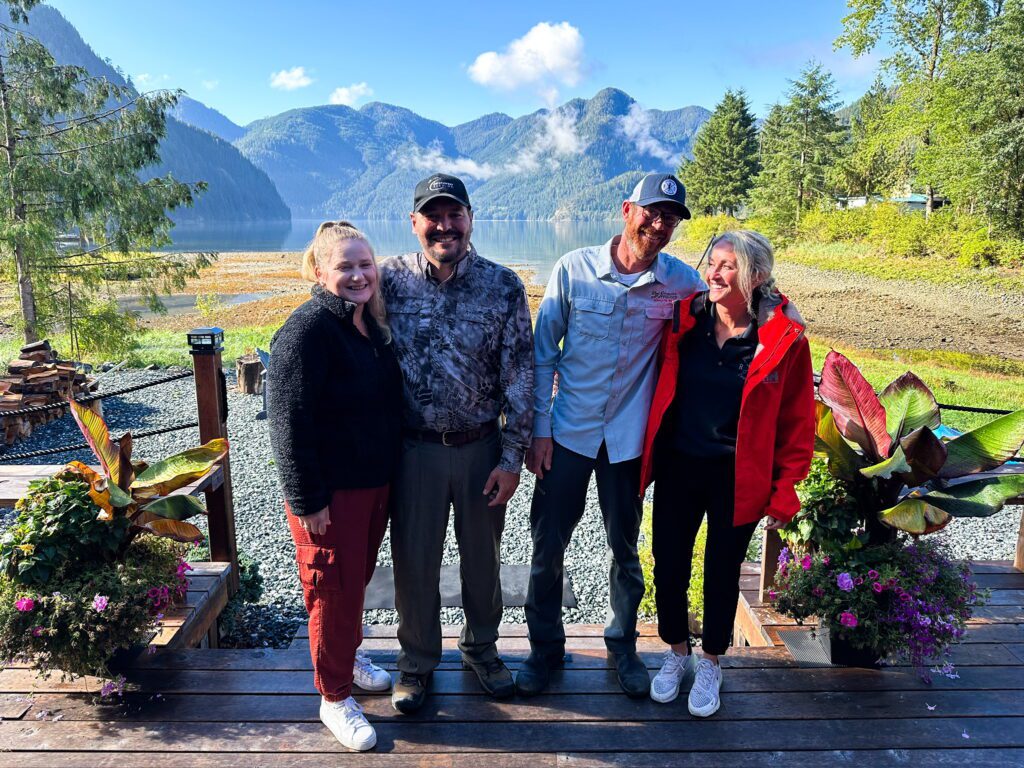
“It’s always a halibut and salmon trip but if the water temps are right, then we can get out for tuna!“ -Adrian O’Connell
/articles/british-columbia-tuna-time