NW Good Eats: Laughing Dog Brewing
Who: Laughing Dog Brewing
What: Award-winning Brews and Award-winning Chef
Where: 805 Schweitzer Plaza Dr. Ponderay, ID 83852
About their Dog House:
Laughing Dog Brewing is a must-stop for those fishing in or around Lake Pend Oreille in North Idaho.
Located in Ponderay, just north of Sandpoint, the easy access to Highway 2 (Highway 95) and Highway 200 lends itself to a quick and restful stop for the traveling fisherman. No need to kick off your boots here, walk in just as you are - straight off the boat - and bring your furry friend with you. Yes, as in the name, Laughing Dog caters to those with pooches in tow.
Laughing Dog not only has 12 taps on hand, but their food is an elevated comfort style that triggers curiosity and tickles the pallet. The menu is constantly evolving, being driven by local produce and their award-winning Chef/Owner’s imagination. Which in my opinion, is limitless. Chef Adam Hegsted is a genius in his field at the top of his game.
The Food:
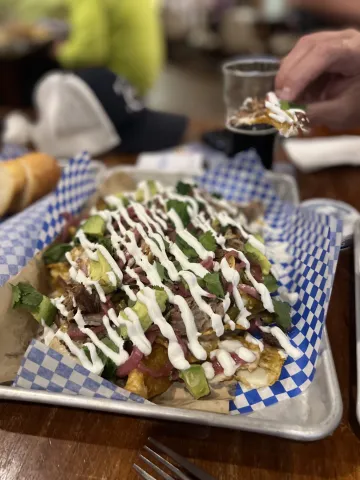
Laughing Dog takes the hotdog to a whole new level. Their Haute’ Dogs menu has something for everyone. Try the Traveler! Made with local smokey sausage, it is topped with jalapeno jam, peanut sauce, cilantro, pickled jalapenos, and basil aioli. Laughing Dog's burger choices are just as imaginative and delicious. The PB & J Burger has jalapeno jelly, peanut butter sauce, cilantro, Thai basil aioli, and pickled peppers on a brioche bun. The Korean Chicken Sandwich is amazing and is my favorite. The Classic Burger delivers for those burger enthusiasts’ predetermined expectations of what a hamburger should taste like. The Truffle Mac and Cheese and Avocado Nachos are two of Rob Holman’s favorites.
The Taps:
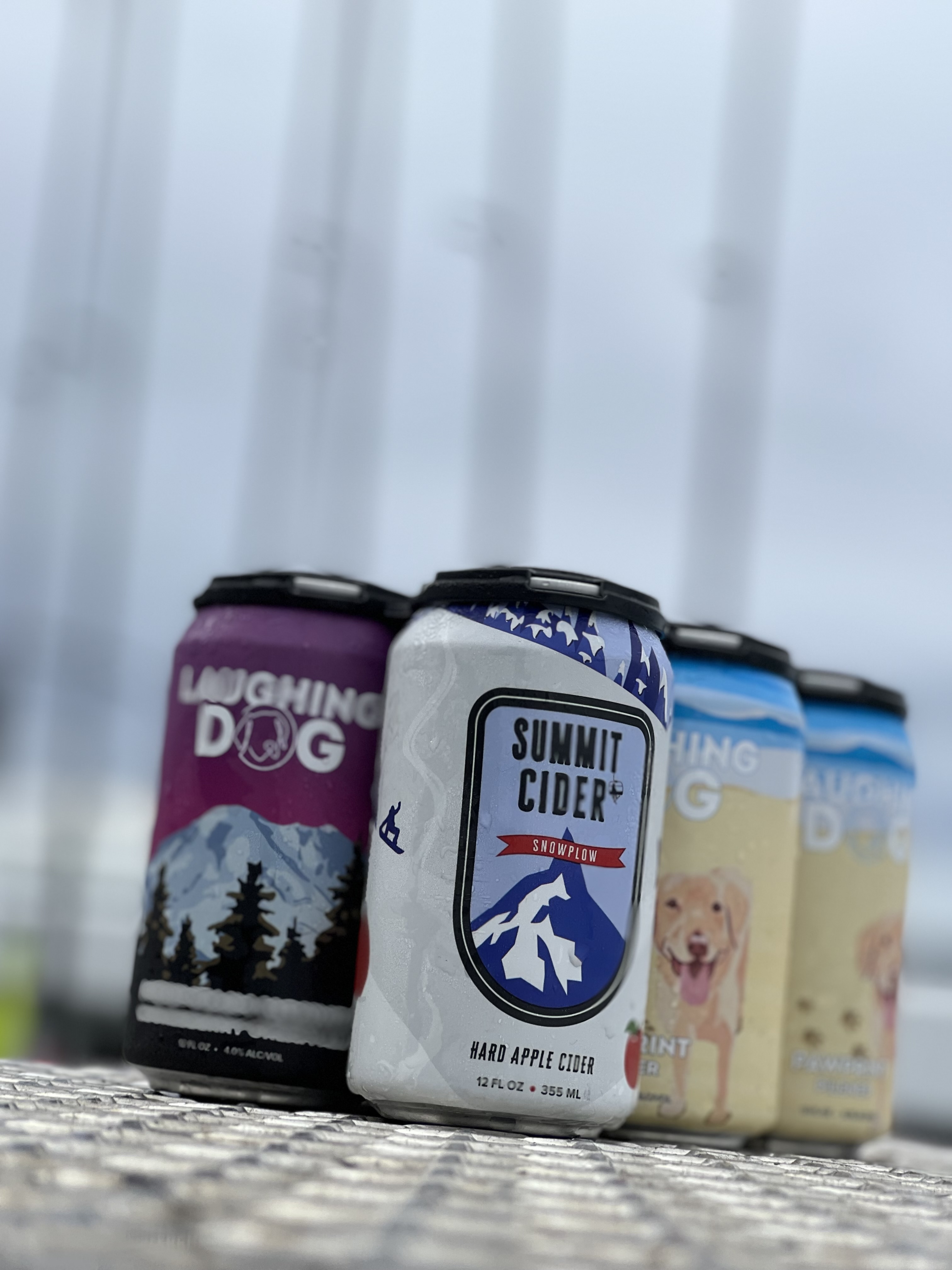
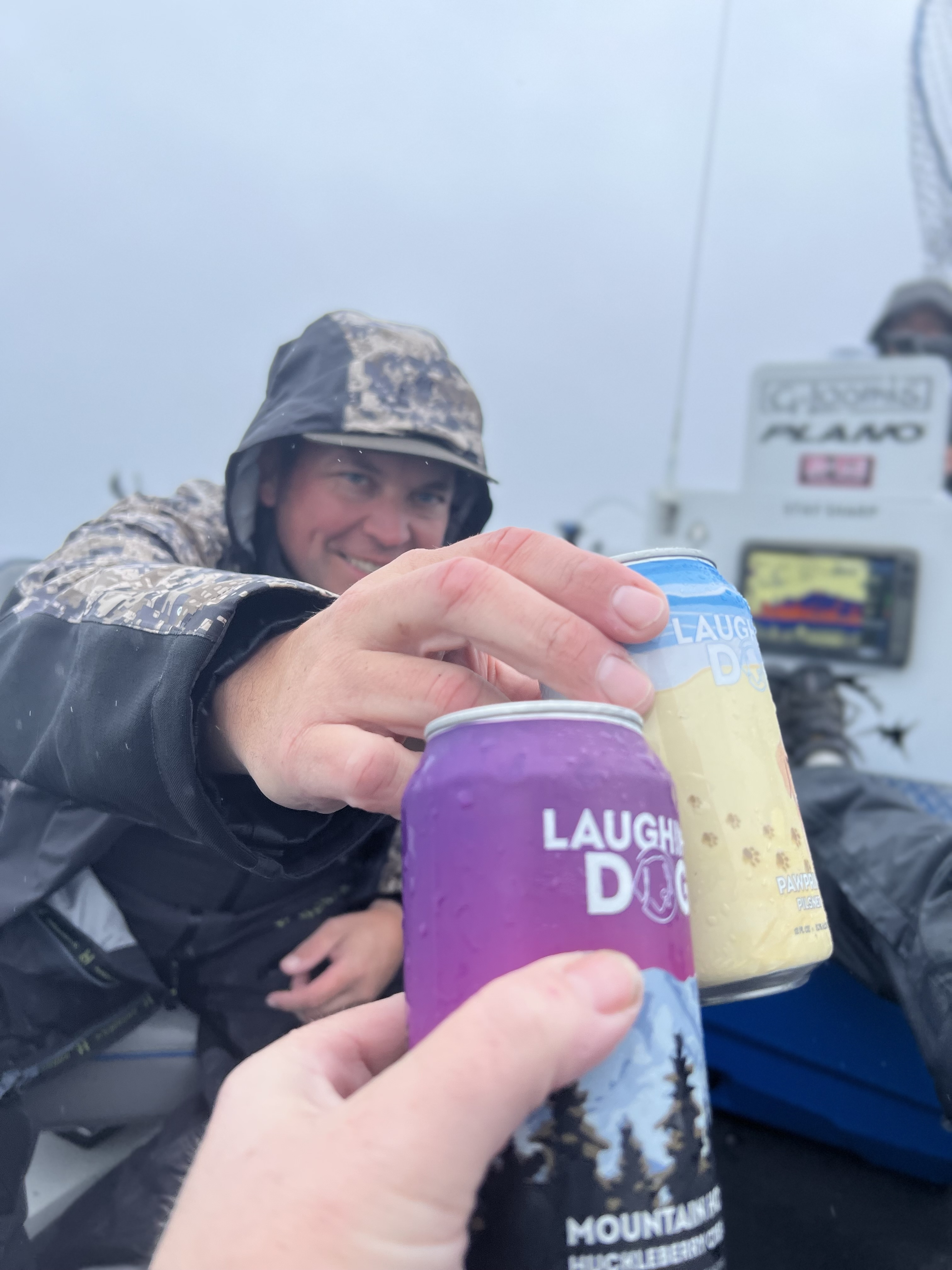
Laughing Dog Brewing is known for many things, and their Huckleberry Ale is top of the list. Amid huckleberry territory, Laughing Dog prides itself on sourcing NW ingredients that are brewed in the Northwest in their Ponderay Brewery. The summit Cider is out of this world and is made with northwest apples. The Dogfather…It's everything the name suggests, and more. Stop in to find a new creation on tap, like the Huckleberry Seltzer, that has made its way from the tap to the shelf because of its taste and popularity. Schedule a tour of the Brewery if you have the time or check out their website to find where you can find Laughing Dog Brewing products in stores near you.
Find Our Beer – Laughing Dog Brewery (laughingdogbrewing.com)
The awards:
- 2023 Gold metal recipient Belgium Beer Festival class “Brown Ale”
- Best of Inlander Spokane 2024
/articles/nw-good-eats-laughing-dog-brewing
Destination Spotlight: MarDon Resort
We are a Destination RV Resort on the shores of Potholes Reservoir, 15 minutes South of I-90 at the Moses Lake exit. Potholes Reservoir is a 28,000-acre lake held back by a 3.5-mile earthen-filled dam, the longest such dam in the US. There is a boat launch at the resort as well as 3 others on the lake.
We are a 3rd generation family resort. The senior Mesebergs bought the resort in 1972, moving from Seattle to MarDon. Now their grandchildren, Levi and Annie manage the resort. Our motto is From our family to yours!
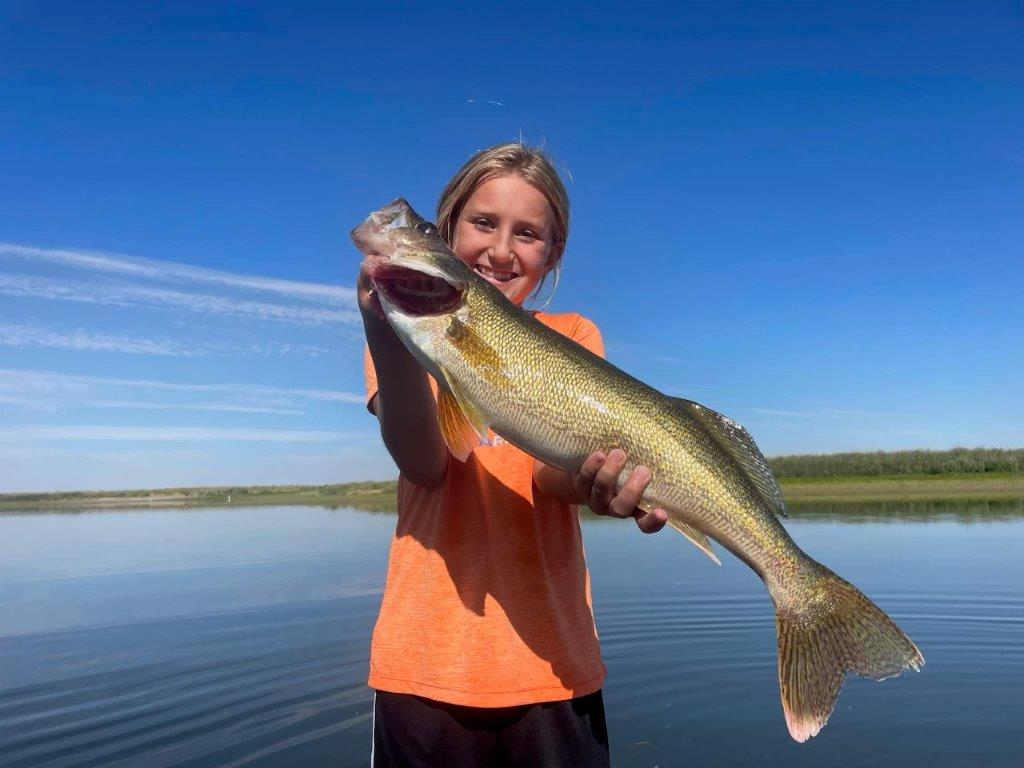
Over the last 10 years, our family has added big rig RV sites and remodeled existing RV sites in the park. We have replaced both old motels with 10 cottages and 5 beautifully appointed lake houses. We also have rental homes and camper cabins sprinkled throughout the resort. Once you are here and settled in the lodging or your RV, you can explore the resort and lake shoreline. Come evening, enjoy a meal in our Beach House at MarDon Restaurant and lounge. Or catch the sunset while you relax in a lawn chair on the marina while wetting a line. The marina boasts crappie, perch, bluegill, bass, trout, and the occasional walleye bite. And if you didn’t bring the right tackle or nightcrawlers the MarDon Tackle and Gift Shop is the place for you.
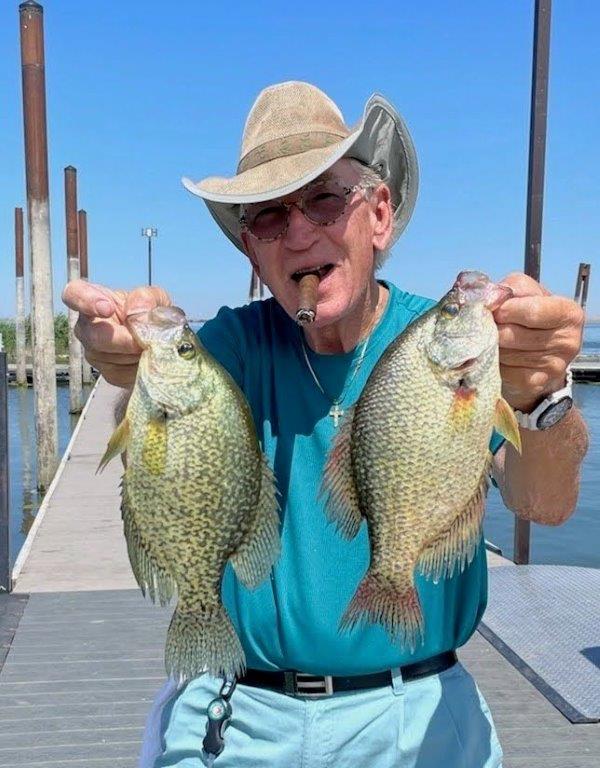
And don’t forget to leave time to try our 18-hole mini golf course, $5 or $10 (kid/senior or adult). It is challenging, fun, and a good way to work up a competitive banter amongst your group. Or spend the day on the beach while the kids build sand castles and frolic in the lake. For the older kids, there is a dock to swim to.
The resort offers seasonal rates. Summer RV is $40-$85, $40 being a weekday water and light hookup, while the $85 is a big rig pull-through full hookup site with a concrete slab. The spring/fall range is $30-$70. Summer lodging is $165 - $410. All units are for 4, 6 or 8-person families. The $165 is a camper cabin, Cottages are $240-$335, Lake Houses are $290-330, and the large rental homes are $410. The Spring/Fall range is $120 - $315.
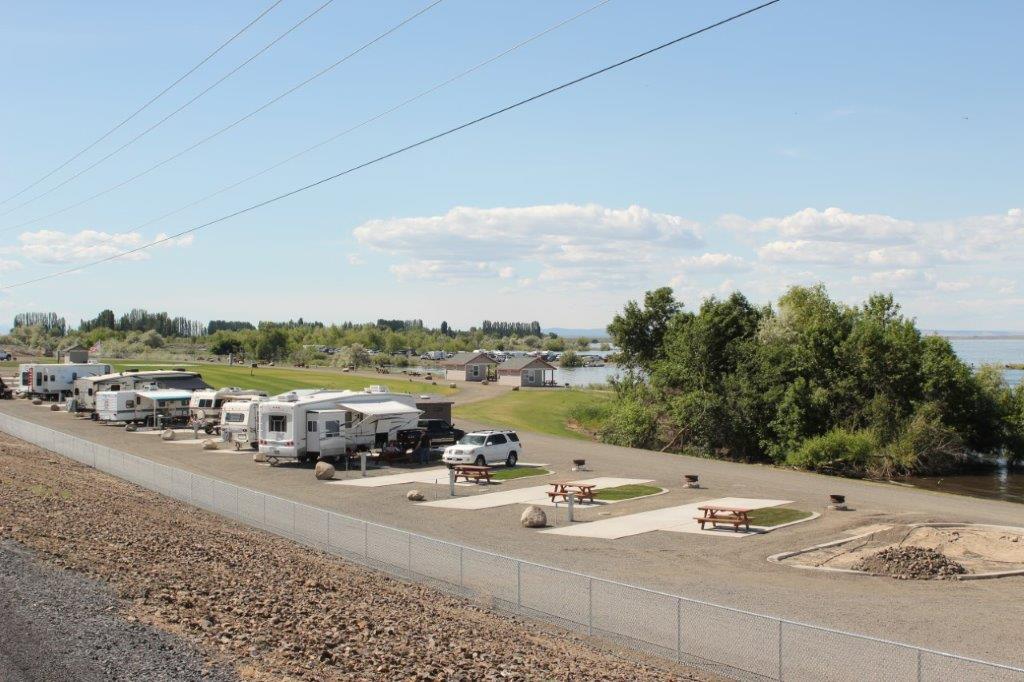
Nearby is a beautiful 18-hole course 1 mile from the resort, The Legacy Golf Resort. Pro Touch rents jet skis (1 mile away but they will deliver to our beach). MarDon Resort rents pontoon boats for families of 8 or less and 14’ fishing boats with a 15 hp motor for 2-4 people. There are 70+ small lakes below the dam to explore, www.columbianationalwildliferefuge.com
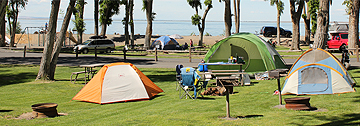
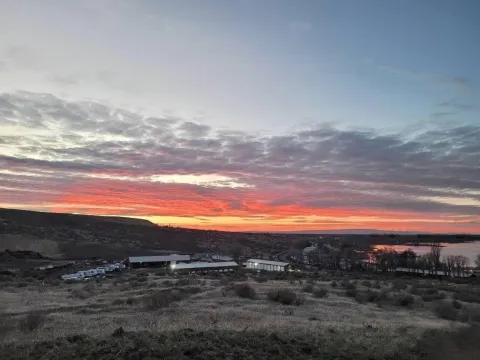
In other words, you will find more to do than you have time for. We have big skies, big water, and the best sunsets that I have ever seen (and I have been to Hawaii!).

/articles/destination-spotlight-mardon-resort
Tips & Tactics: Pitching Plastics
It's the time of year when the fish are on their spawn, and in their beds and many of us anglers are throwing artificial baits, especially plastics. I'm going to share 3 different tactics you can use while pitching plastics, may it be Bass, Walleye, or Panfish.
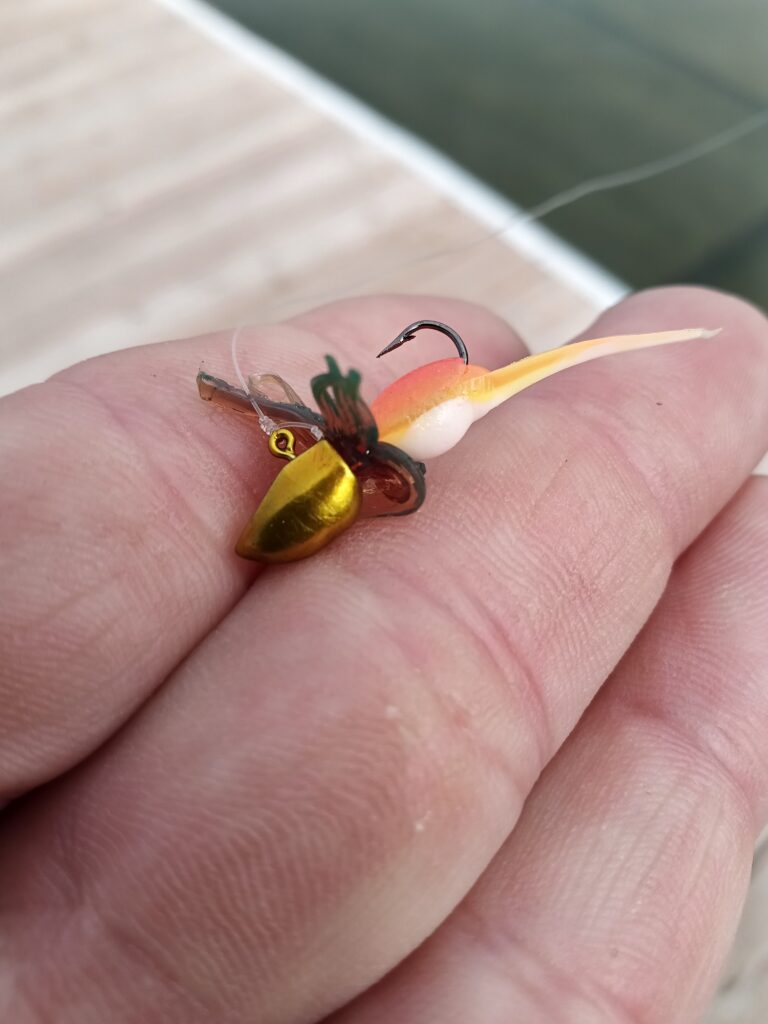
#1 Pairing two different plastic profiles together on one jig has been an effective way to entice the most finicky pan fish. A collared style with a ton of movement, and a subtle trailing tail gives them the best of both worlds.
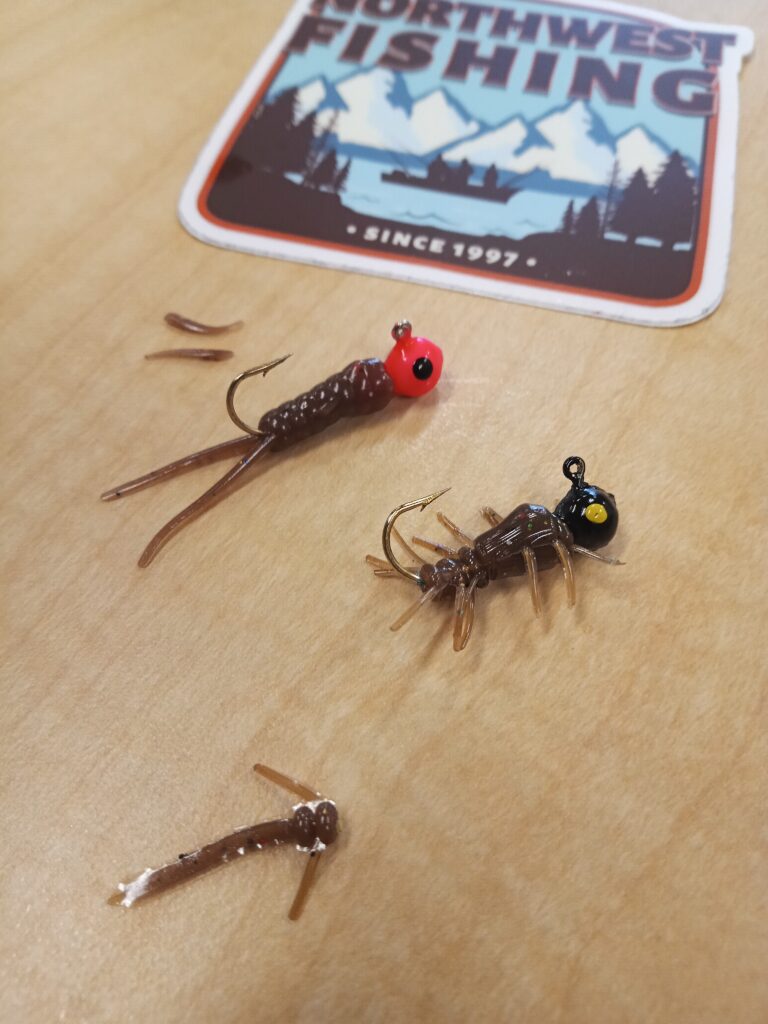
#2 We've all had the tail, and or legs ripped off the plastic we're using thinking we need to change it out. Well, don't.... Inspect it, and if it still looks fishy, fish it. Some of these, which I call "Creature Bait" have sometimes outperformed the original profile. Sometimes they may not want all that frill in their face, just something more sized down and buggy.
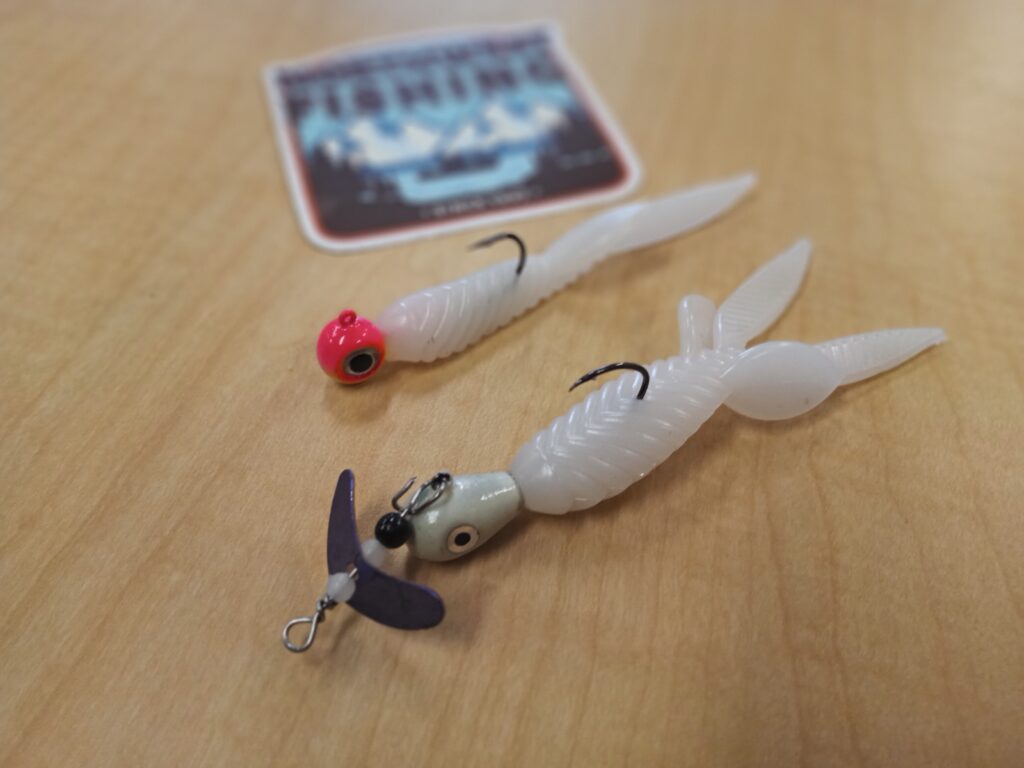
#3 I've tinkered with larger bait while bass and walleye fishing. May it have been a damaged plastic I refinagled on the jig knowing it would still fish. Or I change the profile completely myself for a different look and action. Like this here Burbot Bomb from Bad Dad's Jigs, I've fished the original profile with a ton of success. One day fishing Smallmouth, I cut one in half with scissors and tossed it on another jig head, and the action drove the fish "Bonkers"!
Try it next time, don't change out in such a hurry, inspect the bait, and fish it if it looks fishy. Or go create your own "Creature Bait" that will make them fish crazy.
![{"capture_mode":"AutoModule","faces":[]}](https://cdn.northwestfishing.net/sites/default/files/styles/large/public/images/IMG_20240627_055915_3-scaled.jpg.webp?itok=QZ0r3E67 "{\"capture_mode\":\"AutoModule\",\"faces\":[]}")
/articles/tips-tactics-pitching-plastics
Mayfield Muskies
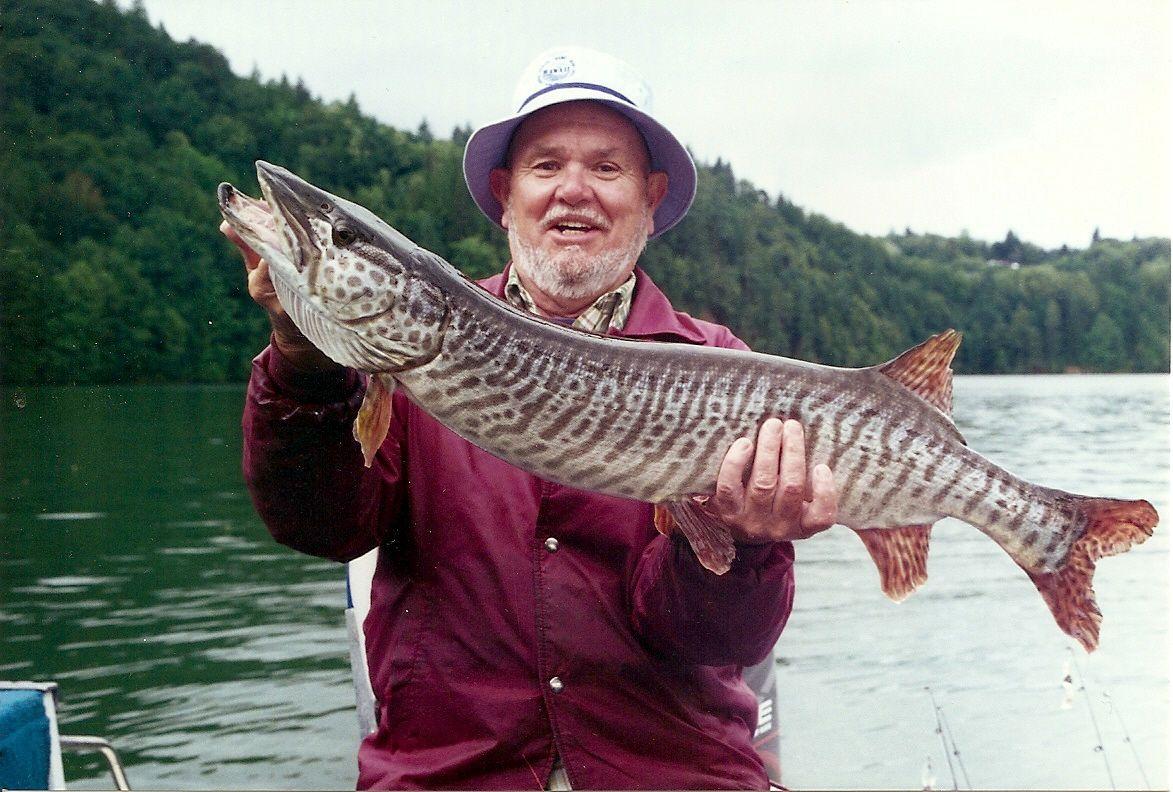
It was August 2, 1996. Son Don and I were on the second day of a four-day fishing trip. We had spent the night camping at Riffe Lake’s Taidnapam Park and were now heading to Mayfield Lake to try for one of the elusive tiger muskies. For the past few years, tiger muskies have been the big attraction at Mayfield. A sterile cross between a true muskellunge and a northern pike, they had been planted into Mayfield Lake to help control the large numbers of squawfish and other rough fish. They have a reputation of being very difficult to catch and have been called “the fish of 10,000 casts.”
It had rained hard most of the night and was still raining very hard as we reached the Ike Kinswa State Park launch ramp at Mayfield Lake. We had planned to camp the night at the state park but had noted that the “campground full” sign was posted.
The only raingear we had was jackets so we stripped down to swimsuits and rain jackets. Neither of us had fished for tiger muskies before and had no idea how or where to start so we started at the bridge near the launch ramp.
Don hooked the first fish, a squawfish, -- the first of at least 50 we were to catch during the day. We saw a couple of huge splashes near the bridge supports that we assumed must be muskies. We also saw some large, dark shapes in the water that definitely looked like big muskies.
We saw a big fish splash under the bridge. Don motored over and made a long cast with his huge Rapala 18 S. There was a big swirl as the fish struck -- Don’s 15-pound test Maxima stretched and snapped. The muskie’s teeth had cut the line as clean as a razor blade. I then cast a large spinner bait to the area and had an instant hook-up.
“Got him,” I said excitedly but the big fish leaped and spit out the hook. We didn’t think it was the muskie but never knew for sure just what species of fish it was.
We continued fishing for a couple of hours. Don was throwing a large silver Rapala Shad Rap and I was casting a large brown crawfish Hawg Boss Super Toad. We were catching squawfish almost constantly. We caught so many that when one was hooked, the other angler barely looked and just kept on casting. “Casting on automatic,” as Don put it.
Finally, Don really got my attention when he yelled, “Muskie, I’ve got one.” The huge fish was beautiful and put up a pretty good fight. Fortunately, this fish was hooked in the lips and was unable to cut the line with his sharp teeth. As he began to tire, we were wondering how we could land it. We had no net. After a few unsuccessful attempts trying to land him by the gill plates, I grabbed his lower lip with a pair of pliers and hoisted him into the boat. The hooks were removed and he was placed into the live well for a much-needed rest.
When the fish was first put into the live well, it was so tired it could not remain in an upright position. I held it upright for a couple of minutes while its gill plates pumped fresh oxygen into its body. The fish then seemed to quickly recover its strength while we readied the cameras and the tape measure.
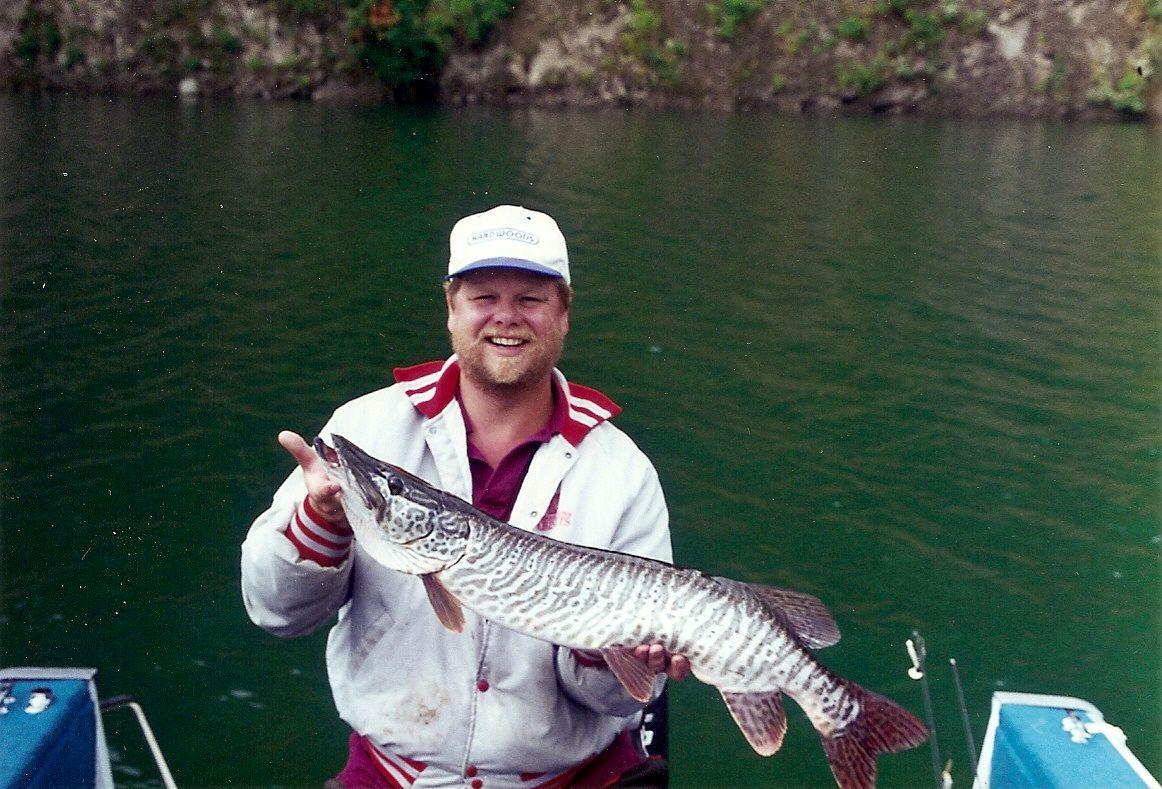
When we were ready, Don removed his seemingly fully recovered muskie from the live well and we measured it at 36 inches even. Then a few quick photos were snapped and the big beauty was thanked for the memories and gently released. Satiated, by the experience, Don and I just sat down and relaxed in the boat. We celebrated with a cold beer and recapped the catch as the boat slowly drifted in the breeze.
Don offered me the front seat of his boat and first opportunity at prime casting areas. I declined, preferring to relax in the back seat while Don ran the electric motor and controlled the boat. We started fishing again, starting where Don had hooked his muskie. After only about a dozen casts later, Don cast to the end of a large log near the shoreline and started his retrieve. I watched his cast and then cast my crankbait to the middle section of the same log. The fishing gods surely smiled at me as the twin to Don’s beautiful muskie smashed my lure.
“Dad, you’ve got a muskie,” Don yelled only seconds after I had seen the fish hit and had set the hooks.
Fortunately, this muskie also had the crankbait in its mouth and was unable to bite the line. (Wire leaders are a very good idea for these fish.) It too, was beautiful in the clear lake water but fought little with its mouth almost pinned shut by the treble hooks. The big fish was landed and put into the live well for a rest. Again the tape measure stretched to 36 inches. We snapped a few more photos and the big beauty was released to continue his job of eating the numerous squawfish.
Shortly after catching the last muskie, the skies really opened up and the rain just poured down. Seeking some shelter, Don drove the boat under the bridge. As we sat under the bridge, I commented, “I don’t think I’ve ever seen it rain harder than this." And, -- about then, it started raining about twice as hard. Then the wind came up suddenly and started blowing like an angry typhoon.
After a few minutes, the rain and the wind let up and we motored out from under the bridge. We saw a sailboat upside down in the middle of the lake. One person was trying to swim to the shoreline and the other one was clinging to the keel of the capsized boat.
First, we rescued the nearly exhausted swimmer and then motored over to the boat. The man clinging to the keel of the boat just happened to be the state park ranger. We hooked our rope onto his boat, partially uprighted it, and towed it back to the Rangers dock. The ranger was very grateful for the assistance.
“We could use a campsite tonight,” I commented.
“I think we can work something out,” the ranger said.
That evening, we drove into the campground and asked if a campsite was reserved for Johansen. “Yes sir,” the park employee said as he directed us to a free campsite. That evening we had a nice campfire, had some hot chili, and enjoyed a couple of drinks while we recapped a very eventful day.
/articles/mayfield-muskies
Big Bass Tournaments
A GREAT WAY TO BREAK INTO THE WORLD OF TOURNAMENT FISHING
Tournament bass fishing can be an intimidating experience, but it can also be a whole lot of fun and if you want to dip your toes into the world of competitive fishing, a Big Bass tournament is a terrific way to start!
THE STANDARD TOURNAMENT FORMAT
For decades, the standard tournament format involves either an individual angler or a two-person team on board a bass boat fishing for anywhere from one to three days. The goal is to catch five big bass, put them into your livewell, and at the end of the day bring them to the dock where a weigh-in takes place. The team with the heaviest bag wins. After the weigh-in, the bass are released into the lake. If anglers submit a dead bass to be weighed in it is subject to a penalty with a certain amount of the weight being subtracted. In some cases, dead bass are not allowed to be weighed in at all.
There is usually an 80-20 rule when it comes to these bass tournaments, especially the opens where anyone can fish the event. The top twenty percent of anglers tend to end up at the top of the leaderboard while the other 80 percent of the anglers essentially donate their entry fees to the winners.
It’s a tough way to break in because there is invariably a huge learning curve when it comes to tournament fishing that improves with on-the-water experience. It is something that can’t be overcome by watching YouTube videos about bass fishing.
Another barrier to anglers wanting to get into the tournament scene is the best anglers also have the best electronics, boats, 250 HP outboards, Power Poles, forward-facing sonar, and more. In other words, they spend a bunch of money on equipment that may give them an edge over their competition.
HOW A BIG BASS TOURNAMENT WORKS
Big Bass tournaments are a completely different animal from a standard bass tournament. They are almost always open vs. club tournaments, meaning any angler can compete and you don’t have to be a member of the specific club putting on the tournament.
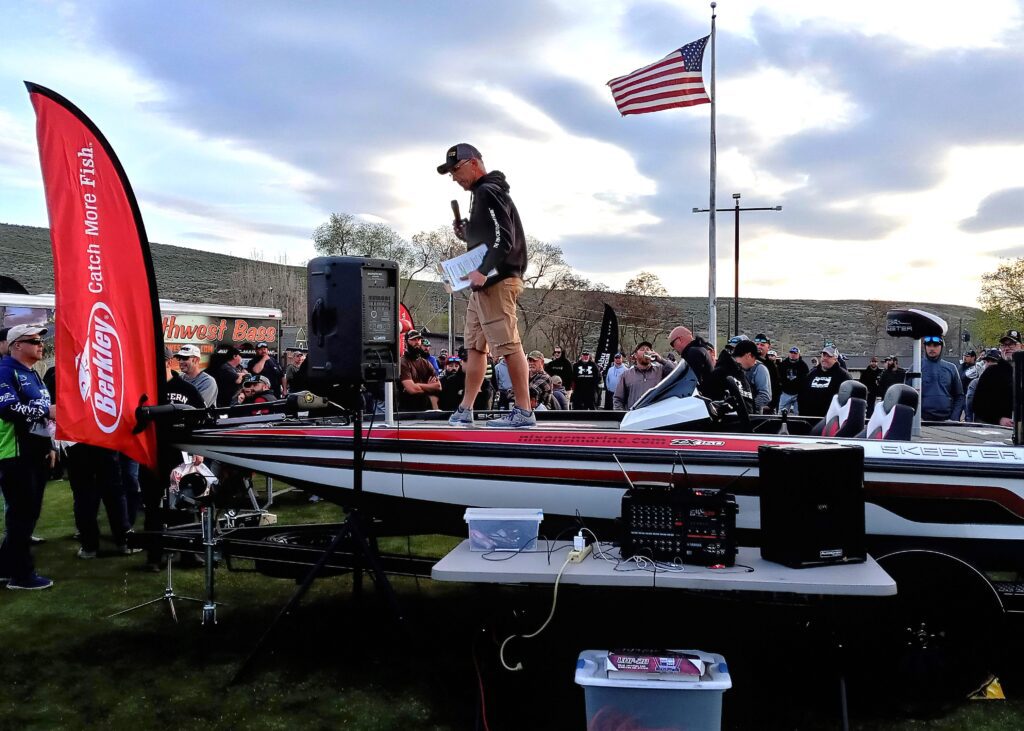
The goal of a Big Bass tournament is to catch the biggest bass and the payouts can be huge. Northwest Bass and Nixon’s Marine team up to give away a new bass boat to one of the hourly winners. What is an hourly winner? That would be the biggest bass caught over an hour-long period throughout the tournament. During the Northwest Bass tournament I participated in, some 100 teams were competing, and seven hourly winners. Each hourly winner was given a key and one by one, the team would get into the giveaway boat and turn the key to start the engine. One of the seven keys works, the other six do not and it’s an exciting event to watch at the end of the day.
Other tournaments I’ve participated in with Limit Out Marine and the Mount Saint Helens Bass Masters also had hourly payouts for the biggest bass weighed in each hour and a big check (up to $10,000) for the biggest bass weighed in during the event.
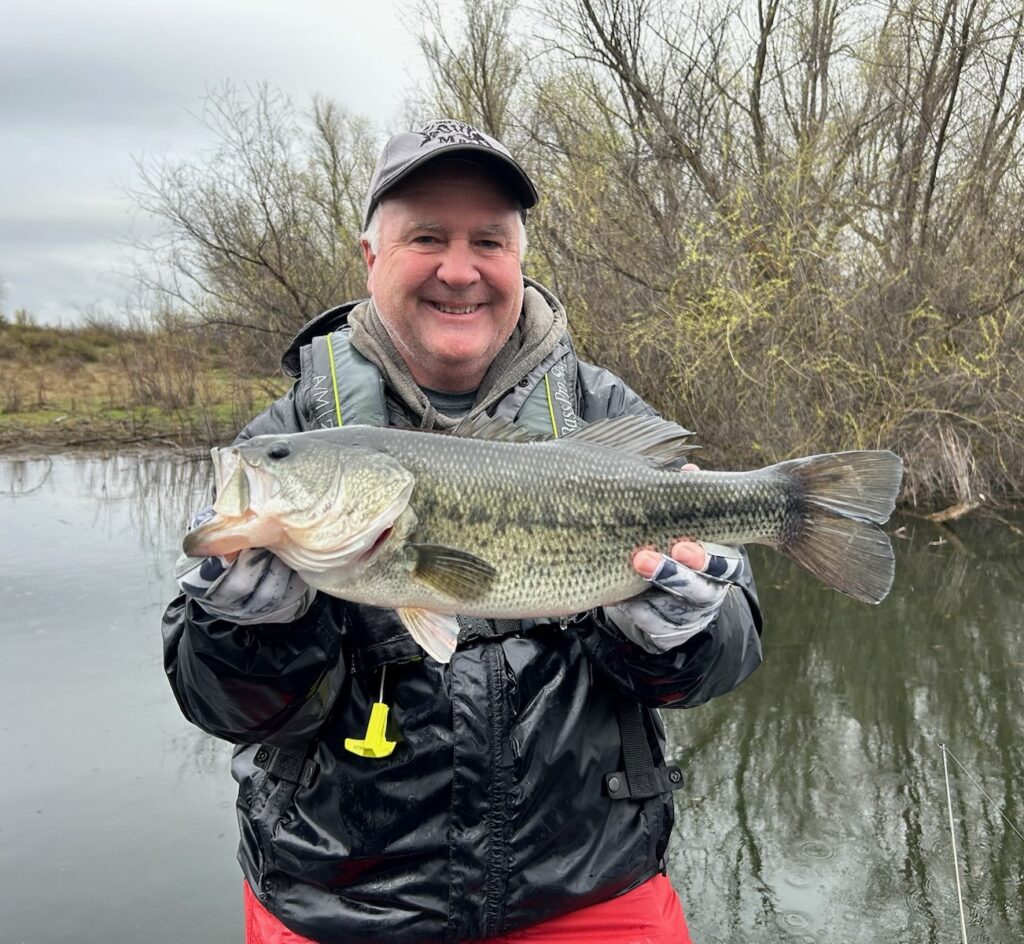
Big Bass tournaments draw big crowds fishing from a variety of different boats. Unlike the upper-level tournament anglers who routinely catch three to four-pound fish over the course of the day, a Big Bass contestant only needs to catch one good fish to cash a check. This really helps level the playing field, giving even the casual bass angler a shot and being a winner.
CONSERVATION
Tournament bass anglers pride themselves on their catch and release ethic of letting all bass go at the end of the tournament. However, catching bass in the morning and driving around the lake all day can really beat the fish up, especially on a windy day. In some cases, bass don’t make it alive to the weigh-in and in other cases, while they may be alive when they are released back into the lake they may not survive over the long term.
That’s why Big Bass tournaments are much easier on the fish. You generally know what it is going to take to have a chance to win an hourly weigh-in. So, let’s say that weight is four pounds. You might catch five fish that are all three-pounders you would normally have in the livewell all day but in a Big Bass tournament, knowing you need at least a four-pounder, you release them immediately right where you caught them.
If you do have a four-pound or bigger fish in this scenario, you race back to the weigh-in site within the hour, get it weighed, and then release it back in the general area where you caught it. By doing these things, you are really helping the overall fishery by keeping the bass healthy and back in the water as soon as possible.
STRATEGIES
The best thing about a Big Bass tournament is that no matter what your skill level, you know that even a blind squirrel can find a nut sometimes and the same goes for you as a Big Bass tournament angler! However, if you want to increase the odds there are a few things you can do.
Do your research and find out, historically, where the bass are usually found in the body of water you are fishing at the time of year the tournament takes place. Ask the local bait shop employees what the hot lures and offerings are for the time of year you are fishing. And most importantly, fish the lake or river before the event.
Many tournaments will have a cut-off date where you cannot be on the water for several days before the tournament begins. That’s okay. Just get on the water as close to the cut-off as you can. Explore the lake. Figure out the places where the fish are not and narrow it down to where they are in terms of depth and orienting around structures; whether it be trees, submerged vegetation, beaver huts, rocks, points, etc.
Oh, and don’t go crazy and win the pre-fish! You don’t want to catch 30 fish at one place because you’ll likely find those fish wise up to what you are trying to sell them come tournament day. Instead, just hook a couple and shake them off so that the majority of the fish in the area you want to be on your big day are undisturbed.
WASHINGTON BIG BASS TOURNAMENTS TO CHECK OUT:
The following clubs and tournament circuits offer Big Bass tournaments, open to the public, every year:
- Limit Out Marine/ Big Bass Trail – www.bigbasstrail.com
- Northwest Bass – www.northwestbass.com
- Washington State Bass Federation – www.wabass.org
- Mount Saint Helens Bass Masters - www.mshbm.org
Big Bass tournaments! They are a ton of fun and a great way to get into the sport. Give it a try this year.
John Kruse – www.northwesternoutdoors.com and www.americaoutdoorsradio.com
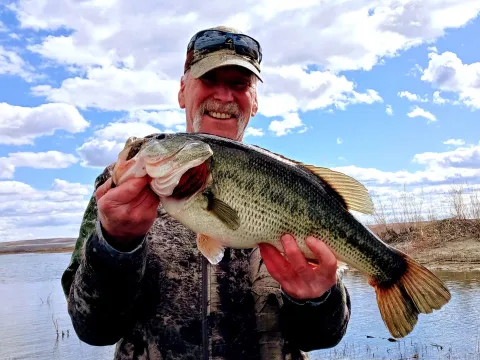
/articles/big-bass-tournaments
Gearing Up for Spring Kokanee
Counting kokanee in your sleep? As we slowly transition from winter’s frosty grip to warmer days, tee shirts, and flip-flops, your thoughts may shift to your local kokanee fishery. If so it’s time to inventory your gear and make sure there is still a boat under one of those mossy tarps out back.
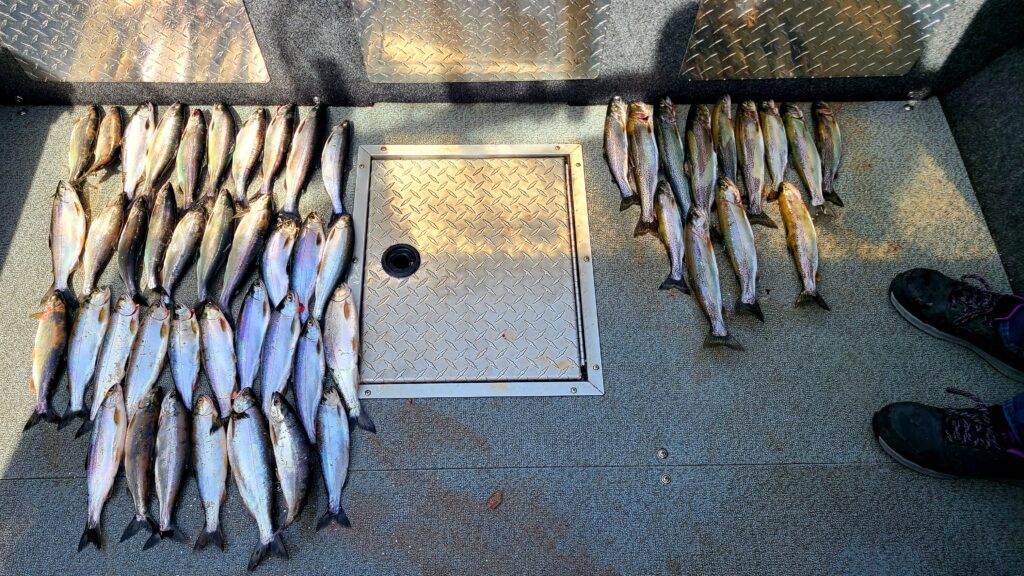
First thing on the list, you may want to give the boat motor and trailer a quick once over. Start peeling back tarps until you find the boat. You probably don’t want to mount new rod holders on the wood pile or stack of doors from a past remodel.
Check your fuel system; regardless if you used a fuel conditioner or stabilizer in your portable tanks get rid of last year’s fuel or not. For built-in tanks, hopefully, you treated the fuel with each fill-up. Even so, it is a good idea to drain the fuel filter bowl and replace the fuel filter/water separator. Replace any brittle fuel line, cracked or otherwise damaged. If you have your owner’s manual, use it as your preseason checklist.
Make sure the battery is topped off with distilled water. Then bring it up to full charge. If you find corrosion on the terminals remove the battery from the boat and clean it off with a mild solution of baking soda and water. Once everything is clean it is also a good idea to use one of the various corrosion guard offerings. You should also go through the rest of your electrical installation and look for loose connections and damaged wiring.
Give your trailer the once over. Check the trailer lights and trailer brake fluid levels. Also, check the tire pressure on all the tires including the spare. Check your safety chain, winch strap or cable and tie down straps and replace if they are questionable. Ensure that all bunks and/or rollers are in good condition. If your trailer lights are wonky, consider replacing them with waterproof LED lights.
Look over your rod holders, net, and downriggers for damage and functionality. Also check for loose fasteners, worn or missing parts, and corroded electrical connections. Fix anything that is even remotely questionable. We recently made a 30-mile run to fish salmon on one of the Canadian banks. One of the downriggers was acting up and it turned out that the shaft seal had failed and allowed water into the motor. Basically, it was sort of seized. Slow going down with a breaker popping retrieve. Would I have seen the problem on a preseason check, I doubt it, but you never know.
As a final note about kokanee boats. We have caught many kokanee from a human powered boat. Kayaks, drift boats, and inflatables will all work. No down riggers? just flat line or use a lead line rig and row away. I think the random action from paddling or rowing drives kokanee nuts. If you do head out without a motor watch the weather and consider whether your boat is appropriate for the body of water.
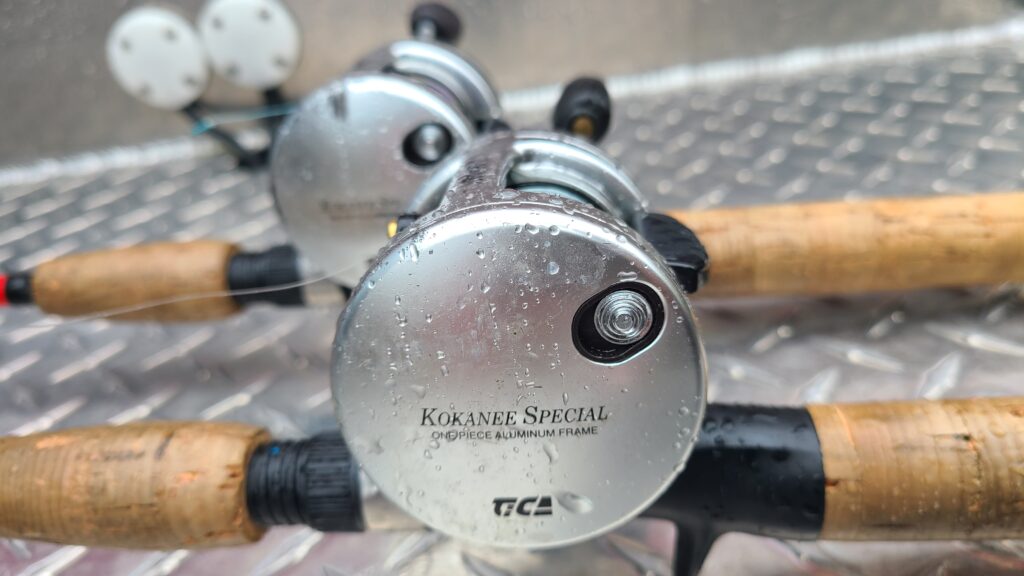
Check out your rods and reels. I know everything worked fine last year so you have nothing to do - wrong! It is the start of what should be a productive fishing season and you don’t want to lose the fish of a lifetime because your favorite reel has a funky drag. If anything is questionable, fix it or get it repaired. It may be time to replace your line. If so, take your reels to a high-volume tackle store (Think Holiday Sports in Burlington or similar) and have them bulk fill your reels. Their line should be fresher and most recycle your old line. Look at your rods and make a point to verify that the line guides are not cracked or worn. You can use a cotton swab and swirl around in each guide. If the guide catches any cotton fibers the guide needs to be replaced.
Because kokanee are notoriously unpredictable, kokanee fishing is kind of a numbers game. Generally, the boat with the most tackle wins. Sure, there are days where you can go out and limit before daybreak using one dodger and a worn-out lure. Unfortunately, those days are a gift from the kokanee gods. Most of the time you must cycle through gear and trolling patterns to get it dialed in. On any given kokanee trip, you should have several pretied rigs and attractors on hand and ready to go.
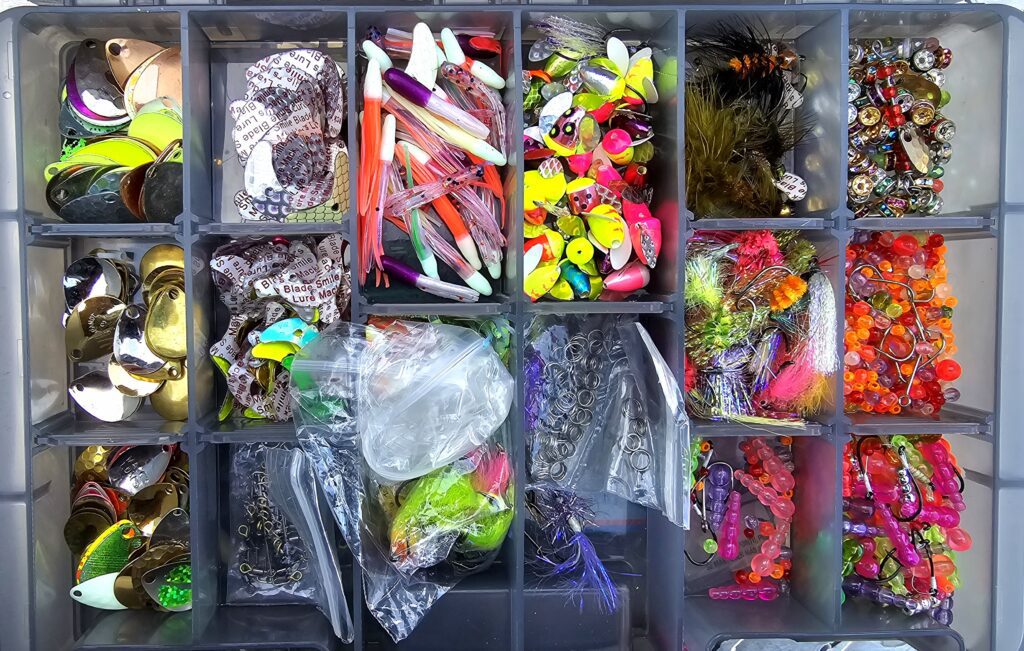
Before you head out on the lake with your collection of kokanee gear give it a good inspection. Look for rusty dull hooks, frayed lines, and missing or broken components. Repair and replace as required, A couple of years ago, we were fishing for kokanee on Lake Washington. We were pulling 8” flashers and veteran home-tied double hook kokanee flies.
One, being a tried-and-true favorite, was frazzled looking but I put it out anyway. After a solid takedown and an extended acrobatic fight, the line goes slack. What the heck? On inspection, the trailing hook was gone and much of the body of the fly had come unraveled. We only got a glimpse of the fish, but it was a huge chrome bright kokanee. I owned that one, I knew the fly was on its last leg and shouldn’t have used it. There’s peace of mind in knowing that your gear is in tip-top condition.
As you prepare for the 2024 spring kokanee fishery, review your gear to ensure you have the basics. Make sure that you have an assortment of small dodgers and swing blade-type flashers. Carry an assortment of small spinners, spoons, wedding rings, and flies. Other gear will work but this is your general kokanee kit. It is also a good idea to have a collection of lure components available. Start slow, a few spinner blades, beads, and spinner clevises and flies. If you’re a fly-tier, you probably already have the basics for any number of kokanee flies. Carry a separate Plano Box as your lure-making kit.
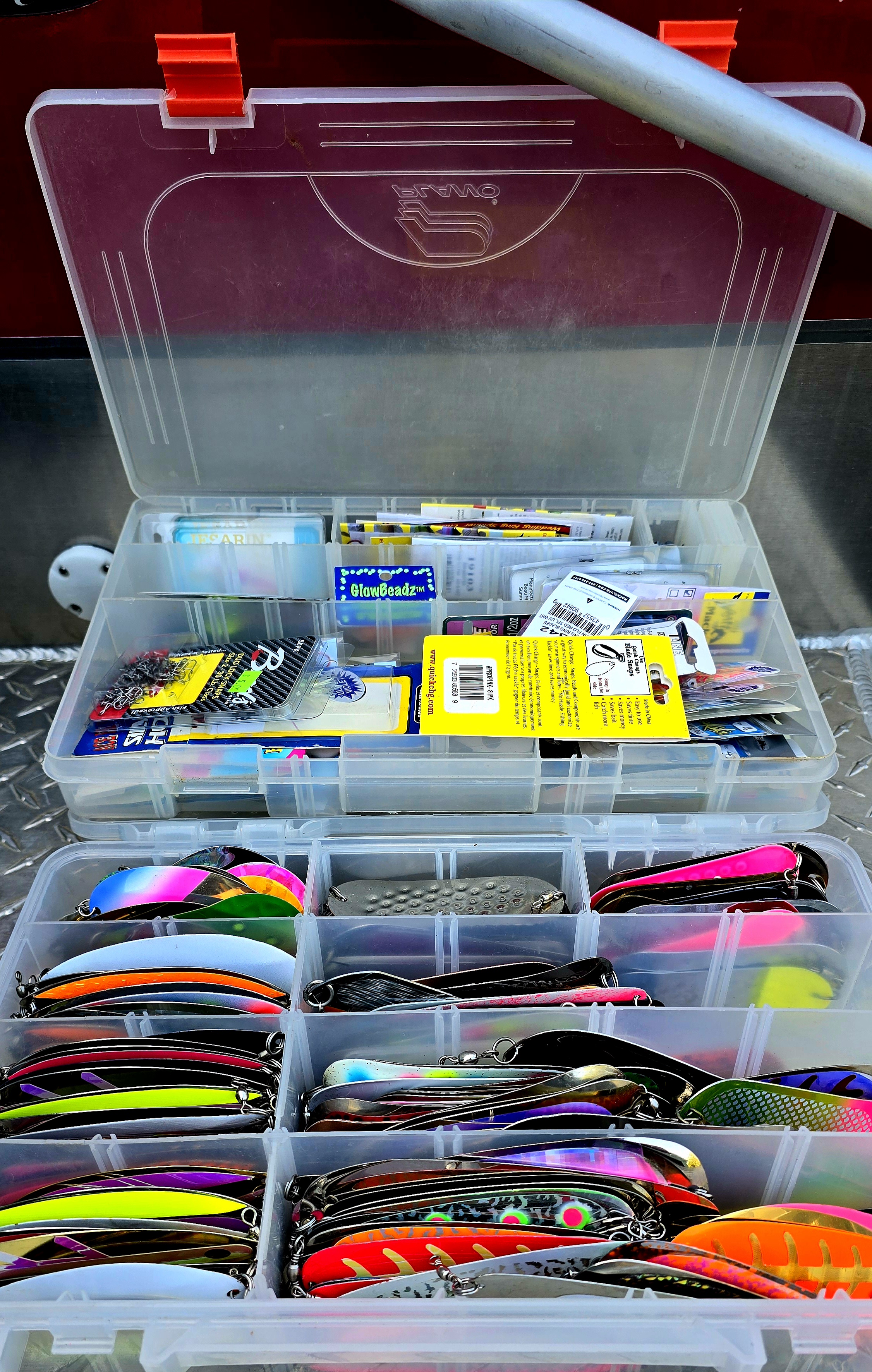
My lure/spinner Box allows me to tweak my presentations. I might add a couple of beads and a second spinner blade, make leader with a fly then add spinner components. The box has small spin n glo floats, extra beads, various kokanee flies, wedding ring collars, some kokanee bugs, and a few other things to dress up your lure.
Line size? With a few exceptions, I tie my kokanee leaders on 12-14# fluorocarbon. Hook size and color are kind of a personal preference. Many of my kokanee lures are tied using size 4 or 6 black octopus-style hooks. I typically tie a snelled rig with 2 hooks. With my standard rig, the hooks are close together.
Regarding leader length, although I tend to have spools of ready to go lures when I’m on a lake hunting kokanee. Typically, they are the correct leader length for the given fishery. It is a good idea to have a handful of pretied leaders that haven’t been cut to length available. The thought is that you’ll be able to assemble your lure and then set leader length as required quickly. An 8-10” is kind of my standard kokanee leader length but sometimes the fish will want something different.
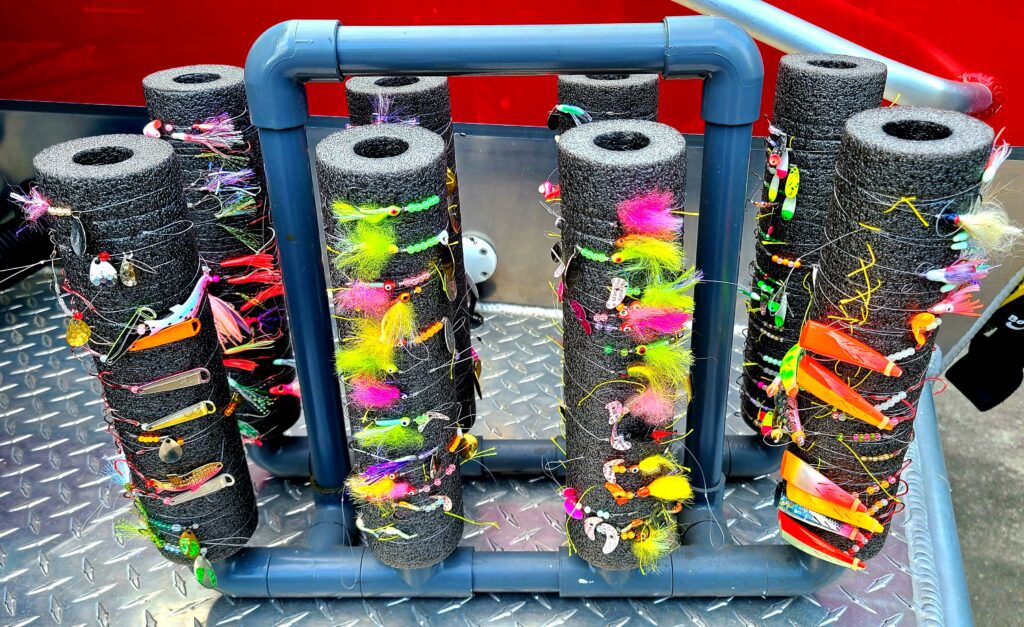
A couple of leader organization concepts are either sealable sandwich or snack bags or my favorite the slotted foam tubes. If using the resealable bags gently coil your kokanee leader and seal it in the bag. Store the sealed bags in something with a latching lid. With the slotted foam tubes, set the hook in the foam and wrap the leader securing the end in one of the slots. You can store the tubes on a rack, in a 3–5-gallon pail, or a 2-gallon resealable bag. I have found that using an empty 5-gallon to hang your leaders on during the day does wonders for keeping the boat organized as you cycle through set-ups. Come up with an organizational plan that works for you and your boat.
Kokanee fishing in general is a mental game. Be prepared but flexible and you will bring home a cooler full of spring kokanee.
/articles/gearing-spring-kokanee
It's an Addiction
When we first start angling, we take baby steps, buying our first rod and reel and other gear. It most likely was something we found at Walmart and figured “That should work”. And it does, to a point. If the fishing bug infects us though, we soon begin to show further signs of our illness. One rod and reel soon morph into twelve, because, well, different types of fishing require different setups. From there your illness moves in the direction of not only quantity and function but also quality. Suddenly, that Walmart special is being replaced by rods and reels found in legitimate tackle stores. Knockoff brands turn into name brands. Prices go up and you find yourself entering the realm of “guest rods”. Those old rods are given to friends who are casual anglers fishing a day here or there with you. Because watching a beginner rear back on a delicate fishing rod can bring new levels of anxiety to fishing!
In short, fishing rods can very quickly become an addiction.
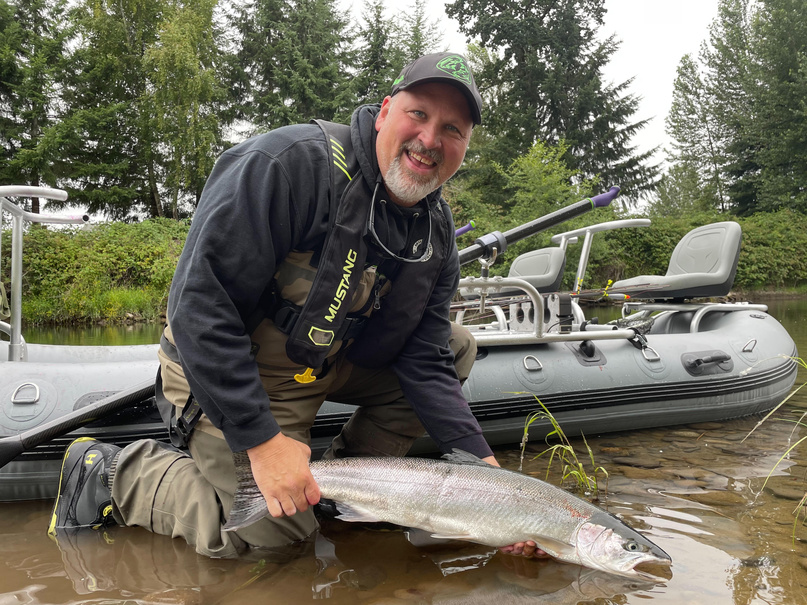
Early on I told myself that I would never spend the vast amounts of money that some of the higher-end fishing rods can cost. The key was to find a happy medium between quality and cost. Enter a new source of fishing rods, the small business rod builder.
I first met Dave Calhoun many years ago at Ed Iman’s Fish Camp, a yearly gathering of Pacific Northwest outdoor gear manufacturers, guides, and media representatives. Dave was there promoting his small business, NWRods, which he started in 2004. His passion and enthusiasm for the sport were evident as he excitedly talked about the rods he was building, sharing their features and quality of build. I ended up getting a beautiful float rod from him that year, which I used over the following years to catch numerous steelhead and salmon. I really enjoyed that fishing rod and it performed flawlessly. It had a real attention to detail, and I’d not owned a rod of such quality before.
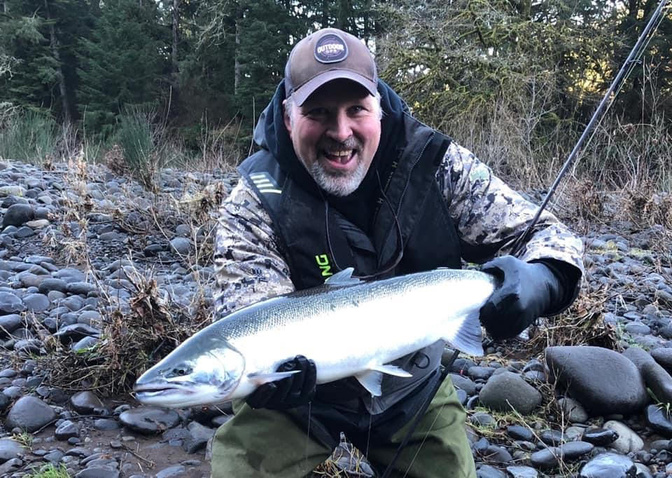
Fast forward to this year’s Big Horn Sportsman Show in Spokane, Washington. We had our media booth at the show, and as I was taking in the sights of all the vendors a familiar voice boomed out “Hey Mike, how’s it going?”. Turning my head I saw Dave and his NWRods booth. Walking over to say hi, we of course caught up on our favorite topic, fishing, and fishing rods.
“I heard you moved to Montana, Mike, how’s that been going for you?”
“Great”, I replied, “Although I’m now doing more fly fishing and no longer fish salmon or steelhead in rivers.”
“You know I’ve completed my move to Blanchard, Idaho. I’ve set up my shop and started focusing on fly rods”, Dave said.
My curiosity was raised. “Really? I’m looking for a nice 4-5 wt fly rod for small to medium-sized rivers. As you may know, Montana has a few trophy trout streams. What do you have?”
Dave pulled out one of his nine-foot, two-piece, 4-5 wt rods that he has been producing. Handing it over to me, I could see the familiar craftsmanship that impressed me so many years ago with his float rod. A carbon handle provided the solid base for attaching my fly reel, and the rod came with _____ guides, each flawlessly wrapped and of a stealthy dark green color. The graphite rod action itself felt “just right” with a nice flex but still enough backbone to make solid casts. Its two-piece construction is made to provide extra strength and durability.
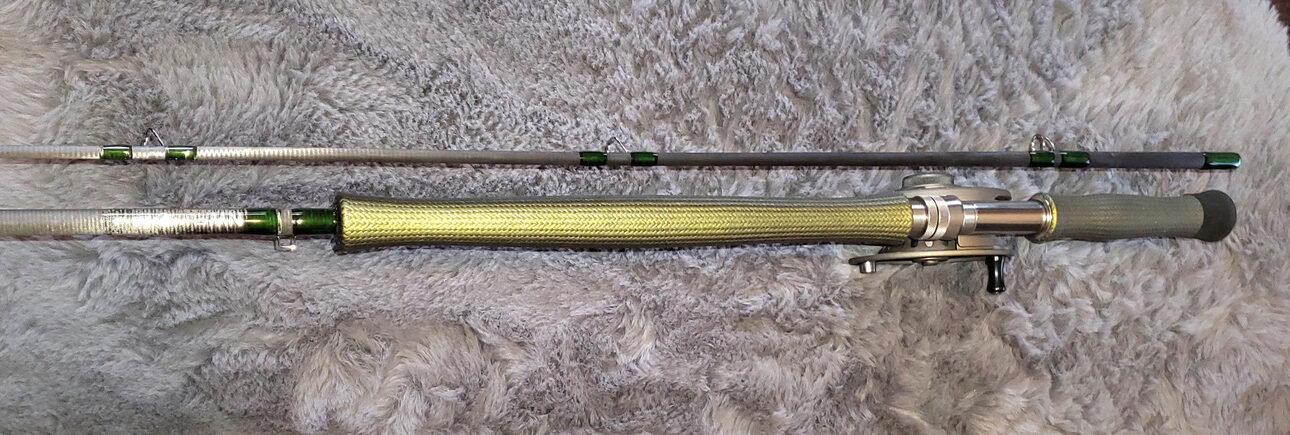
A word on fishing rods, in particular fly rods. They can range from starter sets that will cost you $75 bucks up to a thousand dollars and beyond. The rods that Dave makes fall in the range of above-budget rods but well below rods that will make you cry when they break. In this case, his fly rods start in the $350 range. For me, that would be my upper limit on what I would pay for a rod. That said, I do appreciate quality and workmanship, so it after a brief internal debate I said “yes” to the rod. As a bonus, Dave threw in a tee-shirt.
Dave told me that with his move to Idaho he plans to focus more on fly rods, and he has started a new website where you can see his current lineup, www.nwfly.com. I suspect in the years to come I’m going to see a few of his fly rods making the rounds on the Missouri, Blackfoot, Madison, and other trophy trout streams in Montana.
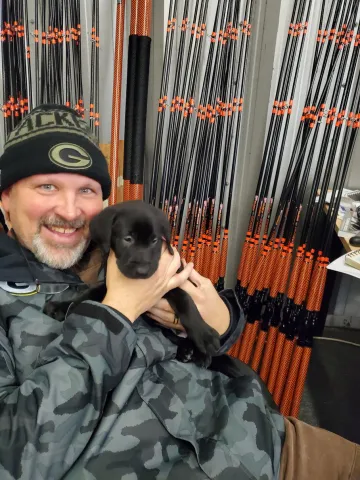
As I was about to leave, Dave showed me his kokanee rods which he is blowing out at $99 a rod. Eye-catching black with bright green threads on the eyes, these rods are fiberglass and a real steal at this price. Of course, I promptly blew my budget and bought four.
Dave ships rods throughout the Pacific Northwest. His original website, nwrods.com, has a full lineup of salmon, steelhead, and kokanee rods. Check them out if you’re in the market for a quality rod that won’t break the bank.
Just don’t break your budget as you feed your addiction.
If you’d like to see a video of me catching a steelhead on the float rod I mentioned earlier, here is the YouTube link: https://www.youtube.com/watch?v=AESq3Yg_6fs

/articles/its-addiction
Fishing for Washington’s Stocked Rainbow Trout
Spanning through the past 130 years or so, Washington’s lakes have been stocked with a variety of fish species. The types of fish typically fall under two categories, the first being game fish like rainbow trout, Kokanee, steelhead, and cutthroat. These are all planted for the specific purpose of increasing public angling opportunities. The second category would be an aquatic vegetation control fish like the common carp, that was planted primarily by private landowners intending to mitigate overgrowth of vegetation in lakes and ponds. Regardless of the purpose of fish stocking, the practice has generated various stages of controversy throughout the years, and rightfully so as the early versions of fish stocking had been practiced without much consideration of ecological impacts on native fauna. Thankfully, the days of reckless and illegal stocking of ecologically sensitive lakes by private citizens are, for the most part, a thing of the past in Washington state. Nowadays, The Washington State Department of Fish and Wildlife and local tribes operate stocking programs that involve strict management guidelines and make use of both surveying and long-term field studies to effectively provide anglers with fishing opportunities while not disturbing vulnerable ecosystems.
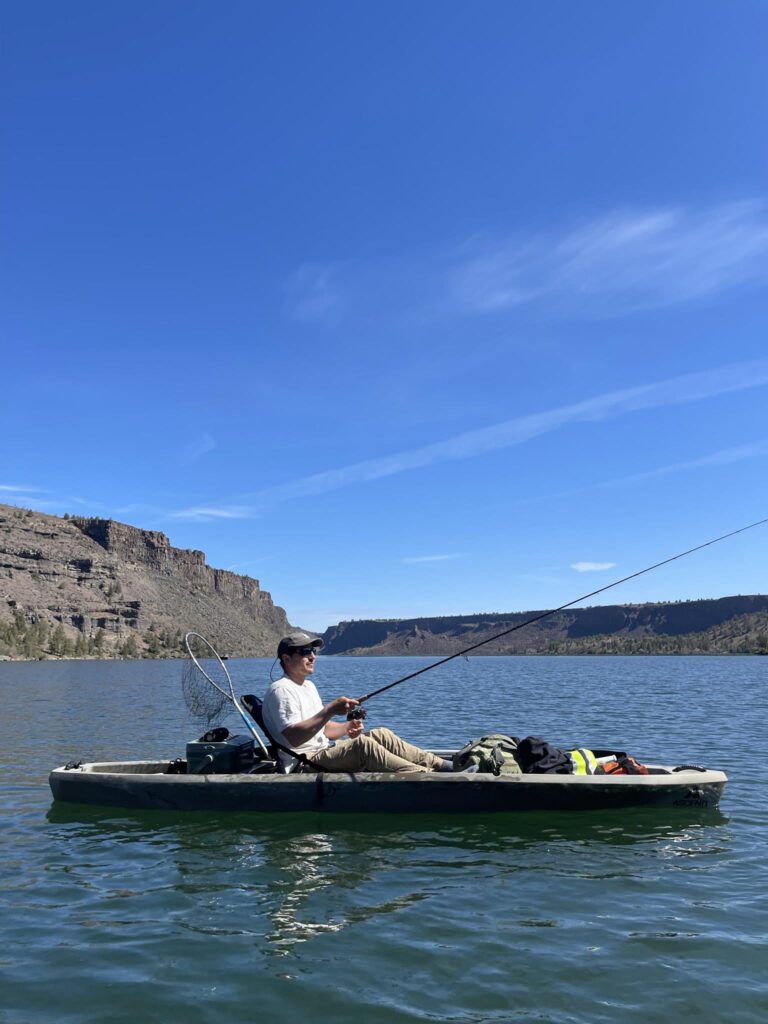
Rainbow trout are by in large the most widely stocked fish in Washington lakes, thus, they are the most common trout targeted by Washington State anglers. And though a stocked rainbow trout from a local lake might not be quite as alluring as say, a wild rainbow trout from some remote stream in the high-country wilderness, comparing these two is a bit like comparing apples and oranges. One can consider these stocked fisheries to be the staple of a lifestyle that places high value on family-friendly outdoor recreation, whereas the wild fish pursuit is an activity that often takes a bit more work and travel, and isn’t always quite as easy to get the family involved in
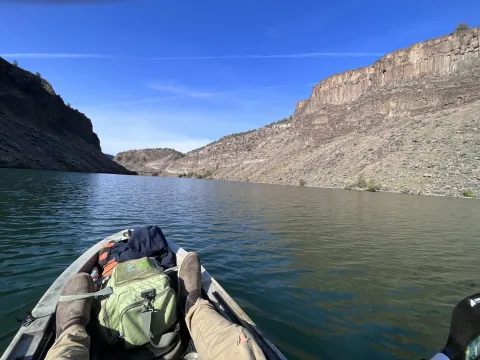
So, each has its place, and lucky for us, springtime marks the beginning of the trout stocking programs around the state. There’s a good chance that if you live on either side of the cascades, you won’t be far from a lake that’s getting a dump of catchable-sized hatchery-reared rainbow trout right about now. A visit to the Washington Department of Fish and Wildlife website will show you all of the recent catchable trout plants in Washington lakes. Here’s just a sample of some recent western and eastern Washington trout plant reports.
- Lake Thomas, Stevens County: 9,000 catchable trout
- Devereaux lake, Mason County: 7000 catchable trout
- Klineline pond Clark County: 10,000 catchable trout
- Black lake, Thurston County: 10,800 catchable trout
- Rotary lake, Yakima County: 3150 catchable trout
- Columbia Park pond, Benton county: 2012 catchable trout
There’s a myriad of techniques you can deploy to catch rainbow trout. Methods range from dropping jigging spoons down through a hole in the ice during the winter to casting flies out of a float tube in the summer. Stocked rainbow trout are not terribly picky and are known to strike at many different types of lures and bates. A surefire way to get some hookups would be to bring an arsenal of tackle so you can use the process of elimination in figuring out what the fish are biting on for that given day (it shouldn’t take you long). Below is a list of common techniques to catch stocked rainbow trout during the spring and early summer seasons.
Casting lures
This is by far my favorite method for rainbow trout. It’s simple in that you hardly need any gear other than rod, reel, and lure, but it also keeps you busy and engaged as you are constantly casting and retrieving while feeling for a strike. Casting lures like Rooster tails, spinners, spoons, wedding rings, and plugs have all proven effective at catching rainbow trout. Fishing during the morning and evenings when the fish are up near the surface will only increase the effectiveness of casting lures.
Trolling
Casting lures like the ones mentioned above can all be trolled behind a kayak or motorboat. If the fish are holding lower in the water column due to midday heat, try using a lightweight downrigger with a dodger. Or, if in a kayak, you can use a diver like a Deep 6 or Dipsy diver. Rainbow trout generally like faster trolling speeds around 1.5 to 2.0 mph
Sliding egg sinker rig.
This rig is very easy to set up and will get you onto the fish if they are holding deep towards the bottom of the water column. Slide a 1/2 oz egg sinker onto the mainline. Beneath that egg sinker attach a snap swivel. From there, attach your leader. Depending on how high off the bottom you want your bait to float will determine the length of your leader. 2-3 ft is generally a good bet. Tie your size 8-14 hook and bait it with a worm or dough bait. You will need to make sure your hook and bait are both floating. So, if you’re rigging an earthworm (or anything else that doesn’t float) you will need to add something with buoyancy. That can be either a small marshmallow (like the ones you’d buy from a grocery store) or a piece of buoyant dough bait.
Fixed Bobber
This is a fun and easy method for kids or new anglers to try out. Plus, it can also be extremely effective. Attach a fixed bobber to the mainline, and then anywhere from 18-24 inches beneath that a number 5 lead split shot (add more if there’s current). About 6 inches beneath that you can attach a size 8-14 octopus hook with a night crawler. Nightcrawlers can be replaced with a red plastic worm or dough bait.
Slip bobber rig
A slip bobber has a few more parts than a fixed bobber setup, though, unlike the fixed bobber, this setup will allow you to adjust your rig to virtually any depth. This is very handy for when the fish are suspended midway in the water column.
Add a pre-tied bobber stopper knot to your mainline. From there, add your bobber stop bead so that the bobber won’t slip past that knot. Add the slip bobber to the mainline, then add 1/2 oz egg sinker, and then a snap swivel. From here add 2-3 ft of leader and then your size 8-14 octopus hook. Now you can put your gear into the water and start sliding your knot up the mainline to adjust the depth of your hook and bait.
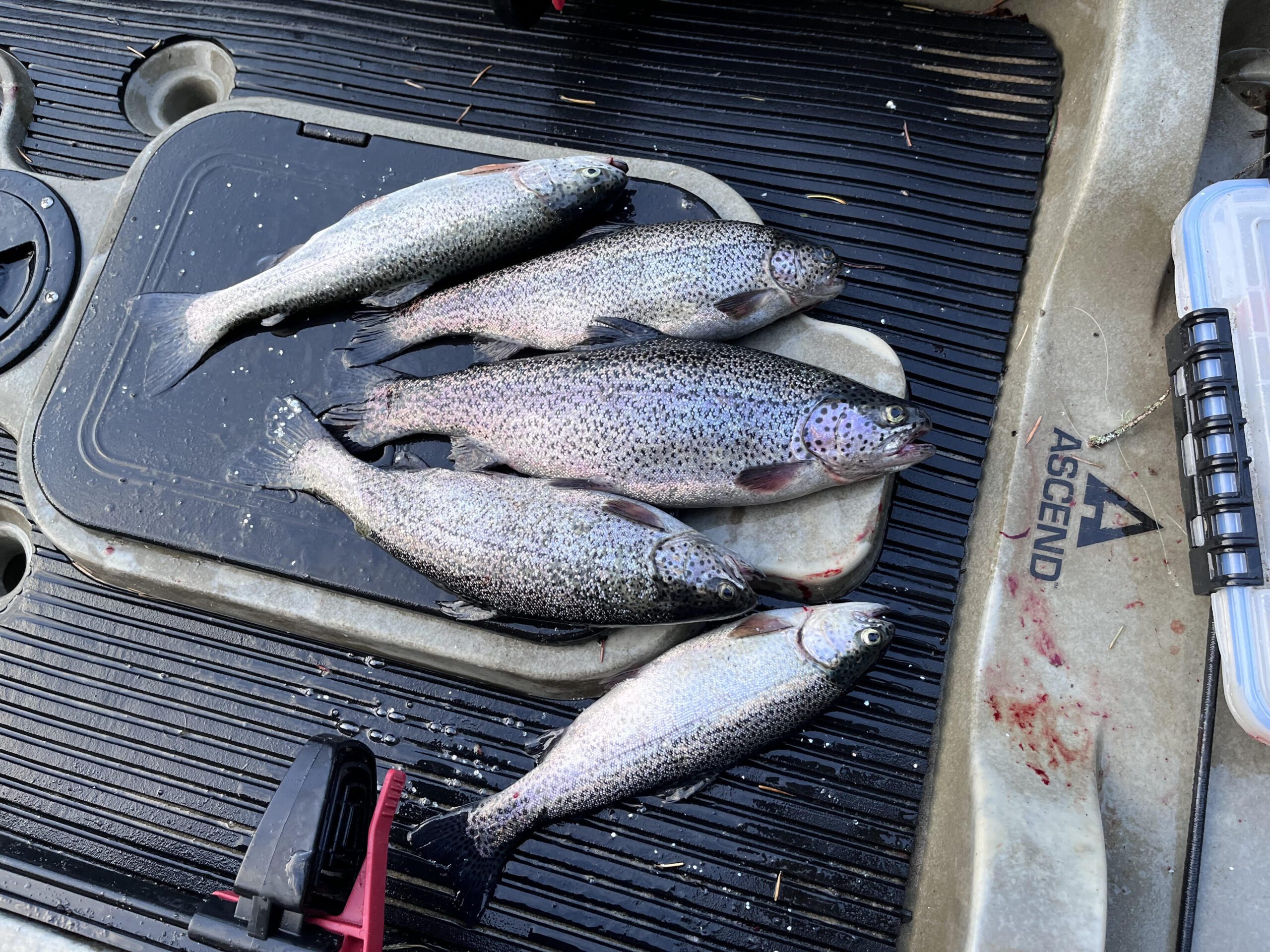
I’d wager that if you polled some friends and family and asked them what their first memories of fishing are, a good portion of them would likely start to share stories of fishing for rainbow trout off a dock during a hot summer day, or out of a john boat cruising around the lake hoping to land a big silver and pink beauty. I know this is true for me, and I encourage anyone who has kids (or adults for that matter) who are new to fishing, to take them out to your local lake and try out some of these tactics to bring home some fish. Despite what anyone might say about stocked trout, I assure you, they make great table fair, and they also do very well in the smoker. Fish on!
/articles/fishing-washingtons-stocked-rainbow-trout
March Steelhead Madness
March madness is more than just college basketball, especially if you live and fish in the Pacific Northwest. Steelhead are filling the rivers with late returning hatchery fish along with native sea run rainbows. Unfortunately, watersheds are being shut down; fisheries closed, while hatcheries are overflowing with fin-clipped fish as wild fish returns struggle. It is enough to drive an angler mad, and it should. For those that still wish to catch a steelhead before the spring chinook season kicks off there are a few places to go, especially in Oregon and Idaho but for those in Washington, it is primarily a Southwest river endeavor.
The mighty Cowlitz is where most steelhead anglers will be come March as it is one of the few rivers still open in Washington and has good hatchery returns. For other rivers look at the hatchery smolt plants and projected returns. Once you find a river that has a good plant and return rate be sure to check the regulations including any emergency rules changes and announcements.
Maybe we will get lucky with some openers but likely this will not happen. One catch and release fishery just announced is the Skagit, slated to be open through the month with a restricted days per week schedule. This is a catch and release fishery which means be sure to use the right gear and help keep the encounters low. Do not go there expecting to catch a lot of fish but embrace the ones you do catch, and release with kindness back into the river. By following all the rules, we will get this fishery to stay open until April. The coastal rivers of Oregon are your best bet but also look to the tributaries of the Columbia, on both sides, for some opportunities.
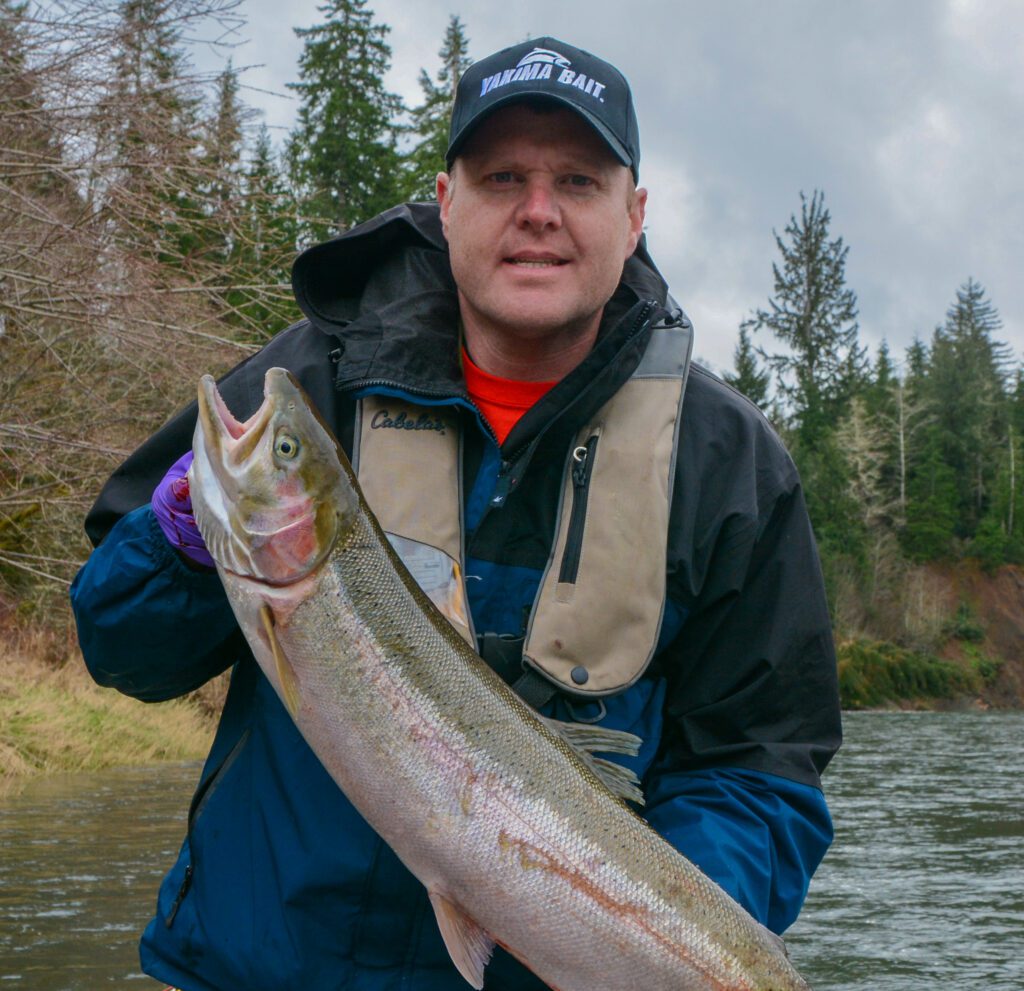
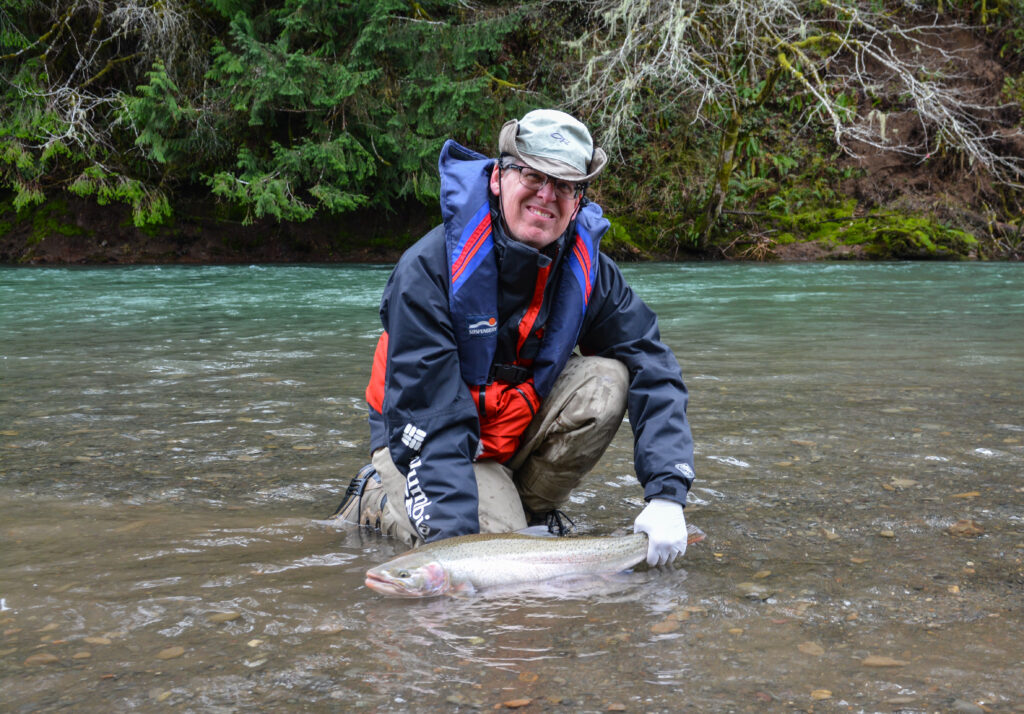
When it comes to fishing for March steelhead you will likely be on a river where hatchery fish are prevalent but with the chance of catching wild fish. This means March is the time to put away the bait and pick up hardware. Even leave the scents at home and use techniques that do not allow steelhead to swallow the hook. One way to keep this from happening is to change hooks to a size or two larger than you are used to using.
Also, re-spool the reels with heavier line and upsize the leaders and use rods of medium-to-medium heavy action. The idea is to hook a fish, get it to the soft rubber net quickly and if wild then release it unharmed. One of the surest ways to kill a fish is to over play it to exhaustion. Steelhead are trout and that means they need clean, cold water and are sensitive to stress.
Swinging spoons or tossing spinners is a great way to catch March steelhead as they hit the hardware hard but will not likely swallow the hook. It is also an active way to fish and learn about rivers. Look at tailouts for holding fish or a riffle where fish will hide from eagles while making their way upriver. A long run can be worked for hours and anglers who know fish are in the system also know that the fish will be on the move. No need to leave a good stretch of river and let the fish come to you. Brass, nickel, and copper are good colors but if the sun is bright then look through the tackle box for a few that are tarnished so not to scare the fish away.
Floating jigs is one of the easiest ways to catch steelhead and a lot of fun. Not only can you fish a jig under a float in about every type of water, any stretch on the river, or most flows but you also will not lose much gear. It is effective and if you only have one rod or technique to use for a day of fishing you cannot go wrong with floating jigs.
Steelhead like to hide behind boulders, both to create a current break to rest and to flush aquatic insects by them to feed on. But drift fishing or swinging a spoon through a boulder garden often means losing gear and you cannot get the lure in the right spot for the steelhead to grab it. This is where floating jigs really shine. Set the depth and cast the line. If you notice you are hitting a boulder then a soft pull on the rod will help it over and the jig falls right into place.
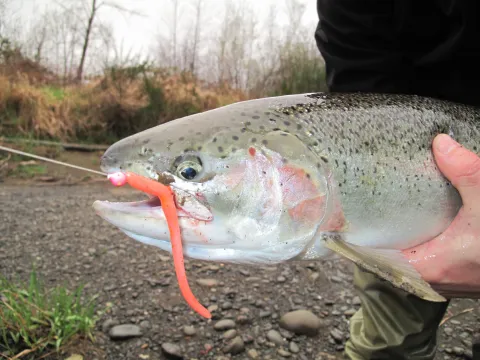
When fishing jigs be sure to not tip them with bait or use scent. Again, the idea is to catch steelhead and if necessary to release them unharmed. Since the hook point is upwards it is likely the jig will be pinned in the upper jaw of the fish. After a hard rain you can use a pink rubber worm threaded onto a bare jig head and fish it just like a jig. Steelhead crave washed out nightcrawlers that are being flushed into the river and will grab the rubber worm, again likely to have it pinned to the top of their mouth.
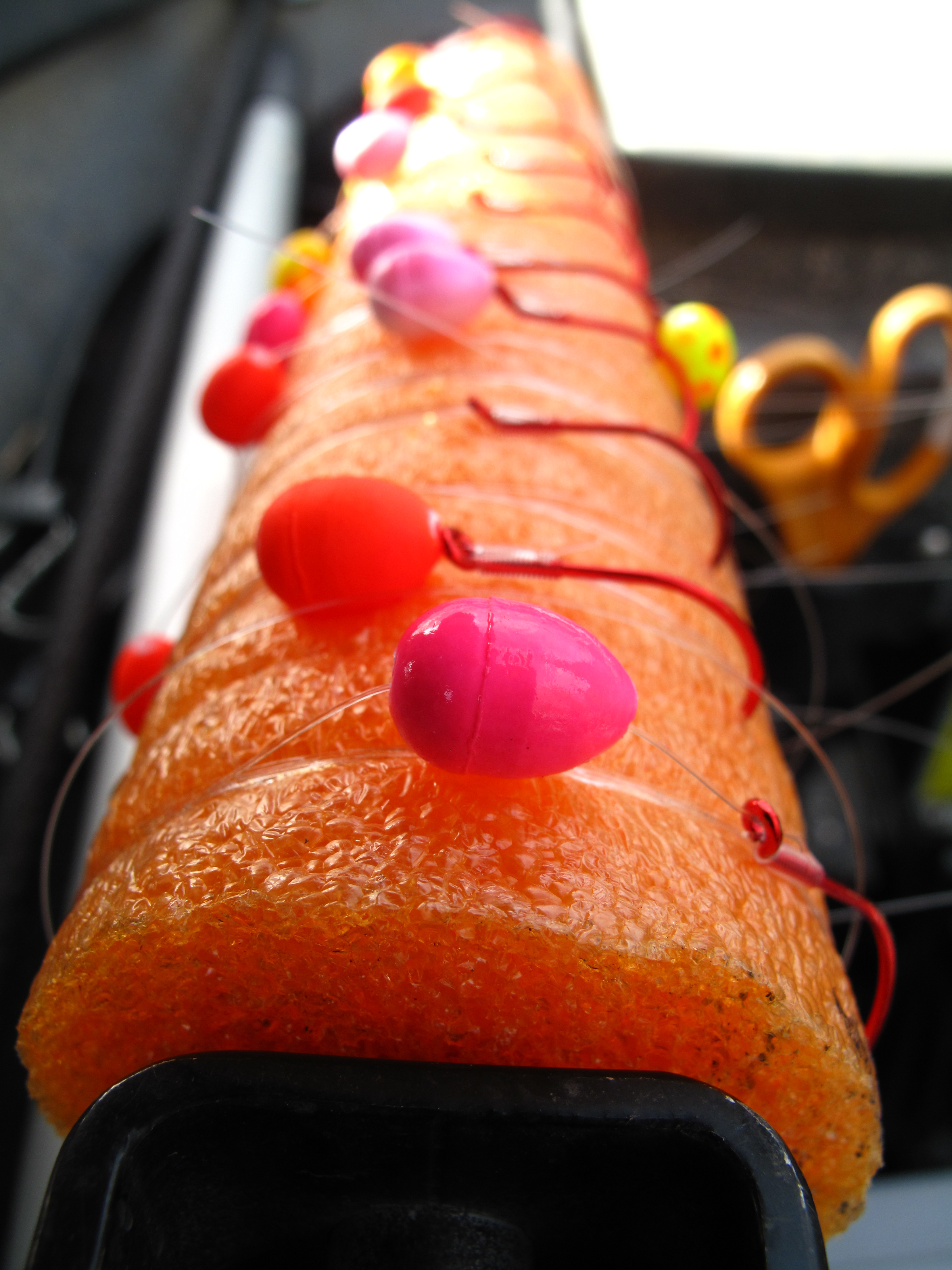
Drift fishing often means gobs of cured roe but for March leave the bait in the fridge and head to the river with some pre-tied pink worms threaded onto the leaders or use beads. Bead fishing has become extremely popular in the past few years and one discovery is that larger soft beads tend to catch more fish than small beads that mimic a single egg. The large bead might look like an egg cluster or a piece of egg skein. Rig the bead with a stop two to three inches in front of the hook so when the steelhead grabs the bead the hook sets in the outside of the jaw. Not only is this a non-killing hookset but it is also strong and helps keep the fish on the hook until landed.
Some anglers will use a tandem or double bead set up where you use one bead with a hook and then a trailing bead with another hook 24 to 30-inches behind. This is a great set up for bobber dogging which is where you use a sliding weight, a long length of mainline and bobber stop to the swivel with a weight and then the leader. The idea is that the weight is dragging on the bottom and with the bobber stop set so far ahead that the weight can keep in contact with the contour of the river bottom. The beads are dragging behind as if drifting down the river. If a fish misses the first bead the second one is trailing right behind and gives the angler a second chance at catching the fish.
Do not think you have to have a boat or raft to fish for steelhead in March. With smaller rivers that get runs of fish, or even larger ones with good access, anglers can target steelhead from the shore. Being a migrating fish and March often means high water the steelhead will be using the bank to break up the strong flows. One technique often overlooked is using a side planer designed for fishing plugs from shore. There are a few on the market and the idea is that it clips onto the mainline and uses the current to pull the plug away from the bank.
Once you get the planer to the area you want to work the plug just close the bail and let the plug do its job. You can also use the bobber dogging technique if you have a long run and can walk the bank easily. Cast out and start walking down the river as the float drags the lures. Floating jigs can be fished this way but it is much harder as you want a natural drift and a lot of times you might pull on the rod and that moves the jig. The reason it works with bobber dogging is because you are dragging the weight on the bottom of the river and less likely to affect the beads movement. If you float jigs from shore be sure to have a lot of mainline and just open the bail to extend the drift.
There are plenty of ways to fish for winter steelhead, just not a lot of places to fish. Do some research and pick a river. As the month wanes towards April the rivers often calm down and the weather can give a few nice springlike days. Be sure to use techniques that will not harm wild fish and be ready to get the fish to hand quickly. Having a conservation mindset will ensure fisheries in the future and keep you from going mad.
/articles/march-steelhead-madness
The State of Bottomfish
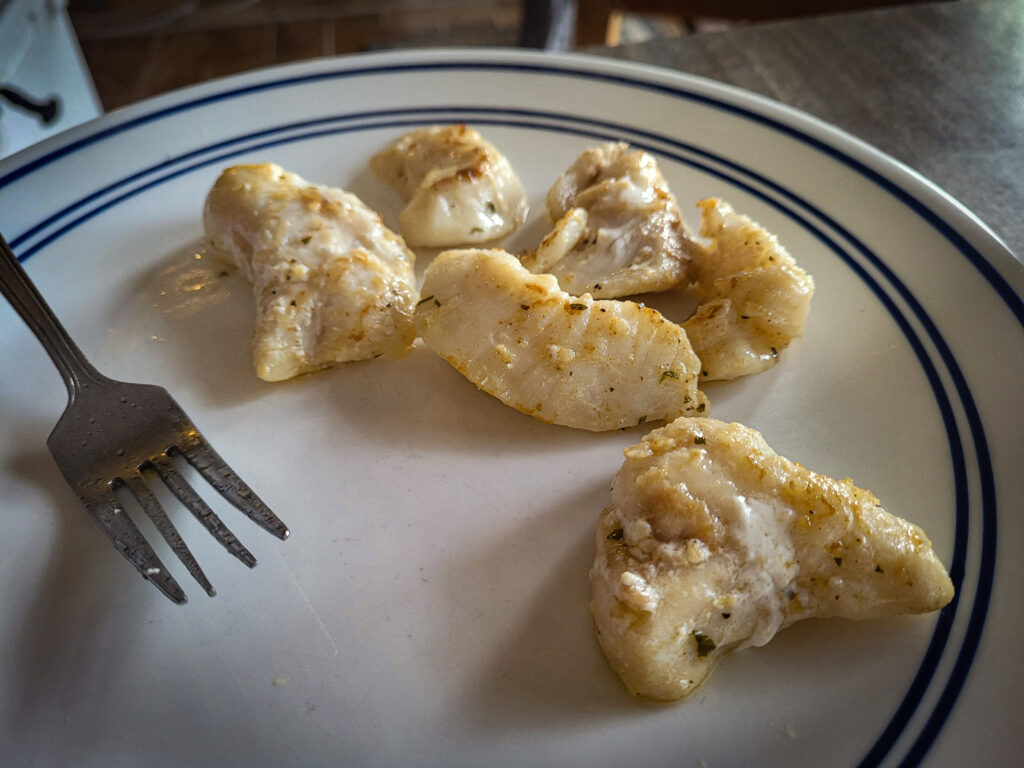
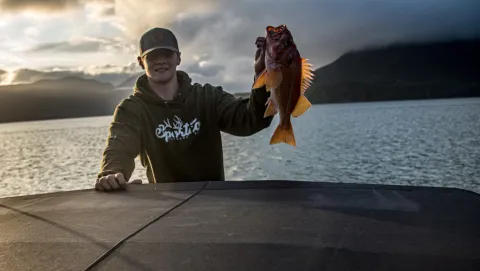
One of the most sought-after ocean-dwelling fish is the bottomfish, also called rockfish and groundfish. Anglers also refer to some of the species as “sea bass” as they resemble freshwater largemouth bass. Regardless of what you call them anglers who target these fish all call them “tasty” which is why they are so popular. But do not expect the various species of bottomfish to take up a lot of space in magazines or flood your social media feed with lots of sea-bass photos and “how to’s”. Maybe it is because they are often a bycatch or used to fill the time between salmon bites or maybe it is because most daily limits offer enough fish to fill a freezer fast so anglers only fish for them a few times a year. If it is the latter, then be aware that regulations and fisheries are changing quickly.
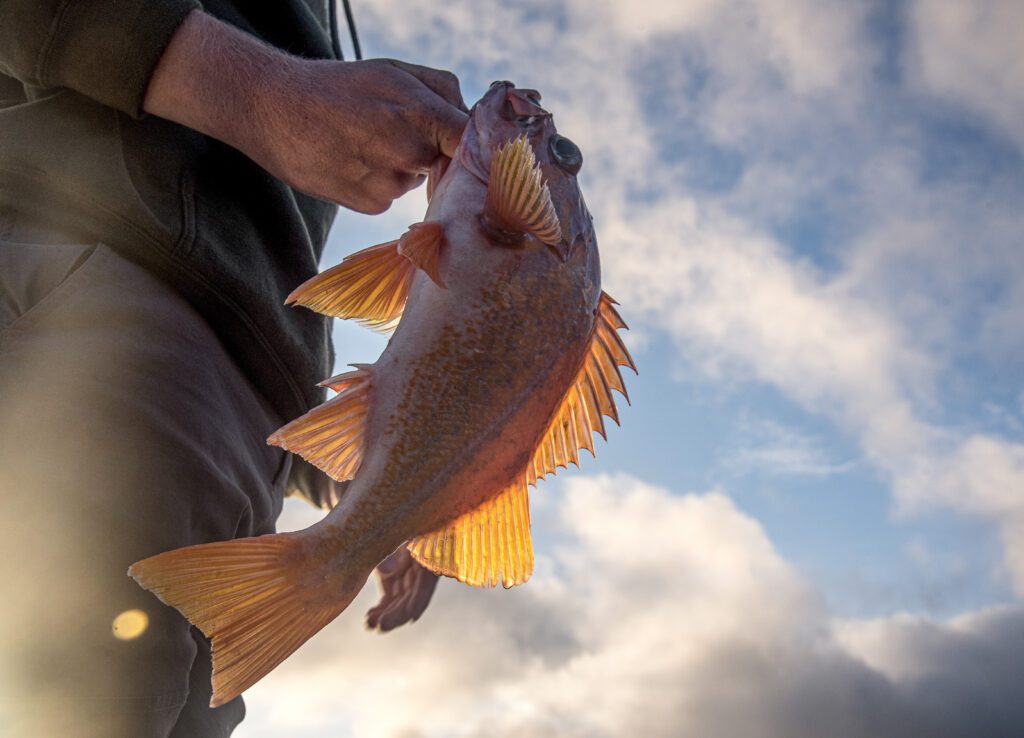
A few years ago, back in 2010, the yelloweye rockfish was listed on the Endangered Species List as threatened and remains there today in Washington and Oregon waters. This is because it is one of the largest rockfish species which means it lives an exceptionally long time, like over 100 years, with the oldest living yelloweye aged at 118 years and estimated to be able to live 147 years.
This long life means they mature slowly and do not reach adulthood until they are 19-22 years old. When it takes a species this long to mature, the over-harvest can be problematic. One of the saving graces for this species is that they live very deep, averaging 300 feet and can live as deep as 1,500 feet in the abyss. This is also a common detriment to most rockfish species and that is they are prone to barotrauma which is when the swim bladder becomes distended as the fish comes up from the high-pressure deep water. Using a descending device will help reduce mortality.
Like the yelloweye rockfish, most of the rockfish found in Puget Sound are off-limits due to the loss of species. There are some Marine Areas where rockfish can still be caught and kept including the ocean areas such as Marine Areas 1 through 4. Daily limits here were reduced a few years ago and now 7 rockfish of certain species combined such as black rockfish, blue rockfish, canary and vermillion, and a few other species.
Also new last year is a restriction for certain species between June 1st and July 31st, including copper, canary, and other popular species. There is also a depth restriction of 20 fathoms except for halibut days which can be a bit confusing. As of this writing the current regulations have not been published for the upcoming license season so be sure to check the WDFW website for updates.
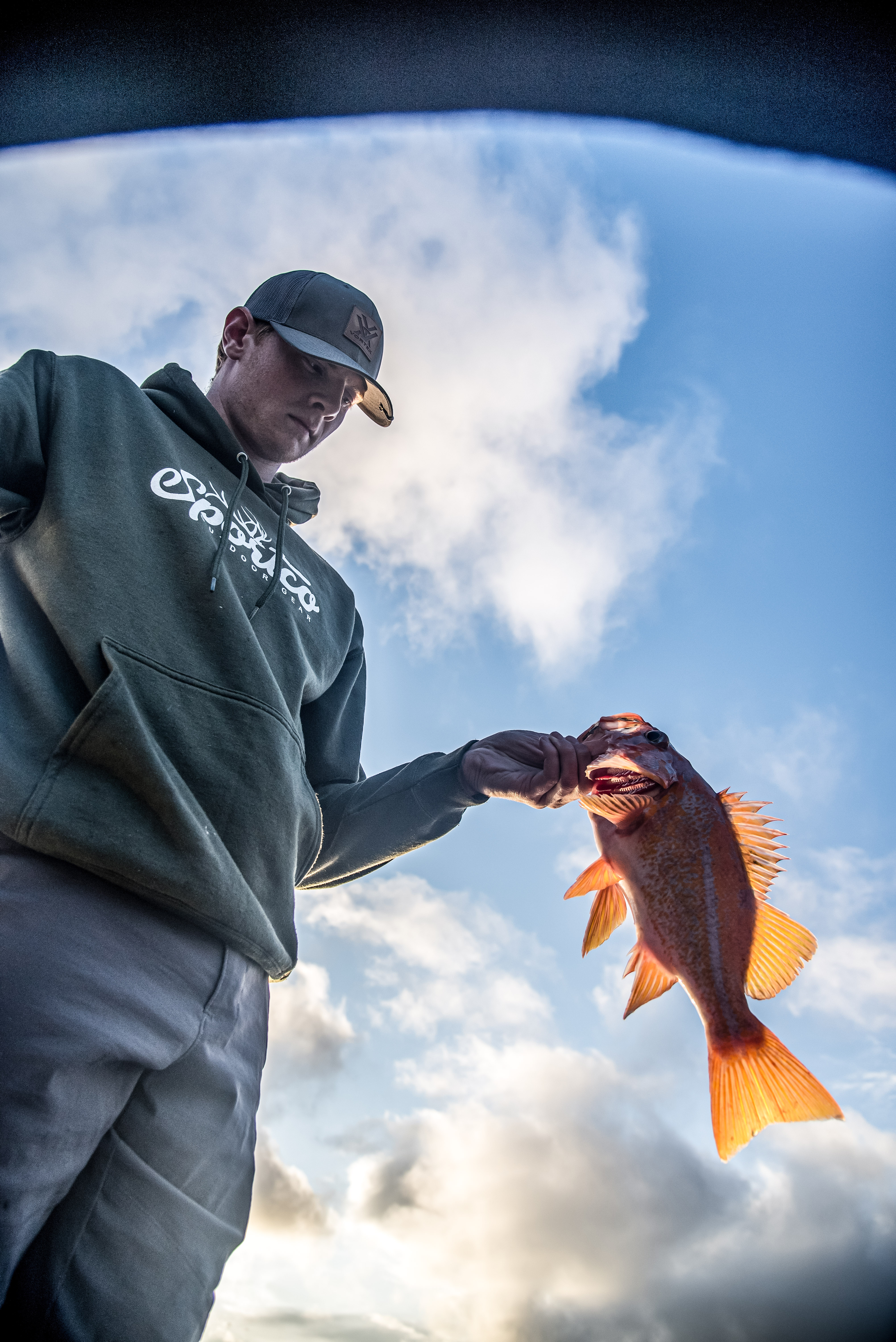
In Marine Area 5 which is the only other marine area where rockfish can be retained in Washington, the limit is 1 or 3 depending on which side of Slip Point you are on, and only black or blue rockfish can be kept. You also must use barbless hooks, even for non-rockfish bottomfish, such as halibut and lingcod which most anglers do not realize is required. After a quick chat last year at the dock at Sekiu with a WDFW Game Warden we learned that the only thing she wanted to check was our hooks. Not worried about our licenses or catch record cards, she just wanted to make sure we were using barbless hooks in the halibut we caught.
The last one had swallowed the bait and hook, and it was easier to just cut the leader, so we obliged and allowed her to cut the hook out which was barbless, and she was happy. Turns out that anglers did not know about the new rule, so it was more of a day of education for them. Luckily, we knew the rules. We also showed our licenses and catch record cards just to really put an exclamation point on following all the rules. She was thankful and it was a good interaction, always a plus when talking with WDFW staff.
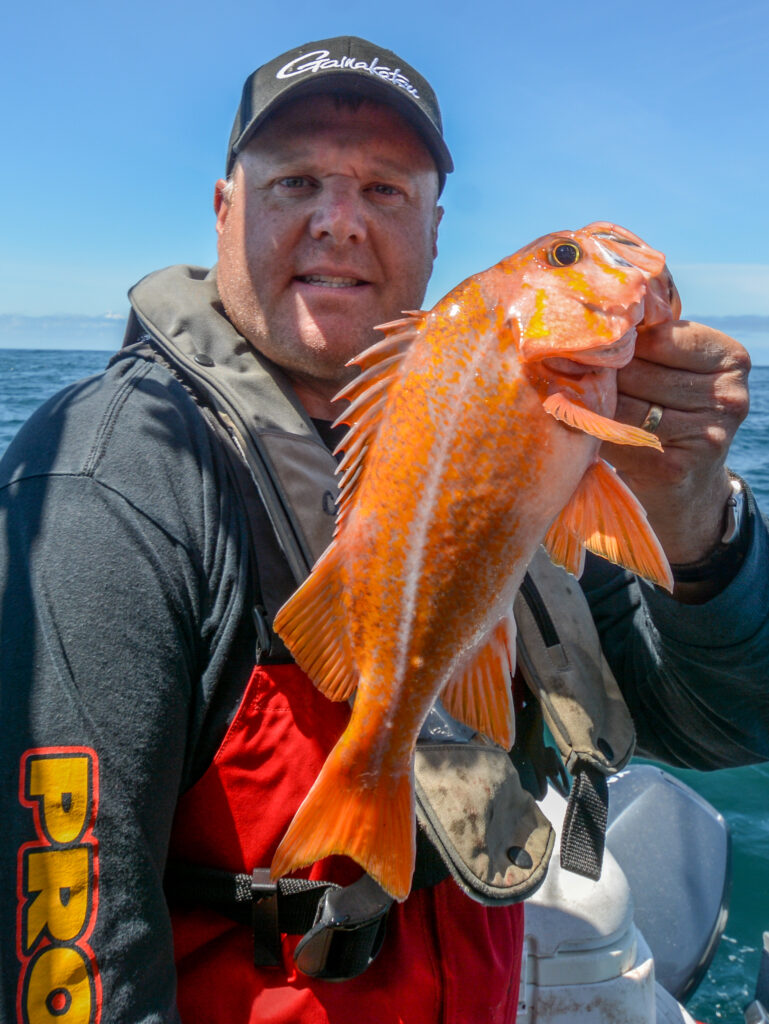
Oregon has simplified regulations compared to Washington but has even more restricted bag limits. As of now, the season is open year-round with no depth restrictions but a daily limit of 5, as well as a coastwide closure of yelloweye and quillback rockfish. Oregon also has a unique gear restriction when fishing deeper than 40 fathoms which is the use of “long leader” gear. Their website has tutorials on what this means and how to rig it. As always be sure to check current regulations before you go out fishing.
Both states have safety zones or rockfish conservation areas which are off limits to fishing for rockfish or any bottomfish. The reason for these conservation areas is to set aside a breeding and nursery area of sorts where rockfish are threatened, including the yelloweye. All rockfish species take a while to mature and since they tend to school up and live along structures such as underwater pinnacles, reefs, and rocky ledges they can be easy to locate and target.
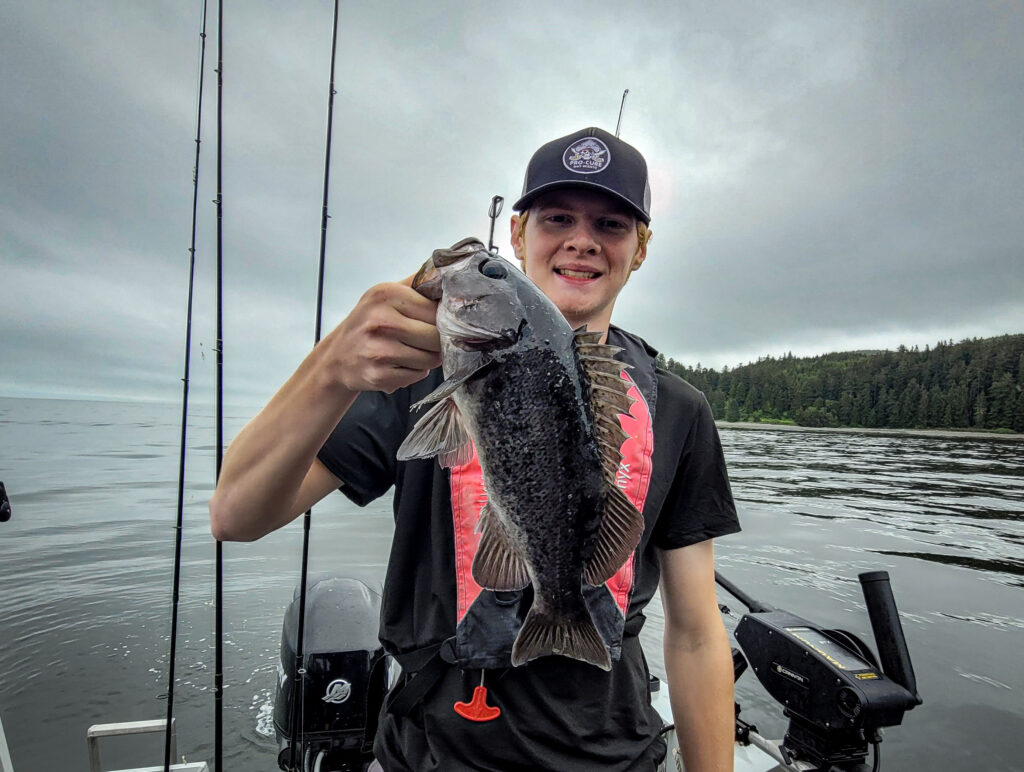
The Pacific Fishery Management Council keeps tabs on various fish species along the west coast including groundfish. Since these fish live a long time and can be subjected to over-harvest the Council provides a stock assessment and guideline regarding certain fisheries. When it comes to bottomfish, which again they refer to as groundfish, the Pacific Fishery Management Council realizes the importance of these fish. Popular in both commercial and recreational fisheries, bottomfish are prized for their great eating and provide a valuable economy to the fishing industry.
A quick walk around the boardwalk and harbor in Westport, Washington does not take long for someone to see how many charter fishing boats there are. Offering an opportunity for anglers who do not own a boat or have the savvy to head to the open Pacific Ocean, anglers can book a day trip on one of the many charters and have a good chance at catching some tasty rockfish. This is the same for every seaside town up and down the Washington and Oregon coast, and several towns in California.
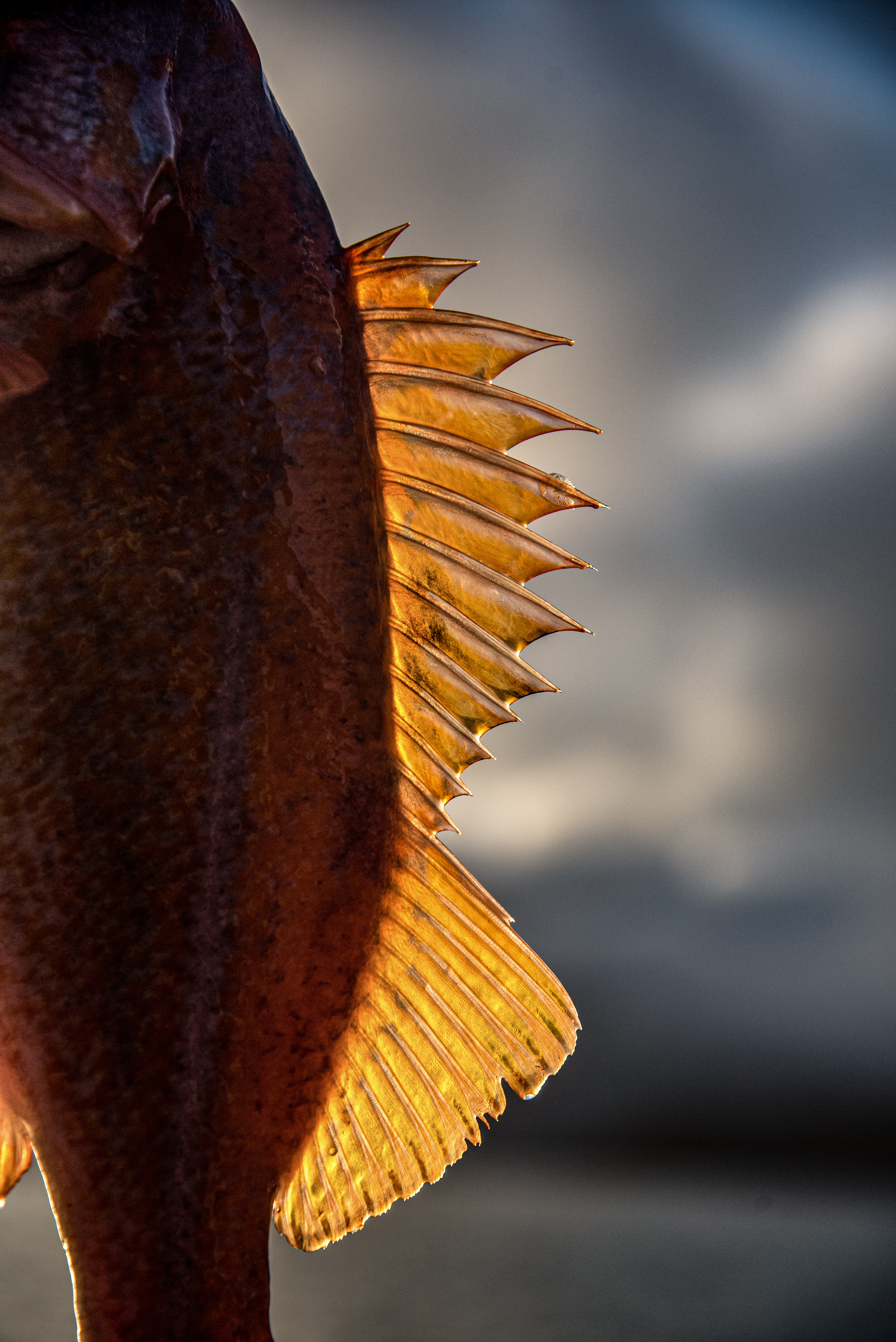
Keeping management goals of conservations, economics, and utilization of these fisheries the Pacific Fishery Management Council establishes objectives for each management goal outlined for the Pacific Coast groundfish. Taking in everything from gear used by both commercial and recreational anglers to social and economic impacts. Knowing that groundfish populations can be affected by several factors including areas where caught, as fish can be migratory the need for such a council helps track bottomfish and their populations.
If all of this seems a bit confusing that is because it is, and it is because bottomfish are highly sought after and they can be overfished. Anglers need to realize this and respect the fish population accordingly. Keep a descender device onboard, as required by regulation but also know how to use it. When you catch an undesired species then use the device. Also know your own limits, just because you can keep 7 fish per day does not mean you should keep that many.
A few years ago, while on a multi-day vacation at Neah Bay my son and I went out and limited on rockfish. Between the two of us that was 14 fish, and we also caught some salmon that day and our lingcod we came back to the dock with nearly 20 fish to clean and fillet. That made for a long day, and we decided that the rest of the trip would be spent salmon fishing and that only if it were a slow day would we switch to bottomfish. Even then we kept our personal limits to what we wanted to clean that day, and by our third day we decided we had more than enough white flakey fillets for our trip. The last two days were spent trolling for salmon and watching local wildlife. Rockfish are delicious and fun to catch but make sure to catch responsibly.
/articles/state-bottomfish