The Outdoors Roundup
By John Kruse
SOMETHING FISHY FOR DINNER
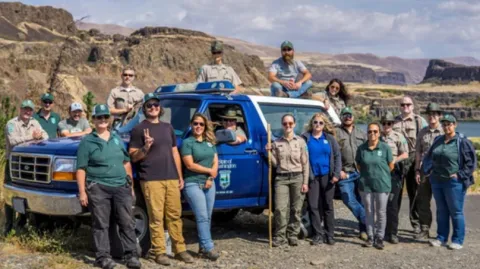
TJ’s Bar and Grill in Kettle Falls is in hot water after serving seafood they should not have been selling to their patrons. According to Captain Brad Rhoden with the Washington Department of Fish and Wildlife, during the summer of 2019 the owner of the restaurant, Terry Baxter, went on a recreational fishing trip near Bamfield, British Columbia. Baxter then brought the Chinook and coho salmon, as well as the halibut he caught, back home, and proceeded to serve these fish to customers at his restaurant.
Captain Rhoden states, “By law, a business selling fish to a consumer, such as a restaurant, is required to state the species of the salmon and whether the fish was farmed or wild caught. The Legislature created these laws so consumers can be confident the fish they are about to eat is what it says.”
As for selling recreationally caught fish in a restaurant, Captain Rhoden explained, “Washington law does not allow the edible portions of wild animals, game birds and game fish to be sold. Food fish such as salmon and halibut can be commercially sold in Washington as long as the fish were lawfully harvested during on open season/area by commercially licensed fishers. So, no recreationally caught fish can be sold, bartered or traded lawfully in Washington.”
The multi-year investigation by the Washington Department of Fish and Wildlife was prosecuted by the Washington State Attorney General’s Public Lands and Conservation Division last summer. On January 17th, Baxter’s business plead guilty to the crime of First-Degree Unlawful Fish Catch in Stevens County Superior Court. He received no jail time but will have to pay a $10,000 fine.
STATE PARKS HIRING PARK AIDES
Looking for a fulfilling, seasonal job working in a great outdoors location? If so, apply for a job as a park aide with Washington State Parks. They are hiring 305 seasonal workers to work from April through September at their parks throughout the state.
Duties include everything from registering campers to cleaning campgrounds and maintaining facilities and trails. Aides may also be helping out with interpretive and educational programs at parks around the state. You may be assigned to one specific park, or rotate your daily duties amongst several parks in close proximity to one another.
My son David worked as a park aide for two years in college, and really enjoyed his time during the summer months at Lincoln Rock and Daroga State Parks in North Central Washington. However, this isn’t just a job for college students trying to make money during the summer. It’s also a great opportunity for retired or semi-retired individuals who enjoy meeting people and spending time outdoors in the beautiful settings our state parks are set in.
Park aides earn anywhere from $16.61 to $19.09, depending on qualifications and experience. Senior Park Aides (with previous experience) earn more. You can fill out an application at www.governmentjobs.com. Simply type in “Park Aide” in the search bar, along with “Washington” for the location, and you’ll see what’s available.
FISHING REPORTS
COLUMBIA RIVER GORGE
Autumn Lawyer at Gorge Outfitters Supply in Rufus says they are doing pretty well catching walleye below John Day Dam. Most of the walleye have been caught using spinner worm harnesses tipped with nightcrawlers. A bright orange and black combo-colored spinner worm harness is the hot ticket. Several large walleye (up to ten pounds) have been caught in the last week.
Autumn says sturgeon fishing was also pretty good last week. Catch and keep sturgeon fishing remains open (for now) in both The Dalles and John Day pools. Be sure to check the WDFW and ODFW websites before going out, to make sure harvest quotas have not been met.
RUFUS WOODS RESERVOIR
Austin Moser with Austin’s Northwest Adventures has been catching triploid rainbow trout near the net pens at Rufus Woods Reservoir over the last several weeks. Austin says they have been catching limits of these hefty rainbow trout, averaging 4 to 8 pounds and going all the way up to 15 pounds in size. Moser’s clients have been jigging 3/8-ounce Maxi jigs made by Yakima Bait Company. While many anglers use bright colors, Moser has found natural colors such as black, brown and olive work best.
Bank anglers are having success as well, though it can be hit and miss. Most anglers fishing from shore are using Powerbait to catch their trout. It is worth noting that there is a $20 access fee to use the park near the net pens and also a $10 launch fee. Shore anglers also need to have a Colville Tribal fishing permit. To book a trip go to www.austinsnorthwestadventures.com. If you want to find out more about fishing or camping at Lake Rufus Woods Park, which is operated by the Colville Tribe, go to www.colvilletribes.com/lake-rufus-woods.
John Kruse – www.northwesternoutdoors.com and www.americaoutdoorsradio.com
/articles/outdoors-roundup-2
Get on the Water Now!
by Randy Castello
With football season recently behind us, baseball opening day is months away and they’re just dropping the checkered flag at either our local or at sanctioned tracks nationwide, how are we supposed to burn off our nervous energy? Assuming that you have already completed your winter maintenance regiment for your boat and gear, made all the lures that you and your neighbors can use in the foreseeable future, and read every issue of NW Reel Life for the third time, it’s time to go fishing.
The decision to wet a line is always the easy part, sorting through seasonal closures and winter accessibility can be a challenge. As with any PNW fishery, double check the regulations and Emergency Changes before you head out to participate in the many solid fishing opportunities available this time of the year. The following are a few ideas to get you started, and may your fish box need frequent cleaning.
Lakes
Lake Washington is an urban gem. Cutthroat trout, kokanee, perch, and various warm water fish are available year-round. There is great trailer boat access as well as a number of fishing piers. During the winter months it is primarily a cutthroat, kokanee, and smallmouth show but there are also large schools of perch available along deeper drop-offs.
The primary winter cutthroat and kokanee fishery is at the south end of Mercer Island. But if you are willing to go on the hunt, there are other areas that hold fish; some real trophies. Make sure to quickly release any chinook that take interest in your offerings.
Lake Merwin is a local go-to for winter kokanee. If you are traveling to get there, make sure you check the wind forecast before you head out the door. The lake can get very windy and choppy, make sure that you have all your safety gear in order.
When fishing Lake Merwin during the winter, try to troll at 1.0 MPH, and the smaller your presentation, the better. You will see multiple schools of fish on your electronics, but not all will be in a playful mood. When you do find a snappy lot, mark it on your electronics or take a visual bearing and keep after it.
Lake Cavanaugh and Lake Samish both host a winter kokanee fishery. They are kind of fickle during the winter and the bite may be during a brief afternoon hatch. We have limited at either lake during the winter but that’s not the norm.
Persistence is the name of the game. Troll 1.0-1.3 MPH. Small micro hoochies, flies, and spinners seem to have the edge. In addition to your secret corn recipe, a small tidbit of nightcrawler, worm, or a live maggot will greatly enhance your allure. You may even want to add them to your hooks, it will drive the kokanee wild!
Lake Roosevelt; as the weather permits, if you’re looking for lunker kokanee, Roosevelt is the place to be. Although I don’t like hauling the boat over the pass in the winter anymore, I love fishing Lake Roosevelt, so with the right weather forecast we may head that direction. I’m sure kokanee are available throughout the lake, but we usually fish out of Spring Canyon.
We tend to focus on the dam area but we also fish the lower 5 or 6 miles. I typically start at 10-40’ with a 60’ setback, but may fish deeper as required. Because there is the potential to hook a 3+ pounder, I typically up my leader to 20-pound fluorocarbon.
Winter road conditions are still a possibility. I addressed this in a previous article but it’s worthy of a mention. Again, pay attention to winter boating safety/etiquette. If the road conditions are questionable, carry chains for both your tow vehicle and for at least 1 axle on the trailer. Bring a couple sand bags and shovel. A liberal application of sand can be a lifesaver.
At the ramp, assess the situation before you back down a long, icy ramp. Take the time to chain up your tow vehicle if required. The area between the top of the ramp and the water could be icy. If you lose traction, don’t panic, it is likely that once your tires hit the water, you’ll regain traction. Just keep your cool, you don’t want to jackknife ½ way down the ramp.
It would put a damper on your plans. Once the trailer is wet, you may have to let the rig sit in the water for a bit to thaw before the boat will boat float free. No kokanee shuffle or celebratory dancing while onboard or at the dock, you don’t want to slip and end up sharing the lake with your aquatic rival. The fish won’t bite when they’re laughing their tails off.
Finally, and as a courtesy; at the end of your time on the lake load your boat and slowly pull out of the water just enough to clear the water. Stop and let the rig drain or drip-dry, this will minimize ice buildup on the lower 1/3 of the ramp.
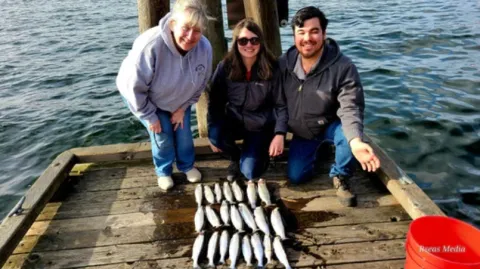
In addition to winter lake opportunities, a trip on the salt can be very productive. Both Marine Area 10 and 13 should be open. MA 10 is scheduled to be open February 1, 2023 through March 31st, but check the WDFW Emergency Regulations for early closures or seasonal schedule adjustments. MA 13 is open year-round, but again, check the WDFW Emergency Regulations before you leave the driveway.
When open for winter chinook, MA 10 is one of the most consistent salmon fisheries in the state. The minimum size limit is 22” and the fish need to be clipped. 4-10# fish are common, with possibility of a trophy fish any time you hook up all makes for a very exciting fishery. I believe that pound for pound, blackmouth are one of the hardest fighting fish in the PNW.
Although many fish are caught mooching cut plug herring or jigging, the fishery is primarily a downrigger show. You want to be fishing right on the bottom. Often you will notice that your fish is all scraped up and find gravel in the fish’s belly when you clean them. Flies or small spoons paired with 11” flashers, plugs and helmeted anchovies all catch fish.
We fished the MA 10 opener this year. My boatmates and I had agreed to make it a C &R day. We hadn’t fished salmon in the salt since September, and didn’t want to go 3 and out in the first hour. We had a stellar trip. From the moment we went gear down, we had fish on. We had to wade through a lot of 20-22” fish and cycled through probably 10 or 12 legal fish before keeping one. I pulled the hook on the big fish of the day and the estimated 10 pounder swam off before we were able to slide the net under it.
I took full responsibility for the lost fish and had to wear the “farmer” overalls. We had already decided to finish the pass and pull the plug for the ride back to Everett. The meter showed a cloud of bait with a few salmon holding just off the bottom. 1, 2, 3, BAM! The port downrigger goes off, and we are on a very solid fish. Hoping to hook the second meter mark, I decided to keep the boat at speed and put the screws to the fish. It was up on top but way off to the side when it got sideways to the flasher, and it swam off. We rarely lose a fish, and I got too big for my farmer britches.
Although we had plugs and an assortment of both trolling flies and spoons on board, we started with Skinny-G spoons and never looked back. We did determine that the lighted flashers had an edge over our regular flashers. We fished the bottom in 80-120’ of water and tried to stay on the down current face of any underwater structure, or along underwater points. It was an incredible day of fishing and an excellent option for a winter fishery.
There are a number of winter steelhead opportunities in the PNW. Many coastal streams are open and occasionally Puget Sound rivers open under WDFW Emergency Rules. I considered breaking the February, April steelhead fisheries down, but I think that that is a whole different article and best written by a coastal steelhead expert. The point in mentioning winter steelhead is that when many of our fisheries are closed, we have a steelhead fishery available. A theme here; again, as with any PNW fishery, double check the regulations and Emergency Changes before you head out.
Fishing withdrawals, cold sweats, and general heebie-jeebies? There don’t have to be, with a little research you have multiple options to treat your fishless disorder. Whether you’re a freshwater, salt angler, or bankie, there are many opportunities to soothe what ails you.
/articles/get-water-now
Catfishing in Washington
By Josh DeBruler
It was November 6th of 1902 at the confluence of the Ohio and Mississippi Rivers, where the great explorer, Meriwether Lewis, recorded in his journal that a prominent fisherman within their expedition had brought in a Goliath of a catfish that measured over 4 ft long and weighed in at 128 lbs.
Whether this accounting is of historical fact, or just generally accepted as American lore, the fact remains that Catfish get BIG. The record size catfish for the same river that Lewis and Clark’s men were dropping their lines in is currently a 104 lb.
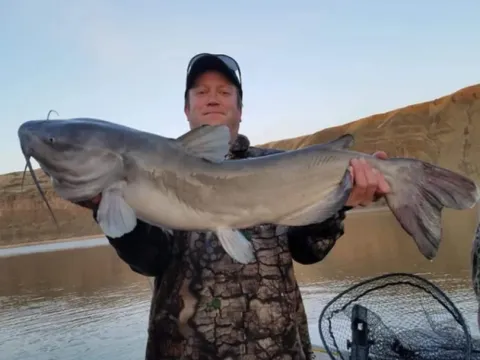
blue catfish, and though we wont likely see those types of numbers coming out of our Pacific Northwest waterways anytime soon, we certainly do see some formidable sized cats here in Washington State. In 2019 a 15 year old boy hauled a 37 lb. state-record channel catfish out of Lake Terrell in northwest Washington, beating the previous record by 1.5 lbs.
If you’re looking to hook into a big catfish here in Washington State, chances are you’ll be fishing for channel catfish. Channel catfish are native to much of North America, but they didn’t make their debut here in Washington till 1892, when a load of them were dropped off in Skagit county’s clear lake.
From that point forward, these fish were distributed throughout Washington State for both recreational angling opportunities, and more recently, for management of problematic forage fish. Although, they can be found throughout the state, most anglers familiar with the fishery would agree, your best bet for harvesting some of these fish would be to head to the Columbia river to fish it and its tributaries that head north from the Bonneville Damn, and meander up and across the eastern portions of the state.
Rivers like the Columbia, Yakima, Snake, and Walla Walla, all provide reasonably suitable habitat for these fish to spawn and maintain self sustaining populations. Conversely, lowland lakes that are stocked with channel cats, will only provide anglers with fishing opportunities that reflect both the frequency of the WDFW stocking programs and the pressure the lake receives from anglers. Channel catfish are not known to reproduce in most Washington lakes.
Where to fish in Eastern Washington (Eastside of cascades )
-Lake Umatilla
-Lake Wallula
-Lower Yakima River
-Lower Walla Walla
-Lake Sacajawea
-Lyons Ferry State Park (confluence of Snake and Palouse rivers)
-Roses Lake
Where to Fish in Western Washington
- Green Lake
- Clear Lake
- Silver Lake
- Lake Terrace
- Swofford Pond
- Lake St. Claire
When to fish
Fishing is most productive when catfish are spawning. This typically peaks around June and you can expect the bite to taper off as we move into fall. The spawning season also causes catfish to move out of the larger Columbia river and into its tributaries where the shallow waters provide better spawning grounds. Take advantage of this time to target catfish in these smaller waters, and if you can fish the confluences of the Columbia and said tributaries at this time, a bottleneck opportunity occurs, and this is where the fishing can become excellent.
How to fish them
Being that most techniques are fairly straight forward, fishing for channel catfish should be suitable for anglers of all different experience levels. You’ll likely find that the most challenging part will be getting on top of the fish in the first place. If you are fishing at night, you’ll find catfish feeding in the shallow waters near the shore, and though night fishing is excellent for channel cats, it’s also not a very suitable time for the typical angler.
For this reason, many anglers fish throughout the day, and do-so successfully. During the day, you’ll find most of your channel catfish in deeper waters beneath the column of warm water known as the thermocline. Typically, 15-20 ft down will get you past the thermocline and into the cooler waters.
Since these fish are bottom feeders, the goal should be to get your bait at the bottom where it can be detected by the catfish’s keen since of smell. There’s a wide variety of baits you can use. Many anglers opt for chicken livers, oily cut baits, earthworms, chicken skins, hot dogs, shrimp, corn, or dough balls made specifically for catfish. These fish don’t seem to be extremely particular about their food as long as it’s in front of them.
As far as rigging goes: a slip sinker rig is both simple and productive. From your main line, add your preferred slip sinker, a stop bead, barrel swivel, about 5-20” of leader, and a 2/0 to 3/0 hook. You can get the hook suspended a bit off the bottom by adding a poly ball or foam peg float a few inches back from the hook if desired (note this becomes ineffective if a substantial amount of current is present)
A slip bobber rig is also a popular and effective method to get your bait suspended off the bottom while being able to detect bites visually. Just add a stop knot to your mainline, then a bead, a slip bobber, slide sinker, barrel swivel, and 10-20 inches of leader before your hook.
There are plenty of other methods available for catching channel cats, but these should be all you need to get started.
/articles/catfishing-washington
Icefishing a School Bus Away
by Matt Carey
It’s human nature to think that we need to go to great lengths to find happiness, joy, fulfillment or satisfaction. It makes sense at first glance – the more time invested, the higher the payoff. In reality, we can find value in a lot of things that are right in front of us. A quick jaunt, a stone’s throw away, right around the corner.
Maybe the same can be said for fishing.
In my day job, I work as a principal for an alternative high school. Much of my day is dedicated to helping these kids realize the opportunities they have in front of them and how to access those people who can offer help when needed. To my students, a career, graduation, just getting to Friday, are all unknown hurdles in their lives. Imposing forces that take away from the goal of just getting through the day. With the multitude of stressors on their minds, recreation and leisure are often a fading thought.
One of these recent lessons presented itself with a school fishing trip to the Helena Regulating Reservoir not too far from town, maybe 20 minutes. When I go fishing personally, I’ll opt to fish at Holter Lake, about an hour’s drive or Pishkun Reservoir, nearly two hours away, when I feel the need to fish. Coming into the day, I had low expectations. I’m not using my own gear. I’ll need to supervise these kids and keep everybody engaged.
It’s just down the road, not much adventure there. I’ll probably get called back to the building for something. We went, as a school, on this same fishing field trip last year – with no success. Not a bite. Windy conditions. On the metaphorical pendulum that is fishing, that outing swung strongly towards the forgettable side.
Furthermore, this fishing “trip” isn’t anything like those days where we need to wake up at 4am to drive to the dock at first light or prepare a few different set ups if we decide to target different fish. How could I possibly have the same level of excitement and anticipation as a fishing trip out with my buddies?
The afternoon started off unassuming. The folks from Montana Fish and Wildlife talked to our students and staff about some general ice fishing information. How to bait a hook. How to open the fishing bail. How to know if you have a bite. Trivial information you and I take for granted. To kids who have never gone fishing, this information was captivating.
One student even asked to come closer to see the line drop to the ground when the instructor opened the bale demonstrating how the bait would fall through the water. The seemingly innocuous presentation had captivated at least one of my students. We made our way on the ice and walked for a good 15 minutes. Many of the kids, and the guy in charge of supervising everyone, didn’t have the appropriate footwear.
This made the icy trek all the more cautious. The freeze was still in full effect, and our guide for the day reported the ice was about 18 inches thick. More than enough to comfortably fish without danger. After a few hundred yards we had made our way to our fishing holes. A previous school was there in the morning, with no luck of course, and the gear was ready for immediate fishing. We were given primarily Swedish Pimple jigs with a maggot as our bait for the afternoon.
Kids and teachers wandering around finding what they’d hope to be their lucky spot. Remember how I mentioned last year’s conditions? Well, now picture a complete 180* (you couldn’t really expect to not get a lesson from a guy in education, right?). The sun shining with a few clouds painted across the skyline.
A calm breeze that was never overbearing, but enough to remind you that you are outside during a Montana winter. Mid to high 30-degree weather, necessitating a jacket or sweatshirt, but no need for snowpants or a full facemask gaiter. My Reel Obsession Sport Fishing sweater and Montana Grizzly hat combination was the perfect balance of “drip” (swagger or style to those of you not up to date on the newest slang) and functionality.
In a similar fashion to the weather, our fishing experience was nothing like last year’s. Within 5 minutes two different kids are pulling up perch. No state records, but a fun experience. Kids goading each other to kiss the fish, being caught off guard by the fish slime and calling over their friends and teachers. Some kids catching multiple fish, one girl catching 3 in our outing. After seeing such a lively bite, I figured why not, I’m here anyway, I might as well wet a line.
A silver and blue jig with a maggot ended up being my lure of choice. More so because it was the only one open at the time. Engaged kids, minimum screwing around, it was a winning combination. I dropped the lure beneath the ice, hit the bottom, reeled up a few feet and started jigging around 18 feet of water.
A few other members of Fish and Wildlife were with us, and I struck up a conversation about anything and everything you’d expect – what set ups have been working well, other lakes or reservoirs in the area, that kind of thing. Caught off guard, my rod tip gets absolutely slammed. My FWP counterpart exclaiming “that ain’t no perch! You’ve got a koke on there!”. As I’m reeling, he asks if I saw the fish on the fish finder.
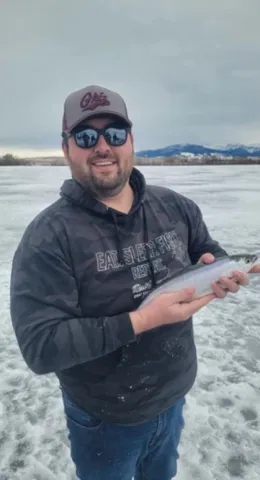
Sheepishly, I told him I wasn’t really paying attention and I was looking at everyone else catching fish. As I pull the fish out of the water, I see a solid 16 inch kokanee come out of the hole. This is a great fish and certainly not what I was expecting coming into the day. I ask for a picture and release my catch back into the reservoir for someone else to find.
I realized in that moment that even the mundane or trivial, we can find great joy and satisfaction. Are weeklong fishing adventures great? Of course. Can adventure and happiness be a school bus ride away?
Without a doubt.
/articles/icefishing-school-bus-away
The Sport Reward Fishery
By Hannah Pennebaker
What’s better than fishing? Getting paid to go fishing! Every year, WDFW pays anglers for every northern pikeminnow they catch. Why? These fish eat millions of baby salmon and steelhead every year. The goal of the program, called the Pikeminnow Sport-Reward Program, is to reduce the average size of the fish and remove the larger, older fish that eat the most salmon and steelhead. With this program, not only can you get paid to catch these fish, but you can also help out salmon and steelhead!
This program takes place on the Snake River and Columbia River every year, from about May to September. According to WDFW, “In 2022, rewards begin at $6 each for the first 25 Northern Pikeminnow caught during the season. Anglers are paid $8 for each fish they catch from 26-200, and $10 for every fish caught over 200 cumulatively. Anglers are also paid $500 for each specially tagged Northern Pikeminnow!” Every pikeminnow 9 inches or longer is eligible for the program. Dedicated pikeminnow anglers can make thousands of dollars every year, and feel good about helping salmon and steelhead out.
WDFW says that anglers “averaged reward payments of $27,836 each for the five-month season. The highest-paid angler in 2020 caught 5,579 fish and earned $48,501, while the all-time record harvest is 14,109 Northern Pikeminnow worth $119,341!” Not bad, and don’t forget that it’s all for a good cause: each pikeminnow can eat up to 15 salmon/steelhead smolts in a day. Interested in trying out the fishery? Let’s go over how the program works, and how you can get involved.
The Pikeminnow Sport-Reward Program is designed to be as easy and straightforward as possible. There are stations set up near the Columbia and Snake Rivers where you can turn in your catch for the day. You must register at the station before you fish, and a valid fishing license is required. Registration forms are available 24/7 at each station. If the station is unmanned when you arrive, you can pick up your form from their night box.
Fish must be returned to the registered station during its hours of operation in order to qualify for a reward. Frozen fish are not allowed, they must be live or fresh. Any fish 9 inches or above will qualify. You may register for the next day when you return your fish for the day. If you return fish to the station without registering in advance, you won’t be able to get your reward. Rewards aren’t issued at the station, instead, you’ll get a voucher. You’ll get reward vouchers every time you turn in eligible fish, and you can mail them to WDFW for a reward, issued in the form of a check.
Remember, WDFW must receive your vouchers by November 15th of every year. If you’re lucky enough to get a specially tagged fish worth $500, the station will give you an envelope to mail the tag to. The first time you receive a voucher, you need to include an IRS W-9 form when you mail the voucher out to receive payment.
Interested in trying out the fishery? Thankfully, it can be very productive, and there is a lot of information out there to help get you started. Shore anglers can do just as well as boaters. Every week, WDFW posts catch numbers collected at each station, and catch reports dating back to 2014 are available on their website. You can figure out where anglers are having good success and try fishing in those areas.
Pikeminnow can be caught from shore or boat. You can use bait, artificial plastics, or lures. Diving crankbaits work well, and you can troll them or cast them out. Pikeminnow tend to congregate near the bottom of the river. Drift fishing can be very effective! Many seasoned pikeminnow fishermen drift tubes or grubs on a ¼ oz jighead. Bring a variety of different colors; pikeminnow can be surprisingly picky! Use just enough weight to tick the bottom and not drag on it, or you will likely snag up and lose your lure. If plunking is your bag, you’re in luck.
Many anglers have had success plunking worms, chicken liver, and shrimp. Just make sure to use enough weight to stay on the bottom. Small spinners and other bass lures can also work well. If you’re on a boat, you can “back bounce” your bait by lifting up your rod, letting out some line, and repeating once your weight hits the bottom. Just make sure to keep your line as tight as possible, as pikeminnow have surprisingly light bites.
Like most fish, pikeminnow tend to hang out around structure. They also like faster currents, so avoid frogwater. They tend to school up, so if you don’t catch one within 10 or 15 minutes, move and/or change bait/lures.
The Pikeminnow Sport-Reward Program has been a huge success, and is still going strong every year. According to WDFW, “over the past ten years (2011-20), the top 20 anglers caught an average of 3,353 fish per angler. Results indicate that the Pikeminnow Program has been successful, with over T5.2 million predatory Northern Pikeminnow removed to date by anglers participating in the Sport-Reward Fishery, and a decrease of predation on juvenile salmonids of up to 40 percent from pre-program levels”.
This is a great way to help salmon and steelhead, and make money doing it! As a bonus, pikeminnow are scrappy fighters and are great fun to catch on light tackle. Remember to register at the monitoring station before fishing, and have fun out there!
If you’re looking for more information about the Pikeminnow Sport-Reward Program, WDFW holds free fishing clinics during the season, and they often have a booth at sports shows where you can learn more. You can check out their website for a free, one-time $10 coupon to turn in with your first pikeminnow! Good luck out there!
/articles/sport-reward-fishery
How to Catch Bass in the Winter
By Rick Lawrence
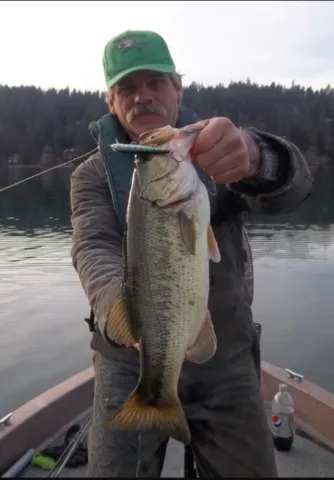
Let’s talk about winter bass fishing. Whether you choose to fish out of a boat in open water, or venture out on a frozen lake to drill a hole in the ice, you can catch bass in the winter. This time of year can be challenging for bass anglers, but with the right techniques you can master it. Here are the top 8 most important steps to follow when fishing for bass in the winter.
Choose the Right Lure Type
The first thing you’ll need to think about is grabbing the correct lure for the season. You can’t use the same strategy you use when the water is warm, no matter what way you look at it. Winter fishing techniques require finesse, but they also require a bit of preparation. Fast-moving lures and excessively noisy ones won’t work when the water temperatures drop. You’re going to want to use bottom feeders and slower moving lures like jigging raps, flutter spoons, or, if you are fishing open water, suspending jerkbaits, if you work them slowly, with long pauses.
Stay away from lipped and lipless crankbaits, spinnerbaits, and other fast-moving lures during the winter months. Even switching from lures to live bait when legal is sometimes the key to landing winter bass.
Always choose the most natural color you can, and try to imitate the fish’s color in the water you’re fishing.
Slow it Down
You need to slow down your presentation when the water temperatures drop. Winter largemouth bass fishing requires you to think like a fish. The water is cold, their metabolism is slow, and they’re not feeding much, so they will never chase a fast-moving bait halfway across the pond. It won’t work.
You need to drop something right in front of their face, make the bass think it’s almost dead, and move it slowly and erratically, so they think they’ve got an easy meal on their hand. Once you do that, you’ll have no problem retrieving them because they won’t put up much of a fight. In less than 40-degree water, you’re in for a challenge. At that temperature, the bass are incredibly inactive, and their metabolism is super slow, so they’re not feeding much, and they’re preserving all their energy by taking on the simplest of meals.
For you to have success fishing during this time, you need to throw your lure right in their face and present it slowly enough for them to get it.
The 40-to-50-degree temperature range is prime fishing in the north, so expect to find bass in this temperature range most frequently during early and late winter months. Bass in this temperature will slow down quite a bit, but they’ll still have feeding periods each day, and this is when you need to capitalize by using the right lures and offering a slow but calculated presentation.
Size it Down
In addition to presenting more slowly, you’ll also want to present a smaller lure. Small bait fish imitations can trigger strikes, or you can go with a small nedhead jig or spoon with some red on it.
The bottom line is, your strategy needs to stay in line with the conditions. If it’s cold and the water temperature is near freezing, use a small ned, or the smallest swimbait you have, nose hooked on a drop-shot jig. Doing so will present less of a threat to the bass, and they’ll think they stumbled upon an easy opportunity for a meal.
Go Neutral
Color is also an important factor in the winter. If you can find baitfish in the water, see what color they are, and mimic them. If not, go neutral whenever possible.
Know Where to Look
The best tip someone ever told me is to use a good fish finder and search the area for fish before you try fishing for them. Water clarity is also a huge factor in the winter. If the water is murky, the baitfish will run deeper. If you have clear water, the baitfish will come closer to shore and into the weed lines. Look for green weeds, rocky drop-offs, submerged islands, or any structure that might be a good spot bass would use, then scout the area for fish with your electronics.
Time it Right
As previously mentioned, you need to change your mindset when it comes to fishing in the winter. When the water temperatures are warm, we know that the best times to fish for bass is first thing in the morning and right at dusk.
When you’re fishing in the winter, you’ll want to fish the middle of the day because this is when the water will be the warmest. Once the sun has hit the water for a while, the baitfish will start to move around, and this is when you stand the best chance of catching more bass.
Don’t Forget the Basics
One of the most important winter bass fishing tactics to learn revolves around understanding structure and baitfish. You can sometimes find bass without any structure around if there are baitfish there, and sometimes you can find bass on structure without any baitfish, but you will never find them where neither are present. You need to understand these two points and why they’re critical for winter fishing. Baitfish will sometimes hug the shore near creeks because this is where the most oxygen is, and the temperature tends to be a bit warmer. As we all should know, bass follow the baitfish, so this is where you’re likely to find more bass. Offshore green weed lines can also hold bait fish and provide bass with ambush points to catch an easy meal, making them prime spots as well.
Bring the Right Gear
While this isn’t a direct tip per se, I wanted to talk briefly about safety and gear. Depending on your location, fishing in the winter can be dangerous because of frigid temperatures and dangerously cold water. You need to make sure you have enough layers to keep yourself warm, and plenty of backup gear in case you fall in or get wet. Wear multiple layers with socks, ice fishing boots, and fingerless gloves so you can maintain full movement of your fingers. If you're on the ice, make sure you have all the proper safety gear you need in case you should fall through the ice, and don't ever fish on the ice alone.
/articles/how-catch-bass-winter
Grant County Fishing Opportunities
By Mike Schmuck
Martha Lake and Upper Caliche Lake: These lakes, near the town of George, WA, should produce well in spring 2020. In addition to fingerling Rainbow Trout, both lakes received 1,000 11–13-inch Rainbow Trout in fall 2019 and these fish should be in the 14–15-inch range this spring. These lakes also received 1,000 (Martha) and 500 (Upper Caliche) catchable Rainbow Trout in April 2020.
Quincy Lake: Over the years this rather popular lake, located on the Quincy Wildlife Area, has provided anglers with good catches of 11–13-inch trout as well as the occasional carry-over fish that can often be in excess of 14 inches. Quincy Lake fished well in early March 2020 with several fish caught in the 18-20-inch range. WDFW hatchery staff will be stocking nearly 1,000 Rainbow Trout into Quincy Lake in preparation for the May 5th re-opening. These fish are just over a pound each and will provide excellent opportunities for anglers.
Burke Lake: Burke Lake, a next-door neighbor to Quincy Lake, underwent a chemical rehabilitation in the fall of 2019 in order to remove nuisance Yellow Perch and Pumpkinseed Sunfish. WDFW Hatchery staff stocked 3,000 9–11-inch Rainbow Trout into Burke Lake in late-February. Burke Lake will be receiving 1,000 Rainbow Trout in preparation for the May 5th re-opening. These fish are just over a pound each and will provide excellent opportunities for anglers. Burke Lake received very little fishing pressure in early March and should provide excellent fishing for the remainder of the season.
Quincy Wildlife Area walk-in-lakes: While Quincy and Burke Lake get the lion’s share of fishing pressure, there are several small walk-in lakes just west of these two popular fisheries. Crystal, Spring, Cup, Lloyd and Scout Lakes are not on many anglers’ radar—but they should be. These lakes receive annual stockings of fingerling Rainbow Trout from Columbia Basin Hatchery and often provide anglers with solitude and big fish.
In early March I talked to one angler who caught two 21-inch Rainbows from one of these lakes—I promised not to tell which lake they came from. Scout Lake is a mile north of the remaining lakes on this list and is 530 yards west of the H-Lake parking lot. Those looking to social distance should keep these lakes in mind.
Ping Pond (aka Oasis Park Pond): This 2+ acre pond located at the south end of Ephrata is open to Juvenile Anglers (under 15 yrs. old), Senior Anglers (at least 70 yrs. old) and Anglers with a Disability who possess a designated harvester companion card. WDFW hatchery staff stocked 30–40 Jumbo (3 lb.) Rainbow trout and 200 12–14-inch Rainbow Trout into Ping Pond on May 1 in order to give kids a fun opportunity to catch some nice fish.
Park and Blue Lakes: These lakes are two of Grant County’s top trout waters and both should fish well this spring. Catch rates were lower than anticipated on opening day 2019; however, this was likely due to high winds that kept many anglers off the water. Despite relentless winds, catch rates averaged 3 trout per angler on both lakes. Anglers should expect good catches of rainbow trout in the 12–14-inch range as well as some 2+ year-old ‘carry-over fish’, in the 15–17-inch range. Brown Trout and Tiger Trout are also stocked in both lakes.
Vic Meyers Lake: This 12-acre lake located in Sun Lakes State Park receives a fair amount of fishing pressure and produces Rainbow Trout to 17-18 inches. The lake has excellent shore access and is a good choice for anglers looking to get away from crowds.
Perch Lake: Another lake in Sun Lakes State Park, Perch Lake has limited shore fishing but is ideal for someone with a small boat or float tube. I visited Perch Lake numerous times in 2019 and never encountered an angler. I did, however, see a lot of trout rising in the evenings and believe this lake should fish well. Perch Lake receives 9,200 fingerling Rainbow Trout each year.
However, in 2020 we reduced this significantly due to low angler effort. Low harvest on these fish will increase food competition and limit growth for remaining fish. A lack of large fish in this population will further limit the popularity of this fishery.
Deep Lake: Deep Lake is a good choice for anglers looking for great scenery and good fishing. While not known for an abundance of large fish, Deep Lake produces Rainbow Trout in the 11–13-inch range, and a few carry-over fish close to 16 inches. Anglers wishing to troll, or simply fish a little deeper, can also catch Kokanee. Each year, WDFW hatchery staff stock Deep Lake with 13,500 spring fingerling Kokanee. In addition, Deep Lake also receives 15,000, 11–13-inch Rainbow Trout from Trout Lodge Fish Hatchery.
Warden Lake: Warden Lake is a popular trout lake, but in recent years it has been producing excellent catches of Yellow Perch and bass. Warden Lake receives 65,000 spring fingerling Rainbow Trout, 7,000 spring fingerling Tiger Trout and 15,000 6–9-inch Rainbow Trout each year. In early spring 2020, Warden Lake was stocked with 3,300 12–13-inch Rainbow Trout from Trout Lodge in late March. To provide more opportunity, WDFW hatchery staff stocked an additional 2,200 Rainbow Trout into Warden in late-April. Anglers should expect excellent trout fishing once lakes reopen.
Potholes Seep Lakes: Several lakes south of Potholes Reservoir can produce good catches of Rainbow Trout as well as Bass, Bluegill, Black Crappie and Yellow Perch.
Corral Lake: This lake is located near the southwestern end of O’Sullivan Dam just across the road from the MarDon Resort. Corral is a good choice for anglers that don’t mind a mixed bag of good size Rainbow Trout, Largemouth Bass or Black Crappie. Bring your boat to explore this lake fully—shore access is limited.
Pillar-Widgeon Chain: These walk-in lakes on the Columbia National Wildlife Refuge are consistent producers of quality Rainbow Trout. This chain of lakes receives spring fingerling Rainbow Trout and are a popular destination for anglers looking for a quiet day on the water.
Hampton Lakes: The Hampton Lakes have fished well over recent years. Lower Hampton Lake receives more angler effort and while catch rates are somewhat lower than on Upper Hampton, the fish caught there are larger. Since the 2014 rotenone treatment of the Hampton Lakes, Pumpkinseed Sunfish have recovered to a point where they are negatively affecting growth of fingerling rainbow trout.
Teal Lakes: The Teal Lakes, located along the Seep Lakes Road on the Columbia National Wildlife Refuge, are a popular fishery for anglers looking to catch good sized trout. Both lakes, while managed for trout, have carp, bass and sunfish as well. Consequently, fingerling growth and survival have suffered. South Teal Lake receives little fishing pressure, likely due to abundant aquatic weed growth and limited access to most of the shoreline.
Most of North Teal’s shoreline is accessible and anglers commonly catch very nice 13–15-inch rainbow trout all around the lake. Catch rates, on average, are lower here than on other more productive waters such as Blue and Park Lake; however, anglers can find they often have the lake to themselves, especially during the week.
Hutchinson and Shiner Lakes: Located on the Columbia National Wildlife Refuge in Adams County, are connected lakes with quality Largemouth Bass, Bluegill and Crappie. They are both best fished from a small boat, canoe, or float tube/pontoon boat. Anglers willing to put in a bit of extra work can row or paddle to the east end of Shiner Lake to target more naïve bass.
Katey & Janet Lakes: These two trout lakes can provide solitude and good catches of Rainbow Trout. Katey Lake was treated with rotenone in fall 2019 to remove Carp. In early April, WDFW hatchery staff stocked 200 11–13-inch Rainbow Trout into this six-acre lake. Janet Lake is a short hike west from Katey and can provide anglers with some larger Rainbow Trout. Most of the shoreline is accessible to anglers on both lakes.
East and West Sage Lakes: Similar to Katey, these two lakes were treated with rotenone in fall 2019 in order to remove Carp. The Sage Lakes produce large Rainbow Trout, although for the remainder of 2020 anglers will have to rely on slightly smaller hatchery fish that were stocked in early April. WDFW hatchery staff stocked each lake with 500 11–13-inch Rainbow Trout which should reach 14–15 inches by spring 2021.
Windmill, North Windmill, North-North Windmill, June, Virgin, Lois: Anglers need several days to explore these lakes located south of Warden Lake. This chain of lakes, managed for Rainbow Trout fishing and popular with fly angers, can produce some large fish.
/articles/grant-county-fishing-opportunities
Kokanee Fishing Color Choice Confidence
By Gary Gordon
It is the single most important thing to grasp: kokanee are kokanee and have the same whims, growth, hormone, and feeding issues wherever they are found. So these kokanee issues are the same in Washington, Oregon, Colorado, Idaho, Wyoming, Montana, Utah, California, North Carolina, New Mexico, and British Columbia.
It turns out that before getting to the point of deciding what colors are the answers to today’s fishing mysteries, selecting color is the last component of a successful outing. Since color makes no sound and has no scent, its single role is to stimulate a biting response.
The next thing to grasp is a consistent presentation strategy. What you are trying to do is make your presentation as 100% efficient as possible. This means that all of your equipment from your boat, trolling motors, fishfinder, GPS, rods, reels, downriggers, and releases must be working together so that your presentation can be as efficient as possible. Having the “right” colors means nothing if you are not placing your tackle where the fish are.
Correct presentation strategy means also that your attractor and the lure have to work together. You have to troll the dodger at a speed that allows it to attract. That means that each attracting dodger has a minimum speed that allows it to work correctly. What that speed is depends on the size and shape of the attracting dodger.
One of the best ways to check the correct speed is to simply put the dodger into the water on your fishing line right next to the boat, and look at the action. Speed up or slow down the boat until you feel the action is what you are looking for. Recognize that the dodger and lure are working together, so look for movement in the lure behind the dodger. You simply do not want the lure to just sit there in a straight line behind the dodger; you want some movement. Keep the lure in tight behind the dodger for the best movement. I advocate 6 to 8 inches of leader, even if your lure comes with a long leader.
For early season, that movement does not need to be great. As the season progresses, speed up your presentation to get more movement on your lure. Also, as your target depth gets deeper, increase your trolling speed, and increase the size of your dodger.
I carry three different size selections of dodgers for these very reasons.
For all except the Apex type lures, it is critical to have a short leader behind the dodger for the lure. This gives the maximum movement to the lure from the movement of the attracting dodger. I prefer only about 6 inches behind the attracting dodger regardless of the size of the dodger.
Next would be to match the dodger colors with the lure colors. Although color is not an initial attractor, it is vital to stimulate the biting response. You want what is making the attracting vibration (the dodger) and the following matching lure work together. The following chart shows relative penetration of visible colors in the water column. We all know there is less light at depth.
Go deep enough and there is no light. Water absorbs light in sequence of the visible spectrum. Light enters the water as white light. Then very shortly the red drops out, leaving the balance of colors to continue together down the water column. The next to drop out are the oranges, then the yellows, then the green, then the blues and then the indigo and then finally the violet.
But use fluorescent colors and the color you see in your hand will be the same color at depth. So, a fluorescent yellow will still be fluorescent yellow when only violet light can act on it. If it is not fluorescent, it will be black when violet light strikes it. All tackle marketed as “UV” is really fluorescent. There is no “UV” colorCOL, and “UV” light does not penetrate the water column more than just a few inches. Most tackle marketed today is fluorescent even if it is not marked “UV.” Fluorescent colors penetrate the water column to far greater depths than do ordinary colors.
So, can kokanee see color? Kokanee are vertebrates and as such they have eyes that contain rods and cones. Cones are the part of the eye for color. Salmonids have a distribution of about 10% cones and 90% rods. So, color vision is basically limited to an area directly in front of the snout and extending out about 20 inches or so in clear water.
This is actually a good thing. Stay with me now. You have this awesome hot pink squid properly trailing your dodger. The fish is going to be attracted to the dodger vibrating, but that will be at some distance to your lure. Once that lure become visible to the fish, it is still only seen by the fish’s eye rods in shades of gray and black and white tones. But as the fish approaches that 20-inch mark, there’s an explosion of color – just like turning on a light bulb. The fish backs off to 21 inches and it is back to black and white and gray. Come in closer, and bam! Hot color – just the way you planned it topside, but not exactly the way you planned it topside. This color shift works for you as a bite stimulant.
Here are some helpful suggestions about color.
• The first suggestion is that the color of the day, or even of the hour, is up to the kokanee.
• Early season stuff: pink, red, orange, green, natural glow, blue
• Mid-season – absolutely wide open, but add copper and gold to the mix. Run copper and gold setups a bit faster than the nickel. Don’t forget the black and white stuff.
• Later season – kokanee love the blue, pink, and watermelon.
• All seasons: White and glow.
/articles/kokanee-fishing-color-choice-confidence
Kayak fishing in Makah Land
With cracked and battered hands, I paddled east with 25 knots at my bow and an incoming tide on my stern. Colliding forces of Mother Nature churned heavy swells into a roller coaster of seawater, tossing me about as I struggled to stay on track. A behemoth of a fish, a monster, 50, maybe 60 lbs, haunted me from the day before, yet kept me moving eastward, into the fray.
This is just one of the many tense experiences that characterize a spring kayak fishing trip at the continental United Sate’s most northwestern point—Neah Bay. Neah Bay has become somewhat of a kayak-fishing Mecca for me. Each year I make the almost 4 hour drive to its rugged and draw dropping coastlines. Heading up the east side of the Peninsula, the drive treats travelers to a myriad of jagged points and bluffs that meander past ancient saltwater beaten sea stacks before colliding with the belly of the North Pacific. The coastal terrain then wraps around Washingtons most Northwestern point, Cape Flattery, which is a marine anomaly in its own right, and then heads down to the sandy beaches of Makkah Bay, ending just south of Cape Alava.
Though fishing might be the main attraction for readers, it’s worth noting that this area holds an endless amount of wealth in its natural beauty and also in its cultural and historical prominence. The Makkah Museum is open to the public and is a great place for visitors to learn about Neah Bay’s native community and their long connection to the land and sea, that of which is estimated to be around 3,800 years old.
Case in point, the Makah tribe, for at least the past 1,500 years, have paddled hand carved cedar canoes out to often treacherous seas, where paddlers would track and hunt humpback and grey whales with harpoons attached to sealskin floats. They are the only tribe in the U.S to have whaling rights secured by way of treaty, though this right was later repudiated by the U.S government after commercial whaling by both European and Americans had all but extirpated both grey and humpback whale populations.
From here visitors can explore the many outdoor attractions Neah Bay has to offer. Whether it’s a backpacking trip down to Shi Shi Beach to camp and fish for surf perch, or a day trip to the Point of the Arches, there’s a number of things you can do to diversify your fishing trip before getting into filling your cooler.
Any trip to Neah Bay with a kayak should be well thought-out and planned, this is especially true during the spring when inconsistent and stormy weather frequently results in the waters around Neah Bay being under small craft warning. Always plan your trip around NOAA marine weather forecasting and make use of apps that predict swell size, wind speeds and wind directions. Optimal conditions would be flat and windless, and if we waited for those conditions, we would never fish. So, sticking with days where winds are sub 15 mph, swell size is moderate, and wind waves are predicted to be no more than a couple feet, will all help keep you on the right side of the water.
Staying on the right side of the water is always the goal, but as probability has it, there will be some point in any kayak angler’s life where he or she will get dumped into the salt. This is especially true if you’re launching or landing in surf zones. If you are prepared for it, which you 100 % need to be, then an experience like this will only serve as a minor inconvenience as opposed to something life threatening.
First order of your operations will be gearing up to stay warm. I suit up into a 5.4 mm wetsuit, equipped with a hood and 5 mm booties. Essentially, I dress the same exact way I would if I was to surf anywhere on Washingtons chilly coast (with the exception of a PDF). Many anglers prefer a wetsuit as they are not bulky, they make movement easy, and they perform consistently each time. Another option is to use a dry suit.
Dry suits are a breeze to put on when compared to a wetsuit, they slip on over your insulating layers, provide you the security of knowing that if you were to go in; you won’t experience a layer of cold water rushing over your skin like a wetsuit allows, and you can slip out them without a struggle as soon as you are done fishing. The downside of a dry suite is that in the event of dunk— a tear or a leak in the suite would allow water to flow inside and render it completely useless, thus making hypothermia less of a possibility and more of an inevitability.
If you do get dunked, you need to know how to get back into your boat. This is something that requires practice and should be done in calm and shallow waters, perhaps somewhere close to home. Neah Bay is not the place you want to have a “learning experience” when it comes to falling into the water. Know how to right your boat if capsized and know how to climb back in.
Finally, secure all your gear like you were planning to flip the boat. Lanyards and bungee cords are your friends. Keep hatches closed and secured and you should be set to catch some fish.
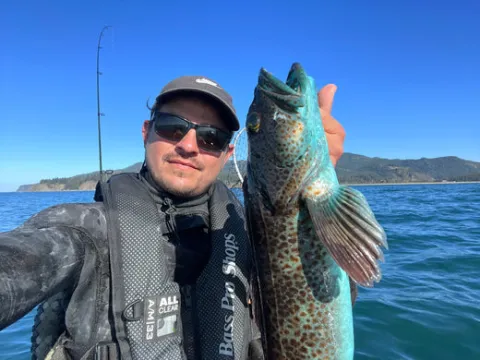
Spring kayak fishing in Neah Bay is red hot when it comes to Lingcod, rockfish, and Cabezon. They can be caught in relatively shallow waters where kayak fishing is more feasible, and in general, these amazing predator fish are typically going to bite down on whatever you’re willing to throw at them. My best luck comes from jigging 2 oz jig heads with a white single or double tailed grub.
The best bait for catching a trophy lingcod might be lingcod itself. The experience mentioned at the intro to this article foreshadowed what has become the most intense battle with a fish I’ve ever been part of, and that experience happened to occur because of the lingcods love for the predation of its own kin.
It was late morning and I had been fishing for a couple hours with various species already onboard. Snagging on kelp is a frustratingly common occurrence when fishing the straights of Juan de Fuca side of Neah Bay, and after losing my gear several times to snags, I was ready to throw in the towel. Just at that moment, my line was once again wrapped up on some vegetation deep below the surface. After a few attempts to free my hook from what would surely become its forever home, I felt a tug at the line.
Oscillating between thoughts of a monster fish or a monster let down, I decided to swing towards optimism and fought this potential snag like it was more than just another disappointment. I reeled in and raised the rod tip, letting it back down as the fish either slowly took line out or the current was simply just pushing me away from the point where my hook was snagged. Again, there was another strong tug at the line. This was a fish. Perhaps a fish caught-up around some kelp, but a fish for sure. After fighting for what felt like an eternity, and as the minutes passed by, and my arms became more tired, I finally felt progress as my reel started collecting more line.
Finally, through the darkness of the water, I made out the shape of not one, but two fish. A good size lingcod, maybe 30 inches long had its mouth tightly secured around my hook, and even more tightly secured around him—was something that I thought only exists in nightmares. A lingcod that looked to be about the length of my kayak was lock-jawed around this smaller fish, and they were getting closer to the boat. Fearful of what would happen if I tried to land this razor toothed behemoth in a kayak, I panicked a bit.
Yet, in a split-second decision, I grabbed my net and tried for a swoop. As I reluctantly scooped toward the fish that would in no-way ever fit into my net, let alone my boat, the giant ling let go of the smaller fish, and in true nightmarish fashion, breached out of the water with its mouth wide open and razor-sharp teeth exposed. Only inches from its giant head, I watched as the open mouth of the fish passed by my face and then landed back into the water, into the depths of Neah Bay; where I was oh so happy to see it disappear.
/articles/kayak-fishing-makah-land
Road trip options for ice-out trout
Remember that opening day of trout season tradition? It's a thing of the past. Most of our best trout fishing lakes and reservoirs are open year-round. In Oregon, you can go fishing when you feel like it or when the ice thaws, whichever comes first. Here are some of the best ice-out trout fishing destinations for early April.
Central Oregon
In Central Oregon, and west of Tygh Valley, Pine Hollow Reservoir is a 240-acre irrigation impoundment set in mixed pines and oak trees. Less than an hour's drive from The Dalles, it is a popular summer fishery, but can be pretty quiet early in the spring. And that's when this fishery kicks off. The Oregon Department of Fish and Wildlife stocks legal trout and big brood stock rainbows here, starting the third week of March if ice allows. When the ice first begins to thaw, the fishing should be excellent. A boat is a good idea for this lake, although there is good bank angling at the east shore boat ramp and on the east shore. My favorite trolling pattern touches at the buoys in front of the resort.
Nearby, and west of Wamic, Rock Creek Reservoir shows off best early in the season when ODFW stocks approximately 12,000 legal rainbows between early March and the end of May. Plan it for the third week of March and beyond. This is a good spot for bank angling, but a car-topper boat is a definite advantage. Bait is allowed and bank anglers do best when using jar baits with a sliding sinker and a long leader. This is not a place to use a light leader. The Department often plants brood stock trout that can run up to 30 inches long.
Summer Lake
Near the town of Summer Lake, 60-acre Ana Reservoir is one that does not ice over, but the best timing is going to be after the third week of March when ODFW typically plants 3,000 legal rainbows. The community of Summer Lake has been paying for additional trophy rainbows to be stocked in this lake, creating a destination fishery that is still relatively unknown. Trust me, if you catch one of the big ones and want to keep it for a barbecue, it may be one of the best tasting trout you have had in a long time. Or let it go for the next guy to tangle with. Your call. Best place to start is at the boat ramp and along the dam. Bank fishing is good here. Fly anglers will want a boat or float tube.
If you plan a trip to Ana, there is a good RV park, nearby hot springs with cabins, and the Lodge at Summer Lake. Tell them you're there for the fishing and they will keep this trophy program going.
In early April, Krumbo Reservoir is one of the best things going when ODFW plants the first legal rainbows of the year. Krumbo, a shallow desert lake on the west side of the Steens, is 150 acres and fishes best in spring and fall. Because the lake is so food-rich, the trout can winter over and 20-inchers are common. Bank anglers can do well here, although bank access is tricky, scrambling over lava rocks. A better bet is to bring a float tube or a small boat.
Between Sumpter and Baker City, 2,235-acre Phillips Reservoir was a formerly great rainbow trout fishery which was overrun by yellow perch and has since been rehabilitated with the help of the tiger muskie. That is all you need to know. But since you want more, I'll give it to you. Phillips is a better-than-good ice fishing destination. Perch can be easy to catch through the ice and are every bit as good to eat as walleye. And the perch, because there are fewer of them now, are bigger. As this issue goes to press, Phillips Reservoir has about 12 inches of ice, so depending on the spring conditions, it could still be iced over well into April. Another item to consider is that Phillips is refilling after being drained last year so boat ramps might be out of the water.
At full pool, trolling is a real treat on this lake. An angler should plan to troll for rainbows and spend a little time targeting tiger muskie, which is a catch-and-release fishery. On a steady diet of six-inch perch and 10-inch rainbows, these fish grow to four feet long and weigh as much as 30 pounds. I hooked one once and lost it when it plowed through the weeds next to the boat, jumped as high as my shoulder and broke my line. Use a steel leader and a six-inch swim bait or large spinner bait to target tiger muskies.
Lake Simtustus
One of my favorite lakes right now is Lake Simtustus, located seven miles west of Madras in the deep, narrow Deschutes canyon. Simtustus was formed by Pelton Dam, backing up to Round Butte Dam below Lake Billy Chinook. The reservoir was named after a Warm Springs warrior who served as an Army scout in the Paiute wars of the 1860’s and lived on the Warm Springs Reservation. The reservoir receives about 25,000 trout each season; a hard-fighting summer steelhead strain that run a fat 12 to 14 inches in April.
To fish Simtustus, an angler must not only have an Oregon fishing license, but also a tribal fishing permit. The annual price is up to $60 to fish Simtustus, and that keeps a lot of anglers away. Simtustus has been kicking out limits of rainbows already this year, but not for me. When I fished it in February, I only caught one, but I'm seeking rainbow redemption with several trips on the calendar for April and May.
For the trout fisherman, at the end of a long, cold winter, it's time to plan some road trips and do battle with trout.
# # #
Gary Lewis is the author of the Fishing Central Oregon book. For a signed copy, send $29.99 (free shipping) to PO Box 1364, Bend, OR 97709. Contact Gary at www.GaryLewisOutdoors.com
The End
/articles/road-trip-options-ice-out-trout