Chasing The Elusive Burbot - A Guide To Ice Fishing Techniques
As winter tightens its icy grip on the local northern lakes, a dedicated group of anglers emerges from their homes, braving frigid temperatures and frozen waters. Their prize? The elusive and quite often underrated burbot. This curious freshwater species, often referred to as “poor man's lobster”, is highly prized for its delicate, white meat, and is a staple winter pursuit for many ice anglers.
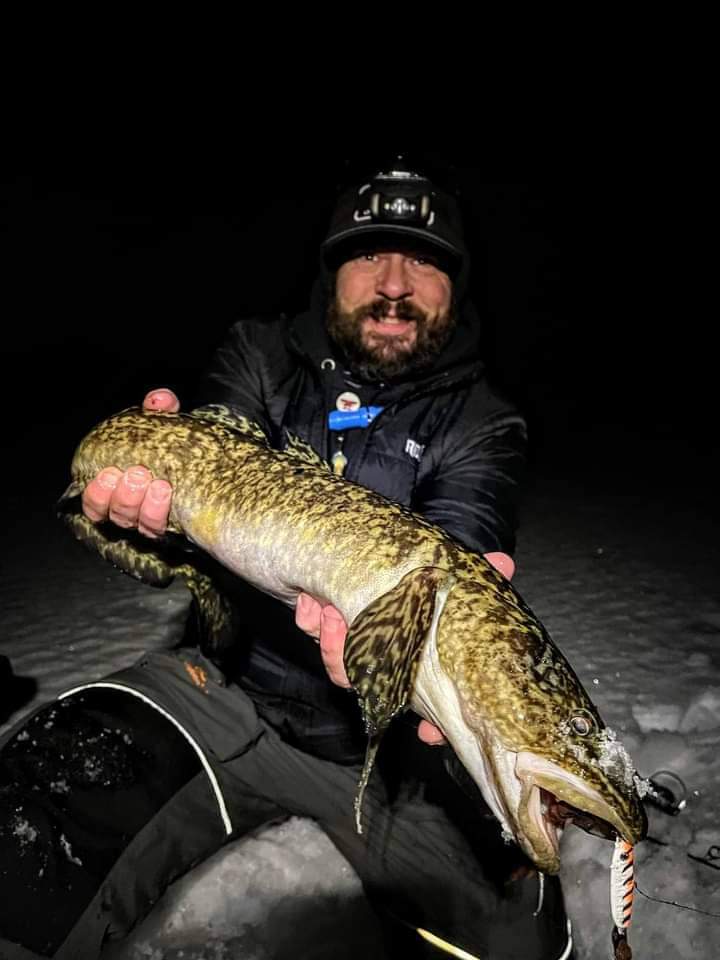
While ice fishing for burbot can be challenging, it is also incredibly rewarding. With their bottom-dwelling tendencies and nocturnal habits, catching burbot requires specialized techniques and a solid understanding of their behavior. In this article, we will explore the best strategies, gear, and tactics to help land this slippery catch beneath the ice.
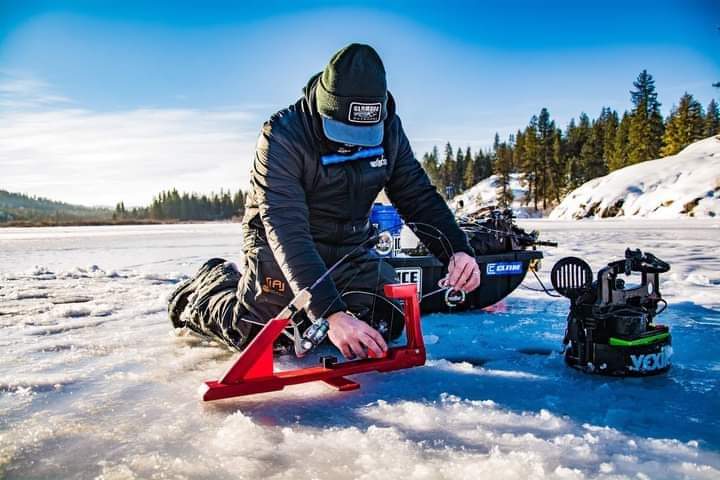
Understanding Burbot: Behavior and Habitat
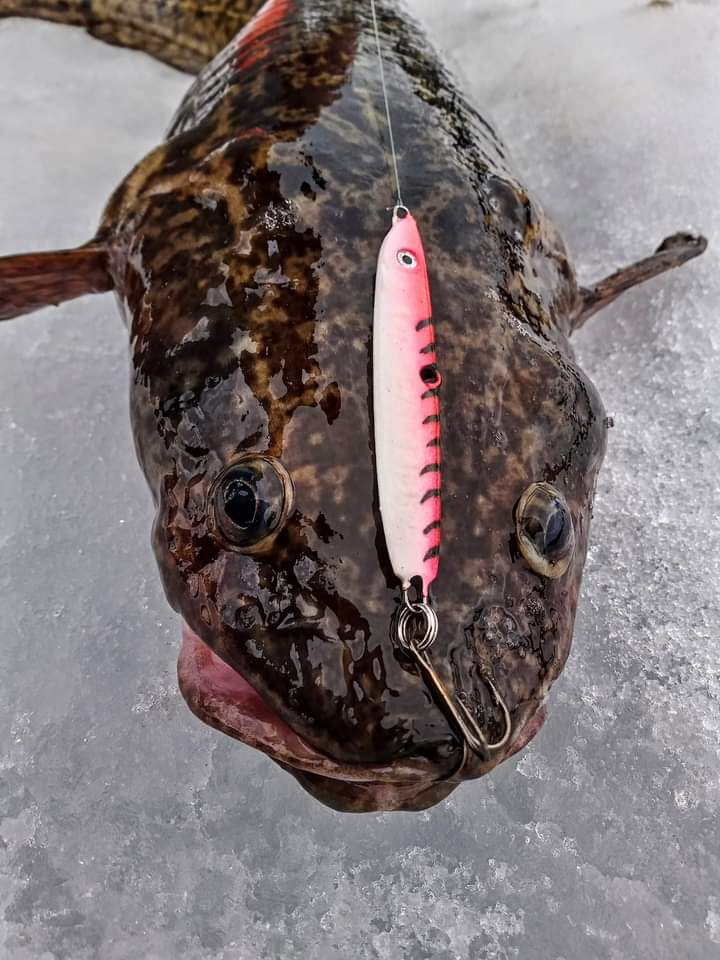
Burbot (LotaLota) is a unique species, the only member of the cod family found in freshwater. They are typically found in cold, deep lakes and rivers across North America. During the winter months, burbot are active as they prepare for their spawning season, making them a prime target for ice fishing. Burbot are known for their nocturnal behavior, being mostly active during the late evening and early morning hours. They prefer to linger near the bottom of lakes, often inhabiting rocky shorelines, deep basins, and steep drop-offs. Understanding these habits is crucial to developing an effective ice-fishing strategy.
One key element to burbot fishing is their winter spawning season, which typically occurs from mid-January to early March. During this time, burbot move into shallow waters, congregating in large numbers over sandy, or gravelly bottoms chasing crawdads. This makes them a little easier to catch and increases the chances of being successful.
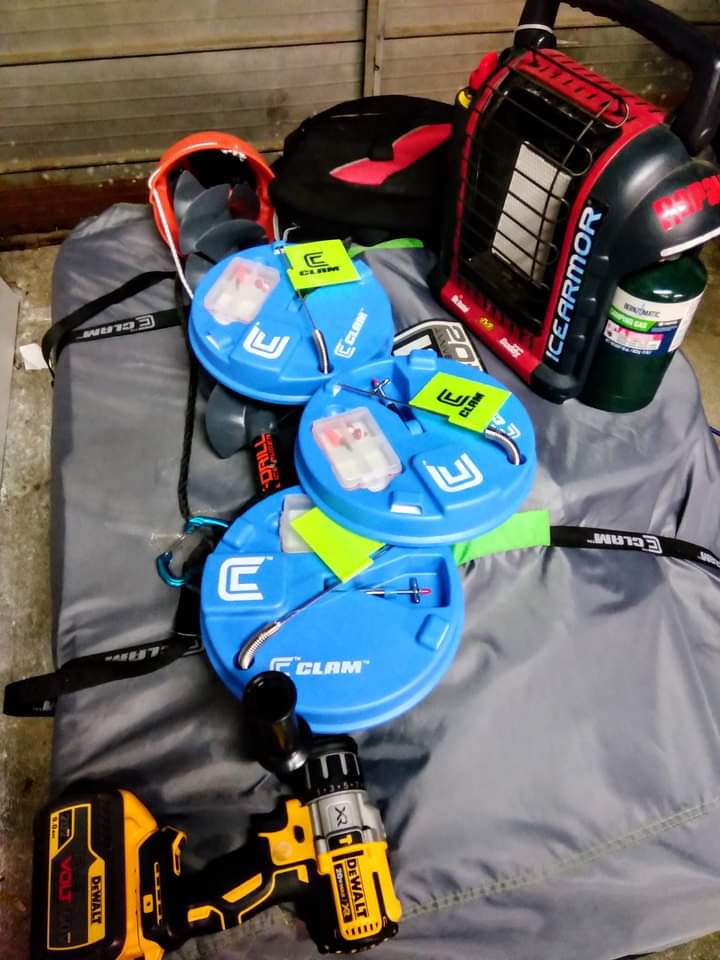
Essential Ice Fishing Gear for Burbot
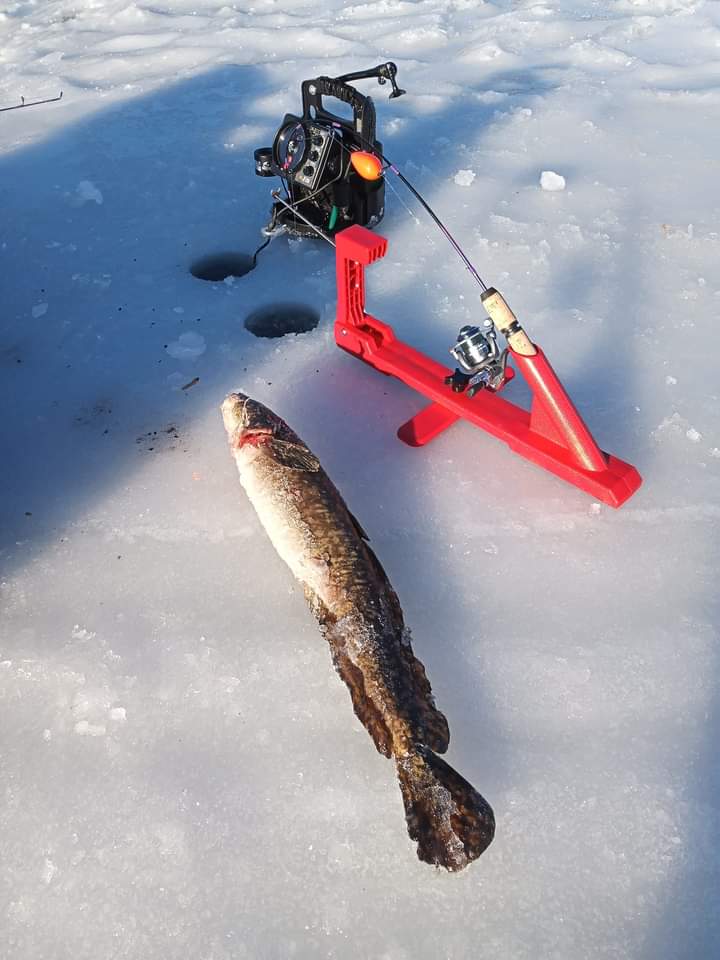
Ice fishing for burbot requires the right gear and equipment. While basic ice fishing gear will suffice, certain adjustments and tools can improve your chances of success. Let's take a closer look at what you will need.
Rods and Reels.
When targeting burbot, a sturdy medium-heavy ice rod paired with a reel capable of handling heavy fish is recommended. Since burbot are bottom dwellers and tend to put up a strong fight once hooked, a rod with good sensitivity and backbone is crucial. A rod in the 28-36 inches in range is ideal, allowing enough flexibility to feel them pick the bait up, but enough strength to handle a large fish.
Line.
Braided line is preferred by many burbot anglers due to its strength and low stretch, which is useful for detecting subtle bites on the bottom. A 10-15lb line is plenty, but braid will freeze in the cold as it absorbs water. Some anglers opt for a lighter line in a clearwater situation, to minimize visibility. Like braids, fluorocarbon has low stretch, helping with hooksets in deep water.
Jigs and Lures.
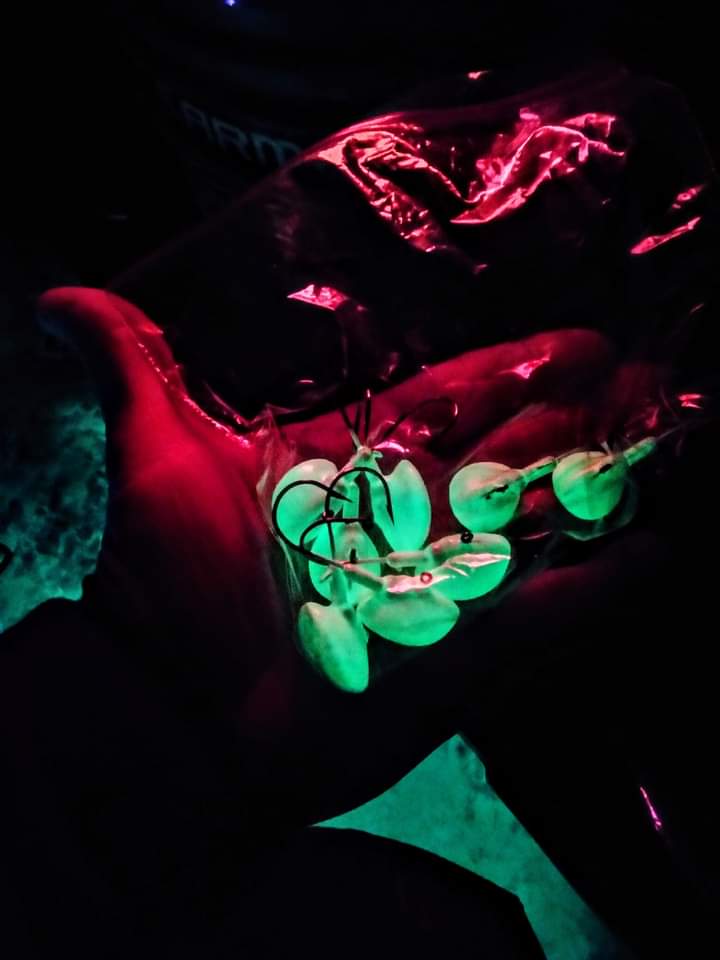
Burbot are opportunistic feeders, and their diet consists mainly of smaller fish, invertebrates, and of course, crawfish. Therefore, using a variety of baited jigs and spoons is a proven strategy. Glow-in-the-dark lures are especially effective, as burbot are often most active in low-light conditions.
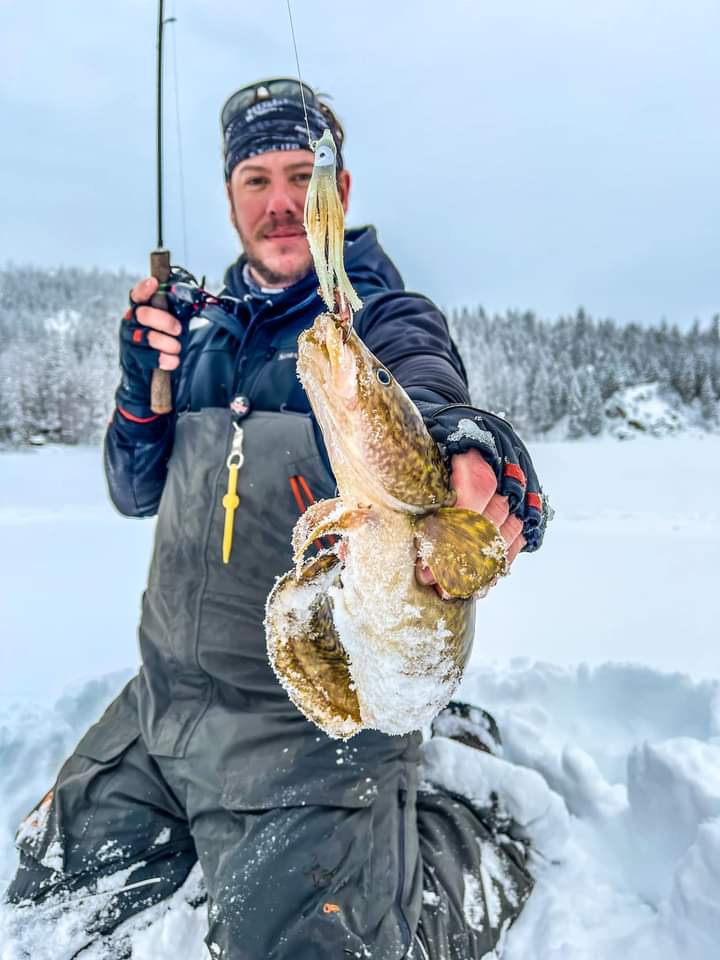
Some popular jigging lures for burbot include:
- Glow Jigs and Spoons: These lures provide maximum visibility in the dark, deep waters where burbot often reside. Tip them with cut bait, or a curly tail grub, and pound the bottom.
- Bucktail Jigs: Heavy Bucktail jigs, especially those with glow can mimic small baitfish, drawing the burbot's attention. Or the material of the jig holding a scent longer if used.
- Blade Baits: These produce vibrations that catch the attention of the burbot in deeper water where sound travels more effectively, typically tipped with cut bait.
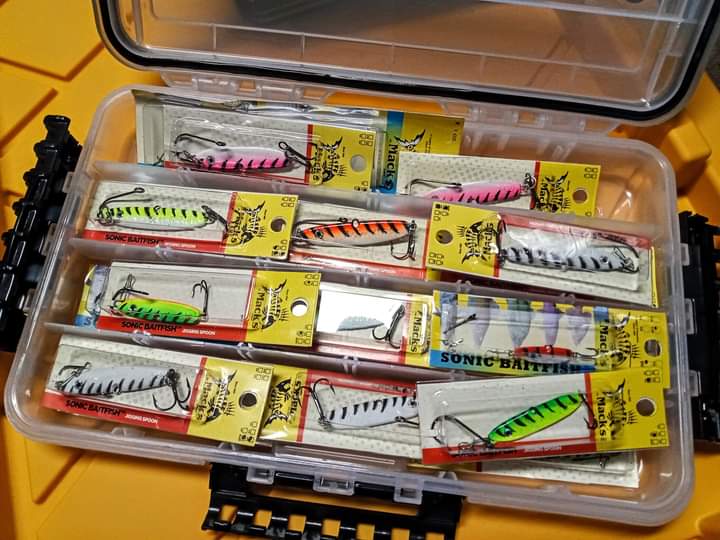
- Mack's Lure, Sonic Baitfish: My favorite burbot lure is the Sonic Baitfish from Mack's Lures. Glow finish tipped with my favorite cut bait is dynamite. The lure itself is so versatile in shallow and deep water.
Bait:
While artificial lures are useful, tipping your presentation with natural bait is essential for burbot fishing. Cutbait such as store-bought smelt, or herring work, I recommend using fresh cut bait from the body of water with your fishing if state law approves. In the lakes we fish, we use many baits from the lakes themselves such as chubs, bluegill, crawfish, etc. The natural scent of the bait and the appeal of your jig will help entice burbot lurking on the bottom.
Key Spots to Target Burbot:
- -Rocky Structure: Burbot love rocky bottoms, especially areas with boulders surrounded by large areas of cobblestone-sized rocks. This is where they are constantly feeding and chasing the crawdads.
- -Deep Basins and Deep Drop-offs: These fish often patrol deep basins and steep underwater drop-offs, looking for food. Check your depth maps and focus on areas where the depth changes rapidly near the rocky flats.
- -Mouths of Rivers and Streams: Burbot are often found at the mouths of rivers or inlets, such as streams or creeks that dump into many lakes. This is where they can hunt small fish moving in and out of the main system, with a flow of fresh cool water to lay in.
Drilling multiple holes in different locations, along the structure, to drop-offs. I like to start deep during the day and drill holes shallower as the day begins to fade away. As it gets dark, the burbot tends to follow the crawfish to shallow waters. Using a sonar or flasher will help you detect burbot holding on the bottom and adjust your presentation accordingly.
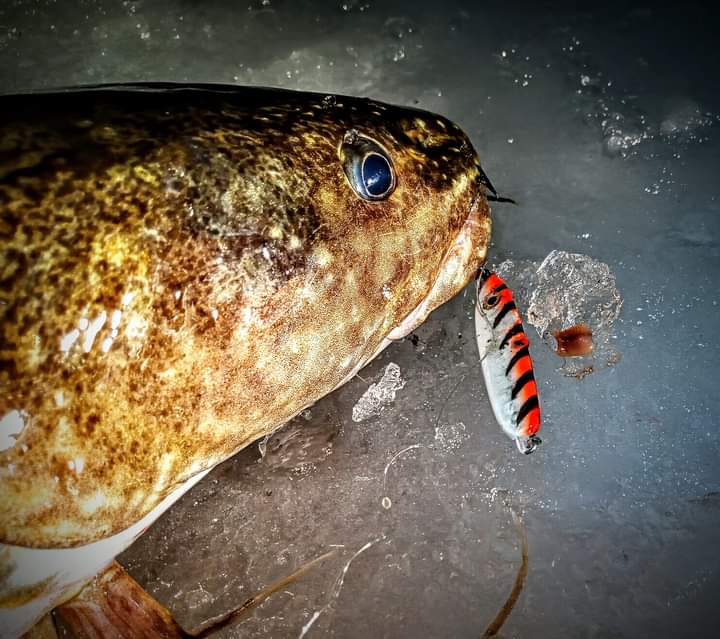
Burbot Ice Fishing Techniques
- 1. Dead sticking - One of the most effective ways to catch burbot is dead sticking. This involves dropping a baited spoon or jig to the bottom, giving it minimal movement, and letting it sit still. Burbot being scavengers are attracted to the scent of bait and will often bite without hesitation. Periodically lift the rod tip to create small movements to trigger a bite. Dead sticking is great for the lakes that allow a two-pole endorsement, as you can get the best of both worlds.
- 2. Active Jigging - While dead sticking works well, actively jigging a two-pole endorsement does just as well.
Conservation and Ethical Considerations
When targeting burbot, it's important to understand and practice ethical fishing and conservation techniques. While burbot populations are generally healthy, overfishing during the spawning season can harm local populations. Check your regs for and rules or regs on the lakes you're planning on fishing, most local lakes have the same regs. Practicing catch and release on the larger, breeding fish can help sustainable fishery for future generations.
Ice fishing for burbot may not be as popular or glamorous as chasing other winter species like lake trout, pike, walleye, or big trout, but it offers a unique and rewarding challenge. By understanding the behavior and patterns of these nocturnal fish, using the right gear, and applying proven techniques, you can increase your chance for success. Whether you're dead sticking with a baited hook, actively jigging at night, or setting a minefield of tip-ups over a rock flat, chasing burbot under the ice can be an exciting and fulfilling adventure this winter.
So grab your gear, bundle up, and head out to the frozen lakes in pursuit of these bottom-dwelling predators. You may just find yourself hooked on fishing for the “poor man's lobster.”
/articles/chasing-elusive-burbot-guide-ice-fishing-techniques
Hoodsport Chum
Editor’s Note – this article was first published in November 2019.
For salmon anglers in the Pacific Northwest, November heralds the final transition from targeting open saltwater to focusing on tidewaters and rivers. Yes, there are some saltwater opportunities (for example, blackmouth, when open), but the vast majority of anglers have put away their boats and are pursuing salmon in the rivers. That said, there are some prime opportunities to target and catch salmon out of your fishing boats, so don’t button them up just yet!
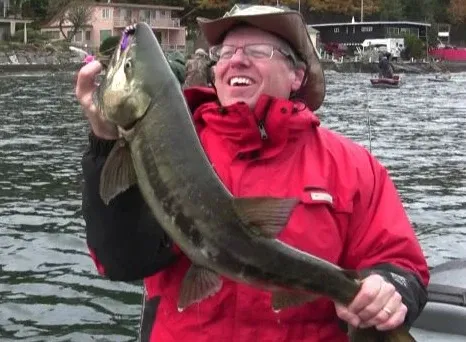
One of my favorite fisheries out of my boat in November has to be the Hoodsport chum fishery. The fight of a 10-15 pound chum ranks up there as one of the hardest fighting salmon you can catch. Taking on a chum with steelhead gear will give you all the battle you could ask for as these brutes slash and pull with every ounce of energy they have. One look at their fighting canine teeth and you’ll know this is a fish that is serious, very serious, about its reproducing goal.
All up and down Hood Canal you’ll find chum as they work their way toward their spawning grounds. The state hatchery at Hoodsport and three miles south of there at Potlatch (a smaller, Native American hatchery) are the destination for many of these chum as they work their way down Hood Canal.
I have caught fish in both locations, and each spot has reason to recommend it. Potlatch, being smaller, has limited shore angling and parking, which is roadside only. That said, there are also fewer anglers there. Hoodsport, meanwhile, is the Fishing Mecca that chum anglers are drawn to. Fishing right out in front of the hatchery and watching hundreds of fish jockey for position as the tide sweeps them into the small feeder creek leading to the hatchery is truly a sight to behold. Of course, along with the fish comes combat fishing in all its glory. As the tide comes in and fishing space decreases getting to know your neighbor takes on a whole new meaning.
If you’re a fortunate one you’ll be fishing out of a boat – or some type of floating device. The waters around Hoodsport are open and the wind can come up and blow hard, plus fast running tides can make it a challenge to get an anchor to set. Be sure to bring an anchor with some bite, and terminal chain so you’ll stick in the rocky bottom. I’ve seen anglers fishing out of all manner of floating devices on calm days, including single person pontoons and float tubes.
Be sure to have your life jackets on and just don’t venture too far off shore. If you are feeling anxious that’s your inner voice telling you a fish isn’t worth your life – pay attention to it!
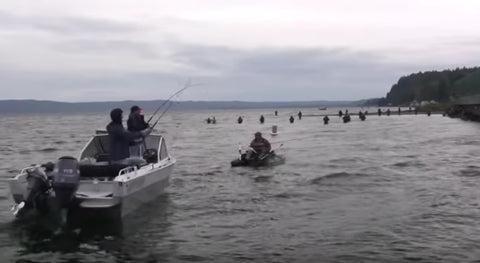
For boaters, the launch is two miles south of Hoodsport at the Skokomish Park at Potlatch. The launch has two concrete lanes which are in varying state of repair (read that as back down with caution!). There is ample parking, and a restroom. Once launched it’s a quick run to either terminal hatchery, faster to the small Potlatch facility.
When you arrive, survey the already anchor boats, taking into account the amount of anchor line you’ll need to get a solid grip on the bottom, as well as the shore anglers. Anchoring too close to the shore bound anglers will earn you a steady rain of lures and weights at your boat. Stay outside their casting zone - you’ll have plenty of water to work over and opportunities to catch fish the shore anglers don’t have.
As to the type of gear you should bring… you’re going to enjoy a variety of methods to catch these Hoodsport chum. Like chum everywhere, chartreuse and green are always great colors to choose. Pink or cerise is also good color choices.
For rod/reel setups I use my steelhead gear, both spinning reels and casting will get the job done. I like an 8 ½ foot medium action rod. Line should be strong enough to turn these big brutes so as to avoid massive tangle ups with your fellow anglers. I like 18-20 pound test. Chums are not leader shy in my experience so keep things hefty.
What technique you use is up to you but here are a few tried and true methods:
Floats and jigs , or floats and corkies with yarn can be deadly. A ¼ or 3/8-ounce pink, black or purple marabou jig fished under a float is deadly. Tipped with a piece of shrimp meat or coon shrimp tail is even better. The yarn is a nice trick as it helps by getting caught up in the chums teeth, allow you to drive the hook home. Other bait you can put under a float includes the ever popular anchovy or herring, whole or plug cut.
Think of the tide as the river current. Set your depth for the lure so it’s running a foot or so off the bottom. Vary the depth if you aren’t getting bites. These fish will hit suspended jigs. Cast “upstream”, i.e. up into the tide, and let your gear drift down with the tide to the end of the “drift”. If the coast is clear, free spool your line, keeping the float straight up and down to extend the drift. When the float goes under set the hook and be ready to do battle!
Twitching jigs – ditch the float and cast the jig on its own. Another effective technique, but be prepared for a lot of foul-hooked chum. Dragging a chum in by the tail is not fun, nor is it sporting to be snagging fish. If you find yourself foul hooking too many fish move on to a different method…
Casting spinners. Again, it’s a solid technique to try if the action is slow. I personally would remove the treble hook and use a single si-wash hook. A number 3 or 4 blade fished with a slow retrieve is just the ticket.
Corkie, yarn, and slinky. I personally have caught a lot of fish using this method and seldom snag fish. Again, think of the tide as a river. Cast out and let your gear drift. You’ll know you have a bite because your rod will be about ripped out of your hands. I use a 3-4 foot leader length.
Regarding the above technique, I’m sure I’m going to get comments about flossing – I personally think it’s a bunch of malarkey. Why do I say that? Because I remember a day years ago fishing Hoodsport when the chum were in thick, jumping all around us, swimming by in schools of 10-20 fish. I had my corkie/yarn/slinky set up going, casting, retrieving, and not getting a bump for a good hour.
Suddenly, the bite magically turned on and my gear started getting bit. In came fish after fish, hooked in the jaw. Explain to me how one can have a steady procession of fish go by with mouths open for a good hour and not “floss” one fish, then suddenly start catching one jaw hooked fish after another? And trust me when I say this, those hook-ups were solid strikes, not to be mistaken with a snagging sensation. Anyway, the flossing debate is one we anglers love to engage in every year and likely will do so as long as we fish corkies.
The fly fishermen do quite well at Hoodsport as well, fishing sinking tips and flies of various styles and colors. I’m not a fly guy but it sure does look like fun. Maybe my next trip I’ll give it a try.
Before you set out, be sure to check the Hoodsport netting line at 360-877-5222. Typically the nets go in on Tuesdays and Thursdays, but this is not set in stone. There’s nothing worse than driving a hundred miles only to find nets spread in every direction. So save yourself that aggravation before you set out.
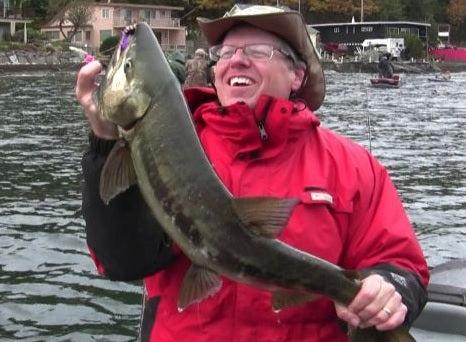
Fishing for hard fighting chum is a blast. Get in on the action this November!
/articles/hoodsport-chum-0
In Search of the Perfect Storm
Snow ain't good enough. Rain is better. The kind of rain that starts about 8:00 in the morning and melts the snow and upwells the river. It's going to be hard to catch a fish, but I only need to catch one.
Two other vehicles in the parking lot. Two other fishermen. Singles, I guessed, reading the tracks in the snow. I sat on the tailgate of the F-150, tightened my bootlaces, and decided to start downstream like a proper fisherman and work my way up. It was Super Bowl Sunday, one of my favorite days of the year.
As I walked down to the river, one of the anglers picked up his net and began the walk back toward the parking area. This was better.
Using a large pine tree as cover, I looked in the water with the glare glasses and saw trout. Noses in the current, but not active. No bugs on the surface either. And as I watched upstream, nothing rose.
At first, I tumbled nymphs to them, high-sticking, watching for the white of a mouth or a rainbow flash in the braided current. I suspected the fluoro leader was not working for me in the clear water. But I hesitate to fish 6X or (shudder) 7X because these bigger fish are likely to break off on the second jump. And besides, the tracks in the snow indicated there had been at least half a dozen anglers here before me.
Upstream there were tails visible beneath a downed tree and I flirted with disaster, drifting nymphs to the otherwise hidden trout in the branches.
Working up, casting bead-head wets, and tumbling them back through the regular slots did not pay off with a take. Now as the sun began to go off the water, it was harder to see into the regular slots and now the snow crunched under my boots as the temperature began to drop.
Where there once were willows to hide behind, I scouted the shallows and ran through channeled lava flows. A few trout here, but their body language reads the same way. If I could see them, they could see me.
Time to change tactics. The beadheads went back in the box and I trimmed the nine-foot leader down to seven feet, trimming the 5X tippet back to 4X.
This next run was best fished by wading in, but this time I would cast a streamer. I knotted on a root beer brown mohair leech.
Here, the water splits around a few boulders and drops fast down a couple of short waterfalls. Trout feed in the shallows if there is a hatch, but hold along a ledge in the absence of surface activity. It's deeper water than most flyfishermen are comfortable fishing, and faster too. But this is where the biggest fish can exist unseen and untouched.
The first cast quartered up, midway across the run with an upstream mend. After a couple of seconds to let the current grab the fly and pull it down, I short-stripped twice and a fish slammed the fly.
It turned and streaked toward the log jam at the bottom of the run, and then turned back upstream to try to see the line on the lava edge. Extending my arm, I kept the line off the rocks and after a couple of minutes where the fish streaked up and down the run, I made the first stab with the net. For a second, the fish was in the net and then it was out again. Praying the 4X would hold it, I waited till its head was up and skated it with my right hand, netting it with my left, turning so the bag would close.
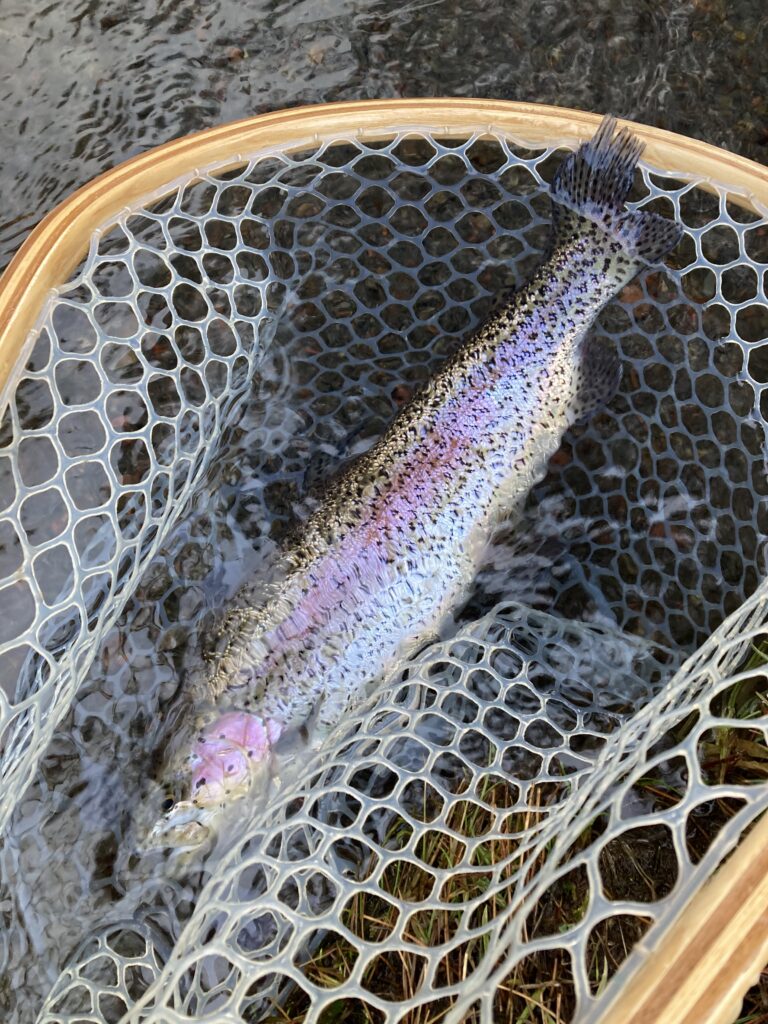
In hand, the fish was beat up. A hatchery survivor, its nose and tail frayed in the jungle of the hatchery raceway. Nineteen honest inches. Shaped like a football. And there and then in that moment, I noticed something else about it. If its head was off, it would fill my Camp Chef cast iron frying pan. So I kept it and cooked it for dinner that night with mayonnaise and angler's seasoning. And fried a half dozen prawns to go with it and proclaimed it a feast.
What I like best about football is it keeps people off the water. Same with a good rainstorm. In fact, where I live, the best scenario is the Seahawks are playing and there's a 70 percent chance of rain. Snow is not good enough. Lots of people around here fish in the snow, but fewer of them will fish in the rain. The only better thing would be if the Super Bowl coincided with Valentine's Day and a deluge. That would be the perfect storm.
# # #
For a copy of the Fishing Central Oregon book, send $29.99 to Gary Lewis Outdoors, PO Box 1364, Bend, OR 97709 To contact Gary Lewis, visit www.GaryLewisOutdoors.com
/articles/search-perfect-storm
My First Pheasant
This is not a fishing story, but it’s still pretty cool (if you’re into pheasants).
I got to spend three wonderful days of pheasant hunting with my son Matthew in the beautiful Montana outdoors, outside of Great Falls. We hunted on both public land and private farmland. The long weekend (Sat, Sun, Mon) had a mix of so-so weather to glorious weather, long and short hikes, a two-hour ordeal of Matt’s car being stuck in the mud, and hunting ranging from seeing no pheasant to Matt’s Brittany, Murphy flushing a dozen in one location. Besides getting to spend a lot of time with my son (the best part by far) this trip also featured my first ever pheasant!
Our weekend started off with a trap shooting season on Friday to warm up. I shot well and felt confident for the hunts to come. I’m learning that trap shooting is NOT the same as shooting at a live, flushed bird. But even so, it was a good start to the weekend.
Saturday morning dawned damp and cold. I was very grateful for my GHUnders base layer. They kept me warm in the morning and cool later in the day hiking. We hunted private land with one of Matt’s friends. Our guide for the morning was twelve-year-old Kale. I have to say, in Montana kids sure seem to be mature for their age, with a level of responsibility and confidence you don’t often see in kids on the West Coast.
Kale was a great guide for us. We covered various locations on their farm/ranch and I got to see Murphy in action. He’s still quite young, seven months, and is learning each trip. Even so, it was cool to watch him working prime holding spots and then seeing him get “birdy” and flush out pheasant. We had several hens and roosters flush but were unable to hit any. None the less, it was a good start to the weekend, giving us confidence we’d bag some birds this trip. After hunting in the morning with Kale we headed over to the Freezeout Lake hunting area and worked a large field.
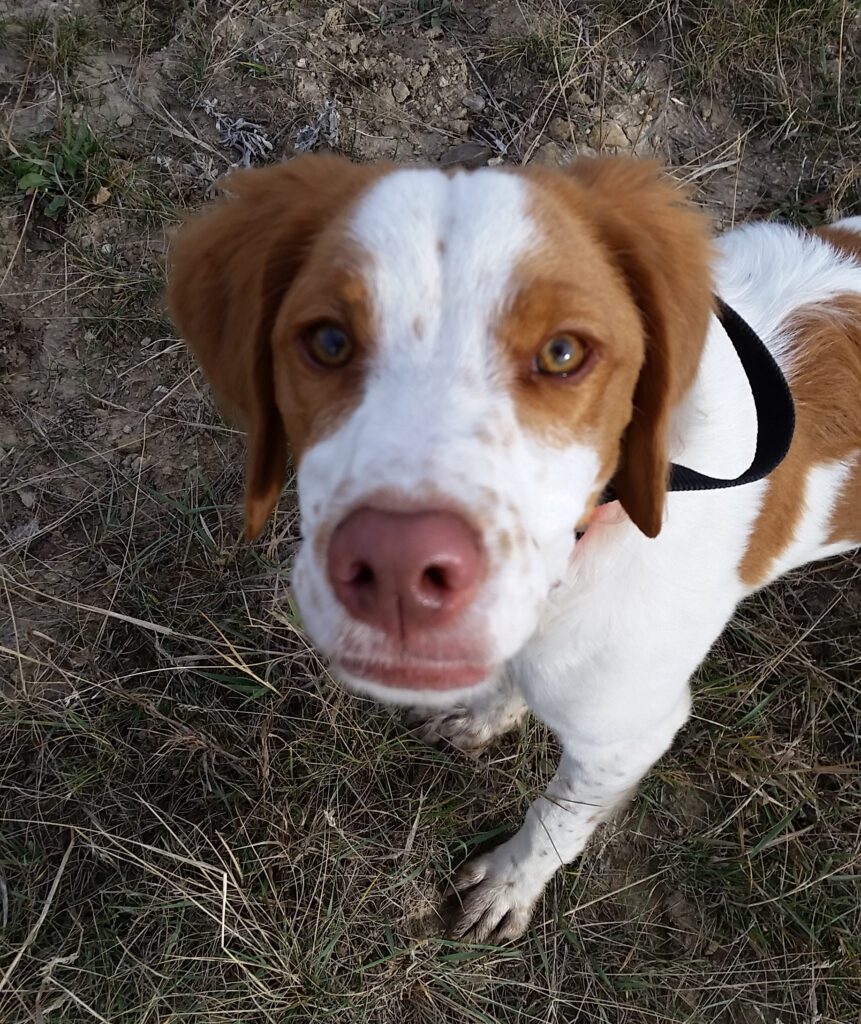
Murphy flushed out one rooster which was a bit of a long shot, and we weren’t able to bring him down. High point of the day – Murphy getting down on all fours, on his belly, totally stopped and looking at something in the brush. Me being a beginner I started walking toward Murphy telling him to keep moving when suddenly a rooster flushed up right in front of me! How I missed that bird I’ll never know. Oh, that’s right, I’m a beginner, only my second trip hunting pheasants.
The next day, the morning and early afternoon was spent watching the Seahawks football game. After that we drove to a nearby public land and hunted a very nice-looking stretch of land that Matt had success at earlier in the year, including a not so good flushing of a porcupine which poor Murphy had ended up at the vet to deal with quill removal. No porcupine this afternoon, nor pheasants. We were down to one last day to get our birds…
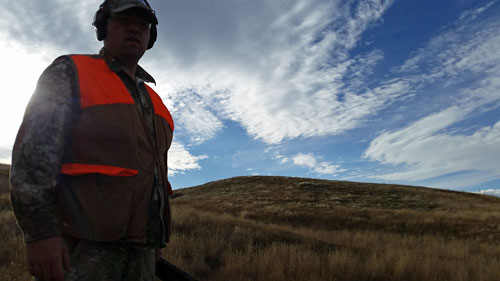
Monday morning. Rain during the night and the field roads were a bit muddier than we expected. Driving early and in the dark, we headed down a dirt road that was in reality a mud road. Much to our dismay we were stuck. Fortunately, there is always AAA, even in the Montana fields. In no time at all the tow truck came and pulled us out. The driver was amused and I’m sure he spotted us for non-natives. He did earn a nice tip for his efforts and off we went to check out another (non-muddy) location.
The farm we got to hunt had the best pheasant holding terrain I had ever seen with my neophyte eyes. A berm, 30 feet wide, 15 feet to the bottom, with marshy center and cattails providing thick cover looked to be ideal. Matt and I walked on opposite sides looking down as Murphy got right into the cover. We’d see him jump occasionally, cattails rustling. Then he’d be on the edges with that “birdy” look and sure enough, a hen or rooster would flush. We repeated this at least five times walking the quarter mile of this berm and missed five roosters. Now I could blame Murphy’s youth as several of those roosters got flushed far from us. I know Murphy will become more disciplined and not range so far ahead of us. I also know we will shoot better next time.
I’ll admit, we were frustrated after missing all those flushed birds. We decided to explore some other spots and give the location a rest, and return later.
We drove around, avoiding muddy roads and a repeat of the morning’s folly. One last effort at Freezeout Lake with no success and it was back to our private farm location to try the marshy berms again.
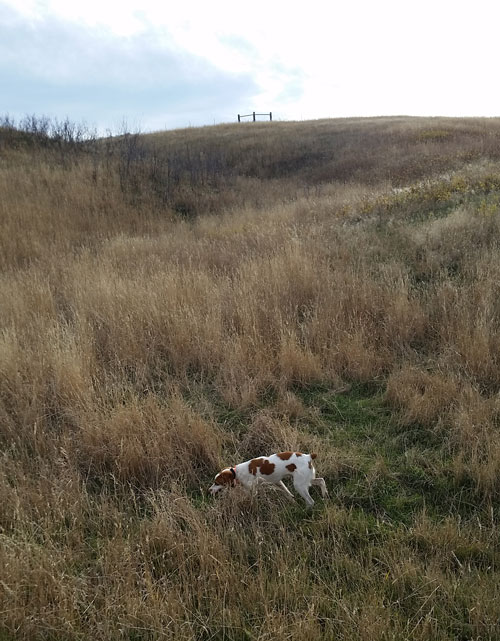
This time Murph was noticeably more tired and moving slower and steady. Or maybe he was just gaining experience as were Matt and me. Before we even had a chance to start a rooster flushed in front of us. Darn! The bird flushed on its own and farther down the berm. We continued, trying to keep ahead of the now (tired) Murphy.
Reaching the end of the property we turned around and headed back. Another rooster flushed up as we worked our way back and once again our aim was not good. I will be the first to admit, this hunting stuff is addicting - and challenging. It’s like fly fishing and trying to land your fly in a specific spot. It takes practice. The fact is, there are all kinds of parallels between hunting and fishing, including many of the standard fishing clichés we all know and love. “can’t catch em if your line isn’t in the water” translates to “can’t shot them if you aren’t hunting em”. I also couldn’t help but notice the “feast or famine” aspect. Some fields we’d get nothing, others a few, and this spot – wow, lots of action!
The sun was getting lower, and it was time to go. One last stretch of about a hundred yards of marsh left. Murphy, rutting in the marsh, getting birdy on us, and I’m ready. Will it be one last chance before the end of my pheasant trip? Suddenly, Murphy pushes forward and the cattails explode with the sound of wings flapping. The rooster is coming toward me as I’m ahead of Murphy. I have the perfect location and ample time to raise my gun to my shoulder. The bird is now just slightly below me and tracking away. It’s the perfect deflection shot of about 20 yards. I sight and pull the trigger of my 12-gauge Berretta Outlander.
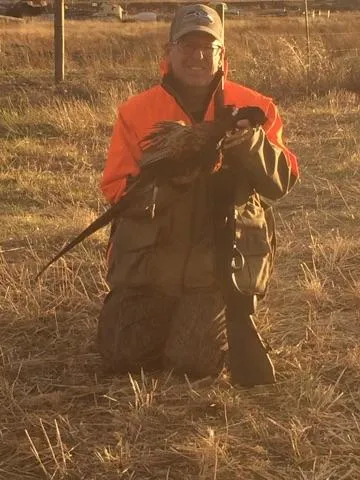
The bird drops in flight to the marsh below. Matt and I simultaneously let out an excited yell and then Matt tells me “Keep an eye where he landed, he may only be wounded and may be running”. Hey, that wasn’t in the program! I’m super excited about getting my first rooster and now I may not actually get to have him. No way! We secure our guns and descend into the cattails and start looking for my bird. Murphy is one step ahead of us though and quickly has the dead rooster firmly in his grip. The pheasant is a real beauty, with a 19" tail (Matt told me that was a good sized bird).
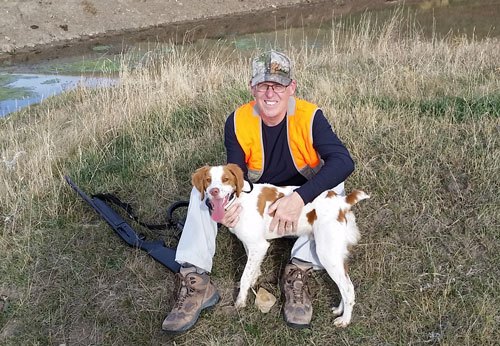
Matt and I sit down and enjoy the moment. A son’s joy at having guided his father to his first pheasant, and my joy at having shot my first pheasant are framed by the sinking sun, bathing us in a sunset never to leave our memories. The day is complete and the weekend a success beyond measure. It’s my first pheasant and a father and son bonding experience that is what life is all about.
Later, Matt showed me how to skin and clean a pheasant. I am again reminded how my son has grown into a man. I recall the past fishing trips where I have taught Matt various aspects of fishing. Now the son is teaching the father. Life comes full circle. I am blessed beyond words. And I look forward to my next opportunity to share the great Montana outdoors with Matt.
/articles/my-first-pheasant
The Big Comeback-Steelhead on the Upper Columbia
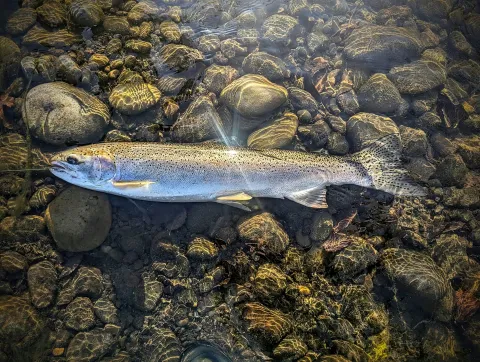
Oh, illusive and majestic Steelhead! One of Washington's most regulated fish is about to get its first opening in over a decade on the Methow River and portions of the Upper Columbia River. This is an unexpected announcement and one that will have excited anglers planning for the upcoming winter season.
Starting October 16th, 2024, you will have the opportunity to fish Steelhead on the Methow from the mouth to county road 1535 Burma Bridge Road. On the Columbia River, from the Beebe Bridge on Highway 97 to the Highway 173 Bridge at Brewster.
If you don’t have bank access or a boat, reach out to a seasoned professional like Upper Columbia Guide Service for the experience of a lifetime.
If you’re a fan of the fly-fishing experience try North Cascades Fly fishing, the longest-standing fly guide in the Methow Valley. Anglers of any age or experience are welcome to reserve their experience for floating, wading, and instructional experiences.
There are several affordable riverfront accommodations on the Methow and the Upper Columbia River. Highly rated Columbia Riverside Lodge and Lazy-Daze-Retreats work closely with local guides and have private dock access to the river.
Anglers can keep 2 hatchery Steelhead or Coho per day, identified by the clipped adipose fin. Steelhead minimum size is 20 inches, and Coho minimum is 12 inches. Wild Steelhead are to be released immediately. Selective gear rules and night closures are in effect. WAC 220-300-160(27) “Selective gear rules” means terminal fishing gear is limited to artificial flies with single-point barbless hooks or lures with single-point barbless hooks. Bait is prohibited.
Fishing from a floating device is prohibited from the second powerline crossing, one mile upstream from the first Highway 153 bridge.
Wild steelhead were listed endangered in 1997 under the Endangered Species Act and have been considered threatened since 2009, meaning that traditional recreational fishing is only allowed when there is an excess of returning hatchery Steelhead. Approximately 7,601 adults were counted over Priest Rapids Dam in 2023, and thus far in 2024, an estimated 9,336 adult fish have been counted. WDFW will continue to monitor the steelhead returns to determine if additional regions can be opened.
Steelhead populations in the Columbia River system have faced numerous challenges including habitat loss, dams, and changing ocean conditions. In response, local state and federal agencies, along with indigenous tribes and conservation groups have worked tirelessly to implement recovery plans. These efforts include habitat restoration, fish passage improvements at dams, and reducing bycatch in other fisheries.
This historic decision to reopen Steelhead fishing was made in consultation with NOAA fisheries to ensure wild steelhead populations remain protected while allowing recreational fishing for hatchery steelhead. For anglers, this is a moment to celebrate and continue advocating for the protection of this remarkable species.
/articles/big-comeback-steelhead-upper-columbia
The Last Ride
Boats are in my blood. From my early years as a young man, I have always had some type of floating vessel with which to explore (for me) uncharted waters. The curiosity of what lies around the next bend was as important as the fish that I was pursuing. Thankfully that curiosity has not diminished with the passing of the years. And now, in my third year living in Montana, the flame burns as bright as when I was younger.
To pursue my passion properly, years ago I realized that a one-boat family would just not cut it. My fleet gradually grew, one boat for saltwater and lake fishing, one boat for rivers, and one pontoon boat for peaceful floats. The diversity of boats allowed me to explore many of Washington’s lakes, rivers, and saltwater fisheries. I was (and am) truly blessed.
The Missouri River by Ulm is a slow-moving, deeper version of itself. A couple dozen miles upstream the trout fishing is renowned, and a day of catch and release for trout is generally the norm. But here the river slows, with deeper pockets that attract a more varied selection of finned pursuits to target. As the trout populations drop off, the warm water fish make their appearance. This is the river of pike, walleye, sturgeon, and catfish. To search out these noble warm water fish requires a different strategy. Drift boats are great for the Craig area trout, but from Cascade, downstream to Loma, and onward to the Missouri Breaks requires a boat that can safely navigate shallow runs, rocks, and sunken logs. A jet boat is the preferred vessel of choice.
I had given my first jet boat, a 15-foot Klamath, to my son Matt several years ago. It was a boat that saw much use on the Cowlitz, Skykomish, and Satsop Rivers of Washington where I targeted coho and steelhead. I loved skimming over the shallow runs, dodging rocks and log snags, and learning how to use the lack of a prop to my advantage as I “Tokyo Drifted” my way through narrow passages. More fun could not be had!
Back on the Missouri, Matt and I were fishing for pike, and I had just caught a nice 26” specimen. Don’t get me wrong, I enjoy fly-fishing for trout, but having a pike slam your lure in mid-retrieve has its place in my heart as well. While admiring my fish, Matt casually mentioned that he and his wife were looking to buy a house in Helena, and of course, would no longer need to store the boat with us in Great Falls – meaning – no more jet boat for me to use whenever I felt like it.
Later that night, lying in bed, I turned to my wife, JoAnn, and tentatively began a line of probing conversation.
“I sure had fun fishing with Matt today – fishing the Missouri with his boat opens up so much water close by to explore”. “You know”, I continued, “when they find a house he’ll be taking his boat. I won’t be able to fish the river around here.”
“What are you saying?”, she asked. After thirty-five years of marriage, I knew that she knew exactly what I was saying.
I plunged forward. “I could sure use a jet boat to fish around here. The Thunderjet is a prop boat and too big, and my raft is not the right boat for this part of the river. These waters need a riverboat.”
I watched for her reaction, and she responded, “well, I think you should get one then.”
What can I say? I’m a very lucky man! We had some money set aside and I immediately began my quest for a new boat. I had the criteria firmly in my head – river boat, capable of being handled by an aging angler. All that remained was working out the specifics.
With a solid green light from the only person that matters, I turned to today’s version of the want ads, Craig’s List and Facebook Market Place. I started my search criteria with a boat 14-18 feet long, made for the river, and a jet motor. My budget allowed me to consider solid boats that were ready to be re-motored. Bonuses would include a bow-mounted electric trolling motor and a fish finder. A double bonus would be something with oars that I could also use to back down slow drifts when the opportunity presented itself.
My list grew to around forty potential boats. I then paired my list with twenty or so of the best boats for my needs. A planned trip to Spokane allowed JoAnn and I to check out a few boats along the way, including test drives.
I quickly figured out that 14 feet would be too small, and 18 feet, while a great size for 3-4 anglers, would be too much for me to handle on my own as I get older. I needed something light enough that I could easily move it around and retrieve it on solo trips. That left 16 feet as the sweet spot.
When we arrived in Spokane, we went to check out The Elephant Boys’ selection of boats. They have an excellent assortment of boats on the premises to compare. The 18-foot Roughneck would be the perfect boat for me – ten years ago. Keeping in mind that a 66-year-old with his seventies loaming ever closer needed something lighter, my eyes fell on the Lowe lineup of jon boats.
For those of you not familiar with a jon boat, these fishing and hunting machines are designed for shallow and backwater travel. Anglers and duck hunters have used jon boats since the late 19th century, first originating in the Ozarks, where they were ideal for navigating the shallow waters of the Missouri Valley. With a flat bottom, a jon boat isn’t something you’d want to take on big water, but for smaller lakes and rivers they are ideal. Perfect for fishing on the Missouri River around Great Falls.
Jon boats can run from bare-bone set-ups with tiller steering to side or center counsels. They can have floors, or not. Storage – or not. In fact, a quick YouTube search revealed dozens of boaters had DIY videos on how to customize a basic jon boat into a tricked-out fishing machine. Finally, because jon boats have fewer “amenities” and lighter gauged hulls, they are easier to trail and move around. Heck, even a future seventy-year-old can launch and retrieve one!
“Finding what you’re looking for?” A friendly voice greeted me as I stared intently at a 16-foot jon boat with side counsel. “I’m Ed, can I answer any questions for you?” It turned out that I was being helped by the owner of Elephant Boys, Ed Conley.
“Well, yes, you can”, I replied.
I explained just what I was looking for and how I planned to use it. I noted that as nice as those Roughnecks were, they were just a bit more boat than I felt I could manage in the years to come. “My friends Mr. Ibuprofen and Mr. Tylenol are telling me to go lighter”, I joked.
“These jon boats are great for what you are looking for and will handle the river just fine. And I know what you mean about the aches of older age.” Ed laughed. “Another plus is they are at a good price point. Let me build out a boat for you and see what we can do.”

I had a solid idea of what I was looking so the “build-out” process was quick and easy. Ed took the list and went back to his desk to add everything up. A short time later he returned. “Here you go,” he said. “This boat will be great for what you are looking for.” I was pleased to see the final cost landed well under my budget.
A handshake and deposit later, my boat began having all the components installed there in The Elephant Boys shop. A week later JoAnn and I returned and took possession of our new boat. Tyler, one of the service techs, gave us a walk-around and went over all the features, including the break-in schedule of the 35 HP Mercury jet. After grabbing some boating extras from the showroom, we were back on the road to Great Falls, new boat in tow.
The following week we put the boat in for some light-hearted fishing and scenery viewing. A short ten-minute drive to the Missouri River boat launch in Great Falls and JoAnn, myself, and our two dogs were enjoying a beautiful fall day with no other boats around us.
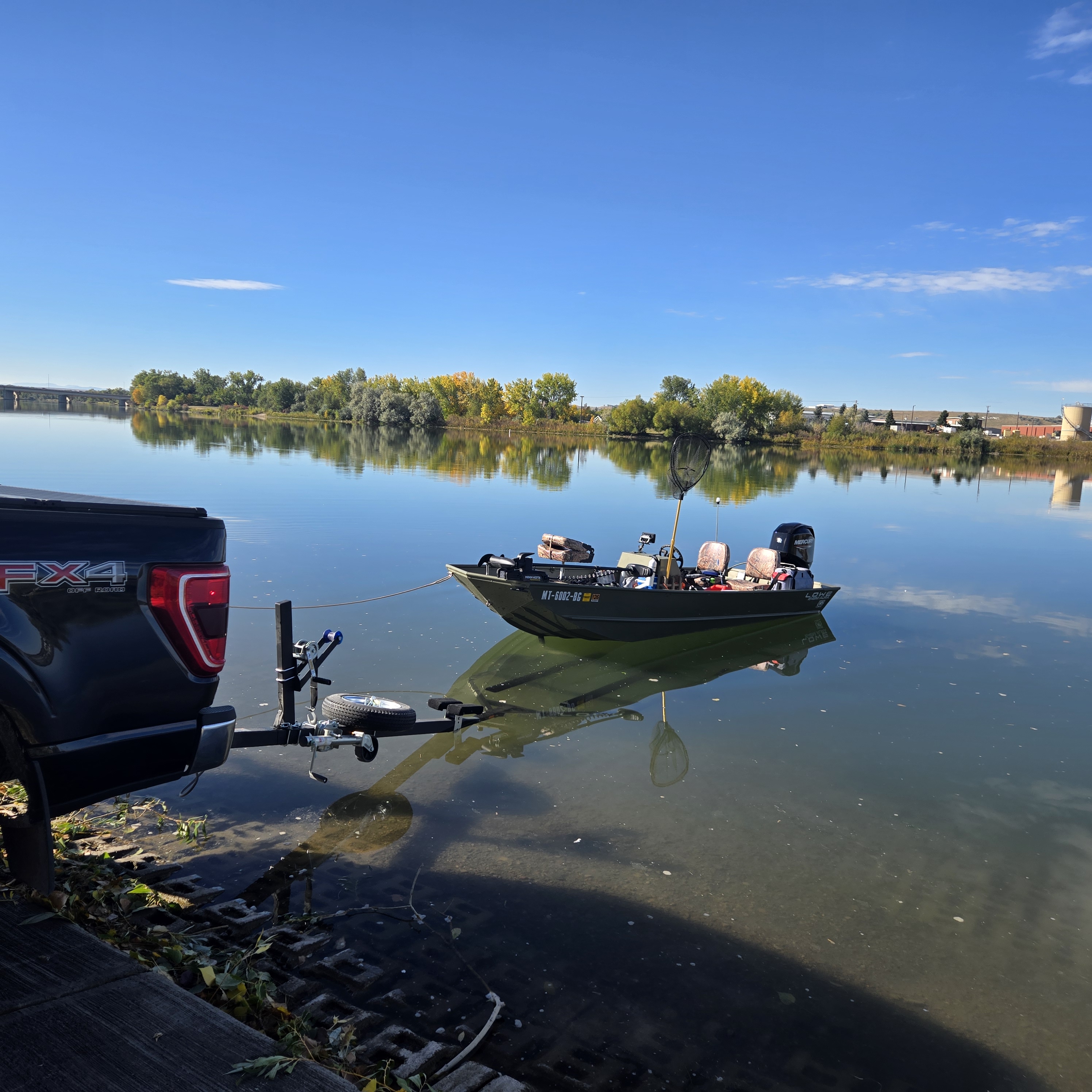
Finding a nice stretch of 6-10 foot deep water in slow current I lowered the Minn Kota and put us in anchor lock while baiting up the rods. Anchor lock is an awesome feature that keeps the boat in position, and it works in a river just fine! Game Changer Number One for fishing solo.
Dropping the bottom bouncers back about 30 feet I felt contact with the bottom. Into the rod holders they went, and we waited in anticipation for our first fish – which took just minutes as the port rod doubled back with a vicious hit. Reeling in a small pike, the boat was officially christened.
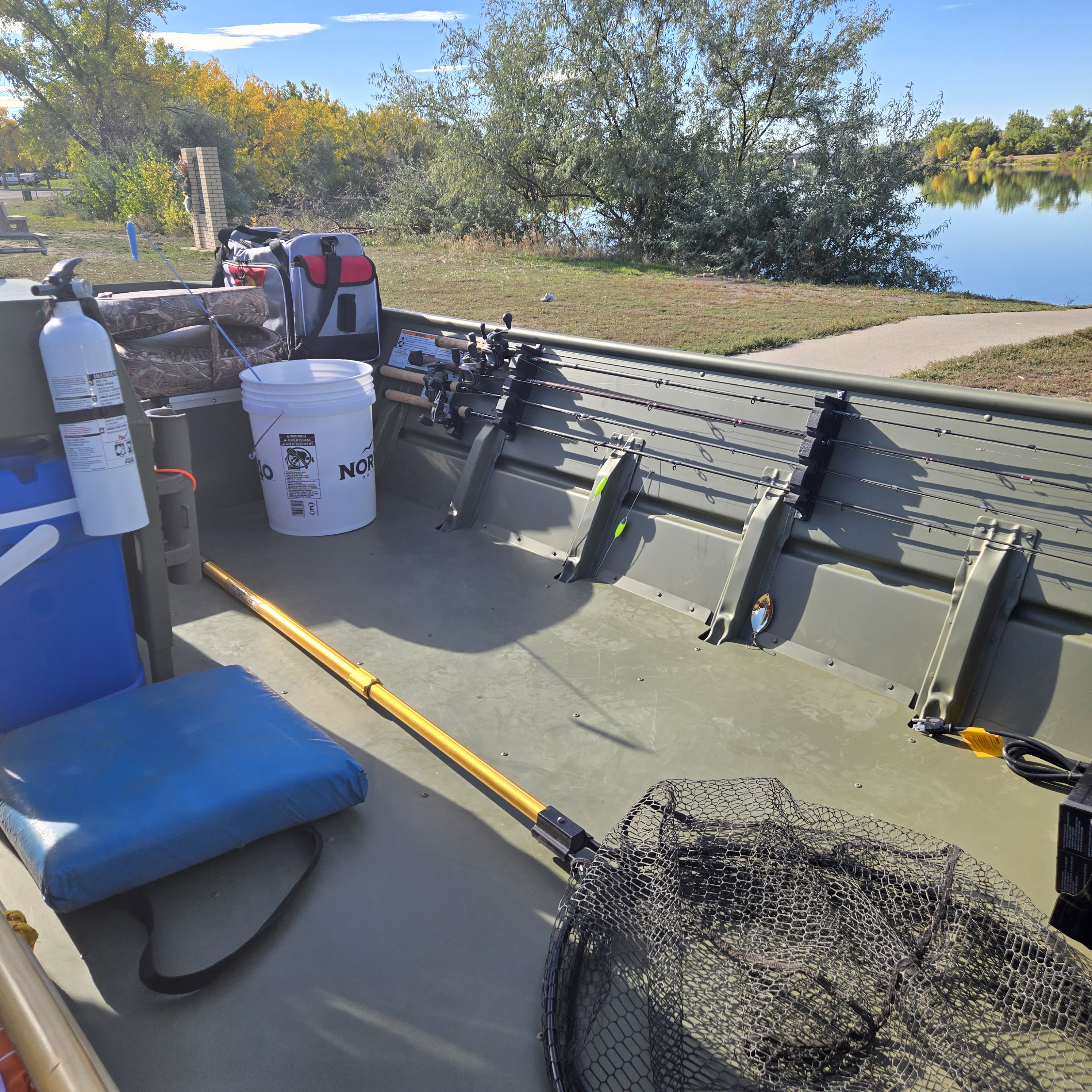
With the long straight stretch we were on, I hit the directional lock button, and the trolling motor kept us on a straight and steady course. No more fishtailing back and forth or oversteering, and again, hands-free boat operation made for a relaxing ride. Game Changer Number Two – direction lock.
The layout of the Lowe gives us plenty of room to stretch out. Even with two dogs moving around, barking at deer on the riverbank, the boat was solid and stable for both trolling and casting. Returning to the launch on a smooth plane, I looked over the side at 6 to 12-inch deep water; 27 mph was plenty fast for this guy!
Whether it’s your first boat or your last, it’s so important to know what you want to use it for and find the boat that does that job well. For us, this jon boat is going to offer many relaxing days in the years ahead fishing in our backyard. It was well worth the drive from Great Falls to Spokane to check out The Elephant Boys' boat selection. Thanks to Ed and the gang for a great buying experience on what will be the last ride I buy.
/articles/last-ride
Winterize, Seasonal Maintenance and A Plan
After what has proven to be an epic summer and fall fishing season, the last of our marine salmon fisheries are behind us. The general trout fishery just closed and you’re still struggling to find space in the freezer for one more vacuum-packed fillet. Now what, is it time to winterize? With the typical winter forecast of questionable seas, rainy and icy weekends, it may be time to pay little attention to your equipment.
I know you want to fish but don’t waste your energy bagging on the weatherman. Use the time and energy to get ready for next year’s adventures. Winterize the boat, spend some time with your gear to ensure that your gear is in tip-top condition, and work on your game plan for next season. It should be winterized even if you’re lucky enough to use your boat during the winter. The following information and ramblings will help you prepare for warmer times to come.
It is time to cover the boat, or if possible, store it under a roof (garage or carport). Snow is hard on boat canvas and freezing temperatures play havoc with any moisture that may collect in your boat. To that note, pull the plug and or drain anything on your boat that holds water. Make sure that you drain, blow out, or add RV antifreeze to any washdown or live well pumps. If you store your boat outside and are a seasonal user you have some work cut out for you. Garage-stored or year-round boaters are not off the hook here, and have a task or two to attend to as well. Now is the time to get at it.
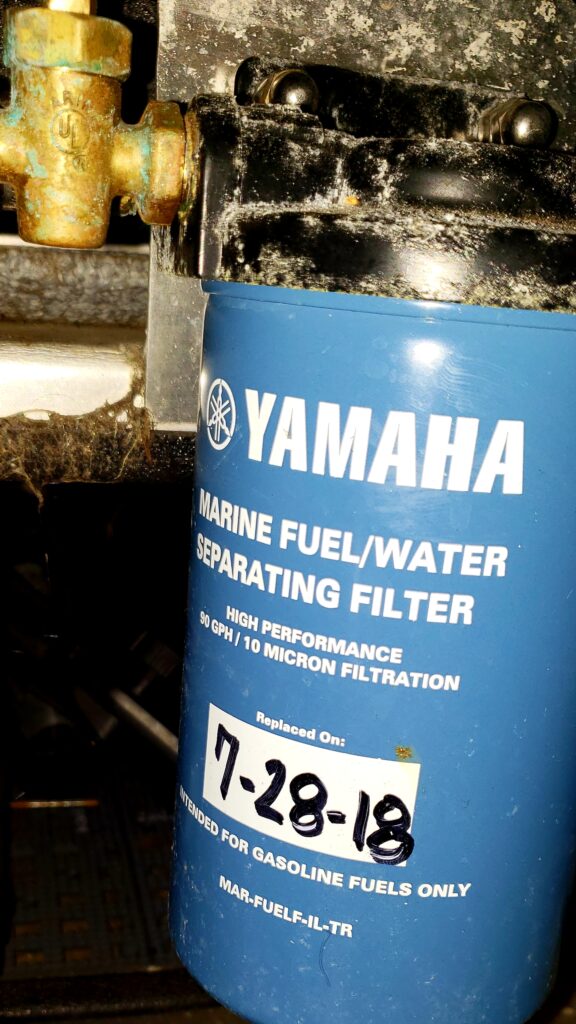
Aside from cleaning the boat and eliminating any standing water, the number 1 most important item on your winterization chores list is your fuel system. Check all fuel lines and fuel line fittings. Replace anything that is brittle, cracked, or otherwise damaged. Now is also the time to replace or drain as appropriate your fuel/water separator. Water trapped in the canister can freeze and crack the unit. If your boat is not equipped, it is a great time to install one.
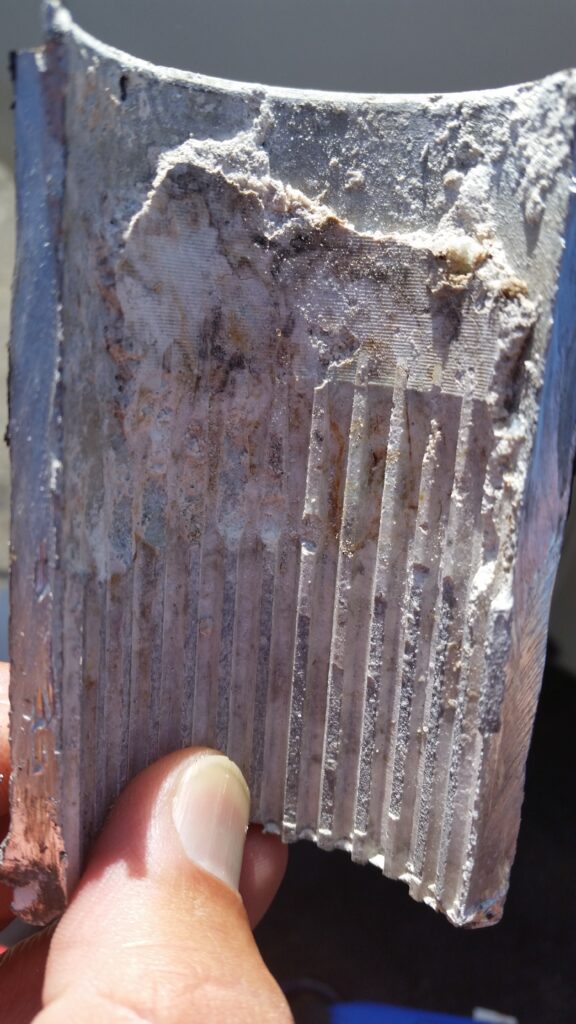
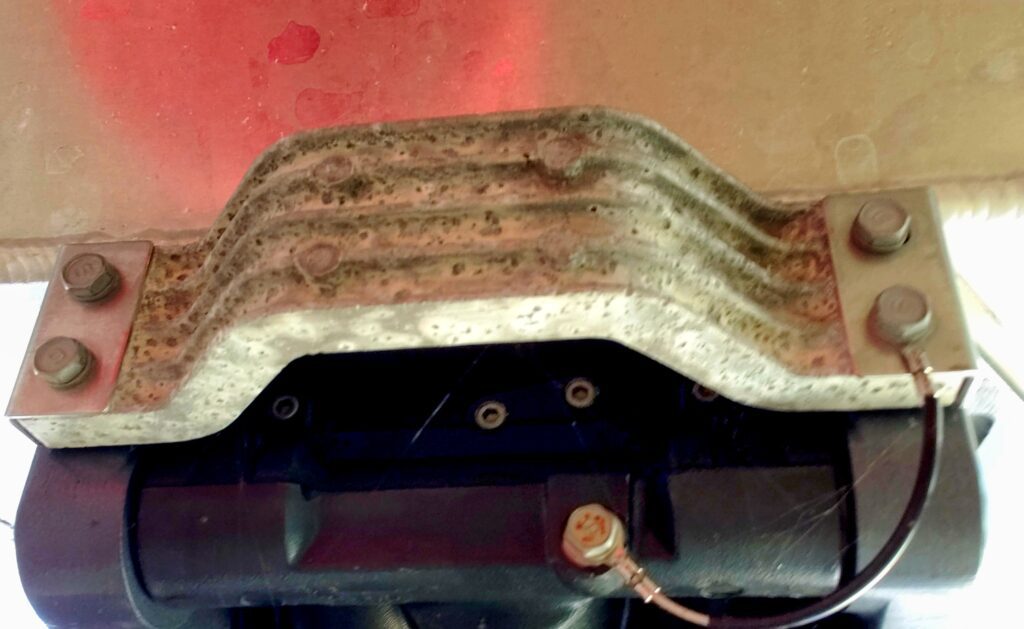
Look over your sacrificial anodes (zincs) and where equipped, the associated bonding jumpers. They should be inspected once a year. Replace if the anode(s) have lost half of their mass to corrosion. Generally, you can replace them with the same part number. But if in one year, more than 50% of the anode has been lost to corrosion or you are seeing excess corrosion on the protected equipment it is a good idea to increase the size of the anode or consult someone that specializes in boat corrosion protection.
You should add a fuel stabilizer with each fill-up. If you do not, make sure you add it before long-term storage. Add the stabilizer and then top off the tank. Check hydraulic fluid levels of any steering or power tilt/trim units. Use your motor manufacturers’ recommended products and do not top off or mix the various manufacturers' products.
Often overlooked, your winterization routine should include changing the lower unit oil. There are several reasons for doing this before the big freeze sets in. If there is any water in your lower unit it can freeze and damage the unit. It also gives you the opportunity to evaluate the condition of the lower unit. If the gear lube is milky a seal has been compromised.
The water can freeze and/or corrode the internal components which may result in major damage. Check the lower gear casing plug; it is magnetic and designed to collect metal shavings. A few shavings are OK, but if there is a Magic Rocks cityscape of shavings growing on the plug you have some level of gear failure brewing. It will need to be repaired before you put it back in service.
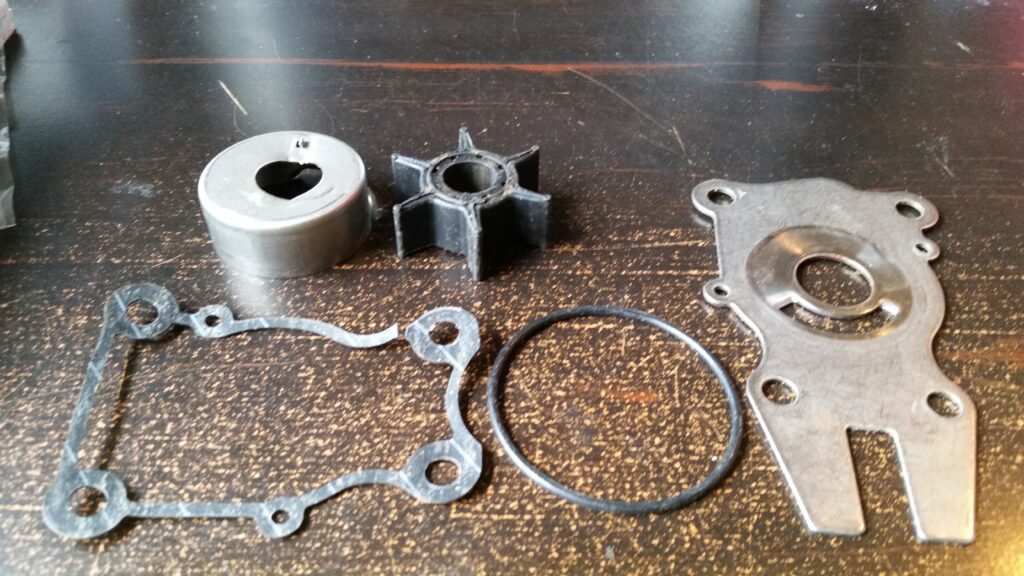
While we’re thinking about lower units, have you paid attention to your pee stream lately? No not that one, that’s a whole different article. Check your motor’s telltale pee stream. If it is weak or you haven’t changed the water pump in the last two years the components should be replaced.
Pull the propeller and check the shaft for fishing line or damage. Remember to lay all the nuts, washers, sleeves, or adaptors out in the same order they came off the shaft. Maybe even take a picture or two. This makes reassembly much easier. Take a look at the propeller, if the blade edges are showing an excessive number of nicks/dings, now might be the time to send it in to be rebuilt. Even slightly damaged blades will affect performance and running a boat with severely damaged blades can lead to all kinds of shaft/seal problems down the road. Using waterproof grease, generously grease the shaft before you reinstall the propeller.
A thorough inspection of your battery(s) and electrical system is especially important during your winterization process. Make sure each battery is topped off with distilled water then bring it up to full charge. A battery at full charge is less likely to freeze; in fact, a fully charged battery can withstand -58 degrees Fahrenheit before freezing. If you find corrosion on the terminals, remove the battery from the boat and clean it off with a mild solution of baking soda and water. Once everything is clean it is also a good idea to use one of the various corrosion guard offerings after reassembly. As long as you have 12 volts on the brain, you should also go through the rest of your electrical installation and look for loose connections, and damaged wiring. Check all the switches and breakers to make sure they are working correctly.
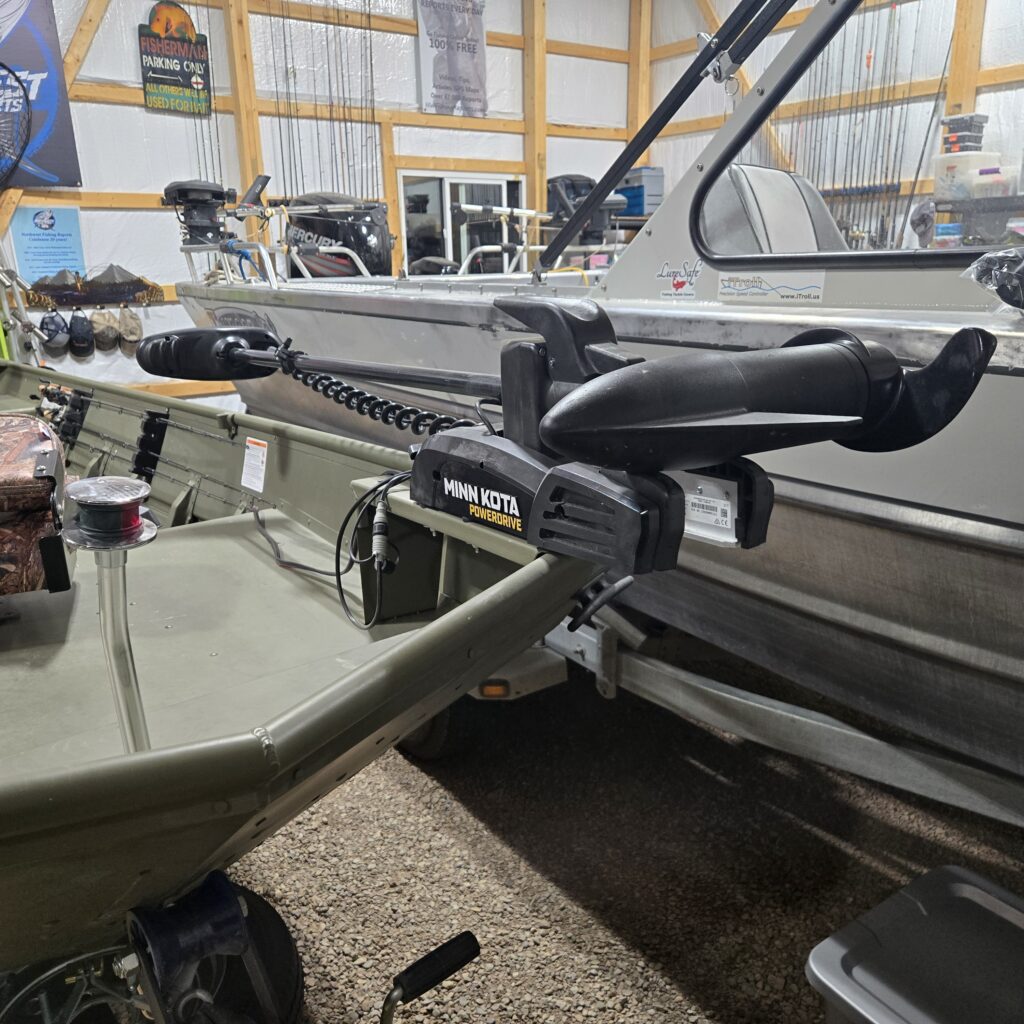
Don’t overlook your electric trolling motors and their electrical system. As with the boat batteries make sure the trolling motor batteries are fully charged. Pull the prop and remove any fishing line, hair-ties, balloon ribbons, and weeds that may have set up shop. Check the drive pin for damage and make sure that you have a spare onboard. Check all the mounting bolts and tighten them as required. Clean and lubricate per the manufacturer’s requirement. Check all your electrical connections and pull the batteries from any remote controls.
Give your trailer the once over: Check the trailer lights and trailer brake fluid levels. Also, check the tire pressure on all the tires including the spare. If you can, protect the tires from the sun. Assure that all bunks and or rollers are in good condition. Check your safety chain, winch strap, or cable and tie down straps and replace them if they are questionable. Check your lights and if they need replacement consider replacing with the waterproof LED lights.
Initially, they are more costly but with increased reliability, they will pay for themselves in no time. As an added safety benefit the LEDs are much brighter than the standard 12-volt incandescent lights. Now is also a good time to check your trailer bearings. If they are oil bath hubs check the fluid level and condition of the oil. If it is low, milky or appears to be foamy replace as required. If you’re running standard grease-packed hubs it would be a good time to repack them, better safe than sorry.
With the boat drained, fuel systems in good condition, all your hydraulic systems topped off, gear oil serviced, the electric trolling motor in tip-top shape, all things electrical are functioning as expected and the trailer serviceable there is one last thing to do. Unless your baby is stored in a heated garage raise the bow so all rainwater or snow melt drains out of the boat. Tilt the lower unit down so water will not collect in the lower unit, freeze, and damage the motor.
I know, all your rods are piled up safe and sound in the corner of the garage and everything worked fine the last few outings. Do you have nothing to worry about? Yes, now is the time to ensure all your gear is in good condition. Come along spring you don’t want to lose the fish of a lifetime because your favorite reel has a case of the herkie-jerkies.
Although with most reels it is easy enough to replace the drag washers, sometimes getting the replacement parts can be a challenge. I am a Shimano guy but I have to say they can be very slow in supporting part orders. There are a number of websites offering online reel parts but sometimes their stock is limited or on backorder. Now is the time to order parts, a delay in getting parts should have minimal impact on gear used next season.
When you disassemble your reels use Simple Green to thoroughly clean the reel components. Rinse and then dry the parts using the low setting on a blow-drier before reassembly. Once the parts are clean inspect everything, look for unusual wear, and replace anything suspect. Use the advanced synthetic lubricants and reel grease sparingly during the reassembly process. If you are running mono, replace it with new line. Take your reels to a high-volume tackle store like Holiday Sports in Burlington and have them bulk-fill your reels. Their line should be fresher and they will recycle your old line.
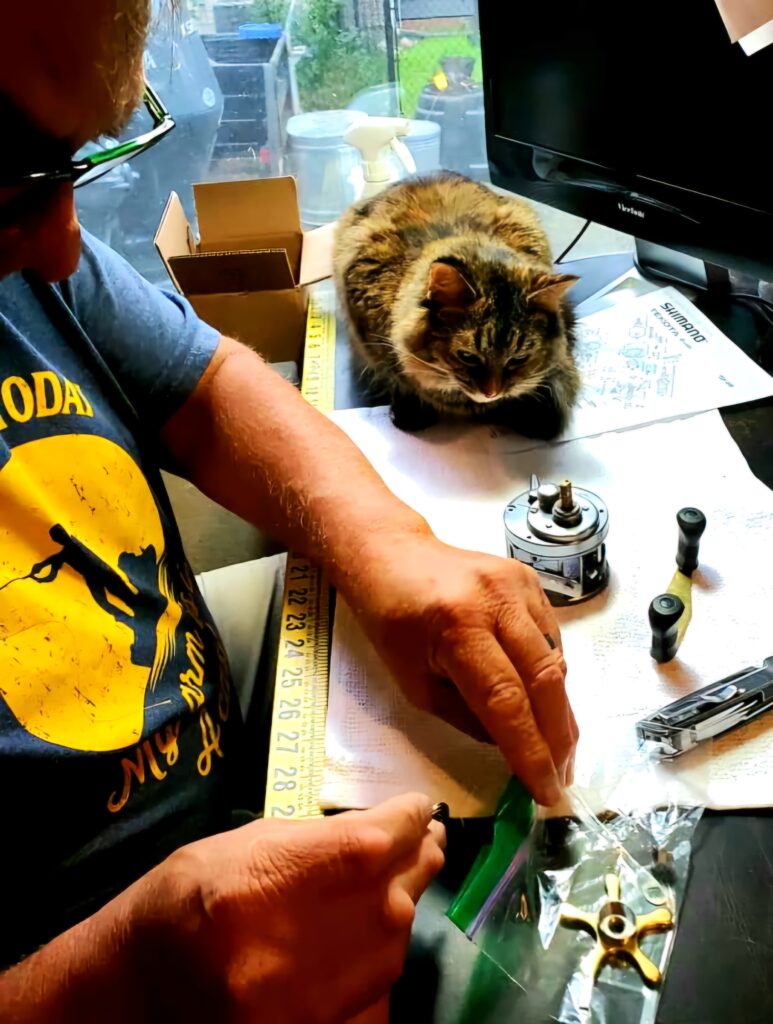
Also, give all your rods the once over. Make a point to verify that each line guide is not cracked or worn. You can use a cotton swab and swirl around in each guide. If the guide catches any cotton fibers the guide needs to be replaced. Years ago, I lost a bragging rights fish to a cracked guide insert. Make sure you check the reel seat and ferrules and then clean as required.
Whether or not you fish year-round, winter weather will leave you with a few idle days. Don’t let them go to waste. Assuming that you have already taken care of your winter maintenance routine, now is a great time to develop your game plan going forward.
In the salt, there will be a few winter salmon, flounder, and inshore opportunities. If you don’t fish for kokanee maybe it is time to learn to catch them. They offer a year-round opportunity to drag gear through the water, they are very tasty and offer great sport on light gear. Where many of the east side winter kokanee fisheries tend to hold up through the winter months, the west side kokanee lakes are a different story.
A few are year-round lakes but most of those become a challenge during the winter. East or west my recommendation is that you choose a Kokanee lake close to your home, somewhere where you can fish both on the weekend and as your schedule permits during the week. Don’t fret about the size of the fish or even the numbers; this will be your therapy lake.
A bit of work but your boat is now winterized. Your gear and equipment are dialed in and you have a “plan”. Hopefully, next season will be free from equipment issues, and if you do fish through the winter, may an occasional meal find its way into your cooler.
/articles/winterize-seasonal-maintenance-and-plan
Fall Trout Techniques
Conventional wisdom dictates that trout fishing usually slows down in the heat of the summer. Trout prefer cold water temperatures and go off the bite when the water gets too warm for comfort. Around October, water temperatures cool down and the bite starts to come back on. The fish have been feeding and growing since spring, so they're usually feistier and bigger. They're a ton of fun for kids and adults alike. Fall in the Pacific Northwest can be the best time of year to catch trout! Read on to learn how you can reach your limit on these tasty fall treats.
Trolling
Don't winterize the boat just yet! Now is the time to troll big spoons and spinners. The fish are looking to pack on some pounds before winter and are more likely to strike large presentations. Try trolling size 7 jointed Rapalas. Bold colors such as fire tiger and chartreuse are great in the fall. Now is the time to experiment with something different. This is my favorite time of year to use large trolling flies. That said, the usual techniques such as Mac's Wedding Rings paired with small dodgers and lake trolls will work very well.
I'd recommend trolling faster than you would in the spring or summer. The fish are more energetic and willing to chase down a lure. How deep you should set your lures is where things get less certain. Sometimes they're on the surface, and other days they’re in the mid-water column. This is where having a decent fish finder will be important. Be adaptable and always have a plan B!
Shore Fishing
No boat? Have no fear, fall trout cruise the shoreline and you have a good chance of bringing home your limit. Dough baits are always a reliable option, though not the most exciting way to fish. On 2 pole endorsement lakes, I like to soak dough bait with 1 rod and throw spinner or spoons with another. Fall trout are eager to bite on hardware!
Not all lakes have good shore access. Some have pay-to-fish docks, such as Lake Tanwax, Mineral Lake, and Clear Lake. It's a good idea to have a backup plan if the fish aren't biting at your lake of choice. Check the stocking reports and take a look to see if any of your local lakes have tagged fish in them. You can win cool prizes from WDFW for catching a tagged fish, and there are plenty still left.
Catch N Cook!
Once you've got your catch home, the fun part begins: cooking it! I learned how to smoke fish by smoking trout. You can smoke them fileted or butterflied. I prefer to smoke filets so I can fit more fish in the smoker but butterflying them is easy and less time consuming. You can make a dry or wet brine- I have recipes for both, depending on how I'm feeling.
Dry brines don't take nearly as long to work their magic, especially on small trout. Wet brines are more forgiving and allow for more flavor options. Smoked trout works well in dips, pastas, and on bagels. Add maple syrup or honey about 30 minutes before taking it off the smoke for trout candy. I like to munch on my smoked trout candy as a high-protein snack while hiking and fishing in the fall.
Fall trout are also good baked, fried, and grilled. I like to use the seasoned fish fry from Winco's bulk section. Dip the fillets in a beaten egg, coat in the fish fry, then gently place in hot oil until golden brown. They're great dipped in sriracha mayo! For a healthier snack, try lightly oiling the fillets, then shaking some lemon pepper seasoning on. Bake at 350 degrees until fully cooked. You can also wrap whole trout in foil with some butter and garlic, then throw it in the oven or grill for an easy and delicious meal.
As you can see, fall trout are not only fun to catch, but delicious to grill and smoke. This is a great time to introduce kids to fishing! The weather isn't too hot and there's no need to be on the water at the crack of dawn. Shore fishermen and boat anglers alike have an excellent chance of coming home with limits of these aggressive, tough fish. We hope to see you out on the water this fall!
/articles/fall-trout-techniques
Chum Salmon Time
Here we go…Fall is upon us. The Sockeye have done their thing, Chinook have made their way into the rivers and are spawning, and the Coho are showing up until January in some places. Since it is an even year in the Pacific Northwest, we will not see a return of pink salmon this year. That leaves us with the fifth species of salmon, the Chum salmon.
Chum salmon, also known as dog salmon or keta salmon, is a species of anadromous salmon native to the coastal rivers of the North Pacific and the Beringian Arctic. The Chum is an often-overlooked species that is not targeted by recreational anglers quite like Chinook and Coho. The primary reason for this is that we don’t usually target or catch them in the salt, and they turn very quickly upon hitting the fresh water in our tributary rivers.
Since they are not great table fair unless caught at the perfect time, we tend to focus on the other species that remain edible after they have spent weeks or months in the freshwater. It is important to note that Chum are targeted in the salt water up and down the Pacific Coast, but they are talked about much less than their coveted cousins, the Chinook and Coho.
Chum salmon are typically commercially caught and marketed as canned or smoked products and exported to Asia and Europe. Their flesh tends to be lighter in color and oil content than other species of salmon, but its firmness and flavor, if caught fresh, make chum salmon pleasant table fair.
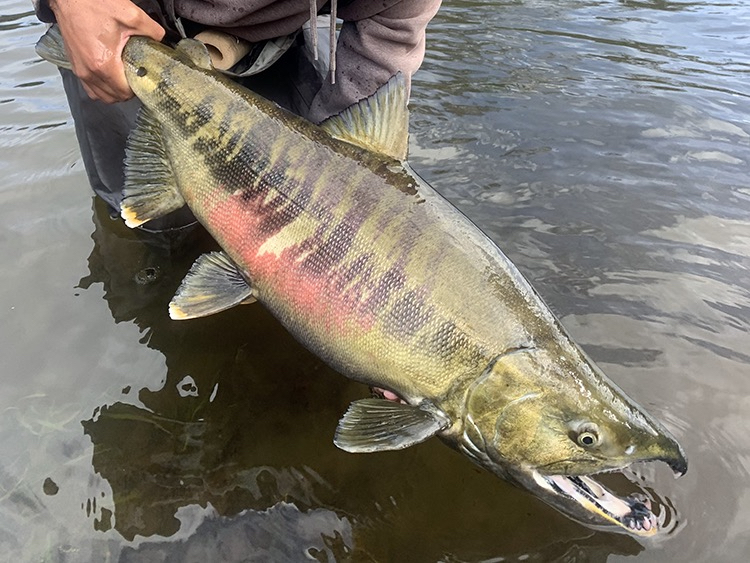
One thing to be said for the mighty Chum however is that pound for pound, they are one of the toughest and hardest fighting salmon species. They can grow to nearly the size of Chinook with an average weight of 8-15 pounds, and large fish weighing up to 35 lbs. Chum have an ocean coloration of silvery blue-green with some indistinct spotting in a darker shade, and a paler belly.
When they move into fresh water the color changes quickly to dark olive green and the belly color deepens. When adults are near spawning, they have purple blotchy streaks near the caudal peduncle that resemble stripes that get darker towards the tail. Spawning males typically grow an elongated snout or kype, their lower fins become tipped with white, and they have enlarged teeth. This may explain the nickname “dog” salmon. They are also sold for both dog food and are popular in Italy as food for prisoners.
As mentioned, Chum tend to transition and turn very quickly, even before they enter freshwater. Their flesh is not good for consumption when they begin to turn, but then again, to each his own. Also, Chum migrate, spawn, and die rather quickly, usually within a period of a few weeks after entering fresh water. The key is to know when they show up and get after them while you have a short window of opportunity.
Since returns of Chum are dwindling in many of our rivers, we are often not allowed to target them and when we are allowed to, they often must be released. Check your WDFW regulations or call a local office for information on Chum salmon and ask about volunteer opportunities to catch them for broodstock programs that are being used to restore the runs in some of our rivers.
I have participated in the broodstock collection on the Snohomish River system for the past few years, focusing on the Skykomish River. We catch chum and safely transport them to net pens that are located up and down the river. The fish are collected and taken to a hatchery where the milt and eggs are collected, and the salmon are reared for release back into the system. In my opinion, this is the most effective method to help Chum recover and increase the annual returns to our rivers.
Chum Salmon are usually very aggressive once they enter the river. They will travel and hold in slow to moderate currents that are deeper than 4 feet. You can target them from the tidewater all the way up to their spawning grounds. Once they transition into spawning mode, and flood into the shallow spawning areas, leave them alone and let them do their thing. We really need them to procreate to ensure their long-term sustainability.
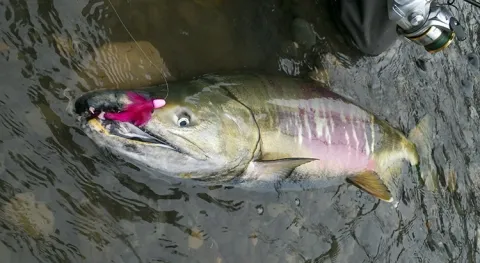
Catching Chum can be a lot of fun. They are aggressive fish and fight much like a Chinook. Chum mostly feed on plankton and shrimp in the ocean. Purple, pink, green/chartreuse are great colors for targeting Chum. Small hoochies work well. Tie up your hoochies with a 30-40-lb fishing line with short leaders of two to three feet behind an inline sinker or use hardware such as spinners with hoochie skirts to target the soft edges and corners. As with any salmon, you can catch Chum on pretty much anything and anywhere in the river but understanding their habits will increase your catch ratio.
The following techniques will offer the shore and boat anglers some great options. You can try using a float/bobber and jig (tip with shrimp or prawn if allowed), twitching jigs much like Coho, casting or pulling plugs, drift fishing a corky and yarn tipped with prawn/shrimp or flavored with a scent such as herring, sardine, shrimp and anchovy which are awesome for Chums, or you can try your hand at throwing flies. I am a big fan of using hardware and my favorite is a Blue Fox Vibrax Size 5 spinner in chartreuse or pink with a hoochie skirt. I find this to be the most fun and active method to cover water and entice a testy Chum to bite in pretty much any type of water. When they decide to bite your offering, it is game on.
Check the regs and get out there. Catching Chum is a ton of fun. You can catch your Coho for the BBQ and freezer and if allowed, wrap up your day on the water targeting some Chum for the fight of it. Have fun and good fishing!
/articles/chum-salmon-time
Fall Panfishing in Eastern Washington
A treasure awaiting eager anglers
As the vibrant hues of summer give way to the crisp, golden tones of fall, Eastern Washington transforms into a paradise for outdoor enthusiasts. For many, this time of year means hunting or hiking through the scenic landscapes. However, for anglers in the know, fall represents one of the best opportunities for panfishing in this region. Panfish, including species such as bluegill, crappie, and perch, become particularly active as the temps begin to drop, offering a fantastic fishing experience.
The appeal of fall Panfishing
Fall is a transitional season, and for many fish species, it signals the need to feed aggressively, putting the feed bug on for the winter months ahead. For panfish like crappie and bluegill, this means moving from the deeper waters they inhabited during the hot summer months to shallower, more accessible areas where they can feast on minnows, insects, and other aquatic creatures. Anglers targeting panfish in the fall can enjoy several advantages:
Reduced fishing pressure
As fall arrives, many anglers turn their attention to hunting, leaving lakes and rivers quieter, and less crowded. The reduced fishing pressure can make panfish less warry and more likely to bite.
Ideal weather conditions
The mild temperature of fall provides a comfortable environment for fishing. The oppressive heat of summer is gone, and the cold chill of winter has yet to set in, creating the perfect conditions for a day on the water.
Spectacular scenery
There's nothing quite like spending a day on the water surrounded by the stunning fall foliage of Eastern Washington. The golden leaves of cottonwoods, aspens, and maples reflect off the glassy surface of the lakes, creating a breathtaking backdrop for any fishing trip.
Active fish
As water temps cool, panfish metabolism remains relatively high, encouraging aggressive feeding behavior. This is a stark contrast to the lethargic bites often experienced in the summer.
Best Panfish species to target in Eastern Washington
Crappie
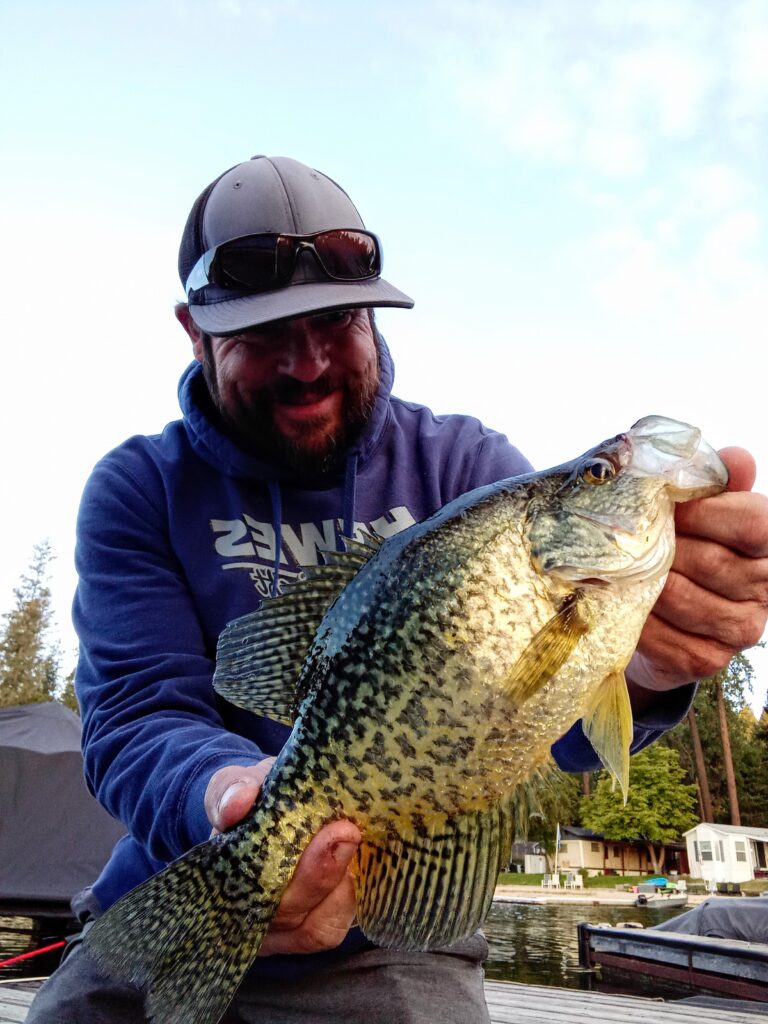
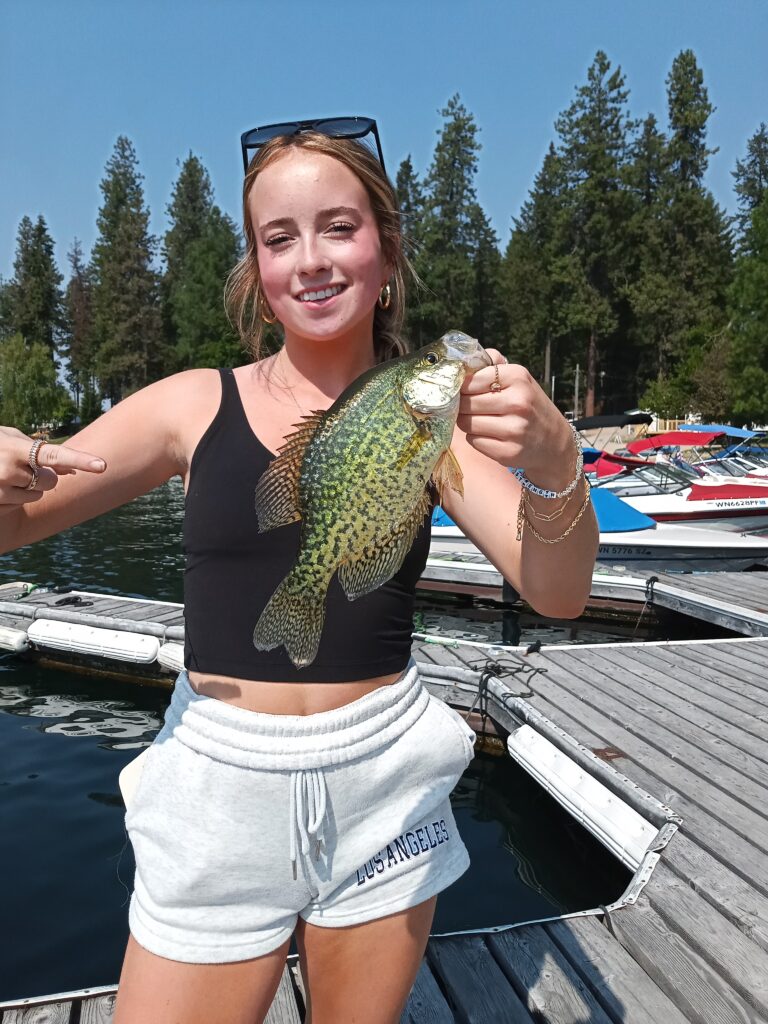
Crappie is a favorite among panfish enthusiasts due to its delicious, flaky meat and relative abundance in Eastern Washington waters. Two species, black crappie and white crappie can be found, though black crappie tends to be more common. During the fall, crappie often schools up in large numbers, making them easier to locate and catch.
Best spots
Moses Lake, Eloika Lake, Newman Lake, and Sacheen Lake are well known for their healthy abundance of populations. Look for crappies in areas with submerged structures such as fallen trees, docks, or rocky points where they seek shelter and forage.
Techniques
Casting small jigs with plastics, or bait, is highly effective for fall crappie. A slow steady retrieve near submerged structures often entices strikes. Night fishing can also be productive especially when using lights or lanterns to attract the crappie.
Bluegill & Sunfish
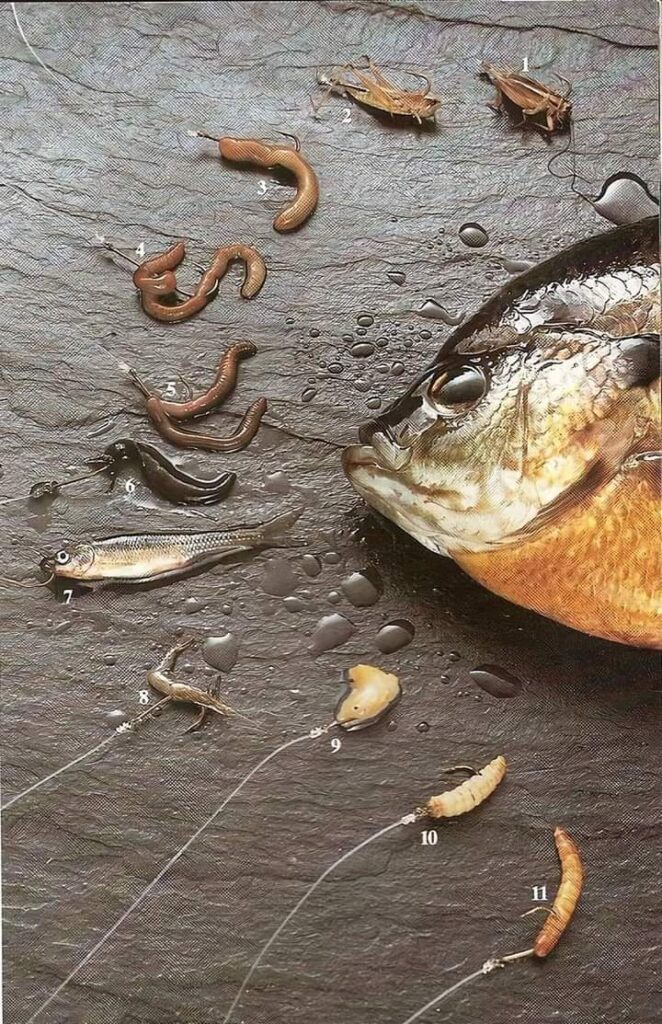
Bluegill and other sunfish species, such as pumpkin seeds, are abundant in Eastern Washington and provide great action for anglers of all skill levels. They are often found in shallow waters, especially around weed beds, submerged vegetation, and docks.
Best spots
Eloika Lake, Newman Lake, Sacheen Lake, and Loon Lake to name a few, are excellent choices for targeting bluegill and sunfish. These lakes offer plenty of fishing availability, making them perfect for both boat and shore anglers.
Techniques
Bluegills are notorious for their lake of small, natural baits. Worms, crickets, and small jigs work wonders, particularly when fished below a bobber. Small flies, in the nymph patterns, can also be effective and add an extra way to approach these fish.
Yellow Perch
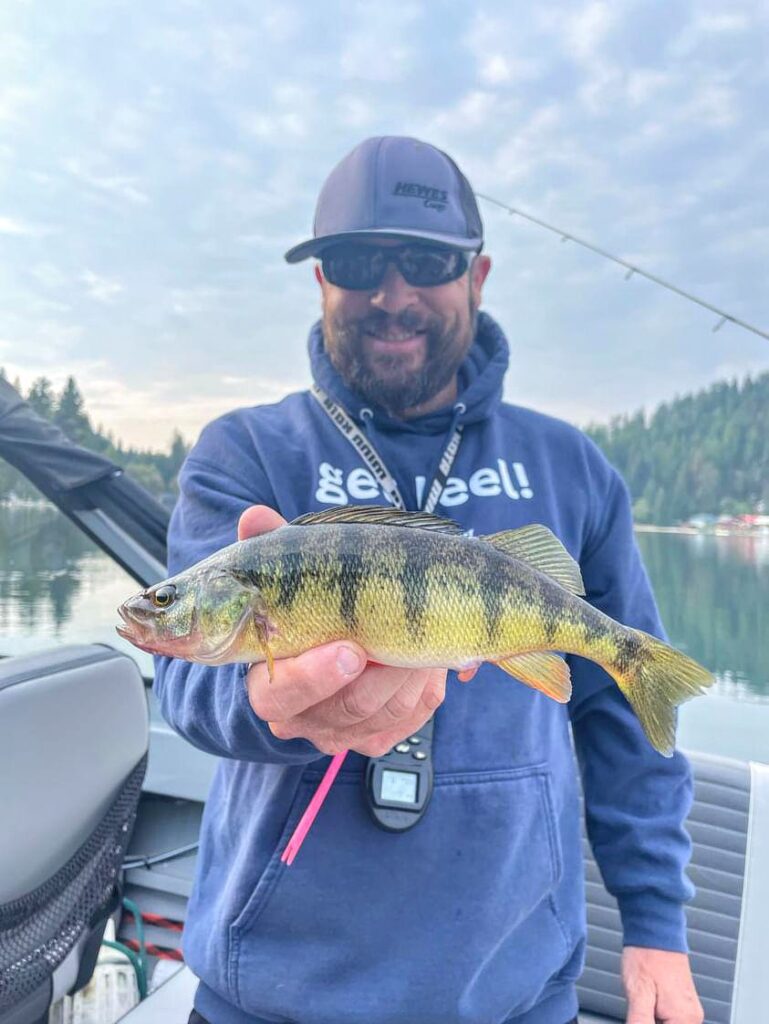
Yellow Perch are another panfish targeted by fall anglers in Eastern Washington. Known for their aggressive nature, and flakey tasty filets, perch are often found schooling up in deeper water, usually inhabiting a large mud flat looking for bloodworms, but don't overlook the shallows as temps drop and baitfish move toward the shore.
Best spots
Silver Lake, Moses Lake, Sacheen Lake, and Eloika Lake rank among prime locations for yellow perch. These waters provide plenty of food and cabbage where these perch can hide, and hunt. (Don't forget Long Lake.)
Techniques
Perch can be caught using a variety of methods, but jigging small spoons tipped with small plastics, or bait tends to be the most effective way. Vertical jigging from a boat can be best, especially when you locate a school of perch on your fish finder.
Tips for successful fall Panfishing in Eastern Washington:
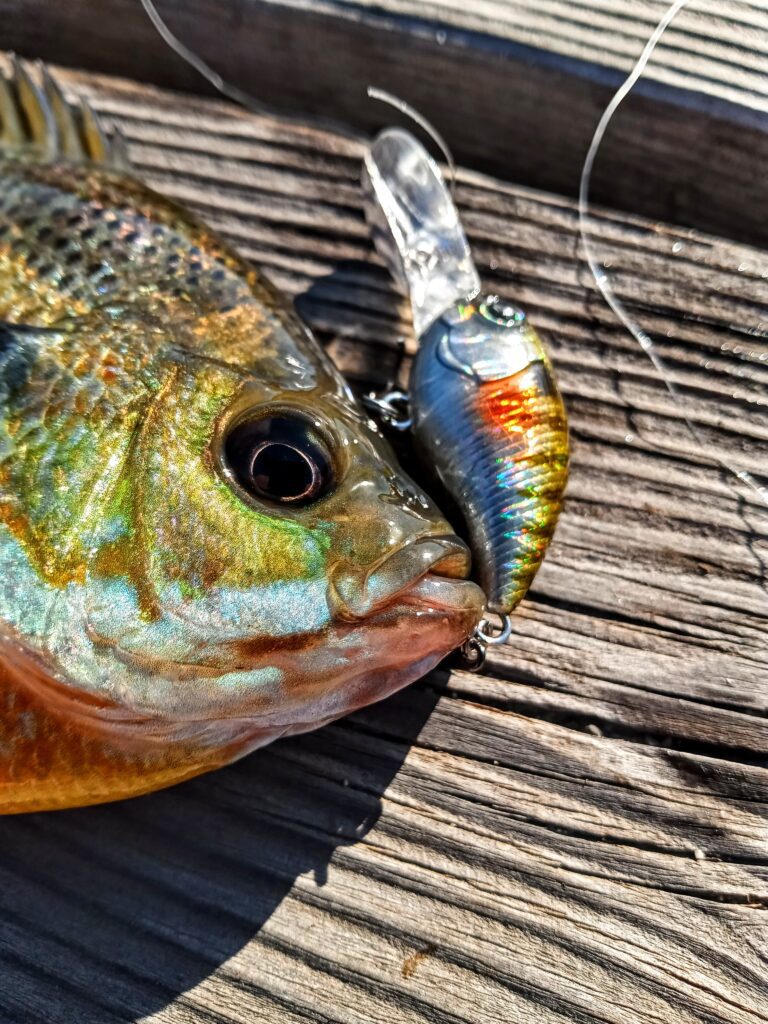
Use light tackle
Panfish have small, soft mouths and are easily spooked by heavy tackle. Light spinning rods, small reels, and 4-6lb test lines are ideal for detecting subtle bites and presenting small baits effectively.
Look for structure
Panfish are actually drawn to structures that provide cover from predators and access to food. Fallen trees, weed beds, rock piles, and boat docks are all excellent places to find schools of panfish. Use a fish finder to locate submerged structures that aren't visible from the surface.
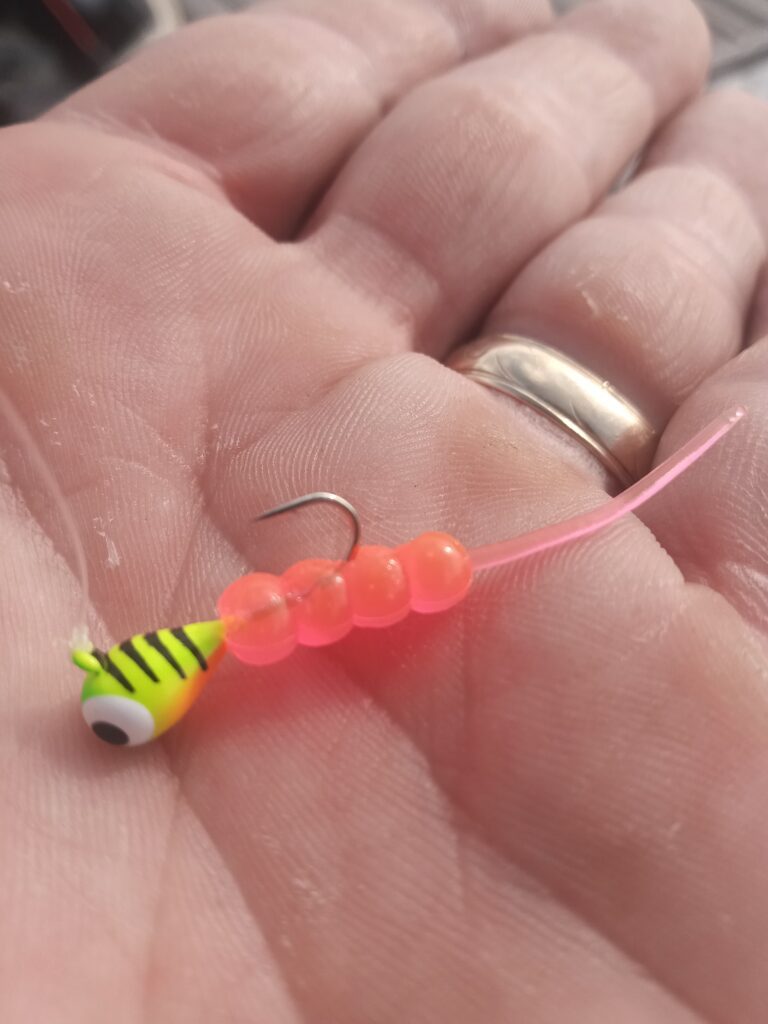
Experiment with lure colors and sizes
Different panfish species and even individual fish can have a unique preference, so it's good to experiment with variations of lures, with different colors and sizes. Or even trying to figure out what they are feeding on, and match the hatch.
Stay Mobile
If you're not getting any bites in one spot, don't be afraid to move around. Panfish schools can be highly mobile, especially in the fall, so covering more water can increase your chances of finding active fish.
Adjust your depth
Panfish can often be found at varying depths depending on water temperature during the day. Start shallow and gradually move deeper as the day warms up. Fish can sometimes be found surprisingly deep even in cool months - and don't overlook the suspended fish in the middle column.
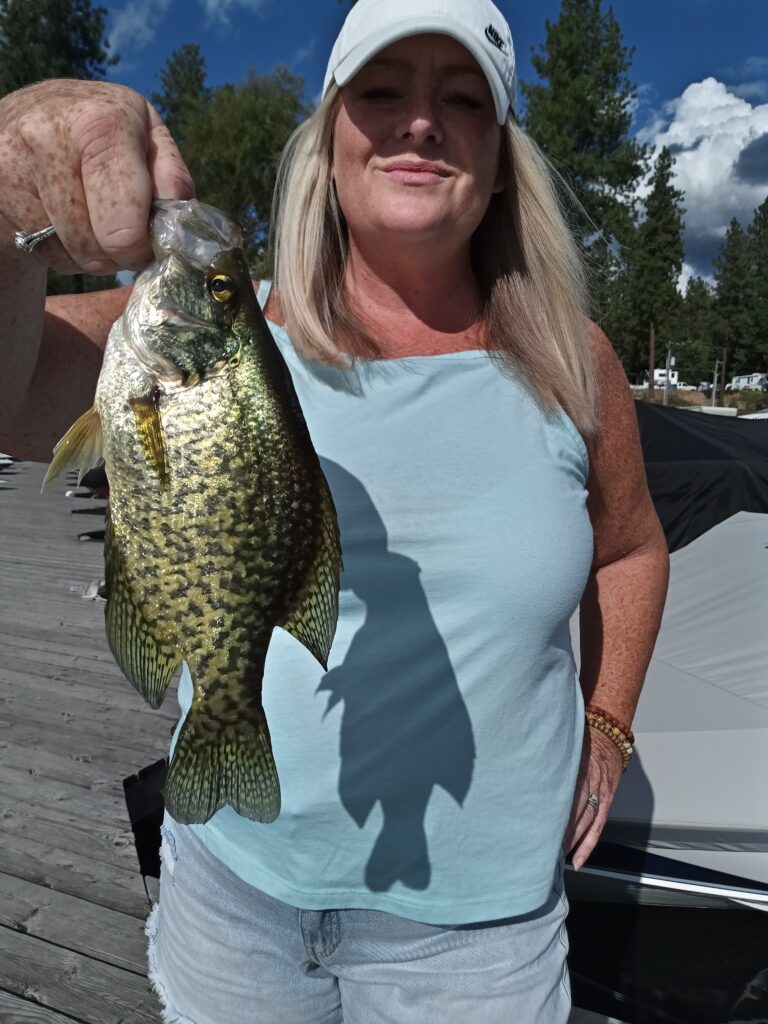
The fall Panfishing experience
Fall panfishing in Eastern Washington offers a unique blend of excitement and tranquility. The crisp air, vibrant fall foliage, and the serenity of the lakes make for a peaceful escape from the everyday hustle and bustle. For those who enjoy the challenges of light tackle and the reward of a well-earned catch, there's no better time to get out on the water.
Whether you're a seasoned angler or a beginner looking to experience the thrill of fishing, Eastern Washington lakes and reservoirs offer plenty of opportunities to reel in some of the best and most enjoyable fish the region has to offer. With a bit of patience, and the right gear, and a sense of adventure, you'll find that fall panfishing in Eastern Washington is more than just a past time - it's a cherished tradition waiting to be discovered. So grab your fishing rod, pack your tackle box, and head out to the waters of Eastern Washington this fall. The panfish are biting, and the experience is one you won't want to miss.
![{"capture_mode":"AutoModule","faces":["-1482_-1552_-546_-616"]}](https://cdn.northwestfishing.net/sites/default/files/styles/large/public/images/IMG_20240907_122136_1-scaled.jpg.webp?itok=1nO2jnuv "{\"capture_mode\":\"AutoModule\",\"faces\":[\"-1482_-1552_-546_-616\"]}")
/articles/fall-panfishing-eastern-washington