Kokan-Eye Eyesight Colors and Presentations
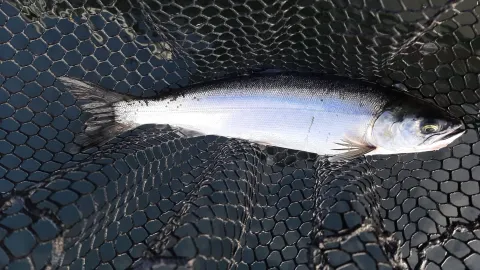
Make no mistake, kokanee can see up, down, and all around. They see close up and farther out (depending on water clarity) at the same time, but not as clearly as we can. They can see effectively behind them as they swim, because their undulating swimming motion turns the head just far enough to see very near the plane of the tail.
Color Shift At Depth
Since sight is part of the effective formula, you must make sight important in your presentation. The very last thing you want is for your lure to be camouflaged. You want it to be noticed. You work against yourself if your target winds up being camouflaged because you have not accounted for the three things that change your lure's appearance at depth:
- Lack of light at target depth;
- Color shift (attenuation), making your lure dull gray; and
- Lack of contrast (conveys information about shape and form)
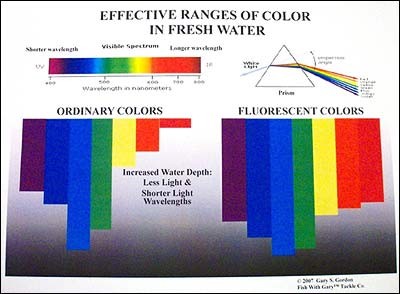
Consider what it is that you are trying to do. You want your setup color-wise to be different than the water surrounding it. If your setup contrasts with the water it is in, it has a far greater chance to be noticed and targeted. Remember, we are seeking a striking response. Your setup must appear different than the predominant color of the surrounding water at that depth.
As we descend the water column, certain light wave frequencies are absorbed (because water absorbs light). Here is the other prong of that absorption concept. As we go deeper in the water column, some of the colors we see at the surface will no longer be the same color at depth. At this point in the discussion, I am speaking of ordinary colors - the color spectrum we can see. Fluorescent colors will be discussed in a moment.
The longest visible color wavelengths are the reds. Shorter in descending order are orange, yellow, green, blue, indigo, and violet. As you descend the water column, the longer wavelengths are absorbed, leaving the shorter wavelengths to continue down the water column. Those shorter wavelengths will ultimately be absorbed, even in the clearest of water, provided you go deep enough. The kokanee fisherman is dealing with depths generally down to 100 feet, give or take. The typical kokanee body of water will have no light in the later season beyond 75 feet. In the very early season, there may be no light at 30 feet.
As you recall from last month’s article, the proper target depth for kokanee fishing is 54 degrees. And since that temperature descends the water column as the season wears on, the resulting less light at your target depth also means that certain ordinary colors are no longer what they appeared to be on the surface because their wavelengths have been absorbed. If you use such a color at depth, your presentation will be gray and not have much contrast to the water it is in.
A lure of ordinary red will virtually disappear in but a few feet of water. Soon to follow would be the ordinary orange, ordinary yellow, and then ordinary green. Also, about that time would be ordinary indigo and ordinary violet due to the structure of water and the use by phytoplankton of these frequencies. If you take an ordinary red object into a dark closet and shine orange light on it, the red object will appear gray. If you take an ordinary green object, and test it the same way with blue light, the green object will appear gray.
For the object to be seen in its correct color, it has to be struck by a light frequency of equal or higher wavelength. In these examples, if you take a green object and strike it with red light, it will appear green. If you take the green object and strike it with orange light, it will still be green. For ordinary colors, the deeper you go, the very light necessary for that color to be that color, has likely been absorbed in the water before you reach your target depth. Without the right light wavelength hitting it, it will be dull gray and not at all distinctive to the water that surrounds it. The little remaining visible light at depth makes the dullness even duller
Our lures are rarely of a pure color wavelength. But even the mixing of colors (hues) will still be subject to the same color deterioration at depth. Pink is a good example. Pink is not a color of the visible spectrum, but is a mixing of red and white. White is not a color of the spectrum, but is all colors of the visible spectrum. Thus in pink, a little of the color will respond to green and blue wavelength at depth. But the color intensity will be mostly dull. From what you now know, ordinary pink is not the ideal choice for getting noticed at depth.
While this might seem confusing to us above water, it is still the reality of the color situation in the water and at depth. Perhaps some encouragement is in order. To be "expert" of color at depth you need not memorize anything. Because most of our kokanee fishing occurs in green or blue light wave frequencies, we want all of our presentations to show up in green and blue light.
Fluorescent Colors
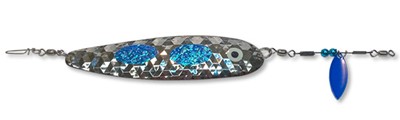
Enter the amazing world of fluorescent colors. No intense scientific discussion is needed here. What you need to know is this. A true fluorescent color will remain its color when struck by a lower light wave frequency. If a true fluorescent orange is struck by a green light (lower frequency than orange light), it will remain orange. The same is true for all of the fluorescent colors. And that means that if you use true fluorescent colors in your setup, your setup will be seen at depth. True fluorescent colors tend to be brighter as well, making for higher visibility.
Not all materials on the tackle market are of true fluorescent colors. You can easily test whether a color is a true fluorescent by taking your lures and dodgers into a dark closet and then shining a black or UV light on them. If the color seen is the color you saw in full light, you have a fluorescent color. Again, there is a difference in intensity of the color. Just because a material is fluorescent does not automatically mean it is intense.
U.V. light is below the visible spectrum (of lower wave frequency), which means it cannot be seen directly. All U.V. light is dissipated in very shallow fresh water holding kokanee, because the water, plankton and other particulates in the water absorb all of it. It is well documented that there will be no U.V. light in the freshwater column below just a few feet.
I have tested lures labeled "U.V." Most work very well in waters holding kokanee, and in particular, the UV squids should be a part of your tackle box. However, lures labeled "U.V." would be more accurately labeled as "fluorescent." These "U.V." lures come in visible colors. Since UV is not visible, the color you see is fluorescent. As with all fluorescent colors, stimulation by a black light will make the color jump out at you. But these lures are in fact, only fluorescent. But that is why they are good. They still need some visible light at depth to be most effective. They do not glow. Match one of these "UV" (fluorescent) squids with a Fish With Gary™ POWER Dodger, and you have a great setup.
Using true fluorescent materials in your setup will resolve issues of color shift in your favor. While some fluorescent colors will fade somewhat the deeper you are in the water column, they still are not gray if there is some light available to act on them. When using true fluorescent materials, the colors you are delivering at depth are those NOT ordinarily seen at depth. And that is exactly the effect you want. Your setup will be out of the ordinary, and kokanee will focus on it in the near field.
Vital Contrast
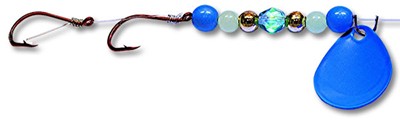
Using fluorescent materials is not the only way to get your setup noticed. Remember that you are after contrast, or what I call vital contrast. Vital contrast can be obtained by using different fluorescent colors next to each other or spaced in such a way as to create the illusion of not being connected. Components that contrast with themselves will stand out even more in dull watery depth.
Contrast is the enemy of camouflage. Contrast is the better-developed part of kokanee vision and encompasses about 10 times larger visual window area than does color. The color window is directly in front of the kokanee, but contrast is not only seen in front, it is seen up, down, sideways, and backwards. Contrast vision overlaps color vision. Effectively presented, color is a great contrast. When color and contrast are effectively presented, color and contrast are in front of the kokanee to see and react to them. This allows the kokanee to put its mouth where the color is, which is pretty much what you want!!
Glows
There is another fantastic way to achieve this vital contrast at depth, and that is the use of glows. Glows are termed phosphorescent (or luminescent) as they carry their own light to depth. No intense scientific discussion is needed here either. Glows emit light when the light source that charges them is removed. On the other hand, fluorescent materials appear brighter in light, but do not glow when that light is removed.
Most glows on the market and peddled to fisherman are of very poor quality. Their glow simply does not last even long enough to make it to depth, let alone work for you at depth.
All Fish With Gary™ glows are of the highest quality and are termed extended glows for good reason. The natural glow beads in particular will glow for hours on a simple charge of sunlight for a few minutes. Stimulation of glows by using a black light is not very efficient, and the resulting glow does not last as long as sunlight stimulation.
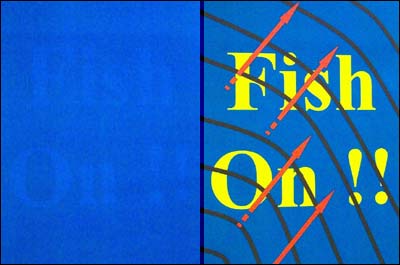
Glows clearly take on more importance when the level of light is less in the water column. As you descend below light in the water column in later season, glows make visible what would otherwise be invisible. And if the surrounding water is pitch black, the glow of light most certainly is the kind of dramatic contrast that will get your setup noticed.
The Ideal Presentation
The ideal presentation in achieving vital contrast is one that makes generous use of fluorescent materials and glows, arranged in such a way to be in contrast with each other and in contrast with the surrounding water. And this is exactly what is incorporated into the entire Fish With Gary™ Tackle line.
While the dodger blade attracts far field (long distance), the beads, and the spinner(s) on the leading wire are near field (short distance) attractors.
Here is what is going on with the beads and spinner in front of the dodger. Because the beads and spinner(s) are being moved about by the dodger, they are creating short field sound. The spinner(s) do not consistently spin as you would expect. Instead, their movement in the water makes the spinner(s) come in contact with the glass beads. Metal versus glass produces a sound. In this case the two produce an irregular sound that alternates with some spinning, and some "tap-tap" of the metal on the glass.
There is nothing in nature that this imitates, and this sequence of short field sound is itself a contrast to the natural water environment. Add to this is the natural movement of the glass beads working against themselves as this setup is whipped through the water. And all of this is going on while your dodger is still producing far field sound, attracting other kokanee to your setup. A gathering of kokanee is more likely to result in a strike than a single kokanee.
While your sound generating machine is working, your kokanee has been drawn close enough so that the colors and contrasts are within its sight window. A curious thing happens at this point. Having been drawn to the sound, the kokanee will see a particular color and contrast sequence. Once seen, this color and contrast sequence effectively imprints the kokanee with that combination, even if briefly. If your dodger and the upfront beads and spinner are of the same color and contrast, you increase that imprinting. And if your lure is of the same color and contrast, then you give the kokanee a target that it does not fear. That is why it is absolutely critical that your dodger setup and the lure be matched.
The lure is making short field vibrations and adding color and contrast, and adding scent.
So now you have the complete picture. Far field vibrations attract, short field vibrations and colors in consistent vital contrast imprint the kokanee and provoke the strike.
/articles/kokan-eye-eyesight-colors-and-presentations
Catch and Release Fishing
As many anglers know, our fishing opportunities in Washington are dwindling, specifically when we are talking about salmon and steelhead. With retention opportunities waning, we are often fishing in catch-and-release fisheries, which are very misunderstood.
I was recently reminded by someone from the State of Washington that as outdoor writers, we have a responsibility to educate readers about topics such as the ethical handling of fish that we will release. We all want a picture or two of our trophy catch, but we should always place the mortality of the fish ahead of ourselves.
Please note that I took much of the information below from an Oregon Department of Fish and Wildlife article written in 2019 and titled, Catch-and-release: Tips to reduce fish mortality. One very important note to share. ODFW will allow anglers to take a fish out of the water before releasing it. In Washington, it is illegal to remove a fish from the water that must be released.
One way anglers can help maintain and restore native fish populations is to learn how to catch and release wild fish properly. Before fishing, anglers should always consult WDFW fishing regulations for any harvest restrictions.
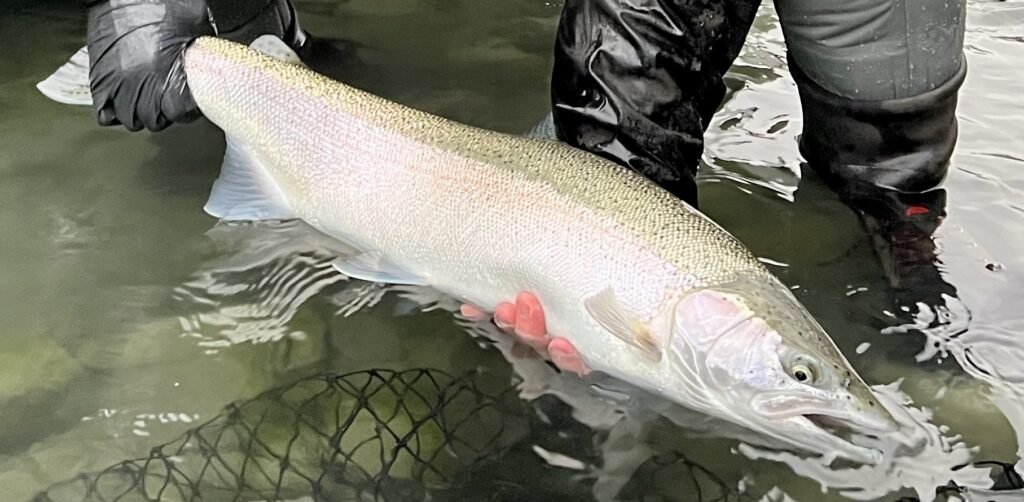
Here are some tips for the safe and ethical release of a wild fish or a hatchery fish that is caught out of season.
Land the fish quickly.
A fish on the end of the line is under stress, so don't play the fish to utter exhaustion. Severe exhaustion reduces the fish’s odds of surviving.
Support the fish when bringing it in.
Support the fish underwater in a natural position, handling it as little as possible. Give it time to recover and keep it in the water, it needs all the oxygen it can get from the water passing over its gills.
Use barbless hooks.
Bring the fish quickly within reach. Leave the fish in the water and, without squeezing it, remove the hook carefully with long-nosed pliers or thumb and forefinger. If necessary, cut the leader near the hook, which will dissolve over time.
Revive the fish before releasing.
Point the fish into the current or in standing water, gently move the fish forward until its gills are moving and it maintains its balance on its own. Let the fish swim freely from your hands.
Use appropriate gear.
Use tackle, including line and rod, that are strong enough to bring your fish in quickly and gently.
Safe handling.
Note that fish have a natural slime on them, which is a coating that prevents disease and protects them. Though the slime makes the fish slippery and hard to hold onto, avoid using any material, such as a cloth glove or towel that will remove the slime from the fish. This will increase the odds or chances that the fish survives.

Getting a photograph
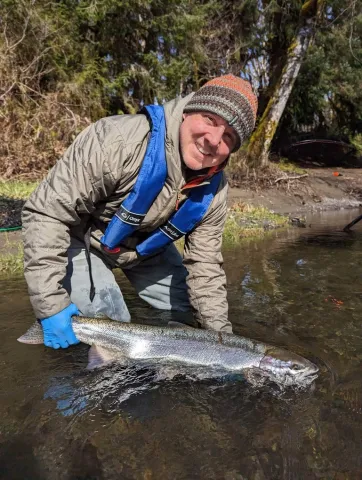
Taking a photograph with your fish can be a lovely way to capture the moment. But try to minimize handling and keep the fish in the water as much as possible with these tips:
- Have help. If someone is helping you with the photo, make sure they’ve composed the shot and adjusted the camera settings before you position the fish. Remember, the fish must remain in the water, so the head and gills should always be submerged, never leaving the water.
- Get your hands wet before handling the fish. This will help protect the delicate membrane on the fish’s skin.
- Support the fish properly. Put one hand under the forward part of its body and the other at the base of its tail. Keep the fish in the water. Do not place fingers or objects into or under the gill plates.
- When you’re ready, cradle the fish at or just above water level and snap a quick picture, again, keeping the head and gills submerged in the water. Note that most pull the head quickly up for the shot with the mouth still submerged and then immediately place the fish back into the water, fully submerged, to revive the fish and begin the release process.
- Return the fish to the water quickly. Then revive it gently before letting it swim away. It is very important to revive the fish and let it swim off under its own power to ensure that it is ready to go.
Many anglers may not agree with these rules and may have heartache with our regulatory agencies, but I feel strongly that we need to be bigger than our frustration. We must do what is best for the fish to preserve them and ensure that future generations will have the opportunity to experience what we get to today. Things may not be what they were 20-30 years ago, but at least we still get to fish and experience that feeling of the tug on the other end of the rod.
/articles/catch-and-release-fishing
Seven Oregon Kokanee Lakes to Fish This Year
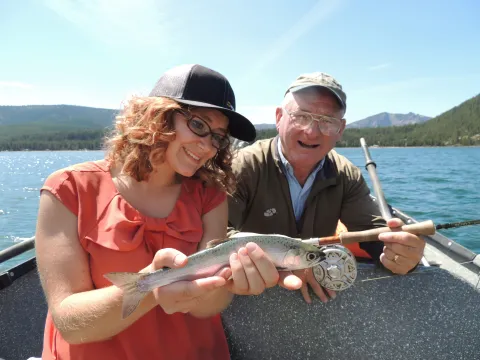
Kokanee, which are a landlocked sockeye salmon, can be found in a couple of dozen or so lakes in Oregon and are some of the best eating at any fish fry. This year, we did the scouting for you. Here are seven lakes and reservoirs you must fish in 2025.
LAKE BILLY CHINOOK
At Lake Billy Chinook, it’s not hard to imagine the old river channels – the Deschutes, the Crooked, and the Metolius and their confluence, now obscured by 4,000 surface acres and up to 415 feet of water.
Round Butte Dam was finished in 1965, and the power of the water was harnessed by three 1000-kilowatt generators. Today, the Pelton Round Butte complex generates enough energy to power a city the size of Salem.
Kokanee angling is popular here, and anglers show up as early as February, teasing them with jigs early in the season. Trolling pays off later in the year.
ODELL LAKE
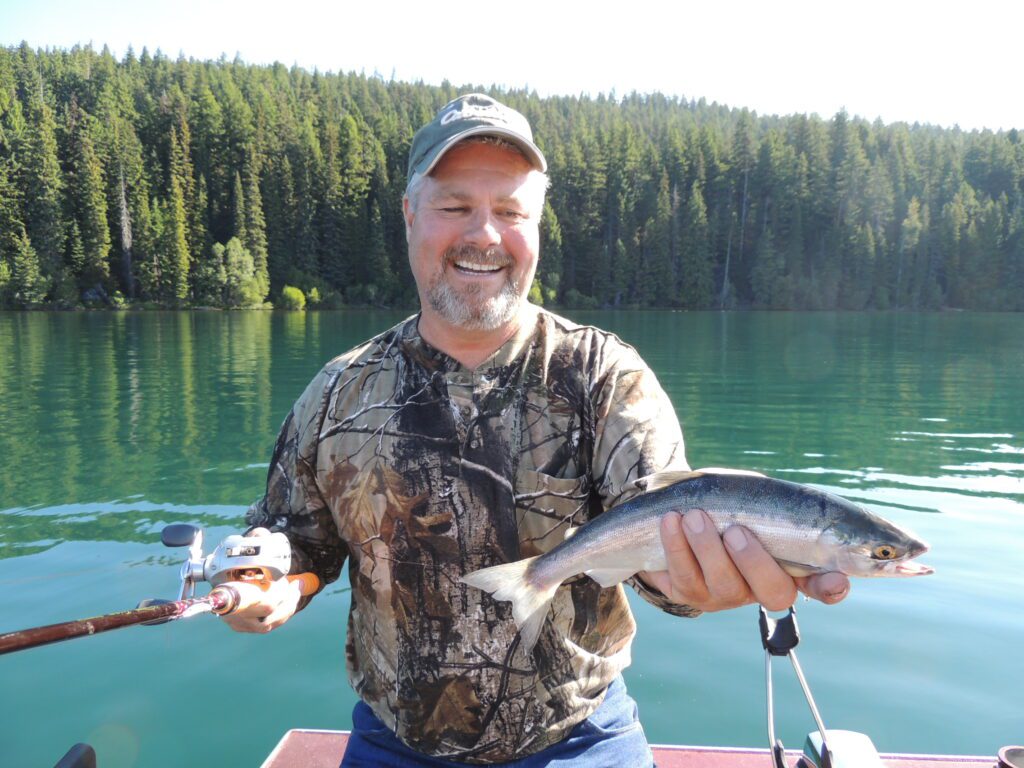
Odell Lake (and nearby Crescent) are some of the coldest, deepest lakes in the state, which makes them good habitat for a big char we call lake trout or mackinaw. Odell and Crescent also have good populations of kokanee (a landlocked sockeye salmon), the lake trout’s favorite food.
Kokanee can be easy to catch when conditions are right. Full-grown, they average 12 to 18 inches. Kokanee are most easily enticed in the early morning. As soon as the sun hits the water, the plankton go deeper, and the kokanee follow.
Jigging is a favorite technique early, but trollers seem to do better in the summer. An easy rig, whether using a downrigger or not, consists of an eight-inch flasher on the main line terminated at an Apex or Wedding Ring spinner. Most anglers add white corn and season it with a scent like Pro-Cure's Kokanee Special Super Gel. To rent a cabin or a room, click on odelllakeresort.com
WALLOWA LAKE
Sockeye are native to Wallowa Lake. Historic runs of sockeye were strong in Wallowa Lake until 1916, when the lake’s dam was enhanced. The fish still in the lake were landlocked.
Wallowa, with 1,500 surface acres and an average depth of 160 feet, can be daunting. Favorite kokanee areas are the western shore off Eagle Point and along the eastern bank up and down from the large pine tree. Try jigging after ice-off and then switch to trolling in the summer. Great trolling lures include Pro-Troll Kokanee Killer, Worden's Spin-N-Glo Kokanee, and Mack's Double Whammy.
For a great place to stay, check out wallowalakelodge.com
WICKIUP
Wickiup as a storage reservoir is one of the largest in the state, and its waters harbor rainbows and brown trout. And the kokanee grow big, too.
Fed by the Upper Deschutes via Crane Prairie, the Davis Lake sump, Davis Creek, Browns Creek and several springs, some of the best fishing is in the old channels. At its deepest, the lake is 70 feet deep, but the average depth is 20 feet.
Kokanee are spread throughout the lake early in the season, but tend to school up and head toward deeper water (the channels) as temperatures warm. Both jigging and trolling are productive throughout the season.
EAST LAKE
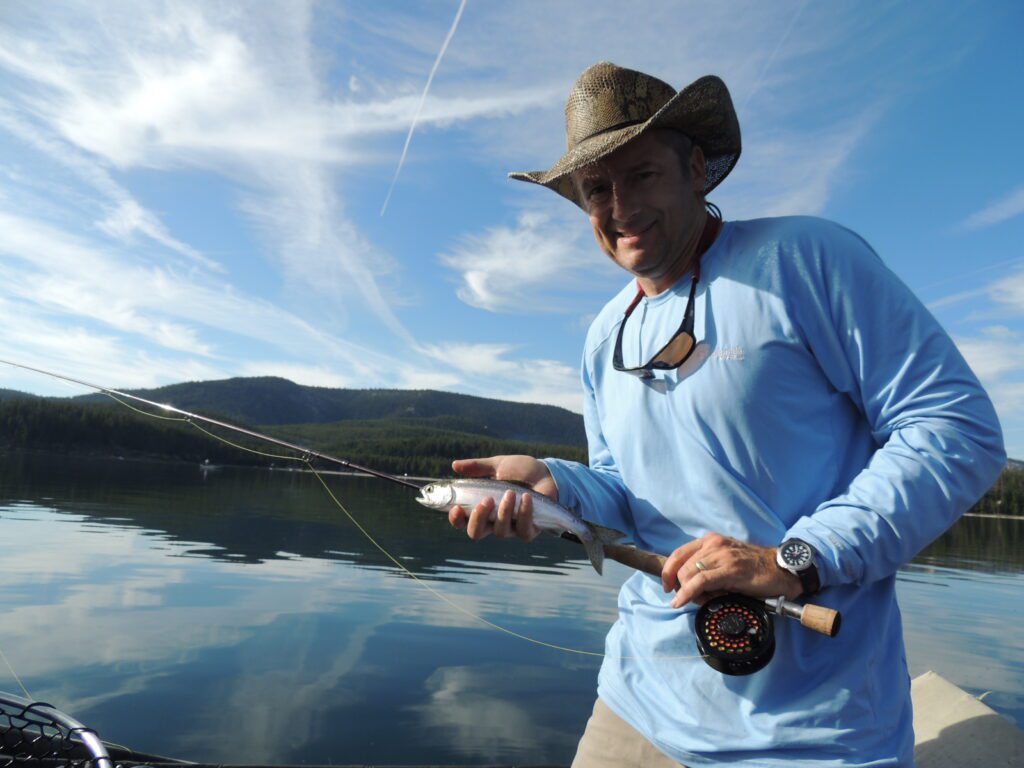
East Lake kokes average 12 to 17 inches. While kokanee are known to feed on plankton in most waters, the most reliable food sources at East Lake are the chironomids and midge larvae (chironomids). This is the reason a lot of people who are good kokanee anglers sometimes struggle at East.
Jigging works best early in the season and trolling takes more trout later in the season. Fly-anglers can take kokanee all season long on wind-drifted Callibaetis nymphs or on chironomids fished below an indicator.
PAULINA LAKE
Paulina Lake shares the caldera of Newberry National Volcanic Monument with its twin East Lake. This 1,300-acre lake is 250 feet in some places. Kokanee fishing is the main attraction and trolling flashers is the most popular method. Trolling a Wedding Ring with a kernel of corn or a chunk of worm on the end is very effective. Other great kokanee lures include the Cha Cha 1.5 Kokanee and the Kokanee Killer.
Jigging is the other way to catch them at Paulina, especially till about mid-June. Mack's Cripplure and Sonic Baitfish are productive, as are Nordic lures. First locate schools with a fish-finder and, depending on the depth, troll with a downrigger, flashers, a kokanee spinner and a kernel of corn on the hook. Or drop down a jig and try to put it in the school.
DETROIT RESERVOIR
The Detroit Dam was built in 1953, creating a large water storage and electric power generation reservoir that has become an important recreation resource. This nine-mile lake, with 32 miles of shoreline is surrounded by forest of Douglas fir and hemlock and is fed by the Breitenbush River, North Fork Santiam and Blowout and Kinney and several smaller creeks.
ODFW stocks Detroit with rainbows throughout the season. This 3,580-acre reservoir is also home to kokanee. Angling success picks up in May when the water warms.
Try the Kokanee Kid Mysis Bug or Promise Ring made in Salem, Oregon. Other good bets include the Silver Skalez Koko Leaf or Kokanee Creek Tackle 1.5 Micro Bite Squid. Popular trolling areas include Piety Island, west of Mongold State Park, the north shore near the dam and at the mouths of inlets.
AND FURTHERMORE
Some of our favorite fisheries were destroyed in 2023 and another one may be destroyed this fall.
One of the best kokanee days of my life was on Green Peter Reservoir. GPR had a seemingly inexhaustible supply of kokanee and if you figured them out on any given day, you could not go wrong. What did the Feds do? The US Army Corps of Engineers decided to drain Green Peter and Foster and wiped out some of the state's favorite kokanee fisheries while simultaneously silting over and smothering salmon and steelhead and trout spawning beds in the South Santiam for miles downstream. Brilliant.
Think they are done? The National Marine Fisheries Service and the Corps of Engineers have their fish-killing sights set on Detroit Reservoir and the North Fork Santiam now. So go fish Detroit this year and I hope you catch a bunch of limits and have a good time, but don't forget the very agencies that purport to be working for the people are often working against us and the fisheries we love.
# # #
For a copy of the Fishing Central Oregon book, send $29.99 to Gary Lewis Outdoors, PO Box 1364, Bend, OR 97709 To contact Gary Lewis, visit www.GaryLewisOutdoors.com
/articles/seven-oregon-kokanee-lakes-fish-year
Chironomids in Stream Channels
If everything is as it should be, there are two flies in the danger zone. For me, in most cases, I want a No. 10 red chironomid hung just over the top of the weeds, while a black chironomid rides about 18 inches above it.
Studies have been made on a number of lakes to determine the main food source for the trout.
Chironomids are midges, which look a little like mosquitoes, but lack that terrible creature’s bite. On many lakes, the midges make up close to 40 percent of a trout’s annual food intake. If there’s nothing else going on, you can bet the fish will eat a chironomid. But fishing a chironomid is different than fishing imitations of other bugs.
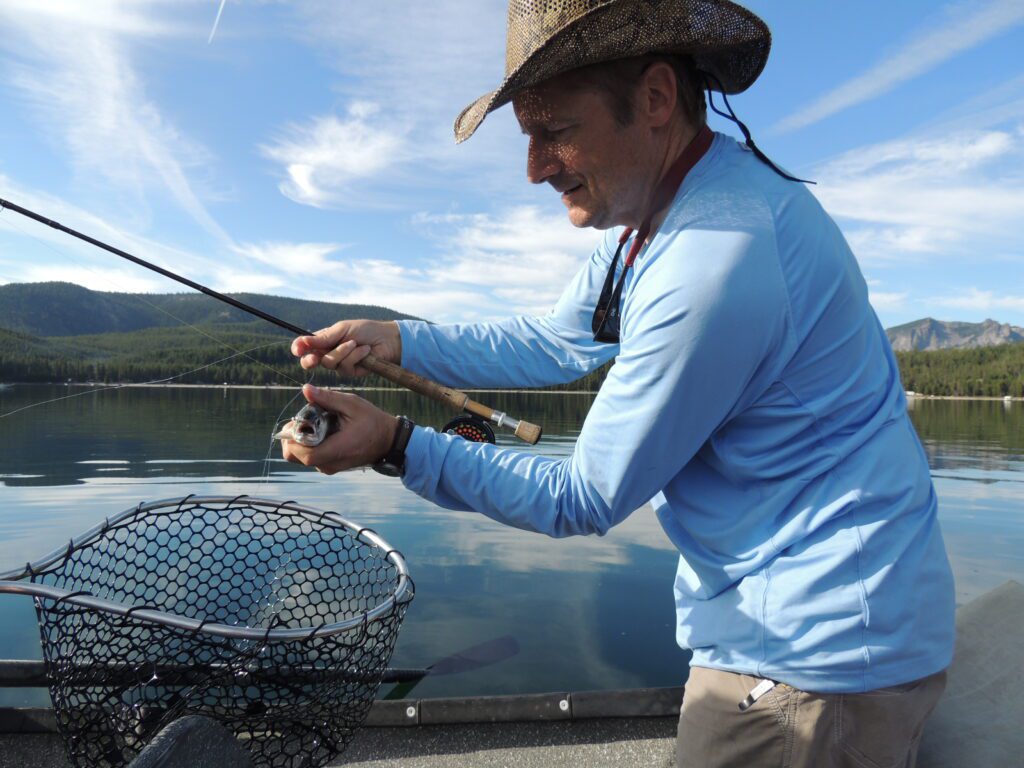
Midges don’t have legs or tails like mayfly nymphs or damselfly nymphs. So you want a vertical presentation instead of a horizontal presentation.
As chironomids hatch, they are trying to produce oxygen between their exoskeleton, their nymphal shuck, and the adult body. They come up out of the mud and they suspend about 12 to 18 inches above the bottom, for up to an hour. That makes them vulnerable to rainbows, browns, and cutthroat.
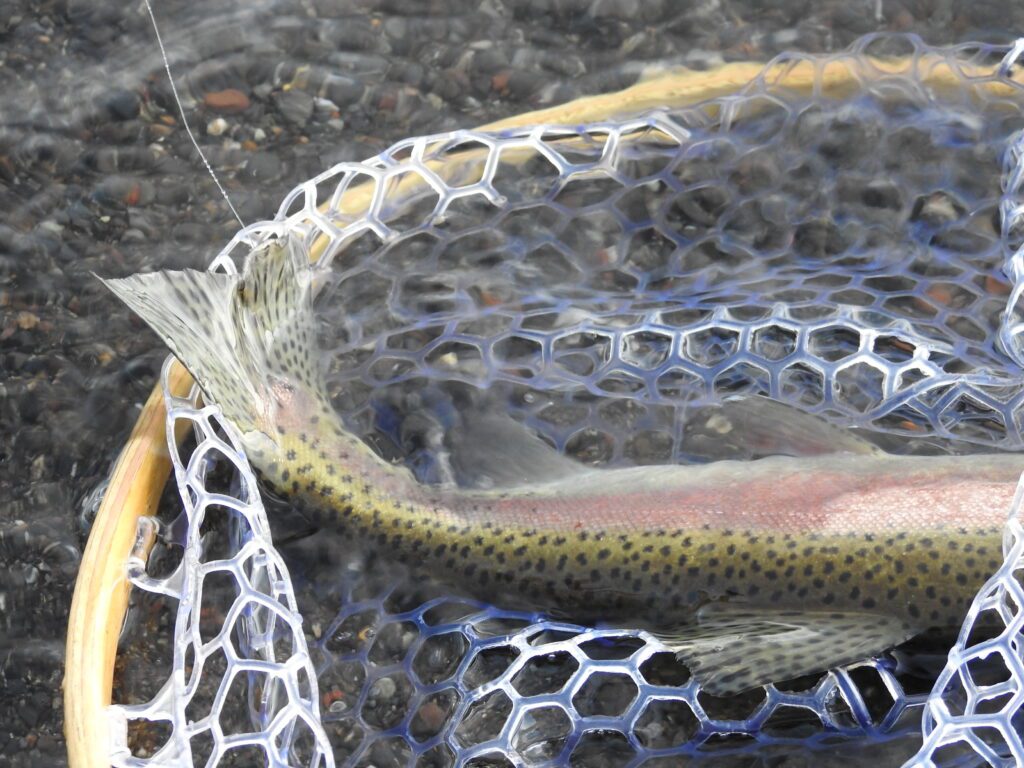
Chironomid imitations work wherever trout make a living. The hardest thing about it is the fish don’t set the hook themselves. You have to watch that indicator all-day
In Central Oregon, we fish chironomids on East, Lava, Little Lava, Hosmer, and even Wickiup for browns. They are a major food source for a lot of insect-eating trout. The tactics do not change that much except for the depth the angler is fishing.
From outside the boat, it looks like a boring way to fish. I beg to differ. Some methods are more suited to small fish, while other strategies are better suited to big fish. But all trout, big and small, eat chironomids. Setting the hook is like pulling the lever on a slot machine. Especially on reservoirs with submerged streambeds like Crane Prairie, Haystack, Prineville Reservoir, and Timothy Lake.
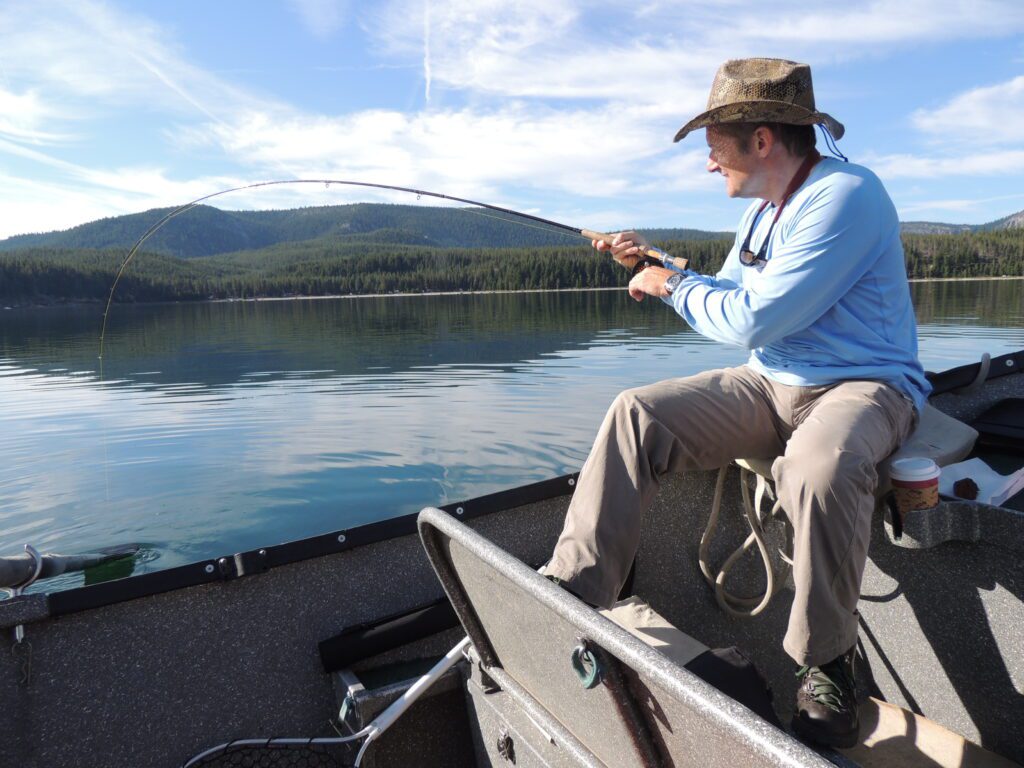
the trick is finding the old river channels. As the average lake temperature warms, the fish move into the cooler river channels and use them as highways to move around. The channels average 12 to 13 feet deep and are relatively weed-free with a sandy or silty floor.
So what you have is a 90-degree angle coming off your indicator. If you move your indicator a couple of inches. You give it a twitch and it rises up a couple of inches then settles back down. Vertical action is what you want with chironomids.
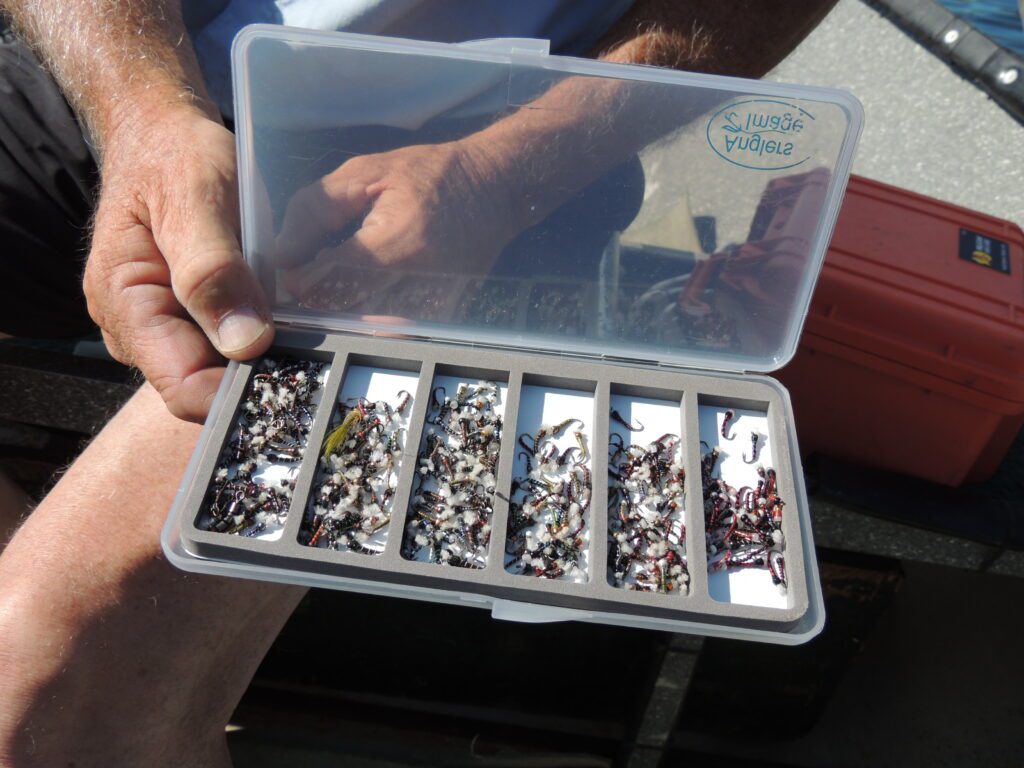
Photo by Gary Lewis
Reds and black are the primary colors most anglers use in Central Oregon, but olives and browns can also work. More important than color is to present at the right depth. The fish is probably more attracted by the silhouette of the midge.
One of the things we tell ourselves is we want to find the depth where the feeders are working. My friend Scott Cook calls it finding the feeders. If a certain depth is paying off, try to bracket all the flies in the boat around that part of the water column.
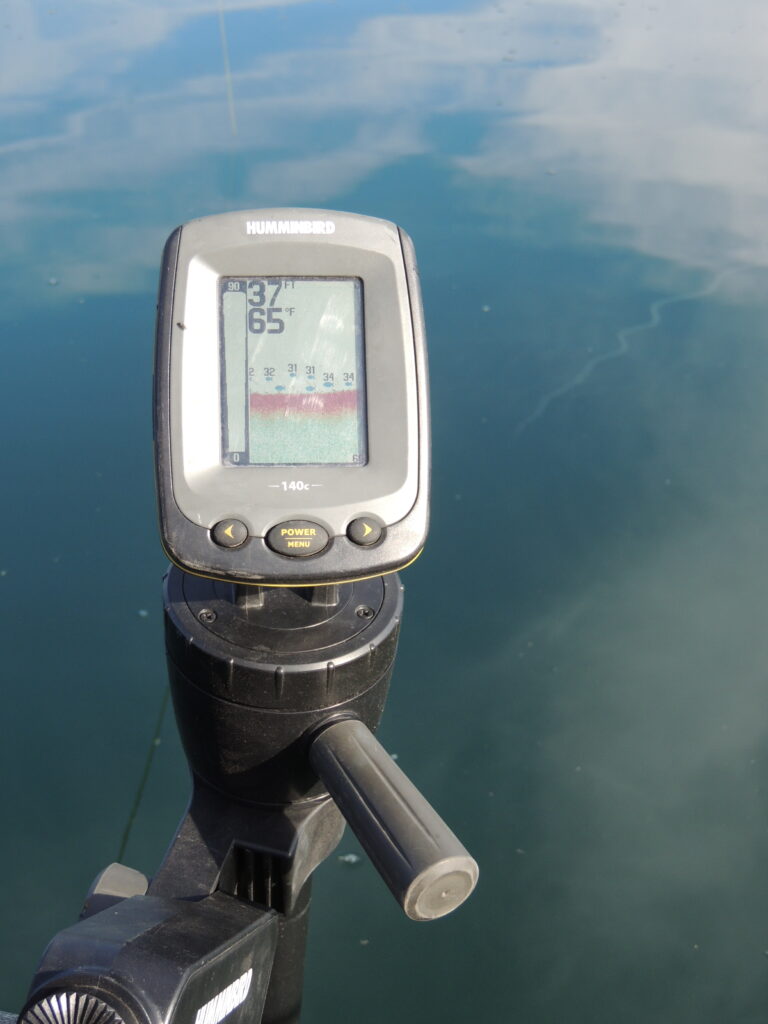
A depth finder can help locate schools of feeding fish.
Most chironomid fishing takes place at a depth of six to twelve feet below the indicator. I like to use a nine- or ten-foot leader tapered down to a 4X fluorocarbon tippet. Again knotted to a No. 10 chironomid with another chironomid on the dropper.
Any time the indicator goes down, the fish could be 10 inches or 10 pounds and you don’t know until you set the hook.
There are times when the small flies can get bit in deeper water. When trying to fish down at 15 or 20 feet, try using a very fast sinking line - like with a type 3, 4 or 5 - and retrieve it VERY, VERY slow. The trick is to work the fly in a vertical presentation, retrieving it up through the water column.
# # #
For a copy of the Fishing Central Oregon book, send $29.99 to Gary Lewis Outdoors, PO Box 1364, Bend, OR 97709 To contact Gary Lewis, visit www.GaryLewisOutdoors.com
/articles/chironomids-stream-channels
Making Sense of Scents
Where superstitions rule on my boat, making sense of scents is a bit of a challenge. What scent, how often to apply it, and washing things down at the end of the day are all done with a nod toward my personal superstitions. Get it wrong, and I’m facing seven years of bad luck! Whether or not you’re superstitious, here are a few smelly tips to help ensure luck is on your side.
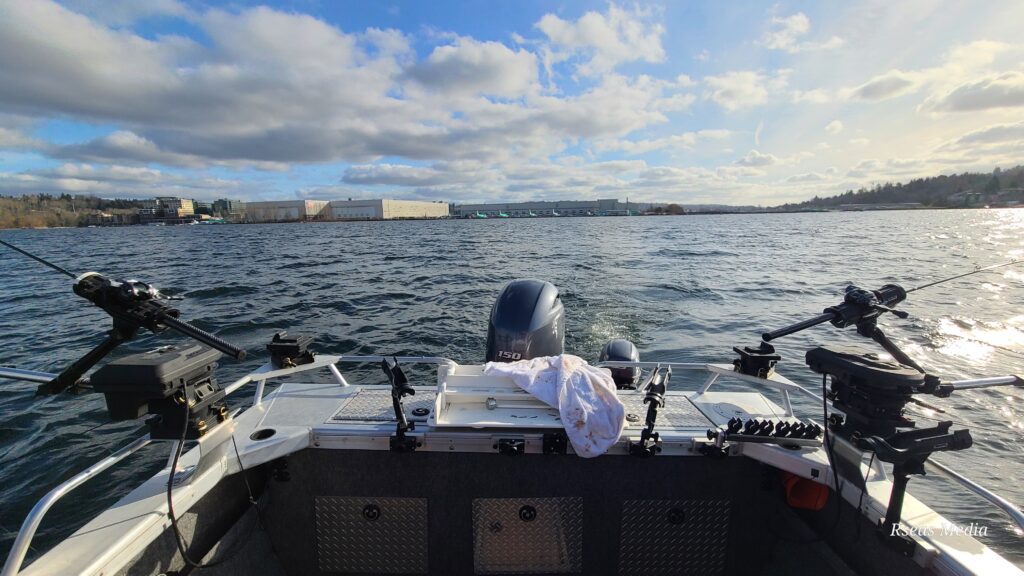
The application of scents to your lures and bait can act as an attractant or bite stimulant. It can also mask odors that repel fish. You can help reduce offensive orders by keeping your hands clean and free of sunscreen, bug repellent, petroleum products jellyfish goo, and tobacco products residue. On the day of your fishing trip, try to use unscented soaps or a light vinegar solution to wash your hands.
The use of scents should complement your game plan. They should work together with your presentation, location, and gear set-up.
There are numerous scent formulations out there: gels, liquid, sticky liquid, wax, oils, and water-soluble. Most scents are available in different “flavors".
Frequently scent oils are used to infuse other bait to create a hybrid cocktail that your target species will find irresistible.
With most sticky liquids, gels, paste and waxes you simply apply a small amount to your lures and let it work its smelly magic. Apply a thin even layer to the underside of spoons, spinner blades and plugs. Assure that the application doesn’t hinder the lure action. Scents can be very effective when applied to your dodgers or even downrigger balls.
Water temperature is your driver for how frequently to refresh your scent. With warmer water, you should pull your gear and refresh the scent more frequently. For most fisheries, I check the gear every 20 minutes or so and reapply the scent at that point.
When using some of the paste type of scents it is a good idea to wipe your lures down between each application. Otherwise, you may experience waxy buildup which could affect the lure’s action or even your hearing. What was that, did I just hear a groan?
If using a scent cocktail that includes dyes, it is a good idea to wear nitrile gloves and work over a towel or a work surface separate from your boat. Bait dyes are potent and will stain both your boat and skin. There were many times during my suit and tie days when I was giving a presentation with orange, pink, or blue fingers
Liquid scents can be used to marinate herring, shrimp, white shoepeg corn, chicken livers, salmon eggs, and dough baits. Place your bait of choice in one liquid scent or another overnight.
One of my go-to kokanee baits is tuna corn. A day before a trip I upend a can of white shoepeg corn into a mesh strainer and let it drain overnight in the fridge. Then I open a tin of packed-in oil tuna and pour the excess oil into my drained corn. I divide the corn/tuna juice mix evenly between some small containers or Zip-Lok snack bags and then add a different scent of oil to each container or bag.
Many freshwater salmon anglers marinate herring, sardine fillets, or shrimp in their secret mix of scent oils and amino acids then use the enhanced bait for trolling or wrapping their plugs.
Regarding flavor, everyone has their personal favorites for a given fishery. I find that garlic, anise, and carp-spit oils work best for Westside kokanee. For most Puget Sound salmon fisheries, I am partial to Anchovy. For general freshwater fishing, you can’t beat nightcrawler/garlic or anise. These are a few of my personal preferences (superstitions). There are a gazillion different scents available. Here in the PNW, scents like anise, sand shrimp, krill garlic, or bloody tuna seem to enhance any fishery.
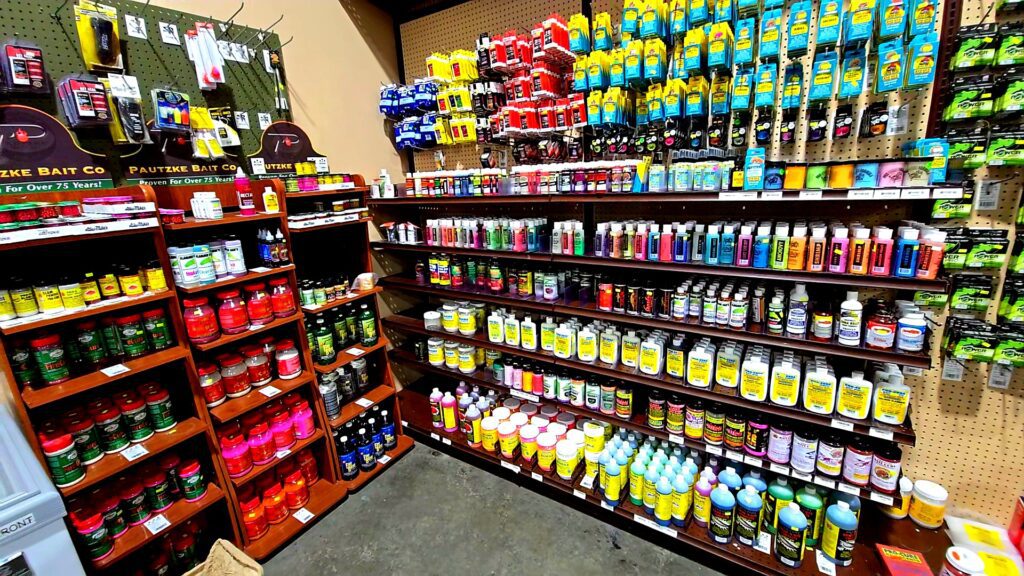
It would be a good idea to visit a tackle shop in the vicinity of your fishery to pick up the local favorite. With its proximity to some solid fresh and saltwater fisheries, Holiday Sports in Burlington is a great source for local fishing information. Their scent corner is well stocked with numerous brands and different scents.
Any scent discussion must include a segment on proper storage. Scents have different shelf lives depending on the product. Generally, they are:
Super Gels, Sauces and Paste: 7–10 years
Bait Oils: 3–5 years
Water Soluble: 3–5 years
It would be a good idea to use a permanent marker to mark the purchase date on your scent bottles. Typically, you’ll run out before they are ineffective but knowing when you purchased them gives you something to talk about. “I caught that huge walleye on 10-year-old worm sauce”.
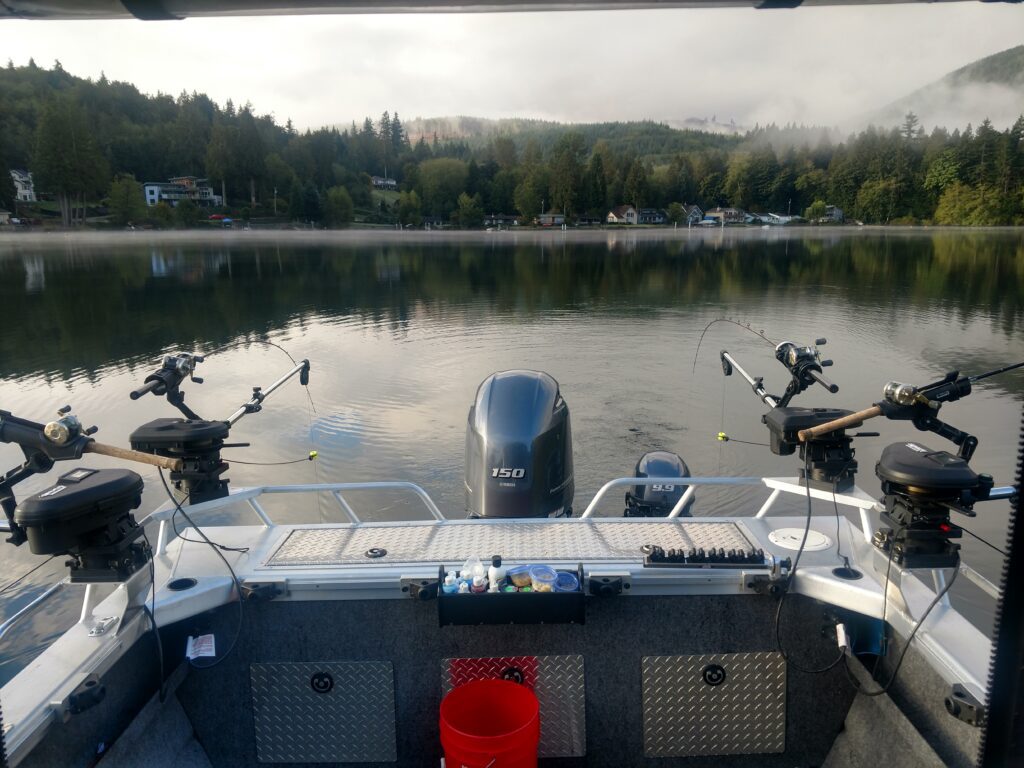
A couple of thoughts on storage:
On the boat store your scent collection out of direct sunlight in a cool place. While fishing I put a wet towel over my scent containers on my workstation, making sure to keep it damp as required.
At home store them in a dry, cool place. Preferably a metal cabinet in the garage or in the bait/beer fridge. The mice in my garage love to chew through scent bottles.
At the end of the day, make sure you clean your gear. Being superstitious I use Lemon Joy to wash all my lures and attractors. Lemon Joy or not, just make sure you clean everything after each trip.
Where your local knowledge, trip planning, gear set-up, and presentation are important in a successful outing, the use of scents will help you consistently fill the fish box.
Proper scent storage, application, and clean-up will go a long way in making sure your fishing trip doesn’t stink!
/articles/making-sense-scents
Essential Kokanee Science
So, you want to become a better kokanee fisherman? Yes, we all do. I assure you that you can be, but it takes some effort. It is not just getting out on the water, but it is using solid knowledge about kokanee that will make you more effective when you are on the water.
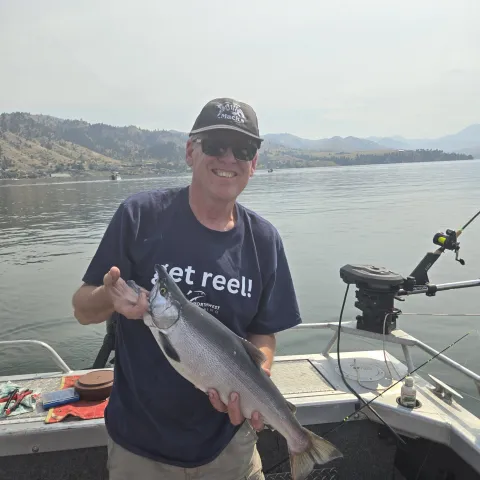
A while back I put together a wheel showing the inter-related concepts that occur in successful kokanee fishing. For a starting point of this paper, please consider:
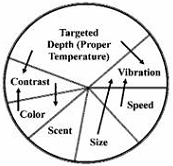
The idea is that if you get all of these factors right in your presentation, then you are fishing with 100% efficiency. There is some truth that IF you are in the right temperature zone, using a correct dodger at the right speed, then you are hovering around 50-55% effectiveness. Even a blind sow gets an acorn occasionally. But you will be at 0% effectiveness if you are not in the correct temperature and using the wrong presentation setup. As a fisherman, you already know that from practical experience. Taking the time to learn about all of these related factors will most likely help you become a better overall fisherman for kokanee and other species as well.
The single best predictor of kokanee location is temperature. I am not talking about surface water temperature, but rather the correct temperature down in the water column, or temperature at depth. For kokanee, the preferred temperature is close to 54 degrees. They can indeed be found at temperatures between 44 and 59 degrees. Below 54 degrees the kokanee are less active. Much above 54°, any extended stay will have detrimental or even lethal effects. Kokanee biology functions best at 54 degrees, and they will seek it out if it is available.
That temperature provides the most efficient growth from feeding. That temperature also allows for the least amount of energy consumed for swimming and generally being in the business of being a kokanee. Wherever that 54 degrees is in the water column, that is your target depth. Early season temperatures may not be as high as 54°, which accounts for sometimes slower fishing. There are a few reliable devices available that you can use such as the Fish Hawk model 840. Search Amazon for more options.
Since kokanee have a very elongated air bladder, you can use your fishfinder to determine their approximate depth. Kokanee will show a bright orange with a color fishfinder. Take an average depth of the images and have that as your initial target depth. Set your presentation within five feet top and bottom of that target depth. If the fish that hit your presentation are smaller than what is generally being caught, lower your target by five feet. Continue this process until you are zoned in.
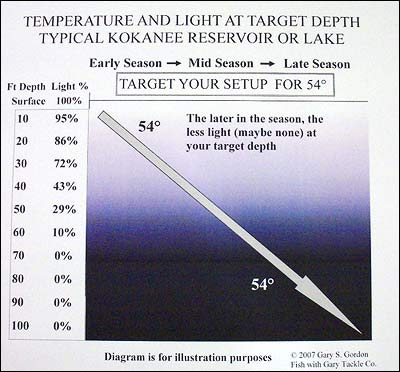
Generally, kokanee fishing picks up in the spring, when water temperatures are warming, and continues through August. This period can be broken down further into categories, each with distinctive features and methods for the best approach to your fishing. But to grasp the reasons for the differences, some additional discussion is necessary.
Zooplankton is animal plankton. Zooplankton can move about without being totally dependent on current and wave/wind action. For our kokanee, the most important zooplankton are daphnia (water fleas). Daphnia are intolerant of light and when sunlight hits the water, daphnia descend down the water column. In spring, the kokanee are waiting for them from below. The chase often ends (or continues) with kokanee jumping out of the water, much to our entertainment.
The absolute enemy of kokanee is the tiny mysis shrimp. Mysis eat the phytoplankton at such a rate that it virtually eliminates the food supply available to young kokanee. If there are no young kokanee, soon there will be no mature kokanee. These lessons were learned too late in Flathead Lake and Lake Tahoe.
As long as the kokanee can find that plankton in their preferred temperature range, all is good. Kokanee gorge and grow and grow and gorge. But as the season progresses, 54 degrees continues to lower in the water column and reaches a point where there is no growing phytoplankton where the 54-degree temperature depth is located.
The temperature range has dropped in the water column to the point where 54 degrees is below 10% light. The result is that the phytoplankton, though abundant, is in a temperature that is too warm for the kokanee. When that happens, kokanee will stop eating. And stop growing too. This is when kokanee enter the pre-spawn period. And changes start happening to the kokanee, as their stored energy (from gorging) is then directed to those body parts necessary for spawning.
A key factor for growing large kokanee is how long that 54 degree zone can remain within the growing plankton. Keeping that zone in the phytoplankton is influenced by inflows (the cooler the better), reservoir depth, and amount of heating (infrared) by the sun. If the water warms too quickly, kokanee will not have enough time to feed to achieve their maximum potential size. And there can be even more dramatic size downward if there are too many mouths for the available food supply at the temperature where kokanee prefer. Obviously, the spring weather and natural spawn success have a lot to do with it in either case. A mild spring, with an excellent slow melting substantial snowpack is ideal.
You can easily confirm the pre-spawn time. If you land a kokanee and clean it, and if the stomach is empty, that not only tells you it is pre-spawn, but it also tells you that the 54 degrees is now below that 10% light threshold in the water column. Fortunately for us, kokanee will continue to strike out at a proper setup, even in reduced light. Even in no light.
Understanding this fundamental principle that water absorbs light and that there is always less light at depth is the first step in deciding what dodger and lure combination (the setup) to fish.
To proceed further, we have to understand another two interlocking principles. Kokanee are first attracted to proper vibration, then to color. It is not the other way around. Proper vibration and color cannot be separated.
Yes, scent does play a role, but even the correct scent will not make up for a bad presentation at incorrect depth, speed, and dodger/lure choice. In fact, a bad scent choice will condition the kokanee not to strike. That is one of the best reasons to have scent choices on hand and to move to new fishing areas with a different scent. Simply staying in the same area but changing scents will do nothing to remove the bad scent already in the water. Only time and current can do that.
Regardless of species, we have all seen at times fish come and have a look at our presentation, only to swim away. When we send a setup to the target depth we are trying to accomplish two things. We want our setup to attract our target fish, and we want our setup to provoke a striking response to our lure. The whole point of kokanee fishing is to catch kokanee (and enjoy being on the water of course). But we do not put microscopic plankton or tiny daphnia water fleas on our hooks and go from there. As it turns out, kokanee are in fact attracted to colors, contrasts and objects that do not exist naturally in their environment.
Leading the proper setup is a dodger. The lure is then attached to the dodger by a short leader. Frankly, the shorter the better - a minimum of five inches but no more than 14 inches (except for apex types). The deeper your target depth is in the water column, the shorter the leader. For squids, RGTs, hoochies and bugs a five-inch setback is more productive than a 14-inch setback regardless of target depth.
But what does the dodger really do? The dodger is the most crucial part of your setup.
As the dodger moves forward through the water, it displaces water. When water is displaced, it creates a wave. The kind of wave and its intensity is determined by the shape of the object moving in the water and how fast it is moving. While a sleek shape will still make a wave, a shape that moves side to side will produce more intense waves. Squids, RGTs, hoochies and bugs are sleek. But while they still make a wave as they are pulled through the water, they do not make much of a wave. Yet place them a short distance behind a dodger that is moving side to side, and you have given your sleek presentation abundant action.
This back-and-forth displacement of water is creating a particular kind of wave: a low-frequency sound wave. Even though we cannot hear it, the important thing is that kokanee can hear it. How they can hear it deserves some comment. Kokanee have three tools to aid in sound detection. The first is their inner ears up front. The second is the lateral line on each side. Lateral lines are really a series of pores that contain a network of sensory structures called neuromasts. The third is the very elongated air bladder that kokanee have (much longer than in other freshwater fish). This air bladder acts like a drum in picking up sound waves. The three tools work together to give the kokanee a three-dimensional picture of what direction the sound is coming from.
Be assured that the sound you are creating with your dodger travels outward, upward, downward, backward, sideways and forward at speeds way in excess of the speed you are trolling. And kokanee can swim way faster than you are trolling.
If you are to be a successful kokanee fisherman, then you want your setup to make the kind of sound waves that will in fact attract kokanee. This is to also say that if you want to be a successful kokanee fisherman, you do not want your setup to make sound waves that repel kokanee. In my opinion, using flashers either ahead of the dodger or on the downrigger ball produce just the kind of sounds that repel kokanee. The reasons are basic.
Every manufacturer of flashers claims that their action produces sound that mimics wounded baitfish. And that they do, without question. Essentially flashers are predator attractants. Except kokanee are not attracted to wounded baitfish. But fish that eat kokanee are attracted to wounded baitfish. Any right-thinking kokanee (a survivor) has learned the sound of predators and what attracts them.
Kokanee hear that sound and go the opposite direction. You might in fact pick up a kokanee using flashers because there is always a really dumb one in the mix. But you will scatter the rest quickly. Many times I have heard and read that when the fishing is slow, use flashers. Bad advice. If the fishing is slow, change your setup to a larger dodger and different matching lure. Change location. Change scent. Change speed. Adjust depth.
Next month I will go further into kokanee eyesight, colors, and presentation to up your kokanee success.
Gary Gordon | Fish With Gary Tackle Company
/articles/essential-kokanee-science
Catch More Rainbows At Potholes Reservoir
Potholes Reservoir is best known for its spectacular bass, walleye, and panfish fisheries but do not overlook the quality trout you can catch out of this 27,800-acre reservoir. Two-to-three-pound rainbow trout are common in this lake, and they can get even bigger. Every year, multiple anglers catch seven-pound rainbows here.
So where do you find them? A reservoir this large can be intimidating to someone who has never fished here before. Fortunately, there are a few key places you can count on to find trout.
If you are a shore-bound angler there are a few good choices for you. In the spring, you can catch trout at Blythe Point, a WDFW access area with a boat launch on the southwest end of the reservoir. Simply go towards the end of the point and fish from there. Many anglers will plunk nightcrawlers or worms here because there are other species in the area that will take this bait as well.
A short distance away from Blythe Point is Potholes State Park. Don’t bother fishing the main lake from shore because it’s a long shallow flat that isn’t conducive to holding trout. Instead, go to the north end of the park and fish Frenchman’s Wasteway. The trout congregate in the moving water of this stream that flows into Potholes Reservoir at the northeast end of the park. Lures like Worden Rooster Tails or curly-tailed grubs with a 1/8-ounce jig head are proven winners here, as are worms fished under slip bobbers.
Another place to try from shore is MarDon Resort. In the early spring, right after ice-out, anglers can catch rainbows either still fishing or casting spinners and spoons from the shore behind the head office or at the swim beach. You do need to be staying at the resort to fish here.
Are you the kind of angler who likes to soak Powerbait? If so, head to Medicare Beach on the east end of the Reservoir. There are plenty of Powerbait plunkers here and if that’s not working, try fishing a marshmallow and worm off the bottom.
Boat anglers have more options and trolling in front of Medicare Beach or near the mouth of Frenchman’s Wasteway are two places worth fishing. Nathan LaFrance at MarDon Resort said trolling over the sunken habitat boxes between the resort and Blythe Point is also a good springtime strategy.
As for how to catch them, trolling a Berkley Flicker Shad in sizes #5 or #7 is a proven method to get trout to strike. Trolling a Needlefish spoon is also popular, and a frog pattern is a good color to start with unless the water is stained, in which case chartreuse would be a better bet. Finally, you can’t go wrong trolling the tried-and-true Mack’s Wedding Ring spinner tipped with a worm or a half of a night crawler.
As far as rods and reels go, a basic spinning reel with a 6 to 8-pound test works fine. While I used to fish ultralight rods for trout, I don’t do so here because the odds of landing a three or five-pound rainbow can be tough to do with a very light pole. That is why I favor a 6 ½ to 7-foot, medium-action spinning rod.
If you want a change of scenery from Potholes Reservoir, head to the seep lakes just south of the reservoir. Located on state land and within the Columbia National Wildlife Refuge, there are dozens of small lakes to explore fishing either from shore or in small boats, kayaks, or portable pontoon boats.
Some of these lakes are open year-round to include Corral Lake, which is a two-minute drive from MarDon Resort. Corral Lake is stocked with tagged rainbow trout that can be caught during the Washington Department of Fish and Wildlife’s annual trout derby that runs from the last Saturday in April through October 31st. If you catch a tagged fish, you report it to WDFW and you win a prize that could be a gift card or certificate or something more!
Checking with Nathan LaFrance at MarDon Resort some other year-round lakes worth fishing are Blythe Lake as well as Upper and Lower Goose Lake. LaFrance says the inlet into Soda Lake can also be a good bet and when he fishes there, he casts or trolls #4 or #5 Rapala Shad Raps. All the year-round lakes just mentioned have launches for small boats.
Other Seep Lakes open the last Saturday in April (April 26th, 2025). The most popular lake to fish during the lowland lakes opener in this area is Warden Lake and there is a resort at the north end of the lake along with a boat launch. Upper and Lower Hampton Lakes are good choices as are Hutchison and Shiner Lakes at the south end of the Columbia National Wildlife Refuge. If you want to get away from the crowds, hike into North and South Teal lakes. LaFrance says both waters fish well for rainbow trout.
Spring and Fall are both great times to chase after Rainbow Trout at Potholes Reservoir and the nearby Seep Lakes. Drop by the store at MarDon Resort for the latest conditions and if you are looking for a place to stay, the resort offers basic to luxury cabins, RV sites, tent sites, and a restaurant. Potholes State Park has basic cabins and a large number of RV and tent sites. Both locations also have boat launches.
John Kruse
www.northwesternoutdoors.com and www.americaoutdoorsradio.com
/articles/catch-more-rainbows-potholes-reservoir
Spring Ahead To Roses Lake
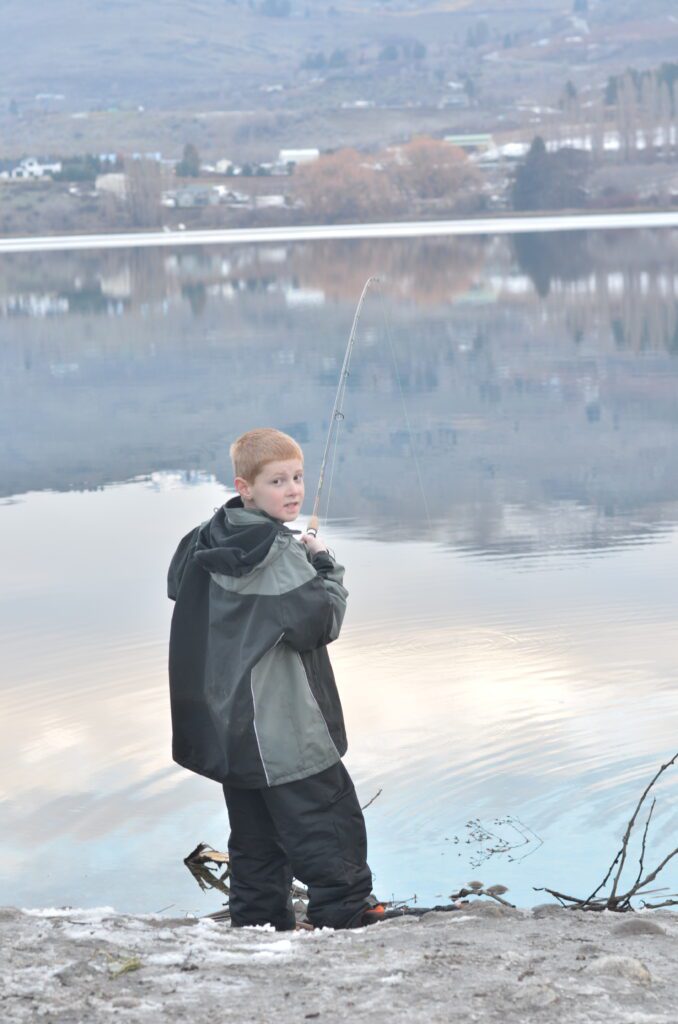
Looking back across the lake to the floating dock and small boat launch, it appeared much farther away than it was. Roses Lake, near the small orchard community of Manson, WA, is 130 acres and surrounded by foothills leading to the Cascade mountains. Roses Lake is not small, but also not nearly as large as the nearby 55-mile-long Lake Chelan which is the main reason why most visit the farming valley.
But on this springtime day, the afternoon winds had come up, blowing down the rolling hills and across Roses Lake. Between me and the newly redesigned boat ramp stretched a choppy expanse of wind-driven waves and whitecaps. In my small 12-foot rowboat, the real challenge wasn’t just the distance, it was the fact that I’d be rowing straight into the wind and crashing waves.
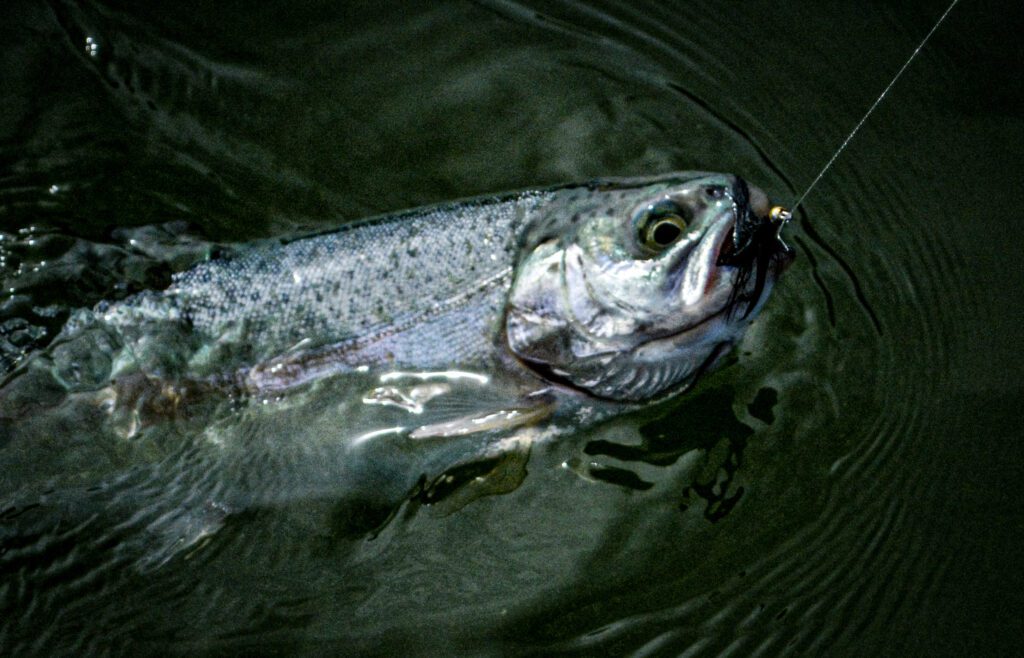
It had been a good day of fishing with several trout on the stringer and even more released as I rowed across the lake. Towing a green Mack’s Smile Blade fly in olive green with two small split shot a couple of feet before the fly meant catch and release was an option. If you choose to use bait then all fish caught must be counted towards the daily limit, even if released. Once I got to the far shore which is lined with cattails, I opted to switch over to a lightweight rod and a small jig with a curly tail grub under a float. This provided non-stop action with bluegills and small largemouth bass. Roses Lake offers anglers a lot of options all year long.
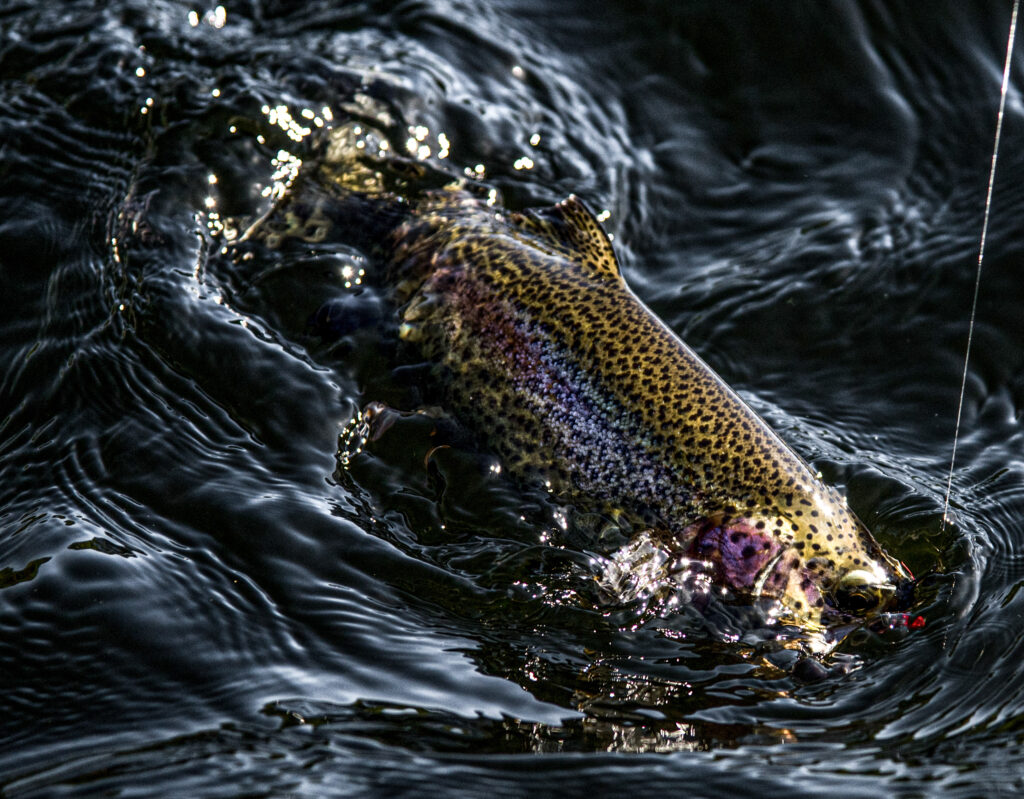
I grew up fishing this lake and back when it was a winter-only fishery, opening on December 1st and closing on March 31st; it was very popular with the locals. Every weekend there would be dozens of people sitting on buckets huddled around holes in the ice. But by the time the ice was gone, so were the locals. It seems they had their fill by March. Then several years ago the lake became a year-round season, now there is no rush of fishermen on December 1st.
When the ice is on this lake it is still very popular with the locals, but just like the days of years ago during the winter-only fishery, once the ice is off, the lake is all but forgotten. My dad fished it every day for a week straight this past January when the ice was thick and solid. He also limited on 10 to 12 inch rainbows in less than 2 hours each day he went out and the fishing continued to be good until the summer heat warmed up the water and brought out the water skiers.
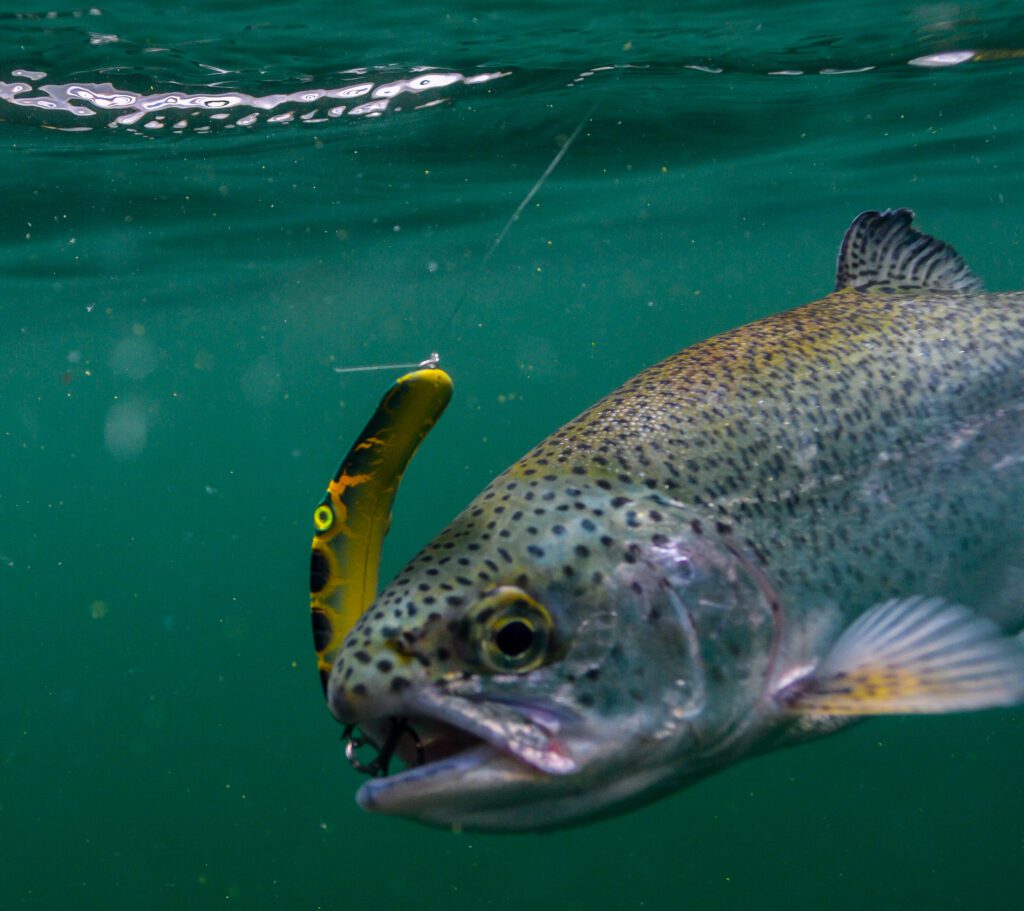
In March, the lake becomes very active, especially towards the end of the month when the water temps start rising and bugs start hatching. April and May are great months to fish the lake, especially trolling Mack’s Smile Blade flies or Carey Special flies either on a sinking fly line or on a lightweight spinning outfit with a few split shot above the flies. Since the lake receives trout plants throughout the year there always seems to be enough fish to make it worth the time to wet a line.
On average this lake sees a yearly planting of 31,000 rainbow trout, with 25,000 of those being triploids which are sterile and grow quickly. Washington Department of Fish and Wildlife also stocks around 2,000 brown trout and another 2,000 tiger trout, which are planted in hopes of keeping the warmwater spiny ray species in check. There are also catfish in this lake, though rarely targeted, and a good population of bass as well.
Access:
Roses Lake is 7 miles from the town of Chelan, along the north shore. Take Highway 151 towards Manson. Turn right on Wapato Lake Road, which is the same road that leads to the Colville Tribes casino and is across from Mill Bay County Park. Continue for approximately 2 miles until you come to Roses Ave. Turn left for about a ½ mile and the road veers right onto Green Avenue. Then head to the marked WDFW launch and access site about a ½ mile further.
There is ample parking which was recently re-paved and has bathroom outhouse facilities. Roses Lake access site also had the boat launch improved a few years ago with a dock added to assist in launching small watercraft. For those bound to the shoreline, WDFW just added a new fishing dock and a handicapped access bulkhead to fish from. It should be noted that this is the only public access to the lake as the rest of the shoreline is private property.
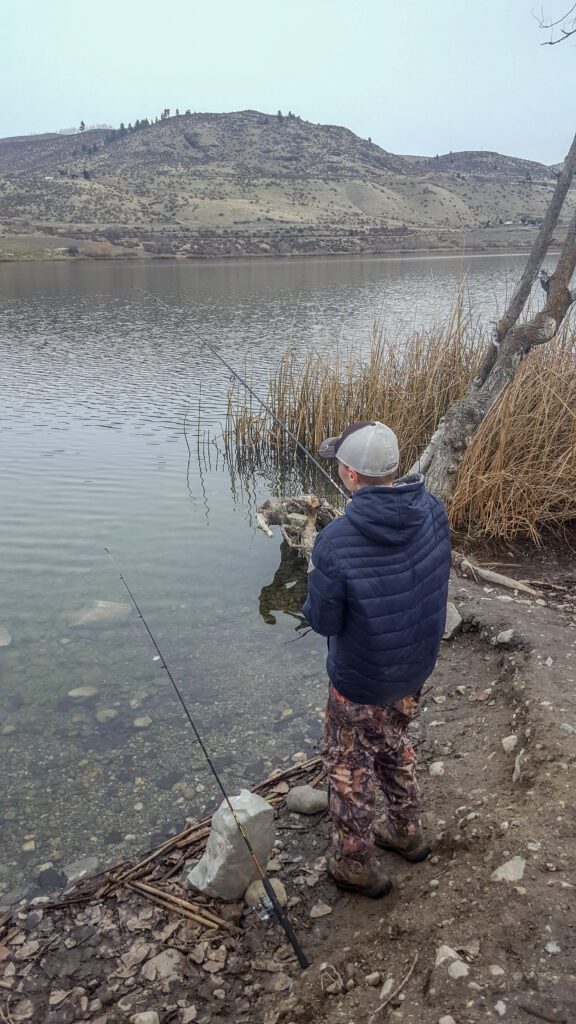
Where to fish:
Right out in front of the boat launch and off of the two fingers at the public access site has always produced fish. But if you have a boat there are two other areas that I highly recommend. First is a cove to the Northwest end of the lake. This cove area is shallow compared to the center of the lake and the water temps can warm up a little bit here which makes for better bug activity and hungry fish.
The second area is the East shoreline. This area is also shallow and has a sandy bottom which heats up the water in the early spring. There is a spring to the north side of the eastern shore where fresh water enters the lake from the aquifer. As the ice comes off of the lake with the oxygen-deprived water this area always does well in early spring. Of course, my favorite area is actually trolling between the east shore and the cove to the northwest along the northern shoreline just outside of the cattails.
What to use:
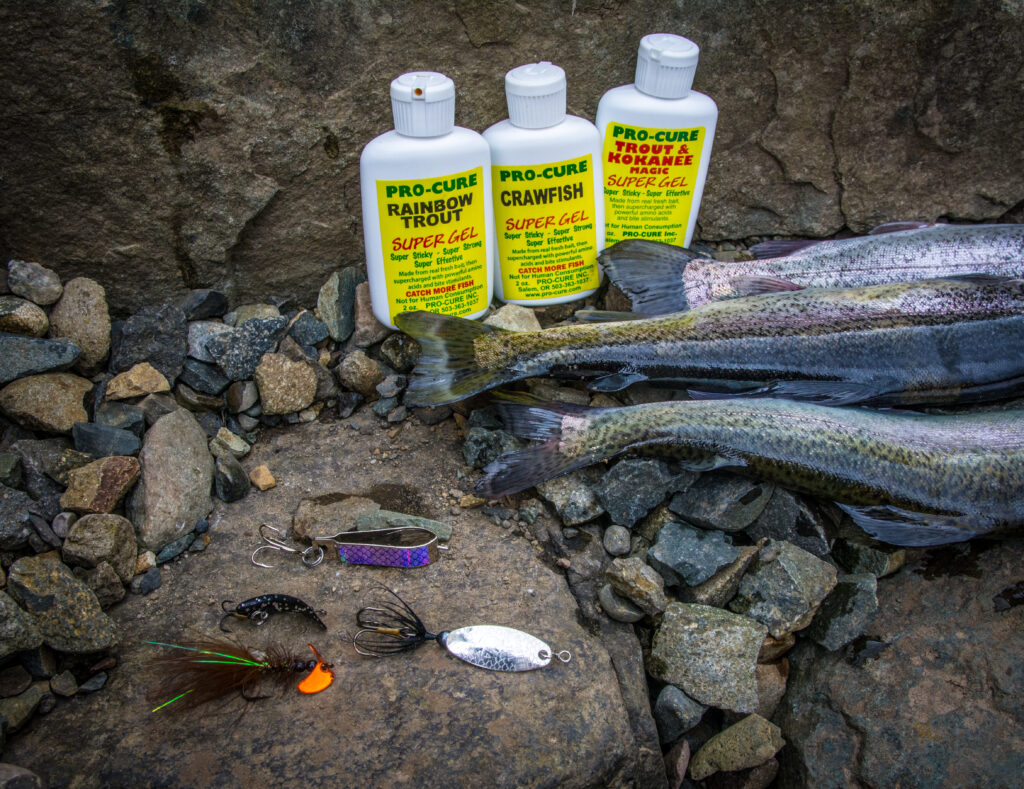
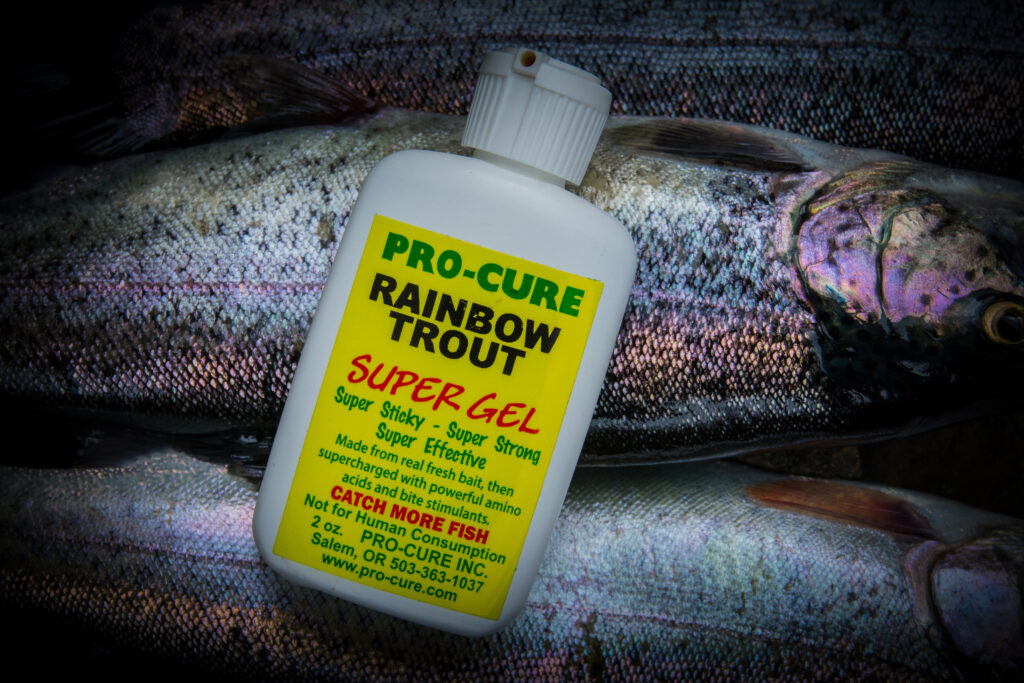
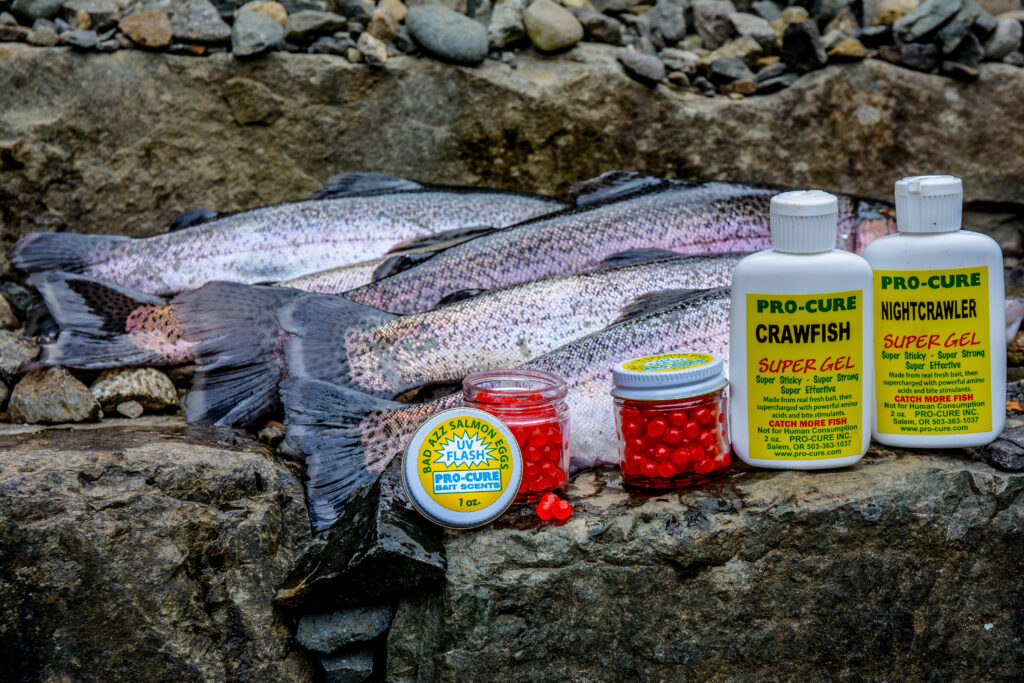
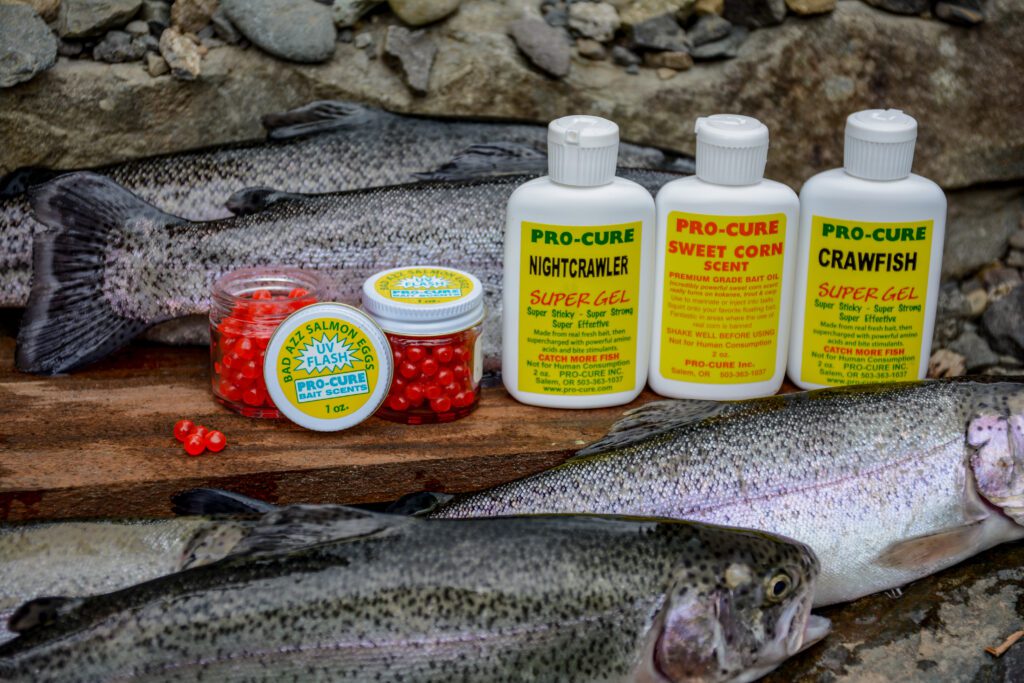
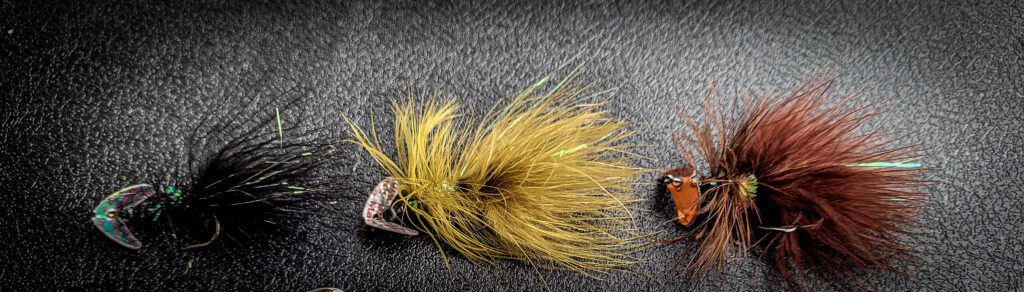
This is your standard trout lake and you can’t go wrong soaking powerbait or single salmon eggs doused with Pro-Cure SuperGel in nightcrawler or trophy trout. Be ready if you’re a bait plunker as there are also some big channel catfish in the lake that might gobble up your offering and give you a heck of a surprise when you’re expecting a planter rainbow! When the ice is on a favorite bait is cooked cocktail shrimp tipped with some corn soaked overnight in Pro-Cure bloody tuna SuperGel. But either before the ice or after it comes off my number one way to fish Roses is to troll a Carey Special or olive green Mack’s Lure Smile Blade fly, which is essentially a Whooly Bugger with a small Mylar blade in front.
Black leaches and a gold bead head black or green whooly bugger also works really well and you can use them to catch panfish and bass as well. You can use a 5 to 7 weight fly rod with a slow sinking line, or just a few small split shot two feet in front of the fly with a spinning outfit. Of course, if there was anyone joining me for the day I always made sure we had at least one Yakima Bait Company 2-inch Maglip in a green frog pattern being trolled behind the boat. You can use motors on the lake, but rowing can increase bites as it seems that the slower you go the more fish you catch.
Fly fishing too:
Just to the west of the boat launch is a little stream that outflows from Roses Lake to Dry Lake. Dry Lake is full of warm water fish, such as bass, crappie, bluegills and sunfish. These species always seem to sneak their way into Roses and this part of the lake is ideal for float tubing with a fly rod. There are also tiger trout in Roses and even a few browns, as WDFW tries curtailing the sunfish and invasive panfish that can spawn in lakes by using these predators. If the trout fishing is slow then you can try poppers or leach patterns for the pan fish.
Other options:
If you are planning a trip to the Chelan Valley to give this fishery a try, don’t forget a few other options as well. Dry Lake right next to Roses is a bass fisherman’s dream. This lake is very shallow and by summer the weeds have overtaken the lake, but in fall and spring the weeds aren’t as bad and it’s very fishable. I don’t recommend ice fishing this lake because it is so shallow that the ice seems to be thin or “rotten” in places as the water can remain a bit warmer than the deeper Roses Lake. There is no improved launch at Dry Lake, but a small car topper boat or a float tube works great here. There are some big bass in there as well as good-eating crappie and other pan fish.
Of course, Lake Chelan is also an option that you cannot overlook. Springtime is prime time for the Lakers as they are in their spawning cycle. It seems the bigger fish come up from the depths or from the up lake to the down lake area (little is known where the big fish hang out since the lake is so big and deep). By late spring you can target the kokanee which are heading to the east end of the lake. The standard pop gear and wedding ring tipped with a worm and shoepeg corn soaked in Pro-Cure’s anise or bloody tuna is the top producer for the Kokes.
It seems this migration of landlocked sockeye fatten the Mackinaw for a chance to break the state record for Lake Trout. Try off of the end of Wapato Point where the lake goes from 150 feet to over 250 feet, either jigging 1 oz white grub jigs tipped with pike minnow or herring strips or troll a U20 flatfish along the bottom off of downriggers. If you’re not equipped for the deep water, the smallmouth bass are found along the docks in the town of Chelan. The water is clear enough that you can often see fish for the bass.
Back on Roses Lake, keep an eye on the afternoon winds and be ready to head for the boat launch. If the trout fishing slows then work the cattails for some incredible bass fishing. You might not find big bass here but they are plentiful and easy to catch. Keep in mind that there is often a water ski slalom course on the west end of the lake and that others will be using this lake as well. The 130-acre body of water is surrounded by orchards and a few houses and respect the shoreline.
The WDFW access site gets busy but there is plenty of parking and good bank access. This lake has it all, for everyone, from kayakers and float tube anglers to bass boats and tow boats, trout and bass, and some bluegill too. This makes it a perfect lake to take the kids as well as just spend some time catching fish while in the Lake Chelan Valley.
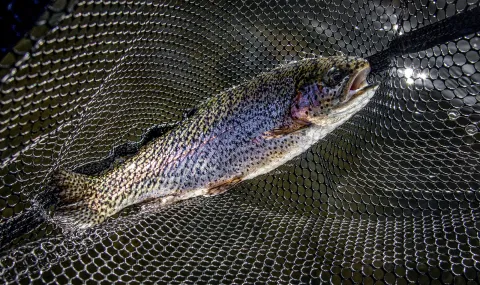
/articles/spring-ahead-roses-lake
Walleye Fishing At Long Lake
A few inside tips that can make you more successful your next time out.
Nestled in the Spokane River in Washington state, Long Lake is a favorite destination for anglers seeking productive fishing and multiple species. While the lake is well known for bass fishing, and recreating, it has earned a reputation as an excellent spot for walleye fishing. Whether you're a seasoned Angler or a novice hoping to reel in a trophy catch, Long Lake offers opportunities to hook a variety of quality fish, with now the walleye becoming the star of the show. Throughout this article, we will explore a few techniques you may want to know to catch walleye on Long Lake and some of my favorite spots to cast a line.
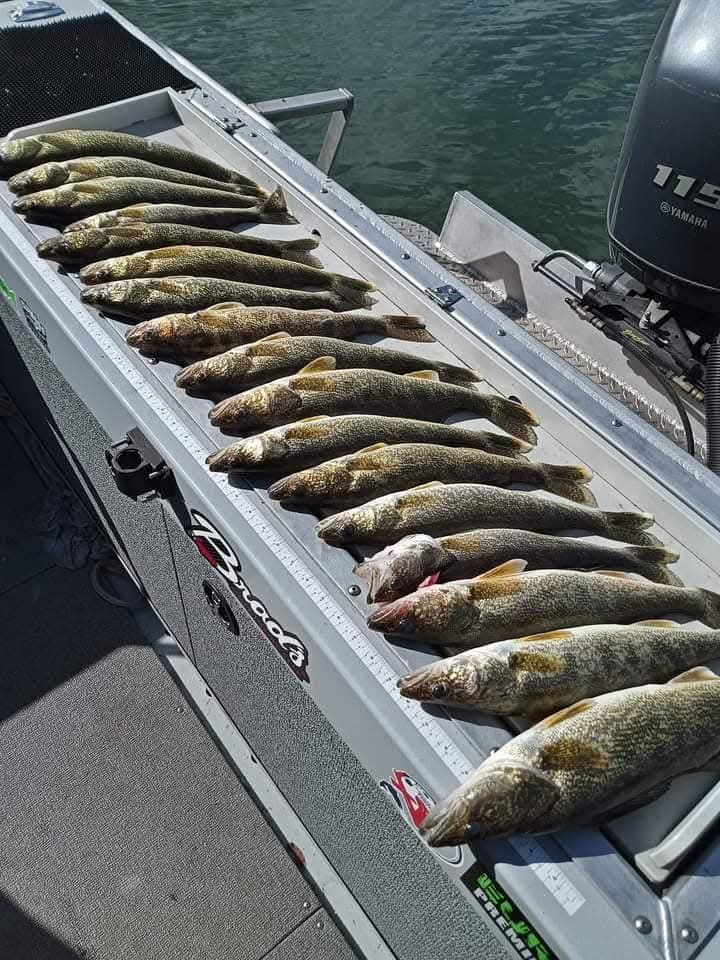
The Allure Of Long Lake
Long Lake, also known as Lake Spokane, spans roughly 24 miles and allows a ton of fishing opportunities. The lake is a man-made reservoir created by the Nine Mile Dam, and Long Lake Dam. With the lake being so close to Spokane, it attracts a lot of recreation boaters, swimmers, jet skiers, and kayakers. Lots of bass tournaments are held there, and plenty of trout are planted for family-catching fun. Don't be surprised if you come across a pike, as at one point in time they were quite plentiful in the system. Now with the good population of walleye showing up the past several years, and so much room to fish, it makes Long Lake a prime fishing destination in the region.
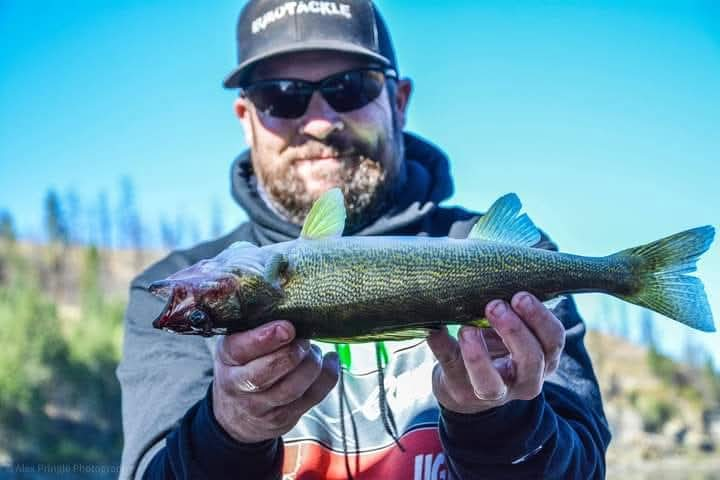
Walleye: A Coveted Catch
Walleye or a highly prized fish for anglers due to their elusive nature, sporting challenge, and their great taste. Their reputation as one of the best-eating freshwater fish definitely adds to their appeal. Known for their sharp teeth and distinctive pale greenish silver color with dark vertical bars on their body. Walleye are not as aggressive as Bass, making them a bit harder to catch, which increases the excitement for anglers.
Long Lake walleye have flourished due to the abundant amount of forage fish like perch and so many other minnows, great water, and structure; including drop-offs, rocky shorelines, and vegetation. The walleye population in Long Lake is healthy, with many Anglers regularly reporting good catches, making for a perfect habitat for these predatory fish.
Walleye fishing at Long Lake typically peaks in the warmer months, from Spring to late fall. However, most anglers are drawn to the lake in the spring and summer when walleye are actively feeding and more of the lake is accessible as the water is low in the winter.
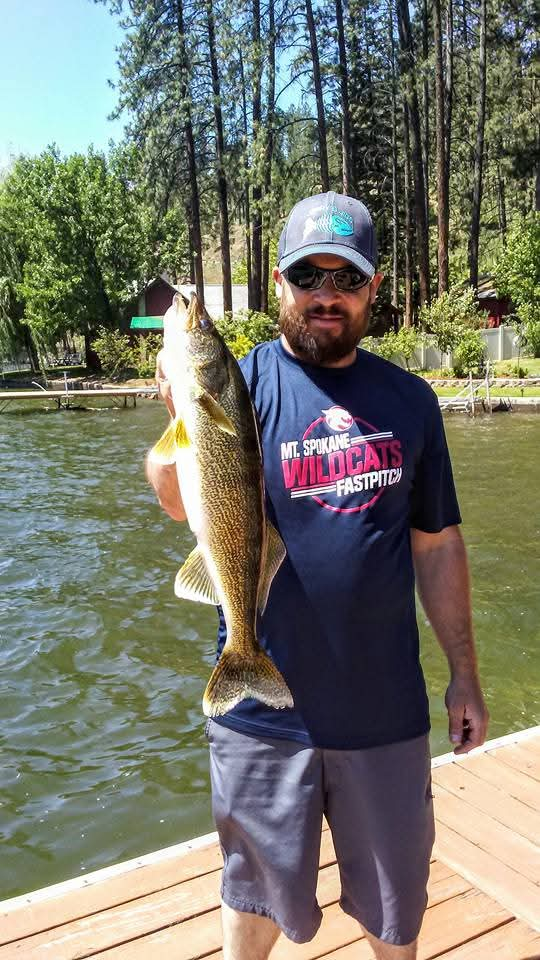
Best Time To Catch Walleye
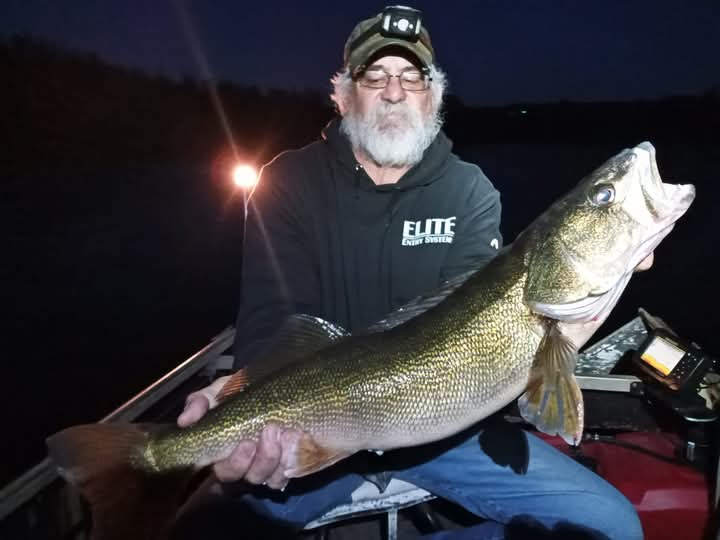
The best time to fish for walleye on Long Lake largely depends on their feeding habits and the season. Walleye are known to be nocturnal, meaning they are most active during dawn and dusk, when the water cools and the light levels are lower. This makes the early morning and evening hours prime times to catch walleye. These fish of course will bite during the heat of the mid-day during warmer months, but I tend to find my best fish during the cooler months at night. In terms of seasons, spring and fall are often regarded to be the best times for Long Lake walleye. During the spring, walleye are typically spawning, which makes them more concentrated upriver near the Spokane House launch and further up in the shallows. That's where we find our most large and aggressive fish. In the fall, walleye put on the feed bag and bulk up for the colder months, fishing can be productive as they aggressively feed on smaller baitfish flourishing just outside weedlines.
Summer fishing walleye can still be productive, and very good, but may require deeper fishing targeting the river channel. Walleye tend to retreat to deeper, cooler water during the summer. Using your electronics can be particularly helpful in locating them in deeper regions of the lake.
Techniques And Tips For Catching Walleye:
- Trolling
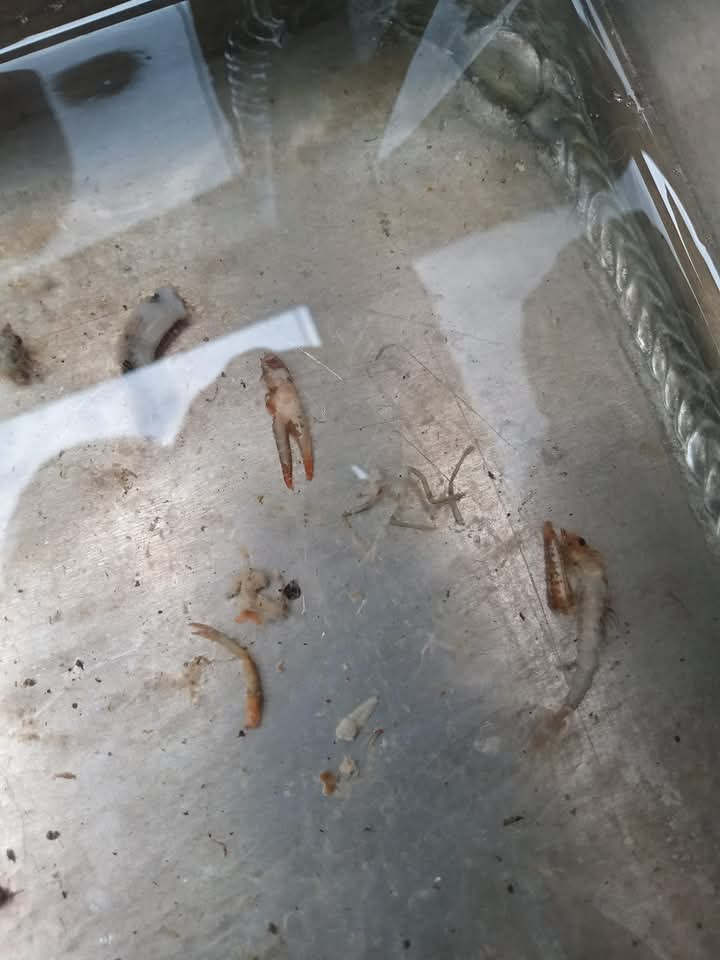
Trolling is one of the best and most effective ways to catch walleye, by covering more ground and increasing the chance of encountering a hungry walleye. When im trolling Long Lake, the most effective depths for me have been in the target range of 10-30ft, depending on season and temps. Early season trolling large crank baits like Bandits in 10-12ft of water is lights out up near the Spokane House launch. Make sure those crankbaits are making contact with the bottom a little, and you'll be in the zone, trolling upriver. When the fish start to move out to the main lake, and a little deeper is when I will switch to a slow death rig with a worm harness from Mack’s Lure - usually on a 3oz. bottom bouncer trolling at slow speeds maintaining contact with the bottom. Walleye love crawdads and bouncing the bottom mimics crawdads fleeing, drowning in the walleye.
- Jigging
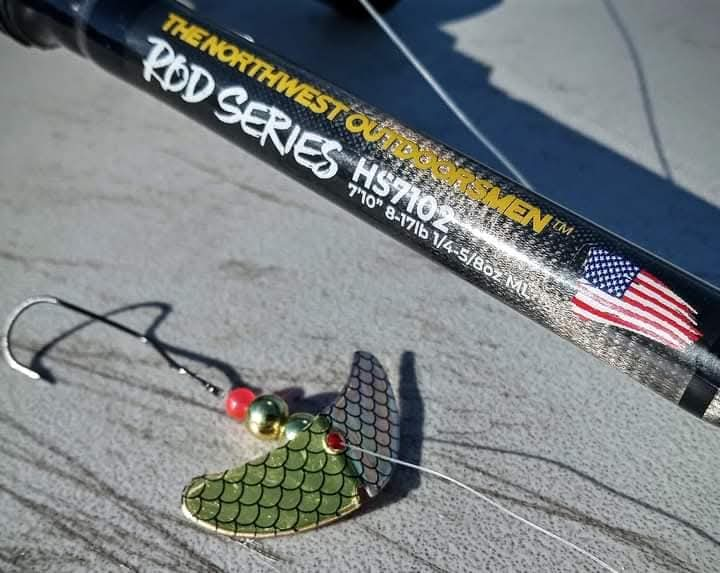
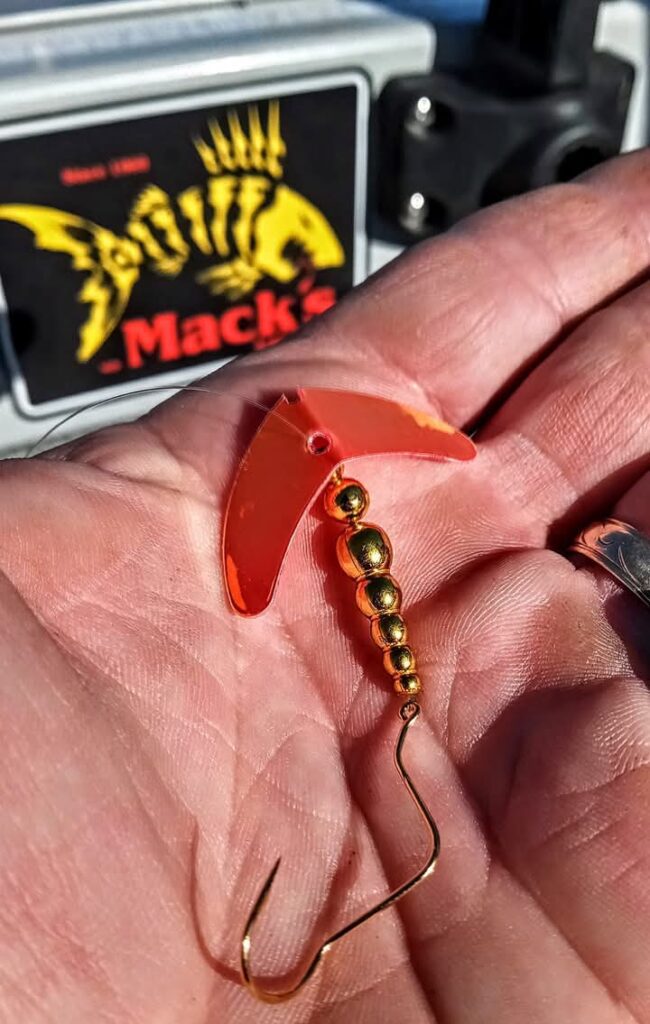
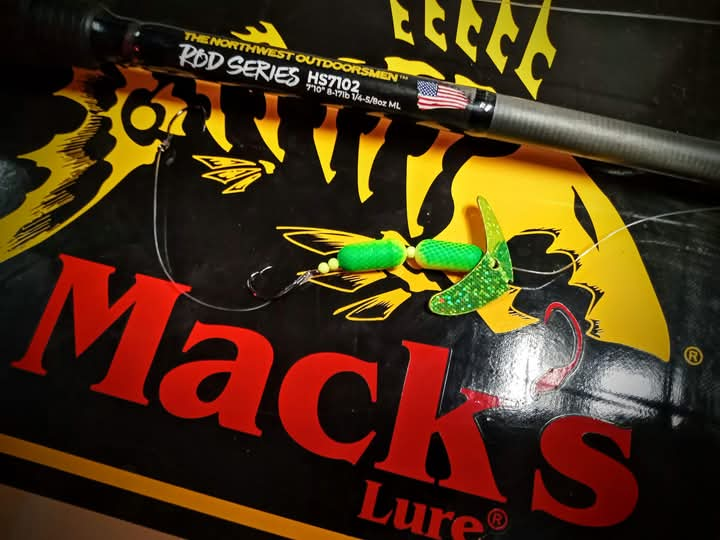
Jigging is another effective method for walleye, especially as they migrate deeper along the river channel. By using a jig tipped with a worm, or cut bait Anglers can lure walleye into biting by mimicking the movement of a distressed bait fish. The key to success with jigging is to work the base slowly and deliberately, ensuring it mimics the walleyes' natural prey. Many anglers, including myself, prefer using soft plastics and various profiles and colors.
- Drift Fishing
Drift fishing I find effective when fish are spread out or flats I find just off the river channel. Drift fishing involves allowing your boat to slowly drift with the current while casting jigs, or bouncing jigs close to the bottom. This technique can be productive when targeting drop-offs near the flats, weed lines, or rocky shorelines.
- Night Fishing
Walleye are known to be more active at night, targeting the shallow river areas early season, or shallow weedlines closer to shore around that 7-15ft of water. I like glow color lures, silver lures, or dark black lures.
Where To Fish On Long Lake
Long Lake has several spots that can consistently produce good walleye catches. Many anglers focus on the flats adjacent to the deeper river channel, but can also be found shoreline weedlines and structures such as drop-offs and submerged gravel beds.
Some of my favorite spots include:
- The upper end of the lake: This upper portion of the lake near Long Lake Dam has many rock formations and drop-offs where these predators can hunt bait fish. Look for shorelines on the upper end that have gravel or rip rap. Walleye love to chase crawdads in these areas.
- The lower end of the lake: This area provides plenty of spots to fish from between 9-mile recreational area to Willow Bay. Trolling and jigging is very effective in this large stretch.
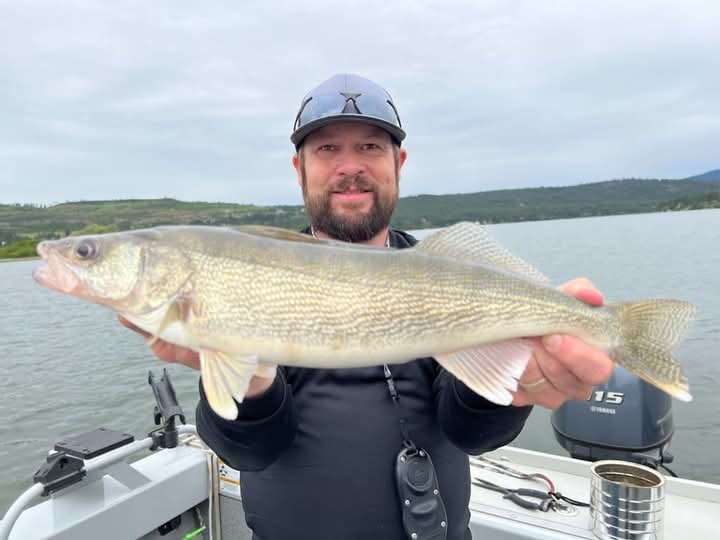
Walleye fishing on Long Lake in Spokane Washington, offers an experience for anglers looking to test their skills. Whether you're fishing from a boat or the shoreline, the lake offers a diverse habitat that provides the perfect environment for walleye to thrive. With the right techniques and a little patience, you can have a successful fishing trip reeling in a trophy walleye. So grab your gear, head to Long Lake, and discover why it remains as one of the best-kept secrets for walleye fishing in Washington.
/articles/walleye-fishing-long-lake
How To Catch Trout On A Rainy Day
They say an angler is a man who spends rainy days sitting around on the muddy bank of a river doing nothing. Because his wife won't let him do it at home.
Once I made a rainy day road trip through Central Oregon early in the spring. I didn't fish much, but I talked to anglers, most of whom were doing nothing. Here's a sample of the folks I met and how they were fishing.
One guy had the door of his Mercedes propped open while he fished the Deschutes at Warm Springs. He had tied a hook direct to the end of the main line and had a worm on it. No swivel. No leader. No split shot. Just a hook and worm.
He couldn't figure out why he couldn't cast farther than the end of his rod. I couldn't figure out how he had generated enough brain activity to afford a Mercedes.
At Taylor Lake in The Dalles, a father and son were sitting in a Chevy watching their poles. I walked up about the time they reeled in. They had split shot crimped on main lines, big snap swivels, and short, heavy snells on big No. 4 worm hooks. Okay for catfish, maybe, but not for trout. They told me the trout weren't biting today. When they went home they probably said, "The fishing was good; it was the catching that was bad." News Flash: It ain't ever gonna be good.
At a kids-only trout pond in Bend, I saw a man and wife in their 90's fishing with fly rods. They were seated on lawn chairs right next to the sign that said Fishing For Children Aged 17 and Under.
Tied to very short leaders, they had huge Spin-N-Glos with nightcrawlers on 2/0 trebles. Too big for anything smaller than a 30-pound Chinook. Their baits lay on the bottom about two feet out from the bank.
Call me old fashioned, but I think people when they go fishing for trout, should know how to rig for trout.
Here are three easy ways to catch 'em.
PASTE BAITS/JAR BAITS
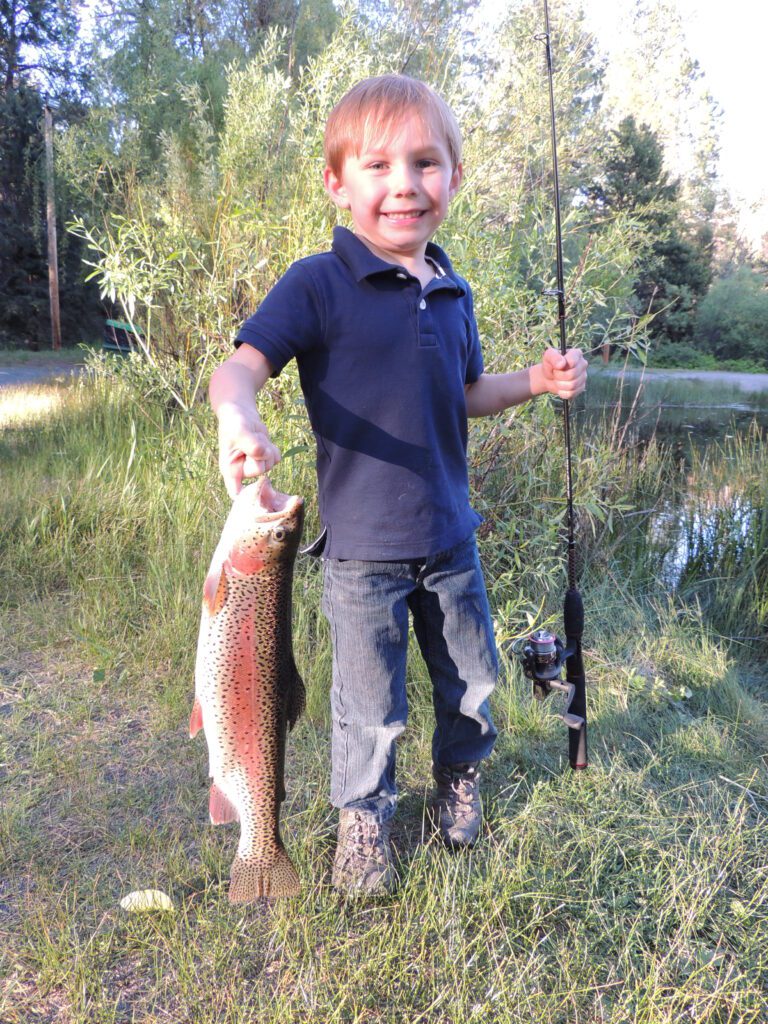
Use a paste bait, particularly when the water is cold in the early season. Slide a bullet sinker onto the main line and then tie on a barrel swivel. Then tie on a 30-inch four- to six-pound test leader terminated at a No. 12-16 treble hook. Pinch a bit of the paste bait (Power Bait, Gulp! or similar), roll it in a ball and cover the hook with the dough.
Cast out, let the bait sink to the bottom, then leave it. Set the rod down and watch it. When the line starts to move, pick up the rod and reel in.
This rig catches fish and it kills them. So don't plan on fishing for sport, for catch-and-release. Use this method when fishing for a fish dinner.
BOBBER AND WORM/BOBBER AND EGG
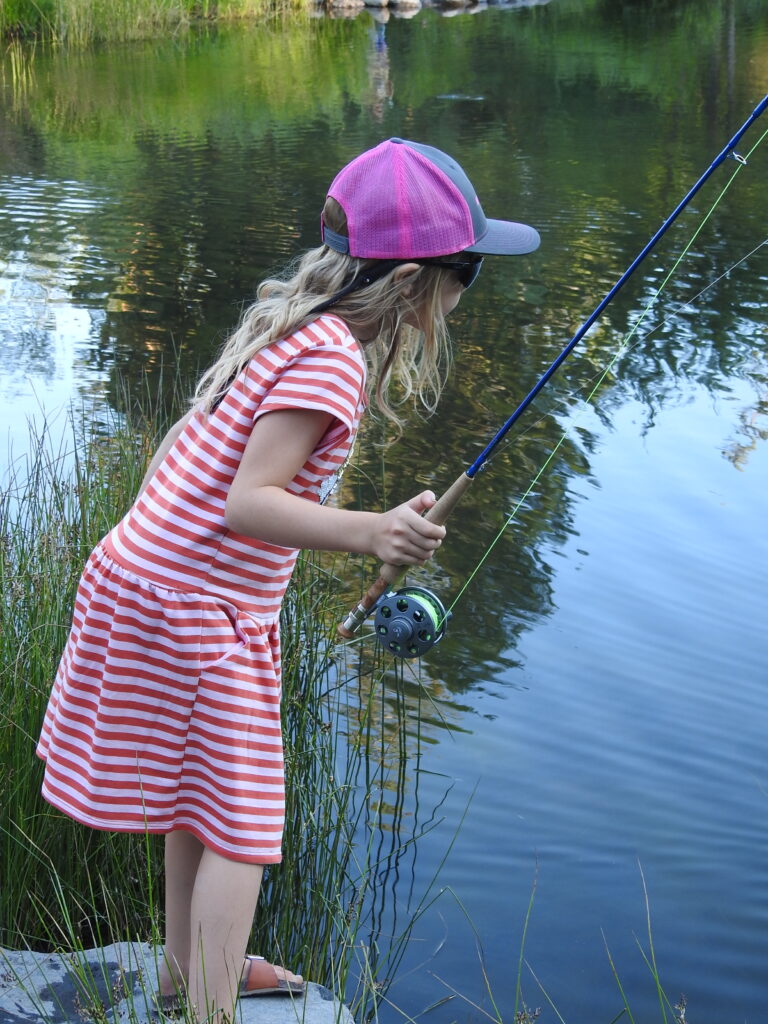
The bobber and worm rig is just as effective as it ever was. Rig this way when fish are active and higher in the water column.
Tie a swivel to the main line. Tie on a leader about 24 inches long. Tie on a No. 8-12 bait holder hook if fishing with a worm. Use a No. 12 hook if fishing with salmon eggs. When using nightcrawlers, cut the worm into pieces instead of using the whole worm. Pinch on a bobber above the swivel. Pinch a couple of small split shot on the leader.
Cast out, set the rod down and watch the bobber. When the bobber starts to move, let it bounce a couple of times then set the hook.
FLY AND BUBBLE
Use a fly and bubble when the water is clear. One of the most effective rigs for catching hatchery trout in clear water is a spinning rod rigged with six-pound test mainline and a float and fly combo. Slide a clear plastic bubble over the main line. Tie on a swivel. Tie on a 48-inch 4-pound test leader and finish with a No. 10 Red Tag Woolly Worm. At the lake, fill the plastic bubble with water which provides the weight necessary for long casts. If the fly doesn't sink fast enough, put on a small split shot.
Cast and reel it back S-L-O-W. Keep moving around the pond until fish are located. This is a good method for catch and release.
Fishing is not hard, but using the wrong baits and fishing in the wrong spots will lower an angler's success rate. Make it easy for the fish to find your bait or fly. Fish where fish are.
Still need help? Stop at a sporting goods store. Take your rod and tackle box inside. They're going to sell you something, and that's okay. But get a tackle expert to rig the rod the right way. They'll do it if you ask nice. Pay attention so you can do it next time. Then go fishing. Your loved ones want you to get out of the house.
As has been said before, "Give a man a fish and he has food for a day; teach him how to fish and you can get rid of him for the entire weekend."
# # #
For a copy of the Fishing Central Oregon book, send $29.99 to Gary Lewis Outdoors, PO Box 1364, Bend, OR 97709 To contact Gary Lewis, visit www.GaryLewisOutdoors.com
/articles/how-catch-trout-rainy-day