/articles/categories/fishing
Battlin’ Paddlefish By Mike Carey
Lately, I’ve been remembering back to my mid-twenties (no small task), and an April trip my brother Kevin and I took on the Wisconsin River below the Sauk Dam. It was one of those beautiful spring days, sunny, blue skies, temperatures climbing into the 60s with just a whisper of breeze. We had loaded up my canoe and launched on the west side just below the dam. After a quick row through some fast water, we came to the calm side of the dam. With no water spilling over the dam, conditions were ideal for dropping a jig tipped with a minnow down to the bottom in search of walleye. The spawn bite was usually good, and we were looking forward to bringing home some tasty marble eyes. Little did we know the river had something else planned for us that day.
My brother Kevin was what I would call a “reluctant angler”. He would go fishing with me, but only after much cajoling and promising not to get up at 5 am in the morning. The rest of my brothers were even less fishing inclined. I guess God gave me the lion’s share of the piscatorial genes in our family, something for which I have been forever thankful. Although the rest of my brothers made up for it by getting extra IQ genes, which is why they would never get up at five in the morning to chase two-pound fish.
Lowering our anchor, we settled into the task at hand. We each had standard-issue 6 ½ foot rods of unknown action and backbone, and open-faced spinning reels loaded with 8-pound test monofilament. On the working end of the line, a ¼ ounce jig (green) and a nose-hooked, squirming minnow who somehow knew things were about to go from bad to worse for him. Down 30 feet to the bottom, reel up two cranks, and we settled in for the first telltale tap-tap of a walleye to start our day.
Waiting for our first bite, Kevin, an avid Monty Python fan, started going through his repertoire of Humorous Sketches to pass the time. Noticing my rod starting to bounce, he inquired, “What’s all this then, ay?” as my rod started a deep bow and the tip buried itself underwater. “I’m not sure. I felt a bite, but it feels like it might be snagged on the bottom.” In response to my observation, said snag began moving steadily away from our canoe.
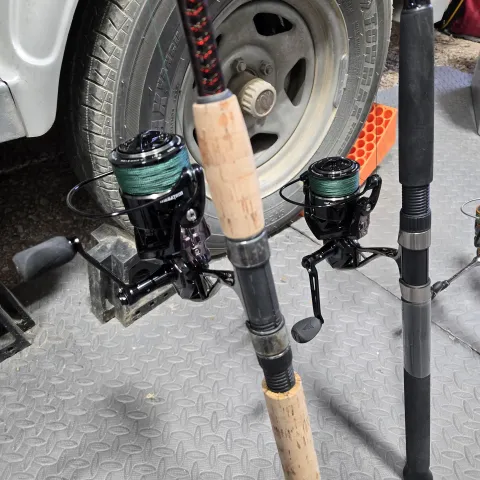
Line started peeling off my reel at an alarming rate. “Bring the anchor up, this isn’t a walleye!”
Looking at my reel, I saw an unsettling sight – the spool was rapidly running out of line. Saying a silent prayer, I tightened down on the drag, and to my amazement, the line did not come snapping back at me. Kevin, always the observant one, noted “The canoe is being pulled by your fish”.
“This is a big fish, I have no idea what I have.” We proceeded to be pulled along by some superior life force, passing other anglers. “You must have a paddlefish,” an old timer called out. Paddlefish… hmm. I told Kevin to Google paddlefish, which, being 1982, made him scratch his head. “What’s a Google”? he said. “Never mind”, my back-to-the-future self replied.
Like my monofilament line, time began to stretch. Kevin ran out of Monte Python material. Slowly, I regained line, pulling and reeling what felt like a big dead weight, except for the occasional short runs. I would like to say this was my finest hour as an angler, as I skillfully fought the fish to our free-floating canoe. But Kevin more accurately said I was the luckiest angler that the line hadn’t broken.
“Hang on, he’s almost to the boat”. With that, Kevin let out a low “damn” as the fish came up as docile as it could be to the side of the canoe. In that moment, I felt the first shudder of fear. The fish was easily a third or more the length of the 17-foot canoe. The jig was attached to the top of the long paddle nose…
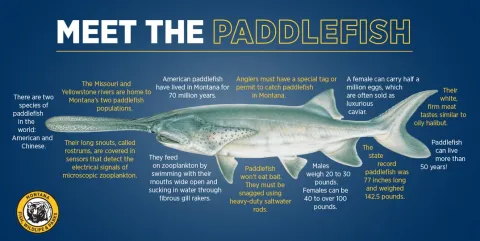
GEEK ALERT - The long, paddle-shaped nose of a paddlefish is called a rostrum. This elongated, sensory-filled snout accounts for up to one-third of the fish's total body length and acts as an antenna to detect plankton via electroreceptors.
Neither Kevin nor I had caught anything bigger than a ten-pound carp up to this point in our angling lives. A 6–7-foot paddlefish would weigh 150 or more pounds, and holding on to him at the side of our less-than-stable canoe was a pucker-fest moment for both of us. Kevin reached back and unhooked our Moby Dick, and we watched the fish slowly sink into the depths of the Wisconsin River.
Fast forward twenty-four years. Kevin has been gone for 12 years, but somewhere I have an old story I wrote with his notes in the margins, testifying that there is no exaggeration in the facts that I have shared with you.
Here we are in 2026, and I’m out in Montana. Lo and behold, the State of Montana has a paddlefish recreational season! Not only that, but every year they hold a lottery for catch and keep tags at three locations where anglers can fish for paddlefish: the upper Missouri, the Missouri River under Fort Peck Dam, and the Yellowstone River. The health of the paddlefish population is strong and self-producing, with a thousand tags issued for catch and keep for the Upper Missouri section. Montana’s Fish, Wildlife, and Parks has a well-regulated and managed fishery. It’s incredibly popular, and paddlefish, I’ve read, are very good to eat. Not to mention the eggs make caviar, a delicacy in many places.
Paddlefish are filter feeders that swim at their food with mouths wide open to catch zooplankton in their gill rakers. Because of this, the only way to catch a paddlefish is to snag it. There are snagging seasons in many river systems throughout the United States. To an angling purist, I can easily see how this could be looked at as barbaric and unsportsmanlike. Watching YouTube videos, it looks like a lot of work! Think of paddlefish as the fish of a thousand casts, only you’re casting 6 ounces of lead weight and sweeping your rod with every cast. Be sure to bring your ibuprofen for the end of the day!
After much internal debate, I’ve decided to give it a try this year. I may run out of gas after ten casts, but with any luck I’ll see anglers catch these prehistoric relics – they have a 300–400-million-year-old ancestry, predating dinosaurs. Wish me luck!

/articles/battlin-paddlefish-mike-carey
Catching Bass After the Spawn by John Kruse
It is easy to fool yourself into believing you are a great bass angler when the bass are spawning in the springtime. Largemouth bass are defending nests full of eggs or fry and will readily strike a lure like a weightless worm or lizard cast near them. Catching a dozen or more bass is easy this time of year, both largemouth and smallmouth bass, but then comes the post-spawn, where those shallow water spawning beds become a ghost town. The fishing suddenly gets a lot tougher for some, and it’s easy to say out loud, “Now what?” as you futilely search for bass in places they are no longer found.
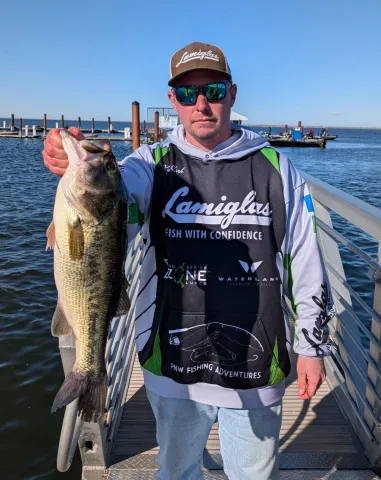
One thing you can do is ask a successful post-spawn angler how to go about catching those bass. One such fisherman is Kyle Clark, an avid bass tournament angler and the owner of PNW Fishing Adventures - www.facebook.com/pnwfishingadventures/.
I caught up with him at MarDon Resort the day he and his partner won a Washington Bass Federation tournament at Eastern Washington’s Potholes Reservoir. The two caught five largemouth bass weighing 20.8 pounds. When asked what he used to catch post-spawn bass in both Western and Eastern Washington, Clark replied with three of his favorites: Poppers, senkos, and jigs. All are solid offerings. Let’s break down these choices and a few more for late spring to summertime bass.
JIGS – Jigs are a staple for both largemouth and smallmouth bass all year. They come in many styles. There are swim jigs, football head jigs, flipping jigs, skipping jigs, Arkie jigs, and more. All of them work, and with bass tending to hide in or around cover such as wood, reeds, willows, or rocks, weedless jigs shine. A 3/8-ounce jig is a standard for many types of fishing in both shallow and medium depths. Common color schemes include green pumpkin, black & blue, chartreuse & black, or orange & brown. Fishing jigs in cover like willow thickets, under docks, or in open areas amongst lily pads are all effective ways to use these lures.
SENKOS – The senko is a plastic worm, generally measuring between five and six inches. The nose of the senko is subtly blunter than the tail. It is a deadly offering, fished weightless or with a very lightly weighted semi-weedless hook, when bass are spawning. However, it also works very well during the post-spawn phase. The two most common ways to fish a senko are Texas-rigged, where the bait is hooked through the nose and the body, making it weedless, or wacky-rigged. A wacky-rigged senko is hooked right in the middle of the worm, and the angler allows it to fall slowly in the water column.
POPPERS (AND OTHER TOPWATER LURES) – Early morning and evening hours are great times to fish a floating popper for bass, spring through early fall. Many think you can only fish with topwater baits when waters are calm, but truth be told, these lures are also effective during days when light breezes are blowing, creating rippled surface water.
Kyle Clark prefers to fish a topwater popper slowly versus the steady to fast retrieve used with a Zara Spool style topwater plug you retrieve in a zig-zag, “walking the dog” style. Other topwater lures that work well include weedless frogs (fished over grass, weeds, or lily pads), whopper-plopper style topwater lures brought back with a moderate retrieve, and buzzbaits, retrieved rapidly, making a clatter as you reel it in. Topwater poppers (and several of these lures) shine when fished over submerged weeds and grass, especially off points or around sunrise, near shore.
CRANKBAITS – Not on Clark’s list but certainly useful during the post-spawn period are crankbaits. There are two styles of crankbaits to fish this time of year: lipless cranks or diving crankbaits.
Lipless crankbaits, retrieved parallel along weed lines, brush lines, or rock riprap, work great for bass that aggressively bite the lure in a reactive manner. The lure can be retrieved at a moderate to fast pace after sinking for a few seconds. If that does not draw strikes, try a stop-and-go retrieve, with short pauses between reeling. Bass will often hit when the lure they are following literally stops and begins to drop in front of their nose. “Go To” lipless crankbaits include the Berkley WarPig or the original Bill Lewis Rat-L-Trap. When it comes to colors, match the hatch or forage base the bass are feeding on. The one exception to this rule is when the water is stained or murky. That is when a chartreuse colored or dark colored lure shines because it stands out better, a fact applying not only to lipless crankbaits but all sorts of lures.
Diving crankbaits are also easy to use, though most anglers fish them wrong. Lots of people will cast and retrieve them at a moderate pace, leaving them in the middle of the water column. However, depth matters, and diving crankbaits are best fished close to the bottom. So close in fact, that they are bumping the bottom and either bouncing off wood and rocks or churning up sand or gravel. Shallow three-to-five-foot crankbaits fished over flats or deeper diving crankbaits retrieved down slopes both catch plenty of largemouth and smallmouth bass.
Put it all together, and you have several simple, easy-to-fish lures that will get you into post-spawn bass from late spring and throughout the summer. Give one of these techniques a shot, and if it does not work, change to another. Let the bass tell you what they are in the mood to bite on any given day, and catch more bass after they are done spawning this spring.
John Kruse
www.northwesternoutdoors and www.americaoutdoorsradio.com
PHOTO CREDITS:
Kyle Clark with a quality 4.5-pound largemouth bass – Photo courtesy PNW Fishing Adventures
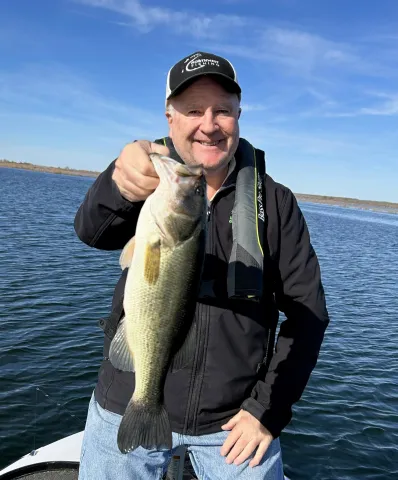
The author caught this bass with a green pumpkin colored weedless jig.
/articles/catching-bass-after-spawn-john-kruse
Opening Day Means Trout Derby Time! By Mark Yuasa, WDFW
Warmer weather, coupled with longer days, is a sure sign that spring has finally arrived, and the kickoff to the statewide lowland lakes trout fishing opener is just a stone’s throw away.
To prepare for this special fishing occasion on April 26-25, the Washington Department of Fish and Wildlife (WDFW) hatchery staff have been busy stocking about 525 seasonal lowland lakes and ponds with nearly 15.5 million trout and kokanee.
“Opening day is one of our biggest and most important days for anglers to get out on the water,” said Steve Caromile, WDFW Inland Fish Program manager. “Spring weather can be hard to predict, but we’ve had a mild winter, and hopefully that’ll lead to plenty of success for weeks to come.”
The 2026 stocking plan reveals more than 2.1 million catchable-size trout (averaging 11 to 13 inches) and another 157,000 “jumbo size” trout measuring 14 inches or longer will be swimming in lakes and ponds in time for anglers to catch on the opener. Most of the jumbos are expected to be planted in March and April, while others will be stocked to boost fall fisheries. Adding to the stocking list is another 1.6 million-plus trout categorized as “put, grow and take” – reared in hatcheries and 2.6 to 10 fish per pound in size – stocked in 2025. The fish that survived through the winter should now average 8 to 12 inches.
To further boost fishing prospects, an estimated 11.5 million fingerling and fry trout and kokanee planted one or two years ago should be in the catchable size range when the 2026 season gets underway. Most fry were stocked in Eastern Washington opening day lakes, which are managed to create decent fry survival. To spice it up, the WDFW Trout Derby is April 25 through Oct. 31 with more than 100 stocked statewide lakes. Around 70 statewide businesses are offering an estimated 915 prizes valued at $44,000 and worth about $48 per prize. The number of tags turned in during the 2025 season was 59%. The success of the trout derby would only be possible through WDFW’s ongoing partnerships with business dealers/vendors throughout the state.
Prizes include: gift cards, fishing gear and tackle, annual magazine subscriptions, Seattle Mariners game tickets, hooded jackets, books, rounds of golf at multiple golf courses, local aquarium admission, car detailing bucket, and kayak rentals. Higher valued prizes include: a kayak, guided lake fishing trip for two, handheld GPS units, lifetime memberships for a streaming app to locate trout streams in Washington, stays at local resorts and campgrounds, a backpack, and a beverage refrigerator. This season, each of the prize-winning trout can be identified by a green tag inserted near the dorsal fin.
Anglers can participate in the WDFW photo contest during the first week of the trout derby on Instagram by using the hashtag #watroutderby.
Join WDFW staff for the WDFW/Filson Trout Derby Kickoff Party hosted by Filson on April 18 from 11 a.m. to 3 p.m. at the Filson Seattle Flagship store, 1741 1st Avenue South in Seattle’s SoDo neighborhood. Get trout derby information, watch a fly-tying demo, learn from local fishing experts, and enjoy cuisine served by a local chef. For details, refer to https://www.filson.com/pages/seattle-store.
The derby is open to anyone with a valid 2026-2027 fishing license, and a temporary license may be used. There is no entry fee or registration required. Children under age 15 fish for free.
The WDFW Trout Derby website at https://wdfw.wa.gov/fishing/contests/trout-derby will be updated soon to see which statewide lakes contain tagged trout and learn more about how the derby works.
Why wait? Go now!
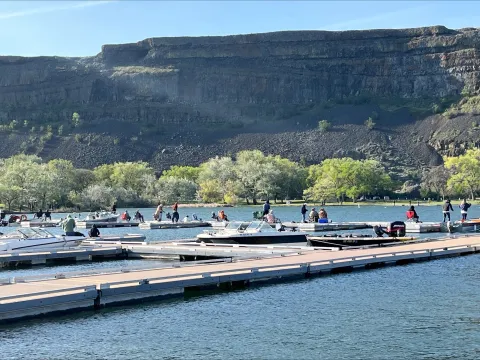
While most are gearing up for the later April opener, anglers can get a jump start right now by trekking to year-round westside lakes stocked with trout between March and May. Other lakes also receive bonus plants in the autumn/winter, and thousands of trout averaging 1- to 1.5-pounds apiece are going into some Puget Sound region lakes for the “Black Friday” fishing event in late-November. For the statewide stocking schedule, go to the WDFW fishing and stocking reports webpage at https://wdfw.wa.gov/fishing/reports.
More than 24 Eastern Washington lakes opened on March 1 for fishing and were or are being stocked with catchable-size rainbow trout. “As the days become longer, these early spring fisheries are a good way to start the season,” Caromile said. In Grant County, Martha and Upper Caliche lakes were recently stocked with catchable-size rainbow trout. Each also received rainbow trout fingerlings in March 2025 and an additional plant of catchable-sized trout in October 2025. These fish are expected to average 13 to 14 inches by opening day, with some reaching 20 inches.
WDFW stocked Quincy and Burke lakes with more than 21,000 trout fingerlings in spring 2025 and received an additional 1,500 catchable-size rainbow trout in February. Last year's fingerling plants are expected to be 10 to 12 inches, with some larger carryover fish in the 13- to 15-inch range.
Additional Grant County lakes open now for fishing are Cliff, Crystal, Cup, Lower Spring, and Upper Spring lakes. Lenice, Nunnally, Dry Falls, and Dusty lakes are also worth a try for trout. In Columbia County, try Blue, Deer, Rainbow, Spring, and Watson.
In Spokane County, head to Liberty Lake, which was stocked with catchable-size and jumbo rainbow trout. Amber and Medical lakes are open under selective gear rules and should fish well this spring.
In South Central Washington, many lakes in Benton, Franklin, Kittitas, and Yakima counties are open year-round and have been stocked with trout.
Weekly catchable trout stocking reports are posted on the fish stocking webpage at https://wdfw.wa.gov/fishing/reports/stocking/trout-plants.
Fishing gear to use
What anglers use for trout isn’t overly complicated, and a trout rod should be light and limber, in the four to 10-pound range, and lengthwise in the six- to seven-foot range. Many prefer a medium-sized spinning reel spooled with more than 100 yards of six- to eight-pound test fishing line.
From the main line, attach one or two number nine egg sinkers with a rubber bumper to a small barrel swivel. Leader length is vital; stay away from the store-bought pre-tied 12-inch leaders, which are way too short. Leaders should be three- to eight-pound test and 18 to 30 inches long. For hooks, think small and use an egg or worm hook in a size eight or 10, or try a No. 14 or 16 treble hook.
Traditional baits to use are worms, maggots, salmon eggs, or scented marshmallows, but dough bait like the wide variety of Berkley Power Baits is now the preferred option.
Fly patterns like a black or black-olive colored Woolly Bugger in a size eight or 10 attached to a five- or six-foot leader and trolled weightless close to the surface is a fun way to catch trout.
From a boat, troll a gang-flasher with a worm, maggot, or salmon egg laced with a tiny piece of scented dough bait or small spoon like a Dick Nite, Yakima Bait Triple Teazer, or Luhr Jensen Super Duper.
Bank anglers will usually cast out a bobber with their presentation sitting just below the surface in three to six feet of water. Others hang their presentation a few feet off the bottom, where the bigger fish tend to lurk. Once the stocked trout acclimate to their new surroundings, they’ll eventually spread out and move to deeper areas of the lake.
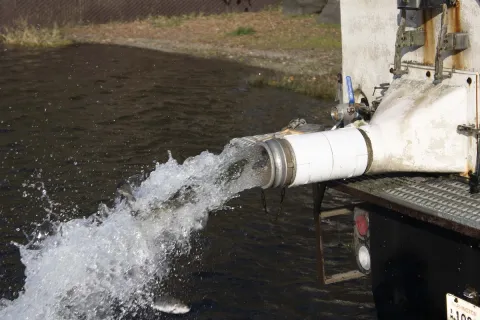
Keep in mind that most recently stocked trout tend to school near the surface, and many will swim around where the hatchery trucked them in the lake, usually within a short distance of the shoreline, boat ramps, and docks.
Lastly, remember to purchase a 2026-2027 fishing license before you head out, which is required for anyone age 16 or older. WDFW now offers two mobile apps to support outdoor recreation, available for free download in the Google Play and Apple App Stores. MyWDFW is a comprehensive licensing tool providing access to active fishing license privileges and can be found at https://wdfw.wa.gov/about/apps/mywdfw. The Fish Washington® mobile app at https://wdfw.wa.gov/fishing/regulations/app is tailored for anglers, offering fishing regulations and a feature that lets anglers manage their active license privileges, purchase license products, and enter catches or harvests.
Licenses may be purchased online at https://fishhunt.dfw.wa.gov/login or from hundreds of license dealers across the state at https://wdfw.wa.gov/licenses/dealers. The 2025–2026 fishing licenses expired on March 31.
(Mark Yuasa is a Washington Department of Fish and Wildlife Communications Manager and a longtime local fishing and outdoor writer.)
/articles/opening-day-means-trout-derby-time-mark-yuasa-wdfw
Trout fishing with a dry fly in the Cascades by Gary Lewis
My first encounter with trout and a dry fly was like prayer. It was a Sunday afternoon. I was 12, the fish was as old as time, and the insect was a white miller moth that touched down on the water. I whispered a prayer. “Lord, if you want me to be a fly-fisherman, send a trout to eat that moth.”
With the sun on its wings, the moth bounced over the water, touched down, lifted, touched again. A trout broke the stillness of the pool, nosed through the surface, and ate the moth. Church was over.
In those days, to become a fly-fisherman meant becoming a different person. Fly-fishermen wore tweed, and they wore funny hats. They smoked pipes. This was what I must become. It was big stuff for a 12-year-old. I wasn’t even sure my mom would let me smoke a pipe.
On Monday, my grandpa drove me to the hardware store. I bought a 7-weight fly rod with the money saved from mowing lawns. I knew to start by fishing nymphs and wet flies, but as soon as I could, I would try to catch a trout on a dry fly.
In those days, I lived in southwest Washington and rode a ten-speed with a fly rod across the handle and crept through the alder to watch the trout and the bugs on the water.
WHERE AND WHEN
Today, the Cascade mountains and the streams that come down off the glaciers and out of those snowmelt reservoirs can offer the same kind of dry fly fishing.
The estimation of a trophy trout is on a sliding scale. Since it does not take a lot of water to keep trout alive, trophy rainbows and cutthroat can be found in a lot of east-slope and west-slope creeks and rivers, and even a few north-slope trickles.
Highway 35 parallels and crosses the East Fork Hood River, which is home to beautiful cutthroats, vulnerable to any high-floating bushy dry fly.
Anyone good with a map can locate a dozen other small streams that can be accessed for spot-and-stalk dapping or casting in the same area.
In the Clackamas drainage, the Oak Grove Fork offers a bushwhacking opportunity where the light plays on the riffled water and mayflies dry their wings and form small clouds over the log jam pools.
Another stream winding down out of the national forest is the Breitenbush. Any trout from the Breitenbush is a trophy and may be too small to eat, but in time it will grow larger in memory. But don’t be deceived, there are some big trout in the little river too.
Another steep little river is the North Fork Santiam, with both wild and hatchery trout. In the fast riffled water, the trout are watching the surface for the mayflies, stoneflies, and caddis caught in the current.
Miles and miles of the McKenzie River are driftboat floatable and wet wadeable. In these years after the big fire, the river’s overstory (canopy) has opened, and there is no doubt the bug life has responded to the sunlight. Resident rainbows can grow big, coming out from under the cutbanks to feed.
Of the rivers and creeks tributary to the Willamette, the Middle Fork is a great option for the wading angler. In fact, there are a dozen streams. Pore over a map with a highlighter and note where the rivers cross under the roads. There will be a pullout and a trail down through the alders. An angler can base camp at Lowell, Westfir, or Oakridge and fish for days without going over the same water twice.
FLIES FOR SUMMER WADING
A well-stocked fly box should have foam body ants. It helps to tie or buy the fly with a high-viz wing to keep track of it in the riffles. Attractor dry flies like the Stimulator and its variants are great for those rare moments when the fish are feeding on stoneflies. Mayflies and caddis can be tied with a little foam or hollow-bodied deer hair. Another good attractor is anything from the Chubby series. Sometimes, when fishing a chubby, it’s a good idea to tie on a dry fly dropper. Cut off at least 20 inches of 5X. Put an ant on the light tippet tied off to the bend of the hook of the bigger fly. Then set the hook at a splash.
There are still a lot of places where rainbows and cutthroats flash to caddis from out of downed timber, the sun filtered through alders. The braided currents open windows to heaven in the clear water. Trout fishing is still like prayer.
To cast a dry fly and present it in a natural drift; to see trout come up out of the dark water to take it, that is the pinnacle of fly fishing.
# # #
For a copy of the Fishing Central Oregon book, send $30 to Gary Lewis Outdoors, PO Box 1364, Bend, OR 97709 To contact Gary Lewis, visit www.GaryLewisOutdoors.com
/articles/trout-fishing-dry-fly-cascades-gary-lewis
Early Season Ice-off Panfishing by Eric Magnuson
This time of year is a sad part of the season for me, and that's "Ice Off". As many of you know, ice fishing is my favorite winter activity. When the last sheets of Ice melt away, freeing up the shoreline makes it easily accessible. Panfishing quietly slips into one of its most overlooked and most rewarding phases. The ice is gone, the crowds are not back yet, and beneath the surface, Bluegills, Crappie, and Perch are in that familiar transition. For most anglers who've just spent months staring at a hole in the ice, they know it's not the end of the season. It's simply a shift in approach.
The Ice Off Mindset
Ice-off panfish are not yet in full swing in Spring mode. Water temperatures are still cold, often hovering around the upper 30s to mid-40s, which means fish metabolism remains slow. They still won't chase far or waste a ton of energy chasing a meal. And typically, they won’t behave as they do during the shallow water spawning frenzy that's weeks away. The KEY during this window is understanding that panfish are migrating and usually aren't stationary. During late ice, many fish hold in deeper basins adjacent to their spawning beds. When the ice leaves, they don’t immediately flood the shallows. Instead, they stage along transition areas such as subtle breaks, inside bends, emerging weed edges, and dark bottom bays that warm slightly faster than the main lake. Basically, your job is not to find spawning fish, but to intercept the travelers.
Always Start Where Winter Ended
One of my most consistent strategies every year is to begin near the last ice locations I was fishing at prior. If I had found suspended Crappies over a basin in late February-March, I would begin on that same basin edge in early April. They may have slid shallower, just a few feet, but often remain close until stable warming patterns push them further shallow. Bluegills behave similarly but tend to relate more tightly to structure. Especially remaining weed lines, timber, and those soft-bottom transitions. Perch are often the panfish Wildcard. They will roam, sometimes in "Wolf Packs", feeding aggressively when conditions line up. I'll focus on vast shallow flats, just adjacent to deeper breaks and drop-offs. Particularly in areas with sand to mud transitions, as Perch love to gorge themselves on bloodworms. By pounding the bottom, creating a plume and disturbance, drawing in the Pearch. Electronics, whether it's a basic Sonar or a Forward-Facing unit, can be invaluable now. Fish may suspend unpredictably from one day to the next. Seeing them before casting saves hours of fan casting and blind effort.
Warmer Water Wins
In early open water, even a two-degree difference matters. Northwest-facing shorelines are protected from cold winds, shallow bays with darker bottoms, and areas that receive extended afternoon sunlight warm quickly first. These little micro warming zones attract zooplankton, which attracts baitfish, which attracts panfish. One other thing - don't overlook water clarity. Like wearing a darker shirt, stained water warms a little faster than crystal clear lakes. If I have several lakes to choose from, I'm typically hitting the stained body of water as they often out-produce clearer systems after Ice Off. So, remember, the Temperature is the compass. Let it guide you!
Slow Presentations Are Key,
Cold water demands patience and restraint.
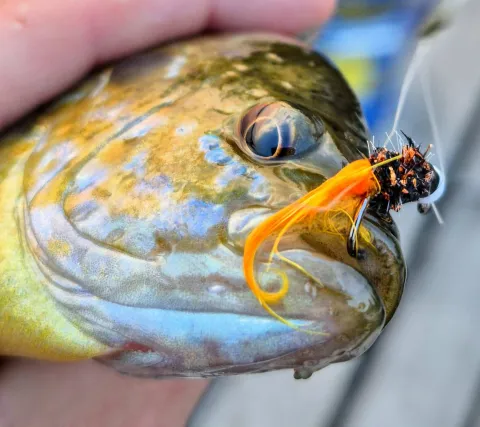
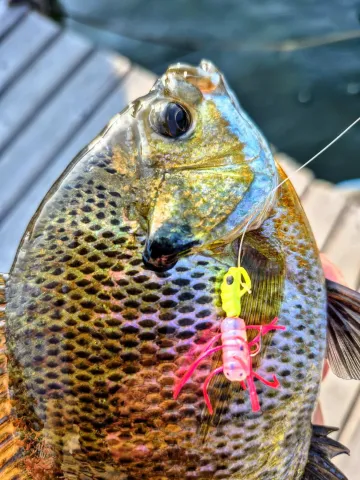
Small Jigs - 1/64th to 1/32nd ounce tipped either with soft plastics, waxworm, maggots, chunk of crawler. Hair Jigs work great during this period because of their movement. I keep my retrieve deliberate and slow. I will cast and allow my bait to pendulum naturally, as I add in subtle twitches. Many strikes will occur during the fall. If you feel a slight tick, or notice slack in your line, set the hook. I won't just fan cast jigs but also slip bobbers and jigs. Bobbers are a lethal tool. Suspending a jig and offering above suspended fish allows you to hover in the strike zone longer. Remember, patience pays dividends. If the fish won't chase, bring the bait to them and leave it there.
Think Vertical and Horizontal
Sometimes, there are situations with early-season panfish, where they might be suspended off breaks and not reachable by standard casts. If you’re able to position your boat over the top of them, jigging them vertically can unlock a different bite. I like to drift slowly with the wind, using 2lb-4lb test to maximize sensitivity and a natural presentation. Vertical jigging allows me to adjust to depths quickly until you dial in the exact depth the fish are holding. Meanwhile, from shore, keep fan casting as far out and cover water methodically. Early season fish group tightly, so you might go twenty casts without a bite, then suddenly connect on five in five casts. I'll say, when you find them, quickly get back on them because they don't travel alone.
Adapt To Mood Swings
Spring weather is unstable. A warm three-day stretch can ignite a bite that feels like peak season, only for a cold front to shut it down overnight. After a cold snap, I often find fish have slid a little deeper and become less aggressive. I'll downsize my presentation even more, 4mm-5mm tungsten jig maybe. I'll lengthen my pause and fish slower than I think I should. Conversely, during stable warm trends, fish may push shallower than expected. Don't be afraid to check two to four feet of water on calm afternoons. I've seen some of the biggest Bluegills caught in skinny water before most anglers believe they should be there. Flexibility separates average outings from memorable ones.
Light Tackle, Big Rewards
Ice Off panfishing is not about power, but more about finesse and feel. I will always have an Ultra-Light rod with a soft tip to detect subtle bites. Paired up with a smaller 500 series reels with 2-6lb line and a smooth drag for unexpected surges from a Slab Crappie, or a Bull Bluegill. And there's always something deeply satisfying during this period. The boat launches are quiet, and the air still carries a little chill. Blackbirds sing from the cattails while your breath fogs the morning. I really look forward to these special days every season.
Timing The Transition
Being able to home in on these migrating fish is very rewarding and gives you a sense of self-accomplishment. As water temperatures approach the low 50s, panfish begin committing to shallow spawning areas, as the Males begin scouting beds. The bigger schools of fish will break up, and that predictable staging bite shifts into shallow shoreline action. But to me, that in-between window, that subtle, strategic, thoughtful phase right after Ice Off, may be the purest form of panfishing I find all year long. It rewards observation and patience. And it rewards the anglers who understand seasonal movements and behaviors, instead of chasing yesterday's reports. When the ice melts, most anglers wait for the "Real Spring". The smarter move is to launch early, think like a migrating fish, and approach the lake with quite precision. Because under that freshly opened water, panfish are already on the move, and if you meet them halfway, the season starts long before most anglers realize it's begun!
"Reel in the Memories".
/articles/early-season-ice-panfishing-eric-magnuson
Catching Spring Chinook
From Northern California to Canada, and the Pacific to Idaho, few secrets are as carefully guarded as uncrowded areas for spring bank-caught salmon. Each time one of my fishing buds gives the slightest hint of a clue of a lean in that direction, my phone goes dead, his email is lost, or I have to remind him, “I don’t text.” I turned the ringer off on my phone nine years ago. Even my wife, Suz, and I had a big fight over it. We were raised fishing the same rivers like the Molalla and Clackamas, and ocean reefs, so I guess it was only natural that sooner or later she demanded to know my springer spots. "Look," I said, "I bought you a diamond ring. Isn't that enough? I'm not giving you my secret fishing holes that took a lifetime to find. That kind of intimacy and trust takes years. If it's okay with you, I'd like to keep them between me and God." She said it wasn't okay.
"Let me get this straight," she said. "You trust me enough to marry me, but not enough to show me your secret fishing spots?"
"How it is," I said.
She responded by deliberately knocking off one of my big spring chinooks with the net (she swears it was an accident. Yeah, right.). Of course, we broke up over it. It was a nice fish that by all rights should have been in the box.
Now we are back together, and using her mermaid magic, she has my secret spots. Or thinks she does. I didn't tell her I learned from a Joseph Campbell video how Navajo US Army scout and storyteller Jeff King left out an essential piece of the story until the initiate was ready.
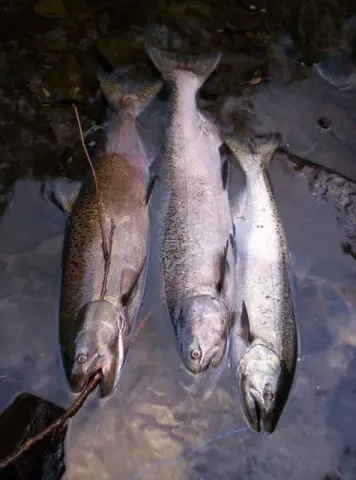
Why, you may wonder, are you so extreme as to not even tell your wife? The answer is these fish are my favorite to eat. At $18 to $27 a pound during prime season, I can’t afford to show up somewhere that previously had zero to three anglers and see 30 to 40. If that happened, I couldn’t get my regular 16 fish a season from rivers to get me through the year. In plain terms, a 20-pound cleaned springer is worth about $400. Add another, and that is an $800 morning. All of which is saying, springer fishing is serious business. Plutarch's Moralia notes that ancient Spartan mothers told their sons, “Return with your shield, or on it.” At least one Oregon mother told her son going after springers, “Return with your fishing rod, or on it”.
So what’s the point of this article? is the obvious question. The point is, if you want to catch a coveted bank-caught springer away from the crowds, put your time in hacking blackberry vines, searching maps, and getting permission from landowners; or get a boat, or hire a guide. However, if you want to go it alone bank-fishing after hearing all this, here is my advice.
Local Knowledge
Go where people regularly catch springers, and watch everything they use and do, right down to the gnat’s eyelash’s mite’s eyelash. I mean study gear, hook, bait, length and size, and kind of leader, exact placement and depth of lure, time of day, and if you are really serious, where they go to church and the color of their socks.
Study a Watershed
I found springers to be more picky than steelhead about where they pause in upriver migrations. In general, springers like it slow, dark, and deep, which makes sense if you consider these 10 to 30 pound brutes a short while ago had an entire Pacific ocean to forage. Chinook in our area travel as far as the Aleutian Islands past Dutch Harbor, into the Bering Sea. That is how they get so big and delicious.
Good Bait Makes All the Difference
After over 40 years of doing this, I see the same guys in the same spots at the same times of year on my springer travels from coastal rivers to Idaho. They are all expert anglers, but on some days one of them is slaying fish after fish while the rest of us look on in mouth-watering amazement. Why? It’s the bait cure the fish want that day, and to show how serious these fish are, they ignore everyone else’s bait, moving within inches of the same water. I asked one successful angler his secret, and he said it took over 20 years for an old-timer to share it, and there was no way in hell he was telling me. I said I understood. If you read my last article, “How to Outfit a Fish Car,” you know these fish “can smell parts per billion.” GrrlScientist, formerly of The University of Washington in Seattle and science writer for The Guardian, permitted me to include a SciLogs article “Salmon, scent and going home again” January 17, 2011, in which she noted:
"In the November 1978 issue of Pacific Search, author C. Herb Williams described a Canadian study where a nearly homeopathic solution containing one part of human skin dissolved in 80 billion parts of water was dumped into a river. Astonishingly, the scent from this solution was sufficient to stop migrating salmon for as long as half an hour. Additional experiments by Canadian scientists show that salmon will either slow or stop their migrations when certain human smells are present in the water, and trout — another salmonid — show distinct flight responses when a fisherman washes his hands upstream. [par break] This offensive scent was identified as the amino acid, serine, which — because human skin contains serine — has led to some fishermen to refer to this as 'the serine problem'."
This means when I catch a hen, I cure her eggs that night so I can fish them at daylight without being frozen. I keep my hands clean, and on sweaty days wear white latex gloves. One angler said I was Michael Jacksoning it, but I had a salmon, and he didn’t. Many years of experimenting led to my current egg cure recipe. Reel blazing runs, $800 fish mornings, and beet-red spring salmon steaks make it all worth it.
A Friends of William Stafford Scholar at the “Speak Truth to Power” Fellowship of Reconciliation Seabeck Conference, Scott T. Starbuck’s two books of fishing poems are River Walker, which sold out in less than a year, and Lost Salmon forthcoming from MoonPath Press. Starbuck’s writing focuses on the clash between ancient sustaining forces like wild salmon rivers with modern industrial lives. His most recent book is Industrial Oz: Ecopoems. His blog Trees, Fish, and Dreams is at riverseek.blogspot.com
/articles/catching-spring-chinook
Early Opener Trout
More than two dozen lakes across Eastern Washington are set to open March 1, although unpredictable winter-like conditions could limit trout fishing options and success.
“We’ve had a mild winter, and early March can be a great time for early lake fishing opportunities,” said Steve Caromile, a Washington Department of Fish and Wildlife (WDFW) statewide inland fish program manager. “As the days become longer, these early spring fisheries are a good way to start the year. Some eastside lakes may have some remaining thin ice, especially in the northeastern region of the state. WDFW doesn’t monitor ice conditions, so use extra caution before venturing out this year.”
Depending upon the severity of late winter weather, some lakes, especially those in the northeastern region, may still be iced over. WDFW doesn’t monitor ice conditions, so anglers should check ice conditions before heading out.
The initial best bets will likely be Martha and Upper Caliche lakes near George in Grant County. Each can be an excellent choice, and anglers should expect good fishing in 2026.
Martha and Upper Caliche lakes received 500 catchable 10- to 12-inch rainbow trout in the fall off 2025 and should be in the 13- to 14-inch range by opening day. WDFW planted another 325 catchable trout in time for the March 1 opener, and 3,900 fingerling trout (one- to three-inches long) were planted in April of 2025, and those that survived should contribute to spring-time catches.
It is not uncommon for Upper Caliche to still be frozen on March 1. However, there’s almost always plenty of open water on Martha Lake on the opener. The north section of Martha Lake is usually ice-free with plenty of shoreline space, and that’s likely where most of the trout will be concentrated.
In Grant County, Quincy and Burke lakes should both fish well this spring, and improved boat launch sites. Shore anglers should have plenty of room to fish with ample access to the lakes. Both lakes received 1,500 catchable-sized trout in February, and each was stocked with more than 21,000 fingerling in April of 2025. Most fish will be in the 10- to 12-inch range, with some carryover trout in the 13-to 15-inch range. Try casting spinners and small spoons from the shoreline.
The Quincy Valley Chamber of Commerce Trout Derby is March 27-28 at Quincy and Burke lakes. Cost is $40 per person over age 18 and free for youth ages 17 and under. For details, go to: https://quincyvalleywa.chambermaster.com/events/details/trout-fishing-derby-2026-1300.
Lake Lenore in Grant County is also open on March 1 with a one-fish daily limit and an 18-inch minimum size limit. This is one of only six lakes in Washington with Lahontan Cutthroat.
Other lakes and ponds in Grant County included in the March 1 opener are Cascade, Dry Falls, Lenice, Merry, North Potholes Reserve, Nunnally, Stratford/Brook, and Winchester Wasteway.
Also note that within the Quincy Lakes Unit of the Columbia Basin Wildlife Area, there are many walk-in lakes that open March 1. These lakes can provide not only good fishing, but also solitude.
With their boat launches, parking, and shore access, Quincy and Burke lakes tend to attract the most attention when these Grant County, Washington, waters open March 1, but WDFW biologist Michael Schmuck notes that he stocks several nearby smaller and less well-known lakes that grow footlong-plus rainbows.
“There is a good chance for anglers to have them all to themselves, and many are down in small canyons that afford good protection from the spring winds,” said Schmuck.
Hike-in Dusty Lake is a selective gear lake that has excellent rainbow trout fishing as well as brown and tiger trout. Just southeast of Dusty is a collection of small lakes that hold rainbow trout. Cliff, Crystal, Cup, and Lower and Upper Spring lakes are small enough that they can all be fished in a morning. All these lakes receive spring fingerling rainbow trout and produce good catches of fish in the 12- to 14-inch range, with some up to 20 inches.
The greater Spokane region has several March 1 openers, including Liberty Lake that can be good around the opener for brown and rainbow trout averaging 12 to 16 inches. Statewide rules apply at Liberty Lake.
There are other March 1 opener lakes managed under “selective gear rules”, but the action doesn’t generally pick up until the weather warms up. However, fishing can be pretty good, but not great, until warmer weather arrives. Those lakes include Amber and Medical in Spokane County; and Coffeepot in Lincoln County. Amber and Coffeepot are managed with an 18-inch minimum size limit and a daily limit one-fish regulation. Medical has a 14-inch minimum size limit and a daily limit two-fish regulation.
Downs Lake, located in south Spokane County, typically opens for early-season fishing on March 1, but it is not accessible to the public this season. Access to the lake is limited to a privately owned resort that is currently closed. No fish were stocked in 2026, and stocking will not resume until public access is available. WDFW is working to restore public access.
And finally, all seven human-made lakes off the Tucannon River in Columbia County –
Blue, Deer, Rainbow, Spring, and Watson — have open water and are stocked with rainbows weighing up to 1.5 pounds each. Pampa Pond in Whitman County is also open March 1 for rainbow trout fishing.
Trout plants by lakes
Grant County (general fishing regulations with season open March 1 through Sept. 30) –
Burke, 1,500 catchable-size rainbow trout stocked in February, and 21,226 fingerling rainbow trout stocked in April of 2025;
Upper Caliche, 325 rainbow trout stocked in March, 500 catchable-size rainbow trout stocked in October of 2025, and 3,900 fingerling rainbow trout stocked in April of 2025;
Cliff, 400 fingerling rainbow trout stocked in March of 2025;
Crystal, 400 fingerling rainbow trout stocked in March of 2025; Cup, 200 fingerling rainbow trout stocked in March of 2025;
Martha, 500 catchable-size rainbow trout stocked in March, 750 catchable-size rainbow trout stocked in October of 2025, and 8,400 fingerling rainbow trout stocked in March of 2025;
Quincy, 1,500 catchable-size rainbow trout stocked in February, and 21,177 fingerling rainbow trout stocked in April of 2025;
Lower Spring, 200 fingerling rainbow trout stocked in March of 2025;
Upper Spring, 200 fingerling rainbow trout stocked in March of 2025.
Grant County (selective fishing regulations with season open March 1 through Nov. 30)
Dry Falls, 4,670 fingerling rainbow trout and 1,500 fingerling brook trout stocked in March of 2025;
Dusty, 3,000 fingerling rainbow trout, 2,500 fingerling brook trout, and 2,200 tiger trout stocked in May of 2025;
Lenice, 2,250 catchable-size rainbow trout to be stocked in April of 2026, and 3,000 catchable-size rainbow trout stocked in October of 2025;
Lenore, 72,125 fingerling rainbow trout stocked in October of 2025;
Nunnally, 2,750 catchable-size rainbow trout to be stocked in April, and 3,000 catchable-size rainbow trout stocked in October of 2025.
Spokane County – Liberty, 4,000 catchable-size rainbow and 350 jumbo rainbow trout stocked in spring of 2026, 15,000 fry rainbow trout, 35,000 fry brook trout and 1,200 broodstock eastern brook trout stocked in fall of 2025;
Amber, 7,500 fry rainbow trout and 1,000 fry cutthroat trout stocked in spring of 2025;
Medical, 2,500 put-grow-take brook trout to be stocked in April 2026 (these trout are 2.6 to 10 fish per pound in size and should be in the catchable size by mid-summer), and 5,000 fry rainbow trout stocked in spring of 2025;
Coffeepot, 5,000 put-grow-take rainbow trout to be stocked in spring of 2026 (these trout are 2.6 to 10 fish per pound in size and should be in the catchable size by mid-summer).
Other useful information and resources
- Many westside year-round lakes are also being stocked with trout in early spring. Visit the WDFW website at https://wdfw.wa.gov/fishing/reports/stocking/trout-plants for specific weekly fish stocking numbers.
- Mark your calendar for the highly anticipated 2026 statewide general lowland lakes trout opener on April 25.
- The WDFW Trout Derby will be held from April 25 through Oct. 31 at more than 100 stocked lakes and ponds across Washington. In 2025, more than 100 statewide businesses offered an estimated 1,091 prizes valued at around $54,858 and worth about $50.28 per prize, which was up considerably from previous years, dating back to 2016. WDFW is currently preparing for the 2026 trout derby and will have updated information soon. The success of the trout derby would only be possible through WDFW’s ongoing partnerships with business dealers/vendors throughout the state. The derby, held for the past 10 years, has generated close to 55 to 60 percent of the tags turned in for prizes. To help boost catching a tagged trout, WDFW will have a list of all the lakes in real-time where prizes are left to be claimed. Be sure to share your derby success on social media using the hashtag #watroutderby. The WDFW Trout Derby webpage https://wdfw.wa.gov/fishing/contests/trout-derby should be updated soon with 2026 information.
- You can find information on statewide lowland lake locations by going to the WDFW webpage at https://wdfw.wa.gov/fishing/locations/lowland-lakes. Basic trout fishing techniques on the WDFW YouTube webpage at https://www.youtube.com/watch?v=f9A5UiJJMks&list=PLo22nBM4mjeStU58nRnZFYCys3hAtT2Yg. More trout fishing tips can also be found on the WDFW webpage at https://wdfw.wa.gov/fishing/locations/lowland-lakes.
/articles/early-opener-trout
Springtime means Big Natives
Steelhead (Oncorhynchus mykiss), Washington’s iconic anadromous rainbow trout, return from the ocean to freshwater rivers to spawn. Across the state, they exhibit two general seasonal runs, winter and summer, though exact timing varies by river and region.
Run timing is critical when pursuing these coveted fish, so it is important to understand when the fish will begin to return, and for those of us looking for the largest, natives, it means timing it perfectly.
In general, winter steelhead runs tend to follow the following schedule.
- Begin: Typically, in late fall (around November), as ocean-migrating fish start moving upstream.
- Peak: Most winter steelhead arrive in December through February, with some systems seeing strong numbers returning into March and April.
- Best for big wild fish: Many of Washington’s large native (wild) steelhead, especially in coastal rivers of the Olympic Peninsula, are most abundant mid-winter through early spring. Local guides note that hatchery fish often peak earlier (e.g., December), with wild steelhead showing up in good numbers soon after and extending into early spring.
While both hatchery and wild steelhead can contribute to runs, depending, of course, on the river system, native (wild) fish, which are often bigger and more prized, tend to peak slightly later than hatchery fish in most systems. For example:
- On the Olympic Peninsula and coastal rivers: Hatchery fish are known to start trailing in around Thanksgiving and trail off in January, whereas large wild steelhead often show up in their prime numbers from late December through February, into March, and even April.
- In Puget Sound watersheds, winter runs that include wild fish also peak in December–January, but local timing can vary by watershed, and even by year, depending on weather, ocean, and river conditions.
Note that after entering their natal waters, steelhead often remain in the river for many months prior to spawning and returning to the salt. The length of time that they stay in the river really depends on the river system, the run timing, and their genetics and instincts.
Unlike salmon, steelhead can return to the salt water for another cycle, and some steelhead have been recorded returning to spawn for 3 or 4 spawning cycles. Of course, a 3 or 4-salt fish will often tend to be larger than a 1 or 2-salt fish; thus, these fish are highly sought after and chased by serious anglers.
When reviewing the WDFW or ODFW regulations, you will often see rivers closing at the end of January, mid-February, or in March. There is a reason for this. The recreational seasons are generally set to provide anglers with opportunities to fish for steelhead, whether that be for catch and release of native fish or a retention fishery for hatchery fish. The seasons are timed to close about the time that the main runs of native fish are expected to return based on historical run timing. For this reason, the fisheries are closed to protect the native fish in an attempt to restore runs back to acceptable numbers.
A great example of this is the Sauk River. The Sauk has long been a coveted fishery since it is an all-native river, and the fish tend to be large, genetically mean, and extremely aggressive. These fish are wired differently, and catching one is unlike any other fishery that I have experienced. The Sauk River winter/spring wild steelhead fishery has experienced multiple closures due to low wild returns, with significant closures occurring around
2008, 2010–2017, and 2020–2022. The fishery often closes or faces restrictions when wild steelhead forecasts fall below the 6,000-fish escapement threshold, as noted by the Washington Department of Fish and Wildlife. A few years ago, WDFW and NOAA agreed to a ten-year plan based on return data, in an effort to offer a recreational catch-and-release fishery on the Sauk. We finally received some long-awaited good news. Unfortunately, our current governor and his cabinet slashed budgets for 2026, and this fishery was taken from us, as there was not enough budget to staff and monitor the fishery. This is devastating for the local communities and the anglers who enjoyed spending time on this epic river system. The Sauk is not the only system experiencing this fate. Good for the fish, bad for us anglers!
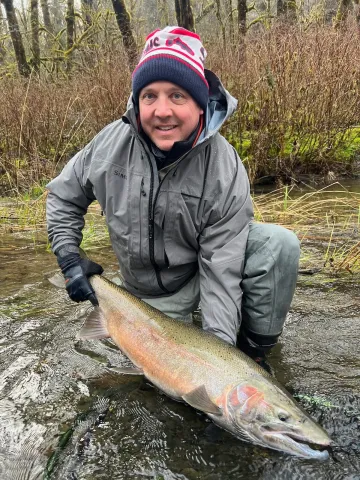
Speaking of big, mean, native winter steelhead, in early April 2025, I fished with guide Cary Hofmann on the Sauk. We were bobber dogging 20mm beads that day, and I hooked the largest steelhead of my life. My float was just above the drift boat as we entered the bottom of a run, and my float disappeared. I jumped on my reel, and as I did, my float popped back to the surface. I opened my bail to let out some line, and after a moment, my float dropped again and started racing upstream through fast water. My bail was open, and as I tried to close the bail and slow the fish, my hand got hung up for a moment, and the fish broke a 15lb fluorocarbon leader like it was nothing. I have hooked into some 20lb class steelhead and landed a few, but this was another level of mean and powerful. Even though I did not see this fish, just the experience of feeling it on the end of my line was a moment that I will never forget. For die-hard steelheaders chasing big, native fish, this is what we live for.
Some of the best opportunities in Washington to encounter large native steelhead (especially in late winter through spring), focusing on places known for quality wild fish rather than solely hatchery-enhanced fisheries include:
Olympic Peninsula Rivers
These are widely regarded as some of the best wild steelhead runs in Washington, often producing larger native fish and extended late-season opportunity.
- Hoh River – Classic wild steelhead water with deep pools and strong late winter/early spring runs.
- Bogachiel River – Known for productive winter steelhead fishing and scenic access.
- Sol Duc River – Holds big wild fish; excellent spring timing as flows moderate.
- Quillayute / Calawah / Clearwater tributaries – Smaller but good opportunities for spring natives.
Run Timing: On the Peninsula, steelhead enter these rivers from late fall through spring, with some of the largest natives arriving in January through April. I have found that Mid-March through early April can be prime for large wild fish entering holding water behind hatchery runs. I try to time my trip for mid to late March, and I am never disappointed unless we get rained out. This is not uncommon due to the immense rainfall that hits the coast, as much as 16 feet per year in places.
Coastal & Southwest Washington Rivers
Smaller coastal systems (outside the Peninsula proper) can also be excellent in late winter when conditions calm after storms.
- North River, Naselle River, Willapa River system – Offers wild runs with spring opportunity.
- Grays Harbor rivers (e.g., Satsop, Wynoochie, and Humptulips) — though smaller, they can produce quality fish from late fall into the spring.
These fisheries are more dependent on rain and water clarity, but when conditions stabilize in late winter/early spring, fish concentrate in holding water.
Puget Sound Area – Wild Runs
Puget Sound tributaries see winter and early spring returns of wild steelhead, though overall numbers are lower than on the coast. It is also important to note that most North Puget Sound rivers are closed for 2026 by January 31st, so no recreational fisheries to enjoy this year. As mentioned, this is primarily due to budget cuts, so please remember this the next time that you vote.
- Skykomish River – Historically decent winter/wild runs; larger fish possible early season. Small, hatchery broodstock program still in effect from the Reiter hatchery near Goldbar. Like the Cowlitz, this is not a secret spot, but if you have not fished it, it is epically beautiful and a fun bank fishery.
- Stillaguamish & Snoqualmie Rivers – Smaller, technical fisheries that can hold native winter steelhead. Tokul Creek also has a hatchery program that is winding down, but returns that continue to produce.
It is important to mention that many Puget Sound wild runs are sensitive and subject to stricter release regulations, so as always, check WDFW's current rules before going.
Lower Columbia Tributaries (Late Winter–Early Spring)
While many lower Columbia systems are enhanced by hatchery programs, wild components, especially winter runs, still migrate in:
- Cowlitz River – Huge late winter steelhead opportunity; big fish show up in February–March. The Cowlitz is renowned for its hatchery program and generally strong A and B run returns. Note that this is not a secret spot, so when the steelhead arrive, it is very congested.
- Kalama & Lewis Rivers – Good late winter spring runs; mixed hatchery/wild.
- Washougal & Elochoman – Smaller systems with winter fish in March–April.
Note: While these fisheries include hatchery fish, big overwintering wild fish also pass through in late winter/early spring, especially on bigger tributaries like the Cowlitz.
When targeting large native fish, we are generally seeking quality, not quantity. For this reason, our approach tends to change a bit. Upsizing gear and presentations are common. Sure, you can catch a 20lb native steelhead on light tackle, but we try to match the gear to the fish. Keep in mind that big fish are big for a reason; they are not stupid. Their instinct is strong, and they don’t bite at everything that passes by them. I cannot think of a bigger example of survival of the fittest. My mantra is that big fish are not stupid, so I do my best to fool them, or more likely, piss them off. An aggressive fish will protect its territory and extinguish any threat that appears, so I try my best to threaten them with bold presentations that best match the water conditions.
Some tips for targeting the big fish:
- Focus on deep holding water — tails of runs, deep holes, and structure.
- Watch river conditions — post-storm clarity often improves by late winter, improving bite windows.
- Check seasonal regulations — wild steelhead protection varies by river and year; WDFW updates are important.
- Upsize your gear – Examples include swung spoons, large beads, worms of different colors to match the water clarity, plugs and spinners. Don’t be afraid to go old school either. Throw your Oki drifters, spin n glo’s and tackle of yesteryear. Yes, Herzog is correct, it all still works.
Many wild steelhead populations in Washington, especially coastal and Puget Sound runs, are protected and often catch-and-release only with seasonal closures. Always consult current WDFW regs for the specific river you plan to fish. In addition, we are not allowed to remove wild fish from the water in Washington, even for a picture, so please practice safe handling and return the fish as quickly as you can. Think head in the water for that quick picture to commemorate your catch.
Good luck and happy fishing to you all.
/articles/springtime-means-big-natives
In Like a Mayfly, Out Like a Brown
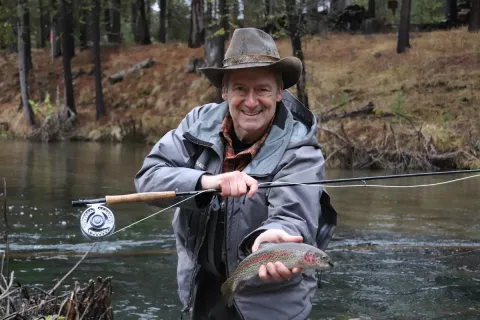
The emergence of the Western March Brown marks the end of winter for many trout fishermen. It may still be cold outside, but this mayfly can heat up the fishing when it makes its first appearance in March. These mayflies live among the rocks in swift-flowing currents. Look for insect activity in slower water adjacent to riffles. Present emergers like the March Brown Spider to rising trout, dead-drift a gold-ribbed Hare’s Ear or Pheasant Tail nymph beneath a strike indicator. If the fish are feeding on top, cast dry flies like the March Brown Upright to surface-feeding fish.
Use the March Brown Parachute when casting to finicky feeders in shallow water. The parachute presents a lifelike silhouette when viewed from a trout’s living room. Be ready with a Pheasant Tail spinner if the flies are falling, spent, to the water. In March, a Blue Winged Olive hatch might happen at any time. And in some waters, you might see both BWOs and March browns on the water at the same time. In Oregon, surrounded the way we are by hundreds of great places to fish, it is hard to remember that there are some great waters off on the eastern horizon. At this time of year, places like Chickahominy, Beulah Reservoir, and the Owyhee River spring to mind. If you crave solitude under an azure sky, the last weeks of winter often bring early green-up to the desert, awaken the aquatic insect life, and fire the appetite of rainbows and browns. And not a lot of people are back on the water yet.
Chickahominy fished well the last couple of years with a restock of hatchery rainbows. Chickahominy grows fish fast. A hundred miles east of Bend, it is a narrow reservoir with many coves and fingers and lots of shallows. Early in the season, dragonfly nymphs, scuds, and leech patterns will be productive. The reservoir reaches a maximum depth of 25 feet, but early in the year, the shallows hold the most fish. One of the best trout fishing destinations in early spring is the Owyhee River below Lake Owyhee. Rainbows are in the riffles, and browns are everywhere else. Owyhee rainbows average 14 to 18 inches, and browns run to 24 inches. Right now, with water temperatures still low, small red and black midges produce fish. But go armed with March browns, blue-winged olives in both emerger and dry patterns.
Another early spring fishery is Beulah Reservoir. Fed by the North Fork Malheur River, this big reservoir, from now until Memorial Day, is a good bet for holdover hatchery rainbows. Bring a float tube or a small boat because the low water may limit the usefulness of the boat ramp. Prowl the shorelines, fishing just outside of the shallows, or explore around the inlet. Fish can grow big in this food-rich reservoir as well. Use leech patterns to spark a strike from the bigger fish. If you land a bull trout, it must be released unharmed.
Other good early spring bets include Krumbo Reservoir and the Blitzen River. Krumbo is one of the lakes that gets early stocks of hatchery trout.
Flowing out of the Steens, the Blitzen River can grow trout big. Spend some time watching the water for clues and for feeding fish.
Put gas in the tank and string the rod. There is nothing like a road trip to greet the early spring green-up. And what better reason to take to the highway than hungry trout?
/articles/mayfly-out-brown
Midnight Magic
Chasing the Elusive Burbot in the Dark of Winter
There's a certain kind of angler who willingly trades sleep, warmth, and convenience for the chance to tangle with a fish most folks have never seen, let alone pursued on purpose. If you ask me why I have spent so many nights sleeping on the lake, hunched over a glowing hole, waiting on a creature that looks sketched from a memory of someone who had once seen an eel. I will say this, burbot fishing isn't a pastime – it's a pilgrimage.
Most species reward you with a mid-day sun or an early morning bite window. Burbot prefer the dark. Truly, the dark. The kind that settles over the lake like a wool blanket, thick and muting everything else around you, except for your breath. That's when they slip across the lakebed, hunting and haunting the edges of structure, and that's when you need to be present and on top of them.
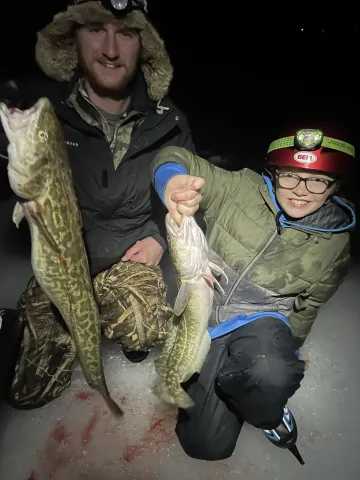
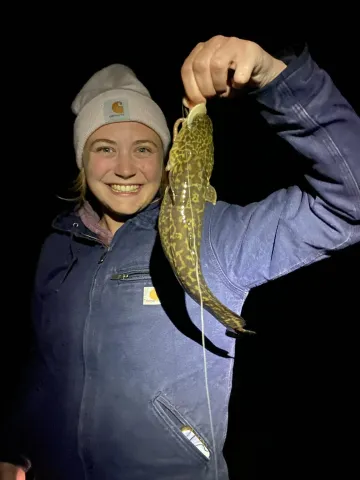
Preparing for burbot means dialing in gear that feels more expedition than recreational. I've come to rely typically on a Medium-Heavy rod with enough backbone to wrestle a surprised, twisting fish from 30-80ft. But enough sensitivity to detect that soft, hesitant pickup burbot are notorious for. A quality reel with a dependable drag is key; these fish, at times, will take runs and have vicious head thrashes, while spinning and twisting in a ball. Pair your reel up with a braided line and a fluorocarbon leader for minimal stretch during deep water hooksets.
The tackle box for burbot is its own mystical museum of creature baits. The uglier the bait, the better! I've noticed over the years, fishing these bottom dwellers, that GLOW is better. Everything should GLOW that you fish. From Spoons, Rattle Traps, Blade Baits, Jigs, Tubes, Curly Tail Grubs, whatever it may be, it had better be GLOW! I've spent more time charging baits with a UV light than I care to admit. But in the dark below the ice, that soft halo of light is key to helping these fish to find your offering. It can be the difference between a passing glance and a decisive strike.
The technique is nothing graceful, just constant jigging. With burbot, it's almost like putting in a day’s work. You drop your jig or spoon and bang it on the bottom several times, lifting it to pause. Keep repeating that cadence over and over, disturbing the bottom. They use the noise and vibration to home in on your offering, giving them the illusion of something rummaging in the territory. When they do bite, it's subtle -- just a faint pressure, followed by a heaviness on your line. When that burbot takes hold of your lure, you realize patience has been your best asset.
I've been known to set up spreads of Tip Ups when I find where they are hanging out, waiting for the burbot to come to me, take a dead stick, or cut bait below the tip-up. I do prefer to stay mobile and hunt them, jigging one or two holes aggressively. If I set up camp for the night, I will drill a constellation of holes around my shack in various depths, fishing those holes throughout the night, till I find them.
Burbot are a special species, and anglers should be selective on harvest, especially depending on the body of water. What makes burbot special isn't their fight and rarity, or even their nocturnal mysteries. It's the commitment they demand. They ask you to be patient, to be uncomfortable, to embrace the cold and quiet and the uncertainty. They ask you to show up when most people are heading home. And when they finally arrive, slithering out of the dark to take your lure, it feels earned in a way few catches do.
Get out there, enjoy the peace and quiet of the dark, as it's like nothing else. The Elusive Burbot is elusive for a reason, and it takes those mystic midnight hours to pull them up from their depths. OH, did I mention that they are really good eating?
Reel In The Memories!
/articles/midnight-magic