Winter Perch Tips
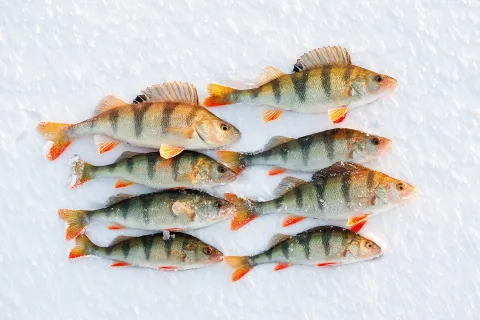
Now that the holiday craziness is over with, you might find yourself with the fishing itch. Maybe you got a new fishing rod for Christmas that you're dying to try out! Winter steelhead are a worthy pursuit, but kids might not have the patience to withstand casting all day. Winter perch are the perfect solution! Though they are small, they taste great when fried up and most lakes have an abundant population of them. They are eager biters, especially in the winter months, and you don't need much tackle other than a light action rod and some worms. Let's dive into it and talk about how to have a successful day at the lake fishing for perch.
Though shore fishermen can certainly be successful when fishing for winter perch, boaters have an advantage. The trickiest part of perch fishing in the winter is locating the fish. They move throughout the lake in large schools searching for food. These fish often hide in deep water, below the thermocline, where the water is warmer. Boaters can search the lake until they locate the schools of fish.
Fish finders can show you where the schools are, so you can drop your bait right in the middle of them. Check near drop-offs and underwater shelves first. Perch will tightly school up, so if you catch one, you're bound to catch more. Drop anchor or activate your spot lock and get a bucket ready! As with most fish in the winter, they don't like chasing down the meals. Keep your bait right in the middle of their school. If you aren't getting bites, move on. Perch schools will look like little clouds on your fish finder. Pay close attention and follow the fish.
If you're shorebound, remember to use bottom rigs so you can fish the bottom of the water column. This is a great situation to use your two-pole endorsement if you have one. The more rods in the water, the better your chances of finding the fish. Try to find a lake with a pier so that you can more easily reach the deep water. Reservoirs are harder for shore fishermen to effectively fish in the winter, since they're usually drawn down past the piers.
Another great thing about winter perch is that they're willing to hit a variety of lures and baits. I often start with worms or crappie jigs. Lower your offering to the fish and jig lightly until you feel the bite. Winter perch can be soft biters, so pay close attention and be ready to set the hook. Once you've caught one perch, you can cut it into small strips of meat and catch more. Perch cutbait is one of the best ways to catch more perch! One word of advice, use small hooks. I use size 8 or 10 hooks most of the time. I also use an ultralight crappie rod and reel for maximum sensitivity. Be careful when dropping the fish into the bucket or holding them for pictures, they have several spines in their fins that can prick you.
Though most lakes have yellow perch to some degree, you might be wondering where to start. I've had success at Lake Washington, Lake Sammamish, and Clear Lake. Lake Washington is my go-to for winter perch. If you launch on the southern end, try anchoring near the bridge. These are just suggestions- check your regulations and try a lake near you that's open year-round. Remember that perch tend to hug the bottom during the winter and study a map to find those deep pockets on your lake of choice.
Because of the cold weather, it's a good idea to be prepared before hitting the water. If it's been a while since you've run your boat, do an inspection, test your motors, and ensure your first aid kits and life jackets are aboard. Bundle up and bundle up your kids too. Hand warmers are essential! I picked up some electric hand warmers online and they work great.
The trickiest part is making sure they're charged before heading out! Like electronic hand warmers, heated jackets can also be a game changer. Winter perch fishing is a sedentary activity, so you'll want every advantage you can get to stay warm. I also highly recommend putting on base layers, especially underneath your pants. Costco and Sportco both offer affordable base layer packs for men and women. Winter fishing doesn't have to be cold and miserable. Making sure you're adequately prepared will go a long way toward having a fun day on the lake.
Have fun on your winter perch quest! Most lakes around here have no bag limit or size limit, but make sure to be responsible and only harvest what you're going to eat. Perch are one of the best fried fish out there, and they're easy to prepare for the frying pan. You can either fillet them quickly or cook them whole. Electric filet knives can make short work of a bucket of perch. My friend and fellow writer Randy Castello likes to batter his perch filets and freeze them so that his family can enjoy fried perch anytime. Put life jackets on the little ones, gas up the boat, and hit the lake!
/articles/winter-perch-tips
Ten Rules of Coho Trolling
By Mike Carey
September is a special time for me. Like the change in the weather, I can feel a change in myself, a pent up anticipation that has slowly been building over the summer and like clockwork bursts forth in full bloom. It’s coho time in Puget Sound!
Yes, this is a great time of the year to be a salmon angler in Puget Sound, if the runs are strong and the fishing is open. Last year was unique in that we had closures in the ocean and straits. The coho arrived to Puget Sound in good numbers and virtually unmolested.
This year was questionable what kind of a season we would be given. As of this date, coho is open in areas 8.2, 9, and 10. Check the regs and emergency closures for updates of course. As it stands the daily limit is two coho.

Looking at my fishing reports data from trips going back twenty years, it becomes pretty obvious that September is the time to put away freshwater gear and focus on salmon. August can be productive, but September can be (and often is) lights out.
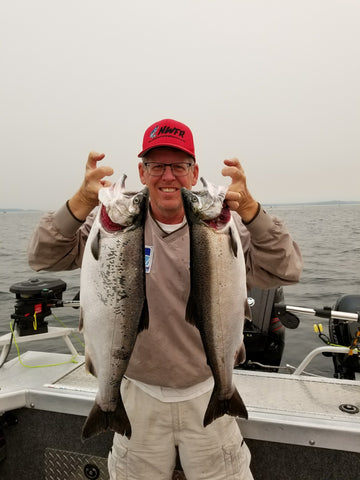
My reports show multiple trips with limits by 9am, red hot fishing, and lots of pictures of shiny chrome coho. As the season progresses into later September, the fish show a steady increase in size.
By late September to early October, the 6-8 pound coho are replaced by beautiful 10-14 pound hooknose monsters. It’s the time of year to stock up the freezer on tasty coho!
For those new to the fishery, you’ll find a wealth of information on techniques and locations scattered on the web. I've broken down some of my thoughts on coho trolling into Ten Rules of Coho Trolling.
Coho tend to be a pretty cooperative salmon when it comes to catching them. As these fish stream in from the ocean, heading through the Strait of Juan De Fuca and into Puget Sound, they are putting on the feed in preparation for their runs up to the spawning grounds.
It’s not unusual to find coho stuffed with herring. Don’t get me wrong, there are days they, like other salmon, will have lock-jaw. But that truly is the exception, not the rule. Speaking of rules, I offer a list of rules I’ve developed over the years to catch more coho.
You’ll likely have your rules to add to this list. Or you may disagree with some of them. But hopefully it will give you some additional ideas when targeting coho in the Sound.
Rule #1
As Russell Wilson would say, “Separation is in the preparation”. - When you put your boat in the water, you should have everything ready to go. No fiddling around with gear or bait the morning of a trip. My fishing ritual is to have everything ready to go the night before.
It’s like a general planning for battle. My rods are ready and geared up. My bait has been cut and cured. My boat is prepped and clean, batteries are charged, gas tank is full, snacks are bought, there’s ice in the coolers for the fish.
This evening before prep time is actually a ritual I cherish because like Russ, I’m visualizing success and making a plan in my head. I try to never go fishing without a plan.
Rule #2
Start early, go shallow. - I try to be on the water as early as possible. Ideally, that means running lights on and gear going in the water while it’s still dark or just turning light. I will run my gear in the top 10-30 feet of water to start.
This is the time of day when a salmon fly in the prop wash can be deadly. I like Artic Fox Trolling Flies. Denis Peirce ties a nice fly in a variety of effective salmon colors. Try running the fly back 40-50 feet and troll fast (more on that later) with the fly practically skipping on the surface.
Just be sure to have the clicker on the reel because these strikes can be vicious. I love the sound of a clicker going off in the morning!
Rule #3
Watch your fish finder, drop your depth – As the morning progresses, drop your downriggers down. I’ve read the “rule of thumb” is ten feet every hour until you’re trolling your gear around 40-60 feet. That’s fine, I guess, but I also use my fish finder.
If I see bait and fish marks down 50-70 feet, I’ll drop down to those fish even if it’s early in the morning. As the day goes on I may even drop my downrigger ball down to 110-120 feet deep.
Depth can be a tricky thing because when coho fishing I troll fast, which leads us to the next rule.
Rule #4
Troll fast! - In my experience, coho love a fast troll. I have an itroll throttle control and will set it on “hunt” mode to keep my boat going fast, around 3.3 to 3.9 mph. A few years back I did a lot of underwater filming and noticed a distinct increase in salmon aggression when the flasher was whipping around in a complete rotation.
If it was only doing a lazy rotation, or not doing a full rotation, coho would tend to swim behind the gear, just watching. But speeding up and getting that flasher fully spinning would elicit vicious strikes. I will troll both with and against the tide and catch fish going both ways.
Just be sure to increase your throttle going into the tide to maintain that 3.5 mph speed. I’ll also program my itroll to give a periodic 3-5 second slow down and then speed back up to “wake up” coho that may be lazily following but not biting.
It can often trigger a bite. Oh, another thing that will often trigger a bite – if you’re checking gear, pop your line off the release and set the rod in the rod holder. Let the gear come up on its own. I have caught a lot of coho that will chase the gear as it ascends to the surface.
Don’t reel your gear in until it hits the surface.
Rule #5
Coho are hungry, feed them! - Coho love a strip of herring on just about any lure. I will add strips to hoochies, flies, and even a small strip on the hook of a spoon (but not too much, you don’t want to kill the spoon’s action).
Be sure to brine the herring strips a day ahead of time in rock salt and/or commercial herring brine. Add scents and bite enhancers as well. Check your gear every 20-30 minutes and freshen up with a new herring strip. If you get a bite but no release, bring it in and check it!
The one exception to this rule I have is if the dogfish are in thick, I will go without bait.
Rule #6
Experiment – My “go to” set up is a magnum green splatter glow hoochie, herring strips, 26-30” leader, and an 11” dodger (pick your color…). I always start with this set up. On a second rod I may run a different color and smaller hoochie.
If there is no action and I am seeing fish on the fish finder I will start trying spoons and plastic lures like the old Big Al’s Cripple Herring. Sometimes the coho just want something with more action. This year I’m going to be trying the new Old Goat OG2 5” salmon lure.
The Old Goats have been awesome on kokanee and I think they will be deadly on coho. They have an amazing action that I think coho will love.
Rule #7
Fish Where They Ain’t (anglers that is) – coho in Puget Sound can be found pretty much anywhere. We all have favorite starting locations and it’s human nature to follow the crowds of boats because “hey, they must know something I don’t”.
Maybe…and maybe not. I try to start my troll away from clusters of boats. Why be surrounded by additional lures in the water? You want to troll over fish that aren’t seeing offerings non-stop. So, move away from everyone else – and if you take my advice and troll fast you will, very quickly.
You’ll still find the fish if they are there, and cover more water to find the biters. When you do, don’t be afraid to mark the fish on your fish finder and troll around and right back over the same spot. Again, in viewing underwater footage, I invariably see groups of 4-6 coho following my gear.
A solo fish is very rare. So, work over those spots when you pick up a fish.
Rule #8
Mid day and tide changes are good – I know I said earlier I like to hit the water at daybreak, but there are days when that just doesn’t happen. The good news with coho is that it doesn’t matter. You can (and will) catch coho all morning and into midday.
Tide bites are the period before and after a low or high tide, and these times can be very productive. My favorite tide sequence is a high tide at around 9-10am. The flood tide pushes fish and as the tide slows down it triggers a feeding opportunity below for the coho salmon.
Bait becomes easier to pick off without a steady flow of water and the coho bite often turns on. If you miss that crack of dawn bite, fear not, the coho will cooperate. I’ve caught my biggest hooknose fish from 11am to 1pm.
Rule #9
Playing and netting your fish – OK, you have a big fish on and are trolling at 3.5 mph. What do anglers often do? Why, slow down the of course. Bad move. In today’s age of barbless hooks, slowing down is an invitation to let the fish go. The second there is slack in that line the hook can slip out.
Trolling for coho is not a fishery that is about the fight, it’s about catching fish. If you want an epic battle against coho (and they are a hoot), catch them in rivers, or mooch for them. Trolling with an 11” flasher gives these fish a focal point with which they can get slack line.
We don’t want to do anything to help them out, like slowing down. Once they are on the surface, do your best to keep the flasher out of the water. This will help prevent the fish getting slack line between the hook and the flasher. Make sure you have a net with a long handle and big opening.
This will help as the netter reaches out. Remember, the netter scoops as the angler guides the fish into the net. Don’t make the mistake of the netter reaching to net the fish! Once the fish is close to the boat slowing down a bit is OK, by the way- just keep that flasher out of the water.
Rule #10
Take good care of your fish – Non-anglers have no idea what a freshly caught salmon tastes like. As anglers we are blessed to be able to have the freshest salmon on the planet. So, take good care of your caught fish. Bonk the fish enough to stun it, then cut a gill and bleed the fish out for a few minutes.
After that, into the ice cooler it goes. Don’t hang it off the side of the boat to bake in the sun. At the end of the day, gut and cut into steaks, or filet the fish out. If possible, vacuum-seal whatever fillets you don’t eat for dinner.
Properly cared for, you’ll have tasty fish until the next season, when you get to do it all over again!

There you have it. Ten “Rules” that will help increase your odds of success this coho season. Have fun out there and remember to be safe, have life jackets and all the safety equipment required and needed in case something goes sideways.
Good luck fishing and I’ll see you on the water.
/articles/ten-rules-coho-trolling-0
How to Catch Bass in the Winter
By Rick Lawrence
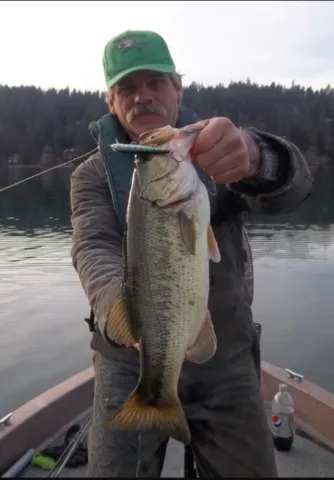
Let’s talk about winter bass fishing. Whether you choose to fish out of a boat in open water, or venture out on a frozen lake to drill a hole in the ice, you can catch bass in the winter. This time of year can be challenging for bass anglers, but with the right techniques you can master it. Here are the top 8 most important steps to follow when fishing for bass in the winter.
Choose the Right Lure Type
The first thing you’ll need to think about is grabbing the correct lure for the season. You can’t use the same strategy you use when the water is warm, no matter what way you look at it. Winter fishing techniques require finesse, but they also require a bit of preparation. Fast-moving lures and excessively noisy ones won’t work when the water temperatures drop. You’re going to want to use bottom feeders and slower moving lures like jigging raps, flutter spoons, or, if you are fishing open water, suspending jerkbaits, if you work them slowly, with long pauses.
Stay away from lipped and lipless crankbaits, spinnerbaits, and other fast-moving lures during the winter months. Even switching from lures to live bait when legal is sometimes the key to landing winter bass.
Always choose the most natural color you can, and try to imitate the fish’s color in the water you’re fishing.
Slow it Down
You need to slow down your presentation when the water temperatures drop. Winter largemouth bass fishing requires you to think like a fish. The water is cold, their metabolism is slow, and they’re not feeding much, so they will never chase a fast-moving bait halfway across the pond. It won’t work.
You need to drop something right in front of their face, make the bass think it’s almost dead, and move it slowly and erratically, so they think they’ve got an easy meal on their hand. Once you do that, you’ll have no problem retrieving them because they won’t put up much of a fight. In less than 40-degree water, you’re in for a challenge. At that temperature, the bass are incredibly inactive, and their metabolism is super slow, so they’re not feeding much, and they’re preserving all their energy by taking on the simplest of meals.
For you to have success fishing during this time, you need to throw your lure right in their face and present it slowly enough for them to get it.
The 40-to-50-degree temperature range is prime fishing in the north, so expect to find bass in this temperature range most frequently during early and late winter months. Bass in this temperature will slow down quite a bit, but they’ll still have feeding periods each day, and this is when you need to capitalize by using the right lures and offering a slow but calculated presentation.
Size it Down
In addition to presenting more slowly, you’ll also want to present a smaller lure. Small bait fish imitations can trigger strikes, or you can go with a small nedhead jig or spoon with some red on it.
The bottom line is, your strategy needs to stay in line with the conditions. If it’s cold and the water temperature is near freezing, use a small ned, or the smallest swimbait you have, nose hooked on a drop-shot jig. Doing so will present less of a threat to the bass, and they’ll think they stumbled upon an easy opportunity for a meal.
Go Neutral
Color is also an important factor in the winter. If you can find baitfish in the water, see what color they are, and mimic them. If not, go neutral whenever possible.
Know Where to Look
The best tip someone ever told me is to use a good fish finder and search the area for fish before you try fishing for them. Water clarity is also a huge factor in the winter. If the water is murky, the baitfish will run deeper. If you have clear water, the baitfish will come closer to shore and into the weed lines. Look for green weeds, rocky drop-offs, submerged islands, or any structure that might be a good spot bass would use, then scout the area for fish with your electronics.
Time it Right
As previously mentioned, you need to change your mindset when it comes to fishing in the winter. When the water temperatures are warm, we know that the best times to fish for bass is first thing in the morning and right at dusk.
When you’re fishing in the winter, you’ll want to fish the middle of the day because this is when the water will be the warmest. Once the sun has hit the water for a while, the baitfish will start to move around, and this is when you stand the best chance of catching more bass.
Don’t Forget the Basics
One of the most important winter bass fishing tactics to learn revolves around understanding structure and baitfish. You can sometimes find bass without any structure around if there are baitfish there, and sometimes you can find bass on structure without any baitfish, but you will never find them where neither are present. You need to understand these two points and why they’re critical for winter fishing. Baitfish will sometimes hug the shore near creeks because this is where the most oxygen is, and the temperature tends to be a bit warmer. As we all should know, bass follow the baitfish, so this is where you’re likely to find more bass. Offshore green weed lines can also hold bait fish and provide bass with ambush points to catch an easy meal, making them prime spots as well.
Bring the Right Gear
While this isn’t a direct tip per se, I wanted to talk briefly about safety and gear. Depending on your location, fishing in the winter can be dangerous because of frigid temperatures and dangerously cold water. You need to make sure you have enough layers to keep yourself warm, and plenty of backup gear in case you fall in or get wet. Wear multiple layers with socks, ice fishing boots, and fingerless gloves so you can maintain full movement of your fingers. If you're on the ice, make sure you have all the proper safety gear you need in case you should fall through the ice, and don't ever fish on the ice alone.
/articles/how-catch-bass-winter
Finding the Right Fishing Rod
By Jason Brooks
Almost three decades ago, I learned the importance of using the correct fishing rod, and how important the rod is as a tool to catch more fish. It was a bright July day, and we were fishing the Cowlitz River for summer steelhead. I was with two friends, both of whom were well seasoned steelhead anglers, but I was not. Having grown up in North Central Washington, steelhead were but an anomaly back in the 80’s and 90’s. Instead, we trolled for trout and chased summer chinook by casting spoons and pulling plugs, but we never really had to “feel the bite” like you do for summer steelhead.
"Broomstick"
Throughout the day, my two friends kept hooking fish while I did not get a single bite, or at least I did not think I did. After breaking off the leader while in a good run, one of my friends told me to grab his spare rod, already rigged up and ready to go with bait. I put down my rod and grabbed his, cast it out, and within seconds had a bite and set the hook. Once that fish was landed, I mentioned how quickly I felt the fish bite and that it was my first bite of the day.
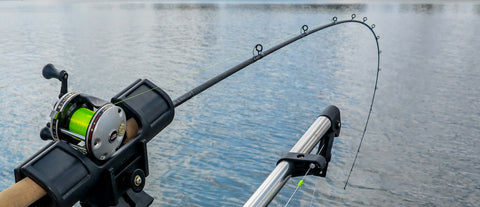
Both friends politely informed me that I had been getting bites all day, but I just did not know it, calling my fishing rod a “broomstick”. I was using a cheap rod, one that fit my budget at the time, but also cost me fish as it was not sensitive enough for me to notice the bite. The rod my friend handed me was a Lamiglas Certified Pro, a “mid-priced” rod for that brand, but known to be extremely sensitive and a good value compared to the higher end models.
Pricing
Price is probably the most noticeable point when it comes to a fishing rod. Those that do not fish, and even a few that do, often ask why quality fishing rods cost so much. Yes, there are exceptionally good rods on the market that do not cost what some of the “top of the line” models do, but they are usually made in foreign countries where quality control might not be as tight as some American made rods.
There is a saying, “buy cheap, buy twice” which means those that try to look for a bargain often end up buying the more expensive rod after they have a few days like the one I had on the Cowlitz all those years ago. The high price of a rod is mostly due to a few variables, the first being quality control with quality materials. The next cost factor is that you are not just paying for the rod, but also for research and development that went into designing, testing, and building of the rod. A company cannot improve their products without testing and developing them first.
They have paid employees that do this, such as engineers to design, make, and maintain the machines that manufacture the rods, and then of course the engineers whose knowledge goes into rod design. Everyone needs a paycheck and when you buy that rod you are becoming part of the process, one that will also help improve the next model or design of rod.
Warranties also cost and some high-end rods are factoring in the warranty for when anglers do break a rod and get a “free” replacement. That replacement cannot really be free but instead is added into the overall costs. Then there is shipping the rods to stores, advertising, and of course the store’s overhead, which all must be added to the costs of each rod.
Quality
So now that you know why some rods cost so much, then ask how some rods can be reasonable in price and still have most of the same attributes of a high-end rod. This is mostly because those rods are a few years behind in technology, and either patents run out so they can be copied, or consumer demand is finally high enough that a large company can outsource the building of the rods to foreign labor, making the building part of the rod less expensive, and mass produce the rod.
Profit margins can be smaller, and this means a less expensive rod for the angler, but think about quality control and rod materials. Of course, these rods can and do catch fish, so should you feel guilty for buying a rod made in some foreign country? That is up to you, but it is understandable why one would buy such a rod, with some American made rods costing two and even three times as much as the others.
When it comes time to pick out the rod you plan to buy, you need to understand how the rod is designed or what its purpose is for. The first two factors that must be taken into consideration when purchasing the correct rod are what type of fish you are planning on catching, and what technique you are going to use to catch them. Take for example the twitching rod, often used to catch coho, but also good for chinook, chums, and even the occasional winter steelhead.
Since it is mostly used for coho, the rod needs enough power to haul in a 12 to 18-pound fish, pulling it out of a log jam, and to the net. It also needs a soft tip, or fast action, to give that jig the right action as it falls, and so you can feel the slightest resistance when the fish grabs the jig, often done on the drop. Again, that power needs to be strong enough to set the hook quickly. And then there is the length of the rod- most twitching rods are 7’6” to 7’9” as this is the right balance for twitching without causing wrist fatigue.
Years ago, just as twitching rods were coming onto the market, I was still using a medium action 8’6” drift fishing rod and did well until my wrist hurt so bad that I had to stop fishing for the day. Yes, some rods are “multi-purpose”, but if you plan to use a specific technique you will always do better with the right tool for the job, or the rod designed for that type of fishing.
Float Fishing
Float fishing is popular amongst salmon and steelhead anglers, and since the technique is pretty much the same if you are floating cured roe or a jig, you can use the same rod. The idea of float fishing is to cast out a line with a sliding float and a weight to get the bait or lure down to the depth of the fish, and then let it naturally drift downstream.
To do this you need to be able to mend the line, which is to pick the line up off the water and pull or flip it upstream, allowing some slack above the float. If the line gets pulled downstream in the current, it often speeds up the float and bait or lure and it is not a natural presentation. To mend the line, you need an exceptionally long rod so you can lift the line up off the water. Most float rods are 10 ½ to 12 feet long, with a medium heavy to heavy action or “power” as you do not need to feel the bite, but you need to set the hook hard.
Spoon and Spinner Fishing
Spoon and spinner fishing is much like drift fishing as far as casting out a lure, letting it drift along and catch in the current as it swings across the river. One main difference is that most bites on the spoon or spinner are violent grabs by the fish and you can feel them easily. There are a few times that the bite is more of a pause but then again you can feel that with a quality graphite or glass rod.
However, the drift angler needs to be able to tell the difference between a bite and the weight bouncing off a rock. This is where my broomstick failed me all those years ago. If there is one technique where the rod is the most valuable tool to catch fish, it is in drift fishing. This style of fishing is also one of the most common and one of the ways most salmon and steelhead anglers learn to fish.
It can be very frustrating to go out fishing and not get a bite, or worse, get a bite and not know it. Do not skimp on the drift fishing rod. An extremely sensitive, moderate to fast action rod in 8 ½ to 9 ½ feet is necessity. Again, the river you plan on fishing will determine the specifics of the rod.
Frazier River
Years ago, when the Frazier River in British Columbia still had a return on sockeye in the tens-of-millions (yes, millions) I found myself standing shoulder to shoulder in the glacial waters with zero visibility, drift fishing “wool” as they call it in B.C. It was the basic drift fishing of a piece of yarn, sometimes with a Lil Corky, but mostly just a piece of yarn and an awfully long leader.
Lining sockeye, like they do in Alaska, was the way to catch them in the murky water, but this river is huge and about 200 yards wide, moving so fast that we were casting 2-ounce cannonball weights and bouncing them along as if they were a 2-inch piece of pencil lead. For this trip I was using a 12-foot extra heavy spinning rod. It would cast 100 yards easily and handle the swift currents as well as the occasional chinook, pulling it in while never needing to yell, “fish on, coming down” like most anglers do on any given pink salmon river in the Pacific Northwest.
It was the right tool for the job, and one I bought specifically for this trip. It cost a few hundred dollars and that is expensive for a rod that will be scarcely used. It has found a new fishery now that the Frazier is pretty much closed to sockeye fishing, and that is along the ocean beaches as a surf perch rod. Again, ask yourself what type of fish you are planning on catching, and what technique you will be using.
Surf perch does not require a heavy action rod, but casting the heavy weights out past the rolling waves does. Be sure to pick the right rod you plan to use and buy the best quality one you can afford, otherwise you will likely be buying twice.
/articles/finding-right-fishing-rod
How to Survive Opening Day
April is unofficially the start of spring and often linked to mythical tales of rebirth, resurrection, and fertility. Throughout history, spring has been celebrated via a diverse lineup of traditions. It is a time of rebirth that can be tracked back for centuries. Where many of the ancient festivals can be directly linked to some sort of bloodshed and brutality, fortunately for the Western Washington angler, we see April as opening day of lowland lakes season.
Where hopefully our participation does not result in bloodshed, opening day can either be a bodacious good time or a stressful one. As a small child I remember anticipating opening day for months, any given year it was probably the highlight of the year for me. My opening day experiences have always been memorable. To this day, fishing or not, I eagerly await opening day each year. In a sense, opening day marks my renaissance each year. Unfortunately, not everybody feels the same way, and opening day can be an overwhelming source of frustration.
So, how does one survive opening day crowds?
Opening day frustrations come in many forms and we all have different tolerances for things that are generally out of our control. Your mindset should be that most things associated with opening day will be out of your control. The list is long, but some things to think about are tackle/gear availability, where to go, gear failure, and crowds.
Planning and preparation will go a long way in smoothing over any pre-opening day jitters. Don’t go to your local tackle shop on the Friday before opening day and expect to find your favorite lure, a kiddie setup, a jar of Ball-O-Fire eggs, or buy your license. Even well stocked tackle stops can run low in the days leading up to opening day. Shop early and remember that in our post pandemic world, the tackle shops are dealing with supply chain issues.
If they don’t have something it’s likely not their fault, and they are doing everything they can to anticipate your needs. Locally, Kevin Johns with Holiday Sports is a both the tackle buyer and lifelong local fishing expert. They are well stocked for opening day. If they don’t have what you’re looking for, look up Kevin and he will steer you in the right direction. SportCo/Outdoor Emporium, Johns Sporting Goods, Yeager’s, and even some local hardware stores have a fishing expert. As a hidden gem, the fishing department manager at Ace Hardware in Anacortes knows her stuff and is very devout in her pursuit of our local fisheries.
Before opening day take the time to go through your gear and, if you’re using them, your boat and trailer. Did the battery survive the winter, trailer lights work, and are your winch and/or tiedown straps functional? Check the line on your reels, replace as required. Check your rods for damage and cracked guides. How does your tackle bag or box look, are they adequately stocked? Make sure you have serviceable PFDs for everyone that may be on your boat, and it’s a good idea to have life vests for any children and non-swimmers when fishing from shore.
As part of your planning activities, maybe visit the area you plan to fish ahead of time. Check ramp conditions, look at the boat trailer parking options, shoreline access points, and hazards. Make sure there are not any surprise road or access closures. Over the winter, some of our access points may have been updated, and parking or access could be different.
Hopefully your upfront planning and preparation will help to soothe and your opening day anxiety, but you’re not out of the woods just yet. You still have to survive opening day!
I kind of look at opening day as maybe attending Mardi Gras in New Orleans. All the individual components and food may be a little odd or even uncomfortable, but the combined experience is an absolute hoot. A big thing to remember about opening day is that it is typically a family event. Strive to make it a positive experience for everyone involved.
Children are very perceptive and are constantly learning from our behavior. If they get tangled with your prize stocked rainbow or one of the grandkids hooks your favorite fishing hat when casting just laugh it off. In the event of a tangle or other calamity, no matter who is at fault don’t be afraid to say that you are sorry to your fellow angler. Use the time to teach good sportsmanship and etiquette.
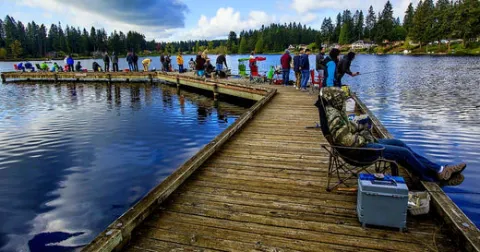
You will have no control of the crowds and know that going in. That said, you can do a few things going in to improve the experience. First and foremost is to arrive early. Not just early but hours early. Your favorite spot at the corner of the dock or bulrushes is more likely to be available, and if you’re boating, you may find trailer parking within a reasonable distance to the ramp. On that note; if fishing from the shore, don’t impede the boat ramp access. Boaters need room to maneuver their rig, a place to beach their boat, and a line free path to and from the boat ramp while on the water.
As an alternative, if early doesn’t work, sleep in. Get up, have a cup of joe or three, and maybe even breakfast before heading off the lake. There is a thought here; opening day is all about voracious, planted trout. These fish will have the feed bag on all day. Years ago, I hatched an opening day plan to fish Lake McMurry in Skagit County. We had a guest from Alaska, she was an avid angler but had never fished an opening day.
The plan was for me to launch at o-dark thirty, then wait for them to arrive around daybreak. In accordance with the plan, I launched hours before daylight and was the second rig in the parking area. After launching I motored out, dropped the anchor, and waited for the crew. It was cold, raining and breezy, and in short order I was soaked the bone. With dawn came a renewed hope that I wasn’t going to die of hypothermia just off the Lake McMurry boat ramp, but my wait continued. There was a lot of activity, and I enjoyed watching all the happenings. My waterlogged condition was improving and almost bearable.
It was a little later, the rain had turned to mostly a mist and the sun was trying to show itself. I was eager to join the other opening day participants but somehow, I was still waiting. A few of the boats that had already launched and headed out fishing were now coming back in with easy limits. I was getting a bit anxious and at that point I had full on gold (I mean, fish) fever.
Eventually the gang showed up, they had overslept and ended up parking somewhere way down the road. I considered expressing my displeasure with the situation, but here came one of the kids, little legs going as fast as they could, carrying a McDonald’s bag. She was over the top excited that they had stopped and gotten me breakfast and coffee. Although they were both cold, her enthusiasm was infectious and the wait was forgotten. We got loaded up and cast off on our adventure. We had an absolute blast, lots of joking around, lost fish, and full stringers. We started out just doing catch and release, and then quickly filled out our limits. I don’t know how many fish we caught that day, but it was one for the books. As applicable to opening day survival, there were a few lessons learned moments in our adventure.
Although a bit frustrated with the wait, I stayed positive and we had a great time. The kids and our guest thoroughly enjoyed our adventure and never saw my tribulations. The second lesson was in the opening day bite. Even though people were coming in with early limits, I think the bite improved as the day progressed. I believe that with the unsettled weather, the surface temperatures were lower early on. The bite really got going as the lake warmed up. I’m sure if we had waited until 1:00 or so to launch, we still would have limited and not had to worry about parking. Maybe off subject, but regarding lessons learned, always carry a big thermos of hot tea or coffee!
If you just can’t get into the opening day hocus pocus no worries, you still have options. Remember that almost everyone that owns a fishing rod will be fishing an opening day lake. What that means to you is that, for the most part, our other fisheries will be deserted. The year-round lakes will be just hitting their spring stride. We have enjoyed kokanee limits from Lake Stevens, Lake Cavanaugh, and Lake Samish on opening day.
There are other fisheries to explore as well. You’ll want to check the WDFW regs before you hitch up your rig, but for 2023 it is likely that both halibut (MA 6-10) and spring chinook in SE Washington will be open. Both have their own crowds and challenges but are solid alternatives to our Western Washington Lowland Lake opener. You may also consider shallow water fishing in the salt. Both surf perch and bottom fish such as the Irish lord family, sanddabs, sole, flounder, and greenling are all available year round. Check the WDFW regulations and bottom fish definitions for the area you plan to fish.
Your ability to survive opening day may be a crapshoot, but with a little advanced planning you adventure should be mostly painless with bloodshed limited to a skinned knee, sliver, or the rare hook in the finger. Again, opening day is a huge family event, so patience and understanding will be your friend. At all costs, make opening day fun for all and be a teacher.
Assure your gear, boat, and trailer are up for the task before you head to your favorite lake. Get your tackle and licenses as early as possible. Make sure the kidlets are wearing properly fitting lifejackets and, as appropriate, bundled up for the weather. Opening day is not the time to cut back on snacks, a full tummy is a happy tummy. A little attention to details and you will not only survive opening day, but the gang will eagerly look forward to next year’s festivities.
/articles/how-survive-opening-day
The Art of Finding Kokanee
In the years since Kokanee University was written, many wonderful developments have happened. The tackle designs, for example, are way different now as technology has made available vast improvements in action and color. What has not changed are the concepts outlined in previous articles. Let’s take a look at fishing strategies to catch more kokanee!
Color Fish Finder
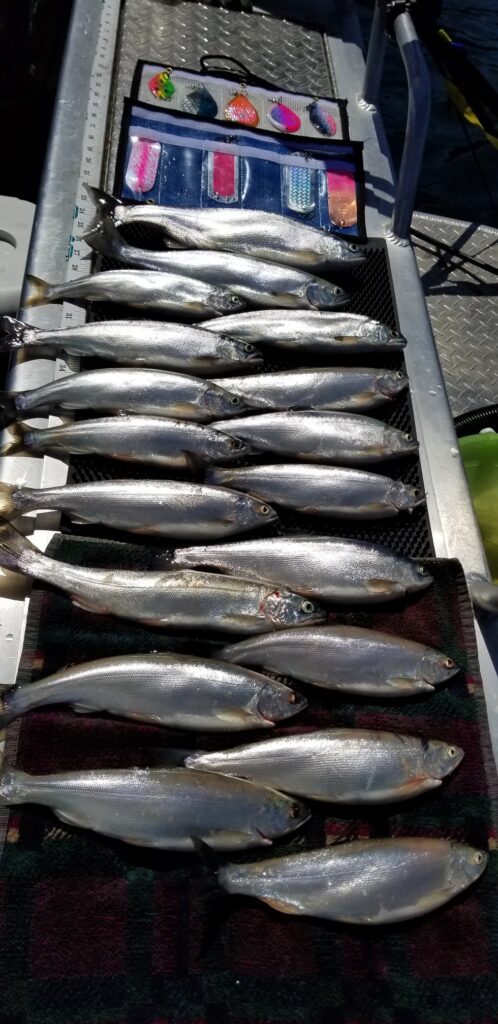
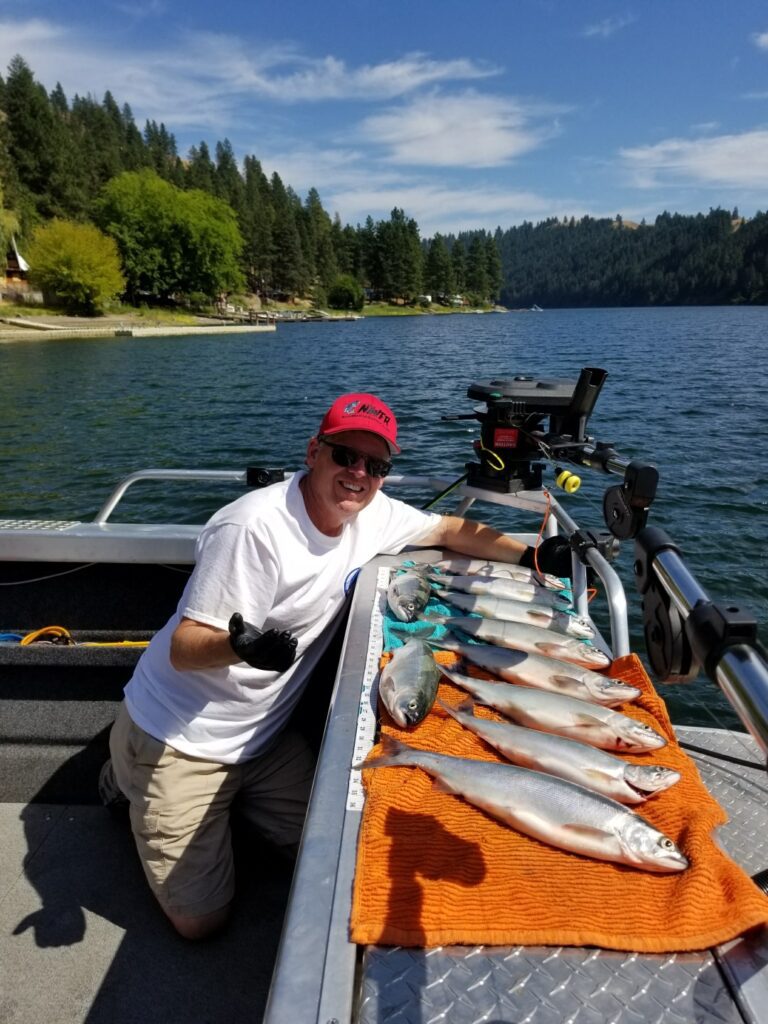
No doubt, the very best piece of electronic equipment is the color fish finder–sonar. Color is better because of the unique biology of the kokanee, which have an unusually large air sac, and sonar cannot penetrate air. Because of this, kokanee can be seen on the fish finder, usually as bright orange (the default color on many systems). No other freshwater fish has this distinct detectable characteristic, so you can easily tell the depth of kokanee by this method.
The fish finder will let you know the current depth. Knowing the depth of the bottom is essential, especially if your lake has varying contours. On more than one occasion, I have raised downrigger balls "just in time" to avoid getting hung up on a bottom that suddenly came up, seemingly out of nowhere. Your fish finder will track your downrigger ball, and you can use this to verify the accuracy of the counter on the downrigger.
One factor to consider is how large a viewing area there is. The larger the viewing area, the higher the cost. Screen resolution is another factor to consider – will your viewer be viewable in sunlight and with polarized sunglasses? Another critical factor is the location of the fish finder in relation to where you are sitting while fishing. You need to be able to see the details on the screen.
GPS
GPS serves many useful functions. One of the best is showing accurate boat speed. (The little paddle wheel on the fish finder is unreliable and next to useless.) If you are targeting a speed of 1.4 MPH, you will be able to know when you are going 1.4 MPH. You will also be able to know when you are NOT going 1.4 MPH.
GPS will display a track of where you have been, and the memory will store those tracks until you erase them. I have had these tracks for years on the same device, showing both where I have been and also where my favorite and most successful areas have been.
Another fabulous feature is the cartography, which shows the contour depths of the lake you are on. You can either purchase the SD card, or many now come with the cartography pre-installed. My SD card covers all the lakes in the western US. You can get these cards to cover your region as well. Knowing the depth contours is a tremendous help. For example, it will allow you to stay on course within a former river channel. It will show points of land that are underwater and which could be a problem in navigation when the downriggers are out.
Temperature At Depth
One of the very best recent developments in technology is the ability to accurately measure the temperature of the water at depth. While the temperature function on your fish finder only tells you the surface temperature, the simplest device for measuring water temperature at depth is from FishHawk Electronics.
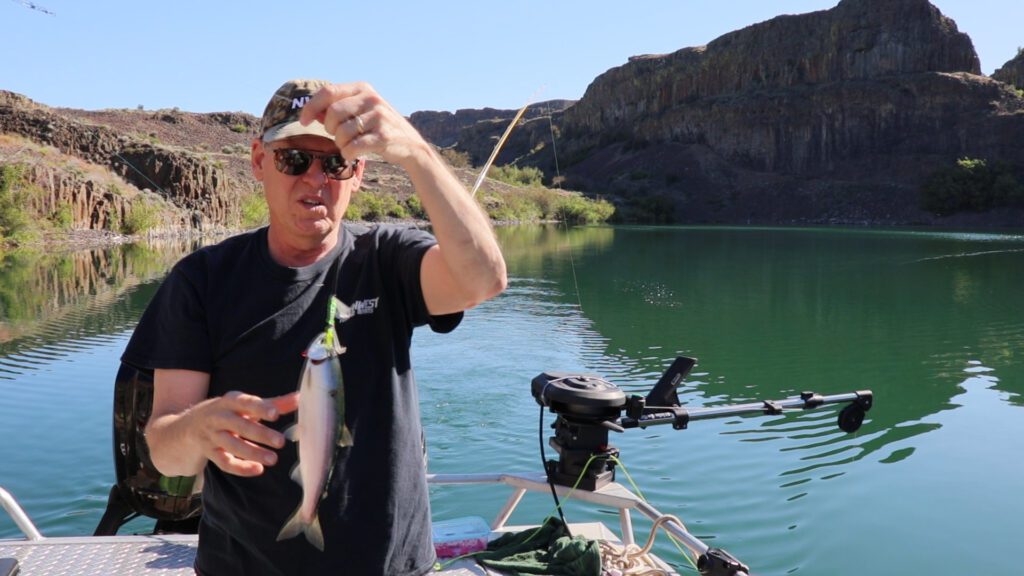
This little device is called the FishHawk TD. It is easy to use by simply attaching the device to your fishing line, pressing START, waiting for READY, then lowering it into the water. I send it down deep, then retrieve it, then press view, and it shows the water temperature in 5-foot increments down the water column as far as you have lowered the probe. This is extremely useful, particularly when looking for that 54-degree temperature depth in kokanee season.
I have also used the device to understand what was going on underwater. During one early September outing on a high mountain lake, I could see on the fish finder a few scattered kokanee at 40 feet, and a whole bunch of kokanee at 60 feet. Try as I could, no kokanee could be enticed from the 60-foot depth. The kokanee at the 40-foot depth were the only ones that would bite. I set out the FishHawk TD to determine if temperature had anything to do with it. Sure enough, it did.
The fish at 40 feet enjoyed a temperature of 54 degrees. The fish at 60 feet were at 44 degrees. The deeper fish were already starting to settle in for the winter. Since it was September, I could tell these were the two-year-olds (next year's fish). Most of the kokanee I had caught at the 40-foot level were either turned or were turning color. By combining what I learned from the temperature measurements with what I saw on the fish finder, I was able to figure out why I was not getting bit at the deeper depths.
Electric Trolling Motors
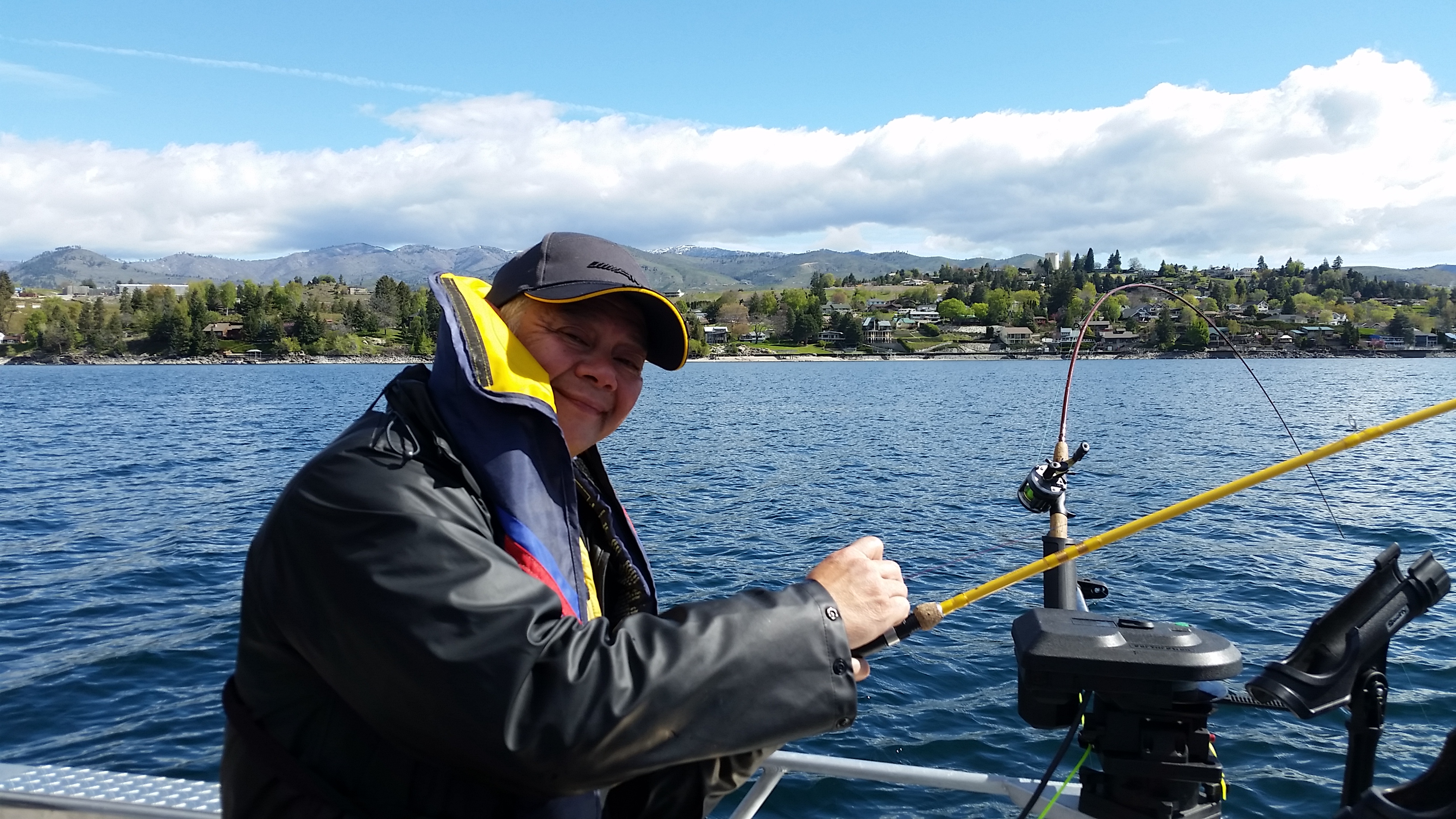
The single best advantage of the electric trolling bow-mounted motor is the ability to steer the boat by wireless remote control from wherever you are in the boat. I simply strap the small control on my wrist, and that lets me easily control the boat's direction and speed, even when I am fighting a fish or setting the downrigger.
Scouting A New Lake
Once you have enjoyed some success fishing for kokanee, you can have confidence in fishing any lake with a kokanee population. Kokanee are kokanee regardless of whether they are in Oregon, Idaho, Montana, North Carolina, British Columbia, Washington, Colorado, New Mexico, Utah, Wyoming, or California. When I know I am going to fish a new lake, the very first thing I do is to find the lake using Google Earth. I need to know the shape of the lake, where the deep water is, and where the shallow water is. I need to know what feeder streams come into it and where the outlet(s) are. I need to know the structure of the surrounding terrain, such as whether one side coming into the lake is steep and the other side is gentle.
I also check out the lake using my GPS cartography. I can sit in my boat in Central Oregon and study lakes in any other location simply by moving the cursor on my GPS.
Generally, what I am looking for is where the current might be and where feeder streams come into the lake. Those are two locators of what I call "active" water. This is where water mixes with the regular lake water, adding oxygen to the water. Fish need oxygen. This is also where trace nutrients come into the lake from feeder streams. These nutrients act like fertilizer to the plankton (phytoplankton) that the zooplankton, kokanee, and other baitfish feed on.
I look for drop-offs, where the lake suddenly gets deeper. Recall that as you go deeper down the water column, the water gets colder. It cannot get colder unless it gives up heat that rises to the surface. This process causes mixing - water movement up and down. This process is also good for the plankton and, hence, good for the kokanee.
If I am fishing early in the season, I look for structures, such as points of land coming into the water. I have found that in the early season, kokanee relate to structure.
Finally, using the internet allows you to research in ways we never could years ago. Don’t limit yourself to fishing forums. Searching and finding hidden gems can give you inside information that many anglers have overlooked.
The whole idea is to learn as much reliable information about the new lake as you can from the available sources. Be assured, what has worked for you on your local lake will also work on the new lake.
The Science Of "Scent"
All fish have nares, which are scent-detecting tubes on the snout of the fish. A fish's ability to detect scent is flat out amazing, often measured in parts per million. And salmonids are probably near the best in scent detection. For thousands of years, fishermen have used bait on hooks to persuade fish to bite.
Some awesome kokanee fisherman or fisherwoman discovered a long time ago that kokanee will bite a lure baited with white shoepeg corn. And that discovery has been passed down for many years to the present time. What has not been passed down is why white shoepeg corn works so well.
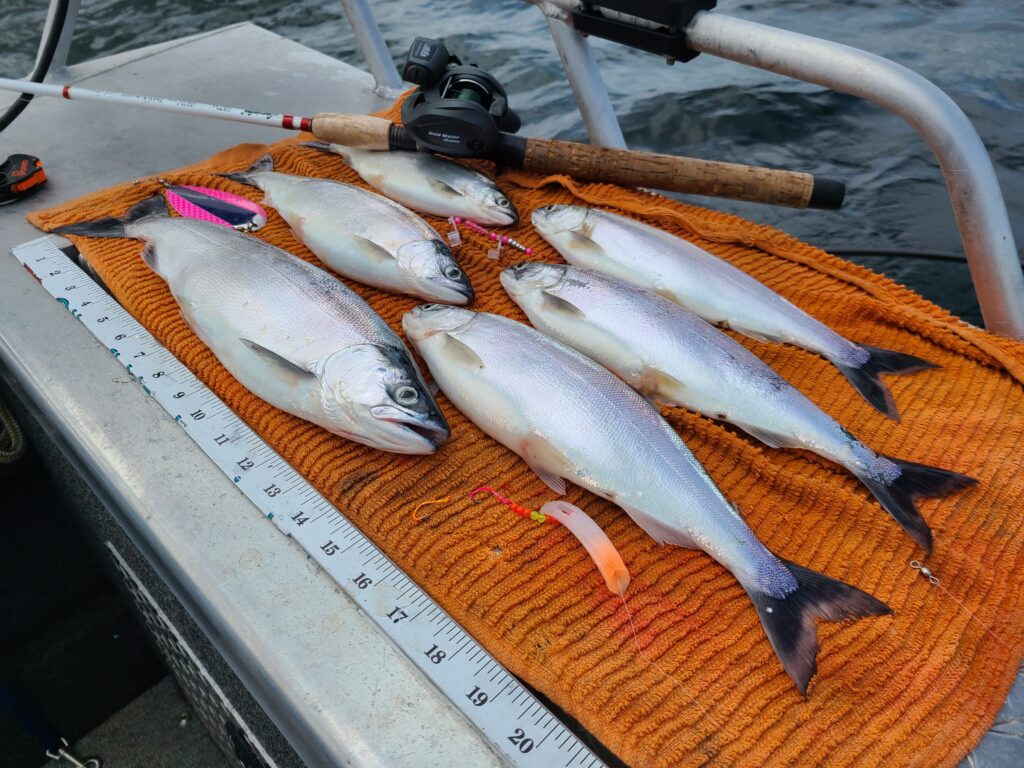
It turns out that white shoepeg corn has an amino acid that is a bite stimulant for kokanee, something that yellow corn does not have. White shoepeg corn also manages to stay on the hook fairly well at kokanee trolling speeds. My research has revealed another interesting characteristic of white shoepeg corn: it stays white down the entire water column without any fade. As such, it presents a clearly defined target for the fish to attack. (For doubters, take a kernel of white shoepeg corn into a dark closet and shine a black light on it.)
Over the years, it has become popular to add additional scent to the corn by brining it first. Such scents have included anise, garlic, vanilla, and a host of others. Savvy kokanee fishermen would have more than one type of scented corn to entice the kokanee; in case the first one didn't seem to work, they would have a backup. I know that making up different scent combinations is part of the wonderful pre-fishing ritual. Some even dye the corn different colors. More ritual.
In the past, I endorsed using two kernels of corn on each of the tandem hooks in the lure. I have changed my philosophy a bit over the years. I found out that putting corn only on the leading hook helped prevent that dreaded "short" bite. A "short" bite is where the fish targets the trailing hook, hits it, and does not get hooked. The same concept is where the fish will take a bite out of a worm that extends beyond the hook. Either way, the fish wins, and you get that wonderful, frustrated feeling.
Placing the corn on the leading hook takes advantage of a fish's biology. Since a fish cannot see directly in front of its snout a distance of about two inches, placing the target scent corn on the leading hook will make the trailing hook invisible to the fish. The result is a higher percentage of hook-ups and deeper penetration of the hooks.
I have also studied the hydrodynamics of putting two kernels of corn on the leading and trailing hooks. At kokanee trolling speeds, using two kernels on each hook significantly dampens the action of the lure. This poses an issue. I want maximum action on my lure, and I also want to maximize the scent on my lure. Can I have both action and scent without compromising the action of the lure? And I also want to prevent the "short" bite.
The best solution finally emerges as being obvious all along. Many scents now come available with a sticky gel. In my opinion, these scents are more powerful bite stimulants than anything that corn can produce by itself. I now use only a single kernel of undyed, and otherwise unscented, white corn on the leading hook only, and place some gel on the beads of my beaded spinners. This gives maximum scent to my lure without interfering with its action. If I am using a squid or a hoochie, I place some of the gel inside the squid or hoochie body, again using but a single piece of white shoepeg corn on the leading hook. I believe my success rate has increased using this setup.
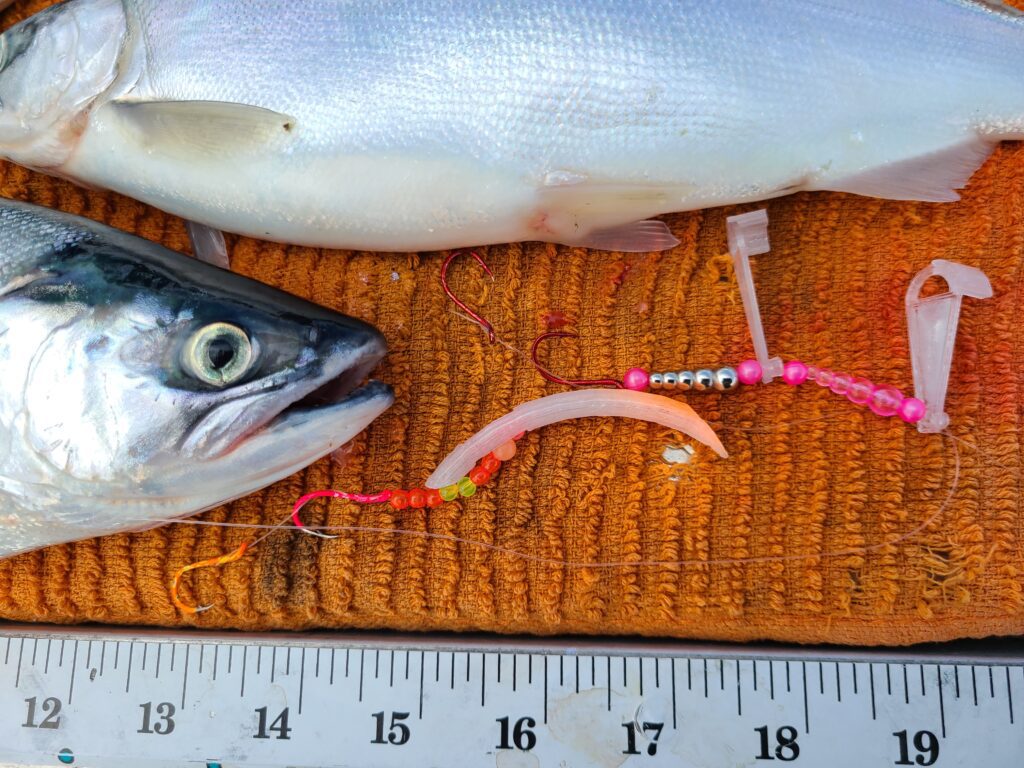
At the end of the day, do your best to rinse off the gel on your lures. Using generous amounts of hot water will help. I have now substituted my pre-fishing "brine the corn ritual" for a post-fishing "clean the lures ritual." I have found the gel scents of anise, kokanee special, garlic, and especially bloody tuna to be excellent.
Next month, we'll look at the gear you need to catch more
Fish With Gary - Kokanee university
/articles/art-finding-kokanee
Five 5-Star Fishing Destinations
Calling a fishing destination “5-star” can mean a lot of things to different people.
Some people are all about the fishing and only the fishing. Five stars to them means spectacular fishing opportunities for that prized species on their list. For them, it could be good numbers, rare fishes, or even “trophy” size. If this means sleeping in a car on the side of the road it makes no difference to them. It’s all about the fish.
Other people are looking for a trip the whole family can enjoy, a vacation with a side of good fishing. They want some amenities, some nightlife, maybe some local culture and sightseeing. Then a couple days on a blue water charter.
Throw in all the factors like; do you want a guided/charter experience or are you more into self-guided adventures? What time of year? What species? What’s on the bucket list? Boat or shore? Fly fishing? Budget? Well, you get a lot of answers for what a 5 Star Fishing Destination entails. And guess what? Everybody’s right. Your dream fishing destination is a personal thing. Whether you’re a trophy hunter or dream of ten inch trout on a quiet Alpine Lake, who can say its not “5 star”? Fishing is many things for everyone, but here are some of our favorites from over the years and why we think of them as “5 star”. (Hint: the reasons aren’t all the same.)
Starting from East to West:
Fort Peck, Montana
DIY Road Trip Adventure
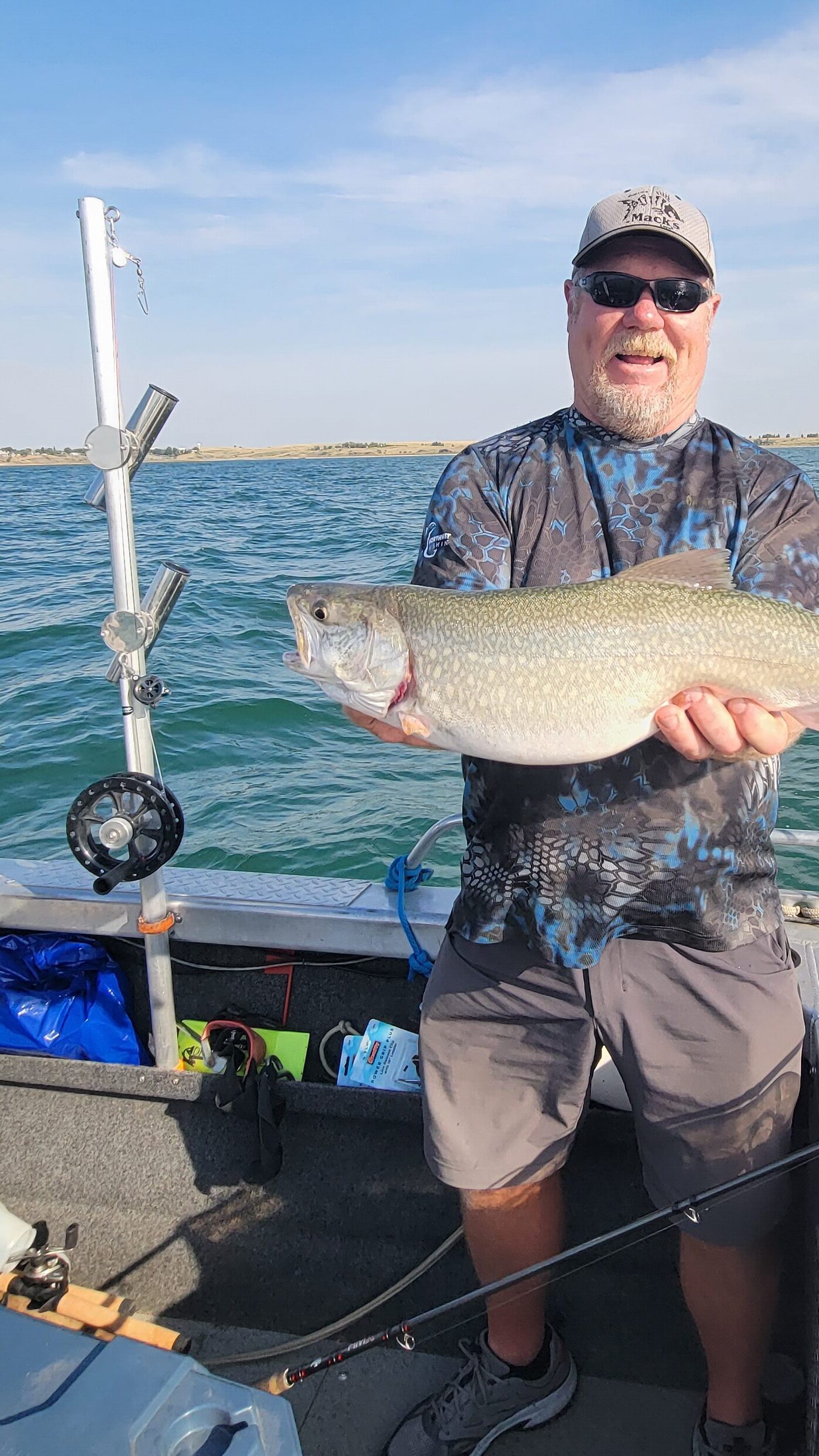
For some people seeking out fishing destinations, the adventure of getting there is more than half the fun. Fort Peck Montana is nearly 1000 miles from Seattle and a 15-hour drive straight through. It is so far East it’s not really PNW anymore. The road to Fort Peck has its share of roadside attractions, beautiful scenery, and fun stops if you plan your time accordingly. If your 5-star fishing destination means a nice long road trip, you should put Fort Peck on your list.
Why Fort Peck? Last year a new state record came out of Fort Peck that caught the attention of anglers across the U.S.. You might be surprised that the record was for Chinook Salmon, a 32.62 Chinook to be exact. That’s a nice fish anywhere! And travelling across the northwest to this unlikely spot for a chance at 30 pound plus Kings is what makes this one of our 5-star destinations. The fishing opportunity doesn’t stop with salmon at Fort Peck, Walleye, Sauger, Northern Pike, Lake Trout, and Small Mouth Bass all abound in one of the most beautiful, uncrowded fishing destinations in the United States. And from experience, they grow them large in Big Sky country!
Fort Peck Reservoir is a big lake (about 134 miles in length, 1520 miles of shoreline, and roughly 220’ deep when full) created by the Fort Peck Dam on the Missouri River, and boats are recommended but there are a lot of marinas and campgrounds to plan your trip around with many having shore fishing opportunities. Glasgow, Montana serves as a good base camp with various lodging, restaurants, and re-supply options and is just 17 miles from the Fort Peck Marina. The Cottonwood Inn & Suites has a variety of options for lodging; from RV Parking to hotel rooms, and amenities include boat parking, a casino, and restaurant.
You can learn more about Fort Peck, and how to fish it at https://fwp.mt.gov/fish
Lake Pend Oreille, Idaho
North Idaho Trophy Hunting
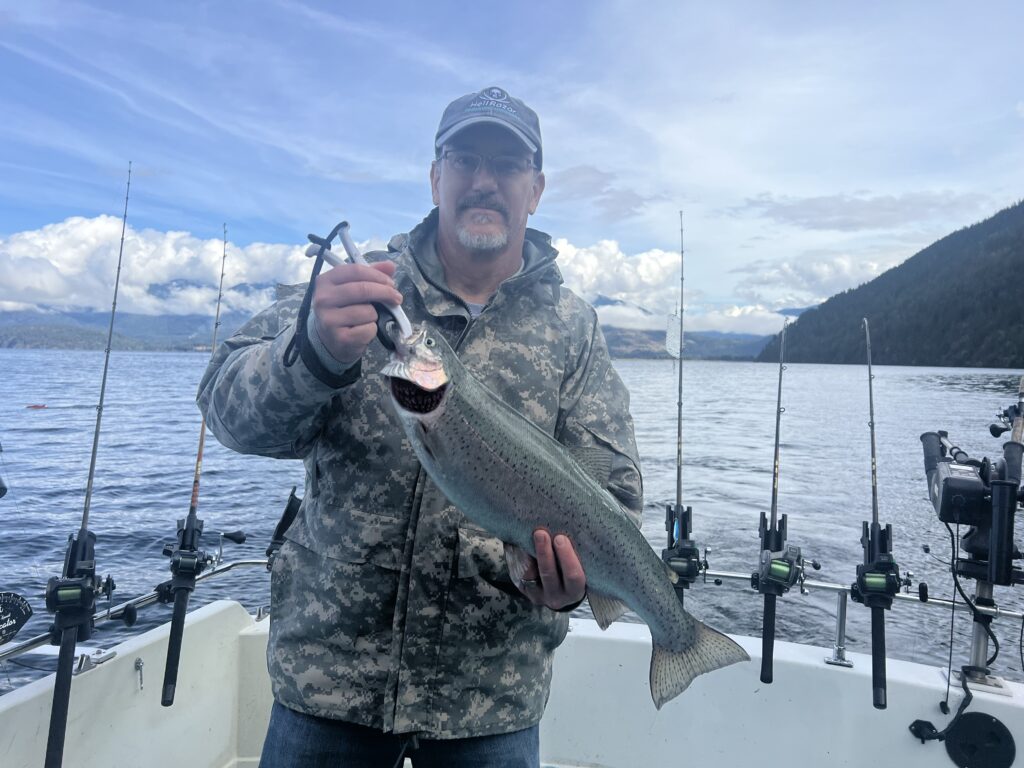
Lake Pend Oreille is the largest lake in Idaho and in the top 50 for the U.S.. It is really deep (over 1000 feet in some areas) and is known for naval submarine testing. This is beautiful country, with a host of fishing options, but what many come for are the Kamloops. Kamloops are a Gerrard strain of rainbow trout and that are known as some of the biggest trout around, and are highly sought after to round out an avid trout anglers trophy checklist. Your chance for “Big fish” is what makes Lake Pend Oreille a 5-star fishing destination.
The Idaho state record Kamloops rainbow trout was caught out of Pend Oreille in 1947 by Wes Hamlet in 1947. That’s a long time for a record to hold up, but that doesn’t stop anglers from pursuing glory every year in tournaments, by boat, and from shore. Pend Oreille is also home to massive schools of kokanee (a favorite food of the Kamloops), and populations of pike, bass, perch, walleye, crappie and mackinaw. The lake has a history of big fish taken from it in addition to the trout record, these include a 43-pound 6-ounce mackinaw in 1995, and a world record 32-pound bull trout in 1949.
The idyllic town of Sandpoint sits on the shores of Lake Pend Oreille, nestled in forests between the mountains and the lake. A destination town for skiers in the winter and boaters in the summer, Sandpoint is a great home base for the family fishing destination vacation with some boujee amenities not too far from some small town, rustic escapes. The theme park, Silverwood, is less than 30 minutes away. If you’re looking to plan a trip with something for everyone, shopping, hiking, dining, and trophy fishing, Sandpoint and the neighboring town of Ponderay are great options.
The word is out, and the popularity of the area has grown immensely for so plan ahead! Jeff and Mona Laybourne of Superfly Tackle not only operate the local tackle store and carry everything you need, but they make specialized gear to target the lake’s prized trophies. They are a wealth of information and can be reached online at https://superflyflies.com/.
Clearwater River, Idaho
Steelhead Mecca
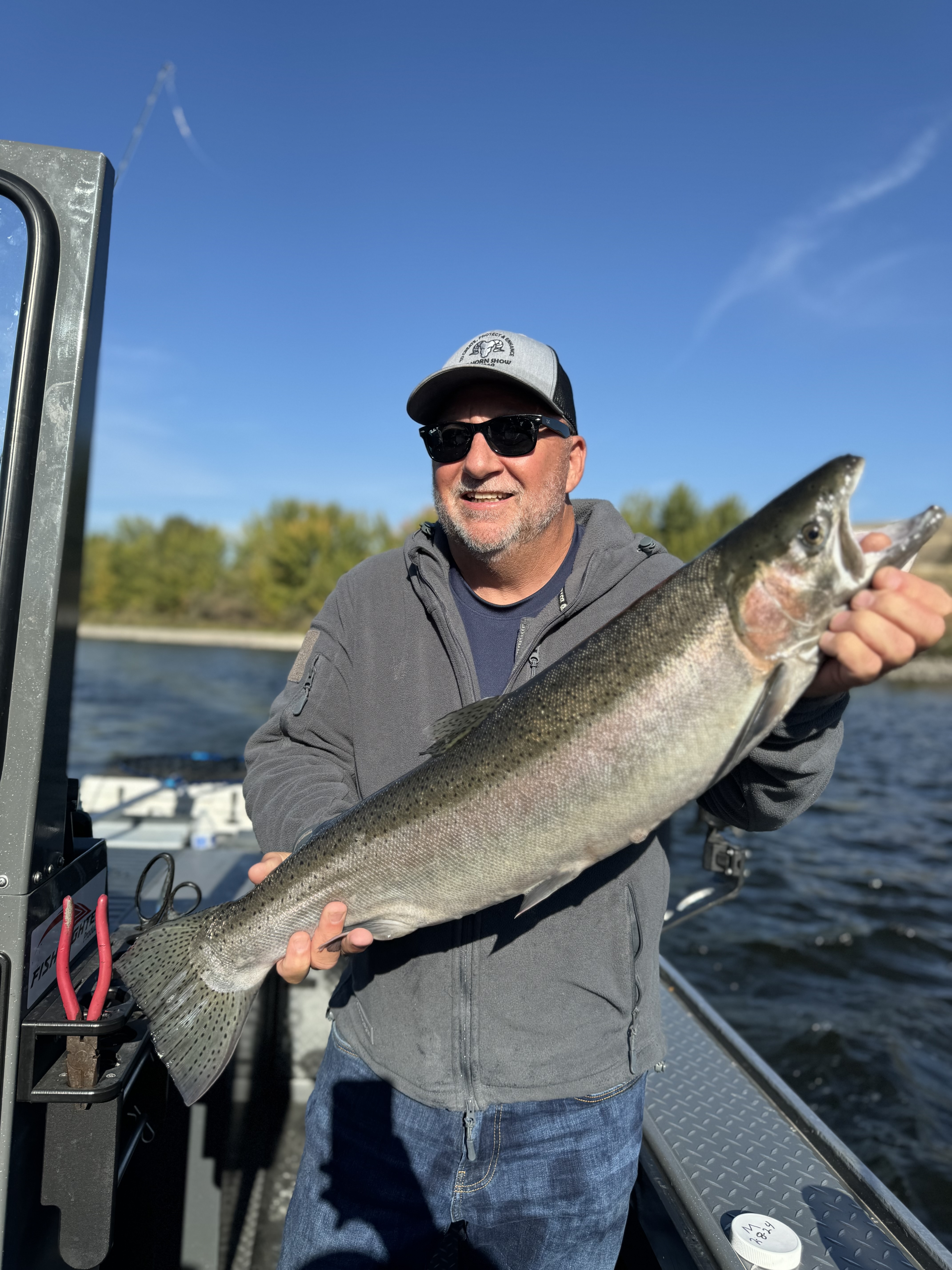
Arguably the most consistent steelhead fishing in the region and your best shot at steelhead retention (catch and keep), the Clearwater River’s retention steelhead season runs from early October to mid-April, with prime time being October through January. You can be at this steelhead promise land in just under 6 hours from Seattle.
The river draws steelhead enthusiasts from around the northwest, offering outstanding opportunities for catch-and-release fishing, fly fishing, shore fishing, and of course drift boats and power boats. The Clearwater’s “B-run” may be the best bet in the region for a trophy 20 pounder, and B-run fish typically average 12-14 pounds. Many of the fish originate at the Dworshak National Fish Hatchery managed by the Nez Perce tribe of Idaho, located at the confluence of the North Fork and mainstem Clearwater, about 3 miles west of Orofino, Idaho.
While the epic steelhead fishing and amazing stretches of highly fishable water make this a 5-star fishing destination, the Clearwater is not a one trick pony. The Dworshak hatchery bolsters catch and keep chances for King and Coho salmon with sustainable fish production goals. Coho were declared extinct in the river in 1986, but this year there was an overlapping sport season for Coho, Kings, and Steelhead! These October days are prime time and can be some of the most amazing, quality, days of an angler’s life. With returning Coho averaging 8-12 pounds, 10 to 20 pounds plus Chinook, and those amazing B-run in the river at the same time, pandemonium has been the theme more than once! Recent years have seen spring run Chinook seasons as well.
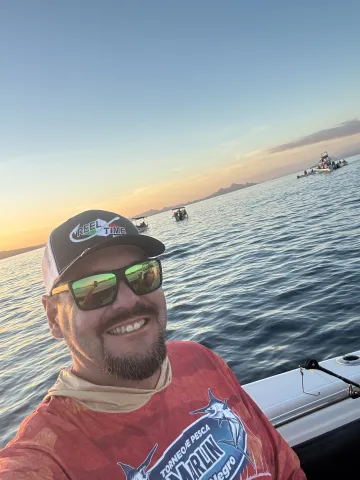
This adventure is really about the fishing and those special days on the water. There are a variety of options in the area for shore fishing, multiple boat launches, and some great area outfitters. Many folks skip the hassle of pulling the boat and learning the river, instead walking onto a guides boat and getting right into the hot spots. Many of these area professionals provide a “hot lunch” as well, and around noon you can smell burgers and brats all around the river. Guides we recommend in the area include Toby Wyatt of Reel Time Fishing https://reeltimefishing.com, Kyle Jones of Jones Sport Fishing https://jonessportfishing.com, and Adam Hocking of Steel Dreams Guide Service https://steeldreamsfishing.com. For lodging Lewiston, Idaho has all the amenities with the Hell’s Canyon Grand being our usual choice. Orofino, Idaho, has several good options as well.
Potholes Reservoir, Washington
Walleye Wonderland
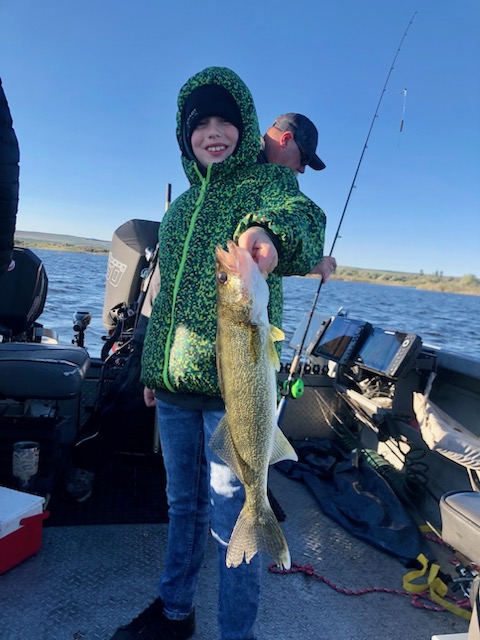
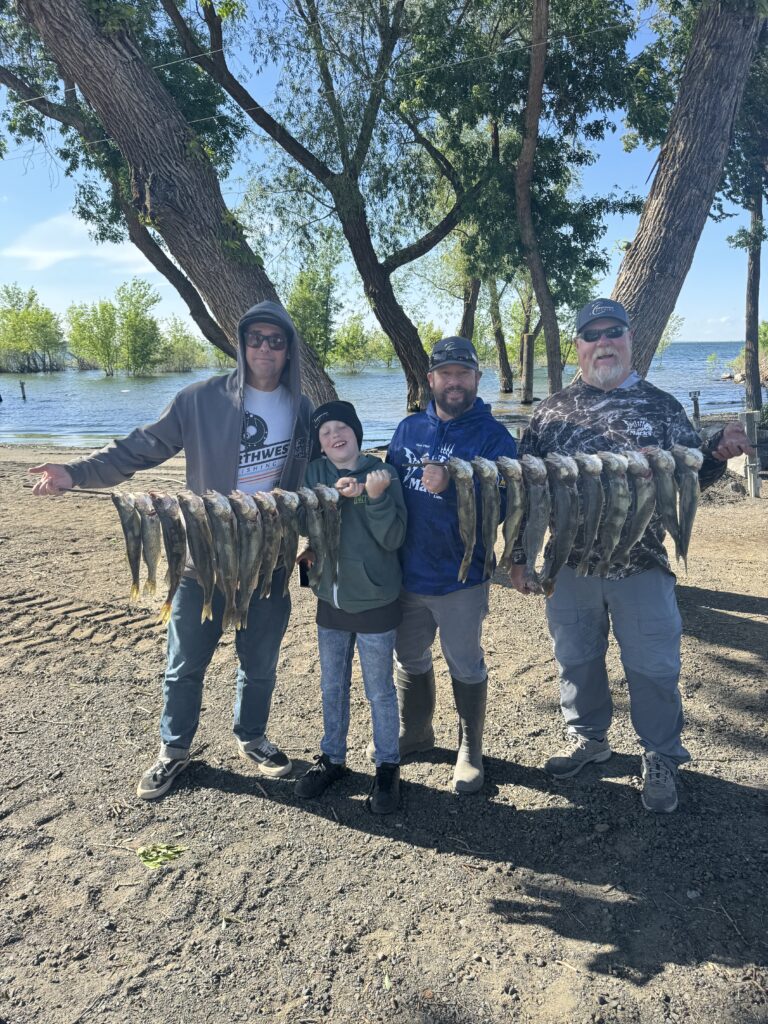
Not everyone’s into walleye, but if you are, Potholes Reservoir should be on your list. Located about seven miles south of Moses Lake in Central Washington, Potholes Reservoir offers year-round fishing opportunities for walleye, smallmouth bass, largemouth bass, and panfish. Dinner plate bluegill are not unknown and last year there was some great rainbow fishing.
The lake is large and shallow, with most of the lake less than 30 feet deep. What used to be, and still is to some extent, a large collection of sand dunes, is now a one-of-a-kind regional destination for bass and walleye anglers and recreation of all sorts. Part of the Columbia Basin Irrigation Project, multiple tournaments are held on the Lake annually, most held at the MarDon Resort Marina.
With over 300 days of sunshine, MarDon is popular as a destination for families, and vacationers nearly year-round (boating, camping, resort events, wildlife & birdwatching), with the Fall and Winter offering excellent waterfowl hunting opportunities. The resort has a variety of lodging opportunities from big RV spots and campsites to beach houses and cabins, you can customize your Potholes Lodging experience to your needs. The marina offers quick access to the Lake, and the restaurant and resort store means you don’t really need to go anywhere.
The consistent walleye fishing, and the flexibility to tailor the trip to whatever you’re looking for is what makes this a 5-star fishing destination. Walleye are delicious table fare, and the big boys can offer a surprising fight. Nothing beats a mess of walleye grilled up after a day of fishing with one of those epic Potholes sunsets on the horizon.
You can fish from the shore or the marina dock, launch your boat, rent a boat, or hire a local guide to experience Potholes Reservoir Fishing. Shelby Ross of Ross Outdoor Adventures is the resident expert on lake conditions and where the fish are.
To learn more about MarDon Reservoir visit https://mardonresort.com/ to contact Shelby Ross of Ross Outdoor Adventure visit: https://rossoutdooradventures.com
Zeballos, BC
Trip of a Lifetime
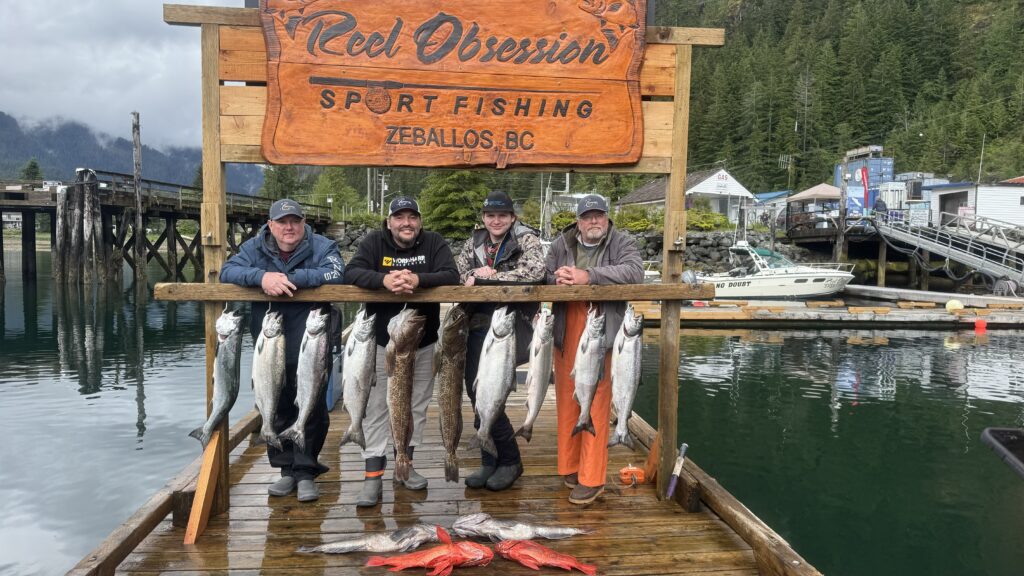
This one is for those people who want the ultimate PNW fishing experience. You want salmon, you want halibut, you want the smell of saltwater and rugged untouched shorelines. This destination is not for people that one shopping, nightlife, and dance clubs. When you pull into Zeballos, BC you drive into the past. There’s one thing to do: Fish, Eat, Sleep, Repeat.
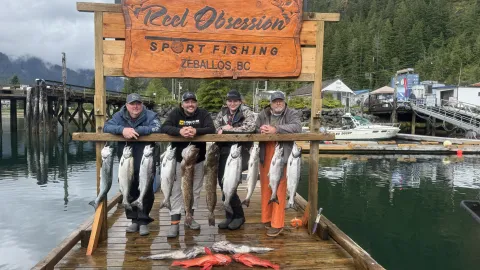
There’s one primary business in this town: Reel Obsession Sportfishing. Zeballos is about halfway up the west coast of Vancouver Island in British Columbia. It looks just like the coastal parts of the PNW. On the drive up (about 4 1/2 hours from the ferry in Nanaimo) there are towering Cedars and Firs, jagged mountains and pristine streams. There aren’t any mini-marts though. This trip is all about decompressing and enjoying some of the consistently best all-around salmon & halibut fishing in the region, and the team at Reel Obsession is obsessive in providing an unforgettable experience for their guests.
From the time you arrive until you depart, they have thought of everything. Wonderful accommodations, amazing chef prepared meals, top quality boats, gear, and equipment, and off the hook fishing is what makes this a 5-star fishing destination. Owners Adrian and Angie O’Connor have grown their operation to include up to 30 guests daily with groups of two, three, and larger visiting for three- or four-day inclusive trips. Guests start their day with breakfast in the common room then head for the boats, lunches already onboard, after eight hours of fishing your captain returns you to the dock. Fish are filleted, vacuum packed, and flash froze – all while you enjoy the latest chef’s creation. Then you wake up and do it again.
Located at the end of Esperanza Inlet which leads to Nootka Sound and then the Pacific Salmon Highway, fishing from Zeballos allows multiple options to intercept salmon, access to reliable halibut grounds, and the chance at ling cod and bottom fish nearly every trip. Later in the season Albacore Tuna trips are possible as are the chances for the prized Tyee Salmon (30 pounds or larger).
U.S. guests are limited to specific travel limits which usually fill a good cooler. Reel Obsession books up fast each season, we recommend you reach out to them early to plan your destination fishing adventure. For more information about Reel Obsession visit https://reelobsession.ca
/articles/five-5-star-fishing-destinations
Steelhead... are back?
Let's start with a recap of Steelhead season 2024 early predictions called for a record run.
JULY & AUGUST
Most people were skeptical considering the last 15 years have been less than stellar. Snake River Steelhead enter the Columbia River in July and August and unlike Salmon, Steelhead migrate slower. They often stop in areas known as cold water refuges for many days, or sometimes weeks, on their way upriver to spawn.
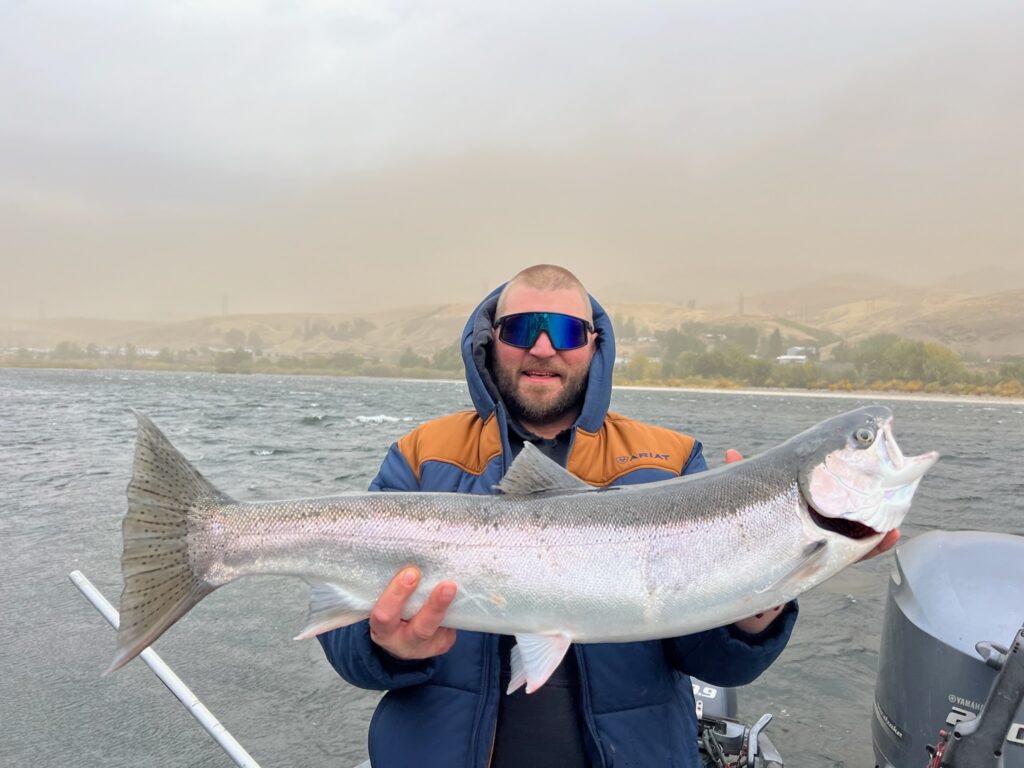
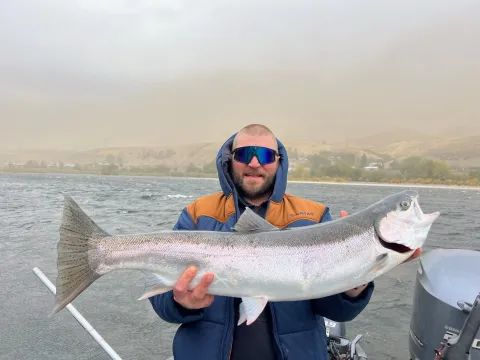
The first thing we noticed was higher numbers of fish than we were accustomed to seeing over the last 15 years. The second thing we noticed was the fish were mostly bigger B-run steelhead. Steelhead are classified into two groups: A-run identified as a Steelhead under 30", and B–over 30".
A-run spend 1 year in the ocean, and B-run spend 2 or more. September 1st when the Steelhead Season opened on the Snake River, we had a good feel for the run. Fishery managers had pumped up the run and the numbers crossing each dam did not lie. It’s going to be a good year.
SEPTEMBER
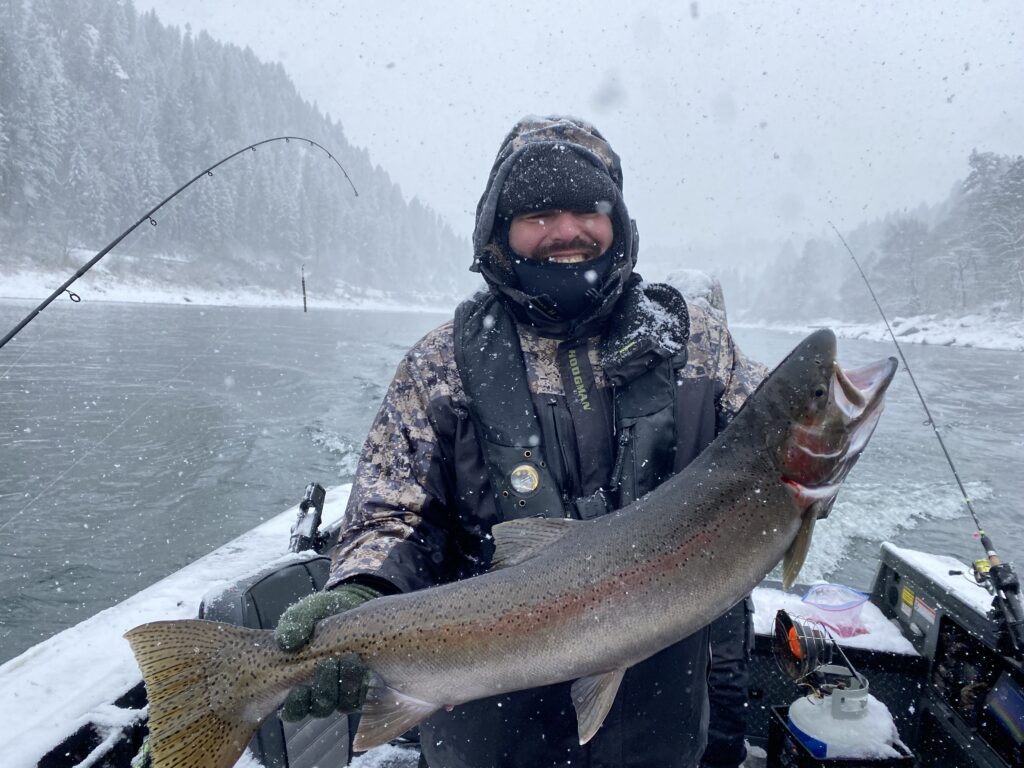
September for my company, Reel Time Fishing, is primarily spent trolling 360 flasher setups or hovering eggs targeting King Salmon around the Confluence of the Snake and Clearwater rivers. This area has a temperature difference known as a thermal barrier. In this case, the Clearwater is close to 10 degrees colder than the Snake River. Salmon fishing was slow this September but the Steelhead fishing was much better. It was strange to tell the clients Salmon is slow, while Steelhead is hot.
We had a lot of success trolling bobbers and shrimp at an ultra-slow pace in the usual steelhead spots around the bridges and the neutral water flat on the north side of the confluence. We also caught a fair amount on our Salmon gear superbaits and spinners as the season progressed we started to move upriver to the free-flowing areas of the Clearwater trolling Maglips by Yakima Bait and Bradss Wiggler. These plugs tipped with a shrimp are a deadly combination.
NOVEMBER & DECEMBER
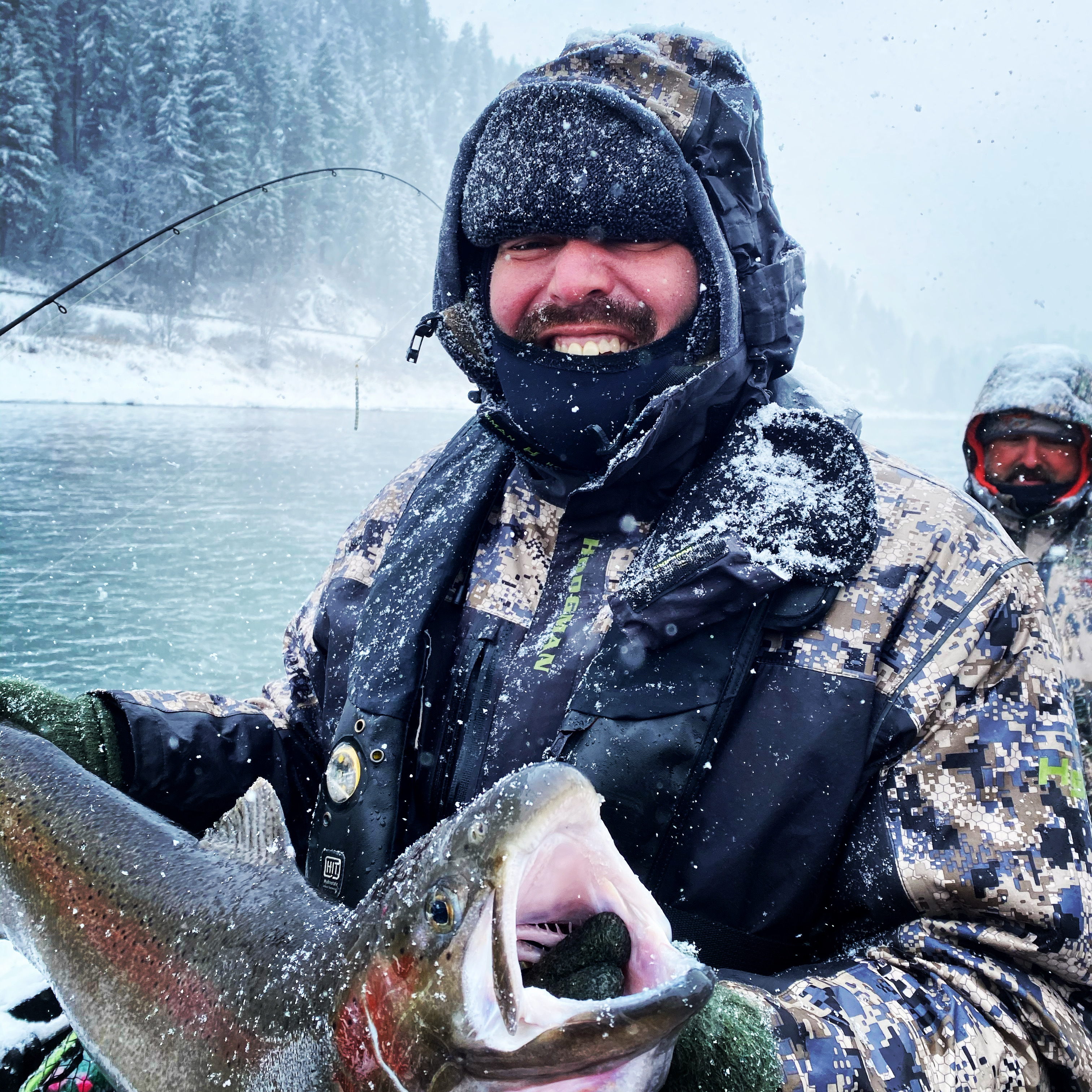
That brings us to the now. Currently, the Steelhead are through all river systems and anglers are enjoying both the increased numbers and size. In my 35 years of guiding experience, this is how the rest of the season should shape up: Steelhead are going to hang in the slower water around Lewiston, Clarkston, and Asotin to wait for a good shot of rain that signals the fish to move upriver.
This makes November and December amazing fishing in the slack water in the day and the night. Yes, I said night. Night fishing is allowed and it can be very productive pulling lighted lures like the old Brads Wigglers, Vortex and the new Night Strike day time. I would concentrate on Bobber and Shrimp around the bridges and in the neutral water in the confluence on the north side or trolling 360 flashers and a very small spinner such as the 3.0 colorado blade in shades gold, chartreuse, and green.
Many steelhead can be caught upriver as well. The Clearwater is an amazing bank fishery that targets deeper slower runs with bobber and shrimp. If you prefer fishing upriver from a boat my suggestion is Heller Bar or the entire Clearwater from Lewiston to Orofino. Keep in mind these river systems are very dangerous, a person can get into trouble not knowing the water. I suggest hiring one of the many local guide services to show you the river.
JANUARY & FEBRUARY
After the first of the year, most of the Steelhead will begin to head to areas closer to their spawning grounds but keep in mind Steelhead migration is unique. Sometimes they actually move downriver for some time. For example, during January and February, you can still catch fish in the Lewiston-Clarkston area but there are definitely less fish hanging around in this area.
On the Clearwater, anglers will begin to pile into the Orofino area targeting the fish from Dworshak hatchery, the largest Steelhead hatchery in the world. Amazing bank fishing can be had on the North Fork of the Clearwater below Dworshak Dam.
Other hot spots include the Cottonwood Creek hatchery on the Grande Ronde, and Mouth of the Little Salmon on the Salmon River. These areas are all hotspots and because of this, they are high-traffic areas. If you would like to avoid the crowds, fish river sections up to 15 miles downriver of these hot spots and just cover some ground. The fish aren’t as concentrated, so it’ll likely be a situation where you find one here and there.
MARCH & APRIL
In March and April, all the fish will be piled up near hatcheries or spawning grounds. This is a hot time for Orofino, Clear Creek hatchery, and the south fork of the Clearwater. Little Salmon heats up in Riggins Idaho, the Cottonwood creek area on the Grande Ronde, and Hell’s Canyon dam will begin to produce.
LATE SEASON
Let's talk techniques for these late-season fish. The #1 technique is drifting a pegged bead. I use a yakima bait size 10 pink or orange corky with a toothpick pegging the bead 4 or 5 inches above the hook, this technique is deadly with a very soft subtle presentation. The Steelhead's focus is on the bead, he never sees the hook, but when he clamps down on the bead and you set the hook you stick him in the corner of the mouth and never get a gut-hooked fish. It’s the perfect catch and release system and perfect for rivers with wild fish release. I suggest presenting this bead system free drifting, bobber dog, or just straight-up bobber, but you will need to use a sinking bead on this straight-up system. Other techniques that work well include free drift or bobber and eggs, back trolling or bobber and jig.
Now we need to ask ourselves a few questions. So why is this year so good? Will this be normal in the future? Are we recovering Steelhead? What can we do to help the Steelhead? The answer in my opinion is that this year was good because ocean conditions have been favorable for Steelhead. I do think we will get many more years like this one, but if you look at the overall trend, Steelhead are still on the decline. So no, we are not recovering Steelhead. We release billions of smolt and get less than a 1% return.
HOW TO HELP
Here are a few things we need to focus on to help the Steelhead:
#1 Improve passage: a journey that used to take Steelhead smolt around 15 days, now takes them over 30 days. Going hand-in-hand is predator pressure. Predator pressure is intense—these fish are facing an overwhelming and growing number of predators like walleye, bass, cormorants, and pelicans, whose populations are skyrocketing.
#2. Selective Harvest. I feel any human should not kill a wild Steelhead. If we could eliminate gill nets and switch to selective harvest methods for hatchery fish, allowing wild fish to swim free, it would be a clear win. Individuals harvesting fish for commercial or subsistence purposes could selectively harvest at each dam using dip nets, sorting out hatchery fish, and letting all wild Steelhead go free.
That's a start. There are many more factors contributing to the decline, but for now, we are enjoying a wonderful Steelhead season and we are only halfway through. So get off the couch grab a rod and head to the river. Tight Lines -Toby Wyatt-
/articles/steelhead-are-back
Gearing Up for Spring Kokanee
Counting kokanee in your sleep? As we slowly transition from winter’s frosty grip to warmer days, tee shirts, and flip-flops, your thoughts may shift to your local kokanee fishery. If so it’s time to inventory your gear and make sure there is still a boat under one of those mossy tarps out back.
First thing on the list, you may want to give the boat motor and trailer a quick once over. Start peeling back tarps until you find the boat. You probably don’t want to mount new rod holders on the wood pile or stack of doors from a past remodel.
Check your fuel system; regardless if you used a fuel conditioner or stabilizer in your portable tanks get rid of last year’s fuel or not. For built-in tanks, hopefully, you treated the fuel with each fill-up. Even so, it is a good idea to drain the fuel filter bowl and replace the fuel filter/water separator. Replace any brittle fuel line, cracked or otherwise damaged. If you have your owner’s manual, use it as your preseason checklist.
Make sure the battery is topped off with distilled water. Then bring it up to full charge. If you find corrosion on the terminals remove the battery from the boat and clean it off with a mild solution of baking soda and water. Once everything is clean it is also a good idea to use one of the various corrosion guard offerings. You should also go through the rest of your electrical installation and look for loose connections and damaged wiring.
Give your trailer the once over. Check the trailer lights and trailer brake fluid levels. Also, check the tire pressure on all the tires including the spare. Check your safety chain, winch strap or cable and tie down straps and replace if they are questionable. Ensure that all bunks and/or rollers are in good condition. If your trailer lights are wonky, consider replacing them with waterproof LED lights.
Look over your rod holders, net, and downriggers for damage and functionality. Also check for loose fasteners, worn or missing parts, and corroded electrical connections. Fix anything that is even remotely questionable. We recently made a 30-mile run to fish salmon on one of the Canadian banks. One of the downriggers was acting up and it turned out that the shaft seal had failed and allowed water into the motor. Basically, it was sort of seized. Slow going down with a breaker popping retrieve. Would I have seen the problem on a preseason check, I doubt it, but you never know.
As a final note about kokanee boats. We have caught many kokanee from a human powered boat. Kayaks, drift boats, and inflatables will all work. No down riggers? just flat line or use a lead line rig and row away. I think the random action from paddling or rowing drives kokanee nuts. If you do head out without a motor watch the weather and consider whether your boat is appropriate for the body of water.
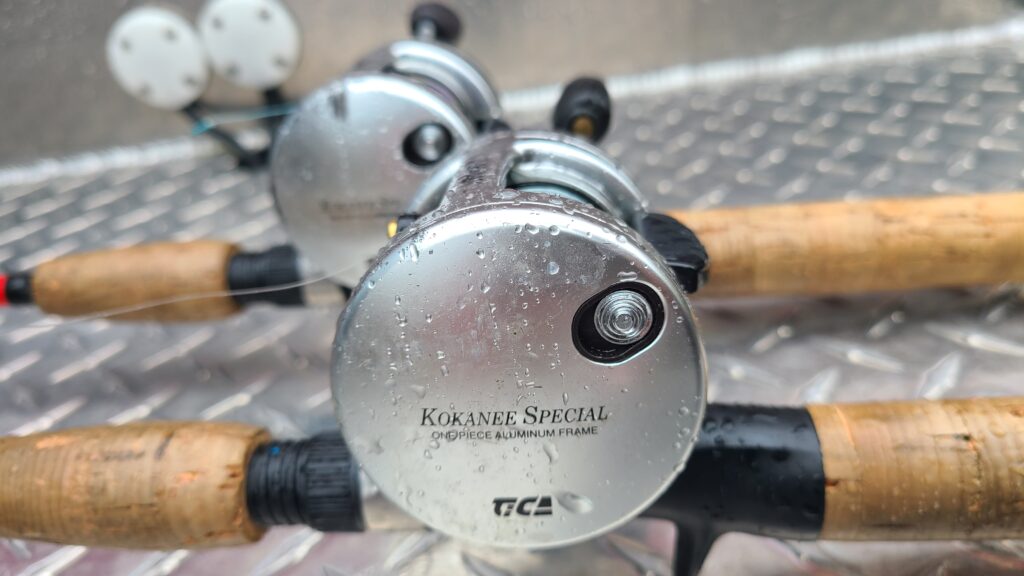
Check out your rods and reels. I know everything worked fine last year so you have nothing to do - wrong! It is the start of what should be a productive fishing season and you don’t want to lose the fish of a lifetime because your favorite reel has a funky drag. If anything is questionable, fix it or get it repaired. It may be time to replace your line. If so, take your reels to a high-volume tackle store (Think Holiday Sports in Burlington or similar) and have them bulk fill your reels. Their line should be fresher and most recycle your old line. Look at your rods and make a point to verify that the line guides are not cracked or worn. You can use a cotton swab and swirl around in each guide. If the guide catches any cotton fibers the guide needs to be replaced.
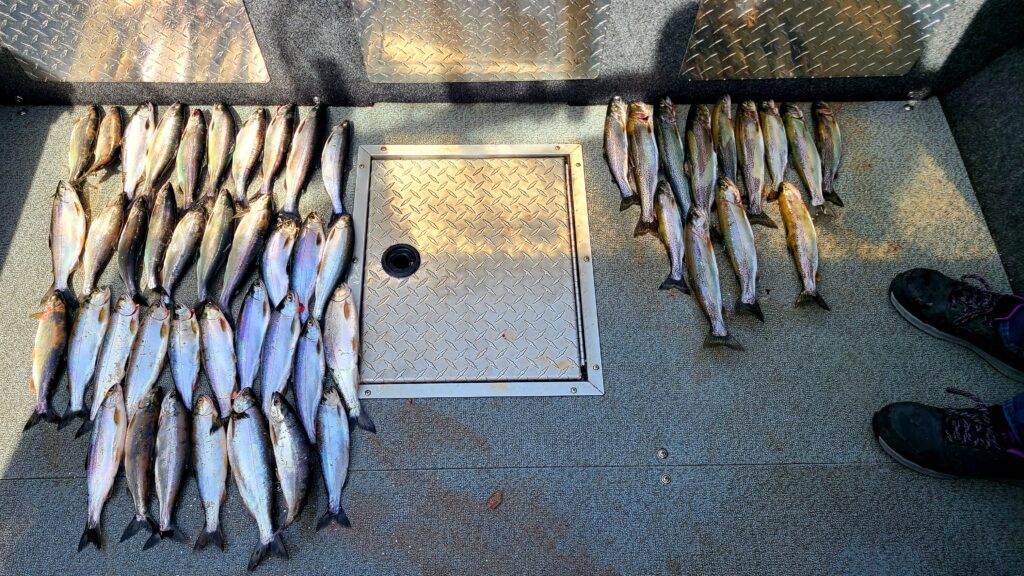
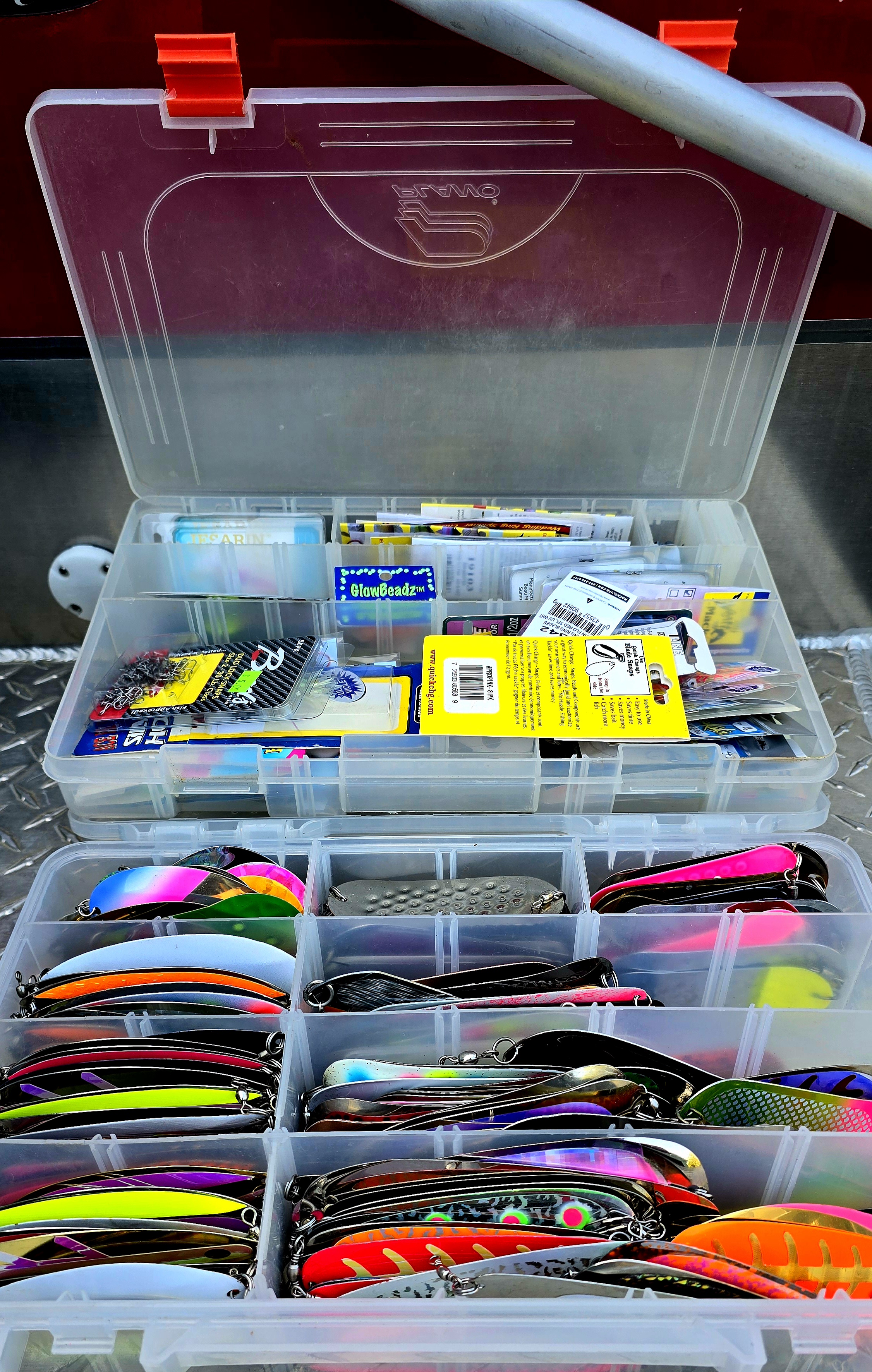
Because kokanee are notoriously unpredictable, kokanee fishing is kind of a numbers game. Generally, the boat with the most tackle wins. Sure, there are days where you can go out and limit before daybreak using one dodger and a worn-out lure. Unfortunately, those days are a gift from the kokanee gods. Most of the time you must cycle through gear and trolling patterns to get it dialed in. On any given kokanee trip, you should have several pretied rigs and attractors on hand and ready to go.
Before you head out on the lake with your collection of kokanee gear give it a good inspection. Look for rusty dull hooks, frayed lines, and missing or broken components. Repair and replace as required, A couple of years ago, we were fishing for kokanee on Lake Washington. We were pulling 8” flashers and veteran home-tied double hook kokanee flies.
One, being a tried-and-true favorite, was frazzled looking but I put it out anyway. After a solid takedown and an extended acrobatic fight, the line goes slack. What the heck? On inspection, the trailing hook was gone and much of the body of the fly had come unraveled. We only got a glimpse of the fish, but it was a huge chrome bright kokanee. I owned that one, I knew the fly was on its last leg and shouldn’t have used it. There’s peace of mind in knowing that your gear is in tip-top condition.
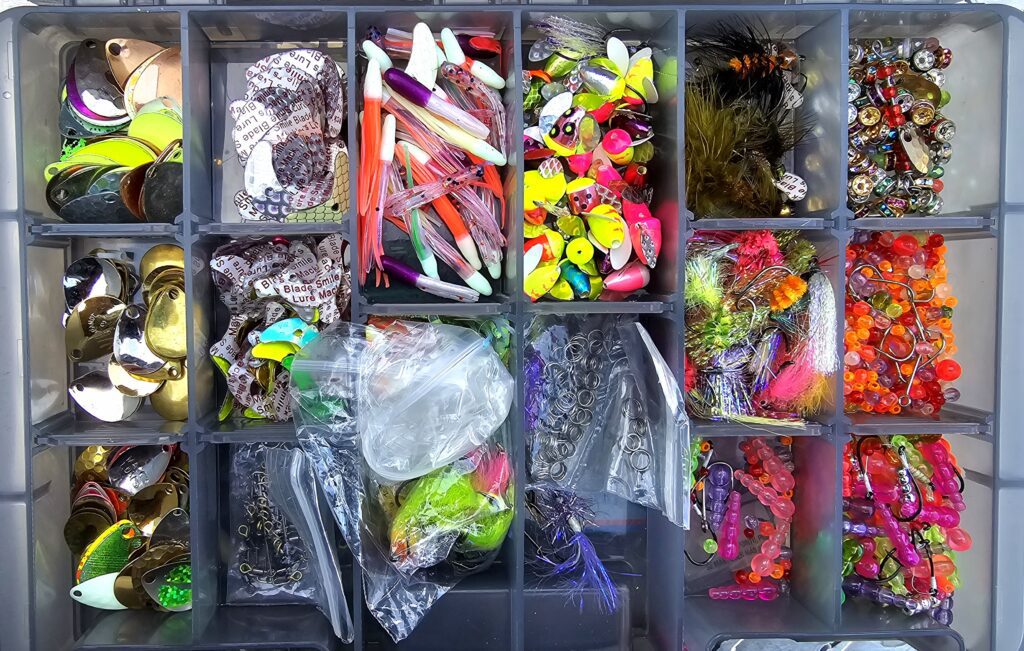
As you prepare for the 2024 spring kokanee fishery, review your gear to ensure you have the basics. Make sure that you have an assortment of small dodgers and swing blade-type flashers. Carry an assortment of small spinners, spoons, wedding rings, and flies. Other gear will work but this is your general kokanee kit. It is also a good idea to have a collection of lure components available. Start slow, a few spinner blades, beads, and spinner clevises and flies. If you’re a fly-tier, you probably already have the basics for any number of kokanee flies. Carry a separate Plano Box as your lure-making kit.
My lure/spinner Box allows me to tweak my presentations. I might add a couple of beads and a second spinner blade, make leader with a fly then add spinner components. The box has small spin n glo floats, extra beads, various kokanee flies, wedding ring collars, some kokanee bugs, and a few other things to dress up your lure.
Line size? With a few exceptions, I tie my kokanee leaders on 12-14# fluorocarbon. Hook size and color are kind of a personal preference. Many of my kokanee lures are tied using size 4 or 6 black octopus-style hooks. I typically tie a snelled rig with 2 hooks. With my standard rig, the hooks are close together.
Regarding leader length, although I tend to have spools of ready to go lures when I’m on a lake hunting kokanee. Typically, they are the correct leader length for the given fishery. It is a good idea to have a handful of pretied leaders that haven’t been cut to length available. The thought is that you’ll be able to assemble your lure and then set leader length as required quickly. An 8-10” is kind of my standard kokanee leader length but sometimes the fish will want something different.
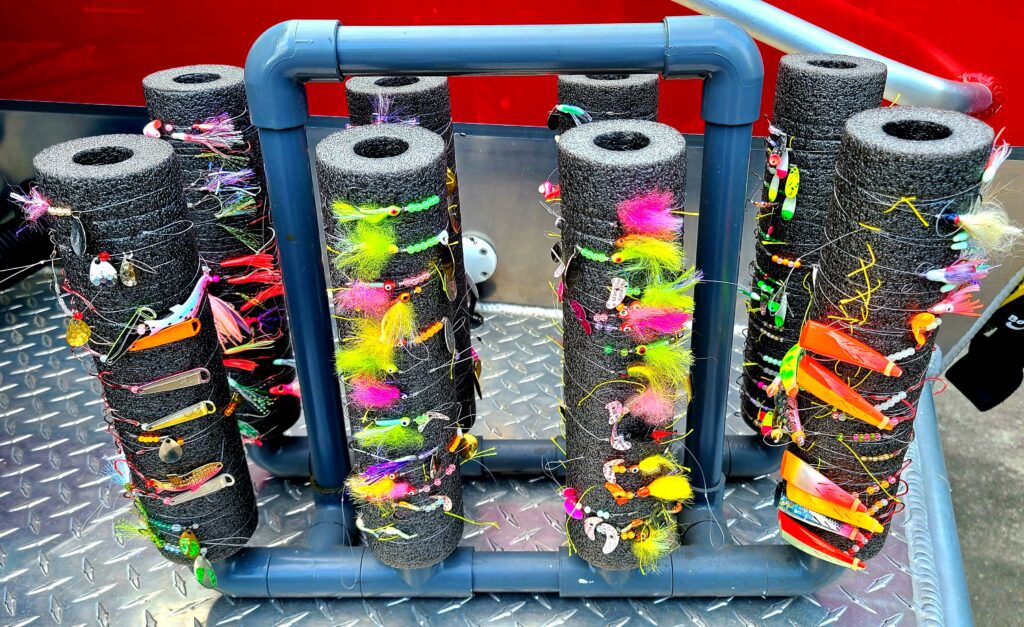
A couple of leader organization concepts are either sealable sandwich or snack bags or my favorite the slotted foam tubes. If using the resealable bags gently coil your kokanee leader and seal it in the bag. Store the sealed bags in something with a latching lid. With the slotted foam tubes, set the hook in the foam and wrap the leader securing the end in one of the slots. You can store the tubes on a rack, in a 3–5-gallon pail, or a 2-gallon resealable bag. I have found that using an empty 5-gallon to hang your leaders on during the day does wonders for keeping the boat organized as you cycle through set-ups. Come up with an organizational plan that works for you and your boat.
Kokanee fishing in general is a mental game. Be prepared but flexible and you will bring home a cooler full of spring kokanee.
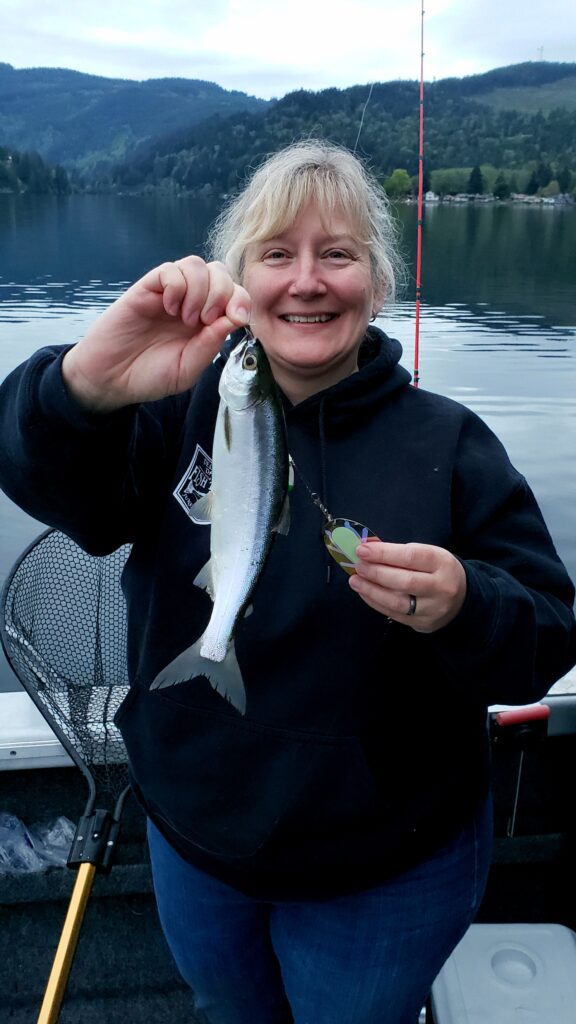
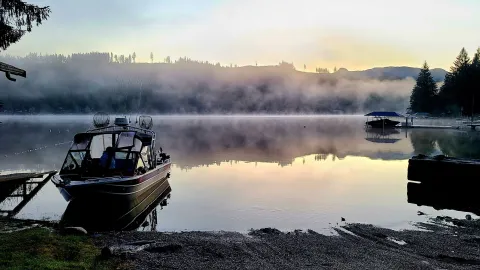
/articles/gearing-spring-kokanee
It's an Addiction
When we first start angling, we take baby steps, buying our first rod and reel and other gear. It most likely was something we found at Walmart and figured “That should work”. And it does, to a point. If the fishing bug infects us though, we soon begin to show further signs of our illness. One rod and reel soon morph into twelve, because, well, different types of fishing require different setups. From there your illness moves in the direction of not only quantity and function but also quality. Suddenly, that Walmart special is being replaced by rods and reels found in legitimate tackle stores. Knockoff brands turn into name brands. Prices go up and you find yourself entering the realm of “guest rods”. Those old rods are given to friends who are casual anglers fishing a day here or there with you. Because watching a beginner rear back on a delicate fishing rod can bring new levels of anxiety to fishing!
In short, fishing rods can very quickly become an addiction.
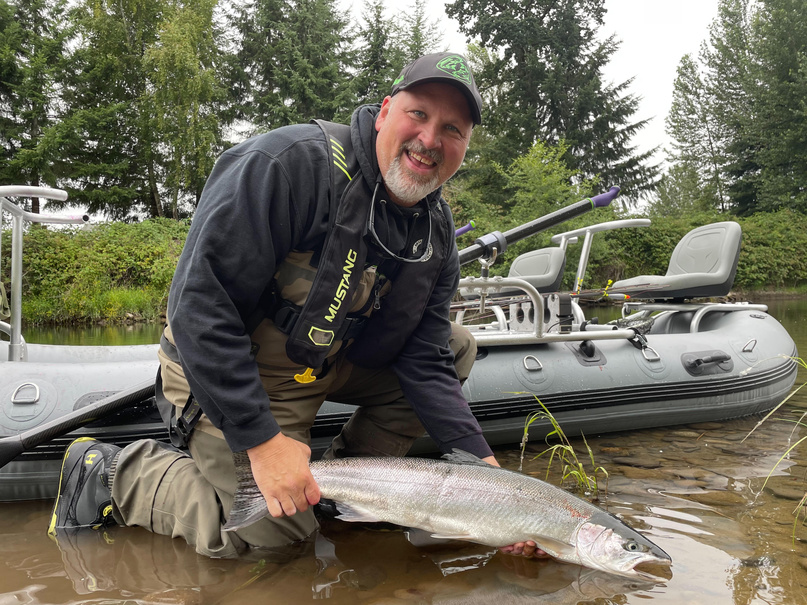
Early on I told myself that I would never spend the vast amounts of money that some of the higher-end fishing rods can cost. The key was to find a happy medium between quality and cost. Enter a new source of fishing rods, the small business rod builder.
I first met Dave Calhoun many years ago at Ed Iman’s Fish Camp, a yearly gathering of Pacific Northwest outdoor gear manufacturers, guides, and media representatives. Dave was there promoting his small business, NWRods, which he started in 2004. His passion and enthusiasm for the sport were evident as he excitedly talked about the rods he was building, sharing their features and quality of build. I ended up getting a beautiful float rod from him that year, which I used over the following years to catch numerous steelhead and salmon. I really enjoyed that fishing rod and it performed flawlessly. It had a real attention to detail, and I’d not owned a rod of such quality before.
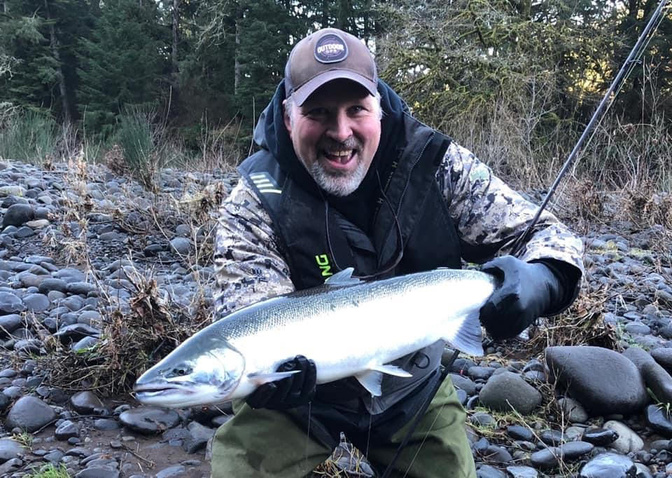
Fast forward to this year’s Big Horn Sportsman Show in Spokane, Washington. We had our media booth at the show, and as I was taking in the sights of all the vendors a familiar voice boomed out “Hey Mike, how’s it going?”. Turning my head I saw Dave and his NWRods booth. Walking over to say hi, we of course caught up on our favorite topic, fishing, and fishing rods.
“I heard you moved to Montana, Mike, how’s that been going for you?”
“Great”, I replied, “Although I’m now doing more fly fishing and no longer fish salmon or steelhead in rivers.”
“You know I’ve completed my move to Blanchard, Idaho. I’ve set up my shop and started focusing on fly rods”, Dave said.
My curiosity was raised. “Really? I’m looking for a nice 4-5 wt fly rod for small to medium-sized rivers. As you may know, Montana has a few trophy trout streams. What do you have?”
Dave pulled out one of his nine-foot, two-piece, 4-5 wt rods that he has been producing. Handing it over to me, I could see the familiar craftsmanship that impressed me so many years ago with his float rod. A carbon handle provided the solid base for attaching my fly reel, and the rod came with _____ guides, each flawlessly wrapped and of a stealthy dark green color. The graphite rod action itself felt “just right” with a nice flex but still enough backbone to make solid casts. Its two-piece construction is made to provide extra strength and durability.
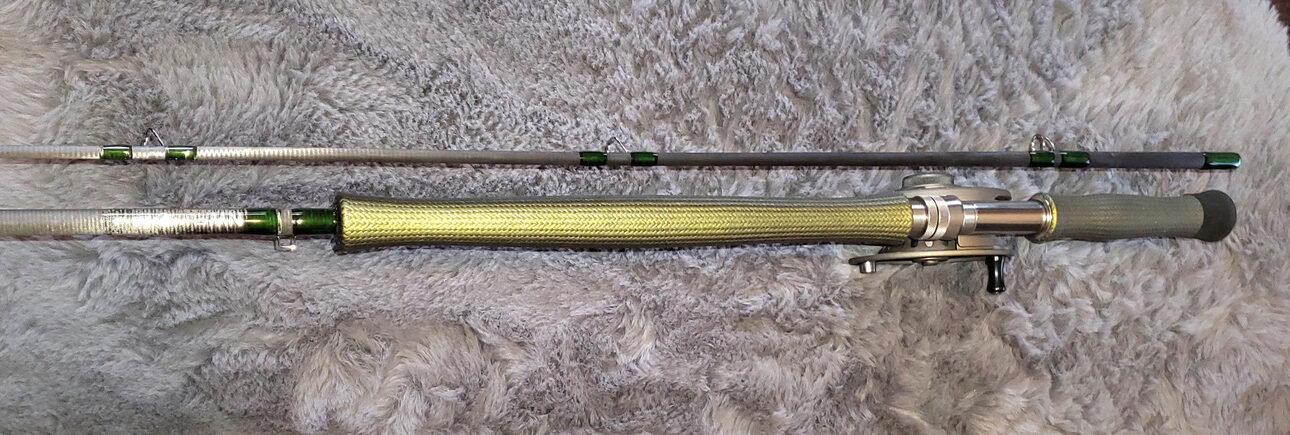
A word on fishing rods, in particular fly rods. They can range from starter sets that will cost you $75 bucks up to a thousand dollars and beyond. The rods that Dave makes fall in the range of above-budget rods but well below rods that will make you cry when they break. In this case, his fly rods start in the $350 range. For me, that would be my upper limit on what I would pay for a rod. That said, I do appreciate quality and workmanship, so it after a brief internal debate I said “yes” to the rod. As a bonus, Dave threw in a tee-shirt.
Dave told me that with his move to Idaho he plans to focus more on fly rods, and he has started a new website where you can see his current lineup, www.nwfly.com. I suspect in the years to come I’m going to see a few of his fly rods making the rounds on the Missouri, Blackfoot, Madison, and other trophy trout streams in Montana.
As I was about to leave, Dave showed me his kokanee rods which he is blowing out at $99 a rod. Eye-catching black with bright green threads on the eyes, these rods are fiberglass and a real steal at this price. Of course, I promptly blew my budget and bought four.
Dave ships rods throughout the Pacific Northwest. His original website, nwrods.com, has a full lineup of salmon, steelhead, and kokanee rods. Check them out if you’re in the market for a quality rod that won’t break the bank.
Just don’t break your budget as you feed your addiction.
If you’d like to see a video of me catching a steelhead on the float rod I mentioned earlier, here is the YouTube link: https://www.youtube.com/watch?v=AESq3Yg_6fs
/articles/its-addiction