Off the Radar Coho
With improving ocean conditions, the Puget Sound 2022 fall coho season could be the best in recent history. 666,648 coho are forecasted to return to the Puget Sound basin. With a few exceptions, our local coho fisheries (Marine Area 5-13) will open August 16th. Following is a quick breakdown of our inside coho fisheries. Make sure to review the WDFW Fish Washington App, WDFW Washington Sports Fishing Rules pamphlet and the emergency (https://wdfw.wa.gov/fishing/regulations/emergency-rules) for current daily limits and emergency closures.
- MA 5 8/16-9/28 Hatchery Only
- MA 6 8/16-9/28 Hatchery Only
- Dungeness Bay fishery 10/1-10/31 Hatchery Only
- MA 7 8/16-8/30 Hatchery Only
- Bellingham Bay 8/16-9/30 Hatchery and Wild
- MA 8-1 8/1-10/1 Hatchery and Wild
- MA 8-2 South and West of the Line Defined by the Mukilteo and Clinton Ferry Docks 8/13-9/19 Hatchery Only
- MA 9 8/16-9/25 Hatchery Only
- MA 10 Through 10/31 Hatchery and Wild
- The Sinclair Inlet Fishery Through 9/30 Hatchery and Wild
- MA 11 Through 10/31 Hatchery and Wild
- MA 12 North Through 10/31 Hatchery and Wild
- MA 12 South Through 11/30 Hatchery and Wild
- MA 13 Year-round Hatchery Only
What, somebody said coho? Break out the gear, check the trailer lights and move the garbage cans out of the way. It’s time to go fishing. I think that more than any other Western Washington fishery, our local coho opportunity is an eagerly anticipated family event. Where there are many commonly known “stock” coho fisheries, this article will focus on a few of our out of the way opportunities.

Although areas like Eagle Point off San Juan Island, Point No Point, Possession Bar, the Edmonds Oil Docks, Meadowdale Point, Jeff Head, Kingston, Des Moines, Three Tree Point, Point Robinson, and the Slag Pile off Point Defiance are all solid coho fisheries, they can get crowded. Are there other coho opportunities? The answer is affirmative, and even better, finding off the radar coho is pretty rewarding.
For me, pulling up on a spot and being the only boat in sight is magical. A quick look at the meter confirming there is bait and individual coho on the prowl gets my old ticker going. In general, coho are a very worthy opponent. Being on a school of them without another boat in sight could be the highlight of your summer.
Finding off the radar coho starts at home. Sit down with a digital chart, preferably one that will give you current arrows, and develop your game plan. Your game plan should include a few layers of back up plans. If you use your phone, screenshot the areas you want to fish. In doing your research, consider the tides and how they will be flowing or interacting with adjacent structure or opposing tidal flows.
A few examples to get you started:
Eagle Point
On the south side of San Juan Island is an option. Most people set up along the pronounced rips just off Eagle Point. The reality is that those rips will concentrate bait much further offshore than you would expect. At the surface, the current break is very subtle, but at depth the current forms a hard wall trapping bait that the coho are feeding on.
Double Bluff
Is another sleeper and rarely has more than a few boats on it. I really like Double Bluff; on the right day you can fish the general area and never have to fire up the main and go on the hunt. Depending on the tides you can drag gear, mooch cut-plug herring, and even fish jigs. On the flood tide you want to fish the rips south of the bluff, and on the ebb, fish from the buoy north. You will need to keep an eye on the fish finder, but many of the early season coho will be suspended in less than 150’ of water. If you’re not seeing anything on the meter, move around. More than any other place on the Sound, there will be coho holding somewhere at Double Bluff.
Partridge Bank
Another out of the way and often overlooked coho spot is Partridge Bank. That said, Partridge bank is one of my go-to coho spots. Depending on the given tide series, it typically fishes well on any tide. Fish along the edge of the shipping lane on the west side of the bank. A couple things to note regarding the Partridge Bank fishery: sometimes there is a big swell that fractures as it approaches the bank. The resulting chop can be unpredictable and you need to be alert to changing sea conditions. Secondly, you may stray into the shipping lane so keep your radio on and give any passing ships the right of way. Consider setting your VHF up on Tri-Watch, monitor 16, 13 (Bridge to Bridge, commercial traffic) and a floating channel. I have mine on 22 but many recreational boaters monitor channel 68.
The previous three examples are just a few of the areas to find off the radar coho. Again, sit down with some form of chart and current table and do your homework. There are many other locations in MA 5-11 where you won’t be necessarily be chasing coho with a fleet of like-minded friends. Look for points, underwater structure, and areas where opposing currents will concentrate bait and you’ll find coho.
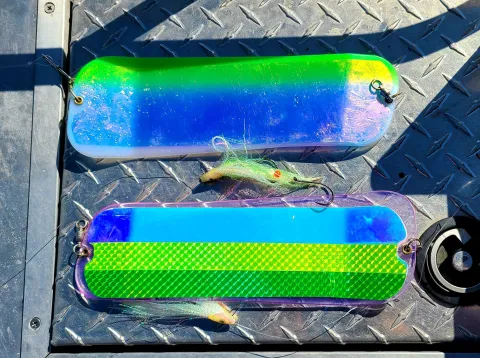
Now that you have identified your coho hidey-hole, what’s next? The coho drill on my boat is pretty basic. Although I have a couple jigging and/or mooching rods ready to go it’s mostly a trolling show. I pull 11” flashers and flies, hoochies or spoons. Coho Killers, Silver Horde 3.5” Kingfisher Lite spoons and Gibbs G-Force spoons are my go-to spoon offering. I run 36” of 30# fluorocarbon between the flasher and the spoon. Regarding color; you can’t go wrong with any combination of green or chartreuse but a Purple Haze flasher and a clear hoochie with a green insert can be deadly. Always head out with an assortment of flies, hoochies, or spoons and cycle through gear until you find the magic combination for the day. Also, use scent on your spoons. Try a sticky Bloody Tuna, Herring, or Anchovy goo and re-scent often. Add a salted herring strip to the leading hook on all your flies and hoochies.
At the butt-crack of dawn, fast trolling cut plug herring in the top 30’ of water is a solid option, but after first light it will be a downrigger show. Use 12 pound or heavier downrigger weights and troll 3.5 to 4 mph. At the speed you’ll be trolling for coho it is likely that you will not see your downrigger balls on the meter and remember that with the blowback you will need additional cable out for a given depth. Especially for coho, I chase meter marks, so keep an eye on the meter. Be ready for action, we have had every rod on the boat go off at once when trolling for early AM coho. Have a game plan, net ready, and a bleed bucket to assure that your silvery opponent makes its way into the fish box in the best possible condition.
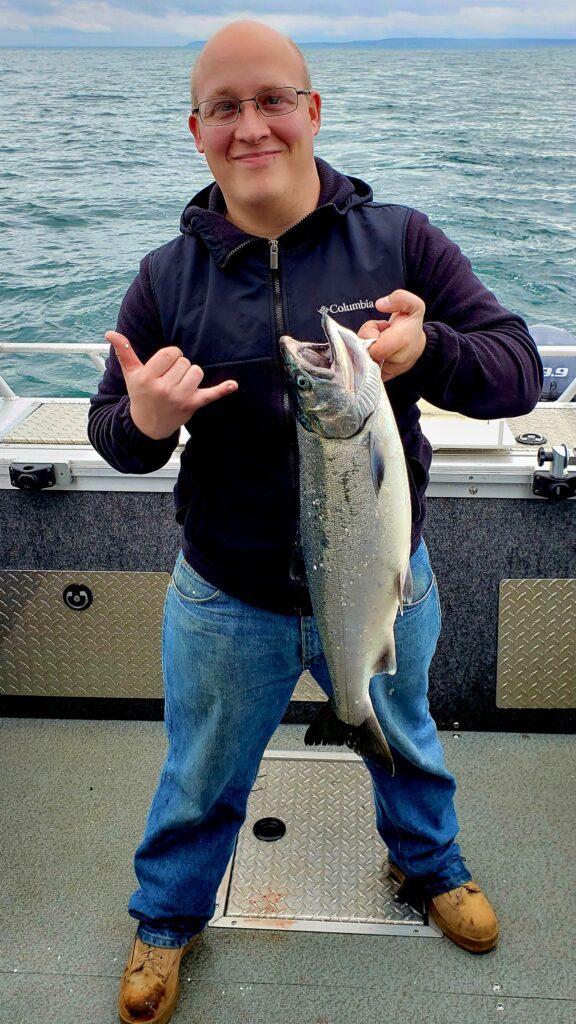
Good luck and remember that our fall coho fishery is an ideal family fishery. They are relatively easy to find, usually hungry, and have some serious shoulders. As a last thought, I want to address the weather. I work 5 to 6 days a week on the water. While in the San Juans today I encountered a significant squall line of thunderstorms. Basically, the weather went from summer boating weather to “what the heck” in minutes. It was windy, pouring and very dark. Then the thunder was relentless and deafening. Since I had not hit send for the article yet, I figured that a quick note about coho weather was in order.
Coho season falls while our summer boating weather is transitioning to an unsettled weather pattern. Most of the time the pond will be very pleasant. Be aware of and prepared for changing conditions. If the forecast is questionable, don’t go, or at least proceed with caution. A 15-mph wind against a running tide can be uncomfortable or even dangerous. Know the limits of both your boat and crew, then always error on the cautious side.
/articles/radar-coho
Ten Rules of Coho Trolling
September is a special time for me. Like the change in the weather, I can feel a change in myself, a pent up anticipation that has slowly been building over the summer and like clockwork bursts forth in full bloom. It’s coho time in Puget Sound!
Yes, this is a great time of the year to be a salmon angler in Puget Sound, if the runs are strong and the fishing is open. Last year was unique in that we had closures in the ocean and straits. The coho arrived to Puget Sound in good numbers and virtually unmolested. This year was questionable what kind of a season we would be given. As of this date, coho is open in areas 8.2, 9, and 10. Check the regs and emergency closures for updates of course. As it stands the daily limit is two coho.
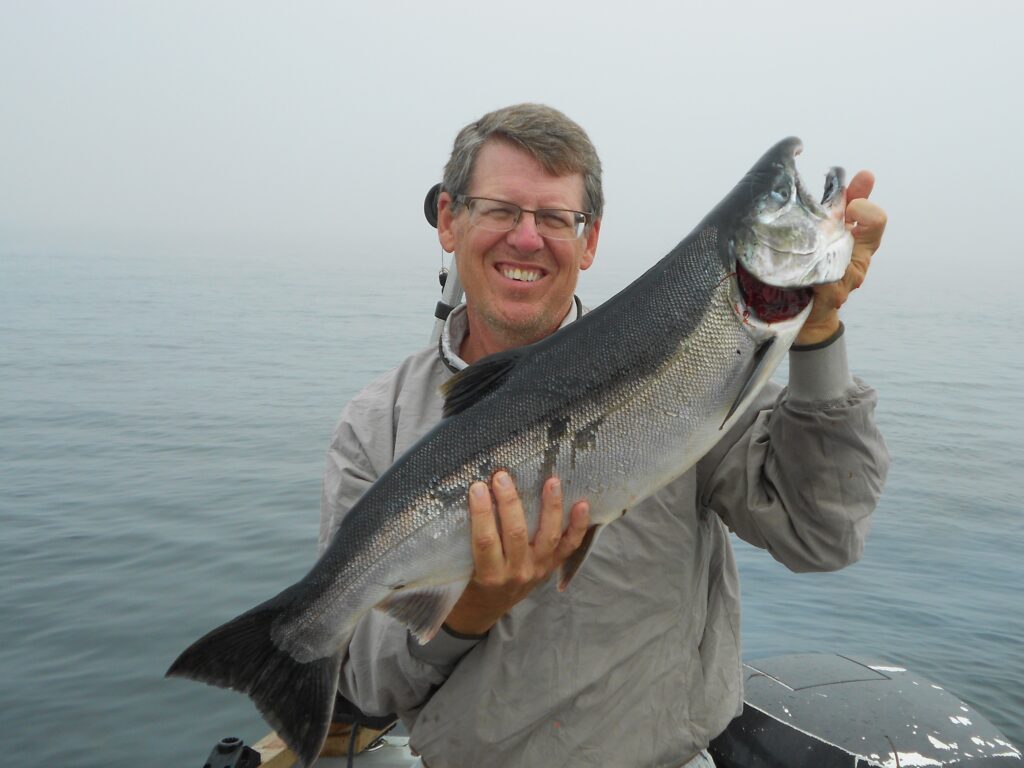
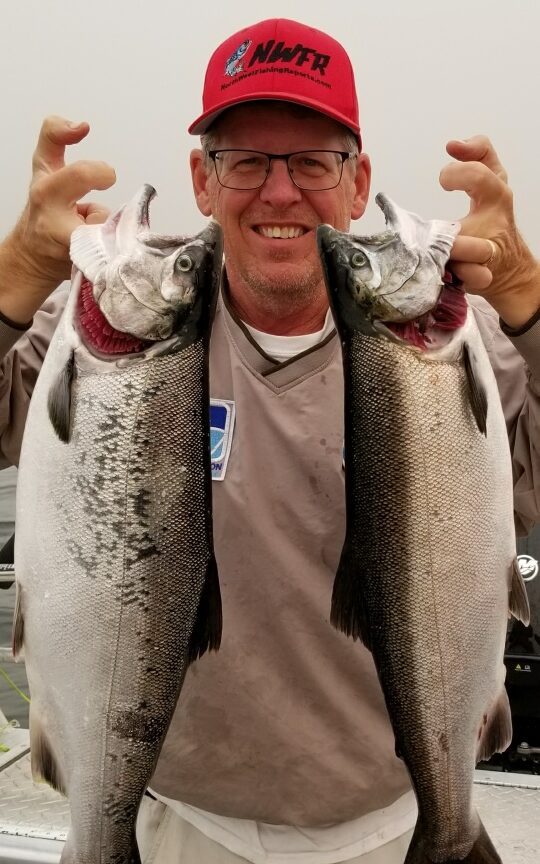
Looking at my fishing reports data from trips going back twenty years, it becomes pretty obvious that September is the time to put away freshwater gear and focus on salmon. August can be productive, but September can be (and often is) lights out. My reports show multiple trips with limits by 9am, red hot fishing, and lots of pictures of shiny chrome coho. As the season progresses into later September, the fish show a steady increase in size. By late September to early October, the 6-8 pound coho are replaced by beautiful 10-14 pound hooknose monsters. It’s the time of year to stock up the freezer on tasty coho!

For those new to the fishery, you’ll find a wealth of information on techniques and locations scattered on the web. I've broken down some of my thoughts on coho trolling into Ten Rules of Coho Trolling.
Coho tend to be a pretty cooperative salmon when it comes to catching them. As these fish stream in from the ocean, heading through the Strait of Juan De Fuca and into Puget Sound, they are putting on the feed in preparation for their runs up to the spawning grounds. It’s not unusual to find coho stuffed with herring. Don’t get me wrong, there are days they, like other salmon, will have lock-jaw. But that truly is the exception, not the rule. Speaking of rules, I offer a list of rules I’ve developed over the years to catch more coho. You’ll likely have your rules to add to this list. Or you may disagree with some of them. But hopefully it will give you some additional ideas when targeting coho in the Sound.
Rule #1
As Russell Wilson would say, “Separation is in the preparation”.
- When you put your boat in the water, you should have everything ready to go. No fiddling around with gear or bait the morning of a trip. My fishing ritual is to have everything ready to go the night before. It’s like a general planning for battle. My rods are ready and geared up. My bait has been cut and cured. My boat is prepped and clean, batteries are charged, gas tank is full, snacks are bought, there’s ice in the coolers for the fish. This evening before prep time is actually a ritual I cherish because like Russ, I’m visualizing success and making a plan in my head. I try to never go fishing without a plan.

Rule #2
Start early, go shallow.
I try to be on the water as early as possible. Ideally, that means running lights on and gear going in the water while it’s still dark or just turning light. I will run my gear in the top 10-30 feet of water to start. This is the time of day when a salmon fly in the prop wash can be deadly. I like Artic Fox Trolling Flies. Denis Peirce ties a nice fly in a variety of effective salmon colors. Try running the fly back 40-50 feet and troll fast (more on that later) with the fly practically skipping on the surface. Just be sure to have the clicker on the reel because these strikes can be vicious. I love the sound of a clicker going off in the morning!
Rule #3
Watch your fish finder, drop your depth
As the morning progresses, drop your downriggers down. I’ve read the “rule of thumb” is ten feet every hour until you’re trolling your gear around 40-60 feet. That’s fine, I guess, but I also use my fish finder. If I see bait and fish marks down 50-70 feet, I’ll drop down to those fish even if it’s early in the morning. As the day goes on I may even drop my downrigger ball down to 110-120 feet deep. Depth can be a tricky thing because when coho fishing I troll fast, which leads us to the next rule.
Rule #4
Troll fast!
In my experience, coho love a fast troll. I have an itroll throttle control and will set it on “hunt” mode to keep my boat going fast, around 3.3 to 3.9 mph. A few years back I did a lot of underwater filming and noticed a distinct increase in salmon aggression when the flasher was whipping around in a complete rotation. If it was only doing a lazy rotation, or not doing a full rotation, coho would tend to swim behind the gear, just watching. But speeding up and getting that flasher fully spinning would elicit vicious strikes. I will troll both with and against the tide and catch fish going both ways. Just be sure to increase your throttle going into the tide to maintain that 3.5 mph speed. I’ll also program my itroll to give a periodic 3-5 second slow down and then speed back up to “wake up” coho that may be lazily following but not biting. It can often trigger a bite. Oh, another thing that will often trigger a bite – if you’re checking gear, pop your line off the release and set the rod in the rod holder. Let the gear come up on its own. I have caught a lot of coho that will chase the gear as it ascends to the surface. Don’t reel your gear in until it hits the surface.
Rule #5
Coho are hungry, feed them!
Coho love a strip of herring on just about any lure. I will add strips to hoochies, flies, and even a small strip on the hook of a spoon (but not too much, you don’t want to kill the spoon’s action). Be sure to brine the herring strips a day ahead of time in rock salt and/or commercial herring brine. Add scents and bite enhancers as well. Check your gear every 20-30 minutes and freshen up with a new herring strip. If you get a bite but no release, bring it in and check it! The one exception to this rule I have is if the dogfish are in thick, I will go without bait.
Rule #6
Experiment
My “go to” set up is a magnum green splatter glow hoochie, herring strips, 26-30” leader, and an 11” dodger (pick your color…). I always start with this set up. On a second rod I may run a different color and smaller hoochie. If there is no action and I am seeing fish on the fish finder I will start trying spoons and plastic lures like the old Big Al’s Cripple Herring. Sometimes the coho just want something with more action. This year I’m going to be trying the new Old Goat OG2 5” salmon lure. The Old Goats have been awesome on kokanee and I think they will be deadly on coho. They have an amazing action that I think coho will love.
Rule #7
Fish Where They Ain’t (anglers that is)
Coho in Puget Sound can be found pretty much anywhere. We all have favorite starting locations and it’s human nature to follow the crowds of boats because “hey, they must know something I don’t”. Maybe…and maybe not. I try to start my troll away from clusters of boats. Why be surrounded by additional lures in the water? You want to troll over fish that aren’t seeing offerings non-stop. So, move away from everyone else – and if you take my advice and troll fast you will, very quickly. You’ll still find the fish if they are there, and cover more water to find the biters. When you do, don’t be afraid to mark the fish on your fish finder and troll around and right back over the same spot. Again, in viewing underwater footage, I invariably see groups of 4-6 coho following my gear. A solo fish is very rare. So, work over those spots when you pick up a fish.
Rule #8
Mid day and tide changes are good
I know I said earlier I like to hit the water at daybreak, but there are days when that just doesn’t happen. The good news with coho is that it doesn’t matter. You can (and will) catch coho all morning and into midday. Tide bites are the period before and after a low or high tide, and these times can be very productive. My favorite tide sequence is a high tide at around 9-10am. The flood tide pushes fish and as the tide slows down it triggers a feeding opportunity below for the coho salmon. Bait becomes easier to pick off without a steady flow of water and the coho bite often turns on. If you miss that crack of dawn bite, fear not, the coho will cooperate. I’ve caught my biggest hooknose fish from 11am to 1pm.
Rule #9
Playing and netting your fish
OK, you have a big fish on and are trolling at 3.5 mph. What do anglers often do? Why, slow down the of course. Bad move. In today’s age of barbless hooks, slowing down is an invitation to let the fish go. The second there is slack in that line the hook can slip out. Trolling for coho is not a fishery that is about the fight, it’s about catching fish. If you want an epic battle against coho (and they are a hoot), catch them in rivers, or mooch for them. Trolling with an 11” flasher gives these fish a focal point with which they can get slack line. We don’t want to do anything to help them out, like slowing down. Once they are on the surface, do your best to keep the flasher out of the water. This will help prevent the fish getting slack line between the hook and the flasher. Make sure you have a net with a long handle and big opening. This will help as the netter reaches out. Remember, the netter scoops as the angler guides the fish into the net. Don’t make the mistake of the netter reaching to net the fish! Once the fish is close to the boat slowing down a bit is OK, by the way- just keep that flasher out of the water.
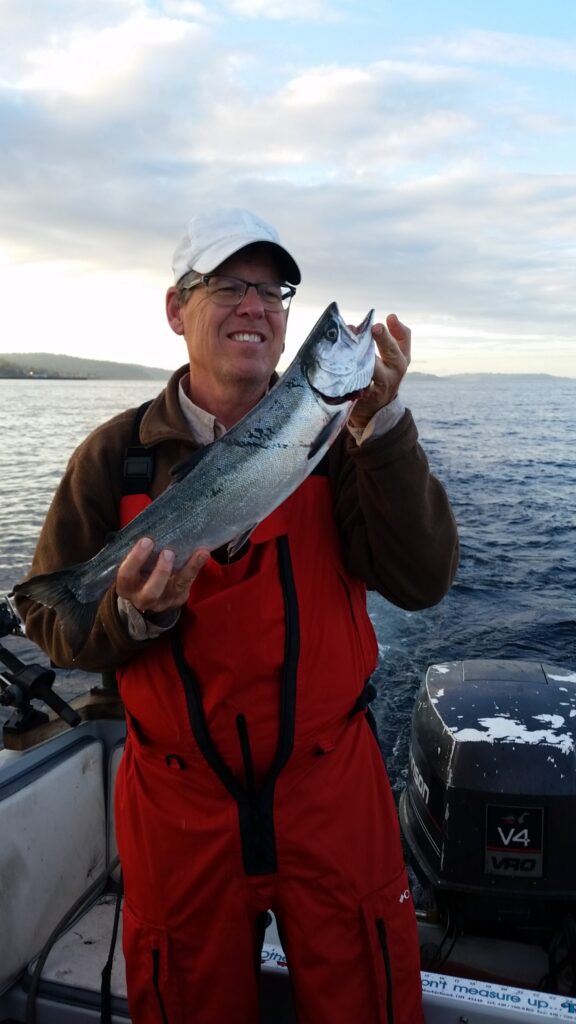
Rule #10
Take good care of your fish
Non-anglers have no idea what a freshly caught salmon tastes like. As anglers we are blessed to be able to have the freshest salmon on the planet. So, take good care of your caught fish. Bonk the fish enough to stun it, then cut a gill and bleed the fish out for a few minutes. After that, into the ice cooler it goes. Don’t hang it off the side of the boat to bake in the sun. At the end of the day, gut and cut into steaks, or filet the fish out. If possible, vacuum-seal whatever fillets you don’t eat for dinner. Properly cared for, you’ll have tasty fish until the next season, when you get to do it all over again!
There you have it. Ten “Rules” that will help increase your odds of success this coho season. Have fun out there and remember to be safe, have life jackets and all the safety equipment required and needed in case something goes sideways.
Good luck fishing and I’ll see you on the water.
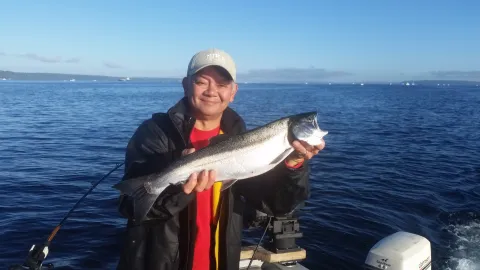
/articles/ten-rules-coho-trolling
THE WORST DUCK HUNTING DOG I EVER LOVED
Georgia was an unlikely addition to our family. It was 2014 and I was looking for a dog that could hunt both upland birds and ducks. I settled on the springer spaniel as the breed I was going to get, and found one just a few miles from where I live. My daughter Faith and I went over and met the dog who would soon be named Georgia. She was a year old and the runt of the litter. She was very timid and even growled a little at Faith. I was less than impressed. We went home without her but I couldn’t get that dog out of my mind.
The next day I called the owner and asked if I could bring the dog over to my house and see what kind of retrieving instinct she had. Georgia was very excited to see me again. She hopped into my truck without hesitation and upon arriving at our home, she started racing and leaping around our yard with pure joy!
Faith was home and begged me to keep her. When Georgia calmed down, I started throwing dummies for her to retrieve. In the fourteen times I threw the dummy, the response was the same. She would charge to the dummy, look down at it, and then run around the yard until I called her back.
My son David came home from school while this was going on and asked what I was doing. I explained I was giving the dog a tryout and it wasn’t going well. David, who had just been cut at tryouts for the high school baseball team for the second year in a row, said, “Are you going to cut her like my coaches cut me?” And that was the moment I made the decision to keep that dog.
Georgia had a lot of energy and was very athletic. She loved to go on long hikes with me and she loved pheasant and quail hunting, flushing her fair share over the 8 ½ years we had together. When it came to duck hunting, though, she was the absolute worst.
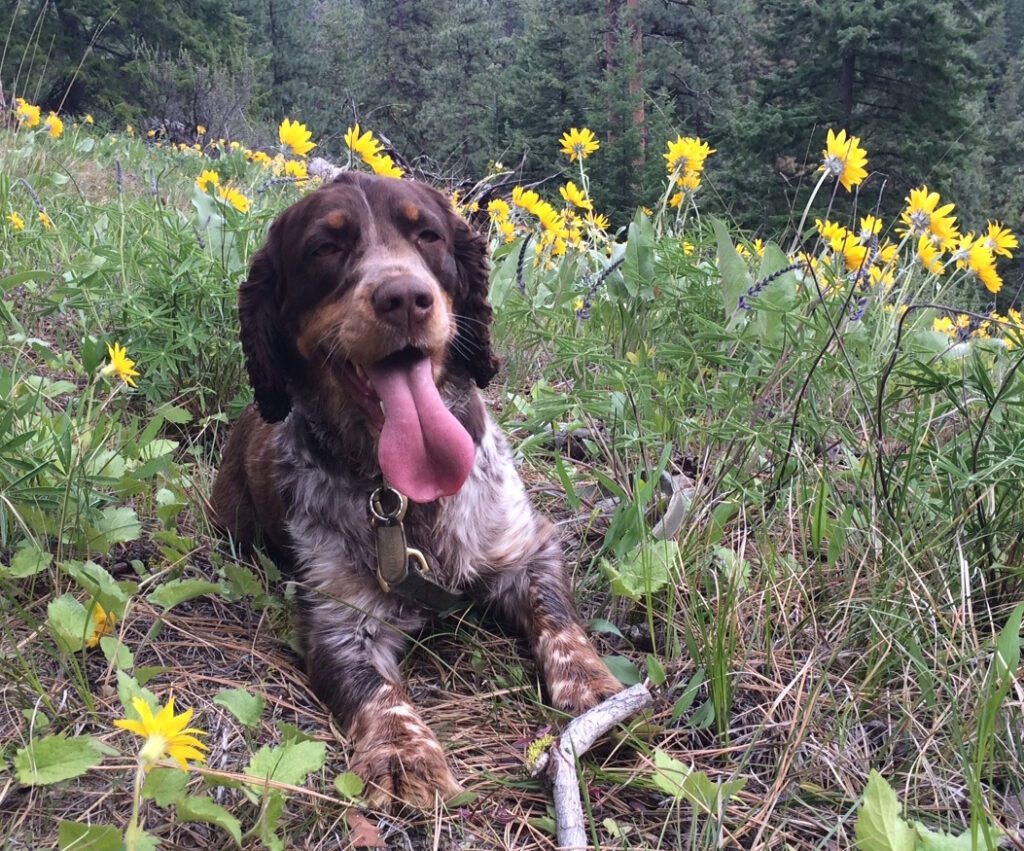
First off, she was impatient. She wouldn’t stay still in the blind, and when I put her on a leash she would whine, bark occasionally, give you dirty looks, and start digging a hole into the ground that she would eventually writhe around in as a way to express her displeasure.
When she was let off the leash she would immediately charge into the water and it didn’t matter to her whether there were birds there or not. She would swim, and swim, and swim some more. She loved the water and would completely ignore all commands to come out of the water until she was good and ready to do so, usually about 10 to 15 minutes after she went in.
She did occasionally retrieve ducks for me but the final straw was the time my daughter and I took her hunting to a place I like to go to in the Columbia Basin. The small pond is an early season hot spot for teal and it lived up to its promise. I actually kept Georgia in the truck until mid-morning. By this time, we had several ducks in hand but there were three floating in the pond we couldn’t retrieve. I brought Georgia from the truck to the pond, pointed out the dead floating ducks, and set her loose.
She immediately swam to the first duck and continued past it, swimming with reckless abandon. Eventually she ran across one of the other ducks and she grabbed it in her mouth. I praised her and told her to bring me the bird, blowing the whistle to come back as I did. Instead, she went to a small island and dropped it off before reentering the water to swim some more. Eventually, she came across the other two ducks and again, took them to the island. At this point I was begging Georgia to bring me the birds. Her response? She would pick each dead duck, wag her tail, and put them back down on the island. She was like a little girl playing with three Barbie dolls. Finally, I waded out to the island, retrieved the ducks (dolls), and took Georgia back to the truck.
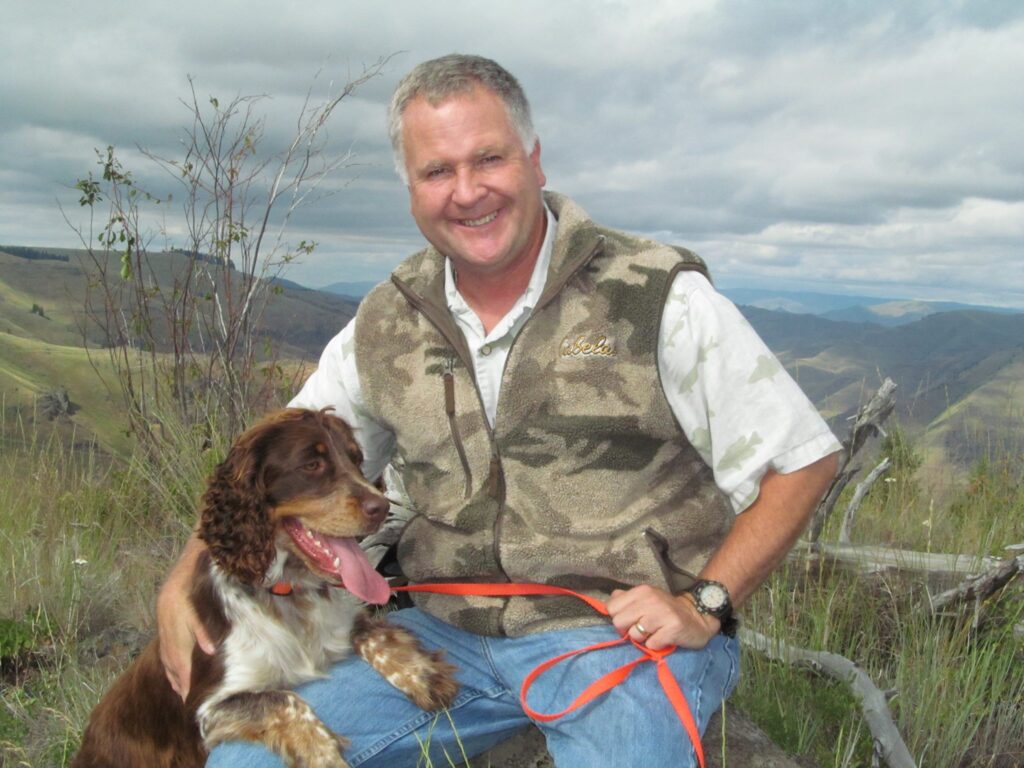
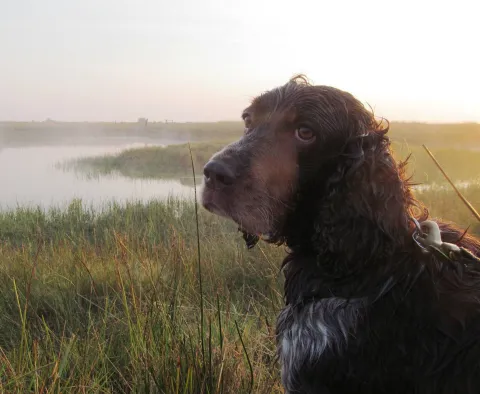
Georgia continued going with me on hunting trips for upland birds, but her duck hunting career essentially ended that day. Despite her poor performance in the marsh, she was a loyal companion. She was well known by kids and adults alike in the small town of Cashmere I live in, where countless people would pet the “pretty puppy” I took for walks with me. She loved to go for rides, whether it be to the store or to a trailhead for a hike. She followed me downstairs every morning to my office to spend the day with me at work, and every night she slept on the bed with me. She was a wonderful family dog and faithful companion with a ton of personality.
Unfortunately, two weeks ago we noticed she had developed a wheezy cough and she had very little stamina, not even able to walk a mile with me. I took her to Cascade Veterinary Clinic in Leavenworth and got bad news…cancer. She had a large mass that had grown around her lungs and there were numerous smaller masses visible in the x-ray as well. I was given some pills to reduce pain and the inflammation around her lungs. They helped for a week and my daughter, wife, and I spoiled Georgia rotten. We took her on rides to bark at deer from the truck window, fed her plain McDonald’s hamburgers which she loved, let her swim in a lake one last time, and more. It was a good week, but on the 8th day Georgia’s breathing became labored and it was time to let her go. We did so at the veterinary clinic, all telling her what a good dog she was and what a blessing she had been to our family. The veterinarian, Dr. Warmenhoven, was very kind. He gave her a shot and she left the world in a very peaceful way.
I’ve never seen a worse duck dog but I’m also so glad I had her in my life. We loved her very much and she brought our family much happiness.
RIP Georgia. I hope to see you on the other side.
/articles/worst-duck-hunting-dog-i-ever-loved
A Lifetime of Fishing Memories
Measured in terms of people killed, the last year of World War II (1945) is regarded as the worst year in human history. On April 27, the day Italian partisans captured Mussolini, Gordon Vance caught two in the morning on flies and three in the evening on salmon eggs. The day after the U.S. dropped fire bombs on Tokyo, Gordon Vance dropped salmon eggs in Johnston Lake and caught six small ones. On August 9, the day a plutonium bomb was dropped on Nagasaki, Gordon Vance was on Walterville Canal with a fly rod.
If you don't keep a fly fishing journal, maybe you should. It's a great way to remember good days on the water and figure out how to have more of them. But it can also be a link to the past when a son or daughter finds the journal years later. Think about Gordon Vance. Remember him? No? Well, his family does.
When he was a little boy, his mother would give him a pail of water and a stick with a line and a bent pin. "He would sit in the kitchen for hours, waiting for a bite," I spoke to Janice (Vance) McCargar after I received a package in the mail; she had found her father's fishing and hunting journals, kept in a three-ring binder, written in longhand.
Gordon Vance began to keep track of his fishing trips in 1931. Picture a barefoot boy in a tiny kitchen in Missouri in the 19-teens. Picture him a bit bigger in dry-as-a-bone Arizona. "When my dad's family moved again to the McKenzie River in 1926, he thought he had died and gone to heaven." Gordon Vance was 16 when he moved to Oregon.
On May 15, 1932, he writes of fishing Walterville Canal and Cogswell Creek. He caught five on a blue quill body grey hackle and, that evening, on the McKenzie, caught eight "in a hurry on a yellow body deer hair fly."
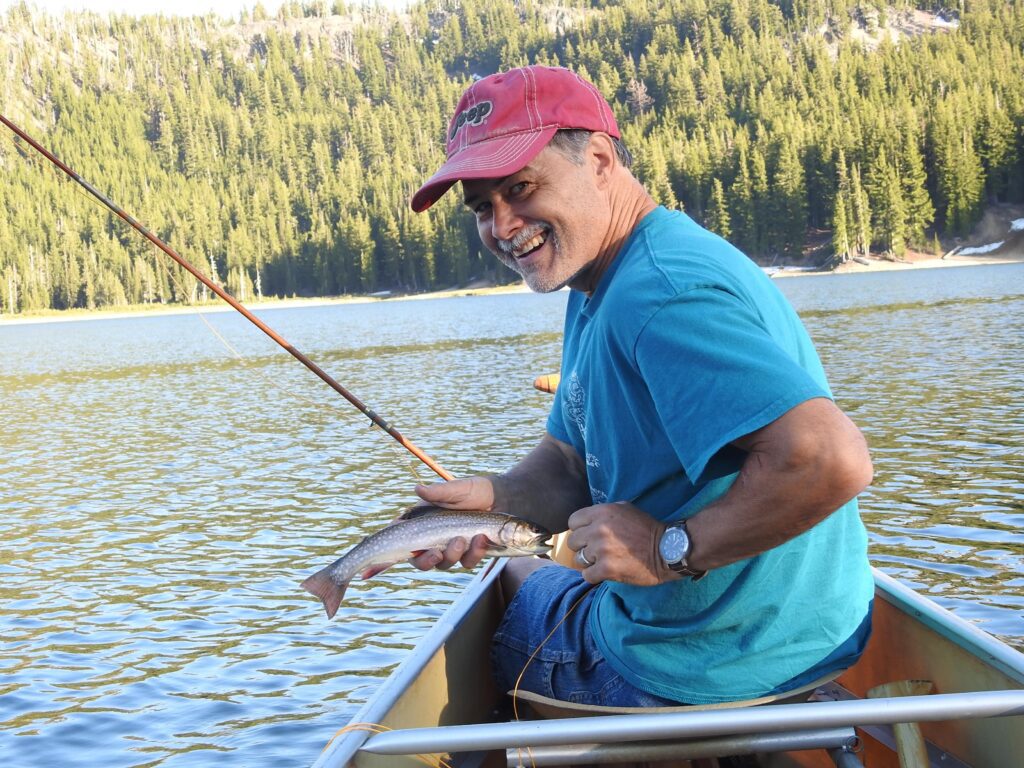
Don't just write down the number of fish you catch in your journals, but who was with you, the temperature, the weather, the barometer. Jon Guenther on a mountain lake in Oregon with a fly-rod brookie. Photo by Gary Lewis
Twenty-two years old in '32, Vance recorded 15 entries, on Leaburg Lake, the canal, Cogswell Creek, Horse Creek and the McKenzie. In 1933, he fished 20 times and would have fished more, but in September, according to his notes, he picked up a Winchester Model 54 and spent a good deal of time in the woods. "It was the fashion in those days to keep a journal," Janice said. People took the time to record thoughts and observations. Journaling helped the young man develop his craft on the water and in the woods. It was fun to think of the determination it took to drive to Diamond Lake, Miller Lake, Odell and Crescent in those days. Easy jaunts now, they were all-day rumbles along narrow timbered tracks in the 1940’s and '50s.
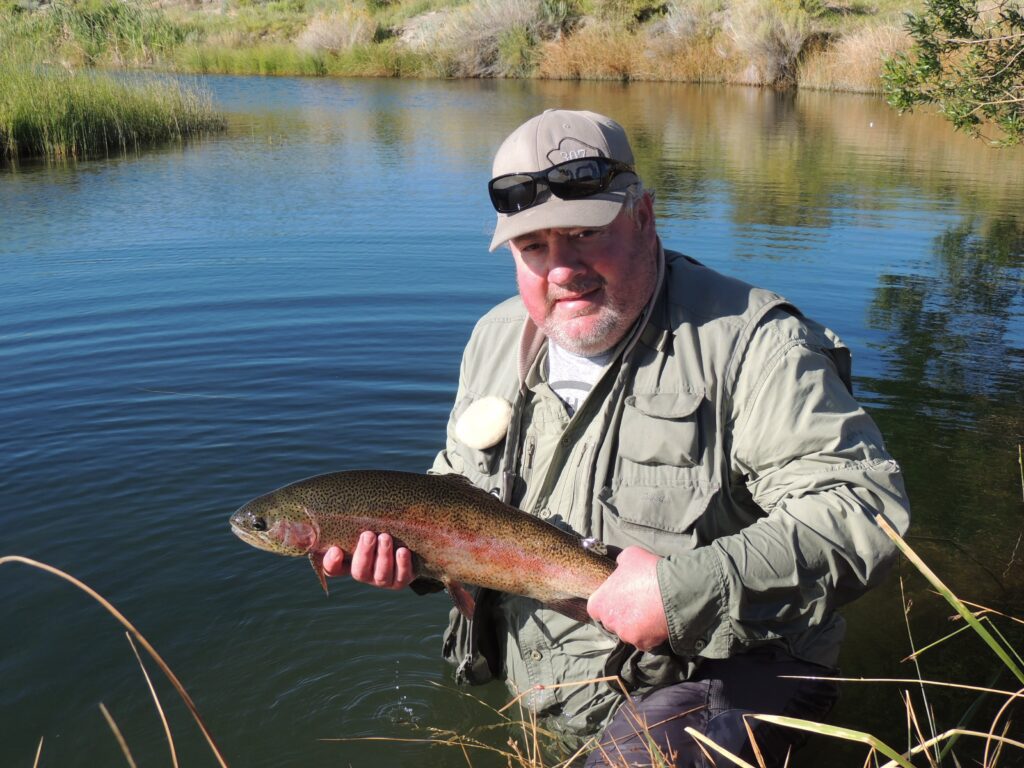
Keeping a journal reminds of the flies we used on that July morning in '16. Jeremy Groh, of Bend, Ore., with a big still water rainbow. Photo by Gary Lewis
In 1956, Vance fished Diamond Lake and wrote, "Don, Marion and I gave the Kamloops of the reborn lake an end of the season try. We caught 22 from 15 inches to 18 inches." He added, "A monofilament line is a must. Fish had been eating algae and tasted terrible." Monofilament: we take it for granted now, but it was the latest in fishing technology in the 1950s.
Some things haven't changed. On September 17, 1980, Vance fished Miller Lake. "Thirteen washboard miles from Chemult and up to 5,600 feet, the 550-acre lake is a beauty and if I had taken a fly rod could have been fun." A mayfly hatch was on and Vance had brought the wrong tackle. He ended the day with two small kokanee.
In 1990, the year he turned 80, Vance started with a March outing to Triangle Lake and recorded 27 trips on Cottage Grove Reservoir, Hills Creek Reservoir, Odell Lake, Cougar Reservoir, Green Peter, the Siuslaw and on his home waters, the McKenzie and Walterville Canal.
My friend, the noted outdoor writer Scott Haugen, makes his home in Walterville. He remembers Gordon Vance. And he remembers good days fishing the Walterville Canal. "There used to be really nice cutthroat in it," Haugen said. "When I was in high school, lots of jack salmon used to run up one section. I caught steelhead out of it too."
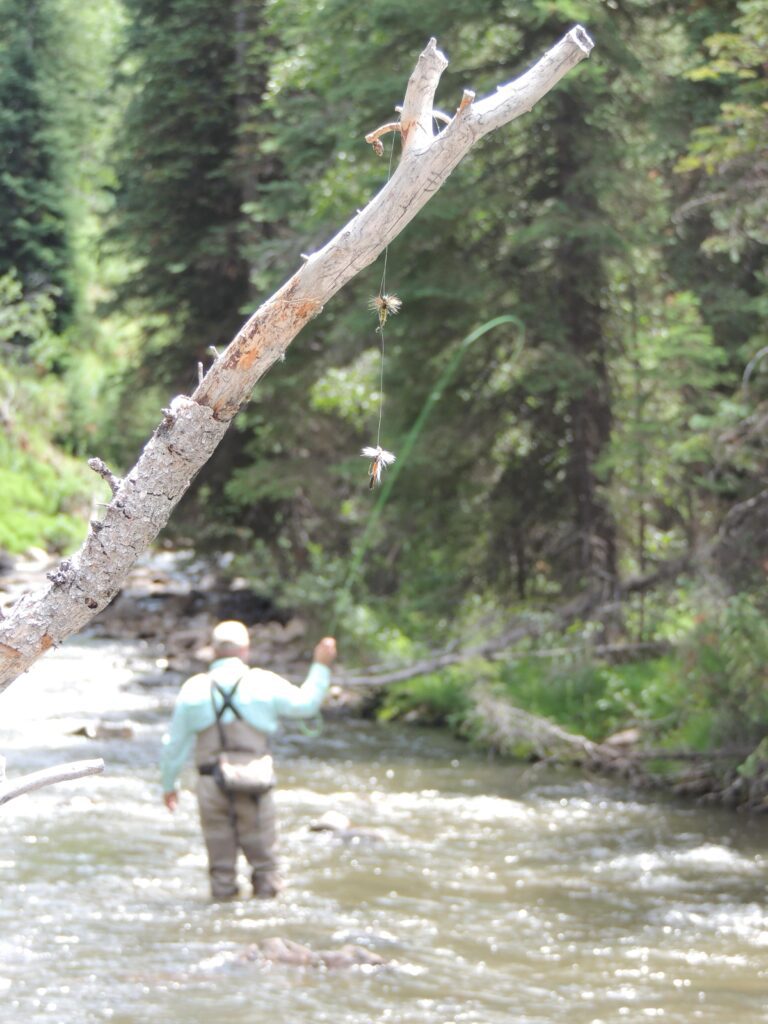
Lost and found on a mountain stream. Photo by Gary Lewis
It was interesting to look at my journals next to Vance's. I started my first notebook in 1980. I was in my teens and lived in southwest Washington and later in western Oregon; he would have been in his 70’s when our paths crisscrossed each other's, fishing the North Umpqua and Central Oregon lakes. We have planted our waders on the same rocks and caught trout, steelhead, and salmon in the same holes.
Vance recorded his last entry November 30, 2000, after a day on Foster Reservoir. "Well, I ran out of luck at Foster or ran out of fishing knowledge." He did catch one salmon, but figured he could have caught more. "Should have had a fly rod or tried smaller spoons or something!"
Vance passed away a month later, at the age of 90, on Christmas Day, leaving a lifetime of outdoor experience in his wake and a journal for his family to remember him by.
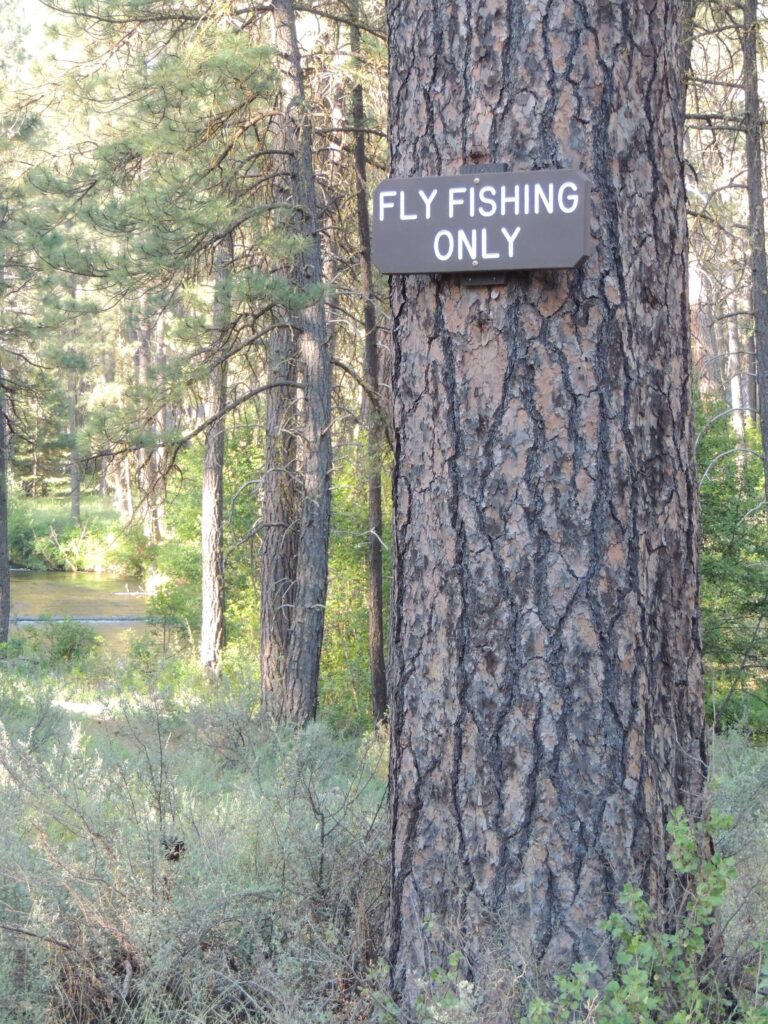
Fly Fishing Only on the Metolius. Photo by Gary Lewis
To contact Gary Lewis, visit www.GaryLewisOutdoors.com.
/articles/lifetime-fishing-memories
Washington Winter Kokanee Observations
As we say goodbye to our summer boating weather you may find yourself wondering, “Do I winterize or do I find something to fish for?” Either way, you should probably winterize your boat, motor, and trailer, but let’s talk trolling for winter kokanee.
Winter kokanee in Washington State? Sure, so go ahead and winterize, but keep the keys handy. Find your gloves and earmuffs and make a thermos of steaming hot coffee because there are kokanee opportunities to be had. Both Western Washington and the Eastside have winter kokanee lakes.
Kokanee are the non-anadromous form of sockeye salmon. Basically, by choice or otherwise, kokanee are landlocked sockeye salmon. Kokanee are native to many Pacific Northwest lakes and have been introduced to a number of lakes across the United States.
The life cycle is of particular interest to winter kokanee anglers. Although there are exceptions, kokanee typically live 3-4 years before they spawn and die. For the dedicated winter kokanee angler that means that there are 2-3, maybe even 4-year kokanee available during the chilly months.
Winter kokanee fishing is a little different than our spring and summer fisheries. Most winter kokanee fishing is done in deeper water. Kokanee prefer water that is 50-56 degrees. In part, they are more active in this zone because it is rich in oxygen boosting energy to chase down their next meal. Each lake varies, but finding “the zone’” is important during winter kokanee fishing.
One way is to keep your eyes glued to your fish finder and look for fish. This is where the best fish finder/chart plotter you can afford is your friend. When you find fish, mark the spot, and pretty soon you’ll have a winter kokanee map.
With it you can amaze your guest fishermen and go right to where they are. They’ll think you are the “Koke-Wisperer”, maybe a kokanee-shaman or something… You can also use a Fish Hawk Digital Gauge or the Vexilar Deptherm to graph out the water temperature at depth.

Winter kokanee fishing is more of a love thing, there is rarely a hot bite. Each lake has a winter fishery sweet spot depth. Generally, in Western Washington it is 30-60’, and in Eastern Washington 40-200’ deep. Each lake, especially on the westside, seems to have a brief period each day where the kokanee will put on the feed bag and go on the bite outside of your usual grind it out depth.
Kokanee are filter feeders, and the bulk of their calories come from plankton blooms. There are windows any given day where there is a bloom or hatch, and the kokanee will briefly leave their comfort zone to feed. Because the bite may be 2:06-2:23 at 43’ it is best to choose your winter kokanee lake close to home and learn it. Especially when winter kokanee fishing, keep a detailed fishing log.
Both summer and winter fish are a noble opponent. They often make short runs, jump, and go bonkers at the net. Summer fish are more aggressive, but winter kokanee take more finesse to get them in the net. After plating, smoking, or chowder-izing hundreds of kokanee, both the summer and the winter fish are excellent table fare, but the winter fish are outstanding for whole or fillet pan-frys and grilling.
The following list includes winter kokanee lakes that I am familiar with, and is focused on trolling. I am sure there are other winter kokanee lakes available. My westside lakes were originally selected because they are open all year and they have deeper basins that may hold fish. Both the westside and the eastside winter kokanee lakes are listed by my preference. My preference is based on success, proximity to home, and the potential for a trophy fish.
Eastern Washington
Lake Roosevelt – Nothing in Eastern Washington is close to home, and to be honest, as I get older, I don’t like hauling the boat over the pass in the winter anymore. That said, I love fishing Lake Roosevelt, so with the right forecast we may head that direction.
I’m sure kokanee are available throughout the lake, but we usually fish out of Spring Canyon and focus on the dam area, but we also fish the lower 5 or 6 miles. I typically start at about 40’, but may fish 100+ deep as required. Because there is the potential to hook a 3+ pounder, I typically up my leader to 20-pound fluorocarbon.
Lake Chelan – It is a great winter kokanee lake, offering pretty consistent fishing. The winter kokanee fishery is concentrated between Manson, maybe the Narrows, up to 25 Mile Creek. There is enough kokanee in the Wapato Point area to keep you on the water if, or should I say when, the weather kicks up. The winter fishery at Chelan is a deep fishery, you can expect to run your gear 80-200’ deep. Watch the weather!
Before I get to the westside lakes, let’s discuss winter boating safety/etiquette. Carry chains for both your tow vehicle and for at least 1 axle on the trailer. Bring a couple sand bags and a shovel. A liberal application of sand can be a lifesaver.
At the ramp, assess the situation before you back down a long icy ramp. Take the time to chain up your tow vehicle if required. Thought being; although once your tires hit the water you’ll have traction, the area between the top of the ramp and the water could be icy. You don’t want to jackknife ½ way down the ramp. It would put a damper on your kokanee plans.
Once the trailer is wet you may have to let the rig sit in the water for a bit to thaw and let the boat float free. Be safe on the boat, you don’t want to slip and end up sharing the lake with your aquatic rival.
Finally, and as a courtesy; at the end of your time on the lake load your boat and slowly pull out of the water just enough to clear the water. Stop and let the rig drain or drip-dry, this will minimize ice buildup on the lower 1/3 of the ramp.
Western Washington
Lake Washington – Although not exactly close to home, Lake Washington is my favorite westside winter kokanee lake. Our largest westside kokanee was a 3.13# 18” fish. We have caught many 1# plus and a few 2# kokanee in Lake Washington. To protect juvenile and migrating sockeye salmon there is an 8 – 18” slot limit for kokanee on in Lake Washington. A standard sockeye drill works, but consider stepping up your speed and gear selection. Most of our larger Lake Washington kokanee were taken on hoochies and 8” flashers. The eyes have it; what am I talking about? Who knows why but most of our large Lake Washington kokanee were bamboozled by a lure with eyes. If Lake Washington were closer to home, I’d be fishing it every day that I possibly could.
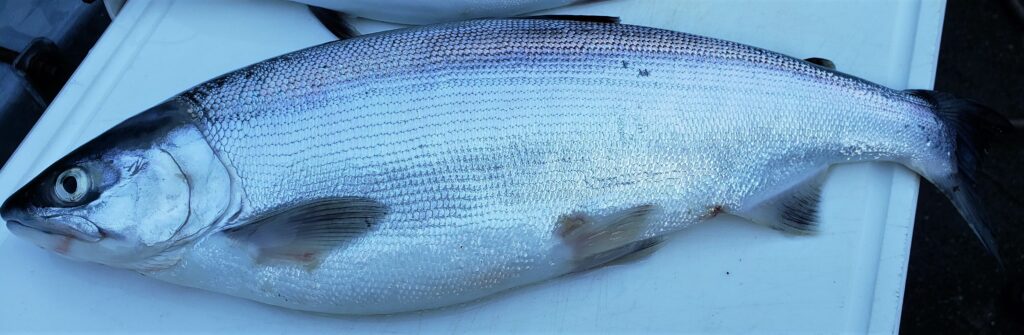
The large Lake Washington kokanee that left a mark on my fish finder.
Lake Cavanaugh – Lake Cavanaugh is an odd duck, easy kokanee limits for fish 10 – 18” kokanee during the spring, summer and fall, but when winter comes around it seems that every kokanee you catch is a chrome 8 – 12” fish. My nonscientific guess is that the majority of the kokanee in Cavanaugh spawn at 4 years and the winter sport catch are primarily 3-year kokanee. Most winter kokanee in Lake Cavanaugh will be caught over the deep pocket just east of the islands.
Lake Samish - Samish is really close to home with the typical winter kokanee bite being later in the day. It is a great lake for “breakfast and chores are done, let’s go fishing”. The lake includes a large basin with a smaller connected lake at the north end. When fishing winter kokanee on Lake Samish, most of our fish are caught in one of two areas. The first is along the west shoreline just west of the WDFW launch.
The second is generally in the center, maybe favoring the north shore/center of the small lake. Your trolling speed is critical, plan on fishing .8-1.0 mph with lots of “S” turns. Oddly, we have caught a fair number of Samish winter kokanee pulling small minnow type baits for cutthroat, but standard kokanee gear is a better starting point.
Lake Stevens – We don’t fish winter kokanee on Lake Stevens often, but it does host a winter fishery. There may be local secrets, but in our experience Lake Stevens winter kokanee are a hit or a miss. Most of our winter kokanee were caught along the bay at the northwest side of the lake. Typical kokanee gear with a pinch of nightcrawler or worm seems to have an edge over tuna corn.
Yale Lake – Yale is a great kokanee lake and is open year-round. There are winter challenges if you decide to make the trip. The wind can produce some crazy short chop, so make sure that you check the forecast before you hitch up the trailer.
We haven’t had a problem but I’m pretty sure that the reservoir water levels are down November-February. The Yale Park launch should be open but other ramps may have restrictions.
Finally, there could be hazardous floating debris/flotsam. Boat with caution, and if it’s choppy, slow way down. The winter kokanee fishery should be concentrated by the dam or across the lake from Speelya Creek. In my experience, if fishing less than 30-40’, run really long setbacks or use lead line rigs.
OK, you have some idea which way you’re headed in your kokanee quest, now what? I don’t really change overall tactics when fishing winter kokanee. The usual kokanee drill; a small dodger, lure with tuna corn is a great place to start.
Make sure you have your favorite scents, maybe a container of worms, and additional leader onboard. Not always, but occasionally, you will need to increase your leader length.
When trolling for winter kokanee, you will want to stay under 1.0 MPH. I probably do more “S” turns or engage the “Hunt” mode on my iTroll more often during our winter kokanee adventures. Our dodger box has more dodgers in it than most, but during the winter kokanee fishery my go to dodgers are painted, copper, or even dark metalflake.
Using either double spinner rigs or flies behind the dodger seem to consistently produce kokanee during the winter fishery. After you hook your cold weather prize, gently fight the fish, and, as with any kokanee fishery, a long handle net will increase your actual catch verses hook up statistics.

I know that it will be cooler out, maybe even freezing, and the lake temperature should be down as well. But make sure you still care for your catch. Bleed them and keep them on ice, or, even better, in a slurry in your cooler; you’ll want to preserve the quality of your hard-earned prize.
Winterize or not, keep your kokanee gear handy. The above is just a starting point. Choose a lake, learn it, and you’ll soon be the local expert! Trolling for Washington State winter kokanee can be frustrating.
With the closure of most of our winter salmon fisheries, a bit of frustration will quickly become an addiction. Enjoy your winter kokanee adventure, but with the potential for rainy, slick roads, be sure to use extra caution towing your boat to and from your new favorite winter activity.
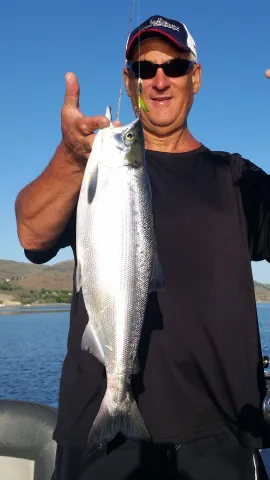
/articles/washington-winter-kokanee-observations
Ice Fishing Season is Coming
I’ve been watching Ice Cold Catch on TV lately. For those of you who aren’t in the know, it’s a reality TV documentary series that follows two greenhorns as they learn the ins and outs of operating a commercial fishing boat in Iceland. It’s a week at sea in some of the harshest conditions imaginable, and then they return to the port and do it all over again. Some of the catches can yield multiple hundreds of thousands of dollars for the boat and $5,000 for crew members. Other times, they make fractions of that amount. It’s the embodiment of a hard way to make an easy living. Watching the boat and crew lay mile after mile of baited line to circle back, pull it up, and see what was caught is entertaining TV from the warmth of my living room. The blend of passion for the sea with the business acumen needed is something I think anyone who enjoys fishing and also works a “regular” job can appreciate. I don’t plan on heading 50 miles outside of the Icelandic coast to commercial fish for cod anytime soon, so I guess I’ll stick to something closer to home.

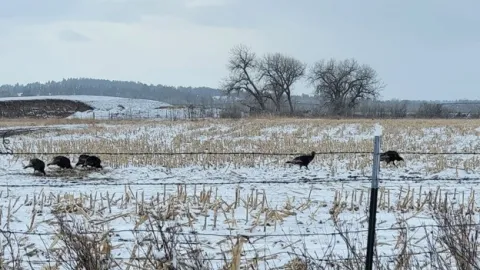
With the winter season approaching, many of us are stowing away the outboard engines on our boats and getting out the ice houses and augers. Maybe if you’re brave enough, and have invested in a decent winter jacket, all you’re checking to see is if you have your trusty plastic bucket to flip upside down as your seat when you jig away for what fish lay below. I’m referencing another way to get your fishing fix during the cold winter months - ice fishing. When the weather gets cold, many of us shift gears and turn our attention to hunting season. Big game, waterfowl, upland bird, or otherwise, it’s the thrill of being outdoors that does it for many of us. I’ve been known to pull off to the side of the road and look at a few turkeys walking around or admire an elk or two coming down from the mountains. For those interested in braving the elements but not quite ready for the physical exertion of hunting outdoors, ice fishing offers continued sporting opportunities. Whether fishing for perch, kokanee, walleye, or burbot, it never hurts to remind yourself of the respect needed on the ice when fishing these glorious winter months.
Gear matters
I joked about the winter coat, but seriously, having an insulated jacket does wonders on those days when the temperature is below freezing. What else might you need before hitting the ice? While a gaiter is always helpful, you’ll need a beanie at a minimum to keep your head warm. Some gloves and boots that are ideally waterproof with disposable hand warmers are a great idea. Ice picks are also a very smart accessory to have should disaster strike and you need to crawl out of the frigid water. They are every bit the equivalent of having life jackets and first aid kits on your boat: the classic “you’d rather have it and not need it than need it and not have it” item. One other item you might not think about but will be glad to have with you is a good pair of sunglasses. It might be December or January and 15 degrees outside, but on a clear day with the sun reflecting off the ice, it can be nearly blinding. The sunglasses/beanie combo is the personification of ice fishing in my mind. It’s a cool look, what can I say?

The gear on your body is important, but you want to make sure the gear you bring to set yourself up to fish is adequate and check that conditions are safe. It is generally advised that ice fishing should be done on ice that is at least 4 inches thick- the thicker the better, especially if you are considering heavy equipment like an ATV or snowmobile to travel to different parts of the lake. 7 inches is recommended when using an ATV. A ruler is an easy tool to measure the thickness of the ice. Another indicator that it is safe to fish is a visual inspection of the ice - it should be clear. Cloudy or cracked ice are indicators it may have been melting and refreezing and not as strong as it should be. After you’ve drilled your hole with an auger (or found an abandoned hole), a scoop is extremely helpful to clear ice out of your fishing hole and to prevent your line from freezing. Besides the obvious fishing pole and lure, the last item to consider bringing along would be a fish finder. Relatively small, briefcase or guitar amp-sized, they can often give you an edge to find the bottom of the water and determine the movement of the fish below the ice.
Got the list? Excellent! You’re ready to hit the water…sorry, ice, to continue this obsession we share that is fishing. It’s always exciting to catch fish on a boat or from shore during the warmer climates and summer months, but it’s a whole other experience to brave the cold and reel up your catch of the day through the ice.
/articles/ice-fishing-season-coming
No Kill Kalama
Sometimes we don’t get the fish, sometimes we don’t get the shot. And sometimes we don’t even think about it because there is just too much going on.
You are not going to get a slick fish picture, but I am going to let you in on a little secret called “License to Chill” on the Kalama River in Washington State. This underdog tributary of the Columbia River is often overlooked, but why? Well, it's hard to get to, and access is limited, but there are substantial year-long opportunities for salmon and steelhead runs. It's a sweet spot, roughly 45 miles long, and narrow enough to cast across to the opposite bank.
It may be relatively small, but when you're there you feel the pulse. It’s a mainline to the Pacific Northwest heartbeat. The swift mossy green waters amble through the Cascades from Mt St Helens to the Columbia.
License to Chill hosts 19 private acres of preserved forest, easy access to the riverbank, and multiple runs every year. Spring chinook get a lot of attention, followed by summer steelhead, coho in the fall, and the almighty winter steelhead running well into the spring.
Can you keep them? No. This is a strictly managed catch-and-release barbless fly-fishing stretch.
Should you pull them out of the water, take a picture, and admire your fish? No, what's the point of that? You're causing stress, suffocation, and possible internal injury. This river isn't for the eating fish, it's for the experience. No Kill Kalama is just the place to go if you want to unwind and wet your line.
I am one of those people who believes that all humans should have the right to forage, hunt, and fish for our own sustenance. And, why not fun? However, I also think we should absolutely look outside of ourselves at the natural world, sustainability, and what we are leaving for each other and our children.
This isn't a debate, but a few words to share what a great time I had on the Kalama River. If other like-minded folks appreciate the suggestion, then I'm pleased about that!
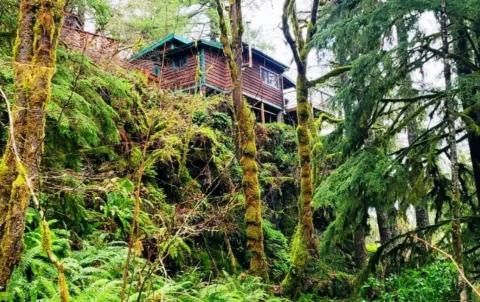
So much love and history has gone into this cabin and property. It is really one of a kind. At 90 feet above the river, you can feel it roar under you as you drift to sleep. If you like eagles, how about taking a shower outdoors while they fly above giant Red Cedars? It is epic!
/articles/no-kill-kalama