Kokanee Lures: Making Your Own
And other ramblings...
Although there are a limitless variety of both the latest, tried and true kokanee lures hanging from the pegs at your local purveyor of tackle, many people choose to hit the water with at least a few home-tied lures. There is nothing wrong with ready tied kokanee lures and depending on the location, many shops will have a section catering to kokanee fishing. Even tackle stores far from a kokanee lake seem to have enough kokanee gear in stock to get you started. Here locally, Holiday Sports in Burlington has an aisle dedicated to kokanee lures, flashers, and lure components. So, with the variety of prepackaged kokanee lures available, why create your own?
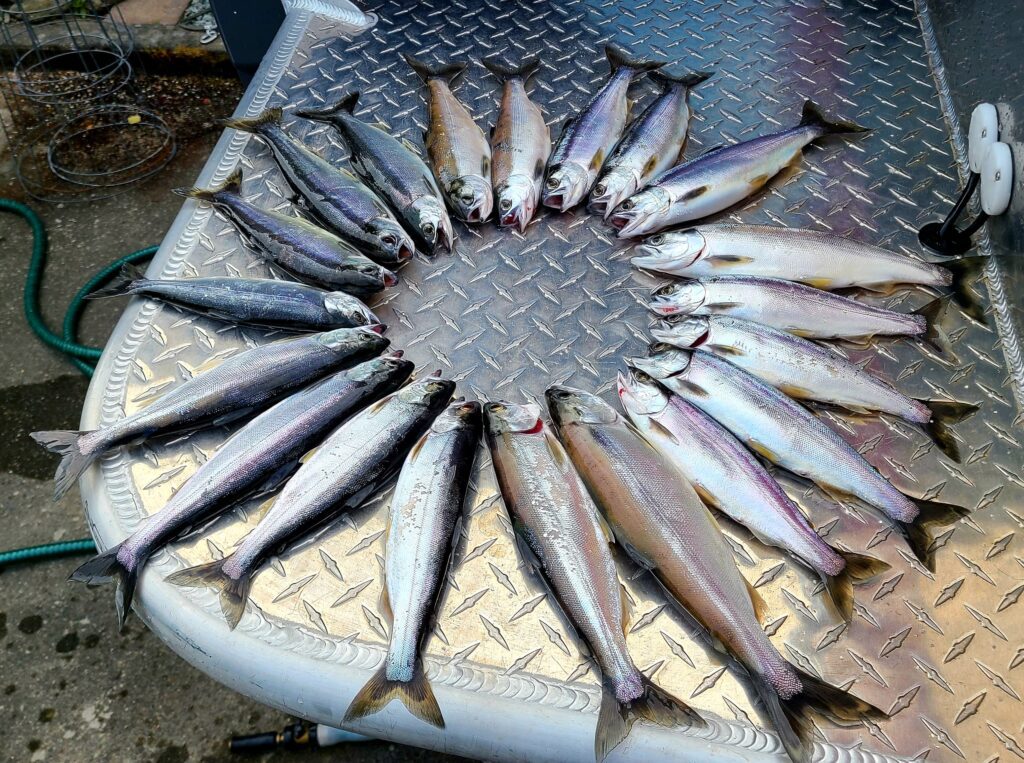
I think that the answer is in kokanee fishing overall. Sure, they are a scrappy opponent, taste fantastic, and here in Washington most lakes have a 10 fish bonus limit. But more so, kokanee fishing is a mental game. A successful kokanee fisherman understands both the regional and seasonal adjustments required to consistently put fish in the net. Much of the fishery is spent massaging the grey matter while trying to figure out the trick of the day or even hour. Kokanee are very fickle and when you entice a bite on a lure you tied the whole experience is enhanced.
My personal history of fishing custom lures goes way back. I have always been an avid fly-tier and enjoy making one-offs or attractor flies. In my youth I used a black marker or nail polish to doctor up Oakie-Drifters and Steel-Lee spoons to enhance my steelhead offerings. I spent 20+ years in Southern California chasing anything that swims. I would often put a short notch in the body of small curly tail grubs when fishing for trout in the Sierra’s. The cut would give the tail action a little extra vibration that drove the trout nuts. When fishing the bays and nearshore I would modify my swimbaits with a marker or colored Sharpie. I even bought a mold to cast my own 4 and 5” swimbaits. I poured many crazy colors; I even modified the 5” mold to incorporate a scent chamber where I could squirt a bit of scent into the swimbait. These are just some of the ideas that constantly bubbled from my head on their way to the end of my line. So, why the effort when there is plenty of excellent gear on the market?
It’s that kokanee mental thing, catching a fish on something that you concocted. I think that with kokanee fishing, when you can consistently catch fish on a lure that you developed or modified, it just plain feels good! Hooked yet? How does one get started?
The answer may vary a bit depending on your goal. Do you want to invent the next hot Kokanee fly, design a new spinner blade, or just hobble together some random spinner blade/bead combos? Whatever your goal is, it may be a good idea to ease into your new interest; don’t go out and buy the stuff to make 250 kokanee lures. Start slow; a few spinner blades, beads and spinner clevises. If you’re a fly-tier, you probably already have the basics for any number of kokanee flies. Tying kokanee flies is fun and with some basic skills your imagination is your only limiting factor.
Although I’m fortunate that I have a dedicated tackle workbench that is well stocked with just about everything needed for making lures, it’s not necessary. Your kitchen table, garage workbench, or even your lap while watching a game are perfect for making lures. I also carry a spinner/lure making Plano box on almost every fishing trip. One never knows when you’ll have to make mods or throw together an emergency lure.
A problem I have is that I have kind of settled into a given group of custom spinner/bead combos and a handful of kokanee flies that consistently produce fish. Good or bad, not sure. I enjoy making lures but do I need more kokanee lures? No, probably not, but I’m sure that I’ll hatch a new batch of kokanee lures this year anyway. I may even explore the world of tube flies!
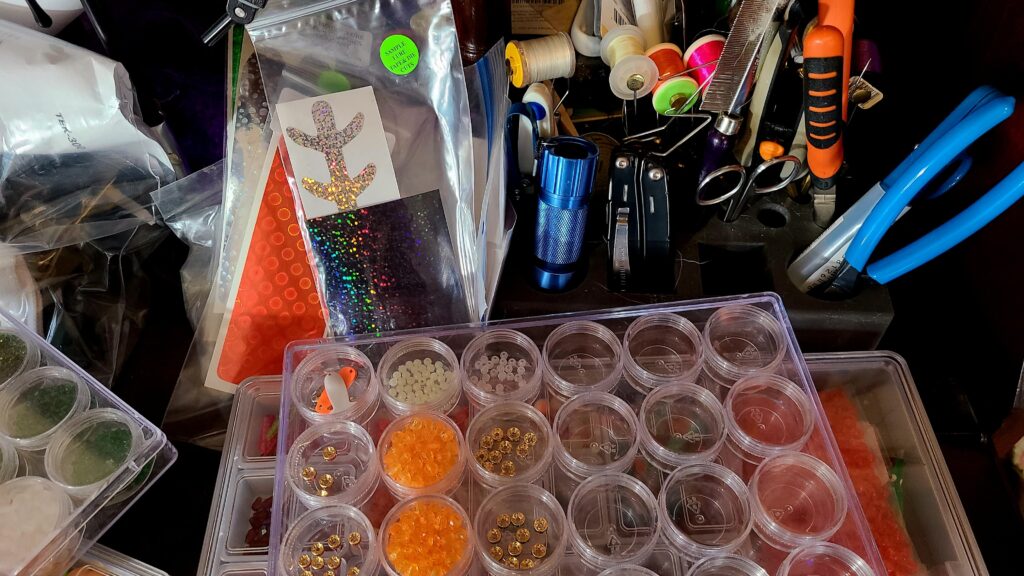
Where do you start? I think that before you spend any money, turn the trusty old trout tackle box upside down, give it a good shake and step back to see what you have. That big ball of old tangled up wedding ring spinners will be gold. Is there a handful of small spoons or old flies? Look in the tackle box and you’ll find an old rusty spoon stuck under one of the shelves. Pry it loose, maybe hit it with a drop or two of penetrating oil, and start dissecting your treasure pile. In the end it is likely that you’ll have quite a collection of small Colorado blades, wedding rings, beads, and a variety of components that may fuel your lure making passion all winter.
You can also purchase the components through one of the many lure making supply websites or your local tackle shop, but be aware that many are either wholesale or cater to the bug-eye crowd. Size 1 and 2 spinner blades are hard to find. If you don’t find any at your local tackle shop, ask if they will make a wholesale purchase and then package in smaller quantities for retail sale. Beads? I think that every fisherperson has wandered down the bead isle at your local hobby store and thought “If I was a fish…” If you are anywhere close to Lacey, Washington pay a visit to Shipwreck Beads, www.shipwreckbeads.com. Believe me, as a tackle crafter you will be blown away!
Now that you have a box full of doohickies to start making kokanee lures with, now what?
Regarding spinner blade clevises, try to find either the small plastic clevises or the spring type. The folded metal ones are great if you are making wire spinners but with manufacturing inconsistencies, they may abrade the light mono or fluorocarbon that you will be using as leader material.
I own a couple different wire benders and have tried to fabricate wire kokanee spinners. Even using a very fine wire gauge, the spinners end up being too heavy and rigid. When making kokanee lures, you want the action of the lure to just sort of flutter or follow the attractor action. Wire spinners tend to just hang there.
Line size? I used to believe a lighter leader line would draw more strikes than a heavier leader. Apparently in the underwater world of kokanee fishing I was WRONG, kokanee are not leader shy. In fact, there are a couple Washington State kokanee fisheries where I start with 20# fluorocarbon leaders and have no shortage of bites. I guess that it is mildly comical. Some days kokanee can be very boat shy, where they won’t bite anything running on less than a 70’ setback. Or crazy stuff; like a boat must be heading east instead of west with Jimmy Buffett, Son of a Sailor on the Bluetooth to get bit, but they have no problem smacking a spinner on an 8” hunk of 20-pound mono. That said, with few exceptions I tie my kokanee leaders on 12-14# fluorocarbon.
Hook size and color are kind of a personal preference. Many of my kokanee lures are tied using size 4 or 6 black octopus style hooks. I typically tie a snelled rig with 2 hooks. With my standard rig the hooks are pretty close together but there are times where I want a trailer or stinger hook in the set up.
Maybe a note about leader length; I tend to have spools of ready to go lures when I’m on a lake hunting kokanee. Typically, they are the correct leader length for that fishery. It is a good idea to have a handful of pre-tied leaders that haven’t been cut to length available. The thought is that you’ll be able to assemble your lure then set leader length as required quickly. An 8-10” is kind of a standard kokanee leader length, but sometimes the fish want something different.
Ok, you have a sizable collection of kokanee leaders, now what? How do you store them without ending up with a large cocoon of fluorocarbon? Speaking of…when I was a child, I used to have a recurring nightmare where I got caught in a spider web and then wrapped up for a later meal. In hindsight, maybe what I thought was a spider web was really kokanee leaders. I need to get organized…
A couple of leader organization concepts are either sealable sandwich or snack bags, or, my favorite, the slotted foam tubes. If using the resealable bags, gently coil your kokanee leader and seal it in the bag. Store the sealed bags in something with a latching lid. With the slotted foam tubes, set the hook in the foam and wrap the leader securing the end in one of the slots. You can store the tubes on a rack, in a 3–5-gallon pail, or a 2-gallon resealable bag. I have found that using an empty 5 gallon to hang your leaders on during the day does wonders for keeping the boat organized as you cycle through set-ups. No point in becoming a fluorocarbon-spider meal, come up with an organizational plan that works for you and your boat.
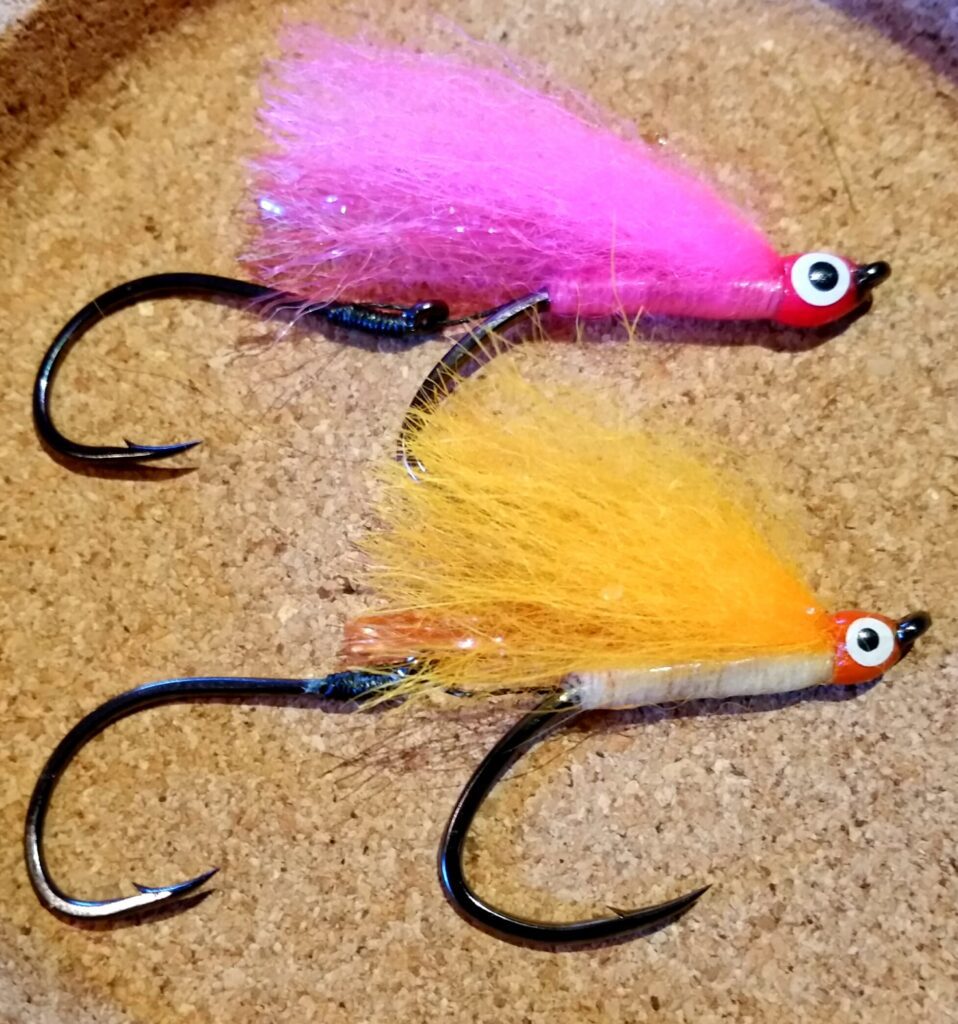
Previously I mentioned that kokanee fishing is a mental game. As prepared as you are in the comfort of your living room, sometimes once on the lake you will need to think out of the box. My lure/spinner box allows me to tweak my presentations. I might add a couple beads and a second spinner blade, make a leader with a fly, then add spinner components. The box has small spin n glo floats, extra beads, various kokanee flies, wedding ring collars, some kokanee bugs, and a few other things to dress up your lure.
Whether you are making spinners, tying flies or concocting something else, much of your kokanee lure making will be done at home. Enjoy the time and let your imagination go wild. Shoot, most small children love making lures, make it a family affair. Finally, lures made during the offseason should be stored in a cool, dark place.
/articles/kokanee-lures-making-your-own
A Mothers Day Fishing
By Hillary Holman
Last year for Mother’s Day I met up with my two daughters to fish Dworshak Reservoir in the Clearwater Valley for Monster Bass.
My eldest daughter Cameron had recently returned home from Temple University in Tokyo to attend WSU in Pullman, and Sarah had came back from PLU to attend Whitworth University in Spokane, both due to unforeseen complications associated with the pandemic.
Paul “the Bait Boy” Hamilton, and Sarah carpooled down from Spokane to Lewiston and Cameron scooted over from Pullman to meet Rob and I at the Clearwater Casino. It was the final leg of a spring fishing road trip with Rob.
We traveled the back roads through Waittsburg from the Tri Cities area, and found some great smoked cheese and meat at Mr C’s. We stocked up on snacks and hit the road to meet up with our posse in Lewiston by dinner time. It was a good 6 hour drive from The Dalles to Lewison, taking the scenic route, aka the shortcut.
Lenore Lodge, operated by Toby Wyatt, is situated on the way to Dworshak and was our lodging in the area. We often stay here when fishing with Reel Time Fishing on the Clearwater. The girls were impressed upon arrival. There was plenty of room, a great kitchen and a game room. The view of the river is nice. It was easy for the girls to unwind, unplug and relax. Cameron prepared a charcuterie board of the many meats and cheeses from Mr. C’s, that we bought along the way.
The next morning brought much excitement. There were winding roads and beautiful scenery. To see the wonder in my girls’ eyes again, as if they were little, gave me the greatest joy. Their curiosity and willingness to explore with us was wonderful. We looked out the windows and snapped pictures at the scenery. The Dam was a marvel. Hidden back in the Valley of the Clearwater, the monolithic dam is a sight to behold.
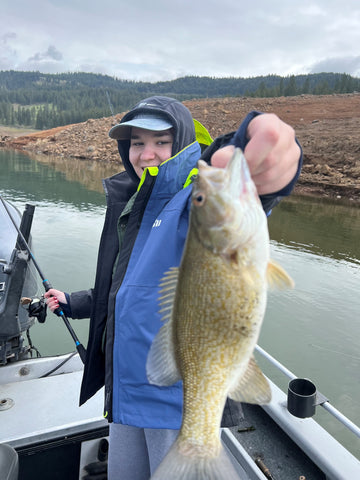
Arriving at the reservoir, we were greeted by Travis Wendt, of Reel Time Fishing. We were on the hunt for Jumbo Bass that are said to inhabit the huge lake created behind the huge Dworshak Dam. It was a beautiful clear day and not another boat was in sight. Travis knows this water well. “The reservoir is deep and steep,” as he says, and letting your leaded soft plastic baits sink to the bottom is paramount for success. Casting was right up our alley. Sitting on the bow of the boat tossing out lines on a clear spring day with my kids was exactly what I needed.
We took a lunch break and hit the shore, a hidden cove with a stream pouring from the rocky bank. Travis fired up the BBQ and us gals hit the shore for some much needed exploring. The hills were draped in green from the spring rain and runoff. We sat on top of a hill and looked down at the men doing their manly banter on the boat with the roaring smoke from BBQ as Travis prepared for lunch. The girls hopped up and set out to the creek to watch and listen to the streaming water down the rocks on the hillside. I watched and they jumped from one side of the falls to the other. Each was snapping pictures of the other. Capturing each moment as it came.
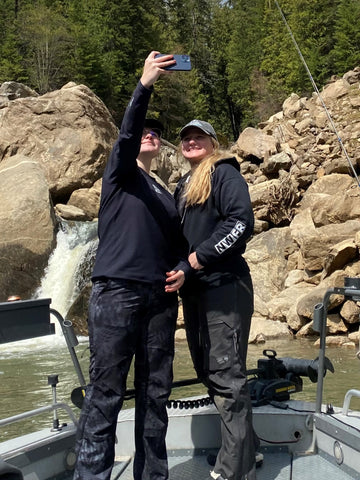
After lunch, we got to work. Paul, Rob and Travis were machines in procedure. They sent their plastics out at just the right spot, waiting for the right angle for the lead to hit the bottom. Cameron had enough time fishing and was ready for Mom to pass her the Camera to film the rest of the bass episode. She was ready to take the reins. The rest of the afternoon I spent fishing. Not worrying about getting the camera shot. Not worrying about the camera at all. Sarah would take turns with Cameron, but for the most part, she fished right alongside me. We hammered ‘em. We gave it everything we had and stayed as long as we could, even with the rain setting in. The girls were troopers. They came prepared with the right gear to withstand the spring day with unpredictable weather.
In the end, we caught some great sized bass and perch. We didn’t catch a monster, but we had fun. We saw a waterfall, beautiful scenery, the dam, and I got to reconnect with my girls after 2 long years apart. The boys were gracious and patient. The lunch was perfect. I could not have asked for a better day for Mother’s Day. Ok, maybe next time to have my son along for the trip is my only ask.
So, if you are wondering what your mom, wife or daughter may enjoy for Mother’s Day, consider taking them fishing. A trip we don’t have to plan and a meal we don’t have to cook or cleanup is all we hope for! The fishing, now that’s a bonus!
This article is dedicated to my Loving Mother Jerri Lee Cole.
/articles/mothers-day-fishing
Net Innovation
It’s happened to many of us while trolling. Your buddy has a nice fish that he’s battling to the boat, and as you reach out with the net, hoping not to miss, the net washes below the hoop as you get ready to scoop and tangles with the fish’s mouth and hook. Frantically you attempt to bring the fish in, only to watch it twist and turn and the hook pull free. Bad enough for any fish, but especially bad when it’s a twenty-pound king!
If you say this has never happened to you, then you must not be one of the guys who hold the net with one hand while scooping with the other. Admit it, many of us have found this to be an imperfect compromise. If you watch guides net fish, you see them doing this all the time. The problem with this technique is that it shortens your reach to the fish which negates the benefits of a long net handle. It also forces the netter to lean out over the gunnel that much more, increasing the risk of losing both the fish and the netter (not funny, I’ve seen it almost happen in my boat).
You would think that most every innovation under the sun has been built into nets, and then along comes something so simple, but so effective that you have to wonder why no one had thought of it earlier.
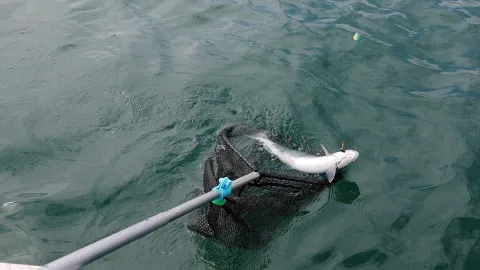
Recently NWFishing was contacted by a company based out of Texas, Netrigger (https://netrigger.com/). They have developed an awesome net accessory called (ready for it?) The Netrigger. Using a simple but incredibly effective magnetic system, the Netrigger does what you’re your hand does – it holds the end of the net hoop in place against the net handle, allowing you to scoop further and deeper with the confidence of knowing that your net won’t slip back and tangle with the fish. When the fish is in the net hoop and you lift up, the fish’s weight releases the net end, and your fish is safely in the net. Simple, effective, and innovative!
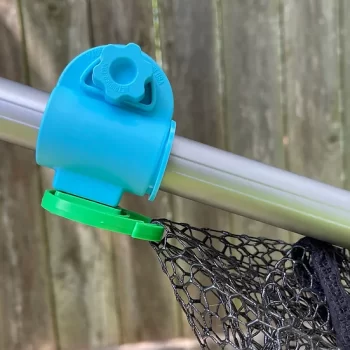
If you’re concerned about the net not deploying, no worries. The Netrigger comes in 10-pound, 15-pound, 20-pound, and 30-pound magnetic weights, and can be purchased in a variety of combinations. The magnets are interchangeable which is a nice feature. Depending on the size of fish you are targeting and the speed of your boat, or current, will dictate which weight to use. My personal experience is the heavier weights work better in trolling conditions. For salt and river salmon/steelhead I would go with the 20-30-pound weights. For kokanee, trout and most 1–2-pound fish the 10-15-pound weights are a good choice.
The one quibble I had with my unit was when I installed the clamp, I over tightened it and caused it to crack. Not enough to make it unusable, but it always bugs me to get something brand-new and damage it. Chalk it up to user error and don’t over tighten that clamp!
Prices range from $20 for a single weight to $45 for the combo packs. The combo packs are nice in that they come with three different weights. The clamp also comes with inserts making it easy to switch from different diameter rod handles.
As to how they work? As advertised! On a recent trip to Fort Peck, Rob went to net my fish, but the magnet was not deployed, and the nightmare scenario almost happened. I watched in horror as the net end tangled into the fish’s mouth. Fortunately, Rob was able to bring the fish in. Our second Chinook, the magnet easily stayed in place and released as a beautiful 17-pound chinook entered the net. No worries about the net snagging and it was an easy net job.
/articles/net-innovation
Hoodsport Chum
For salmon anglers in the Pacific Northwest, November heralds the final transition from targeting open saltwater to focusing on tidewaters and rivers. Yes, there are some saltwater opportunities (for example, blackmouth, when open), but the vast majority of anglers have put away their boats and are pursuing salmon in the rivers. That said, there are some prime opportunities to target and catch salmon out of your fishing boats, so don’t button them up just yet!
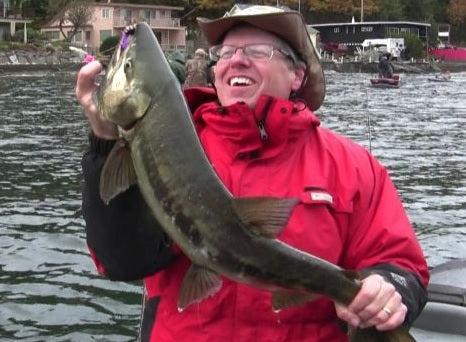
One of my favorite fisheries out of my boat in November has to be the Hoodsport chum fishery. The fight of a 10-15 pound chum ranks up there as one of the hardest fighting salmon you can catch. Taking on a chum with steelhead gear will give you all the battle you could ask for as these brutes slash and pull with every ounce of energy they have. One look at their fighting canine teeth and you’ll know this is a fish that is serious, very serious, about its reproducing goal.
All up and down Hood Canal you’ll find chum as they work their way toward their spawning grounds. The state hatchery at Hoodsport and three miles south of there at Potlatch (a smaller, Native American hatchery) are the destination for many of these chum as they work their way down Hood Canal.
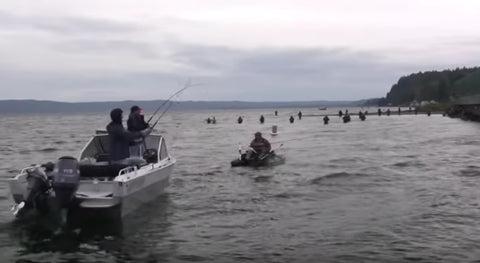
I have caught fish in both locations, and each spot has reason to recommend it. Potlatch, being smaller, has limited shore angling and parking, which is roadside only. That said, there are also fewer anglers there. Hoodsport, meanwhile, is the Fishing Mecca that chum anglers are drawn to. Fishing right out in front of the hatchery and watching hundreds of fish jockey for position as the tide sweeps them into the small feeder creek leading to the hatchery is truly a sight to behold. Of course, along with the fish comes combat fishing in all its glory. As the tide comes in and fishing space decreases, getting to know your neighbor takes on a whole new meaning.
If you’re a fortunate one you’ll be fishing out of a boat – or some type of floating device. The waters around Hoodsport are open and the wind can come up and blow hard, plus fast running tides can make it a challenge to get an anchor to set. Be sure to bring an anchor with some bite, and terminal chain so you’ll stick in the rocky bottom. I’ve seen anglers fishing out of all manner of floating devices on calm days, including single person pontoons and float tubes. Be sure to have your life jackets on and just don’t venture too far off shore. If you are feeling anxious that’s your inner voice telling you a fish isn’t worth your life – pay attention to it!
For boaters, the launch is two miles south of Hoodsport at the Skokomish Park at Potlatch. The launch has two concrete lanes which are in varying state of repair (read that as back down with caution!). There is ample parking, and a restroom. Once launched it’s a quick run to either terminal hatchery, faster to the small Potlatch facility.
When you arrive, survey the already anchor boats, taking into account the amount of anchor line you’ll need to get a solid grip on the bottom, as well as the shore anglers. Anchoring too close to the shore bound anglers will earn you a steady rain of lures and weights at your boat. Stay outside their casting zone - you’ll have plenty of water to work over and opportunities to catch fish the shore anglers don’t have.
As to the type of gear you should bring… you’re going to enjoy a variety of methods to catch these Hoodsport chum. Like chum everywhere, chartreuse and green are always great colors to choose. Pink or cerise is also good color choices. For rod/reel setups I use my steelhead gear, both spinning reels and casting will get the job done. I like an 8 ½ foot medium action rod. Line should be strong enough to turn these big brutes so as to avoid massive tangle ups with your fellow anglers. I like 18-20 pound test. Chums are not leader shy in my experience so keep things hefty.
What technique you use is up to you but here are a few tried and true methods:
Floats and jigs , or floats and corkies with yarn can be deadly. A ¼ or 3/8-ounce pink, black or purple marabou jig fished under a float is deadly. Tipped with a piece of shrimp meat or coon shrimp tail is even better. The yarn is a nice trick as it helps by getting caught up in the chums teeth, allow you to drive the hook home. Other bait you can put under a float includes the ever popular anchovy or herring, whole or plug cut.
Think of the tide as the river current. Set your depth for the lure so it’s running a foot or so off the bottom. Vary the depth if you aren’t getting bites. These fish will hit suspended jigs. Cast “upstream”, i.e. up into the tide, and let your gear drift down with the tide to the end of the “drift”. If the coast is clear, free spool your line, keeping the float straight up and down to extend the drift. When the float goes under set the hook and be ready to do battle!
Twitching jigs – ditch the float and cast the jig on its own. Another effective technique, but be prepared for a lot of foul-hooked chum. Dragging a chum in by the tail is not fun, nor is it sporting to be snagging fish. If you find yourself foul hooking too many fish move on to a different method…
Casting spinners. Again, it’s a solid technique to try if the action is slow. I personally would remove the treble hook and use a single si-wash hook. A number 3 or 4 blade fished with a slow retrieve is just the ticket.
Corkie, yarn, and slinky. I personally have caught a lot of fish using this method and seldom snag fish. Again, think of the tide as a river. Cast out and let your gear drift. You’ll know you have a bite because your rod will be about ripped out of your hands. I use a 3-4 foot leader length.
Regarding the above technique, I’m sure I’m going to get comments about flossing – I personally think it’s a bunch of malarkey. Why do I say that? Because I remember a day years ago fishing Hoodsport when the chum were in thick, jumping all around us, swimming by in schools of 10-20 fish. I had my corkie/yarn/slinky set up going, casting, retrieving, and not getting a bump for a good hour. Suddenly, the bite magically turned on and my gear started getting bit. In came fish after fish, hooked in the jaw. Explain to me how one can have a steady procession of fish go by with mouths open for a good hour and not “floss” one fish, then suddenly start catching one jaw hooked fish after another? And trust me when I say this, those hook-ups were solid strikes, not to be mistaken with a snagging sensation. Anyway, the flossing debate is one we anglers love to engage in every year and likely will do so as long as we fish corkies.
The fly fishermen do quite well at Hoodsport as well, fishing sinking tips and flies of various styles and colors. I’m not a fly guy but it sure does look like fun. Maybe on my next trip I’ll give it a try.
Before you set out, be sure to check the Hoodsport netting line at 360-877-5222. Typically the nets go in on Tuesdays and Thursdays, but this is not set in stone. There’s nothing worse than driving a hundred miles only to find nets spread in every direction. So save yourself that aggravation before you set out.
Fishing for hard fighting chum is a blast. Get in on the action this November!
/articles/hoodsport-chum
When Seconds Count
Whoo-hoo, this month I drew the coveted Writer's Choice card. I had planned to write a piece on late season Puget Sound chinook. A solid plan in place, but then came along the latest WDFW Fishing Rule Change. This closed Marine Area 10 to chinook fishing. This situation where the current estimate for chinook sublegal encounters for the summer fishery is at 122% of the agreed fisheries. The truly difficult part of the MA 10 closure is that MA 10 chinook catch rate typically peaks in mid-August.
I considered shifting the content and discussing areas that explain where to bag a chinook in Puget Sound. After internal debate, I decided I would shift chinook effort from MA 7, 9, 10 and 11 toremaining chinook fisheries. I thought better of the idea. Normally I am more than willing to share information. However, in this case the remaining fisheries really can’t handle the potential for increased fishing pressure. I’d be “Blowing Up” our few remaining opportunities. It’s a shame though, some of my best days on the waterwere caught August through September. I love writing about chinook fishing and the decision was a real dilemma for me. Dilemma or otherwise, in late July things changed and I decided to refocus my article.
This has been a summer of changes around the old homestead. We have and continue to have multiple remodeling projects in work. We moved my mother-in-law in and with few exceptions I’ve been working 6 days a week. Not complaining, all the right thing to do. And then to be honest I absolutely love my job and kind of go through some form of withdrawals when I’m not working… With the hectic schedule and lack of fishing (neither one of my boats have been off the trailer since May and then January before that) I was kind of evaluating life and sorting through what’s important or otherwise. I was even considering selling the boats.
Typically, we meet my fishing buddy, his wife, and sometimes other friends for a meal once a week. Usually, we meet at Billy’s in Burlington on Sunday mornings. We’re regulars and they have one of the best breakfasts in Skagit County. On a Friday morning in late July, I texted my fishing buddy to confirm our Sunday plans and he called me back to let me know that his wife, our close friend, had just had a stroke.
It was the last thing I ever expected to hear. Being that they are 20 years younger and in generally good health, the news was hard to comprehend. As couples we have spent a lot of time together; vacations, fishing, and of course our weekly outing, and nobody ever thought twice about our individual health. Instead of a fishing article I decided to write a brief public service piece.
A stroke is an interruption to the blood supply to the brain. Strokes are the result of an obstruction or damage to the arteries in the brain, such as a clot or aneurysm. A stroke can occur at any age and statistics show that 1 in 5 people that have a stroke are under 55, but the chance increases with age. The interruption can cause brain cells to die and depending on the location, can impact the victim’s speech, vision, cognitive abilities, movement, and/or coordination.
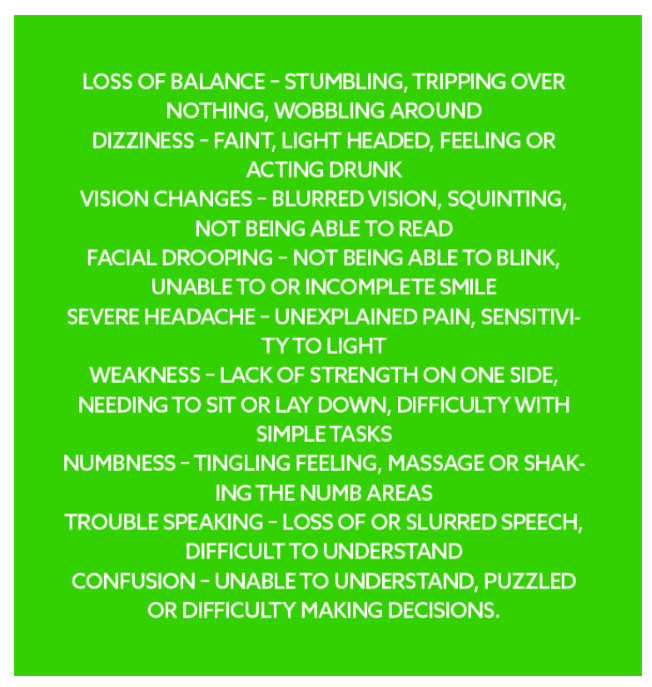
It is critical that you learn the symptoms and immediately react by calling 911.Remember the seconds count. Although the individual symptoms may not be unique to a stroke, the sudden onset or out of the ordinary onset of any of the following may be symptomatic of a stroke and requires immediate EMS care:
.
Again, recognizing the symptoms and reacting is critical when you suspect a stroke. As outdoorsmen, especially if you or your partner are in a risk category, make sure your cell phone is charged and/or your VHF is in working order.
Risk factors that we can’t change are race, gender, and family history. Fortunately, with the help of your family physician, there are risk factors we can manage to reduce the chance of having a stroke: Blood Pressure, Cholesterol Levels, Smoking, Weight, Physical Activity , and Diabetes.
By being familiar with stroke symptoms and taking action, both recovery and survival are possible. The onset of stroke symptom(s) is sudden with no warning. As soon as something seems off with a loved one or fishing and hunting partner you should take immediate action. Calling 911 may improve stroke recovery prospects and hopefully a piggy of a chinook will be in the cards down the road.
Reference material for this article is courtesy of: https://www.strokeawareness.com/patient/spread-the-word.html
Editor’s Note: As a Registered Nurse of over 35 years, I’d like to affirm that time is of the essence when it comes to strokes. If your fishing buddy shows signs of stroke it’s time to get off the water ASAP and get help. Another excellent source of stroke information can be found at https://www.stroke.org/

/articles/when-seconds-count
Of Drinking Towns and Fishing Problems
I picked up a pair of hitchhikers on 3rd Street in Bend (I'm not talking about ticks this time), and neither of them seemed to know the other. The guy asked what I knew about panning for gold and the girl wanted to tell me she had read The River Why. And isn't that like all the people that come to Central Oregon?
One of the funny things I've noticed is on places like East Lake or Paulina or on Crane Prairie or Lava Lake, the fishermen stream back to the launch for happy hour. It's not because they caught so many fish, it's because they have dinner reservations at a brewpub in Bend. They leave the lake at the exact moment the fishing is getting good. Nothing wrong with not catching fish, except not catching fish.
I made a list of fishing towns in our part of the world, and it seems I could make the same list and call them drinking towns. Perhaps this is the core of the problem. Tourists come to a drinking town for vacation, but they have a fishing problem.
Places to Fish
They fish in the toughest part of the day and then want a beer because the fishing was bad. Here's a thought: drink a beer in the middle of the day and go fishing when the fishing is good!
I spoke to a fly-fishing club from Bellingham, Wash., and they wanted to hear about Central Oregon rivers. They knew about the big four - the Deschutes, Crooked, Fall, and Metolius. To fish them well, an angler is probably going to base out of Bend, Sunriver, Prineville, or Sisters, all towns with great restaurants and more than a few brewpubs. And also cone-lickers.
What about the White River? There are sections of the White that never get fished and the trout can get big. Or the John Day where an angler can catch 100 bass on the fly on any day in July or August. Or fish the McKenzie where the trout chase caddis above the surface! The North Fork Santiam above Detroit Lake can deliver great dry fly action. The Ana River fishes almost all year long with reliable hatches and a lake nearby (Ana Reservoir) with trophy trout. The Williamson can turn out wild trout that tip the scales in the teens and they take dry flies! The Upper Klamath Keno Reach can turn out crawdad-eating six-pound rainbows any day in October. How about the Wood? The Upper Willamette? The East Fork of the Hood? The Chewaucan? There are more.
Remember your Map
Get out a map. Accordingly, you still have a map, don't you? Trace those little ribbons of blue and find the nearest towns. You'll find places like Service Creek, Spray, Sumpter, Maupin, Tygh Valley, Summer Lake, Parkdale, Paisley (yes, Paisley), Westfir, Chiloquin, Blue River, and Wamic.
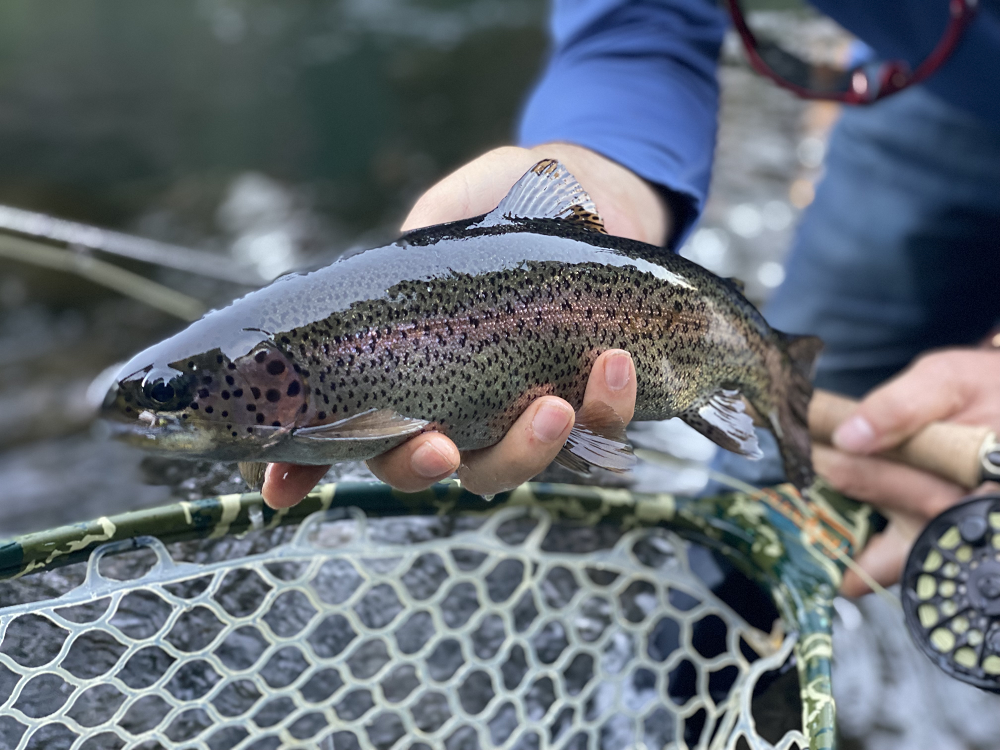
Fish the small rivers. Stay in the small towns. Stay at a bed and breakfast or in a tent, and get your breakfast at the tavern, and dinner too. Drop off a six-pack at the nearest fly shop and see what kind of good stuff they have been holding back. Drink coffee with the locals.
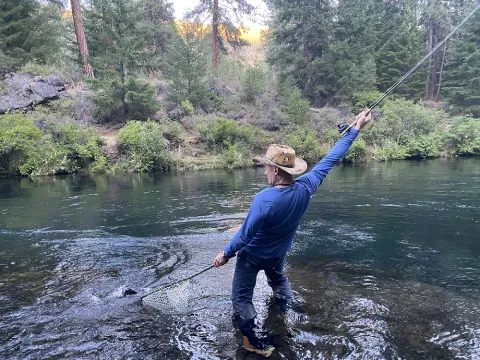
Therefore, Use a map and maybe a GPS to find hidden treasures - the places where you can't see the stream from the road, but you find a place to park and go down through the timber to the sound of the water. Wet wade and cast dry flies till sunset.
Wherever you fish this coming year, look at the landscape like a hitchhiker. Let's say you get dropped off in a small town in Utah, Wyoming or Washington instead of a Salt Lake, Seattle, or Cheyenne. Don't fish the big name waters. Fish the places you've never heard of.
I like to think that pair of hitchhikers is going to get married. On the honeymoon they would decide to compromise and devote their lives to protecting golden trout. And hopefully they can afford their own car. And deodorant.
# # #
For a copy of the Fishing Central Oregon book, send $34.99 to Gary Lewis Outdoors, PO Box 1364, Bend, OR 97709 To contact Gary Lewis, visit www.GaryLewisOutdoors.com
/articles/drinking-towns-and-fishing-problems
Fly Lines - The Method to the Madness
Once upon a time, fly fishing was a simple task. If an angler wanted a fly rod outfit, it was obtained by going to a fly/tackle shop, selecting a rod that had a number written on it, and then selecting a fly line that had the that same number written on it. Said fly line was then spooled up on a fly reel. The angler bought some monofilament tapers leaders that had a weird number with an X and that was it. (We will cover what that X means later.) Off we went into the great beyond in search of stupid fish that willingly ate our artificial offerings. Simple. Those were the days of blissful ignorance, both the anglers and the fish.
In these modern times of technically specific fly rods and fly lines, there are so many choices. What used to be a simple task now resembles an act of faith to get the right set up. No matter if you shop online or in a local fly shop, the fly line choices are are plentiful. Fortunately, all the major manufacturers of fly lines have done a very good job at trying to make a complicated task as simple as possible. Rio, Scientific Anglers, Cortland, and Airflo have application specific fly lines that are easy to navigate on their websites as well as in a fly shop. Plus, it never hurts to have personal input from a bona fide fly shop employee that has actually used the fly line. Hands on experience will never be replaced by the typing of letters on the interweb by someone who has never even touched a fly rod. Keep that in mind when you decide where your money will be spent.
Methods
I am going to try to explain the method behind the madness of what makes a fly/line a certain weight. Also, I am going to attempt to do this without upsetting any manufacturers of fly tackle products. It’s not my intention to ruffle feathers, only to convey the truth as I know it. So, let’s just say your fly rod is labeled as a “7wt or 7 weight”. In theory, this means that the rod blank needs 7 ounces of weight to make the rod load and unload. In theory, that means your rod needs a “7wt or 7 weight” fly line to make the rod do work. What makes a 7 weight fly line a 7 weight? It should be a simple question with a simple answer. Originally, fly lines were manufactured so that the weight of the “head” determined the fly line weight. Meaning that a 7 weight fly line had a head that weighed 7 ounces. At that time, the head was the first 35 feet of the fly line. Life was simple then.
Real Questions
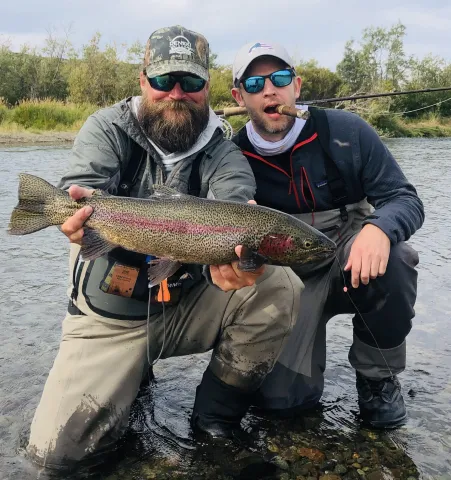
Now that we understand the theory behind the rod/line weights, let’s discuss how to decide the right fly line to select. First - What species am I using this line to fish for? Second - How much money am I willing to spend? Let’s use my favorite single hand steelhead rod, Sage Z Axis 10’ 7wt. Yeah, I know it’s old, but it’s still an awesome rod. I only use this rod for steelheading in smaller rivers, or larger creeks casting heavy flies. Either way, I need a 7wt line. Remember when I said that the fly line head was 35 feet and weighed 7 ounces for a 7 wt line? Now is the tricky part but, not really. My rod needs a fly line head weight of 7 ounces to make it work. If I am trying to cast heavy flies or nymph rigs, it’s easier to do that with a shorter piece of line beyond the rod tip. At least that is our brain’s message to us. Anyone that has ever tried to fly fish knows that our brain says “use less line, it will be easier.” However, this works totally against everything that makes the fly rod/line work as a team. The rod needs 7 ounces to load and unload. However, picking up 35 feet of fly line with a heavy indicator rig on the fishing end is near impossible. OK, maybe not impossible, but it’s hard. Fishing is hard enough, why make it harder? It would be easier to use a fly line that had head weight of 7 ounces that was 20’ instead of 35. The rod gets the line weight it needs and the angler gets the casting performance needed to deliver the cast without having to pick up 35’ of fly line in a small space. On my last trip to the Anchor River in Alaska, I chose the Scientific Anglers Anadro fly line. It has a shorter tapered, more aggressive head that checks the box on what I need to deliver for steelhead flies and rigs. This also works well for skating mice to Bristol Bay rainbows. It is not a good choice for dry fly fishing. Yet, therein lies the conundrum.
Some of you reading this have already thought “I just need one fly line that will do everything I want it to do.” In my three decades of guiding fly fishing, hanging out in fly shops, hosting trips and just generally being in the business, I have never once seen one fly line that will do everything you need it to do. It doesn't exist unless all you are going to do is fish one way, using one technique for the rest of your life. Even though that sounds completely and ridiculously boring, I guess it does happen. Point being, I don’t use my steelhead line when I go bass fishing. Even though the head taper would be great for turning over big poppers, the fly line core in the steelhead line is designed for cooler or cold temps. Bass fishing is typically warm water which requires a stiffer fly line core so that your fly line doesn't feel like you are trying to cast a spaghetti noodle with half a deer on the end of it. There is not a one size fits all when it comes to fly lines, not even one size fits most. There are some crossovers, but not many, and not enough for me to write about. Plus, the controversial arguments that would ensue would only be a recompense of opinion.
Finale
Last and certainly not least is the second part of the selection. How much money am I willing to spend on a fly line? Fly lines are expensive. Crazy expensive. I remember the first time I saw a fly line for $25. I thought the shop manager had gone mad. No way was anyone going to pay $25 when we had all been paying $18. Then I cast a rod with the $25 line on it and immediately purchased one for myself. That was more than 30 years ago. Today’s fly lines are light years ahead of what they were then. By today’s standards it isn’t even fair to call those old lines fly lines. They were more of just a suggestion of what fly lines should and could be. My advice is to spend as much on a fly line as you can possibly afford to do. The fly line represents the tires on an automobile. If you take an old Cadillac El Dorado that rides like a dream and put cheap tires on it, it rides like a Cadillac with cheap tires. Consequently, you can put the finest Pirelli racing tires on a Saturn and It will handle like a plastic race car. The tires change every aspect of how the car rides and handles. The fly line does the same thing to a fly rod. Spend the money, you will be happy you did.
In closing, when selecting fly tackle, or any tackle for that matter, I can't emphasize enough how important it is to collect your information from reliable sources. I find that privately owned fly shops are the utmost in providing genuine hands-on knowledge. Go to a shop that specializes in what you want to do. I have a good friend and colleague that owns a shop in the Rockies. He and his staff are some of the most skilled and knowledgeable people when it comes to their water. Yet when those guys go saltwater fishing, they call another friend and colleague that owns a saltwater fly shop for input on what to buy and use. Don’t be afraid to make a financial commitment. It could be the difference in catching the fish that you want to catch and standing around watching everyone else catch fish. Don’t be that person....
/articles/fly-lines-method-madness
The S&P 500
Most folks think of the S &P 500 as a stock market index, but on a recent trip to the Columbia River Gorge, I realized it had a fishing meaning as well. Namely, the opportunity to catch 500 shad and pikeminnow over the course of a week! My friend Rusty Johnston and I spent a couple of days fishing on the Columbia River between Rufus and The Dalles. Our first goal was to catch a bunch of shad, not just for fun, but also to use for crab bait this summer. Our second goal was to catch some pikeminnow and turn them in for money through the Northern Pikeminnow Sport Reward Fishery Program.
This program is administered by the Bonneville Power Administration along with both the Washington and Oregon Department of Fish and Wildlife. The northern pikeminnow is a native fish, but fish nine inches and longer feed on outgoing salmon and steelhead smolt, impacting the survival of both species.
In this program, anglers are paid anywhere from $6 to $10 a fish for any pikeminnow turned into a designated station along the Columbia or Snake River. The more fish you catch, the more they are worth and if you catch a tagged fish, it is worth $500. You can find out more about this program, designed not to eliminate, but control the population of pikeminnow, at www.pikeminnow.org.
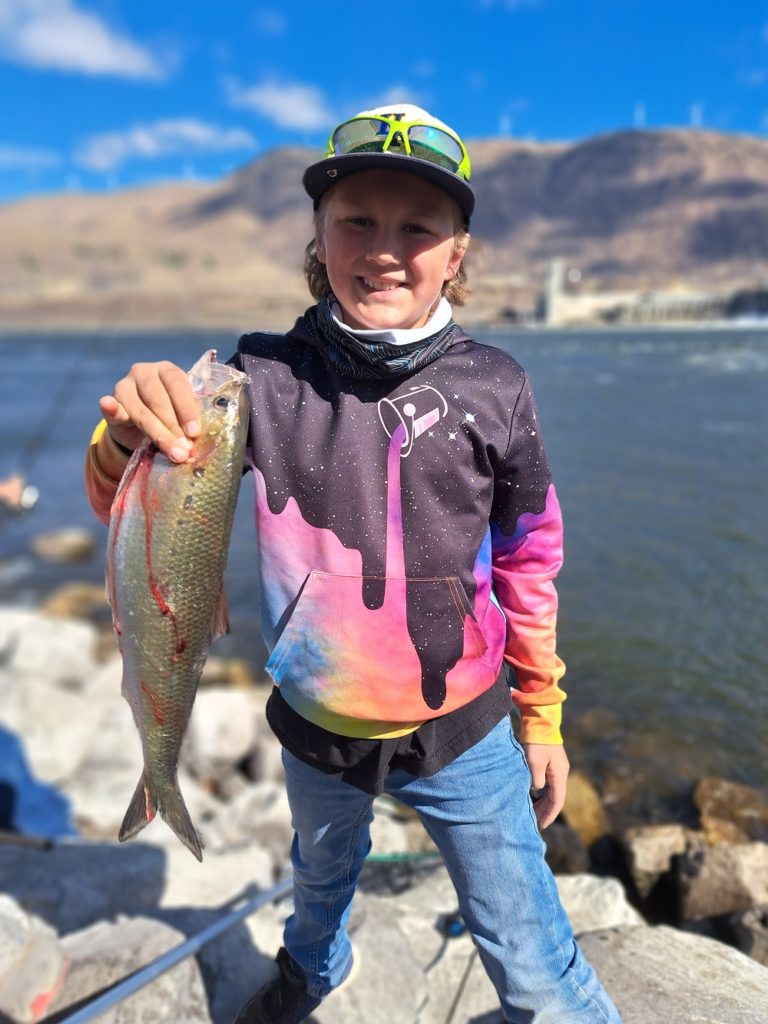
Rusty and I decided to start our trip fishing for shad below the John Day Dam. You can fish below the dam on both the Washington and Oregon side of the river, but we decided to buy a non-resident license at Gorge Outfitters Supply in Rufus and fish the Oregon side at Giles French Park.
Shad Killers
We were using Shad Killers, a local jig sold at Gorge Outfitters Supply, and the hot color for us was red and white. The Shad Killer is a 1/16-ounce jig with a bit of flashabou on it. We tied the jig onto a two-to-three-foot leader which we tied to a barrel swivel. Above the swivel we had another swivel which held a ½ ounce lead weight. Other lures that work well with this set up are shad darts and Dick Nite spoons.
We cast our offering from the bank, let it sink a few seconds, and the reeled in with a slow to moderate retrieve as the lure drifted downstream. We were soon rewarded by hook ups with a whole bunch of shad. The American Shad averages one to three pounds in size. They are scrappy fighters and up to six million of them make their way over Bonneville Dam between the end of May and mid-July, all heading up the Columbia to spawn. I have enjoyed good days on the water catching shad before, but this day was epic! Rusty and I hooked into some 50 shad in just two hours of fishing. We lost a few (they have a nasty habit of throwing the hook) but reeled in some three-dozen fish, getting more than enough crab bait for the summer.
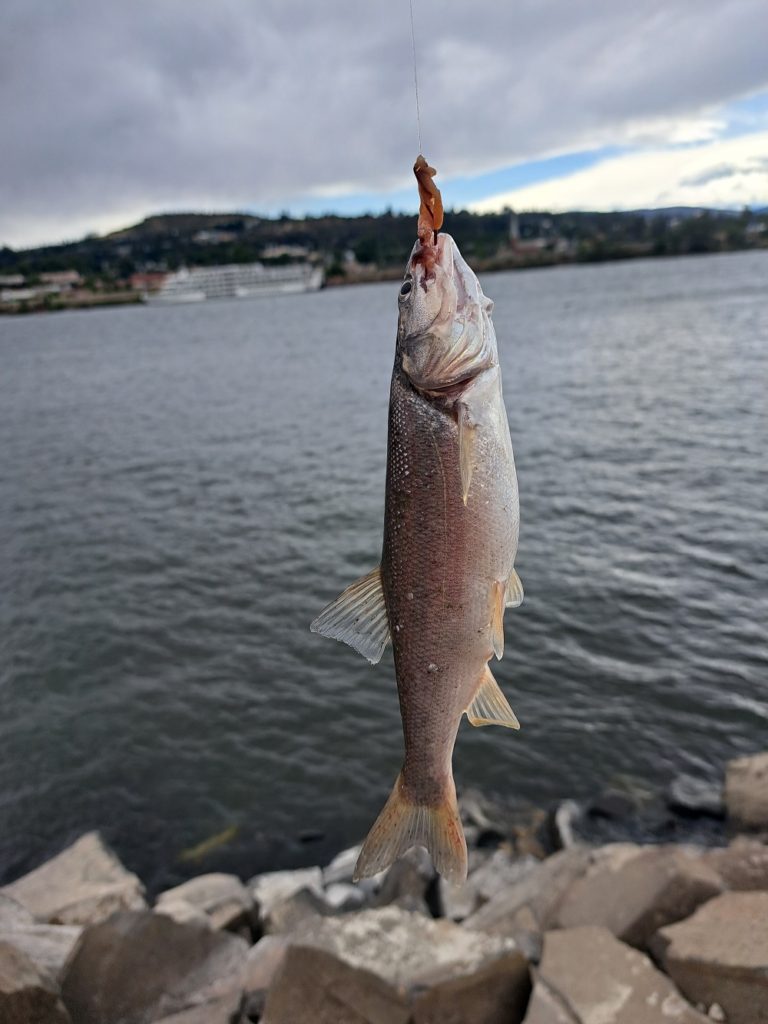
Speaking of uses for shad, the oily fish is also a favorite bait for sturgeon, and some even cut them up into chunks to use for catfish bait. Still others will eat them. We met one angler at a cleaning station at Maryhill State Park who carefully filleted out the shad he caught. He told me he brines them and puts them in a pressure cooker (which gets rid of the bones) before canning them. He said the fish taste very good. I will have to give him the benefit of the doubt.
Finished with shad, we next registered at a check station and fished around The Dalles for pikeminnow. We only caught four keeper pikeminnow (worth $6 each) but since this was our first time participating, we also each got to turn in a coupon worth $10 each after checking in our first fish. Better still, three anglers from Idaho were desperate for sturgeon bait and paid us $20 for a single shad which they promptly put to use, casting their lines out at The Dalles marina, hoping to hook into a monster fish. Altogether, we made $64. That covered a good portion of our gas money getting back home.
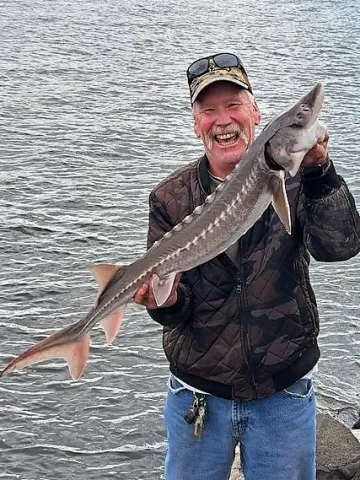
One other fun thing about fishing for pikeminnow are the other fish you catch. I ended up catching eight perch, and we both also caught smallmouth bass on the nightcrawlers we were using for pikeminnow bait, fished just off the bottom of the river with a two-ounce sliding weight. Rusty caught the most interesting bycatch of the day though, a 30-to-33-inch sturgeon on a bass rod that was spooled with braided line and just a 10-lb leader. It took him 15 minutes to get that prehistoric looking fish to shore, at which point I snapped a photo of the fish and he released it. It made for the end of a perfect day of fishing!
John Kruse – www.northwesternoutdoors.com and www.americaoutdoorsradio.com
/articles/sp-500
Ocean Coho Tips and Techniques
Coho are one of the most sought-after salmon in the Pacific Northwest. For the saltwater angler, the coho bite can be a bit chaotic, with the fish running in large schools and being active biters when the conditions are right. They can also be a bit frustrating if you are not using the right gear or fishing the right presentation. By keying in on techniques that work the topwater and get the coho to bite, you can increase your catch rate and fill the coolers with great eating, hard fighting silver salmon.
Silver Salmon
Silver salmon like to swim fast and attack their prey. Known for their topwater action, coho tend to be close to the surface. This makes for a great fishery because you are not constantly trying to work the bottom and worrying about losing a downrigger ball like you are when chasing after chinook that are on a sandlance bite. When it comes to catching coho, there are few things you can do to increase your catch rates.
Lose the bait to catch more fish. It might seem like using a fresh anchovy or a perfectly plug cut herring would lead to more fish but rigging these baits takes time. When you get into the schools of coho, the action can be fast, which means you will catch more fish if you can keep your gear in the water longer. Same with getting it back into the water faster, and anyone who has rigged an anchovy hood knows that you need to set it correctly and that takes valuable time.
Spoons
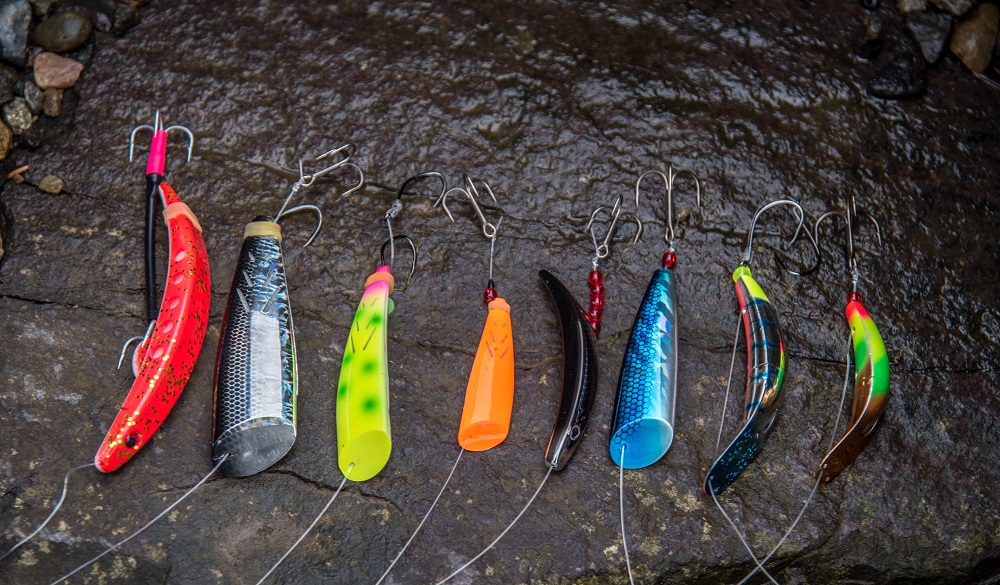
Spoons are one of the more popular lures because they are simple and are always working even if you miss a bite. Keep the spoons small such as the Coho Killer or a 3.0 or 3.5 Coyote spoon in sardine or rainbow trout patterns. The rainbow trout spoon looks more like a herring or mackerel and it has a glow back to it for low light such as cloudy days. Another spoon that is popular with coho fishing is the Skinny Gee in Herring Aide color. When running a spoon behind a flasher, it is best to go a bit longer on the leader such as 42” as this allows the spoon to flutter.
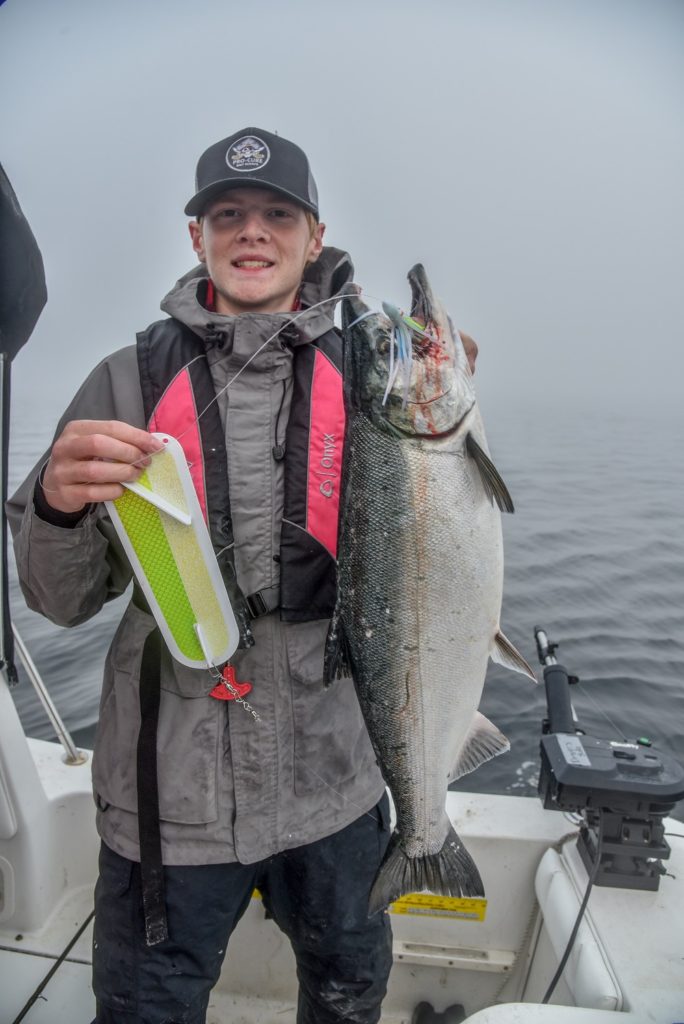
Sometimes spoons don’t draw the fish to strike. Give tube flies a try. This is a technique often used in the Great Lakes by salmon fishermen and by fly anglers chasing after fall coho along the shoreline. The ocean angler can take advantage of these lightweight lures that mimic baitfish. One of the best things about a tube fly is that they can be fished behind a dodger or a flasher or all alone, since they have low drag and are lightweight. Tube flies tend to have an erratic action that coho can’t resist, especially if you put a Mack’s wiggle bill in front of them. Bechhold and Son’s make a unique flasher with offset holes to add extra action. They have teamed up with Rapture Trolling Flies, a Great Lakes company, and offer a combo set matched together and ready to fish. If you already tie your own flies, you can pick up a tube fly adapter and tie your own easily.
Tricking The Salmon
Add flash and movement to your squids. When rigging a squid skirt with an insert or a tube fly, such as the Luhr Jensen Flash Fly (unrigged version, as they are smaller than the pre-rigged Flash Fly) to be fished behind a dodger or flasher, be sure to use a short and stout leader. Try using 30 or even 40-pound test as the stiff leader will give the lure more action. The idea is to get the lure to move in an erratic motion and make the dodger look like a feeding salmon with the lure being a wounded baitfish. It creates the “bite now” instinct of the feeding coho and tricks it into thinking the other salmon, which is the dodger, missed the baitfish and now it’s there for a free meal.
Using an insert into a hoochie or squid skirt adds attraction and can turn on a bite. The past few years we have been using the Luhr Jensen Flash Fly inserts and putting them into a squid skirt. By doing this you can make several different combinations of colors to attract the fish or add some extra UV flash for those cloudy days. You can also add a Mack’s Lure Wiggle Bill to the front to add extra movement.
Artificial Bait
Try using an artificial wounded baitfish lure. Lures that mimic a wounded baitfish are the SpinFish by Yakima Bait Company, Brad’s Super Bait Cut Plug, and the new Spin Dawg by Simon, who also makes a Spin Cut Plug that has a hole at the tip of the lure making rigging much easier with no rubber bands or chance of it coming apart. The Simon products are solid and have a scent chamber. Each of these lures is made of hard plastic and has a hollow cavity inside where you can stuff them with scent or minced-up baitfish such as anchovies or herring. For these lures, use a longer leader with a bead chain swivel in the middle since the lure provides the action that creates that need to bite reaction by rotating and spinning.
When using artificial lures such as spoons, squid skirts, and the hollow cavity lures, scent is crucial. Unlike when you use a real baitfish that has oils being released and the fish know it is an actual herring, the use of artificial lures is only a visual attraction unless you scent it up. The cavity lures like the SpinFish offer a way to fill them with various baits to create a scent trail. One common bait is to mix canned tuna fish with your favorite scents. Because the lure holds the minced-up bait, one of the better scent mediums to use is one of the many water-soluble scents from Pro-Cure. When the scent leaks out of the lure, it mixes with the water and stays at the same depth as the lure, creating a large scent trail for the fish.
Oil Based Scents
Oil-based scents such as Pro-Cure's super sauces, gels, and oils hold a scent well and last a long time, but the scent will not mix well with water. This means when it is washed off the scent trail starts to float. Water-soluble oils wash off lures and squid skirts too quickly which is why you should use oil-based scents for these lures, but it will not gum up or ruin the action of a tube fly, just be sure to apply frequently. Knowing which scent to use is more than just the baitfish it is made from, but also which ones are best to stay on the lures you are fishing.
Downsize the dodgers and flashers. The idea behind using a dodger or flasher is to create a feeding salmon scenario as well as add action to your lure. Since you are fishing for coho, be sure to match the dodger and flasher to the size of the fish. Most use the standard 11-inch flasher but the 8-inch flasher is a better choice. Instead of the attacking salmon looking like a chinook with the 11-inch, the 8-inch reflects light more to the natural size of a coho. It is also less drag and that means you can fight the fish better. The smaller dodgers and flashers also work well at faster trolling speeds. The Sling Blade dodger from Mack’s lure is a very universal dodger that is designed to work well at fast speeds. Since it is a long teardrop design you can bend it to create a more dramatic dodge or side-to-side action, or you can keep it straight and troll it fast. This design also cuts through the water well and allows you to fight the fish and not the dodger, even when using the larger 9-inch version. The dodger comes with UV-treated colors and is offered in many sizes, which allows you to change it up to the varied sizes of lures you are using.
Coho
Since coho are often found actively feeding near the surface, you do not always need to use downriggers. Instead, trolling with a mooching weight that cuts through the water easily and a simple lure behind can be a way to either add an extra rod out of the back of the boat or not deal with the downriggers altogether. Again, the more you can keep your lines in the water, the more fish you will catch. When rigging this outfit, use a longer leader around 48 inches with a bead chain swivel in the middle and a lure that imparts action such as the SpinFish, Brad’s Cut Plug, or Simon Spin Dawg. But do not overlook the tube fly or even the squid skirt with the addition of a Wiggle Hoochie Bill. These small plastic bills from Mack’s Lure are simple to use, just slide it down the leader to the head of the squid skirt and push it into the collar. If using a tube fly then adding a bobber stop knot or rubber bobber stop to the front of the bill will keep it tight to the fly. The Wiggle Hoochie Bill act much like the bill on a plug, but instead of creating a diving motion, it moves the lure in side to side in and erratic motion. They also come in an assortment of colors and are UV treated to add even more visual attraction.
Coho are known for their acrobatic fights, often coming right up to the surface and jumping, but a dodger or flasher can take away from the fight and even become a problem when the fish jumps. The attractor breaks the surface of the water pulling in an opposite direction and taking the hooks with it. When using downriggers, you can rig in a way that the dodger or flasher stays with the downrigger ball and you get to fight the fish without any extra drag on the line. To do this, either use one of the lures with action or the added Wiggle Hoochie Bill and then a downrigger clip that is above the ball. Use a short section of cord or very stout mono line such as 50-pound test from the flasher or dodger attached to the downrigger ball, and then set the downrigger clip twice the length of the cord above the ball.
Furthermore, If you run the dodger or flasher behind the downrigger ball 36-inches, then set the downrigger clip 72-inches, or 6 feet, above the downrigger ball. Then run your lure back just a few feet from the clip. This will keep your lure from tangling with the flasher or dodger, and yet when the salmon sees the attractor, it will look like the baitfish got away and they will grab the lure. This works really well with plug cut herring or an anchovy with a bait hood, as well as lures that don’t need the imparted action of a dodger or flasher. One other great trick when using this way of fishing is to use the Scent Flash triangle flasher from Mack’s Lure, as these flashers are designed to hold scents inside of them. As the triangle flasher spins, it creates a very large scent cone out of it as it disperses the scent. When using these, you don’t need to use a leader or cord, but instead you can attach it directly to the downrigger ball, which means you can also keep your lure a lot closer to it as well.
Run timing and knowing which fish you are targeting will lead to more fish. Ocean coho are found all along the coastlines from Oregon to Alaska, and the feeding fish will often work along the shoreline, feeding on herring, candlefish, anchovies, and various other prey in the kelp beds and protected waters around islands. Look to the rocky breaks often found just offshore and find the coho. Even when out in the open ocean, where the fish will form large schools to travel from their feeding grounds to the rivers each fall, the fish will still be “shallow”. Not the depth of the water but where they are in the water column, meaning closer to the top.
When it becomes prime time for ocean coho but weather and fishing seasons keep you away from the open seas, resident coho fishing can produce a fishery for the avid angler. Puget Sound and the various inlets around Vancouver Island offer coho that do not head out too far away feeding grounds but instead live “inside”. Starting in May and all through the summer, resident coho fishing is good. Using the same techniques as fall fish, the angler can perfect their coho set-ups. Look for points along the shoreline as silvers tend to use them as tide breaks that will harbor baitfish. Where you find resident coho you will also find ocean-bound fish once they return. This is where you want to be when the runs start to show up in August and continue to flood through October.
/articles/ocean-coho-tips-and-techniques
Reel Time in Cabo
In the previous year, Rob and I had the chance to connect with Toby Wyatt, the Northwest Guide from Reel Time Fishing, along with his wife Cindy, while we were in Cabo San Lucas. We eagerly seized the opportunity to escape the chilly season and head down to Mexico to explore the exciting developments of Reel Time Fishing in Cabo.
Toby, an experienced PNW guide renowned for fishing from Buoy 10 to the Clearwater River, has devoted several years to developing his Mexico venture. He has fine-tuned the guest experience down to a science, curating everything from local captains and upscale resorts to luxurious transportation and diverse vacation possibilities beyond fishing. Upon our arrival, his team was readily available to steer us in the right direction and acquaint us with the intricacies of Cabo. Having Toby's steadfast support provided us with a reassuring sense of security and tranquility as we ventured abroad.
Planning Ahead
In early December, we strategically planned our journey to Cabo, a prime period for sport fishing, especially with favorable Marlin-catching opportunities (which both Rob and I were enthusiastic about). Our airfare was secured, and our dates with Reel Time were locked in, thanks to arrangements made half a year prior with a cohort of industry friends from Spokane. We also ensured our passports were up to date. Accompanying us on this adventure were the renowned Chef and Restaurateur Adam Hegsted, Chef Aaron Fish and his wife Miranda, Creative Director Jason Olsen and his wife Heather, as well as Rob and myself. Embarking on this expedition as a group added an enjoyable dimension, and thanks to Toby's recommendations, we were able to shape the ideal trip we had envisioned.
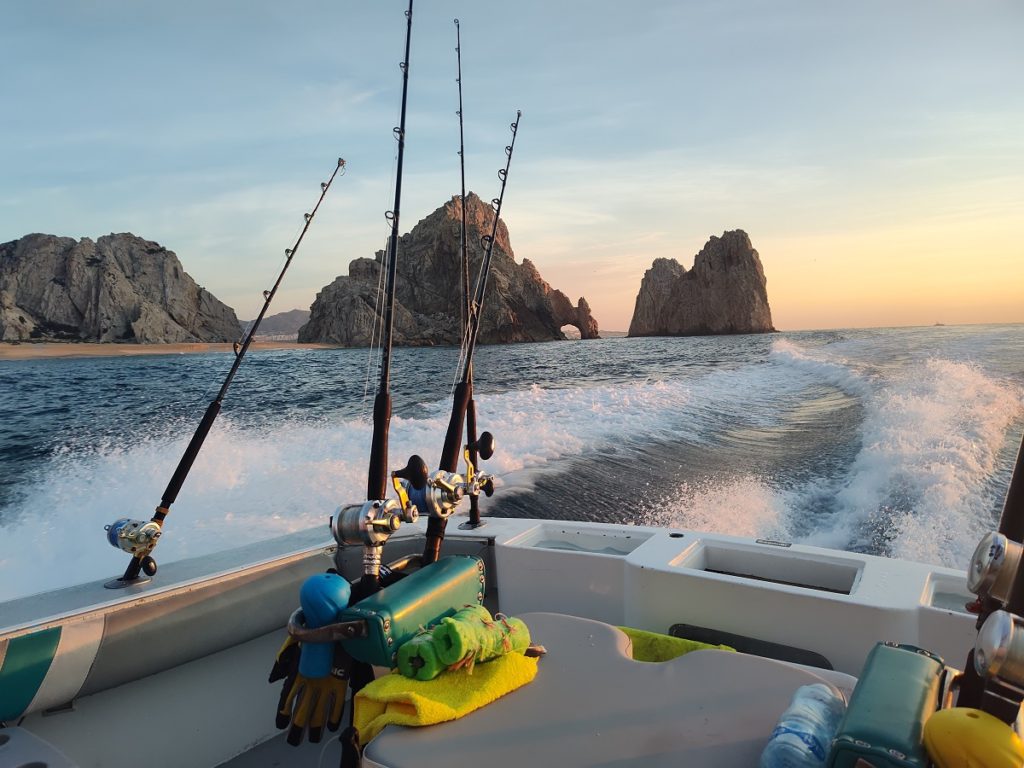
As a united group, we touched down in Cabo and navigated customs, proceeding to the transportation meticulously coordinated by Reel Time Fishing. Awaiting us was a sleek black Escalade, and our designated driver, "Eddie," who could only be likened to our personal guide – Toby's trusted on-site emissary. Our airport pickup was characterized by sophistication, and we were subsequently transported to our lavish all-inclusive abode, the Hotel Riu Palace Cabo San Lucas. Throughout our journey, Eddie remained at the wheel, chauffeuring us to the docks, an exciting ATV escapade, and any destination of our choosing, ensuring a seamless and convenient experience.
Our Stay
The resort proved to be an absolute marvel. Our desires were not only met but effortlessly anticipated. Our all-inclusive package encompassed both beverages and cuisine, with a plethora of restaurants, entertainment options, and pools that catered to every whim. Our refrigerator remained abundantly stocked, and a continuous flow of tequila was readily available, satisfying our every indulgence.
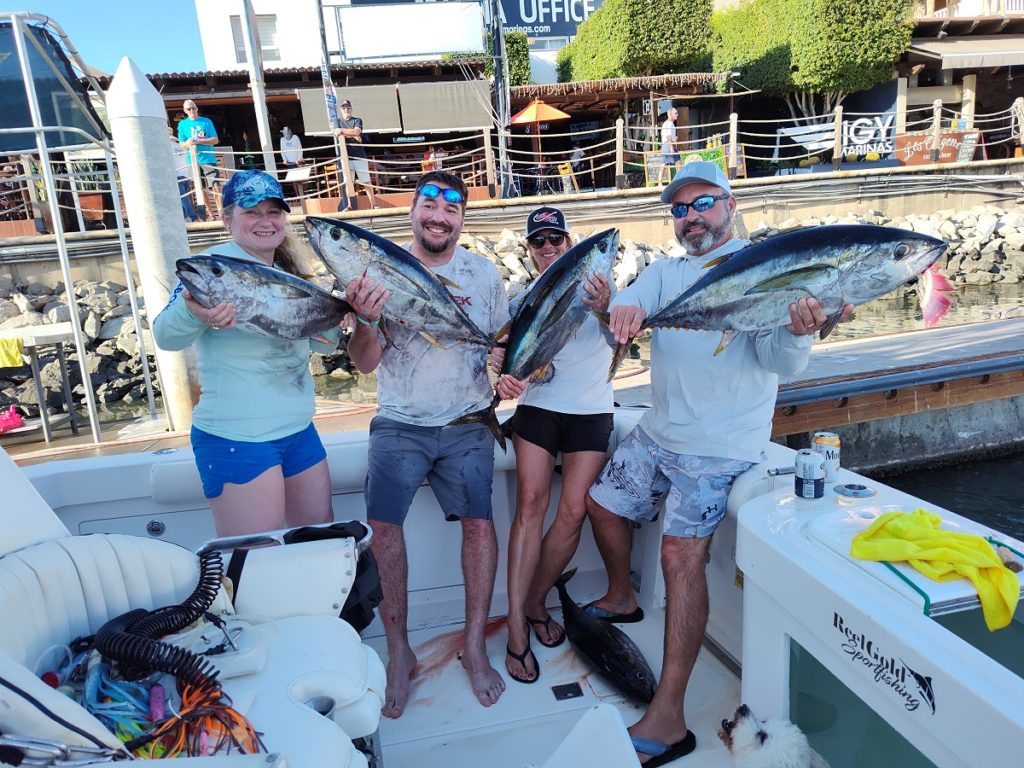
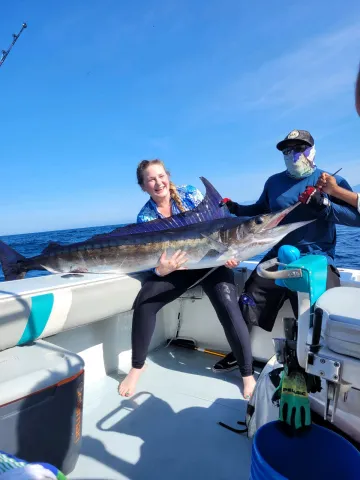
The primary motivation behind our trip revolved around the fishing prospects, and we were not disappointed – they were exceptional! Rob and I both achieved the thrilling feat of reeling in our first Marlin, an experience that will forever stand out in our memories. Across two days of deep-sea angling, we hauled in Ahi Tuna and Mahi Mahi as well. The intense battles Rob and I waged against our Marlin catches surged with an adrenaline rush unparalleled in the waters of the Northwest. The sensation was beyond expectation; truly an extraordinary encounter worthy of being on anyone's bucket list. Our cooler brimmed with the bounties of Mahi Mahi and Tuna, all set to journey home with us. Following the local custom, we released the Marlin back to the sea. The crew adeptly managed the cleaning process and even connected us with a processor to ensure our catch was expertly prepared for transport on our flight back.
Crave TV
We embarked on a Crave TV episode alongside Chef Adam Hegsted and Chef Aaron Fish, capturing the awe-inspiring sight of Northwest culinary experts skillfully crafting fish dishes infused with the vibrant flavors of Cabo's ingredients. Our poolside relaxation day proved refreshing, and we delved into the local shopping scene, exploring charming boutiques. A leisurely boat taxi ride across the bay allowed us to embrace the coastal charm. Venturing into the countryside, we engaged in an exhilarating desert off-road adventure, navigating the terrain with four-wheelers.
"It's an incredible way to punctuate the time spent on the water. There's something invigorating about cruising through the Mexican desert that truly makes you feel alive." - Jason Olsen
I had the opportunity to sit down with Jason Olsen and discuss his firsthand experience in Cabo with Reel Time Fishing.
Jason:
How was your fishing experience with Toby's team?
"Second to none! Nothing compares to that whole trip. It’s a lot of buildup. And it doesn’t disappoint. As far as going out on the boat with Pepe, knowing he was linked to Toby, I felt comfortable and safe knowing I was in good hands. Toby has seasoned dudes, and he has a standard for bringing people on. I would definitely go again at the drop of a dime. I was impressed with Pepe. He knew exactly what to do and where to go. He had an innate instinct on where to go to catch the fish and had electronics to get us on the fish. Also, having someone to show us around and be our wheels on the ground, saved us money and we did it in style."
What kinds of fish did you reel in?
"Yellow Tin Tuna, mostly. We went out from about 5 am and by 11 am we caught 10 Tuna."
What was the battle like?
"A lot harder than freshwater fish. High energy. At one point I had to strap myself into the chair."
Can you tell me about the flags?
"So the whole experience coming back to the dock was pretty great. After we caught the fish, Pepe had me hang up these flags I wasn’t sure what for. The minute we pulled into the marina, It was a bit of a parade. A bragging parade. Everyone could see what kind of fish we caught and how many from the amount of flags that were flying on our boat. It was pretty great to showboat our way into the Marina."
How was the dining experience?
"The resort accommodations and restaurants were amazing! The experience of going out in the morning and coming back and having my fish prepared by a local chef, was like no other. My liver hurt when I came home."
Jason's Wise Words:
"Take the seasickness patch, don’t be a hero! Go with a guide that is credible. Toby’s network takes the worry out of travel. Listen to Toby and you will do just fine. Use his knowledge and connections. The culture and being able to start my fishing endeavors at such a high caliber was an amazing opportunity."
Toby:
"One thing we do is we babysit our guests. We transport them from the airport to the resort to fishing and back. “We are like a coach in your corner.”
"We have a full service-all Baja Peninsula tour company that specializes in sport fishing. We help keep you safe and save you money. We have 4 captains in Cabo and packages with many of the Cabo Resorts. We can accommodate Groups of up to 40 people and have access to a 45 ft boat and 90 ft yacht. "
/articles/reel-time-cabo